Review, Giveaway, and Author Q&A!: Frozen Wild: How Animals Survive in the Coldest Places on Earth

Share

NFPB2015

Nonfiction Picture Book Wednesday

Nonfiction Picture Book Wednesday is hosted by Kid Lit Frenzy and was started to help promote the reading of nonfiction texts. Most Wednesdays, we will be participating and will review a nonfiction text (though it may not always be a picture book).
Be sure to visit Kid Lit Frenzy and see what other nonfiction books are shared this week!
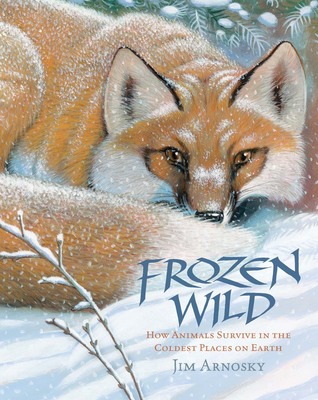
Frozen Wild

Frozen Wild: How Animals Survive in the Coldest Places on Earth
Author and Illustrator: Jim Arnosky
Published September 1st, 2015 by Sterling Children’s Books

Goodreads Summary: Quietly it comes—the dark and chill of winter. And in the snow-covered fields and forests, the great northern plains, vast stretches of frozen tundra, and icy polar regions, wild animals have to survive day after day, night after night, out in the cold. How do they do it? Kids can bundle up and join award-winning author, illustrator, and naturalist Jim Arnosky as he follows the tracks of otters, beavers, moose, polar bears, killer whales, penguins, fur seals, and other creatures to discover more about their lives during this frigid season. Arnosky’s stunning art includes five magnificent foldouts that reveal worlds under the ice and at the farthest, frostiest reaches of the globe.

Kellee’s Review: This was my first exposure to Arnosky’s work, and I truly enjoyed my first book by him (and I will definitely be finding more by him). What stood out to me first is that the book was organized very thoughtful and in a way that students will definitely find user friendly. I was then automatically blown away by the artwork. Jim Arnosky is truly an artist. All the illustrations were created using pencil and paint, and they are so realistic and beautiful. Then within each section, the facts that Arnosky choose to share are interesting, well researched, and support the illustrations perfectly. I also really liked the fold outs that expanded the illustrations to sometimes double the size possible without the fold out. Overall, the text is fact-checked and interesting and the illustrations were pieces of artwork.

Ricki’s Review: I knew this book was going to be a great read before I opened the first page. Kellee messaged me to tell me how much she liked it. We review a lot of books together each year, and we only message each other when we really, really like a book. I waited until I had a quiet time to fully immerse myself in the book. The beautiful artwork quickly enveloped me in the winter wildlife. I imagined Arnosky sitting beside his own photographs (which he used as references) to recreate the beauty of the wild. There is so much fantastic information in this text, and Aronsky presents the facts in an accessible way. I can’t wait until my son is a bit older because I know he will really enjoy reading it. It would make a great gift for a child who loves wildlife or wants to learn more about the coldest places on Earth.

Teachers’ Tools for Navigation: Frozen Wild, and the other books in his animal series, are made for classrooms. They can be used in may different ways. My first thought, beside having the book in classroom and school libraries, is using Arnosky’s books as a basis for lit circles where each group would have one of his books. They can use his book, his resources, and other resources to research the topic of each of his books. They then can do an inquiry project using all of their research.

Discussion Questions: What are some of the ways that animals stay warm during the winter?; What is the difference between the Artic and the Antarctic?; What are some ways that animals find food when it is cold?; Which animal do you think is made the best for surviving in the cold?

Author Q&A: 

Unleashing Readers: Frozen Wild is the newest book in your animal series. How do you choose the topics for each of your texts?

Jim Arnosky: Frozen Wild is my 137th book about wild animals and wild places. It is the newest book in my series of gatefold books for Sterling. The topics of these books came from either my own curiosity about certain groups of animals or from a suggestion on the part of my editor, Meredith Mundy, to have a book featuring a particular animal. When I work on a suggested topic (which has been rare) my job is to make that book reflect my own personality, viewpoint, experience, and research. That is the crux of being an author. Not just to pass along information, but to share any and all of your understanding gained in thinking about and studying the subject.

UR: How do you choose which animals to include in your books, and what is your research process for your books? 

JA: For Frozen Wild my process began with the animals around our farm in Northern Vermont whose tracks I follow all through our snow season. From there the book’s content expanded to my curiosity about the animals who live in places where cold weather can last most of the year. While portions of Frozen Wild were researched in books and conversations I’ve had with friends who have studied animals in these cold regions, and some of the book’s paintings were done from captive species in zoos, most of the time I research my books in the field with Deanna my wife. She photographs the animals while I videotape them.

The video allows me to study animal sounds, anatomy, movement, and behavior long after we have returned home. And Deanna’s still photos provide yet another viewpoint of the subjects I write about and paint.

UR: What is your art process? 

JA: For the painting, I sketch the scenes in pencil on my paper. Then I over- paint the sketch with a layer of acrylic colors, using colors that blend with portions of the scene. On this underpainting of various color area, I re-sketch the scene in white chalk, and then paint the next layer, blocking out the figures and the background. Layer after layer, I build a deeply colored picture that, if you look at the originals with a magnifying lens as I do while I detail the art, you can actually see the multiple layers of color one on top of the other, the first to the top layer. It always thrills me to see that physical dimensional quality of what I have done.

UR: Are there any nonfiction authors or illustrators that influence you? 

JA: My favorite authors are the singer-songwriters such as Bob Dylan, John Denver, James Taylor, Jimmy Buffett, and Joni Mitchell. We did not have books in our home while I was growing up. And our little school had no library to speak of. Later, I found favorite authors in the great books – Thor Heyerdahl’s Kon Tiki, Ernest Hemingway’s The Old Man and the Sea, Mark Twain, John Burrough (the great naturalist) Henry Benston, Aldo Leopold, and Hal Borland.

My favorite illustrators (and painters) are Bruno Liljefors, Bob Kuhn, N.C. Wyeth, Roger Tory Peterson, Audubon, Charles Tunniclyfe, Ernest Thompson Seton, and Winslow Homer.

I am self taught in both art and nature and have learned much about art from studying these great masters. Also, I have met and learned from many great naturalists and scientists who have been generous in sharing their knowledge with me.

UR: Any plans for the next book in the series? 

JA: Presently I am working with Starwalk Kids Media in bringing my popular Crinkleroot series of nature guides into the digital realm. I am also working on another picture book. I have a novel making the rounds and have just finished a picture book about the invasive species problem threatening our wildlands. It is called Wild Invaders. For the Sterling series, our next book will be about animal camouflage.

Thank you for your interest in my work! I am happy to Skype a conversation with you if you wish. Deanna (jarnosky@fairpoint.net) can set that up. Also for further info please go to my website (www.jimarnosky.com) There is a piece in there describing Deanna and my early days in the can where, living basically, I was able to find my way into nature and writing and illustrating books. It is called “Born In A Tree – A Natural History”.

We are seeing color change now. And the air is getting cooler. Soon winter will be upon us again.

Your friend in books, Jim Arnosky

We Flagged: 

Frozen-Wild-image

Read This If You Loved: Winter Bees & Other Poems of the Cold by Joyce Sideman and Rick AllenFirefly July by Paul JaneczkoFeathers by Melissa StewartBorn in the Wild by Lita JudgeForest Has a Song by Amy Ludwig VanDerwaterOver and Under Snow by Kate Messner, Seymour Simon animal books and extreme series

Recommended For: 

classroomlibrarybuttonsmall closereadinganalysisbuttonsmall

Giveaway!

a Rafflecopter giveaway

What to know more about the book? Check out Mrs. Knott’s Book Nook!

Signatureand RickiSig

**Thank you to Joshua at Sterling Publishing for providing copies for review and the giveaway!**
Top Ten Tuesday: Author Duos We’d LOVE to See Write a Book Together

Share

top ten tuesday

Top Ten Tuesday is an original feature/weekly meme created at The Broke and the Bookish. The feature was created because The Broke and Bookish are particularly fond of lists (as are we!). Each week a new Top Ten list topic is given and bloggers can participate.

 Today’s Topic: Author Duos We’d LOVE to See Write a Book Together 

These authors kick butt. If they wrote a book together, we might just faint.

Ricki

1. Matt de la Peña and Chris Crutcher

While neither of these authors sticks strictly to sports, they both have written incredible books that feature sports in them. I love how they never used sports as a crutch or the main aspect of a book. Instead, they value character and story first. I’ve seen them speak together!

2. A.S. King and Laurie Halse Anderson

These two women rock my world. I can’t imagine the story that would emerge if they worked together.

3. Ruta Sepetys and Patricia McCormick

Both of these authors teach me so much through their stories. I think they’d be an incredible pairing.

4. Kekla Magoon and Jacqueline Woodson

I read every book these two women write. They develop character in such a beautiful way. I am always recommending their books to other readers.

5. Oliver Jeffers, Drew Daywalt, and Jon Klassen

I know the first two authors came together to create a masterpiece series (The Day the Crayons Quit), but I’ve been thinking that adding Jon Klassen into the mix would make the world explode.

Kellee

1. Kenneth Oppel and Patrick Ness

These two authors are so unique, and I cannot even imagine what they would come up with if they wrote a book together!

2. George O’Connor and Rick Riordan

These two gentleman are mythology geniuses, and I would love to see a fiction graphic novel that mixes mythology and fiction.

3. Laurie Halse Anderson and John Green

Two of the most brilliant contemporary authors writing together would be epic!

4. Deborah Wiles and Jim Murphy

Deborah Wiles writes some of the best historical fiction, and Jim Murphy writes some of the best literary nonfiction. I would love a book that was half fiction and half nonfiction combining their abilities.

5. Kate DiCamillo and Jennifer Holm

A co-written novel by Holm and DiCamillo would blow my mind!

Which authors would you love to see write a book together? 

RickiSig and Signature

It’s Monday! What Are You Reading? #IMWAYR 10/12/15

Share

IMWAYR

It’s Monday! What Are You Reading? From Picture Books to YA!

It’s Monday! What are you Reading? is a meme hosted by Sheila at Book Journeys. It is a great way to recap what you read and/or reviewed the previous week and to plan out your reading and reviews for the upcoming week. It’s also a great chance to see what others are reading right now…you just might discover the next “must-read” book!

Jen Vincent, of Teach Mentor Texts, and Kellee decided to give It’s Monday! What Are You Reading? a kidlit focus. If you read and review books in children’s literature – picture books, chapter books, middle grade novels, young adult novels, anything in the world of kidlit – join us! We love this meme and think you will, too.

We encourage everyone who participates to support the blogging community by visiting at least three of the other book bloggers that link up and leave comments for them.

CONGRATULATIONS

MARY K.

for winning a copy of Zack Delacruz

Last Week’s Posts

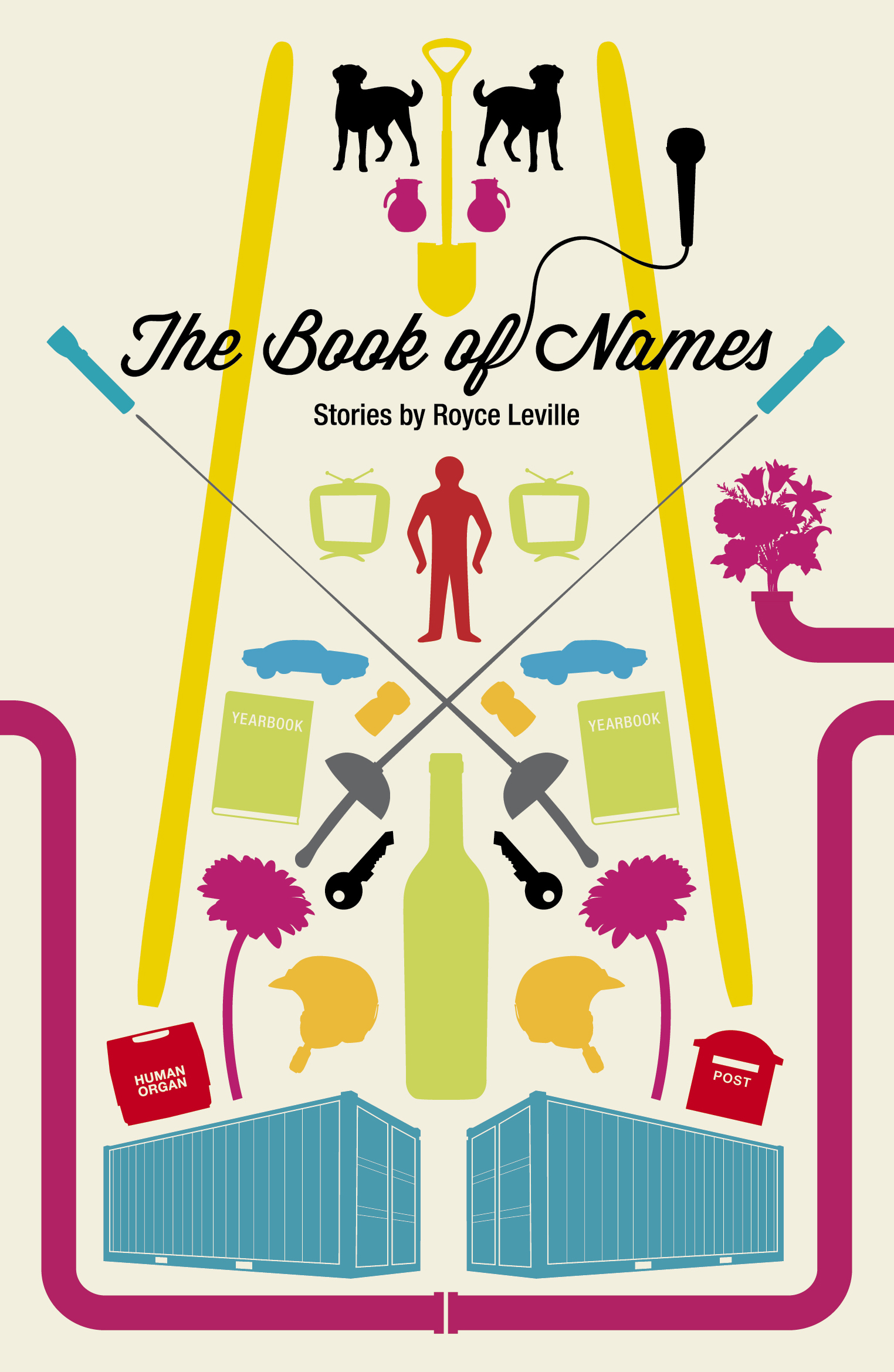
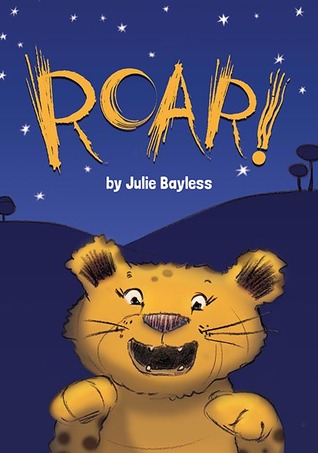
top ten tuesday jump back paul Lola and the Cupcake Queens roar Book of Names

Tuesday: Books I’d Recommend to Students  if they Like _____.

Thursday: Blog Tour!: Last-But-Not-Least Lola and the Cupcake Queens by Christine Pakkala

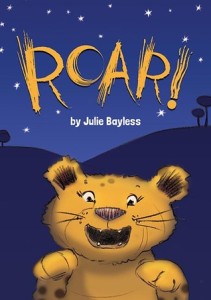
Friday: Blog Tour!: Roar! by Julie Bayless

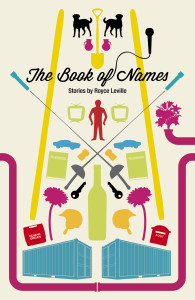
Sunday: Author Guest Post!: “What’s in a Name?” by Royce Leville, author of The Book of Names

**Click on any picture/link to view the post**

 Last Week’s Journeys

Kellee: This week’s reading quantity is lower than last week, but the quality is not. I finished Hook’s Revenge by Heidi Schulz, and I was so glad I went along on that adventure! This book was my final book for my Bridging the Gender Divide: Humor and The Art of Engaging All Readers NCTE panel. I am so excited!

Ricki: I finished two INCREDIBLE books this week. First, I finished up Glory O’Brien’s History of the Future. It is both literary and engaging, and I was reminded as to why I love A.S. King so much. I was fortunate to receive an ARC of Salt to the Sea by Ruta Sepetys. Wow, wow, wow! I was awake until 4am this morning because I couldn’t put it down. I know publishers prefer that we review books no earlier than a month before their publication date, so I will have to tie my hands to my chair to prevent this.

This Week’s Expeditions

Kellee: Now I am on to reading the books for my ALAN panel “Keeping ‘Em on the Edge of Their Seat.” First up is Undertow by Michael Buckley. I just started, but I am intrigued so far.  After Undertow, I have the other books from the authors on my panel to read then I plan on rereading Eleanor and Park in preparation for the Walden Award panel at NCTE. I cannot believe how close the conference is!!!

Ricki: Kellee, how smart you were to post your panelists as your Fall TBR list! I am in the same boat as Kellee, but I don’t have a fancy link to my ALAN Workshop panel authors. This week, I am going to start with Meg Medina’s Burn, Baby, Burn. You can see the full workshop program here.

Upcoming Week’s Posts

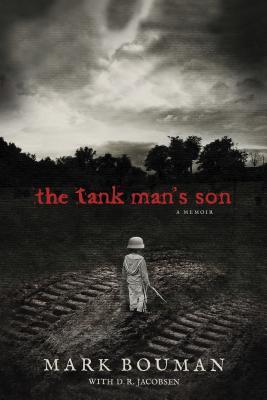
top ten tuesday Frozen Wild I'll Give You the Sun cock a doodle oops Tank Man's Son

Tuesday: Ten Author Duos We’d LOVE to See Write a Book Together

Wednesday: Review, Author Q&A, and Giveaway!: Frozen Wild by Jim Arnosky

Sunday: Author Guest Post! by Mark Rouman, Author of The Tank Man’s Son

 So, what are you reading?

Link up below and go check out what everyone else is reading. Please support other bloggers by viewing and commenting on at least 3 other blogs. If you tweet about your Monday post, tag the tweet with #IMWAYR!

 Signature andRickiSig

Author Guest Post!: “What’s in a Name?” by Royce Leville, Author of The Book of Names

Share

“What’s in a Name?”

A pseudonym is much more than a writer taking a different name, or even a writer hiding behind a different name. It requires a process of creating a whole new writing style.

Like hitting a tennis ball, making a quilt or playing an instrument, writing is a skill.1 As a skill, it can be trained, honed and improved. Talent is useful, but most writers agree that talent only takes you so far, especially when it comes to writing fiction.2

There are many ways to work on the skill of writing and to hone the craft.3 A favorite is the “write as someone else” exercise. In fact, writing as someone else was such a boon, it allowed for the creation of me, Royce Leville.

Okay, before we give birth to a pseudonym,4 let’s take a few steps back. Why write as someone else? Good question. If you’re working towards writing fiction, especially novel-length, then you need to accept that there’s a lot of preparation and work involved before you even get to chapter one. Part of that is writing character descriptions.5 And the character really comes to life when he or she is given a voice; that is, when you attempt to write “in character.”6

Here’s a good sample exercise for writing as someone else:

  • Step 1: Write down some details of a character, including age, gender, profession, nationality, brief back story
  • Step 2: Move on to personal interests (past and present), taste in music, sports, books, etc
  • Step 3: Give the character some applicable (or even contrary) attributes, based on what’s already been listed in steps 1 and 2
  • Step 4: Start to populate the character’s world: car, house, furniture, clothing, accessories. Maybe make a list of the items found in the character’s fridge or wallet
  • Step 5: Now comes the Frankenstein moment. Can you bring the character to life on the page? Write in the first person, trying to use this character’s voice. Start with very simple things, such as making a cup of coffee or getting ready for work. See if you can write “in character”
  • Step 6: Now place the character in situations with other people. Think about dialogue and how this character speaks, and how this character behaves and reacts

Hopefully, through such a process, the character moves from being a blur of features to a sharply drawn and detailed person, one you might find yourself having conversations with inside your head.7

The more work you do in fleshing out the character, the more complex and believable the character becomes. In fact, the character may become so complete, he or she might even become the writer, with a unique style and a specific genre. And you’ve got yourself a pseudonym.8

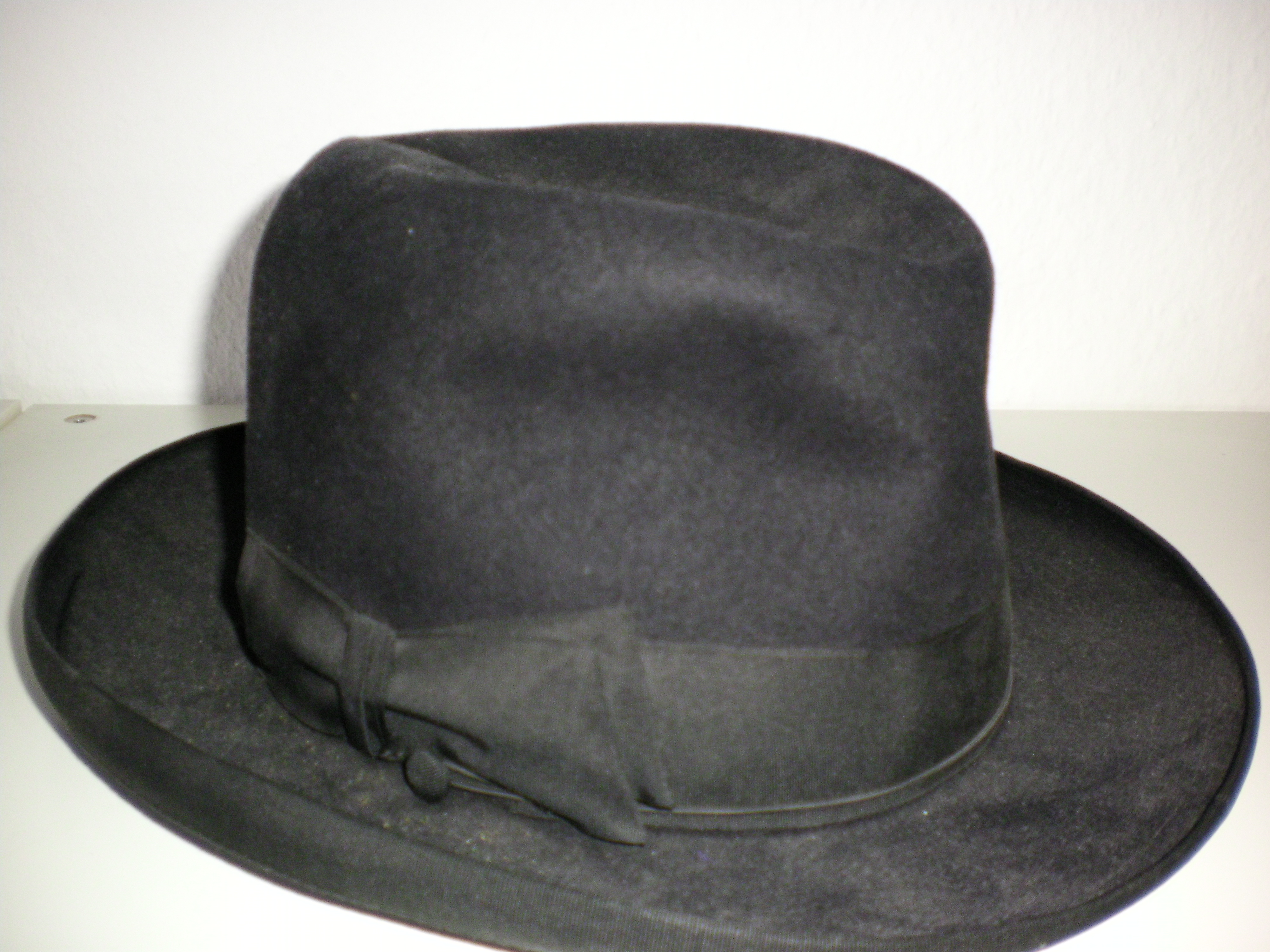
Once there, the trick is how to get in character. Royce Leville has a black hat. With this hat on, Royce is writing.

This Jekyll and Hyde act might sound weird, but it can open some very interesting creative doors.

SANYO DIGITAL CAMERA

Notes:

  1. This is the best thing to understand about writing, as it will help you with all forms of writing, whether it’s a birthday card for grandma, an important report at work, or a speech of some kind. If you work at writing, you can get better at it.
  2. There are plenty of writers out there low on talent who churn out successful books.
  3. Solitary writing endeavors result in little progress. Attend workshops, take creative writing classes, join a writing group. Book clubs are also good. Take the time to master the tenses and understand things like point-of-view, narrator knowledge and character consistency.
  4. Royce has written before about the benefits of writing under a pseudonym: http://chapterbreak.net/2015/01/12/guest-post-seven-reasons-to-write-under-a-pseudonym-by-royce-leville/
  5. Who hasn’t read a book with characters that seemed more like lazy sketches on napkins rather than intricately detailed and artistically drawn portraits? Or where a character said something that the character was completely unlikely to say?
  6. Have no illusions. This is much more difficult than it sounds.
  7. Not necessarily a bad thing.
  8. And you’ve possibly opened up a little can of crazy, because you’ll be writing as a character you’ve created, who then starts writing as characters he or she creates. Neat, huh?

ABOUT THE BOOK OF NAMES:

There’s a benevolent locksmith with keys to every lock in town, a serial-killing vet who harvests his victims’ organs, a group of men locked inside a container and stranded at a harbor somewhere, and a performance artist who can open a bottle of champagne in an extraordinary way

Strange situations, unsolvable problems, secret lives, redemption and revenge. At times THE BOOK OF NAMES invokes the spirit of The Twilight Zone, yielding tales of morality, sexuality, and power.

Book of Names


ABOUT THE AUTHOR:

Campbell is a prolific author, journalist and advertising writer who has published three books under his own name and two as Royce Leville.  He has won four independent publishing awards and received three prestigious writing residencies.  Campbell, born in Australia and residing in Germany, took second place in the 2012 Next Generation Indie Book Awards for his first Leville book, A Little Leg Work.  His articles have featured in numerous magazines and newspapers, while his short stories have appeared in Australian Reader, Spotlight Magazine, Italy from a Backpack and the Fellowship of Australian Writers (WA) compilation, Lines in the Sand.

Find more information at: www.rippplemedia.com

Thank you to Royce for this fascinating look at pseudonyms and building characterization within writing!

Kellee Signature andRickiSig

Blog Tour!: Roar! by Julie Bayless

Share

roar

Roar!
Author and Illustrator: Julie Bayless
Expected Publication October 13th, 2015 by Running Press Kids

Goodreads Summary: A moonlit tale of friendship and play.

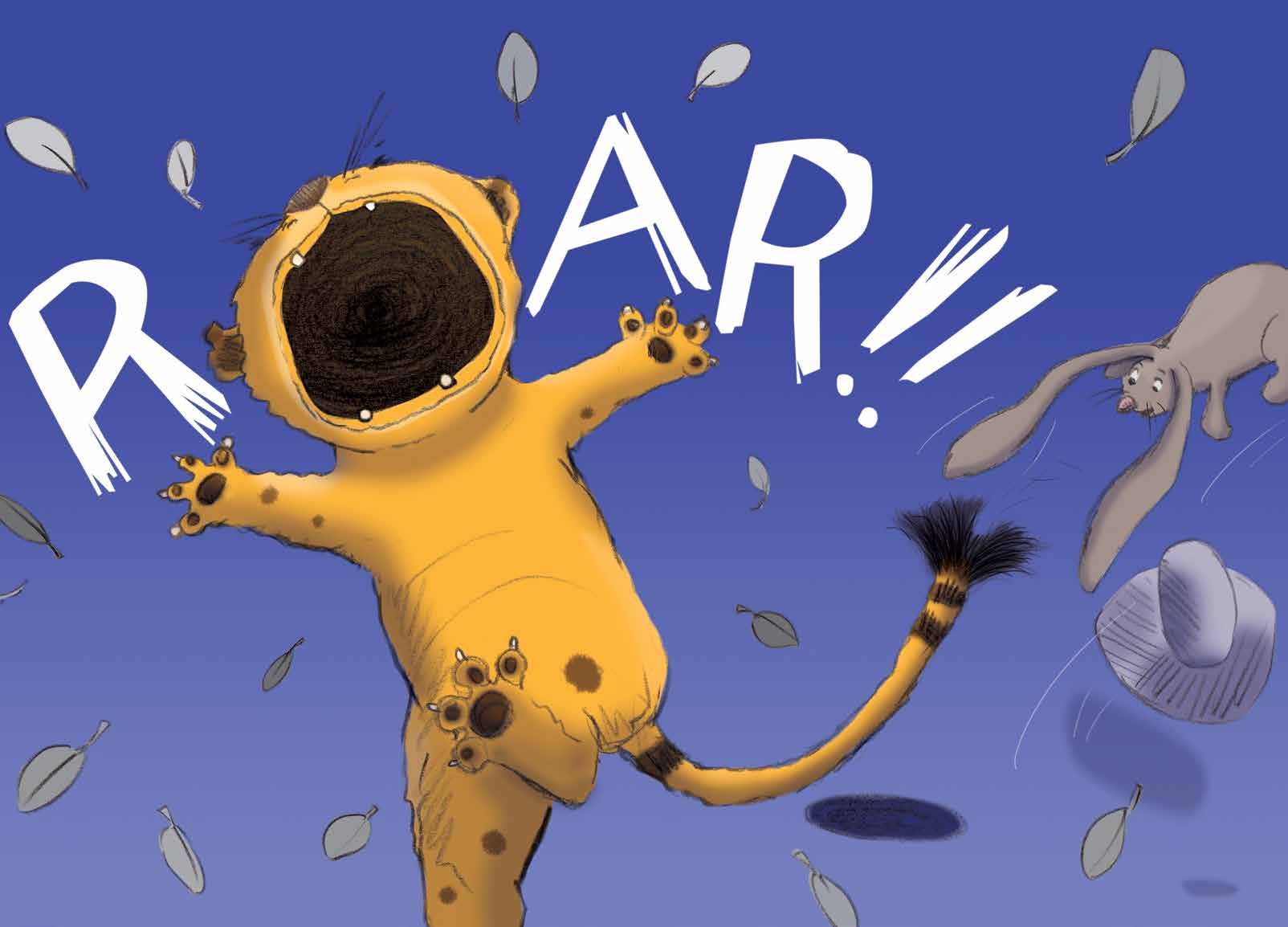
It is nighttime in the savanna, which means that it is time to play for one rambunctious lion cub! The cub tries to make new friends with the hippos and the giraffes, but roaring at them only chases them away. The young lion is about to give up, but when a rabbit accidentally mistakes the cub’s tail for a carrot, the lion realizes she might have met her match, in all the right ways.

Kellee’s Review: Roar! is told in mostly onomatopoeias, so it is up to the reader to really read into the colorful and clue-filled illustrations. Bayless does a really great job at using her illustrations to build her characters without ever giving them anything to say next to ROAR and MORE and YAWN and SNORE. Trent loves reading this book because he is obsessed with saying ROAR if you even mention a lion and bunny is one of the newest animals he can identify. 

Ricki’s Review: I had so much fun reading this book with my son. He knows a lot of words, but he specializes in sound effects. He takes great pride in his roar, so it was fun for me to point to the word and wait for him to respond with a big “ROAAAR!” This would be a great book to use for kids who are just learning to read because the repetition is very helpful. It will build their reading confidence. As Kellee said, the illustrations add significantly to the character development. I smiled through the entire reading.

Teachers’ Tools for Navigation: Roar! is made to be read with kids. I think it’d be so much fun to make it interactive and have the students read the word bubbles as the teacher turns the pages. Another fun activity that could be done with Roar! is having students write out what is happening on each page and even naming the characters and using the illustrations to figure out their character traits.

Discussion Questions: In nature, would the lion and rabbit have been friends?; What onomatopoeias can you find within Roar!?; How would you describe the lion’s personality? The rabbit’s?

We Flagged:

roar spread

Read This If You Loved: Yo! Yes? by Chris Raschka, Moo by David LaRochelle, Look! by Jeff Mack, Giraffes Can’t Dance by Giles Andreae, Night Animals by Gianna Marino, Cat Says Meow and Other Onomatopoeia by Michael Arndt

Recommended For:

readaloudbuttonsmall

  Signatureand RickiSig

**Thank you to Cassie at Running Press for providing copies for review!!**

Blog Tour!: Last-But-Not-Least Lola and the Cupcake Queens by Christine Pakkala

Share

Lola and the Cupcake Queens

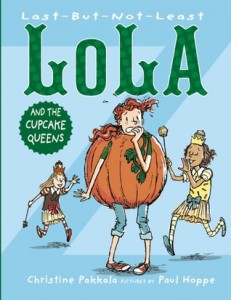
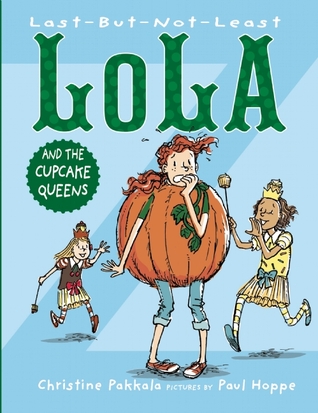
Last-But-Not-Least Lola and the Cupcake Queens
Author: Christine Pakkala
Illustrator: Paul Hoppe
Published October 6th, 2015 by Boyds Mills Press

Goodreads Summary: Lola’s mom is home but not home, because she’s frantically working all the time. Lola’s friends are here but not here as allegiances among the foursome change faster than you can forget your lines for a school play. Lola means well but can’t help acting on her emotions and getting into trouble. She’ll need to dig for bravery as she deals with a possible ghost next door, stage fright, and, hardest of all, making amends with her friends. Lola is braver than she thinks and her friendships are stronger than she realizes in this funny, heartwarming tale.

Kellee’s Review: I love that we are finding more and more girls like Lola in books. Lola is unique and smart and creative and not perfect yet also so very normal. She can be both a really good friend yet also a girl who makes mistakes. Lola is such a great role model for readers because she is all of these things, both good and bad. Readers will see themselves in her because she is very human.

In Lola and the Cupcake Queens, we get to know Lola even better. We learn that she has insecurities, that she loves her friends but doesn’t always know how to act, and that she underestimates herself. Each story about Lola’s puts her in more and more situations that readers will be able to connect with.

Ricki’s Review: I adored this charming series and immediately contacted a few friends who have young daughters who I know will fall in love with these books. Lola is a feisty redhead who seems to get herself into quite a bit of trouble. My favorite scene in the book is when Lola finds herself (yet again) in the principal’s office. She and the principal are great friends, and she casually struts into the office and is a bit taken aback when her friend is nervous. Her confidence and feistiness made me want to meet her! As she talks to the principal, she stops halfway through her sentence to lower her voice because yelling is not allowed. She knows the rules but seems to have a bit of difficulty following them—despite how hard she tries.

Lola reminds me of so many kids that I taught. She wants to do well, so she strives to be a good person. Even though she gets into a lot of trouble, it isn’t malicious. She just makes a lot of mistakes. These kinds of characters are fantastic for young readers because, like Kellee said, they allow children to see that they can learn from their mistakes. This series is a must for classrooms—it is the kind of series that turn kids into avid readers.

Teachers’ Tools for Navigation: Lola is going to be a favorite character of so many readers. She belongs in classroom and school libraries so readers can fall in love with her in the ways that we did.  In the book, Lola’s teacher did an activity that would also be great in the classroom. As the students were planning their Halloween costumes, she asked each child describe his/her costume without saying what it was. This activity would be a great way to help students build their imagery and descriptive language skills within creative writing.

As another idea, teachers might ask students to consider what it means to be a good friend. They could trace Lola’s actions to determine how she evolves as a friend in the series and then apply her actions to their own lives. This will help them think about friendship critically and relate it back to their own lives.

Discussion Questions: Do you think Lola intentionally gets into trouble? Why or why not?; What qualities would you use to describe Lola? Which of her actions reflect these qualities?; Is Lola a good friend? Why or why not?

We Flagged: “N-n-n-no,” she cries. “I’ve just never ever gotten in trouble and gone to the principal’s office. I’m not bad like you.”

“I’m not bad!” I yell, but part-way through I turn the volume down because yelling is bad. Especially right in front of the principal” (p. 65).

Read This If You Loved: Franklin School Friends series by Claudia Mills, Marty McGuire series by Kate Messner, Bink and Gollie series by Kate DiCamillo, Cody and the Fountain of Happiness by Tricia Springstubb, Eleanor books by Julie Sternberg, Babymouse series by Jennifer L. Holm, Bramble and Maggie series by Jessie Haas, The Trouble with Ants by Claudia Mills

Recommended For:

classroomlibrarybuttonsmall

  Signatureand RickiSig

**Thank you to Kayleigh at Boyds Mills Press for providing copies for review!**

Jump Back, Paul: The Life and Poems of Paul Laurence Dunbar by Sally Derby

Share

NFPB2015

Nonfiction Picture Book Wednesday

Nonfiction Picture Book Wednesday is hosted by Kid Lit Frenzy and was started to help promote the reading of nonfiction texts. Most Wednesdays, we will be participating and will review a nonfiction text (though it may not always be a picture book).
Be sure to visit Kid Lit Frenzy and see what other nonfiction books are shared this week!

jump back paul

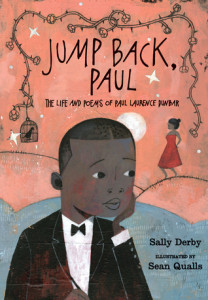
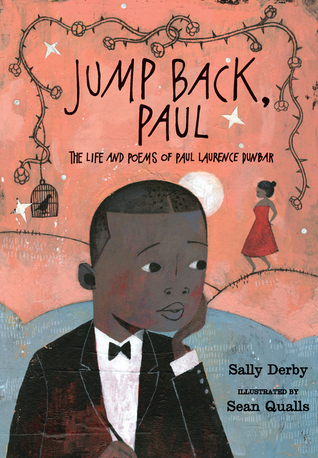
Jump Back, Paul: The Life and Poems of Paul Laurence Dunbar
Author: Sally Derby
Illustrator: Sean Qualls
Published September 22nd, 2015 by Candlewick Pres

Goodreads Summary: Discover the breadth and depth of Paul Laurence Dunbar’s poetry—and learn how it reflects his singular life as a late-nineteenth-century black man.

Did you know that Paul Laurence Dunbar originated such famous lines as “I know why the caged bird sings” and “We wear the mask that grins and lies”? From his childhood in poverty and his early promise as a poet to his immense fame and his untimely death, Dunbar’s story is one of triumph and tragedy. But his legacy remains in his much-beloved poetry—told in both Standard English and in dialect—which continues to delight and inspire readers today. More than two dozen of Dunbar’s poems are woven throughout this volume, illuminating the phases of his life and serving as examples of dialect, imagery, and tone. Narrating in a voice full of admiration and respect, Sally Derby introduces Paul Laurence Dunbar’s life and poetry to readers young and old, aided by Sean Qualls’s striking black-and-white illustrations.

My Review: I came into this book not knowing much about Paul Laurence Dunbar aside from knowing that the line “I know why the caged bird sings” was written by him which inspired Maya Angelou’s autobiography’s title; however, I didn’t know much else about his life or his poetry. Derby’s book does a fantastic job remedying that. Not only are you exposed to more than 20 of Dunbar’s poems, you are exposed to them in very specific ways as Derby tells Dunbar’s life story. Each poem’s inclusion is purposeful and perfectly timed. When finished, I wanted to read more of Dunbar’s poems and actually hear some of them being performed (his dialect poems are screaming to be read aloud). Qualls also does a brilliant job, as always, illustrating the tone of the text in beautiful black-and-white drawings.

Teachers’ Tools for Navigation: This book not only can be used to share information about Paul Laurence Dunbar’s life and his poetry, but it also includes fascinating information about what it was like to live after the Emancipation Proclamation then after Plessy v. Ferguson.

First, in an English classroom, this text truly puts Dunbar’s poems in a perspective which will allow more depth when analyzing. The way Derby set up the narrative of Dunbar’s life around his poems helps the reader understand the underlying meaning of his poetry even better than they would with a cold read.

Also, cross-curricularly while studying Dunbar’s poems, during history, a tie-in to this tumultuous time period would be easy and effective.  The time period that Dunbar lived in is not often discussed as it is a time after slavery but before segregation that many students may not know about.

Discussion Questions: Who do you think had the biggest influence on Dunbar becoming a poet?; Do you think Dunbar’s father’s absence affected how he was as a husband to Alice?; How do you think Frederick Douglass influence Dunbar?; How was the voice that told the story chosen by Derby? Do you think the way she structured and told the story was helpful in understanding Dunbar’s life and poetry?

We Flagged: “You never heard of the poet Paul Laurence Dunbar? Child, where’ve you been? I got to have a word with you. Why, back in the day, you’d have whole families sitting around listening while one of them performed “When Malindy Sings” or “Little Brown Baby” or “A Negro Love Song” (which folks most always call “Jump Back, Honey”).”

Read This If You Loved: Paul Laurence Dunbar’s poetry, I Know Why the Caged Bird Sings by Maya Angelou, Henry Aaron’s Dream by Matt Tavares, The Underground Abductor by Nathan Hale

Recommended For: 

classroomlibrarybuttonsmall readaloudbuttonsmall closereadinganalysisbuttonsmall

Signature

**Thank you to Candlewick for providing a copy for review!!**