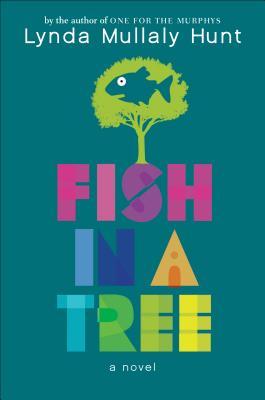
Fish in a Tree by Lynda Mullaly Hunt

Share

fish

Fish in a Tree
Author: Lynda Mullaly Hunt
Published February 5th, 2015 by Nancy Paulsen Books

Goodreads Summary: The author of the beloved One for the Murphys gives readers an emotionally-charged, uplifting novel that will speak to anyone who’s ever thought there was something wrong with them because they didn’t fit in.

“Everybody is smart in different ways. But if you judge a fish by its ability to climb a tree, it will live its life believing it is stupid.”

Ally has been smart enough to fool a lot of smart people. Every time she lands in a new school, she is able to hide her inability to read by creating clever yet disruptive distractions.  She is afraid to ask for help; after all, how can you cure dumb? However, her newest teacher Mr. Daniels sees the bright, creative kid underneath the trouble maker. With his help, Ally learns not to be so hard on herself and that dyslexia is nothing to be ashamed of. As her confidence grows, Ally feels free to be herself and the world starts opening up with possibilities. She discovers that there’s a lot more to her—and to everyone—than a label, and that great minds don’t always think alike.

My Review: I adore so much about this book.
Ally is so many students that I have had over the years that just needed a teacher to take the time.
Mr. Daniels is the teacher that I hope I am, that I wish I could be, that I want all teachers to be, and that I want to be friends with.
Ally’s journey is one that I hope I inspire my students to have.
Keisha is the friend I wish I’d had.
Albert is so many student in our schools that are just a bit different thus leading to a life of sorrows.
Shay shows that meanness often is because of meanness.
Travis shows that it is never too late to change a kid’s life.
So many special characters, and such a special story.
Once again, Lynda Mullaly Hunt made me cry. Well done!

Teachers’ Tools for Navigation: This book is written to be read by teachers and kids. Its home is in classrooms and libraries. Buy it, read it, and share it with some kids.

Discussion Questions: Why does Ally get in trouble so much at the beginning of the book?; What clues are given that Travis struggles with reading as well?; How does Keisha’s friendship help Ally?; Have you had a teacher like Mr. Daniels who changed your life? Tell us about him/her.

We Flagged: “Seven schools in seen years, and they’re all the same. Whenever I do my best, they tell me I don’t try hard enough. Too messy. Careless spelling. Annoyed that the same word is spelled different ways on the same page. And the headaches. I always get headaches from looking at the brightness of dark letters on white pages for too long.

Mrs. Hall clears her throat.

The rest of the class is getting tired of me again. Chairs slide. Loud sighs. Maybe they think I can’t hear their words: Freak. Dumb. Loser.” (p. 2-3)

Read This If You Loved: Bluefish by Pat Schmatz, The Secret Hum of Daisy by Tracy Holczer, Rain Reign by Ann M. Martin, Wonder by RJ Palacio

Recommended For: 

classroomlibrarybuttonsmall readaloudbuttonsmall

Signature

**Thank you to Penguin and Susan Dee for providing copies for review**

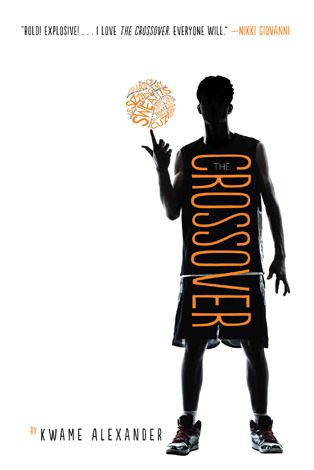
The Crossover by Kwame Alexander

Share

the crossover

The Crossover
Author: Kwame Alexander
Published March 18th, 2014 by Harcourt Brace and Company

Goodreads Summary: “With a bolt of lightning on my kicks . . .The court is SIZZLING. My sweat is DRIZZLING. Stop all that quivering. Cuz tonight I’m delivering,” announces dread-locked, 12-year old Josh Bell. He and his twin brother Jordan are awesome on the court. But Josh has more than basketball in his blood, he’s got mad beats, too, that tell his family’s story in verse, in this fast and furious middle grade novel of family and brotherhood.

Josh and Jordan must come to grips with growing up on and off the court to realize breaking the rules comes at a terrible price, as their story’s heart-stopping climax proves a game-changer for the entire family.

My Review: Wow. What a powerful piece of narrative and poetry. Any poem from Josh’s story could easily be taken out of context and used as a piece of exemplar poetry writing. In addition to the amazing writing, Josh is a kid that is so easy to connect with. He is so real. You love him (even if he is a little cocky). By the end of the book, you feel like you are part of Josh’s family, and you don’t want to leave.

And to top it all off: one of my reluctant readers grabbed this book and zoomed right through it. It quickly became one of his favorite books! I love when the Newbery Medal winner is accessible to students. Now to just get more students to read it and experience the awesomeness.

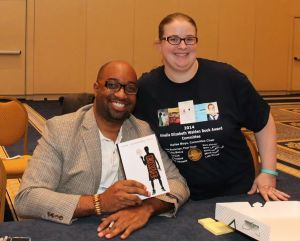
(Also, Kwame was one of my favorite presenters at ALAN, and he was such a pleasure to meet!)

kwame

Teachers’ Tools for Navigation: I cannot wait to have my students make vocabulary poems like Josh does. Such a fun way to play with words. Additionally, like I stated above, any poem in this novel could be used in a poetry unit. I’d also love to have students come up with rules like Josh’s dad did for basketball and have them write them in verse.

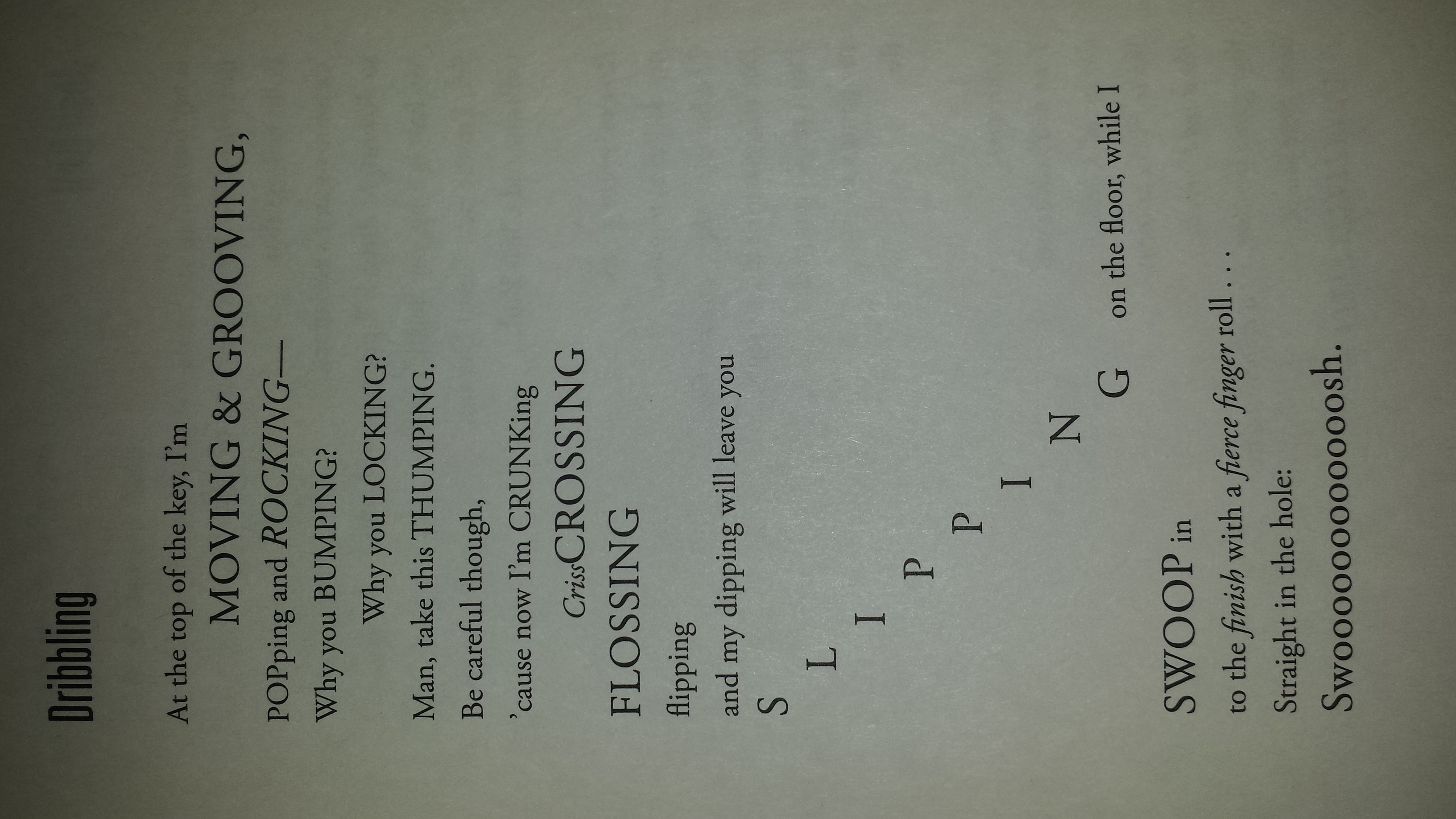
Discussion Questions: Why is Josh so impacted by Jordan getting a girlfriend?; Who do you think influences Josh more: his dad or his mom? Explain.; Within his poems, Josh uses formatting, bolding, and different fonts to put emphasis on certain words. Why does he do this?; Josh uses figurative language throughout his poems. Find an example and share why you think Josh used it.; How are Josh and Jordan similar? Different?

We Flagged: 

20150216_141647

Read This If You Loved: Jumped In by Patrick Flores-Scott (YA), The Sports Pages edited by Jon Sciezska, The Moves Make the Man by Bruce Brooks, Summer Ball by Mike Lupica

Recommended For: 

classroomlibrarybuttonsmall readaloudbuttonsmall closereadinganalysisbuttonsmall

Signature

Never Fall Down by Patricia McCormick

Share

NFPB2015

Nonfiction Picture Book Wednesday

Nonfiction Picture Book Wednesday is hosted by Kid Lit Frenzy and was started to help promote the reading of nonfiction texts. Most Wednesdays, we will be participating and will review a nonfiction text (though it may not always be a picture book).
Be sure to visit Kid Lit Frenzy and see what other nonfiction books are shared this week!
**This book is technically historical fiction, but I felt it was pretty darn close to nonfiction**

never fall down

Never Fall Down
Author: Patricia McCormick
Published May 8th, 2012 by Balzer + Bray

Goodreads Summary: This National Book Award nominee from two-time finalist Patricia McCormick is the unforgettable story of Arn Chorn-Pond, who defied the odds to survive the Cambodian genocide of 1975-1979 and the labor camps of the Khmer Rouge.

Based on the true story of Cambodian advocate Arn Chorn-Pond, and authentically told from his point of view as a young boy, this is an achingly raw and powerful historical novel about a child of war who becomes a man of peace. It includes an author’s note and acknowledgments from Arn Chorn-Pond himself.

When soldiers arrive in his hometown, Arn is just a normal little boy. But after the soldiers march the entire population into the countryside, his life is changed forever.

Arn is separated from his family and assigned to a labor camp: working in the rice paddies under a blazing sun, he sees the other children dying before his eyes. One day, the soldiers ask if any of the kids can play an instrument. Arn’s never played a note in his life, but he volunteers.

This decision will save his life, but it will pull him into the very center of what we know today as the Killing Fields. And just as the country is about to be liberated, Arn is handed a gun and forced to become a soldier.

My Review: When I started Never Fall Down, I had no idea what I was getting myself into. I began it because Ricki recommended it to me, but I didn’t read the back or have any prior knowledge about the book. So, when I began, I had no idea how tough this book was going to be.

I also have to preface with my ignorance of the Cambodian Genocide. I blame my lack of world history education because this is a time of history that should be taught. It, along with the Holocaust and Armenian Genocide, was based in racism and the attempt to purify a country. Reading Arn’s story throws you right in the middle of the genocide, and Patricia McCormick doesn’t hold anything back. Every time you think nothing can get worse for Arn and the Cambodians, something does, but you also have such hope for Arn’s survival as you seen him overcome every obstacle he faces. Even though death actually stares him in the face throughout the book, this young boy somehow continues. He continues through starvation, excessive work, lack of sleep, and murder surrounding him.  Arn stated in interviews with McCormick that music saved his life, but I think it was more about his willingness to do whatever was needed to survive and especially anything to help those he cared for to survive.

Patricia McCormick tells our story in a broken English dialect that was influenced by “Arn’s own beautiful, improvised English” that McCormick heard in her head after interviewing him and traveling with him to Cambodia over a couple of years.  The extent that Ms. McCormick went to ensure that Arn’s story was a true representation of his trials and heroism is honorable.

Teachers’ Tools For Navigation: This would be a perfect cross-curricular text! It could be read in a world history class in full or in parts. Although it is McCormick’s writing, it is definitely Arn’s story, and Arn’s story is one that needs to be shared. This book could also be used in lit circles where each group has a different book about a piece of history or an individual who/that is not usually learned about (maybe with Between Shades of Gray by Ruta Sepetys, Sold, Caminar by Skila Brown, The Glass Collector by Anna Perera, Son of a Gun by Anne de Graaf, Inside Out & Back Again by Thanhha Lai, Guantanamo Boy by Anna Perera, A Long Walk to Water by Linda Sue Park, The Queen of Water by Laura Resau, or Now is the Time for Running by Michael Williams).

One of my amazing 8th grade students read this book recently, and she was as enthralled with it as I was. Immediately after finishing, she got online and started learning more about Arn and Cambodia. She came across an amazing video with both Patricia McCormick and Arn in it. It is 27 minutes long, but it is so worth watching:

Discussion Questions: What do you think ultimately helped Arn survive?; How did Sombo save Arn’s life at the orphan camp? When the war with the Vietnamese started? At the killing fields?; Do you think music is what saved Arn?; How were the Khmer Rouge able to make their prisoners do whatever they wanted them to?; Why did the Khmer Rouge kill all the educated Cambodians?; Why was Sombo so unsure about the Coca Cola?

We Flagged: “All the time now we hear girl screaming, girl running, girl crying. At night but also sometime in the daytime. All the tie, the Khmer Rouge they chase the girl, cut the hair. Sometime with scissor, sometime with knife. Chop short, to the chin, like boy. The girl, they cry and sometime they run. They run, it’s no good. The Khmer Rouge may shoot them, maybe take them to the bushes, do whatever they want. A lot of the girl afterward, they pull on their hair, pull like maybe they can stretch it, make it long, make it beautiful again.

My number two big sister, Maly, her hair like silk. Most proud thing about her, her hair. Shiny black, like blue, like a crow has. Every night she brush her hair, every morning. Sometime even she brush her hair not thinking, just dreaming maybe about the boy she love. One morning I wake up before everyone and see her making rice. Her neck, it’s bare now, her skin there is pale, never saw the sun, her long hair gone. Last night while I was asleep, the soldier, they cut her beauty. So now when she give me a bowl of rice soup, her eyes stay on the ground.” (p. 29-30)

Read This If You Loved: Titles listed above in Teachers’ Tools for Navigation

Recommended For: 

classroomlibrarybuttonsmall litcirclesbuttonsmall closereadinganalysisbuttonsmall

Signature

Two Must Have Early Chapter Books: The Princess in Black by Shannon Hale & Dean Hale and Leroy Ninker Saddles Up by Kate DiCamillo

Share

princessinblack

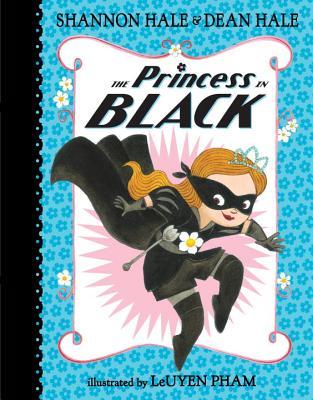
The Princess in Black
Authors: Shannon Hale and Dean Hale
Illustrator: LeUyen Pham
Published October 14th, 2014 by Candlewick Press

Goodreads Summary: Who says princesses don’t wear black? When trouble raises its blue monster head, Princess Magnolia ditches her flouncy dresses and becomes the Princess in Black!

Princess Magnolia is having hot chocolate and scones with Duchess Wigtower when . . . Brring! Brring! The monster alarm! A big blue monster is threatening the goats! Stopping monsters is no job for dainty Princess Magnolia. But luckily Princess Magnolia has a secret —she’s also the Princess in Black, and stopping monsters is the perfect job for her! Can the princess sneak away, transform into her alter ego, and defeat the monster before the nosy duchess discovers her secret? From award-winning writing team of Shannon and Dean Hale and illustrator LeUyen Pham, here is the first in a humorous and action-packed chapter book series for young readers who like their princesses not only prim and perfect, but also dressed in black.

My Review and Teachers’ Tools for Navigation: I am a sucker for girl power books. So much, I was part of writing three Nerdy Book Club Girl Power posts (here, here, and here). Princess in Black fits right in this these books. Although Princess Magnolia must live up to society’s expectations of a proper princess, in secret she fights crime, isn’t afraid of anything, and doesn’t wear pretty dresses. I love the idea that Magnolia can be a princess and all kick some butt. (I wish she could do it not in secret, but that wouldn’t fit the societal views of princesses in most fairy tales.) I know that the Hales wrote this book for their daughters, and I can see why they did: a great heroine, lots of action, funny, and colorful, fun illustrations. Princess in Black would actually be a perfect first introduction to the narrative elements and plot arc. It also just enough complex vocabulary that you could start a discussion about some of the words.

We Flagged: Chapter Two: “Princesses do not run. Princesses do not stuff frilly pink dresses into broom closets. Princess do not wear black. And princesses most definitely do not slide down secret chutes and high-jump castle walls. But then, most princess do not live near an entrance to Monster Land. Stopping monsters was no job for prim and perfect Princess Magnolia. But fortunately Princess Magnolia did have a secret. She was secretly the Princess in black! And stopping monsters was the perfect job for the Princess in Black.”

Read This If You Loved: Salem Hyde (series) by Frank Cammuso, Battle Bunny by Jon Sciezska, Fairy Tales

Recommended For: 

readaloudbuttonsmall classroomlibrarybuttonsmall

leroy ninker
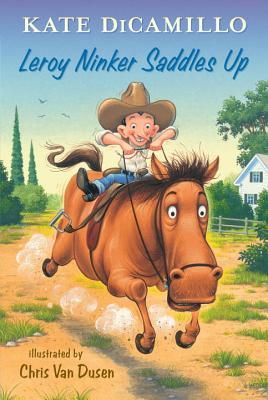
Leroy Ninker Saddles Up
Author: Kate DiCamillo
Illustrator: Chris Van Dusen
Published August 26th, 2014 by Candlewick Press

Goodreads Summary: Yippie-i-oh! Saddle up for the first in a spin-off series starring favorite characters from Kate DiCamillo’s New York Timesbest-selling Mercy Watson books.

Leroy Ninker has a hat, a lasso, and boots. What he doesn’t have is a horse — until he meets Maybelline, that is, and then it’s love at first sight. Maybelline loves spaghetti and sweet nothings, and she loves Leroy, too. But when Leroy forgets the third and final rule of caring for Maybelline, disaster ensues. Can Leroy wrestle fate to the ground, rescue the horse of his heart, and lasso loneliness for good? Join Leroy, Maybelline, and a cast of familiar characters — Stella, Frank, Mrs. Watson, and everyone’s favorite porcine wonder, Mercy — for some hilarious and heartfelt horsing around on Deckawoo Drive.

My Review and Teachers’ Tools for Navigation: I must be honest: I have not read the Mercy Watson books, but luckily it does not matter because Leroy is just so darn loveable. His personality shines through the pages and you just are so happy that Leroy and Maybelline found each other. Also, Kate DiCamillo has a way with voice! I can always hear her characters talking in my head, and they each are so very distinct. I also love her use of vocabulary and humor–perfect! This one is going to be loved by many!

Discussion Questions: Why do you think that Maybelline is the perfect horse for Leroy?; Was Leroy truly prepared to have a horse? How do you know?; Why does Leroy want to be a cowboy?

We Flagged: Leroy Ninker said ‘Yippie-i-oh’ because Leroy Ninker had a dream. He wanted to be a cowboy.

On Wednesday nights, the Bijou Drive-In Theater ran a Western double feature, and Leroy Ninker Stood and watched in wonder as the great white expanse of the Bijou screen filled with purple mountains, wide-open plains, and cowboys.

The cowboys wore ten-gallon hats. The wore boots. They carried lassos. The cowboys were men who cast long shadows and knew how to fight injustice. They were men who where never, ever afraid.

‘Yippie-i-oh,’ Leroy Ninker whispered to the screen. ‘That is the life for me. A cowboy is who I was meant to be.'” (p.2)

Read This If You Loved: Lulu and the Brontosaurus (series) by Judish Viorst, Frankie Pickle (series) by Eric Wight, Bramble and Maggie (series) by Jessie Haas

Recommended For: 

readaloudbuttonsmall classroomlibrarybuttonsmall

Signature

**Thank you to Candlewick Press for providing copies for review**

Dreaming in Indian Edited by Lisa Charleyboy and Mary Leatherdale

Share

dreaming in indian

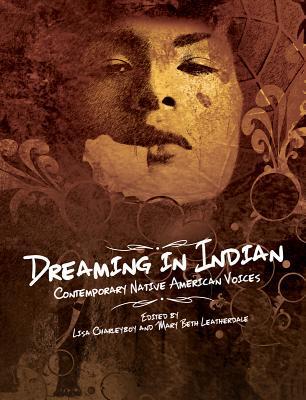
Dreaming in Indian: Contemporary Native American Voices
Editors: Lisa Charleyboy and Mary Leatherdale
Published: July 24, 2014 by Annick Press

Summary: A powerful and visually stunning anthology from some of the most groundbreaking Native artists working in North America today.

Truly universal in its themes, “Dreaming In Indian” will shatter commonly held stereotypes and challenge readers to rethink their own place in the world. Divided into four sections, ‘Roots, ‘ ‘Battles, ‘ ‘Medicines, ‘ and ‘Dreamcatchers, ‘ this book offers readers a unique insight into a community often misunderstood and misrepresented by the mainstream media.

Emerging and established Native artists, including acclaimed author Joseph Boyden, renowned visual artist Bunky Echo Hawk, and stand-up comedian Ryan McMahon, contribute thoughtful and heartfelt pieces on their experiences growing up Indigenous, expressing them through such mediums as art, food, the written word, sport, dance, and fashion. Renowned chef Aaron Bear Robe, for example, explains how he introduces restaurant customers to his culture by reinventing traditional dishes. And in a dramatic photo spread, model Ashley Callingbull and photographer Thosh Collins reappropriate the trend of wearing ‘Native’ clothing.

Whether addressing the effects of residential schools, calling out bullies through personal manifestos, or simply citing hopes for the future, “Dreaming In Indian” refuses to shy away from difficult topics. Insightful, thought-provoking, and beautifully honest, this book will to appeal to young adult readers. An innovative and captivating design enhances each contribution and makes for a truly unique reading experience.

Review: I fell in love with the stunning illustrations and beautiful language of this book. I read two to three pages per night because I wanted to leave time to absorb the authors’ words and artists’ work. The eclectic mix of forms makes for a very powerful anthology that will prove enduring for readers. It features a variety of tribes, and the differing formats and content give readers a sense of both a unity across tribes and a distinctness of individuals from the different tribes. I found it to be truly inspiring and wish I could donate this book to every middle and high school classroom.

Teacher’s Tools for Navigation: This text is obviously a great resource for teachers. It need not be used in its entirety because this text would be excellent for close readings. Whatever the format, it would be preferable to avoid using this book solely during the month of November—“Native American Heritage Month.” I align with scholars who believe that diverse cultures should be highlighted year-round and integrated within curricula, rather than solely within designated months.

Discussion Questions: In what ways are the themes of this book universal? In what way are they distinct?; What themes can you find across the works?; How does this book shed light on Indian culture?; How is the text structured? Do you find the style to be effective?

Book Trailer: 

From the Authors:

Recommended For:

closereadinganalysisbuttonsmall classroomlibrarybuttonsmall

RickiSig

Audacity by Melanie Crowder

Share

audacity

Audacity
Author: Melanie Crowder
Published: January 8, 2015 by Philomel

Goodreads Summary: The inspiring story of Clara Lemlich, whose fight for equal rights led to the largest strike by women in American history

A gorgeously told novel in verse written with intimacy and power, Audacity is inspired by the real-life story of Clara Lemlich, a spirited young woman who emigrated from Russia to New York at the turn of the twentieth century and fought tenaciously for equal rights. Bucking the norms of both her traditional Jewish family and societal conventions, Clara refuses to accept substandard working conditions in the factories on Manhattan’s Lower East Side. For years, Clara devotes herself to the labor fight, speaking up for those who suffer in silence. In time, Clara convinces the women in the factories to strike, organize, and unionize, culminating in the famous Uprising of the 20,000.
Powerful, breathtaking, and inspiring, Audacity is the story of a remarkable young woman, whose passion and selfless devotion to her cause changed the world.

Ricki’s Review: This is an inspirational book in verse based on the true story of Clara Lemlich. She was a Russian Jewish immigrant who was forced to work in horrible factory conditions in the early 1900s. Clara stood up for her rights and fought with the union. What I liked most about this book is the author gives so much information about Orthodox Judaism, unions, and feminism, but she doesn’t hit readers over the head with the information. I don’t enjoy reading books about religion, and I don’t particularly seek out books about feminism (or unions, for that matter), yet I found Clara’s story to be both fascinating and compelling. All types of readers will love this story, and it is very teachable.

Teacher’s Tools for Navigation: I would love to teach this book. It offers great opportunities for building background knowledge about history. I wish this book existed when I used to teach The Jungle because the connections are innumerable. If I taught this book, I would use a jigsaw, research, and/or webquest activity where students spent time researching the 1900s, Russian immigration in the 1900s, unions, feminism, schooling in the 1900s, the Triangle Shirtwaist Factory fire, and Orthodox Judaism. This knowledge would provide a rich reading of this text.

Discussion Questions: How do Clara’s parents and siblings view her actions?; Make a list of your top five values. Then, make a list of Clara’s top five values. Are they the same? Different? Do you think your values differ from hers because of your personalities or because of the different time periods you live in?

We Flagged: “How can I tell Mama / who toils / sunup / to sundown / to be a good mother / a good wife / that this life / (her life) / is not enough for me, / that I dream instead / of words / ideas / a life that stretches far beyond / the bounds of this shtetl?” (p. 12).

*Please note that this quotation is from an advanced reader copy, and the quote may be different in the published version of the book.*

Read This If You Loved: The Jungle by Upton Sinclair, Like Water on Stone by Dana Walrath, A Northern Light by Jennifer Donnelly, Between Shades of Gray by Ruta Sepetys

Recommended For:

 litcirclesbuttonsmall classroomlibrarybuttonsmall

RickiSig

**A special thank you to Penguin for sending this book for review!**

How It Went Down by Kekla Magoon

Share

how it went down

How It Went Down
Author: Kekla Magoon
Published: October 21, 2014 by Henry Holt and Co.

Goodreads Summary: When sixteen-year-old Tariq Johnson dies from two gunshot wounds, his community is thrown into an uproar. Tariq was black. The shooter, Jack Franklin, is white.

In the aftermath of Tariq’s death, everyone has something to say, but no two accounts of the events line up. Day by day, new twists further obscure the truth.

Tariq’s friends, family, and community struggle to make sense of the tragedy, and to cope with the hole left behind when a life is cut short. In their own words, they grapple for a way to say with certainty: This is how it went down.

Ricki’s Review: In light of the recent protests, this is an incredibly insightful book that is very important. The point-of-view shifts every 2-3 pages, which was very thought-provoking. Too often, books depict stereotypical portrayals of members of cultures, and the gamut of characters within this text felt very realistic. For some, this book may be too gritty and too uncomfortable. There is nothing comfortable about discussions regarding inequities and privilege in society. But if you walk down the halls of my high school, there is nothing in the book that is not a concern in schools. This is not a feel-good read, but it made me think. And thinking…is a very good thing.

Teacher’s Tools for Navigation: There is much to discuss in this book. Teachers could use it to start conversations about power and privilege. There are a lot of discrepancies between the characters’ perceptions of the shootings, and I imagine students would disagree about what happened. Teachers might elect to hold a verbal or silent debate. Also, I would love to discuss the structure of the text. The creativity in the form is purposeful, and it would be interesting for students to investigate why Magoon structured it in the way she did.

Discussion Questions: Why does Magoon structure the novel with alternating voices? How is the novel structured as a whole?; Does this story serve as a counter-narrative? If so, how? If not, why not?; Did Tariq have a gun in his hand? Why do/don’t you think so?; How does the story evolve as time passes?

We Flagged: “As a black man, you have to keep your head down. You have to keep yourself steady. You have to follow every rule that’s ever been written, plus a few that have always remained unspoken.”

Read This If You Loved: The Outsiders by S.E. Hinton, On the Run by Alice Goffman, The New Jim Crow: Mass Incarceration in the Age of Colorblindness by Michelle Alexander, Monster by Walter Dean Myers, The Brothers Torres by Coert Voorhees, Autobiography of my Dead Brother by Walter Dean Myers

Recommended For:

 litcirclesbuttonsmall classroomlibrarybuttonsmall

RickiSig