Educator Guest Post: “Story Talk: Use Conversation to Fall in Love with a Book–A Reading Resource using Float by Daniel Miyares” by Hillary Wolfe

Share

“Story Talk: Use Conversation to Fall in Love with a Book–A Reading Resource using Float by Daniel Miyares”

Reading a story with a child is one of the most loving ways to build a relationship. Snuggled up together, you can laugh, feel sad, be curious, and learn something, together. Stories open up worlds and let us see things through the eyes of another. It’s the best way to teach empathy.

The first few times you read a story, just enjoy the experience of saying the words, or looking at the pictures. How is your child responding? Let them just sit with the feelings they have.

But you don’t have to stop there. The real reason to read a story more than once or twice is so you can get to know it better, learn its secrets, discover what it’s trying to tell you. Just like a new friend, the first few times you meet, you just want to have fun. But each time you return to the story, try to learn a little more about it. This is how you fall in love with storytelling, and with reading.

Here’s a secret about authors: They wish they could be in the room with you, talking to you about their story. Since they can’t do that, they leave you clues instead. It’s like a puzzle – can you figure out what the author was thinking about? Why did they use that word, that color, or those images? The author loves it when you take the time to get to know what they are thinking.

Once you feel like you understand howthe author thinks, see if you can determine whythe author thinks that way. What was this story really trying to tell you?

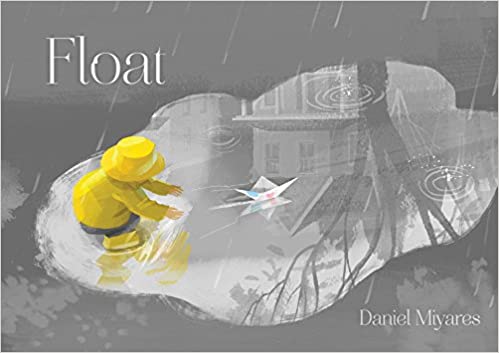
Take a look at the picture book Float by Daniel Miyares. There are no words, but it is most definitely a rich story. The first time you read it, just flip through the pages and ask your child what is happening. What is this story about?

After a few reads, you can stop at a few places on each page and point to something, pose a question, and ponder with your child about the choices that the author or illustrator made. Not only are you getting to know the story better, you are providing your child with a blueprint for how to approach reading. Can they visualize something? Will they make a prediction? Does this story connect with their own life in any way? When children can do these things on their own, they are more likely to stay engaged with reading, and to go beyond the surface to explore deeper understanding.

If you want an example of how this can look, follow the prompts in the figure below. On each page of the story, notice the feature identified under “Stop at…”. Have a conversation about the feature. As you do this, you are modeling great reading strategies, such as Visualizing, Making Predictions, Summarizing, Asking Questions, Inferring, or Making Connections to the text. These conversations are reading skill-builders.

Then, go a little deeper. Ask your child to consider what the author was thinking about, or to try to explain a choice the author made. These questions will help the child understand that behind every story is a human being who just wants a moment of your time to talk to you about something they care about.

In school, teachers will call this “close reading.” Close reading means reading a text more than once, for multiple purposes. First, read to get the gist. What is the story about? Who are the characters? What happens first, in the middle, and at the end?

Next, read for author’s craft. This means paying attention to the word choices the author made, the text structure they chose, the images they used. What was the context for the story? From whose point of view is the story told?

Finally, read to evaluate the ideas from multiple perspectives. What does the story stir up in you? Does it make you want to take an action, or make a change in your own life?

This may sound very dry and academic and like it takes a lot of work. But it doesn’t have to be so formal. It’s a conversation, a way to make friends with a story, and let it into your life. Get to know it, ask it questions, try to understand its point of view. Be a good friend. In return, you may get a companion that will stay with you for a long, long time.

As you read…

Page Suggestions of Places to Pause… Focus on a Reading Strategy… Have a Discussion About…
Inside cover Arrows and dotted lines Visualize: What do the arrows mean? What do the dotted lines mean?

How many sheets of paper will be needed to make this?

Text Structure: What is the author/illustrator showing us?
Title Float Inferring: What did the instructions on the previous page make? (Hint: There’s a clue on the cover)
1-2 Picture: Notice the blue square Inferring: How many people are in the picture? Who do you think they are? Author’s/Illustrator’s Craft: Why is there only a little bit of color on the paper? What does the illustrator want you to notice?
3-4 What the child is wearing; the sky Predicting: What will the weather be like? Author’s/Illustrator’s Craft: Why did the author make the coat and boots the only color in the picture?
5-6 Third panel Questioning: How does the child feel in the first panel? In the second? In the third? Author’s/Illustrator’s Craft: What do the three panels represent?
7-8 Yellow Visualize: Does this look like rainstorms you have seen?

Make Connections: Do you like the rain?

Gist: What is this story about so far?
9-10 Reflections Question: Has the weather changed? Why is the picture of the house and tree upside down? Citing Evidence: How do you know it is still raining?
11-12 Blurred lines, ripples Summarizing: Explain what is happening in this picture. Citing Evidence: How does the author/illustrator show movement?
13-14 Second panel Visualizing: What angle are we seeing the child from? How do you know?

What do the wavy white lines mean?

Gist: What did the rain provide for the boat?
15-16 Child holding his hat; perspective Predicting: Who is faster- the child or the boat?

What will happen to the boat?

Citing Evidence: The child is holding onto the hat. Is it windy or is the child running fast? What are the clues in the picture?
17-18 Child’s pose Summarize: Explain what has happened. Integration of Ideas: How has the child’s feelings about the boat changed so far?
19-20 Top panel Questioning: Did the child see the boat cross the street?
21-22 Child’s pose Predicting: What is about to happen to the boat?
23-24 Child’s face Making Connections: How does it feel to lose something you care about? Author’s/Illustrator’s Craft: The illustrator used the color black and drew a shadow across the boat. Do you think the child will be able to find the boat?
25-26 Water Inferring: Where did the boat go?  
27-28 Third panel Inferring: How does the child feel? Integration of Ideas: The weather has changed again. What is the relationship between the rain and the child’s mood?
29-30 Shadow Visualizing: What time of day is it? Where is the child going?  
31-32 Boat Questioning: Who opened the door? Gist: What do you think the child will tell the adult about what happened?
33-34 First and third panels Making Connections: What do you do when someone you care about is sad? What makes you feel better when you are sad?  
35-36 Pink picture in the paper Predicting: What do you think they will make with the paper? Citing Evidence: Is it morning or night-time? What clues did the illustrator give you?
37-38 Color of the sky; what the child is holding Summarizing: What time of day is it? How do you know?

Predicting: What is going to happen next?

Integration of Ideas: Yellow is a bright color. What does the author/illustrator want us to know about how the child is feeling?
39-40 Child’s pose, clothes Predicting: Was your prediction from the last page correct? Integration of Ideas: What is something you can tell yourself when something makes you sad? What determines if you will be happy or sad?
41-42 Arrows, dotted lines Questioning: Why did this story end this way? Text Structure: How is this page the same as, and different from, the opening page?
Furthering the Conversation
Think about the title. What does the word “float” mean? Explain what it means for a boat or for a plane. How could you use the word “float” to describe an attitude?

Do you have a favorite story that you would like broken down this way? Please send suggestions to Story Talk, a website for engaging in reading conversations. https://hillwolfe.wixsite.com/story-talk, or email me at hw.storytalk@gmail.com.

About Educator Hillary Wolfe: Hillary Wolfe is a Director of Curriculum and Instruction in El Monte, CA, who has worked with students from grades pre-K through 12, and has served as an instructional coach, intervention coordinator, and media specialist. As a classroom teacher, she created a writing curriculum for middle- and high school literacy students reading two or more years below grade level, helping her students achieve substantial gains on state exams. Ms. Wolfe also brings 10 years as a journalist and an education columnist to her understanding of instruction and best practices. She has written books on writing strategies (Capstone 2013/2015), and teachers guides for phonemic awareness activities (Capstone 2017), as well as articles on literacy and intervention in national journals. She has made presentations around literacy for national organizations, and has served as an editor, curriculum writer, and Academic Officer in educational publishing as well as a Coordinator for Academic Interventions for the Orange County Department of Education.

Float
Creator: Daniel Miyares
Published June 9th, 2015 by Simon & Schuster Books for Young Children

About the Book:A boy’s small paper boat and his large imagination fill the pages of this wordless picture book, a modern-day classic from the creator of Pardon Me! that includes endpaper instructions for building a boat of your own.

A little boy takes a boat made of newspaper out for a rainy-day adventure. The boy and his boat dance in the downpour and play in the puddles, but when the boy sends his boat floating down a gutter stream, it quickly gets away from him.

So of course the little boy goes on the hunt for his beloved boat, and when the rain lets up, he finds himself on a new adventure altogether.

This seemingly simply story from Daniel Miyares is enriched with incredible depth and texture that transcend words.

Thank you, Hillary, for this amazing resource!

Educators’ Guide for A Stone Sat Still by Brendan Wenzel

Share

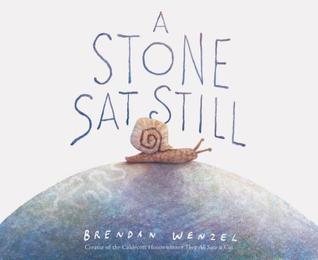
A Stone Sat Still
Author & Illustrator: Brendan Wenzel
Published: August 27th, 2019 by Chronicle Books

Summary: The brilliant follow-up to the Caldecott Honor-winning and New York Times bestselling picture book They All Saw a Cat by Brendan Wenzel!

A Stone Sat Still tells the story of a seemingly ordinary rock—but to the animals that use it, it is a resting place, a kitchen, a safe haven…even an entire world.

This is a gorgeous exploration of perspective, perception, and the passage of time, with an underlying environmental message that is timely and poignant.

• Filled with stunning illustrations in cut paper, pencil, collage, and paint
• Soothing rhythms invite reading aloud and bedtime snuggles
• Introduces concepts like color, size, function, and time in a way that is easily understandable and teachable for children

With a rhythmic, calming narrative about the stone and its place in the world—and the changing environment—A Stone Sat Still proves Brendan Wenzel’s mastery of the picture book form.

Teachers’ Tools for Navigation and Discussion Questions: 

Please view and enjoy the official educators’ guide for A Stone Sat Still (created by me!):

You can also access the teaching guide here.

You can learn more about A Stone Sat Still here.

Recommended For: 

readaloudbuttonsmall classroomlibrarybuttonsmall litcirclesbuttonsmall closereadinganalysisbuttonsmall

Kellee Signature

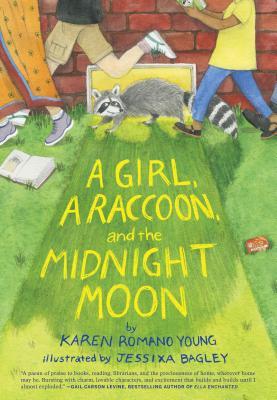
Educators’ Guide for A Girl, a Raccoon, and the Midnight Moon by Karen Romano Young, Illustrated by Jessixa Bagley

Share

A Girl, a Racoon, and the Midnight Moon
Author: Karen Romano Young
Illustrator: Jessixa Bagley
Published: January 7th, 2020 by Chronicle Books

Summary: In a slightly fantastical New York City, one very special library branch has been designated for possible closure. Bookish, socially awkward Pearl, the daughter of the librarian, can’t imagine a world without the library—its books, its community of oddballs, its hominess. When the head of their Edna St. Vincent Millay statue goes missing, closure is closer than ever. But Pearl is determined to save the library. And with a ragtag neighborhood library crew—including a constantly tap-dancing girl who might just be her first friend, an older boy she has a crush on, and a pack of raccoons who can read and write—she just might be able to.

With an eclectic cast of richly drawn characters, a hint of just-around-the-corner magic, footnotes, sidebars, and Jessixa Bagley’s classic illustrations throughout, this warm-hearted, visually magnificent tale of reading and believing from beloved author Karen Romano Young tells of a world where what you want to believe can come true.

Teachers’ Tools for Navigation and Discussion Questions: 

Please view and enjoy the official educators’ guide for A Girl, a Racoon, and the Midnight Moon (created by me!):

You can also access the teaching guide here.

You can learn more about A Girl, a Raccoon, and the Midnight Moon here.

Recommended For: 

readaloudbuttonsmall classroomlibrarybuttonsmall litcirclesbuttonsmall closereadinganalysisbuttonsmall

Kellee Signature

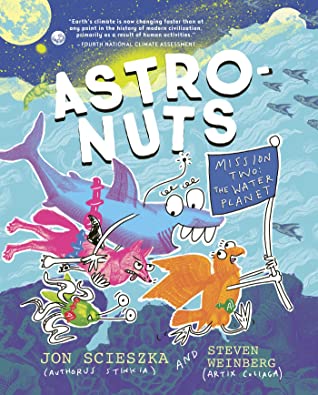
Educators’ Guide for AstroNuts Mission Two: The Water Planet by Jon Scieszka, Illustrated by Steven Weinberg

Share

AstroNuts Mission Two: The Water Planet
Author: Jon Scieszka
Illustrator: Steven Weinberg
Published: August 25th, 2020 by Chronicle Books

Summary: AstroNuts Mission Two: The Water Planet is the second book in the laugh-out-loud series by children’s literature legend Jon Scieszka.

The book follows a new mission, where AstroWolf, LaserShark, SmartHawk, and StinkBug must find a planet fit for human life after we’ve finally made Earth unlivable.

After they splash-land on the Water Planet, they find power-hungry clams, a rebellious underwater force, and a world full of too-good-to-be-true. Can this aquatic world really be humans’ new home? And why are these clams so eager to swap planets?

• Features full-color illustrations and an out-of-this-world book jacket
• A can’t-put-it-down page-turner for reluctant readers
• Complete with how-to-draw pages in the back

AstroNuts Mission Two is full of laugh-out loud humor with a thoughtful commentary on the reality of climate change at the core of the story.

Eager and reluctant readers alike ages 8 to 12 years old will be over the moon about this visually groundbreaking read.

• Creatively illustrated, full-color action-packed space saga
• Perfect for fans of Dog Man, Big Nate, Wimpy Kid, and Captain Underpants
• Great gift for parents, grandparents, teachers, librarians, and educators who are looking to introduce STEM and environmental topics to children
• Add it the the shelf with books like The Bad Guys in Superbad by Aaron Blabey, The 104-Story Treehouse: Dental Dramas & Jokes Galore! by Andy Griffiths, and The Stinky Cheese Man and Other Fairly Stupid Tales by Jon Scieszka

Teachers’ Tools for Navigation and Discussion Questions: 

Please view and enjoy the official educators’ guide for AstroNuts Mission Two (created by me!):

You can also access the teaching guide here.

You can learn more about AstroNuts Mission Two here.

You can see information about AstroNuts Mission One and its Educators’ Guide here.

Recommended For: 

readaloudbuttonsmall classroomlibrarybuttonsmall litcirclesbuttonsmall closereadinganalysisbuttonsmall

Kellee Signature

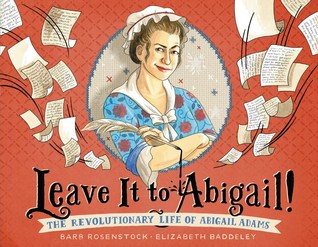
Educators’ Guide for Leave It to Abigail: The Revolutionary Life of Abigail Adams by Barb Rosenstock, Illustrated by Elizabeth Haddeley

Share

Leave It to Abigail!: The Revolutionary Life of Abigail Adams
Author: Barb Rosensock
Illustrator: Elizabeth Haddeley
Published: February 4th, 2020 by Little, Brown and Company

Summary: In this inspiring tribute, award-winning author Barb Rosenstock and New York Times bestselling artist Elizabeth Baddeley tell the true story of one of America’s greatest founding mothers: Abigail Adams.

Everyone knew Abigail was different.

Instead of keeping quiet, she blurted out questions. Instead of settling down with a wealthy minister, she married a poor country lawyer named John Adams. Instead of running from the Revolutionary War, she managed a farm and fed hungry soldiers. Instead of leaving the governing to men, she insisted they “Remember the Ladies.” Instead of fearing Europe’s kings and queens, she boldly crossed the sea to represent her new country. And when John become President of the United States, Abigail became First Lady, and a powerful advisor.

Leave it to Abigail–an extraordinary woman who surprised the world.

Teachers’ Tools for Navigation and Discussion Questions: 

Please view and enjoy the official educators’ guide for Leave It to Abigail (created by me!):

You can also access the teaching guide here.

You can learn more about Fight of the Century here.

Barb Rosenstock also created two other resources for educators:
A Pinterest Board
A Text Set

Recommended For: 

readaloudbuttonsmall classroomlibrarybuttonsmall litcirclesbuttonsmall closereadinganalysisbuttonsmall

Kellee Signature

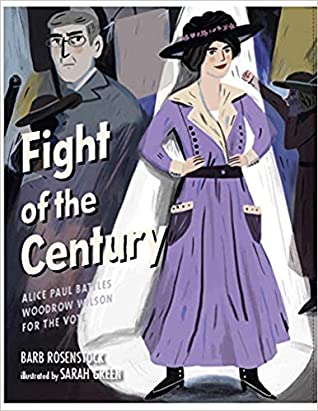
Educators’ Guide for Fight of the Century: Alice Paul Battles Woodrow Wilson for the Vote by Barb Rosenstock, Illustrated by Sarah Green

Share

Fight of the Century: Alice Paul Battles Woodrow Wilson for the Vote
Author: Barb Rosensock
Illustrator: Sarah Green
Published: February 25th, 2020 by Calkins Creek

Summary: The fight for women’s suffrage between women’s rights leader Alice Paul and President Woodrow Wilson is presented as a four-round boxing match in this nonfiction picture book.

When Woodrow Wilson was elected President, he didn’t know that he would be participating in one of the greatest fights of the century: the battle for women’s right to vote. The formidable Alice Paul led the women’s suffrage movement, and saw President Wilson’s election as an opportunity to win the vote to women. She battered her opponent with endless strategic arguments and carefully coordinated protests, calling for a new amendment granting women the right to vote. With a spirit and determination that never quit–even when peaceful protests were met with violence and even when many women were thrown in jail–Paul eventually convinced President Wilson to support her cause, changing the country forever.

Teachers’ Tools for Navigation and Discussion Questions: 

Please view and enjoy the official educators’ guide for Fight of the Century (created by me!):

You can also access the teaching guide here.

You can learn more about Fight of the Century here.

Barb Rosenstock also created two other resources for educators:
A Pinterest Board
A Text Set

Recommended For: 

readaloudbuttonsmall classroomlibrarybuttonsmall litcirclesbuttonsmall closereadinganalysisbuttonsmall

Kellee Signature

Magnificent Makers: How to Test a Friendship by Theanne Griffith, Illustrated by Reggie Brown

Share

Magnificent Makers: How to Test a Friendship
Author: Theanne Griffith
Illustrator: Reggie Brown
Published May 19, 2020 by Random House Children’s Books

Summary: BOOM! SNAP! WHIZ! ZAP! The Magnificent Makers series is filled with science, adventure, and characters that readers will love!

A modern-day Magic School Bus for chapter book readers!

Violet and Pablo are best friends who love science! So when they discover a riddle that opens a magic portal in the Science Space at school, they can’t wait to check it out! Along with their new classmate, Deepak, the friends discover a magical makerspace called the Maker Maze. It’s a laboratory full of robots, 3D printers, an antigravity chamber, and more. Doors line the walls of the makerspace, with a new science adventure waiting behind each one.

Ricki’s Review: I think I’ve recommended this book to about fifteen people since we’ve read it. I really admire the way in which Griffith incorporates science in such a fun way. The book almost feels interactive. I am going to admit that I, an adult, learned some cool science information as we read this one. We read this book with our virtual book club of kids, and they all loved it. It was very easy to host discussions, and the kids were very animated as they talked about the sections that they loved most. This is a great early chapter book series that is going to be well-loved by teachers. The interdisciplinary nature of the text makes it very easy to teach. We will definitely be getting the next book in the series.

Kellee’s Review: As a mom of 1st grader who loves to read, we are always looking for new early chapter books that will grab his attention and this book is everything we could want. First, it is relatable. The dynamics between the three characters are accurate and just on point. It also deals with real feelings like jealousy and competitiveness. Second, it is about science! Trent is definitely a science loving kid, and adding some science into his books makes him love them more. Third, it is a reflection of the real world (even though they travel to another dimension) because there are a diversity of kids and adults both in looks and behavior. We have already gone to buy the next three in the series, and we cannot wait to see what adventure happens next!

Teachers’ Tools for Navigation: This book offers many questions that can lead to inquiry and many topics that can be explored further by kids. Teachers might ask students to select a topic in science and write a fictional story about it. This would require some research and thinking about how information is presented in fiction.

Discussion Questions: 

  • What was your favorite aspect of science that you learned from the book?
  • What emotions did the characters experience in the book? Have you been in situations where you’ve felt these emotions?
  • What could you research from this book to learn more (e.g. robots, 3D printers, an antigravity chamber, the ecosystem)?

Flagged Passage: “Producers, consumers, decomposers, oh my! All are necessary for an ecosystem to survive. Most animals are __________. Living things, beware! If ____________ disappeared, we wouldn’t have fresh air. And without ______________, nature’s garbage would be everywhere! Solve this riddle to enter the maker maze” (p. 11).

Read This If You Love: Science books, early chapter books, interdisciplinary learning

Recommended For: 

classroomlibrarybuttonsmall

and Signature