Tales from the Arabian Nights: Stories of Adventure, Magic, Love, and Betrayal by Donna Jo Napoli

Share

nfpb2017

Nonfiction Wednesday

Nonfiction Picture Book Wednesday is hosted by Kid Lit Frenzy and was started to help promote the reading of nonfiction texts. Most Wednesdays, we will be participating and will review a nonfiction text (though it may not always be a picture book).
Be sure to visit Kid Lit Frenzy and see what other nonfiction books are shared this week!
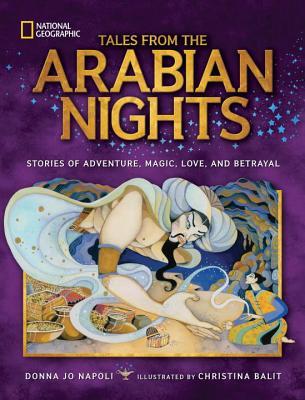
arabian-nights

Tales from the Arabian Nights: Stories of Adventure, Magic, Love, and Betrayal by Donna Jo Napoli
Author: Donna Jo Napoli
Illustrator: Christina Balit
Published October 11th, 2016 by National Geographic Children’s Books

Summary: Classic stories and dazzling illustrations of princesses, kings, sailors, and genies come to life in a stunning retelling of the Arabian folk tales from One Thousand and One Nights and other collections, including those of Aladdin, Sinbad the Sailor, and Ali Baba and the Forty Thieves. The magical storytelling of award-winning author Donna Jo Napoli dramatizes these timeless tales and ignites childrens’ imaginations.

Review: This short story anthology of Arabian mythology was fascinating, captivating, and beautifully written and illustrated. The layers of themes and stories built upon each other to create a collection that is a wonderful introduction to true traditional literature.

One thing that I at first struggled with but then ended up loving was how stories overlapped with stories. The main story was that a young woman was telling her husband a story every night to keep him in suspense so that he keeps her alive for another night. So within her story, she is telling stories. Then sometimes the characters in her stories, to help her add suspense and cliffhangers, will tell stories. So that meant at times the story you were reading was a story within a story within a story. Sounds confusing but the way it was explained and implemented allowed for the tactic to do what the young woman hoped it would do for her husband–I just had to keep reading!

I also, in my ignorance, had not read any Arabian traditional literature as I only knew the pop culture versions, so I loved learning about the culture and history through their folk tales.

Teachers’ Tools for Navigation: Greek mythology is taught throughout school; however, there are folk tales and mythology from so many other cultures. I would love to see more Arabian folk tales taught during mythology units (and why not more folk tales and mythology from other cultures as well!). Donna Jo Napoli along with Christina Balit already have anthologies for Egyptian and Norse (and Greek), so those are a good place to start!

Discussion Questions: What are some themes you see throughout all of the tales?; How are the stories you were familiar with different than the popular culture versions you knew?

Flagged Passages: 
arabian-nights-illustration

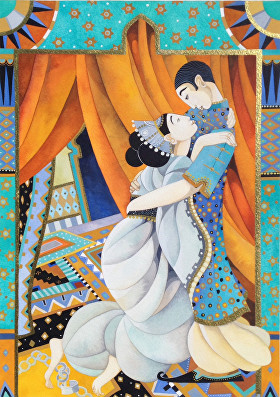
“Princess Budur unfoldedthe letter and her own ring dropped into her palm. She read the letter. At last! She planted her feet against the wall and strained until the iron around her neck snapped. She pulled the curtain aside and threw herself into Qamar al-Zaman’s arms. On that day they were wed.” (p. 72-73)

Read This If You Love: The Arabian Nights by various and other Middle Eastern or Asian stories and folk tales, mythology

Recommended For: 

classroomlibrarybuttonsmall closereadinganalysisbuttonsmall

Signature

**Thank you to Karen at Media Masters Publicity for providing a copy for review!!**
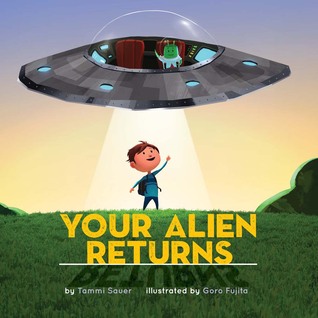
Review and Giveaway!: Your Alien Returns by Tammi Sauer

Share

your-alien-returns

Your Alien Returns
Author: Tammi Sauer
Illustrator: Goro Fujita
Published October 4th, 2016 by Sterling Children’s Books

Summary: When you least expect it, something special will get your attention.
Your alien will be back.
He will invite you over for a play date.

Come along on an out-of-this-world experience! In this heartwarming sequel to the critically acclaimed Your Alien, it’s the human boy’s turn to visit the extraterrestrial’s home planet—and to feel like an outsider. But with a little help from his very best friend in the whole universe, our young hero finds a way to fit in. Like the two irresistible characters, readers will have the ride of their lives.

About the Author: Tammi Sauer is the author of many Sterling books, including Your Alien, Mary Had a Little Glam, Chicken Dance, Bawk & Roll, and Cowboy Camp. She is an active blogger and highly involved in the children’s writer community. Tammi has worked as a teacher and library media specialist, but now writes full time and visits schools around the country. She lives in Edmond, OK. Follow Tammi on Twitter @SauerTammi or visit her website at http://www.tammisauer.com/.

About the Illustrator: Goro Fujita was born in Japan and now lives in San Jose, CA. He works as a book illustrator, animator, and art director on virtual-reality experiences.  Visit him online at area-56.de.

Review: I definitely recommend checking out the first book, Your Alien, and our review of it because it really does point out a lot of what made me definitely have to review the second book, and the second book did not disappoint. The theme of friendship and perspective rings true in the sequel as well but what I love the most about the narrator and his alien is the true friendship they have! They are an example of being able to be friends, true friends, without changing who you really are. And I am so in awe of the illustrations. Goro Fujita brings the story to life in such a fun and colorful yet realistic way!

Teachers’ Tools for Navigation: As we mentioned in the first book’s review, the point of view of this text is so unique! Tammi Sauer uses 2nd person point of view to bring the reader literally into the story and makes them part of it. Usually in elementary school when point of view is taught, only 1st and 3rd person are taught, but Your Alien and Your Alien Returns would give teachers away to show what 2nd person is and how it can be utilized in narrative form.

Discussion Questions: What emotions did the boy go through from the beginning to the end of the book?; How did the alien help the boy feel better when he was feeling left out?; How does the author’s choice of 2nd person POV change how the story experience is?; If you were going to retell the story like the narrator does for his parents at the end, how would you tell it?

Flagged Passages: 

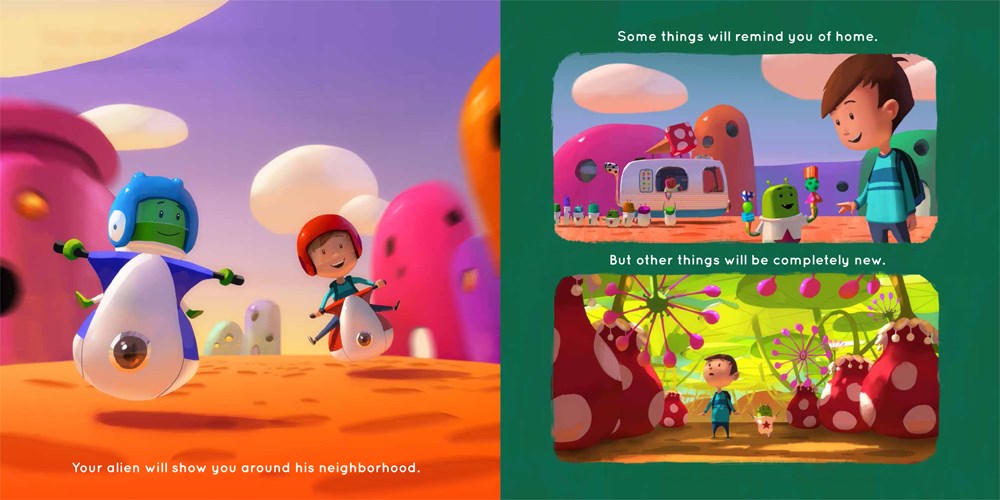
your-alien-returns-spread

Read This If You Loved: Your Alien by Tammi Sauer,  Faraway Friends by Russ CoxBoy + Bot by Ame DyckmanLife on Mars by Jon Agee

Recommended For:

  readaloudbuttonsmall classroomlibrarybuttonsmall

Giveaway!

a Rafflecopter giveaway

Kellee Signature

**Thank you to Lauren at Sterling for providing a copy for review!**

Natumi Takes the Lead: The True Story of an Orphan Elephant Who Finds a Family by Gerry Ellis with Amy Novesky

Share

NFPB2016

Nonfiction Wednesday

Nonfiction Picture Book Wednesday is hosted by Kid Lit Frenzy and was started to help promote the reading of nonfiction texts. Most Wednesdays, we will be participating and will review a nonfiction text (though it may not always be a picture book).
Be sure to visit Kid Lit Frenzy and see what other nonfiction books are shared this week!

natumi

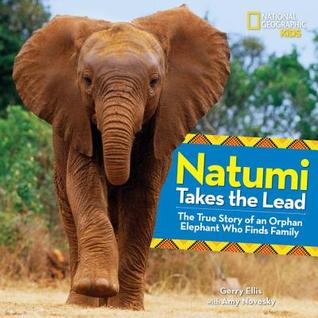
Natumi Takes the Lead: The True Story of an Orphan Elephant Who Finds Family
Author: Gerry Ellis with Amy Novesky
Published November 8th, 2016 by National Geographic Children’s Books

Goodreads Summary: After losing her mother, shy Natumi is rescued by a team from the David Sheldrick Wildlife Trust, an orphanage for baby elephants. At the shelter, Natumi hides behind keepers’ legs to watch the other elephants at the shelter. But soon, she meets several other orphans, and the eight of them play together in the surrounding bush.

As the babies become closer and more like a real family, they need a leader, someone they can trust. Can Natumi grow into this role?

Join the herd to find out what happens when they travel back into the wild. This sweet story, with its heartwarming photographs, explores the challenges and joys of family, love, and growing up, and is a perfect bedtime tale.

Review: In addition to being a story that teaches about elephants, Natumi’s story is one that will warm readers’ hearts. Her story is sad yet inspiring, heart breaking yet beautiful, and the reader gets to be there every step of the way. Gery Ellis’s photographs allow the reader to be right in the story and helps move this book past just a normal informational nonfiction text to literary nonfiction thus allowing it to cross boundaries in the classroom.

Teachers’ Tools for Navigation: Since the text crosses the informational/literary boundaries, there are immense possibilities to how this text could be used in the classroom. When I finished, the two things that struck me right away were the theme of the story and the inquiry that this story could be a basis for. Natumi’s story definitely has a pretty solid theme that can tie into many other texts or even science discussions about animal behaviors. Also, the text talks about one animal in peril in the wild, and it could be a jumping off point for a science/language arts crossover project where students state find a problem in the wild and create information, much like the author’s note, that shows ways to help and learn more about the issue. In addition, there are opportunities for vocabulary development, mapping skills, prediction, cause/effect, and much more.

Discussion Questions: How did poachers change Natumi’s life forever? Why are there poachers in Africa?; Why are elephant orphanages needed? How could we help this problem?; How did Natumi become the leader of her family?

Flagged Passages: 

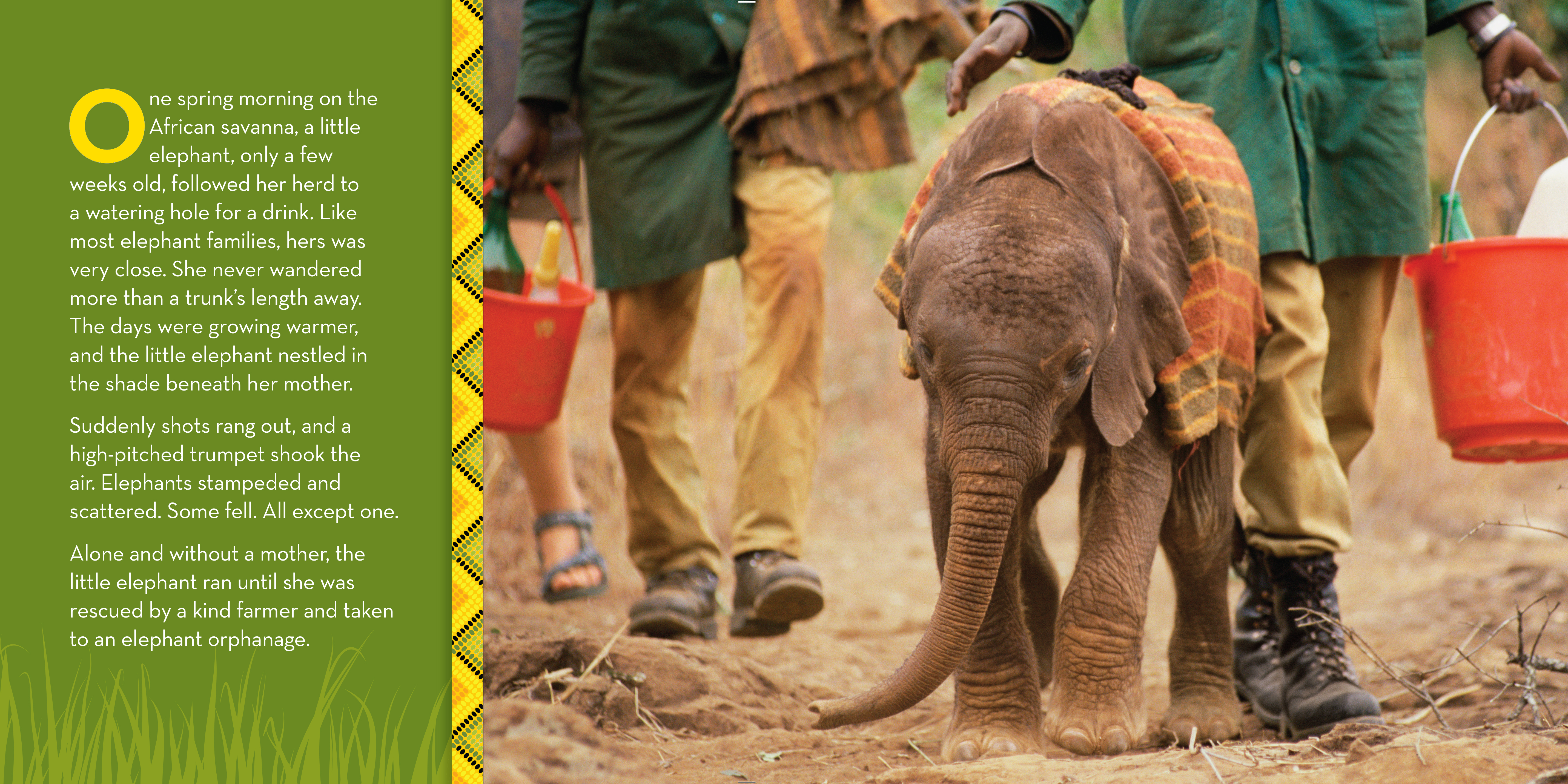
natumi-spread

Read This If You Love: Elephants, Learning about endangered animals, Africa 

Recommended For: 

classroomlibrarybuttonsmall closereadinganalysisbuttonsmall readaloudbuttonsmall

Signature

**Thank you to Karen at Media Masters for providing a copy for review!**

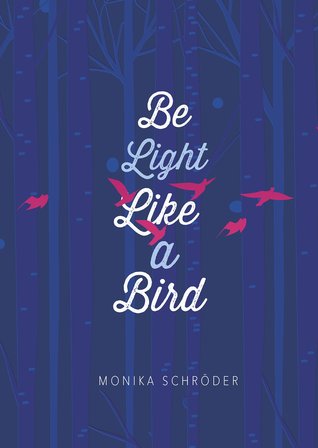
Be Light Like a Bird by Monika Schröder

Share

Be Light like a Bird

Be Light Like a Bird
Author: Monika Schröder
Published September 1st, 2016 by Capstone Young Readers

Summary: After the death of her father, twelve-year-old Wren finds her life thrown into upheaval. And when her mother decides to pack up the car and forces Wren to leave the only home she’s ever known, the family grows even more fractured. As she and her mother struggle to build a new life, Wren must confront issues with the environment, peer pressure, bullying, and most of all, the difficulty of forgiving those who don’t deserve it. A quirky, emotional middle grade novel set in Michigan’s Upper Peninsula, Be Light Like a Bird features well-drawn, unconventional characters and explores what it means to be a family and the secrets and lies that can tear one apart.

Review: When I originally started this book over the summer, I had just finished Truth or Dare by Barbara Dee which was about a young girl’s grief after the loss of her mother, so when I picked up Be Light Like a Bird and Wren’s father passed away in the first few pages, it just emotionally wrecked me. I tried continuing, but the grief that Wren and her mother feel just lept off the page and into my heart–I had to put it down for a bit. When I picked it back up, after Augusta Scattergood recommended it, I jumped right in, prepared this time, and loved every second of my journey with Wren and her mother. 

Be Light Like a Bird was so tough for me to read the first time because the emotions that Monika Schröder evokes through her writing are just so real. Wren’s mother is in the anger stage of grief and just cannot seem to leave it while Wren wants to accept and learn to live without her father, but when your only remaining parent is in such denial and anger, it really affects the young person’s life that they are raising.

I also really love Jana’s review of Be Light Like a Bird. Visit her post to see more about the book.

Teachers’ Tools for Navigation: Wren’s journey is going to be perfect for students dealing with grief, moving to a new school, bullying, or someone who wants to start a petition or stand up for something they don’t think it write. Wren and Theo work very hard in the book to save a local pond from being built over. On their political journey, they go to a town council meeting and start a petition. They are an inspiration to what young people can do to make a difference, and teachers could definitely use part of their story to discuss advocacy, environmental, or political issues their students could fight.

Discussion Questions: What are different ways to deal with grief?; What are the six stages of grief? What are some examples from the book that show that Wren and her mom went through some of the stages?; What did Theo teach Wren about herself?; Why do you think Wren chose to try to talk her mom into staying in Pyramid? Who in the town of Pyramid helped Wren feel at home?

Flagged Passages: “…I realized she wasn’t crying because she was sad–it was because she was so mad.

Then she told me to put everything I wanted to keep into a suitcase.

How do you decide what to keep when your Dad has died and your mother has turned into a raging woman you hardly recognize? If it were up to me, I would have kept everything the way it was before. But that is obviously not an option…I sad in my room and looked around, trying to decide what to pack, but the cloud was making me numb. None of the stuff really mattered anymore.” p. 13-14

Read This If You Loved: Snicker of Magic by Natalie Lloyd, Some Kind of Happiness by Claire Legrand, Far from Fair by Elana K. Arnold

Recommended For:

  classroomlibrarybuttonsmall closereadinganalysisbuttonsmall

Kellee Signature

**Thank you to M0nika for providing a copy for review!**

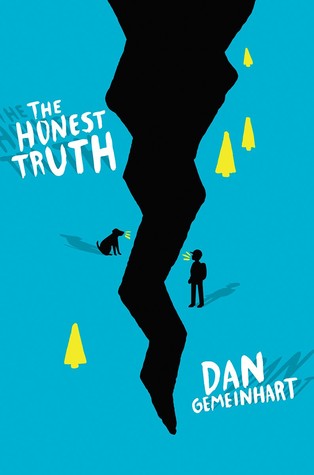
The Honest Truth by Dan Gemeinhart

Share

honest truth

The Honest Truth
Author: Dan Gemeinhart
Published: January 27, 2015 by Scholastic Press

Summary: In all the ways that matter, Mark is a normal kid. He’s got a dog named Beau and a best friend, Jessie. He likes to take photos and write haiku poems in his notebook. He dreams of climbing a mountain one day.

But in one important way, Mark is not like other kids at all. Mark is sick. The kind of sick that means hospitals. And treatments. The kind of sick some people never get better from.

So Mark runs away. He leaves home with his camera, his notebook, his dog, and a plan to reach the top of Mount Rainier–even if it’s the last thing he ever does.

The Honest Truth is a rare and extraordinary novel about big questions, small moments, and the incredible journey of the human spirit.

Ricki’s Review: In the introduction of the ARC, Dan Gemeinhart writes that this story was inspired by his friend Mark, who passed away from cancer. While the book is not about Mark, there are “smooth rocks of truth” within it. He wrote the story in hopes that Mark would enjoy reading it. With this in mind, I began the book already emotionally invested. Mark is a 12-year-old boy who has recently relapsed with cancer. He is tired of being sick, and he has set out with his dog and plans to go to Mt. Rainier to die. Much of the book is Mark’s journey to Rainier, and we slowly learn about his experiences with cancer throughout the story. Every other chapter is written by his best friend Jesse, and I found their friendship to be inspiring, particularly given the author’s introduction. This is a beautiful story that will leave a mark on readers’ hearts. I will be recommending it often.

Kellee’s Review: The Honest Truth was my first choice for my school’s faculty book club because I had only hear amazing things about it. I jumped into reading it without knowing anything about it, but by the end of the first page, I knew that all my friends who recommended it to me were right. Mark has a voice that is so full of hurt and sorrow that it jumps off the page and into your heart. The obstacles he faces and overcomes while also making his way to die alone show the strength of his character. I also was a big fan of the two points of view because it allows the reader to see what was going on at home and maybe get some more truth than what Mark was telling us (though he swears it all is the honest truth).

For our book club meeting, I tabbed up my book with passages I loved (I’ll list all the pages below), haikus that Mark wrote, and descriptions of all of the photographs he took along the way.

Teachers’ Tools for Navigation: This would make a fantastic read-aloud. It has so much to discuss! The richly realized themes would make for fantastic conversations in the classroom. I would love to hear students’ thoughts about the story, particularly in relation to the discussion questions below. There are many debatable points in the story—which makes it all the more interesting to use as a read aloud!

Additionally, The Honest Truth would be a good introduction to haiku and visual story telling since Mark writes haiku and takes photographs to help tell his story. The haiku (in chronological order) are found on pages 120, 8, 22, 78, 79, 130. The photos Mark took are explained on pages 226-227. Using these as mentor texts, students can create their own story using poetry and photography.

More discussion ideas can be found at http://www.scholastic.com/teachers/lesson-plan/honest-truth-discussion-guide.

Discussion Questions: Was Mark selfish to leave home? Do you think he should have told his parents? Do you think what he did was fair? Were his actions fair to his dog?; If you were Jesse, would you have told authorities? Was she wrong to keep a secret? Do you think Mark had the ability to make such a big decision?; How did Gemeinhart use personification to help make the setting a character (see pages 34, 124, and 196)?; How much pressure do sick children have to act like adults?; How was Mark’s journey selfish? How was is selfless?; Who called? Wesley or Jess?; Why didn’t the mom ever look at her credit card report to see the train ticket?; Were you angry at Mark? Scared? How do you think students will feel?; Is a 12-year-old old enough to decide you want to die? Is it reasonable for adults to expect a kid to keep on going through treatment after treatment?

Flagged Passage: “Dogs die. But dogs live, too. Right up until they die, they live. They live brave, beautiful lives. They protect their families. And love us. And make our lives a little brighter. And they don’t waste time being afraid of tomorrow.”

Kellee’s favorite passages can be found on page 5 (“Here’s…”), 19 (“I bit…”), 21 (“I closed…”), 46 (“I was…”), 70 (“She knew…), 82 (“I like…), 97 (“Here’s…”), 179 (“They would…”), 212 (“And then…”), 228 (“There’s more…)

Read This Book If You Loved: “To Build a Fire” by Jack London; Hatchet by Gary Paulsen; The Call of the Wild by Jack London; Wonder by R.J. Palacio, The Fault in Our Stars by John Green

Recommended For: 

classroomlibrarybuttonsmall readaloudbuttonsmall litcirclesbuttonsmall

  RickiSigand Kellee Signature

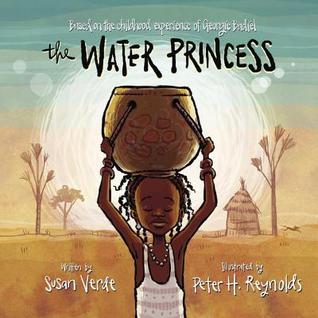
The Water Princess by Susan Verde

Share

water princess

The Water Princess
Author: Susan Verde
Illustrator: Peter H. Reynolds
Published September 13, 2016 by G. P. Putnam’s Sons Books for Young Readers

Goodreads Summary: Based on supermodel Georgie Badiel’s childhood, a young girl dreams of bringing clean drinking water to her African village

With its wide sky and warm earth, Princess Gie Gie’s kingdom is a beautiful land. But clean drinking water is scarce in her small African village. And try as she might, Gie Gie cannot bring the water closer; she cannot make it run clearer. Every morning, she rises before the sun to make the long journey to the well. Instead of a crown, she wears a heavy pot on her head to collect the water. After the voyage home, after boiling the water to drink and clean with, Gie Gie thinks of the trip that tomorrow will bring. And she dreams. She dreams of a day when her village will have cool, crystal-clear water of its own.

Inspired by the childhood of African–born model Georgie Badiel, acclaimed author Susan Verde and award-winning author/illustrator Peter H. Reynolds have come together to tell this moving story. As a child in Burkina Faso, Georgie and the other girls in her village had to walk for miles each day to collect water. This vibrant, engaging picture book sheds light on this struggle that continues all over the world today, instilling hope for a future when all children will have access to clean drinking water.

Ricki’s Review: This book captured my attention as soon as I saw the cover. The illustrations are beautiful, and I couldn’t help but sit for long periods of time, studying them closely. I appreciated and enjoyed this lyrical story that is based on Georgie Badiel’s childhood experiences. I have the F&G, and I am particularly excited to read the author’s note when the full book is printed. I know Georgie Badiel is an activist and leads a foundation dedicated to promoting clean drinking water and sanitation in Africa, so I think the author’s note will be particularly insightful. 

Kellee’s Review: The hardest books for me to read are the books where they seem as if they are historical fiction yet they are modern stories. It makes me so sad to know that there are those like Gie Gie who must work this hard just to get water. I feel like our world must help those who struggle in this way because water is a basic need that all should have access to. I think this book is a wonderful introduction to build awareness because many students do not know what is happening around the world, and this story is told in a beautiful yet truthful and hard way. Also, the connection it has with A Long Walk to Water makes it a perfect addition to a unit looking at that novel. Additionally, I must add that Peter H. Reynolds outdid himself with the illustrations in this book. I love Reynolds’s work, but these are pure pieces of art. Beautiful. I also look forward to the end notes because I want to learn more about Georgie Badiel and her work. 

Teachers’ Tools for Navigation: It would be great for teachers to build students’ awareness of the water/sanitation concerns within Africa. This might include reading more books about the subject and visiting websites supporting the cause. Georgie Badiel’s foundation is: http://georgiebadielfoundation.org/, and there are also many others out there, including: http://www.waterforsouthsudan.org/. I know of two elementary school classes who have devoted their entire year to raising money to build wells in Africa. These kinds of social action projects will surely impact students.

Discussion Questions: What does Princess Gie Gie’s day look like? What do the other women’s days look like? Why do you think this is?; Does Gie Gie feel frustrated? How might you feel in the same situation?; What can we do to support our peers who are living in similar situations to Gie Gie?

Flagged Passage: “My kingdom…the African sky, so wide and so close. I can almost touch the sharp edges of the stars.”

Read This If You Loved: A Long Walk to Water by Linda Sue Park; Just Add Water by Robin Hill and Charles Hall

Recommended For: 

readaloudbuttonsmall classroomlibrarybuttonsmall

RickiSigandSignature

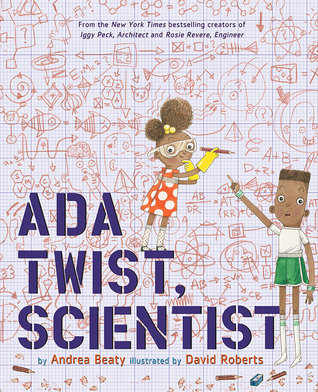
Teaching Guide for Ada Twist, Scientist by Andrea Beaty

Share

ada twist

Ada Twist, Scientist
Author: Andrea Beaty
Illustrator: David Roberts
Published September 6th, 2016 by Abrams Books for Young Readers

Summary: The creators of the New York Times bestselling picture books Rosie Revere, Engineer and Iggy Peck, Architect are back with a story about the power of curiosity in the hands of a child who is on a mission to use science to understand her world. Ada Twist, Scientist, from powerhouse team Andrea Beaty and David Roberts, is a celebration of STEM, perseverance, and passion.

Like her classmates, builder Iggy and inventor Rosie, scientist Ada, a character of color, has a boundless imagination and has always been hopelessly curious. Why are there pointy things stuck to a rose? Why are there hairs growing inside your nose? When her house fills with a horrific, toe-curling smell, Ada knows it’s up to her to find the source. Not afraid of failure, she embarks on a fact-finding mission and conducts scientific experiments, all in the name of discovery. But, this time, her experiments lead to even more stink and get her into trouble!

Inspired by real-life makers such as Ada Lovelace and Marie Curie, Ada Twist, Scientist champions girl power and women scientists, and brings welcome diversity to picture books about girls in science. Touching on themes of never giving up and problem solving, Ada comes to learn that her questions might not always lead to answers, but rather to more questions. She may never find the source of the stink, but with a supportive family and the space to figure it out, she’ll be able to feed her curiosity in the ways a young scientist should.

Iggy Peck and Rosie Revere have earned their places among the most beloved children’s characters, and they have inspired countless kids and adults to follow their dreams and passions. Now in her own charming and witty picture book, determined Ada Twist, with her boundless curiosity for science and love of the question “Why?,” is destined to join these two favorites.  The book is the perfect tool to remind both young girls and women that they have the intelligence and perseverance to achieve their dreams.

Teaching Guide: 

Beaty and Roberts’s books promote creativity, scientific thinking, and identity, so I was so happy and proud to be able to write the guide for Ada Twist.

You can also view the teaching guide here. Guides for Ada Twist‘s companion books, Iggy Peck and Rosie Revere, can be found here.

Recommended For: 

classroomlibrarybuttonsmall readaloudbuttonsmall closereadinganalysisbuttonsmall litcirclesbuttonsmall

Signature