UPDATE: Because this post has gotten a lot of attention, and we receive a lot of emails about it, we thought we’d share a slightly different version with more updated Lexile scores here at the Washington Post.
This is my anti-lexile, anti-reading level post. I get it. Well-intentioned parents want to challenge their children. Well-meaning teachers want to be sure that students are advancing in their reading levels. Maybe this is okay in first or second grade (although some commenters of this post argue that even this isn’t okay). Beyond these beginning grade levels, let’s stop this madness. We can do better. We cannot calculate the complexity of a text using a mathematical equation.
A few words from Mike Mullin, author of Ashfall: “Try taking this comment, and running it through the Lexile analyzer. Then replace every other period in this comment with ‘and,’ and run it again. The problem will be instantly apparent–the Lexile level will change by 400 – 600 points. You cannot accurately quantify something as complex as reading with simplistic sentence and word counts that fail to take into account the most important variable: the child” (Posted to http://mikemullin.blogspot.com/2012/10/how-lexiles-harm-students.html).
So why do we use Lexiles for older kids? Perhaps it is based on fear. We worry we aren’t challenging our students, so the Lexile numbers give us the confidence and assurance to move forward. It appeases the nagging worry that maybe we aren’t challenging our children enough. Because if the number/letter on the child’s book is higher than the number/letter on the last book the student read, I am doing my job as a parent, as an educator, as an administrator, right?
Even worse, some parents/teachers make students internalize levels. A child will tell me, “I am a G reader.” How does this G reader feel when the G reader is surrounded by J reader peers? What does this do for reader confidence? If we must use reading levels, let’s tell kids that they are reading G books and aren’t G readers. Reading levels shouldn’t define them.

(A great graphic from Unshelved)
I cringe when I hear about parents or teachers who strictly adhere to reading levels alone and won’t let children read books that are “too high/low in their Lexile number.” I watched a mother tell her son that he couldn’t get the train book that he wanted so badly because the number on the back cover was too high for him. He was disappointed, and he was even more disappointed when his mom selected a book that was not interesting to him. It really sucks the fun out of reading when you have to pick a book within your required sentence length instead of within your interests.
(Another great graphic from Unshelved. They really nail this topic, don’t they?)

Let’s take a look at the Lexile Bands by grade level:
Grade Lexile Band – Text Demand Study 2009
6 860L to 920L
7 880L to 960L
8 900L to 1010L
9 960L to 1110L
10 920L to 1120L
11 and 12 1070L to 1220L
(from the Common Core State Standards for English, Language Arts, Appendix A [Additional Information], NGA and CCSSO, 2012)

When we look at the Lexile levels of books, many of the typical texts taught in these grades meet these standards. But so many don’t, and this is quite problematic. If we take Lexiles as fact, these are the grades we should be teaching the following texts (Lexiles are in parentheses):
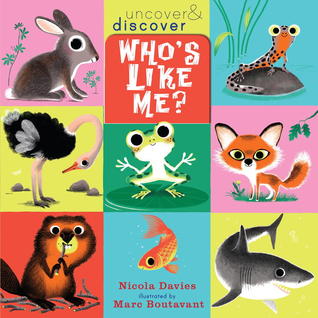
2nd Grade
3rd Grade
- The Sun Also Rises – Hemingway (610)
- Twisted – Anderson (680)
- Incarceron – Fisher (600)
4th Grade
- Grapes of Wrath – Steinbeck (680)
- The Color Purple – Walker (670)
5th Grade
- For Whom the Bell Tolls – Hemingway (840)
- Kite Runner – Hosseini (840)
- A Farewell to Arms – Hemingway (730)
- Cat’s Cradle – Vonnegut (790)
6th Grade
- As I Lay Dying – Faulkner (870)
- The Sound and the Fury – Faulkner (870)
- To Kill a Mockingbird – Lee (870)
- Fahrenheit 451 – Bradbury (890)
7th Grade
- Extremely Loud and Incredibly Close – Foer (940)
8th Grade
- Les Miserables – Hugo (990)
- Huck Finn – Twain (990)
9th Grade
- Harry Potter Half-Blood Prince – Rowling (1030)
- Diary of a Wimpy Kid – Kinney (1060)

We cannot assign a number to a book. Further, we cannot assign a book to a number. But the Common Core says we should. No, actually, it doesn’t. Direct quote from the Common Core: “The following text samples primarily serve to exemplify the level of complexity and quality that the Standards require all students in a given grade band to engage with. Additionally, they are suggestive of the breadth of texts that students should encounter in the text types required by the Standards. The choices should serve as useful guideposts in helping educators select texts of similar complexity, quality, and range for their own classrooms. They expressly do not represent a partial or complete reading list.” The CCSS actually remind us to look at quantitative, qualitative, and reader/task aspects. (See page 8, Appendix A of the CCSS for a gold mine of reasons we shouldn’t rely solely on these quantitative measures.) So why do so many people think that complexity and quality can only be measured with this quantitative measure? Perhaps this is due to the emphasis on numbers and standardized testing.
Many of the readers of this blog are avid readers themselves. They understand the problematic nature of Lexiles (or other quantitative measures). But others might react with, “Well, if I can’t use these numbers, what do I use?”

How do we challenge readers?
To start, if you haven’t read it yet, I highly recommend you get your hands on a copy of Teri Lesesne’s Reading Ladders. She uses reading ladders in ways that address complexity without numbers. She writes, “Reading levels and Lexiles are not the way to determine the rigor of a text. Instead, rigor should be determined by sophistication of thought, depth of character development, stylistic choices, and mastery of language on the part of the author. These are present in the best of YA literature” (p. 6). In her book, Lesesne shows us how we can be better and do better than reading levels.
The key to knowing how to challenge our students/children is to read, read, read. This allows us to make recommendations when they finish books. If you don’t have the time to read or this feels outside of your field of study, ask someone who does read widely. There are many bloggers, teachers, librarians, and parents who read widely and are very willing to give recommendations if you can provide reading background and interests of the student.
Head to the library or bookstore. Have your child pick a book based on interest. Open the book and read the first page together. (This can be done online by opening up the preview/”look inside” pages of a book, too.) Ask the child if it feels too difficult to the point that it is frustrating. We want to challenge our children, but we don’t want them to dislike reading because it feels much too difficult. If the book is too easy for the child, ask yourself, “Will this be harmful?” I am a parent. My son is still in preschool and is a beginning reader, but often, I picture him in elementary school. If he reads thirty books below his “reading level,” is this a bad thing? If these books propel him to read thirty more books (some above and some below) his reading level, I think this is quite all right. I want to feed his hunger to read. And telling him that he is a level 320 reader or even that he is reading a level 320 book is going to do nothing but make reading feel foreign, scientific, and boring. Let’s teach kids to read critically and be critical of these levels.

Update: I want to highlight the words within Carlos’ comment on this thread (below).
“Im a 6th grader and when i took a lexile test for my grade, i got stuck with books i hate so much. We had to search for books in my lexile. I as so bored of those books. I want to read whatever i want to.”
Carlos, we hear you, and we will try harder.