Kellee’s 2013 Reflection

Share

2013 to 2014

2013 was a life-changing year for me.
The biggest, and most exciting, change was that I am pregnant with my first child (cannot wait for Baby Boy Moye!). Right after finding out I was pregnant, I was given the opportunity to be the reading coach at my middle school and knew that I couldn’t turn down this opportunity to at least try it. This may not be life-changing permanently, but it definitely was present life-changing.  Both of these changes had a major impact on my reading life. 

First, pregnancy. If you have been pregnant then you know what I mean when I saw I was tired for 4 months. More tired than I ever could imagine being. And when I was awake, I was not feeling well or just wanted to veg. These first 4 months of pregnancy were June, July, August, and September–right through summer #bookaday!! This really cut into my summer reading. I actually would find myself on Sunday nights about to do my IMWAYR post and realizing I hadn’t read at all so I’d grab a couple of picture books just to have some numbers. This happened more than I let on (mostly because my pregnancy was a secret at this time too!).  And to be honest, even after I got almost back to my normal self, reading was out of my routine (and I still need extra sleep than I used to). I am still working on getting it back; however, I know all of that will change when the baby arrives though I am really going to push myself to keep my reading part of my life.

Second, reading coach. I was wary of this change. My love of education is 99% because I love impacting students’ lives and being part of their life daily. Being a reading coach is impacting students in a different way and it has been a struggle for me. I miss my students; however, I try so hard every day to make sure that through my coaching, interventions, and classroom library that I am reaching as many of them still even though they are not in my classroom. I wish that I had had a coach to help me through becoming a coach because it is such a huge change. I’m not sure how long I’ll be out of the classroom, but I am still trying to grow and make an impact daily and I hope to find a nice balance.  I think, though, without the pressure of book talks and conferencing and being with students daily, I let my reading slide even more than it would have had I been in the classroom.

Both of these things, unfortunately, made 2013 the lowest reading numbers I’ve had since 2010. (Since 2010 I’ve been blogging, been on twitter regularly, been part of FB’s centurion group, and on a book award committee–all things that have impacted my reading goal and my expectations for myself.) Now, I will say that I am not embarrassed of what I did read in 2013. I am actually very proud based on everything I went through. I just think I had very high expectations for myself this year because I had an amazing reading year in 2012 (I read over 400 books).

2013 Reading Challenge

For 2013, I originally set my Goodreads goal at 333 books. This was a big under what I read in 2012, but I like reaching my goal so I try to make it realistic. However, in about October or November I realized that there was no way I was going to reach this goal and I knew that not reaching my goal would be devastating to me. So, I reevaluated and set a new goal: 225. This one I did meet- YAY!

In 2013 I read:

79 middle grade/young adult novels
12 early chapter books
25 graphic novels
53 picture books
9 adult novels
5 nonfiction graphic novels
36 nonfiction picture books
9 nonfiction books
8 poetry collections
3 interactive/game/novelty books
4 professional books
8 reread young adult novels

Totaling: 251 books!

Overall, I am very proud of my year and am very much looking forward to my even more life-changing 2014! For more reflections, check out my favorite 2013 reads and my 2014 reading goals.

Signature

Helping our Students Achieve the Reading and Writing Flow

Share

Achieving Flow-page0001

Kelly Gallagher stresses balance in his book, Readicide. We, as teachers, try our best not to tear apart texts for students. We want to study author’s craft, but if we overanalyze and nitpick at every detail, it becomes terribly boring for students (and us!). So where is the balance? How do we help students come to appreciate the minute details of an author’s writing without committing this act of readicide? Gallagher also discusses the “reading flow.” It is important for teachers to understand when to stop students and when to allow them to find the flow—to get into the groove of reading. It makes sense, thinking of my own reading habits. If I was forced to stop at every page (or even every ten pages) to analyze an author’s writing, I would throw the book at the wall.

 How do you help your students achieve reading flow?

As a teacher, what works best for me (and this may not work best for you), is to analyze the first few pages of a text. I have my students do a close reading, and we try to examine elements like voice, writing style, form, and manipulation of language, among others. Then, I let them explore. I try to assign them enough reading so they can hit the flow but not too much reading that they don’t do the assignment. For me, this is the most effective way to help students find this “reading flow” that Gallagher discusses. Once I have helped my students grapple with and (hopefully) appreciate the language of an author, I set them free from the nest. This approach doesn’t work well with every text. For example, much more complex texts may require more analysis and comprehension techniques before I can set my students free.

But how do we find the flow for writing? Recently, I read a section of Murray’s Write to Learn. He made me think more about how this “reading flow” concept might be applied to writing. From my experience, my students feel like stuttering cars when they begin to write. Often, they can’t even get their cars to start. Some of the techniques that Murray offers are interesting when I look at them through the lens of the writing flow.

We need our students to connect to their writing. One way to start is by having students write down their territories. Murray starts this in a brainstorming list, where students make a list of topics. He suggests connect elements on their lists to try to find ideas for writing. Murray also describes other methods that won’t be new to most teachers like freewriting about topics or brainstorming in the form of a map or tree. With the map, students can show the way their thoughts emerge from and digress to each other. With the tree, students can brainstorm about a more focused topic. Murray also suggests interviewing ourselves.

How do you help your students achieve writing flow?

One technique I have found to be useful to help students start writing short stories is by providing the first sentence for them. I write a series of evocative sentences like “He was a most peculiar boy.” Or, “As his name was called, he knew his life would drastically change.” Or, “She woke up barefoot, lost, and with something unusual beside her.” My students brainstorm the second sentence for a dozen or so of these sentence starters. Then, I set them free to expand one of the starters a bit further. We don’t look at grammar, and instead, we focus on just keeping the flow. I remind them that authors often discuss how their first draft is terrible, and this is okay. We are getting ideas onto paper and finding our flow. We’ll worry about the revision and editing later, right?

Let’s share!

How do we get our students to hit this reading and/or writing flow?

Do any activities work well for you?

RickiSig

Hurt Go Happy by Ginny Rorby

Share

This week I am celebrating with my friend and author Ginny Rorby as she receives her award from the Florida Association for Media in Education (FAME) for winning the Sunshine State Young Readers Award (as voted by 6-8 grade students in Florida) for Lost in the River of Grass. To celebrate, I will be reviewing all of her books this week:

hurt

Hurt Go Happy
Author: Ginny Rorby
Published August 8th, 2006 by Starscape

Goodreads Summary: Thirteen-year-old Joey Willis is used to being left out of conversations. Though she’s been deaf since the age of six, Joey’s mother has never allowed her to learn sign language. She strains to read the lips of those around her, but often fails.

Everything changes when Joey meets Dr. Charles Mansell and his baby chimpanzee, Sukari. Her new friends use sign language to communicate, and Joey secretly begins to learn to sign. Spending time with Charlie and Sukari, Joey has never been happier. She even starts making friends at school for the first time. But as Joey’s world blooms with possibilities, Charlie’s and Sukari’s choices begin to narrow–until Sukari’s very survival is in doubt.

My Review and Teacher’s Tools for Navigation: This book is so important to me it is even hard to write this review. I have never written one because the book has become so personal to me that I didn’t know how to share my feelings. When I read Hurt Go Happy for the first time, I knew that it was the book that I wanted to share with every student I ever had.  Hurt Go Happy shows the importance of empathy for animals, for children and for people with disabilities.

Hurt Go Happy has become the number one community builder in my classroom.  After our state test and our Earth day activity with The Lorax we begin our read aloud of  Hurt Go Happy. (One of the saddest things about not being in the classroom this year is that I will not be able to have this moment with students.) Not only does the book give me opportunities to work with setting, characterization, cause/effect, prediction, compare/contrast, sequence, and analogies, throughout the book my class participates in conversations about deafness, sign language, chimpanzees, abuse, research facilities, animal abuse, wild animals as pets, survival, parents, school, death, fear, and their future. The conversations are so deep and wonderful.  But this is just the beginning.  Following the reading of the novel, my students are lucky enough to be able to take part in an interview with the author of  Hurt Go Happy, Ginny Rorby. The students generate the questions, vote on which ones to ask and even ask her the questions. Ginny even allows us to send her extra questions and answers them for my students.

The part that really makes students connect to the novel is the field trip that we go on.  At the end of the book, the setting changes to a rehab facility called The Center for Great Apes (@CFGA) which, while in the book was in Miami, has moved to Wauchula, FL which is 90 minutes from my school.  In the book, you even meet Noelle, a chimp who knows sign language, Kenya, another chimpanzee, and Christopher, an orangutan, who are actually at the center. It is an amazing experience to take the story and turn it into reality.

Hurt Go Happy is a book that I feel not only bring our class together but teaches my students some of the most important lessons for life: to care about every living thing.

Discussion Questions: I have many that would give spoilers, but here are my essential questions for the book: Do you think animal testing is necessary? Defend your answer.; How would being deaf affect your life? How does it affect Joey’s?

We Flagged: “Before she’d lost her hearing, she loved the whisper of wind through pines, and since she had no way of knowing how different it sounded in a redwood forest, the sight of branches swaying re-created the sound in her mind. Even after six and a half years of deafness, she sometimes awoke expecting her hearing to have returned, like her sight, with the dawn.” (p. 11)

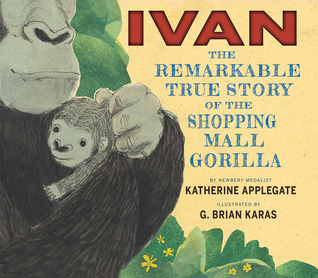
Read This If You Loved: Endangered by Eliot Schrefer, The One and Only Ivan by Katherine Applegate, Me…Jane by Patrick McDonnell, Wonderstruck by Brian Selznick, El Deafo by Cece Bell, Half Brother by Kenneth Oppel, Ivan: The Remarkable True Story of the Shopping Mall Gorilla by Katherine Applegate

Recommended For: 

classroomlibrarybuttonsmall readaloudbuttonsmall closereadinganalysisbuttonsmall litcirclesbuttonsmall

Signature

See my extended review of Hurt Go Happy when celebrating the Schneider Award’s 10th birthday include an interview with Ginny Rorby!

Why Middle School?

Share

whyms

If any of you teach middle school you often hear, “Oh, I’m sorry!” or something like that when you tell someone what you do. After this, I have often reflect on why I love teaching middle school and I think that this post shows many of the reasons why. These years are molding years and although our students may not visit us often or thank us when they are adults, but we are a major part of their growth and have a larger impact than we even realize.


Although I thought that I didn’t remember much of middle school, I began to realize how much of my current self was molded during that time- specifically 1994. I’ll be honest, I don’t remember most of my teacher’s names* or many of my friends** or boyfriends***, but it obviously left an impact on me. I decided to write this post after a student asked me if everything happened in middle school because all of my stories start with, “When I was in middle school…” At first I told them it was just because I teach middle school, but after thinking I began to realize that it was more than that.

First, let’s see who we are talking about: 

My friend Joanie, Allison, and myself on the first day of 7th grade
Halloween dance!


First Piece of Evidence- My Favorite Word

word power

In Ms. Paulsen’s 7th grade language arts class, we were assigned to learn vocabulary through Norman Lewis’s Instant Word Power and suddenly in Session 6 we were introduced to words I will never forget- SESQUIPEDALIAN and SESQUIPEDALIANISM. I thought that they were awesome and hilarious words! If you don’t know what they mean, sesquipedalian actually means 1 and 1/2 feet long. Starting in the 17th century it was changed to mean “a long word” or “a person who is known for using long words”.  This word keeps on popping into my life and I love it every time (including when I used Tom Chapin’s song Great Big Words to practice context clues with my students). Today, while prepping for this post, I found my Instant Word Power book and actually laughed out loud when I saw the practice sentence in my 7th grade textbook: “Attitudinal readjustment is a sesquipedalian term for the cocktail hour. (You can never say it after three drinks.)” Ha! Maybe that sentence is why I never forgot it.


Second Piece of Evidence- My Favorite Book
The Giver (The Giver, #1)
I. Love. This. Book. It is almost hard for me to write about it because it is hard to vocalize how it impacted me when I read it. I think 11 years of age is such an influential age and that is when I read The Giver for the first time. I remember being shocked by the injustices within the book, specifically the lack of books, color, artwork and choices. As a middle schooler, I was so disgusted by Jonas’s society and so impressed by the choices that Jonas makes within the book. It is because of this impression that it has always stuck with me. I frequently forget characters and books and plots, but this one has never left me and I have reread it many times now (which is a rare thing for me). On top of it all, I liked that Lois Lowry made the reader part of her story. The ending, though controversial, is what made me love it even more. It was my decision what happened to Jonas (though it has now been answered in the companions) and as a pre-teen that meant a lot to me.


Third Piece of Evidence- My Favorite Type of Music
I remember April 9, 1994. It was a big day in the world of music and if you were in my middle school you would think that the messiah himself had passed away which to us was exactly how it felt. Sixth grade was about the time where I switched from listening to my parent’s music and pop music to alternative music such as Silverchair, Nirvana, Pearl Jam and later Green Day and Nine Inch Nails. I think that although April 9, 1994 was definitely a tragedy, music lost a brilliant musician in Kurt Cobain that week, it was also one of the reasons why I immersed myself in that type of music. It was definitely an ingredient of who I’ve become.


Fourth Piece of Evidence- Cello
When I lived in Iowa and in 3rd grade we were allowed to pick an instrument to begin playing in 4th grade. The middle school came to the elementary school and the band and orchestra played. I remember looking over the balcony and seeing the cello and I knew that it was the instrument that I was going to choose. Then we moved and it wasn’t until 6th grade that I was able to get my hands on one and this choice changed the trajectory of my life sending me to a music school of choice which led me to playing cello for over 10 years.


Fifth+ Piece of Evidence- Things I still love and have molded me into who I am: Baseball, Girl Scouts, Working With Kids


You may be asking: “Why did Kellee put this reflection on the blog? It is supposed to be about books and teaching.” Though this post may just seem like a way for me to reminisce about middle school, it is actually for a way for me to share how important these such touchy years are in the maturing of our students. So much of what I found during these years has helped me become who I am. We have to help our students during these times find who they are.


Signature


*Except Ms. Spalding who was my 6th grade language arts teacher. I really disliked her class when I had her, but afterwards I found myself visiting her and helping her all of the time. I think she was the first teacher to show me tough love and I ended up appreciating it. I’ll never forget reading A Wrinkle in Time in her class and detesting it. I also researched Nefertiti and did a gallery walk presentation about her. Though I don’t remember the name of all of the teachers, there are aspects of many classes I remember and I think that the amazing middle school I went to helped me love learning.
**I feel the worst about this. I had wonderful friends during middle school. I do remember Allison Gandy, my best friend who I will never forget spending time with. She has since gotten married and contacted me once and now I can’t find her 🙁 I also remember a boy named Trey because he tragically passed away and a couple of other girls, but I know that I had a good amount of friends and I wish I could get in contact with them and see what they are up to.
***I will never forget my first real boyfriend, David Haney, and to be honest I thought he was my only boyfriend from middle school until I found a book from 7th grade that says “I <3 Justin” and “J.J. + K.S.” so who knows how my memories have been changed.

Each Kindness by Jacqueline Woodson (Kellee’s Review)

Share

kindness

Each Kindness
Author: Jacqueline Woodson
Illustrator: E.B. Lewis
Published October 2nd, 2012 by Nancy Paulsen Books

Summary: Each kindness makes the world a little better

Chloe and her friends won’t play with the new girl, Maya. Maya is different–she wears hand-me-downs and plays with old-fashioned toys. Every time Maya tries to join Chloe and her gang, they reject her. Eventually, Maya plays alone, and then stops coming to school altogether. When Chloe’s teacher gives a lesson about how even small acts of kindness can change the world, Chloe is stung by the lost opportunity for friendship, and thinks about how much better it could have been if she’d shown a little kindness toward Maya.

This unforgettable book is written and illustrated by the award-winning team that created The Other Side and the Caldecott Honor winner Coming On Home Soon. With its powerful message and striking art, it will resonate with readers long after they’ve put it down.

Review: When I read Each Kindness by Jacqueline Woodson for the first time, it made me not only want to share it with everyone I knew, but also make me want to do something nice for others. This pushed me to think more carefully about how everything affects those around me. What I really love about this book is how it can be used in the classroom.

Teacher’s Tool For Navigation: Today, I wanted to share with you what I did with my classes when it came to sharing Each Kindness with them. First, I will say that it affected them as much as it affected me. After reading, we had a great conversation about how the book connected to their lives and what it meant to them. This conversation moved to how Chloe’s actions affected Maya including inferences of Maya’s feelings that were not shared in the book. The insight that my students had were very deep and I believe it made them look at some of the choices they make in their daily lives. We also discussed how Chloe could have changed things. How could she have made Maya feel welcome?  We made multi-flow maps showing the causes/effects of decisions.

Following this discussion, I had the students make an oath to do a kind act that day- something they normally wouldn’t do and recorded them on as a poster to share. Then the next day we shared the kindness we did. Only through discussions and books like this, that students will think more about their choices and how it affects those around them. Since this book read aloud and discussion, my students have brought up Each Kindness often and have made connections to their lives as well as other books. Each Kindness is a book that can make the world a better place, but only if it is shared.

Discussion Questions: What could Chloe have done differently to make Maya seem welcome?; How did Chloe’s (and her friend’s) behavior affect Maya?; What could you do differently to make someone feel kindness?

We Flagged: “This is what kindness does, Ms.Albert said. Each little thing we do goes out, like a ripple, into the world.”

Read This If You Loved: Because Amelia Smiled by David Ezra Stein, Unicorn Thinks He’s Pretty Great by Bob Shea

Recommended For: 

classroomlibrarybuttonsmall readaloudbuttonsmall closereadinganalysisbuttonsmall

This is a great book to read during the first couple of weeks of school. 

Signature

What Being Married To A “Nonreader” Has Taught Me

Share

nonreader

It was really hard for me when I realized while I was dating him that my husband, Jim, was not a fan of reading novels. I have tried for the ten years that I have known him to try to change this: I’ve shown him graphic novels, talked about books I thought he might like, and had books surround us always; however, he never bit. For years this bothered me. How could I have not married someone who loved to read?! It is my passion! But then I realized, I was defining him incorrectly. Jim is not a nonreader; he just doesn’t read what I do. The more I remind myself of this, the more I learn, and the more it has affected me as a teacher. So, what have I learned from this realization? Well…


1. Not all reading is done in books.

I actually think Jim may read more than me. He is always reading. Magazines, newspapers, blog posts, websites, tutorials, instruction manuals – all reading. He is always reading just not in books.


2. Reading on electronics is reading. 

It is very hard for all of us book lovers to move away from the idea that all reading needs to be done in print. This is not the case (especially if you look at our 21st century students). Jim does probably 1% of his reading in print. Everything else is done on his phone, iPad, or computer. It is still words being read and processed through the brain. That is reading.


3. Not all people enjoy reading for entertainment.

To many people, reading just for entertainment is not something they enjoy (which means it is not entertainment for them at all). They want to learn something from what they read (and no, a moral in a story doesn’t count). For example, as I type this, Jim is on the “This Old House” website on the iPad reading about painting.


4. Not reading novels does not mean someone is not intelligent. 

I’ve always associated reading books with intelligence, it was how I was raised, but I’ve had to remind myself that this is not the case. When I meet my students, I don’t automatically think they are dumb because they may not have ever read a novel on their own and if we honestly look at those students, most of them are smarter at something than I am: I’ve had military buffs, electronic whizzes, sports nuts, science geniuses, etc. If I don’t know about these things, they don’t automatically think I’m dumb because I don’t know about their passion and I would never do the same to them just because they don’t read novels. We need to make sure to transfer this thinking to adults as well. When someone says they don’t read, the assumption cannot be that they are lazy or unintelligent. And truthfully, they probably do read, just not traditional texts, but they are so used to just saying they don’t read.


5. Many aspects of a novel can be found elsewhere (and analyzed, discussed, etc.) 

Why do we want our students to read novels? Yes, we love them, they are wonderful stories, it’ll help you become a better reader, the stories are complicated and makes us better thinkers. All true and I agree with them all; however, many of the narrative elements and literary aspects we teach from a novel can be found else where and can also be analyzed. There are some amazing movies and video games out there that tell stories that can battle some of the best written books and are so beautifully put together that they are pieces of literature themselves. (Now, please do not get me wrong – I am a reading teacher and I will never stop expressing the importance of reading, novels, etc.)


I know that this is something for all of us book lovers to realize; I know it was really hard for me, but we need to realize that reading may be changing and our definition of reading needs to change with it. My husband is not a nonreader, he is a reader, and so are many of your “nonreader” students.

Signature

20 Moments I Will Miss With My Readers

Share

This summer is bittersweet. I will be leaving my position as a high school English teacher to pursue a doctoral degree in Secondary English Education at UConn. I feel sad to be leaving my colleagues and readers but excited for this new adventure. I’ve been thinking about some of the moments I will miss most with my readers, and a few (okay, twenty…I got carried away) are listed below. I dedicate this list to all of the reading teachers out there. Being a teacher is the most rewarding experience in the world.

20 Moments

  1. The look on students’ faces when they return a book and we tell them there is a sequel.
  2. The clawing, reaching, and grabbing of books. All’s fair in books and war.
  3. When the bell rings and three students are still reading at their desks.
  4. When a student walks into a classroom in tears and thrusts a book at us.
  5. Making the boys cry. Thanks, John Green.
  6. When students whine that their to-read lists are too long.
  7. Waitlists for books. Not fun to keep organized…but fun to watch them check where their names are on the lists every day.
  8. When students ask, “Can you get me other books by this author?” We point to two on the shelf, and they look at us like we gave them free kittens.
  9. When an author tweets/emails our students back. Thanks, authors. You don’t even understand how excited they get. The squeals can be ear-piercing.
  10. When students battle over which book is better. This will never get old, will it?
  11. Searching for our names on Twitter and seeing kids posting about books/YAL. #guilty
  12. When students call our classrooms the free bookstore. Our hearts swell with pride every time.
  13. Changing a self-proclaimed “non-reader” into a reader. Because after all, everyone is a reader—some of us just don’t know it yet.
  14. When a teacher complains that a student was reading one of “our books” in his/her class, and we have to feign disappointment in the student.
  15. Listening to students’ book talks for books we haven’t read yet. And having to add our names to the waitlists for those books.
  16. When another English teacher compliments us on the writing of one of our readers. Thanks for being great models, authors.
  17. Telling students that we met [insert author here]. They gaze at us as if we are celebrities. Nope, we were giddy schoolgirls (or schoolboys) when we met them. It wasn’t pretty.
  18. We can’t relive a book for the first time, but it is almost as fun watching a student experience it for the first time.
  19. Getting a new book and knowing our students will be just as excited about it as we are.
  20. Receiving emails from students (who graduated over five years ago), asking for book recommendations. Here’s to hoping they keep in touch!

What are your favorite moments with your readers? Share a few!

 026F3FBCC8C3913BD3A4D3F6920340D5