The Tree Lady: The True Story of How One Tree-Loving Woman Changed a City Forever by H. Joseph Hopkins

Share

NF PB 2014

Nonfiction Picture Book Wednesday

Nonfiction Picture Book Wednesday is hosted by Kid Lit Frenzy and was started to help promote the reading of nonfiction texts. Most Wednesdays, we will be participating and will review a nonfiction text (though it may not always be a picture book).
Be sure to visit Kid Lit Frenzy and see what other nonfiction books are shared this week!
tree

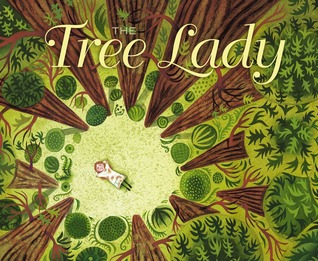
The Tree Lady: The True Story of How One Tree-Loving Woman Changed a City Forever
Author: H. Joseph Hopkins
Illustrator: Jill McElmurry
Published September 17th, 2013 by Beach Lane Books

Goodreads Summary: Unearth the true story of green-thumbed pioneer and activist Kate Sessions, who helped San Diego grow from a dry desert town into a lush, leafy city known for its gorgeous parks and gardens. Katherine Olivia Sessions never thought she’d live in a place without trees. After all, Kate grew up among the towering pines and redwoods of Northern California. But after becoming the first woman to graduate from the University of California with a degree in science, she took a job as a teacher far south in the dry desert town of San Diego. Where there were almost no trees.

Kate decided that San Diego needed trees more than anything else. So this trailblazing young woman singlehandedly started a massive movement that transformed the town into the green, garden-filled oasis it is today. Now, more than 100 years after Kate first arrived in San Diego, her gorgeous gardens and parks can be found all over the city.

Part fascinating biography, part inspirational story, this moving picture book about following your dreams, using your talents, and staying strong in the face of adversity is sure to resonate with readers young and old.

My Review: This book was fascinating! I love learning about strong woman who changed the course of history and did so when no one thought they could. Like Jane Goodall, Kate Sessions love of nature and learning started at a very young age, and she let this desire to learn drive her to become an amazing woman. She is an inspiration and one that many people probably do not even know about.

Teachers’ Tools for Navigation: I can picture this book being used so many different ways in the classroom! It is perfect just for a read aloud and discussion. It has some beautiful descriptive and figurative language that could be discussed. It could also be read in lit circles where each group gets a different strong female who changed the world and then they could each present and share on their woman. AND it has very unique science facts and information that help it cross seamlessly into science.  Just a fantastic book for the classroom.

Discussion Questions: How did Kate change San Diego?; What did Kate do, that others didn’t, to help her transform San Diego?; Why did Kate go to San Diego?; What other women in history does Kate remind you of?

We Flagged: “Kate felt the trees were her friends. She loved the way they reached toward the sky and how their branches stretched wide to catch the light. Trees seemed to Kate like giant umbrellas that sheltered her and the animals, birds, and plants that lived in the forest.” (p. 7)

Read This If You Loved: Me…Jane by Patrick McDonnell, Who Says Women Can’t Be Doctorsby Tanya Lee Stone, Daredevil by Meghan McCarthy, The Boy Who Loved Math by Deborah Heiligman, Brave Girl by Michelle Markel, Primates by Jim Ottaviani, Look Up! by Annette LeBlanc Cate, Players in Pigtails by Shana Corey

Recommended For: 

readaloudbuttonsmall closereadinganalysisbuttonsmall

classroomlibrarybuttonsmall litcirclesbuttonsmall

Signature

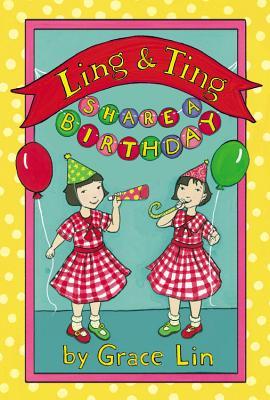
Ling & Ting Share A Birthday by Grace Lin

Share

ling

Ling & Ting Share A Birthday
Author and Illustrator: Grace Lin
Published September 10th, 2013 by Little, Brown Books for Young Readers

Goodreads Summary: Ling & Ting are twins. They share a birthday. They bake cakes, and they make birthday wishes. They tell stories and wrap gifts. They also share a birthday secret!

Have fun with Ling and Ting! They stick together and look alike. But they are not exactly the same.

Review and Teacher’s Tools For Navigation: I am not an expert on early chapter books, but I am trying to read more than I did in the past. What I have noticed is that most early readers have short compelling stories or chapters with interesting characters and often teach a lesson or would make the reader thing. Ling & Ting is no different and is an excellent addition to the early readers I’ve read. Ling & Ting are twins, but are very different people. It is a great opportunity to discuss identity and personality. Also, each chapter of Ling & Ting’s story put them in different situations and are all opportunities to discuss these situations. Finally, Grace Lin gives teachers/students/readers many opportunities to discuss character traits and compare/contrast the two twins.

Discussion Questions: How are Ling & Ting different? The same?; When Ling & Ting didn’t know what to buy for the other twin, what did they do? Do you agree with what they did?

We Flagged: “Ling reads the cookbook very carefully. She mixes butter, sugar, eggs, and flour. Ting does not read the cookbook carefully. She mixes butter, sugar, and eggs. Ling and Ting put their cake in the oven. They watch them bake. Ling’s cake bakes golden. Ting’s cake does not.” (p. 17-19)

Read This If You Loved: Penny series by Kevin Henkes, Elephant and Piggie series by Mo Willems, Sadie and Ratz by Sonya Hartnett

Recommended For: 

readaloudbuttonsmall

Signature

The Adventures of Arnie the Doughnut: Bowling Alley Bandit by Laurie Keller

Share

arnie

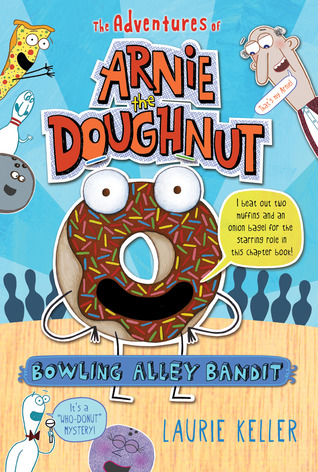
Bowling Alley Bandit
Author and Illustrator: Laurie Keller
Published June 4th, 2013 by Henry Holt and Co.

Goodreads Summary: As Mr. Bing’s new pet “doughnut dog,” Arnie couldn’t be happier. When Mr. Bing joins a bowling league, Arnie gets to go along to practices and competitions. But then Mr. Bing starts rolling gutter balls. Someone or something is behind the madness. Arnie, together with his team of goofball friends, must sort through the shenanigans and solve the mystery. Get ready for some sleuthing and even some magic.

Full of Laurie Keller’s winning charm and silly humor, this chapter book—the first in the series—is sure to please her many fans.

My Review and Teacher’s Tools For Navigation: This book is going to be loved by kids. It is hilarious and is one rung below Big Nate on the humor, illustrated novel ladder. It is a great book to help readers get from early readers to middle grade illustrated novels. In the classroom, it would be a great book to use to practice prediction as the reader is given clues throughout the book to figure out who the bowling alley bandit is. Also, as a teacher, I personally loved all of the wit, puns, and funny similes in the book! These would be great to read with kids.

Discussion Questions: What other doughnut songs could Arnie sing at karaoke? Think of famous songs and tweak their title or lyrics to make them about doughnuts.

We Flagged: “But of all the great things about the bowling alley, my favorite is that there’s a restaurant inside called the Bowl-o’-Chow and they have a KARAOKE MACHINE! I usually watch Mr. Bing bowl for a while, and then I wander over to the Bowl-o’-Chow to sing a few songs. I was scared to try it at first, but now I’m a regular.

Here are a few of my old standbys:
Living’ la vi-DOUGH loca!
You ain’t nothin’ but a DOUGHNUT-DOG cryin’ all the time.
Fried in the U.S.A.!

And I always end with my signature song:
DOUGHNUT make my brown eyes blue.”

Book Trailer: 

Read This If You Loved: Big Nate series by Lincoln Peirce, Captain Underpants series by Dav Pilkey, Frankie Pickle series by Eric Wight

Recommended For: 

classroomlibrarybuttonsmall readaloudbuttonsmall

Signature

Blog Tour and Review!: Weeds Find a Way by Cindy Jenson-Elliot

Share

NF PB 2014

Nonfiction Picture Book Wednesday

Nonfiction Picture Book Wednesday is hosted by Kid Lit Frenzy and was started to help promote the reading of nonfiction texts. Most Wednesdays, we will be participating and will review a nonfiction text (though it may not always be a picture book).
Be sure to visit Kid Lit Frenzy and see what other nonfiction books are shared this week!

weeds find a way

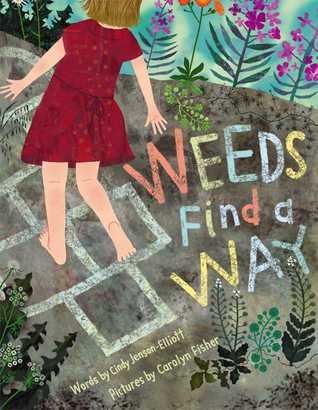
Weeds Find a Way
Author: Cindy Jenson-Elliot
Illustrator: Carolyn Fisher
Published: February 4, 2014 by Beach Lane Books

Goodreads Summary: Weeds are wonderful! Persistent, exuberant…these plants have personalities, and this nonfiction picture book puts them on colorful display!

From bright yellow dandelions popping through cracks in sidewalks to purple loosestrife growing rampant along roadways, weeds offer unexpected splashes of color and life to the least likely of places. With lovely language and a sly sense of humor, this beautiful picture book celebrates the tenacious temperaments of these pesky plants and is sure to have little ones chanting, “Way to go, weeds!”

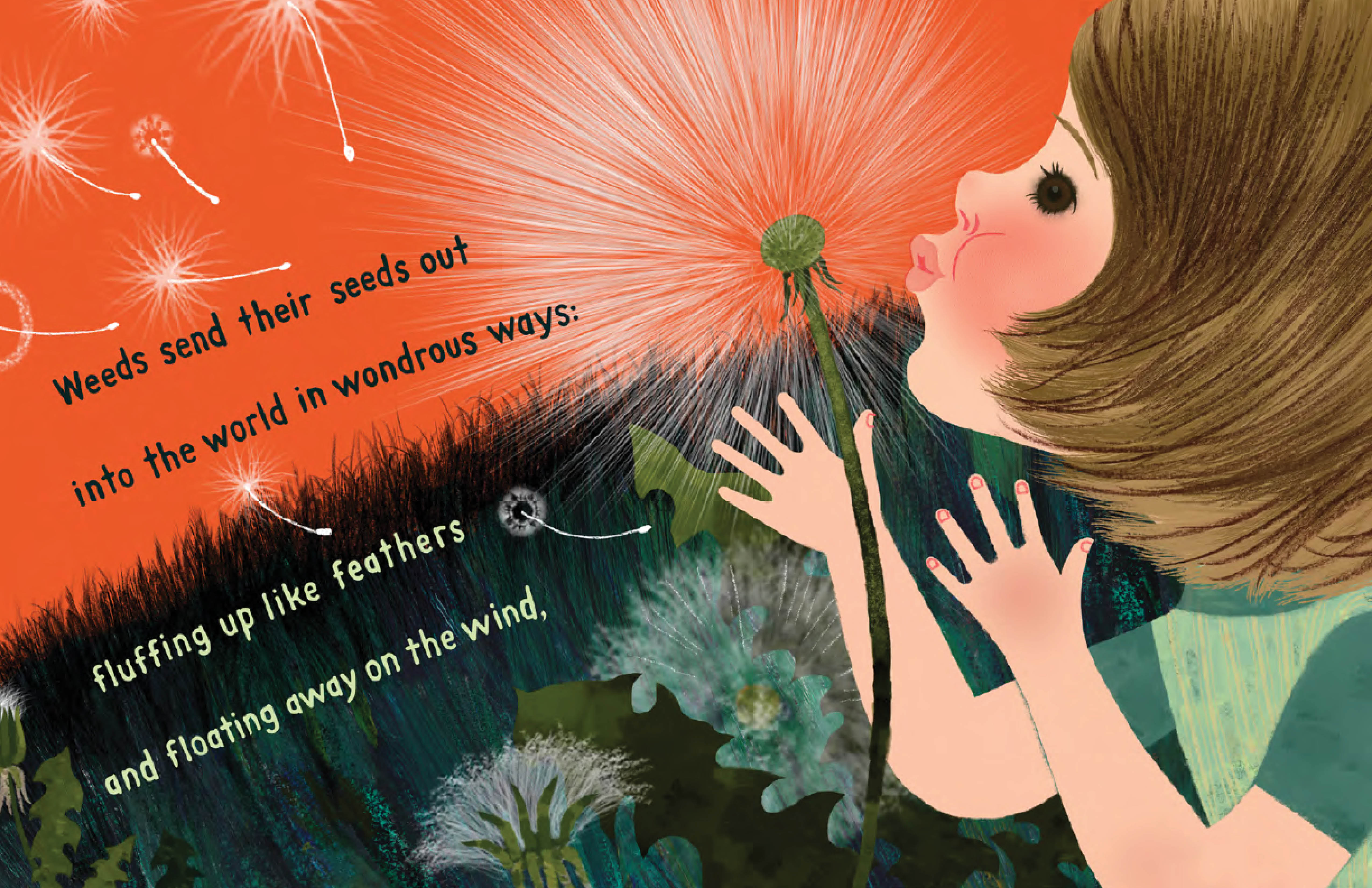
Ricki’s Review: The illustrations! The illustrations! I was mesmerized by the gorgeous artwork in this text. As I read it aloud to my son and husband, I was oohing and aahing at the bright, luscious colors. It made me want to go outdoors and lay among the weeds. If it wasn’t the dead of the winter, I would pull my son outside and read the book to him in our garden. There are beautiful passages of figurative language–alliteration that reads like a song, and readers will be sucked into the sprawling passages that evoke lovely images. The book turns readers’ assumptions on their heads. The words and images show that we can find beauty in, of all things, weeds. While I learned much about weeds and found the informational passages at the end (about different types of weeds) to be quite informative, I found the idea of weeds to be symbolic, too.

Kellee’s Review: I was blown away with how fascinating the author made something that we walk by every day and ignore. The text itself is quite lyrical and has the amazing illustrations with it; however, I found the goodies in the research in the afterword.  It was very interesting for me to learn that these plants, which we treat like pests, are actually so very useful. I second much of what Ricki says about the figurative language. I love seeing these elements being used in a nonfiction book! Overall, this is a nonfiction book that should be shared with kids and will definitely start some major discussions.

Teachers’ Tool for Navigation: Teachers will find multiple opportunities with this text. They can use it to teach different types of figurative language, or they might ask students to explore weeds in a more symbolic way. We love the idea of using nonfiction at such a young age, and we wonder if teachers might try literature circles with this text. While it is marketed for ages 4-8, it could be used for different purposes with a variety of age groups. The informational passages at the end might allow teachers to help students research about different types of plants. We also love the illustrations so much that we would love to have kids take the pictures and write their own stories to match the images. It would show that nonfiction can be accessible and fun.

Interior illus from WEEDS FIND A WAY_Copyright � 2014 by Carolyn Fisher

Discussion Questions: Why do weeds get a bad reputation? What else might we compare weeds to? Are there other things in the world that are unfairly loathed?; How does the author use figurative language to draw the reader in?; What makes a plant a weed?; Some of the plants shared at the end of the book are useful (for foods, medication, etc.); however, we still treat them as weeds. Why do we have this perspective of these plants?

We Flagged: “Weeds find  way to stay, reaching deep with a  grip so strong, the stem always breaks first, leaving the living roots behind to sprout again; or pinching into pieces the minute you try to tug them out, spreading into a spray of plant parts that find new spots to take root” (p. 21-22).

Read This If You Loved: The Lorax by Dr. Seuss, Evolution of Calpurnia Tate by Jacqueline Kelly, The Tree Lady by H. Joseph Hopkins

Cindy Jenson-Elliott photo

About the Author: Cindy Jenson-Elliott is the author of fourteen books of nonfiction and hundreds of articles for newspapers, magazines and educational publishers. She is a teacher and environmental educator with an MA in education and a passion for connecting children with nature. In her free time, she enjoys swimming in the ocean and spending time outdoors in San Diego, where she lives and gardens with her family of four humans and three Buff Orpington chickens. Visit her at CindyJensonElliott.com.

Recommended For: 

readaloudbuttonsmall classroomlibrarybuttonsmall closereadinganalysisbuttonsmall

 Check out all the stops on the WEEDS FIND A WAY blog tour!

Mon, Feb 24
Growing with Science
Tues, Feb 25
As They Grow Up
Wed, Feb 26
Kid Lit Frenzy
Thurs, Feb 27
Sharpread
Fri, Feb 28
Children’s Book Review
Mon, Mar 3
Let’s Go Chipper!
Tues, Mar 4
Just a Little Creativity
Wed, Mar 5
Unleashing Readers
Thurs, Mar 6
5 Minutes for Books
Fri, Mar 7
Archimedes Notebook


Signature andRickiSig

**Thank you to Barbara Fisch at Blue Slip Media for providing us with copies for review**

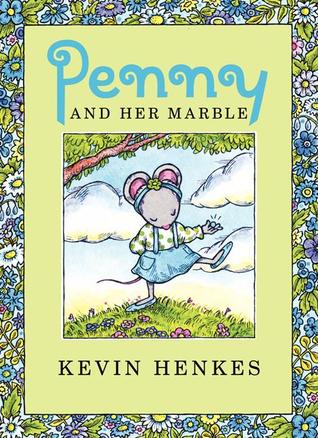
Penny and Her Marble by Kevin Henkes

Share

penny

Penny and her Marble
Author and Illustrator: Kevin Henkes
Published February 19th, 2013 by GreenwillowBooks

Goodreads Summary: In the third easy-to-read book about Penny the mouse, written by Caldecott Medalist and bestselling author Kevin Henkes, Penny finds a beautiful marble on her neighbor’s lawn and must decide whether or not to keep it. With age-appropriate vocabulary, compelling characters, and a memorable storyline, this is just right for newly independent readers.

Kevin Henkes is known for his mouse characters, including Lilly, Owen, Chrysanthemum, Wemberly, and now Penny! In Penny and her Marble, the third book in the Penny series, Penny finds a marble on Mrs. Goodwin’s yard and takes it home. But does the marble really belong to Penny? Kevin Henkes is a master at creating beautifully illustrated books that resonate with young children. The Penny books are new classics for beginning readers and will appeal to fans of Frog and Toad, Little Bear, and Henry and Mudge.

Review and Teacher’s Tools for Navigation: I am a huge fan of Kevin Henkes. I really enjoy everything he writes—he is so talented! His work ranges from picture books to early readers to chapter books to middle grade novels and all that I’ve read, I’ve enjoyed, and Penny and Her Marble was no different. Like the Goodreads summary says, Penny’s story is perfect for our early readers. Her story is one that children will connect with; however, Henkes never talks down to his readers. What struck me was the beautiful language that he used throughout–to describe Penny’s feelings, the marble, the day, etc.

Discussion Questions: If you were Penny, would you have kept the marble?; Is there anything you’ve taken without asking? What did you do?; Like Kevin Henkes does, look at different marbles and use similes to describe them.

We Flagged: “The marble was so blue it looked like a piece of the sky. Penny went to the window and held up the marble. She was right. The marble was like a piece of the sky.” (p. 16-17)

Read This If You Loved: Other Kevin Henkes books, Frog and Toad by Arnold Lobel, Little Bear by Else Holmelund Minarik, Scaredy Squirrel by Melanie Watt

Recommended For: 

readaloudbuttonsmall classroomlibrarybuttonsmall

Signature

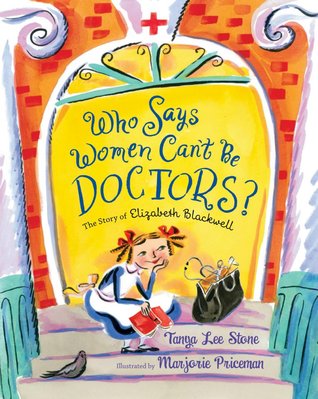
Who Says Women Can’t Be Doctors? by Tanya Lee Stone

Share

NF PB 2014

Nonfiction Picture Book Wednesday

Nonfiction Picture Book Wednesday is hosted by Kid Lit Frenzy and was started to help promote the reading of nonfiction texts. Most Wednesdays, we will be participating and will review a nonfiction text (though it may not always be a picture book).
Be sure to visit Kid Lit Frenzy and see what other nonfiction books are shared this week!

doctors

Who Says Women Can’t Be Doctors?
Author: Tanya Lee Stone
Illustrator: Marjorie Priceman
Published February 19th, 2013 by Henry Holt and Co.

Goodreads Summary: In the 1830s, when a brave and curious girl named Elizabeth Blackwell was growing up, women were supposed to be wives and mothers. Some women could be teachers or seamstresses, but career options were few. Certainly no women were doctors.

But Elizabeth refused to accept the common beliefs that women weren’t smart enough to be doctors, or that they were too weak for such hard work. And she would not take no for an answer. Although she faced much opposition, she worked hard and finally—when she graduated from medical school and went on to have a brilliant career—proved her detractors wrong. This inspiring story of the first female doctor shows how one strong-willed woman opened the doors for all the female doctors to come.

My Review: I love that Tanya Lee Stone chose to write about a women in history that changed our world in a big way, but has not get the credit for it.  It is amazing to think that one young lady was brave enough to be the first to try to get into medical school to help pave the way for millions of woman doctors today.  Although I realize there has to be a first for everything when overcoming prejudice and inequality, it is not often that you hear about who this one person was and how s/he had to do it alone, but that is how it was for Elizabeth Blackwell. No one had tried to jump over the barrier, but she did. This is such an inspirational story and such a big part of history–it should be shared with everyone.  And what tops off the book is the vibrant, colorful, playful illustrations that will draw the reader in even more.

Teachers’ Tools for Navigation: A couple of interesting themes that can definitely pulled out of this story is resilience (she never gave up after all of the rejections), the power of friendship (she has never considered being a doctor until a friend suggested it), and selflessness (just read the author’s note about the rest of Elizabeth’s life at the end). All three of these would lead to phenomenal discussions and can be connected to other historical figures and fiction texts.

Discussion Questions: Why do you think it took the townspeople longer to accept Elizabeth?; We learn that Elizabeth’s sister also became a doctor and the two of them eventually start a hospital. What type of people would Elizabeth and her sister have to be to be able to go from not being allowed to be a doctor to owning a hospital? What traits would they need?; How would life be different now if Elizabeth had never tried to become a doctor?

We Flagged: “I’ll bet you’ve met plenty of doctors in your life. And I’ll bet lots of them were women. Well, you might find this hard to believe, but there was once a time when girls weren’t allowed to become doctors.” (p. 3)

Read This If You Loved: Brave Girl by Michelle Markel, Me…Jane by Patrick McDonnell, Daredevil by Meghan McCarthy, Here Come the Girl Scouts by Shana Corey

Recommended For: 
readaloudbuttonsmall classroomlibrarybuttonsmall

Signature

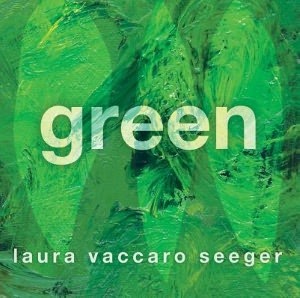
Green by Laura Vaccaro Seeger

Share

 green
Green
Author: Laura Vaccaro Seeger
Published March 27th, 2012 by Roaring Brook Press

Goodreads Summary: Die cut pages bring surprise after surprise in this magical new book from the “Queen of the concept book”—an intricate and satisfying homage to green, the color of all creation.
How many kinds of green are there? There’s the lush green of a forest on a late spring day, the fresh, juicy green of a just-cut lime, the incandescent green of a firefly, and the vivid aquamarine of a tropical sea. In her newest book, Caldecott and Geisel Honor Book author Laura Vaccaro Seeger fashions an homage to a single color and, in doing so, creates a book that will delight and, quite possibly astonish you.

Green is a Kirkus Reviews Best Children’s Book of 2012.

Review: The limited words on each page allow the reader to get lost in the beauty of the illustrations of this gorgeous children’s book. I was expecting the typical greens but was pleasantly surprised to see the clever takes on wacky green, slow green, and no green at all. I glided from page to page, appreciating the clever cutouts and visual appeal of this incredible children’s book.

Teacher’s Tools for Navigation: This text could be used at a variety of levels. In my reading, I felt it is really asking readers: “How many different ways can you look at the color green?” We see objects, colors, and basic things in our world one way, but how can we interpret them differently? I would love to see this used in a creative writing classroom.

Discussion Questions: Where do we see the color green in our world? Go beyond the expected interpretations.; How does the author creatively present this book? What makes a book with so few worlds so very powerful?

Read This If You Loved: A Very Hungry Caterpillar by Eric Carle, One Fish, Two Fish, Red Fish, Blue Fish by Dr. Seuss

Recommended For: 

readaloudbuttonsmall classroomlibrarybuttonsmall

RickiSig