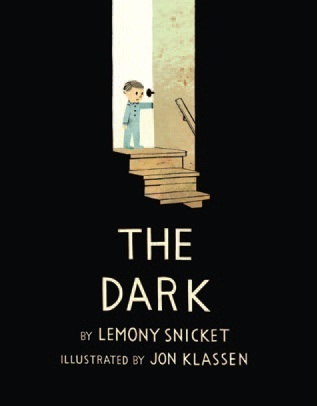
The Dark by Lemony Snicket

Share

The Dark
Author: Lemony Snicket
Illustrator: Jon Klassen
Published April 2, 2013 by Little, Brown

Guest Post by: Nichole Pitruzzello

Summary: Laszlo is afraid of the dark. But is the dark afraid of Laszlo? They live in the same house, with the same creaky roof, smooth, cold windows, and several sets of stairs. But the dark mostly stays in the basement…until one night, when it doesn’t. Laszlo walks through his house, as the dark converses with him, on a journey to overcome his fear.

Review: In his unique writing style, Lemony Snicket takes an eerie childhood fear and personifies the dark in a soothing way. John Klassen’s illustrations are a wonderful compliment to the story of Laszlo, using black space and warm colors to enhance the mood. I’m very impressed by the way they take a concept that many children fear, and transform it into a friendly, calming presence. I cannot wait to add this book to my library!

Teachers’ Tools for Navigation: Teachers can use this book as a mentor text for a variety of mini lessons. Lemony Snicket personifies the dark, uses vivid language to talk about Laszlo’s house, and creates suspense through a blend of dialogue and narration. In addition, it’s an excellent book to teach a lesson about overcoming one’s fears. There’s so much that this book can add to a classroom!

Discussion Questions: What are some places that you are scared of, and why are they scary? Was the dark really scary? How did the dark help Laszlo? Why shouldn’t we be afraid of the dark? What should we do when we are afraid of something?

Book Trailer: 

Read This If You Loved: Go Away, Big Green Monster by Ed Emberly, Singing Away the Dark by Caroline Woodward, 13 Words by Lemony Snicket

Recommended For:

   classroomlibrarybuttonsmall

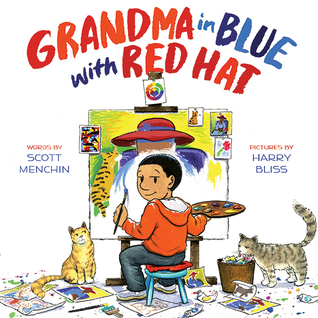
Grandma in Blue with Red Hat by Scott Menchin

Share

Grandma in Blue with Red Hat
Author: Scott Menchin
Illustrator: Henry Bliss
Published April 14, 2015 by Abrams

Guest Post by: Sarah Mangiafico

Summary: When a young boy learns about what makes art special—sometimes it’s beautiful, sometimes it’s funny, sometimes it tells a story—he realizes that these same characteristics are what make his grandmother special, too. As a result, he finds the inspiration to create his own masterpiece that’s one of a kind.

Christopher Award–winning author Scott Menchin and New York Times bestselling illustrator Harry Bliss have teamed up for a celebration of the power of art and expression, and the extraordinary love between grandparent and child.

Review: I love how this book expresses the different feelings that art can evoke in someone, along with the meaningful moments that it can capture. Sometimes something can be art simply for being funny or for making you feel nice; art does not have to be complicated to be art. This is a powerful message to share with readers, since many people often think that art needs to have many different meanings and lots of creativity in order to be art. The art that the boy makes about his grandma clearly shows the feelings and thoughts that can inspire someone to make art. The art that he makes about her is also very touching, and is a great ending to the book that leaves readers (including myself) ready to go out and create their own meaningful art pieces.

Teachers’ Tools for Navigation: Grandma in Blue with Red Hat is a wonderful book that can show students how “Anything can be in an art exhibition,” and can teach them how anything that they create can be considered art (Menchin 3). This is a great book to introduce students to what art is, and can motivate kids to want to create their own art pieces for a “class art museum.” After creating their pieces, students can walk around the “class art museum” and write down why they think each piece is art. Grandma in Blue with Red Hat is a sure way to get students interested in art, and to create art that is meaningful to them in some way.

This book is also a wonderful book to share with students because the art pieces shown in the book are real and famous pieces of art. Reading this book as a read aloud can introduce students to these pieces and can lead to a more in-depth class study of them and the artists that made them. A variety of cultures are represented in the art pieces shown in the book as well, which makes this book culturally relevant.

Discussion Questions: What is art? Why did the boy in the story decide to use his grandma as an inspiration for his art? What are some things that you could make an art piece about? What makes you choose those things?

Flagged Passages: “Grandma is beautiful. Grandma is different. Grandma is funny. Grandma tells me stories. Grandma comes from far away. Grandma makes me feel good” (p. 17).

Read This If You Loved: Draw! by Raúl Colón, Maybe Something Beautiful by F. Isabel Campoy and Theresa Howell, My Pen by Christopher Myers

Recommended For:

   classroomlibrarybuttonsmall

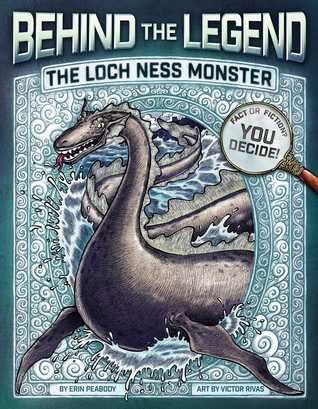
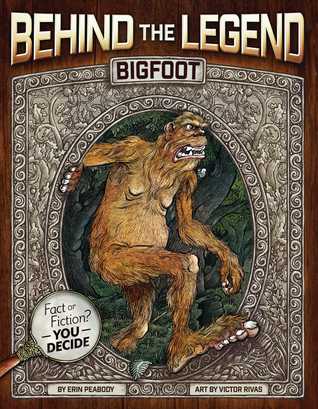
Behind the Legend: The Loch Ness Monster & Big Foot by Erin Peabody

Share

nfpb2017

Nonfiction Wednesday

Nonfiction Picture Book Wednesday is hosted by Kid Lit Frenzy and was started to help promote the reading of nonfiction texts. Most Wednesdays, we will be participating and will review a nonfiction text (though it may not always be a picture book).
Be sure to visit Kid Lit Frenzy and see what other nonfiction books are shared this week!

Behind the Legend Series
The Loch Ness Monster
Big Food
Author: Erin Peabody
Illustrator: Victor Rivas
Published May 2nd, 2017 by little bee books

Series Summary: little bee books is thrilled to announce their brand-new nonfiction middle grade series! Behind the Legend is designed for readers ages 8-10 and asks that to decide what is fact and what is fiction. Each book analyzes legendary creatures throughout history using scientific problem solving. Readers evaluate the evidence of sightings, debunk hoaxes with scientific experiments, and read from sources to decide if the monster is made of myth, legend, or fact. Packed with interesting anecdotes, photos, sidebars, and illustrations, each title is a page-turning adventure that readers won’t want to put down.

Learn all about creatures and monsters throughout history and discover if they’re real or not in this new nonfiction series! Behind the Legend looks at creatures and monsters throughout history and analyzes them through a scientific, mythbusting lens, debating whether or not the sightings and evidence provided are adequate proof of their existence.

More books coming soon! Zombies and Werewolves coming in Summer 2017 and Unicorns and Dragons in Spring 2018.

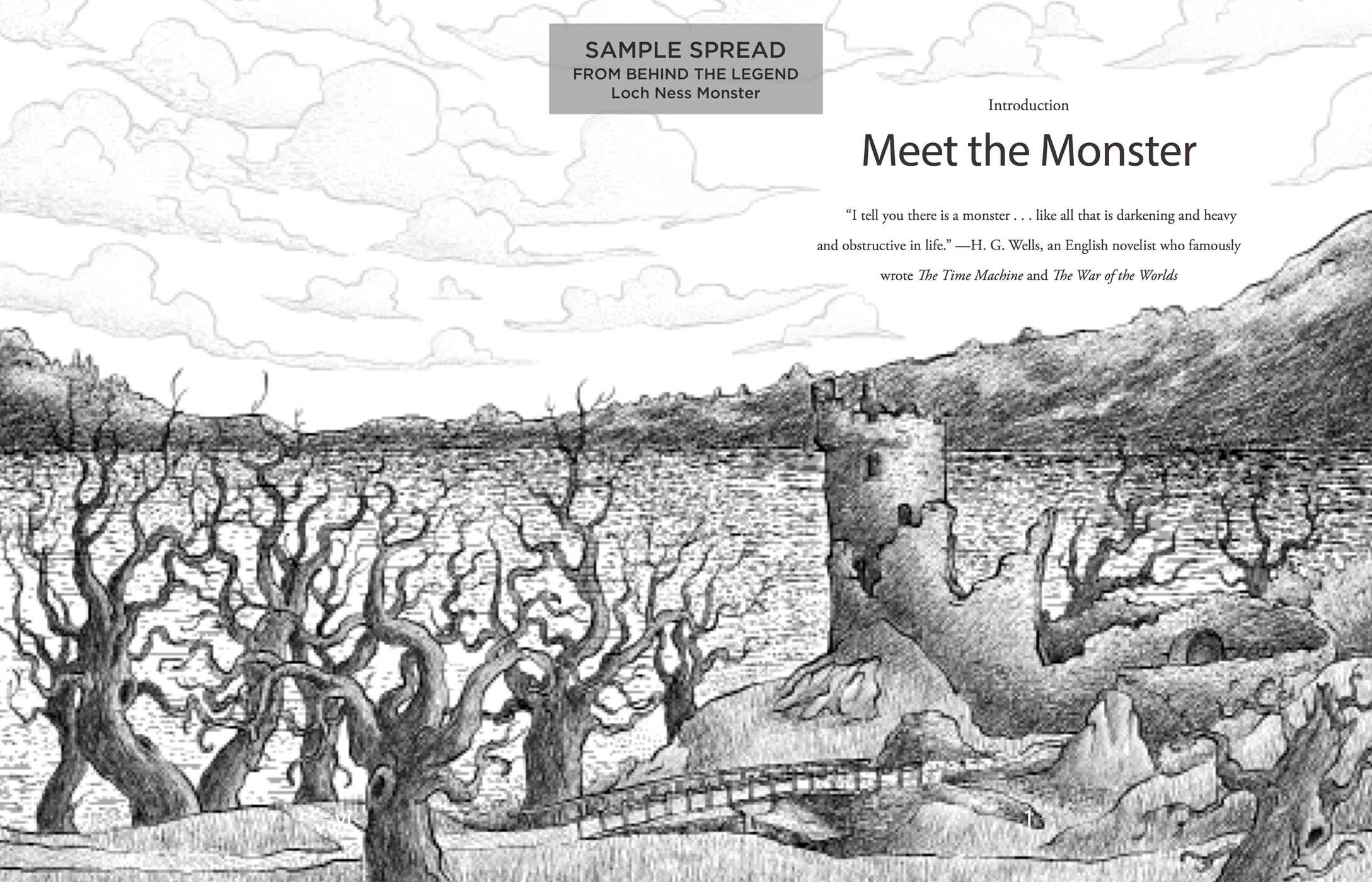
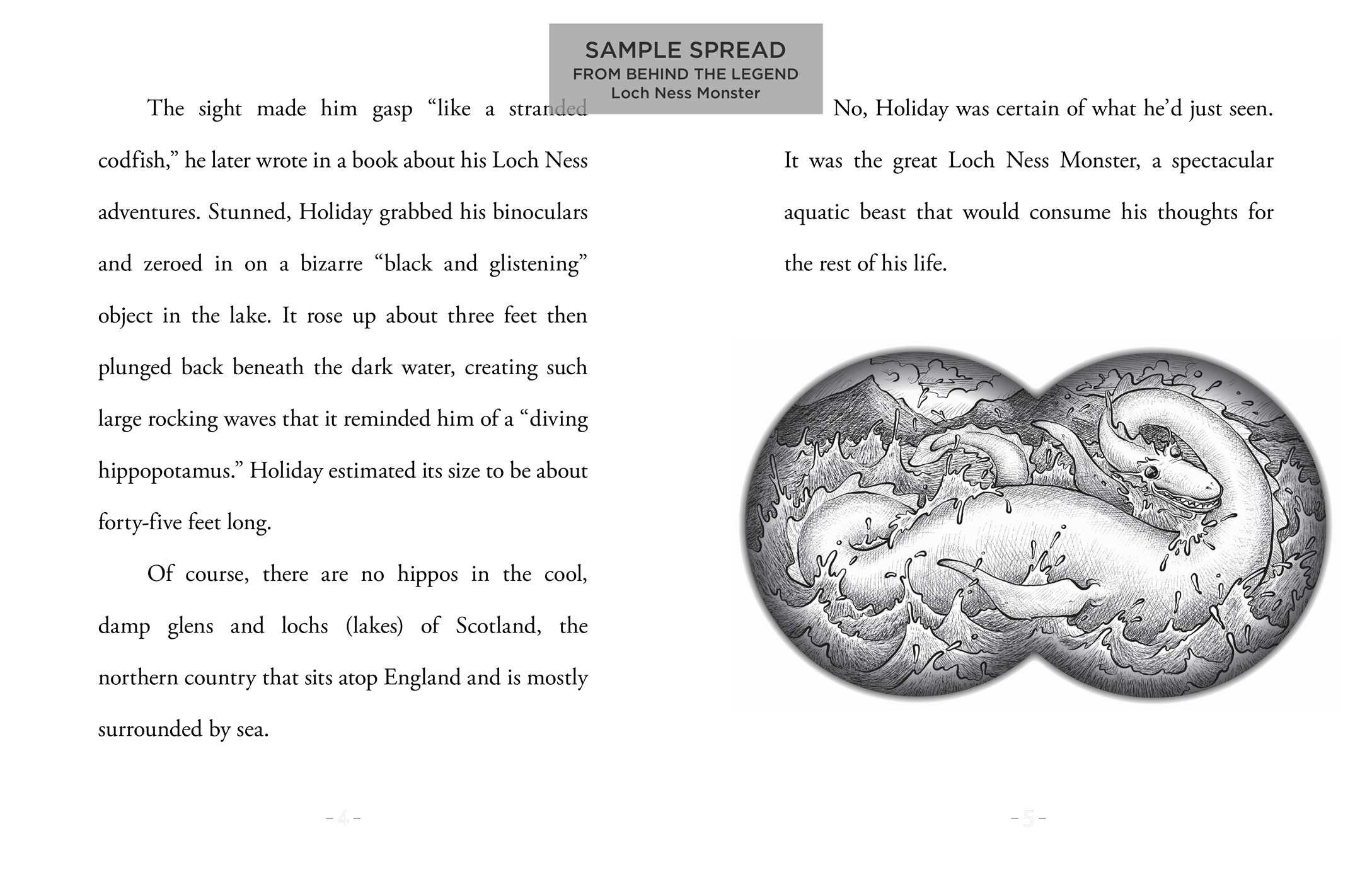
The Loch Ness Monster Summary: In The Loch Ness Monster, readers learn about all the sightings and proof of it, from the famous photograph to the huge “footprints” found by the Loch. It also discusses other history about the monster, such as how Nessie became a major figure in popular culture, and other mythical beings that came from Scotland. Complete with engaging anecdotes, interesting sidebars, and fantastic illustrations, kids won’t want to put this book down!

Big Foot Summary: In Bigfoot, readers learn about all the sightings and proof of it, from the famous photograph and video to footprints and other evidence. It also discusses additional history about the monster, such as how Bigfoot became a major figure in popular culture, and how other versions of the creature (such as the Yeti) have been seen around the world. Complete with engaging anecdotes, interesting sidebars, and fantastic illustrations, kids won’t want to put this book down!

Review: On one of our recent Top Ten Tuesday posts, I shared that I am always looking for nonfiction books to keep my middle grade students reading nonfiction because it is so hard to talk them into reading it unless it really catches their interest. I think part of the reason is because there aren’t many transitional nonfiction books from picture books and shorter informational nonfiction books to longer works like books by Jim Murphy, Deborah Heiligman, and Candance Fleming (which are phenomenal, but many readers just don’t have the nonfiction stamina). I think the Behind the Legend series fits this need perfectly! They are slightly longer than the traditional children’s nonfiction book and the words outnumber the pictures though there are still many illustrations, big font, lots of white space, and short chapters.

Teachers’ Tools for Navigation: The Behind the Legend series’ texts will be perfect for not only reading aloud and discussing the truly interesting information within the book, I think the texts would be perfect mentor texts for writing an informational nonfiction text of the students’ own. The books do a wonderful job at looking at many different aspects of the legend and remaining unbiased.

Discussion Questions: Based on the information shared in the text, do you believe the legends are fact or fiction? Support your answer with evidence form the text.; How do legends such as the Loch Ness Monster and Bigfoot become such cultural phenomenons?

Flagged Passages: 

Read This If You Love: Who Was? series, Legends

Recommended For: 

classroomlibrarybuttonsmall closereadinganalysisbuttonsmall

Signature

**Thank you little bee books for providing copies for review!**

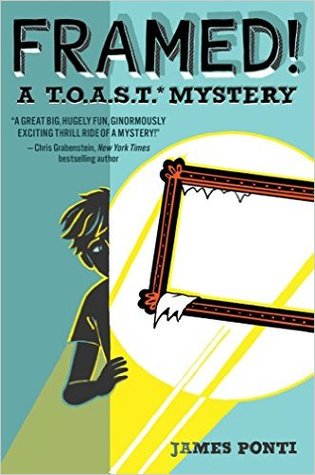
Framed by James Ponti

Share


Framed: A T.O.A.S.T Mystery
Author: James Ponti
Published August 26th, 2016 by Aladdin

Summary: Get to know the only kid on the FBI Director’s speed dial and several international criminals’ most wanted lists all because of his Theory of All Small Things in this hilarious start to a brand-new middle grade mystery series.

So you’re only halfway through your homework and the Director of the FBI keeps texting you for help…What do you do? Save your grade? Or save the country?

If you’re Florian Bates, you figure out a way to do both.

Florian is twelve years old and has just moved to Washington. He’s learning his way around using TOAST, which stands for the Theory of All Small Things. It’s a technique he invented to solve life’s little mysteries such as: where to sit on the on the first day of school, or which Chinese restaurant has the best eggrolls.

But when he teaches it to his new friend Margaret, they uncover a mystery that isn’t little. In fact, it’s HUGE, and it involves the National Gallery, the FBI, and a notorious crime syndicate known as EEL.

Can Florian decipher the clues and finish his homework in time to help the FBI solve the case?

Review: I love mysteries; specifically mysteries with kids who solve things that adults couldn’t figure out. They are so much fun to follow along and try to figure out with the characters. Florian is one of the best kid detectives that I’ve read. His use of TOAST, the Theory of All Small Things, is so admirable and is something that kids could definitely learn from since they so often ignore the small things and focus on the obvious. I could definitely see games and activities being created for classrooms that use the TOAST theory. Or kids will play the type of games that Florian and Margaret played as Florian was training Margaret in TOAST: making inferences about the people around them, in stories, or with mysteries. I could see pairing TOAST with books like You Be The Jury

I also really enjoyed the mystery that James Ponti set up for us. I could predict part of it but other parts came as a total surprise to me. I am always in total awe of an author’s ability to craft such a complicated mystery and how it all comes together. I also loved that the story was mutli-faceted and will teach the readers as well as entertain them.

And I am so happy to say that Framed is on our 2017-2018 Sunshine State Young Reader Award list for both 3rd-5th grade AND 6th-8th grade! Congratulations, James!

Teachers’ Tools for Navigation: In addition to the mystery games that could be played using TOAST, reading aloud Framed, and having Framed available to students to read, there are lots of opportunities in the book to discuss art and art history. Since both of Florian’s parents work in the museum business and the mystery of the book focuses on an art heist, there multiple times where art comes into the story including discussion of impressionism (specifically Monet, Renoir, and Degas) and even stories of Van Gogh and Gaugin.

Discussion Questions: Did you figure out the mystery before it was revealed? Was there any foreshadowing now that you know the reveal?; What did you learn about art while reading Framed?; How could you use TOAST in your life?

Flagged Passages: “‘You want me to teach you TOAST?’

‘Toast?’ she asked. ‘You’ve tasted my cookies, which are…epic. Don’t you think I know how to make toast?’

‘Not that toast,’ I said. ‘TOAST stands for The Theory of All Small Things. That’s how I read people and places. The idea is that if you add up a bunch of little details, it reveals the larger truth.’

‘And where did you learn this theory? Philosophy class? Spy school?’

‘I…invented it…I guess.’

This made her laugh. ‘You invented TOAST?’

‘It’s based on some things I learned from my parents,’ I said. ‘But I pull it all together and came up with the name. So yes, I invented it.’

‘You said your parents work at museums, right?’

‘My father designs security systems, and one day he explained that the key to his job is finding the tiny flaw or inconsistency that the bad guys can take advantage of.’

‘Like the saying that ‘a chain is only as strong as its weakest link’?’

‘Exactly,’ I said. ‘And my mother’s an art conservator. She restores old paintings and says the best way to understand a painting is by finding the smallest details that tells you the whole story, like the smile on the Mona Lisa.’

‘And this led to TOAST?’

I nodded. ‘Even though their jobs are incredibly different, they both rely on the idea that tiny things can be hugely important,’ I explained. ‘Once I even used TOAST to help my dad catch a criminal.'” (Approximate Loc 221 in the ebook)

Read This If You Loved: Chasing Vermeer by Blue Balliett, Heist Society by Ally Carter, Shakespeare’s Secret by Elise Broach, Stormbreaker by Anthony Horowitz, Loot by Jude Watson, Nickel Bay Nick by Dean Pitchford, Some Kind of Happiness by Claire Legrand, Great Greene Heist by Varian Johnson, Wig in the Window by Kristen Kittscher, A Girl Named Digit by Annabel Monaghan,

Recommended For:

  litcirclesbuttonsmall classroomlibrarybuttonsmall 

**Thank you to the author for providing copies for review!**

Review and Giveaway: Caring for Your Lion by Tammi Sauer

Share

Caring for Your Lion
Author: Tammi Sauer
Illustrator: Troy Cummings
Anticipated Published: May 2, 2017 by Sterling

Goodreads Summary: What happens when you expect an itty-bitty kitty . . . but get a lion instead?
It’s kitten delivery day, but—SURPRISE. Congratulations on your new LION! We know you ordered a kitten, but we ran out of those. Fortunately, the big cat comes with instructions—like, try very hard NOT to look like a zebra. Or a gazelle. And give your lion PLENTY of space to play. But soon the feathers and fur start flying and everything’s in chaos. Is there any way a lion could actually be a child’s purr-fect pet?

Ricki’s Review: This text will be a fantastic read-aloud for elementary school classrooms. It is a how-to book that will make kids roll with laughter. There is much to be taught from this text, so teachers will love teaching it as much as students will love listening to it. I enjoyed how straight-forward the text was. The pages include step-by-step instructions that are very clear and direct. The pictures show the consequences (e.g. the lion will eat you!). This is a perfect mentor text for a variety of teaching tools (see below) and a great addition to classrooms.

Kellee’s Review: Kids are going to love this step-by-step introduction into how to care for a pet lion. (Though I predict there are going to be some “No, you cannot have a lion as a pet.” conversations because of this book! The lion is just that adorable!) I loved how the book was a combination of a how-to guide and a narrative of the boy’s experience with his lion–what a unique concept! It is going to be such a fun book to read aloud with time to examine each page. And like Sauer’s Alien books, it really makes you think about expectations, prejudice, and first impressions vs. reality.

Teachers’ Tools for Navigation: Teachers might use this book to teach sequence and how-to directions. They could also use it with students to discuss how caring for a lion would compare and contrast to caring for a more typical animal like a cat, dog, or fish. Students could then write their own how-to guides about caring for an exotic animal. 

Discussion Questions: What is difficult about caring for a lion? What is important to remember?; When should you use a feather? What does the feather do?

Flagged Passage: “Step 3: Try very hard NOT to look like a zebra. Or a gazelle. Or a bunny. (See Diagram A).”

Read This If You Love: Share, Big Bear, Share by Maureen WrightMr. Fuzzbuster Knows He’s the Favorite by Stacy McAnultyDear Dragon by Josh Funk; How to Track a Truck by Jason Carter Eaton; How This Book Was Made by Mac Barnett

Recommended For: 

classroomlibrarybuttonsmall readaloudbuttonsmall

Giveaway!

a Rafflecopter giveaway

RickiSigandSignature

**Thank you to Lauren at Sterling for providing copies for review!**
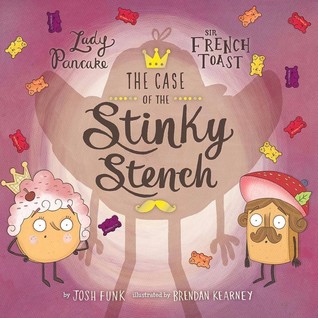
Lady Pancake and Sir French Toast in The Case of the Stinky Stench by Josh Funk

Share

The Case of the Stinky Stench
Author: Josh Funk
Illustrator: Brendan Kearney
Published May 2nd, 2017 by Sterling Kids

Summary: “Uncle,” Crossaint said, “the fridge is in trouble!
A mystery stench turned a whole shelf to rubble!
I’m the last hope or the fridge will be lost!
Help me or else we’ll be cooked, served, and sauced.”

There’s a stinky stench in the fridge—and our favorite foodie friends must solve a smelly mystery! Sir French Toast’s nephew, Inspector Croissant, begs him and Lady Pancake for help in finding the source of the foul odor. Could it be the devious Baron Von Waffle? A fetid fish lurking in the bottom of Corn Chowder Lake? Featuring the same delectable wordplay and delicious art that won critical raves for Lady Pancake & Sir French Toast—there’s even an actual red herring—his fun follow-up is an absolutely tasty treat for kids!

About the Author: Josh Funk is from MA where he spends his days writing computer language and his free time writing picture book rhymes. His first published picture book was Lady Pancake & Sir French Toast (Sterling) and he is the author of Pirasaurs (Scholastic), Dear Dragon (Viking), and the upcoming Albie Newton (Sterling, 2018).

About the Illustrator: Brendan Kearney is an illustrator from the UK. While studying architecture at university, he realized he didn’t like rulers. He then discovered that it wasn’t essential to use a ruler when illustrating children’s books. Now he specializes in illustrating children’s books, bringing his own chaotic style and ideas to any project. He is also the illustrator of the first Lady Pancake & Sir French Toast and Bertie Wings It (both Sterling).

Kellee’s Review: I love that Lady Pancake and Sir French Toast are friends again and working together with Inspector Croissant to solve the mystery of the stinky stench. Their story promotes prediction, friendship, and problem solving in a fun refrigerator adventure! In a way that only Josh Funk can, he rhymes his way through the story without even one rhythm hiccup. The story, filled with humor, throwbacks to the first book, and a sweet ending, is just as funny as the first one with jokes for kids and adults alike (watch for the Red Herring and Spuddy Holly). 

Ricki’s Review: If you follow this blog, you know that we absolutely love Josh Funk’s work. His books are smart, cleverly crafted, and engaging. They have a special quality to them in that they appeal to both adults and kids. My son is allowed to pick his bedtime books, and my inner voice squeals whenever he picks one of Josh’s books because I know that the story will be fun to read aloud. We got this book a week ago, and we’ve read it over a dozen times (by my son’s choice!). Who doesn’t love a book about a stinky stench?! There is so much to talk about, and so many great foods and vocabulary words to discuss. The words dance across the pages—and this makes for a beautiful read-aloud. I am always wary of sequels and companion books, but Josh nailed it. This is a great adventure that can work well with the first book and also stand alone. Teachers, if you don’t have this book or Lady Pancake and Sir French Toast, I recommend them highly for your classrooms. Parents, this one is a no-brainer. I will cross my fingers that a third Lady Pancake and Sir French Toast book is in the works!

Teachers’ Tools for Navigation: Because of Josh Funk’s amazing ability to have perfect rhyming throughout the book, The Case of the Stinky Stench and the first Lady Pancake & Sir French Toast book are perfect at looking at rhyming and rhythm. Students can find all the rhyming words and discuss how they know the words rhyme and think of other words that rhyme with the words they found. Also, while reading, to discuss rhythm, students can clap along with the words to hear the rhythm that Josh Funk has created. Alternatively, students might design their own Lady Pancake and Sir French Toast pages to display around the classroom.

Activity Kit:

Can also be found on Sterling Publishing’s Stinky Stench website: https://www.sterlingpublishing.com/9781454919605

Book Trailer: 

Read This If You Loved: Lady Pancake and Sir French Toast by Josh Funk, The Cookie Fiasco by Dan Santat, Max the Brave by Ed Vere, Giraffes Ruin Everything by Heidi Schulz

Recommended For:

  classroomlibrarybuttonsmall 

and 

**Thank you to Sterling Kids for providing a copy for review!!**

The Fourteenth Goldfish by Jennifer L. Holm

Share

The Fourteenth Goldfish
Author: Jennifer L. Holm
Published: April 5, 2016 by Yearling

A Guest Review by Kelsey Iwanicki

Summary: The Fourteenth Goldfish follows the story of Ellie, an 11-year-old girl, who is currently struggling to find her passion, especially following the gradual drop off with her one and only friend, Brianna. However, everything changes when her mother brings home a quirky and crabby 13-year-old boy, Melvin. Ellie notices striking similarities between Melvin and her seventy-something year-old grandfather until he comes clean and tells her that they are in fact the same person. Melvin has worked on developing a drug to reverse the signs of aging, which has successfully worked on himself.

As Ellie and Melvin get closer, they also form an unlikely friendship with a goth student, Raj. Together they give Melvin advice about being a teenager, such as giving him acne medicine and hair elastics. They also help Melvin eventually, after a few failed attempts, steal the same compound that reversed his age. Melvin’s original plan was to steal the gene so he could share it with the world and receive the Nobel Peace Prize. However, Ellie persuaded him not to on the grounds of moral ethics and how scientific impacts can be both positive and negative. Due to this, Melvin flushes the compound down the drain and starts to tour the country. Thanks to her time with her grandfather, Ellie is able to discover his passion in science and also gain a few friends along the way, Raj and Momo.

Review: What I liked most about this book was its quirkiness, mostly exemplified through Melvin. Although the relationship between Ellie and Melvin is untraditional, you can also get glimpses of a typical relationship between a grandfather and granddaughter is like, one that isn’t usually written about. The majority of characters are nontraditional, such as Raj, who is explicitly written as goth; Ellie, a girl scientist (although this is becoming more popular, usually boys are the ones in the STEM fields); and Melvin, as a grumpy 13-year-old.

What I didn’t like about the book was the build-up. Although they failed multiple times at stealing the compound, there was no suspense for when Melvin actually succeeded. Rather, he just came home one day with it. The climax actually was when Ellie had a self-realization that science has both positives and negatives, which honestly was kind of a let down because the plot had focused around getting the compound from the lab. Ultimately, it was a good theme because Ellie realizes there are good and bad things with any passion.

All in all, I did like the book, I think it could appeal to students who are interested in science and realistic fiction books.

Teachers’ Tools for Navigation: This book should definitely be included in a classroom library for independent reading because I think it would appeal for students because it is a little quirky and has some interesting characters. It could also prompt some interesting discussions for literature circles because students could discuss the ethics behind using a compound to reverse aging.

A teacher could also use it as a read aloud for a few reasons. It would be interesting to consider the other perspectives of characters such as Melvin or Melissa, Ellie’s mother. Additionally, they could talk about the character traits and what makes Melvin and Ellie such strong characters. Or, they could talk about science and ethics behind what scientists release.

Discussion Questions: If you had a compound that could reverse aging, would you take it? Why or why not?; If you discovered a compound that could reverse aging, would you deliver it to the public? Why or why not?; What do you think will happen to Ellie and Brianna’s friendship? Ellie and Momo’s?; What do you think the side affects are from taking the compound? / What do you think happened to Melvin?; Put yourself in Ellie’s shoes, how would you feel if your grandfather attended the same school as you?; What is the importance of the fourteenth goldfish?

Flagged Passage: “Average people just give up at the obstacles we face every day. Scientists fail again and again and again. Sometimes for our whole lives. But we don’t give up, because we want to solve the puzzle” (p. 47).

Read This If You Loved: El Deafo by Cece Bell; Fish in a Tree by Lynda Mullaly Hunt; Out of My Mind by Sharon Draper; Rain Reign by Ann M. Martin; Unusual Chickens for the Exceptional Poultry Farmer by Kelly Jones

Recommended For:
 classroomlibrarybuttonsmall

Thank you, Kelsey!

RickiSig