Kingdom of Secrets by Christyne Morrell

Share

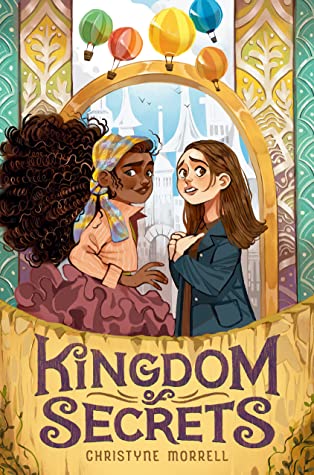
Kingdom of Secrets
Author: Christyne Morrell
Expected Publication August 3rd, 2021 by Delacorte Press

Summary: Prismena’s father is the hot air balloonist in the peaceful kingdom of Oren. She assists him by mending torn balloons, but she yearns to build and fly the complicated machines herself. One day, a waif named Abi steals Prissy’s only remaining memento of her deceased mother – a silk scarf – and promises to return it only if Prissy smuggles a mysterious box onto one of her father’s flights. Since balloon travel is strictly regulated in Oren, that single act of rebellion results in her father’s arrest and kicks off a spiraling series of events that will yank Prissy out of her predictable life.

Along the way to free her father from jail, she’ll get caught up in a bar fight, nabbed by a sadistic schoolmistress, tossed into a home for unwanted children, schooled in the art of stealing, and thrust into the center of a brewing rebellion. On her journey through Oren – with its glitzy neighborhoods and its seedy underbelly – Prismena will uncover secrets that change the way she views her family, her kingdom, herself, and even her beloved hot air balloons. She’ll have to break a few rules – and even forge metal – to save the people she loves, but she may also get a chance to soar.

About the Author: Christyne Morrell is a children’s book author and attorney. She lives in Decatur, Georgia with her husband, daughter, and hyperactive beagle. Christyne has been writing poems and stories since she could hold a pencil, but KINGDOM OF SECRETS (Delacorte 2021) is her debut middle-grade novel. 

Christyne is also the author of the picture book Abra, Cadabra & Bob (Clear Fork Publishing 2019), and her work has appeared in Highlights, Spider, and The School Magazine. She can be found online at christynewrites.com and on Twitter and Instagram at @ChristyneWrites. Christyne is represented by Danielle Chiotti at Upstart Crow Literary.

Review: When I started reading this book, it caught me right away because Abi comes out of nowhere, blackmails Prissy, then her dad gets arrested, and really I truly had no idea what was going on! Since the book is in Prissy’s point of view it gives the reader the suspense and disbelief that Prismena has as the story begins. This makes you want to just keep reading to figure everything out.

Then, add in a second story about a mysterious young lady named Wren from the past that will crash land into the main story in a very unexpected way–it just sucks the reader in more!

In addition to the plot, I found the characters intriguing and very well crafted. The development of Prismena is definitely the highlight as she learns how to be on her own and have her own thoughts, but even the secondary characters had stories that Morrell found time to tell in the book. I do wish I knew more about Abi’s life, but maybe that will come in another book!

I also think the book is timely as it looks at government corruption and propaganda based in fear of others and loss of power. Because of Prismena’s ignorance, we get to experience the realizations as she does, so this allows for good discussions about these topics without bringing up current events.

I am pretty picky about high fantasy, but this one is one of my recent favorites, and I cannot wait to share it with my students!

Teachers’ Tools for Navigation: The author’s website has a plethora of extra information to bring great discussions about this book to your classroom or book club!

First, there is an interview with balloonists which goes more into the science of the balloons, how Prissy’s valves would work, and other fun balloon anecdotes.

Second, she has Kingdom of Secret themed activities that are engineering, robotics, and science focused! These include making their own Dress Fit for a Queen, Rubber Band Flying Machine, Hot Air Balloon, and Mini-Catapult.

Finally, she has a section on “Fun Facts and Further Research” that looks at balloon history and fashion.

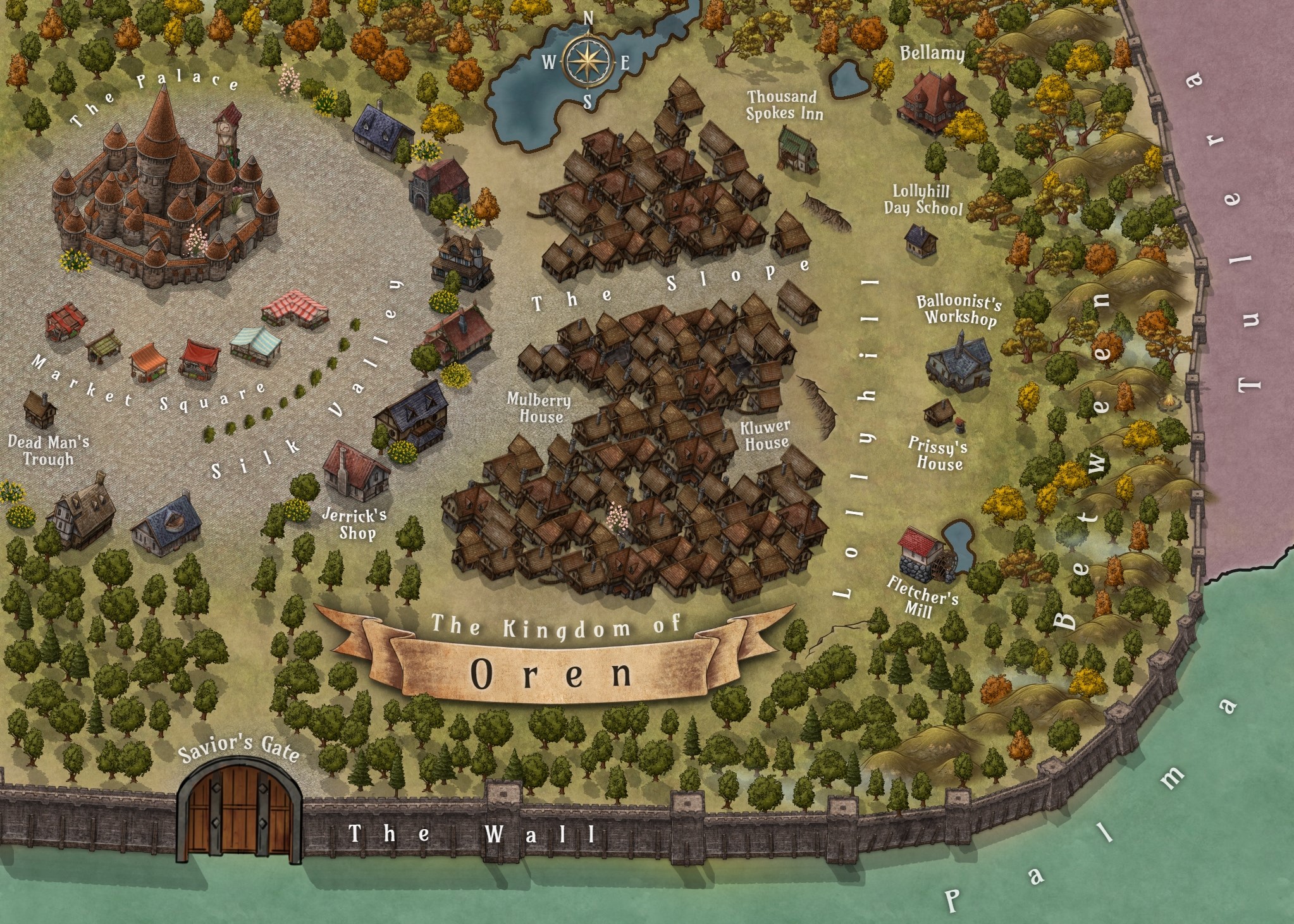
(And side note: I love a good map of a high fantasy setting, and the author gives us a very detailed and beautiful map of Oren.)

Discussion Questions: The Kingdom of Secrets Book Club Discussion Guide is available now and includes discussion questions such as:

  • At the beginning of A Blood Red Smile, a little girl treats Prissy like a celebrity because she’s the “balloonist’s daughter.” Later, Marybeth does the same. Why do you think that is?
  • Mr. Dudley is arrested for having “contraband,” including rubber. It may seem silly to you that something as common as rubber would be considered dangerous. Why do you think King Michael feels that rubber and other simple inventions are threatening?
  • When they first meet, Prissy and Abi don’t get along. Why not? What are some of their differences? What do they have in common? What changes over the course of the book that leads to them becoming friends?

Note: Some of the discussion questions in the complete guide are spoilers!!

Book Trailer:

Flagged Passages: Chapter 1. The Stranger and the Scarf

Abigail Smeade arrived like a black eye: sudden, fierce, and blossoming under my skin. When I met her, I was sitting in the shade of an old oak tree, minding my own business. I’d just removed a burlap sack from a hollow in the tree’s trunk and poured its contents out in the grass–scraps of metal, twisted brackets, and a few strips of a stretchy material called rubber. Most people would’ve described those things as junk fit for the bin, but I knew better. Pieced together just right, that “junk” would become more than the sum of its parts. And figuring out which way was just right happened to be one of my favorite pastimes.

But Father didn’t like me tinkering with the odds and ends I gathered (and sometimes even pinched from his workshop). It wasn’t proper, he said, and making something nobody had ever seen before might get a person looked at twice, which was the last thing we wanted. That’s why I kept my collection stashed inside an oak tree in the middle of Fletcher’s field. Nobody but Mr. Fletcher and me ever wandered into that field anymore, if you didn’t count the sheep.

At the bottom of the bundle, rolled up tight, was a scarf, a single piece of fabric more precious than all the rest of it put together. I unfurled it across my knees, and the silk shone and rippled like running water. It was cool to the touch, but the pattern–in shades of blue and yellow and purple–made me think of places drenched in sun. The kind of faraway places Mother liked to visit when she was flying hot-air balloons. In fact, the scarf had been a souvenir from one of her trips. She’d had a weakness for beautiful, unnecessary things. She’d filled the house with them once.

“Peanut brittle?”

Startled, I crumpled the scarf and crammed it back into the sack. Then I whipped my head left and right, hunting for the owner of that voice. It wasn’t until I looked up that I spotted her, sitting on a branch of the tree and kicking her legs like she was lounging on a swing. She peered down at me with shrewd, glittering brown eyes. Without prompting, she extended a half-eaten shard of candy through the leaves. It glistened with a semicircle of saliva where she’d taken the last bite.

“No, thanks,” I said.

“Your loss.” She wedged the peanut brittle into the far reaches of her mouth and cracked off a piece. It rattled against her teeth as she spoke. “What’s that?” She pointed down at one of my projects, something I was still trying to get just right. A small flying machine I’d made using those strips of rubber Mr. Dudley had given me.

“Excuse me . . . who are you?” I asked. She looked about my age–long-limbed and gangly, with light brown skin. Her hair had been pulled into a ponytail that erupted at the back of her head in a burst of copper corkscrews. She wore several layers of clothes–an apple-green vest, a striped jacket two sizes too small, and two gauzy skirts that looked like petticoats that had been dyed pink and cut short. Her scuffed boots kicked at the air over my head.

“Abigail Smeade, at your service,” she said. “You can call me Abi.” She smiled with a mouth full of crowded, crooked teeth, each one shoving its way to the front. She stretched her arm down to me again, this time offering her long, tapered fingers for a handshake. As though it were completely normal to meet someone while perched in a tree. I unpretzeled my legs and stood on tiptoes to give her hand a single uninspired shake.

“I’m Prismena,” I said. “What are you doing here?”

“Same as you,” she said. “Trespassing.”

(Read more of this excerpt at https://www.penguinrandomhouse.com/books/652736/kingdom-of-secrets-by-christyne-morrell/)

Read This If You Love: The Land of Stories books by Chris Colfer, The Trouble with Shooting Stars by Meg Cannistra, A Tear in the Ocean by H.M. Bouwman, and other middle grade fantasy books

Recommended For: 
classroomlibrarybuttonsmall 

Signature

**Thank you to the author and publisher for providing a copy for review!**
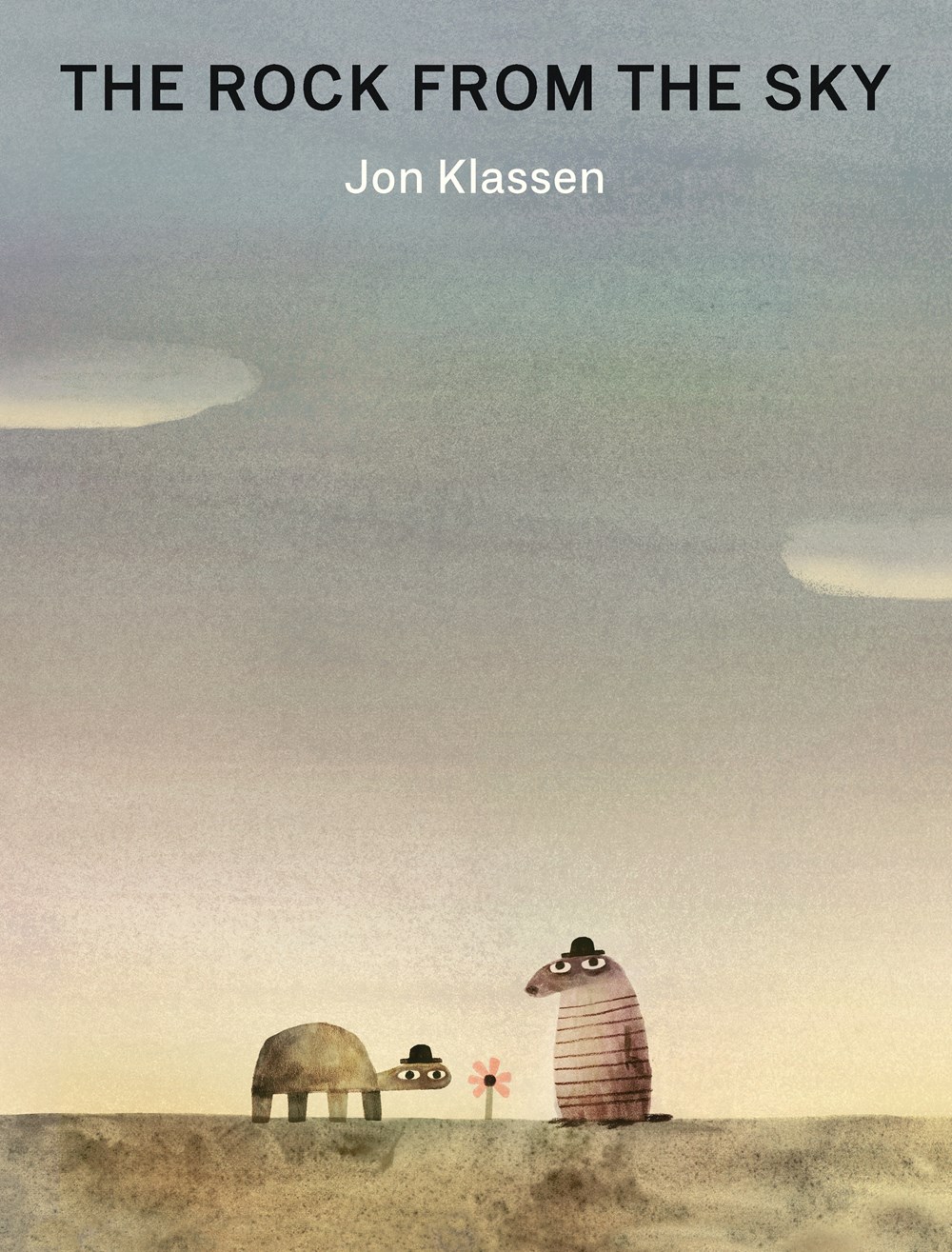
Educators’ Guide for The Rock from the Sky by Jon Klassen

Share

The Rock from the Sky
Author & Illustrator: Jon Klassen
Published: April 13, 2021 by Candlewick Press

Summary: Look up!

Turtle really likes standing in his favorite spot. He likes it so much that he asks his friend Armadillo to come over and stand in it, too. But now that Armadillo is standing in that spot, he has a bad feeling about it . . .

Here comes The Rock from the Sky, a meditation on the workings of friendship, fate, shared futuristic visions, and that funny feeling you get that there’s something off somewhere, but you just can’t put your finger on it.

Teachers’ Tools for Navigation and Discussion Questions: 

Please view and enjoy the teachers’ guide I created for Candlewick Press for The Rock from the Sky:

You can also access the teaching guide here.

You can learn more about The Rock in the Sky on Candlewick’s page.

Recommended For: 

readaloudbuttonsmall classroomlibrarybuttonsmall litcirclesbuttonsmall closereadinganalysisbuttonsmall

Kellee Signature

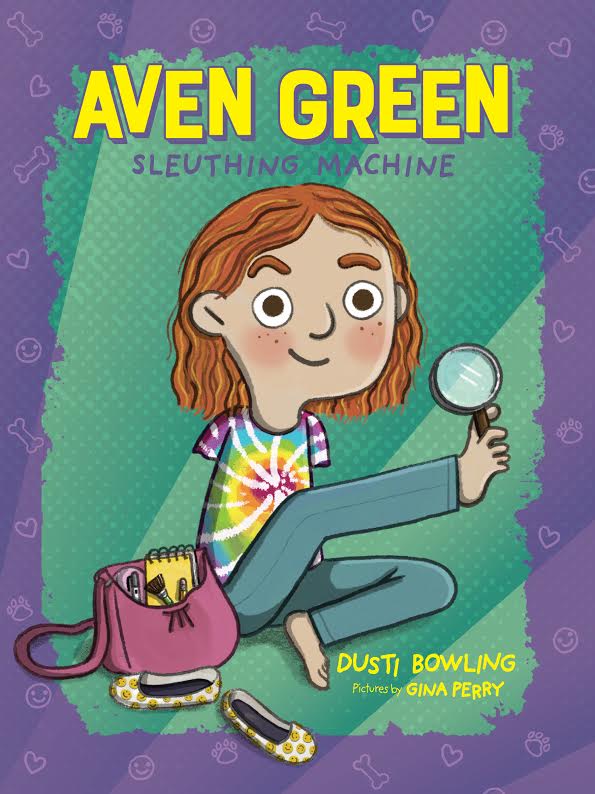
Aven Green, Sleuthing Machine by Dusti Bowling, Illustrated by Gina Perry

Share

Aven Green, Sleuthing Machine
Author: Dusti Bowling
Illustrator: Gina Perry
Published April 13th, 2021 by Sterling Children’s Books

Summary: Third-grader Aven Green has been solving mysteries for a whole month—cracking such cases as The Mystery of the Cranky Mom. But can this perceptive detective solve two cases at the same time? First her teacher’s lunch bag disappears. Then Aven’s great-grandma’s dog goes missing. Fortunately, since Aven was born without arms, all the “arm” cells went to her super-powered brain instead. (That’s her theory.) This hilarious chapter book showcases a new side to Dusti Bowling’s unforgettable protagonist.

About the Creators:

DUSTI BOWLING is the award-winning, bestselling author of Insignificant Events in the Life of a Cactus, Momentous Events in the Life of a Cactus, 24 Hours in Nowhere, The Canyon’s Edge, and the forthcoming Across the Desert and Aven Green chapter book series. Dusti currently lives in New River, Arizona with her husband, three daughters, a dozen tarantulas, a gopher snake named Burrito, a king snake name Death Noodle, and a cockatiel named Gandalf the Grey.

Gina Perry graduated from Syracuse University, worked as a compositor in animation, then an art director for a stationery manufacturer, before discovering her true passion—writing and illustrating children’s books. She lives with her family in NH.

Praise:

“[Bowling] infuses her writing with humor and empathy.” —School Library Journal (starred) 

“A fun series opener with a feisty protagonist who’ll keep readers on their toes.” —Kirkus Reviews

“Unapologetically smart and refreshingly confident in her abilities, this super-sleuth extraordinaire is a joy to tag along with.” —Booklist

“Aven’s candid voice ensures that this chapter book series starter will draw a young audience.” —Publishers Weekly

Review: I am so happy that Aven is now starring in chapter books. Her voice is one of my favorites in middle grade literature because it is full of truth and humor. Her voice is just as strong in this chapter book as it was in Insignificant Events in the Life of a Cactus and Momentous Events in the Life of a Cactus, just a bit younger.

In addition to Aven’s voice, the story is a compelling one! I’m a fan of mysteries, and this is a fun kid lit mystery. Also, the cast of characters are wonderful! I am a huge fan of Aven’s friends.

And I cannot wait until August when Aven Green, Baking Machine comes out!

Teachers’ Tools for Navigation: I would love to see Aven Green read in classrooms! It would be such a fun book to read together as a class! The class could even keep track of all of the clues and see if they can figure out the mystery!

There are also opportunities in the book to talk about acronyms and word play!

Discussion Questions: 

  • How did Aven keep track of her clues?
  • What type of materials does Aven need to be a good detective?
  • How did Aven help Sujata with acclimating with the new school?
  • What are your slumber party traditions?
  • What is a time you have heard a word incorrectly like Emily heard hen droids?
  • Have you ever lost something? How did you work to find it?
  • If you were going to do a report on a country

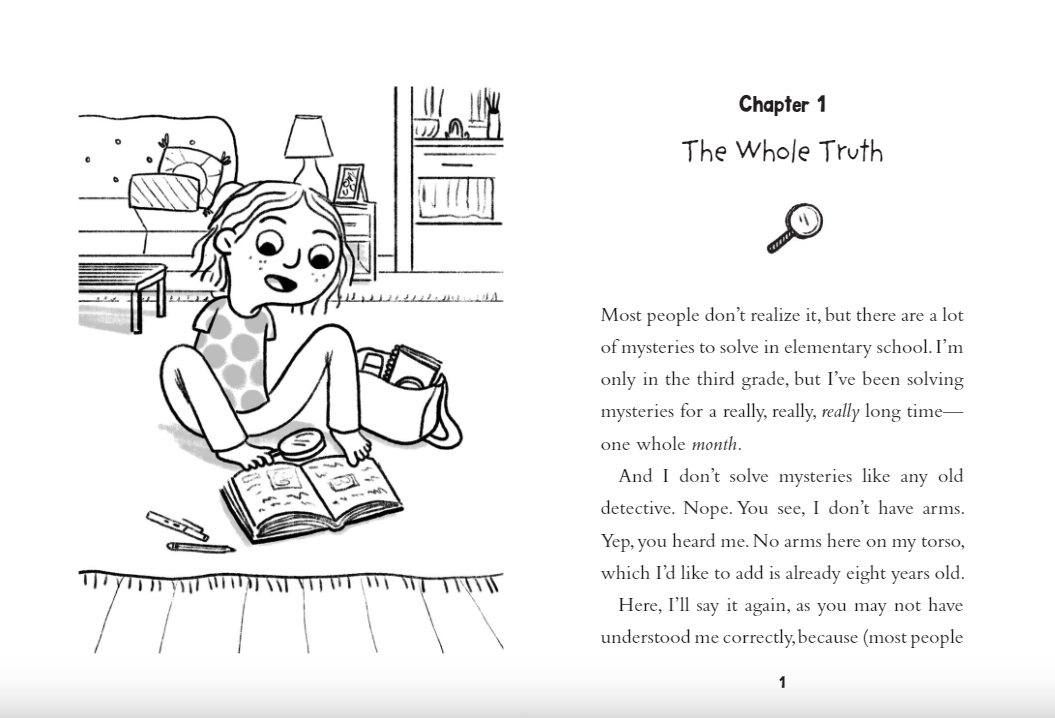
Flagged Passages: 

Read This If You Love: The Magnificent Makers series by Theanne Griffith; King and Kayla series by Dori Hillestad Butler; The Misadventures of Toni Macaroni in The Mad Scientists by Cetonia Weston-Roy; The Misadventures of Salem Hyde series by Frank Cammuso; Meena series by Karla Manternach; Questioneers series by Andrea Beaty; Weird Little Robots by Carolyn Crimi; A Boy Called Bat series by Elana K. Arnold

Recommended For: 

classroomlibrarybuttonsmall

Signature

**Thank you to Sterling for providing a copy for review!**
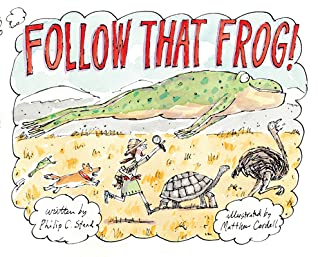
Review and Author/Illustrator Interview: Follow That Frog! by Philip C. Stead, Illustrated by Matthew Cordell

Share

Follow That Frog!
Author: Philip C. Stead
Illustrator: Matthew Cordell
Published: February 2, 2021 by Holiday House

GoodReads Summary: When a curiously croaking stranger comes knocking at the door, Aunt Josephine launches into a rambling tale about her lifelong pursuit of a rare giant frog.

Eccentric Aunt Josephine poignantly ignores a stranger knocking at her door as she tells her niece Sadie the story of her time in the jungles of Peru, cataloguing amphibians for the scientific team of Admiral Rodriguez. When the admiral’s son was suddenly swallowed by a giant frog, Aunt Josephine gave chase in a journey which took her around the world.

In the tradition of Philip Stead and Caldecott Medalist Matthew Cordell’s previous collaborations Special Delivery and The Only Fish in the Sea, this is a story full of rambunctious fun and sensationally appealing artwork.

Ricki’s Review: I could not stop laughing as I read this book. This, in turn, made my kids laugh. It was a joyous affair–ha ha! I have not read the first two books in the series, and this book stood alone very nicely. Aunt Josephine’s story is simply fantastic, and this feels like it will be a classic. It’s a bizarre, quirky telling, but this makes it stand out from other books that I’ve read. 

The illustrations are absolutely marvelous–not surprising, given the illustrator–and the story is very engaging. The story winds in a way that keeps readers on their toes and feels different and exciting. This book demands to be read aloud to a crowd of children! Adults and children alike will want to read this one again and again.

Kellee’s Review: Philip C. Stead and Matthew Cordell sure have a vivid imagination and silly sense of humor, and this book definitely show that it is true–once again Aunt Josephine takes the reader on a wild adventure! This book strays away a bit from the structure of the first two books in the series because instead of Sadie going on an adventure, Aunt Josephine shares an adventure SHE had from her younger days. 

I loved this story because it gave us a bit more insight into Aunt Josephine as we got glimpses not only into her past but also into her home, and it all gives us a bit of an understanding of some of Sadie’s characteristics! I think the easiest way to describe it all is quirky, equally balanced between Stead’s sensational story telling and Cordell’s intricate illustrations.

Teachers’ Tools for Navigation: This book is an obvious choice for read alouds and creative writing classes. I’d also use it with high school and adult readers, too. It teaches excellent examples of craft that could be analyzed richly by all ages and would inspire writing of all kinds.

Discussion Questions: 

  • How does the story maintain reader interest?
  • How do the illustrations pair with the story to make the story more effective?
  • Was the ending what you predicted? How does the ending enhance the story?

Read This If You Loved: Special Delivery and The Only Fish in the Sea by Philip Stead; Elephant and Piggie series by Mo Willems; The Frog and Toad series by Arnold Lobel; Pug Meets Pig by Sue Lowell Gallion

Author and Illustrator Interview

What keeps bringing you back to Sadie and Josephine?
MATTHEW: Phil’s had such great ideas and adventures for them, so I was always thrilled to be on board. I love the strange world these characters inhabit and the madcap stories they tell. So much fun to draw!
PHILIP: Sadie and Josephine are two of my favorite characters I’ve ever created. Matt and I talked a lot at the outset about wanting strong female leads that were confident and capable in the face of increasingly ridiculous circumstances. It’s just been so much fun coming up with those ridiculous circumstances and watching how Sadie and Josephine power right through.

Was the original story a collaboration? If not, how did it come to be? And is it more of a collaboration now that you’re on book 3?
MATTHEW: Unlike most author and illustrator picture book team scenarios, Phil and I and our editor Neal have collaborated through and through. Typically, authors and illustrators do not work together to make a picture book come to life. It’s a bit more of a relay race. The author does the first bit with the editor. Then the editor passes the baton to an illustrator to finish up the book. But since Phil and I were friends before Special Delivery (book 1), we always wanted to work together with Neal, so that’s how it’s always been. It’s always been a very natural and organic way of working for us. Can’t imagine it any other way, really!
PHILIP: Ditto that! Really, collaboration is the only way of working I’ve ever known. The only other illustrator I’ve worked with (other than myself) is my wife Erin. Writing work and illustration work are constantly overlapping in our studio and I think that overlap leads to better, more cohesive books. I definitely think many of the weird quirks of the three Sadie books wouldn’t have survived the more normal book making process where author and illustrator work separately on their own little islands.

Each Sadie story has an animal focus–how do you choose which animal(s) will be in the story?
PHILIP: Well, obviously I have a thing for elephants that goes back to my first book with Erin, A Sick Day for Amos McGee. My first book with Matt, Special Delivery, centers around an elephant as well. I love how expressive an elephant face can be. Erin and Matt are both very expressive illustrators, albeit with very different results. That’s probably why elephants came to mind for both of them. Plus, an elephant can really fill up a book page nicely. All the other animal choices are somewhat opportunistic. Like, who wouldn’t want to see Matt illustrate a giant frog riding on the back of a rhea?! A rhea is basically a South American ostrich, for those of you reading that aren’t current on your ornithological studies.

Any plans for more Sadie stories?
MATTHEW: Nothing else is in the works for Sadie, Aunt Josephine, Sherman, and those monkeys. But Phil, Neal, and I (different kind of monkeys?) are already working up a whole different picture book idea now. I’m currently in sketches for this one. And hopefully there will be more books on down the road too. I sent Phil some drawings from my sketchbook a while ago to see if he could pry a story out of them. We shall see!
PHILIP: In Follow That Frog! there’s talk of getting to Paris. I’d love to send Sadie and Josephine to Paris someday. But for now Matt and I are onto something new.

Recommended For:

classroomlibrarybuttonsmall 

RickiSig andKellee Signature

**Thank you to Sara at Holiday House for providing copies for review!**

Educator Guest Post: “Story Talk: Use Conversation to Fall in Love with a Book–A Reading Resource using Float by Daniel Miyares” by Hillary Wolfe

Share

“Story Talk: Use Conversation to Fall in Love with a Book–A Reading Resource using Float by Daniel Miyares”

Reading a story with a child is one of the most loving ways to build a relationship. Snuggled up together, you can laugh, feel sad, be curious, and learn something, together. Stories open up worlds and let us see things through the eyes of another. It’s the best way to teach empathy.

The first few times you read a story, just enjoy the experience of saying the words, or looking at the pictures. How is your child responding? Let them just sit with the feelings they have.

But you don’t have to stop there. The real reason to read a story more than once or twice is so you can get to know it better, learn its secrets, discover what it’s trying to tell you. Just like a new friend, the first few times you meet, you just want to have fun. But each time you return to the story, try to learn a little more about it. This is how you fall in love with storytelling, and with reading.

Here’s a secret about authors: They wish they could be in the room with you, talking to you about their story. Since they can’t do that, they leave you clues instead. It’s like a puzzle – can you figure out what the author was thinking about? Why did they use that word, that color, or those images? The author loves it when you take the time to get to know what they are thinking.

Once you feel like you understand how​​the author thinks, see if you can determine why​​the author thinks that way. What was this story really​ ​trying to tell you?

Take a look at the picture book Float​ by​ Daniel Miyares. There are no words, but it is most definitely a rich story. The first time you read it, just flip through the pages and ask your child what is happening. What is this story about?

After a few reads, you can stop at a few places on each page and point to something, pose a question, and ponder with your child about the choices that the author or illustrator made. Not only are you getting to know the story better, you are providing your child with a blueprint for how to approach reading. Can they visualize something? Will they make a prediction? Does this story connect with their own life in any way? When children can do these things on their own, they are more likely to stay engaged with reading, and to go beyond the surface to explore deeper understanding.

If you want an example of how this can look, follow the prompts in the figure below. On each page of the story, notice the feature identified under “Stop at…”. Have a conversation about the feature. As you do this, you are modeling great reading strategies, such as Visualizing, Making Predictions, Summarizing, Asking Questions, Inferring, or Making Connections to the text. These conversations are reading skill-builders.

Then, go a little deeper. Ask your child to consider what the author was thinking about, or to try to explain a choice the author made. These questions will help the child understand that behind every story is a human being who just wants a moment of your time to talk to you about something they care about.

In school, teachers will call this “close reading.” Close reading means reading a text more than once, for multiple purposes. First, read to get the gist. What is the story about? Who are the characters? What happens first, in the middle, and at the end?

Next, read for author’s craft. This means paying attention to the word choices the author made, the text structure they chose, the images they used. What was the context for the story? From whose point of view is the story told?

Finally, read to evaluate the ideas from multiple perspectives. What does the story stir up in you? Does it make you want to take an action, or make a change in your own life?

This may sound very dry and academic and like it takes a lot of work. But it doesn’t have to be so formal. It’s a conversation, a way to make friends with a story, and let it into your life. Get to know it, ask it questions, try to understand its point of view. Be a good friend. In return, you may get a companion that will stay with you for a long, long time.

As you read…

Page Suggestions of Places to Pause… Focus on a Reading Strategy… Have a Discussion About…
Inside cover Arrows and dotted lines Visualize: What do the arrows mean? What do the dotted lines mean?

How many sheets of paper will be needed to make this?

Text Structure: What is the author/illustrator showing us?
Title Float Inferring: What did the instructions on the previous page make? (Hint: There’s a clue on the cover)
1-2 Picture: Notice the blue square Inferring: How many people are in the picture? Who do you think they are? Author’s/Illustrator’s Craft: Why is there only a little bit of color on the paper? What does the illustrator want you to notice?
3-4 What the child is wearing; the sky Predicting: What will the weather be like? Author’s/Illustrator’s Craft: Why did the author make the coat and boots the only color in the picture?
5-6 Third panel Questioning: How does the child feel in the first panel? In the second? In the third? Author’s/Illustrator’s Craft: What do the three panels represent?
7-8 Yellow Visualize: Does this look like rainstorms you have seen?

Make Connections: Do you like the rain?

Gist: What is this story about so far?
9-10 Reflections Question: Has the weather changed? Why is the picture of the house and tree upside down? Citing Evidence: How do you know it is still raining?
11-12 Blurred lines, ripples Summarizing: Explain what is happening in this picture. Citing Evidence: How does the author/illustrator show movement?
13-14 Second panel Visualizing: What angle are we seeing the child from? How do you know?

What do the wavy white lines mean?

Gist: What did the rain provide for the boat?
15-16 Child holding his hat; perspective Predicting: Who is faster- the child or the boat?

What will happen to the boat?

Citing Evidence: The child is holding onto the hat. Is it windy or is the child running fast? What are the clues in the picture?
17-18 Child’s pose Summarize: Explain what has happened. Integration of Ideas: How has the child’s feelings about the boat changed so far?
19-20 Top panel Questioning: Did the child see the boat cross the street?
21-22 Child’s pose Predicting: What is about to happen to the boat?
23-24 Child’s face Making Connections: How does it feel to lose something you care about? Author’s/Illustrator’s Craft: The illustrator used the color black and drew a shadow across the boat. Do you think the child will be able to find the boat?
25-26 Water Inferring: Where did the boat go?  
27-28 Third panel Inferring: How does the child feel? Integration of Ideas: The weather has changed again. What is the relationship between the rain and the child’s mood?
29-30 Shadow Visualizing: What time of day is it? Where is the child going?  
31-32 Boat Questioning: Who opened the door? Gist: What do you think the child will tell the adult about what happened?
33-34 First and third panels Making Connections: What do you do when someone you care about is sad? What makes you feel better when you are sad?  
35-36 Pink picture in the paper Predicting: What do you think they will make with the paper? Citing Evidence: Is it morning or night-time? What clues did the illustrator give you?
37-38 Color of the sky; what the child is holding Summarizing: What time of day is it? How do you know?

Predicting: What is going to happen next?

Integration of Ideas: Yellow is a bright color. What does the author/illustrator want us to know about how the child is feeling?
39-40 Child’s pose, clothes Predicting: Was your prediction from the last page correct? Integration of Ideas: What is something you can tell yourself when something makes you sad? What determines if you will be happy or sad?
41-42 Arrows, dotted lines Questioning: Why did this story end this way? Text Structure: How is this page the same as, and different from, the opening page?
Furthering the Conversation
Think about the title. What does the word “float” mean? Explain what it means for a boat or for a plane. How could you use the word “float” to describe an attitude?

Do you have a favorite story that you would like broken down this way? Please send suggestions to Story Talk, a website for engaging in reading conversations. https://hillwolfe.wixsite.com/story-talk,​ or email me at hw​.storytalk@gmail.com.

About Educator Hillary Wolfe: Hillary Wolfe is a Director of Curriculum and Instruction in El Monte, CA, who has worked with students from grades pre-K through 12, and has served as an instructional coach, intervention coordinator, and media specialist. As a classroom teacher, she created a writing curriculum for middle- and high school literacy students reading two or more years below grade level, helping her students achieve substantial gains on state exams. Ms. Wolfe also brings 10 years as a journalist and an education columnist to her understanding of instruction and best practices. She has written books on writing strategies (Capstone 2013/2015), and teachers guides for phonemic awareness activities (Capstone 2017), as well as articles on literacy and intervention in national journals. She has made presentations around literacy for national organizations, and has served as an editor, curriculum writer, and Academic Officer in educational publishing as well as a Coordinator for Academic Interventions for the Orange County Department of Education.

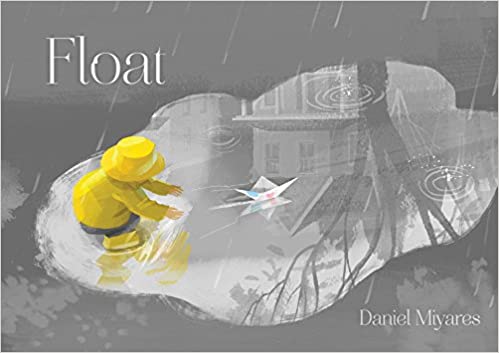
Float
Creator: Daniel Miyares
Published June 9th, 2015 by Simon & Schuster Books for Young Children

About the Book:A boy’s small paper boat and his large imagination fill the pages of this wordless picture book, a modern-day classic from the creator of Pardon Me! that includes endpaper instructions for building a boat of your own.

A little boy takes a boat made of newspaper out for a rainy-day adventure. The boy and his boat dance in the downpour and play in the puddles, but when the boy sends his boat floating down a gutter stream, it quickly gets away from him.

So of course the little boy goes on the hunt for his beloved boat, and when the rain lets up, he finds himself on a new adventure altogether.

This seemingly simply story from Daniel Miyares is enriched with incredible depth and texture that transcend words.

Thank you, Hillary, for this amazing resource!

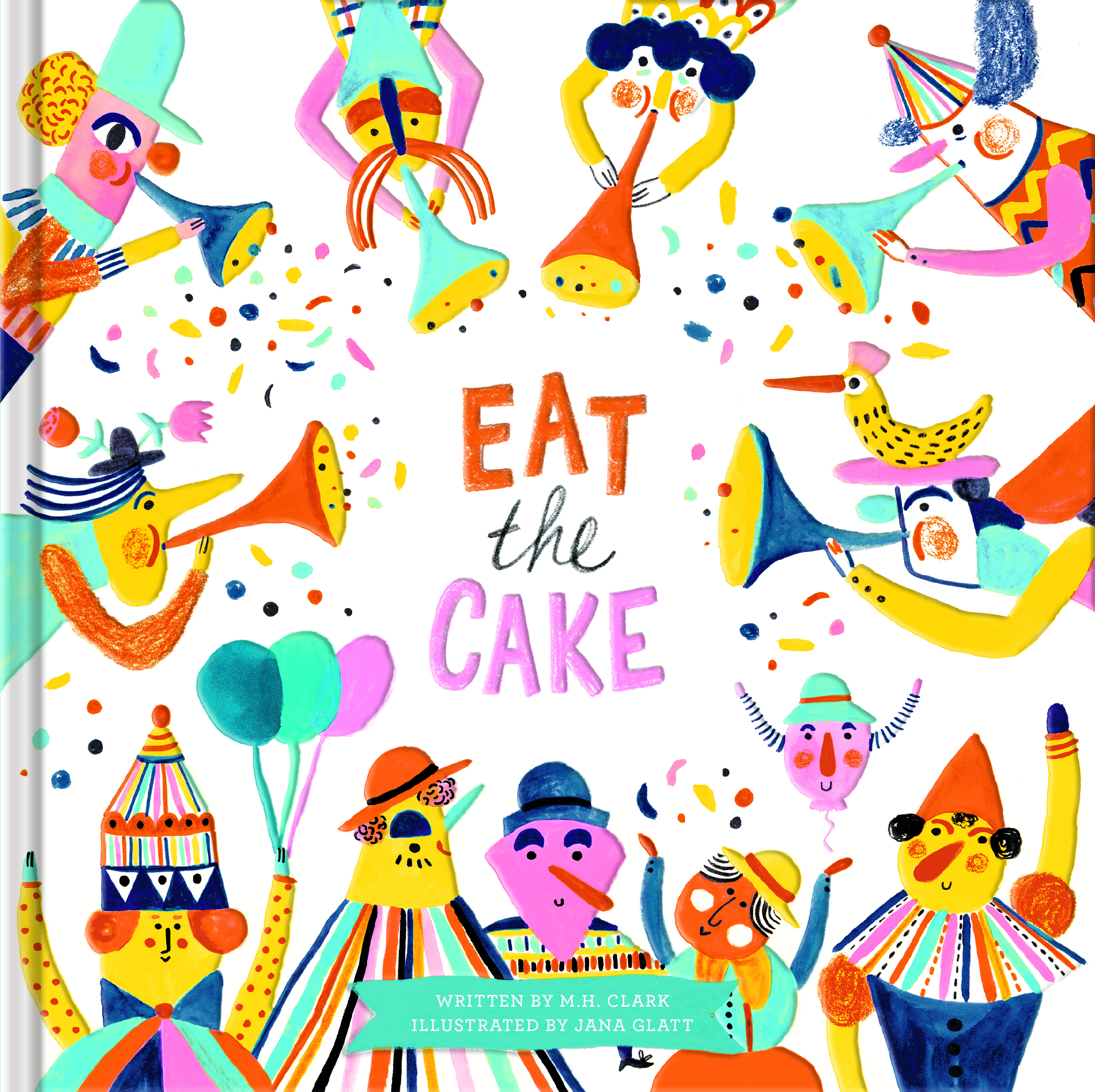
Eat the Cake by M. H. Clark

Share

Eat the Cake
Author: M. H. Clark
Illustrator: Jana Glatt
Published February 1, 2020 by Compendium

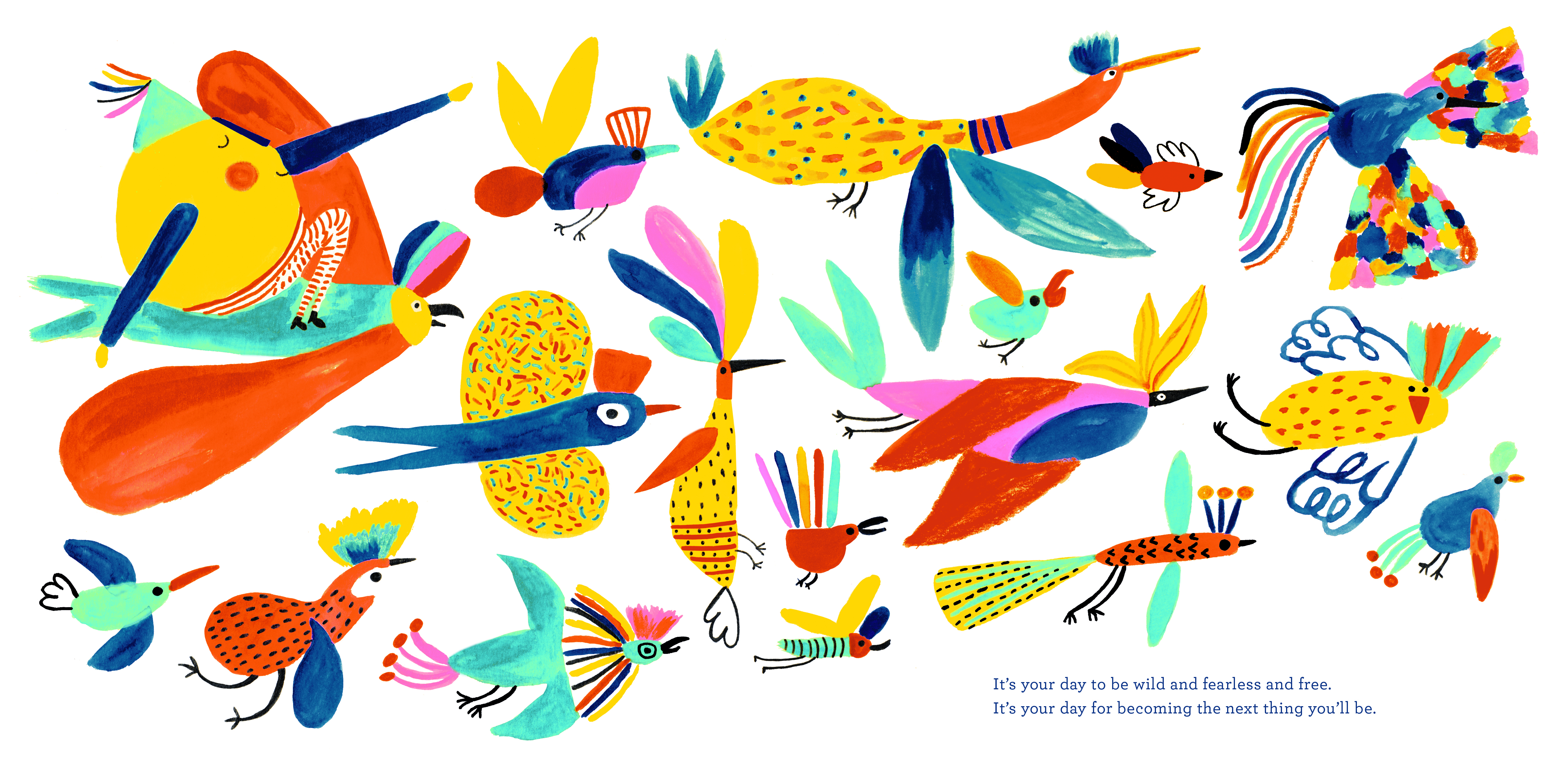
Summary:It’s your day to be wild and fearless and free. It’s your day for becoming the next thing you’ll be. Though today is your party, it doesn’t stop here–it should keep right on going and last you all year.

Roll out the streamers, blow up the balloons, and celebrate all the great things that are coming your way! With its colorful cast of characters, delightfully detailed illustrations, and playful rhymes, this festive book will ignite good feelings for birthdays and any occasion where cake is appropriate. (And cake is always appropriate!) A fun and joyfilled gift for anyone ages 5 to 105. Features a hardcover with embossing.

Review: We all need to celebrate ourselves! This book gives readers the perfect excuse to do so! This is a very motivational text that reminds readers all of the reasons that they should be proud and happy to be themselves. Readers will come away from this book wanting to try new things and go to new places. This book would make a WONDERFUL gift to readers of all ages. Folks tend to buy the Oh, the Places You’ll Go book, but Eat the Cake offers something new and fresh (and something that another relative might not buy!). 

Teachers’ Tools for Navigation: If I was still teaching K-12 and had the means to do so, I would buy this book for every single one of my students at graduation. It would make a wonderful read aloud for the last day. I don’t think I could read this to my exiting students without crying! I will be purchasing this treasure for my graduate assistants. 🙂

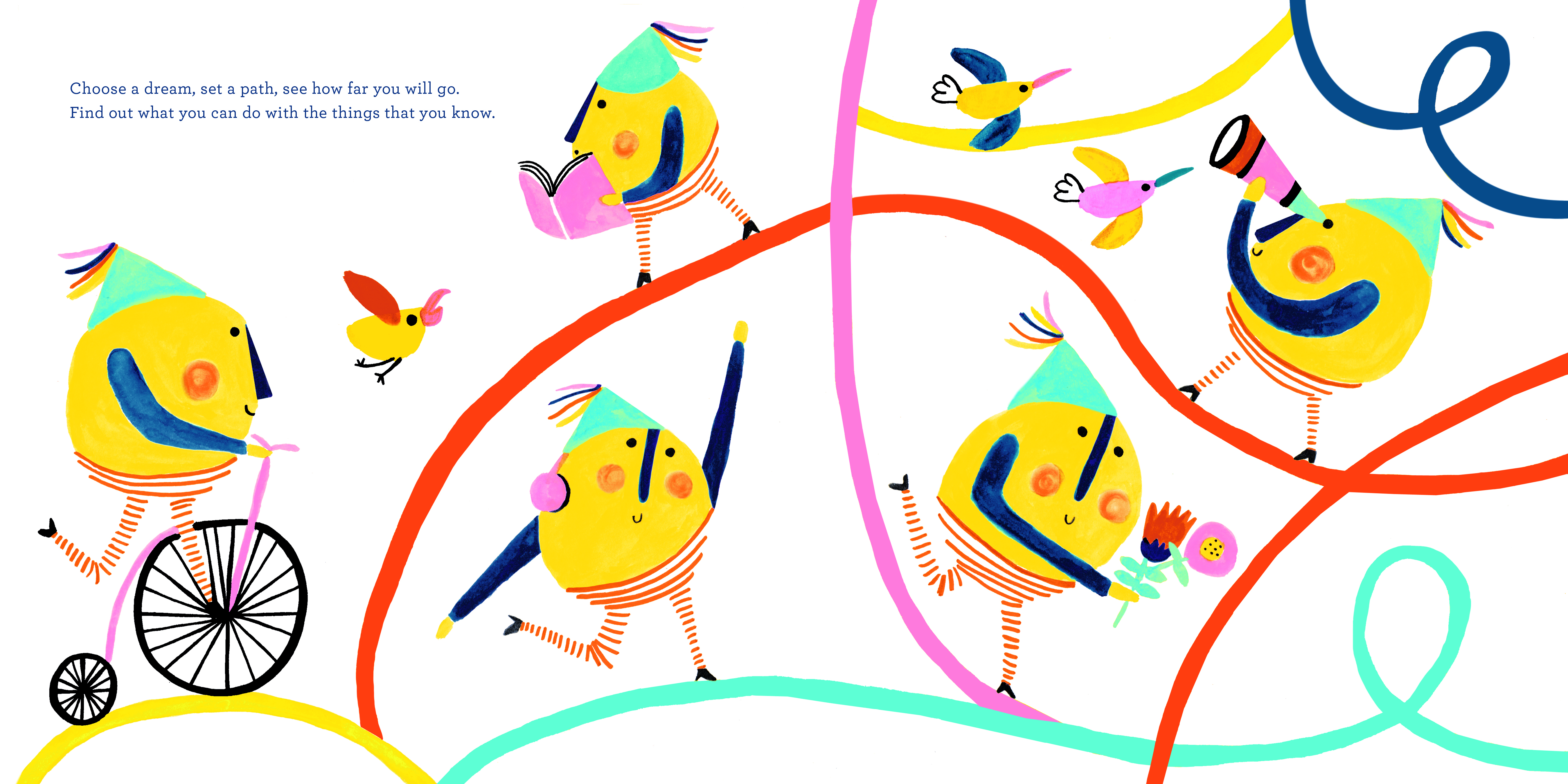
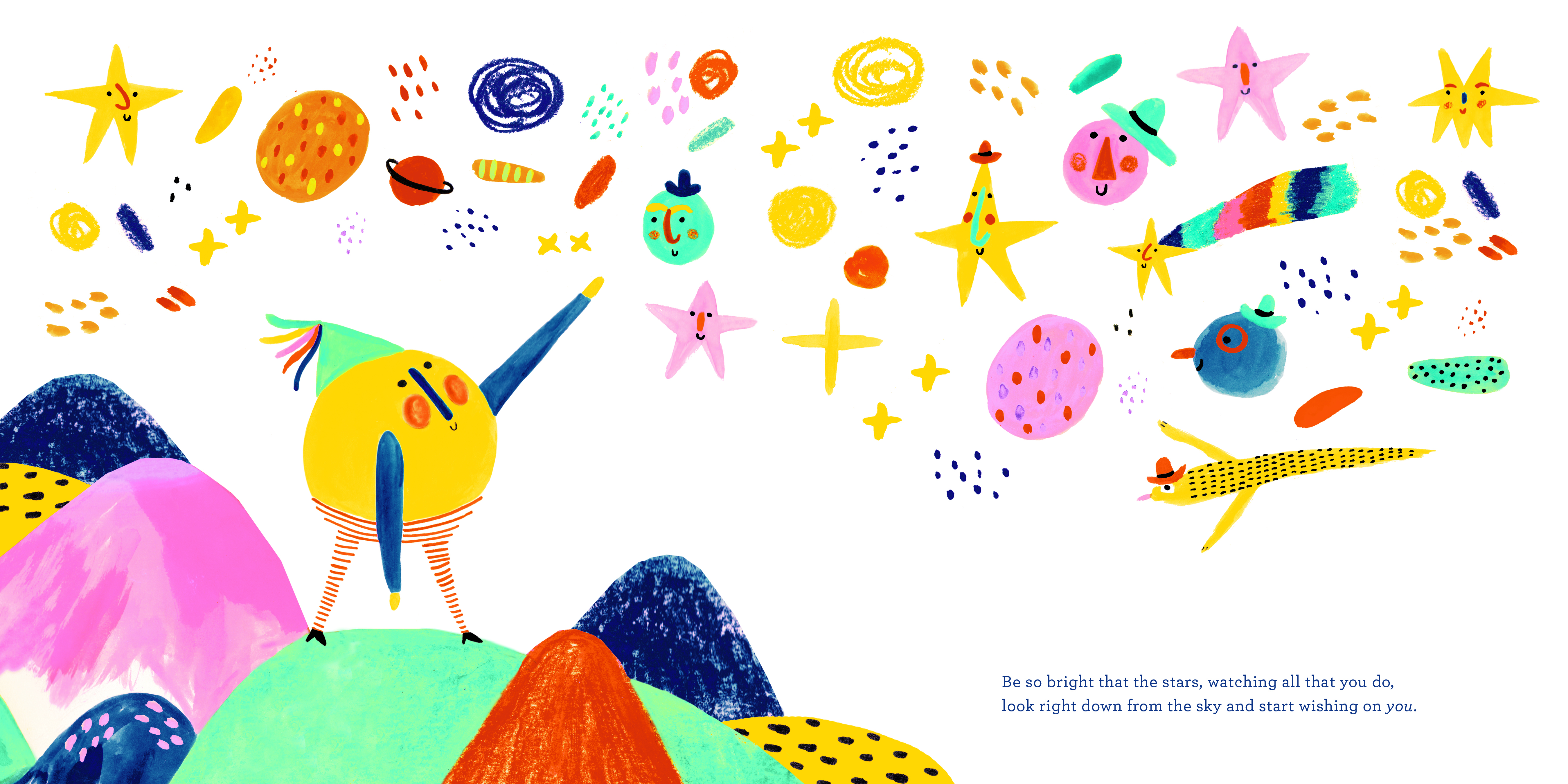
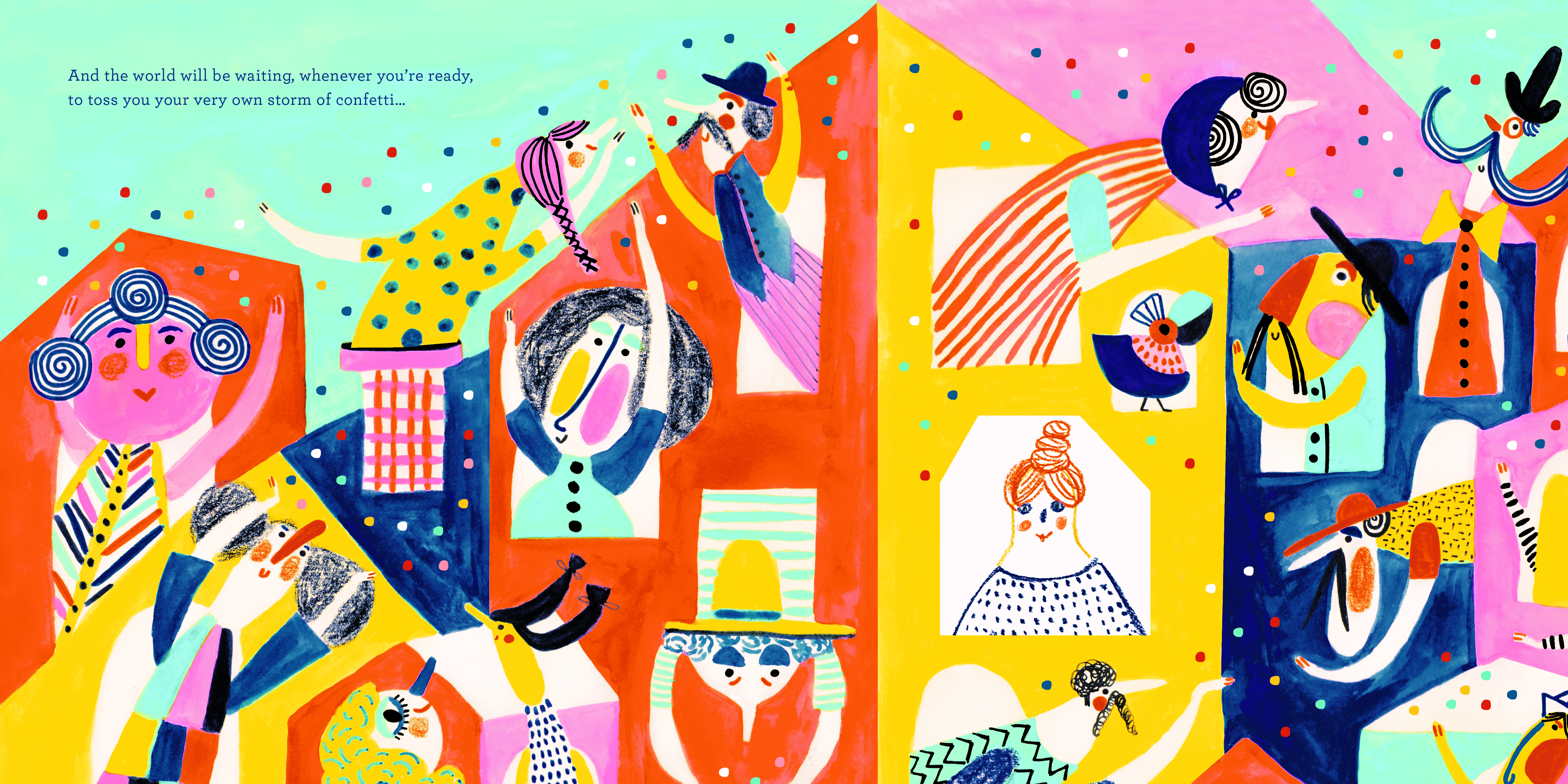
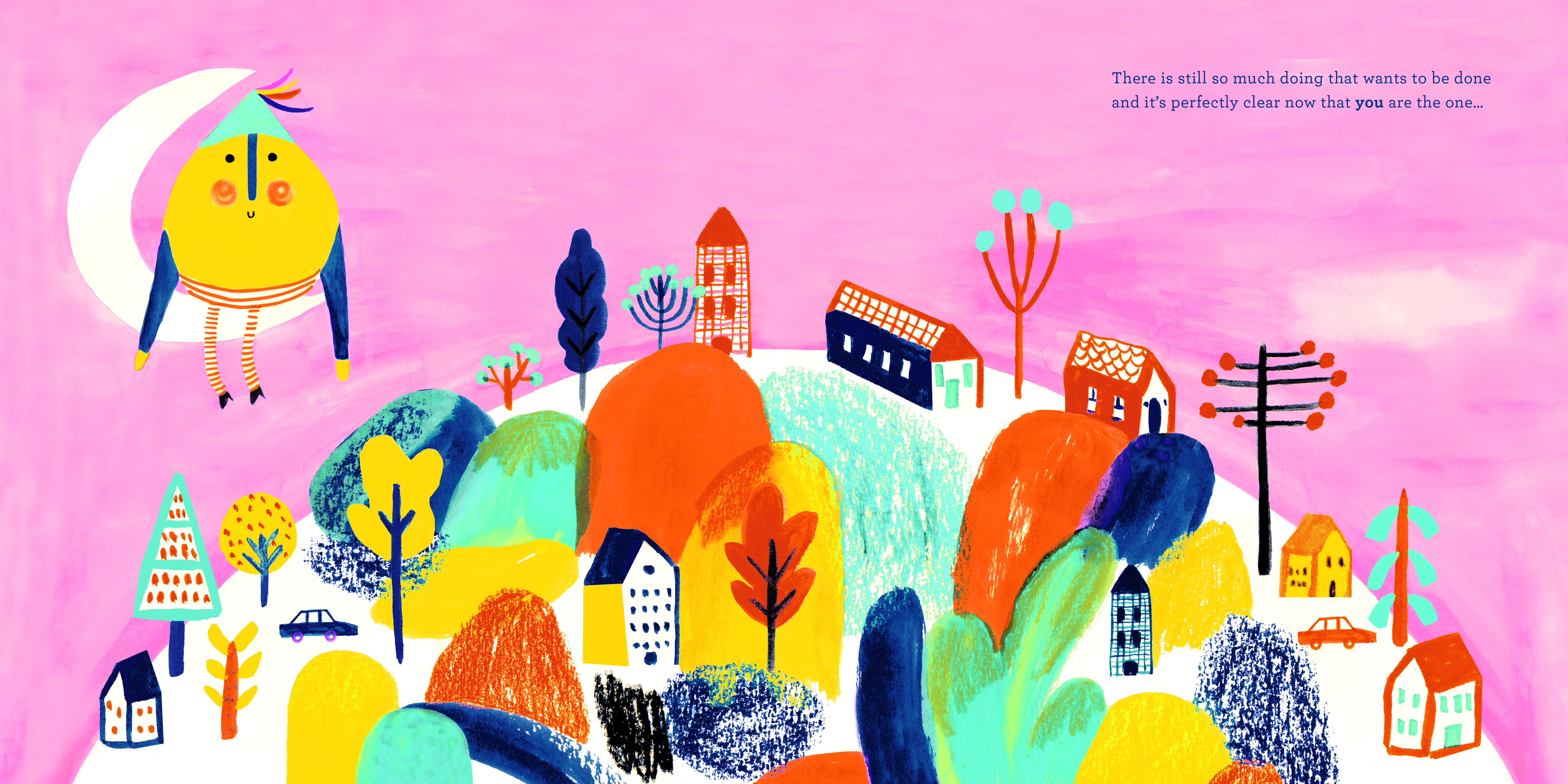
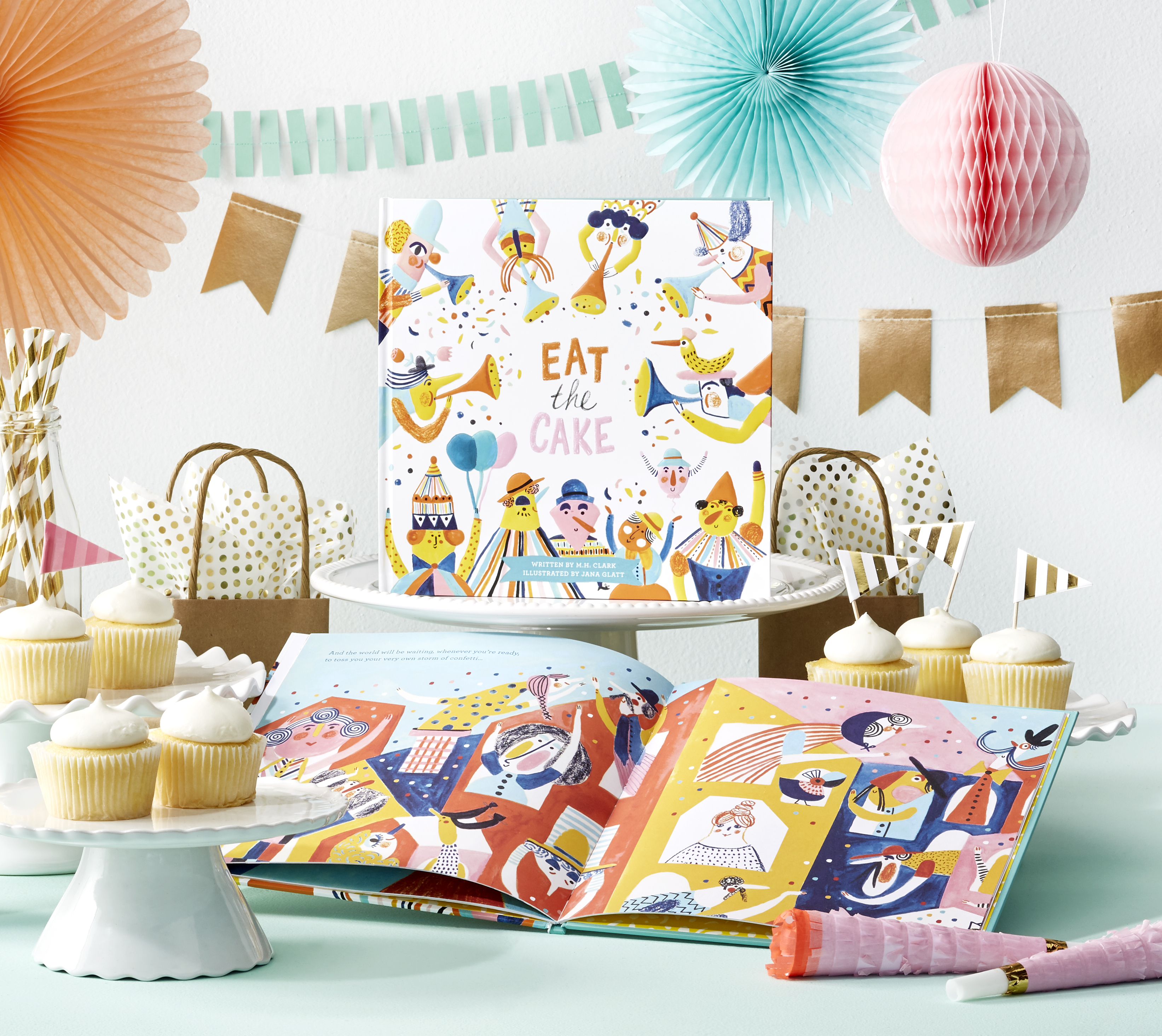
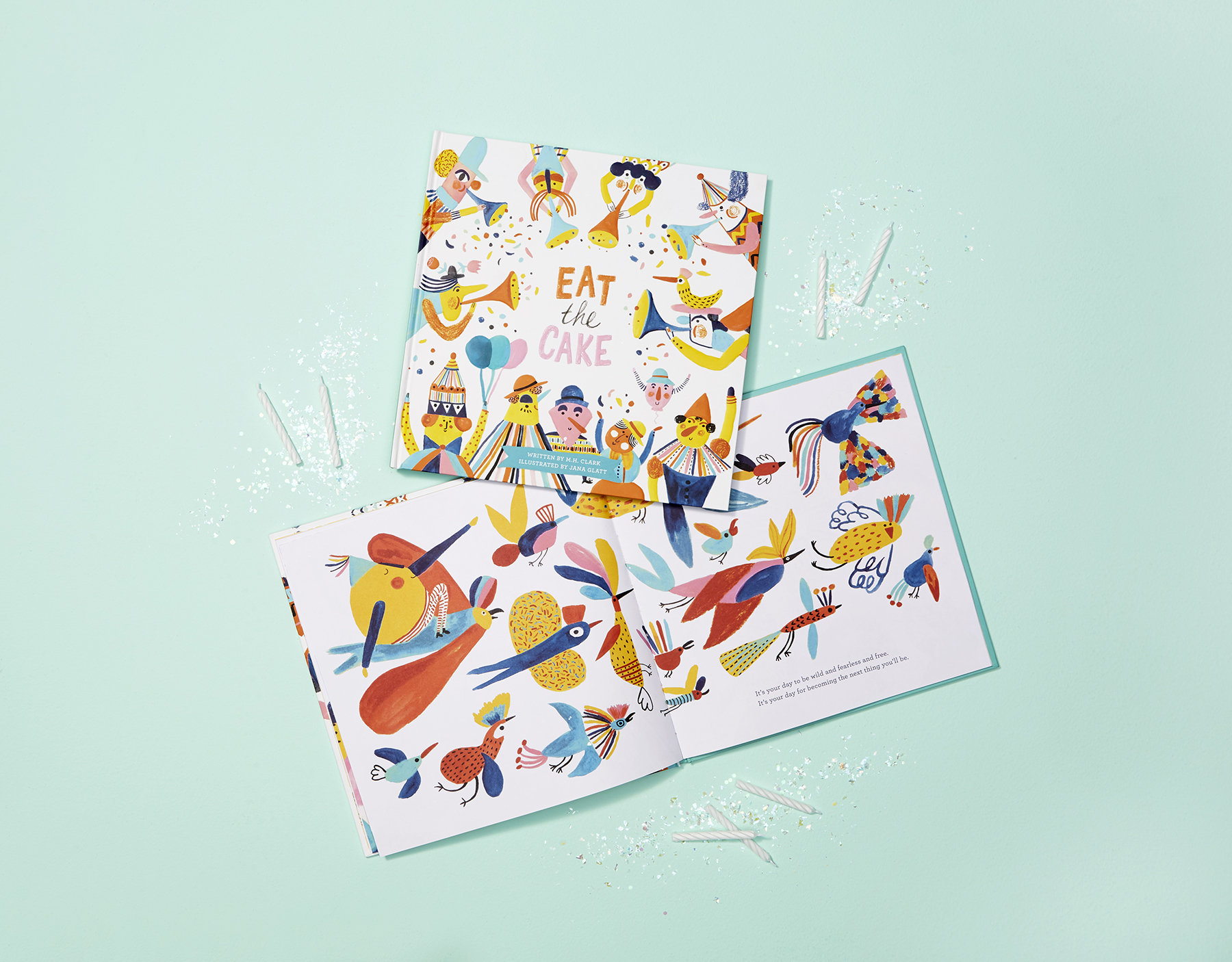
Book Spreads! Book Spreads!:

Read This If You Loved: Oh, the Places You’ll Go by Dr. Seuss, Lady Pancake and Sir French Toast by Josh Funk, Inspirational Books

Recommended For:

  classroomlibrarybuttonsmall 

**Thank you to Compendium for providing a copy for review!!**

And we conclude with a PARTY!:

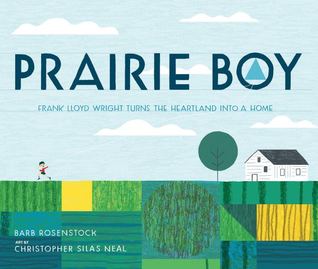
Educators’ Guide for Prairie Boy: Frank Lloyd Wright Turns the Heartland Into a Home by Barb Rosenstock

Share

Prairie Boy: Frank Lloyd Wright Turns the Heartland Into a Home
Author: Barb Rosenstock
Illustrator: Christopher Silas Neal
Published: September 10th, 2019 by Calkins Creek

Summary: The early life and creative genius of architect Frank Lloyd Wright, as a maker of American buildings—highlighting his passion, imagination and creativity.

Frank Lloyd Wright loved the Wisconsin prairie where he was born, with its wide-open sky and waves of tall grass. As his family moved across the United States, young Frank found his own home in shapes: rectangles, triangles, half-moons, and circles. So, Frank pursued a career in architecture. Unlike everyone else, he didn’t think the Victorian homes fit the beauty of the land. Using his love of shapes, Frank redesigned the American home inside and out, developing a unique architecture, the Prairie House.

Author Barb Rosenstock and artist Christopher Silas Neal explore the early life and creative genius of architect Frank Lloyd Wright, highlighting his passion, imagination, and ingenuity.

Backmatter includes historical photos, author’s note, quotations, sources, source notes, architectural plans and a photo gallery of Frank Lloyd Wright buildings across America.

About the Creators: 

Author Barb Rosenstock is the author of many picture book biographies, including Otis and Will Discover the Deep, Secret Kingdom, Dorothea’s Eyes, Ben Franklin’s Big Splash, and The Streak: How Joe DiMaggio Became America’s Hero. Her picture book about Kandinsky, The Noisy Paint Box, won the 2015 Caldecott Medal.

Illustrator Christopher Silas Neal is the author and illustrator of multiple picture books, including I Won’t Eat That and Everyone. He is also the illustrator of Kate Messner’s Over and Under the Pond, Over and Under the Snow, and Up in the Garden and Down in the Dirt.

Book Trailer: 

Teachers’ Tools for Navigation and Discussion Questions: 

Please view and enjoy the teachers’ and discussion guide I created for Prairie Boy: 

You can also access the teaching guide here.

You can learn more about the book on Barb Rosenstock’s Prairie Boy page.

Recommended For: 

readaloudbuttonsmall classroomlibrarybuttonsmall litcirclesbuttonsmall closereadinganalysisbuttonsmall

Kellee Signature