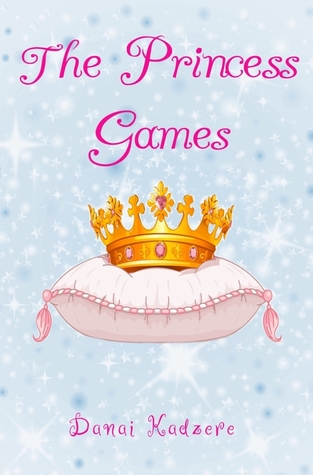
The Princess Games Author: Danai Kadzere
Published July 27th, 2015 by Lands Atlantic Publishing
Summary: King Winkle and Queen Periwinkle have a problem. They need a princess, and they need her fast. With the upcoming peace-keeping marriage between Prince Linus of Branninia and the princess of the fair Kingdom of Hoggenbottom, it’s a bit risky to admit they don’t have a princess.
Instead, they decide to host The Princess Games. Soon enough, the fairest maidens of the land are gathered in front of the castle, fairy-godmothers in tow! With a goofy king, an obsessive compulsive advisor, and a fairy godmother whose spells do whatever they want, these games are about to get interesting.
Even if Emma and her clumsy Fairy Louise can manage to do well in the competition, she’ll have to get past the expert spells of Fairy Faye and the beauty of Laralyn, who is intent on pleasing her ambitious mother at any cost.
My Review: What a fun fractured fairy tale! I love the humor! It really does include some laugh-out-loud moments. The book actually reminds me a bit of Princess Academy by Shannon Hale, but The Princess Games is more light-hearted.
I think what makes this book work the best is the different voices throughout. Each chapter changes point of view which gives a different insight to the games as they are going on. This helps with characterization especially because each character has such a distinctive voice.
One of my only criticisms is that I actually wish it was a bit longer! I would have loved to have some of the scenes be longer than they were and to have really gotten to know some of the secondary characters.
Teachers’ Tools for Navigation: I think this book is a wonderful example of voice. I would have students look at chapters written from different character’s points of view and have them look for how the author crafted their sections to build the character’s voice. When you look, you can find different vocabulary choices, different sentence patterns, different focuses, and different sense of humor.
Discussion Questions: Which princess do you think the royal couple will choose?; Why does Faye and Laralyn not like Emma and Louise?; How would the tone and voice have been different if the book had been written in first person?; What is the theme of the novel?
We Flagged: “Emma rued that last scone, stuffed with clotted cream and spiced rosehip jam, as the carriage bumped aong the uneven country road. ‘Ohhhhh,’ she groaned, clutching her stomach.
Fairy Faye looked at Laralyn, deigning to acknowledge Emma only to say, ‘And that, Laralyn, is why princesses eat daintily. Particularly on long journeys.'” (p. 45)
Book Trailer:
Read This If You Loved: Princess Academy by Shannon Hale, The League of Princes series by Christopher Healy, Upon a Marigold series by Jean Ferris
Recommended For:
**Thank you to Danai for providing a copy for review!!**
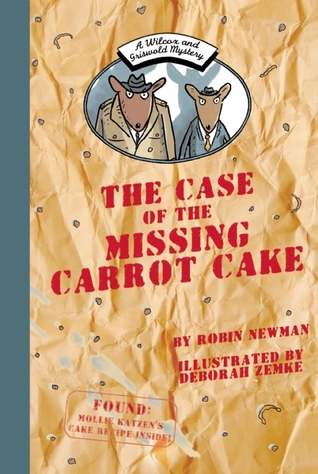
A Wilcox and Griswold Mystery: The Case of the Missing Carrot Cake Author: Robin Newman
Illustrator: Deborah Zemke
Published May 12th, 2015 by Creston Books
Goodreads Summary: When food goes missing on Ed’s farm, Detectives Wilcox and Griswold do what it takes to track down the thieves. In this case, Miss Rabbit’s carrot cake has disappeared. Has it been stolen? Or eaten? Or both? Who dunnit?
“Readers ready for chapter books will solve the crime and then be surprised by the twist at the end. Here’s hoping for more hard-boiled detecting from Wilcox and Griswold!”
— Kirkus Reviews, Starred Review
My Review: This book starts with a letter to the reader about the two detectives who will be leading the case, and I automatically thought of Dragnet as soon as I read it, and that was the voice I heard all the way through the book which made it even more fun to read! I love how this book was crafted: set up like a police file with times of interviews, suspects, and clues throughout. The detectives are also quite humorous and the ending is just surprising enough though some students may be able to predict it if they follow the clues.
Teachers’ Tools for Navigation: The Case of the Missing Carrot is a perfect read aloud to practice inferring and prediction as students try to figure out what is going on at the farm. Students can keep track of clues and characters (suspects), and the book also gives opportunities to discuss sequence, vocabulary, dialogue, point of view, and voice. The text is just so much fun to read, but can also be a great discussion starter/exemplar for so many language arts topics.
Discussion Questions: (Thoughout the book) What clues did this section give us? Who is a new suspect? Who is no longer a suspect? How has your prediction changed? What is your prediction now?
We Flagged:
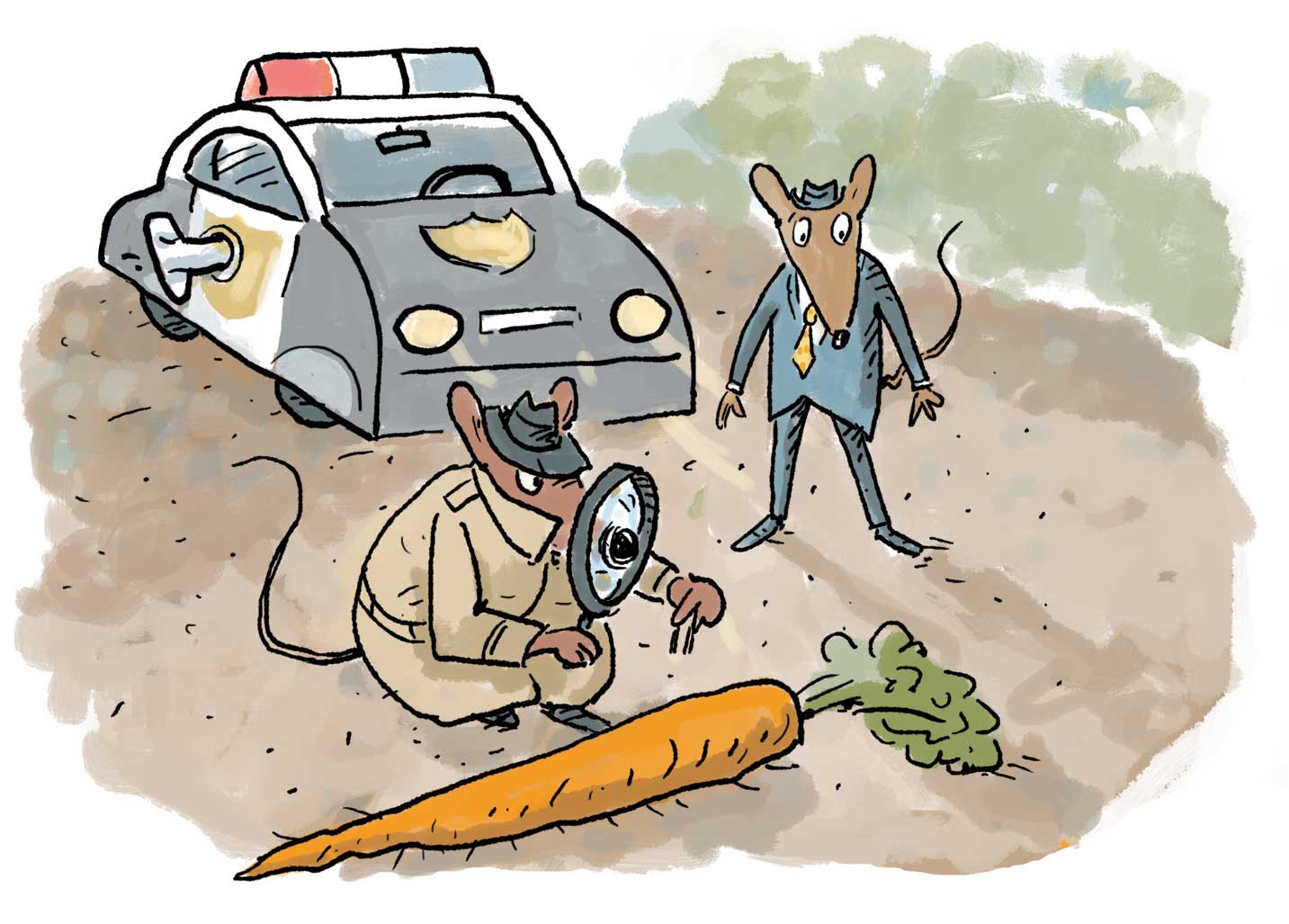
“Captain, stop the car!” I shouted. “There’s something up ahead. It’s orange.”
The captain grabbed his magnifying glass and tweezers. He picked up the object.
“A carrot!” I said.
I ran back to the squad car to get the crime scene photos.
“This carrot matches the ones we found in Miss Rabbit’s kitchen. We’re onto something.”
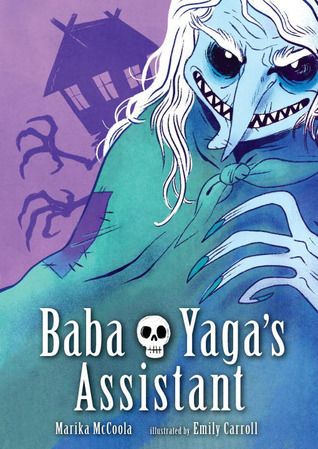
Baba Yaga’s Assistant Author: Marika McCoola
Illustrator: Emily Carroll
Published August 4th, 2015 by Candlewick Press
Goodreads Summary:
ASSISTANT WANTED ASAP
Must have skills in hauling, obeying orders, cooking, and cleaning. Magical talent a bonus. Must be good with heights. Enter Baba Yaga’s house to apply.
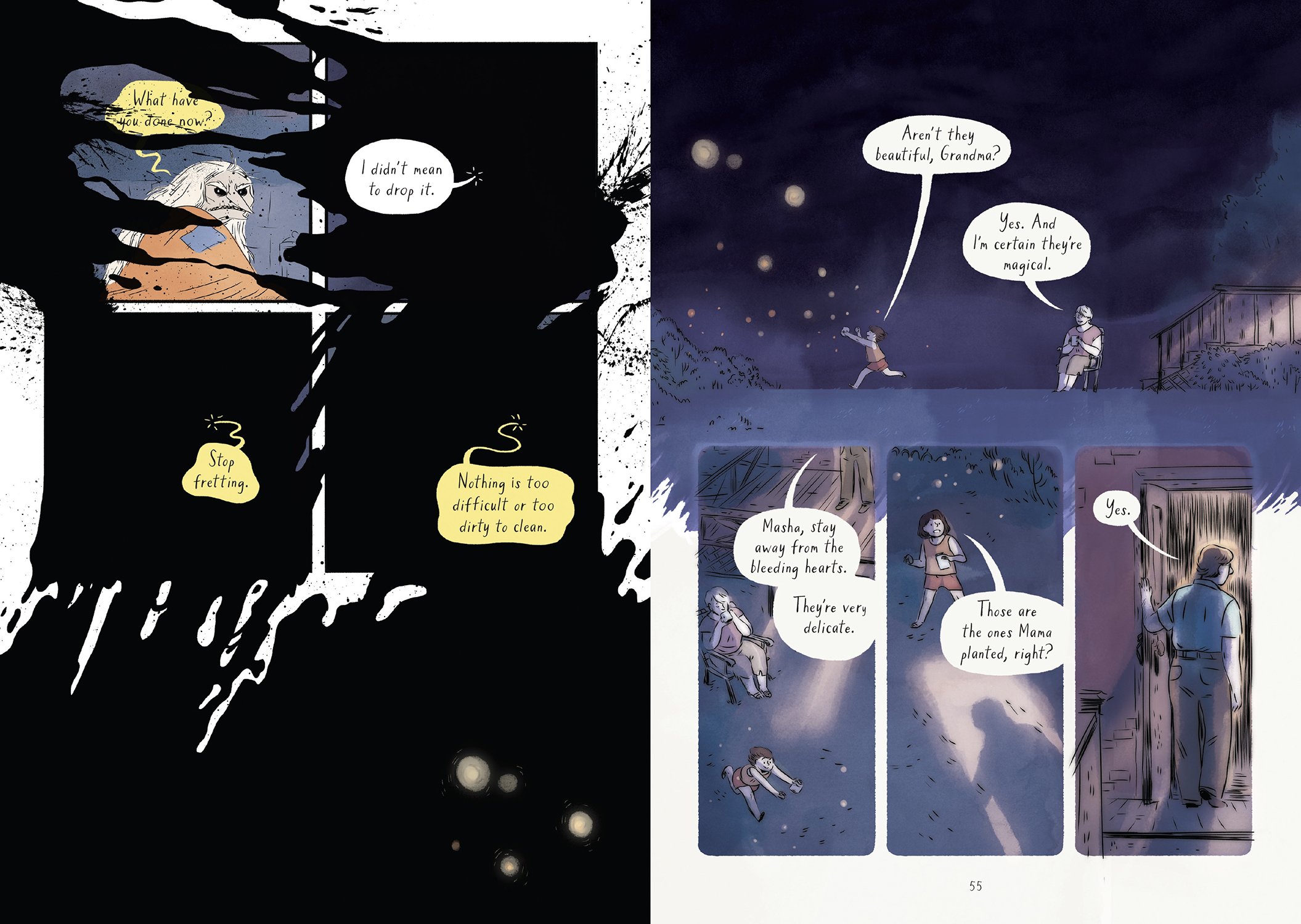
Most children think twice before braving a haunted wood filled with terrifying beasties to match wits with a witch, but not Masha. Her beloved grandma taught her many things: that stories are useful, that magic is fickle, and that nothing is too difficult or too dirty to clean. The fearsome witch of folklore needs an assistant, and Masha needs an adventure. She may be clever enough to enter Baba Yaga’s house on chicken legs, but within its walls, deceit is the rule. To earn her place, Masha must pass a series of tests, outfox a territorial bear, and make dinner for her host. No easy task, with children on the menu!
Wry, spooky and poignant, Marika McCoola’s debut–with richly layered art by acclaimed graphic artist Emily Carroll–is a storytelling feat and a visual fest.
Kellee’s Review: I first learned about Baba Yaga when I was in middle school, and I learned about Mussorgsky’s Pictures at an Exhibition suites based on paintings by Viktor Hartmann. Suite 9, “The Hut on Fowl’s Legs” was based off of his painting of a clock in the form of Baba Yaga’s hut. Because I liked the music so much when I first heard it, I wanted to learn more about it, and one of the things I distinctly remember researching was Baba Yaga who I found fascinating! I then was reintroduced to Baba Yaga when I was reading the Fables series by Bill Willingham, and once again I went and read all about her folklore. Which meant when I saw that there was an upcoming graphic novel, my favorite!, about her, I had to get it.
Marika McCoola’s retelling of the Baba Yaga folktales does them justice. With a mix of classic stories of Baba Yaga and McCoola’s story of Masha, the book does a wonderful job of introducing the readers to who Baba Yaga is at the core, a conflicted witch, and also puts a twist on it all. Masha’s story is more than just an addition to Baba Yaga’s story though. She is the star. Her story is a sad one, and Baba Yaga may just be what she needs. This text will really start some discussions around Masha’s family status and why Baba Yaga and her may just be perfect for each other.
Teachers’ Tools for Navigation: Although it isn’t necessary, knowing the history of Baba Yaga would definitely make the reading of this text even more meaningful. I would love to have Baba Yaga’s Assistant during a traditional literature unit looking at diverse folktales and retellings of those tales.
Discussion Questions: Why was Masha prone to working well with Baba Yaga?; How did Masha’s grandmother influence who she is today?; How did the author intertwine traditional literature with a new story of Baba Yaga?; What do you think is going to happen next?
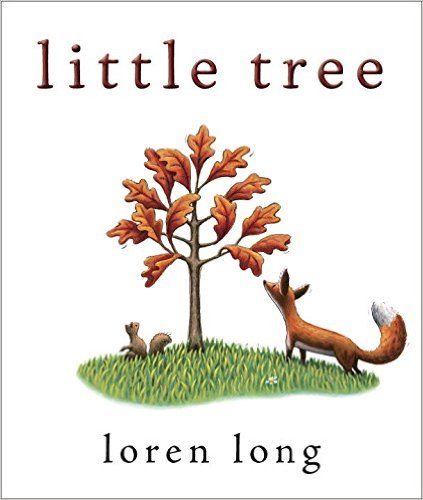
Little Tree Author and Illustrator: Loren Long
Expected Publication: October 27th, 2015 by Philomel Books
Goodreads Summary: In the middle of a little forest, there lives a Little Tree who loves his life and the splendid leaves that keep him cool in the heat of long summer days. Life is perfect just the way it is.
Autumn arrives, and with it the cool winds that ruffle Little Tree’s leaves. One by one the other trees drop their leaves, facing the cold of winter head on. But not Little Tree—he hugs his leaves as tightly as he can. Year after year Little Tree remains unchanged, despite words of encouragement from a squirrel, a fawn, and a fox, his leaves having long since turned brown and withered. As Little Tree sits in the shadow of the other trees, now grown sturdy and tall as though to touch the sun, he remembers when they were all the same size. And he knows he has an important decision to make. From #1 New York Times bestselling Loren Long comes a gorgeously-illustrated story that challenges each of us to have the courage to let go and to reach for the sun.
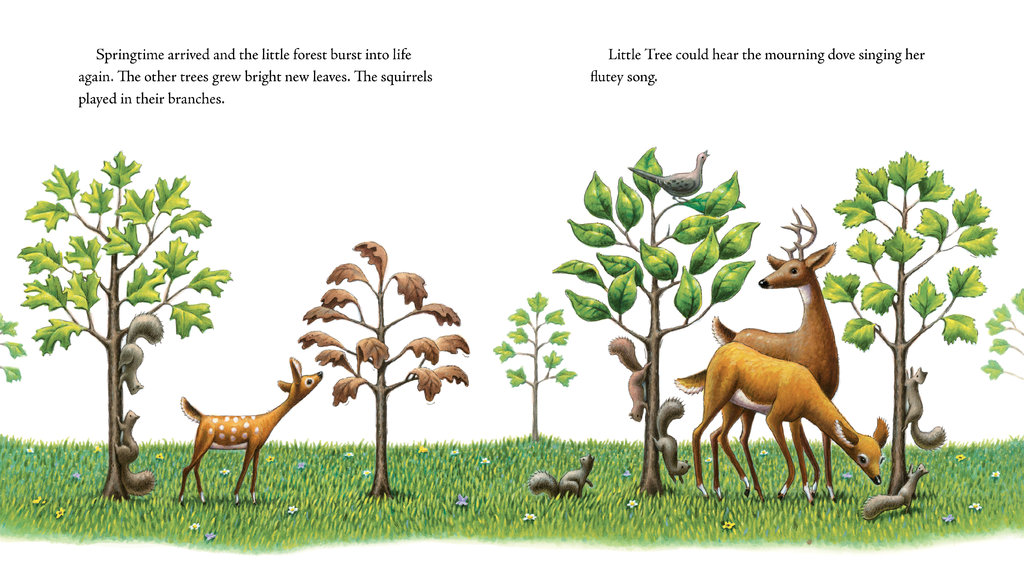
Kellee’s Review:Loren Long’s books, Otis and The Little Engine That Could, are household names, and I believe Little Tree will find its home along side these books. Little Tree is a sweet, little story at the surface, but it is really very deep. The story can be read as a story at bedtime to talk about nature or as a starting point for a discussion about growing up and/or making hard choices. The illustrations are beautiful yet simple, so that the readers eyes are drawn into Little Tree and its friends.
Ricki’s Review: This book represents everything I love in literature. From the moment I cracked the cover, I was whisked into the quiet story, and I felt a bit of a rush as I turned each page. The publishers graciously sent me a print from the book, which I plan to hang in my son’s bedroom. My advisor has the print resting behind her desk in the office. Kellee accurately described this book. While it seems simple, there are so many ways this texts could be used to promote quality conversations in the classroom. This would be my mentor text to teach personification.
Teachers’ Tools for Navigation: Little Tree will be a read aloud favorite for many teachers and students, but it can also be used to promote great discussions. At the surface, the book is a great jumping off point to talk about the seasons and nature and how nature changes throughout the seasons and would be a great companion to nonfiction books about the seasons. If you want to go a bit deeper, there is definitely a message in Little Tree about letting go, growing up, and making choices that may not be easy.
Discussion Questions: Why did Little Tree not want to let go of its leaves?; What happened as a result of not letting go of its leaves?; What does the author want you to think about after reading Little Tree’s story?
We Flagged:
From http://www.nytimes.com/interactive/2015/09/11/books/review/13bookshelf-lettinggo.html?_r=0
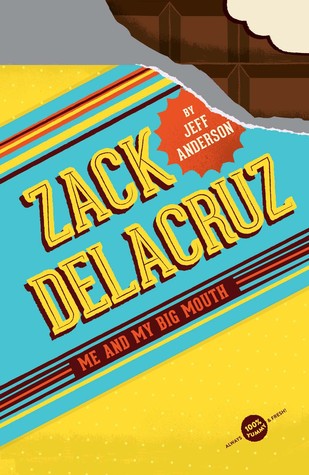
Zack Delacruz: Me and My Big Mouth Author: Jeff Anderson
Published August 4th, 2015 by Sterling Children’s Books
Goodreads Summary: Zack Delacruz is unnoticed at his middle school—and that’s just the way he likes it. But a school assembly, a typhoon of spit, and an uncharacteristic moment of bravery are all it takes to change everything. Suddenly Zack is in charge of the class fundraiser. Worse, his partner is the school’s biggest bully! If they don’t sell all the chocolate bars, there will be no dance for the sixth grade. Zack never wanted to be a hero, but with his classmates’ hopes on the line, can he save the day?
About the Author: Jeff Anderson is the author of Mechanically Inclined, Everyday Editing, 10 Things Every Writer Needs to Know, and Revision Decisions. Zack Delacruz: Me And My Big Mouth is his debut middle grade novel. A former elementary and middle school teacher, Jeff travels to schools across the country working with teachers and students to discover joy and power in the writing process. Jeff lives in San Antonio, TX. Visit him at writeguy.net or follow him on Twitter at @writeguyjeff.
My Review and Teachers’ Tools for Navigation: If I know one thing about middle school it is that it is a tough place. It can be a lot of fun, but at the bottom of it, being between the ages of 11 and 14 are just a rocky time for most people. Jeff Anderson captures that awkward time in Zack’s life perfectly. Zack has done everything in his power to stay under the radar at the school, but when he decides to do the right thing by standing up for a girl who is getting bullied, it pulls him into the forefront. I think this also shows how hard it is to stand up to a bully because it then puts a bulls eye on you, but Zack ends up handling it beautifully.
I did really like the easy diversity and true relationships in Zack Delacruz. I think it is such a real reflection of what middle school is actually like. Sometimes the bullying got to me, but that is how bullying is–it is uncomfortable and wrong, so if I felt that way that means it was written just right.
This is a book that will be a hit with middle school readers. They are going to so easily be able to connect with the characters and the story, and they will find some parts of it to be very funny. It also will make readers think about bullying, middle school, friendship, and more.
Discussion Questions: How does Zack evolve throughout the book?; If you were in Zack’s position, would you have stood up for Janie? Why or why not?; How did the one decision of standing up for Janie change Zack’s life?; Why do you think Jose acts the way he does?; Do you think Davy Crockett Middle School is a good representation of middle schools?; What do you think life is like for Zack and Janie after the book?
We Flagged: “A typhoon spray of spit. A stupid assembly. And my big mouth. That’s all it took to ruin my life.
If you’re a sixth grader at Davy Crockett Middle School in San Antonio, Texas, you start off every day in advisory. Besides cruel and unusual punishment, advisory is an avoiding game: avoiding eye contact, avoiding talking, and, so far, avoiding trouble.” (p. 1)
Read This If You Loved: Frank Einstein by Jon Scieszka, Pickle by Kim Baker, Better Nate Than Ever by Tim Federle
GIVEAWAY! Enter to win your own copy of Zack Delacruz!
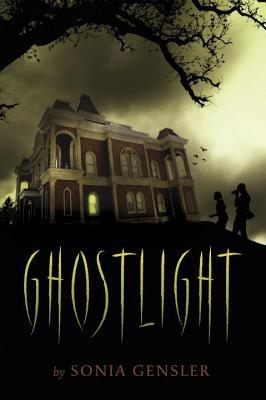
Ghostlight Author: Sonia Gensler
Published August 4th, 2015 by Knopf Books for Young Readers
Goodreads Summary: Things that go bump in the night are just the beginning when a summer film project becomes a real-life ghost story!
Avery is looking forward to another summer at Grandma’s farm, at least until her brother says he’s too old for “Kingdom,” the imaginary world they’d spent years creating. Lucky for her, there’s a new kid staying in the cottage down the road: a city boy with a famous dad, Julian’s more than a little full of himself, but he’s also a storyteller like Avery. So when he announces his plan to film a ghost story, Avery is eager to join in.
Unfortunately, Julian wants to film at Hilliard House, a looming, empty mansion that Grandma has absolutely forbidden her to enter. As terrified as Avery is of Grandma’s wrath, the allure of filmmaking is impossible to resist.
As the kids explore the secrets of Hilliard house, eerie things begin to happen, and the “imaginary” dangers in their movie threaten to become very real. Have Avery and Julian awakened a menacing presence? Can they turn back before they go too far?
My Review: I do not do creepy. No creepy books, movies, haunted houses…nothing. So, a creepy book had to sound really good or be recommended to me by someone I trust for me to read it. This one was both, so I agreed to give it a chance. Although it did scare the kajeebees out of me, I am very glad that I picked it up. First, the ghost story part of the plot is done so well. It isn’t over the top, it seemed real, and it really got me! Second, the book was so much more than a ghost story. It was a look at rural vs. urban, celebrity, the definition of family, mental disorders, filmmaking, and more. Third, the characters seemed real. You have four very different preteens/teens, but they all represent a different type of person. Each has flaws, and each is wonderful
Teachers’ Tools for Navigation: I was fascinated by all of the filmmaking information that Julian shares with Avery. I would love to use this part of the book with students, as well as information from other sources, to help them make a film from a script they wrote. They could also use the information to make a book trailer with good filmmaking technique.
P.S. I book talked Ghostlight on Tuesday to my class, and 90% of them put it on their TBR list. They all want to know what is going on in that house!
Discussion Questions: Would you forgive Julian and Lily after what they did to Avery?; If you were Avery, and you were asked about your father, how would you respond?; What does Avery’s family situation tell us about what family is?; What specifically made the ghost in Ghostlight scary?;
We Flagged: “…Julian paused the video. This time I could see the wispy thing hanging in the air across from Lily. It wasn’t a person, but it was something.” (p. 119)
Book Trailer:
Read This If You Love: All the Lovely Bad Ones by Mary Downing Hahn, Doll Bones by Holly Black, Liesl & Po by Lauren Oliver, Seer of Shadows by Avi, City of the Dead by Tony Abbott, Skeleton Man by Joseph Bruchac
Sonia Gensler has some more books to share that you may enjoy: Ghostlight, my first middle grade novel, was inspired by classic B&W horror films and the spine-tingling tales of authors like Mary Downing Hahn and Patricia Clapp. To celebrate its release, I thought I’d share other recent middle grade ghost novels that raise the stakes with deft characterization and unique conflicts.
Breathe: A Ghost Story by Cliff McNish (2006): Jack and his mother move into an old farmhouse, but only he can see the resident ghosts. Having once nearly died of asthma, Jack has a special sensitivity to those who have crossed to the other side. In fact, Jack senses several ghostly individuals within the house, but the more he learns, the more vulnerable he becomes to the most powerful of the spectral entities — one who wishes to control all the inhabitants of the house, living or dead. Breathe presents the ghostly characters and their conflicts in an innovative way that will keep readers gripped to the very end.
Seer of Shadows, by Avi (2008): Young Horace apprentices with a society photographer in 19th-century New York City. When Horace finds an eerie image on a developed photograph — the likeness of the subject’s dead daughter — dark things begin to happen. I am fascinated by the notion of Victorian spirit photography, so this story was particularly to my liking! (Another spirit photography novel for readers interested in more mature characters and themes would be Cat Winters’ In the Shadow of Blackbirds.)
The Aviary, by Kathleen O’Dell (2011): Clara lives in the crumbling Glendoveer Mansion, where her mother is housekeeper. Her life is comfortable enough, but she can’t go outside, has no friends, and actively fears the exotic birds kept by old Mrs. Glendoveer. One day, the mynah bird speaks to her, and he seems to be saying a name. Eliot. When Clara investigates, she gradually learns the dark history of the Glendoveer family, and in turn discovers secrets from her own past. While not a traditional ghost story, this Gothic tale is full of mystery and chilling reveals.
Doll Bones, by Holly Black (2013): Zach has decided to put childhood things behind, but when his old friend Poppy tells him she is being haunted by her china doll, he agrees to help her properly bury it. Creepy dolls aside, this book is haunting in its look at childhood play and imagination–particularly what may be lost in the transition from childhood to adolescence.
A Curious Tale of the In-Between, by Lauren DeStefano (2015): Pram, who can see and speak with the dead, wishes more than anything to meet her living father. The mysterious Lady Savant says she can help, but Pram soon learns the lady has a dark agenda of her own. This captivating novel is more mystery than horror, and I was intrigued by how it represented interactions between the living and dead. The novel’s focus on the manipulation of memories reminded me (in a very good way) of the film Inception.
About the Author: Sonia Gensler is also the author of the young adult novels The Dark Between and The Revenant. She grew up in a small Tennessee town and spent her early adulthood collecting impractical degrees from various Midwestern universities. A former high school English teacher, she now writes full-time in Oklahoma. To learn more, and to download a free curriculum guide, visit soniagensler.com or her Twitter: @soniagensler
**Thank you to Barbara from Blue Slip Media for providing a copy for review and giveaway as well as a big thank you to Sonia Gensler for her guest post!**
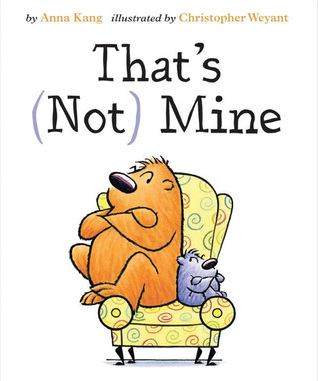
That’s (Not) Mine Author: Anna Kang
Illustrator: Christopher Weyant
Published September 1st, 2015 by Two Lions
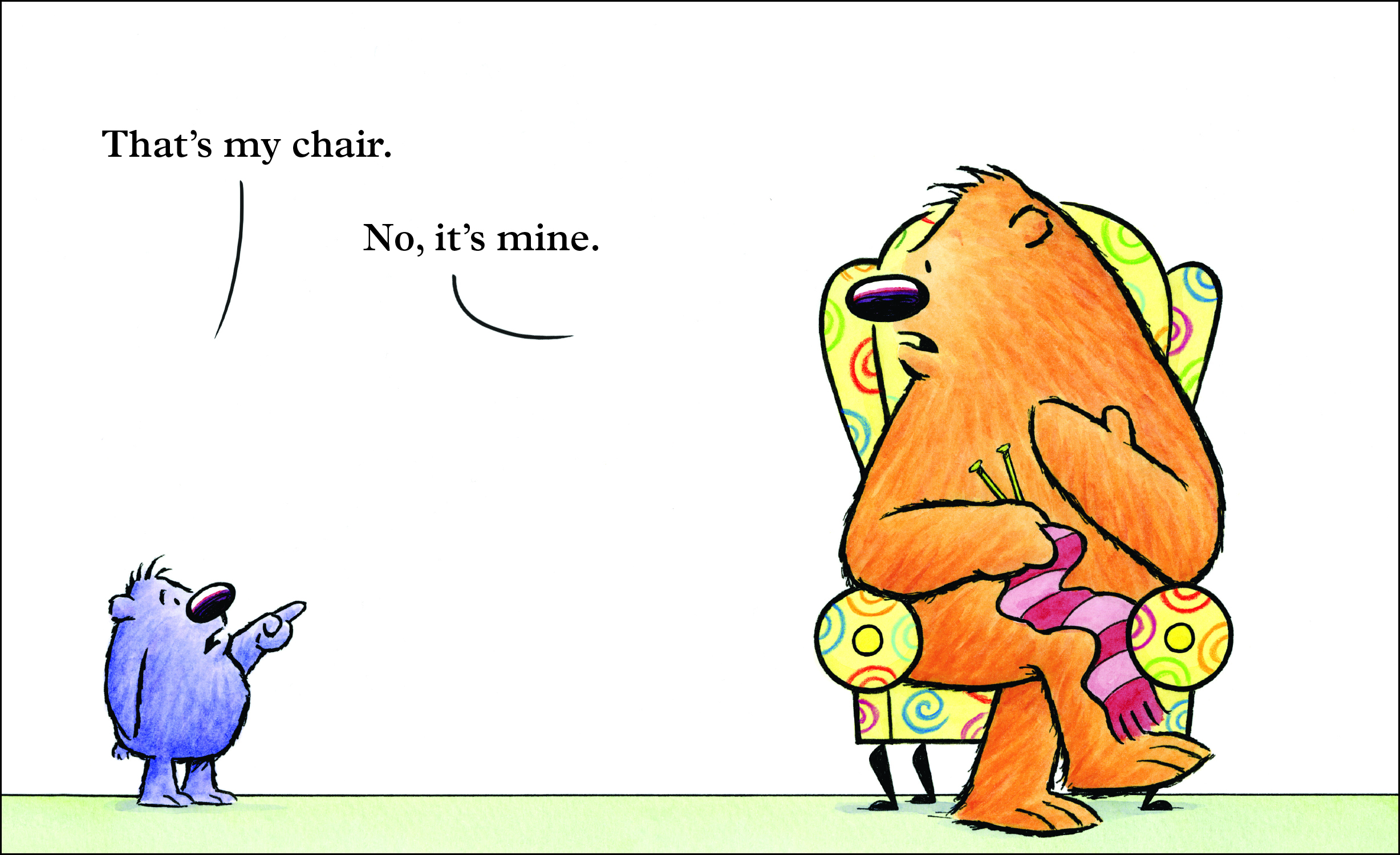
Goodreads Summary: Two fuzzy creatures both want to sit in the same comfy chair. The trouble is, they can’t agree who it belongs to. They get madder and madder, until…
With expressive illustrations and simple text, this giggle-inducing tale about (not) sharing and (not) being a good friend features the endearing characters from Theodor Seuss Geisel Award winner You Are (Not) Small.
Kellee’s Review: Our two fuzzy friends from You Are (Not) Small are at it again! Although they seem to be friends, every time we encounter them they seem to be having a disagreement that will definitely make their readers laugh. This text isn’t about identity and differences like the first text. Instead, it focuses more on sharing, friendship, wanting what others have, and also dealing with losing what you wanted. These are all really big (and tough!) lessons for kids. By sharing this book with your child or your class, it becomes a very entertaining way to talk about these issues and topics.
Ricki’s Review: About three days before I received this book in the mail, my husband and I were discussing our concerns with our son’s new affinity for the word: “mine.” Like most toddlers, he has become obsessed with the concept that everything is “mine” (and by “mine,” I mean his). We don’t support this new “anti-sharing” movement that has become a hot topic in parenting groups and blogs. We want to raise our son to understand that, yes, some things can be his, but he should work hard to share as much as he can with others. I want to raise him to value his peers, respect adults, and give back to his community. So when this book came in the mail, I was extremely pleased. I read it aloud as my husband listened. His response? “This is the perfect book for him right now.” These two fuzzy creatures are teaching my son a lot of great lessons—it is okay for him to be short (my son’s destiny), and in this new text, not everything has to be “mine.” I am looking forward to the next installation from this husband-and-wife duo!
Sharing is a concept that goes beyond childhood. Teachers might facilitate a discussion about the different ways that sharing can relate to many contexts and situations in life—for people of all ages.
Discussion Questions: Why did each of the characters want the others’ chair?; Who do you think won in the end?; What type of friends do you think the two characters are?; Have you ever thought you wanted something, but then didn’t really want it once you got it?
We Flagged:
Read This If You Loved: You Are (Not) Small by Anna Kang, Lady Pancake and Sir French Toast by Josh Funk, Your Alien by Tammi Sauer, The Pigeon Needs a Bath by Mo Willems, Elephant and Piggie books by Mo Willems
The inspiration behind THAT’S (NOT) MINE was growing up with my brother. As anyone with siblings will attest, we were forced to learn to how share almost everything with each other—food, toys, attention, space, and in the days before computers and smart phones, whose turn it was to choose the television show or radio station. Sharing is tough, even for adults, and I must admit, I was not good at sharing with my brother (sorry, Emil). Lucky for me, he was a really kind older brother and let me have my way more often than I deserved (thank you, Emil). Now that I have two daughters, I see them battle over the same things. I’ve realized that for a child, possessions are precious—they shape their identity. My kids and their friends will say that the “best” part of their day was that they “got a turn” playing with a certain toy or reading a favorite book at school, or that they were “first to use the best swing,” etc. And conversely, they will report how devastated they were because they “didn’t get a turn” with a coveted item. It requires a certain amount of emotional maturity to see someone else’s perspective and to let go of an object you value.
How we work collaboratively:
Anna: I write something, Chris reads it, gives me notes, we discuss the notes, I rewrite it, we discuss it again, and then when we both like the text, we discuss the illustrations and visual style. Chris begins to sketch some ideas, I give him feedback, he revises, and we discuss them again, etc. It is a constant back-and-forth collaboration. I’m very fortunate to have him as a sounding board.
Chris: One of the things I like most about our collaborative process is the ongoing conversation Anna and I have as the book goes from early concept to final art. Along the way, we will discuss what’s working and what could be stronger, continually making changes, large and small, until we feel the book is what we envisioned. Many times we’ll have a quick talk while doing the dishes or in the car. It feels like a very natural process that has become a part of our everyday lives.
About the Authors: Husband-and-wife team Anna Kang and Christopher Weyant are the creators of You Are (Not) Small, which won the Theodor Seuss Geisel Award and was named a Notable Children’s Book by the American Library Association. They live in New Jersey with their two daughters, Kate and Lily, a guinea pig named Athena, and a hermit crab named Olaf.
Anna, a native New Yorker, grew up believing everything was hers until one day she realized it was her brother’s, too. She received a master’s degree in fine arts from the USC School of Cinematic Arts, where the visual storyteller in her was awakened, forever changing the way she saw art, life, and everything in between. In addition to writing, Anna loves to read, travel, laugh, eat, and nap. Visit her online at www.annakang.com.
Christopher is a cartoonist and illustrator. His work can regularly be seen in the New Yorker. His cartoons are syndicated worldwide and have been featured on the Today Show, Meet the Press, and World News Tonight. Christopher likes to share everything but his personal space on the subway. Visit him online at www.christopherweyant.com.