Nibbles: The Book Monster by Emma Yarlett

Share

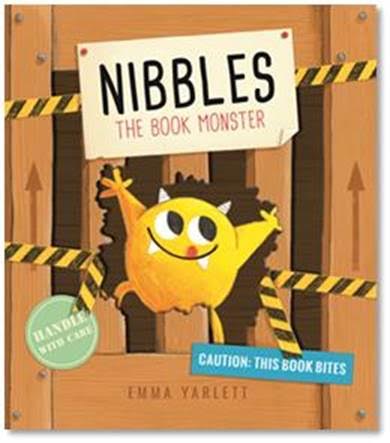
nibbles

Nibbles: The Book Monster
Author and Illustrator: Emma Yarlett
Published: March 1, 2016 by Kane Miller Books

Goodreads Summary: Nibbles is a very naughty book monster—he’s chomping, munching and nibbling his way through fairytales that don’t belong to him! Can you help catch him and put him back in his own story? Children will love to lift the flaps, peek through the peep holes, and chase Nibbles through a fantastical world of books, in this quirky story, exquisitely illustrated by Emma Yarlett (My Daddy’s Going Away and Bear’s Big Bottom). Jam-packed full of your kids’ favorite fairy tales including Little Red Riding Hood, Jack and the Beanstalk and Goldilocks and the Three Bears.

Ricki’s Review: This is a very clever book! Nibbles loves to nibble on things, but most of all, he loves to nibble on books. He eats his way into stories and changes their outcomes! My son had so much fun reading this book. He loved the cutouts, lift the flaps, and books within books! I can imagine this is a huge hit with any kids who read it. It is very funny and creatively crafted—from the story to the illustrations to the way the book is presented. Two thumbs up to Emma Yarlett and Kane Miller books for thinking outside of the box with this one. It shows readers that books don’t have to be traditional!

Kellee’s Review: Trent is a big fan of monsters. He loves Monsters, Inc. and Don’t Push the Button!, so it is no surprise that he loves Nibbles. He fascinated with following Nibbles’ trail throughout all of the books and it became like a game of hide and seek for him. Not only is Trent a fan of Nibbles, I am as well. I loved the creativity of this book. The interactive and 3D aspects of it really bring the book to life, and I love that the author incorporates actual fairy tales in the books that Nibbles enjoys. Such a clever book that will keep readers come back over and over.

Teachers’ Tools for Navigation: This book could be used to start any fairy tale retelling unit! Readers of all ages will fall in love with Nibbles and want to participate in this adventure. I’d love to have my class create their own fairy tale retelling with Nibbles’ influence! I imagine there would be a lot of laughs and a lot of joy in this assignment. It teaches kids that reading can be very fun!

Discussion Questions: How do the author/publisher allow us to rethink our conceptions of traditional books? Which text features were your favorites, and why?; What other stories could Nibbles nibble his way through? How would he change the plot/outcome?

Book Trailer: 

Read This If You Loved: Battle Bunny by Jon Scieszka and Mac Barnett; Little Red Writing by Joan Holub, Fairy Tale Comics by Chris Duffy, Crankee Doodle by Tom Angleberger

Recommended For: 

readaloudbuttonsmall classroomlibrarybuttonsmall

RickiSigand Kellee Signature

**Thank you to Lynn at Kane Miller Books for providing copies for review!**

The First Step: How One Girl Put Segregation on Trial by Susan E. Goodman

Share

NFPB2016

Nonfiction Wednesday

Nonfiction Picture Book Wednesday is hosted by Kid Lit Frenzy and was started to help promote the reading of nonfiction texts. Most Wednesdays, we will be participating and will review a nonfiction text (though it may not always be a picture book).
Be sure to visit Kid Lit Frenzy and see what other nonfiction books are shared this week!

first step

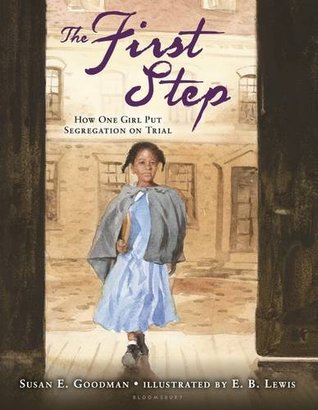
The First Step: How One Girl Put Segregation on Trial
Author: Susan E. Goodman
Illustrator: E.B. Lewis
Published January 5th, 2016 by Bloomsbury Children’s Books

Goodreads Summary: In 1847, a young African American girl named Sarah Roberts was attending a school in Boston. Then one day she was told she could never come back. She didn’t belong. The Otis School was for white children only.

Sarah deserved an equal education, and the Roberts family fought for change. They made history. Roberts v. City of Boston was the first case challenging our legal system to outlaw segregated schools. It was the first time an African American lawyer argued in a supreme court.

These first steps set in motion changes that ultimately led to equality under the law in the United States. Sarah’s cause was won when people–black and white–stood together and said, No more. Now, right now, it is time for change!

With gorgeous art from award-winning illustrator E. B. Lewis,The First Step is an inspiring look at the first lawsuit to demand desegregation–long before the American Civil Rights movement, even before the Civil War.

Backmatter includes: integration timeline, bios on key people in the book, list of resources, and author’s note.

My Review: I really appreciate the abundance of quality nonfiction books about the early civil rights in our country because I fear that so much of the prejudice still remains, so it is important to learn about history so hopefully it will not repeat itself. The First Step is a story that shows how even if you do not win your fight, that doesn’t mean that the effort you put forth was for naught. Sarah Roberts and her family were so brave in standing up for her education and rights, and their fight helped pave the way for the bumpy road of integration in schools. Goodman does a wonderful job starting with Sarah’s story but tying it to the Brown v. Board of Education trial while not taking away any credit from the Roberts’ part of history.  

Teachers’ Tools for Navigation: My first thought is to do a jigsaw type activity with The First Step and other civil rights nonfiction picture books (such as the ones listed below in recommended reading). Students can learn about different parts of the history of civil rights by reading the picture books and maybe even researching extra. They would then either present as a group to the class or you can jigsaw the kids back together (pull one person from picture book and put them together as a group), and they can each teach each other about what they learned. This is one of my favorite activities to do with picture books because it allows students to learn in depth about one subject then teach the rest of their class thus everyone learns about all subjects.

Discussion Questions: How did Sarah Roberts’s family’s fight lead to the integration of schools even though she did not win her case?; How did the author structure the book to go through the history of segregation?; How do the illustrations by Lewis help bring Goodman’s story to life?

We Flagged: 

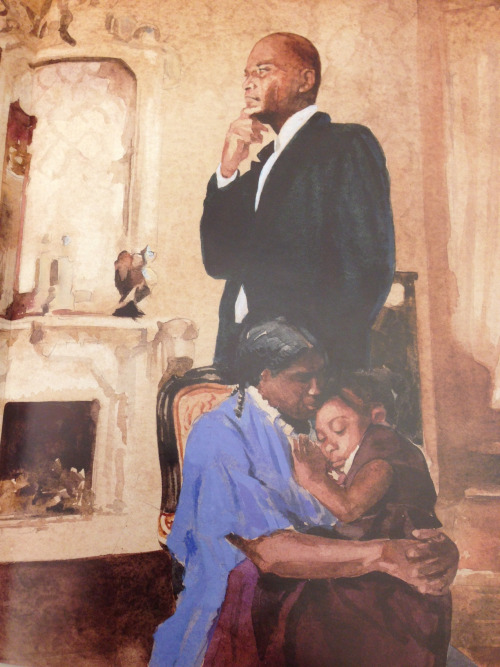
first step spread

“Adeline and Benjamin Roberts tried to imagine Sarah’s walk to the Smith School, which was for African American children. She would have to zigzag through many streets, crossing one neighborhood after another.

Sarah would have to go all that way for a school that never taught subjects like history or drawing. All that way for Boston’s only school without a play yard. A school that owned only one book.”

Read This If You Loved: Separate is Never Equal by Duncan TonatiuhFreedom Summer (Kellee’s Review, Ricki’s Review) by Deborah Wiles, Seeds of Freedom by Hester Bass

Recommended For: 

classroomlibrarybuttonsmall readaloudbuttonsmall litcirclesbuttonsmall

Signature

Review and Giveaway!: Can You Canoe? and Other Adventure Songs by The Okee Dokee Brothers

Share

can you canoe

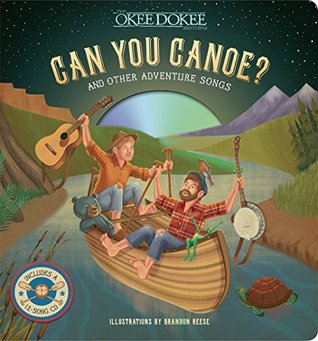
Can You Canoe? And Other Adventure Songs
Author: The Okee Dokee Brothers
Illustrator: Brandon Reese
Published April 19th, 2016 by Sterling Children’s Books

Summary: Can You Canoe? invites you to journey cross-country with The Okee Dokee Brothers through twelve of their irresistible, boot-stompin’ tunes. You’ll encounter hungry black bears and tall-tale spinners; quiet canoes and cozy camping tents; a jumpin’ jamboree and a bullfrog opera. As you listen to the songs and follow along with the illustrated lyrics in this collection, you might even be inspired to head out on some outdoor adventure of your own!

Kellee’s Review: We love music in my house, so anytime a book and music can be connected really makes me happy. I think the Okee Dokee Brothers’ music is catchy, knee-slapping, sometimes funny, and have great messages. I love how they all promote the out doors and adventure. And just when you think it cannot get any better, you see the illustrations. Brandon Reese’s illustrations are perfect! They are so colorful and loud and cartoon-ish. Just the type of fun you think would be in a book by the Okee Dokee Brothers. 

Ricki’s Review: This book is pure fun. My toddler was bouncing around the room as I played the CD. My husband is an outdoorsy guy, so he particularly liked the messages within the songs. The rhymes are great, and they will help my son learn the lyrics as we listen/read. I’ve never been to an Okee Dokee concert, and now I want to go to one! We’ll be bringing this CD along for long car rides. Below, we include an illustration, and you can see the pure beauty of this text. I will be buying it as a gift for my music-loving friends.

Teachers’ Tools for Navigation: We love using music during my poetry lessons because it helps students hear poetry and not be as afraid of it like they are with classics. Starting with music and lyrics allows you to help them understand how to read poetry differently than prose while using something they can easily understand. Can You Canoewould be a perfect text to use this for because you can analyze for poetic elements and meaning, but the Okee Dokee Brothers also have a field journal in the back which help give background information about each song making analyzing them less of a guessing game.

Can You Canoe? would also be a wonderful poetry mentor texts. The authors talk about how they find ideas for their songs and many of their songs have a format that could be emulated (like Jack in Love that Dog) if you wanted to go that route in class.

Discussion Questions: How do the authors use rhythm and rhyme in their lyrics?; What is a time that the authors used descriptive language to help the reader imagine the scene they are describing?; What is a time the authors used figurative language to add imagery to their songs?

Flagged Passages:

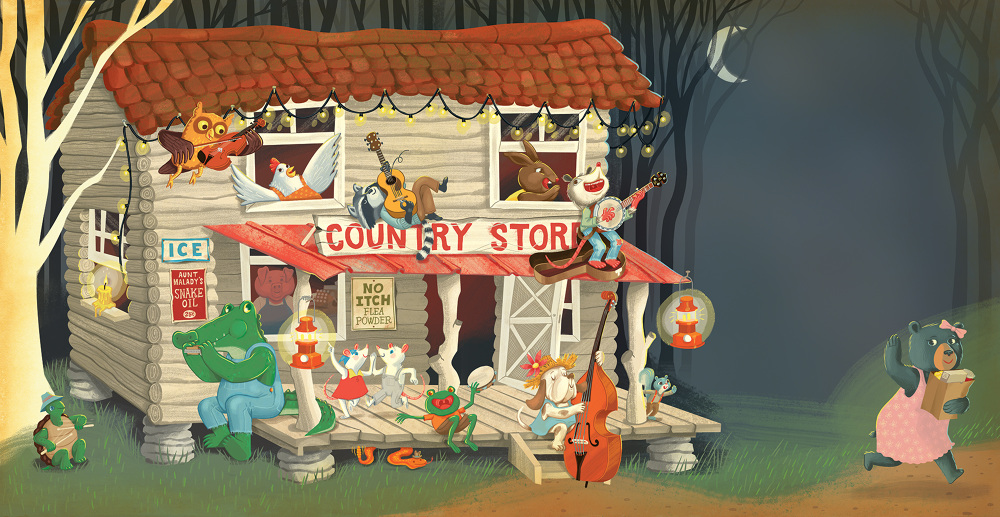
“There’s a country store
In a country town.
Every Friday night
The people dance around.
It don’t look like much
And it ain’t no chore,
But while they’re dancin’
They polish that floor.

They play this song
Right on key.
They play this song –
It’s called JAMBOREE.”

Okee_Jamboree_1000
(c) http://www.brandonreese.com/

Check out their You Tube channel to hear some of their music:
https://www.youtube.com/user/OkeeDokeeBros

Read This If You Loved: Goodnight Songs by Margaret Wise BrownFresh Delicious by Irene Latham

Recommended For:

  readaloudbuttonsmall closereadinganalysisbuttonsmall

Enter to win your own copy!

a Rafflecopter giveaway

Kellee Signatureand RickiSig

**Thank you to Lauren at Sterling Publishing for providing a copy for review!**

What Do You Do with a Problem? by Kobi Yamada

Share

what do you do with a problem

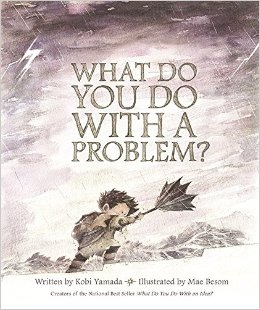
What Do You Do with a Problem?
Author: Kobi Yamada; Illustrator: Mae Besom
Published: July 1, 2016 by Compendium Inc.

GoodReads Summary: From the same author and illustrator as our #1 nationally best-selling What Do You Do With an Idea? comes a new book to encourage you to look closely at problems and discover the possibilities they can hold.

What do you do with a problem? Especially one that follows you around and doesn’t seem to be going away? Do you worry about it? Ignore it? Do you run and hide from it?

This is the story of a persistent problem and the child who isn’t so sure what to make of it. The longer the problem is avoided, the bigger it seems to get. But when the child finally musters up the courage to face it, the problem turns out to be something quite different than it appeared.

This is a story for anyone, at any age, who has ever had a problem that they wished would go away. It’s a story to inspire you to look closely at that problem and to find out why it’s here. Because you might discover something amazing about your problem… and yourself.

What are problems for? They challenge us, shape us, push us, and help us to discover just how strong and brave and capable we really are. Even though we don’t always want them, problems have a way of bringing unexpected gifts.

So, what will you do with your problem? Now that’s up to you.

Review: There is something so magical about the combination of writer Kobi Yamada and illustrator Mae Besom. When I saw that these creators of What Do You Do with an Idea? had another book, I jumped at the chance to read it. It’s no secret that I am in love with this first book. I have gifted it to many friends and children, and I include it on many of my favorites and Top Ten Tuesday lists. I was pleased that What Do You Do with a Problem? is just as stunning. These two books are a teacher’s dream. They utilize many literary elements and are perfect for close analysis. I would use them at all grade levels. What Do You Do with a Problem? is a great text to teach readers how to reconsider a problem (or problems) that they might have. They can compare the problem with illustrations and consider how that problem may, for example, be all-encompassing. I like how the book balances both the weight of the problem and the proverbial light at the end of the tunnel. By looking at this problem in a new light, readers will be able to take more of an outside perspective of the conflict—and hopefully/potentially work toward a resolution.

Teacher’s Tools for Navigation: To start, teachers might ask students to consider the symbolism within the text. They might even grapple with the definition of an allegory and discuss ways the definition might be connected with the text and illustrations. Then, students could think of an abstract idea and try to associate an object with that idea. They might even consider writing their own picture book that connects the object and abstract idea. I also think it would be great for teachers to read both this text and What Do You Do with an Idea? to students. Then, they might compare and contrast the stories and their messages.

Discussion Questions: What do you do with a problem? How do we deal with problems in different ways? How do others in our lives deal with problems in ways that differ from us?; How do the author and illustrator work together to create a compelling story? What symbols do they use to convey their message?

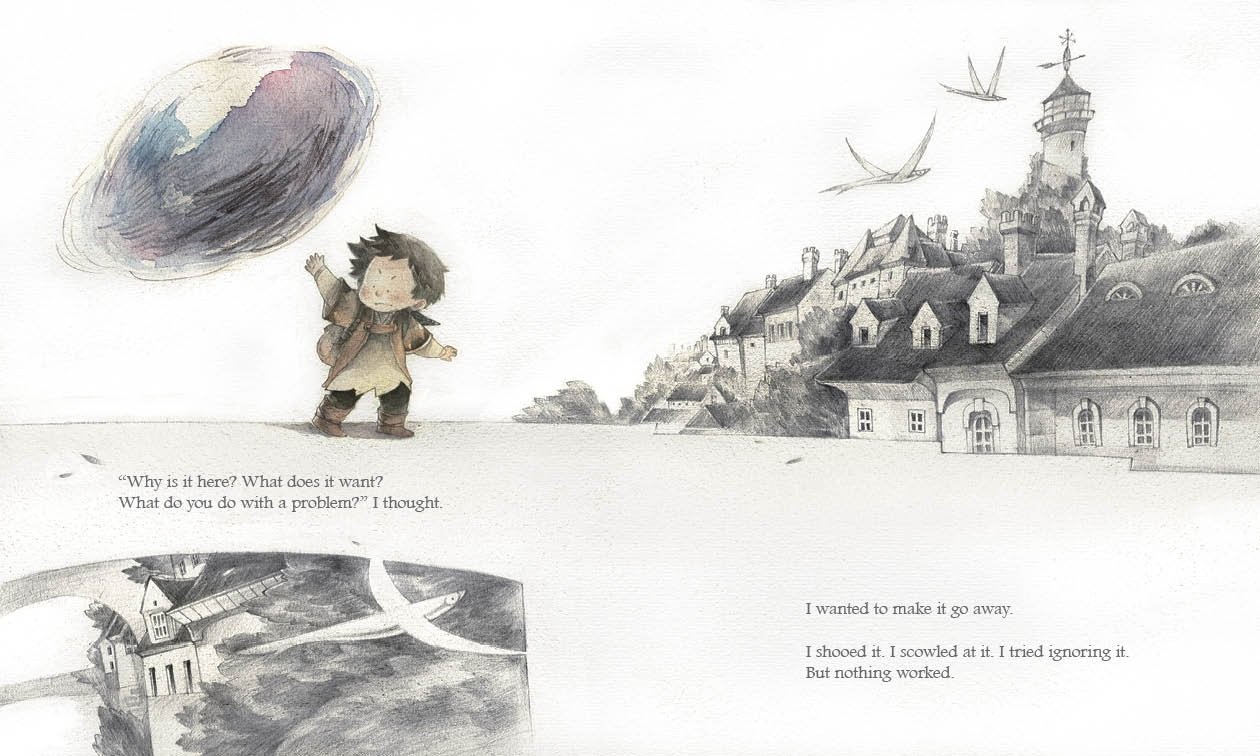
Flagged Passage: 

what do you do with a problem spread

Image from: www.amazon.com

Read This If You Loved: What Do You Do with an Idea? by Kobi Yamada; The Most Magnificent Thing by Ashley Spires; The Dot by Peter H. Reynolds, The Noisy Paint Box by Barb Rosenstock, Lost and Found by Oliver Jeffers, Journey by Aaron Becker

Recommended For:

  readaloudbuttonsmall closereadinganalysisbuttonsmall classroomlibrarybuttonsmall

RickiSig

Candlewick Nonfiction Picture Books: Who’s Like Me? by Nicola Davies; Can We Help? by George Ancona; Belle, the Last Mule at Gee’s Bend by Calvin Alexander Ramsey & Bettye Stroud; and The Boy Who Fell Off the Mayflower by P.J. Lynch

Share

NFPB2016

Nonfiction Wednesday

Nonfiction Picture Book Wednesday is hosted by Kid Lit Frenzy and was started to help promote the reading of nonfiction texts. Most Wednesdays, we will be participating and will review a nonfiction text (though it may not always be a picture book).
Be sure to visit Kid Lit Frenzy and see what other nonfiction books are shared this week!

who's like me

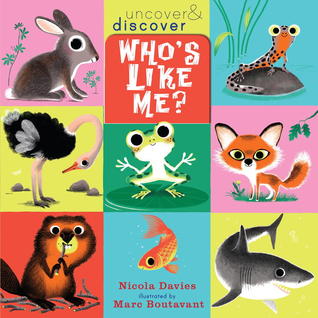
Who’s Like Me?
Author: Nicola Davis
Illustrator: Marc Boutavant
Published February 28th, 2012 by Candlewick Press

Goodreads Summary: Lift the flaps and learn about animal life in this fresh, fun-filled book for curious preschoolers.

A bunny is furry and breathes air. Who else is like that — a pigeon, a fish, a chameleon, or a fox? Some animals have fins to swim with, some have feathers and a beak, some have skin that is scaly, or smooth and wet. But whatever features a creature has, someone else has them, too. Can you guess who? Big flaps and a matching spread at the end make animal classification fun.

My Thoughts: This flap book is going to be a big hit in my house both because it is entertaining and because it is informative. First, the author does a great job making the identification of animal types a game including flaps and comparisons/contrasts then she ensures that factual information follows the matching to explain the type of animal and the characteristics of the type.

can we help

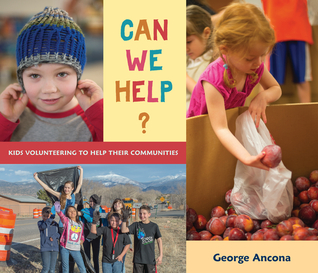
Can We Help? Kids Volunteering to Help their Communities
Author: George Ancona
Published August 25th, 2015 by Candlewick Press

Goodreads Summary: Real kids make a real difference in their communities in this vibrantly photographed chronicle by George Ancona.

George Ancona celebrates the joy of kids giving back. In one after-school program, middle-school students mentor and tutor younger children. Via a special partnership, schoolchildren help professionals train assistance dogs for people with disabilities. At a community farm, families plant, grow, and harvest produce for soup kitchens and charities. In these and other examples of volunteering, kids of all ages work together knitting hats and scarves for those who could use warm clothes, packing hot meals to deliver to housebound people, and keeping roadways clean. Young humanitarians reading these accounts may well be inspired to find ways that they can help, too.

My Thoughts: I think this picture book would be a wonderful one to read in conjunction with the 31 Ways to Change the World because that book includes suggestions while this one gives us narratives about those actually making a difference. I love the variety of ways the author highlights: from knitting to a community farm to training dogs and mentoring. These stories are inspiring and will make the reader (adult or child) want to do something to make a difference!

belle last mule

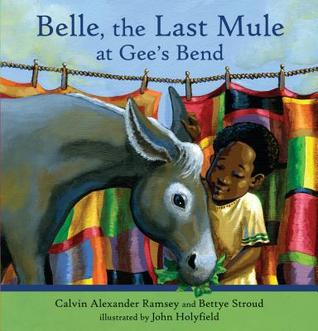
Belle, the Last Mule at Gee’s Bend
Authors: Calving Alexander Ramsey and Bettye Stroud
Illustrator: John Holyfield
Published September 13th, 2011 by Candlewick Press

Goodreads Summary: A true story inspires the moving tale of a mule that played a key role in the civil rights movement– and a young boy who sees history anew.

Sitting on a bench waiting for his mother, Alex spies a mule chomping on greens in someone’s garden, and he can’t help but ask about it.””Ol Belle?” says Miz Pettway next to him. “She can have all the collards she wants. She’s earned it.” And so begins the tale of a simple mule in Gee’s Bend, Alabama, who played a singular part in the civil rights movement of the 1960s. When African-Americans in a poor community– inspired by a visit from Dr. Martin Luther King, Jr.– defied local authorities who were trying to stop them from registering to vote, many got around a long detour on mule-drawn wagons. Later, after Dr. King’s assassination, two mules from Gee’s Bend pulled the farm wagon bearing his casket through the streets of Atlanta. As Alex looks into the eyes of gentle Belle, he begins to understand a powerful time in history in a very personal way.

My Thoughts: This story adds an extra truth to the story of Martin Luther King that many of us know. MLK was an advocate and leader and activist for all African and Black Americans and this meant a lot to so many communities of people around America including Gee’s Bend. To learn about Belle and King’s reason for having Belle pull his coffin really just shows how true his intentions of being a man of the people while fighting for the rights of all. And I loved how this story was told as a story from a Bender to a young boy visiting the town. Gee’s Bend is such a historical place, and I love this new part of their history that I didn’t know. (I love the quilts produced in Gee’s Bend! If you haven’t viewed them, Google it now!)

boy who fell

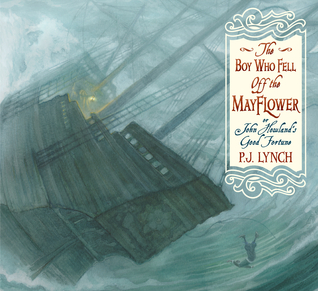
The Boy Who Fell Off the Mayflower or John Howland’s Good Fortune
Author and Illustrator: P.J. Lynch
Published September 22nd, 2015 by Candlewick Press

Goodreads Summary: In the first book he has both written and illustrated, master artist P.J. Lynch brings a Mayflower voyager’s story to vivid life.

At a young age, John Howland learned what it meant to take advantage of an opportunity. Leaving the docks of London on the Mayflower as an indentured servant to Pilgrim John Carver, John Howland little knew that he was embarking on the adventure of a lifetime. By his great good fortune, John survived falling overboard on the crossing of the Atlantic Ocean, and he earned his keep ashore by helping to scout a safe harbor and landing site for his bedraggled and ill shipmates. Would his luck continue to hold amid the dangers and adversity of the Pilgrims’ lives in New England? John Howland’s tale is masterfully told in his own voice, bringing an immediacy and young perspective to the oft-told Pilgrims’ story. P.J. Lynch captures this pivotal moment in American history in precise and exquisite detail, from the light on the froth of a breaking wave to the questioning voice of a teen in a new world.

My Thoughts: I have to start my review with discussing the art work. Describing P.J. Lynch as a master artist is a perfect statement. His watercolor and gouache full page plus illustrations are so lifelike and beautiful that the reader will spend time on each page viewing the art in addition to reading the text. And what makes the book even better is that the text is interesting. Told in first person from John Howland’s point of view, we travel from London to America through storms, a fall off the Mayflower, death, disease, famine, and shows how friendship and kindness pay. In the classroom, this text would be an informational and interesting introduction to the Mayflower voyage and Plymouth.


All Recommended For: 

classroomlibrarybuttonsmall readaloudbuttonsmall litcirclesbuttonsmall

Kellee Signature

Thunder Boy Jr. by Sherman Alexie

Share

thunder boy jr

Thunder Boy Jr.
Author: Sherman Alexie;  Illustrator: Yuyi Morales
Published: May 10, 2016 by Little, Brown Books for Young Readers

Goodreads Summary: Thunder Boy Jr. is named after his dad, but he wants a name that’s all his own. Just because people call his dad Big Thunder doesn’t mean he wants to be Little Thunder. He wants a name that celebrates something cool he’s done, like Touch the Clouds, Not Afraid of Ten Thousand Teeth, or Full of Wonder.

But just when Thunder Boy Jr. thinks all hope is lost, he and his dad pick the perfect name…a name that is sure to light up the sky.

National Book Award-winner Sherman Alexie’s lyrical text and Caldecott Honor-winner Yuyi Morales’s striking and beautiful illustrations celebrate the special relationship between father and son.

My Review and Teachers’ Tools for NavigationI should start by admitting that I have a mildly unhealthy obsession with Sherman Alexie’s work. Ever since I discovered his greatness in college, I can’t get enough of him! So I broke one of my rules and pre-ordered this book. It surely didn’t disappoint! His writing and Yuyi Morales’ illustrations makes for a masterful text. As you can see from the flagged passage (a spread) below, the writing and illustrations pop, and readers will be captivated by the text. My two-year-old son loved reading it with me. 

One of the critiques I’ve read about this book is that it should come with a teacher’s guide for Native American naming traditions. I fully understand this critique can understand where it is coming from. While I think an author’s note would have been helpful, as a fellow Native American, I wonder if this really should be a critique of the text. Why must Sherman Alexie (and other Native Americans) feel the need to always justify and explain their stories? I imagine that Alexie would cringe at a teacher’s (well-intentioned) attempt to follow up a reading of this text with their own naming ceremonies/activities. That said, I don’t believe this is necessarily his job. A little bit of background research will surely produce a wealth of materials about the sacredness of these rituals. I believe it seems to normalize Whiteness when we constantly request authors of color to provide teaching materials for texts. Like others, while I’d love for some aspect of the paratext to include this extra material, I don’t believe that this is a flaw of the text.

Discussion Questions: Why does Thunder Boy Jr. want a different name from his father? How does the author build the story in order to share more about Thunder Boy Jr.’s feelings?; What qualities do you share with other family members? How are you different from your family members? Do we all feel a yearning to be unique or different? In what ways are you unique?

Flagged Passage: 

Spread from: http://www.slj.com/2016/03/diversity/how-a-library-raised-yuyi-morales-the-award-winning-illustrator-on-sherman-alexies-thunder-boy-jr-and-more/#_

Read This If You Loved: The Absolutely True Diary of a Part-Time Indian by Sherman Alexie, Crossing Bok Chitto by Tim Tingle, Jingle Dancer by Cynthia Leitich Smith, My Abuelita by Tony Jonston (Illustrated by Yuyi Morales), The Lone Ranger and Tonto Fistfight in Heaven by Sherman Alexie

Recommended For: 

readaloudbuttonsmall classroomlibrarybuttonsmall

RickiSig

Blog Tour with Review!: Mastermind by National Geographic

Share

NFPB2016

Nonfiction Wednesday

Nonfiction Picture Book Wednesday is hosted by Kid Lit Frenzy and was started to help promote the reading of nonfiction texts. Most Wednesdays, we will be participating and will review a nonfiction text (though it may not always be a picture book).
Be sure to visit Kid Lit Frenzy and see what other nonfiction books are shared this week!

mastermind

Mastermind: Over 100 Games, Tests, and Puzzles to Unleash Your Inner Genius
Author: Stephanie Warren Drimmer
Puzzles by: Julie K. Cohen
Published May 10th, 2016 by National Geographic Children’s Books

mastermind banner

Welcome to Stop #7 on the National Geographic Kids Mastermind Blog Tour!

This summer, National Geographic Kids Books is inviting kids to “Unleash Their Inner Genius” with the release of Mastermind (May 2016, ages 8-12).  In this fun, interactive book, kids learn what type of thinker they are and are given the chance to exercise different parts of their brains with games, tests and puzzles.

Each stop on the National Geographic Kids Mastermind Blog Tour brings you one step closer to becoming a Certified Mastermind. Be sure to stop by each stop on the tour and challenge yourself to unleash your inner genius with fun quizzes, optical illusions, and brain teasers, and learn tips and tricks for improving brainpower and explanations for the science behind navigating your mental map.

Are you ready to put your genius to the test with some word puzzles? Check out below and tweet your answers using #Mastermind!

mastermind 1

mastermind 2

Goodreads Summary: Ready to exercise your brain? Let zany superbraniac Ima Genius be your guide in this interactive book full of fascinating brain facts, puzzles, games, and challenges. Learn what type of thinker you are and the geniuses that share your special type of intellect. Discover why your brain does what it does, and how that affects vision, hearing, touch, smell, taste, spatial reasoning, language, memory, and problem solving. Each chapter is filled not only with fun and games, but also famous historical cases, crazy quizzes, exciting experiments, and a glossary of Genius Jargon, invented for advanced brain-related vocabulary.

The cheeky narrator and self-proclaimed “Mastermind” Ima Genius and her talking dog, Atom, guide the reader through short and snappy explanations of the science behind why the brain does what it does and how it affects the senses, spatial reasoning, language, memory and problem solving. As kids work their way through the book completing experiments, brain teasers, mazes, quizzes and games, their efforts (and smarts!) are rewarded with a Certificate of Mental Achievement declaring them as a Certified Mastermind.  Or, in the words of Ima Genius:

When I’m finished with you, your brain will be so huge that your average-size neck will no longer be able to support your massive noggin.  Ha!  I kid.  That’s only happened once.”

Kellee’s Review: I love the variety of puzzles and games found within this book! They are quite clever and are definitely brain exercises. I also always love National Geographic books because of the quality of not only the text inside but also because of the photographs. Mixed in with all the puzzles are perfect animal photos and other science-y photos. For example, even the maze within the book is finding your way through a maze within a spine! Although the puzzles definitely are fun, I think my favorite things within the book are the “Atom’s Brain Breaks,” “Myths: Busted,” “Fun Facts,” tests, and other fun knowledge that was shared within.  

Ricki’s Review: This would be the perfect road trip book. There are so many puzzles and games, and they are all quite different. I am tempted to save this for my son for when he is a bit older, but I know my neighbors would love it. It’s a great book to share with others because it will appeal to kids of all interest levels. As with most of the National Geographic books we’ve reviewed here on Unleashing Readers, this book is jam-packed with awesome facts about animals, science, etc. This book will last a long time—there is so much to learn and do! The narrator (Ima Genius) is a perfect guide, and she made me smile.

Teachers’ Tools for Navigation: Although this book may seem like an individual book, it would definitely be fun as a whole-class bell work activity. It is almost exactly one page per school day if you did one each day. It would be a fun way to mix literacy and science!

Discussion Questions: What myths were busted that you thought were true?; What’s the difference between how dogs and humans see the world?; How do the different parts of your body work and work together?; What fun facts did you learn that you didn’t know before?

We Flagged: See above!

Read This If You Loved: Interactive books with puzzles, brain teasers, tests, or other games

Recommended For: 

classroomlibrarybuttonsmall readaloudbuttonsmall

Thank you for stopping by and being a part of the National Geographic Kids Mastermind Blog Tour!  Did you master all of the quizzes, puzzles and brain teasers?  If so, congratulations Mastermind! Here is your Certificate of Mental Achievement!

mastermind 3

If you missed one or two, visit these stops and become a Certified Mastermind!

Blog Tour Schedule:

5/23 – Reading is Better With Cupcakes

5/24 – Mother Daughter Book Reviews

5/25 – Geo Librarian

5/26 – Mrs. Mommy Book Nerd’s Book Reviews

5/27 – Always In The Middle

5/31 – Mundie Kids

6/1 – Unleashing Readers

Signatureand RickiSig

**Thank you to Karen at Media Masters Publicity for providing copies for review!!**