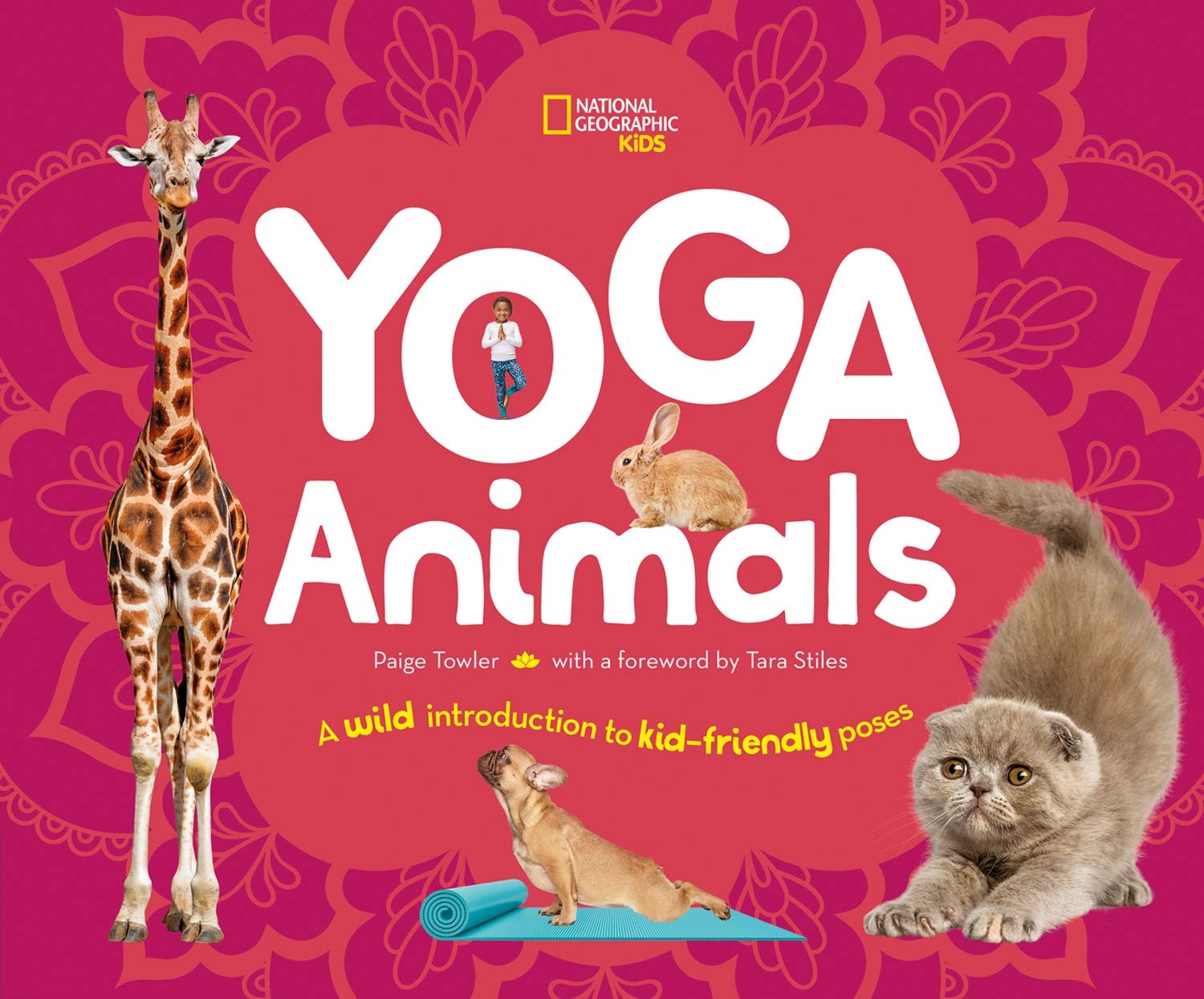
Yoga Animals: A Wild Introduction to Kid-Friendly Poses by Paige Towler

Share

Yoga Animals: A Wild Introduction to Kid-Friendly Poses
Author: Paige Towler
Foreword Author: Tara Stiles
Published May 19th, 2020 by National Geographic Kids

Summary: Adorable animal photos and lyrical text guide kids step-by-step through easy animal-inspired yoga poses.

Roar like a lion! Arch like a kitten! Stretch like a cobra! Did you know that many yoga poses were inspired by animals? Let these creatures inspire your young ones to get moving, practice mindfulness, or calm down after a long day. Simple step-by-step instructions explain the kid-friendly moves. Kids will get a kick out of the accompanying photos of animals that mimic each pose, and the sweet poem is sure to delight.

The foreword by Tara Stiles, founder of Strala Yoga, reminds us that we’re never too young to start enjoying the health benefits of yoga and mindfulness. Animal Yoga is the perfect intro to this ancient practice–great for engaging (and quieting!) a class, reading aloud one-on-one, or helping restless little ones fall asleep at bedtime or naptime.

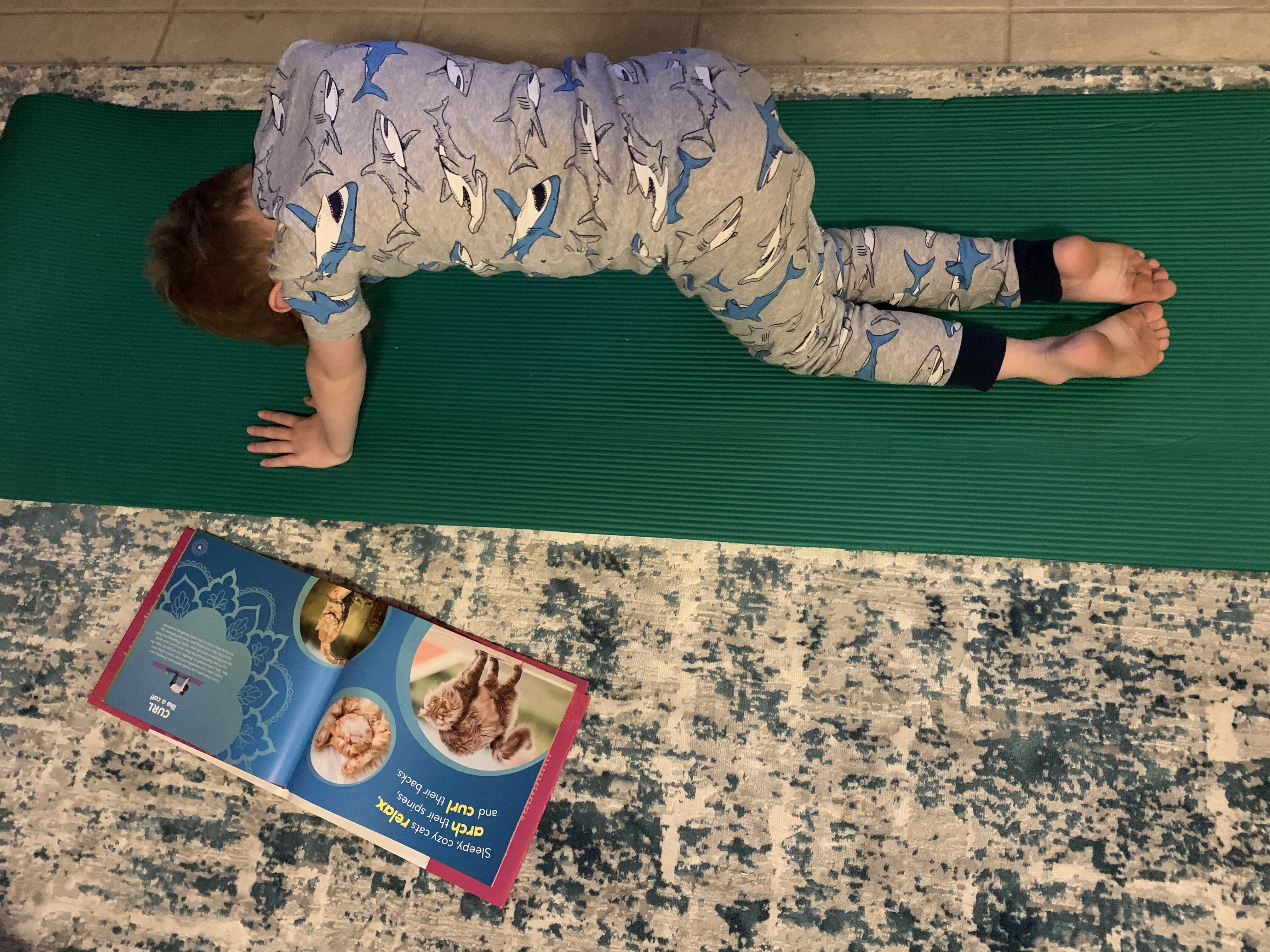
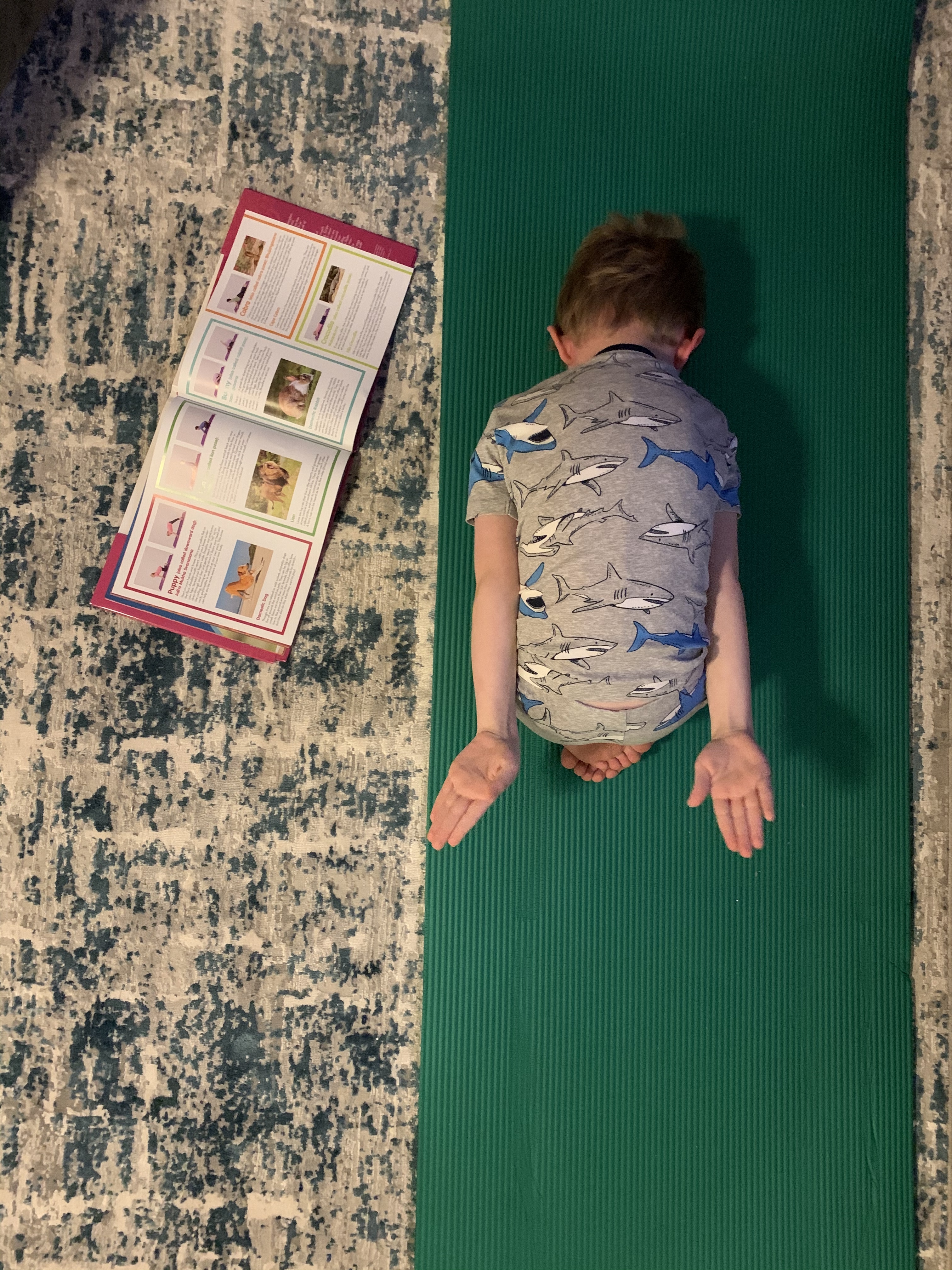
Review: Trent and I love doing Yoga together. We have family yoga mats, and he’s done mommy & me yoga with me though is favorite is Cosmic Yoga on You Tube. I wanted to make yoga part of Trent’s life because not only is it a wonderful form of exercise that he and I can do together, but it is also beneficial for mindset. Yoga Animals is a wonderful introduction to both aspects. I like that it makes the yoga poses accessible for so many ages. For example, it could be for a mom to do with a very young child as an introduction. Or older kids who may have done yoga in the past can use it independently. Here is Trent practicing his poses:

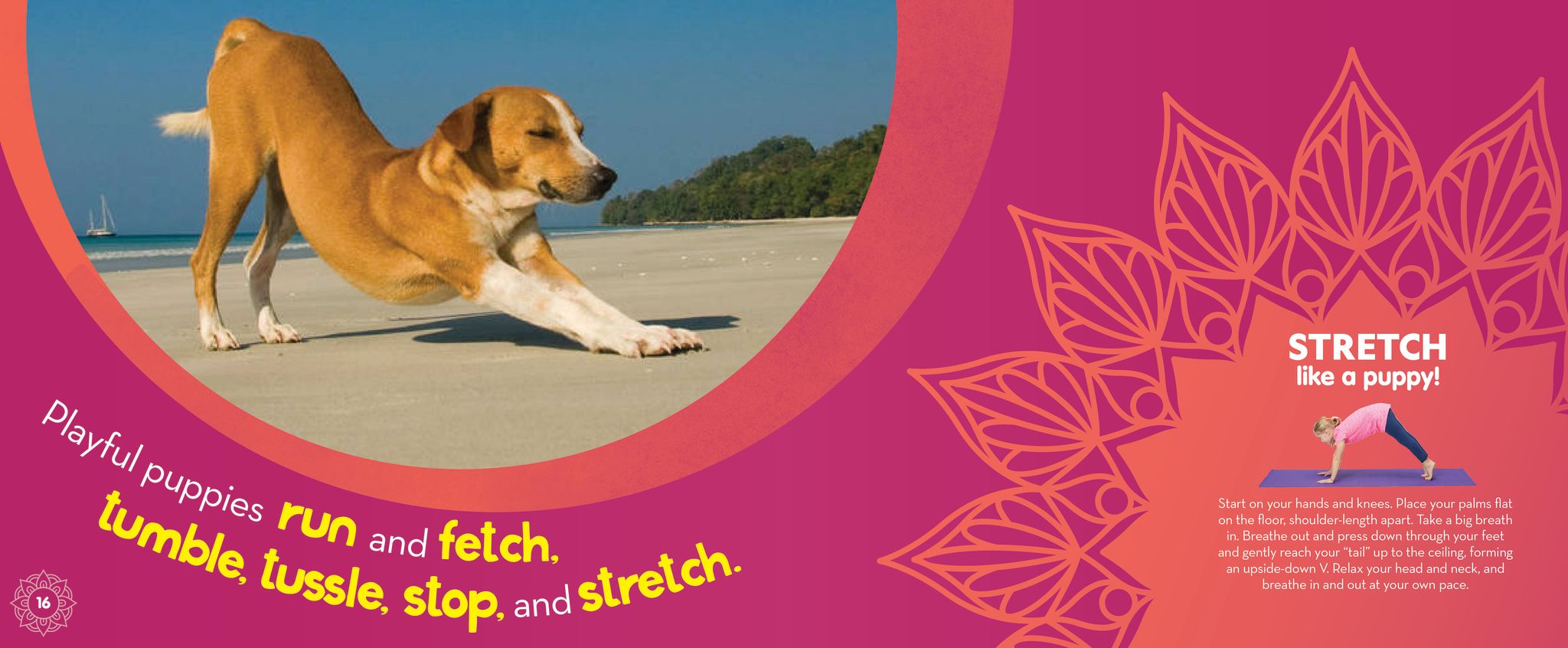
The book structure is also fun. The majority includes the animal photos with a connection to the yoga pose then a photo of the pose with instructions. In the back it goes more in depth about the pose and the animal taking the information to a whole other level.

Teachers’ Tools for Navigation: As the push for a healthy mindset has become more front and center recently as we realize that the current educational system is adding extra stress on kids, this book is a perfect addition to a classroom to have brain breaks. During the brain breaks, a new yoga pose can be introduced and the animal can be talked about as well. Then past yoga poses can be practiced as well.

Discussion Questions: 

  • What other animals have yoga poses?
  • How is the ____ pose like a ____ animal?
  • How does yoga help you physically and mentally?
  • Come up with your own stretch that resembles an animal.

Flagged Passages: 

Also, go to https://kids.nationalgeographic.com/explore/books/yoga-animals/ to see videos of Tara Stiles sharing poses from the book.

Read This If You Love: Yoga, Animals, Brain Breaks

Recommended For: 

classroomlibrarybuttonsmall

Signature

**Thank you to Karen at Media Masters Publicity for providing a copy for review!!**
The Refuge by Sandra Le Guen, Illustrated by Stéphane Nicolet

Share

The Refuge
Author: Sandra Le Guen
Translator: Daniel Hahn
Illustrator:  Stéphane Nicolet
Published June 1, 2020 by Amazon Crossing Kids

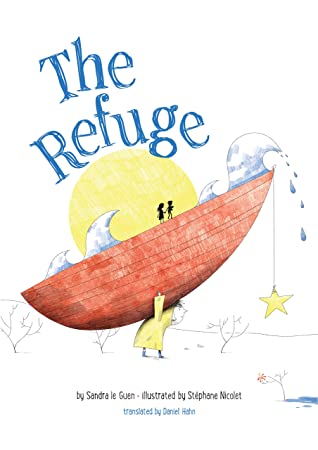
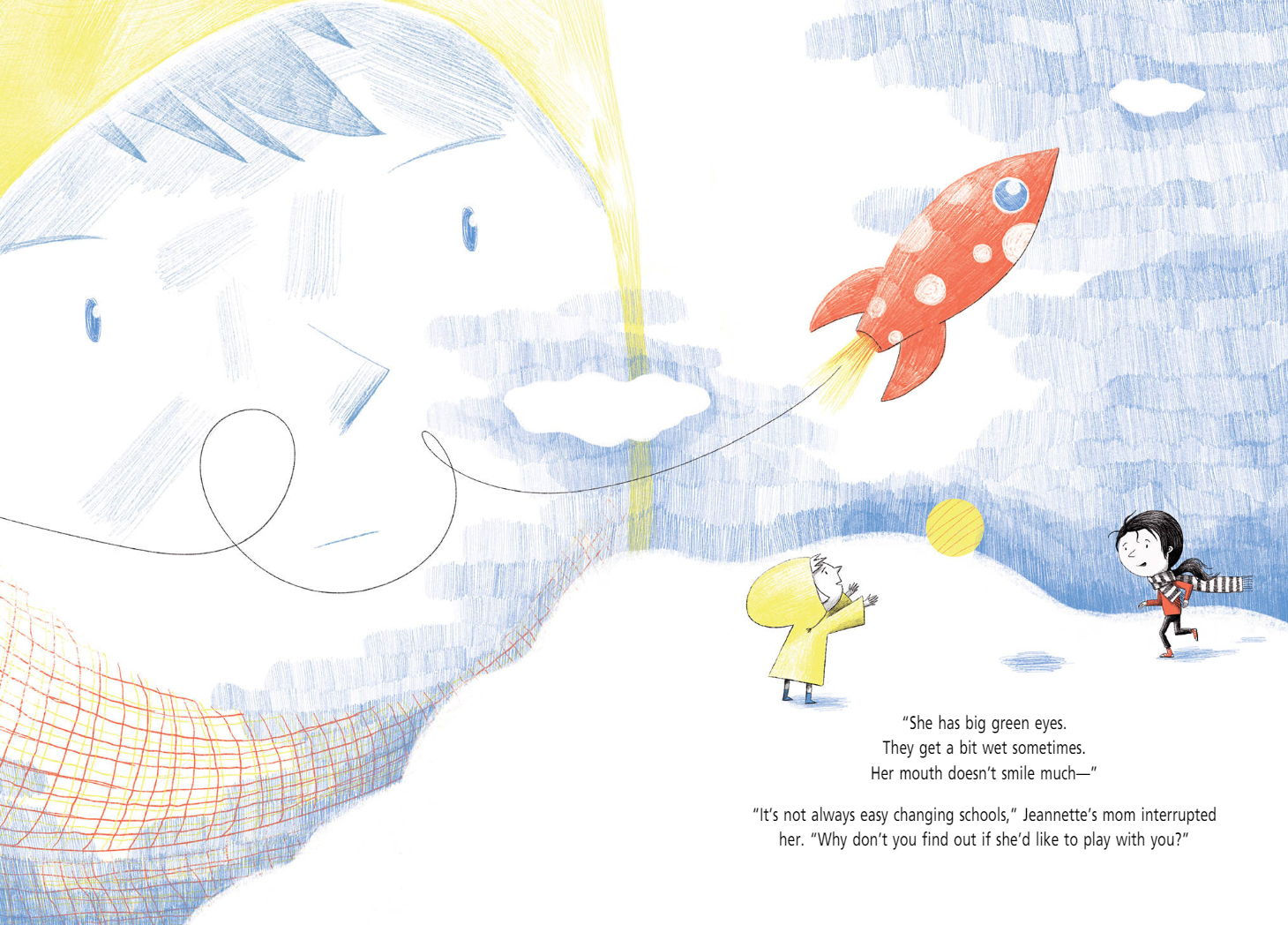
Summary: “There’s a new girl at school. She never stops looking up at the sky! She likes the stars and comets.”

Jeannette tells her mom about her new classmate, who also loves astronomy but seems sad. She realizes it’s not easy to move to a new place. So the next day, at recess, Jeannette asks Iliana to play.

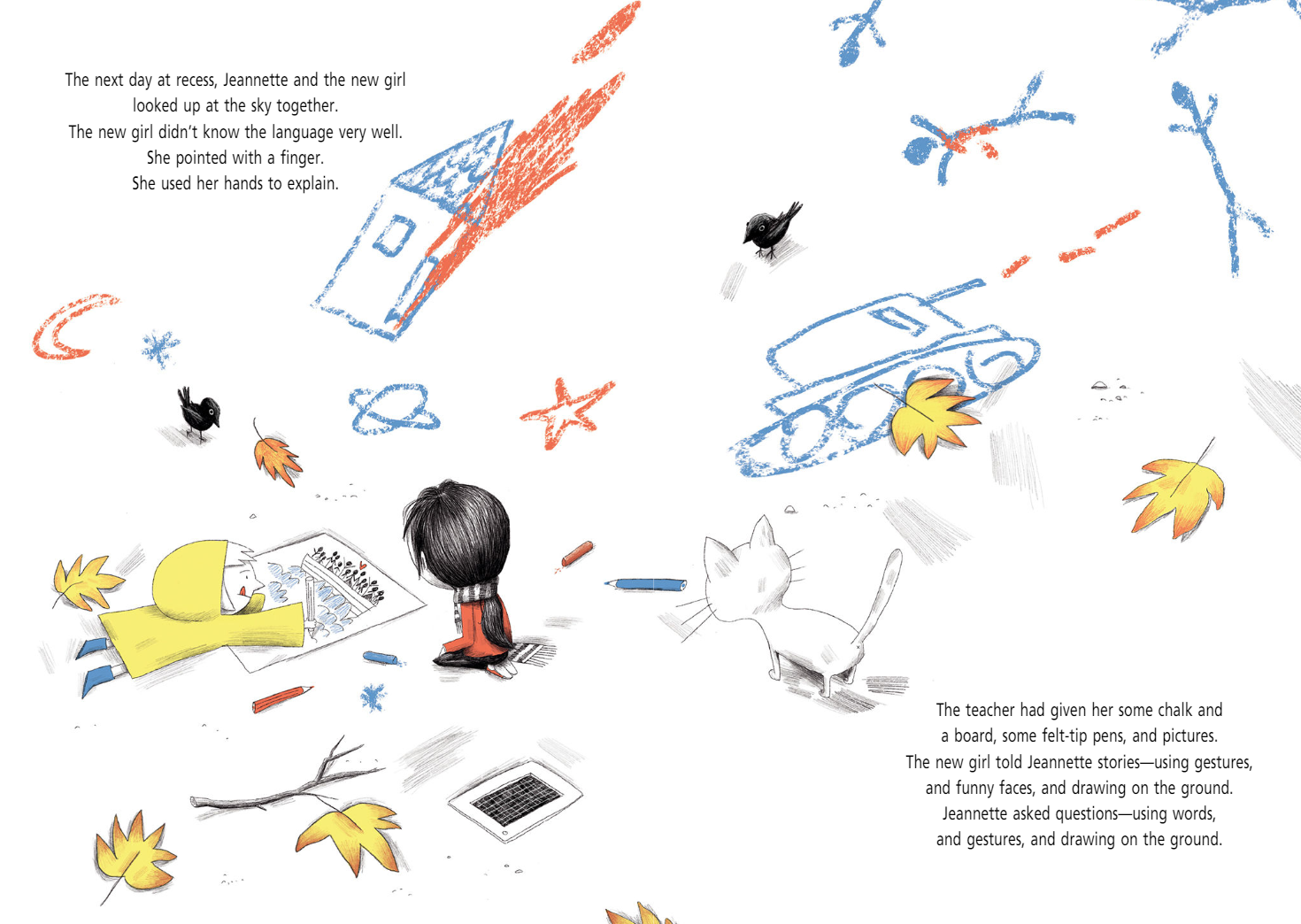
At first, it’s a little hard to communicate because Iliana is learning a new language. The girls have to use their hands and their drawings. But they keep trying, and, soon, Iliana tells Jeannette about her difficult journey as a refugee who had to leave her country. Then their families meet, and Iliana’s parents share their story too. The girls’ friendship blooms, as limitless as the sky and their imaginations.

Originally published in France and brought to life with wonderfully expressive artwork, this is a book about sharing stories and finding refuge in friendship, family, and a new home.

Kellee’s Review: This book is beautiful. It shows pure empathy for a young girl, and her family, who needs all love in the scary new situation she is in. Their journey was harrowing and being in a new place where they do not speak the language must be completely overwhelming; however, this was something they felt no choice in doing because of the horrors of war back at their home. But sadly, refugees have been villainized–once again fear winning over empathy. However, The Refuge puts a narrative to the journey that many children and families face just to stay safe. And it is such a well-crafted narrative with beautiful illustrations–just an overall excellent book. A must read for ALL ages. 

Ricki’s Review: Magnificent. This book is truly and utterly magnificent. I am quite hopeful it will win some of the major literary awards. Whew! The writing depicts the myriad emotions that Iliana might have experienced on her journey, and Jeannette has such deep empathy for her classmate. The illustrations take the book to the next level. I would purchase a spread of this book and frame it for the wall in my office—the illustrations are that captivating. We share some of the illustrations below. There’s one illustration in which Iliana is carrying a giant boat on her back, and a star hangs from a string on the front. Two small children walk up the top of the steep boat. The words match the illustrations, and yet the illustrations have deeper, metaphoric meaning. This would be a terrific book to study at the high school and college level. It would sustain several classes of discussion. I plan to purchase a copy to use in my Teaching Reading class. If you haven’t read this book, I recommend it highly.

Teachers’ Tools for Navigation: Metaphor is powerfully used in this text (both in the writing and illustrations). This would be a magnificent text to use as a mentor text for the instruction of metaphor. Students might select a written metaphor to illustrate and an illustrated metaphor to write in words to consider the flexibility and power of the use of metaphor. Then, they might craft their own metaphors related to the story.

Discussion Questions: 

  • Choose one illustration that you like. What is the surface level meaning? What is the deeper meaning attached to the image?
  • How does Jeannette demonstrate empathy for Iliana?
  • What did you learn about refugees?
  • Why do you believe the author titled the book The Refuge instead of Refugee?
  • How do the illustrations and writing work together?
  • What creative techniques does the author use?
  • What creative techniques does the illustrator use?

Flagged Passages: 

Read This If You Love: The Arrival by Shaun Tan, Refugee by Alan Gratz, Dreamers by Yuyi Morales, The Name Jar by Yangsook Choi, Each Kindness by Jacqueline Woodson

Recommended For: 

classroomlibrarybuttonsmall 

Signatureand

**Thank you, Barbara at Blue Slip Media, for providing copies for review!**

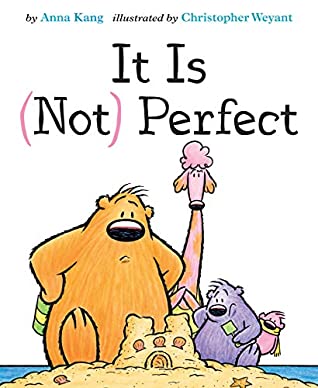
It Is (Not) Perfect by Anna Kang, Illustrated by Christopher Weyant

Share

It Is (Not) Perfect
Author: Anna Kang
Illustrator: Christopher Weyant
Expected publication: May 12th, 2020

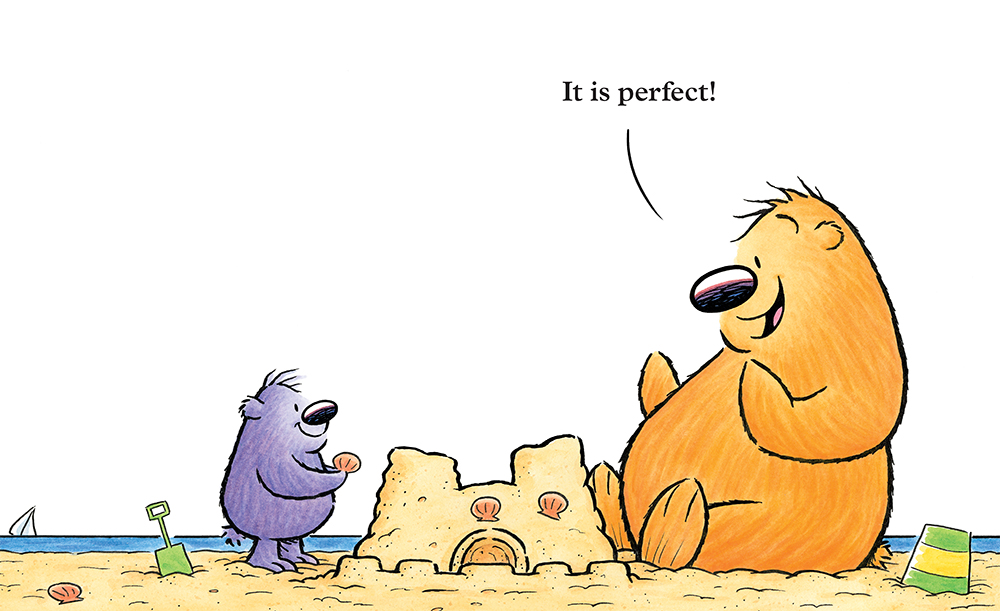
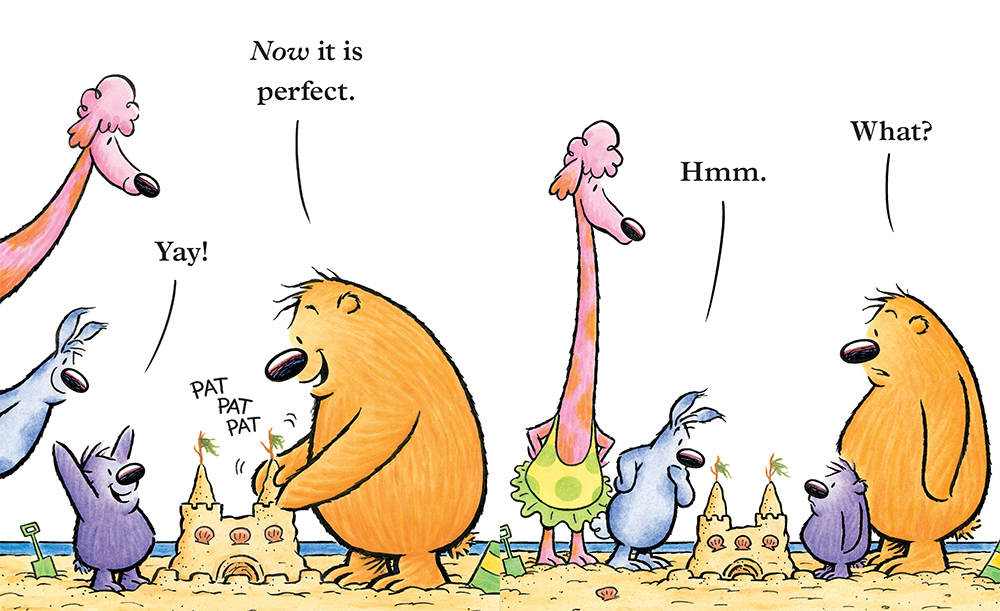
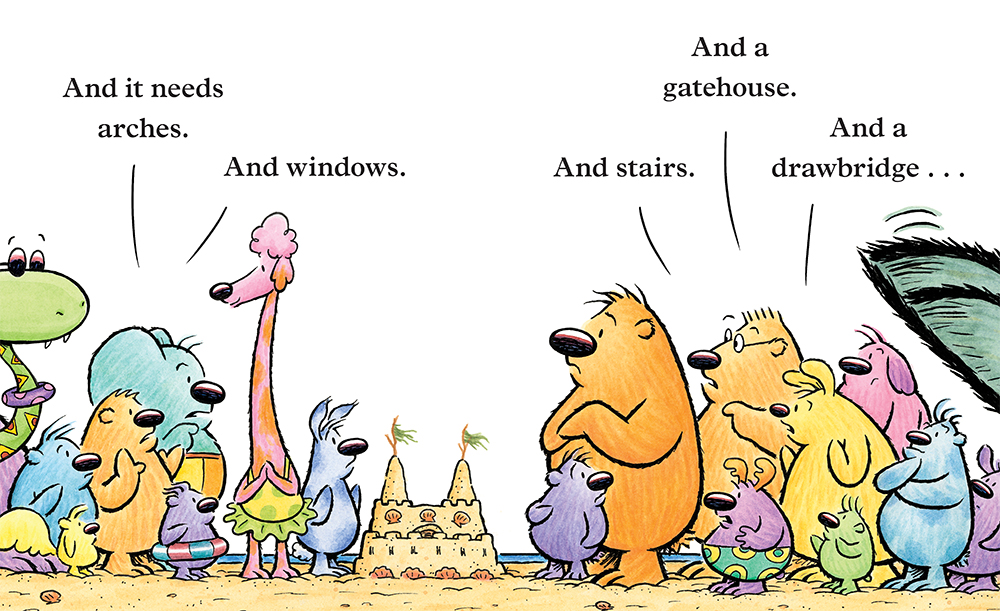
Summary: Two fuzzy creatures are happily putting the finishing touches on their sandcastle when each of them thinks of something that would make it even better. As they work furiously to incorporate each new change, their tiny sandcastle becomes an over-the-top palace…but is it really perfect?

This latest book in the beloved series featuring the pals from Theodor Seuss Geisel Award winner You Are (Not) Small reminds us that perfection is in the eye—and heart—of the beholder.

Praise:

“Colorful cartoon illustrations add a lightheartedness to what could be a stressful real-life situation for kids. Another life lesson neatly packaged in child centric humor.” —Kirkus Reviews

“This award-winning duo have created a lovely tribute to the old adage that perfect is the enemy of good. Recommended for purchase for all collections.” —School Library Journal

About the Creators: Anna Kang and Christopher Weyant are the creators of Theodor Seuss Geisel Award winner You Are (Not) Small as well as series titles That’s (Not) Mine, I Am (Not) Scared, and We Are (Not) Friends. They also wrote and illustrated Eraser, Can I Tell You a Secret?, and Will You Help Me Fall Asleep? Christopher’s work can also be seen in The New Yorker, and his cartoons are syndicated worldwide. This husband-and-wife team lives in New Jersey with their two daughters and their rescue dog. Visit them at www.annakang.com and www.christopherweyant.com.

Twitter: @annakang27 @chrisweyant05
Instagram: annakangbookschristopherweyant
Facebook: Anna Kang – Author; Christopher Weyant

Review: This series is one of my favorites. Although the simplicity of the texts makes the books seem straightforward, they are actually multi-tiered and can be used for so many different ages to discuss illustrations as part of the narrative, moral issues, friendship, perspective, and much more. All while following the stories for two super cute monster friends!

Discussion Questions: 

  • What ended up actually being perfect?
  • What did trying to please all cause?
  • Who gets to decide what is perfect?
  • Does everything you do need to be perfect?
  • How did trying to make it perfect ruin the fun?

Flagged Passages: 

Read This If You Love: Not series by Kang and Weyant including You Are (Not) SmallThat’s (Not) MineI Am (Not) Scared, and We Are (Not) Friends; How to Code a Sandcastle by Josh Funk, Dexter series by Lindsay Ward including Don’t Forget Dexter and It’s Show and Tell, Dexter

Recommended For: 

classroomlibrarybuttonsmall

Giveaway!:

a Rafflecopter giveaway

Signature

**Thank you to Blue Slip Media for providing a copy for review and giveaway!**

The Princess in Black and the Case of the Coronavirus by Shannon Hale & Dean Hale, Illustrated by LeUyen Pham

Share

The Princess in Black and the Case of the Coronavirus
Authors: Shannon Hale & Dean Hale
Illustrator: LeUyen Pham

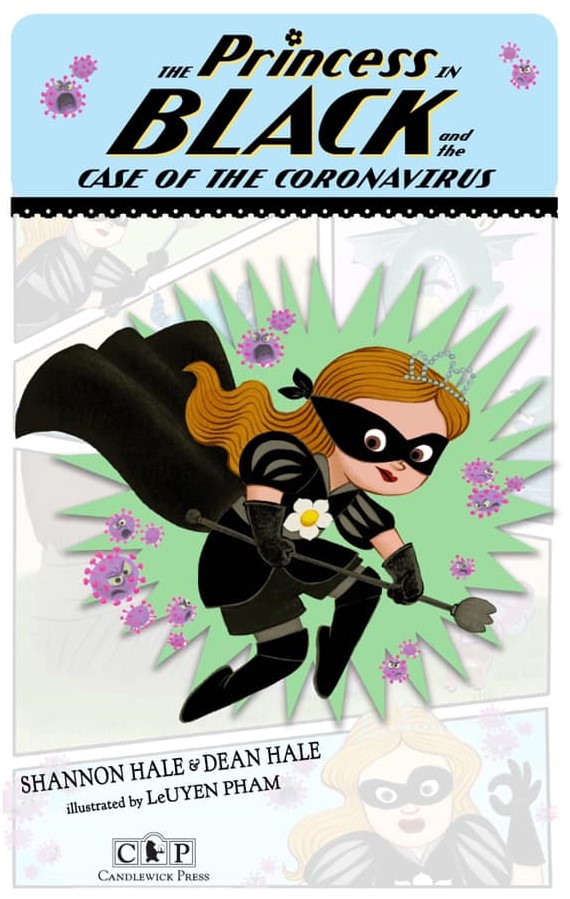
Summary: The creators of the New York Times-bestselling series The Princess in Black – Shannon Hale, Dean Hale, and LeUyen Pham – have created an incredibly child-friendly coronavirus public service announcement, called The Princess in Black and the Case of the Coronavirus.

From Shannon Hale: LeUyen, Dean and I are all parents self-isolating at home with our children. The anxiety and distancing is hard enough on our older kids, but we know that younger kids might be having an even harder time. We hoped that it’d help if a familiar book friend like the Princess in Black talked them through it. Even the Princess in Black is staying home! Even Princess Sneezewort had to cancel playdates! LeUyen had the idea of creating a short comic to download and share widely so caregivers could have an extra tool for talking to kids. Our goal is both to help kids understand what’s going on and to help them feel less alone.

Available for all at: https://www.princessinblack.com/download/pib-coronavirus.pdf

Thoughts: This pandemic is a time that is very confusing for kids, and I am so excited that this story exists for my son and other kids!

Signature

**Thank you to Candlewick Press for sharing this story with us!**

Author Guest Post: “A Man of My Word: How Wondrous Words and Wordplay Make Children’s Books Shine” by Artie Bennett, Author of The True Story of Zippy Chippy: The Little Horse That Couldn’t

Share

“A Man of My Word: How Wondrous Words and Wordplay Make Children’s Books Shine”

With the world turned topsy-turvy, the healing and comforting power of humor will help see us through. I hope that this guest post will provide a small measure of mirth and merriment, true tonic for these times.

As a lad, I developed a fascination with words—the bigger, the better. I began to collect them—and my collection, though not tangible like my shoeboxes full of baseball cards or my plastic dinosaur figurines—was just as highly prized. By the way, there is even a big word for big words. The word is “sesquipedalian,” and it literally means “one and a half feet long.” These are big words, after all.

My first big word was “antidisestablishmentarianism.” I took a special satisfaction in being able to spell this one at so tender an age. I could even define it. It meant “the movement against the people against the church.” While I never had occasion to use this gem in a sentence, I can recall spelling it aloud for my aunts and uncles. I would swell with pride as I nailed all twenty-eight letters. Everyone thought I was a genius. A boy wonder! But I knew better.

My next big find was one that most of you probably know: “supercalifragilisticexpialidocious”—even though the sound of it is something quite atrocious. If you say it loud enough, you’ll always sound precocious. Supercalifragilisticexpialidocious. It is, of course, from Mary Poppins and it means “absolutely fantastic.” I loved saying this word. When I hit a three-sewer home run at stickball, it was supercalifragilisticexpialidocious. Yes, I loved saying this word . . . until I found out that it was made up for the show. It didn’t really exist. So that’s why I couldn’t find it in any dictionaries, try as I might! Why did the songwriters have to make up a word? Wasn’t this cheating? I mean, couldn’t they have written a song about, say, antidisestablishmentarianism? I can hear it: “Antidisestablishmentarianism—even though the sound of it renews our humanism.” Hmm.

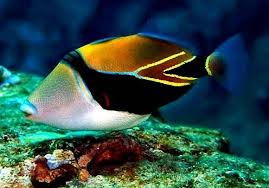
My next marvel was the improbable “humuhumunukunukuapua’a,” a name that is bigger than the critter itself. It’s a very colorful triggerfish, found along the coral reefs of Hawaii. Now, because the Hawaiian alphabet has only twelve letters, the words sometimes get a mite repetitive. But this one was truly absurd. I encountered it while watching an episode of my favorite boyhood show—The Little Rascals. Our Gang competes in a radio audition against several performers, including a crooner singing “I Want to Go Back to My Little Grass Shack,” complete with pint-size hula girls. The song featured the lyric “where the humuhumunukunukuapua’a go swimming by.” Imagine my breathless excitement when I actually found this word in an unabridged dictionary, though it took several attempts to locate it.

Then I made the acquaintance of a forty-five-letter monster, “pneumonoultramicroscopicsilicovolcanoconiosis,” a lung disease caused by the inhalation of very fine silica particles. Now that’s a mouthful—I mean, a lungful. Can you imagine a doctor diagnosing it? The patient would surely die of terror before the doctor completed the diagnosis.

My next beaut was “floccinaucinihilipilification,” which means “estimating something as worthless.” It was the longest word in the Oxford English Dictionary until “pneumonoultramicroscopicsilicovolcanoconiosis” eclipsed it in the second edition. The first recorded use of this word was in 1741 in the sentence “I loved him for nothing so much as his floccinaucinihilipilification of money.” Indeed! And this corker of a word made it into the Congressional Record in 1999, when Senator Jesse Helms proclaimed his floccinaucinihilipilification of the Comprehensive Nuclear Test-Ban Treaty.

My love affair with words deepened dramatically when I stumbled upon a complete, ten-volume set of the Oxford Universal English Dictionary on Historical Principles in the incinerator room of my grandmother’s apartment building in Brooklyn. Someone had discarded this precious trove. Imagine that! My Old World grandmother couldn’t quite understand why I refused to give her one measly volume, sharing the bounty. After all, I had ten! It was divided into A–Bro, Bro–Dec, Dec–Fit . . . and, of course, it was inseparable—and so was I, with it. How I treasured my dictionary! I took to reading it nightly, and I proudly, perhaps insufferably, flaunted the new additions to my vocabulary.

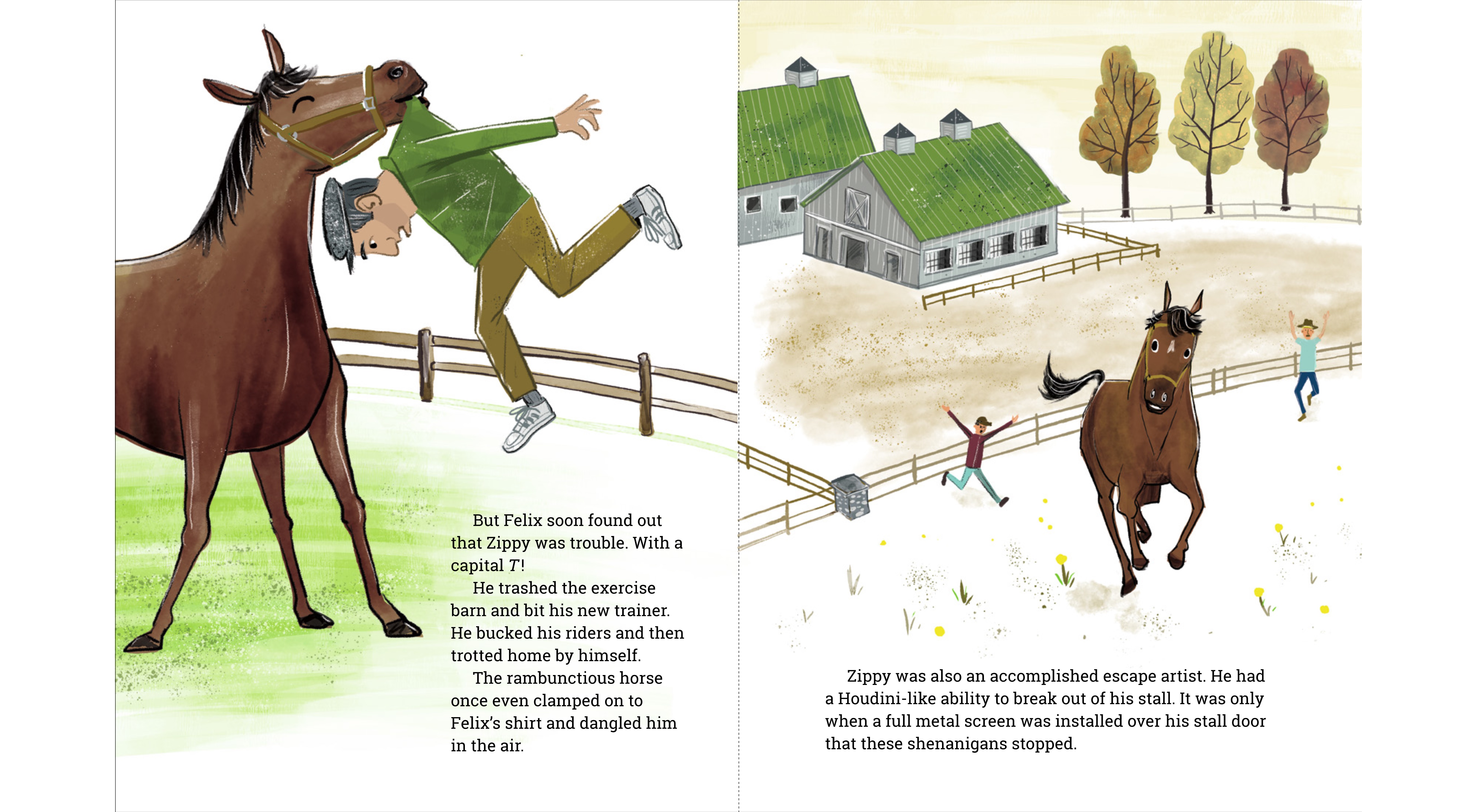
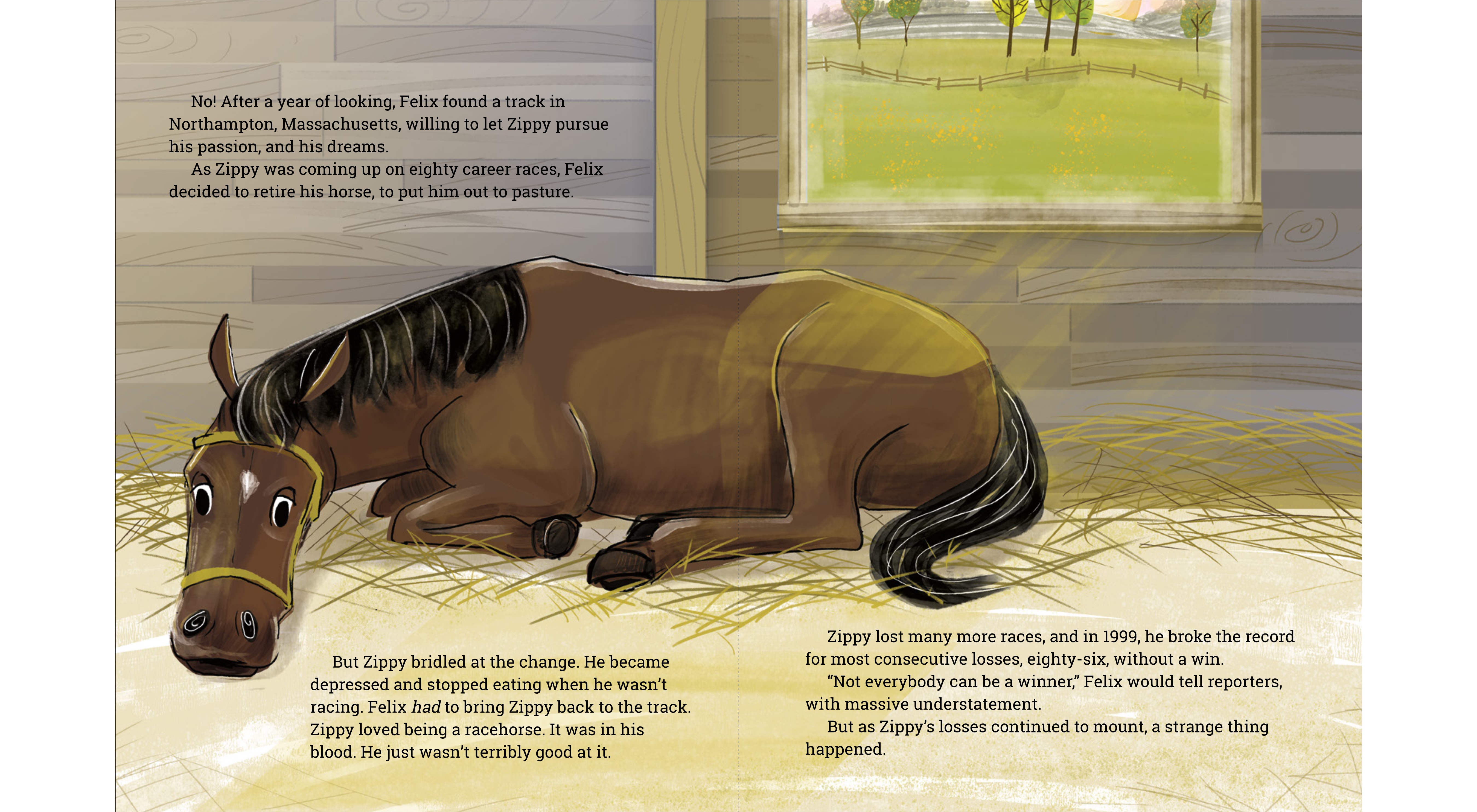
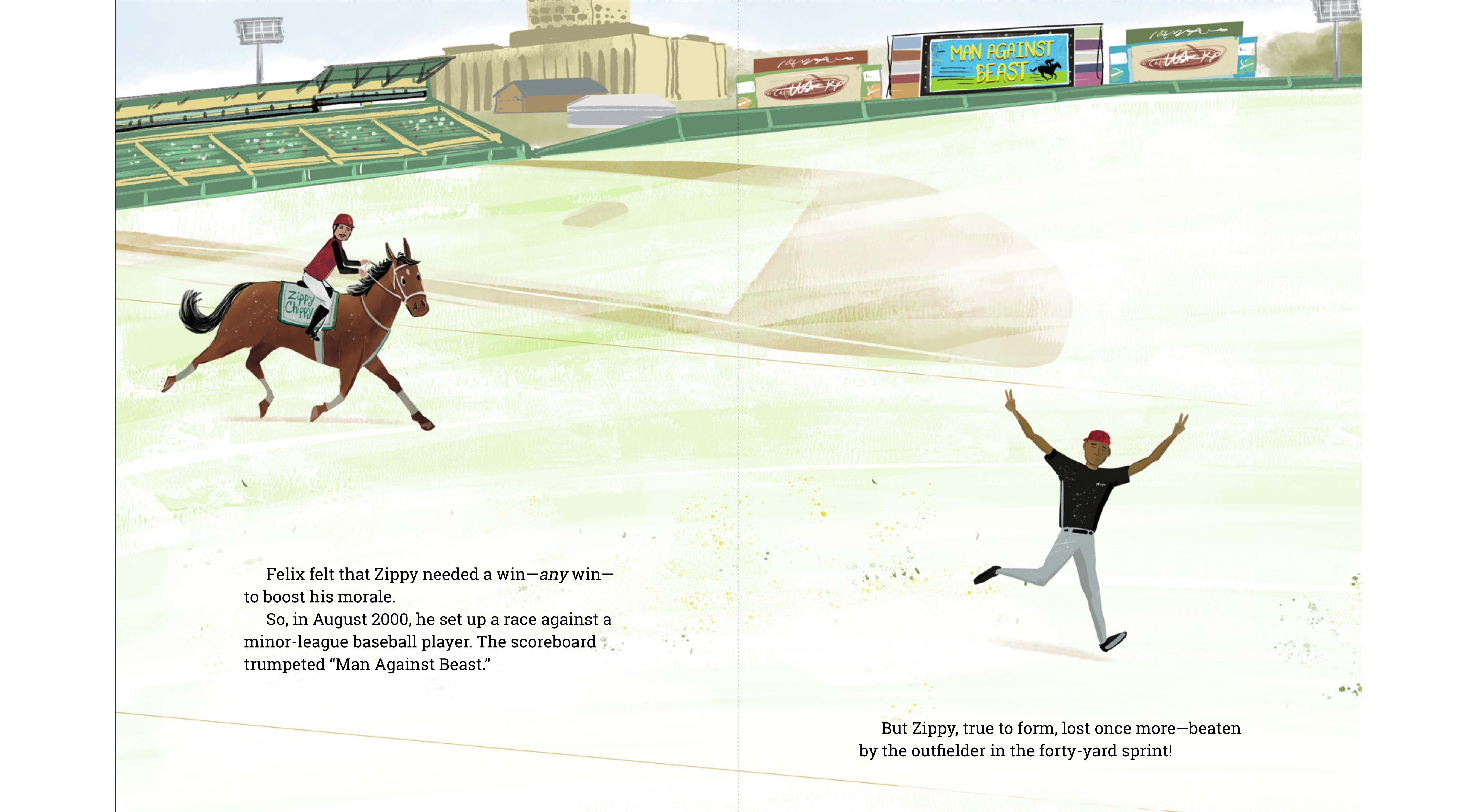
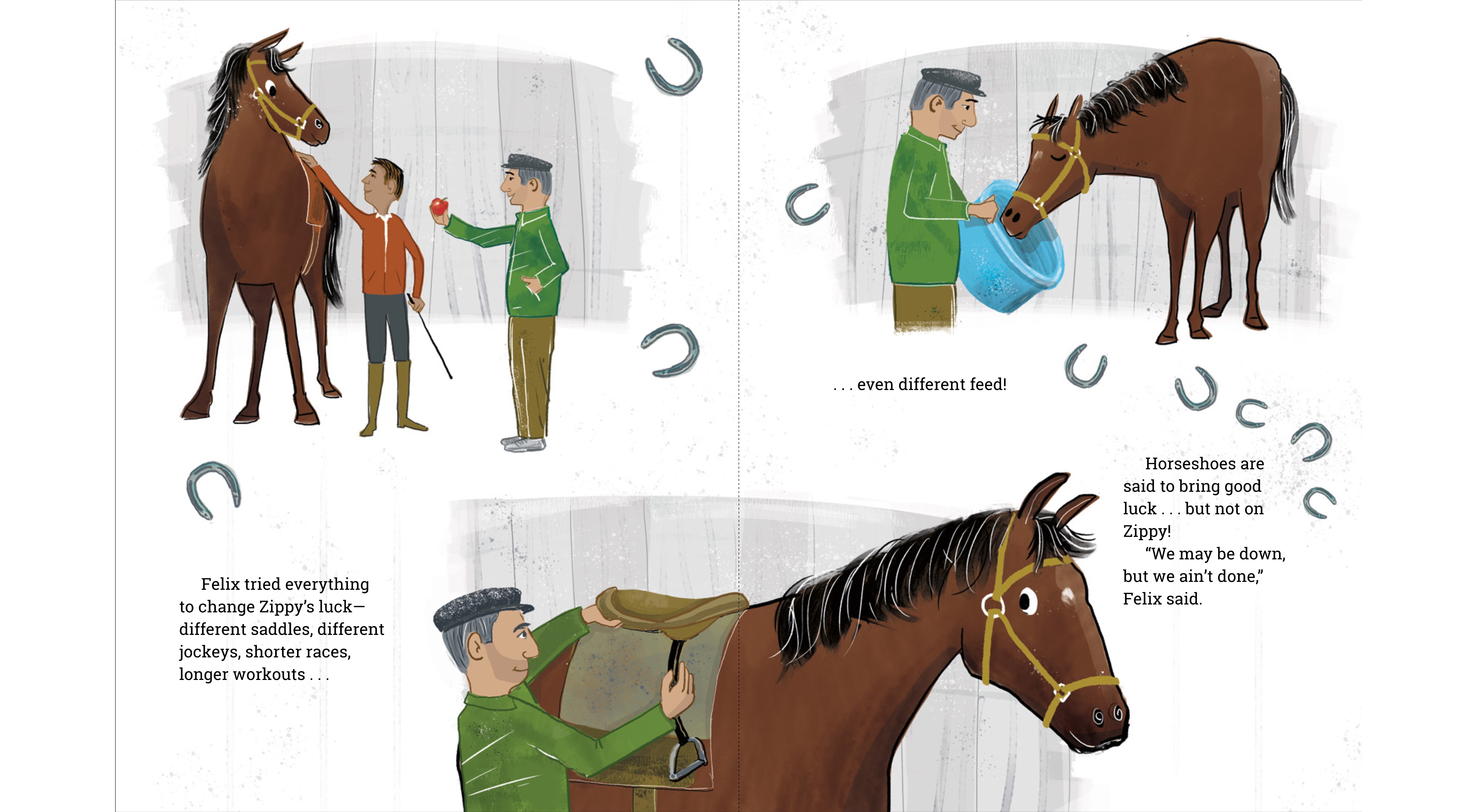
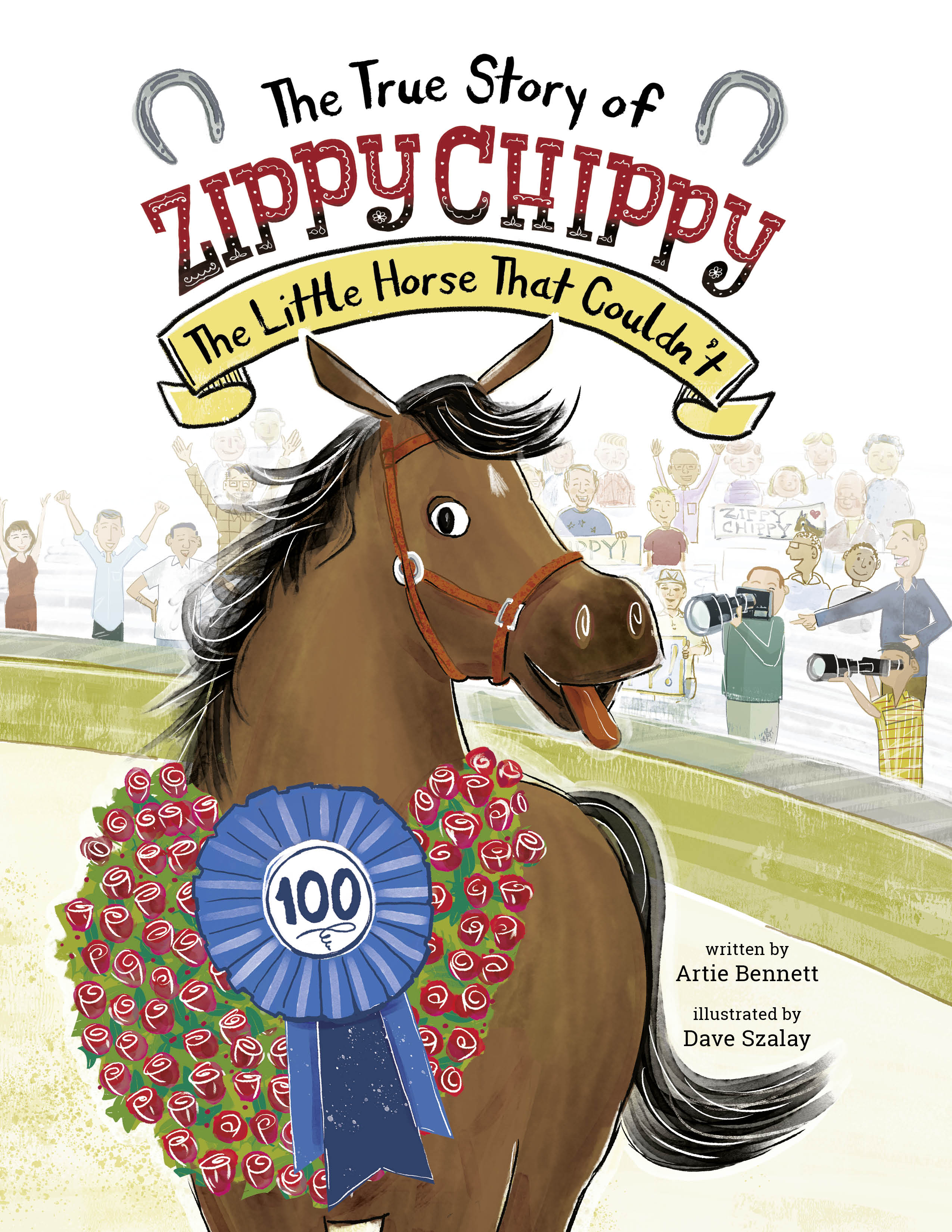
So it was only natural that I would pour my lifelong love of words and wordplay into my children’s books. I’ve made a point of introducing unfamiliar, though kid-friendly, words to young readers while also giving them a spoonful of wordplay. My brand-new children’s book, The True Story of Zippy Chippy: The Little Horse That Couldn’t, a heart-tugging, inspiring picture-book biography of a fabled racehorse, lovingly illustrated by Dave Szalay, enjoys a rich and rewarding vocabulary, with a large dollop of wordplay. Among the marvelous words you’ll find are “wafting,” “hapless,” “rambunctious,” “shenanigans,” “emblazoned,” “nuzzled,” “ballyhooed,” “heyday,” “vanquishing,” “zaniest,” and more, colorful words not often found in a picture book. These are words that are fun to say and they enrich the story of the beloved horse who ran 100 races and lost every one. And delicious, understated wordplay abounds. “Zippy bridled at the change,” “his losses continued to mount,” “to add a little horsepower,” “a running joke” are but a few examples.

Here are a few pages:

The inimitable Dr. Seuss coined scores of fantastic words, from “bar-ba-loots” to “zummers.” He, of course, gave us the term “grinch” and is credited with the first use of the word “nerd,” a creature from If I Ran the Zoo. His antic use of language makes his books so unforgettable. They resonate with parent and child alike, generation after generation. And they unleash readers.

I’m a great exponent of stretching youngsters’ vocabularies. They can puzzle out unfamiliar words within the story’s context. And if they’re flummoxed, they can always turn to a dictionary for assistance. My hope is that they will make these words their own as they develop a deep appreciation for language’s playful possibilities. The more words we know, the better we can communicate, the sharper our thinking will be, and the more equipped we’ll be for life’s challenges.

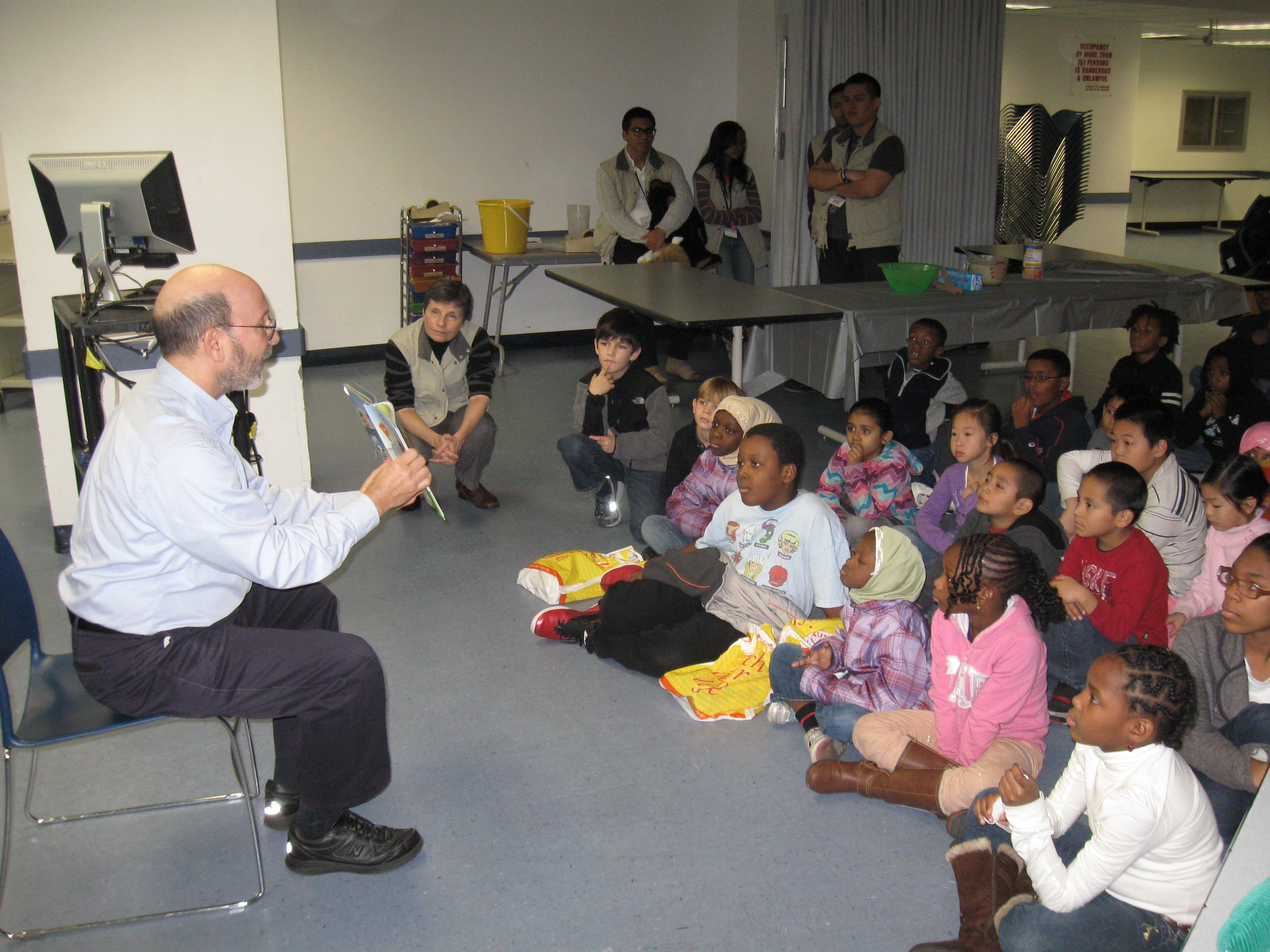
I regularly hear from educators and librarians about how my books never tarry on the shelves and how they show students how much fun a book can be. A great deal of this has to do with their exuberant use of language. Also, I’ve been blessed to have such talented illustrators with complementary senses of humor.

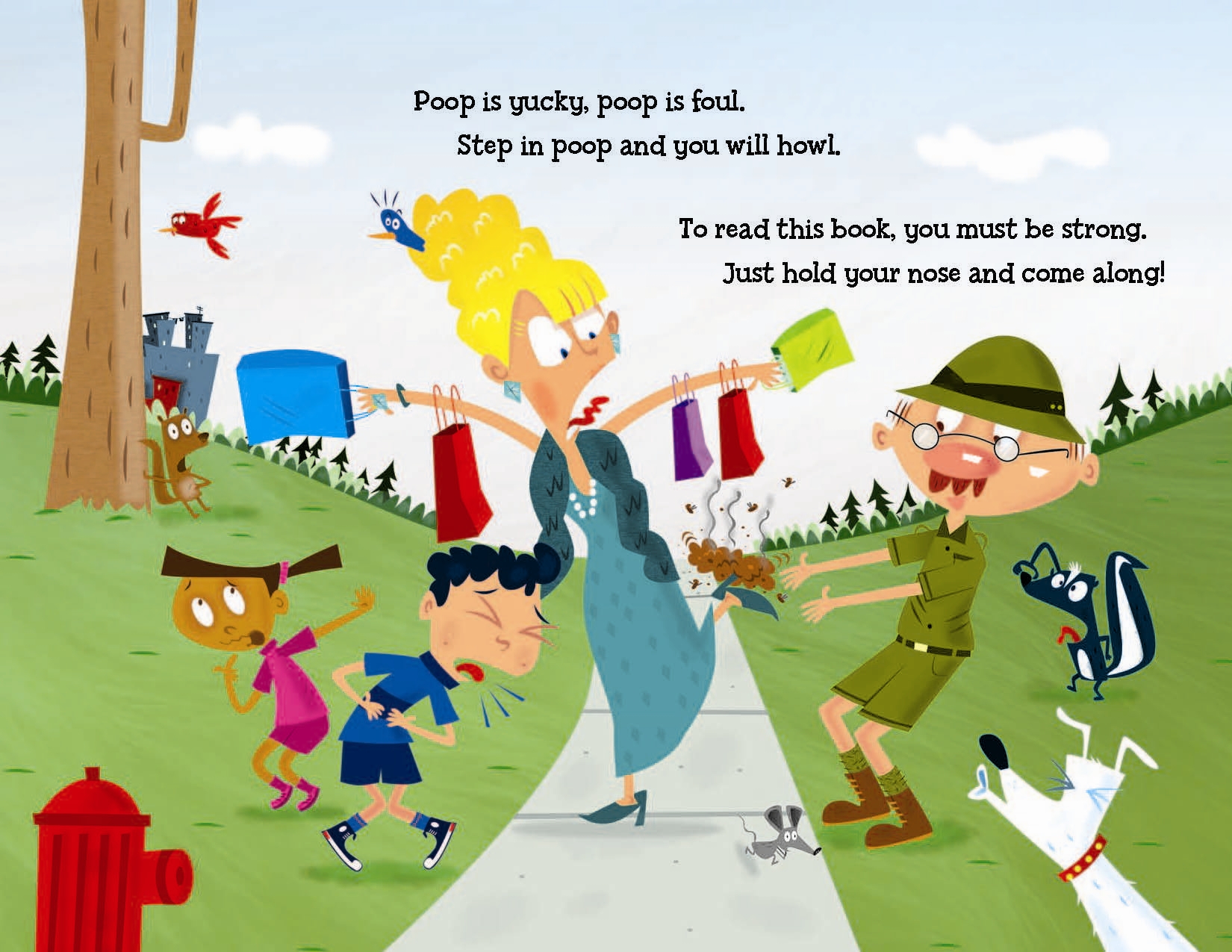
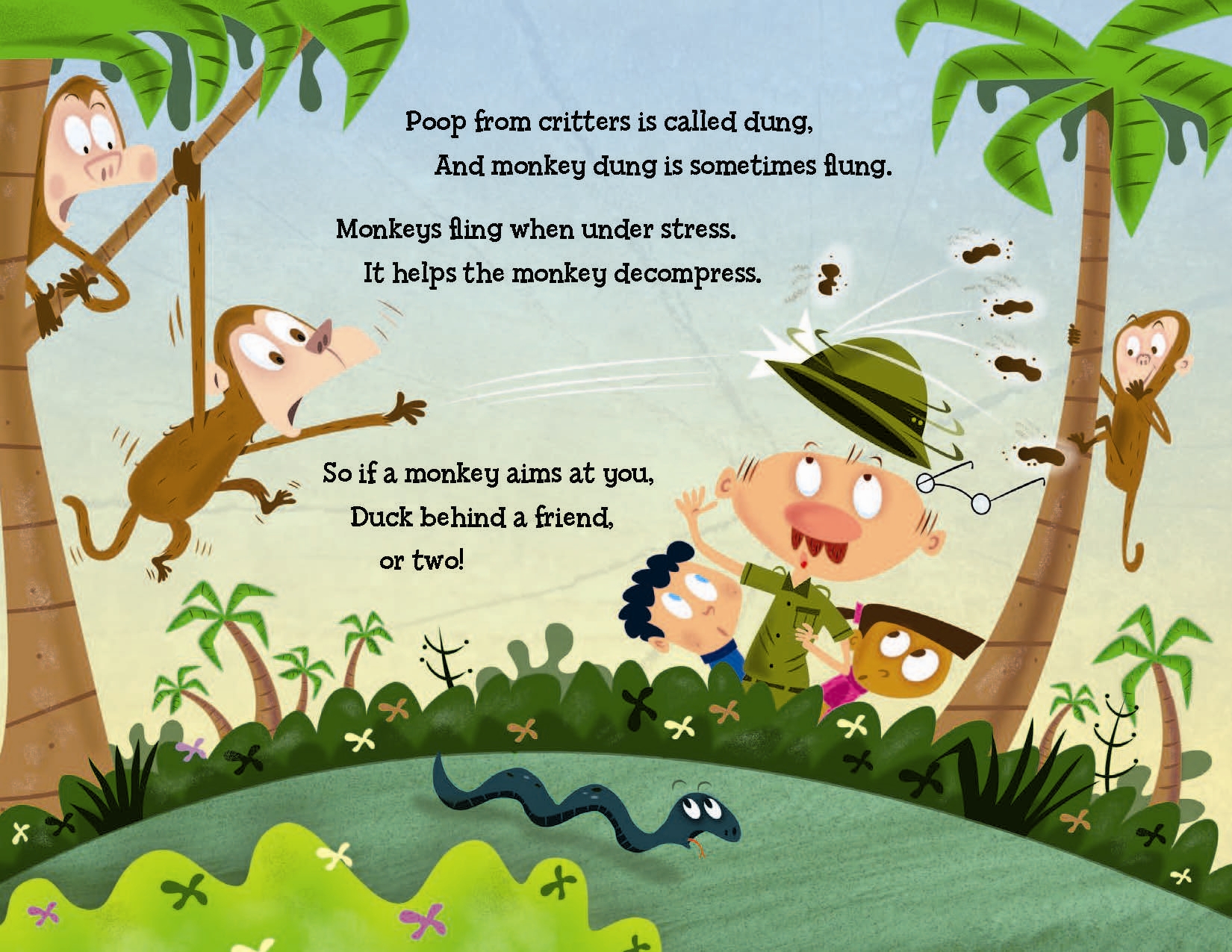
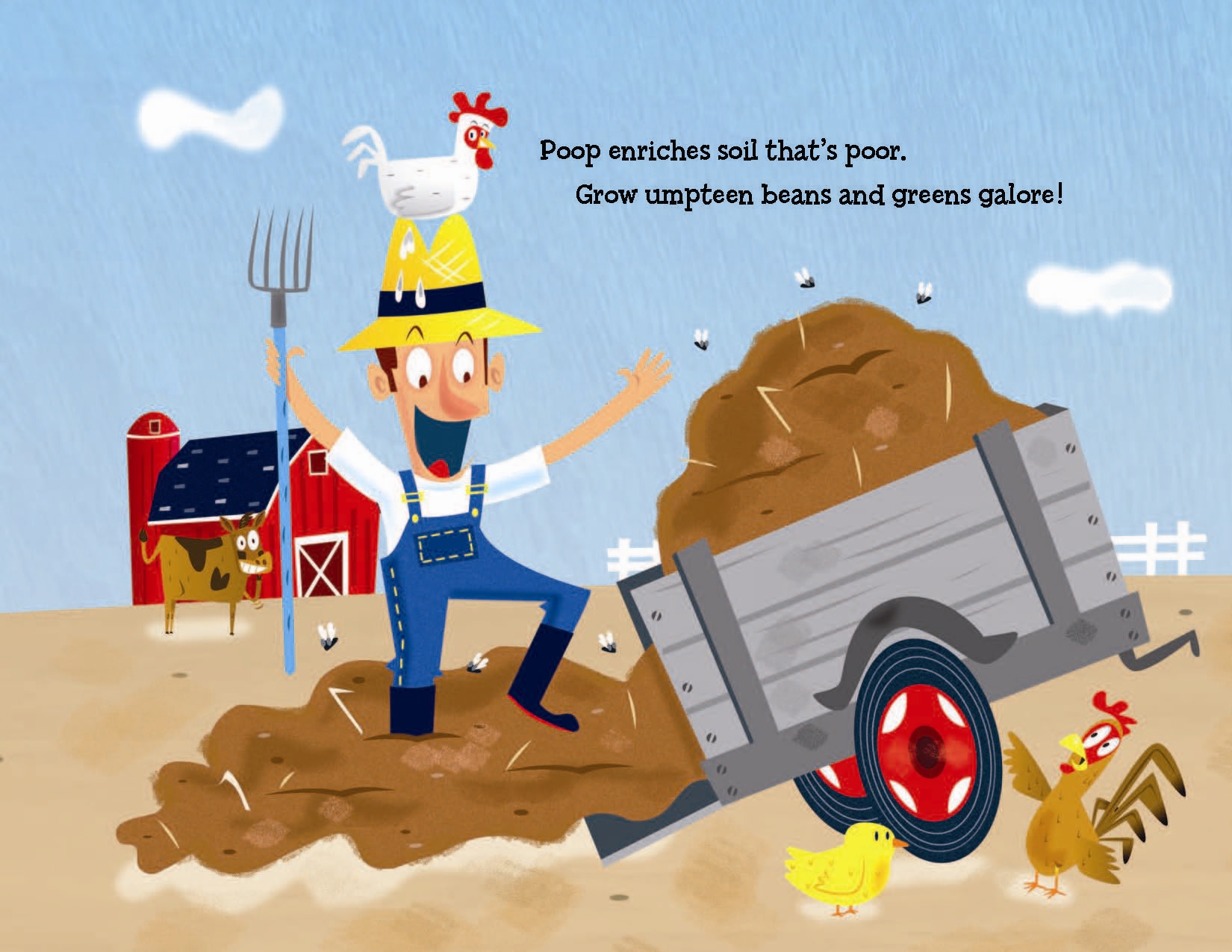
My “number two” picture book, Poopendous!, one of my five picture books in verse, has a portmanteau-word title that’s immensely fun to say. It’s a book that revels in humor and wordplay and is filled with joyful facts. I love asking students at my school appearances if the word “poopendous” can be found in the dictionary. And if not, how could I possibly use it for my title. Their responses never fail to delight me. The introductory couplet sets the stage for the inspired wackiness to come:

I’m Professor Pip Poopdeck. Welcome aboard!
We’re exploring a substance that most have ignored.
An icky-poo subject folks don’t care to visit.
Quite putrid and shocking and horrid . . . or is it?

Here are a few images from this fun book:

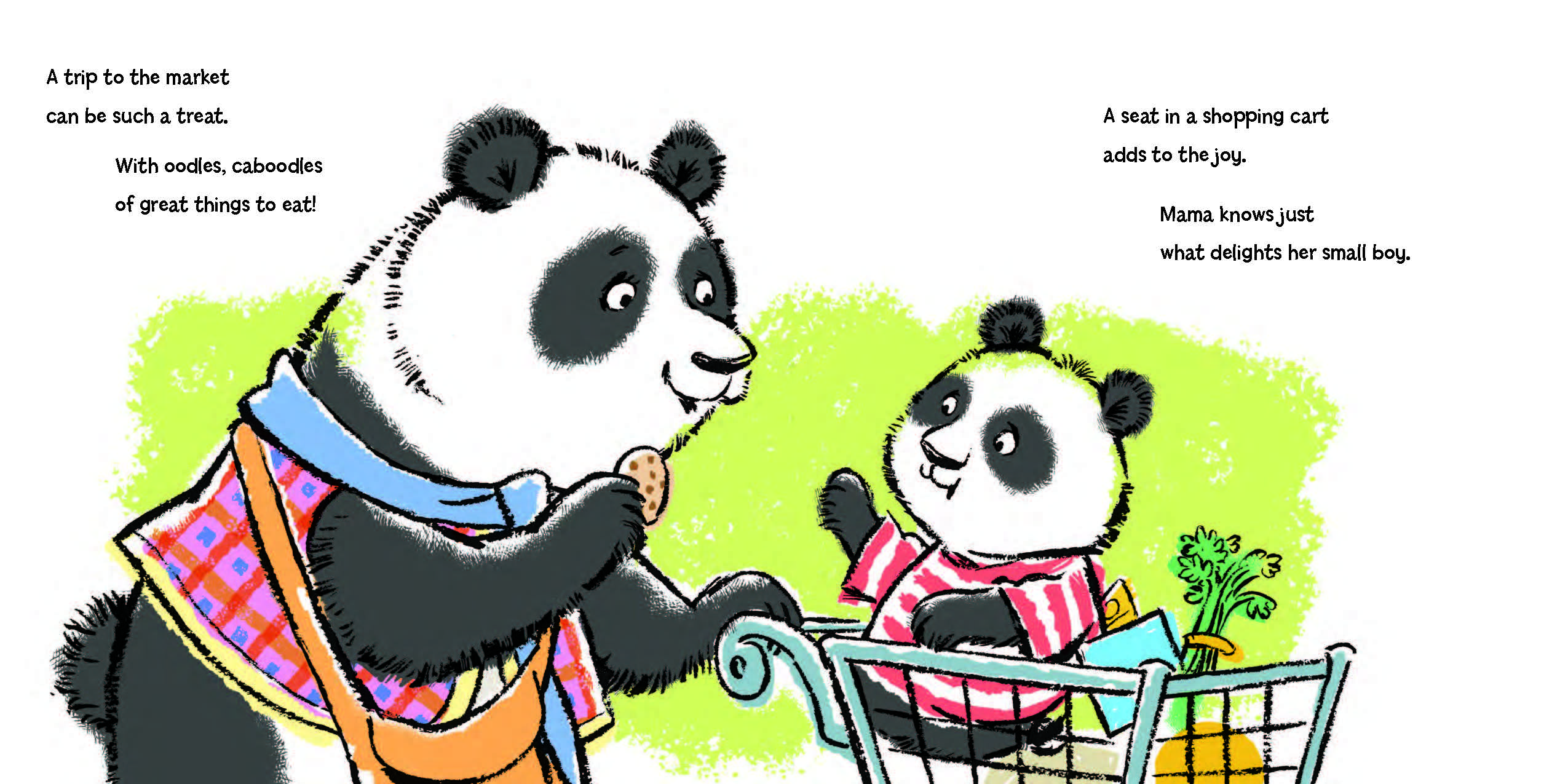
In Peter Panda Melts Down!, my first storybook, we meet a tantrum-tossing cub whose mama is struggling to avoid the mother of all meltdowns herself. I experimented with the use of a refrain, and surprise variations along the way. The refrain has an interactive element that pulls youngsters into the story. And it has some delightful, fanciful words as well. Here are a couple images:

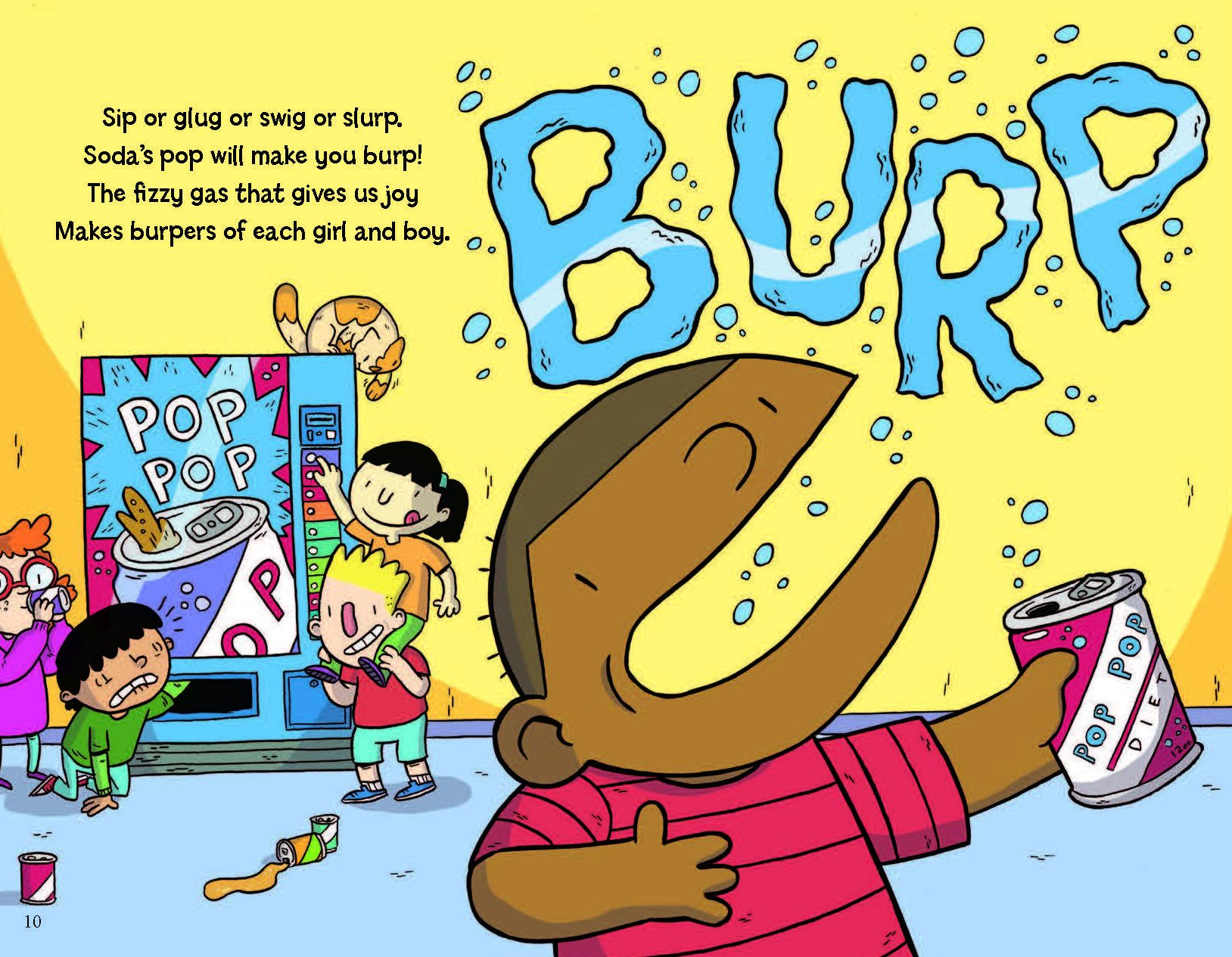
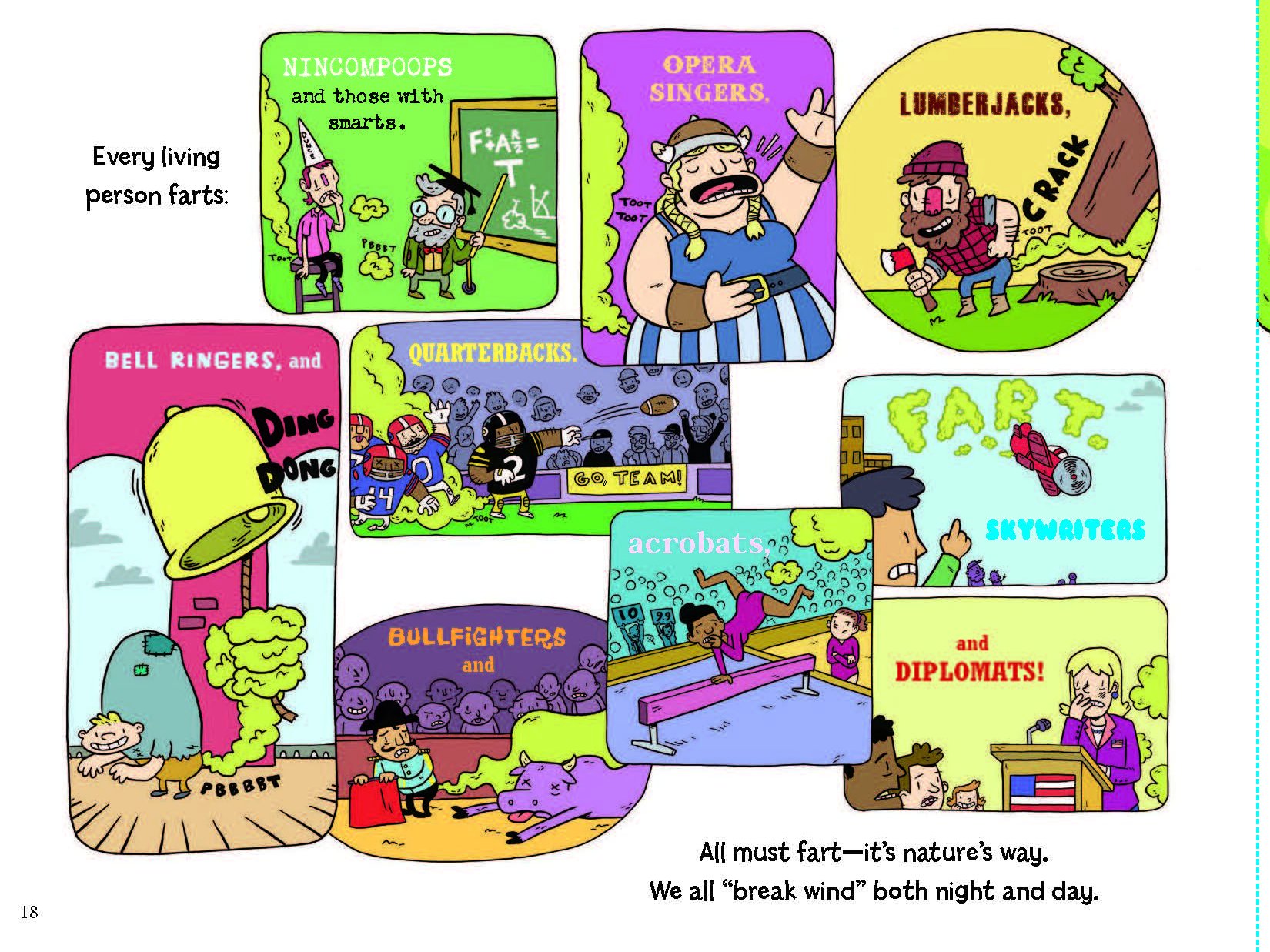
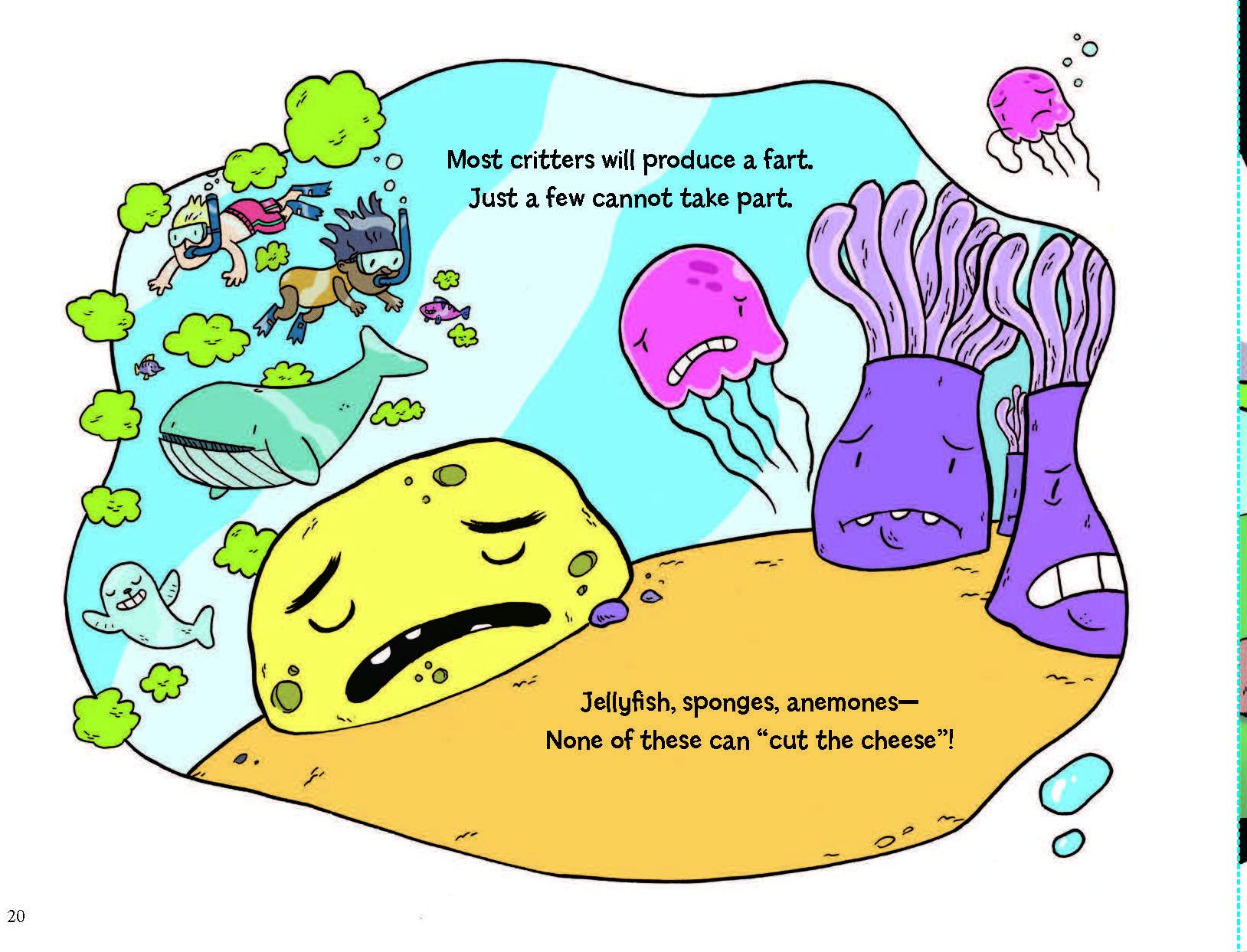
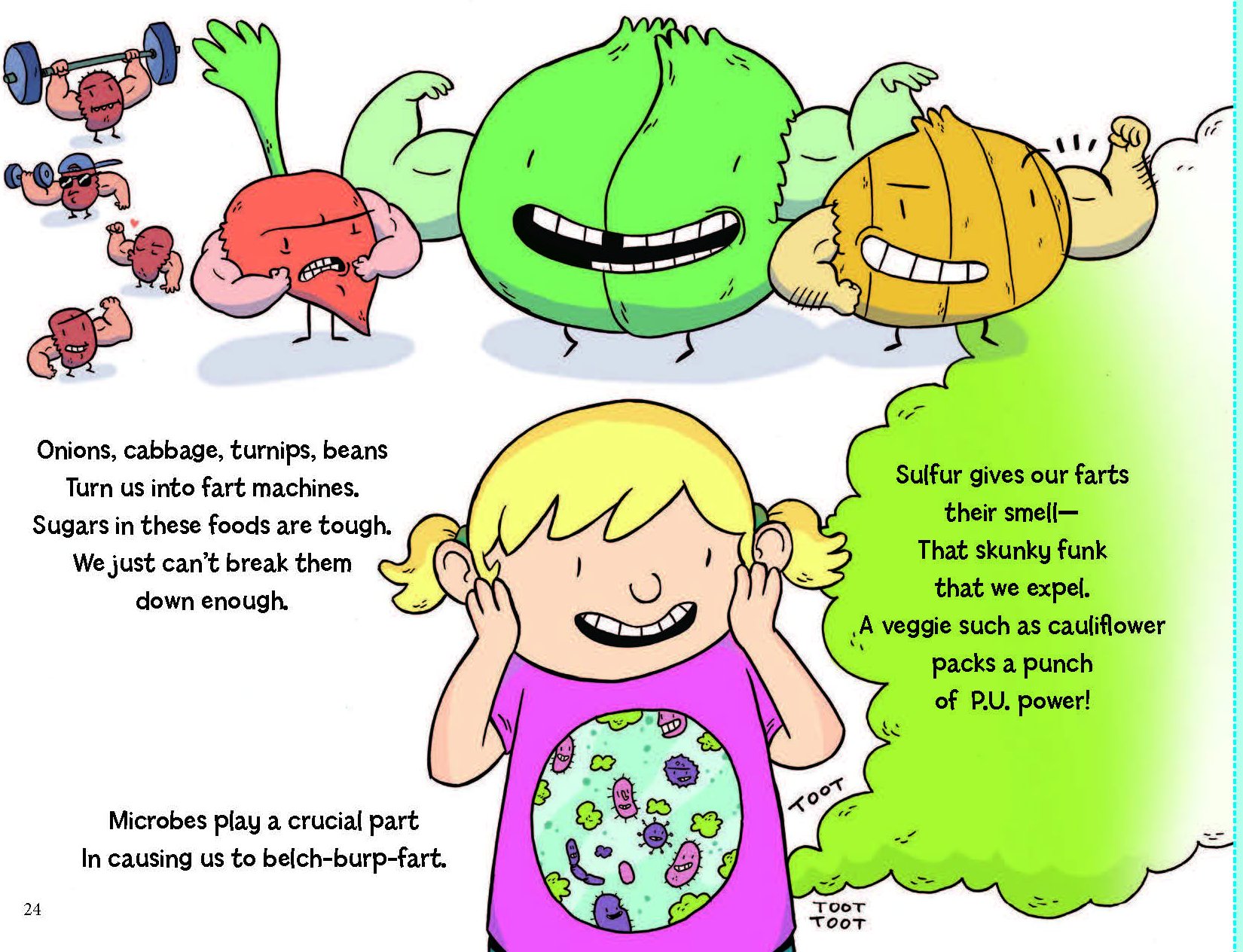
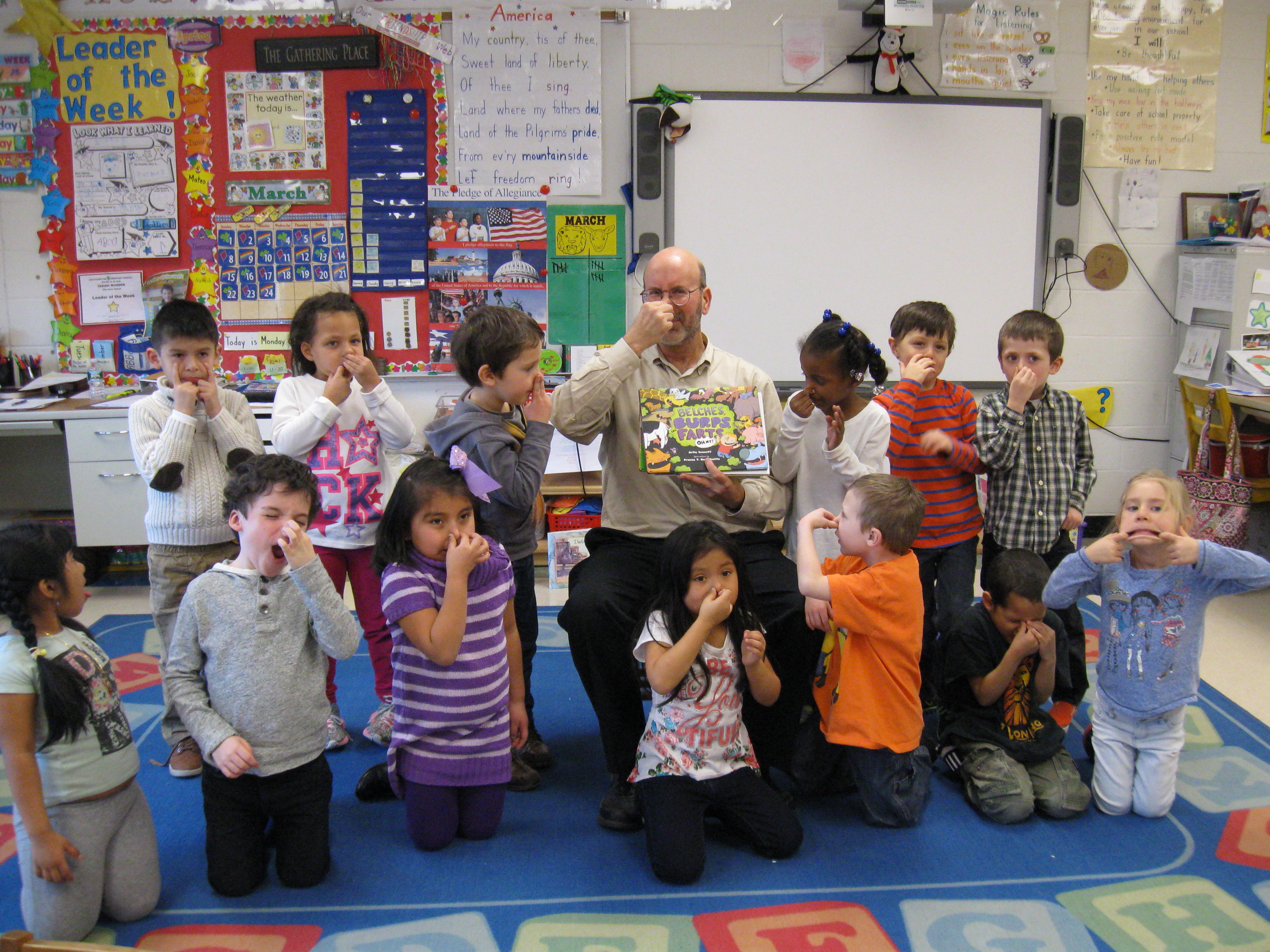
Belches, Burps, and Farts—Oh My!, whose title pays homage to a hilarious song from The Wizard of Oz, has more than its share of verbal merriment, as well as a panoply of incredible facts, all in a verse format. What sound do overly gassy cows make when they explode? Why, “cow-boom!” of course. And I was thrilled to work the word “nincompoops” into a couplet. One of my choicest nuggets can be found in this verse:

Can you belch your ABCs?
Demonstrate your ex-burp-tise!

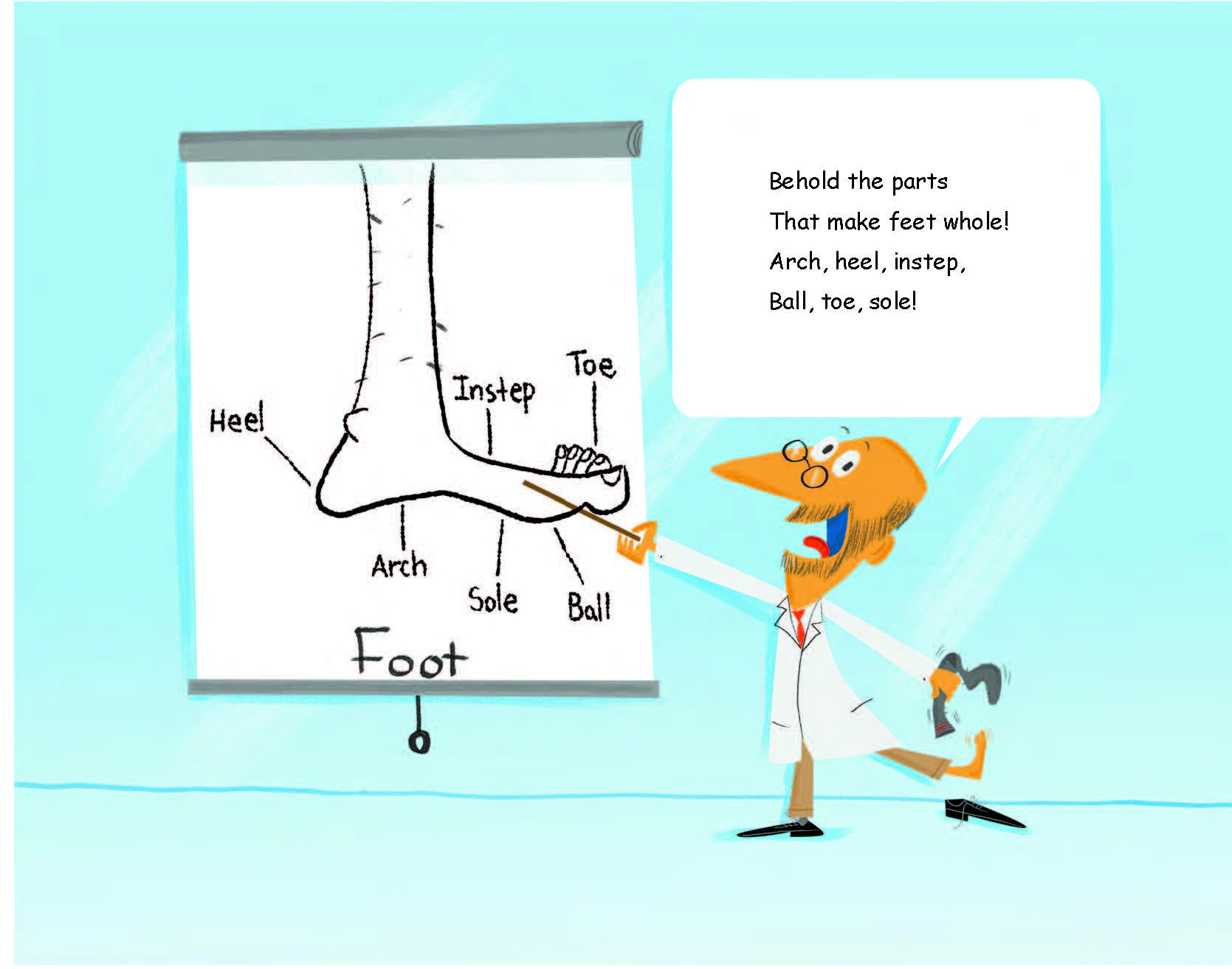
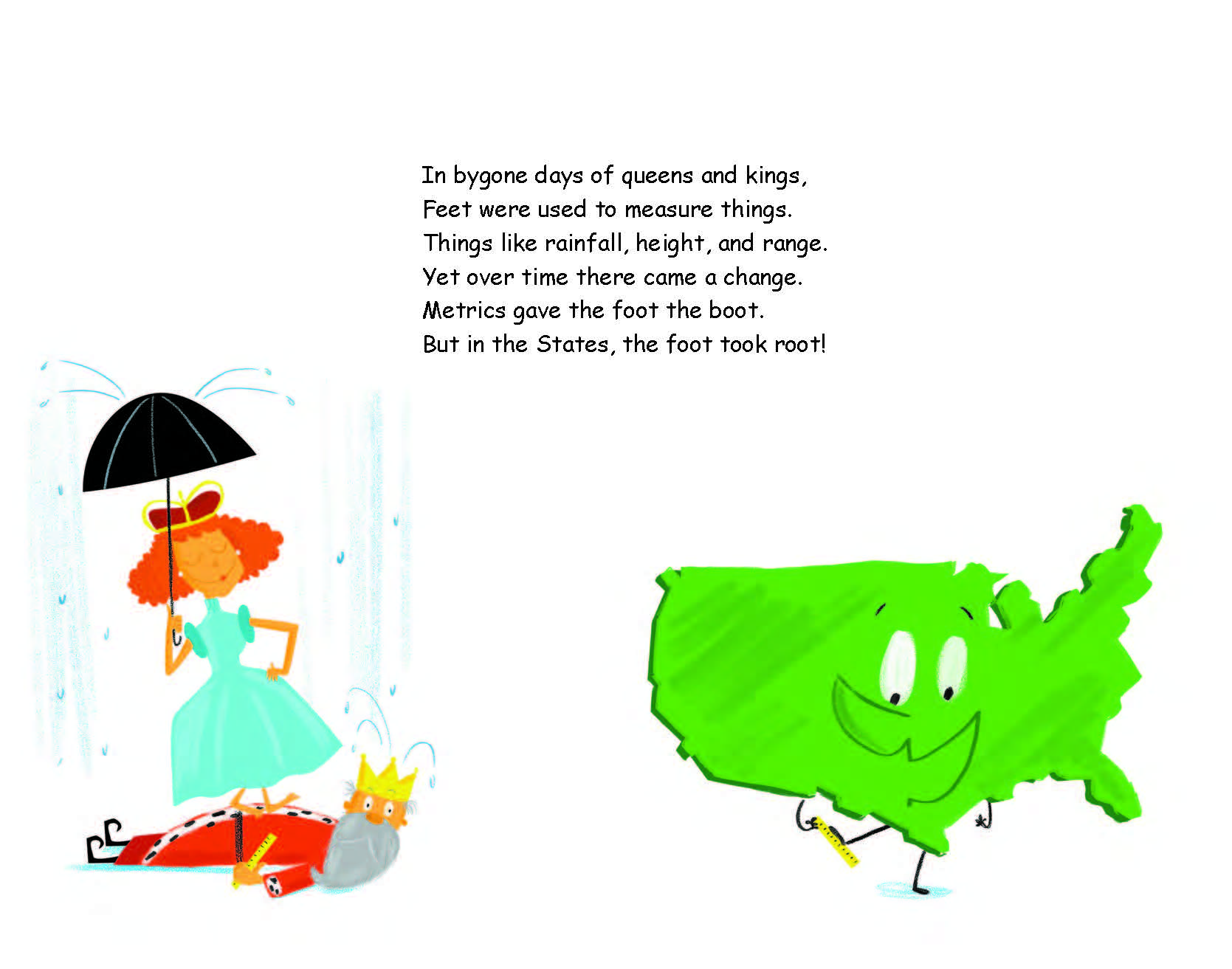
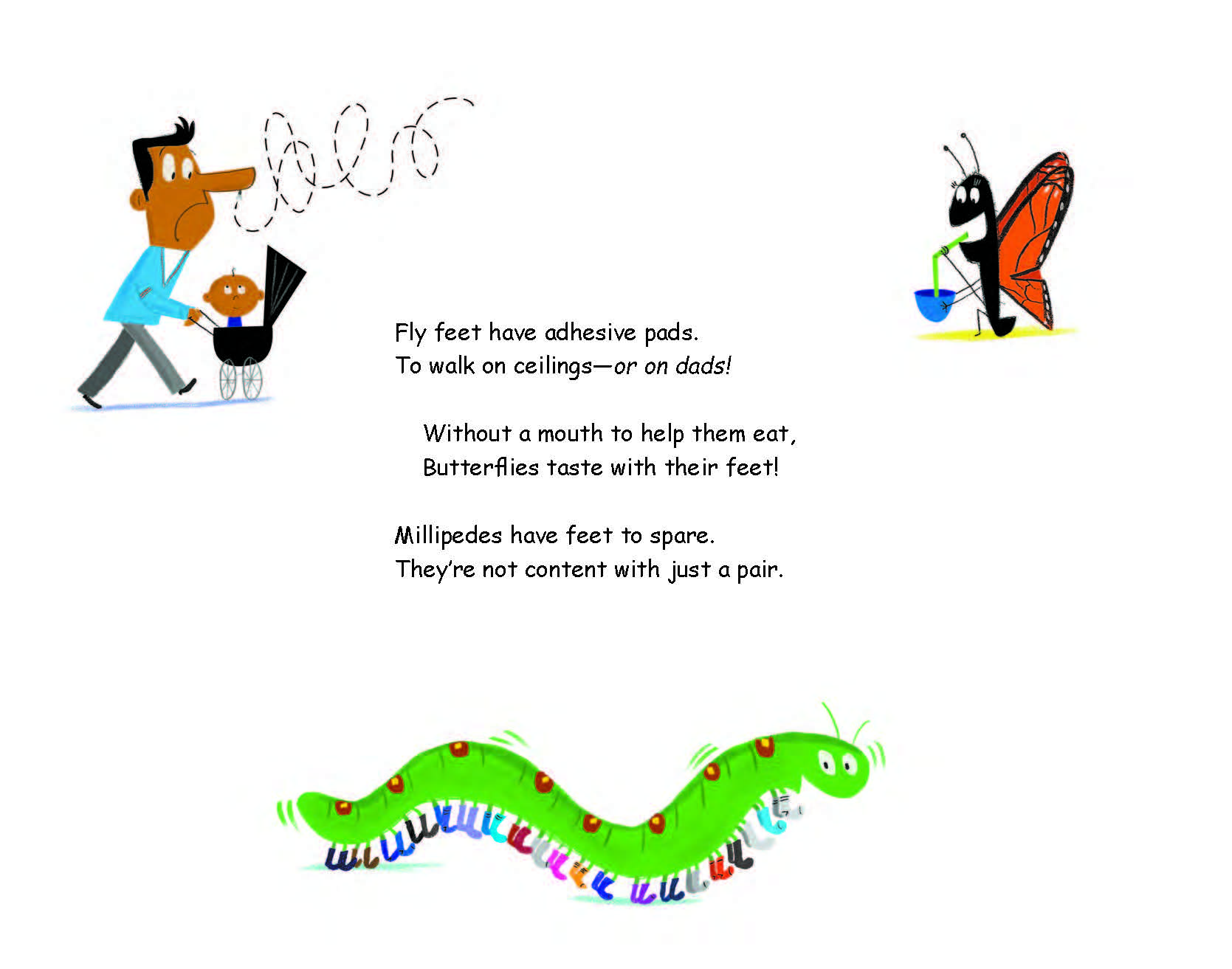
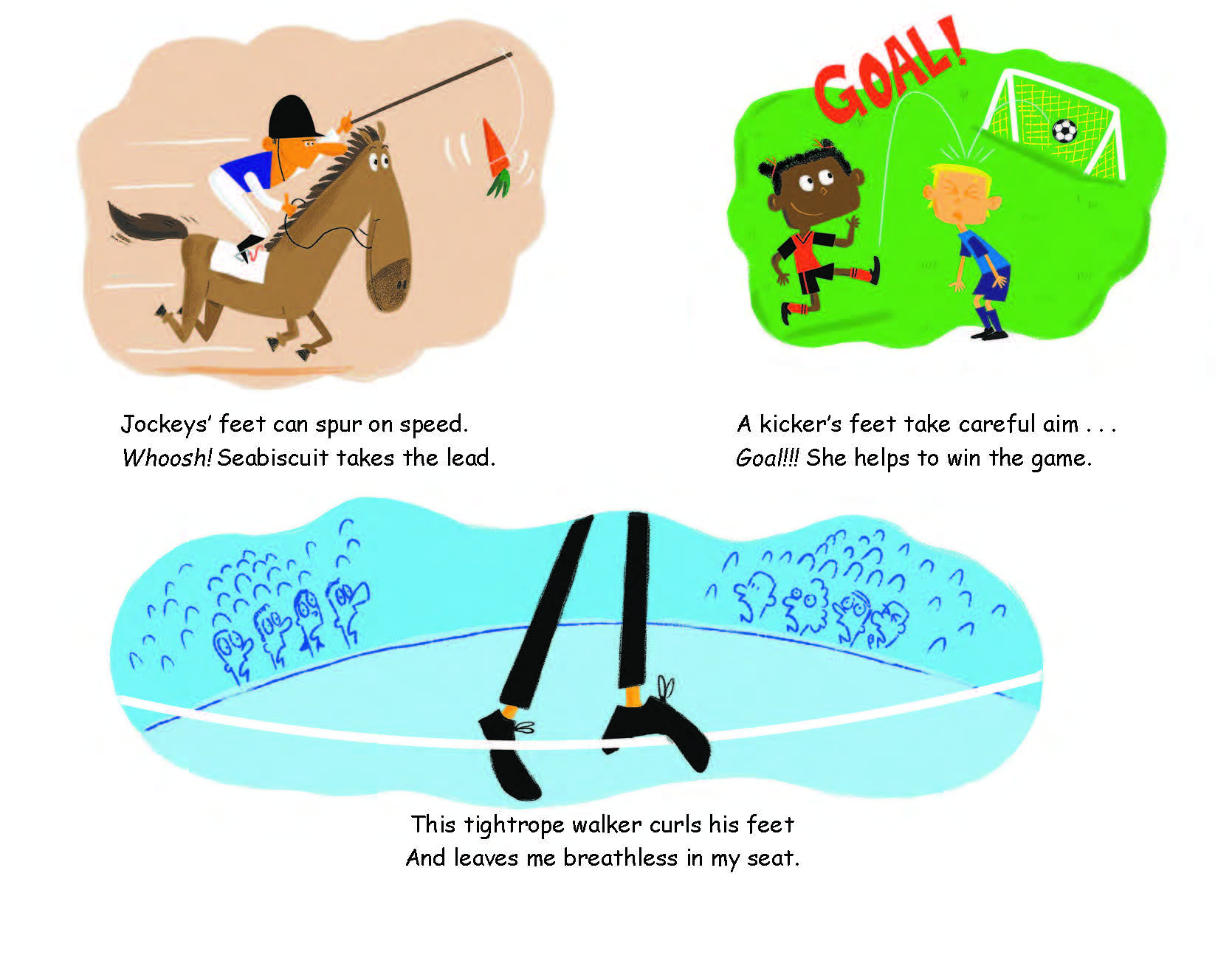
A very recent picture book, What’s Afoot! Your Complete, Offbeat Guide to Feet, published by a spanking-new startup publisher, boasts a punny title and a footload of humor. And like Belches, it features a two-page fact spread filled with amazing information. It begins with this amusing, pun-packed passage:

Dip your toes in.
Let’s explore
the world of feet.
Yes, FEET galore!
Your knowledge soon will be complete
when you . . .
get in step with all these feet!

Here is a sampling:

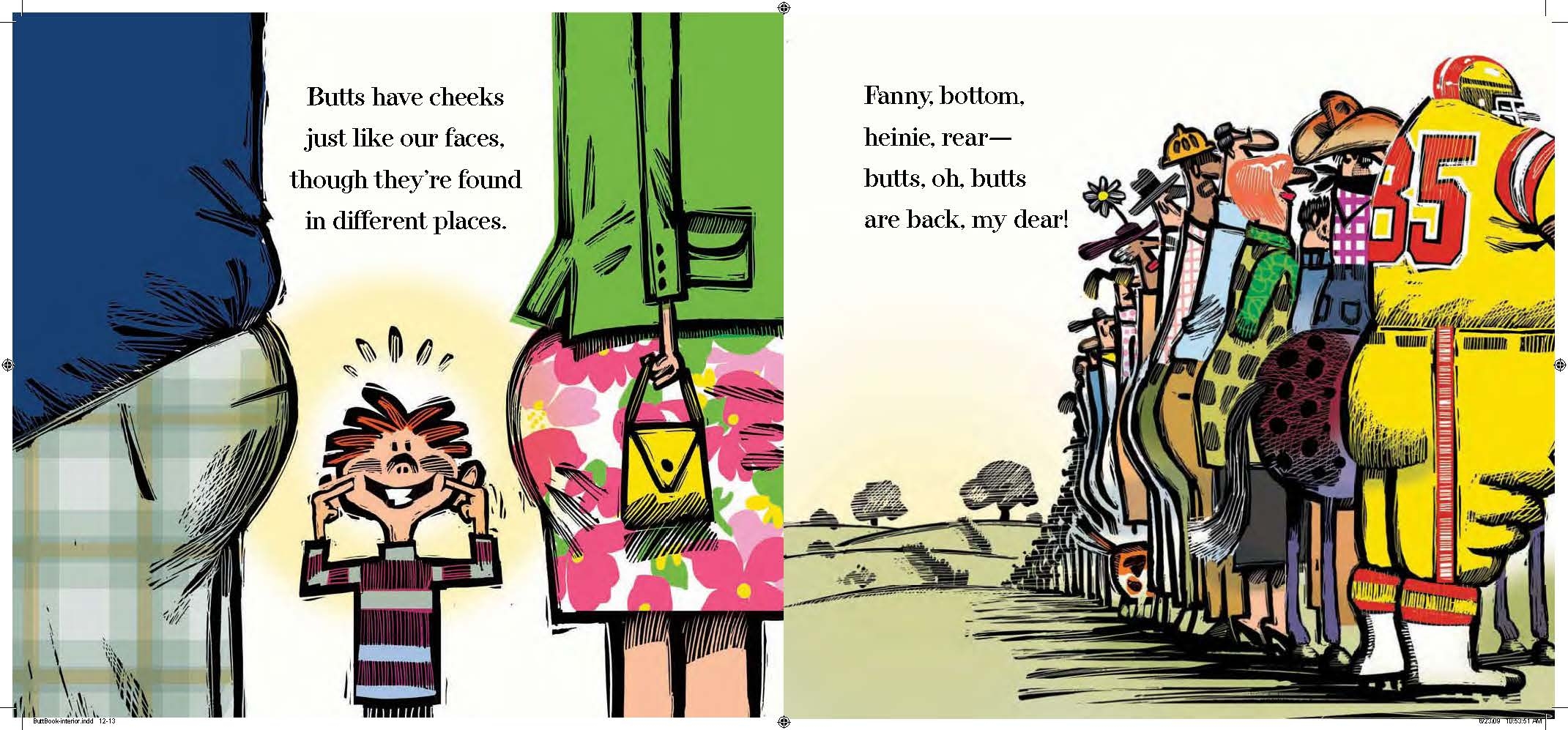
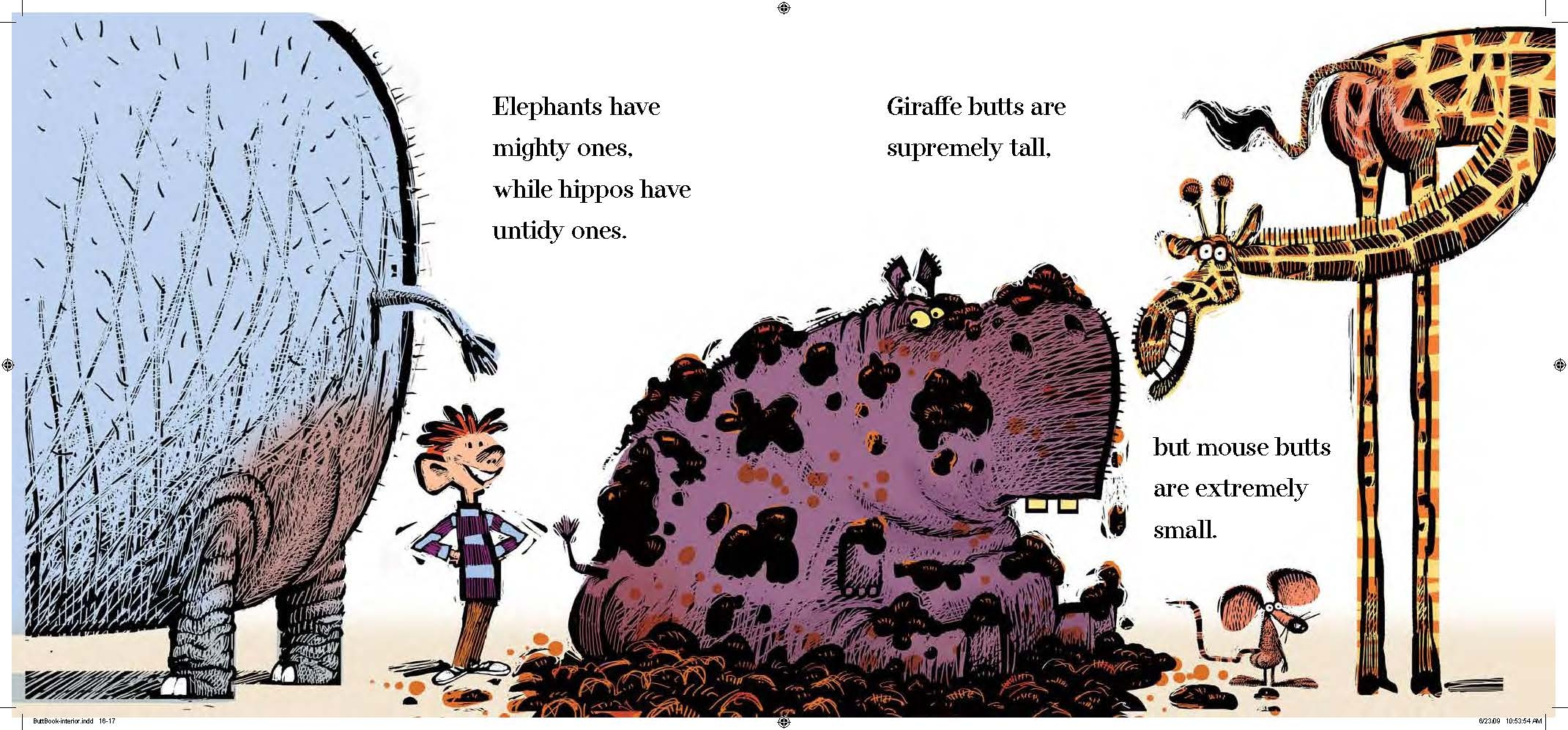
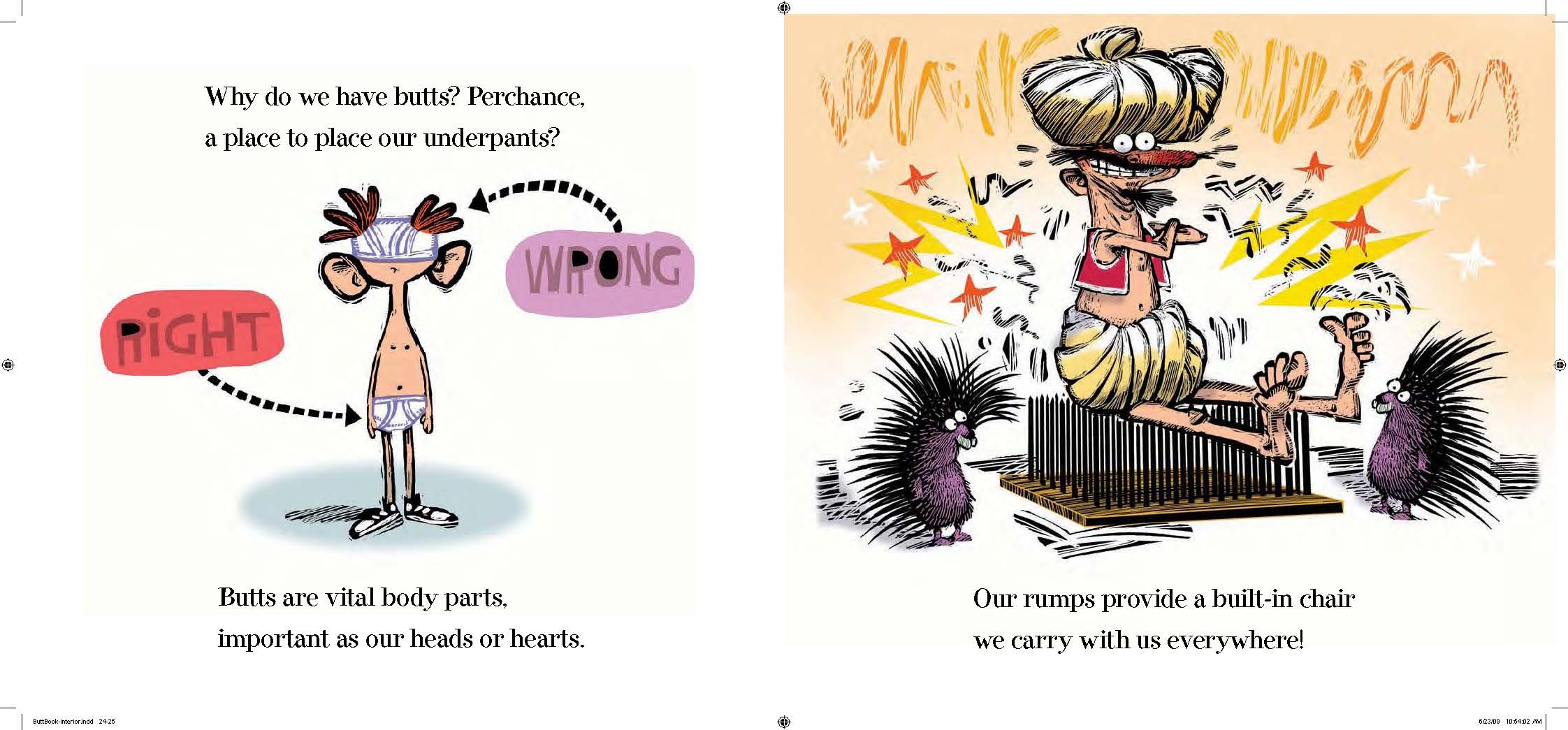
What I like to refer to as my first “mature” work, The Butt Book, which was modeled after Dr. Seuss’s The Foot Book, The Eye Book, and The Tooth Book, is a tongue-in-cheeks tribute to the posterior. It also has challenging words like “juts,” “zeal,” and the Shakespearean “perchance,” all, though, easily understood in context. Since we don’t have that many j and z words, I’m happy to introduce one of each, little words yet big ones. I recall tussling with my editor over including some possibly unfamiliar words. I dug in my heels and she eventually softened. While The Butt Book is teeming with humor, I’m most proud of the stirring finale, which culminates in this fun farewell flurry:

So respect your butt and listen, folks.
It must not be the butt of jokes.
Bottoms up! Hip, hip, hooray!
Our useful butts are here to stay.
Don’t undercut your butt, my friend.
Your butt will thank you in  . . . The End.

Here a few select spreads:

Thank you, Unleashing Readers, for the opportunity to share a word or two about me and my books! It’s been quite supercalifragilisticexpialidocious!

Illustrated by Dave Szalay
Published February 25th, 2020 by NorthSouth Books

About the Book: A true story about the famed racehorse who lost every race but won everyone’s heart.

The bell rings and they’re off! Zippy the racehorse—descended from legends—is destined for glory, but when the other horses bolt from the gate . . . Zippy stands still. When people try to pet him . . . he bites their hats and escapes from his stall. What’s an owner to do? Keep on trying! After all, Zippy has become part of Felix’s family—and a close friend of his little daughter. And after 100 straight losses, Zippy shows everyone that—win, lose, or draw—it takes guts to compete and that you can lose and lose and still be a winner. 


About the Author: Artie Bennett is an executive copy editor by day and a writer by night. He is the author of an inspiring picture-book biography of a hapless, though beloved, horse: The True Story of Zippy Chippy: The Little Horse That Couldn’t. He is also the author of a quintet of hilarious rhyming picture books: The Butt Book, his first “mature” work and winner of the Reuben Award; Poopendous!, his “number two” picture book; Peter Panda Melts Down!, an adorable departure from derrières and doo; the explosively funny Belches, Burps, and Farts—Oh My!; and his latest, What’s Afoot! Your Complete, Offbeat Guide to Feet, which is guaranteed to knock your socks off. And if that’s not enough, he’s the author of two riotous joke and riddle books: The Universe’s Greatest Dinosaur Jokes and Pre-Hysteric Puns and The Universe’s Greatest School Jokes and Rip-Roaring Riddles.

He and his wife, Leah, live deep in the bowels of Brooklyn, New York, where he spends his time moving his car to satisfy the rigorous demands of alternate-side-of-the-street parking and shaking his fist at his neighbors. The Show Me Librarian says: “Bennett’s use of rhyme is excellent; his stanzas flow and exude joviality in a manner that few writers since Dr. Seuss have truly mastered. Simply put, these books are a joy.” The Huffington Post says: “It appears there is no topic Mr. Bennett can’t make funny and educational.” Visit ArtieBennett.com . . . before someone else does!

Thank you, Artie, for sharing all of this fun word play!

In My Heart by Mackenzie Porter, Illustrated by Jenny Løvlie

Share

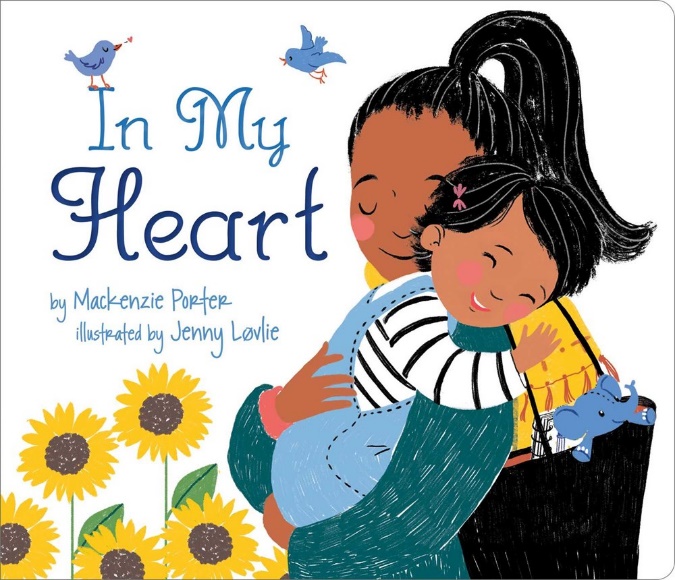
In My Heart
Author: Mackenzie Porter
Illustrator: Jenny Løvlie
Published March 10, 2020 by Little Simon

Goodreads Summary: A working mother reassures her child that even when they’re apart, they’re always in each other’s hearts. This lovely board book is perfect for moms to share with their little ones.

Though we’re not together
we’re never truly apart,
because you’re always on my mind
and you’re always in my heart.

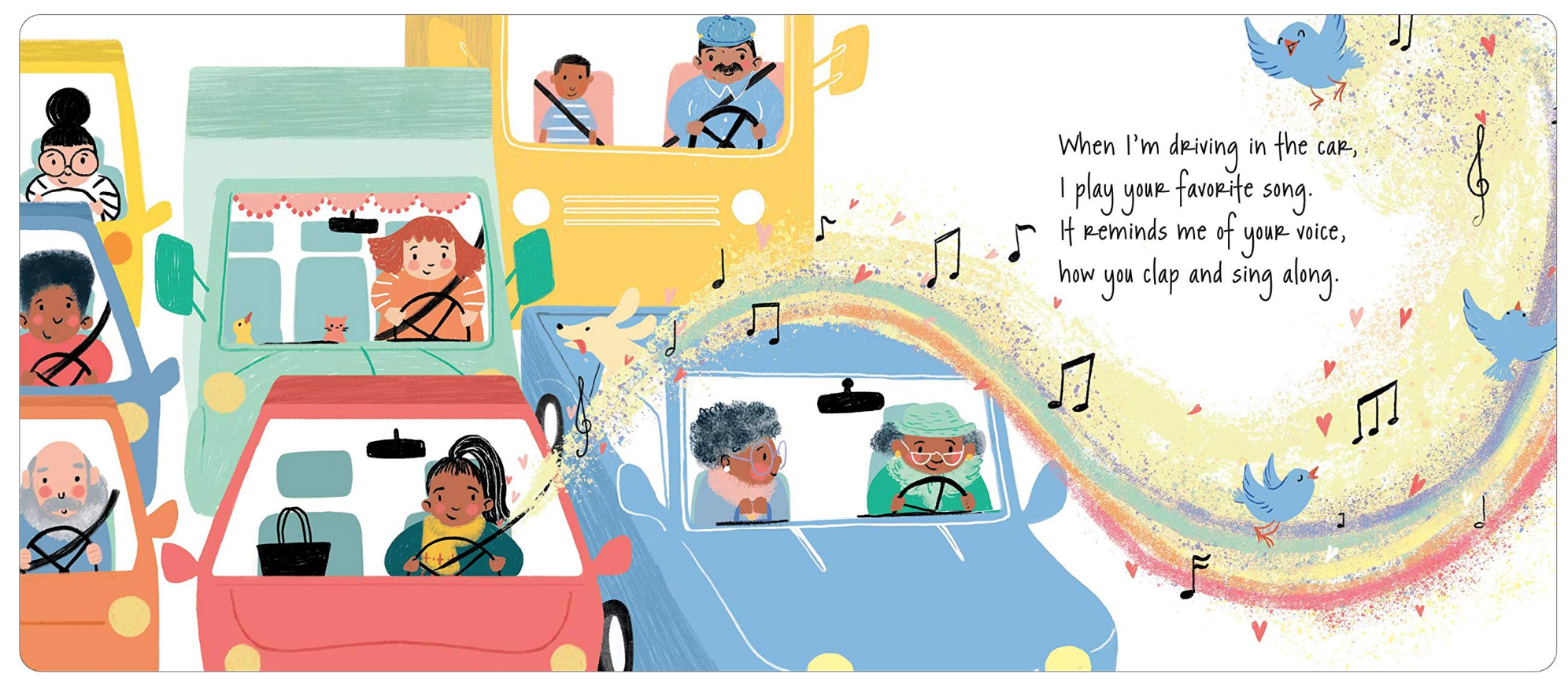
This is what a mother tells her child as she leaves for work each day. This lovely board book perfectly captures the sentiment that many women feel about being a working mom. The lyrical text takes us through a mother’s day away, showing us that although she’s working hard, her child is always on her mind and always in her heart.

Ricki’s Review: This book really hit me in the gut. I couldn’t read it without crying. I have a lot of mom guilt related to my status as a working mom. I genuinely believe that it is best for my kids, yet I struggle with the emotions that come with this decision. This book was as much for my kids as it was for me. There are many books that address concepts like going to school or learning to meet new people, but this is the first book that I’ve read that addresses the concept of working moms (particularly at this age level). I will cherish this book and read it to my children again and again.

Kellee’s Review: As a working mom, mom guilt is real. It is hard when I cannot come and be a reader in Trent’s class every time or be part of all celebrations in his classroom, but I also love working; however, there are very few books that reinforce the normality of this situation. As Simon & Schuster shares, 70% of moms are working moms, so there are so many of us that need this book to read to our children to explain that work is part of our life but that they get the opportunity to be in an awesome school situation while we are doing a job we love and need. And no matter what we love them! The author and illustrator do a great job of showing that balance. Thank you to them both for bringing this book to life!

Teachers’ Tools for Navigation: Ricki is purchasing an extra copy of this book for her kids’ daycare/preschool. It is a great book for early childhood educators to use. Children might draw pictures of the emotions that they experience before, during, and after reading this book.

Discussion Questions: How do you feel when your parent goes to work? Why? What might you do to cope with these feelings?

We Flagged: 

Read This If You Loved: The Kissing Hand by Audrey Penn; Llama Llama Misses Mama by Anna Dewdney; Stella Luna by Janell Cannon

Recommended For: 

classroomlibrarybuttonsmall

RickiSigand Kellee Signature

Review and Giveaway!: Rosie: Stronger Than Steel by Lindsay Ward

Share

Rosie: Stronger Than Steel
Author and Illustrator: Lindsay Ward
Expected Publication: April 1st, 2020 by Two Lions

Summary: A brave tractor farms for freedom in a story inspired by women who acted with courage and strength in American factories and on British farms during World War II.

This is our Rosie,
stronger than steel.
She’ll plow all the land
with a turn of her wheel.

Built by women in the United States and sent to England to dig and plow alongside female farmers during World War II, Rosie the tractor does whatever is needed to support the war effort. She works day and night to help grow crops for the troops…even when she has to hide in the fields. This is because she knows, like the women who built her and the women who farm with her, that they all must do their part.

Inspired by the group of American women collectively known as “Rosie the Riveter” and the British Women’s Land Army, this is a story about taking action and coming together for the greater good.

About the Author: Lindsay Ward is the creator of the Dexter T. Rexter series as well as This Book Is Gray, Brobarians, Rosco vs. the Baby, and The Importance of Being 3. Her book Please Bring Balloons was also made into a play. Lindsay lives with her family  in Peninsula, Ohio, where she often sees tractors from the 1930s and 1940s. Learn more about her online at www.lindsaymward.com. Twitter: @lindsaymward

Praise: 

★“More than the sum of its parts, this is a wildly successful and well-researched shaping of the picture-book form to true historical sheroes.” —Kirkus Reviews (starred review)

★“This ‘little tractor that could’ sort of tale pays tribute to the iconic Rosie the Riveter persona from the US and the British Land Girls of the Women’s Land Army during WWII. Fans of Loren Long’s Otis, Virginia Lee Burton’s Katy, and like sturdy, dependable workhorses will welcome Rosie into the fold, but the historical perspective adds an unusual dimension to her story.” —Booklist (starred review)

“Vocabulary is rich, and the younger set will appreciate the intermittent rhymes. The style of Ward’s colored pencil and cut-paper illustrations reflect the period of the tale. ” —School Library Journal

Review: During World War II, our students’ lessons usually focus on the war itself and the horrific events because of the war, but there was so much more going on to ensure that our countries continued to run while all of our armed forces were at war. We don’t often enough hear about how women were essential to this effort, and Rosie shows us another side to this. Rosie represents not only the tractors made by women who helped keep our plants and crops healthy and edible, but she represents all women that stepped up to do jobs that before then they had been told they were not good enough for. This story, beautifully crafted and illustrated by Lindsay Ward, is a call for strength whenever faced with unprecedented times.

Teachers’ Tools for Navigation: Rosie is a great addition to history lessons about World War II and the home front efforts of women. Her story is also a great read aloud–maybe during Women’s History Month, or whenever!

Discussion Questions: 

  • Did you know anything about what happened on the home front before reading Rosie?
  • How does Rosie the tractor represent the women’s work on the home front?
  • How does Rosie impact the war effort?
  • What does the Rose on her body represent?
  • What is the theme of Rosie?
  • Why do you think the author wrote the book from Rosie’s point of view in first person?

Flagged Passages: 

Read This If You Love: Historical fiction picture books, Learning about history

Recommended For: 

classroomlibrarybuttonsmall 

Giveaway!: 

a Rafflecopter giveaway

Signature

**Thank you to Blue Slip Media for providing a copy for review and giveaway!**