Guest Review: All the Way to the Top by Annette Bay Pimental, Illustrated by Nabi H. Ali

Share

Guest Reviewer: Alicia, UCF Elementary Education Student

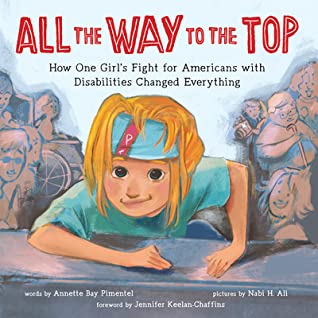
All the Way to the Top
Author: Annette Bay Pimental
Foreword by Jennifer Keelan-Chaffins
Illustrator: Nabi H. Ali
Published March 10th, 2020 by Sourcebooks Explore

Summary: This is the story of a little girl who just wanted to go, even when others tried to stop her.

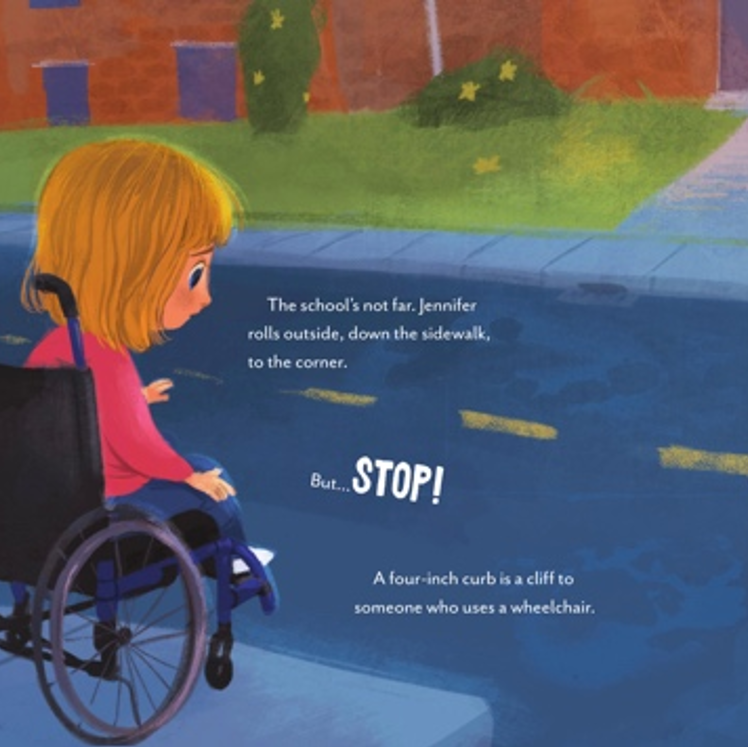
Jennifer Keelan was determined to make a change―even if she was just a kid. She never thought her wheelchair could slow her down, but the way the world around her was built made it hard to do even simple things. Like going to school, or eating lunch in the cafeteria.

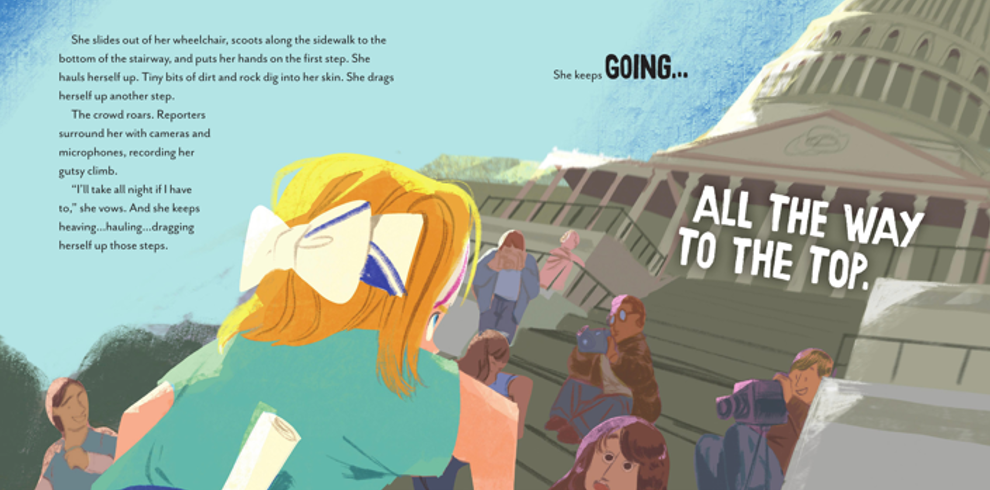
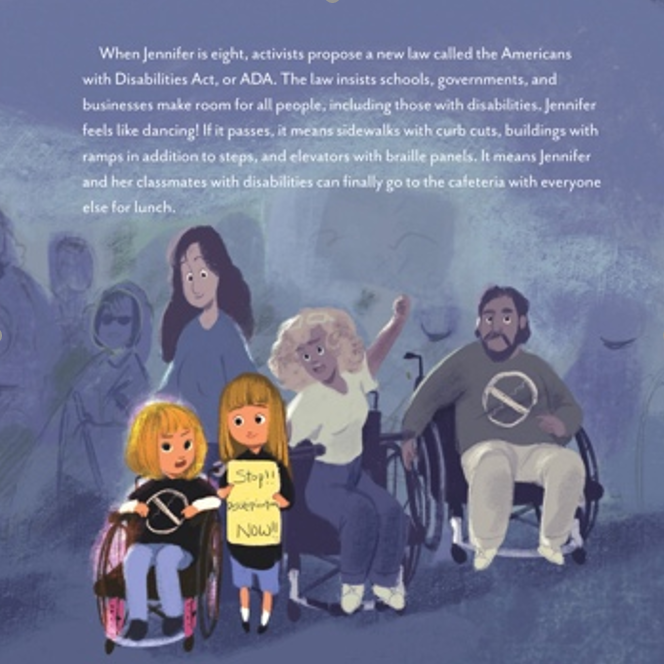
Jennifer knew that everyone deserves a voice! Then the Americans with Disabilities Act, a law that would make public spaces much more accessible to people with disabilities, was proposed to Congress. And to make sure it passed, Jennifer went to the steps of the Capitol building in Washington DC to convince them.

And, without her wheelchair, she climbed.

ALL THE WAY TO THE TOP!

Praise: 

“A powerful, empowering story!” – Washington Parent

“A necessary testament to the power of children’s voices.” –Kirkus Reviews

“Clear, accessible prose accompanied by Ali’s creamily textured digital illustrations…a jumping-off point for conversations.” –Publishers Weekly

“Pimentel’s compelling, present-tense narrative gives the story great immediacy, helping children connect with Jennifer’s reactions to physical barriers and social injustice…Still an activist, Jennifer Keelan-Chaffins offers a thought-provoking foreword to this inspiring picture book.” –Booklist

“Pimentel offers a great look at a young activist creating change and a better understanding of the importance of the ADA.” –School Library Journal

About the Creators: 

Annette Bay Pimentel has published two picture book biographies: Mountain Chef (Charlesbridge, 2016) about a Chinese American who helped inspire the creation of the National Park Service which won the Carter G. Woodson Award, and Girl, Running (Nancy Paulson, 2018) about the first female to run the Boston Marathon, which was a JLG pick and received a starred review.

​Jennifer Keelan-Chaffins joined the disability rights movement at the age of six and has been a passionate advocate ever since. In 1990, she received the Americans With Disabilities Act Award. She earned her B.S. in Family and Human Development. She really wants to help children with disabilities.She lives in Colorado with her mother , and her service dog Mya.

​Nabi H. Ali is an illustrator of Tamil descent based in Orange County, California. He really likes to be part of things that bring inclusivity into art and media. His hobbies include painting, researching South Asian culture, and writing poetry.

Review: This story is about a young girl named Jennifer. She suffers from Cerebral Palsy and uses a wheelchair. The story follows her as she first struggles to go around town when the sidewalks don’t have ramps, to get into the school where there is only stairs, and the teachers say she can’t come in–all because she is in a wheelchair. She learns to find her voice and works in groups to fight for equality. She goes to multiple protests around the states to fight for the ADA (Americans with Disabilities Act). When Congress denies the act, there is a rally in Washington, D.C. and because of the stairs, protestors in wheelchairs could get into the House; the older protesters left their chairs and climbed the stairs. When Jennifer tried, she was told she was too young and couldn’t do it. This did not stop her; she did it anyway. The bill was passed soon after.

I love this book so much as it shows students that everyone can do anything, and it’s something that they all should read about everyone regardless of how they look. One of my favorite things is that this book is based on a true story and in the back of the book it goes into more details as to why the ADA was such an important thing. It also has a timeline and milestones for legislation for those with disabilities.

Teachers’ Tools for Navigation: This book will be fantastic to use in the classroom in multiple ways:

Of course you can use it with history. This will teach students about important events with in our countries history. Teach them about how much the ADA changed the lives of many people.

This will also be used to teach students about inclusion and diversity and they are important tools to have in life. Making sure everyone feels included is not only good it’s important.

Discussion Questions: 

  • Why did Jennifer’s family let her protest?
  • Why was the ADA so important for Jennifer and her family?
  • How does the adaptation of the ADA impact the lives of those that needed it?
  • Why do you feel Jennifer wanted to climb the steps?
  • Why did it take them climbing the steps to actually pass the ADA?
  • How does the Illustrations paint the picture of how Jennifer struggled to feel included?
  • What is one thing you can do to make sure inclusion is part of your life?

Flagged Passages: 

Recommended For: 

classroomlibrarybuttonsmall

Thank you, Alicia, for your review!

Interview with Justin Richardson and Peter Parnell, Authors of And Tango Makes Three

Share

I am happy to start Pride Month with this interview as books with representations of all families need to be shared with all students as “mirrors, windows, and sliding glass doors” (Sims-Bishop, 1990). As an educator in Florida, we are being challenged as are the books we love and students need. Sharing diverse representation, of race, culture, sexual & gender identity, and more, will only lead to empathy and a safer more happy world.

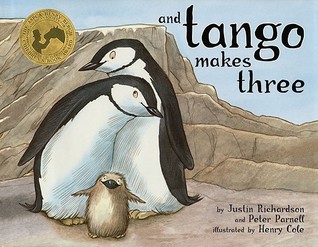
And Tango Makes Three
Authors: Justin Richardson & Peter Parnell
Illustrator: Henry Cole
Published: June 1st, 2005 by Simon & Schuster Books for Young Readers

Summary: In the zoo there are all kinds of animal families. But Tango’s family is not like any of the others. This illustrated children’s book fictionalizes the true story of two male penguins who became partners and raised a penguin chick in the Central Park Zoo.

Introduction from Simon & Schuster: Florida’s new law, to take effect in July, prohibits classroom “discussion” and “instruction” about “sexual orientation” and “gender identity” in grades K-3, as well as any discussion or instruction about these topics that would be considered not age appropriate in the eyes of the State in grades 4-12. And Tango Makes Three, a multiple award-winning picture book, tells the simple and true story of two male penguins in the Central Park Zoo who pair-bonded, built a nest, and with the help of a kind zoo-keeper, together hatched an egg.

The book is written for children ages 4 to 8, but the new Florida law may prevent their teachers from sharing or discussing it with them. Teachers use And Tango Makes Three and books like it to help children with same-sex parents feel welcome in their school and to help their classmates understand the different family structure of their classmates. Lessons like these are invaluable to children of same-sex parents. Censorship of facts about gay families and lives, like that required by the new law, threatens the mental health of children with same-sex parents as well as that of LGBTQIA+ children themselves.

Since its initial publication, And Tango Makes Three has been challenged and banned countless times. The American Library Association has reported that it was the most frequently challenged book between 2006-2010, and the second most frequently challenged in 2009. It was also the fourth-most banned book between 2000 and 2009, and the sixth-most banned book between 2010 and 2019.

Interview: 

Kellee: How did you first learn about Tango and her family? And why did you choose to tell their story? 

Peter Parnell & Justin Richardson: We first read about the penguins over breakfast one Saturday in a New York Times article by Dinitia Smith entitled “Love That Dare Not Squeak Its Name.”  Justin said, “Peter, you have to listen to this,” and there was just something about hearing the story read aloud that made us think of a children’s book.

As prospective parents ourselves, we knew that there was an unmet need among the children of gay parents for stories involving families like ours.  And we knew that while many parents who are not gay might wish to introduce their children to the subject of gay families, many felt unsure as to how to approach the topic, what language to use, how specific to get, and so on.  This story seemed to us a perfect way for them to open a discussion of about queer families with the confidence of knowing that they were doing it in an age-appropriate way.

K: What was your hope in sharing Tango’s story?

PP & JR: Like any author, we hoped the book would find an audience. We wanted kids to be moved by the story, and to expand their understanding and awareness of different kinds of families. We are most gratified when we hear the book has been a part of a child’s bedtime routine or a family’s life for years.

K: When you first heard about And Tango Makes Three being challenged, what were your first emotions? Reaction? 

PP & JR: We did anticipate that there would be some resistance to the book when we wrote it. But we could never have imagined then the extent of the challenges it would face or the strength of the support it would get around the world.

I think you never forget the first challenge. For us, that was in Missouri, when a library director who had received complaints moved our book from the fiction to the (less browsed) nonfiction section in order not to ‘blindside’ parents. The story got picked up by the AP (much thanks to a local news reporter who read library’s log looking for stories). We heard about it on a Saturday night, and were like, “Okay, this is happening…”  The story literally travelled around the world. Stephen Colbert held up the book on “The Colbert Report,” and proclaimed it the Number Two Threat to the American Way of Life (the number one threat was people who are not blond).

We have a coffee mug at home that we stumbled across in a toy store with our daughter a few years ago. On it are displayed a dozen or so banned book titles. There’s Animal Farm, 1984, and The Origin of Species. And our title is snuggled in there amongst the rest of them. We thought the juxtaposition of our book with these great works was kind of hilarioius. But we’d by lying if we said we weren’t also proud. In the years that we read TANGO aloud at the ALA’s Banned Books Week Readout in Chicago, we did so alongside folks like Steven Chbosky, Robie Harris, and Judy Blume. It’s an honor to be in such great company. But in truth, being banned is painful and infuriating. Any pleasure one can squeeze out of it is worth holding onto, if it softens the blow.

K: The “Don’t Say Gay” bill does not allow any sexual orientation or gender identity instruction in grades K-3. I would argue that And Tango Makes Three is not INSTRUCTION of either listed things; do you agree?

PP & JR: The law is purposely written to be vague, leaving terms like “instruction” and “sexual orientation” undefined. We recently lampooned that aspect of the law in the Washington Post, showing that banning discussion or instruction about sexual orientation and gender identity means there can be no talk about men and women marrying or indeed any book that depicts characters as having a gender.

We wouldn’t recommend going down the rabbit hole of arguing what does or doesn’t qualify as instruction. The law should be attacked for its discriminatory intent, it’s manipulation of parent fears to stoke the political careers of its authors, and the damage it will do to children and families in Florida.

K: If someone tried to state that And Tango Makes Three is not age appropriate for K-3, what would your counterargument be? 

PP & JR: The book actually grew out of Justin’s experience as co-author of a book about the very real challenges parents face when trying to address sexual topics with their children–Everything You Never Wanted Your Kids To Know about Sex (But Were Afraid They’d Ask). It’s hard to imagine that anyone who actually read Tango could consider it as not age appropriate; however, we would place the burden on anyone who made such a claim to explain it. Parents who hold negative views about gay families may object to the book, because it presents one such family in a positive light. But that’s quite a different matter than describing it as inappropriate for all children based on their age. Explaining that sometimes two people of the same sex form a couple and make a family is appropriate at any age.

Kellee Signature

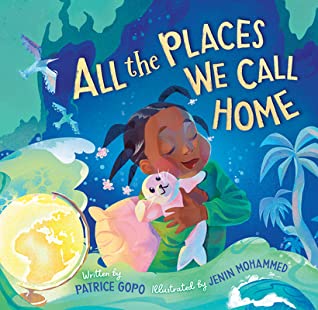
All the Places We Call Home by Patrice Gopo, Illustrated by Jenin Mohammed

Share

All the Places We Call Home
Author: Patrice Gopo
Illustrator: Jenin Mohammed
Published June 14th, 2022 by Worthy Kids

Summary: Fall in love with this lyrically written and lushly illustrated exploration of identity and home that celebrates all the places and people who make us who we are.

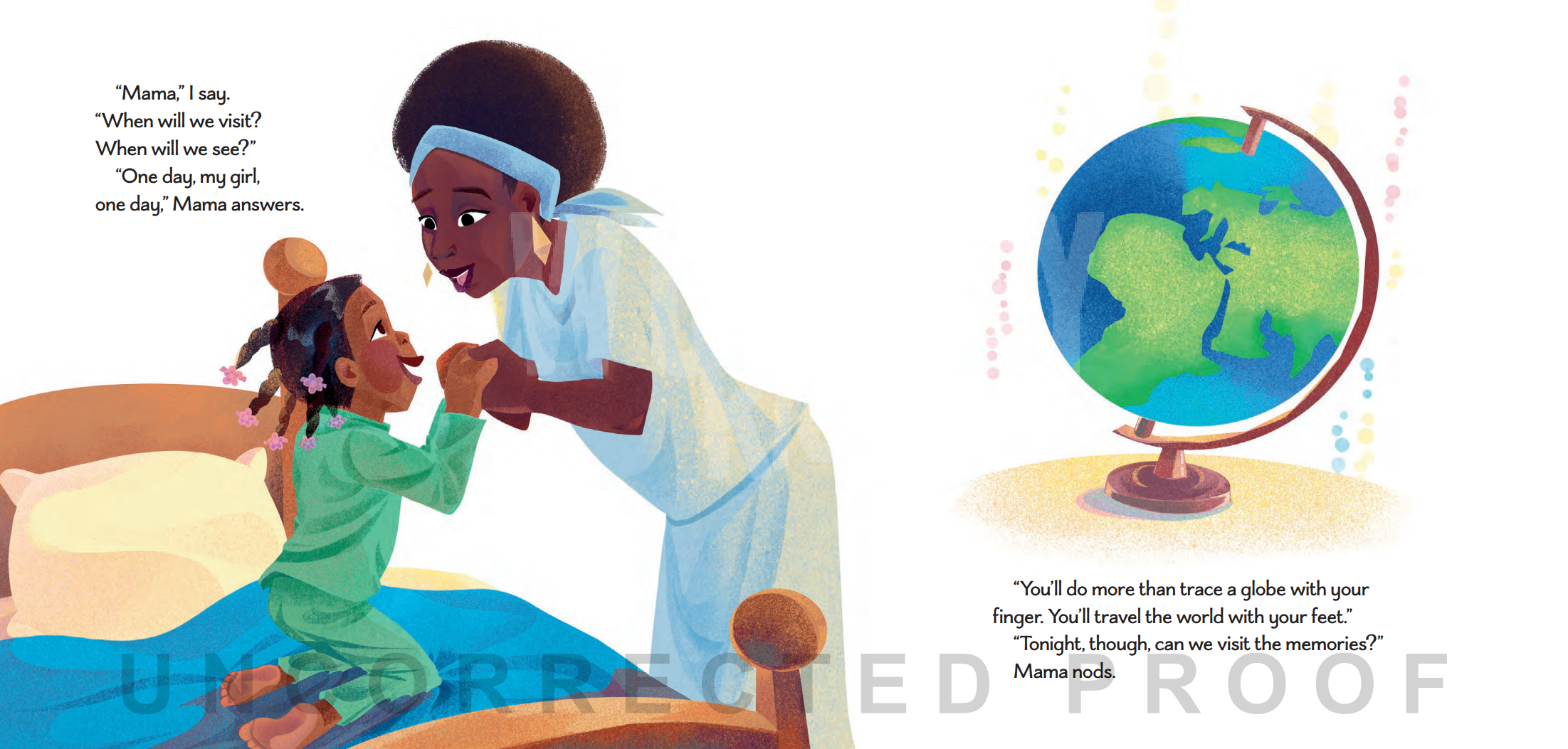
“And where shall we go?” Mama asks as she tucks me in.

“South Africa. Where I was born.”

My answer summons Mama’s stories, stories that send us soaring back in time to when I was a baby. Out my window. Down my street. Across water. Across continents.

Where do you come from? Where does your family come from? For many children, the answers to these questions can transform a conversation into a journey around the globe.

In her first picture book, author Patrice Gopo illuminates how family stories help shape children, help form their identity, and help connect them with the broader world. Her lyrical language, paired with Jenin Mohammed’s richly textured artwork, creates a beautiful, stirring portrait of a child’s deep ties to cultures and communities beyond where she lays her head to sleep.

Ultimately, this story speaks a truth that all children need to hear: The places we come from are part of us, even if we can’t always be near them. All the Places We Call Home is a quiet triumph that encourages an awakening to our own stories and to the stories of those around us.

About the Creators: 

Patrice Gopo is the child of Jamaican immigrants and was born and raised in Anchorage, Alaska. She is an award-winning essayist and the author of All the Colors We Will See: Reflections on Barriers, Brokenness, and Finding Our Way (a Fall 2018 Barnes & Noble Discover Great New Writers selection). Her ties to Jamaica and other parts of the world sparked her early desire to travel to the cities and countries she traced on a globe. In time, as she began writing about her experiences, Patrice became interested in how places contribute to the people we become. Ultimately, she hopes her stories celebrate the beauty of living a multifaceted life. Patrice lives with her family in North Carolina—a place she considers another home. All the Places We Call Home is her first picture book.

Winner of the SCBWI 2020 Summer Showcase Award, artist Jenin Mohammed moved into children’s illustration after working to gain entry into storyboarding for television. Just as her dream studio job appeared on the horizon, Jenin realized that her true love for story lay in children’s illustration. Her work uses dynamic shapes and perspective with a layering technique to create a tissue-paper-collage-meets-painterly look. Born and raised in Florida, Jenin grew up in an African American/Caribbean household, providing a personal connection to Patrice’s story.

Review and Teachers’ Tools for Navigation: This book is a beautiful look at family history and culture. It celebrates oral tradition through story and memories, a sense of belonging through place, and a look at one family’s story. The prose is lyrical and calming and the illustrations are vibrant and expressive–it will make a great read aloud for all and a deep dive book for classrooms!

This book would be a great mentor text for writing a family history or visiting the world through memories in another way. Students can connect with their families and friend through the places they call home and create their own pathway around the globe.

Discussion Questions: 

  • Where are your homes?
  • Why does learning about where someone is from help tell their story?
  • Even if not through family, how else could you “travel” the globe through memories?
  • Where would you like to visit if you could?
  • What tradition do you have at bedtime?
  • What do you think the author’s purpose of the story was?
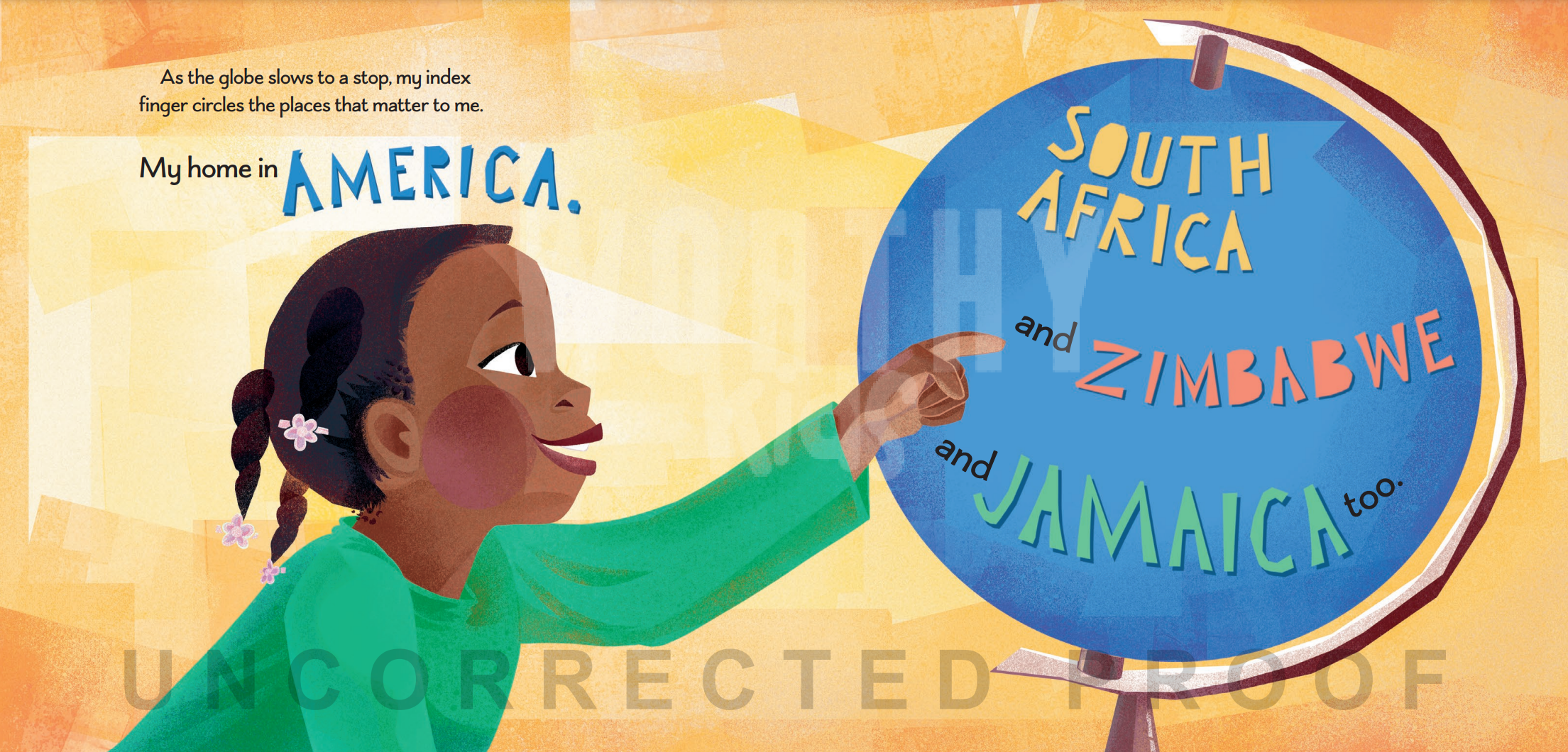
  • Why does the young girl view America, South Africa, Zimbabwe, and Jamaica all as her homes?

Flagged Passages: 

Read This If You Love: Bedtime stories, Multigenerational stories, Stories about family history

Recommended For: 

classroomlibrarybuttonsmall  

Signature

**Thank you to Nicole Banholzer PR for providing copies for review!**

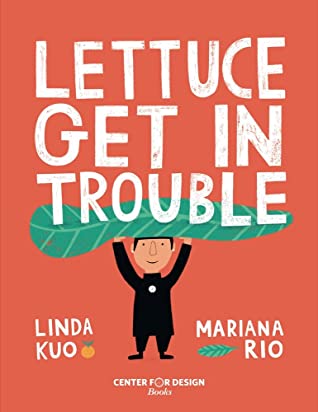
Lettuce Get in Trouble by Linda Kuo, Illustrated by Mariana Rio

Share

Lettuce Get In Trouble
Author: Linda Kuo
Illustrator: Mariana Rio
Co-Authors: Cynthia Benjamin & Paula Rees
Published May 17th, 2022 by Center for Design Books

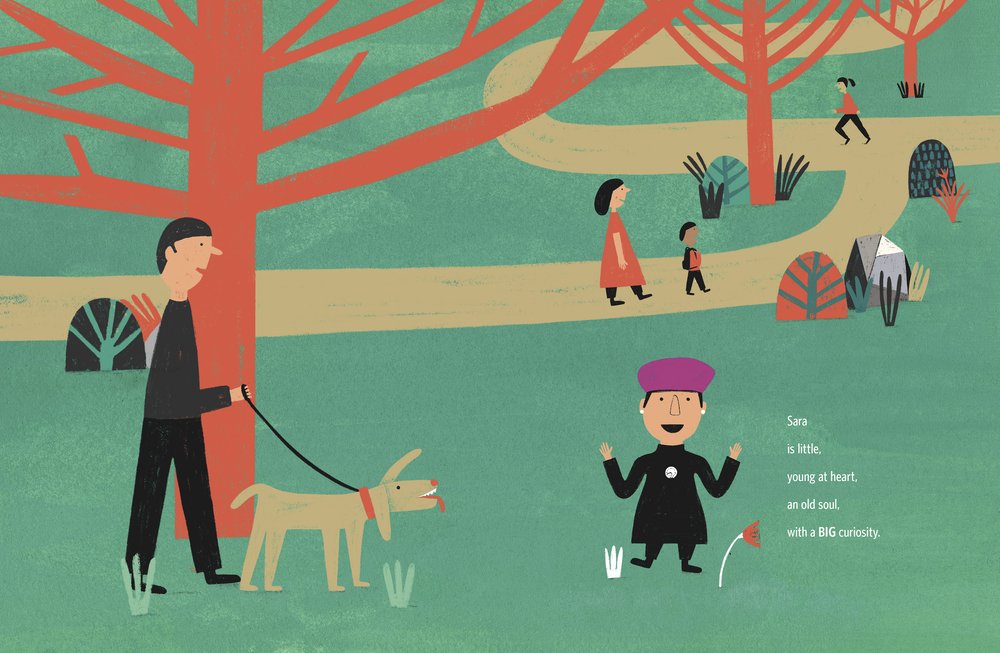
Summary: Sara Little Turnbull was a designer, an observer, a mentor, and not afraid to cause a little trouble while making the world a better place. As a global traveler, she made connections between people and found wonder in the everyday objects they hold dear.

As a very petite female designer in the world of large men, Sara used her unique perspective and curiosity to design a wide range of revolutionary products–from facemasks to cookware to astronaut suits–and to encourage others to see the world through new eyes. Sara was a mentor to designers of all ages and in Lettuce Get in Trouble, she helps children understand the basics of design: observing the world around them, asking questions, and trying out new things. One day, the Ministry of Food asks Sara Little to convince the children to eat more vegetables. Instead of offering a stern lecture, however, Sara Little brings her young friends to her Little Lab to explore the colors and shapes of food and why we eat anything at all. Together they design a grand event, inviting children to gather, play, and design tasty new creations.

Sara Little Trouble Maker Series Information: New Children’s Picture Book Series Introduces Young Readers to the Basics of Design by asking “Why?”

Lettuce Get in Trouble is the first volume in the Sara Little Trouble Maker series from Center for Design Books—a children’s picture book that teaches the basics of design in a way that is easy for young readers to understand. Inspired by a little-known but influential designer, Sara Little, Lettuce Get in Trouble helps children learn to problem-solve by observing the world around them, asking great questions, and trying out new things.

“Sara wears many hats and one tiny upside-down clock on her black turtleneck. She is always asking a lot of questions.”

Why?

In Lettuce Get in Trouble, we meet Sara Little, a troublemaker of the best sort; she asks great questions starting with Why? Sara looks at the world a little differently than other adults—by doing so, interesting problems and the need for design solutions come her way. This first story focuses on Sara’s design influence with new foods and is set in her beloved city of New York. One day, the Ministry of Food asks Sara Little to convince the children to eat more vegetables. Instead of offering a stern lecture, Sara brings her young friends to her Little Lab to explore the colors and shapes of food and why we eat anything at all. Together, they plan a grand event, inviting children from around the world to design fresh, tasty creations. “The children will cook, and we shall allow them to play with their food!” says Sara. Will the leader of the Ministry of Food be happy? Will the children learn to love veggies?

“Good design solves problems and also makes the world more beautiful and fun.”

Through experimentation, discovery, and planning, Sara teaches children that “good design solves problems and also makes the world more beautiful and fun.” In Lettuce Get in Trouble, the children—and designers of all ages—learn to make their world a better place by being curious, ‘taking the time to see’ and not being afraid to cause a little trouble.

“When you take the time to see, the wonders become commonplace, and the commonplace become wonders.”

About the Real Little Sara: Sara Little (1917-2015) was a designer, teacher, and observer not afraid to cause a little trouble while developing innovative solutions to fulfill our basic needs. As a global traveler, she made connections between people and found wonder in the everyday objects, tools, and rituals their cultures hold dear. As a very petite female designer in the world of large men, Sara used her unique perspective and curiosity to design a wide range of revolutionary products—from medical masks which inspired the N95 to cookware to astronaut’s spacesuits—and encouraged others to see the world through new eyes. This first story reflects Sara’s influence on the American lifestyle by promoting casual dining with buffets and finger foods.

About the Creators: 

Linda Kuo designs products for children and loves creative storytelling. She has a BFA from Parsons School of Design in New York and an MFA from Stanford University, where Sara Little mentored her. Sara often said, “Design is to create order.” Linda practices Sara’s teaching in all her projects as the Design Director at Pottery Barn Kids & Teen, headquartered in San Francisco, and serves as a board member of the Center for Design.

Mariana Rio is an award-winning illustrator and educator in Porto, Portugal. She graduated in Communication Design from the Faculty of Fine Arts, University of Porto. With over a decade of experience, she is happy to spend her days creating characters and visual narratives for publishing houses and institutions worldwide. Her illustrations have been featured in the Bologna Children’s Book Fair exhibitions. Mariana is always eager to learn, and she found Sara Little’s legacy a huge inspiration. Find more at: www.marianario.com

The Sara Little [Turnbull] Center for Design Institute is a non-profit (501c3) in Seattle, WA, with a mission to educate and enhance the public’s knowledge of design and further the education of under served women and girls. Profit from the book series will support that work.

Review: Lettuce Get in Trouble is such a great inquiry book! It shows the importance of asking questions, asking more questions, pushing boundaries, and never letting someone judge you by their assumptions.

I found the collage-esque and colorful illustrations mixed with the multi-format of the picture book just so much fun to read and as unique as its subject. It also has such a quick pace that could have been detrimental but instead kept the reader wanting to move forward to see what Sara is going to tackle next.

Teachers’ Tools for Navigation: I think the first thing I would do with this book is start with the WHY and have students come up with their own questions then find answers. Use Sara Little’s inquiry to inspire their own inquiry. There are also other mentor opportunities such as answering Sara’s questions and having students write a letter that they would have written to Sara.

Also, there is so much to learn about Sara Little Turnbull. She changed our world yet is too unknown. Students can use this book/series as a jumping off point to learning about her career and inventions. After reading the book, students could be grouped and each group assigned one of her designs/inventions to research and share.

Learn more about Sara Little at The Center for Design, the Sara Little Troublemaker website, or this Fortune article about her for Women’s History Month.

Discussion Questions: 

  • What did Sara do differently than others at the Ministry of Food?
  • What traits does Sara have that made her such a great designer and thinker?
  • What did Sara’s mom do to help her become the inquisitive thinker she was?
  • What questions do you have like Sara?
  • How did Sara think about food differently than others?
  • Why did the Center for Design decide to start a series inspired by Sara Little?

Flagged Passages: 

Read This If You Love: Nontraditional picture book biographies

Recommended For: 

classroomlibrarybuttonsmall 

Signature

**Thank you to Claire McKinney PR for providing a copy for review!**
Review and Giveaway!: I Am Able to Shine by Korey Watari, Illustrated by Mike Wu

Share

I Am Able to Shine
Author: Korey Watari
Illustrator: Wike Wu
Published May 1st, 2022 by Two Lions

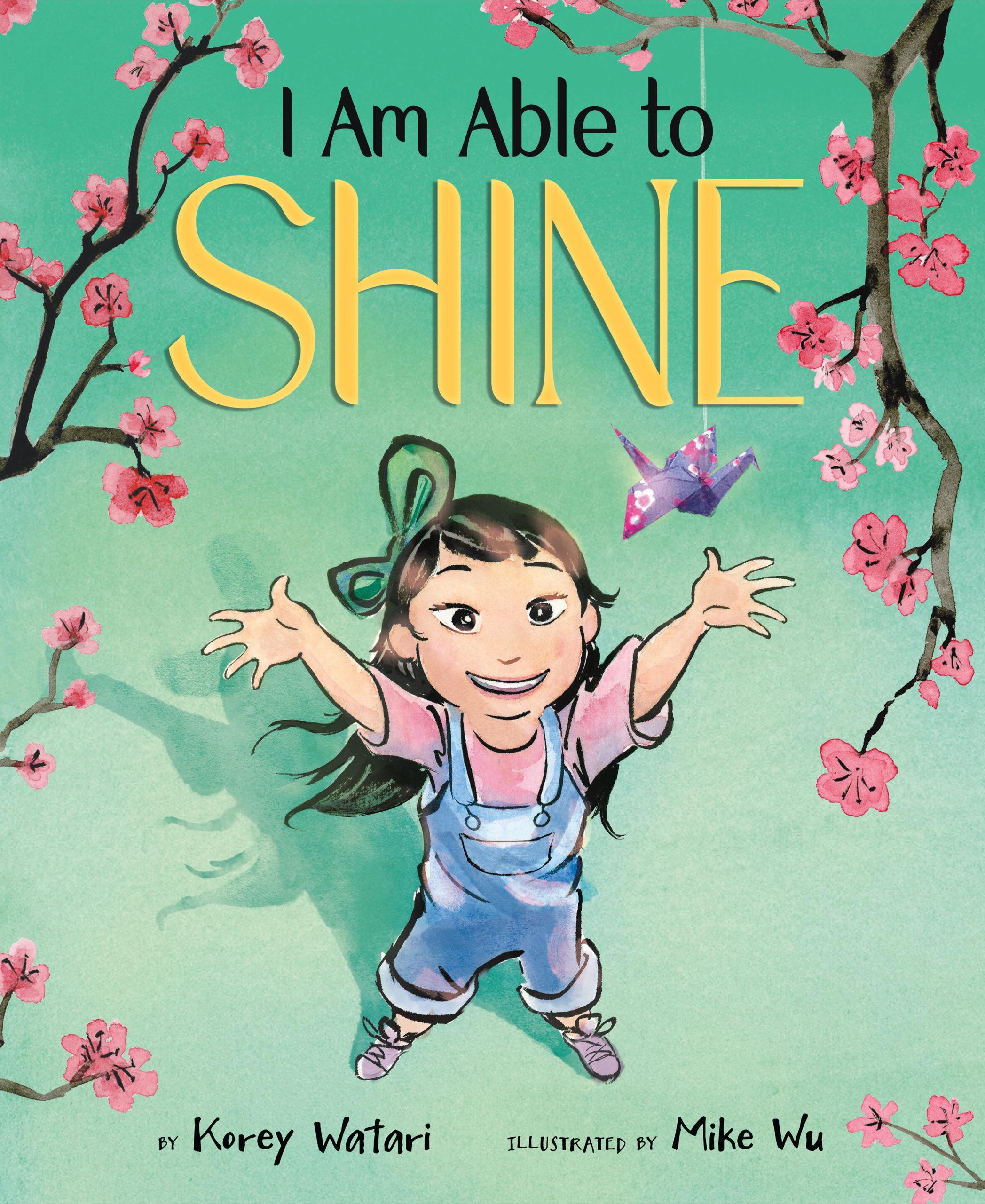
Summary: An affirmative, empowering story about embracing your identity and finding your voice, inspired in part by debut author Korey Watari’s experiences growing up Asian American, and illustrated by her husband, Mike Wu, Pixar artist and creator of the Ellie series.

I am beautiful.
I belong here.
What I do matters.
I am able to shine.

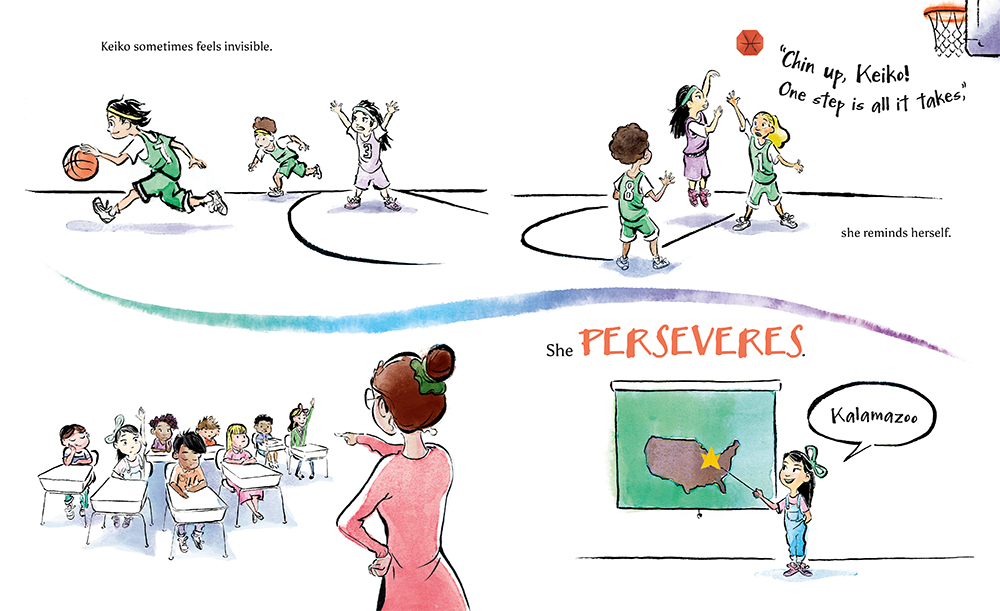
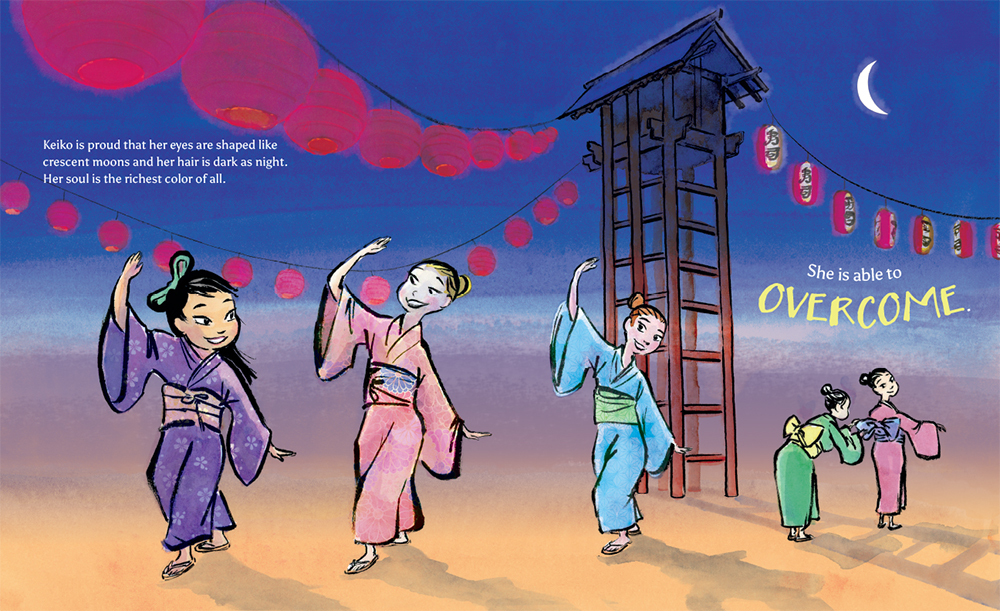
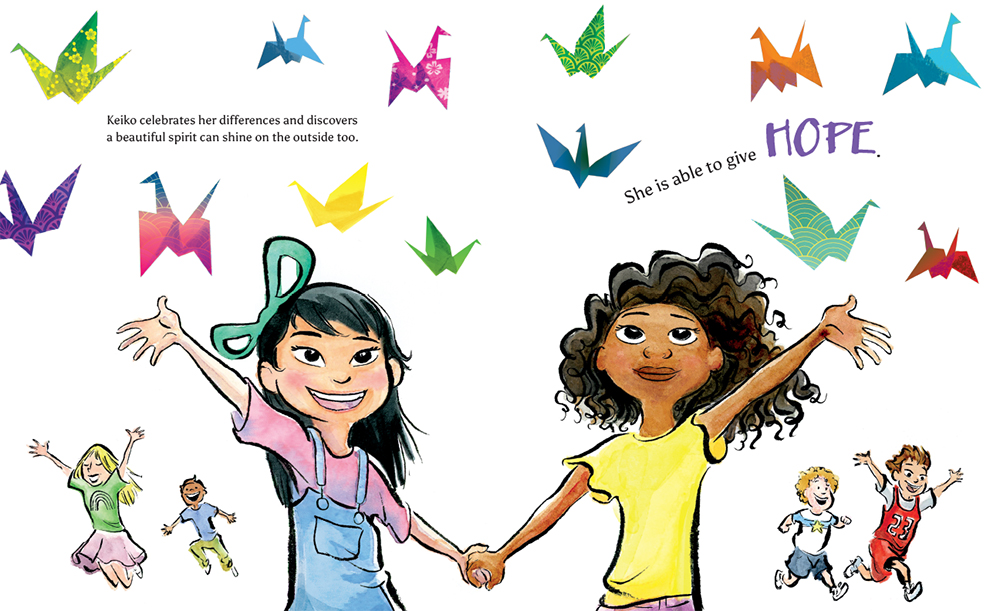
Each night Keiko whispers to her crane, “I wish to change the world.” She is kind, and she has big dreams. But at times she feels invisible; she knows some people misjudge her. Keiko is also loved, so she perseveres and stands strong. Over time, her confidence grows, she shares more of herself, and she helps lift up others—and eventually lead them. She understands that no matter what, she can shine.

About the Creators: Husband-and-wife team Korey Watari and Mike Wu live in the San Francisco Bay Area in California with their two lively daughters. This is their first picture book together. Korey is a sansei, or third generation Japanese American, born and raised in Los Angeles. She played basketball for a Japanese American League, graduated from the University of California Riverside, and studied at the Fashion Institute of Design and Merchandising. Korey has worked in the animation and fashion industries for companies such as Disney and the Gap. This is her first picture book. Learn more at www.koreywatari.com or on Twitter at @tinyteru.

Mike is the author and illustrator of the acclaimed, bestselling Ellie series, the first picture book of which was named one of NPR’s best books of the year. He is also a Pixar artist and has worked on films including The Incredibles, Ratatouille, Up, Toy Story 3, Coco, and Soul. His illustrations have been hailed as “reminiscent of classics like Harry the Dirty Dog and Curious George.” Visit him at www.theartofmikewu.com or on Instagram at @wudog23.

Review: Keiko’s story is beautiful! Watari’s empowering and inspirational text scream from the pages filled with Wu’s emotional and colorful illustrations. The book begins with our introduction to Keiko and her dream. Her dream to be able to be both kind and courageous, determined and hopeful, strong and loved… She wants to figure out how to balance all of her parts of personality to become who she is meant to be.

Teachers’ Tools for Navigation: The back matter of the text takes the book to another level. The author’s note and aspects of Japanese life reflected in the book allow for an extended discussion about students’ culture, empowering differences, and filling life with “courage, kindness, perseverance, inspiration, hope, and love.”

Discussion Questions: 

  • How do Watari and Wu combine inspiration and narrative in the book?
  • How do the illustrations add to Keiko’s story?
  • How did the author’s life inspire the book?
  • How did the author and illustrate reflect Keiko’s Japanese AND American culture?

Flagged Passages: 

Read This If You Love: Lala’s Word by Gracey Zhang; Brilliant Bea by Shaina Rudolph & Mary Vukadinovich, illustrated by Fiona Lee; Loujain Dreams of Sunflowers by Al-Hathloul Lina, illustrated by Rebecca Green; To Change a Planet by Christina Soontornvat, illustrated by Rahele Jomepour Bell

Recommended For: 

classroomlibrarybuttonsmall

Giveaway!!:

Giveaway! One lucky winner will receive a copy of I Am Able to Shine, courtesy of Two Lions (U.S. and Canada addresses).

a Rafflecopter giveaway

Signature

**Thank you to Blue Slip Media for providing a copy for review!**
Author Guest Post: “Bring Songwriting into your Classroom” by Chari Smith, Author of The Piano

Share

Bring songwriting into your classroom

Songs are memorable. Lyrics just stick to use, don’t they? Think about the abc song, much easier to remember the order of letters when it’s put to a song. When I taught music and theater grades K-6, I collaborated with teachers on their curriculum to incorporate what they were teaching into my classroom.

Teaching about the solar system? Let’s make a song about it.

Going through the multiplication table? Let’s put that into a tune.

The students sang these songs in the classroom, hallways, waiting for pick up, and more. Songs are memorable, and fun!

There are four ways you can bring this into your classroom:

  1. You create the song, by writing lyrics to a familiar tune or writing the music and lyrics yourself. Then, teach it to your class.
  2. Students write new lyrics to a familiar tune – individually or in groups
  3. Students write the song – music and lyrics
  4. Collaborate with the music teacher, or a local music school to do ongoing songwriting workshops

Let’s focus on option 2, having the students write new lyrics to a familiar tune. If you choose to have students work in groups, it’s an excellent opportunity to build their teamwork skills. You can start with basic songs they probably learned in pre-school to warm up.

The first step is to create a list of possible songs they can choose from. You can even create this list with students. When starting out, it’s best to start with simple songs. As they write more and more, moving on to longer songs such as pop tunes is fine. Starting with these short easy songs first helps them learn the process.

Some easy songs to start with include:

  • If You’re Happy and You Know It. If you’re happy and you know it. …
  • The Wheels on the Bus. What is this? …
  • Head, Shoulders, Knees and Toes. Head, shoulders, knees and toes, …
  • Here We Go Round the Mulberry Bush. …
  • The Ants Go Marching.
  • Itsy Bitsy Spider

The second step is to create a list of possible topics they can create a song about. You can do this for them or with them. For example, second grade science may include the following topics:

  • Properties of Matter(classifying matter, changing states, reversible and irreversible changes in matter, structures)
  • Living Things (needs of living things, seed dispersal and pollination, animal survival, migration, hibernation, dormancy, life cycles, inherited traits, fossils)
  • Habitats(desert, forests, grassland, marine, freshwater, polar, tundra, microhabitats
  • Earth’s Systems(landforms, wind, water, erosion)

(source: https://mrsjonessclass.com/2020/08/little-2nd-grade-science-thinkers.html)

Here’s an example of using the Itsy Bitsy Spider to sing about the stages of the butterfly:

Song: Itsy Bitsy Spider

Subject: Life stages of a butterfly

The butterfly starts as just an egg

Then grows into a caterpillar friend

Onto the chrysalis stage where it stays in a cocoon

Then at last the butterfly emerges and fly, fly’s away.

Did you try and sing it? I hope so. (Hear it HERE!)

Once students are in groups, have chosen the song as well as the topic, they are ready to get to the songwriting fun. Students should write lyrics in pencil. One approach may be to have each student write their own ideas for the song first, then share with each other to make decisions on what to include.

Once done, students can perform their songs. This songwriter’s showcase can be for each other, parents, or the whole school. It’s a great way for students to engage with your curriculum, build teamwork skills, encourage, and ultimately – have fun!

Published February 3rd, 2022 by Black Rose Writing

About the Book:The friendly piano is thrilled when a young musician named Katie first presses its keys. As Katie and the piano become daily companions, her musical skills grow and grow. Together they play beautiful music to match her every mood. But when Katie moves away for college, the piano is left behind, untouched and silent. What happens next helps the piano—and young readers—see learning as a never-ending cycle and music as a life-long source of joy.

“….a charming picture book about the experience of learning how to play an instrument from the perspective of a piano and its journey through one young musician’s life. The illustrations by Elle Smith, the author’s daughter, add warmth and depth to the story.” Amy Wang, The Oregonian, February 4, 2022

Full story: Catch up with these 10 picture books from Oregon authors and illustrators

“Together, Chari and Elle created a literary masterpiece, a children’s picture book called “The Piano”.  In it, children will be able to experience a beautiful combination of words that describes music in ways only a true musician could present. Phrases like “Bouncy beats” and “sounds that soared, and sank” helps the reader immerse in a musical moment even when there is no sound.”

The Reading Behaviorist, March 10, 2022 Full review here.

About the Author: Chari studied at Berklee College of Music and has been a writer/composer/pianist most of her life. In Boulder, Colorado, she wrote and produced two musicals with the Boulder Arts Academy. Chari also taught jazz piano to children as well as adults.

She is a published playwright — Extraordinary Women from U.S. History: Readers Theatre for Grades 4-8 (Teacher Ideas Press/ Libraries Unlimited, 2003) and Little Plays for Little People (Teacher Ideas Press/Libraries Unlimited, 1996). Her mini-musical Book Club was a part of the Portland Mini Musical Festival 2020. She is currently writing a full-length musical “Freedom: The Untold Story of Moses.”

Stay connected:
www.charismith.com
Instagram: charismusicaladventures
Facebook: @charismithwriter

Thank you, Chari, for this catchy author guest post!

Lizzy and the Cloud by The Fan Brothers

Share

Lizzy and the Cloud
Creators: Terry Fan & Eric Fan
Publishing May 3rd, 2022 by Simon & Schuster Books for Young Readers

Summary: The tale of a young girl who cares for her pet cloud as it grows.

It’s a little out of fashion to buy a pet cloud, but Lizzy doesn’t mind. She’s not looking for a big one or a fancy one, just one that’s right for her. And she finds it in Milo.

Soon, she’s taking Milo out on walks with her family, watering Milo right on schedule, and seeing Milo grow and grow. But what happens when her pet cloud gets too big for Lizzy to handle?

About the Creators: 

Terry Fan received his formal art training at Ontario College of Art and Design in Toronto, Canada. His work is a blend of traditional and contemporary techniques, using ink or graphite mixed with digital. He spends his days (and nights) creating magical paintings, portraits, and prints. Terry is the cocreator of The Night Gardener, It Fell from the Sky, and Lizzy and the Cloud. Born in Illinois, he now lives in Toronto. Visit him online TheFanBrothers.com.

Eric Fan is an artist and writer who lives in Toronto, Canada. Born in Hawaii and raised in Toronto, he attended the Ontario College of Art and Design, where he studied illustration, sculpture, and film. He has a passion for vintage bikes, clockwork contraptions, and impossible dreams. Eric is the cocreator of The Night GardenerIt Fell from the Sky, and Lizzy and the Cloud. Visit him online TheFanBrothers.com.

Review: With the Fan Brothers, readers have come to expect poetic words and illustrations, and they do not disappoint with Lizzy’s story. Just like my favorite Fan Brothers’ book, The Barnabus Project, I found myself falling in love with the characters because their personality jumps off the pages. Although the words are sparse, they are specifically chosen and when teamed up with the beautiful illustrations, the story has so much more depth than you may realize at first glance. For example, I think the ending of this book is something that could be used to talk about so many tough subjects, and it is done in a respectful, positive, and approachable manner. Another winning picture book from the Fan Brothers!

Teachers’ Tools for Navigation: I see this text being used interdisciplinary in reading, science, and art. It will make a wonderful read aloud! The story and illustrations work beautifully together and there are some great discussion questions that can be used with the book. I’d then use the book in science to discuss the science of clouds–Milo will be a great cloud example! Finally, students could draw their own cloud balloons! You can even through in some SEL talking about tantrums and letting go.

Discussion Questions: 

  • What does it tell you about Lizzy that she didn’t care what was popular?
  • Why do you think Lizzy wanted an ordinary cloud and not one of the animals?
  • What do you think would be the biggest problem would be if you had your own cloud?
  • How did Lizzy and Milo work together to make their friendship work?
  • How did Milo change? Why?
  • Why did Lizzy have to make the choice she did at the end of the book?
  • What theme do you believe the authors were trying to convey with the ending?
  • Do you think Milo changed Lizzy? How so?
  • How did the illustrators use color and shading to convey mood?

Flagged Passages: 

Read This If You Love: Books by The Fan Brothers, Matthew Forsythe, Sophie Blackall, Oliver Jeffers, Brian Floca, Liz Wong

Recommended For: 

classroomlibrarybuttonsmall   

Signature

**Thank you to Simon & Schuster for providing a copy for review!!**