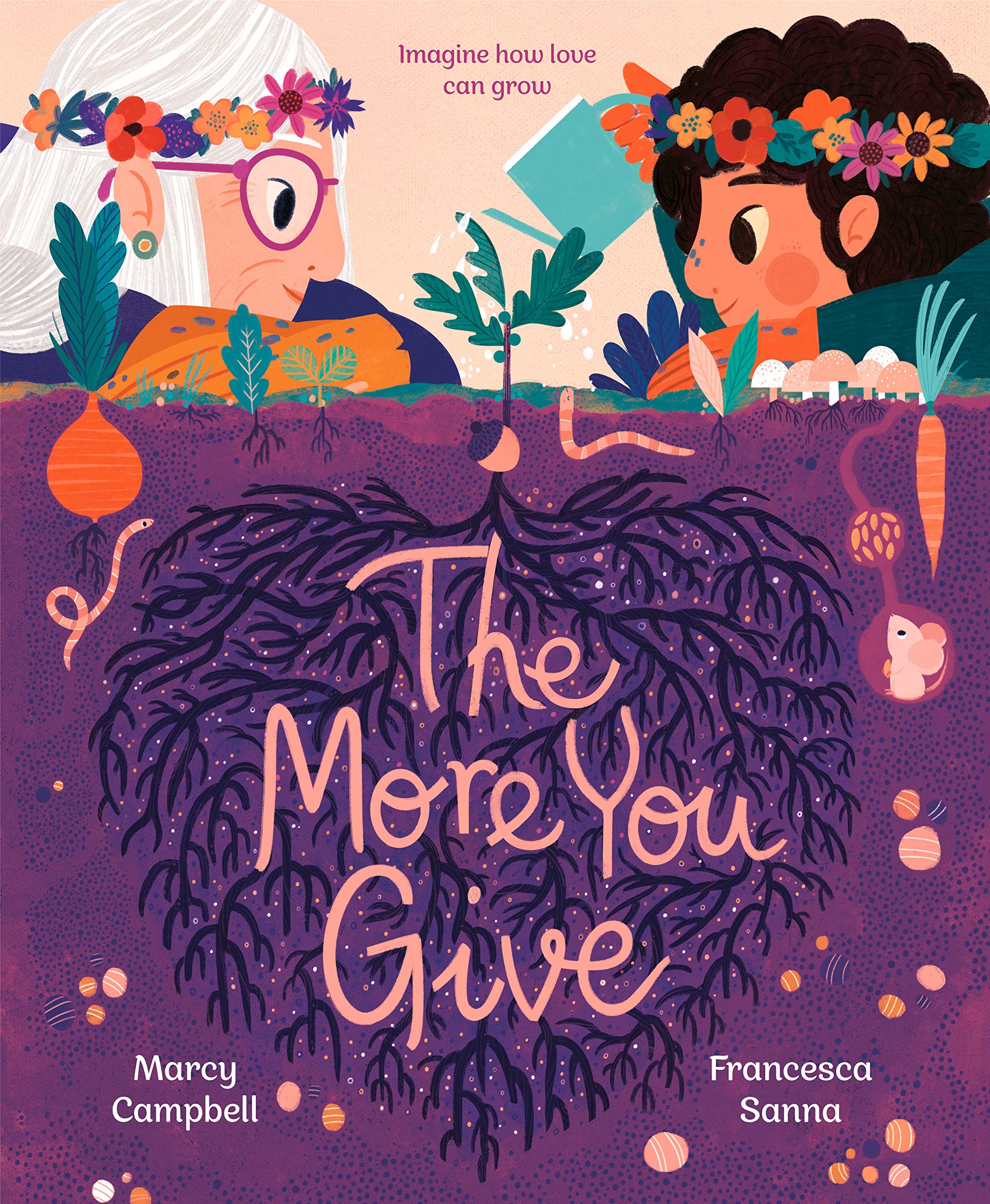
The More You Give by Marcy Campbell, Illustrated by Francesca Sanna

Share

The More You Give
Author: Marcy Campbell
Illustrator: Francesca Sanna
Publishing December 28, 2021 by Chronicle

Summary: A modern-day response to The Giving Tree, this lyrical picturebook shows how a family passes down love from generation to generation, leaving a legacy of growing both trees and community.

Once there was a wide-open field, and a boy who loved his grandmother,
who loved him back.

The boy’s grandmother gives him many gifts, like hugs, and Sunday morning pancakes, and acorns with wild and woolly caps. And all her wisdom about how things grow. As the boy becomes a father, he gives his daughter bedtime stories his grandmother told him, and piggyback rides. He gives her acorns, and the wisdom he learned about how things grow. His daughter continues the chain, then passing down gifts of her own. Here is a picture book about the legacy of love that comes when we nurture living things—be they people or trees.

Ricki’s Review: This book is absolutely stunning. It captures the beautiful spirit of giving as it passes through generations. I found myself drawn into the text, captivated by the words and the powerful illustrations. I loved the ways in which the spirit of giving is captured across three generations. Overall, I love the way it captures kindness, wisdom, and love.

Teachers’ Tools for Navigation: Teachers might read The Giving Tree and then read this book. Students could engage in a discussion of giving. The two texts exist as foils for each other, and the giving does not just go one way.

Discussion Questions: 

  • How do we give? What do we give?
  • What does it mean to give?
  • What does giving mean for the boy in the book? His grandmother?
  • What have elders given to you?

Book Trailer:

Read This If You Love: Books about Giving; Books about Intergenerational Love; Books about Kindness

Recommended For: 

**Thank you to Cynthia at Random House Children’s Books for providing a copy for review!**

Guest Review: All Are Welcome by Alexandra Penfold, Illustrated by Suzanne Kaufman

Share

Guest Reviewer: Sharon, UCF Elementary Education Student

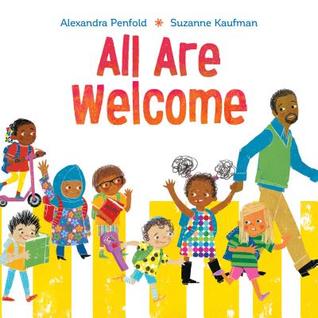
All Are Welcome
Author: Alexandra Penfold
Illustrator: Suzanne Kaufman
Published July 10th, 2018 by Bloomsbury Publishing

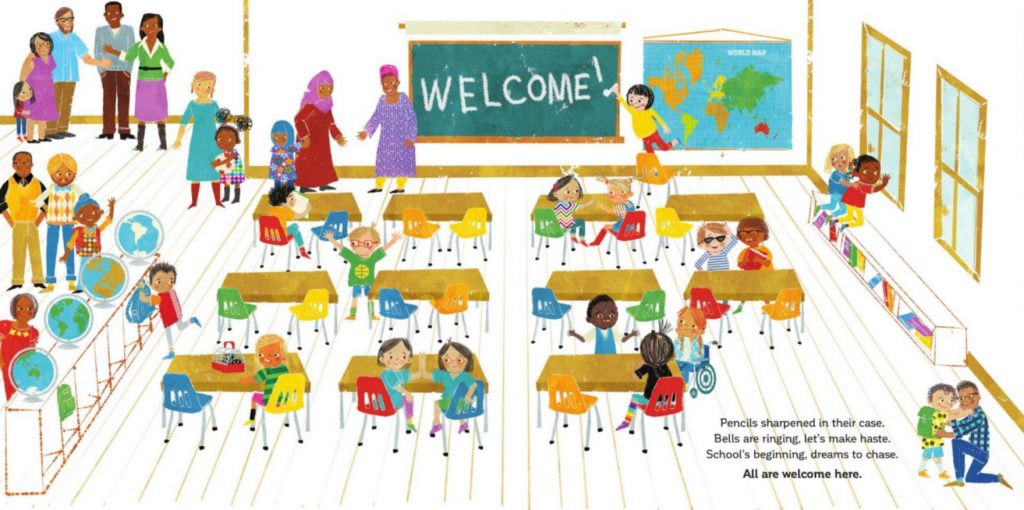
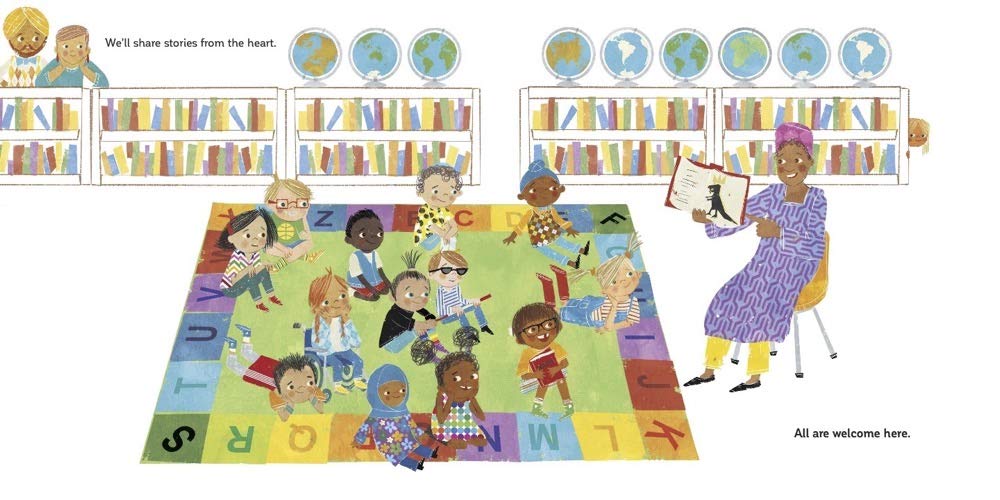
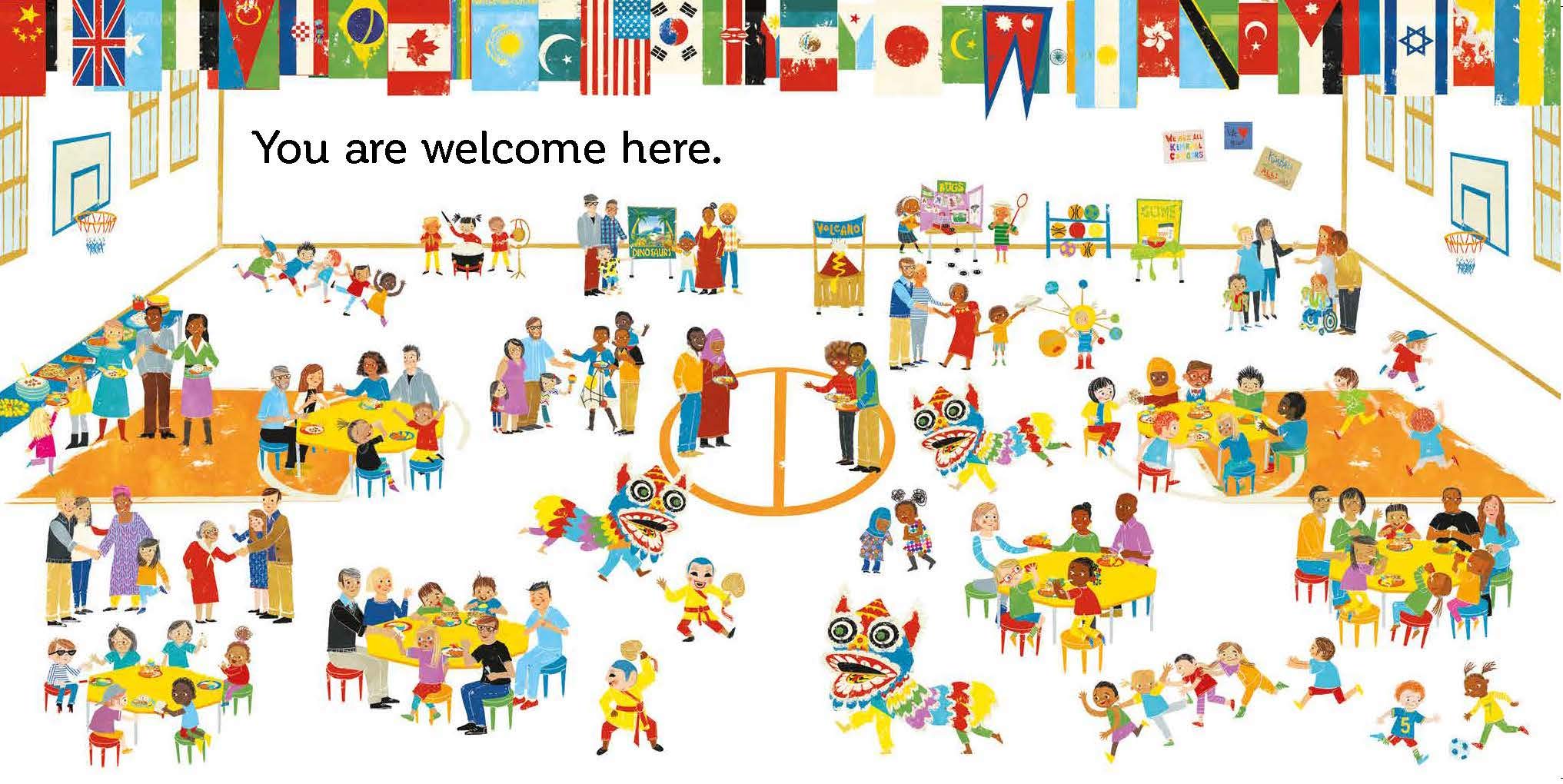
Summary: Follow a group of children through a day in their school, where everyone is welcomed with open arms. A school where kids in patkas, hijabs, and yamulkes play side-by-side with friends in baseball caps. A school where students grow and learn from each other’s traditions and the whole community gathers to celebrate the Lunar New Year.

All Are Welcome lets young children know that no matter what, they have a place, they have a space, they are welcome in their school.

About the Creators: 

A graduate of New York University’s Gallatin School of Individualized Study, Alexandra Penfold began her career in publishing as a children’s book publicist at Simon & Schuster where she worked on media campaigns that appeared in USA Today, Newsweek, US News and World Report, and NPR’s All Things Considered. For eight years she served as an editor at Paula Wiseman Books/Simon & Schuster working on award-winning books for young readers of all ages. She is currently a literary agent with Upstart Crow Literary representing children book authors and illustrators as well as select adult projects.

Suzanne Kaufman is the New York Times bestselling illustrator of All Are Welcome.  She is the recipient of The Ezra Jack Keats/Kerlan Memorial Fellowship, Society of Children’s Book Writers Illustrators Mentorship and Portfolio Honors and Bologna Children’s Book Fair. Her books have been awarded Bank Street College Education Best Children’s Books of the Year Honors, Notable Books for a Global Society, CCBC Choice Award, Washington State Best Picture Book Award, Mathical Honor Award, and Amazon Best Children Book of the Year.  Her books include her own book Confiscated and illustrated work: Big Feelings, Take Your Pets to School Day, 100 Bugs, Naughty Claudine Christmas, and Samanthasaurus Rex.  She has presented at SCBWI Summer Conference, NMAEYC Conference, Tucson Book Festival, Los Angeles Festival of Books and Penguin Random House Book Festival.

Review: This story was very inspiring, and I enjoyed reading it very much. This story resembles what I wish for my future classroom and school to be like. I think it is very important to teach acceptance to children at a very young age and to show them that not everyone looks the same or has the same traditions. This book teaches children that diversity is something good and a strength. This book will hopefully make students feel that no matter what they are welcomed and have a safe space in their school. There are a lot of illustrations and repetition that will help ELL students. This book shows flags of other countries and different types of people which I think will make ELL students feel welcomed at their new school. Students should find someone in the book they can relate to and feel special that they have someone like them in the story. This book emphasizes that no matter what you do at home with your family, what clothes you wear, where you come from, what foods you eat, or what traditions you have with your family, everyone is able to come together and be friends and play together at school. This message is so important and so strong. Children who learn about diversity early on will later become more understanding of their differences with others and will realize what a good thing it is to have diversity.

Teachers’ Tools for Navigation: This book could be used to talk about different countries and the types of traditions different people have around the world. Teacher’s can pause while reading the book and discuss different characters’ countries. This book also teaches the valuable lesson that everyone is welcomed and that acceptance of others is very important. This is a good book to read to teach the class about acceptance and in an underlying way it also prevents bullying. If students learn to be accepting of each other’s differences, that could stop a lot of the bullying that goes on in schools. Teachers can use this book to discuss how their community is similar and different to the one portrayed in the book. Students can also discuss how diversity makes a community better and why they think that. Teachers can also discuss with students times they have felt unwelcomed and what they could do to make others feel welcomed.

Discussion Questions: 

  • What makes the kids in the book remind you of yourself and your friends?
  • Based on what you have seen in the book, do you think having a diverse community like the one in the book is better? Why or why not?
  • If you could be a part of this classroom would you want to? Why or why not.
  • What are some things that the children in the book are doing that makes you think they are kind? Look close at the illustrations on each page. What are some kind things you could do to other students?
  • What is something you and your family do that you think is unique? Explain what it is that you do and why it is unique.
  • What do you think is happening in the cover illustration of the book?

Flagged Passages: 

Read This If You Love: Inclusion and diversity

Recommended For: 

classroomlibrarybuttonsmall

Thank you, Sharon, for your review!

A River’s Gifts: The Mighty Elwha River Reborn by Patricia Newman, Illustrated by Natasha Donovan

Share

A River’s Gifts: The Mighty Elwha River Reborn
Author: Patricia Newman
Illustrator: Natasha Donovan
Published September 6th, 2022 by Millbrook Press

Summary: A mighty river. A long history.

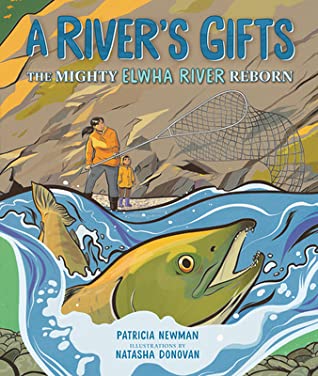
For thousands of years, the Elwha river flowed north to the sea. The river churned with salmon, which helped feed bears, otters, and eagles. The Lower Elwha Klallam Tribe, known as the Strong People located in the Pacific Northwest, were grateful for the river’s abundance. All that changed in the 1790s when strangers came who did not understand the river’s gifts. The strangers built dams, and the environmental consequences were disastrous.

Sibert honoree Patricia Newman and award-winning illustrator Natasha Donovan join forces to tell the story of the Elwha, chronicling how the Strong People successfully fought to restore the river and their way of life.

About the Creators: 

Patricia Newman’s books inspire young readers to seek connections to the real world. Her titles encourage readers to use their imaginations to solve real world problems and act on behalf of their communities. These books include Sibert Honor title Sea Otter Heroes: The Predators That Saved an Ecosystem; Orbis Pictus Recommended Book Planet Ocean: Why We All Need a Healthy Ocean; Bank Street College Best Book Zoo Scientists to the Rescue; Booklist Editor’s Choice Ebola: Fears and Facts; and Green Earth Book Award winner Plastic, Ahoy! Investigating the Great Pacific Garbage Patch. Patricia frequently speaks at schools and conferences to share how children of any age can affect change. Visit her at www.patriciamnewman.com.

Natasha Donovan is the illustrator of the award-winning Mothers of Xsan series (written by Brett Huson). She illustrated the graphic novel Surviving the City (written by Tasha Spillett), which won a Manitoba Book Award and received an American Indian Youth Literature Award (AIYLA) honor. She also illustrated Classified: The Secret Career of Mary Golda Ross, Cherokee Aerospace Engineer which won an Orbis Pictus Honor Book and an American Indian Youth Literature Award (AIYLA). Natasha is Métis, and spent her early life in Vancouver, British Columbia. Although she moved to the United States to marry a mathematician, she prefers to keep her own calculations to the world of color and line. She lives in Washington. www.natashadonovan.com

Review: This book is different than Newman’s other books as it is illustrated and more lyrical than her books of the past; however, there is no need to worry — the book is beautiful! Newman does a fantastic job balancing the narrative of the river and the Lower Elwha Klallam Tribe with informative information about water, salmon, dams, and other wildlife. Newman’s prose also does amazing justice when it comes to the river’s legacy and the indigenous tribes that relied on, and lost, the river.

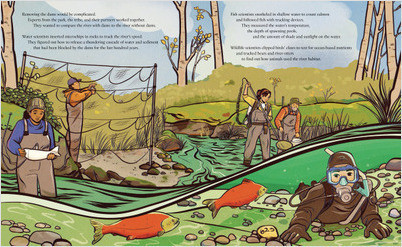
To add to Newman’s work, Donovan’s illustrations bring everything to life that Newman shares. Her work is filled with color and life and brings the whole book together.

A spectacular nonfiction picture book that takes the reader on a journey of a river’s legacy filled with lyrical prose and important information.

Teachers’ Tools for Navigation: The publisher has provided a Teaching Guide for The River’s Gifts:

There is also an interview with Patricia Newman that digs deeper into her book:

Flagged Passages: 

Book Trailer: 

Read This If You Love: Environmental nonfiction picture books

Recommended For: 

classroomlibrarybuttonsmall 

Signature

**Thank you to Patricia Newman and Lerner for providing a copy for review!**

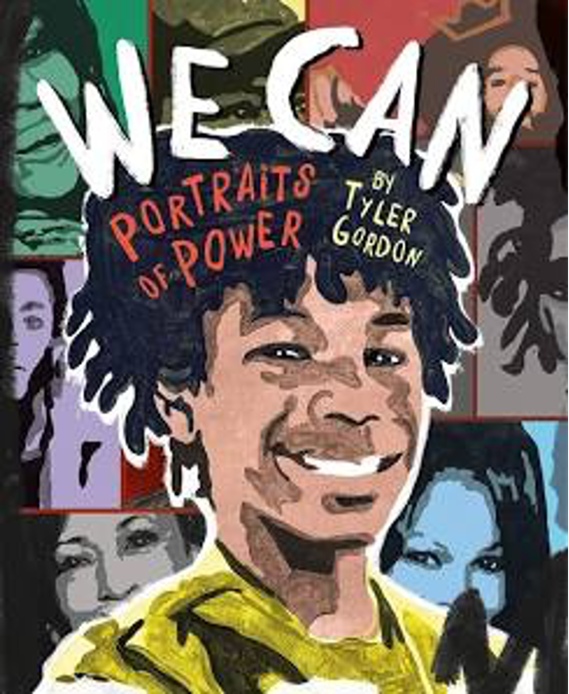
Guest Review: We Can: Portraits of Power by Tyler Gordon

Share

Guest Reviewer: Sailor, UCF Elementary Education Student

We Can: Portraits of Power
Creator: Tyler Gordon
Published September 28th, 2021 by Farrar, Straus & Giroux

Summary: “When I was born, the doctors told my mom that if I did survive I would have lots of health problems and be blind, deaf and severely mentally delayed . . . Boy were they wrong!” —Tyler Gordon

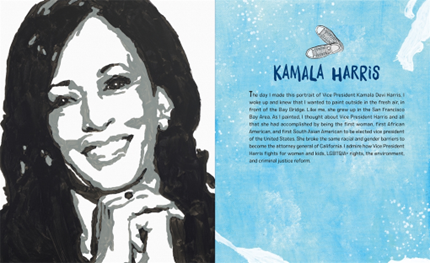
Fifteen-year-old Tyler Gordon’s journey from a regular kid growing up in San Jose, California, to a nationally recognized artist wasn’t without its challenges. For the first six years of his life he was fully deaf, which led to a stutter and bullying. Art gave him a creative outlet for his pain. Then, after painting a portrait of Kamala Harris and posting it on social media, he received a call from the vice president herself! Soon his art was everywhere. He had an interview with the The Today Show. He was the youngest artist featured in the Beverly Center. His portrait of LeBron James graced the cover of TIME Magazine. And that was only the beginning!

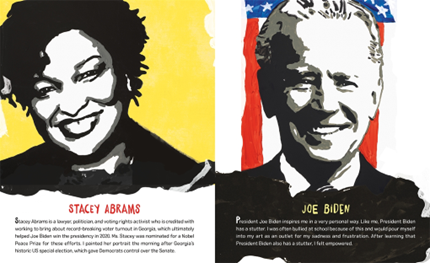
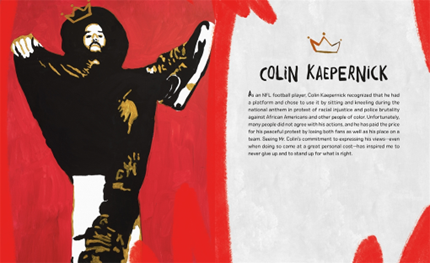
Here is a debut picture book by partially deaf prodigy Tyler Gordon, featuring his bold paintings of over 30 icons—musicians, artists, writers, civils rights leaders, sports legends, change-makers, record-setters, and more—alongside short explanations of how these people inspire him.

If Tyler can make art and follow his dreams, you can, too. We all can.

About the Author: Tyler Gordon is a fourteen-year-old painter whose work has been featured in TIME Magazine, Essence, Good Morning America, and ABC News. In 2020, he was awarded the Global Child Prodigy Award. He currently lives in San Jose, California with his family.

Review: We Can: Portraits of Power by Tyler Gordon is by far one of the best books for children to read. This book provides a lot of historical, and current information, that many people do not know, but should, about very famous and influential people. Tyler Gordon was only 14 years old when his book was published. He relates every single person that he paints to himself and talks about the honorable work that these people have done, walls they have torn down, and glass ceilings they have broken through.

Every single student can relate to this book in some way or another, with over 30 people showcased in We Can: Portraits of Power, students will be able to see themselves through one of them, all of them, or even through Tyler Gordon himself. This book is filled with politicians, artists, athletes, singers, philanthropists, civil rights activists, and many more. This story is able to empower students to be activists for theirs, and other people’s rights, all while also getting them excited and encouraging  them to learn about the history that some of these amazing  people have made, and are continuing to make.

I loved reading this book and looking at the beautiful art that Tyler has done and will continue to do. I cannot wait to see what this young man’s future holds.

Teachers’ Tools for Navigation: We Can: Portraits of Power by Tyler Gordon provides many great opportunities for use within the classroom. To start, teachers are able to have students pick their favorite person that Tyler had painted and write why that person was also an inspiration to them.  Teachers can also have students paint a portrait of someone who had has a big impact in their lives,  and. then write about them.

I think that one of the best ideas to pair with We Can: Portraits of Power by Tyler Gordon. would be to have students make a list of people who they look up to, and people that empower them to be great. After students make their lists, they would go back and write why these people have been so influential in their life, and then finally paint an image of them. Creating their own mini versions of We Can: Portraits of Power.

Discussion Questions: 

  • How does Tyler relate to President Biden? Do you know anyone that could also relate to President Biden and Tyler? Why is it good to be able to relate to successful people?
  • How did Tyler’s creativity help him?
  • How did this book inspire you?
  • Who did you relate to in this book? Why?
  • Why did Tyler use athletes, politicians, and historical figures in this book? What did it do to the story that he used  a variety of people?
  • Who do you think is the most important person in this book? Why do you think that? How can you relate to this person?

Flagged Passages: 

Read This If You Love: Art, Diversity, Empowerment

Recommended For: 

classroomlibrarybuttonsmall

Thank you, Sailor, for your review!

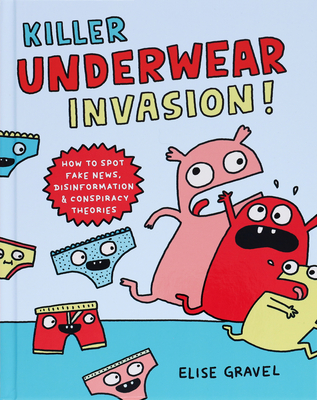
Killer Underwear Invasion!: How to Spot Fake News, Misinformation, & Conspiracy Theories by Elise Gravel

Share

Killer Underwear Invasion: How to Spot Fake News, Disinformation & Conspiracy Theories
Author: Elise Gravel
Published September 20, 2022 by Chronicle

Summary: A hilarious and timely tool to help kids learn how to tell what news is true and what isn’t

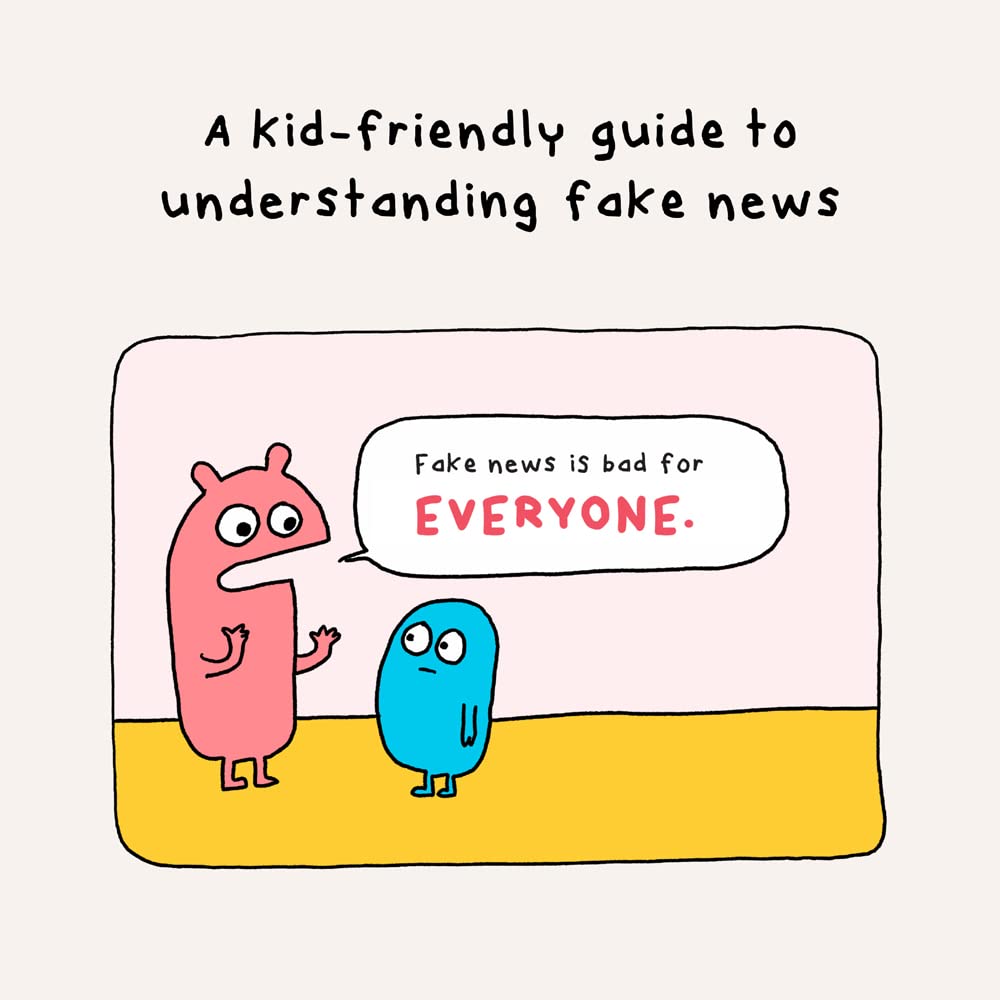
Can peanuts give you super strength? Were unicorns discovered on the moon? Did Martians really invade New Jersey? For anyone who has ever encountered outrageous stories like these and wondered whether they were true, this funny, yet informative book breaks down what fake news is, why people spread it, and how to tell what is true and what isn’t. With quirky illustrations and a humorous tone, Elise Gravel brings her kid-accessible wit to the increasingly important subject of media literacy and equips younger readers with the skills needed to interact with global news.

Review and Teachers’ Tools for Navigation: My kids love this book, and I love the way it allows kids to think about critical literacy! I used excerpts of this in my college class to demonstrate how accessible conversations about critical literacy can be. I also found myself sharing pages of the text with my brother (who said he would be ordering it for his daughter). This book is wholly impressive and critical for classrooms. Teachers could do close readings of the text and pair this text with conversations about disinformation, evaluating sources, etc.

Flagged Passage:  

Read This If You Love: Humor, Books about Critical Literacy, Retaliation against Fake News!!

Recommended For: 

I Cannot Draw a Horse by Charise Mericle Harper

Share

I Cannot Draw a Horse
Author & Illustrator: Charise Mericle Harper
Publishing October 11th, 2022 by Union Square Kids

Summary: Award-winning author and illustrator Charise Mericle Harper delivers a fantastically funny adventure about doing the impossible: drawing a horse.

The cat wants a horse.
The book cannot draw a horse.
The book CAN draw a squirrel, a beaver, and a bunny.
Fun . . . but the cat still wants a horse.

Can the quick-draw book appease the horse-obsessed cat with an impressive collection of horse-y alternatives (all created from the same “nothing shape”)? Or will the cat finally get a horse? The cat REALLY wants a horse.

Praise: “This book is clever in its simple story and imaginative, 2-D illustrations, which are printed on pages like graph paper. Easy text appears in both standard form and yellow speech bubbles, giving it an easy-to-follow, graphic novel feel. Creative and loaded with humor, this story will have kids giggling in seconds and trying their hand at drawing a horse—or at least a gumdrop.” — Booklist, Starred Review

About the Author: Charise Mericle Harper is the award-winning author and illustrator of numerous books for children, including The Good for Nothing Button!CupcakeGo! Go! Go! Stop!So Embarrassing, and Bad Sister. Her children’s book series include Pepper & Boo, Just Grace, Fashion Kitty, Sasquatch and Aliens, Bean Dog and Nugget, and Crafty Cat. Charise lives with her family and furry pets in Portland, Oregon.

Review: This clever picture book is funny and inspiring! It shows readers to not give up and to push themselves creatively. It also shows the power of the basics of art, specifically shapes & lines, can be used to tell stories, show characters’ emotions, and be manipulated in so many different ways. And the basic graphic novel format will grab readers’ attention and will keep them reading. Over all a fun picture book read that will bring giggles and asks for rereading.

Teachers’ Tools for Navigation: Educators will first want to read this book aloud–students will love the cranky cat and his demands! But then the book could easily lead into a discussion on creativity and creation of their own story using one shape. Use the book as a mentor text for students to imitate.

Discussion Questions: 

  • Why do you think the cat wants a horse so badly?
  • What does the end of the story lead you to believe?
  • What is your go-to shape when drawing? What animals can you make from it?
  • Why is the cat getting so frustrated with the author/illustrator?
  • How does the author turn this basic concept into a plot?

Flagged Passages: 

Read This If You Love: Give This Book a Title by Jarrett Lerner, I Can Only Draw Worms by Will Mabbitt, Draw the Line by Kathryn Otoshi

Recommended For: 

classroomlibrarybuttonsmall

Signature

**Thank you to Jenny at Union Square for providing a copy for review!**

Guest Review: A Butterfly is Patient by Dianna Hutts Aston, Illustrated by Sylvia Long

Share

Guest Reviewer: Natalia, UCF Elementary Education Student

A Butterfly is Patient
Author: Dianna Hutts Aston
Illustrator: Sylvia Long
Published May 18th, 2011 by Chronicle Books

Summary: The creators of the award-winning An Egg Is Quiet and A Seed Is Sleepy have teamed up again to create this gorgeous and informative introduction to the world of butterflies. From iridescent blue swallowtails and brilliant orange monarchs to the worlds tiniest butterfly (Western Pygmy Blue) and the largest (Queen Alexandra’s Birdwing), an incredible variety of butterflies are celebrated here in all of their beauty and wonder. Perfect for a child’s bedroom bookshelf or for a classroom reading circle!  (Summary from Goodreads)

About the Creators: 

Dianna Hutts Aston is the author of many books for children and is the founder of the nonprofit foundation for disadvantaged children, The Oz Project. She lives in San Miguel de Allende, Mexico.

Sylvia Long is the illustrator of many best-selling books for children, including Sylvia Long’s Mother Goose and Hush Little Baby. She lives in Scottsdale, Arizona, with her husband and their dogs.

Review: I loved this beautifully illustrated book by Dianna Hutts Aston and Sylvia Long!  There is a wide variety of butterflies depicted in this nonfiction picture book about the life cycle and anatomy of butterflies.  Not only can it be enjoyed for its visual aspects, but the descriptive vocabulary shares basic facts about butterflies as well as more unusual information.  Did you know butterflies taste with their feet?  Some butterflies eat plants that are poisonous to their predators when they are caterpillars, so they will be poisonous as adults.  For such a seemingly delicate creature, A Butterfly is Patient shares that butterflies are so much more than they seem.

Teachers’ Tools for Navigation:

In addition to providing beautiful, life-like illustrations of a variety of butterflies, this nonfiction picture book follows the life cycle of a butterfly.  There are many opportunities to infuse reading, ELA, math, art, and science and more using this book.  There is a rich descriptive vocabulary and uses key terms like anatomy, metamorphosis, migration, coloration/camouflage, and more.  I can see using these words cross-curricular lessons, from an ELA-based writing exercise to science-based compare/contrast activity with other animals and insects.  Math and geography activities can be used to calculate and track the migratory paths that different species of butterflies travel in their lifetimes.  Take it a step further, compare/contrast how many hours/days/weeks that would take a person using different modes of transportation.  Students can use what they have learned about butterfly camouflage and anatomy, to create their own butterfly.  They can describe why they chose the colors and features, then use art supplies to create a painting, drawing, or model of their “newly discovered” species.

Something I love to do with my children and students, is purchase milkweed plants.  They attract Monarch Butterflies.  Sometimes the plants already have tiny eggs or caterpillars living on them.  Other times, if I wait long enough, Monarchs will lay eggs on my plants.  We love to watch the caterpillars grow from teeny tiny slivers, to thick, fat caterpillars, which in turn, change into gorgeous jade chrysalis.  If we are lucky enough, we get to see the butterfly when it hatches.  There are butterfly net cages you can use in the classroom or just keep the plants outdoors if there is a safe place.  Students can track the growth and changes throughout the process with drawings and/or written descriptions.

Discussion Questions: 

  • Why does a butterfly lay its egg under a leaf?
  • What does it mean to “molt?”
  • What is “metamorphosis?”
  • How does a caterpillar protect itself during metamorphosis?
  • How do butterflies help pollinate flowers?
  • What are some ways that butterflies use their wings to protect themselves?
  • How does a butterfly use its probiscis?
  • Are butterflies all the same size?
  • What would happen if a butterfly didn’t have scales?
  • How are butterflies’ scales helpful to them?
  • Where do Monarch butterflies migrate to and from?

Flagged Passages: 

Read This If You Love: The Very Hungry Caterpillar by Eric Carle

Recommended For: 

classroomlibrarybuttonsmall

Thank you, Natalia, for your review!