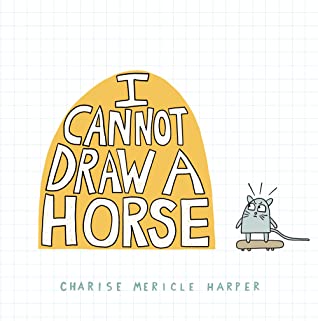
I Cannot Draw a Horse Author & Illustrator: Charise Mericle Harper
Publishing October 11th, 2022 by Union Square Kids
Summary: Award-winning author and illustrator Charise Mericle Harper delivers a fantastically funny adventure about doing the impossible: drawing a horse.
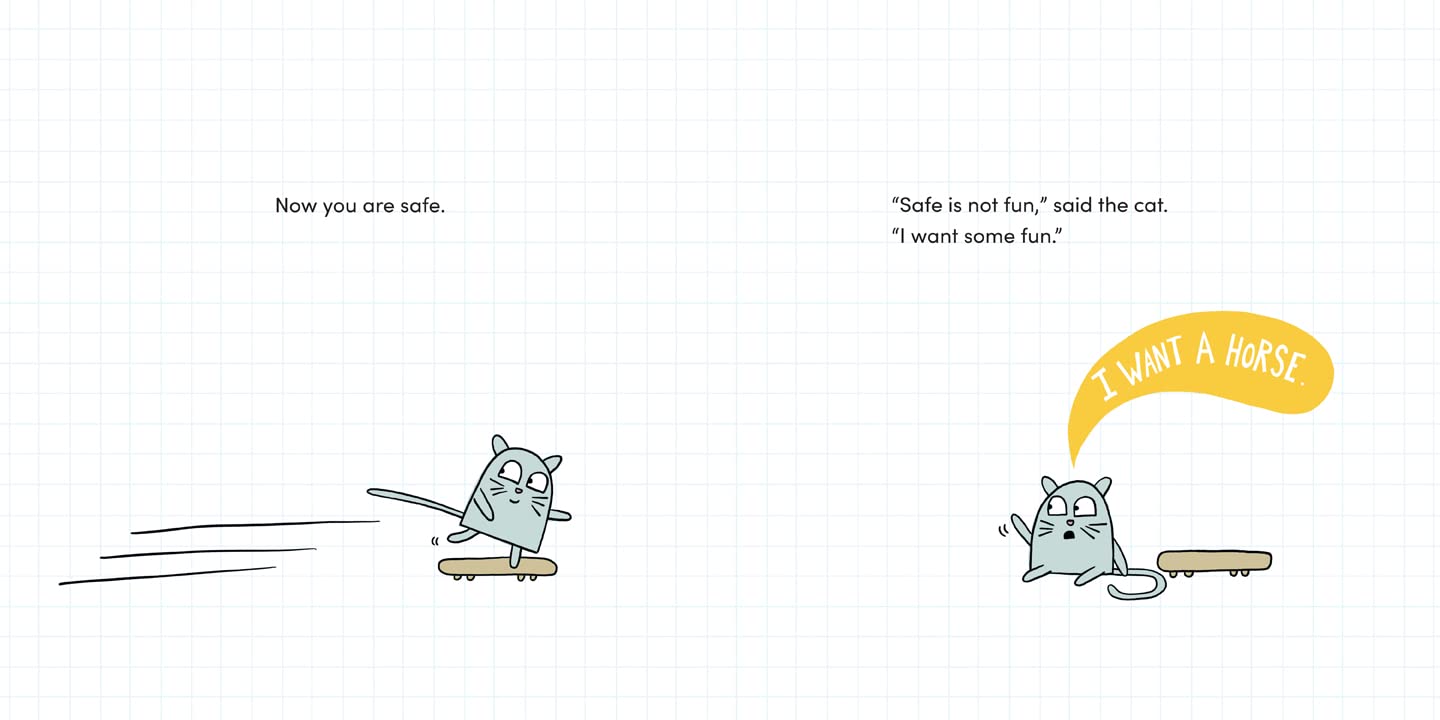
The cat wants a horse.
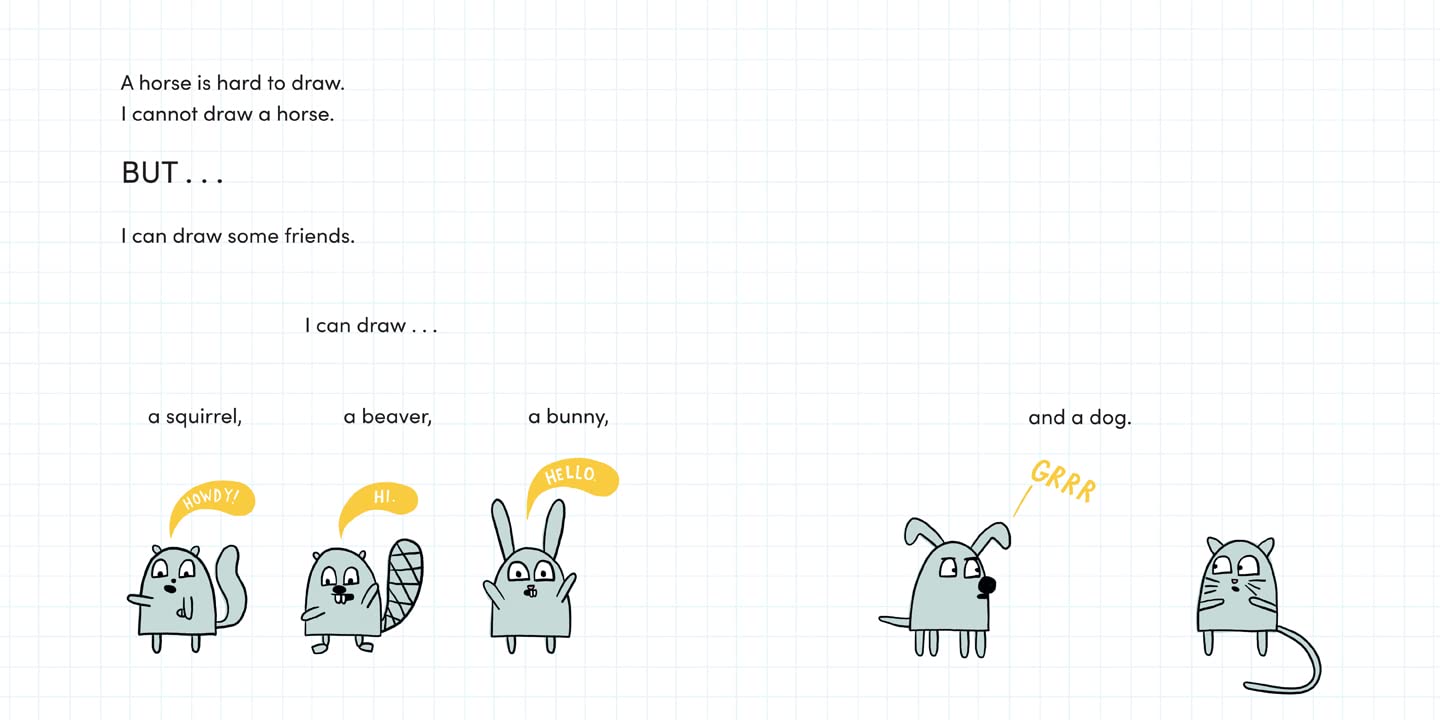
The book cannot draw a horse.
The book CAN draw a squirrel, a beaver, and a bunny.
Fun . . . but the cat still wants a horse.
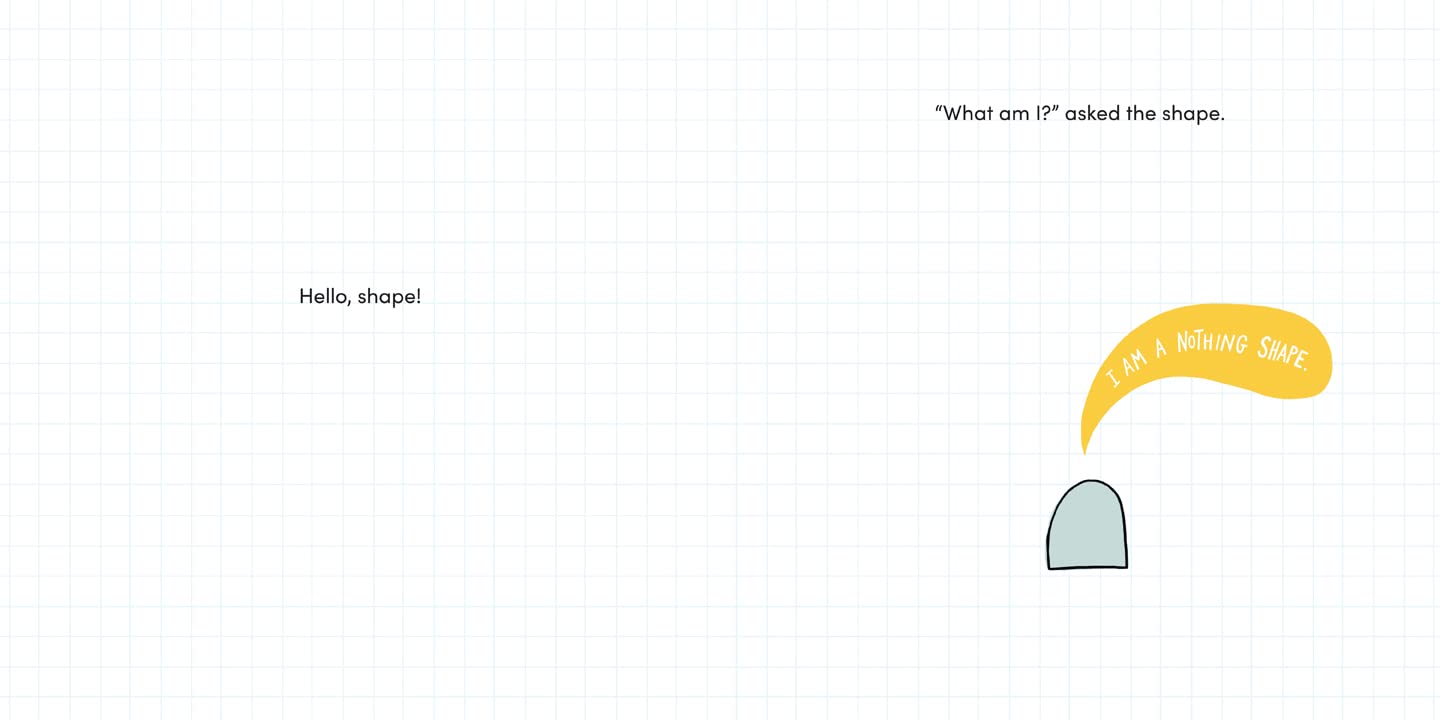
Can the quick-draw book appease the horse-obsessed cat with an impressive collection of horse-y alternatives (all created from the same “nothing shape”)? Or will the cat finally get a horse? The cat REALLY wants a horse.
Praise: “This book is clever in its simple story and imaginative, 2-D illustrations, which are printed on pages like graph paper. Easy text appears in both standard form and yellow speech bubbles, giving it an easy-to-follow, graphic novel feel. Creative and loaded with humor, this story will have kids giggling in seconds and trying their hand at drawing a horse—or at least a gumdrop.” — Booklist, Starred Review
About the Author: Charise Mericle Harper is the award-winning author and illustrator of numerous books for children, including The Good for Nothing Button!, Cupcake, Go! Go! Go! Stop!, So Embarrassing, and Bad Sister. Her children’s book series include Pepper & Boo, Just Grace, Fashion Kitty, Sasquatch and Aliens, Bean Dog and Nugget, and Crafty Cat. Charise lives with her family and furry pets in Portland, Oregon.
Review:This clever picture book is funny and inspiring! It shows readers to not give up and to push themselves creatively. It also shows the power of the basics of art, specifically shapes & lines, can be used to tell stories, show characters’ emotions, and be manipulated in so many different ways. And the basic graphic novel format will grab readers’ attention and will keep them reading. Over all a fun picture book read that will bring giggles and asks for rereading.
Teachers’ Tools for Navigation: Educators will first want to read this book aloud–students will love the cranky cat and his demands! But then the book could easily lead into a discussion on creativity and creation of their own story using one shape. Use the book as a mentor text for students to imitate.
Discussion Questions:
Why do you think the cat wants a horse so badly?
What does the end of the story lead you to believe?
What is your go-to shape when drawing? What animals can you make from it?
Why is the cat getting so frustrated with the author/illustrator?
How does the author turn this basic concept into a plot?
Flagged Passages:
Read This If You Love: Give This Book a Title by Jarrett Lerner, I Can Only Draw Worms by Will Mabbitt, Draw the Line by Kathryn Otoshi
Recommended For:
**Thank you to Jenny at Union Square for providing a copy for review!**
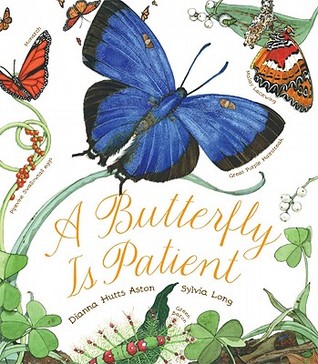
A Butterfly is Patient Author: Dianna Hutts Aston
Illustrator: Sylvia Long
Published May 18th, 2011 by Chronicle Books
Summary: The creators of the award-winning An Egg Is Quiet and A Seed Is Sleepy have teamed up again to create this gorgeous and informative introduction to the world of butterflies. From iridescent blue swallowtails and brilliant orange monarchs to the worlds tiniest butterfly (Western Pygmy Blue) and the largest (Queen Alexandra’s Birdwing), an incredible variety of butterflies are celebrated here in all of their beauty and wonder. Perfect for a child’s bedroom bookshelf or for a classroom reading circle! (Summary from Goodreads)
About the Creators:
Dianna Hutts Aston is the author of many books for children and is the founder of the nonprofit foundation for disadvantaged children, The Oz Project. She lives in San Miguel de Allende, Mexico.
Sylvia Long is the illustrator of many best-selling books for children, including Sylvia Long’s Mother Goose and Hush Little Baby. She lives in Scottsdale, Arizona, with her husband and their dogs.
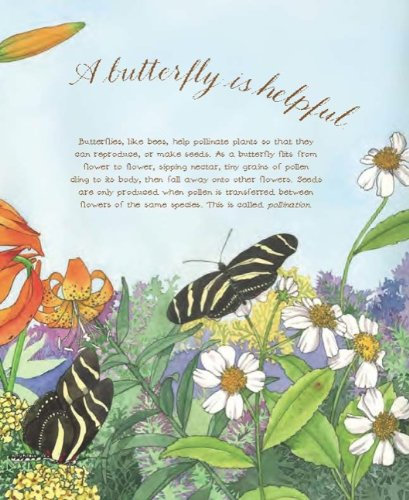
Review: I loved this beautifully illustrated book by Dianna Hutts Aston and Sylvia Long! There is a wide variety of butterflies depicted in this nonfiction picture book about the life cycle and anatomy of butterflies. Not only can it be enjoyed for its visual aspects, but the descriptive vocabulary shares basic facts about butterflies as well as more unusual information. Did you know butterflies taste with their feet? Some butterflies eat plants that are poisonous to their predators when they are caterpillars, so they will be poisonous as adults. For such a seemingly delicate creature, A Butterfly is Patient shares that butterflies are so much more than they seem.
Teachers’ Tools for Navigation:
In addition to providing beautiful, life-like illustrations of a variety of butterflies, this nonfiction picture book follows the life cycle of a butterfly. There are many opportunities to infuse reading, ELA, math, art, and science and more using this book. There is a rich descriptive vocabulary and uses key terms like anatomy, metamorphosis, migration, coloration/camouflage, and more. I can see using these words cross-curricular lessons, from an ELA-based writing exercise to science-based compare/contrast activity with other animals and insects. Math and geography activities can be used to calculate and track the migratory paths that different species of butterflies travel in their lifetimes. Take it a step further, compare/contrast how many hours/days/weeks that would take a person using different modes of transportation. Students can use what they have learned about butterfly camouflage and anatomy, to create their own butterfly. They can describe why they chose the colors and features, then use art supplies to create a painting, drawing, or model of their “newly discovered” species.
Something I love to do with my children and students, is purchase milkweed plants. They attract Monarch Butterflies. Sometimes the plants already have tiny eggs or caterpillars living on them. Other times, if I wait long enough, Monarchs will lay eggs on my plants. We love to watch the caterpillars grow from teeny tiny slivers, to thick, fat caterpillars, which in turn, change into gorgeous jade chrysalis. If we are lucky enough, we get to see the butterfly when it hatches. There are butterfly net cages you can use in the classroom or just keep the plants outdoors if there is a safe place. Students can track the growth and changes throughout the process with drawings and/or written descriptions.
Discussion Questions:
Why does a butterfly lay its egg under a leaf?
What does it mean to “molt?”
What is “metamorphosis?”
How does a caterpillar protect itself during metamorphosis?
How do butterflies help pollinate flowers?
What are some ways that butterflies use their wings to protect themselves?
How does a butterfly use its probiscis?
Are butterflies all the same size?
What would happen if a butterfly didn’t have scales?
How are butterflies’ scales helpful to them?
Where do Monarch butterflies migrate to and from?
Flagged Passages:
Read This If You Love: The Very Hungry Caterpillar by Eric Carle
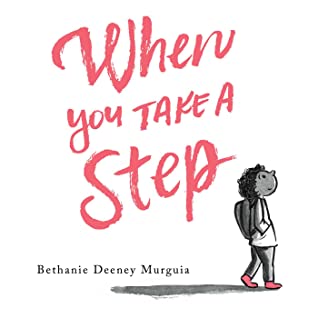
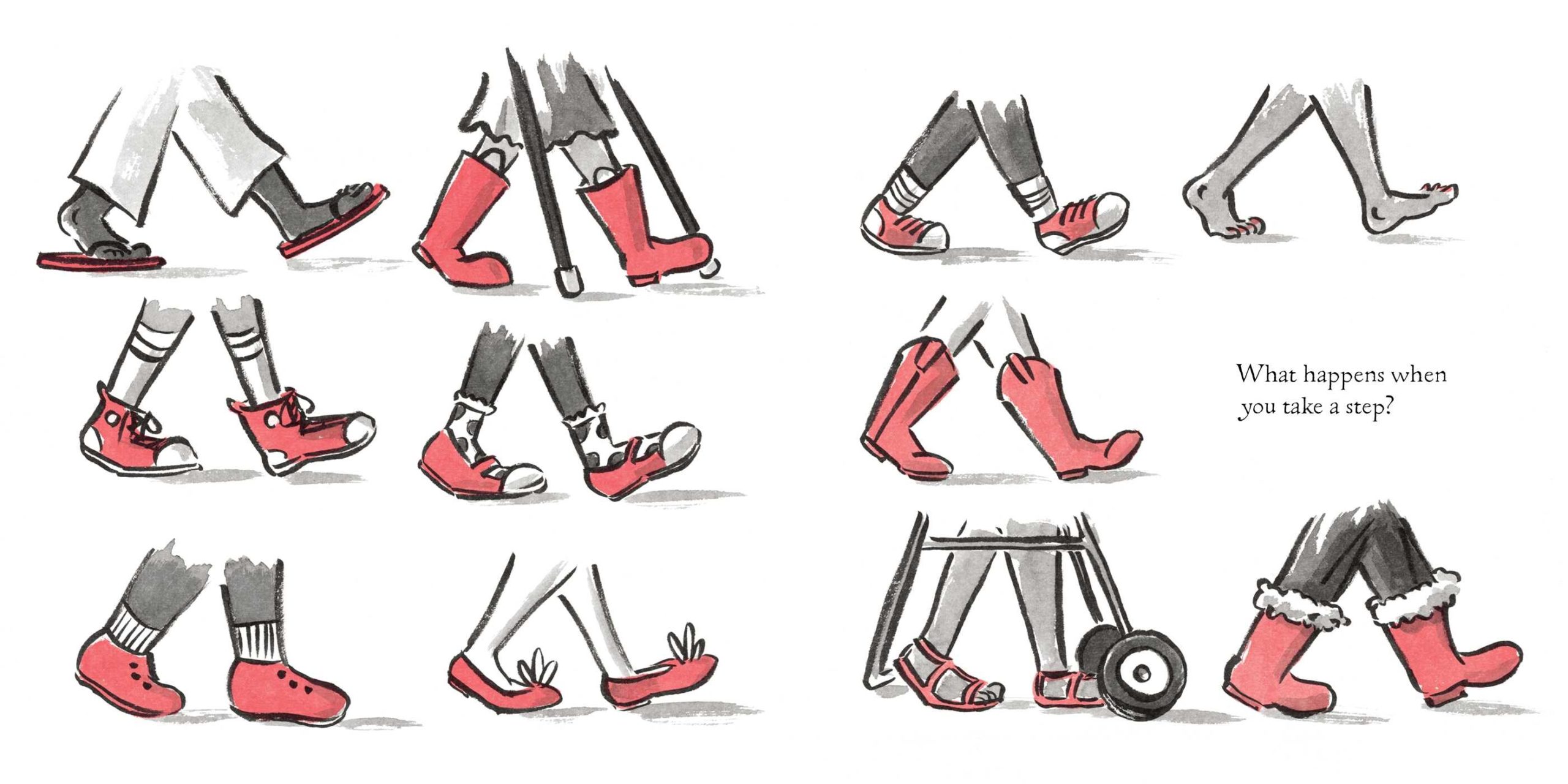
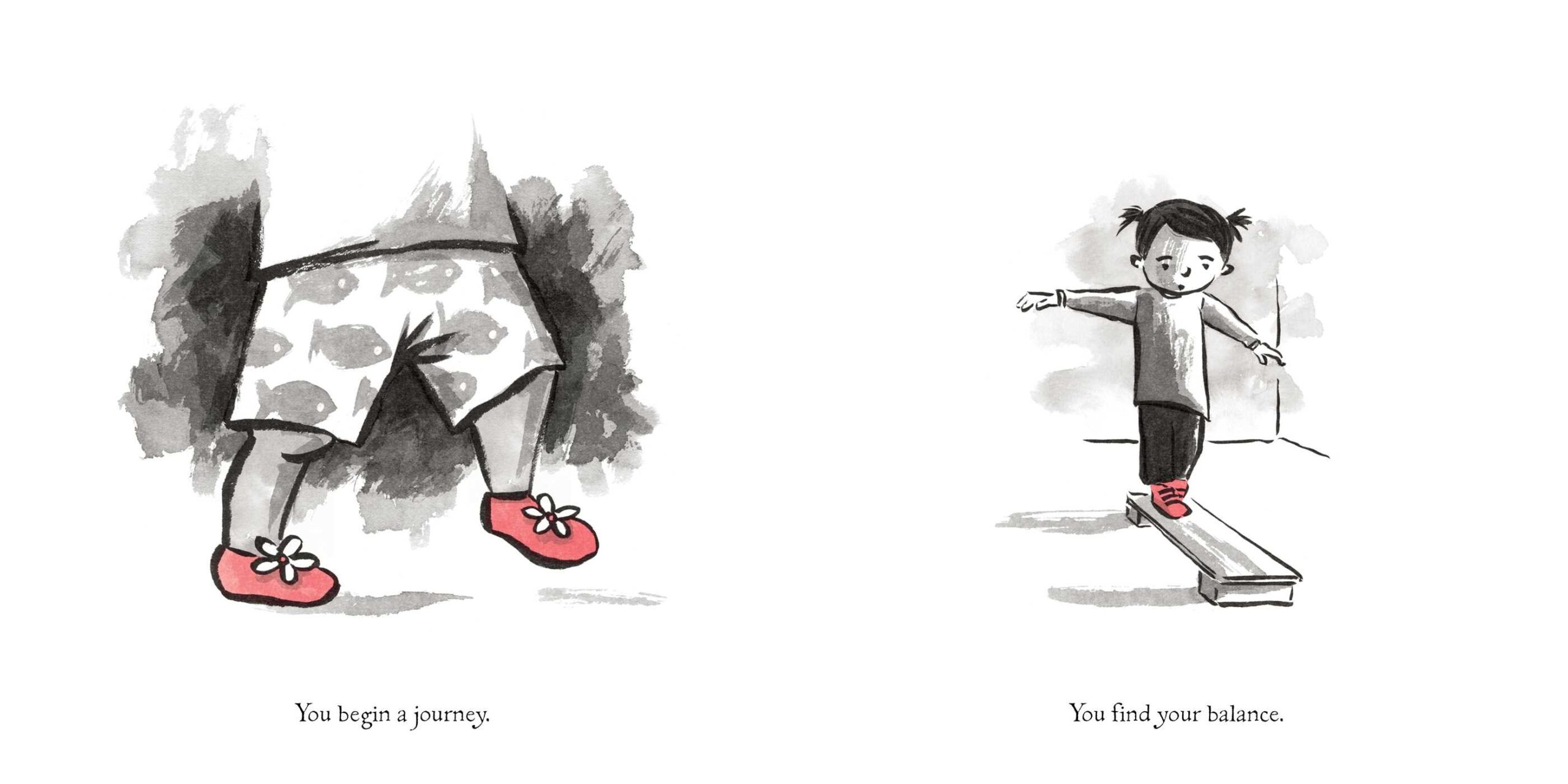
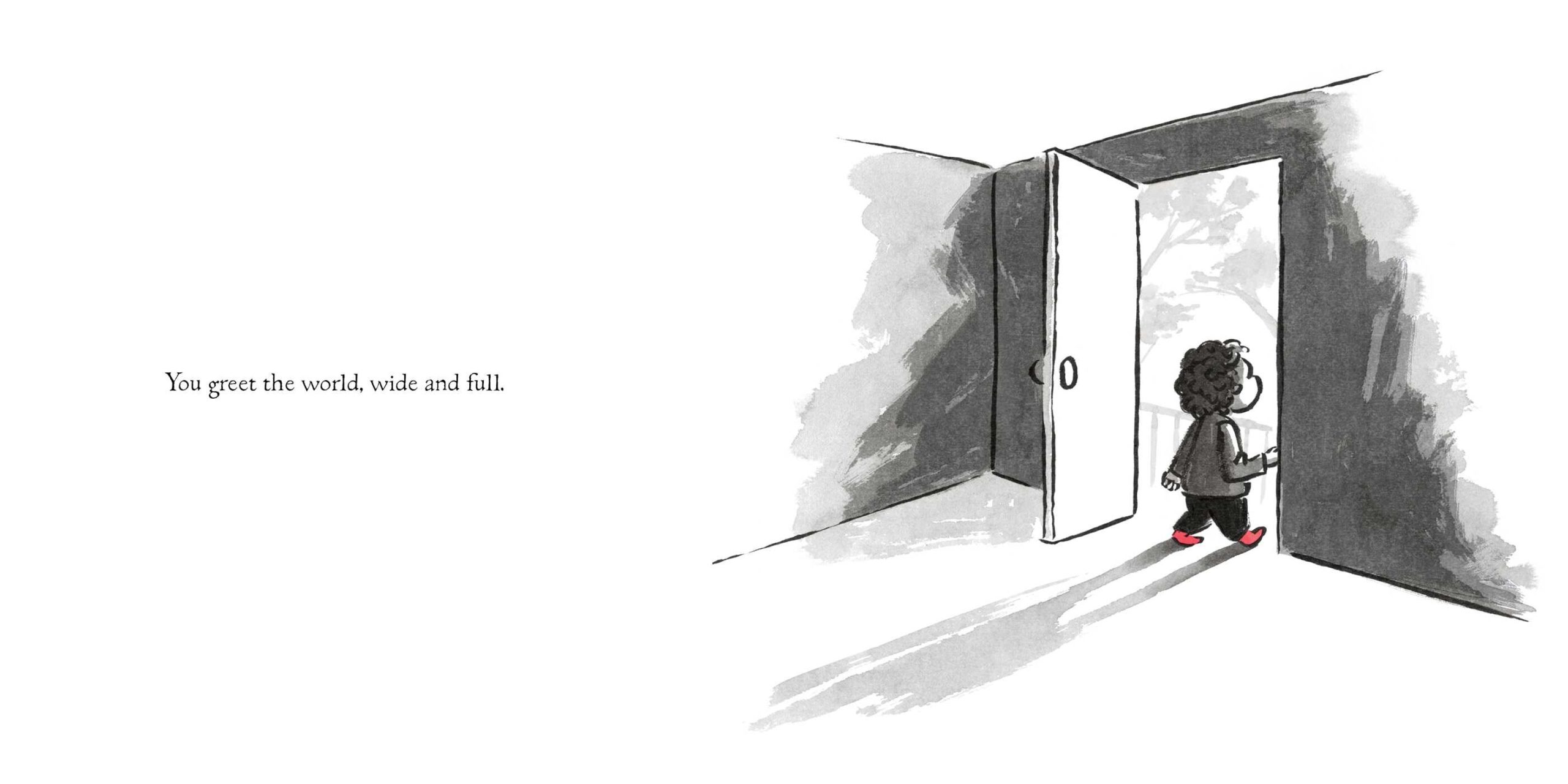
When You Take a Step Author: Bethanie Deeney Murguia
Expected Publication September 27th, 2022 by Beach Lane Books
Summary: Each step leads to a new discovery in this evocative picture book about how mindfulness, peace, or change could be just around the corner.
To take a walk is to begin a journey. It can be an adventure or a chance to let your thoughts roam and be one with nature. It can be a time for daydreaming and pondering life’s many questions. It can be a time to reflect on the past or to stand up for a better future. So take a step and see where your journey will lead you!
Praise:
“Though the concept is simple—even a single step can empower—it uplifts via Deeney Murguia’s polished execution.” —Publisher’s Weekly
About the Author: Bethanie Deeney Murguia graduated from the School of Visual Arts in New York City with an MFA in illustration and has created numerous picture books, including Cockatoo, Too; Zoe Gets Ready; Snippet the Early Riser; I Feel Five!; We Disagree; and When You Take a Step. She lives in the San Francisco Bay area with her two daughters and her dog, Disco. To learn more about Bethanie, please visit her website, AquaPup.com.
Review:Murguia has created a simple yet deep picture book about how one step, both figurative and literal steps, can make a difference. And it could be a small change or big, but the steps are important and they all have a purpose. This book will be an amazing text to inspire young minds to not give up, to make a difference, and to make that step they may be afraid to make.
And I love the illustrations and purposeful use of pink color. The cartoon-style illustrations are realistic yet fun; I think readers will connect with them! Also, the use of pink on the shoes to its full page pink spread at the end was so well done to show the spread of the steps.
Teachers’ Tools for Navigation: The publisher has provided a guide for using books about feelings and emotions in the classroom which would work perfectly with this book:
Discussion Questions:
Does the author always mean actual steps? Explain.
What are the different types of steps, figurative and literal, that the author includes in the book?
In what ways did the author add inclusivity into the book?
What is the theme of the book?
Why do you think the author chose to write this book?
Flagged Passages:
Read This If You Love: Inspirational books, Books about emotions
Recommended For:
**Thank you to Alex at Simon & Schuster for providing a copy for review!**
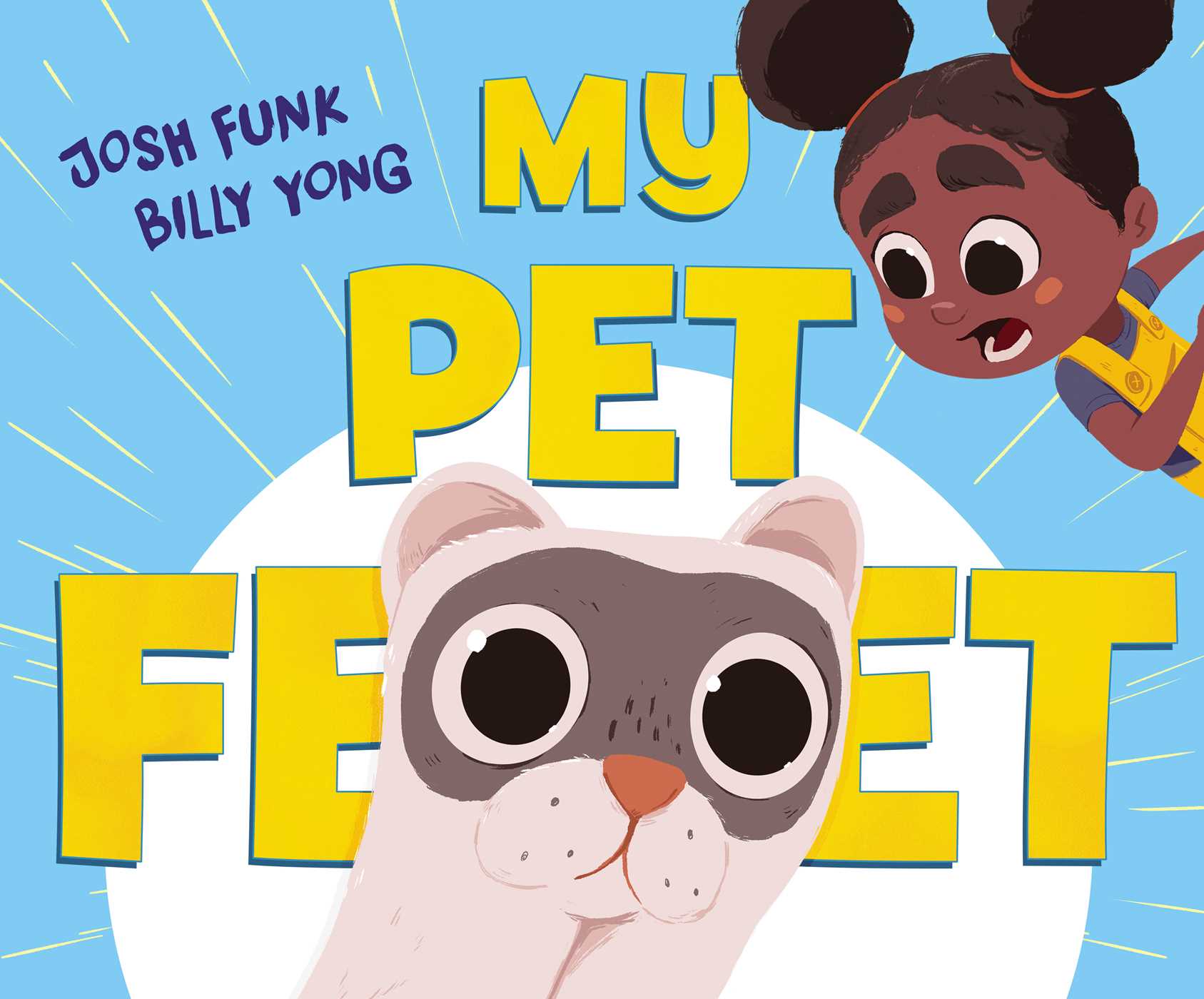
My Pet Feet Author: Josh Funk Illustrator: Billy Yong Anticipated Publication: August 23, 2022 by Simon & Schuster
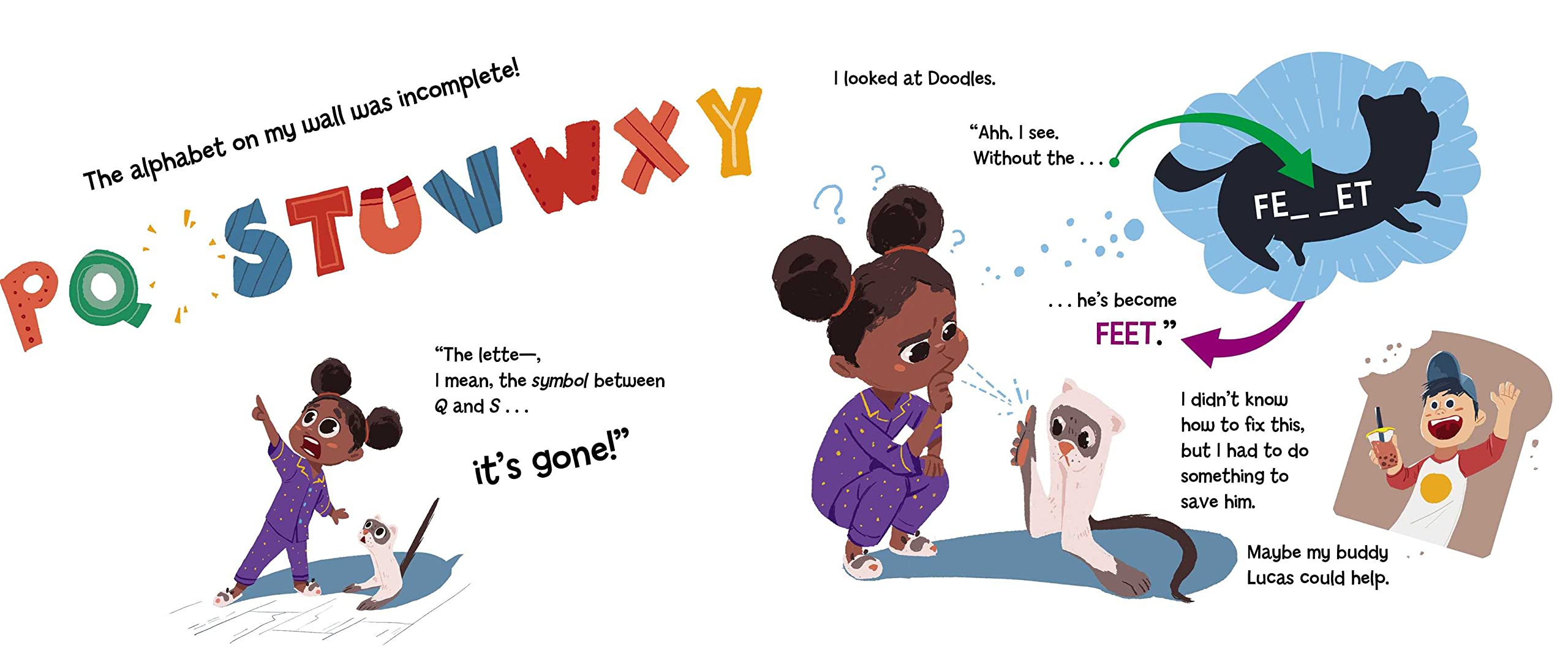
Goodreads Summary: When the letter R suddenly vanishes, a whole town goes upside-down in this side-splitting picture book of alphabet chaos that’s Can I Be Your Dog? meets P Is for Pterodactyl.
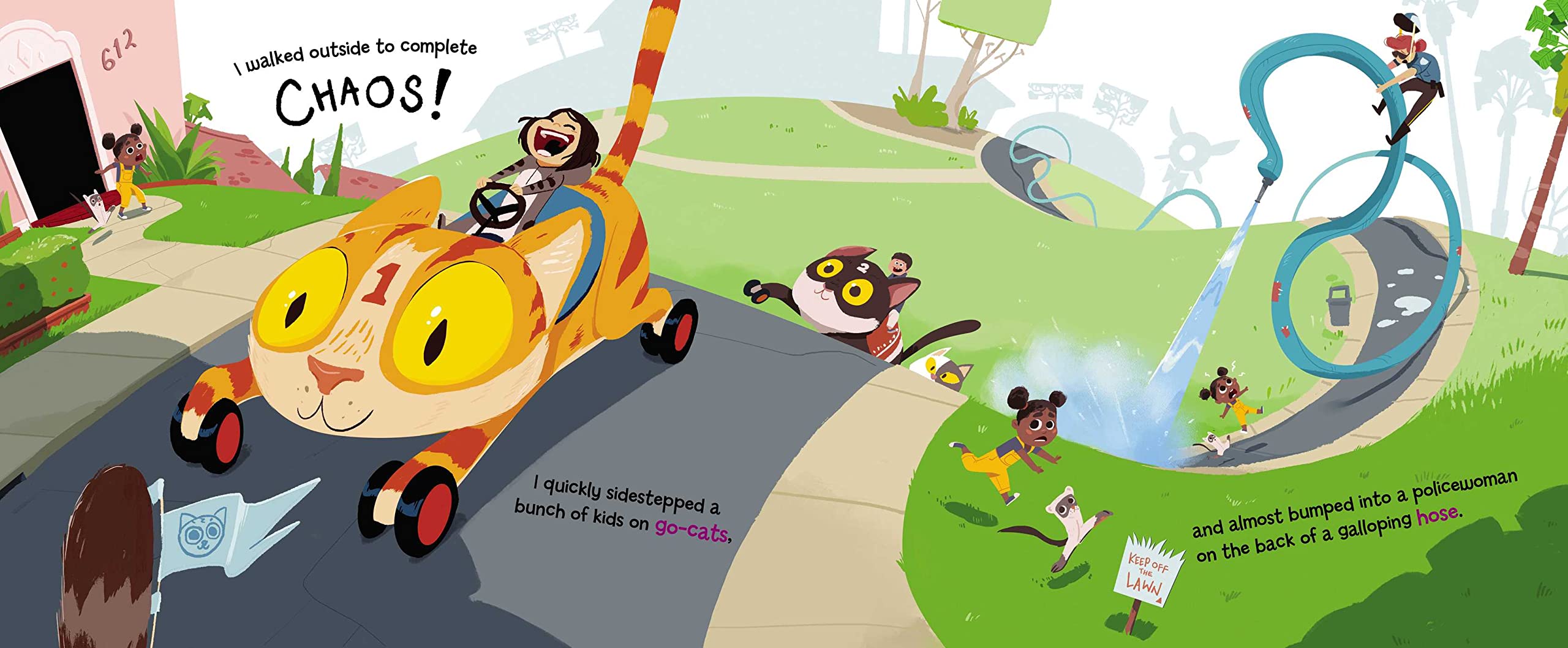
A little girl wakes up one day to find that R, a vital piece of the alphabet, has vanished! Suddenly, she has pet feet instead of a ferret. Flocks of cows replace crows flying in the sky. Giant shoes (not shores!) live on the sandy beaches of her town.
What could have happened to the eighteenth letter of the alphabet? Did it get lost—or stolen? One way or another, the town needs to be saved!
When Trent first read this book, he said (and I quote), “This book should win all the awards! Not just now but forever!” Because of how much he loved the book, we decided to let him and Henry chat about and review the book for us!
Our 8-Year-Olds Chat About the Book:
Henry: Did you notice on the background on the first page that it said “fist place” instead of “first place”? That was so funny!
Trent: Hahahaha! Fist place! Hahahaha! What do you think will happen next because the bees are taking the Zs?
Henry: I would say that…hmm… I don’t know. I think the bees will just be quiet and will say Zs. What do you think?
Trent: Same.
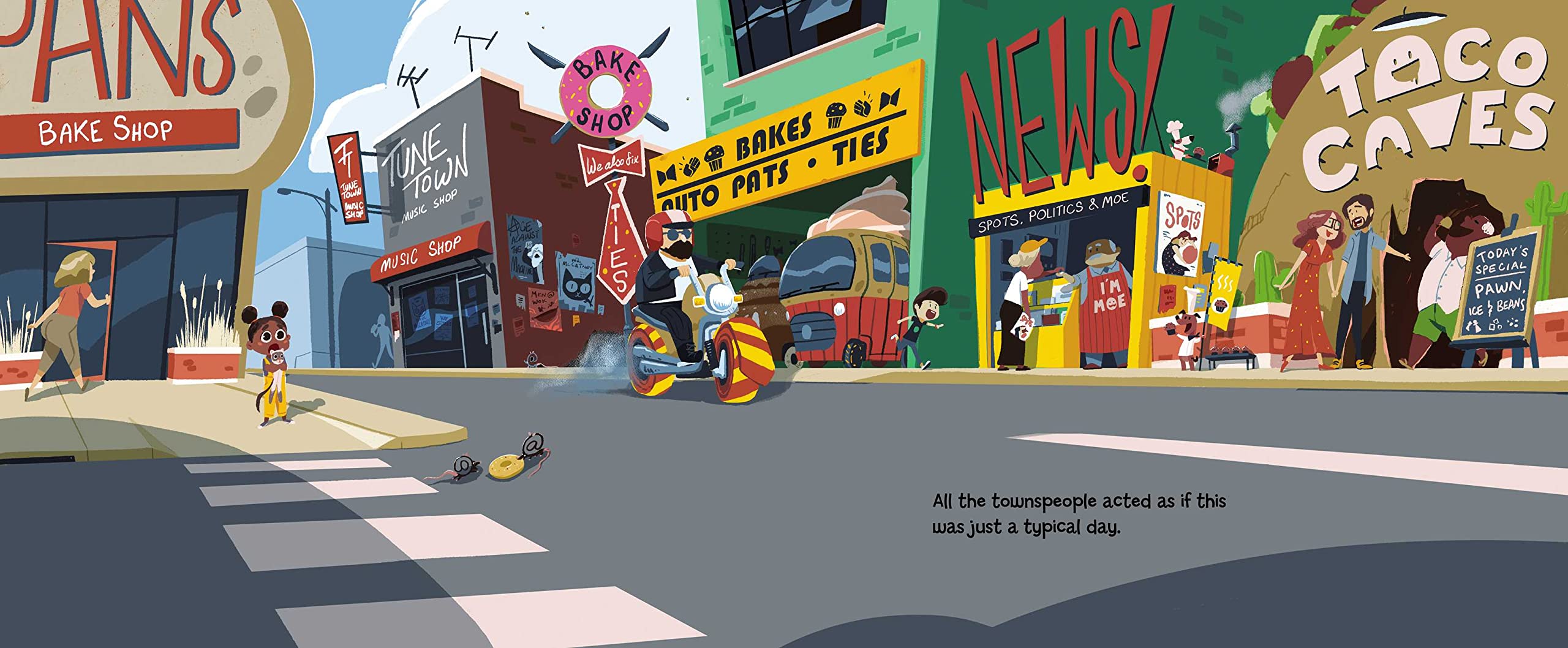
Henry: Have you seen the mice? Have you seen the mice on most of the pages? There’s a little mouse holding a donut on the pages. I love that! Why do you think they did that?
Trent: I didn’t notice that. Oh look at that! I think they are actually rats.
Henry: Yah! Rats without the Rs.
Trent: They are taking the donuts at the bake shop! What are three words without Rs and what would they say?
Henry: Hmm….[looking around the room] Roar would be oa! Hahahahaha! Grown would be gown! Growl would be gowl! Hahaha! Those are so funny!
Trent: In the book, the doo is the door. The cows are the crows. The cane is the crane.
Henry: Oh. You meant from the book! Hahaha! I just picked words!
Trent: Well we are talking about the book, silly.
Henry: Reading would be eading, like eating. Isn’t that funny?
Henry’s little brother: I love this book!
Henry: The go-carts are go-cats! The feet is ferret! The fist is first! What do you think another good letter missing book would be, like this one, that is just as funny as this one?
Trent: But we are talking about this book!
Henry: I know, but I am talking about how this book is funny and thinking about other ones Josh Funk could make.
Trent: E would be good!
Henry: Oh nice! Like “see” would be “ssssss,” hahaha! I like that. Good one, Trent. “Fled” would be “fld.”
Trent: Oh! Compare the spreads on pages 8 and 20. What is the same and what is different? Bake shop, brake shop. That stuff. I like these ones. Taco caves! What do you think taco caves is?
Henry: Oh! Ha! I don’t know! I don’t know! It sounds so funny!
Trent: It’s taco cravers, I think. If you look at the toon town closely inside the brake shop sign, you see posters. And then they are actually different, too.
Henry: Oh!! Taco cravers! Toon Town. Oh! Tires on Brake Shop! I love this book. Oh! Instead of Brake Shop, it is Bake Shop, Trent! We also fix ties instead of tires, it says. Cool! Haha.
Trent: What could the sequel be called with the Zs? It could be My Pet Zzzs.
Henry: Instead of Zzzs for sleeping, it would just say NOTHING! Ha! Why do you think the Bs are taking the Zs away?
Trent: I already asked you that question. Haha!
Henry: On the final page, page 20, in the corner, near Pam’s Bake Shop, the rats are finally eating the donut. Haha! It’s cute. There’s a dog on top, too!
Trent: Oh yah! I see it!
Henry: On page 15, in the left top corner, there is a shoe!
Trent: I know. The sea shore. Shoe, shore. And the pie is the pier.
Henry: Oh yah!
Trent: Josh Funk told me that the illustrator and him didn’t meet before, and there are jokes in the illustration that he didn’t write. Henry, go to the butt page! The gassy field! Page 13!
Henry: Oh, hahahaha! I love this page. Did Josh Funk put that in?
Trent: I think that the illustrator put that in.
Henry: What is your favorite part about the book?
Trent: I like the gassy field the best.
Henry: Hahahaha! I like how they take out the Rs. And I like the gassy fields. And I like the big, giant cow poop. On page 9, they are chasing the poop. And it says “town hall” and it has the poop in front of it.
Trent: It’s the door. It’s supposed to be the door!
Henry: On page 10, if you look in the corner, the door or doo is even bigger.
Trent: Hahahah poop. Hahaha poop.
Henry: What would you rate this book from 1 to 10?
Trent: 10! 10! 10! It was a really good book.
Henry: Same! I rate it a 10, too! I love the crane. The cane!
Trent: Yah, the cane! I like the cane, too. And I like the cows.
Henry: What kind of kids do you think would like to read this book?
Trent: Kindergarten to third, like us.
Henry: Yah, and fourth grade, too. And kids who like potty talk like me. And words.
Trent: Kids who like funny things would really like this book.
Parent Perspective:Not only does this book allow our kids to play with words, they maintained a long conversation about the book without parent prompts. It offered them so much to talk about. In particular, they loved the humor. It made them laugh, and it made them think about different word combinations. This book pushed our kids as readers because they had to pause and consider where the Rs were missing.
We loved this book and think it would be a wonderful addition to classrooms. Although our kids were limited to their own age group, we think readers of all ages would find great joy in the play on words in this book.
I come from a family whose roots are thick and wild. A family which was uprooted repeatedly; displaced over and over again. But the root itself – to homeland and history — never died. Instead, it flourished with mysteries and new blooms alike.
Somehow, my grandparents managed to salvage and plant our family’s displaced Cuban roots on American soil. My mother nourished them, and they grew. It’s my job, as the daughter of refugees, to water them, watch them grow deeper and higher still. Writing is the way I till and water.
A little bit of background.
My grandfather was born in Spain and escaped three tyrannies. He escaped Franco during the Spanish Civil War, by crossing the Pyrenes Mountains on foot with his brother, Pedro. He was 13-years-old. Once in France, he and Pedro became foster kids. Then, WWII hit, and he and Pedro had to escape Hitler. They escaped on a ship with Jewish kids, fleeing for their life, the same ship Vladimir Nabokov would take just a month or so later.
The ship was headed to Ellis Island.
After stepping foot on Ellis Island, however, Pedro and Papan, which is what I call my grandfather, did not stay in the U.S. Papan and his brother told Ellis Island officials that they were from Cuba, because they were afraid to be sent back to war-torn Spain. So, instead, the brothers were shipped off to Cuba, where they built a new life. It was a spectacular life. Pedro and my grandfather made families, my grandfather married my Cuban grandmother; they had my mother and aunt. And then…Fidel Castro.
Fidel Castro came to power, and it was time to escape again, from yet another tyranny – this time to Miami. My grandfather fled with my mom, aunt, and grandmother, almost losing his life in the process. Pedro was not so lucky — he was caught and imprisoned, politically, for almost a decade. After Pedro was released from prison, he didn’t speak to anyone for about a year because of the torture he’d suffered under the Castro regime.
These are the kinds of stories so many people I know live with as part of who they are, and the legacies they carry; stories we cannot forget. This is why I write about my grandfather.
What the Bread Says is my first book-form homage to him. It’s a picture book that carries a lot, but is also simple at the same time. It’s the story of how, when I was a kid, my grandfather taught me to bake bread while telling me the family story.
I hope it inspires many other kids and families to collect their own family stories. I hope it inspires parents to tell oral histories and kids to ask questions. I hope it inspires families to record and archive these stories. These are the stories that make us up, not just as individuals, but as a collective. A forest.
History is within us. And sometimes it feels so big, we don’t know where to start. My advice? Grab your phone and place it next to your grandmother, mother, great grandfather. Whoever is around – the people that carried and watered the roots of your family until now. Because now it’s YOU! It’s your turn.
Press record and ask them to tell you the story of their life. Tell them to start from the beginning. Give them an example: “I was born in _____ on ______ day in the year _______….” And let them take it from there.
That’s what I did.
I let them take it, and my elders took me on a journey. I did this to both my grandparents. The first time, I went home and listened to the recordings. Then, I transcribed them. After this, questions arose. I went back. I asked these and other questions, asked them to fill in the blanks. They couldn’t remember all of it – my grandfather was 98 when he died, that’s almost a century of knowledge and experience. When he couldn’t remember, I asked those around him. I did research. Apart from all the bread-making sessions, which were unrecorded, of course, I began to record them when I was a teenager and later as an adult. I am still gathering their story, even beyond my grandfather’s death.
Our humanity is a puzzle – a map that’s partially uncharted, partially hidden, partially in sight. Our old people carry the key, and our young have the energy to use it. Together, we unlock the map and make the future.
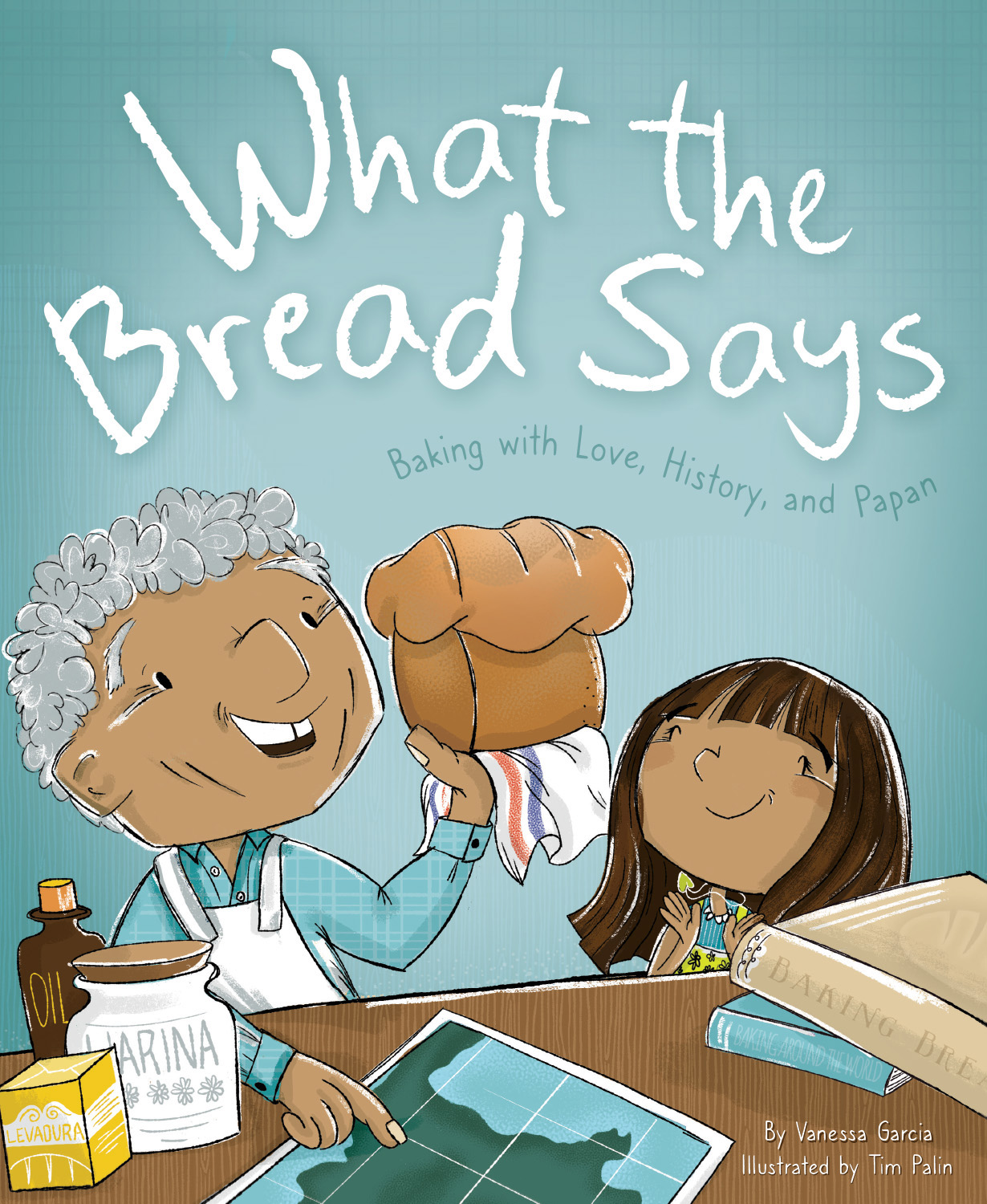
What The Bread Says: Baking with Love, History, and Papan
Published October 1st, 2022 by Cardinal Rule Press
About the Book: Join Papan and Vanessa on a baking adventure from the bumpy Pyrenees Mountains into fancy Paris and to the tropical island of Cuba, kneading and dancing, singing, and telling stories all the way.
In every piece of bread, there’s a story, here is ours. What’s yours? Put on your apron and get ready to bake some delicious bread while you travel from Spain to France to Cuba and back again — all before the kitchen timer dings. Let Papan be your guide!
Book Trailer:
About the Author: VanessaGarcia is a multidisciplinary writer and creator working as a screenwriter, novelist, playwright, and journalist. She has written for Sesame Street, Caillou, and is a consultant on Dora the Explorer. Her debut novel, White Light, was published in 2015, to critical acclaim. Named one of the Best Books of 2015 by NPR, it also won an International Latino Book Award. She holds a PhD from the University of California Irvine in English (with a focus in Creative Nonfiction), an MFA from the University of Miami (in fiction), and a BA from Barnard College, Columbia University (English and Art History). Her autobiographical radio play, Ich Bin Ein Berliner about the fall of the Berlin Wall and her relationship to Cuba, premiered in April of 2021. You can learn more at http://www.vanessagarcia.org/.
Thank you, Vanessa, for sharing your inspiration and history!
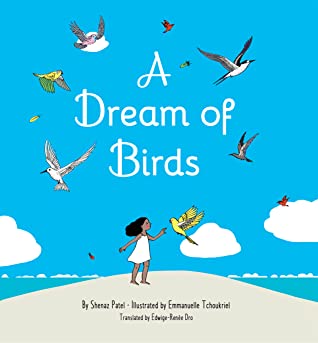
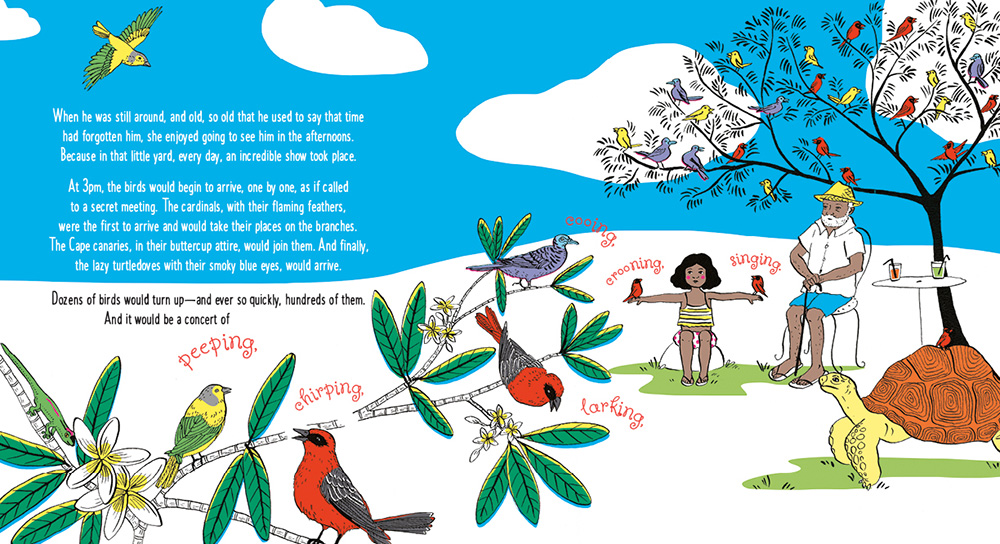
A Dream of Birds Author: Shenaz Patel
Illustrator: Emmanuelle Tchoukriel; Translator: Edwige-Renée Dro
Published August 16, 2022 by Amazon Crossing
Summary: Sara has a thing for birds. They remind her of her grandfather, who loved birds, and the wonderful show the creatures would put on in his yard each day―like a cloud of colorful flowers carried by the wind.
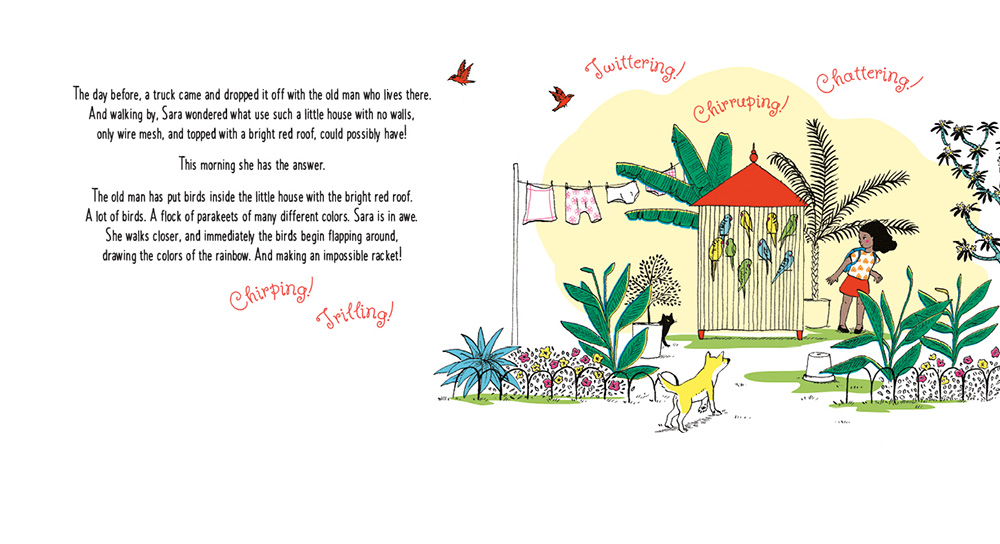
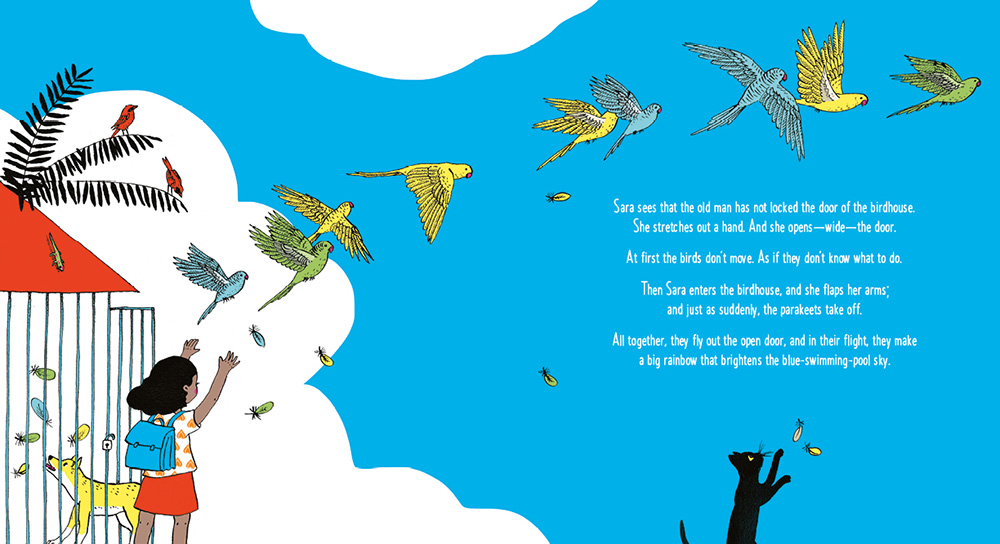
As Sara walks to school in her island town, she longs for the freedom of those birds. Then she spots a new birdhouse full of parakeets in someone’s yard. Sara feels drawn to them and unable to forget them. So what happens the next time, when she finds the door to the birdhouse unlocked?
With poetic language and beautiful art, this story set on the African island of Mauritius brings to life a little girl’s deep love of nature, her brash but well-meaning choice, and ultimately, her redemption and dream for a better world.
About the Creators:
Shenaz Patel was born and lives on Mauritius Island. She has several jobs: journalist, playwright, novelist, and translator, and she is also a comics and children’s book author. She has written nine books for children, including A Dream of Birds, which was first published in French and English in Mauritius and France. She was named Chevalier des Arts et des Lettres in 2013, a high honor given by the French minister of culture.
Emmanuelle Tchoukriel was born and lives in France. Passionate about nature, she studied visual communication before entering the Estienne School in Paris. She specialized in scientific drawing, and she excels in illustrating flora and fauna. On Instagram: @emanuelle_tchoukriel
Edwige-Renée Dro is a writer, translator, and literary activist from the Ivory Coast, in Africa. Her writings have been published in anthologies such as New Daughters of Africa and Africa39, among others. She has judged many literary prizes, including the PEN International New Voices Award and the Etisalat Prize for Literature. She was awarded the Miles Morland Writing Scholarship in 2018 and is a 2021 resident of the International Writing Program at the University of Iowa. Learn more at edwigedro.wordpress.com. Twitter: @DroEdwige; Facebook: Renée Edwige Dro
Ricki’s Review:For me, this beautiful translation is about freedom and preservation. It reminds readers to pause and pay attention to the world around them and to act. It allows readers opportunities to evaluate the decisions they have made in their lives and the impact they have. It also allows readers to consider the lessons they have learned throughout their lives. A Dream of Birds celebrates the diversity of birds in Mauritius, an African island in the Indian Ocean, and it celebrates the passion and commitment of a child.
I loved how the backmatter gave more background of the story. This book is a translation, and there are more words on the page than stories I’d typically find in US households. Yet my kids (ages 8, 5, and 3) sat and listened to the story without breaking their gaze. They were drawn in by the onomatopoeias, the engaging story, and the bright illustrations. We need more international literature in our schools and homes, and this book shines brightly.
Kellee’s Review: Sara’s story is multi-faceted. It is a story of captivity and longing and family and memories. It is a story of beauty and nature and freedom and dreams. It is also a story of reality and consequences.
The story looks at Sara who meets a man with pet birds which reminds her of feeding wild flocks of birds with her grandfather. She hates seeing the captured books, all wings and beauty, not allowed to be free, so she makes a rash decision and frees the birds. Although her motives are made clear, her mother also explains to her that it was wrong to let domesticated birds go–this is a good lesson because it distinguishes between a well meaning action and a well thought out positive action. The book ends with a celebration of the diverse birds on Mauritius, an African Island in the Indian Ocean, and a reminder to celebrate animals’ wildness.
Although the narrative was a bit wordy for me at some points, the beautiful illustrations make the reader want to savor each page which helps move you through Sara’s story.
Teachers’ Tools for Navigation: Students might use this book as a jumping off point to learn more about Mauritius, Africa, and the Indian Ocean. They could pick a specific topic of exploration related to their interests.
Discussion Questions:
What does Sara learn? Do you agree with the decisions she made?
What did you learn about Mauritius, Africa, and/or the Indian Ocean?
What lessons have you learned in your life?
What birds do you observe around your home?
Why was it wrong for Sara to let the birds go? Were her intentions good or bad?
Why is it important to leave wild animals wild?
Flagged Spreads:
Read This If You Love: Birds, Animals, Environment
When I was growing up, my middle sister was the storyteller in our family. Her vivid imagination and ability to embellish details to suit the occasion came in handy whenever it was time to write.
I was not that kind of storyteller. I did my assignments as asked, but never once did I think of myself as a writer. It wouldn’t be until years later, towards the end grad school, when that changed. How? My professor complimented my writing. She’d admired the way I’d organized my thoughts and supported my opinions succinctly and thoroughly. Though it was a completely different kind of writing – preparation for the comprehensive exams – it was the boost I needed.
Strange, isn’t it? One sincere complement changed my relationship to writing. As soon I finished my advanced degree, I was ready for a new challenge, and I knew exactly what it would be: I wanted to write for children.
My experiences in the classroom had already introduced me to hundreds of picture books. It was the late 80s, early 90s, a time when Whole Language was a buzz word and using “real books” to support reading and writing was common practice. I loved everything about this kind of teaching and discovered a new-found appreciation for the complexities and possibilities of picture books.
Also at that time, as a bilingual educator in California, primary language instruction (Spanish, in my classroom) was the rule of the day. I loved that, too, but as a first-grade teacher responsible for helping kids learn to read, I was looking for more…
I remembered a favorite record of Mother Goose rhymes that my sister and I had listened to as kids the week we were both sick in bed with the mumps. (No vaccines yet!) I wondered – what was the Spanish version of those early childhood rhymes that I remembered so fondly?
That’s when I discovered poems and songs in Spanish: “Luna, Lunera/ Cascabelera/Cinco pollitos y una ternera.”
I began to integrate more poetry – rhymes, songs, anthologies, and collections – into my classroom. We read oodles of children’s poetry in both English and Spanish, and we began to write it, too. The same lessons that inspired my students to write became inspiration for me. But it took a while to realize that my most true writing home – my querencia, as poet and teacher Georgia Heard speaks about in her book, WRITING TOWARD HOME – is poetry.
So that’s my invitation to teachers. Bring poetry into the classroom. Perhaps your students will find their home there, too.
Here are 3 ways to do that:
Start with something familiar. School. Someone special –a grandparent? A friend? A pet? Or something as ordinary as the coming and going of a rainstorm, the inspiration for my first book, BLUE on BLUE.
Brainstorm a long list of words related to the topic. Nouns. Strong verbs. Phrases. Colors. Include words that address the senses. Think image and sound, taste and touch. Kids don’t need to be overly fussy. Nor do they need to rhyme. Let them play with words, moving them around, breaking the lines, and experimenting with the shapes of their poems. This is poetry exploration at its best. Let them have fun creating!
Pick a subject you’re studying in class or a discovery the children have made. I remember one morning, as the bell rang and the kids lined up, a child spotted a praying mantis waiting for us beside the classroom door. We picked her up and placed her in a container, poked some holes in the lid, and settled ourselves in a big circle to share our discovery. This would become our writing workshop for the day.
We observed, noticed, asked questions. I pulled up a photo of a praying mantis on the smart board and we looked closer, noting the three body parts, the mandible, the spines on the front legs. We used our imaginations. What did this photo remind us of? An alien? A warrior? A conductor? Then, we wrote, starting with an image and a simile: “Like a conductor, the praying mantis raises her baton…”
Write a riddle, as I do in my latest book, LOOK and LISTEN: Who’s in the Garden, Meadow, Brook?, illustrated by Amy Schimler-Safford.Have each student choose an animal and then describe it in the form of a question. Feel free to use the structure of the first riddle in the book as a poetry frame (example below). Don’t insist on rhyme but do let kids experiment. And while you’re at it? Why not have them draw an imaginary animal and describe it! They can choose a SOUND their creature makes and a made-up (rhyming) NAME for the last line. One of the best parts of writing workshop is sharing new work with an audience. Short on time? Do a version of “popcorn reading” – one student reads a line from their poem, pauses, makes eye contact with another student, who then reads a line, and so on. Although this takes a little practice, once kids get the hang of this version of “shared reading”, it’s a nice, centering way to close out the day.
Happy Poetry Writing!
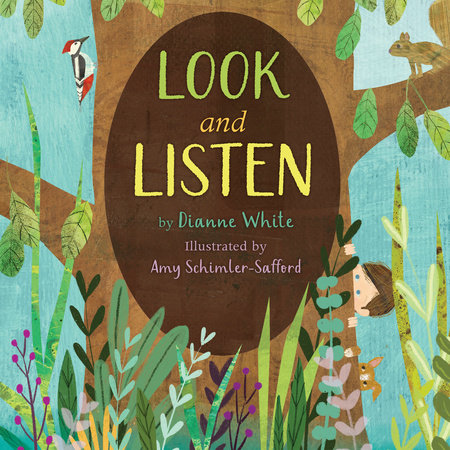
Look and Listen: Who’s in the Garden, Meadow, Brook?
Author: Dianne White
Illustrator: Amy Schimler-Safford
Published June 14th, 2022 by Margaret Ferguson Books
About the Book: A guessing game in a book that celebrates the curiosity and delight of a jaunt through a garden, meadow, and alongside a brook.
A child steps outside and strolls along, taking in the sights and sounds of nature. Rhythmic, rhyming text tracks his journey through a garden, meadow, and next to a brook, introducing a new color and animal found in that ecosystem with every turn of the page, transforming an ordinary walk into a feast for the senses.
Complete with material that explains the rich variety of wildlife and natural habitats found in the book, author Dianne White’s playful text is paired with the vibrant collage artwork of Amy Schimler-Safford, making for an exciting read-aloud and guessing game for budding nature lovers.
About the Author: Dianne White is the award-winning author of numerous children’s picture books, including Blue Blue, Green on Green, and Who Eats Orange? As a teacher who was privileged to share her love of books and poetry with many students over many years, she now has the pleasure of writing full-time. Most days, she strolls the neighborhood and fields near her home in sunny Arizona, looking and listening for buzzing bees, hopping bunnies and croaking frogs. Visit her at diannewrites.com.
Thank you, Dianne, for helping bring poetry into the classroom!