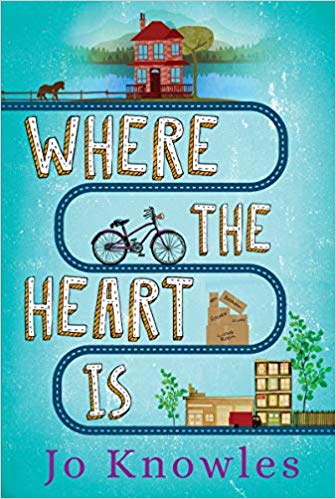
Where the Heart Is by Jo Knowles

Share

Where the Heart Is
Author: Jo Knowles
Published April 2, 2019 by Candlewick Press

GoodReads Summary: If home is where the heart is, what would happen if you lost it? Compassion and humor infuse the story of a family caught in financial crisis and a girl struggling to form her own identity.

It’s the first day of summer and Rachel’s thirteenth birthday. She can’t wait to head to the lake with her best friend, Micah! But as summer unfolds, every day seems to get more complicated. Her “fun” new job taking care of the neighbors’ farm animals quickly becomes a challenge, whether she’s being pecked by chickens or having to dodge a charging pig at feeding time. At home, her parents are more worried about money than usual, and their arguments over bills intensify. Fortunately, Rachel can count on Micah to help her cope with all the stress. But Micah seems to want their relationship to go beyond friendship, and though Rachel almost wishes for that, too, she can’t force herself to feel “that way” about him. In fact, she isn’t sure she can feel that way about any boy — or what that means.

Review: I absolutely adored this book. Jo Knowles tackles critical issues that are not as common in middle grade literature. The Rachel’s family faces foreclosure of their house—a home in which she is deeply rooted. She feels as if a piece of her identity will be lost. Further, she is experiencing many emotions regarding her sexuality. She is questioning, and those around her are placing pressure on her to make a choice. I’d love to use this book in the classroom setting. The coming of age issues are very real for our young people, and Jo Knowles does not shy away from digging deeply into critical topics.

Teachers’ Tools for Navigation: I’d love to have students visually map different themes of the novel. The complexity of this novel is rich, and students would be able to visualize the themes with supporting quotations.

Discussion Questions:

  • What are some of the struggles that Rachel faces?
  • What do we know about Micah? How does he change in the novel?
  • What is the role of Rachel’s sister (Ivy) in the novel? What does she teach us?

Flagged Passages: “When you learn vocabulary words in school, you memorize the definition. And you have a good idea of what the words mean. But it’s not until you feel them that you really grasp the definition. I have known what the word ‘helpless’ means for a long time. And ‘desperate.’ But I’ve never felt them. Feeling them is different. They fill your chest with a horrible sense of ‘dread’ and ‘guilt’ and ‘despair.’ Those are more vocabulary words that you can’t fully understand until you feel them.” (p. 246)

Read This If You Loved: Anything written by Jo Knowles, Marcus Vega Doesn’t Speak Spanish by Pablo Cartaya, Perfect by Natasha Friend, Awkward by Svetlana Chmakova, Zack Delacruz by Jeff Anderson

Recommended For:

classroomlibrarybuttonsmall

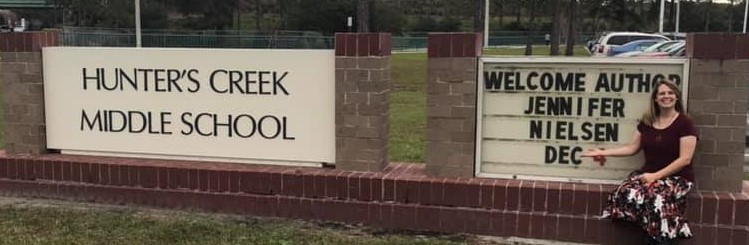
Kellee’s School’s Author Visit with Jennifer A. Nielsen

Share

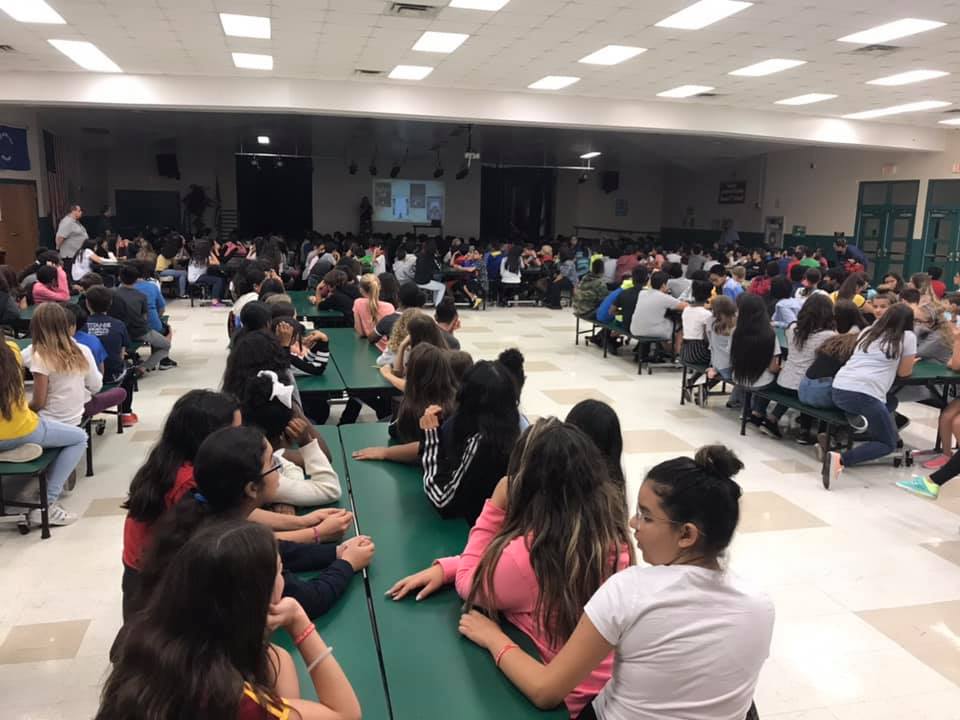
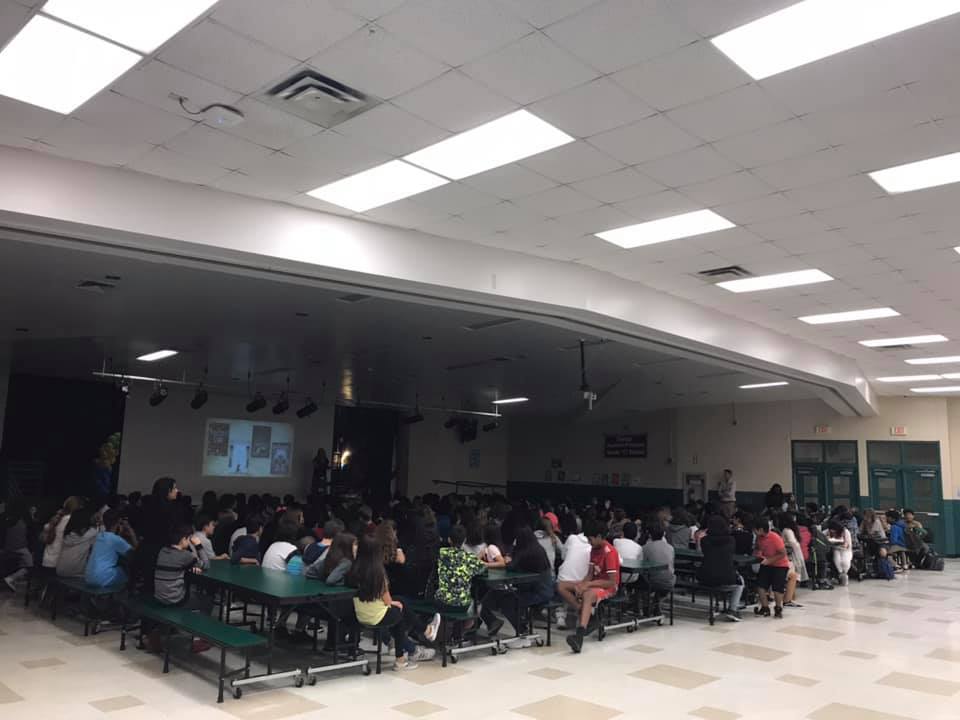
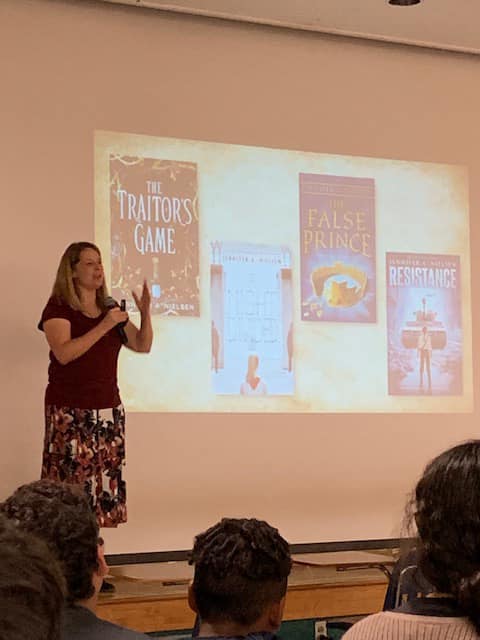
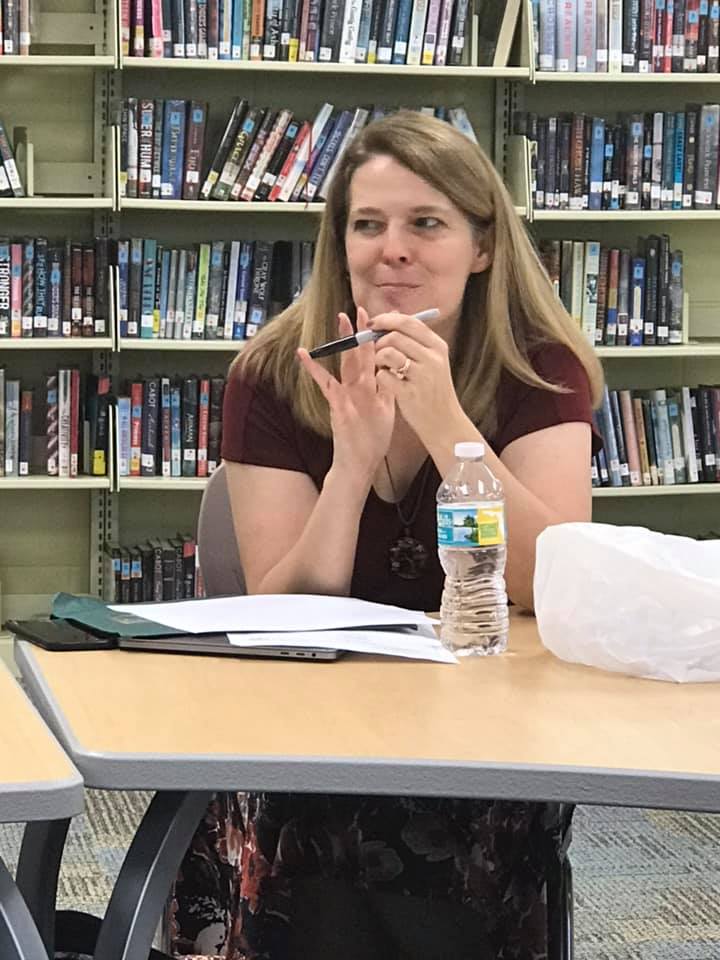
Jennifer A. Nielsen visited my school on December 4th, 2018, and today her newest book comes out (Deceiver’s Heart, Traitor’s Game #2!!!!), so I thought today would be the best day to share about the amazing experience she brought to my school and the superb person she is!

Jennifer was kind enough to have a very packed day with us! She did an assembly for each grade level where she shared that the secret to being a writer is asking questions:

  • Do you have stories? Do you have dreams? If you have dreams, your brain is creating a story. Are you curious? You can be a writer.
  • Writers do these things: Collect stupid facts but don’t collect stupid. Ask Questions. Gain knowledge. They write. They work to get better. They keep trying.
  • There are two types of people: One who says they are good enough. You’ll be passed by people who won’t quit until it’s great.

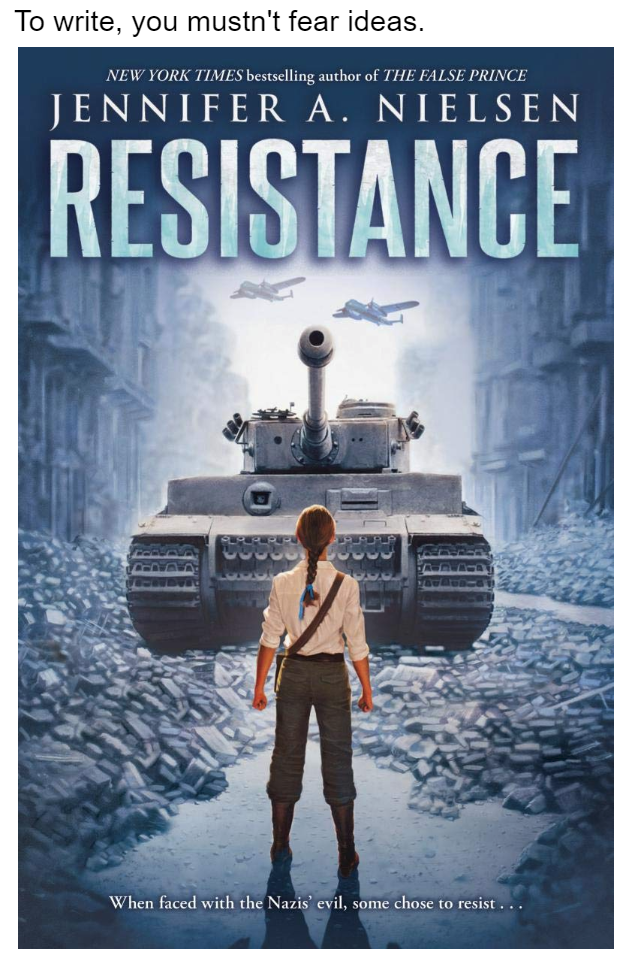
She also gave us a sneak peek of the Resistance book trailer that went live the next week!

Every group of students (at over 375 each) were captivated by her stories, her humor, and her truth.


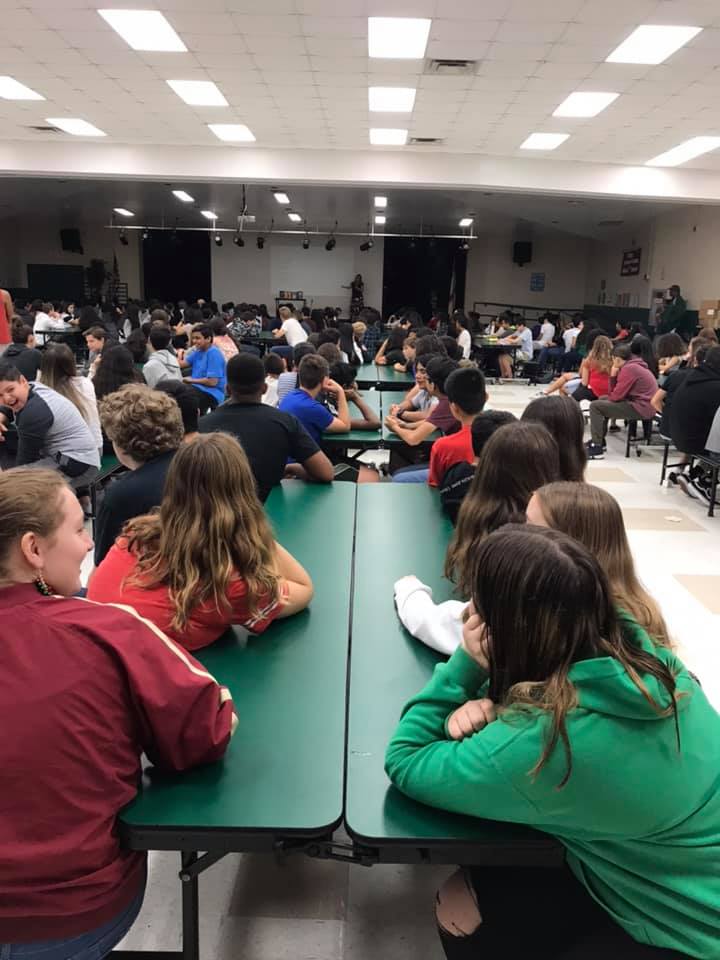
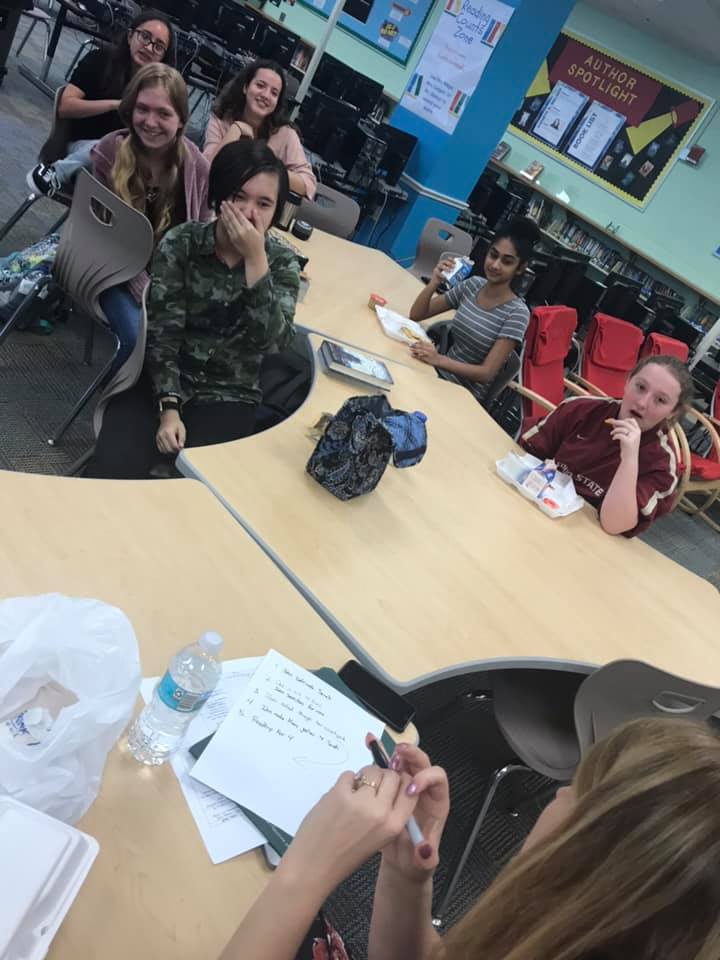
During each grade level’s lunch period, she also was kind enough to eat lunch with students who had read two or more of her books. During this time, they could get their books signed and ask exclusive questions.

This lunchtime experience was so inspiring to these students! They still talk about what she shared and (as you’ll see in the last photo below) they helped write a quite hilarious story with her that was cracking everyone up:

  • Story in her head is like an itch that she can’t reach. She is happiest when she is writing because she is reaching the itch.
  • Story is everywhere. Everyone carries story with them. Just ask questions and tell the story.
  • She starts a story with the character in action. Helps the reader and writer get into the character’s head and puts the character into immediate trouble.
  • When she was younger, she didn’t know writing was a choice for something you could do.


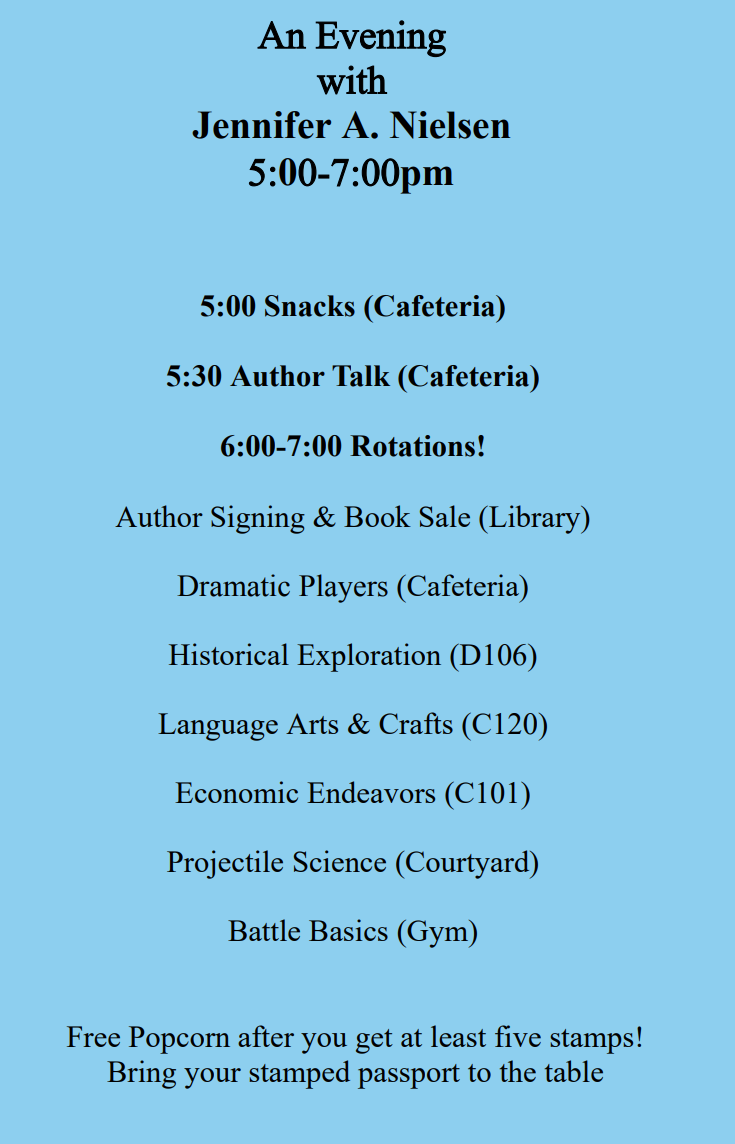
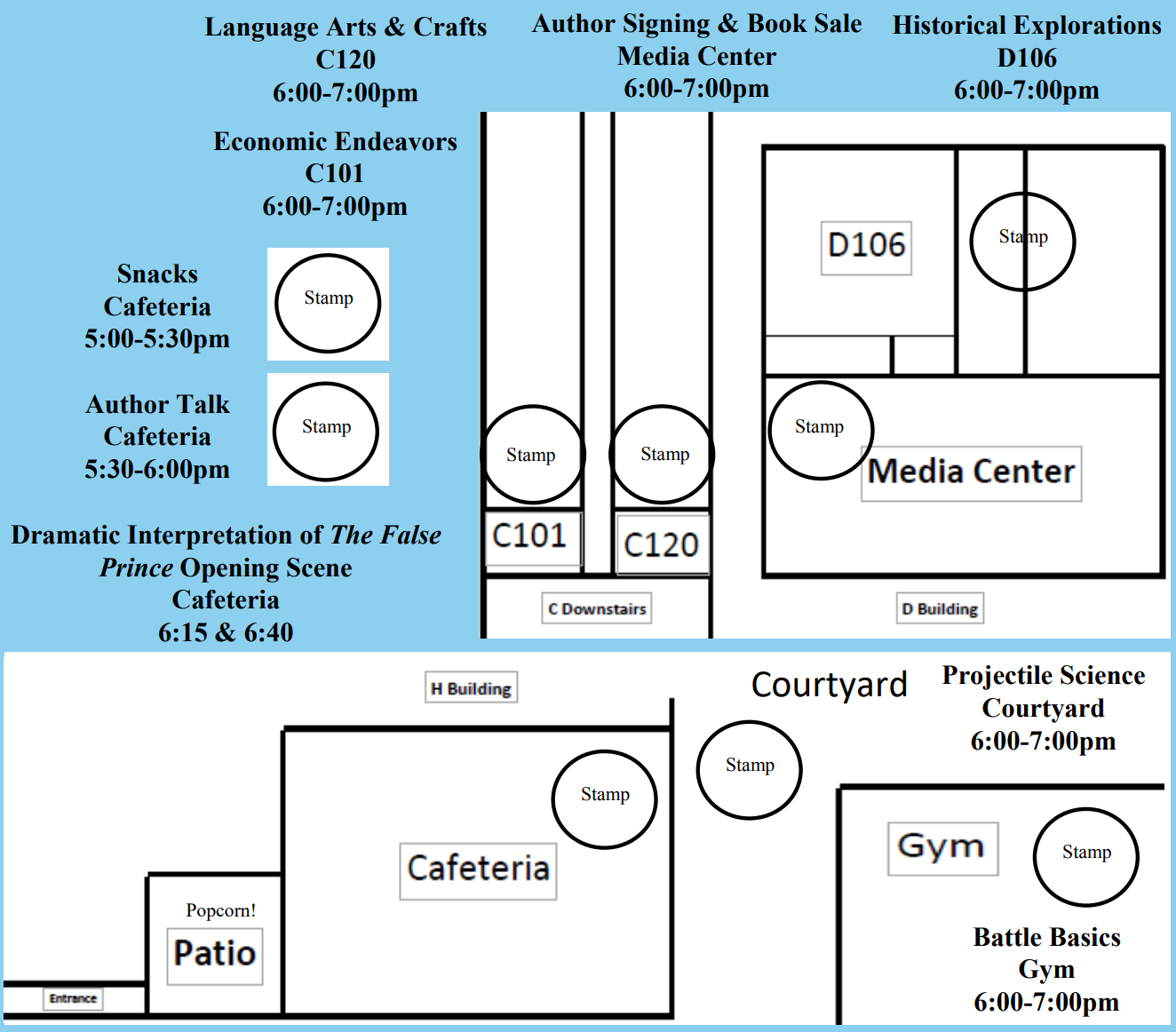
Then Jennifer even stayed with us for the evening for another quick presentation, book signing, and cross-curricular events that tied her book into all the subjects.


All in all, the visit was life-changing for our HCMS students.

After the visit, I had my students write letters sharing how the event affected them:

  • Thank you so much! You have made a great impact on my life. I have never liked writing but your story about when you were in 6th grade made me realize that I can do what I put my mind to do. -Olivia M, 6th grade
  • I love reading your books because when I read your books it is so good that I read for hours without stopping. When I found out you were coming I got excited because I wanted to find out more about the author who wrote my favorite books. You taught me never to give up and to keep going for my dream no matter how long it takes. Your books have inspired me to create my own book and to be a writer in the future. -Jacob K, 6th grade
  • The things you said during your visit made me realize I’ll never get better if I don’t try. -Georgia B, 6th grade
  • I loved your assembly. Your stories were hilarious and you inspired me to write down my ideas. -Emily B, 7th grade
  • Thank you so much for visiting us. It was amazing and super fun. Your presentations were incredible and I loved the stories you told. They were sad but so interesting. Your tips for writing were so helpful and I plan on taking them to heart whenever I write. Your encouragement was inspiring. “All you need is 20 seconds of insane courage and I promise you something great will come of it. (Benjamin Mee)” -Duda V, 7th grade
  • Your books are amazing, the plot twists were breath-taking, and your books are meaningful and are powerful. -Molly N, 7th grade
  • I’m a huge fan of your books and it was a dream come true to meet you! I enjoyed making a story with you during my lunch time, and I will always remember your visit. -Mariana S, 8th grade
  • If you were here to inspire, you hit it on the dot. -Julia R, 8th grade
  • Thank you for not quitting and showing us that just because you fail once, or twice, or even hundreds of times, we should keep on trying. -Lorenza M, 8th grade
  • Everything that you said just inspired me to do something that would forever make the world better. -Jordan K, 7th grade
  • Thank you for all the words of wisdom and encouragement to write, and for that I’ll always be grateful. -Monika A, 7th grade
  • You are such a beautiful soul, and I am in denial that I had the chance to meet someone like you. -Amy C, 7th grade
  • You were right – stories are everywhere!.. You are funny and kind, and I love how you add little bits of yourself into your books. -Maelynn A, 7th grade

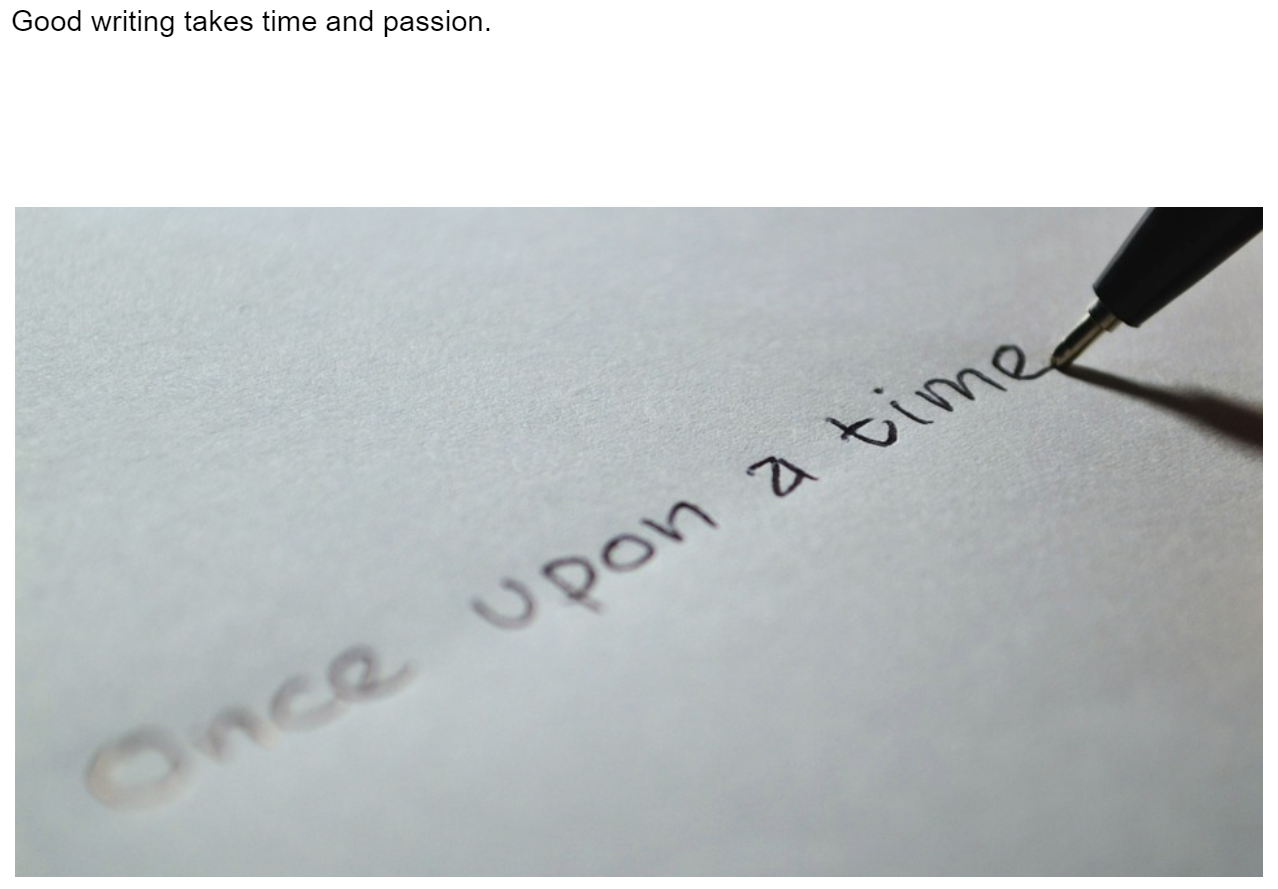
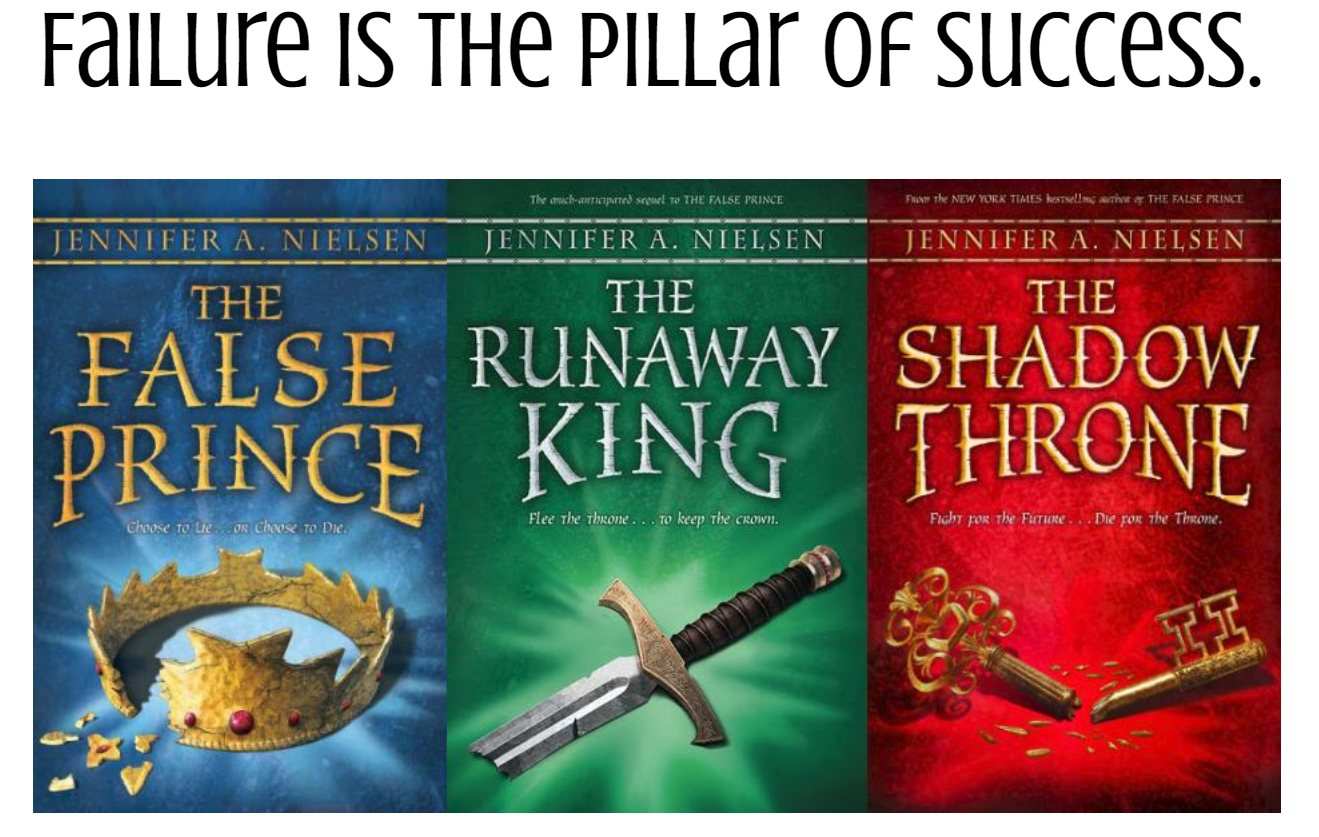
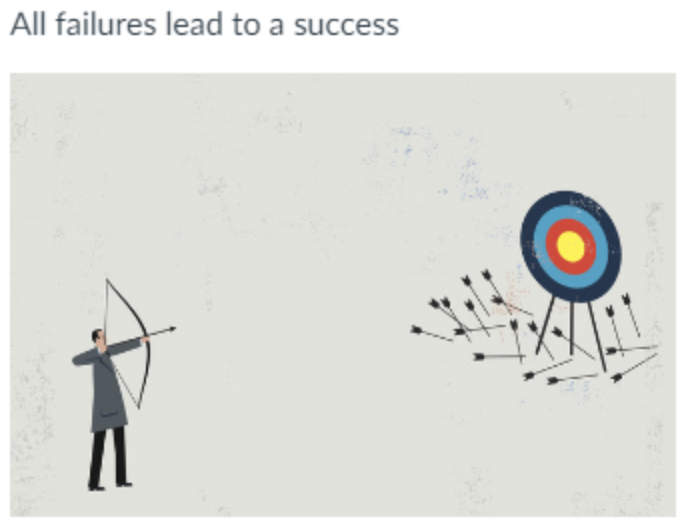
And I’ll end with this beautiful work. My friend, who teaches 8th grade ELA, had her students do a 6 word reflection with a visual to summarize either how they felt or what they learned:


“Good writing takes time and passion.” -Alexa F.


“Don’t let your ideas go away.” -Charlie B.


“Don’t think of ideas, execute them.” -Grace G.


“Failure is the pillar of success.” -Ramia A.


“All failures lead to a success.” -Paola A.


“Catch an ideas, don’t let go.” -Lauren T.


“To write, you mustn’t fear ideas.” -Ishika J.


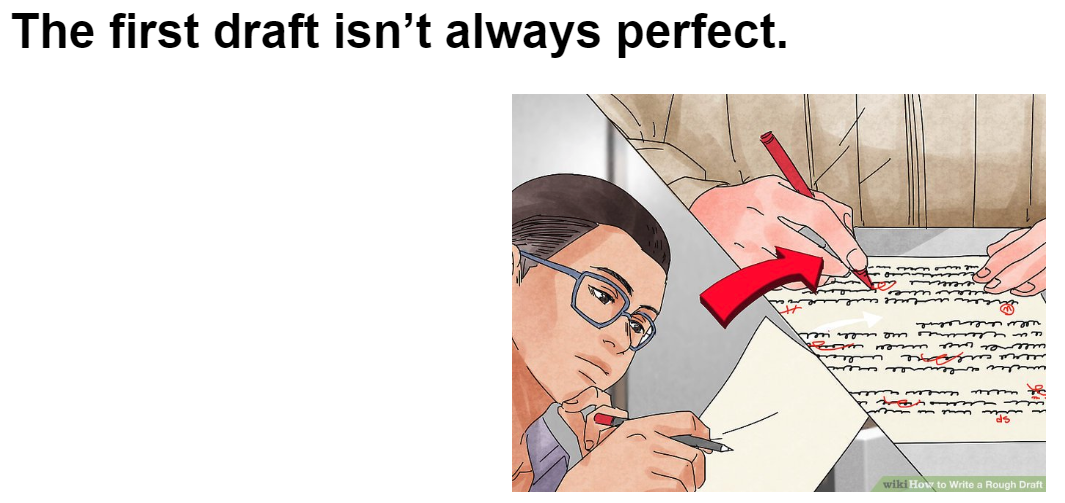
“The first draft isn’t always perfect.” -Holly C.

Thank you so much, Jennifer, for coming to HCMS and inspiring my students in ways that are life-changing!

Signature

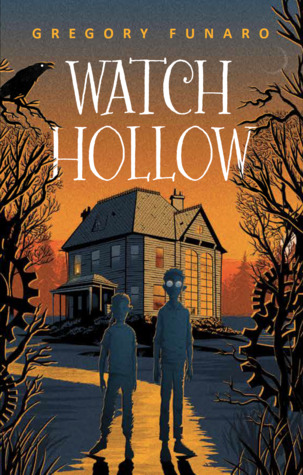
Watch Hollow by Gregory Funaro

Share

Watch Hollow
Author: Gregory Funaro
Published February 12th, 2019 by HarperCollins

Summary: Deep within the enchanted woods in the town of Watch Hollow stands the once-grand Blackford House, whose halls hold a magical secret: a giant cuckoo clock that does much more than tell time. But when the clock’s gears cease to turn, an evil presence lurking among the trees begins to come out of the shadows.

When Lucy and Oliver Tinker arrive in Watch Hollow, they have no idea that anything is wrong. A mysterious stranger has made their father an offer that’s too good for him to refuse. All Mr. Tinker needs to do is fix the clock at Blackford House and fistfuls of gold coins are his to keep.

It doesn’t take long, however, for the children to realize that there is more to Blackford House than meets the eye. And before they can entirely understand the strange world they’ve stumbled into, Lucy and Oliver must join forces with a host of magical clock animals to defeat the Garr—a vicious monster that not only wants Blackford House for itself, but also seeks to destroy everything the Tinkers hold dear.

About the Author: Gregory Funaro grew up in Cranston, Rhode Island, and wrote his first story, The Ghost in the Window, in the fourth grade. He considers this to be his finest work, but unfortunately it has been lost to time. Following high school Greg majored in theatre at the University of New Hampshire, and after various acting gigs, received his AM in Theatre Arts from Brown University and an MFA in Acting from the FSU/Asolo Conservatory. He began his literary career writing thrillers for adults, but switched to children’s books after the birth of his daughter. His first book for Disney-Hyperion, ALISTAIR GRIM’S ODDITORIUM (2015), was a New York Times best seller and an Amazon Best Book of the Month, and his second, ALISTAIR GRIM’S ODD AQUATICUM (2016), received a Kirkus STARRED review. Look for WATCH HOLLOW and THE MAZE OF SHADOWS, coming from HarperCollins in 2019/20. Greg also teaches drama at East Carolina University, and is busy working on his next novel.

Follow him on Facebook and Twitter (@GregoryFunaro) and visit his https://www.gregoryfunaro.com/ to learn more about his books and him.

Review: I am so glad that Harper allows Gregory Funaro to continue expanding his creative tendrils because every one of his books I read, I am intrigued by how he crafts a story, the voice he gives his characters, the point of view he decides, and the surprises he gives me throughout the reading. With Watch Hollow, I love how Lucy and Oliver obviously have a voice even though the book is in third person, the way he ties everything together from the slightest mention at the beginning of the book to huge events in the end, and I love that I cannot predict what is going to happen.

And not only is the story crafted well, the plot is one that is going to suck in our readers that are always looking for spookiness. It is just the right amount of weirdness, supernatural, creepy mansions, unknown creatures, and magic. The characters are also crafted really well which gives the readers someone to connect with.

Teachers’ Tools for Navigation: Gergory Funaro’s fantasy is so different than the traditional fantasy books, and his stories will fascinate readers who may not be sure if they like fantasy because of the twist, turns, and intelligence in his narratives. Not only should his books be found in all libraries, classroom, public, and school, but it would also be an interesting to have an in-class book club focusing on different examples of fantasy and have students, at the end of the clubs, discuss what made their books fantasy and look at the wide variety within the genre.

Discussion Questions: 

  • How did the inclusion of illustrations throughout the book help with your understanding of the plot?
  • What does the animals quick acceptance of Lucy show you about her personality?
  • What were your initial assumptions about Mr. Quigley?
  • What did the inclusion of the crow from before they went to Blackford House tell you about the kids?
  • Once you find out the truth behind the house, what clues can you find when you go back through the book?
  • How did the third person limited point of view switching between the two siblings affect the narrative?
  • How did the author use imagery throughout the book to engage his readers?
  • How does the author set the Gothic and dark mood in the story?

Flagged Passages: 

“Oliver hung back in the doorway as Lucy and their father stepped into a cavernous, darkened foyer. Rectangles of dim dusty light filtered in from the rooms on the other side, and Oliver could just make out a wide staircase dissolving up into the gloom at the far end of the foyer…

Oliver pushed up his glasses, stepped inside, and set down his suitcase. His eyes had adjusted a bit, but with only the daylight streaming in, the foyer was still dim–in part because the walls were paneled three-quarters high in dark wood. To his left, he spied a shadowy parlor filled with antique furniture; to his right, a dining room with a long table. There were a handful of paintings on the walls, and where there was no paneling, the paper was peeled and gray…” (Chapter 4)

Read This If You Love: Explorer series by Adrienne KressThe Peculiar Incident on Shady Street by Lindsay Currie, The Nest by Kenneth Oppel, A Monster Calls by Patrick Ness

Recommended For: 

classroomlibrarybuttonsmall 

Signature

**Thank you to the author for providing a copy for review!**

Blog Tour with Review, Educators’ Guide, and Giveaway!: The Lost Girl by Anne Ursu

Share

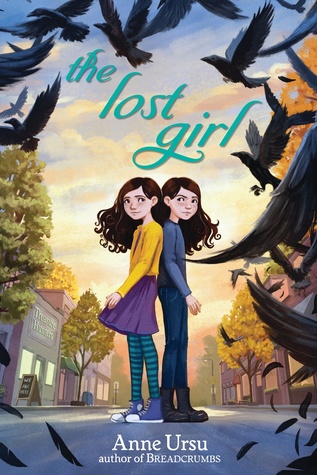
The Lost Girl
Author: Anne Ursu
Published February 12th, 2019 by Walden Pond Press

Summary: When you’re an identical twin, your story always starts with someone else. For Iris, that means her story starts with Lark. Iris has always been the grounded, capable, and rational one; Lark has been inventive, dreamy, and brilliant—and from their first moments in the world together, they’ve never left each other’s side. Everyone around them realized early on what the two sisters already knew: they had better outcomes when they were together.

When fifth grade arrives, however, it is decided that Iris and Lark should be split into different classrooms, and something breaks in them both. Iris is no longer so confident; Lark retreats into herself as she deals with challenges at school. And at the same time, something strange is happening in the city around them, things both great and small going missing without a trace. As Iris begins to understand that anything can be lost in the blink of an eye, she decides it’s up to her to find a way to keep her sister safe.

About the Author: Anne Ursu is the author of Breadcrumbs, named one of the best books of 2011 by Publishers Weekly and the Chicago Public Library, and The Real Boy, which was longlisted for the National Book Award. She is also a member of the faculty at Hamline University’s MFA in Writing for Children and Young Adults. Anne lives in Minneapolis with her family and an ever-growing number of cats. You can visit her online at www.anneursu.com.

Praise: 

The Lost Girl is a jewel of a book—hard, bright, sharp, and precious. It reminds us of the boundless and subversive power of sisterhood and the inherent magic of girls.”—Kelly Barnhill, Newbery-Medal winning author of The Girl Who Drank the Moon

“I raced through The Lost Girl, breathless. And when I was finished, I found myself full of hope. It’s a beautiful, riveting, important book.”—Laurel Snyder, award-winning author of Orphan Island

“When the world makes no sense, I read books by Anne Ursu. When the world makes all the wrong kinds of sense, I read books by Anne Ursu. If you crave a story with the wit, wisdom, and magic to unriddle the world, then you need to read The Lost Girl by Anne Ursu.”—William Alexander, award-winning author of A Festival of Ghosts

“A beautiful, timeless tale of love conquering darkness in the midst of mystery and the angst of change. A must-have for any middle grade collection.” School Library Journal (starred review)

“This suspenseful mystery offers a story of empowerment, showing how one girl with the help of others can triumph.” Publishers Weekly (starred review)

“National Book Award nominee Ursu laces her story with fairy-tale elements and real-life monsters, while taking great care to cast girls in an empowering light and as authors (and heroes) of their own stories.” Booklist (starred review)

Review: Anne Ursu has a way of telling what seems like an ordinary tale and adding twists and turns that the reader does not expect but once you are on the narrative ride she has created, you never want to get off! And although I am always skeptical of magical realism, she does it in a way that just makes her books seem like realistic fiction that just happens to be bit magical, so it is hard not to buy in. In The Lost Girl, the story also is fascinating in the way that the author plays with the narrator/point of view as well as how she shapes both girls equally as the story moves between their narratives and shows the strengths and weaknesses in both. It is impossible to tell who the lost girl is and who is the ones saving because both sisters feel like they play a part in saving the other. I’m still thinking about responsibilities, love, and protection long after the book ended. You are going to love Lark and Iris and will root for both of them until you turn that final page.

Teachers’ Tools for Navigation: There are readers who need this book. There are kids that don’t feel like they belong in this world or kids who feel like they don’t mesh with others their own age or kids dealing with a huge change in their life. These are the kid who will need this book. They need the lost girl to guide them.

Discussion Questions: 

  • Which of the twins is the lost girl?
  • How did the crows play a part in the story?
  • Without the magic in the story, how would everything have been different?
  • What mistakes does Iris make in her decision making once the girls enter 5th grade?
  • What lesson are the adults trying to teach the girls?
  • How did the Club Awesome girls turn out differently than Iris assumed? What does this tell you about them? Iris?
  • How are the sisters alike? Different?

Flagged Passages: “Once upon a time, there were two sisters, alike in every way, except for all the ways that they were different. Iris and Lark Maguire were identical twins, and people who only looked at the surface of things could not tell them apart. Same long busy black hair, same pale skin, same smattering of freckles around the cheeks, same bright hazel eyes and open face.

But Iris and Lark had no patience with people who only looked at the surface of things, when what lay beneath was the stuff that truly mattered.

Because the girls were identical, but not the same.

Iris was the one who always knew where she’d left her shoes. Iris was the one who could tell what the collective nouns were for different animals and that Minnesota was home to the world’s largest ball of twine. Iris always knew when her library books were due.

Lark always knew when their parents had been arguing. Lark could tell you what the consequences for stealing were in different fairy tales, and that the best bad guys had interesting back stories. Lark always knew which books she wanted to check out from the library next.

No they were not the same.” (p. 1-2)

Read This If You Love: The Real Boy by Anne Ursu, Watch Hollow by Greg Funaro, The Explorers by Adrienne KressWishtree by Katherine Applegate, The Seventh Wish by Kate Messner

Recommended For: 

classroomlibrarybuttonsmall 

Giveaway!

a Rafflecopter giveaway

Don’t miss out on the other stops in the blog tour!

FRIDAY, FEBRUARY 1: Teach Mentor Texts
SATURDAY, FEBRUARY 2: About to Mock
SUNDAY, FEBRUARY 3: Novel Novice
MONDAY, FEBRUARY 4: Maria’s Melange
TUESDAY, FEBRUARY 5: A Foodie Bibliophile in Wanderlust
WEDNESDAY, FEBRUARY 6: Bluestocking Thinking
THURSDAY, FEBRUARY 7: Kirsticall.com
FRIDAY, FEBRUARY 8: Unleashing Readers
SATURDAY, FEBRUARY 9: Book Monsters
SUNDAY, FEBRUARY 10: Fat Girl Reading
MONDAY, FEBRUARY 11: Word Spelunker
TUESDAY, FEBRUARY 12: Nerdy Book Club

Signature

**Thank you to Walden Pond Press for providing a copy for review!**

Review and Giveaway!: Lost in the Antarctic: The Doomed Voyage of the Endurance by Tod Olson

Share

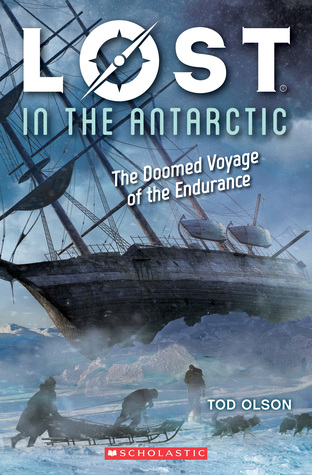
Lost in the Antarctic: The Doomed Voyage of the Endurance
Author: Tod Olson
Published January 1st, 2019 by Scholastic Inc.

Summary: There wasn’t a thing Ernest Shackleton could do. He stood on the ice-bound Weddell Sea, watching the giant blocks of frozen saltwater squeeze his ship to death. The ship’s name seemed ironic now: the Endurance. But she had lasted nine months in this condition, stuck on the ice in the frigid Antarctic winter. So had Shackleton and his crew of 28 men, trying to become the first expedition ever to cross the entire continent.

Now, in October 1915, as he watched his ship break into pieces, Shackleton gave up on that goal. He ordered his men to abandon ship. From here on, their new goal would be to focus on only one thing: survival.

About the Author: Tod Olson is the author of the historical fiction series How to Get Rich and the four books in the Lost series–Lost in the Pacific, 1942; Lost in Outer Space;  Lost in the Amazon; and Lost in the Antarctic. He has written for national magazines on the Columbine school shooting, homeless teens, the murder of Matthew Shepard, and many other stories of interest to children and young adults. Tod holds an MFA from Vermont College of Fine Arts and lives in Vermont with his family, his mountain bike, and his electric reclining chair. To learn more, and to download free teaching resources, visit his website: todolson.com.

Praise for Previous Titles in the Series:

★”A riveting, completely engrossing true survival story.” —Kirkus Reviews (starred review)

“Engaging… A great choice for collections.” —School Library Journal

Review: I do not know how I am just learning about this series! It is right up my alley! As a huge fan of narrative nonfiction, I couldn’t put the book down, and I cannot wait to read the others in the series. What I loved about the book is it is written like a novel but is all truth! The author did a great job taking the truth of the historical event and turning it into a story that will truly suck in a reader.

And I know I am on the right track because when I went to school to talk to my students about the series, specifically to my historical fiction and nonfiction loving 4th period, there were a few kids who had already heard of, read, and loved previous books in the series.

Teachers’ Tools for Navigation: First, add these to your library! These will be perfect for your I Survived series readers and nonfiction fans. I also think that the series would be a wonderful series for in-class book clubs for each group to read about a different historical event then after finishing the book, the culminating task for the book club could be sharing about the event with their class.

Discussion Questions: 

  • What made Shackleton the perfect captain for an Antarctic expedition?
  • What do you believe was the decision that doomed the voyage?
  • Why were the dogs and cat not able to go through the whole voyage with the crew?
  • Why would the author have chosen this voyage for his series?
  • What is the difference between historical fiction and narrative nonfiction?
  • How did the addition of a photographer on the trip change the way that we learn about the voyage now?

Flagged Passages: “Prologue, Weddell Sea, Antarctica, October 26th, 1915:

The ship didn’t stand a chance, and Frank Hurley knew it. He’d been in the engine room with the carpenter, trying desperately t keep the water out. They had walled off the leak, where the sternpost and rudder had been wrenched out of place… The Endurance was being squeezed to death around them.

One man stood mostly still, watching the commotion from the raised deck in the stern. The crew referred to him as Sir Ernest in writing. In person they called him ‘the Boss.’ He had broad shoulders and a compact frame, blunt features, and a square jaw. He looked like he was built for this kind of venture–leaving every known thing behind to risk his life in a frozen wilderness.

Ernest Shackleton had been to Antarctic twice already. Twice had had almost died there. Now, his third expedition hovered on the brink of disaster.” (p. 1-4)

Read This If You Love: Shipwreck at the Bottom of the World by Jennifer Armstrong, The I Survived series, Narrative nonfiction, History

Recommended For: 

classroomlibrarybuttonsmall 

Giveaway!: 

a Rafflecopter giveaway

Signature

**Thank you to Blue Slip Media and Scholastic for providing books for review and giveaway!**

Guest Post: The Most Banned and Challenged Books of the Past Five Years

Share

From Olivia Biggs (Senior Editor, Pixl Parade, Find her on Twitter): Did you know that some books have actually been banned in America? That’s right! Even in the land of the free, parents and educators have been known to push popular books out of libraries and schools, some of which later became required reading. Even today, thousands of parents petition and challenge popular books for a variety of reasons, both reasonable and unreasonable. This infographic takes a deeper look at the most banned and challenged books of the past 5 years, and why they were challenged in the first place!

The recent library problem child is Thirteen Reasons Why by Jay Asher, which, due to the recent Netflix series inspiring instances of self-harm among young adults, met an uproar from parents in 2017, despite the fact that the book has been around for about ten years.

Another book upsetting parents is The Absolutely True Diary of a Part-Time Indian by Sherman Alexie, which discusses poverty, alcohol, violence, sexuality, and bullying. It’s a critical darling, wining numerous awards and high reviews, but that doesn’t stop parents from trying to pull it from shelves a decade after its release.

An increasing and uncomfortable number of books under attack have LGBTQ+ content, gender identity themes, and transgender characters. These themes might make parents uncomfortable, but their fairly necessary for making a younger generation of LGBTQ+ teens comfortable with themselves.

Don’t worry about banned books being uncomfortable. If you’re worried about recommending troublesome books for required reading, just look at top 10 most banned books of all time, which includes classics from 1984 to Of Mice and Men to The Great Gatsby – all known to be required reading for high school students!

Books expand our horizons, teach us how to think in different ways, and show us totally different perspectives, as they should. Banning books doesn’t allow people to experience new thoughts and ideas! Let’s all do better by allowing us to be more open to each other and not allowing books to be banned from libraries and schools.

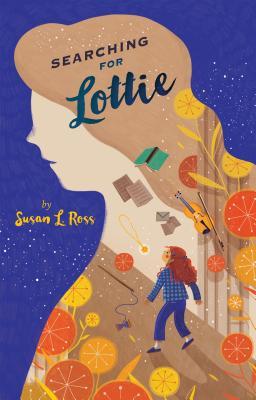
Searching for Lottie by Susan L. Ross

Share

Searching for Lottie
Author: Susan L. Ross
Publication Date: February 26th, 2019 by Holiday House

Summary: Lottie, a talented violinist, disappears during the Holocaust. Can her grand-niece, Charlie, discover what happened?

A long-lost cousin, a mysterious locket, a visit to Nana Rose in Florida, a diary written in German, and a very special violin all lead twelve-year-old Charlie to the truth about her great-aunt Lottie in this intriguing, intergenerational mystery. 12-year-old middle schooler Charlie, a budding violinist, decides to research the life of her great-aunt and namesake for a school ancestry project. Everyone in Charlie’s family believes Great-Aunt Charlotte (Lottie), a violin prodigy, died at the hands of the Nazis, but the more Charlie uncovers about her long-lost relative, the more muddied Great-Aunt Lottie’s story becomes. Could it be that Lottie somehow survived the war by hiding in Hungary? Could she even still be alive today? In Searching for Lottie, Susan Ross has written a highly personal work of historical fiction that is closely inspired by her own family members whose lives were lost in the Holocaust.

About the Author: Susan Ross grew up in Lewiston-Auburn, Maine, and divides her time between Connecticut and Maine. She attended Brown University and NYU School of Law.

After practicing law, Susan taught legal writing in Brooklyn and in Budapest, and creative writing to kids and adults in Connecticut. She especially loves author visits. There is nothing Susan enjoys more than hanging out in a classroom talking to students about her books and teaching kids about writing and literature!

Kiki and Jacques was inspired by the experience of Somali refugees who moved to Susan’s hometown in Maine. Susan worked with refugee teenagers in writing the book and was greatly moved by their amazing positive energy and hopeful determination.

Searching for Lottie was inspired by stories from members of Susan’s family, whose lives were forever changed by the Holocaust.

Susan teaches writing at Westport Writers Workshop and is a trustee at the Westport Library.

Review: I think historical fiction is one of the most important genres because it makes us relive history in ways that we never could without story. Searching for Lottie is interesting because it is contemporary but also includes a historical narrative as Charlie learns more and more about Lottie. This makes it a great choice for students who may not like historical fiction but are interested in history.

I am also a fan of Susan Ross’s writing because she does a fabulous job taking a tough subject and writing a middle grade novel that gives an introduction to the topic without being too mature but also while not sugar coating it. It is so important to have middle grade books for our students that show the real world in an appropriate yet real way.

And it really helps that the stories are interesting and many kids will connect with the conflicts and events the characters take part in.

Teachers’ Tools for Navigation: Searching for Lottie is inspired by true events, specifically those of Susan’s family. She shares much on her website including this background information:

Charlotte Kulka (called Lotte — in English, “Lottie”) was my mother’s teenage cousin. She lived in Prague with her father, a doctor. Her mother passed away when she was little. Tragically, Charlotte and her father both perished, but her beloved aunt, my Cousin Vally Szemere, survived with false papers in Budapest. Vally boarded with a Catholic family who protected her and they became lifelong friends. My middle name was given in Lotte’s memory.

Another relative, Magda Szemere, was a famous young violin soloist in Europe before she, too, was arrested and forever disappeared. I wrote about my bittersweet delight at finding her music in the essay, “Sweet Strings of Sorrow.”

In doing the research for this book, I discovered to my astonishment that her music had been preserved on gramophone recordings and remains available in music archives.

My mother’s cousin, Magda Krizan, survived the war posing as a model and nanny in Hungary — and was a member of the resistance. She escaped from Communist Czechoslovakia with her husband in 1968 and came to America.

My mother, Erika Lencz, escaped Vienna in 1938 with her brother, Erwin. She was twenty years old. My grandparents and nearly all of the rest of her family were lost. Mom worked in a pillow factory in Brooklyn and as a nanny before settling down in Maine with my father, where she ran our family wedding gown shop and had five children.”

Visit http://www.authorsusanross.com/about-searching-for-lottie/ to listen to the recording and view photos.

This information along with Charlie’s project in the book makes me want to ask students to learn about their family (remember to have a plan for any adopted, foster, or other kids with no access to family history!).

Parts of the story also would be a great addition to an orchestra classroom as Charlie and Lottie write about different pieces, specifically the music journal that Lottie kept.

Finally, as with most historical fiction novels, this story would be a fantastic jumping off point for inquiry in the classroom about our world’s past.

Discussion Questions: 

  • After listening to the pieces that Charlie and Lottie share in the book, which piece is your favorite?
  • What other ways did Jews and other ostracized humans escape Nazi-occupied territory during World War II?
  • What traits did Charlie show when researching her namesake?
  • How did the research change her relationship with her brother?
  • Using evidence from the text, how can you tell that Charlie loves music?

Flagged Passages: “‘Lottie was Nana’s sister, right?’

‘Yes, Lottie was several years older. Your nana told me how clever she was; how determined…just like you.’ Mom smiled. ‘And here’s another thing you two have in common–Lottie played the violin. In fact, Lottie played so beautifully that she performed with the Vienna Philharmonic when she was a teenage.’

‘Seriously?’ That was a weird coincidence. Violin was her thing, too. Charlie had begged her parents for lessons when she was still in kindergarten. She’d always loved music, and she liked pop and hip-hop as much as any kid at Hillmont Middle School…but there was something about classical that made her heart skip. She could lose herself in a symphony in a strange way that she never tried to explain to her friends. Only her best friend, Sarah, understood that feeling, but Sarah had moved to Boston over the summer…

‘What else do you know about Lottie?’

‘Well, the family was from Vienna, the capital of Austria. Her father was a math professor at the university.’

‘And…what exactly happened to them.’

Mom hesitated, then let out a long sigh. ‘Honestly, I’m not entirely certain. When the Germans invaded Austria, the Jews were at the mercy of the Nazis. I know that Lottie was lost, along with my grandfather. My grandmother and Nana Rose were lucky to escape. They came to America on a ship.’

‘So Lottie died…right?’ Charlie swallowed hard.

‘Yes, I guess she must have.’ Mom looked uncomfortable.

‘You guess? You don’t know for sure?’ Charlie sat up straight. She searched her mother’s blank face and glanced down at the photo. Lottie’s eyes were bright, with long dark lashes, and they were staring back up at her.

‘The truth is that nobody knows exactly what happened to Lottie…'” (p. 7-9)

Read This If You Love: Music, World War II historical fiction novels, History, Family

Recommended For: 
classroomlibrarybuttonsmall 

Signature

**Thank you to the author for providing a copy of the book for review!!**