Apollo 11 50th Anniversary Celebration!: Space Book Roundup and Reaching for the Moon Giveaway

Share

Tomorrow marks the 50th anniversary of the groundbreaking Apollo 11 mission. To celebrate this momentous celebration, I am happy to share some fantastic space books! (And don’t forget to enter the giveaway!)

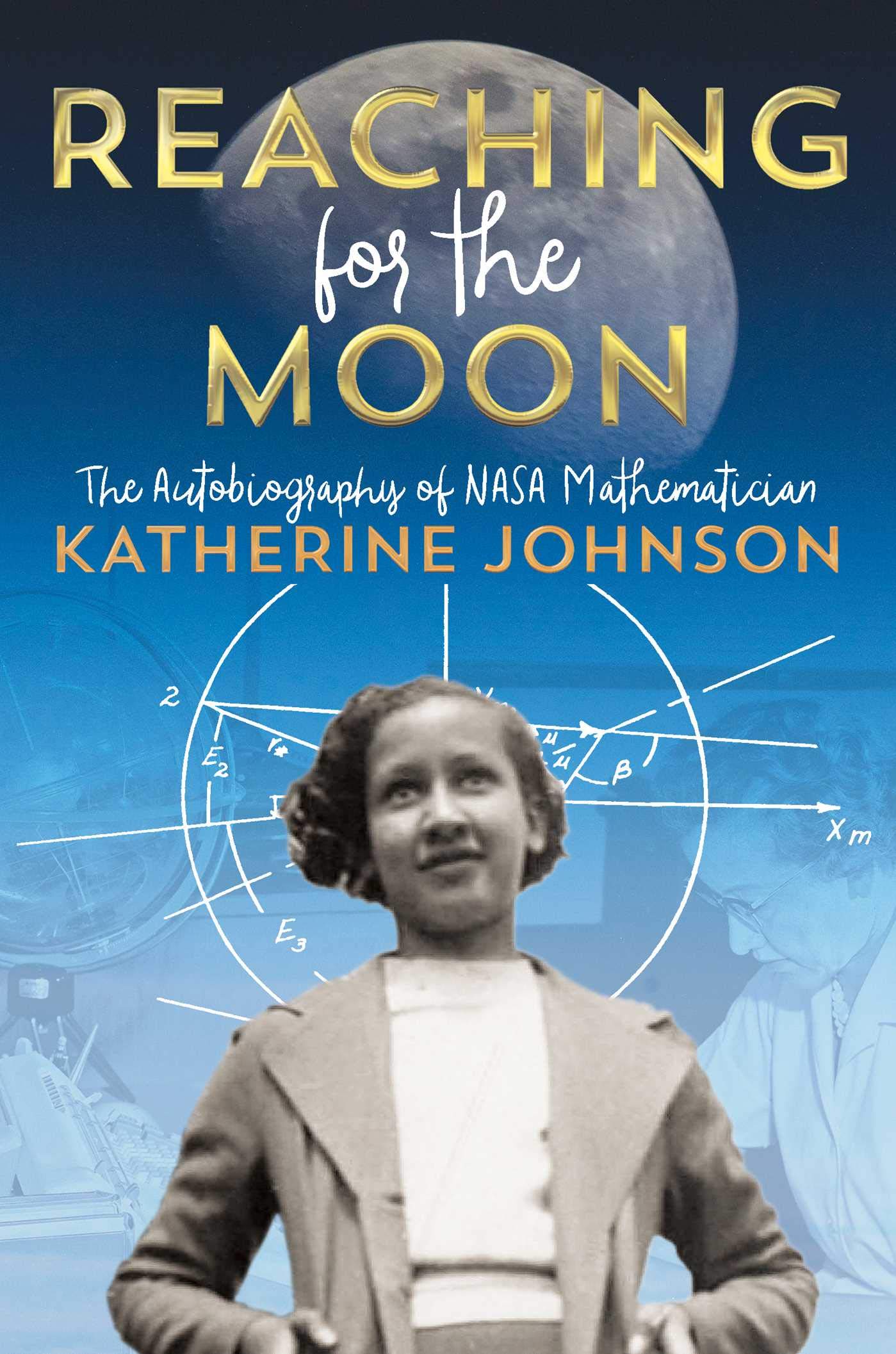
Reaching for the Moon: The Autobiography of NASA Mathematician Katherine Johnson
Author: Katherine Johnson
Published July 2nd, 2019 by Atheneum Books for Young Readers

The inspiring autobiography of NASA mathematician Katherine Johnson, who helped launch Apollo 11.

As a young girl, Katherine Johnson showed an exceptional aptitude for math. In school she quickly skipped ahead several grades and was soon studying complex equations with the support of a professor who saw great promise in her. But ability and opportunity did not always go hand in hand. As an African American and a girl growing up in an era of brutal racism and sexism, Katherine faced daily challenges. Still, she lived her life with her father’s words in mind: “You are no better than anyone else, and nobody else is better than you.”

In the early 1950s, Katherine was thrilled to join the organization that would become NASA. She worked on many of NASA’s biggest projects including the Apollo 11 mission that landed the first men on the moon.

Katherine Johnson’s story was made famous in the bestselling book and Oscar-nominated film Hidden Figures. Now in Reaching for the Moon she tells her own story for the first time, in a lively autobiography that will inspire young readers everywhere.

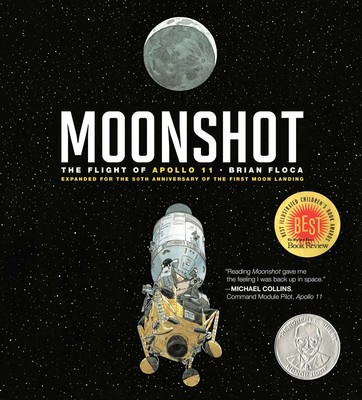
Moonshot: The Flight of Apollo 11
Author: Brian Floca
Originally Published April 9th, 2019 by Richard Jackson Books

Brian Floca explores Apollo 11’s famed moon landing with this newly expanded edition of Moonshot!

Simply told, grandly shown, and now with eight additional pages of brand-new art and more in-depth information about the historic moon landing, here is the flight of Apollo 11. Here for a new generation of readers and explorers are the steady astronauts clicking themselves into gloves and helmets, strapping themselves into sideways seats. Here are their great machines in all their detail and monumentality, the ROAR of rockets, and the silence of the Moon. Here is a story of adventure and discovery—a story of leaving and returning during the summer of 1969, and a story of home, seen whole, from far away.

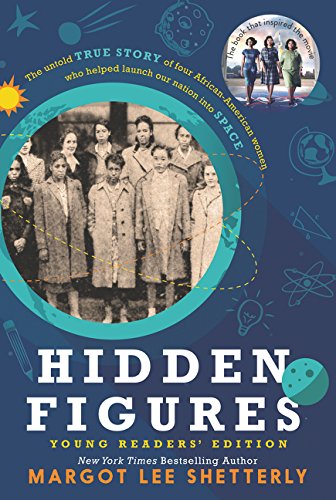
Hidden Figures: Young Readers’ Edition
Author: Margot Lee Shetterly
Published November 29th, 2016 by HarperCollins

This edition of Margot Lee Shetterly’s acclaimed book is perfect for young readers. It is the powerful story of four African-American female mathematicians at NASA who helped achieve some of the greatest moments in our space program.

Before John Glenn orbited the earth, or Neil Armstrong walked on the moon, a group of dedicated female mathematicians known as “human computers” used pencils, slide rules, and adding machines to calculate the numbers that would launch rockets, and astronauts, into space.

This book brings to life the stories of Dorothy Vaughan, Mary Jackson, Katherine Johnson, and Christine Darden, who lived through the Civil Rights era, the Space Race, the Cold War, and the movement for gender equality, and whose work forever changed the face of NASA and the country.

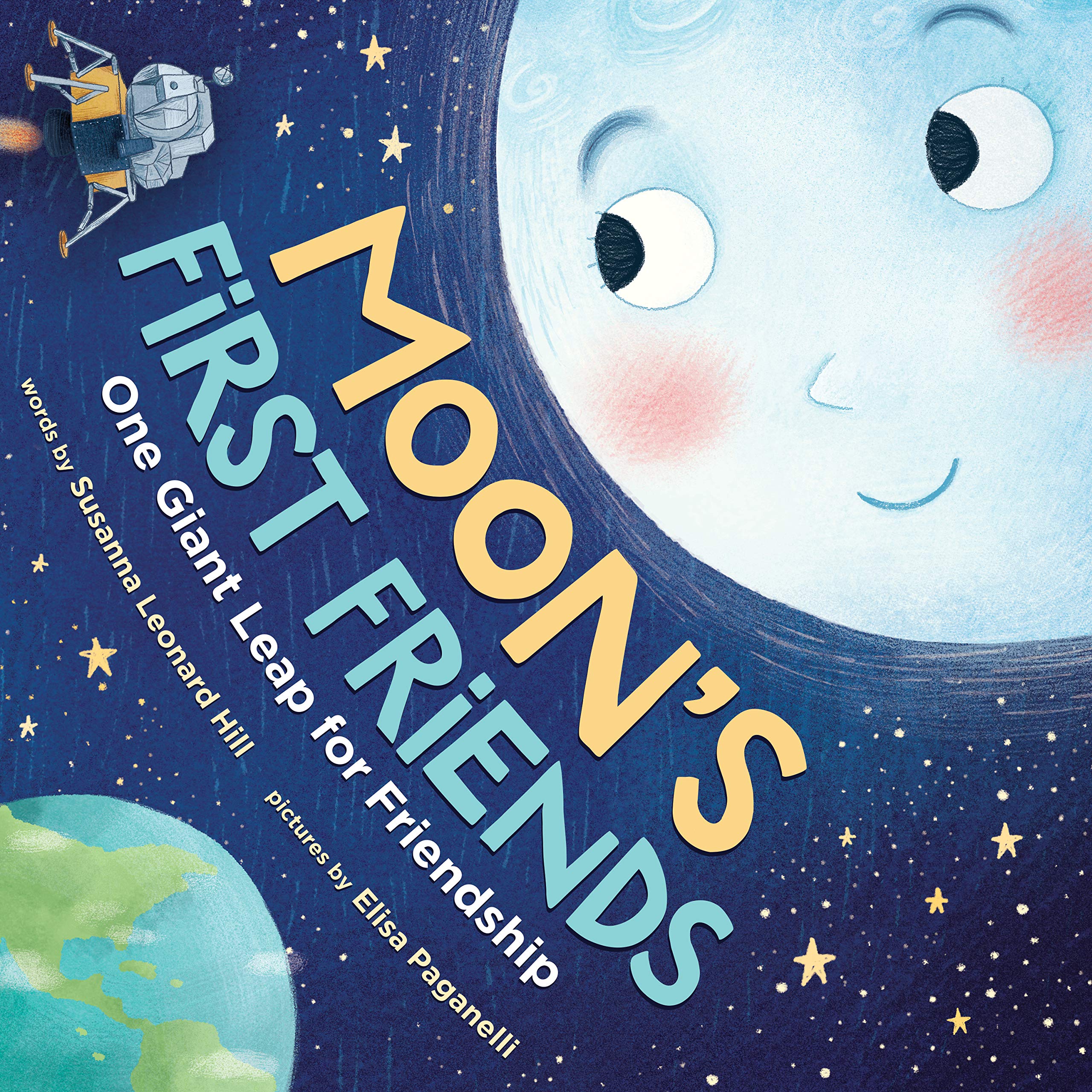
Moon’s First Friends: One Giant Leap for Friendship
Author: Susanna Leonard Hill
Illustrator: Elisa Paganelli
Published May 7th, 2019 by Sourcebook Jabberwocky

A heartwarming story of a friendship-seeking moon that also celebrates the extraordinary 50th anniversary of the Apollo 11 moon landing!

From high up in the sky, the Moon has spent her whole life watching Earth and hoping for someone to visit. Dinosaurs roam, pyramids are built, and boats are made, but still no one comes. Will friends ever come visit her?

One day a spaceship soars from Earth…and so does her heart.

Includes bonus educational pages about the moon mission!

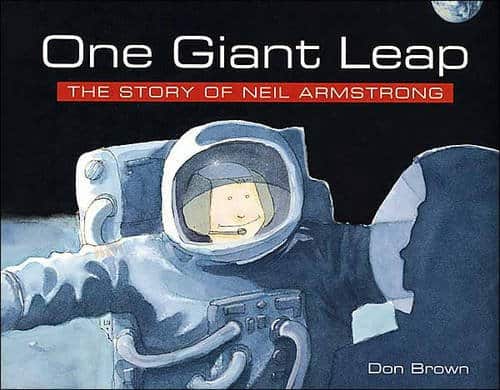
One Giant Leap: The Story of Neil Armstrong
Author: Don Brown
Published September 24th, 2001 by HMH Books for Young Readers

As a young boy, Neil Armstrong had a recurring dream in which he held his breath and floated high above the people, houses, and cars. He spent his free time reading stacks of flying magazines, building model airplanes, and staring through the homemade telescope mounted on the roof of his neighbor’s garage. As a teenager, Neil became obsessed with the idea of flight, working odd jobs to pay for flying lessons at a nearby airport. He earned his student pilot’s license on his sixteenth birthday. But who was to know that this shy boy, who also loved books and music, would become the first person to set foot on the moon, on July 20, 1969. Here is the inspiring story of one boy’s dream – a dream of flying that landed him more than 200,000 miles away in space, gazing upon the awesome sight of a tiny earth hanging suspended in a perfectly black sky. On the thirtieth anniversary of the moon landing, Don Brown’s expressive story reveals the achievement of this American legend, Neil Armstrong.

Previously Reviewed and Recommended:

Giveaway!

a Rafflecopter giveaway

Signature

**Thank you to Milena at Simon & Schuster for providing the books for giveaway!**

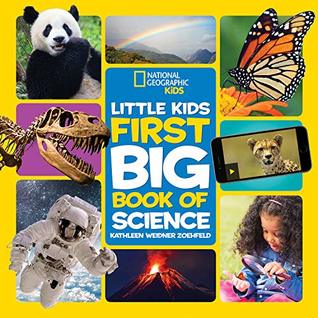
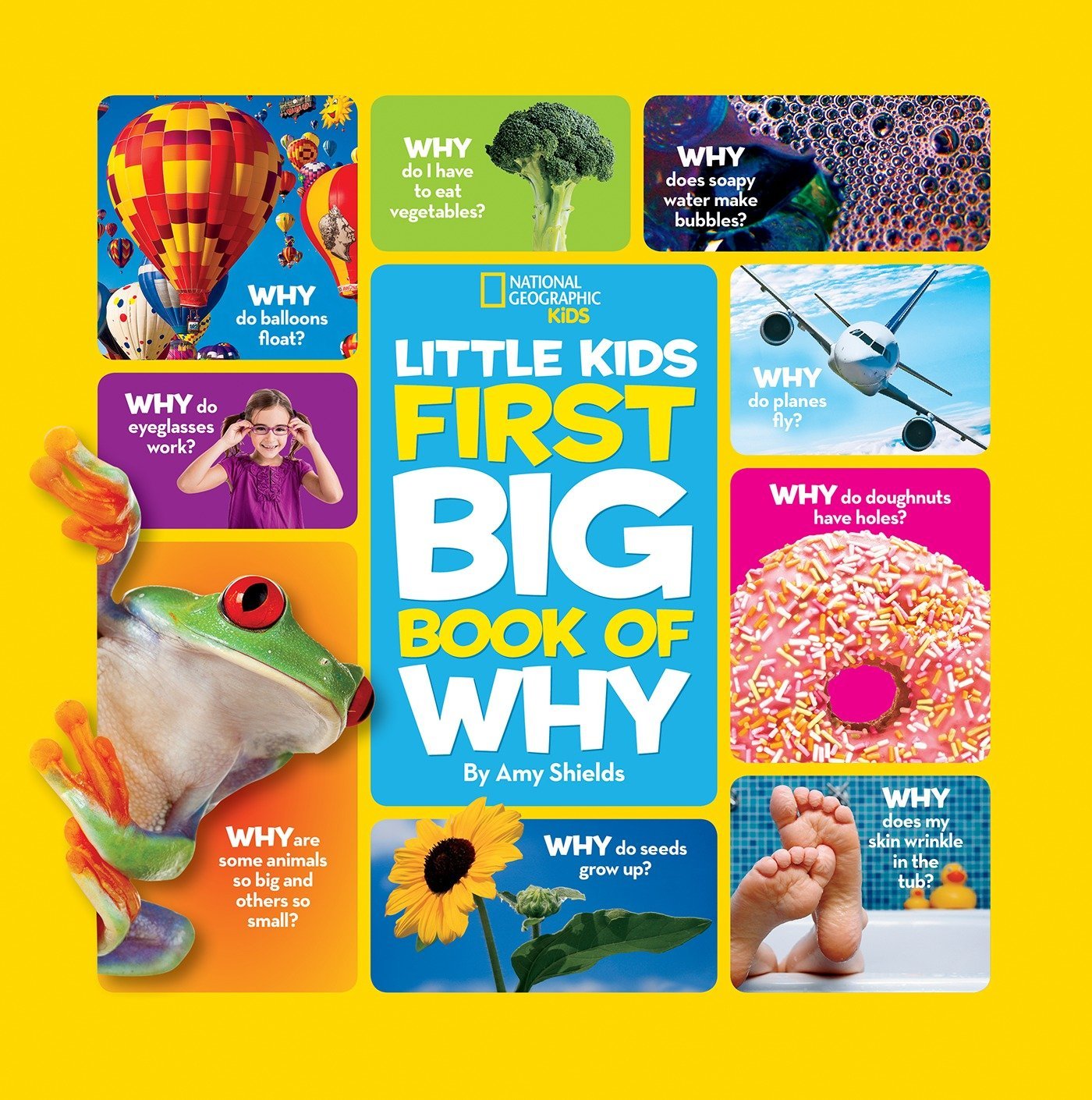
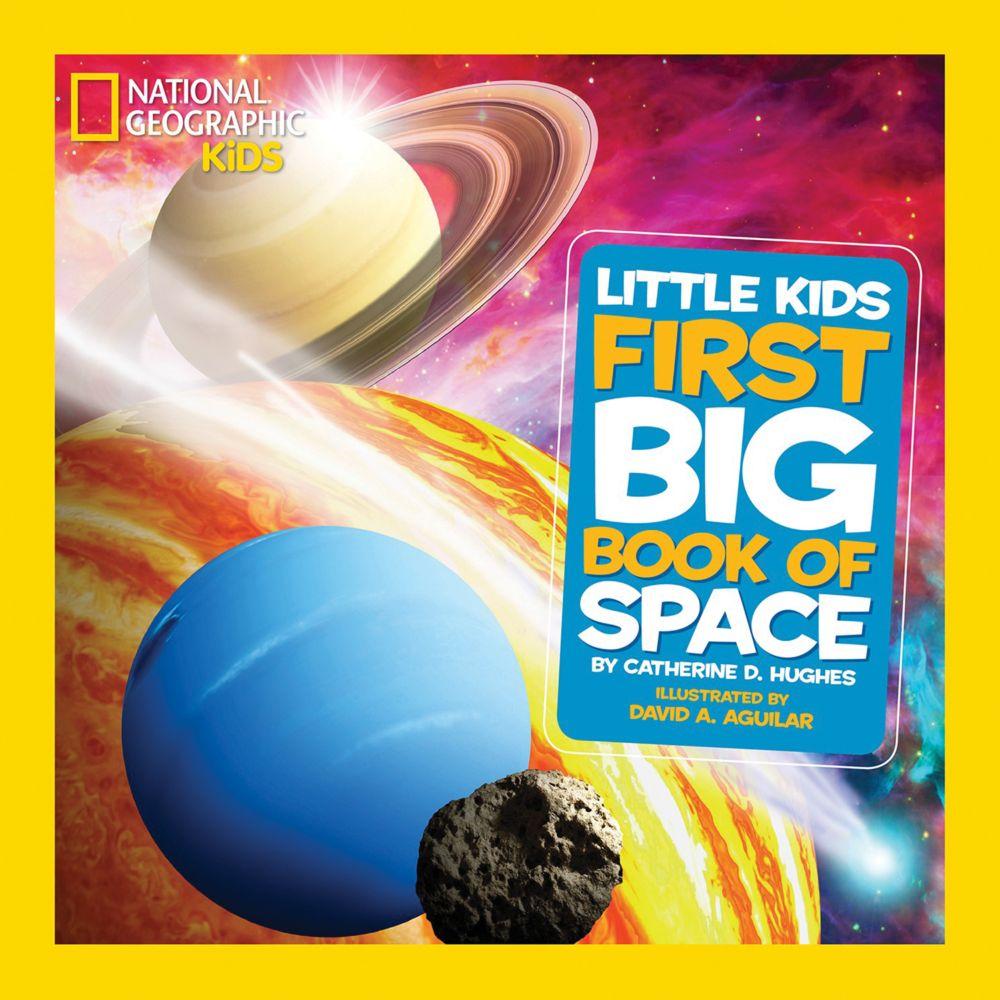
National Geographic Kids: Little Kids First Big Book of Science by Kathleen Weidner Zoehfeld

Share

National Geographic Kids: Little Kids First Big Book of Science
Author: Kathleen Weidner Zoehfeld
Published April 4th, 2019 by National Geographic Kids

Summary: What is science? What do scientists do? This lively reference book answers these questions and many more, all while introducing kids to the amazing things that scientists study: animals and plants, oceans and space, earthquakes and volcanoes, sound and light, inventions, and more!

Make sure kids’ first experience of the wonders of science is a thrilling eye-opener with this fun reference book. Fun activities, games, and simple experiments encourage interactive learning, showing kids that anyone can use scientific observation and experimentation to be a scientist and discover new things. With bright images and age-appropriate text, this book inspires kids to be curious, ask questions, and explore the world around them. And, maybe even grow up to be a scientist one day, too! Topics touched on include astronomy, botany, paleontology, malacology (that’s the science of clams, snails, and other animals with shells!), zoology, and more.

Inside you’ll find:

  • More than 200 incredible photos
  • Age-appropriate explanations of the things that scientists wonder about and learn
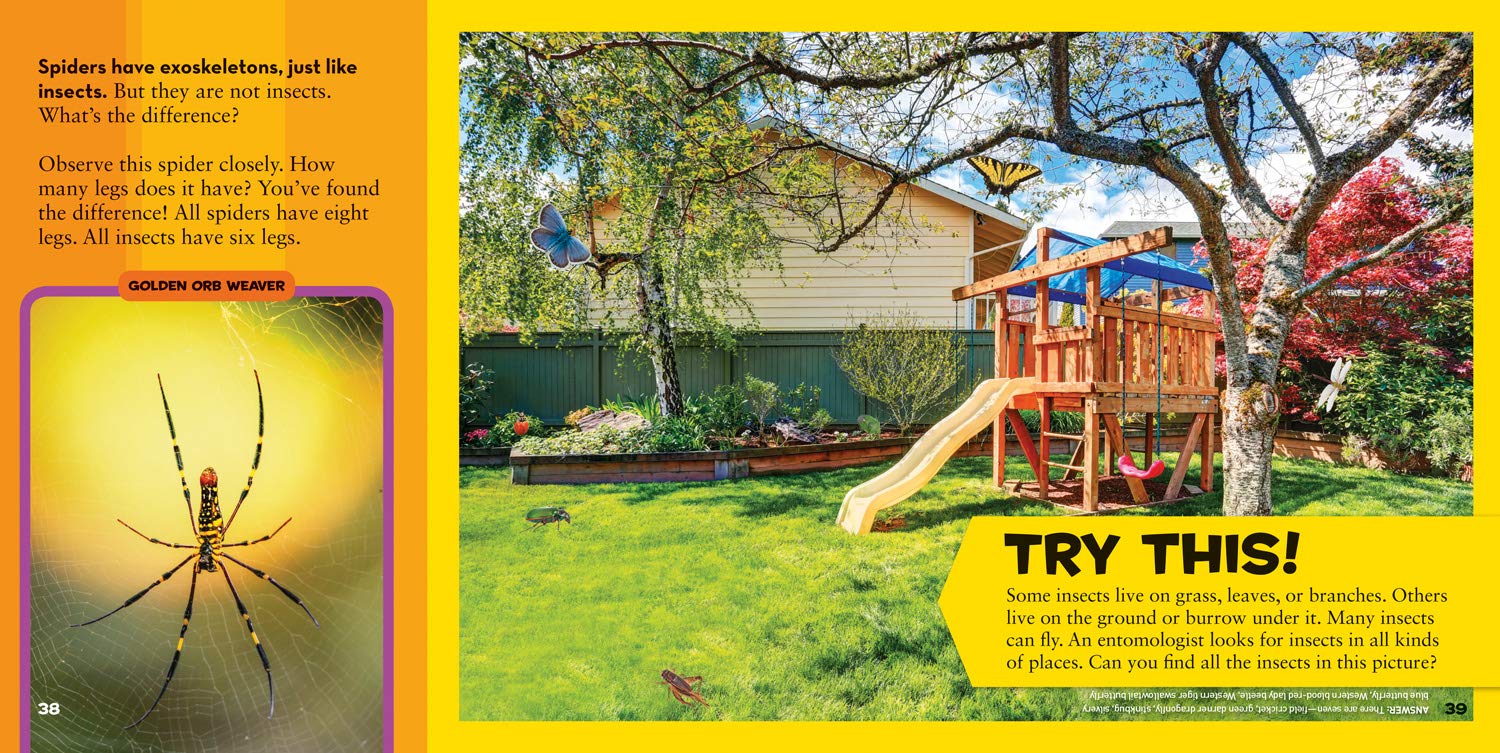
  • Questions and activities in each chapter that encourage interactive learning
  • Simple text for reading aloud or for beginning readers, and fun facts on every page
  • Parent tips that extend the experience beyond the book

About the Author: Kathleen Weidner Zoehfeld was a children’s book editor for more than 10 years before becoming a full-time writer. She has published more than 60 books for children, most about animals and natural history.

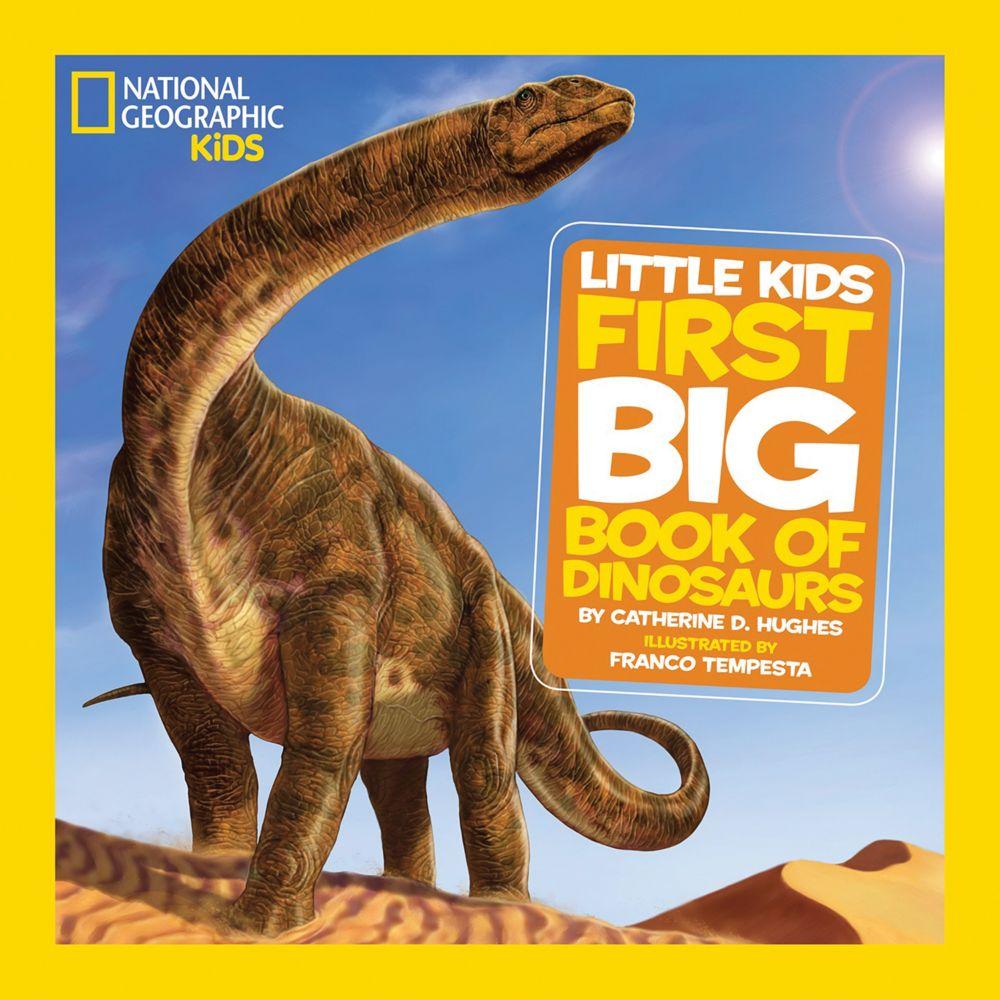
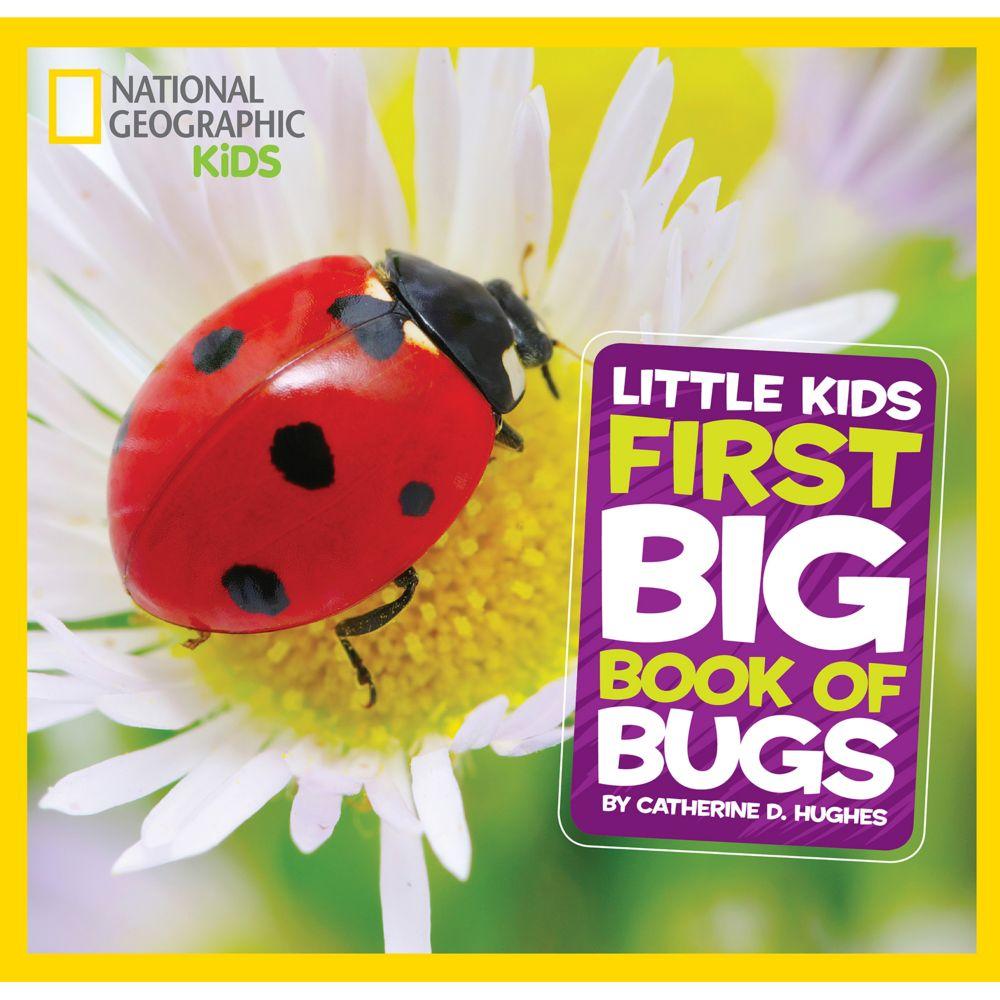
Other National Geographic Kids Little Kids First Big Books:


Review: National Geographic Kids books are such amazing resources for kids and adults! I just love reading through the books because I always learn something, too, and the images are beautiful. And as a mom, I love reading it with Trent because he adores science and the books are such an inquisitive conversation starter. As a teacher, I can see so many ways that this book could be used in an elementary classroom. It is just a perfect triad!

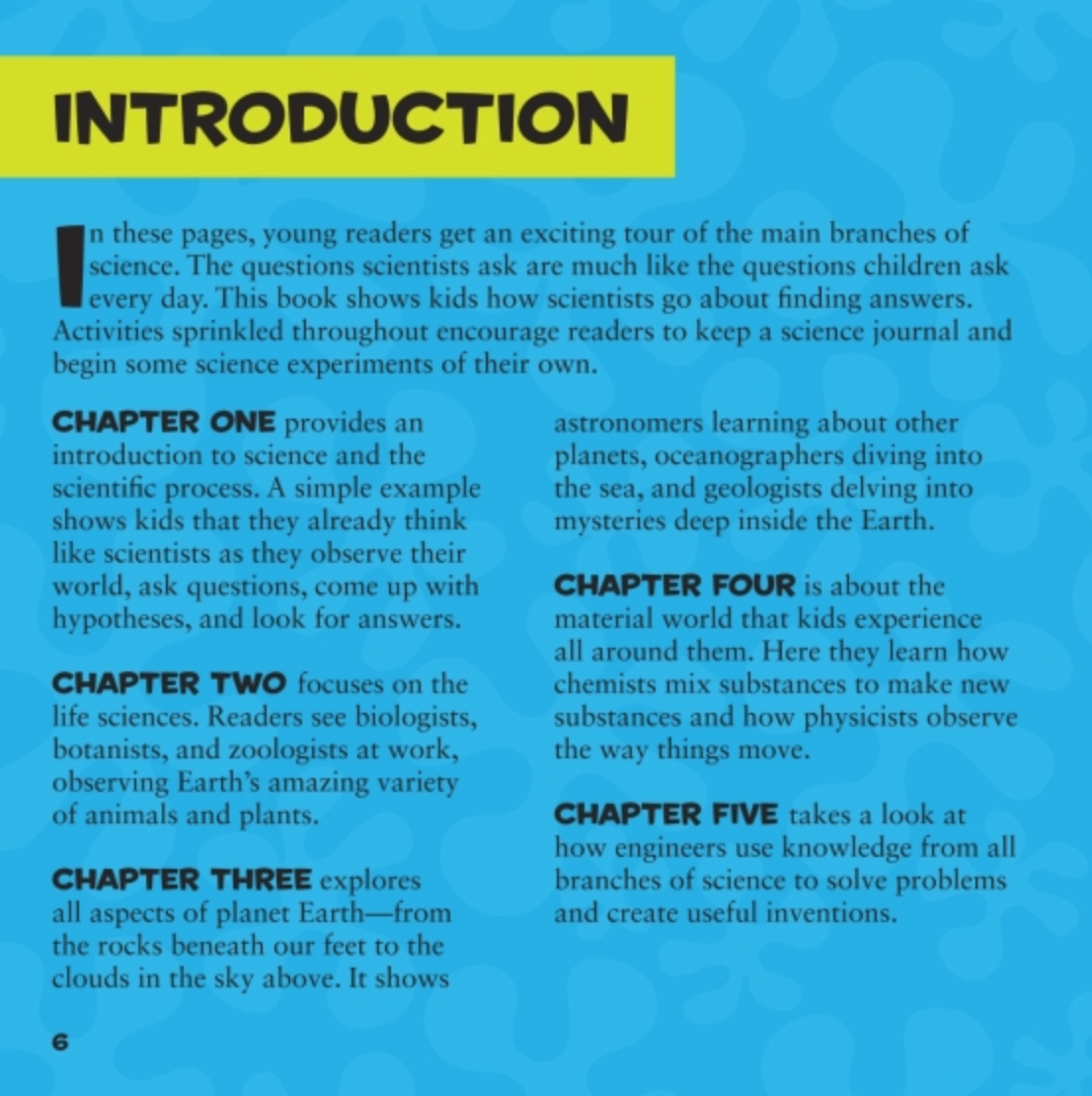
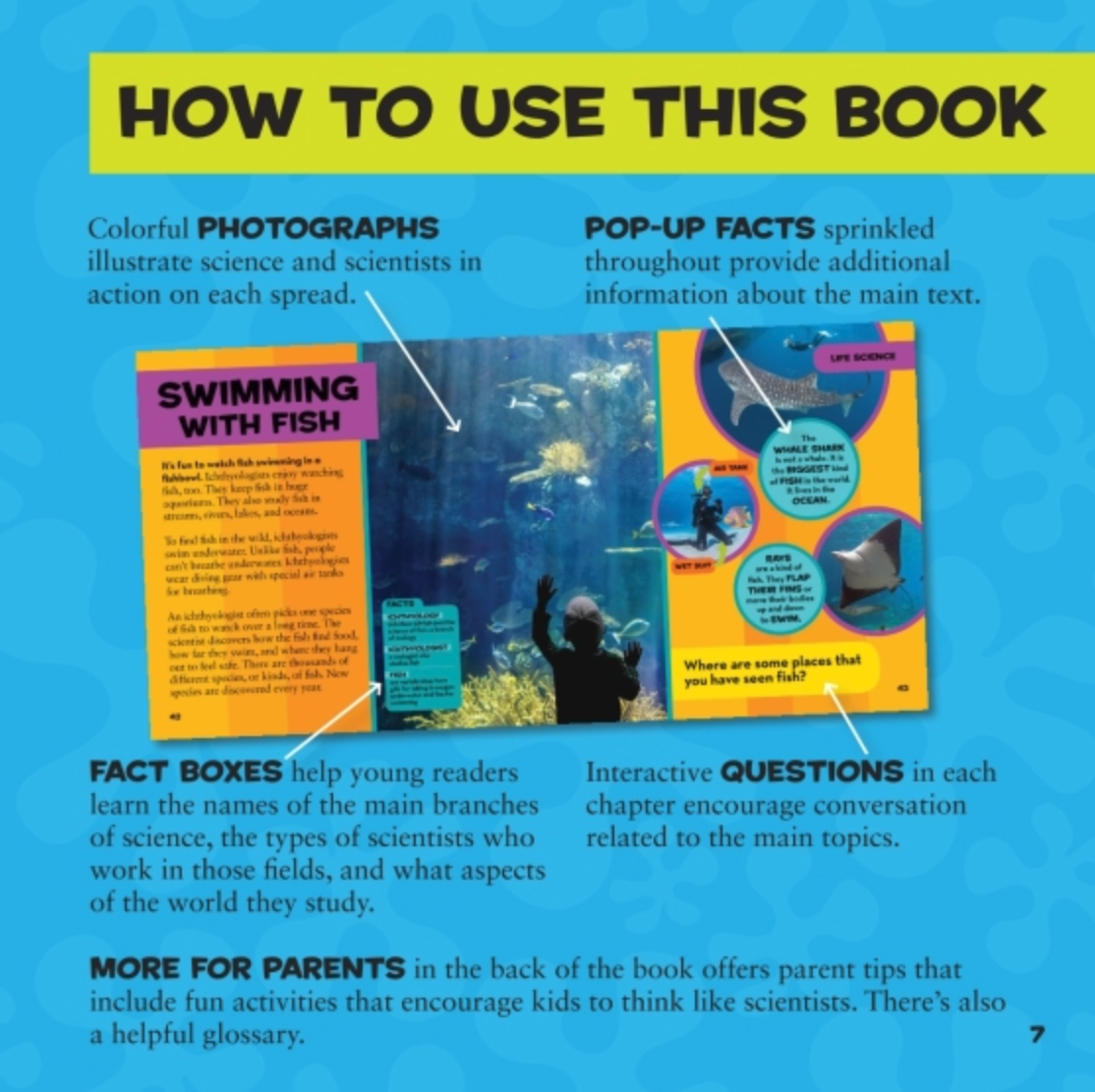
Teachers’ Tools for Navigation: The book is made to be used with children when discussing science. There are a plethora of ways to use it! The book speaks for itself:

Additionally, the parent resources in the back are amazing for home and classroom! Here are some examples of the hands-on science discussions/activities for adults to do with kids in the “Parent Tips” section (just a summary):

  • Egg, Plus Heat (Chemistry): Looks at how heat changes the egg.
  • Moon Shapes (Astronomy): Lunar calendar
  • House of Blocks (Engineering): Make the most stable structures.

Discussion Questions: 

  • What is a hypothesis?
  • What is a Control?
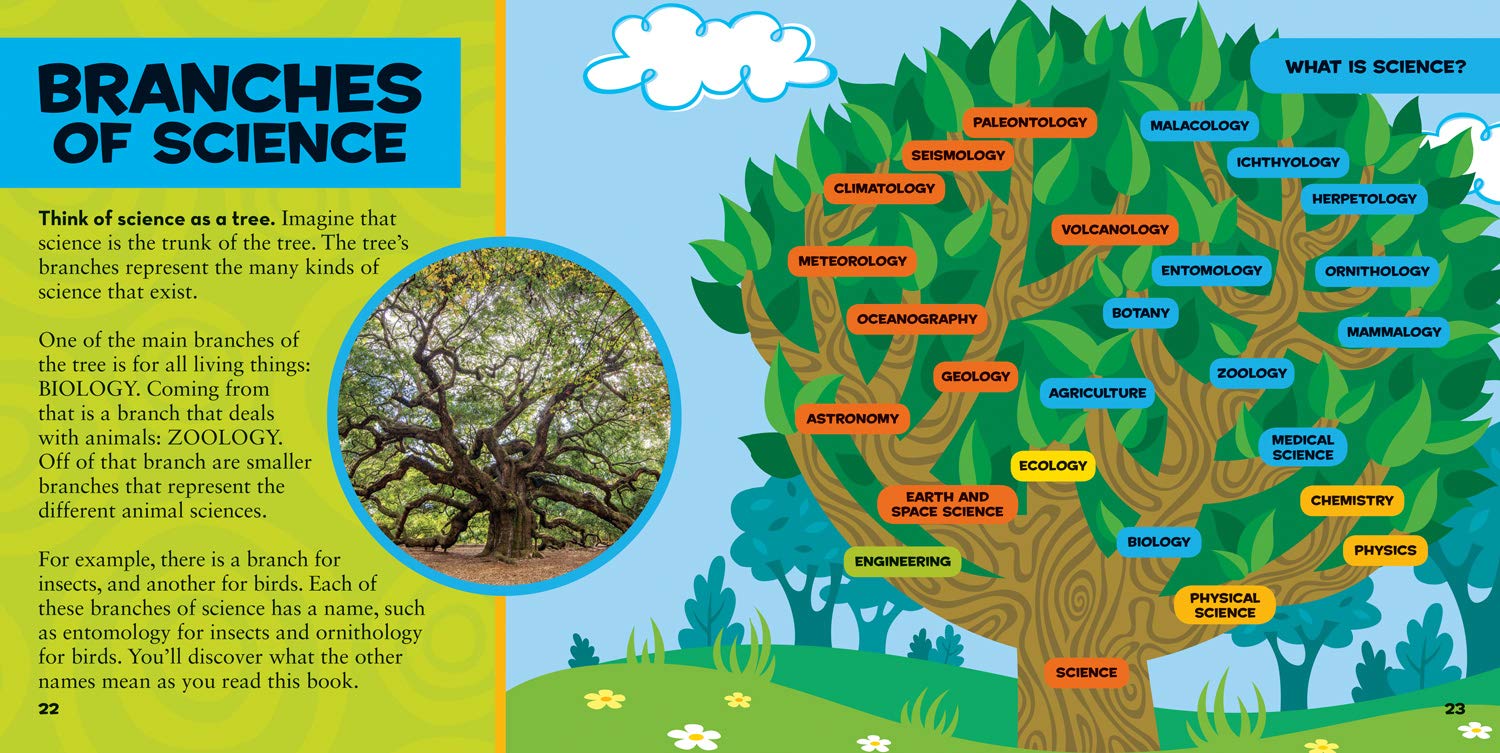
  • What are the different branches of science?
  • Why do we get vaccinations?
  • What are the different kinds of animals?
  • What is an ecosystem?
  • What are the three different states of matter?
  • What moves faster: light or sound?
  • Word play with the glossary!

Some of the Interactive Questions from throughout the book

  • If you could spend a day with one of these scientists, who would you choose?
  • Which part of the body would you like to learn more about? Why?
  • Can you name three ways you look different from when you were a baby?
  • What wild animal would you most like to study? Why?
  • Which ecosystem would you most like to visit? Why?
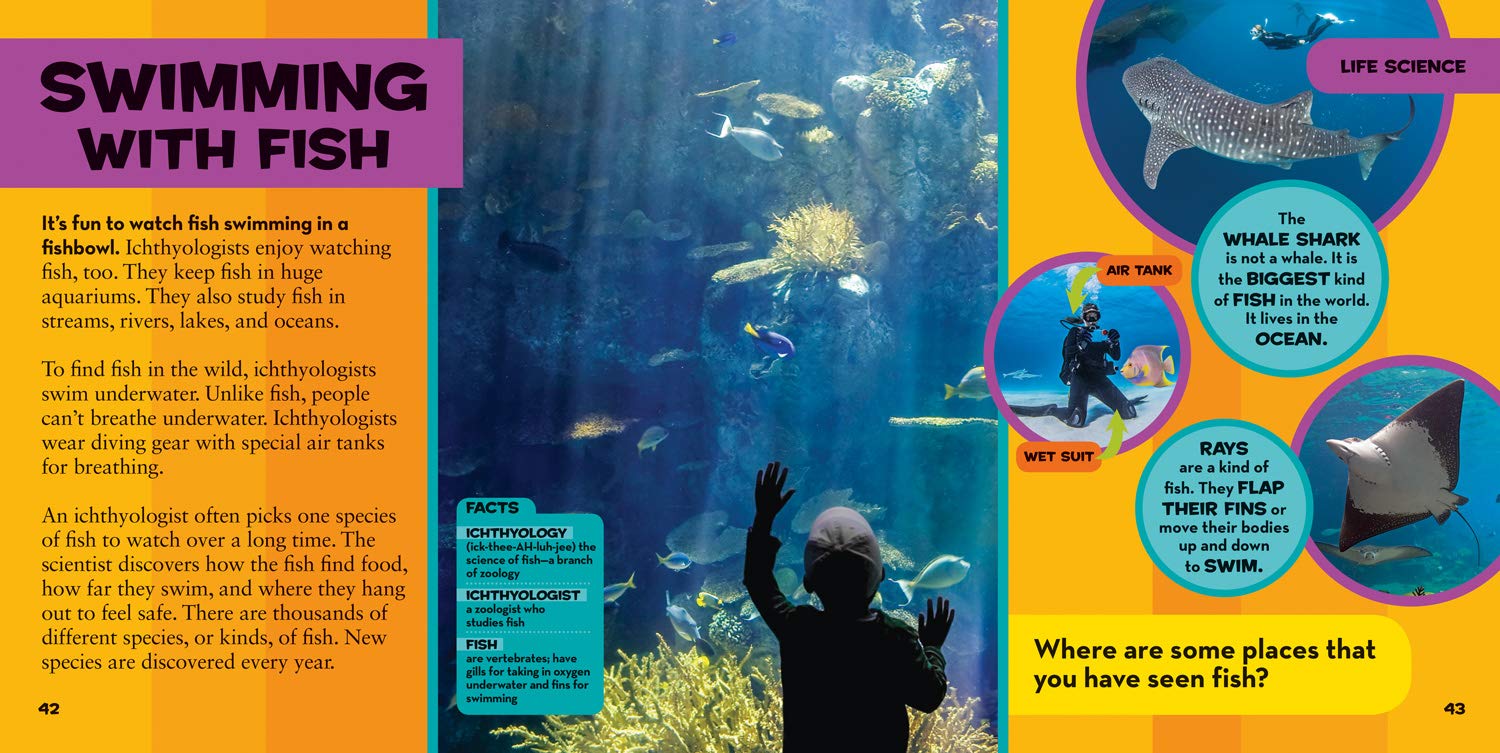
  • How many ocean animals can you name?
  • If you could travel to another planet, which one would you choose?
  • What would you like to invent?

Flagged Passages: 

Read This If You Love: Science!

Recommended For: 

classroomlibrarybuttonsmall 

Signature

**Thank you to Karen at Media Masters Publicity for providing a copy for review**

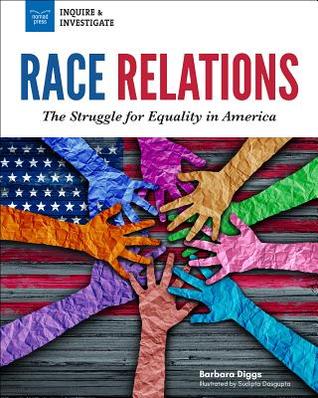
Author Guest Post: “Understanding Race in a Country Divided” by Barbara Diggs, Author of Race Relations: The Struggle for Equality in America

Share

“Understanding Race in a Country Divided”

Race and racism can be tricky topics to discuss in the classroom. With so many diverse experiences, perspectives, and opinions on these emotionally-charged issues, it can be tempting to avoid conversations about race to skirt potential conflict.

But if there’s any hope of creating greater harmony and understanding among people of all colors in our society, we have to face these issues head-on. Our kids must learn to discuss racial issues openly, with honesty, empathy–and historical perspective.

To my mind, no fruitful discussion of the United States’ racial issues can occur without having a comprehensive grasp of America’s history of race relations. This long and painful story is key to understanding today’s divisive racial climate and recognizing how America’s past continues to haunt and impact race relations today.

My book, Race Relations: The Struggle for Equality in America, helps put the complexity of contemporary U.S. race relations into historical context. It offers kids the chance to explore race and racism in ways that promote critical thinking about difficult societal problems.

The book begins, not with slavery, but with the creation of racial categories in the fifteenth century. Readers learn, in a fact-based way, how European colonizers embraced and honed these categories to create a racial hierarchy to justify the enslavement and persecution of races they believed to be inferior. Even as some people fought against it, this hierarchy would become codified in U.S. laws and woven into American social codes for the next 400 years, substantially affecting how people of different colors view and treat each other.

Race Relations guides tweens and teens through these four centuries of American race relations. It touches every major era, from colonization and slavery to Reconstruction, Jim Crow, and Civil Rights to the presidencies of Barack Obama and Donald Trump. Links to online primary sources such as narratives, laws, articles, poems, songs, statistics, and even YouTube videos help them explore the nature of American race relations during each era and allow them to consider how relations have changed–or haven’t–over the years.

The book also fosters discussions of contemporary racial issues, such as voting rights, imprisonment rate disparities, and affirmative action, and asks students to reflect on concepts such as racial bias, prejudice, and privilege and how these impact their lives. It further highlights current social justice movements, including Black Lives Matters, and encourages students to consider actions they can take to help improve race relations.

I wrote Race Relations to provide young teens with the tools for recognizing racism and the historical context for talking about it.  Only by addressing these problems can we begin to bridge our differences, understand each other’s realities, and build a more peaceful and unified society.

Here are some activities to get healthy conversations started!

Check Yourself

History isn’t the only factor that can influence our perception of races different from our own. Naturally, having a personal relationship with people of a different race plays a huge role in your perceptions, as does the nature of that relationship with them. But we also receive input from a variety of other sources—our family, friends, neighborhood, community, images on television, magazines, newspapers, books, videos, and music. How do all these factors influence our perception of race?

Write down the different factors that influence your perceptions of these races as listed on the U.S. Census: White, Latino, African American, Native American, Asian American. You do not have to share this list with anyone—it is for you to gain insights into your perceptions of other races and where they come from.

  • Do you know anyone of each race?
  • How many people?
  • Have you ever participated in any social events with someone of each race?
  • What do you frequently hear about people of each race?
  • What three adjectives would you use to describe people of each race?
  • Where do your strongest impressions of each race come from?
  • Can you find any patterns in your thinking? Are your impressions about groups that include people you know personally more positive than those groups that don’t contain anyone you know? What other patterns can you spot?

To investigate more, give yourself an assignment of reading, watching, or listening to books, movies, and music produced by people from each of the different races. Does this change your perception? If so, how?

Mass Depopulation of Native Americans

Before Europeans arrived in 1492, an estimated 54 million Native Americans were living in what is now the United States. Within decades, millions died due to European diseases, war, and displacement. By 1890, the Native American population had dropped to 228,000. Although historians debate whether the devastation of the Native American population was an intentional genocide, they do not dispute that Europeans caused the dramatic depopulation, whether by acting purposefully, accidentally, or with reckless indifference.

Trace the history of one of the Native American tribes. Choose between the Cherokee, Iroquois, Mohawk, Seminole, Sioux, Comanche, Algonquin, or Cheyenne.

Make a timeline of significant events in the tribe’s history. These should include important relationships with colonists or Americans, treaties made with the U.S. government, wars, peacetimes, displacements, and current status.

Research the culture of your chosen tribe. How did the historical events affect that culture?

To investigate more, write a short play or scene about an event in your chosen tribe’s history that affected its lifestyle or population. Incorporate differing views tribe members may have had and how they may have felt looking to the future.

More classroom resources can be found at https://nomadpress.net/wordpress/wp-content/uploads/2018/07/Race-Relations-Classroom-Guide.pdf.

Race Relations: The Struggle for Equality in America
Author: Barbara Diggs
Illustrator: Richard Chapman
Published April 9th, 2019 by Nomad Press

About the Book: How could a country founded on the honorable ideals of freedom and equality have so willingly embraced the evils of enslavement and oppression?

America’s history of race relations is a difficult one, full of uncomfortable inconsistencies and unpleasant truths. Although the topic is sensitive, it is important to face this painful past unflinchingly—knowing this history is key to understanding today’s racial climate and working towards a more harmonious society.

In Race Relations: The Struggle for Equality in America, kids ages 12 to 15 follow the evolution of race relations in America from the country’s earliest beginnings until present day. The book examines how the concept of race was constructed in the seventeenth century and how American colonists used racial differences to justify slavery, discrimination and the persecution of people of color. Through links to online primary sources such as newspaper articles, letters, poems, and songs, young readers will explore how race relations changed—and didn’t—through the eras of Reconstruction, Jim Crow, and Civil Rights, and under the presidencies of Barack Obama and Donald Trump.

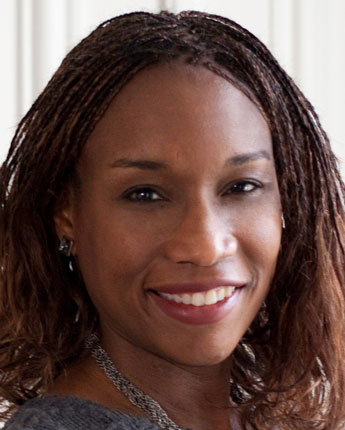
About the Author: Barbara Diggs is a non-fiction writer who has written a range of historical articles for children. Her work has been featured in Learning Through History MagazineHistory Magazine, and Renaissance, among others. A graduate of Stanford Law School, Barbara practiced law in New York for several years before becoming a professional writer. She and her family currently split their time between Paris, France, and Washington DC. Website: barbaradiggs.com

Thank you so much for this guest post looking at the history, present, and future of race relations in the United States!

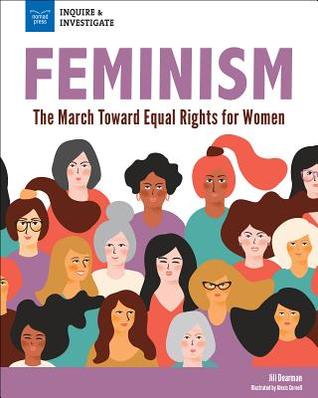
Author Guest Post: “Feminism: Finding Our Way Forward” by Jill Dearman, Author of Feminism: The March Towards Equal Rights for Women

Share

“Feminism: Finding Our Way Forward”

Do you think men and women are equal? Do you think women around the world enjoy the same rights and privileges as men? What about jobs—can men and women work the same jobs and get paid the same for their work?

Many people believe that all people should be treated equally, whether they’re male, female, or gender nonconforming. But the way our world works doesn’t always reflect this ideal of equality. Women are often treated differently from men. Even today, in the United States, women statistically earn less than men working the same jobs. You’ll find few women heading up large corporations. And women are more likely than men to live in poverty.

This can be a distressing topic to discuss in classrooms! It’s hard for people of any age to learn that their gender might be unfairly counted against them, but perhaps especially for girls in their teens, who are dealing with a slew of messages from society about how women look and behave. However, it’s an important subject to talk about. Only by recognizing what has improved and what needs work can future generations develop their own goals and plans and continue the process of addressing the inequality they see in the world.

An important part of this process is learning the history of feminism. Who was Alice Paul and what did she do for women? How did Queen Elizabeth maintain her power? Why was abolitionism such an important step for feminism in the United States? What is intersectionality and what does it have to do with all women?

As kids start to dive into questions like these and confront their own expectations, biases, and assumptions, they can begin to develop goals and pinpoint ways they can be part of making gender equality a reality for all people. It’s an exciting step!

In Feminism: The March Toward Equal Rights for Women, young people get the chance to explore the history of those who came before and imagine the future of those who continue the work. There is still a long way to go before women are considered equal around the world, but the journey is a necessary one that can be fully experienced by those paying attention.

Here are some ideas to get kids to pay attention to the ongoing work for equal rights for all genders!

Share Your Concerns

How is the world different for those of different genders? What are some of the different experiences, reactions, and ideas that different genders have?

In this activity, you’ll share your thoughts in a safe space with people who aren’t the same gender as you.

Ask a group of classmates or friends to finish this sentence according to their own gender: “Having my gender identity means . . . .” Have everyone write down one or two responses on individual sticky notes.

On a whiteboard, put the sticky notes in groups according to gender identity. In those groups, put the sticky notes in positive and negative sections. For example, someone might write, “Being female means getting to wear skirts when it’s hot” or “Being male means not letting yourself cry.”

As a group, discuss the idea on each sticky note. Consider these questions.

  • Can a male, female, or nonconforming gender do this?
  • Why or why not?
  • Do people of all genders want to do this?
  • What’s preventing them?
  • Has this action been open to other genders in the past?
  • What changed?
  • How can society support the needs and wishes of all genders?

To investigate more, do some research and find examples of times in history when a woman protested a law that kept her from doing something she wanted to do. For example, women have been barred from working certain jobs and holding office. How did they work to change those laws? How long did it take? How did changing one law change the world for many people?

Write Your Politician

Suffragists did a lot of letter writing as they fought for women’s right to vote. This was before email and social media, so their letters were written on paper and sent by mail. In today’s world, politicians receive lots of communications about different causes that people feel strongly about. Add your voice!

Choose a topic that you feel strongly about. This can be climate change, immigration, war, human rights, or something else.

At the library or on the internet, do some research on your chosen topic. Who are the major players with the power to effect change? What are their views on the topic? Do different people have different viewpoints?

Choose one person who agrees with your views and another person who has the opposite views. Write each of them a letter explaining your position. What can you write to get them to agree with you? How can you show your support for the person whose values align with yours?

Read the letters aloud to a friend or classmate. See if they can guess who it is you’re writing to. Do they think your letters were convincing?

To investigate more, imagine how one or more of the historical figures from this chapter would collaborate with a feminist, real or imagined, of today? What would feminists past and present focus on together in the twenty-first century?

More classroom resources can be found at https://nomadpress.net/wordpress/wp-content/uploads/2018/07/Feminism-Classroom-Guide.pdf.

Feminism: The March Toward Equal Rights for Women
Author: Jill Dearman
Illustrator: Alexis Cornell
Published April 9th, 2019 by Nomad Press

About the Book: Why are women treated differently from men? What is feminism? Why is this movement such an important part of the history of civic rights, and why is it still important today?

Feminism: The March Toward Equal Rights for Women invites middle and high schoolers to examine the different stages of the feminist movement, from early mentions in history through the suffragettes’ fight for the vote to today’s evidence of feminism in the struggle for equal pay and equal rights around the world. As social justice movements gain more traction in the national news media, many students are evolving into activist citizens who are working towards bettering humanity and the planet. This history of feminism gives them an introduction to the ways and means of community activism, which can be applied to a multitude of causes.

Feminism: The March Toward Equal Rights for Women introduces readers to some of the icons of feminism, including Simone De Bouvier, Gloria Steinem, and Angela Davis. By examining and deconstructing writings and other arts, readers gain a deeper understanding of the struggles women and men have undertaken for the deceptively simple goal of equal rights for all. Issues such as domestic violence and the fight for equal pay for equal work, plus a discussion of the more recent #metoo movement, all encourage kids to pay close attention to the world in which we live and insist on justice at every turn.

Feminism includes critical-thinking activities and research exercises to encourage readers to dive deep into the topic and consider viewpoints from many different identities. Fun facts, links to online primary sources and other supplemental material, and essential questions take readers on an exploration of the past, present, and future of feminism.

Feminism is part of a set of four books called Inquire & Investigate Social Issues of the Twenty-First Century, which explores the social challenges that have faced our world in the past and that continue to drive us to do better in the future. Other titles in this set are Gender IdentityImmigration Nation, and Race Relations.

Nomad Press books integrate content with participation, encouraging readers to engage in student-directed learning as opposed to teacher-guided instruction. This student-centered approach provides readers with the tools they need to become inquiry-based learners. Common Core State Standards and National Curriculum Standards for Social Studies all place project-based learning as key building blocks in education. Combining content with inquiry-based projects stimulates learning and makes it active and alive. As informational texts, our books provide key ideas and details from which readers can make their own inferences. Nomad’s unique approach simultaneously grounds kids in factual knowledge while allowing them the space to be curious, creative, and critical thinkers.

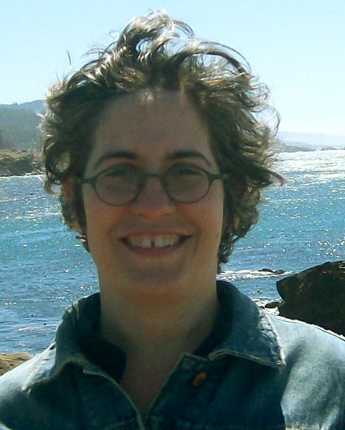
About the Author: Jill Dearman earned an MFA from the New School and is an award-winning author of several books, including The Great Bravura (She Writes Press, 2015). She teaches writing at NYU’s College of Applied Liberal Arts and at The College of New Rochelle, Rosa Parks Campus, and also serves as a private editing and writing coach. She lives in New York City.

Thank you so much for this guest post looking at how equal rights for women is still very much a timely topic!

Blog Tour with Review: Moon! Earth’s Best Friend by Stacy McAnulty

Share

Moon! Earth’s Best Friend
Author: Stacy McAnulty
Illustrator: Stevie Lewis
Published June 11th, 2019

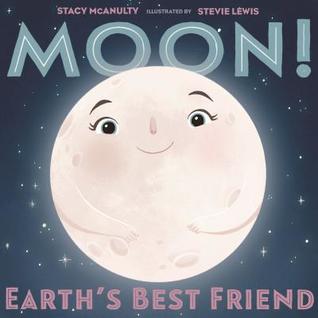
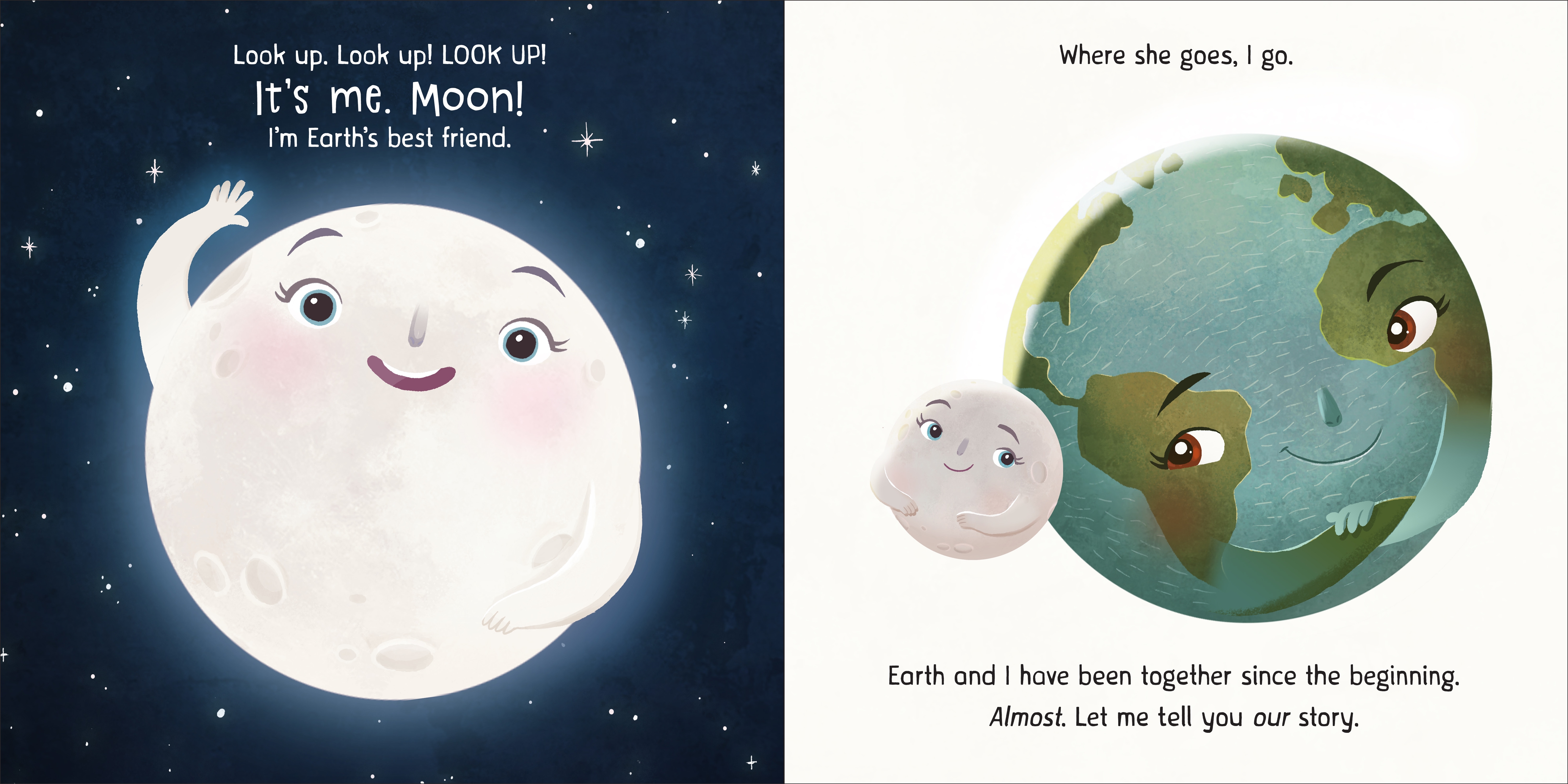
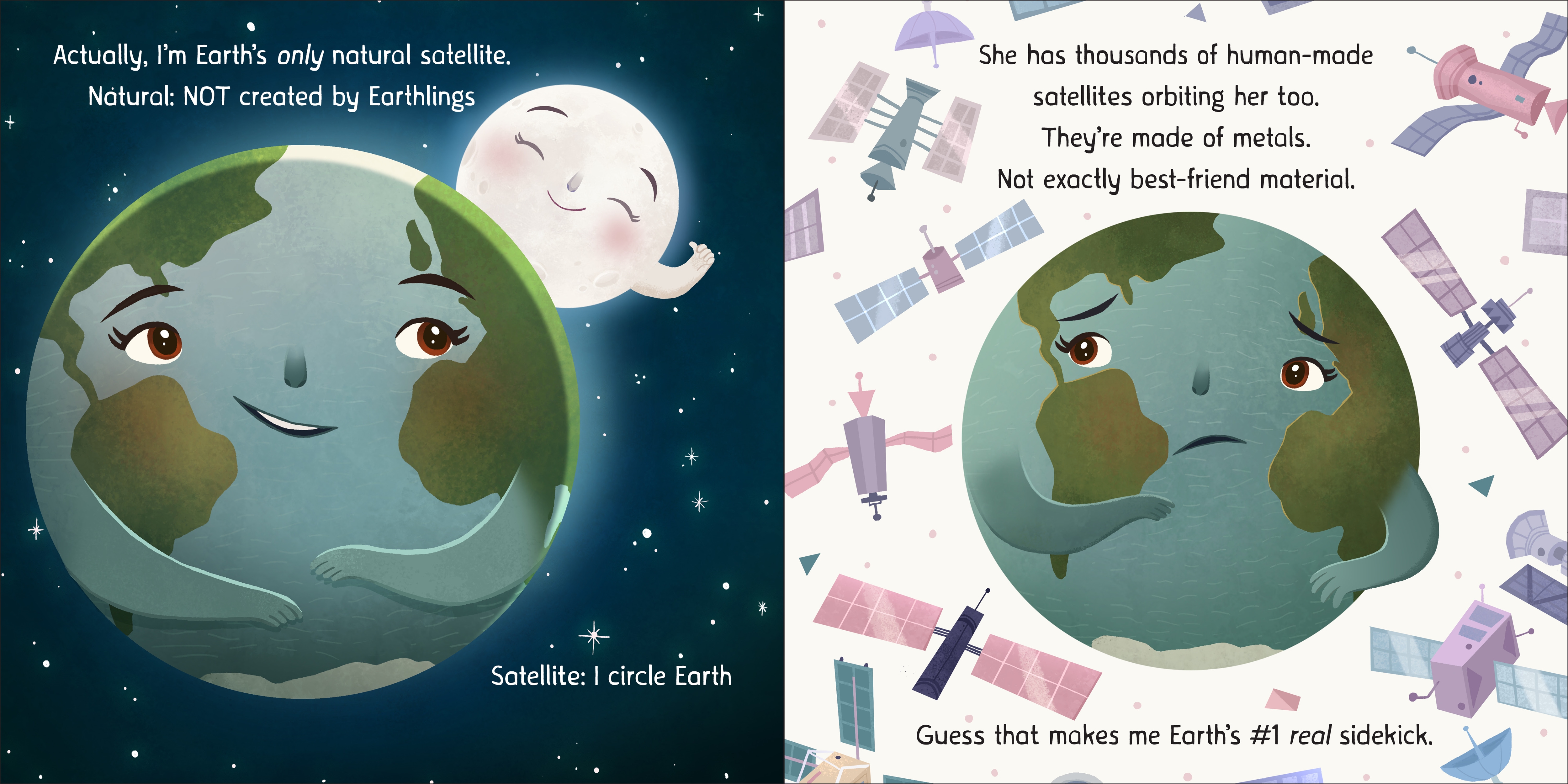
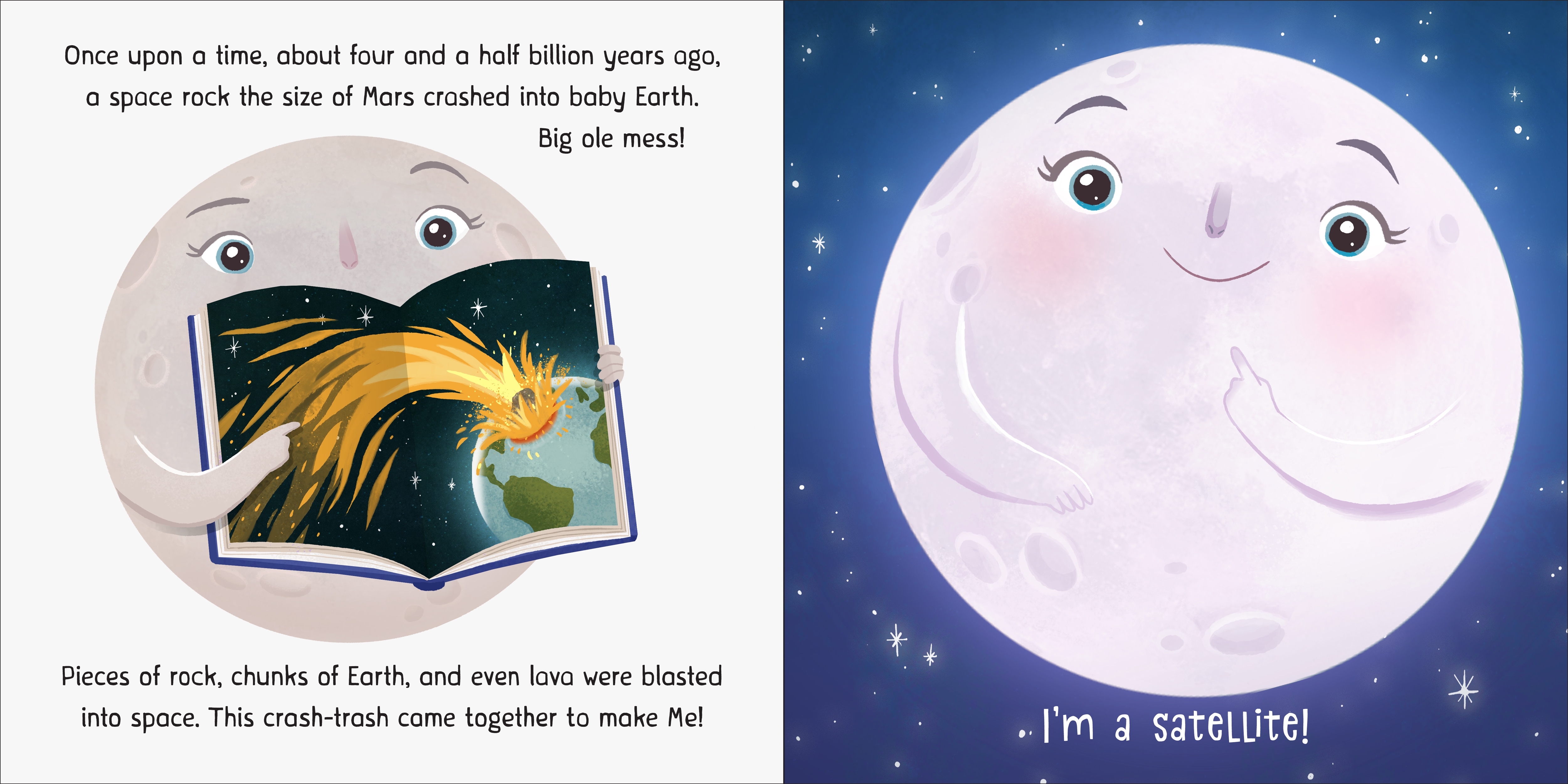
Summary: From writer Stacy McAnulty and illustrator Stevie Lewis, Moon! Earth’s Best Friend is a light-hearted nonfiction picture book about the formation and history of the moon—told from the perspective of the moon itself.

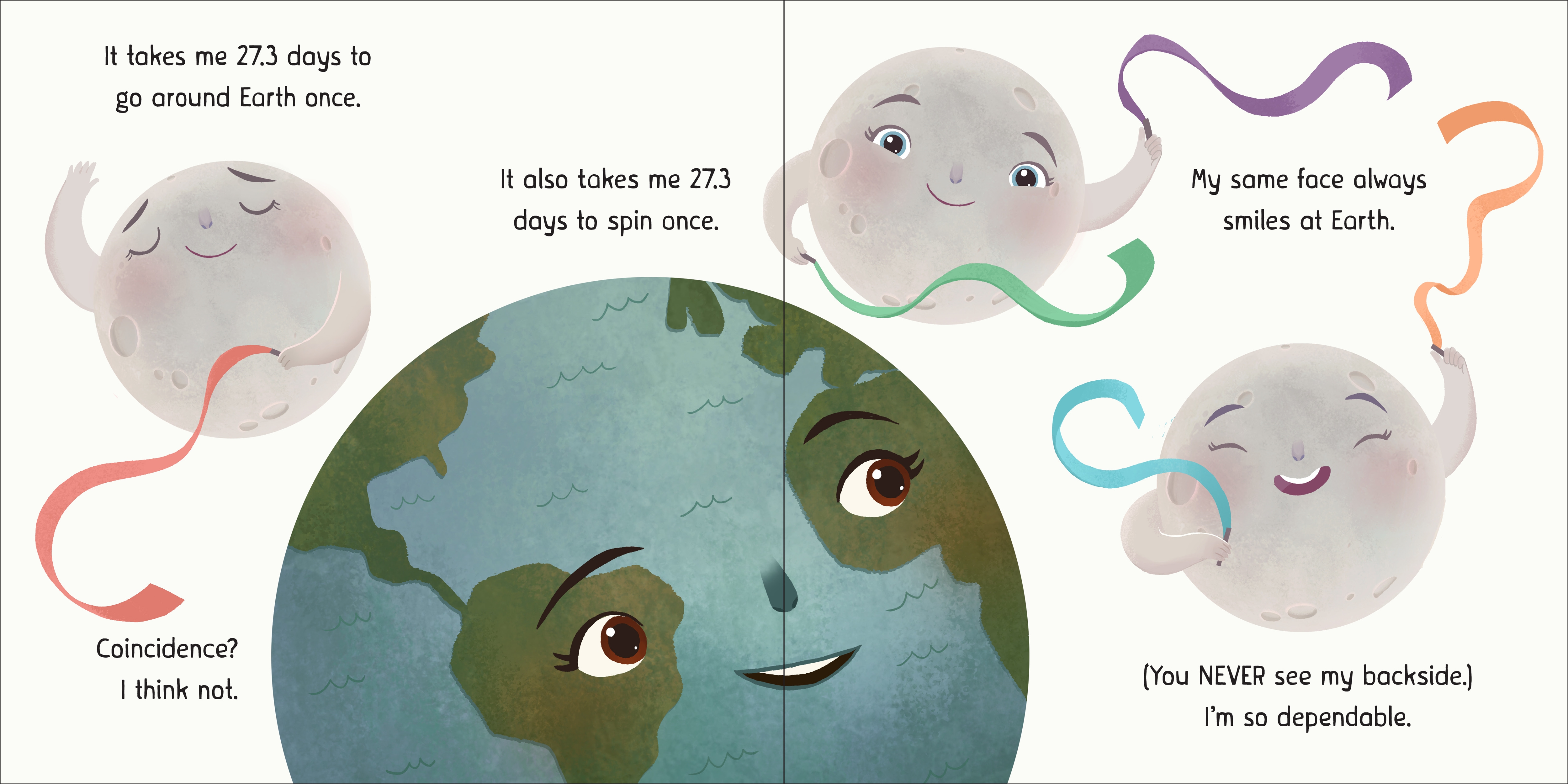
Meet Moon! She’s more than just a rock—she’s Earth’s rock, her best friend she can always count on. Moon never turns her back on her friend (literally: she’s always facing Earth with the same side!). These two will stick together forever. With characteristic humor and charm, Stacy McAnulty channels the voice of Moon in this next celestial “autobiography” in the Our Universe series. Rich with kid-friendly facts and beautifully brought to life by Stevie Lewis, this is an equally charming and irresistible companion to Earth! My First 4.54 Billion Years and Sun! One in a Billion.

About the Author: Stacy McAnulty is the author of several picture books, including Earth! My First 4.54 Billion Years, illustrated by David Litchfield; Sun! One in a Billion, illustrated by Stevie Lewis; Excellent Ed, illustrated by Julia Sarcone-Roach; and Beautiful, illustrated by Joanne Lew-Vriethoff. She lives in North Carolina with her husband, three children, and two dogs.

About the Illustrator: Stevie Lewis spent four years working in animation and now creates art and illustrates children’s books, including Sun! One in a Billion, written by Stacy McAnulty, and Lost in the Library, written by Josh Funk. Stevie lives on the road, furthering her passion for climbing, art, and the outdoors. She gathers inspiration from a variety of places, be it climbing in the high desert in central Oregon, hiking in the wilderness of Alaska, or sharing laughs with fellow travelers around a campfire.

Praise: “Perfect for children—and grown-ups—who have questions about the greater universe.” —Booklist on Moon! Earth’s Best Friend

A Junior Library Guild Selection

Review: I cannot rave enough about this book and the series it is a part of. And as a mom of a kid who adores space, I have read quite a few nonfiction space books, but there are no others like McAnulty and Lewis’s books. There are a few reasons why these books, including Moon!, stand above and beyond others:

  • Humor! You cannot help but giggle when Moon says something funny or cute.
  • Narration! It is awesome having the Moon (or Earth or Sun) narrate the book. It being in 1st person adds to the narrative.
  • Voice! It is so fascinating how McAnulty changes her voice in each of the books. If I read one aloud to Trent without saying which book it was, he would know because of how the characters talk.
  • Interesting! McAnulty does a great job sharing foundational knowledge as well as some unique facts.

View our reviews for the first two Universe books, Earth! and Sun!, also.

Teachers’ Tools for Navigation: The ideas we shared for the other Universe books would definitely book for Moon! also, so check out the other posts linked above, but now that we have three Universe books, there is now the opportunity to do activities will all three books! The options I think of are:

  • Like a jigsaw! Split your class into three groups, and each group reads and discusses one of the books. From the book, they create a handout to share the information that they learned. Then make new groups with 3 students: one from each book’s group. They will then share what they learned with their new group.
  • Split up the class into three groups (one for each group) and have the group read the book and create a readers theater of the book.
  • In-class book clubs! With them being picture books, you can split into three groups and rotate them through all three books. Have students create a one pager sharing what they learned (independently or as a group) or have them write discussion questions and discuss them or give questions to have them discuss.

Discussion Questions: 

  • How did the Moon come to be?
  • Why is Moon capitalized but moon isn’t?
  • How does the author use the narrator’s voice between the three books? How do the voices differ?
  • What reasonings does Moon give for why she’s Earth’s BFF?
  • What new information did you learn about the Moon?

Our Universe Series Book Trailer: 

Flagged Passages: 

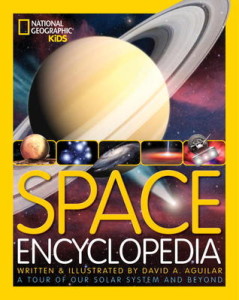
Read This If You Love: Universe books by Stacy McAnulty, The Sun is Kind of a Big Deal by Nick Seluk, Once Upon a Star by James Carter, Space Encyclopedia by David AguilarYou Choose In Space by Pippa GoodhartA Big Mooncake for Little Star by Grace Lin, Star Stuff by Stephanie Roth Sisson

Recommended For: 

classroomlibrarybuttonsmall 

Signature

**Thank you to Macmillan for providing a copy of the book for review!!**

Author Guest Post: “Transgender and Non-Binary People Have Always Been Here” by Maria Cook, Author of Gender Identity: Beyond Pronouns and Bathrooms

Share

“Transgender and Non-Binary People Have Always Been Here”

There’s been a lot of news in the last few years about transgender and non-binary people. Yet many folks don’t know for sure what the words “transgender” or “non-binary” mean.

Adding to the confusion are headlines and articles that declare that the fight for transgender and non-binary people’s rights are “the newest frontier in civil rights!” While this may be well-meaning, it is incorrect. The fight for transgender and non-binary rights is not new. Far from it! Transgender and non-binary people are not a fad, a trend, or a new phenomenon. They have always been here, from the beginning of human history. Which means that they have made incredible contributions to the world, in the form of protests, art, important writings, and more. What a cool—and important—fact for young people to learn!

In Gender Identity: Beyond Pronouns and Bathrooms, my goal was to create a resource that would allow young people to do three things: to learn what gender identity is (and thereby learn how to refer to people with differing gender identities), to unlearn the idea that the fight for trans and non-binary rights is a new thing, and to meet the incredible transgender, non-binary, intersex, and gender non-conforming people who have shaped American history.

As a young person, I loved learning about history. But some teaching methods are more effective than others. In my opinion, the best way to teach history is by introducing readers to the people who made history happen.

Every American should know about LGBTQ rights activists like Sylvia Rivera and Marsha P. Johnson, who marched for equality even when some in the LGBTQ tried to exclude them. Every American should also know about the incredible transgender people making history right now, like superstar actress Laverne Cox, the first openly transgender woman to win a Daytime Emmy Award and the first to appear on the cover of Time Magazine. And what about politician Christine Hallquist, the first openly transgender major party nominee for governor in the United States, who also happened to write the forward for this book? I believe that the stories of these incredible people will stick with readers long after they’ve set this book down.

I hope that cisgender readers (readers whose gender identity aligns with the gender they were assigned at birth) can learn how to relate and appreciate those whose gender identity differs from their own. I hope that transgender and non-binary readers can learn that they are not alone, nor have they ever been. And I hope educators who bring this book into their classrooms can use it to help them navigate this sensitive but incredibly important topic.

Below are two activities from the book which are intended to help readers explore the issue of gender identity in an easy-to-understand way.

Explore Cultural Expectations

Cultural expectations change over time, including expectations of men and women. For example, high-heeled shoes, which are now associated with women’s fashion, were originally created for men. In this activity, you’ll explore some cultural expectations and explore how they might have changed, from past to present.

  • Find three items or behaviors that your culture associates with women. Do some research online or at the library or a museum to discover their origins. Can you find the first instance of the items or behaviors? Why do we associate them with women?
  • Then do the same for three items or behaviors expected of men. Consider the following questions:
  1. How did the items or behaviors come to be?
  2. How have they changed, over time?
  3. Was there a defining moment in history that caused the expectations to change?

Write about your findings and include sources. Present what you have learned to other people and discuss your findings with one another.

Time to Move!

Now that you know about the beginnings of the LGBTQ rights movement, research the events that sparked one of America’s other civil rights movements in the 1960s, such as the African American civil rights movement or the women’s liberation movement.

  • What’s similar between the beginnings of these two movements? What’s different?
  • Civil rights movements are an important part of the history of the United States. Can you imagine what life would be like for women if the women’s rights movement had never occurred? What about the lives of African Americans—how would they be different if the country had never heard the speeches of Martin Luther King Jr. or seen the power of the March on Washington?
  • Research the early beginnings of a few civil rights movements. Consider these questions:
  1. What did these movements have in common?
  2. What was different about them?
  3. Did every movement have certain leaders who stood out? What were they like?
  4. Are there movements just beginning today that have similarities to these movements?
  • Draw a Venn Diagram to show what these early movements had in common and how they differed. What conclusions can you draw from your research?

More classroom resources can be found at https://nomadpress.net/wordpress/wp-content/uploads/2018/07/Gender-ID-Classroom-Guide.pdf.

Gender Identity: Beyond Pronouns and Bathrooms
Author: Maria Cook
Illustrator: Alexis Cornell
Published April 9th, 2019 by Nomad Press

About the Book: What does it mean to think of gender as being a range instead of simply male or female?

Gender Identity: Beyond Pronouns and Bathrooms invites readers to consider the cultural significance of gender identity in the United States and beyond. Middle and high schoolers learn about the history of LGBT rights, with a particular focus on transgender rights and the rights of gender-variant people, while engaging in research activities to help put what they have learned into context. These activities encourage teens to form their own, well-informed opinions about public figures, historical events, and current news regarding gender identity.

Busting the myth that the gender identity movement is a new phenomenon, this book teaches teens about some of the first openly transgender public figures in history, such as Lili Elbe, the first recorded person to ever medically transition in the 1930s, and Christine Jorgensen, who medically transitioned and rose to fame in the 1950s. The stories of activists and other important public figures are highlighted throughout the book and offer plenty of opportunity to connect with the history of the gender identity movement on a human level. From the Stonewall riots to the institution of the Transgender Day of Remembrance, teens will gain a rich understanding of how gender identity fits into culture, past and present.

About the Author: Maria Cook is an award-winning freelance writer who holds a BS in secondary English education and an MFA in writing, both from Butler University. Her nonfiction can be found in such publications as Marie ClaireNarratively, and Green Matters. Maria lives in Indianapolis, Indiana.

Thank you so much for this guest post about this topic that is such an important topic and this book is so needed for so many!

Author Guest Post: “Helping Kids Understand the Immigration Debate” by Judy Dodge Cummings, Author of Immigration Nation: The American Identity in the Twenty-First Century

Share

“Helping Kids Understand the Immigration Debate”

The United States is a nation of immigrants. With the exception of Native Americans, everyone living here has immigrant ancestors hanging from their family tree. Many of you live or work or attend school with immigrants. Some of you see an immigrant when you look in the mirror.

For more than a century, the Statute of Liberty has stood in New York Harbor and held her torch aloft, beckoning the world’s “tired…poor…huddled masses” to enter America’s Golden Door. However, even though the United States celebrates its immigrant past in story and song, we still struggle with each successive wave of immigration. History shows us that when foreigners come by the millions to America’s shores, even when the United States needs their labor, there is inevitably a backlash from citizens who want to close the Golden Door.

Today, we are witnessing that struggle play out on the news and in our neighborhoods.

Images bombard us—caravans, checkpoints, and children in cages.

Our lexicon expands—catch and release, national emergency, amnesty, and illegals.

Leaders stake claim to the truth as they debate whether to build a wall to keep immigrants out or to build a path that helps immigrants stay. Meanwhile, citizens want to know whose “truth” is the truth?


In an age when we can select media outlets from a menu that matches our political leanings, we often hear only information that corroborates our world view. We learn about immigration through a one-sided filter, our views become hardened, and the nation remains divided.

Today’s teenagers are tomorrow’s decision makers. They will shape future immigration policy. They will have to determine if America’s Golden Door remains open or is closed.

I wrote Immigration Nation: The American Identity in the Twenty-First Century to help youth explore immigration through unbiased, factual sources. The book examines the nation’s long history of immigration and the role the law has played as gatekeeper. Statistics and anecdotes tell the story of who immigrates, why they come, and how these newcomers are treated. The book explores the political, economic, and social impacts of current and future immigration. My goal was to equip teens with the knowledge they need to reach their own conclusions about what future U.S. immigration policy should be so they can use evidence and logic when participating in our national conversation about this important issue.

Here are three activities I developed to help young people explore different aspects of United States immigration.

Activity: Graph the Numbers

Sometimes graphs are helpful when thinking about complicated information. Design a series of graphs to communicate the history of U.S. immigration. Locate data at the Digital Scholarship Lab’s interactive website.

What changes in immigration do you want to show? Consider the following factors.

  • The rise and fall in the total number of immigrants from 1850 to 2010.
  • The most common countries of origin of immigrants in 1850, 1950, and 2010.
  • The percentage of the U.S. population that was foreign-born at different times in history.

What types of graphs most effectively illustrate these changes—a pie chart, bar graph, or line graph? Create a series of graphs and have a classmate try to read them. Are they successful?

To investigate more, choose one 50-year period between 1820 and 2010 and research the major world events that occurred then. What is the connection between these events and the trends in immigration at that time? How could you display these findings on a graph?

Activity: Graffiti as Protest

Throughout history, politicians have constructed walls to protect or divide, and people have created art on these walls to rebel and resist. In this activity, you will design art of a segment of the U.S. Mexican border wall that reflects your opinion of the state of immigration in the twenty-first century.

  • Research different views of President Trump’s proposed border wall. Read the opinions of both Republican and Democratic lawmakers, economic analysts, environmental experts, immigration officials, and immigrant advocates.
  • Decide what you think about the border wall. Is it needed? How much will it cost? How effective will it be? What does an extended border wall say about the United States? What are the psychological impacts of living behind a wall?
  • Write a thesis statement to communicate your main opinion of the border wall. A thesis statement is usually a single sentence that summarizes your specific position on a subject.
  • Brainstorm different ways you can artistically represent your thesis. How will you execute your ideas?
  • Draw, paint, or sketch your ideas on a large piece of butcher paper. Display on a fence or wall so people can view your artistic expression.

To investigate more, research examples of border wall graffiti on walls around the world. What common themes or images are reflected by artists in different countries?

Activity: What’s on Your Plate?

Few Americans grow their own vegetables, milk their own cows, or butcher their own meat. We go to the grocery store, where almost any food is available any season of the year. Have you ever considered the lives of the people whose labor brings that food to your plate?

A 2014 report by the American Farm Bureau Federation found the agricultural industry needs between 1.5 and 2 million workers. Because not enough legal immigrants or American citizens will do backbreaking farm labor, 50 to 70 percent of agricultural workers are undocumented immigrants.

Explore the relationship between immigrant labor and the foods you eat. How much do you rely on farm workers?

  • Keep a food diary for one week. What fresh fruit, fresh vegetables, milk, and meat do you regularly consume?
  • Select one of these foods and research the role undocumented immigrants play in getting that item from the farm or field to the grocery store. What do immigrants say about their work experiences in places such as chicken processing plants or California fruit orchards? What makes the work difficult? What do they get paid for their work and how do their wages impact the price you pay at the grocery store?
  • In a creative way, communicate the journey this food took. Consider a short story, comic strip, or storyboard. Share the story with you peers and discuss how Americans benefit from the labor of undocumented immigrants.

To investigate more, change your story so all the workers who produced your food were paid minimum wage. What impact would this have on you as a consumer?

More classroom resources can be found at https://nomadpress.net/wordpress/wp-content/uploads/2018/07/Immigration-Nation-Classroom-Guide.pdf.

Immigration Nation: The American Identity in the Twenty-First Century
Author: Judy Dodge Cummings
Illustrator: Richard Chapman
Published April 9th, 2019 by Nomad Press

About the Book: What does it mean to be an immigrant today? Has the immigrant experience changed since the last century?

Immigration Nation: The American Identity in the Twenty-First Century invites middle and high schoolers to explore the history of immigration in the United States, along with immigration law and statistics through the perspectives of immigrants, citizens, policy makers, and border agents.

For more than a century, an immigrant from France has stood vigil in the New York Harbor. At 350 feet tall, with a majestic spiked crown upon her head, a tablet of laws clutched in one hand and a torch held aloft in the other, the lady is hard to miss. She cries out to the world, “Give me your tired, your poor…I lift my lamp beside the golden door!” Millions of immigrants have answered the Statue of Liberty’s call, passing over, under, or through the Golden Door to become Americans.
However, on the eve of its 250th birthday, the United States is in the middle of an identity crisis. Should this land of immigrants open the door open to outsiders, people hungry for opportunity and desperate for freedom? Or should the country shut the golden door, barring entry to all but a select few? And what does it mean to be an American? How citizens answer these questions in the early twenty-first century will determine the future of America’s identity.

About the Author: Judy Dodge Cummings is a writer and former high school social studies teacher. She has written many books for children and teens, including Migration: Investigate the Global Journey of Humankind for Nomad Press. Lots of Judy’s books are related to history because that is her favorite topic to research, read, and write. Judy lives and writes in south central Wisconsin.

Website: judydodgecummings.com/books

Facebook: facebook.com/JDodgecummings

Thank you so much for this guest post!