Yoga Animals: A Wild Introduction to Kid-Friendly Poses by Paige Towler

Share

Yoga Animals: A Wild Introduction to Kid-Friendly Poses
Author: Paige Towler
Foreword Author: Tara Stiles
Published May 19th, 2020 by National Geographic Kids

Summary: Adorable animal photos and lyrical text guide kids step-by-step through easy animal-inspired yoga poses.

Roar like a lion! Arch like a kitten! Stretch like a cobra! Did you know that many yoga poses were inspired by animals? Let these creatures inspire your young ones to get moving, practice mindfulness, or calm down after a long day. Simple step-by-step instructions explain the kid-friendly moves. Kids will get a kick out of the accompanying photos of animals that mimic each pose, and the sweet poem is sure to delight.

The foreword by Tara Stiles, founder of Strala Yoga, reminds us that we’re never too young to start enjoying the health benefits of yoga and mindfulness. Animal Yoga is the perfect intro to this ancient practice–great for engaging (and quieting!) a class, reading aloud one-on-one, or helping restless little ones fall asleep at bedtime or naptime.

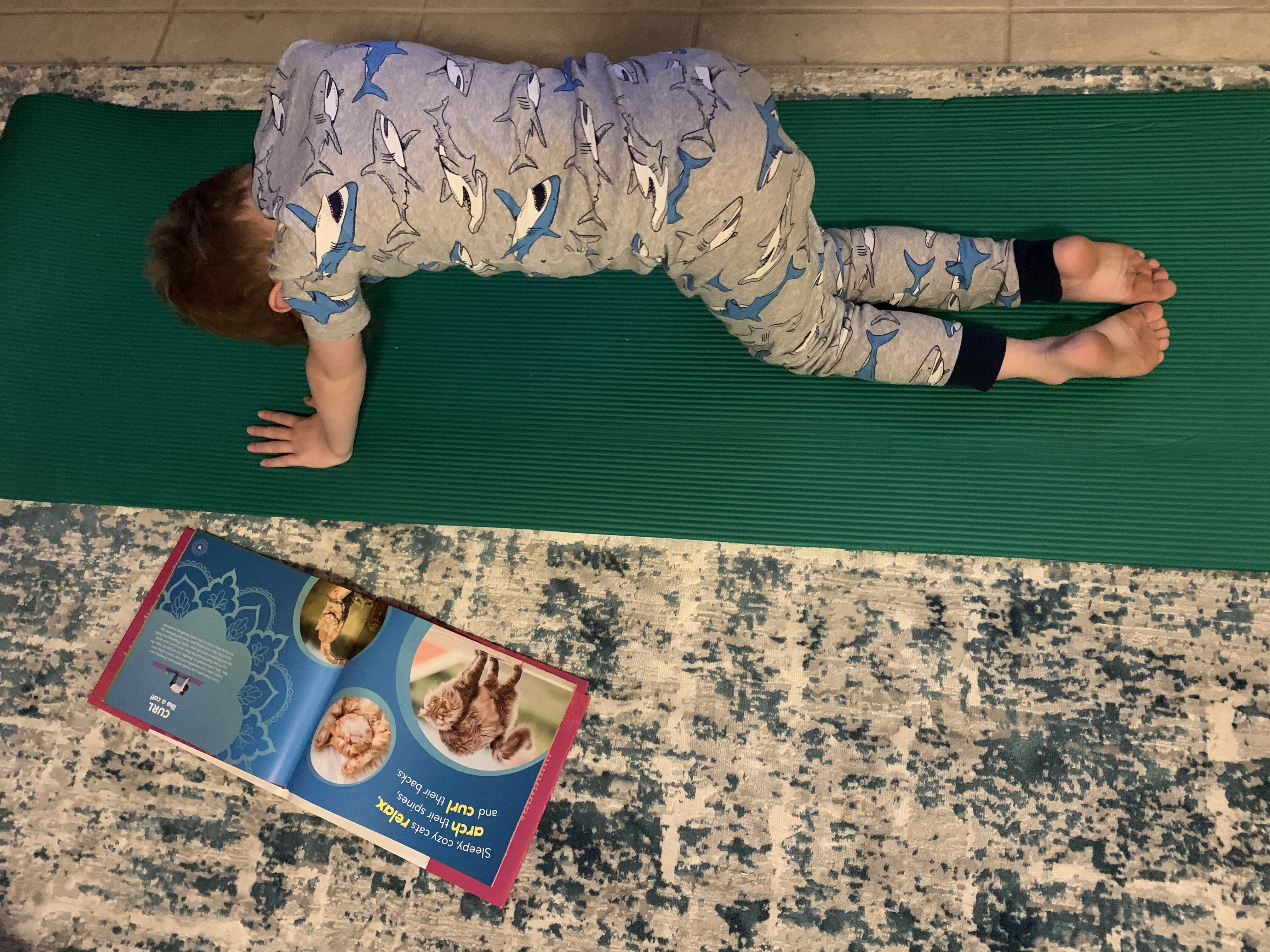
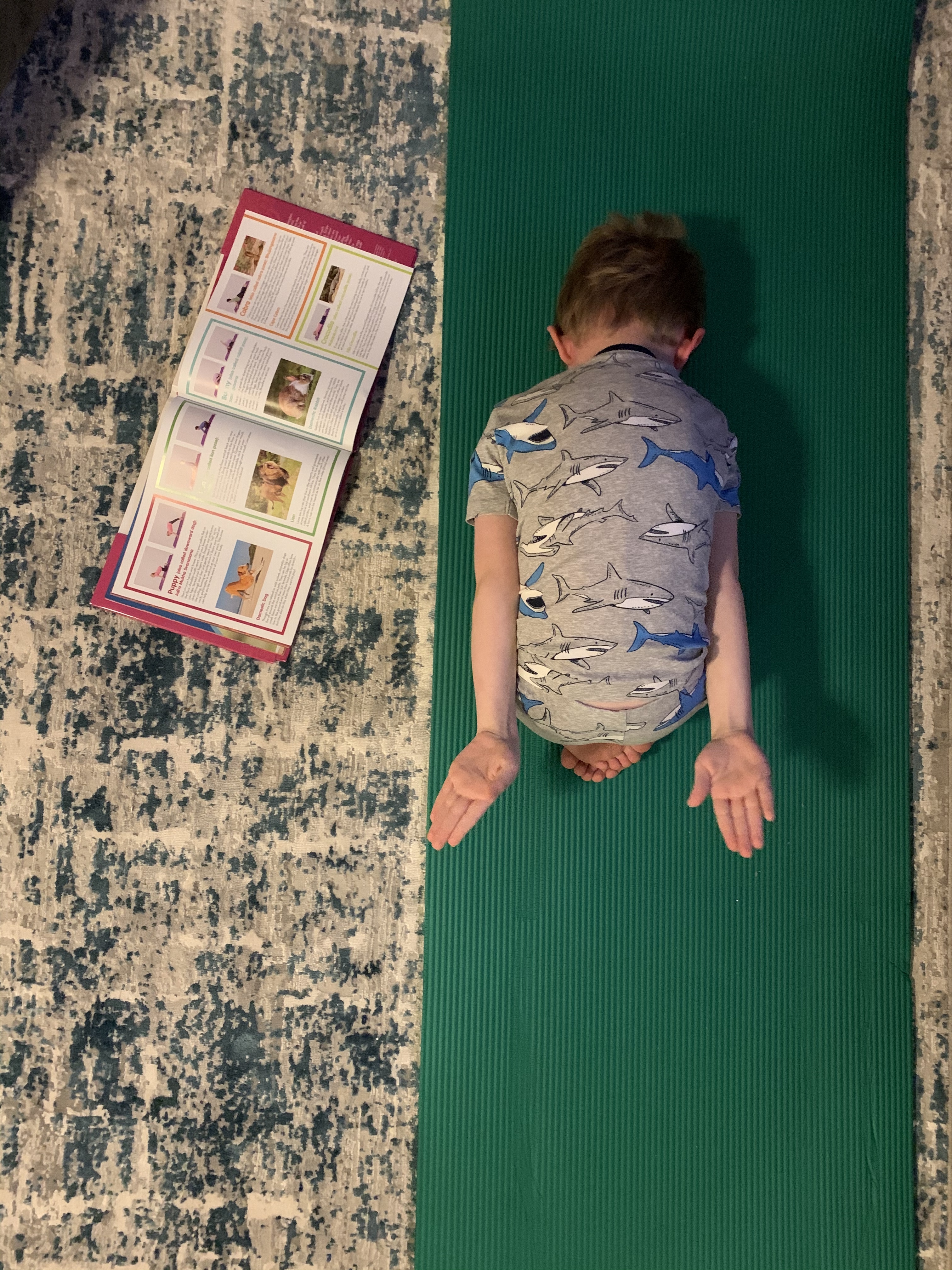
Review: Trent and I love doing Yoga together. We have family yoga mats, and he’s done mommy & me yoga with me though is favorite is Cosmic Yoga on You Tube. I wanted to make yoga part of Trent’s life because not only is it a wonderful form of exercise that he and I can do together, but it is also beneficial for mindset. Yoga Animals is a wonderful introduction to both aspects. I like that it makes the yoga poses accessible for so many ages. For example, it could be for a mom to do with a very young child as an introduction. Or older kids who may have done yoga in the past can use it independently. Here is Trent practicing his poses:

The book structure is also fun. The majority includes the animal photos with a connection to the yoga pose then a photo of the pose with instructions. In the back it goes more in depth about the pose and the animal taking the information to a whole other level.

Teachers’ Tools for Navigation: As the push for a healthy mindset has become more front and center recently as we realize that the current educational system is adding extra stress on kids, this book is a perfect addition to a classroom to have brain breaks. During the brain breaks, a new yoga pose can be introduced and the animal can be talked about as well. Then past yoga poses can be practiced as well.

Discussion Questions: 

  • What other animals have yoga poses?
  • How is the ____ pose like a ____ animal?
  • How does yoga help you physically and mentally?
  • Come up with your own stretch that resembles an animal.

Flagged Passages: 

Also, go to https://kids.nationalgeographic.com/explore/books/yoga-animals/ to see videos of Tara Stiles sharing poses from the book.

Read This If You Love: Yoga, Animals, Brain Breaks

Recommended For: 

classroomlibrarybuttonsmall

Signature

**Thank you to Karen at Media Masters Publicity for providing a copy for review!!**

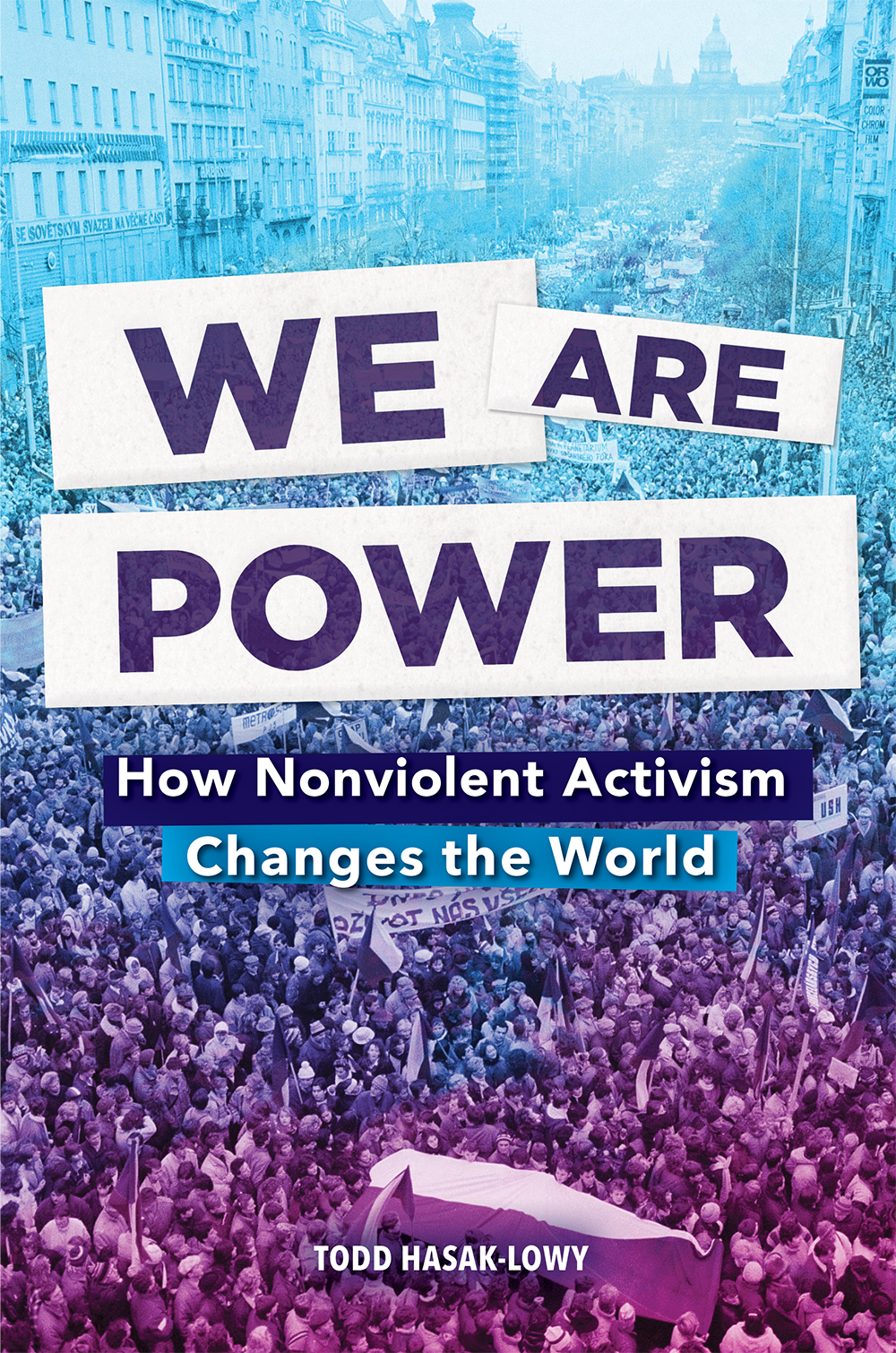
Author Guest Post: “Studying the Past, Writing the Future: Some Thoughts on the Study of History” by Todd Hasak-Lowy, Author of We Are Power: How Nonviolent Activism Changes the World

Share

“Studying the Past, Writing the Future: Some Thoughts on the Study of History” 

Before I even finished co-writing Roses and Radicals: The Epic Story of How American Women Won the Right to Vote (Viking, 2018), I knew I wanted to write another book like it.  By “like it” mean:

A book of history for younger readers.

  • A book that tells the story of incredible, genuinely heroic, and underappreciated people.
  • A book that, despite its younger audience, still captures the nuance, complexity, and, above all, rich profundity of some important chapter from the past.

It took me many months, many long walks, and many conversations with many people before I stumbled upon the subject of nonviolence.  As had been the case with suffrage a few years before, I knew next to nothing about this topic, but as I began reading my way into it, I could tell that it would make for a great book.

There was a more specific link connecting the two projects as well: Alice Paul, who led the American women’s suffrage movement during the final decade of its long struggle.  I had grown utterly fascinated with the intense, truly radical, and somewhat mysterious Paul while working on Roses and Radicals.  As I began reading about nonviolence I came to understand that she herself was a nonviolent activist, even though only a tiny fraction of the scholarship about Paul views her work in this context.  So the writing of my book, We Are Power: How Nonviolent Activism Changes the World, would begin by retelling her story, yet again, but this time in order to establish her rightful place alongside Gandhi, MLK, and Cesar Chavez.

But as I did this, I learned that We Are Power would be crucially different than Roses and Radicals.  For one thing, it would tell more stories—and would thus require considerably more research.  More important, however, these stories would be tied together not by a common set of characters, a single movement, or a shared setting, but by the strategy of nonviolent activism itself.

In this regard, We Are Power is not only a book of history, but a book of political theory, or, more precisely, a book about a half-dozen instances of this political theory being put into dramatic, inspiring practice.  The book, as narrative, would be propelled by characters and conflicts, but the spine holding it all together would be the theory itself: the way nonviolence rethinks the very nature of political power and social change.

Unfortunately, I found this theoretical material, all on its own, dense, abstract, and, when read separately from the history, extremely dry and perhaps even boring.  I knew that the parts of my book dedicated directly to this theory would have to be brief or I’d lose my readers.  And yet, these parts, I learned as I wrote my various chapters, were in a sense the very point of the book.  As they were interwoven into the various narratives I was constructing, they often found their place in and around the climaxes to each story.

The historical events were, I realized, the occasion to present the timeless truths at the center of nonviolent activism.  This would explain why the title to my book of history—We Are Power: How Nonviolent Activism Changes the World—contains not one but two present tense verbs.  It also explains why the book is able to pivot, in its conclusion, from past movements to a present struggle—the fight against climate change—that is very much ongoing.

Ultimately, We Are Power isn’t a book of history, or only a book of history.  It’s a book about power and the way those who don’t appear to have power can claim it, in order to change the world in which they live.  The truth about power at the center of this book is timeless.

I don’t have a lesson, per se, to offer teachers here, but instead a rather large bit of advice I encourage teachers to keep in mind when working on history with their students: studying the past is worthwhile not because there’s value in knowing, all by itself, what happened in earlier times, but because understanding history helps us see our present more clearly.  This great, meta-historical truth needn’t receive a lot of attention in lessons, but it should be there, I believe, as an often-silent motivation for the entire enterprise.

Our responsibility to study the past is inseparable from our responsibility to apply what we learn to our actions in the present.  When we teach young people history, we’re giving them a crucial tool in becoming informed citizens capable of transforming our present into a better future, and I can think of no lesson more important than that.

Published April 7th, 2020 by Abrams Books for Young Readers

About the Book: Author Todd Hasak-Lowy’s We Are Power is a stirring introduction to nonviolent activism, from American women’s suffrage to civil rights to the global climate change movement.

What is nonviolent resistance? How does it work? In an age when armies are stronger than ever before, when guns seem to be everywhere, how can people confront their adversaries without resorting to violence themselves? Featuring leaders Gandhi, Alice Paul, Martin Luther King Jr., Cesar Chavez, Václav Havel, and Greta Thunberg, We Are Power brings to life the incredible movements that use nonviolent activism to change the world.

By answering the question “Why nonviolence?” and challenging the notion of who makes history and how, author Todd Hasak-Lowy shows the ways key movements have succeeded again and again in all sorts of places, using a variety of methods and against overwhelming odds. Breaking down nonviolent resistance into digestible lessons for next generation of activists, this book is an inspiring call to action, a reminder that true power ultimately rests in our hands.

We Are Power also includes an overview of other movements from the last one hundred years, a bibliography, and an index.

★ “Hasak-Lowy’s writing gives life to both the people and issues involved, taking time to explain historical backgrounds and the ways the lessons from one movement affected future ones.” — Booklist, STARRED REVIEW

★ “Highly recommended for its outstanding treatment of the history of social justice. A good resource for student activists.” — School Library Journal, STARRED REVIEW

★ “There has never been a time when a book is more relevant than this one.” — School Library Connection, STARRED REVIEW

“A striking and very timely conclusion highlights teenage Greta Thunberg’s bold challenge to fight global climate change.” — Publishers Weekly

“This excellent, timely overview will open eyes and deserves a wide readership.”— Kirkus

About the Author: Todd Hasak-Lowy is the author of several books for young readers, including the novels 33 Minutes and Me Being Me Is Exactly as Insane as You Being You. He is a professor in the department of liberal arts at the School of the Art Institute of Chicago and has a PhD from University of California, Berkeley. He lives in Evanston, Illinois, with his wife and two daughters. Visit his website at toddhasaklowy.com.

https://www.toddhasaklowy.com/
https://twitter.com/nonviolence11
https://www.instagram.com/wearepower_book/
https://www.facebook.com/todd.hasaklowy.1
https://www.abramsbooks.com/product/we-are-power_9781419741111/

Thank you, Todd, for this look at how history helps write the future: good and bad!

Review and Giveaway!: Rosie: Stronger Than Steel by Lindsay Ward

Share

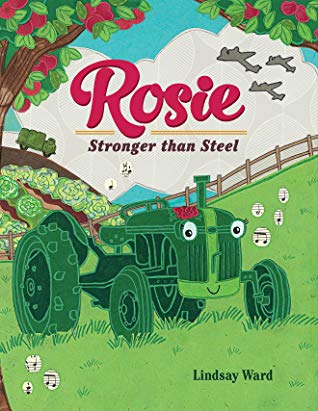
Rosie: Stronger Than Steel
Author and Illustrator: Lindsay Ward
Expected Publication: April 1st, 2020 by Two Lions

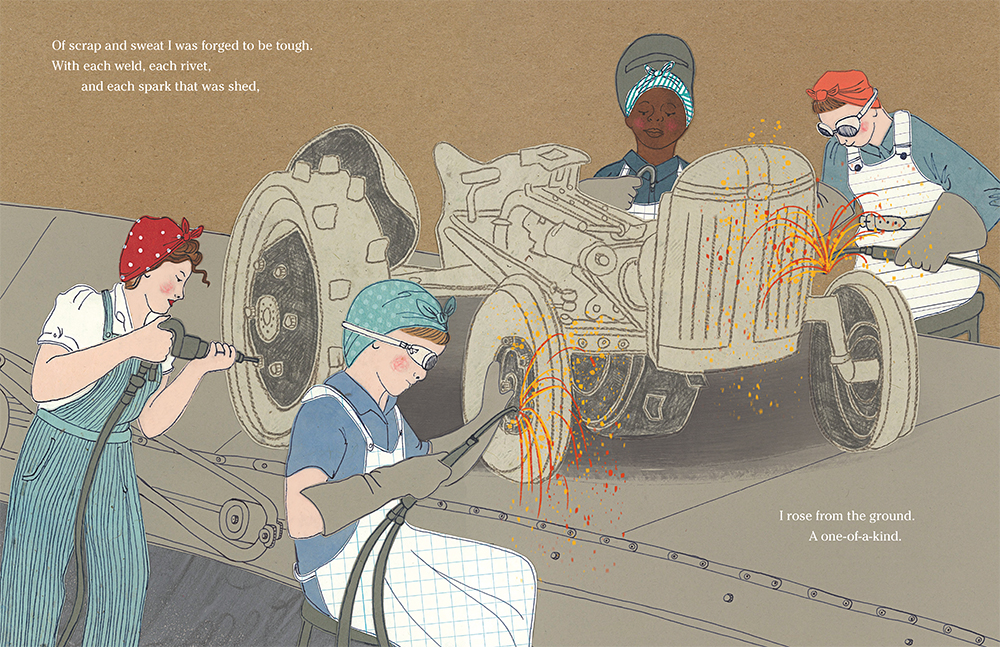
Summary: A brave tractor farms for freedom in a story inspired by women who acted with courage and strength in American factories and on British farms during World War II.

This is our Rosie,
stronger than steel.
She’ll plow all the land
with a turn of her wheel.

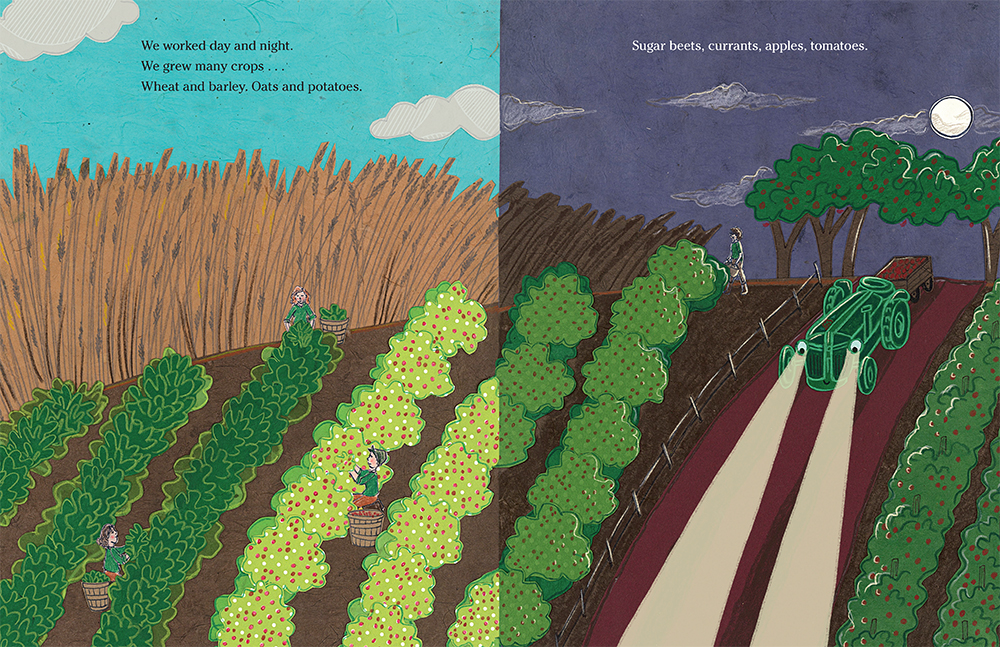
Built by women in the United States and sent to England to dig and plow alongside female farmers during World War II, Rosie the tractor does whatever is needed to support the war effort. She works day and night to help grow crops for the troops…even when she has to hide in the fields. This is because she knows, like the women who built her and the women who farm with her, that they all must do their part.

Inspired by the group of American women collectively known as “Rosie the Riveter” and the British Women’s Land Army, this is a story about taking action and coming together for the greater good.

About the Author: Lindsay Ward is the creator of the Dexter T. Rexter series as well as This Book Is Gray, Brobarians, Rosco vs. the Baby, and The Importance of Being 3. Her book Please Bring Balloons was also made into a play. Lindsay lives with her family  in Peninsula, Ohio, where she often sees tractors from the 1930s and 1940s. Learn more about her online at www.lindsaymward.com. Twitter: @lindsaymward

Praise: 

★“More than the sum of its parts, this is a wildly successful and well-researched shaping of the picture-book form to true historical sheroes.” —Kirkus Reviews (starred review)

★“This ‘little tractor that could’ sort of tale pays tribute to the iconic Rosie the Riveter persona from the US and the British Land Girls of the Women’s Land Army during WWII. Fans of Loren Long’s Otis, Virginia Lee Burton’s Katy, and like sturdy, dependable workhorses will welcome Rosie into the fold, but the historical perspective adds an unusual dimension to her story.” —Booklist (starred review)

“Vocabulary is rich, and the younger set will appreciate the intermittent rhymes. The style of Ward’s colored pencil and cut-paper illustrations reflect the period of the tale. ” —School Library Journal

Review: During World War II, our students’ lessons usually focus on the war itself and the horrific events because of the war, but there was so much more going on to ensure that our countries continued to run while all of our armed forces were at war. We don’t often enough hear about how women were essential to this effort, and Rosie shows us another side to this. Rosie represents not only the tractors made by women who helped keep our plants and crops healthy and edible, but she represents all women that stepped up to do jobs that before then they had been told they were not good enough for. This story, beautifully crafted and illustrated by Lindsay Ward, is a call for strength whenever faced with unprecedented times.

Teachers’ Tools for Navigation: Rosie is a great addition to history lessons about World War II and the home front efforts of women. Her story is also a great read aloud–maybe during Women’s History Month, or whenever!

Discussion Questions: 

  • Did you know anything about what happened on the home front before reading Rosie?
  • How does Rosie the tractor represent the women’s work on the home front?
  • How does Rosie impact the war effort?
  • What does the Rose on her body represent?
  • What is the theme of Rosie?
  • Why do you think the author wrote the book from Rosie’s point of view in first person?

Flagged Passages: 

Read This If You Love: Historical fiction picture books, Learning about history

Recommended For: 

classroomlibrarybuttonsmall 

Giveaway!: 

a Rafflecopter giveaway

Signature

**Thank you to Blue Slip Media for providing a copy for review and giveaway!**

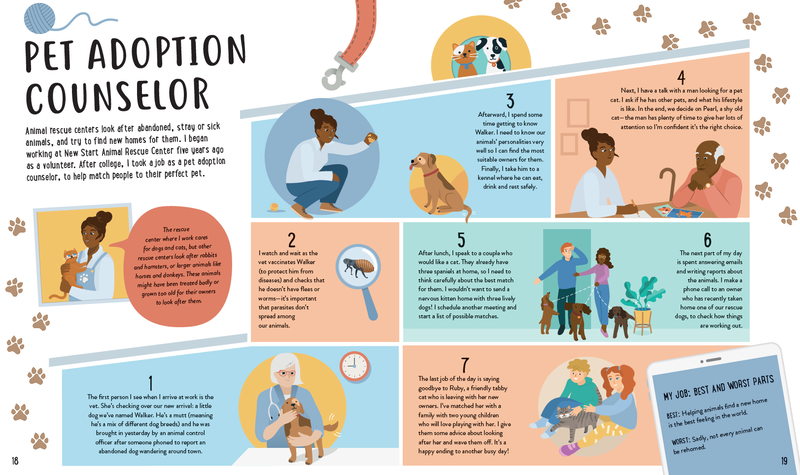
That’s A Job?: I Like Animals…What Jobs Are There? by Steve Martin, Illustrated by Roberto Blefari

Share

I Like Animals…What Jobs Are There?
Author: Steve Martin
Illustrator: Roberto Blefari
Published March 1st, 2020 by Kane Miller Books

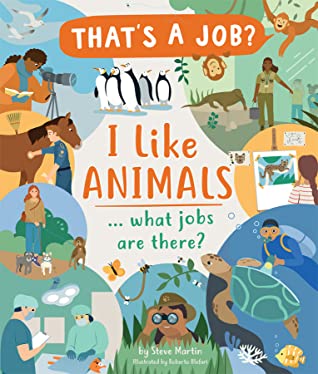
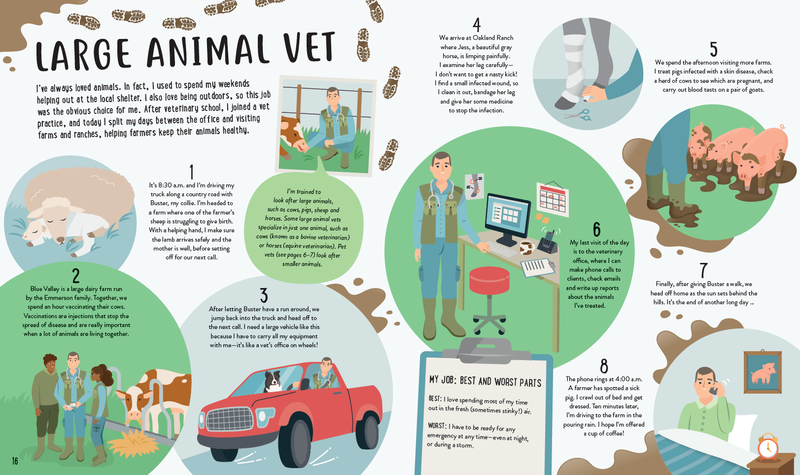
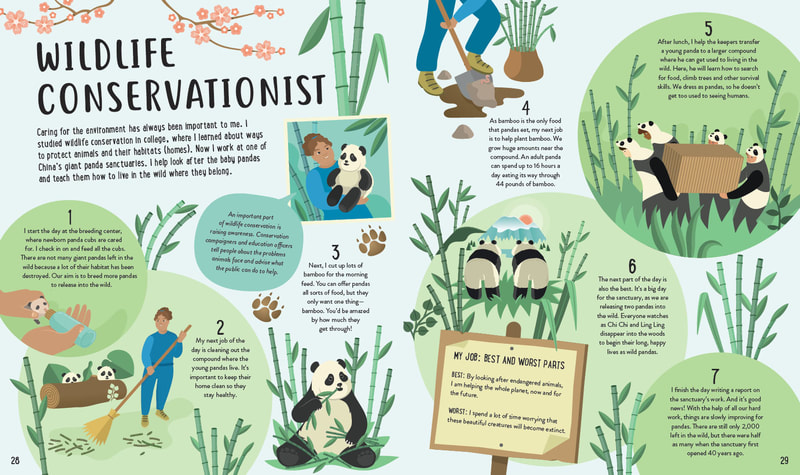
Summary: What do you want to do when you grow up? Children who love animals can find out all about potential future careers, from veterinarian to zookeeper to pet portrait artist, as they’re taken through a “day in the life” of 25 different animal workers.

Praise: 

Review: This book was written for so many kids out there! If any of you are librarians or teachers, you know how popular nonfiction animal books are. There are so few kids out there that don’t love animals! My son is one of those kids that adores animals and already says that he wants to be a zoologist and work with turtles, so when I saw this book, I knew I had to get it for him. What I love about the book (and the series I hope it is!) is that it gives options that kids may not know they have. Trent’s first thought for working with animals is working at a zoo, but there is so much more than that which he can choose from.

Each job’s section is really well done! It is written in first person from the point of view of the professional and includes fun yet truthful information, including the best and worst parts. Then, in the back, there is a flow map that helps kids see which job might be their perfect match, and there’s even back matter with more jobs. What a way to open up a kid’s imagination for the future!

Teachers’ Tools for Navigation: My first thought was that this book could be an awesome mentor text for creating a similar type pamphlet. Students could pick something like sports, technology, children, etc. and make a pamphlet about what jobs are out there. This would be a great research project.

Discussion Questions: 

  • Before reading: What jobs do you know of that include working with animals?; After reading: Add to the list.
  • Which job do you think would work the best with your personality and work ethic?
  • Any jobs that you are interested in that weren’t in the book?
  • Why do you think the author chose to write each section in 1st person?
  • Why do you think the author wrote this book?
  • Compare/contrast two of the jobs in the book.

Flagged Passages: 

Read This If You Love: Animals

Recommended For: 

classroomlibrarybuttonsmall 

Signature

**Thank you to Lynn at Kane Miller for providing a copy for review!**

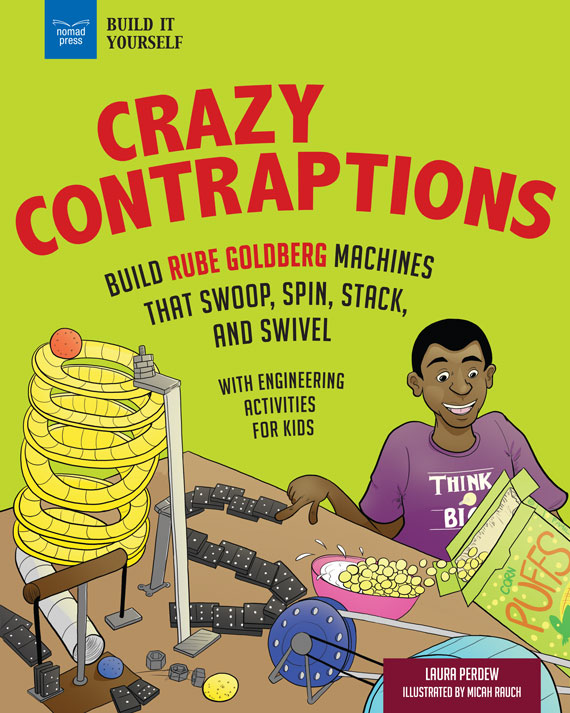
Author Guest Post: “Making Crazy Contraptions” by Laura Perdew, Author of Crazy Contraptions: Build Rube Goldberg Machines that Swoop, Spin, Stack, and Swivel with Engineering Activities for Kids

Share

“Crazy Contraptions: Build Rube Goldberg Machines that Swoop, Spin, Stack, and Swivel

Collect your catapults, toy cars, pulleys, ramps, marbles, balls, and dominoes. You’ll probably also want string, tape, hot glue, cardboard, TP rolls, and miscellaneous recycling. Now, what should you do with this odd assortment of materials? Build Rube Goldberg machines, of course!

Rube Goldberg machines are crazy contraptions that perform very simple tasks through an exceedingly complicated and usually humorous chain reaction. The man behind the machines was Rube Goldberg. He was an engineer turned cartoonist in the mid-1900s. He is famous for his cartoons that featured the crazy contraptions he invented (check out the image gallery at https://www.rubegoldberg.com/image-gallery-licensing/). His “inventions” include a self-operating napkin, a painless tooth extractor, and even an elaborate method to keep the baby covered at night. People loved Goldberg’s cartoons and couldn’t wait to see what he would come up with next. Yet even though people loved his inventions and Goldberg was an engineer, he never built a single one of his contraptions.

Instead, the idea to build crazy contraptions was initiated by college students in 1949. Since that time, building contraptions has become wildly popular. Rube Goldberg, Inc. even holds an annual Rube Goldberg Machine Contest which challenges students to create their own crazy contraptions that perform a designated task (https://www.rubegoldberg.com/learn-about-the-contests/). Creating contraptions is also a great hands-on project in the classroom to teach basic physics concepts (energy, force, motion, and work) and to introduce the six simple machines to kids. And it’s FUN!

CRAZY CONTRAPTIONS: Build Rube Goldberg Machines that Swoop, Spin, Stack, and Swivel teaches all of these concepts. It also encourages contraption makers to use the engineering design process – brainstorming, planning, building, testing, evaluating, and redesigning (if necessary). The book starts out with easy challenges using one simple machine. As the book progresses, though, readers are challenged to build increasingly complex contraptions using more and more simple machines. Warning! This book does not include step-by-step instructions to build each contraption. Instead, it presents these challenges in a way that allows readers to use their own creativity and materials they may have on hand. So, go collect that odd assortment of material and start building!

Activity

Introduce students to Rube Goldberg contraptions by watching this music video by OK Go: https://www.youtube.com/watch?v=qybUFnY7Y8w or visiting the Rube Goldberg image gallery.

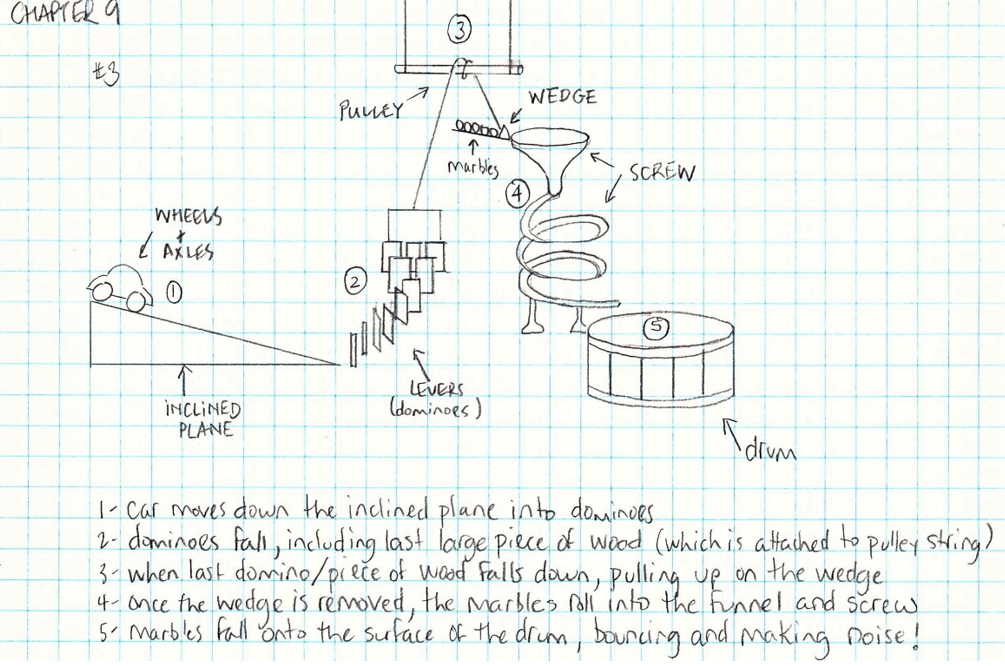
The challenge here is to have students create a crazy contraption that uses all six simple machines to bang on a drum using engineering design process:
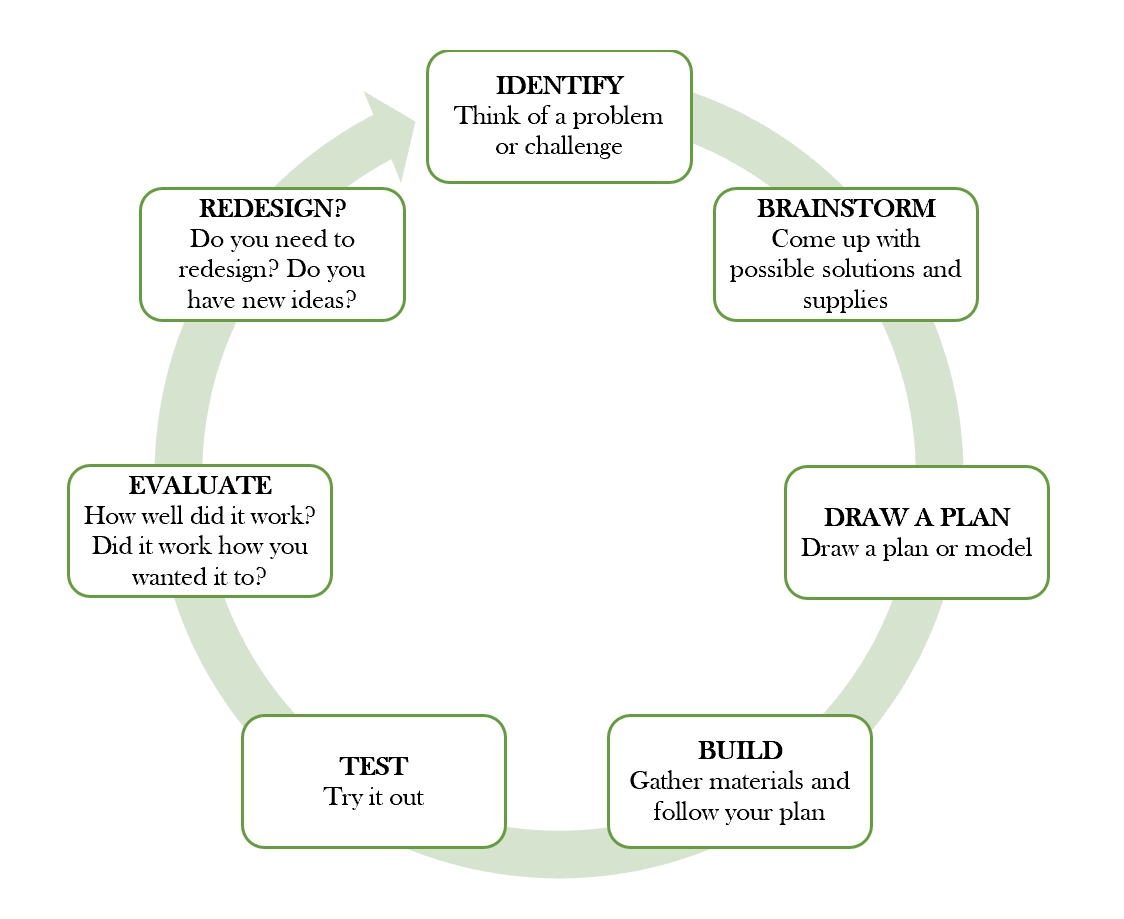
Identify: The challenge, as stated above, is to build a crazy contraption that uses all six simple machines to bang on a drum.

Brainstorm: What materials will students use for each of the six simple machines in the contraption? Here are a few ideas…

Inclined plane – books, toy car tracks, piece of cardboard, piece of paper

Levers – dominoes, catapults, rulers, popsicle sticks, pencils

Wheels and axles – toy cars or trains, a homemade car, screwdriver

Pulleys – a pulley, empty thread or wire spools, pushpins

Wedges – make your own, popsicle sticks, string

Screws – jars and lids, marble runs, funnels, tubing

Don’t forget the drum and whatever will bang on it to make the noise!

Consider how all those parts might work together to create the contraption.

Draw a plan: Break out the graph paper, pencils, and rulers. When I wrote the book, this is what my design looked like:
Build: Put it all together! Hint – do the dominoes last!

Test: After building, adding, tweaking, taping, and creating, start the chain reaction.

Evaluate: More often than not, the first few tests of crazy contraptions fail. But that’s okay! The question to ask is, “Why?” This question and its answer help young engineers create contraptions that DO work.

Redesign: Using what your students know about why the contraption did or did not work, they may want to redesign it. Or, they may want to make it louder. Or add other noisemakers.
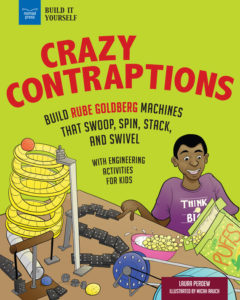
Crazy Contraptions: Build Rube Goldberg Machines That Swoop, Spin, Spack, and Swivel with Engineering Activities for Kids
Author: Laura Perdew
Illustrator: Micah Rauch
Published October 8th, 2019 by Nomad Press

About the Book:An exciting book about the chain reaction world of Rube Goldberg for middle schoolers, including 25 engineering design projects that get middle schoolers applying the laws of physics to their own inventions as they learn the scientific principles behind the actions and reactions they create.

Why use a simple hand motion to wipe your mouth when you can build a machine to do it for you? Toppling dominoes, rolling marbles, racing balloon cars, springing catapults, and whizzing zip-lines are all elements used to build Rube Goldberg machines in Crazy Contraptions: Build Machines that Swoop, Spin, Stack, and Swivel with Engineering Activities for Kids. The book introduces kids ages 9-12 (and beyond!) to the wacky machines designed by Goldberg, which were based on complicated chain reactions used to accomplish very simple, sometimes ridiculous, tasks.

-Through contraptions, the book discusses the basics of physics, including force, motion, and work. Each chapter introduces one of the six simple machines and how they can be used in Rube Goldberg contraptions–inclined planes, levers, wheels and axles, wedges, screws, and pulleys.

– Kids are challenged to design, build, and evaluate dozens of increasingly complex contraptions that do things like unscrew a lid, turn the page of a book, and pop a balloon.

– Projects use materials already in most homes–reimagining and repurposing everyday items, as well as mining the recycling!

– Contraption hints, essential questions, short sidebars, and links to online primary resources help readers learn the basics of force, work, motion, and simple machines, while exploring their creativity as they design and build their own crazy contraptions.

About the Build It Engineering set and Nomad Press

Crazy Contraptionsis part of a set of two Build It Engineering books that explore the engineering technology behind our daily lives. The other titles in this series isBots! Robotic Engineering with Makerspace Activities for Kids.

Nomad Press books in the Build It series integrate content with participation. Combining content with inquiry-based projects stimulates learning and makes it active and alive. Nomad’s unique approach simultaneously grounds kids in factual knowledge while allowing them the space to be curious, creative, and critical thinkers.

About the Author:Laura Perdew is an author, writing consultant, and former middle school teacher. She has written more than 15 books for the education market on a wide range of subjects, including the animal rights movement, the history of the toilet, eating local, and the Great Pacific Garbage Patch. She is a long-time member of the Society of Children’s Book Authors and Illustrators. Laura lives in Boulder, Colorado.

Thank you so much for this guest post–love the STREAM focus!

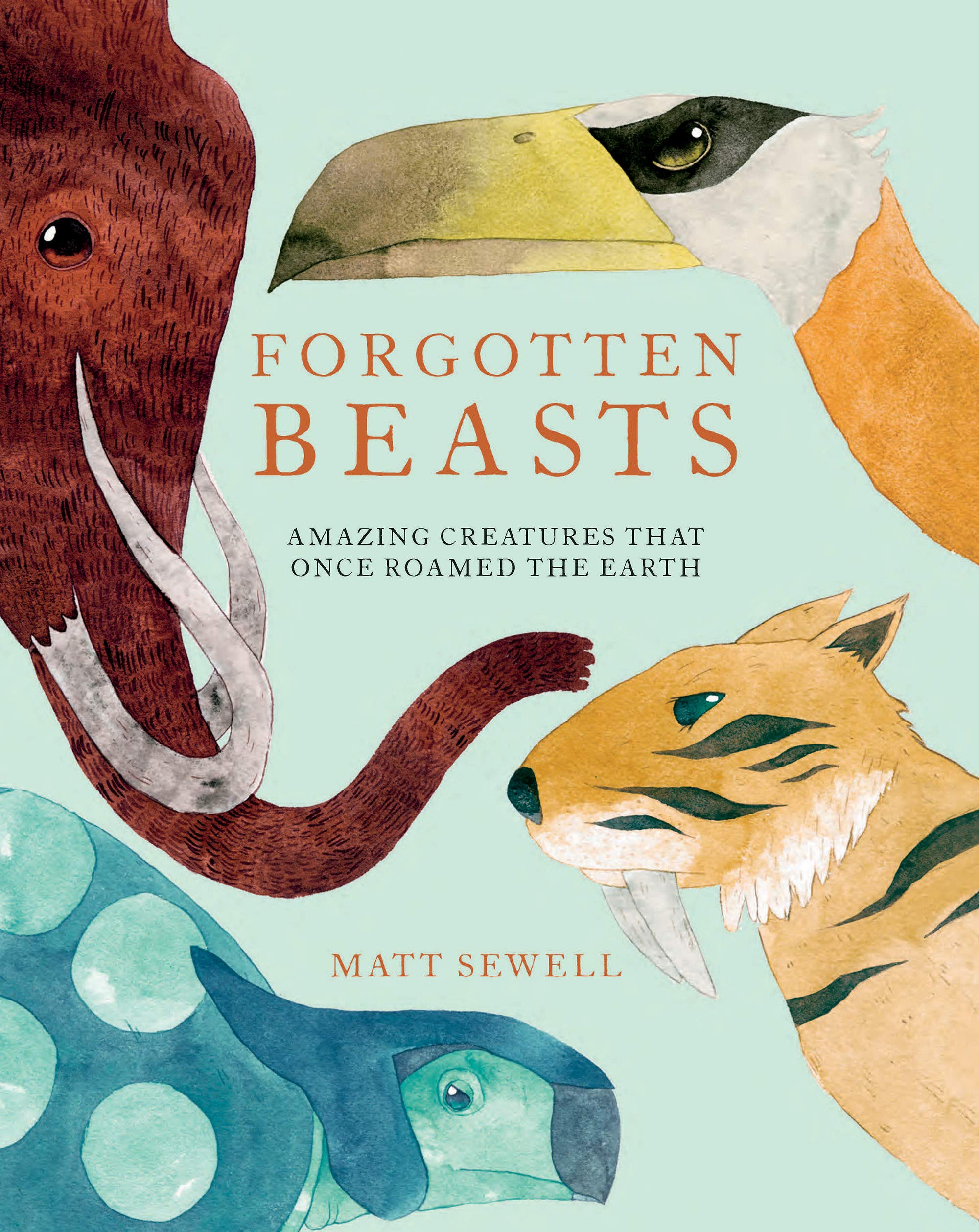
Forgotten Beasts: Amazing Creatures That Once Roamed the Earth by Matt Sewell

Share

Forgotten Beasts: Amazing Creatures That Once Roamed the Earth
Author: Matt Sewell
Published October 4th, 2019 by Pavilion Books

Summary: A witty, colorful celebration of the amazing lost creatures of this planet; with a strong message of protection and conservation.

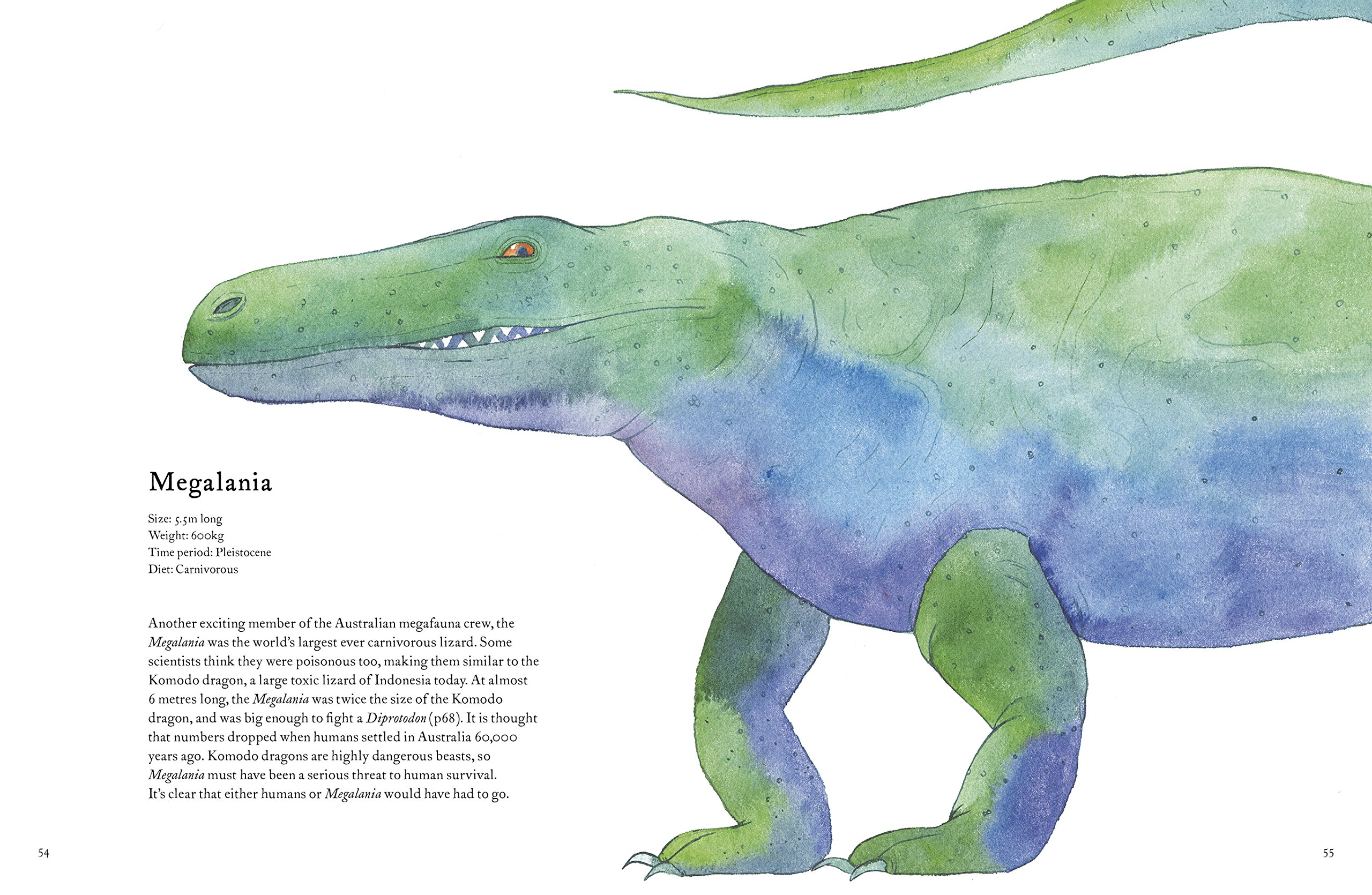
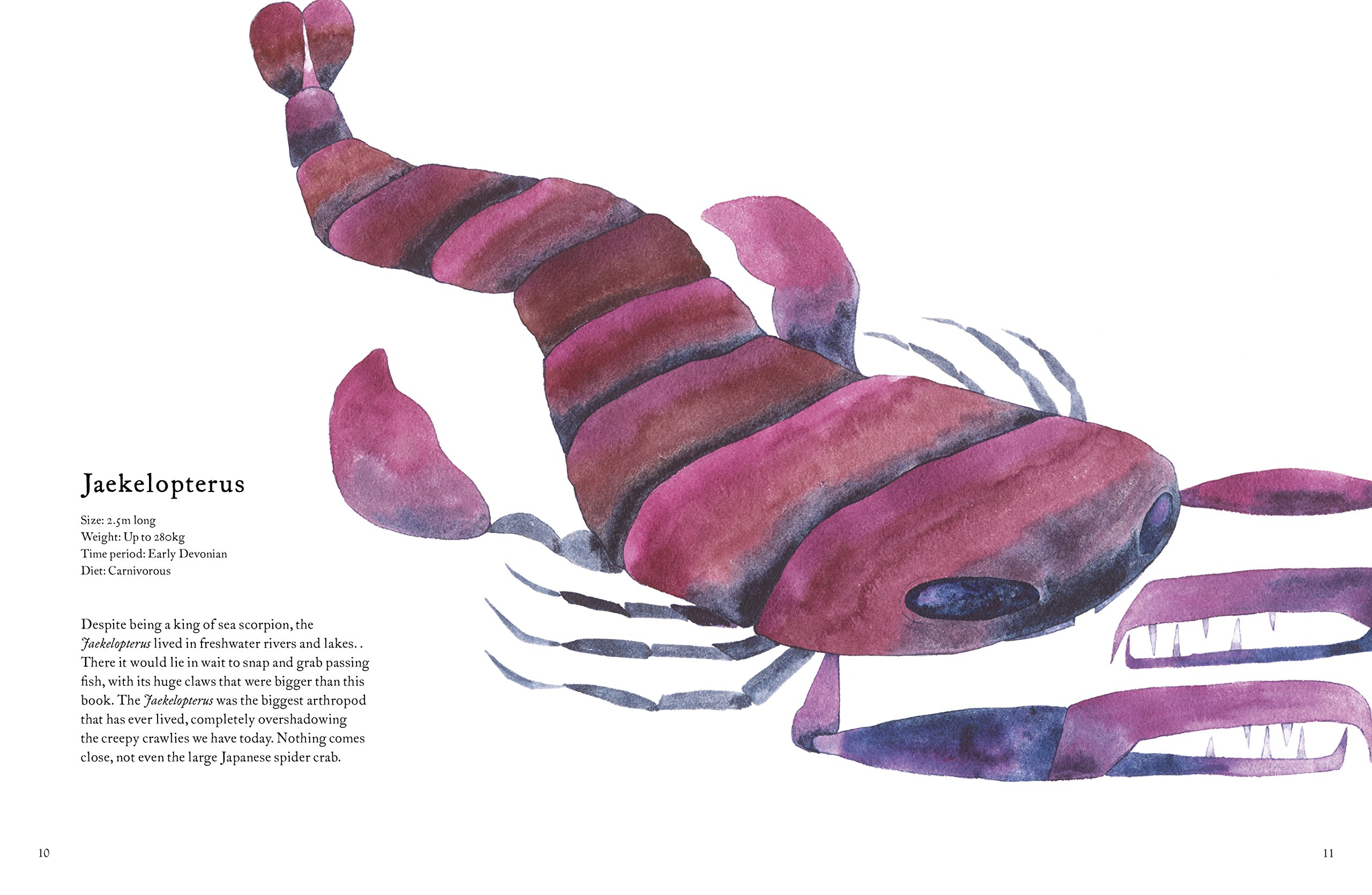
Matt Sewell’s follow-up to the mega-hit The Colorful World of Dinosaurs is a beautifully-illustrated large format look at the amazing beasts that time forgot – from the relatively well known, such as the sabre-toothed tiger and woolly mammoth, to the obscure monsters that walked the earth millions of years ago – many now forgotten. These beasts are arranged chronologically–from the strange invertebrate Opabinia that lived over 500 million years ago, to the Thylacine, or Tasmanian Tiger, that became extinct in 1936. New findings are being made every year, and research is showing us exactly how these beasts looked and how they lived.

Creatures illustrated and described include:

Sabre tooth tigers and woolly mammoths
Glyptodon – an armadillo as big as a VW Beetle car
Megalodon – a monster 60 foot (18m) shark
Water King penguin – a red and grey penguin the size of a man
Ornimegalonyx – a huge Cuban flightless owl, the largest owl that ever existed, at over 3 feet (1m) tall
Deinotherium – a strange-looking and huge, elephant-like creature with tusks positioned on its lower jaw and curved, facing downwards
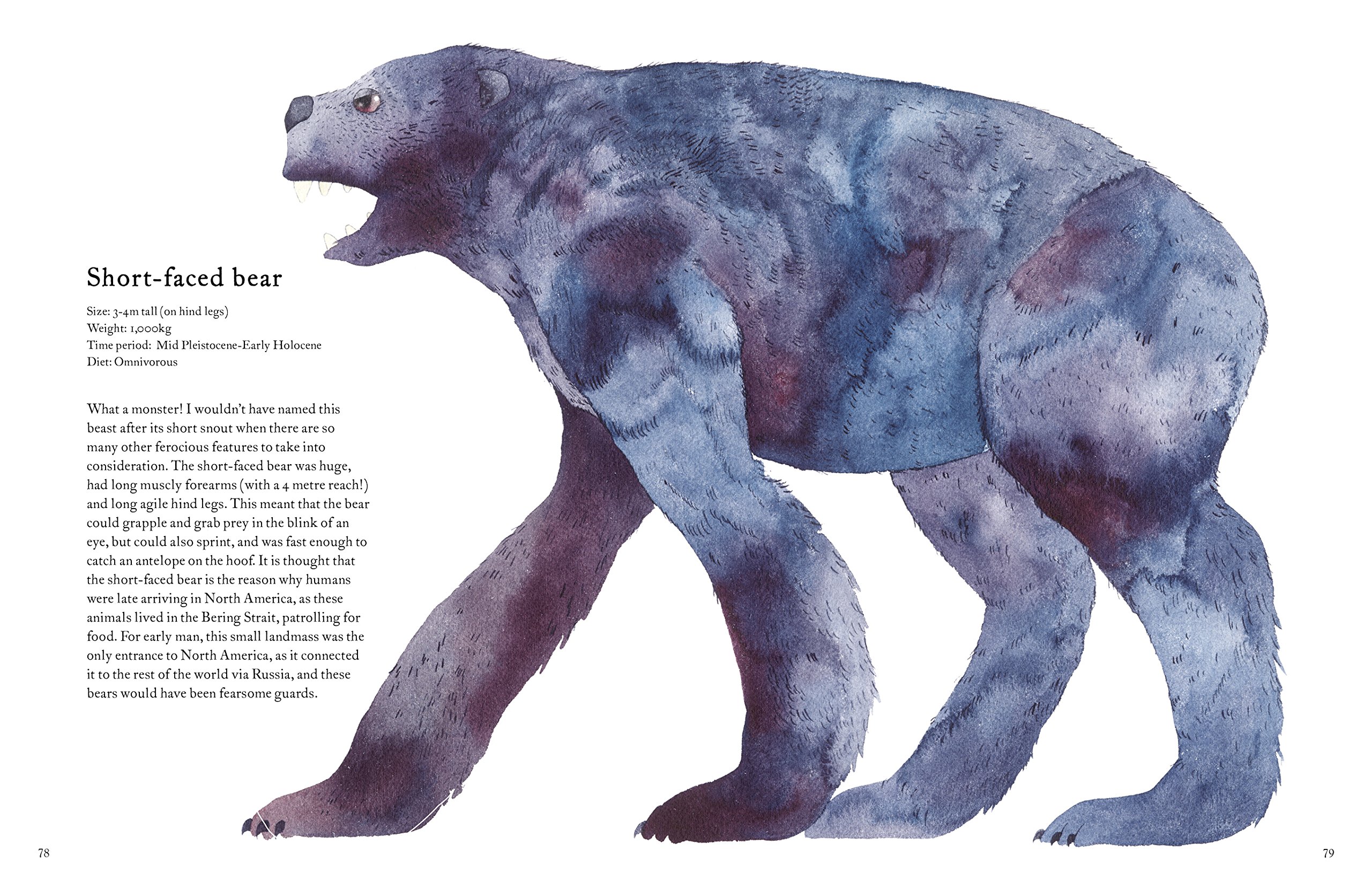
Short-nosed bear – a massive fearsome bear that kept North America human free
Megatherium – the giant sloth, as large as a modern elephant

Less celebrated than the dinosaurs, the range of beasts is equally impressive, every one a scary, amazing creature that actually stalked the planet. Like the dinosaurs, these beasts are awe-inspiring in their variety, with amazing details not seen on animals today and in a wide variety of furs, feathers and colors, making for a stunning collection of illustrations.

About the Creator: Matt Sewell, who has been described as “the Banksy of the bird world,” is an avid ornithologist and artist. He is the author of OwlsOur Garden BirdsOur Woodland BirdsOur Songbirds, and Penguins and Other Seabirds and has illustrated for the Guardian and Big Issue among many other publications. His art has been exhibited in London, Manchester, New York, Tokyo, and Paris.

Review: What a fascinating introduction to species of animals that used to walk on our Earth. As a reader, mom, and teacher I immediately enjoyed this book. Each spread includes a synthesized blurb about the animal and a large, colorful illustration that definitely catches the eye. While the book is science-driven, it is written in a way that many different levels of scientific understanding would find it interesting. I also really liked the choice of animals that were included because it wasn’t only animals that people know about already.

Teachers’ Tools for Navigation: I want to know more, and Trent wanted to know more, so I think when kids read this, they would want to know more also. So let’s jump off on this curiosity and dive into inquiry!

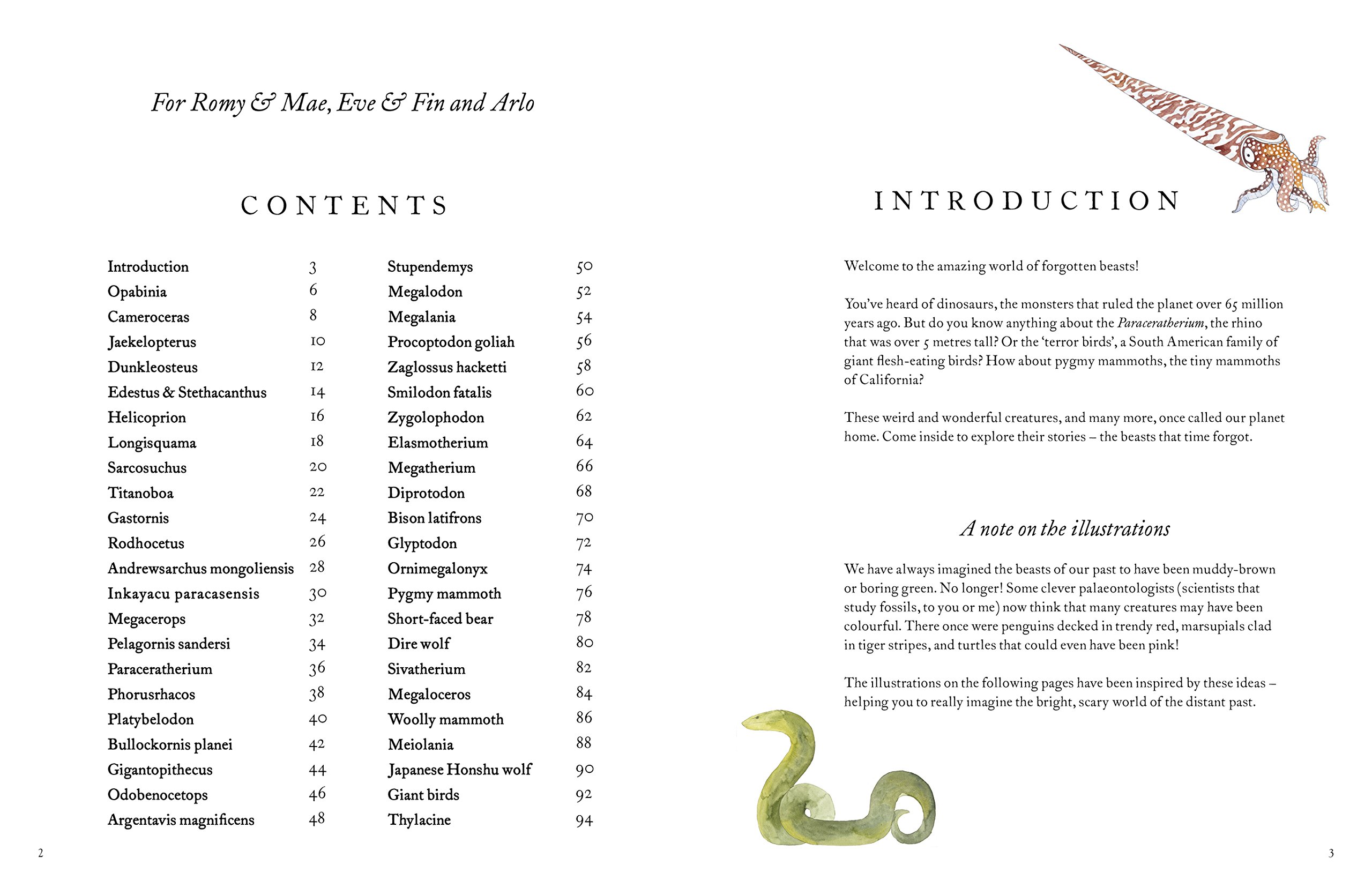
First, the book starts with a timeline and each animal says what time period they are from, but it does not show the timeline. I would love to take the timeline and place each animal on it.

Also, with the foundational knowledge shared in the book, students can jump into a full on inquiry project about animals of their choice looking at when they lived, what they’re related to in modern time, how they became extinct, etc. Then students can make a presentation for a gallery walk.

Discussion Questions: 

  • When did _______ live?
  • How many years ago was that?
  • What is _______ related to [modern animals]?
  • Why did ______ go extinct?
  • What other animals lived during the same time?

Flagged Passages: 

Read This If You Love: History, Dinosaurs, Animals

Recommended For: 

classroomlibrarybuttonsmall 

Stop by Kid Lit Frenzy for more Nonfiction Picture Book love!

Signature

**Thank you to Media Master Publicity for providing a copy for review!**

Monument Maker: Daniel Chester French and the Lincoln Memorial by Linda Booth Sweeney

Share

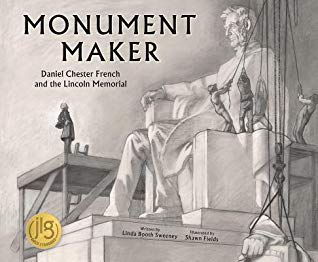
Monument Maker: Daniel Chester French and the Lincoln Memorial
Author: Linda Booth Sweeney
Illustrator: Shawn Fields
Published September 3rd, 2019 by Tilbury House Publishers

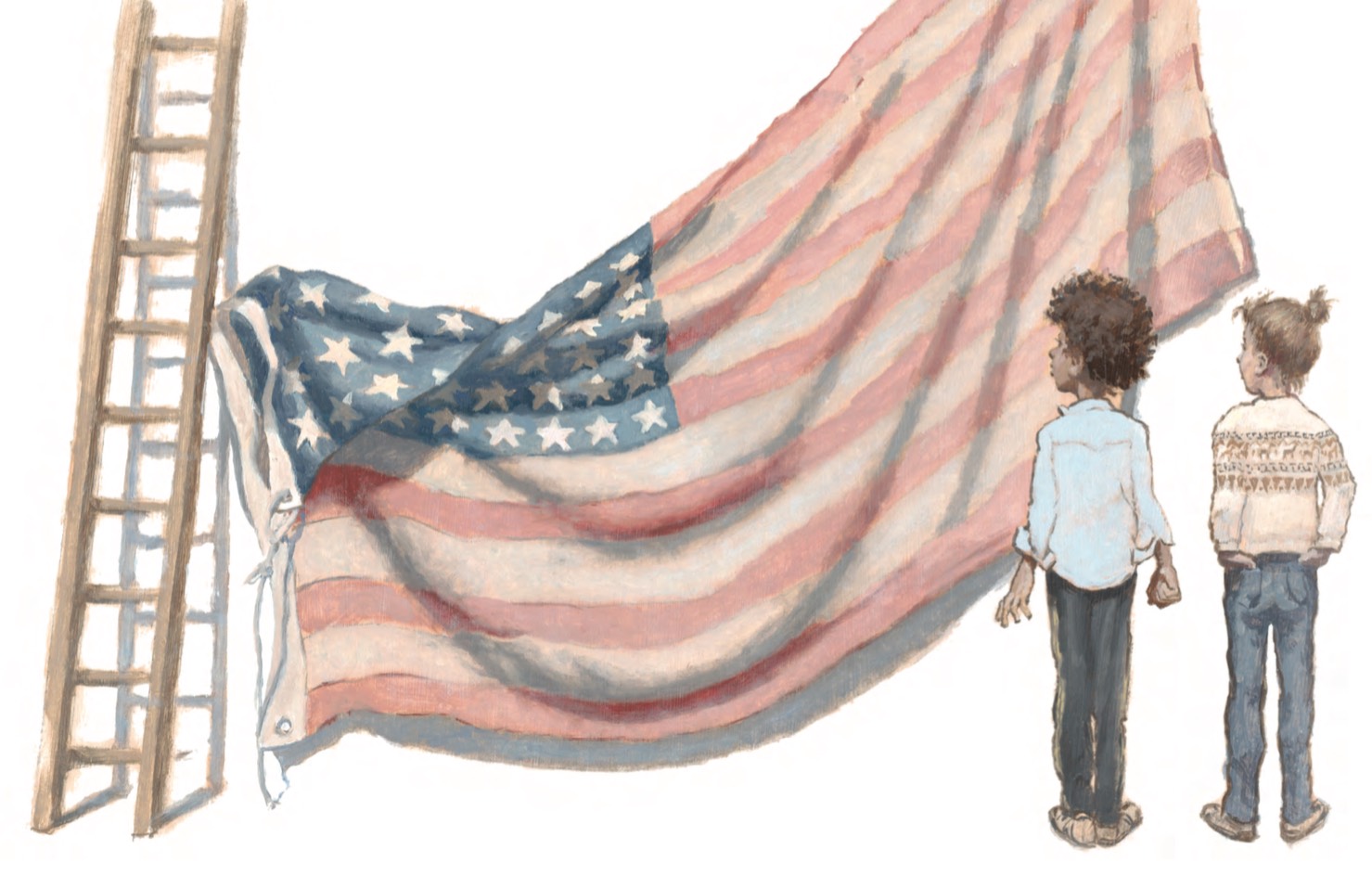
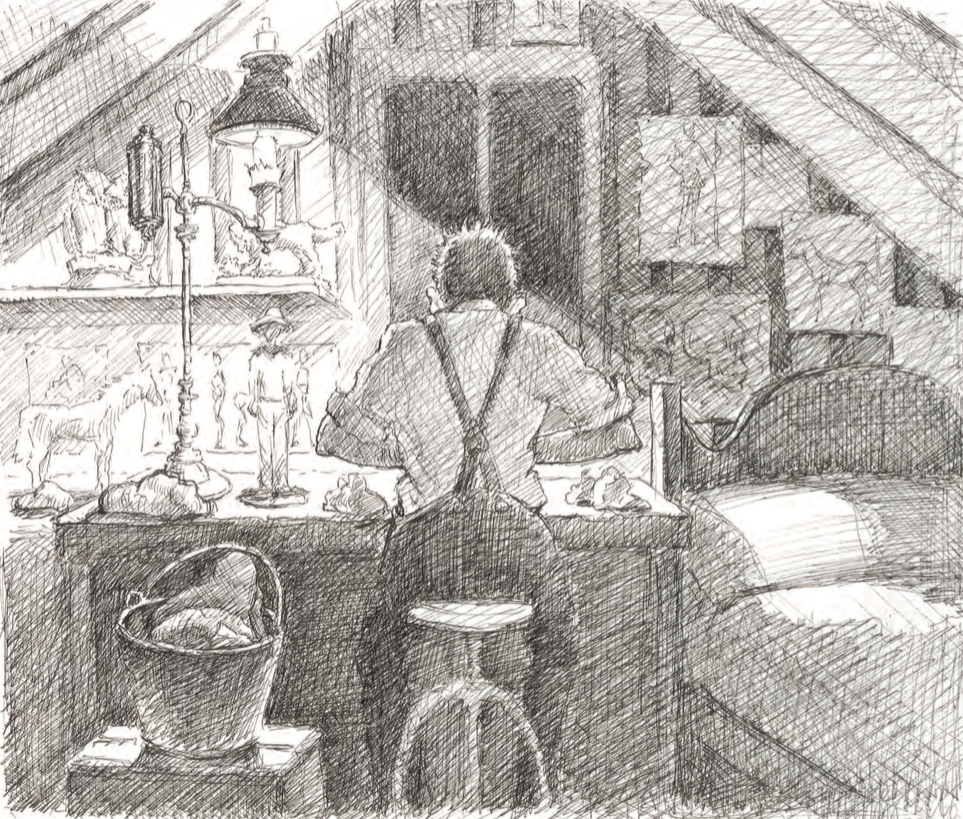
Summary: This is the story of how a farmboy became America’s foremost sculptor. After failing at academics, Dan was working the family farm when he idly carved a turnip into a frog and discovered what he was meant to do. Sweeney’s swift prose and Fields’s evocative illustrations capture the single-minded determination with which Dan taught himself to sculpt and launched his career with the famous Minuteman Statue in his hometown of Concord, Massachusetts.

This is also the story of the Lincoln Memorial, French’s culminating masterpiece. Thanks to this lovingly created tribute to the towering leader of Dan’s youth, Abraham Lincoln lives on as the man of marble, his craggy face and careworn gaze reminding millions of seekers what America can be. Dan’s statue is no lifeless figure, but a powerful, vital touchstone of a nation’s ideals. Now Dan French has his tribute too, in this exquisite biography that brings history to life for young readers.

Praise: 

“The environment that nurtured Daniel Chester French is given loving treatment by Sweeney and Fields. . .  As Sweeney traces French’s way in the world, French goes on to create numerous statues of Civil War heroes, including the epic sculpture of Abraham Lincoln enshrined in his memorial. A timeline and author’s note fill in various gaps in the text, and Fields’ drawings are both powerful and graceful, just as French would have wanted, depicting a largely white cast but including some figures of color, including one of the two modern children who observe the story. . . Both bracing and winning, a fine tribute to the sculptor and his world. (Picture book biography. 8-12) ” – Kirkus Reviews

*Junior Library Guild Gold Standard

Note from the Creators:

When Abraham Lincoln was shot in 1865, fifteen-year-old Dan French had no way to know that one day his tribute to the great president would transform a Washington, DC marsh into a national gathering place. He only knew that he liked making things with his hands.

As a boy, Dan plowed the straightest lines on his family’s farm, but as a teen, he failed (quite spectacularly) out of MIT.  And yet, almost 50 years after Lincoln’s assassination, Daniel Chester French drew on his memories of Lincoln and his artistic talent to create a lovingly sculpted touchstone for a nation’s ideals, reminding millions of seekers what America strives for and still can be.

This is the story of how one young boy became very, very good at what he loves, and for that talent to inspire people across a country and around the world.

We hope this book both delights and unites!

About the Author: Linda Booth Sweeney is an accomplished writer and an educator specializing in the exploration of living systems. www.lindaboothsweeney.com

About the Illustrator: Shawn Fields studied art at the School of Visual Arts, the Arts Student’s League, and the New York Academy of Art. His work has been exhibited at ArtBasel Miami, Forbes Gallery NYC, Arcadia NYC, and is collected worldwide.

Review: If you have ever been to the Lincoln Memorial, you know that a very talented artist sculpted the statue you find within. Monument Maker tells us how a young farm boy takes something he is good at and makes it not only his job but his passion. And I think that is what I loved the most–it showed that there is so much more to life than what others want you to be good at and what society expects you to do well at. We all have talents and passions, look at what Daniel Chester French did with his!

Sweeney and Fields did a fantastic job telling his story while also tying in the theme mentioned above, celebrating history, and setting goals for the future. Overall, a truly deep and well done middle grade picture book!

Teachers’ Tools for Navigation: With ties to art and history as well as social-emotional learning, Monument Maker can find its home in may different classrooms.

Discussion Questions: 

  • What did Dan’s family do to help support him in his endeavors?
  • What are the different steps in creating a large monument like the Lincoln Memorial?
  • How did Daniel Chester French become one of the best in his field?
  • What is something you love that you want to do when you grow up? How can you become an expert?
  • Why was it important for Daniel to learn how to draw even though he wanted to be a sculptor?
  • What does Daniel Chester French failing out of some classes yet becoming a master sculpture tell you?
  • How does the author tie together Lincoln, French’s sculpture, other history, and the future?

Flagged Passages: 

“History shapes our lives. And what we do with our lives can shape history. That’s how it was with Daniel Chester French.”

“Soon afterward, Dan’s father returned from Boston carrying a cardboard box. In it was ten pounds of cold, wet clay for a family sculpting night.

One by one the family gave up, but not Dan. He kept at it until the shape of a dog’s head appeared in his hands. From then on, Dan worked on the farm during the day and sculpted birds and animals at night.”

Read This If You Love: Art, Abraham Lincoln, Architecture, Sculpture

Recommended For: 

classroomlibrarybuttonsmall 

Don’t miss out on other nonfiction picture books! Check out Kid Lit Frenzy’s Nonfiction Picture Book Challenge: 

Signature