Author Guest Post: Author Lori Alexander Introduces A Sporting Chance and Shares its Teaching Guide

Share

As a 6th grader living in San Diego, CA, there was quite a buzz about the 1984 Summer Olympics, scheduled in nearby Los Angeles. Such excitement as we crowded along a sidewalk to see the torch relay go by! I still remember the special unit our teacher introduced, covering the history of the Games, from the Ancient Greeks to the meaning behind the rings on today’s Olympic flag. Fast forward many years to a children’s book author (me!) looking for a new topic to share with young readers. As mom to a child with physical limitations, our family loved watching the Paralympics. How did they come to be? After a bit of research, I discovered the fascinating story of a doctor who changed the standard of care for people with spinal injuries, eventually founding the Paralympic Games.

Did you know?

  • Ludwig Guttmann was a Jewish neurosurgeon who fled Nazi Germany in 1939 to continue his work with injured soldiers in England.
  • After WWI, nearly 80% of patients with a fractured spine died from bladder infections or bedsore infections caused by their full body casts.
  • Other doctors called Ludwig’s patients “incurables” until he introduced an entirely new treatment plan, including the removal of casts, movement in wheelchairs, and sports! Only 11% of Ludwig’s patients died from their spinal injury.
  • In 1948, Ludwig coordinated a wheelchair archery competition between 16 service men and women. It took place on the front lawn of the Stoke Mandeville hospital. A few dozen family members watched.
  • When Ludwig wanted to expand the competition, people laughed. They said wheelchair sports were ridiculous and no one would watch. But that didn’t stop Ludwig.
  • In 2016, more than 4000 athletes competed in the Paralympic Games in Rio. The Games broke viewership records with a global television audience of more than four billion people!
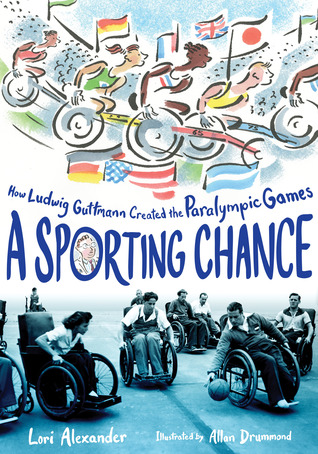
A Sporting Chance: How Ludwig Guttmann Saved Lives with Sports
Author: Lori Alexander
Illustrator: Allan Drummond
Published: April 7th, 2020 by Houghton Mifflin

Summary: Telling the inspiring human story behind the creation of the Paralympics, this young readers biography artfully combines archival photos, full-color illustrations, and a riveting narrative to honor the life of Ludwig Guttmann, whose work profoundly changed so many lives.

Dedicating his life to helping patients labeled “incurables,” Ludwig Guttmann fought for the rights of paraplegics to live a full life. The young doctor believed—and eventually proved—that physical movement is key to healing, a discovery that led him to create the first Paralympic Games.

Told with moving text and lively illustrations, and featuring the life stories of athletes from the Paralympic Games Ludwig helped create, this story of the man who saved lives through sports will inspire readers of all backgrounds.

Teachers’ Tools for Navigation and Discussion Questions: 

This Common Core and Next Gen Science Standards-aligned teacher’s guide includes discussion questions, activities about the nervous system, and a writing exercise encouraging students to support a social justice claim.
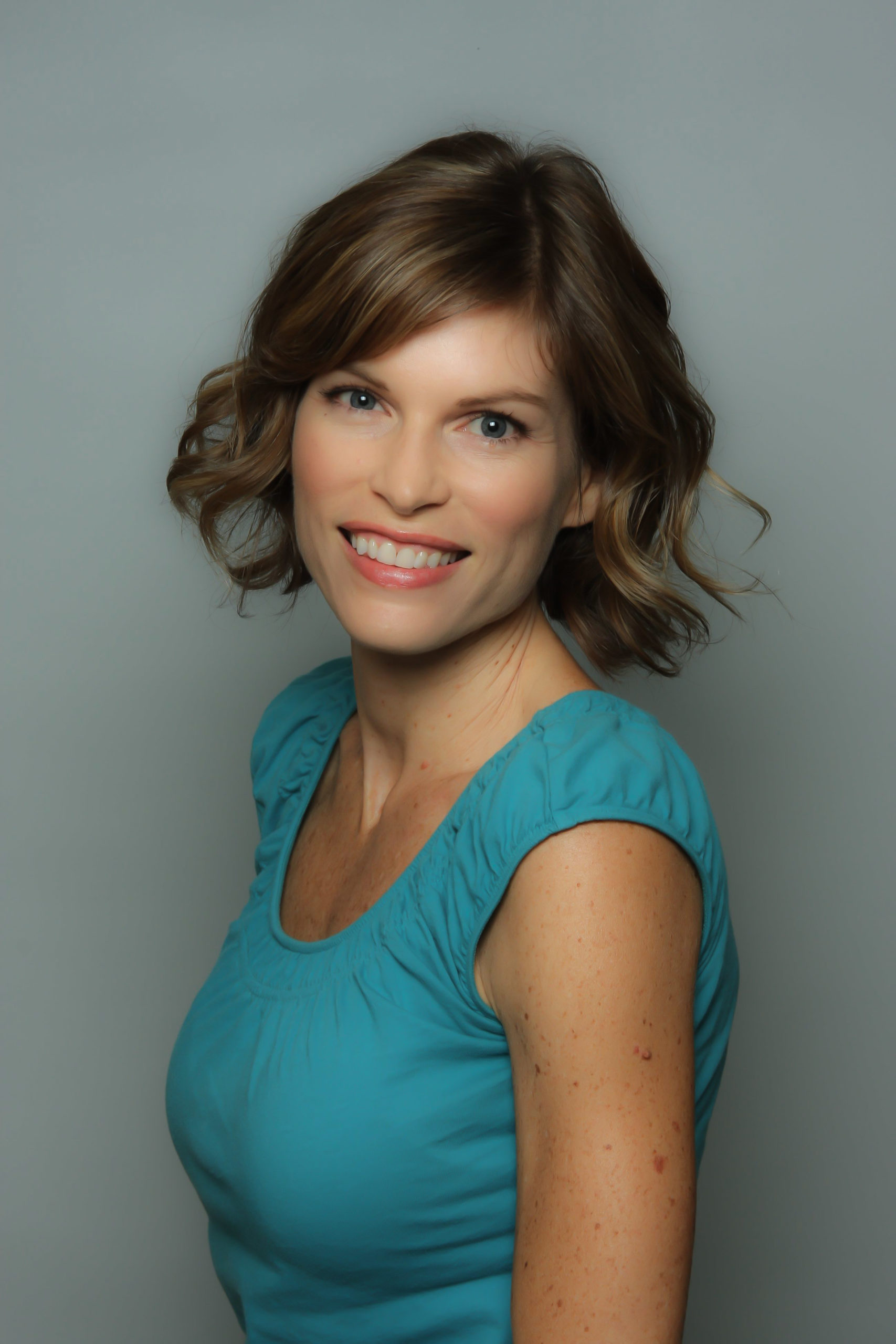
About the Author: Lori Alexander loves to read and write! She has written picture books like BACKHOE JOE (Harper) and FAMOUSLY PHOEBE (Sterling) as well as the FUTURE BABY board book series (Scholastic). Her first non-fiction chapter book, ALL IN A DROP (HMH) received a Sibert Honor Award. Her new book, A SPORTING CHANCE (HMH), is a Junior Library Guild Selection and a Kirkus “Best Books of 2020.” Lori resides in sunny Tucson, Arizona, with her scientist husband and two book loving kids. She runs when it’s cool and swims when it’s hot. Then she gets back to reading and writing. Visit Lori at www.lorialexanderbooks.com or on Twitter @LoriJAlexander or Instagram @lorialexanderbooks

Thank you, Lori, for sharing your inspiration, book, and guide!

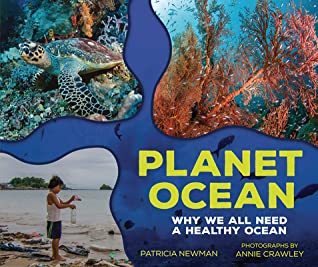
Planet Ocean: Why We All Need a Healthy Ocean by Patricia Newman, Photography by Annie Crawley

Share

Planet Ocean: Why We All Need a Healthy Ocean
Author: Patricia Newman
Photographer: Annie Crawley
Published March 2nd, 2021 by Millbrook Press

Summary: A little more than 70 percent of Planet Earth is ocean. So wouldn’t a better name for our global home be Planet Ocean?

You may be surprised at just how closely YOU are connected to the ocean. Regardless of where you live, every breath you take and every drop of water you drink links you to the ocean. And because of this connection, the ocean’s health affects all of us.

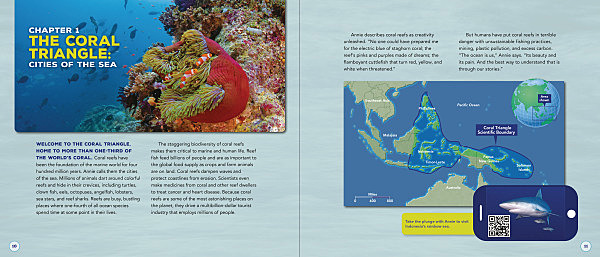
Dive in with author Patricia Newman and photographer Annie Crawley—visit the Coral Triangle near Indonesia, the Salish Sea in the Pacific Northwest, and the Arctic Ocean at the top of the world. Find out about problems including climate change, ocean acidification, and plastic pollution, and meet inspiring local people who are leading the way to reverse the ways in which humans have harmed the ocean.

Planet Ocean shows us how to stop thinking of ourselves as existing separate from the ocean and how to start taking better care of this precious resource.

Scan QR codes to explore the ocean along with Annie Crawley!

About the Creators:

Patricia Newman‘s books inspire young readers to seek connections to the real world. Her titles encourage readers to use their imaginations to solve real world problems and act on behalf of their communities. These books include Sibert Honor title Sea Otter Heroes: The Predators That Saved an Ecosystem; Junior Library Guild Selection Eavesdropping on Elephants; Bank Street College Best Book Zoo Scientists to the RescueBooklist Editor’s Choice Ebola: Fears and Facts; and Green Earth Book Award winner Plastic, Ahoy! Investigating the Great Pacific Garbage Patch. Patricia frequently speaks at schools and conferences to share how children of any age can affect change. Visit her at www.patriciamnewman.com.

Annie Crawley, aka Ocean Annie, travels and works around the world. Trained as a photo and broadcast journalist, her work has been broadcast and published worldwide. From Indonesia to Galapagos, Belize to Papua New Guinea, India to Australia, Annie has explored and documented life on our planet. Based in Seattle, Annie works as a producer, writer, photographer, and motivational speaker. She founded Dive Into Your Imagination, a multimedia company producing books, enhanced eBooks, educator guides, films, motivational art, and more. Annie was the photographer and filmmaker aboard SEAPLEX sponsored by Project Kaisei and Samy’s Camera. Annie specializes in the underwater realm and also works as a photo, video, and scuba diving instructor. She is a member of the Women Divers Hall of Fame and created a dive team for kids and teens. Visit her online at www.AnnieCrawley.com and www.anniecrawleyphotography.com.

Praise: 

♥ Junior Library Guild Selection

“Read Planet Ocean with your children and grandchildren to begin the discussion of what humans can do to save our oceans from pollution and acidification. Books like this one help lead the way to a better climate future for all inhabitants of mother earth.” — Jeff Bridges, Academy Award winner and environmentalist

“A compelling and paramount read for all mankind so that we value our ocean resource.” –-Christine Anne Royce, Ed.D., Retiring President (19-20), National Science Teaching Association; Professor of Teacher Education and Co-Director of MAT in STEM Education, Shippensburg University

“The range of nationalities represented and the inclusion of a variety of Indigenous voices make a particularly compelling argument that ocean health is a whole world problem…Worth exploring in depth.” —Kirkus

“They nailed it! Ocean Annie and Patricia Newman have created a positive, action-oriented educational initiative that will inspire the next generation to be good stewards of our ocean planet!” — Jill Heinerth, Underwater Explorer and Explorer in Residence, Royal Canadian Geographical Society

“The book follows [Annie] Crawley, an underwater explorer and photographer, as a knowledgeable guide to three very different regions connected by ocean waters, the Coral Triangle north of Australia, the Salish Sea bordering Washington State and British Columbia, and the Arctic. Newman’s text describes each place visited, while Crawley’s many attractive photos introduce the people and animals affected by environmental changes there…For each region, illustrated features offer the viewpoints of individuals living there. Presenting a good deal of information within a well-organized framework, the book conveys a strong sense of urgency to clean the global ocean and restore the ecosystems it supports.” —Booklist

Review: I am a HUGE fan of Patricia Newman’s books. This is the 6th of her books that I have reviewed here. Want to know why? Because her books fit the mission of our blog–they are wonderful pieces of informational literature and belong in schools and classrooms because kids need these books. Planet Ocean is no different!

With each of Patricia’s books, I learn new things. I entered this book thinking that I knew all that I could about climate change and the ocean and the effects on our planet, but I left even more knowledgeable and even more scared of the future if we do not make a change. Learning about ocean acidification, the effects on the Arctic, and just how dependent we all are on the ocean was fascinating and change making.

And like Eavesdropping with Elephants, Patricia included QR codes in this book which I believe brings a great interactiveness with the text. It also adds digital literacy with traditional literacy. And Annie Crawley is a great visual storyteller in the linked videos!

Teachers’ Tools for Navigation: The publisher and author share a curriculum guide to go with Planet Ocean on their websites: https://www.patriciamnewman.com/wp-content/uploads/2021/02/Planet-Ocean-Curriculum-Guide.pdf

The guide includes activities for literacy, science, ocean literacy, and sustainability standards.

I’d also like to add that I love Annie’s Pro Tips for Visual Storytelling, and I would love to use these tips to have students create their own visual story!

The book also includes a great “Surfers Welcome” section in the backmatter which gives 7 different websites to further learning!

Why do you need this book in your library? Patricia Newman can explain!

Discussion Questions: 

  • How are maps incorrectly proportioned?
  • Why do we need a healthy ocean?
  • How is your life affected by the ocean?
  • What new word did you learn from the book or glossary?
  • How could you “Go Blue with Annie” in your life?
  • Which of the QR code videos did you enjoy the most? How does this interactive component make the book better?
  • Why does the author include so many different scientists and contributors in the book in the “In Their Own Words” side bars?
  • How do the images and videos add to the information received in the book?
  • What is your favorite animal? How are they affected by the ocean?
  • Why did the Arctic have a whole chapter of the book? What is so important about the Arctic?
  • What do you think the author’s purpose was in creating this book?
  • How does the health of the ocean compare now to the past?

Flagged Passages: 

Read an excerpt on the book’s publisher page!

Read This If You Love: Science, Animals, Learning about Climate Change, Marine science

Recommended For: 

classroomlibrarybuttonsmall 

Signature

**Thank you to Patricia Newman and Lerner Books for providing a copy for review!**

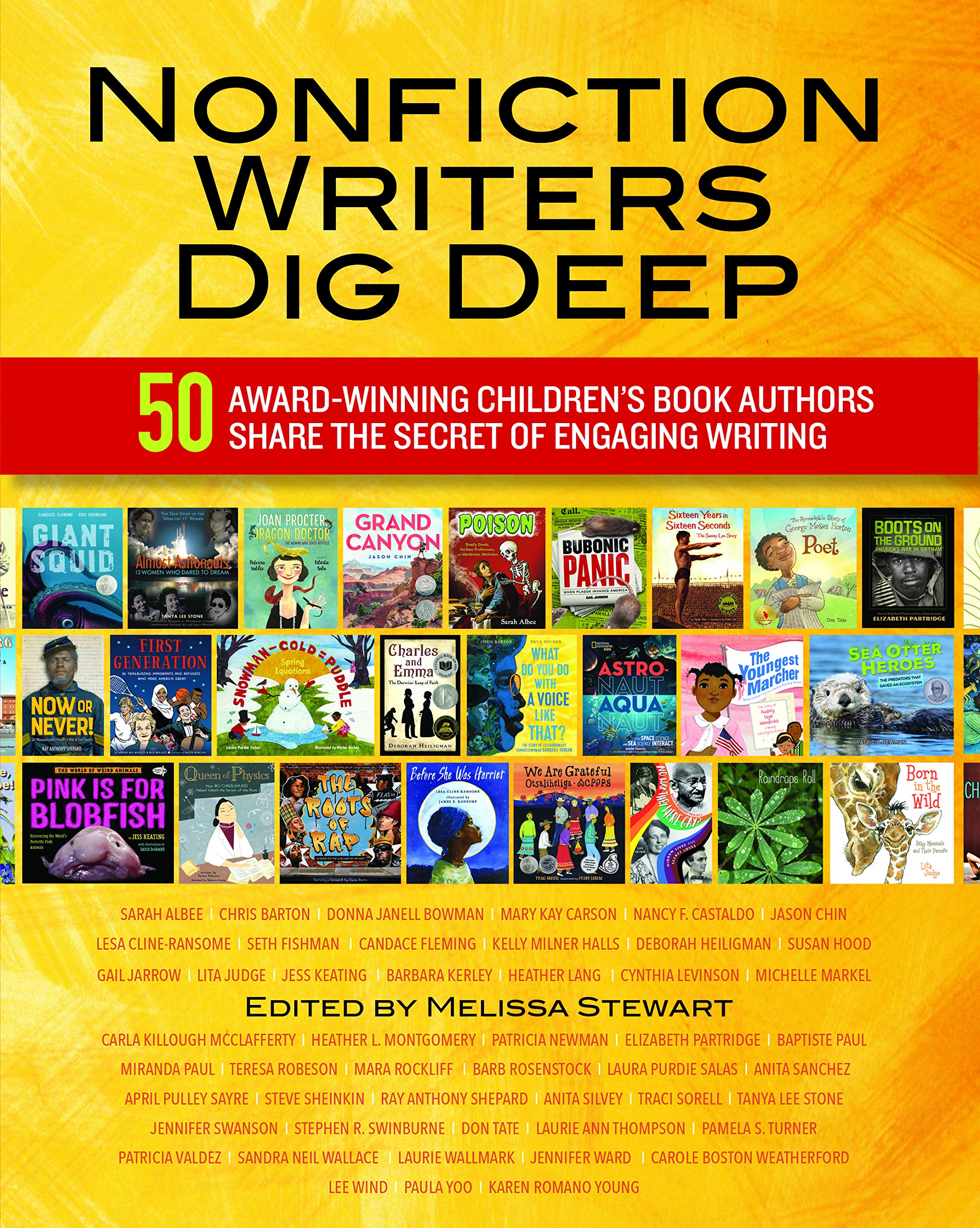
Nonfiction Writers Dig Deep: 50 Award Winning Children’s Book Authors Share the Secret of Engaging Writing Edited by Melissa Stewart

Share


Nonfiction Writers Dig Deep: 50 Award Winning Children’s Book Authors Share the Secret of Engaging Writing
Editor: Melissa Stewart
Published November 2020 by National Council of Teachers of English

Summary: In Nonfiction Writers Dig Deep: 50 Award-Winning Children’s Book Authors Share the Secret of Engaging Writing, some of today’s most celebrated writers for children share essays that describe a critical part of the informational writing process that is often left out of classroom instruction.

To craft engaging nonfiction, professional writers choose topics that fascinate them and explore concepts and themes that reflect their passions, personalities, beliefs, and experiences in the world. By scrutinizing the information they collect to make their own personal meaning, they create distinctive books that delight as well as inform.

In addition to essays from mentor authors, Nonfiction Writers Dig Deep includes a wide range of tips, tools, teaching strategies, and activity ideas from editor Melissa Stewart to help students (1) choose a topic, (2) focus that topic by identifying a core idea, theme, or concept, and (3) analyze their research to find a personal connection. By adding a piece of themselves to their drafts, students will learn to craft rich, unique prose.

100 percent of the proceeds will be divided among the National Council of Teachers for English (NCTE), We Need Diverse Books (WNDB), and the Society of Children’s Book Writers and Illustrators (SCBWI)

About the Author: Melissa Stewart has written more than 180 science books for children, including the ALA Notable Feathers: Not Just for Flying, illustrated by Sarah S. Brannen; the SCBWI Golden Kite Honor title Pipsqueaks, Slowpokes, and Stinkers: Celebrating Animal Underdogs, illustrated by Stephanie Laberis; and Can an Aardvark Bark?, illustrated by Caldecott Honoree Steve Jenkins. She coauthored 5 Kinds of Nonfiction: Enriching Reading and Writing Instruction with Children’s Books (forthcoming) and grades K-2 and 3-5 editions of Perfect Pairs: Using Fiction & Nonfiction Picture Books to Teach Life Science. Stewart maintains the award-winning blog Celebrate Science and serves on the Society of Children’s Book Writers and Illustrators board of advisors. Her highly regarded website features a rich array of nonfiction writing resources.

Contributors: Sarah AlbeeChris BartonDonna Janell BowmanMary Kay CarsonNancy CastaldoJason ChinLesa Cline-RansomeSeth FishmanCandace FlemingKelly Milner HallsDeborah HeiligmanSusan HoodGail JarrowLita JudgeJess KeatingBarbara KerleyHeather LangCynthia LevinsonMichelle MarkelCarla Killough McClaffertyHeather L. MontgomeryPatricia NewmanElizabeth PartridgeBaptiste PaulMiranda PaulTeresa RobesonMara RockliffBarb RosenstockLaura Purdie SalasAnita SanchezApril Pulley SayreSteve SheinkinRay Anthony ShepardAnita SilveyTraci SorellTanya Lee StoneJennifer SwansonStephen R. SwinburneDon TateLaurie Ann ThompsonPamela S. TurnerPatricia ValdezSandra Neil WallaceLaurie WallmarkJennifer WardCarole Boston WeatherfordLee WindPaula YooKaren Romano Young

From Melissa Stewart: “Behind the Book”

The idea for this book traces back to the 2017 National Council of Teachers of English (NCTE) Annual Convention in St. Louis, Missouri, when I was fortunate to participate in a panel titled ‘The Secret of Crafting Engaging Nonfiction’ with two of the most talented children’s nonfiction authors of our time—Candace Fleming and Deborah Heiligman.

During our discussion, moderated by educator and children’s nonfiction enthusiast Alyson Beecher, we dove deeply into what fuels our work and why we routinely dedicate years of our lives to a single manuscript. As we compared our thoughts and experiences, we came to realize something critically important—each of our books has a piece of us at its heart. And that personal connection is what drives us to keep working despite the inevitable obstacles and setbacks.

Several other nonfiction authors attended our presentation, and afterward they praised our insights. That conversation helped us all understand our creative process in a new and exciting way. And it eventually led to the essays in this anthology, which are our way of sharing an important—and often unrecognized and underappreciated—aspect of nonfiction writing with educators and students.

Review and Teachers’ Tools for Navigation: I was star struck seeing all of the authors who had contributed! I was lucky enough to be at the presentation that this book’s seed of an idea started, so when I heard about this book, I knew it would be a book I would need!

This book is all about moving nonfiction writing to an authentic experience. The book is broken into 3 sections to help guide writing instruction:

  • Choosing a Topic
  • Finding a Focus
  • Making is Personal

Within each section there are essays by mentor authors focusing on different aspects of the topic. I loved reading the essays that ranged from a look at how to take an idea and make it grow, about complexities within nonfiction, about the bumps along the way, about the writing process, and everything else you can think of.

Then the last part of the chapter is In the Classroom which helps tie the essays all together with how to take it to our students.

This book is written specifically with teachers in mind–it is such an amazing resource!

Video about the Book: https://melissa-stewart.com/books/teachers/bk_nonfiction_writers_dig_deep.html

Read This If You Love: Teaching authentic nonfiction writing

Recommended For: 

Signature

The ABCs of Black History by Rio Cortez, Illustrated by Lauren Semmer

Share

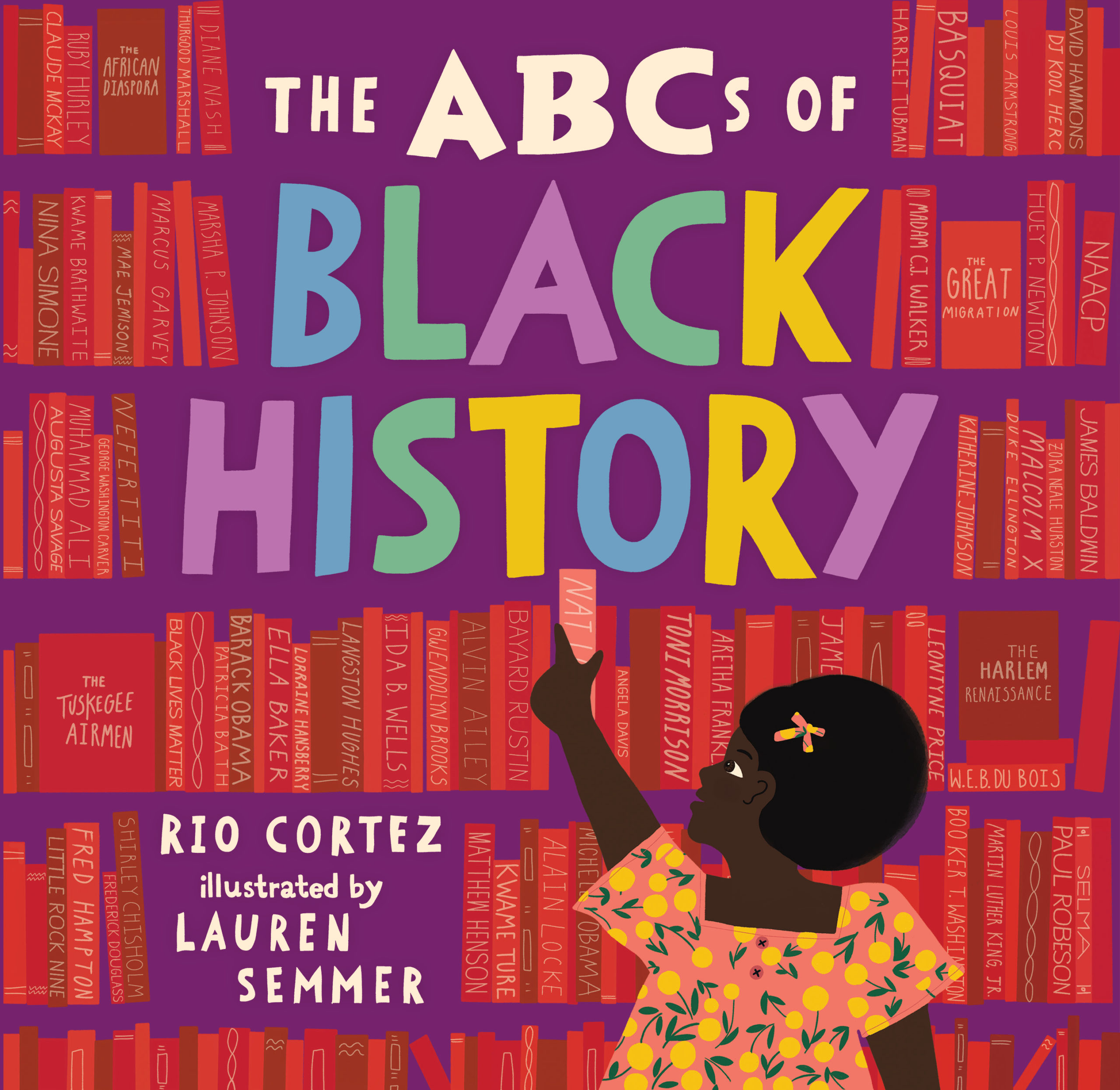
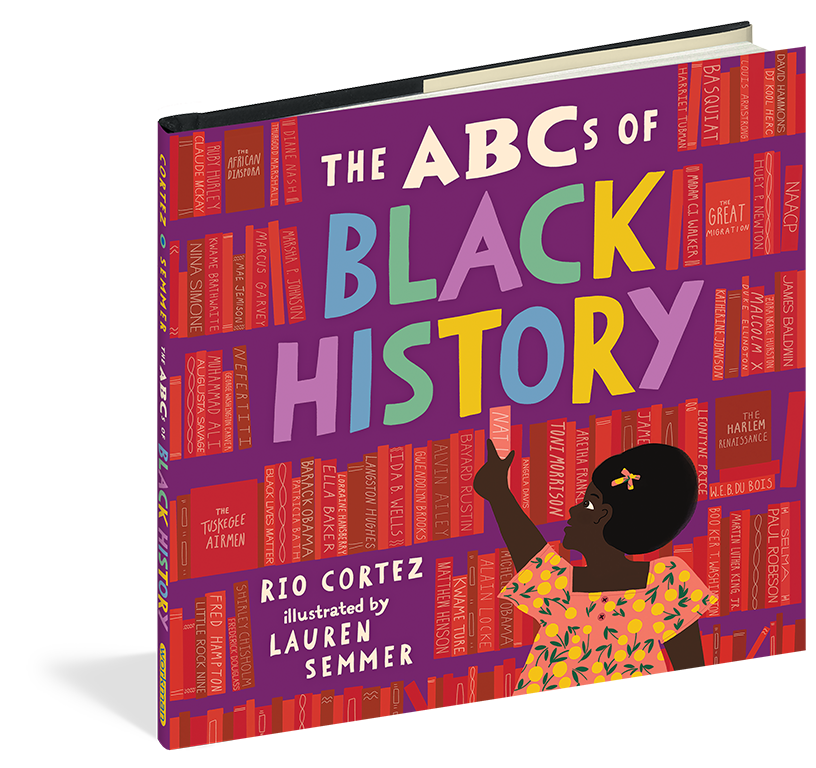
The ABCs of Black History
Author: Rio Cortez
Illustrator: Lauren Semmer
Published: December 8, 2020 by Workman Publishing Company

Summary: While many alphabet books have tackled a range of social justice topics from consent to feminism, there remains an urgent need to explore through a thoughtful lens how Black history has shaped American culture. The ABCs of Black History is a beautiful representation of the ideas and personalities that embody a wide range of Black people, experiences, and ideas in lively verse matched with vivid imagery.

Written by Pushcart-nominated-poet, Rio Cortez and illustrated by newcomer Lauren Semmer, The ABCs of Black History uses the alphabet as a frame to introduce Black history. Beginning with Anthem—an introduction to James Weldon Johnson’s Lift Ev’ry Voice and Sing—and ending with Zenith, a tribute to the mountaintop Dr. King spoke about before his death, readers will travel across continents and centuries, navigate triumph and heartbreak, and celebrate creativity and joy.

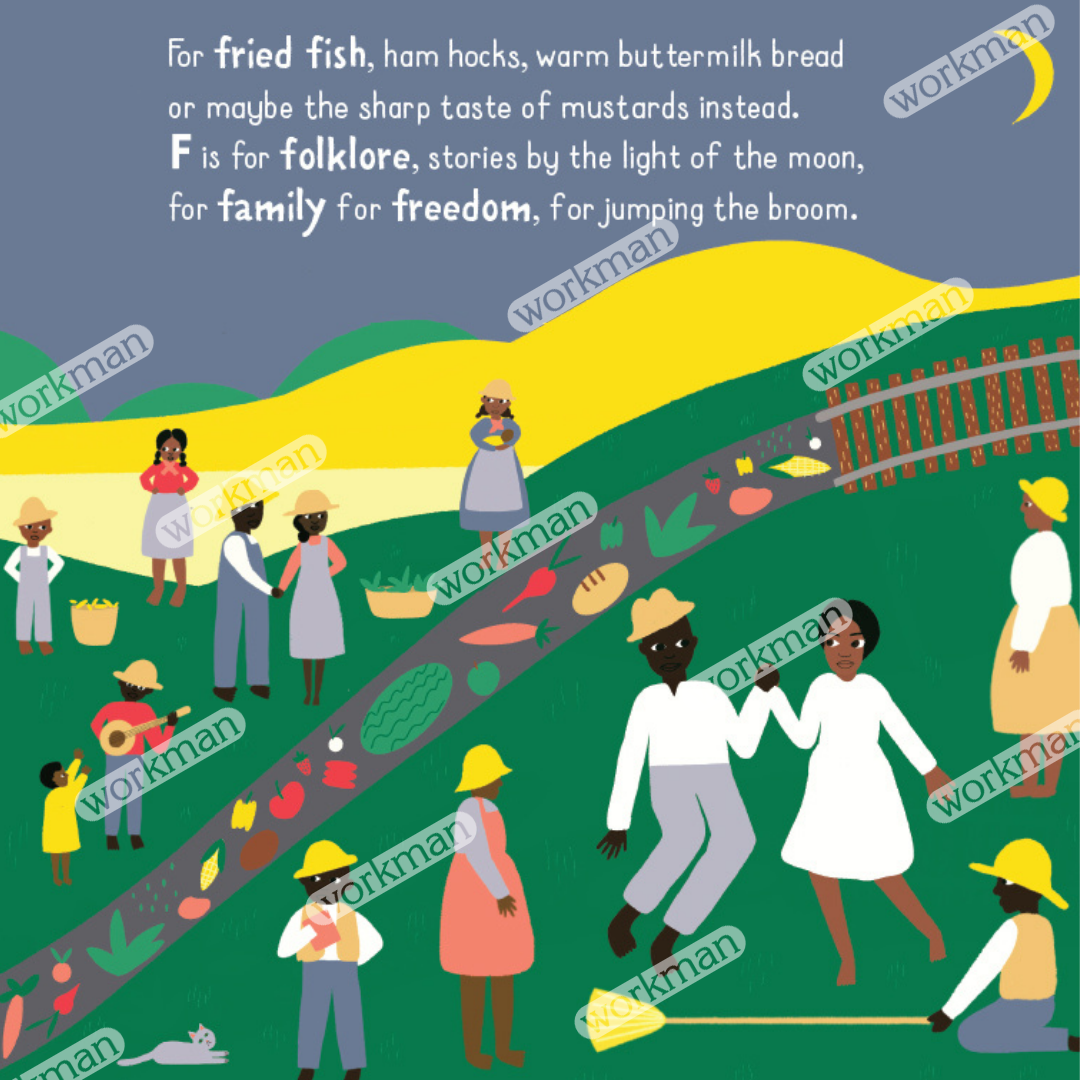
The poetic text introduces big ideas to engage curious minds. Every letter has a rhyming verse, and every spread is a visual feast. F explores the concepts of farming and food. G is for Go! and the Great Migration from the rural South to the urban North. Then the reader lands in Harlem, New York, where they meet Zora Neale Hurston and Langston Hughes. Contemporary moments are included too. M is for march and message, which explores the culmination of movements that have changed the course of history, from the Selma to Montgomery March in 1965 to the Black Lives Matter movement today. And Q is for queens, acquainting readers with powerful women like Leontyne Price, Queen Nandi, Toni Morrison, Michelle Obama, and many more.

The book also includes robust back matter that offers more information on the events, places, and people mentioned in the poem, from Fannie Lou Hamer to DJ Kool Herc, the Little Rock Nine to Sam Cooke.

A necessary addition to every child’s bookshelf, The ABCs of Black History is an exuberant celebration of history, culture, race, and justice.

Ricki’s Review: Oh my. This is a powerful book. Every single page is beautifully constructed. I simply cannot imagine how long it took to create this book. It is 64 pages of masterful writing and eye-catching illustrations. To call this an alphabet book would be to undermine everything that it is. Each spread features a different letter with numerous words connected to Black history and written in poetic form. Nine pages of back matter offer further information of all of the people, places, and terms used throughout the book. Thus, a child will hear the lilt of a poetic description in a read aloud, and the back matter offers more learning. I describe a child here, but as an adult, I was absolutely captivated by this text. This book is one to read and love and it is one to gift. Also, in case you missed it, look at the cover! I loved this book and give it my highest recommendation.

Teachers’ Tools for Navigation: Teachers might ask each child to select a letter in the book. They can learn more about the people, places, and terms used and share with peers more information about Black history. Then, they might create their own alphabet books about a topic they are interested in researching.

Discussion Questions: 

  • Which letter spread did you like the most? What did you learn?
  • How does the author incorporate information in a poetic and engaging way?
  • How do the illustrations elevate your understanding of the text?

Flagged Passage: 

E is for explore—to study a place: like Matthew Henson, the Artctic; Mae Jemison, space.

E is for education, for expanding the mind, like Ruby Bridges, Linda Brown, the Little Rock Nine—The first Black children in all-white schools, they opened the doors and challenged the rules.

Flagged Spread:

Excerpted from THE ABCs of BLACK HISTORY by Rio Cortez (Workman Publishing). Copyright © 2020. Illustrations by Lauren Semmer

Read This If You Love: Nonfiction picture books, Black history books, alphabet books, Hidden Figures by Margot Lee Shetterly, Frederick Douglass: The Lion Who Wrote History by Walter Dean Myers, Duke Ellington: The Piano Prince and His Orchestra by Andrea Davis Pinkney, We March by Shane W. Evans, Harlem’s Little Blackbird: The Story of Florence Mills by Renee Watson, Freedom in Congo Square by Carole Boston Weatherford

Recommended For: 

  classroomlibrarybuttonsmall

Our World: A First Book of Geography by Sue Lowell Gallion

Share

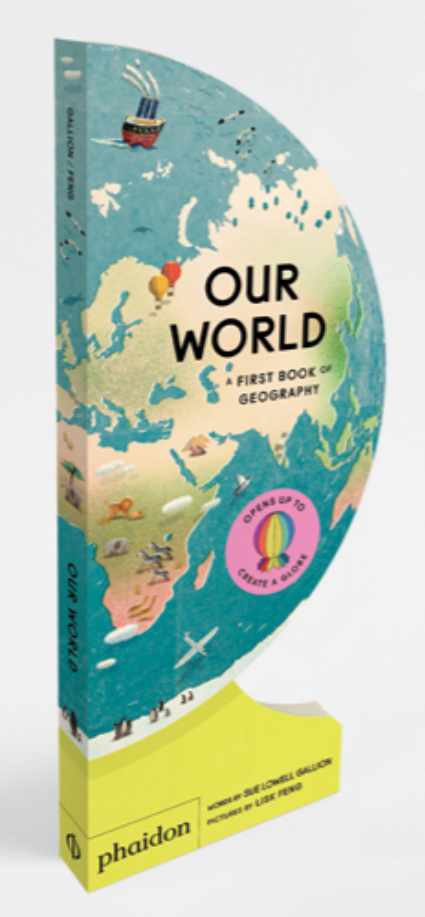
Our World: A First Book of Geography
Author: Sue Lowell Gallion; Illustrator: Lisk Feng
Published: July 15, 2020 by Phaidon Press

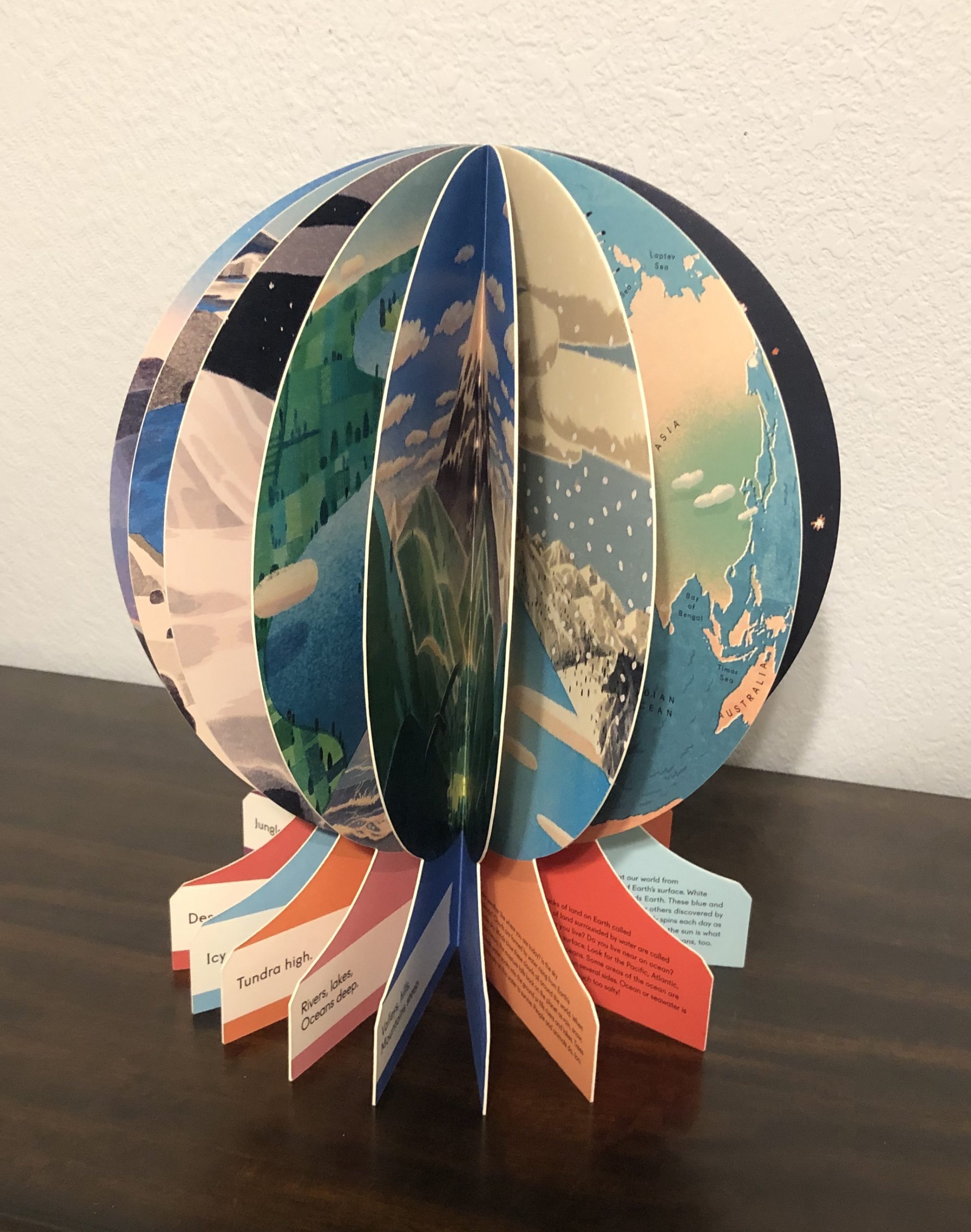
Summary: A read-aloud introduction to geography for young children that, when opened and folded back, creates a freestanding globe

Children are invited to identify and experience the Earth’s amazing geography through rhyming verse and lush illustrations: from rivers, lakes, and oceans deep, to valleys, hills, and mountains steep. Secondary text offers more detailed, curriculum-focused facts and encourages readers to consider their own living environments, making the reading experience personal yet set within a global backdrop. This informative homage to Earth is sure to inspire readers to learn more about their planet – and to engage with the world around them.

ReviewOh, how I love this book! It is very cleverly designed. My sons have decided that they will alternate having it in their rooms each week, so it was a hit in my household. The book opens to form a globe! The information within the book is educational for both kids and adults. For instance, I learned about the different temperatures of deserts. Very cool! The book is marketed to ages 2-5, but my almost 7-year-old found it fascinating and learned new information (as did I!). I think other elementary schoolers would also really enjoy this book.

Each page features a theme of information and artworking, like a living environment or the rivers, lakes, and oceans. It’s packed with interesting facts on the thick, sturdy board book pages. This book would make a great gift to a teacher or child. I recommend it highly!

Teachers’ Tools for Navigation: Teachers could pair this book with a unit on geography. Students might each take a different page and research further the topic of the page. Alternatively, kids might design their own three-dimensional books using this one as their mentor text. For instance, they might design a book based on a planet or some other theme. I am hoping for more books in this style!

Discussion Questions: Which was your favorite page? Why? What did you learn on the page? What other information could you research about the topic?; How do the pages work together to teach us about our world?

We Flagged: 

Read This If You Love: Any nonfiction books about the geography and our world; interactive books

Recommended For: 

classroomlibrarybuttonsmall

**Thank you to Wendy Kitts and Frannie Gordon for introducing me to this book and providing a copy for review!**

Build a Castle: 64 Slot-Together Cards for Creative Fun by Pail Farrell

Share

Build a Castle: 64 Slot-Together Cards for Creative Fun
Author: Pail Farrell
Published: April 7th 2020 by Pavilion Children’s

Summary: Turrets, ramparts, windows, walls, and more–create your own medieval masterpiece with the first in a new series of graphic-designed building cards.

This pack contains sixty-four cards (4 x 2¾ inches) of a variety of graphic designs. Clever paper engineering allows you to slot the cards together, building up and out in whichever way you like! Also included is a short ten-page booklet, with descriptions of the card designs and suggestions of stacking methods. The instructions tell you how to build a castle, or you can let your imagination run riot and design your own!

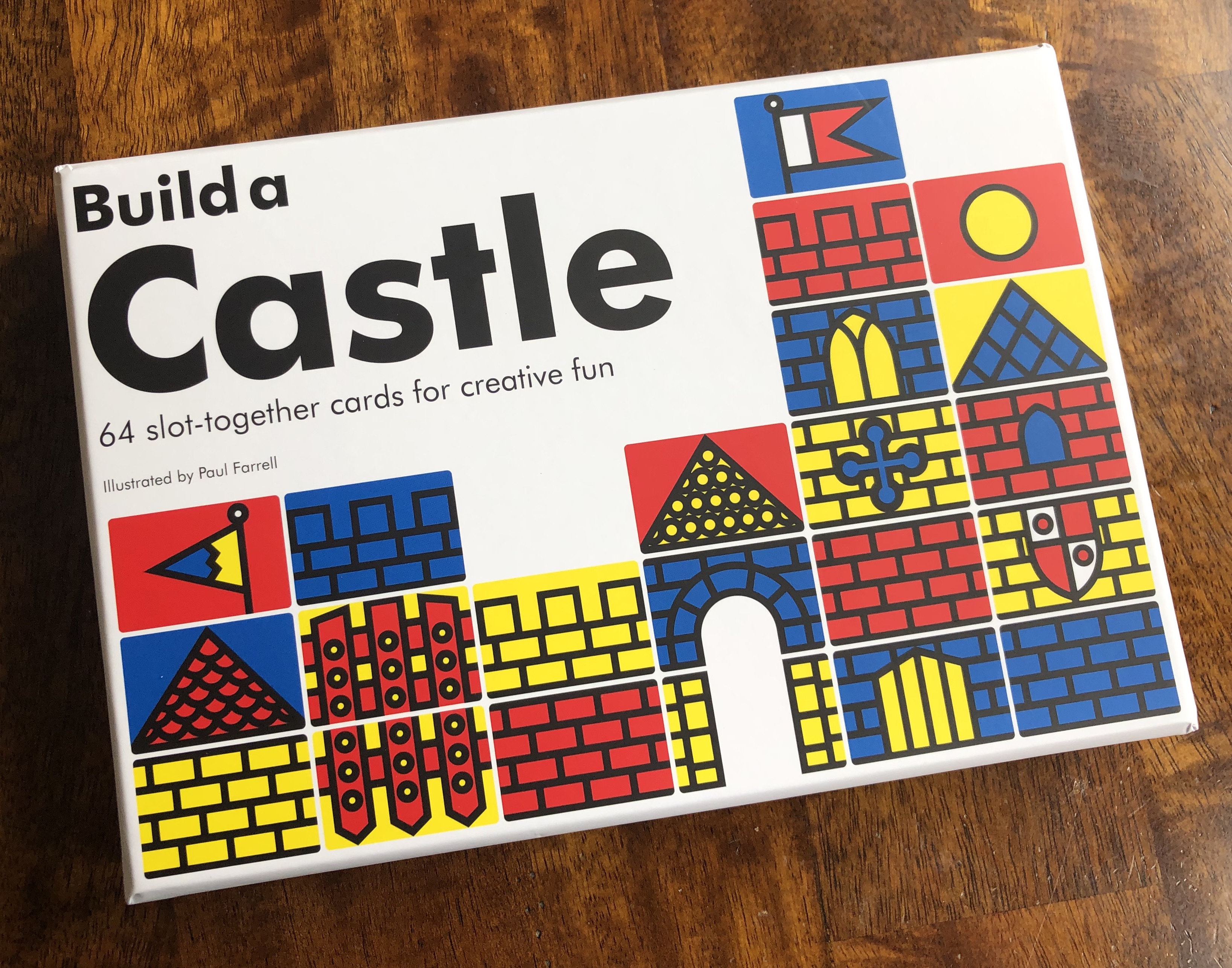
Renowned illustrator Paul Farrell has designed these cards in his bold, colorful graphic style–turning the image of a castle into a work of art.

ReviewBuilding, building, building. My three kids love to build. I am always looking for something new and different. When I heard about Build a Castle, I knew it would be a huge hit in my house, and (spoiler alert), it was.

The cards come in a thick cardboard box that is very inviting. The pictures on the cover give kids ideas (if they need a sort of mentor text to get started.

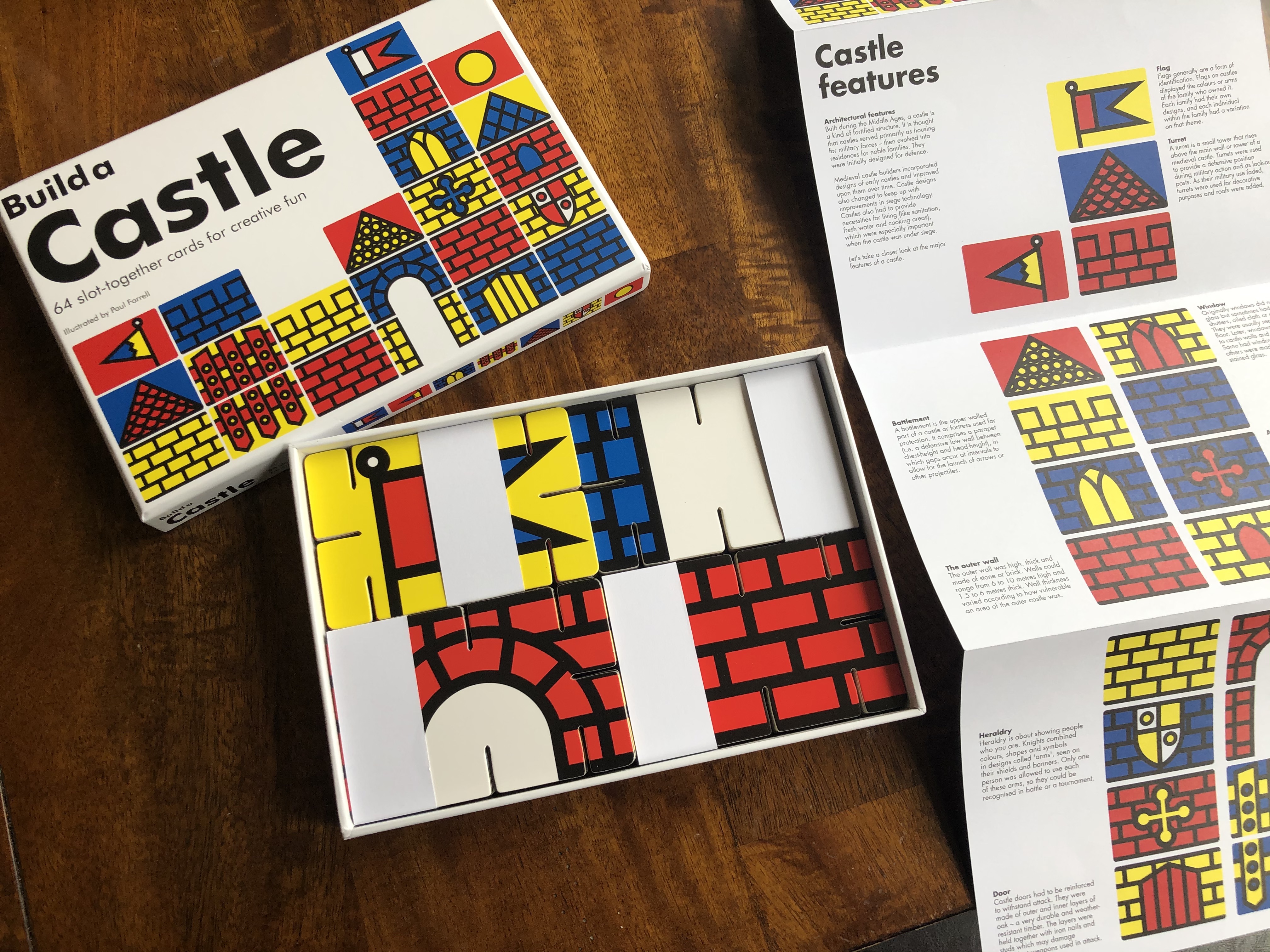
I was pleasantly surprised by the long informational guide within the box. It provides a lot of neat details for kids to read and learn all about castles. I found it cool, myself, even though I know I am not the target audience. I suspect other adults will find joy in this box.

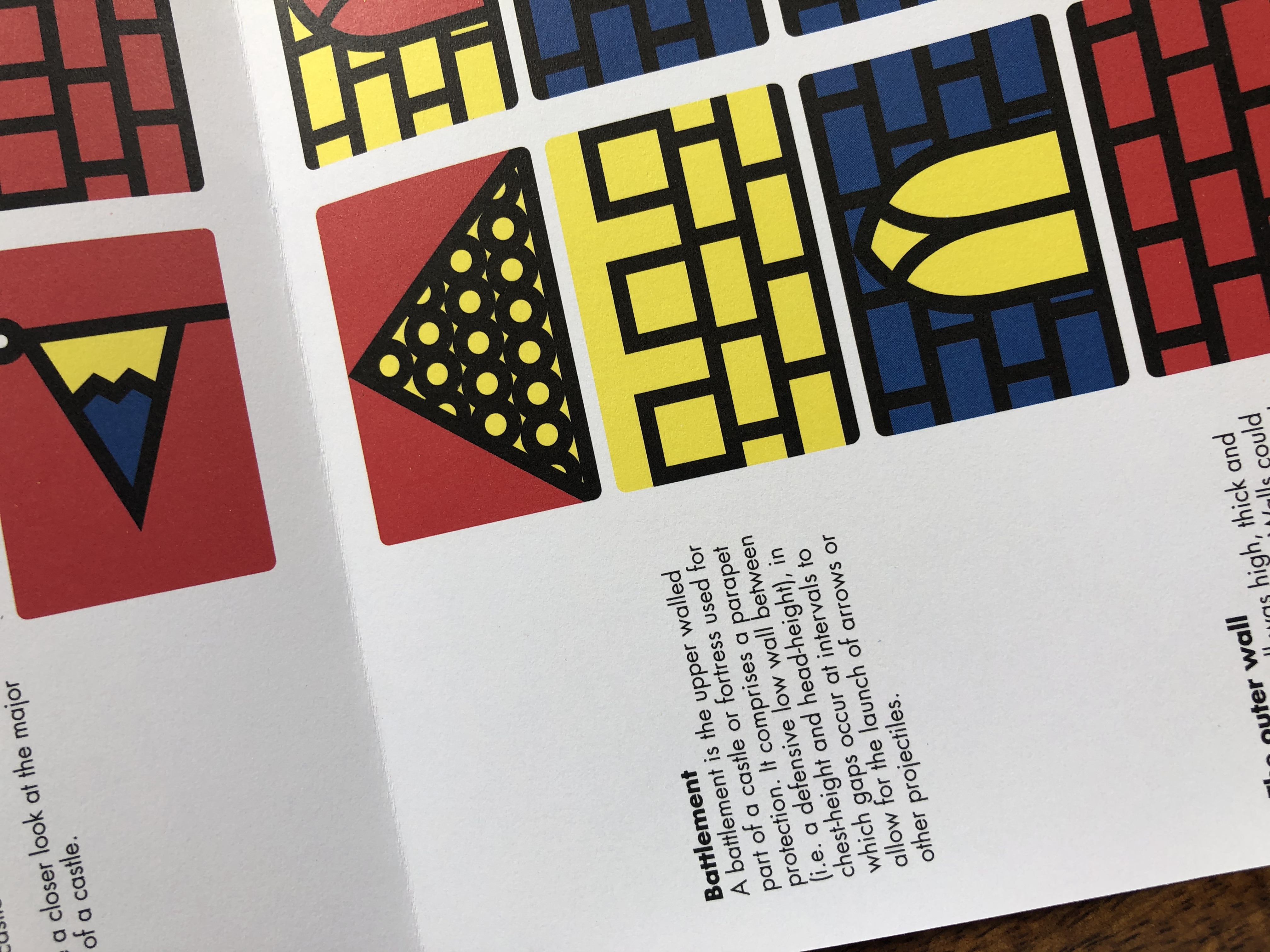
Here’s a closeup of one of the informational sections about castles. Younger kids might slot the castle together haphazardly, but older kids would enjoy choosing intentionally the placement of the items of their castle. For instance, a battlement might be better placed at the top of the castle to allow for safety from invaders from far away!

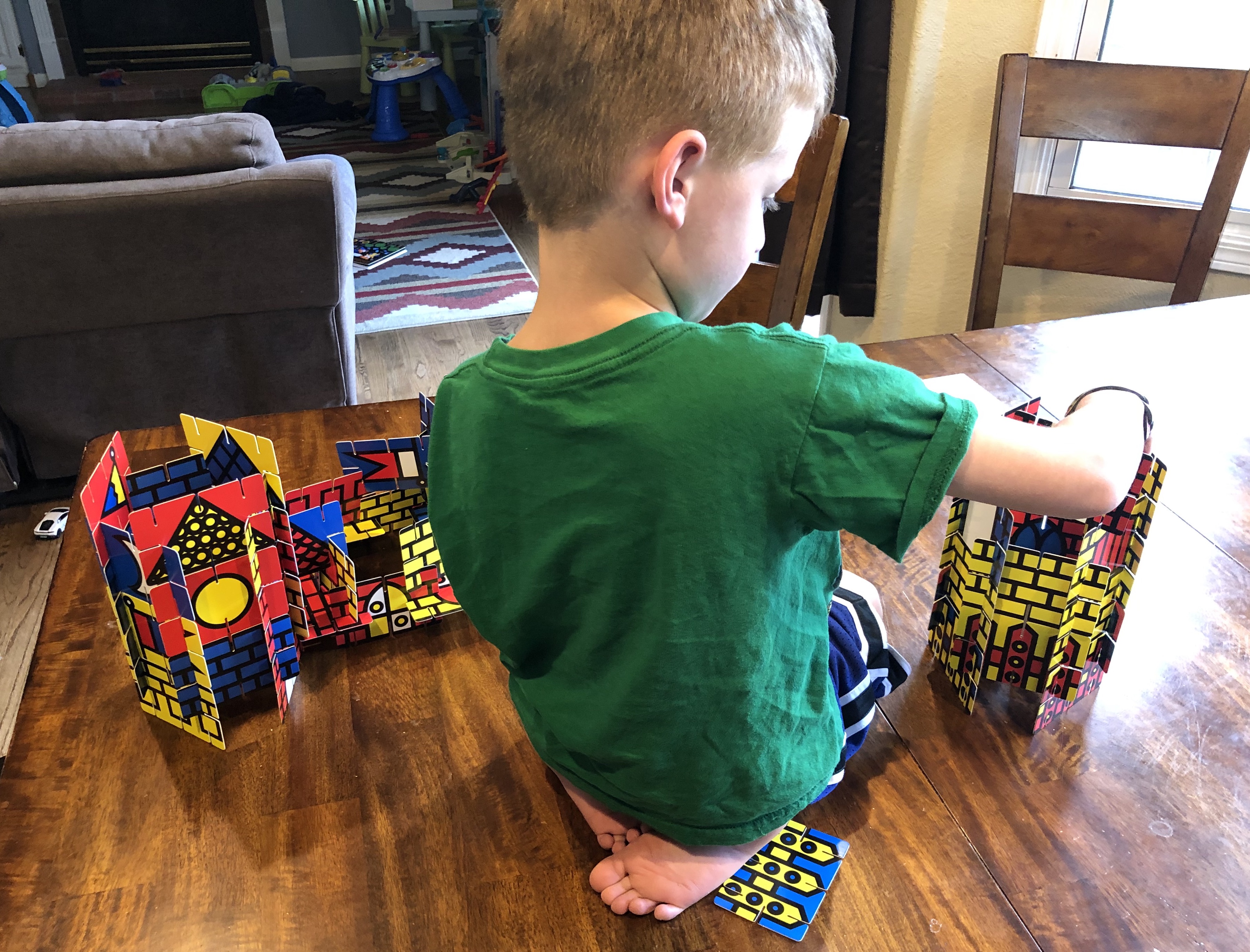
Building!

Teachers’ Tools for Navigation: This would make for a great classroom station. Or perhaps teachers would enjoy using it for fast finishers or for a free learning time slot. My son says that his classroom as a free learning time, and everyone fights over the iPad. Build a Castle would be a great competitor for the iPad. I know that my kids would enjoy building a castle just as much as using the well-loved tablet.

Discussion Questions: What did you learn as you did the activities?; What parts of the castle do you find most interesting? Why?; How do the different parts of the castle together?

Cool Video to Show How It Works: 

Read This If You Loved: Any nonfiction books about castles; interactive books and kits; legos; building; architecture

Recommended For: 

classroomlibrarybuttonsmall

**Thank you to Casey at Media Masters Publicity for providing a copy for review**

Book Reader Animal Kingdom from Best Learning

Share

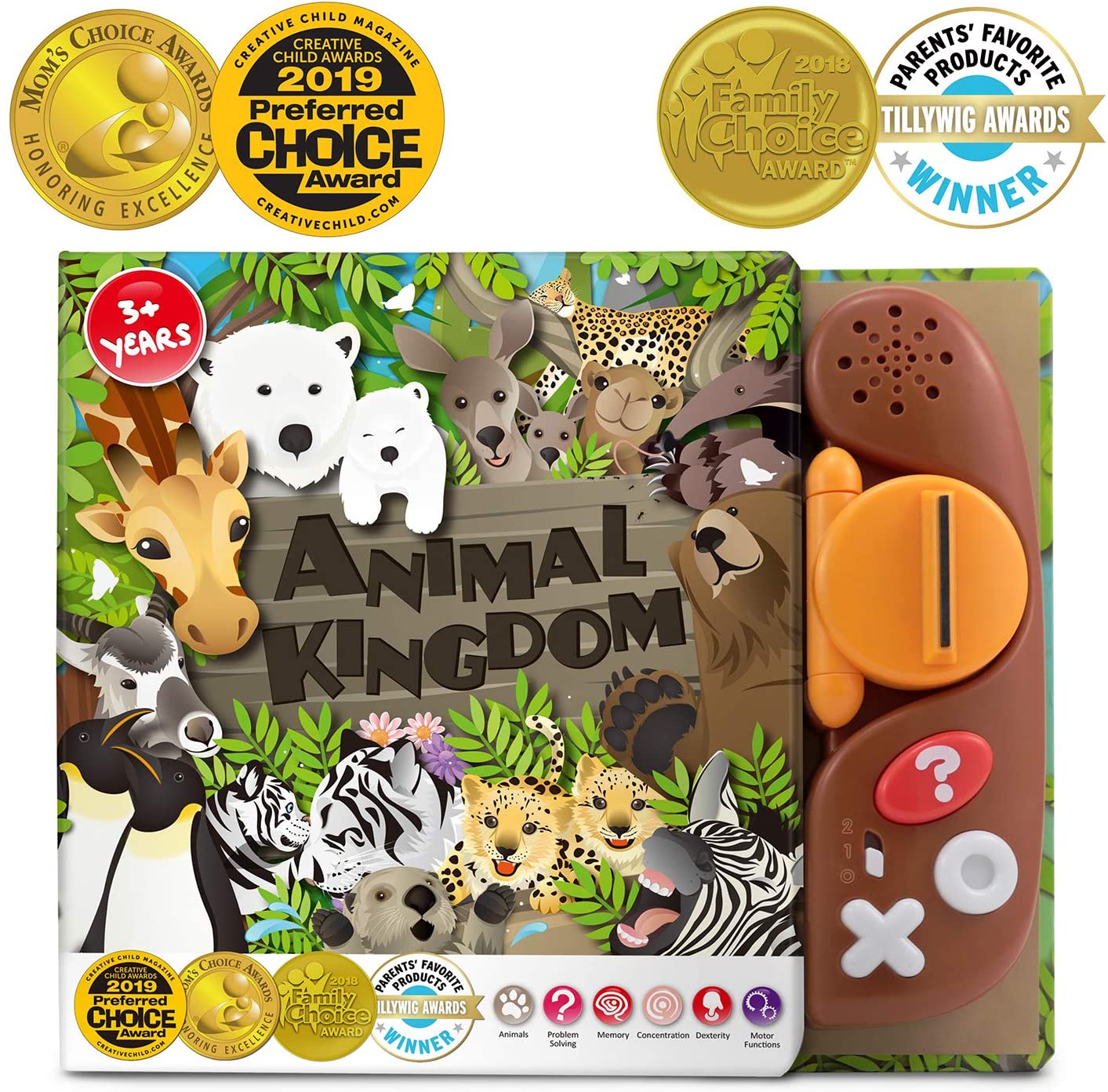
Book Reader Animal Kingdom is an interactive book reader for children to learn about 12 animals through 27 book pages about their appearance, behaviors, habitats and much more! Filled with playful melodies, friendly voices, and interesting sounds of animals and nature! Also comes with Quiz mode for those up for a challenge to keep them enthusiastic and learning at the same time!

  • Family Choice & Tillywig Parents’ Favorite Products Award Winner 2018! An interactive book reader for children to teach 12 animals about their appearance, behaviors, habitats and much more!
  • Simply press the paw down against the page as it reads aloud the contents.
  • Comes with a true and false quiz mode for those up for a challenge to keep them enthusiastic and learning at the same time.
  • Skills learned include animals, memory, dexterity, motor functions, concentration and problem solving.
  • Requires 3 AAA batteries (included); intended for preschoolers and early learners of ages 3 years and up.

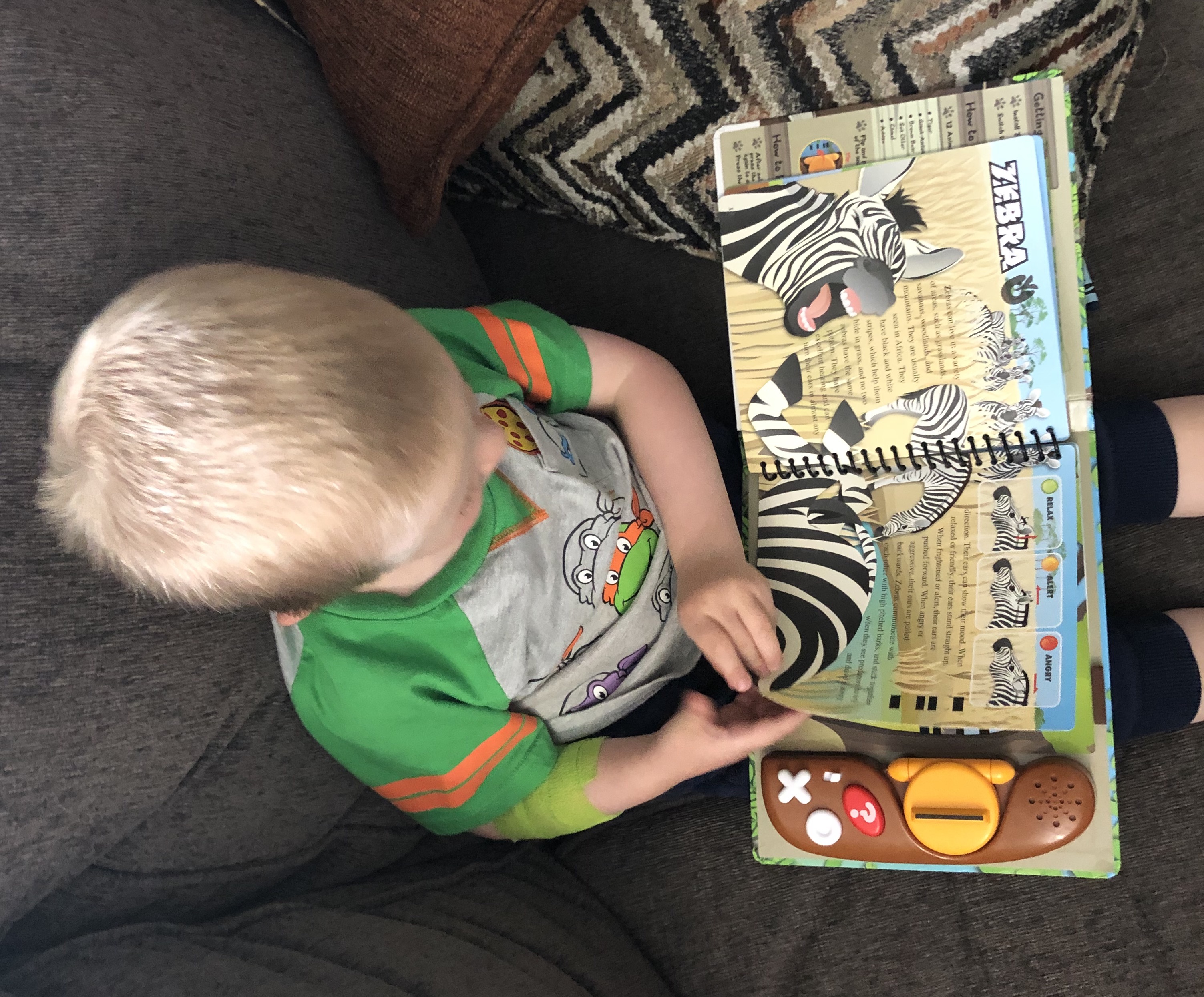
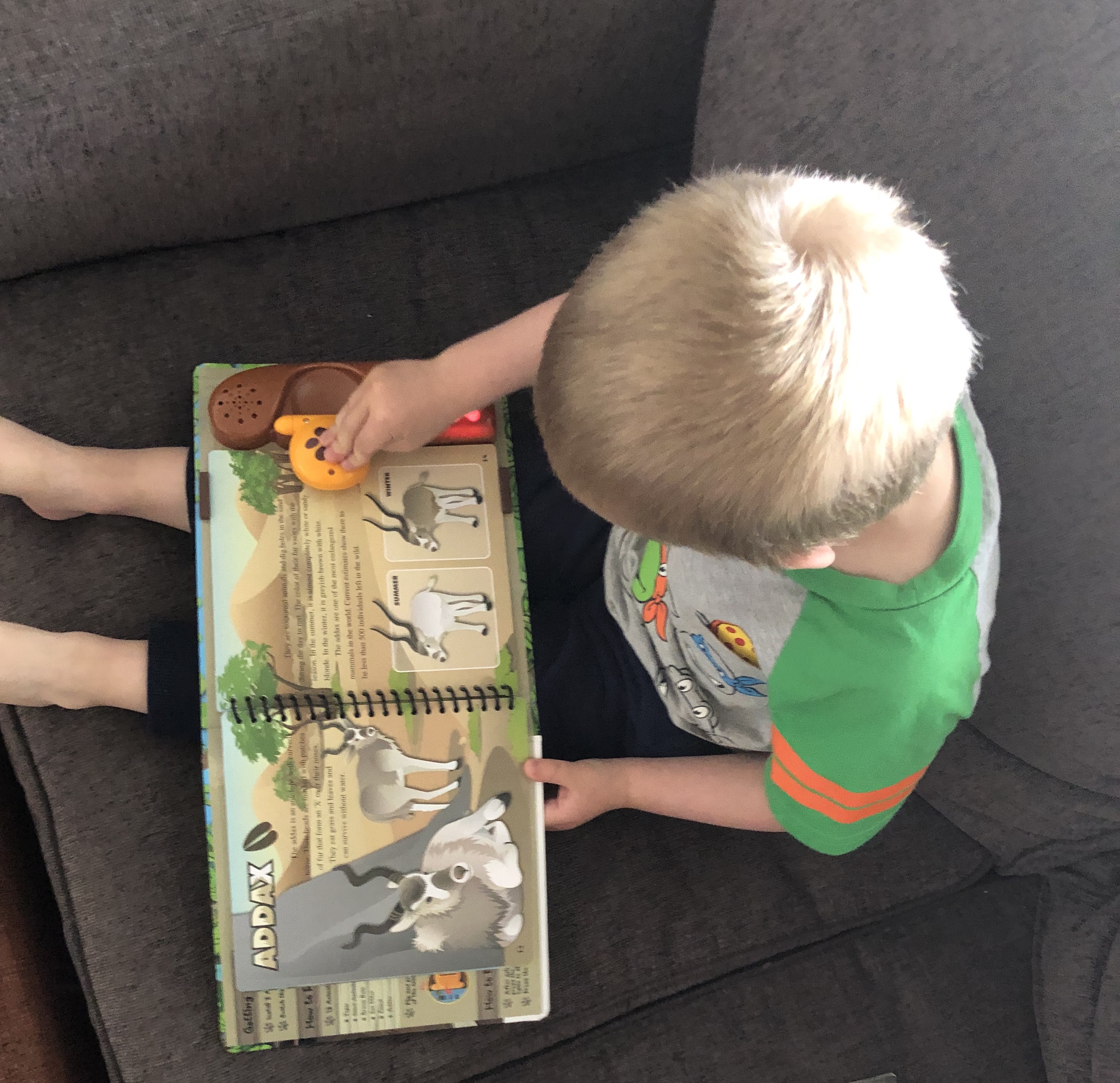
Ricki’s Review: About twenty minutes after my 3-year-old started playing with this book, I messaged Kellee because I had to share about it. I wrote, “The Animal Kingdom book is SO COOL. He’s been playing with it for twenty minutes and hasn’t let his older brother have a turn. It would be so good for classrooms, too. It teaches reading comprehension really well!” Within about five minutes, Kellee had ordered one for her son, too. Although I was supposed to be reviewing this book alone, Kellee is joining me because she loved it just as much.

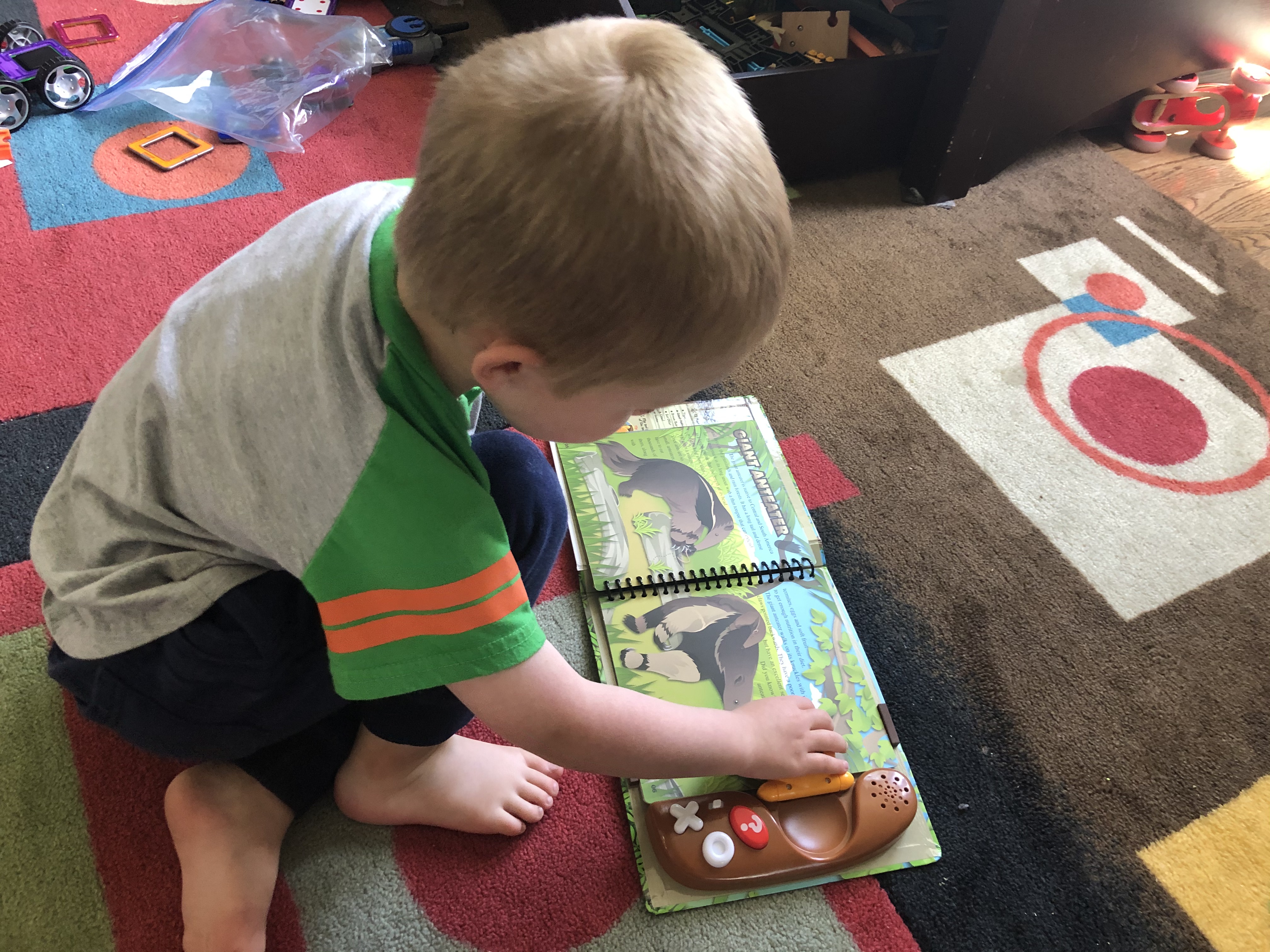
(This is how my 3yo started the book—he immediately placed it on the ground to start reading.)

This is a book (and product) worth sharing about. As you can see in the video above, the pages offer fascinating facts about animals, and the reader is clear and easy to understand. My kids listen intently to the reading, and they are always excited to take the true/false quiz to test their listening skills. Soon, my six-year-old will be able to easily follow along as she reads aloud. My three-year-old typically guesses the answers to the quiz (the concept of true/false is still a bit confusing for him), and my six-year-old is able to practice his listening and reading comprehension skills independently. The both love this product equally, despite their different reading abilities. Even my one-year-old gets a kick out of pushing down the reader to get her talking!

(20 minutes later…)

(I kid you not, 20 minutes after that…)

My three-year-old spent almost an hour with this book and even moved to a comfier spot. It is a favorite in our toy room (they consider it to be a toy!). We’ll be gifting this book to friends. (And I plan to write an email begging Best Learning to produce more of these books.)

Kellee’s Review: Like Ricki said, she shared with me how informative and engaging this book was, so I immediately jumped on and bought one for Trent. Trent adores animals but is more interested in watching documentaries and shows about them than reading about them (he is a fiction loving reader), but this book defies his normal interests, and he loves learning everything he can about each of the animals in the book. He’ll re-listen to pages, redo the quiz, and look back at the images over and over. This book is a hit in our household (it is in the living room because he keeps grabbing it to bring out here as a choice activity), and I, like Ricki, look forward to sharing as a gift and hoping for Best Learning to make more readers like this.

Teachers’ Tools for Navigation: ELA teachers focus on reading, writing, speaking, and listening (among the obvious other things like thinking). This is a beautiful example of a book that teaches listening. It would be a great learning tool to place at an independent or group station for reading comprehension. Alternatively, it could also be used for fast finishers. Even adults will find joy in this book.

Additionally, it would be a great mentor text for early education animal research projects. Students can emulate the format of a spread about an aimal of their choice.

andSignature

**Thank you to Best Learning for providing a copy of Animal Kingdom for review!**