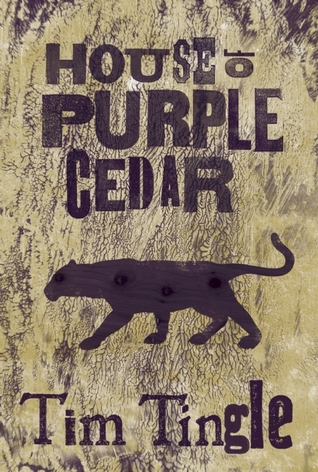
The House of Purple Cedar by Tim Tingle

Share

house of purple cedar

House of Purple Cedar
Author: Tim Tingle
Published: February 18, 2014 by Cinco Puntos Press

GoodReads Summary: “The hour has come to speak of troubled times. It is time we spoke of Skullyville.”

Thus begins Rose Goode’s story of her growing up in Indian Territory in pre-statehood Oklahoma. Skullyville, a once-thriving Choctaw community, was destroyed by land-grabbers, culminating in the arson on New Year’s Eve, 1896, of New Hope Academy for Girls. Twenty Choctaw girls died, but Rose escaped. She is blessed by the presence of her grandmother Pokoni and her grandfather Amafo, both respected elders who understand the old ways. Soon after the fire, the white sheriff beats Amafo in front of the town’s people, humiliating him. Instead of asking the Choctaw community to avenge the beating, her grandfather decides to follow the path of forgiveness. And so unwinds this tale of mystery, Indian-style magical realism, and deep wisdom. It’s a world where backwoods spiritualism and Bible-thumping Christianity mix with bad guys; a one-legged woman shop-keeper, her oaf of a husband, herbal potions, and shape-shifting panthers rendering justice. Tim Tingle—a scholar of his nation’s language, culture, and spirituality—tells Rose’s story of good and evil with understanding and even laugh-out-loud Choctaw humor.

My Review: It took Tingle fifteen years (and many experiences with a Choctaw storyteller) to write this story, and the thoughtfulness of the story makes this feel very true. While this book is marketed for adults, it most certainly has a young adult crossover audience. I was swept away by the lyrical beauty of the words. The book is quite magical. As I think back on the book, vivid scenes replay in my head. I had difficulty putting the book down because the characters were so real. I was wrapped in all of the subplots and did not want to leave the characters. It reminded me much of a John Steinbeck book—East of Eden, in particular. The evilness of Hardwicke in this book reminded me much of Cathy in East of Eden. When I came to the end of The House of Purple Cedar, I felt as if I’d read an epic—or something enormously important. The themes are left to the reader, they are varied, and they pour from the text. This complex story will remain with me for a long time.

Teachers’ Tools for Navigation: Most obviously, teachers could teach this book along with cultural stories from the Choctaw. They might look at reincarnation and its evolution in history and culture, too. Alternatively, teachers could ask students to examine age. What role does age play in this story, and how does it impact character? Teachers might have students read more about the Indian Boarding Schools and their impact on the Native American community.

Discussion Questions: What does Amafo teach us? Would you do the same in his position? How do his lessons impact the rest of the story?; How does Tingle vividly depict characters in ways that make this story come alive? What makes these characters feel so real?; What is Maggie’s purpose in the story? What does she teach us?; What role does family play in this text?

We Flagged: I am choosing a quote that shows just how beautiful Tingle’s language is: “His hand gripped her shoulder and strong fingers seized her upper arm. He flung her on her back and a hot river of strength surged through her. He was massive and his figure blocked the sky.”

Read This If You Loved: Books by Sherman Alexie, House Made of Dawn by M. Scott Momaday, Books by Louise Erdrich, East of Eden by John Steinbeck,

Recommended For:
 closereadinganalysisbuttonsmall litcirclesbuttonsmall classroomlibrarybuttonsmall

RickiSig

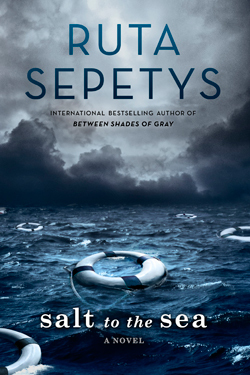
Salt to the Sea by Ruta Sepetys

Share

salt to the sea

Salt to the Sea
Author: Ruta Sepetys
Published: February 2nd, 2016 by Philomel Books

GoodReads Summary: The author of Between Shades of Gray returns to WWII in this epic novel that shines a light on one of the war’s most devastating—yet unknown—tragedies.

In 1945, World War II is drawing to a close in East Prussia, and thousands of refugees are on a desperate trek toward freedom, almost all of them with something to hide. Among them are Joana, Emilia, and Florian, whose paths converge en route to the ship that promises salvation, the Wilhelm Gustloff. Forced by circumstance to unite, the three find their strength, courage, and trust in each other tested with each step closer toward safety.

Just when it seems freedom is within their grasp, tragedy strikes. Not country, nor culture, nor status matter as all ten thousand people aboard must fight for the same thing: survival.

My Review: This is a book about humanity. Each voice serves a unique purpose to foster a complete picture of this great tragedy in history. The characters feel real, and their stories and perspectives are so different that readers are able to fully understand a diversity of experiences toward the war. Wow, wow, wow. I don’t feel that summarizing or reviewing this book will even do it justice. I felt like I couldn’t eat or sleep until I finished it. Salt to the Sea takes readers on an epic adventure and throws them for an emotional tailspin. After I closed the cover, I was reeling.  The language is powerful and the story is captivating.

Ruta Sepetys holds a special place in my heart. She is a powerful force in historical fiction, and this book is no exception. Several years ago, I was fortunate to be sharing a drink with Ruta at the ALAN cocktail party. When I asked her what she was working on, her eyes glinted as she talked about the concept of this book. She felt a connection to this tragedy, and while nothing had been written at the time, I knew it would be a remarkable novel. For the next several years, I thought about the way Ruta described the historical event, and I consistently checked her pages to see if I would see any further information about its progress. Several years later, I would (fortunately) receive this book in the mail. Boy was it worth the wait.

Teachers’ Tools for Navigation: The teaching opportunities for this book are endless. I would love to use this book to teach the theme: What does it mean to be human? or What does it mean to be a good person? Then, I might pair other texts (e.g. Kite Runner by Khaled Hosseini) and create a text set to consider these themes. The perspective and voice of these characters are strong, and I imagine rich classroom discussions about the ways these four characters show us a slice of humanity. (One of the four main characters is debatably evil, and this would offer excellent, critical conversations). Beyond these four characters, readers might consider the minor characters of this text (or tangential war figures, such as Hitler or Stalin). Are humans innately selfish? Are the innately good? Are we all flawed? Are there any universal characteristics amongst these characters, or are they too different?

Discussion Questions: How does the author balance historical information and story? What tools does she use to do this?; Why do you think the author chose to feature four points-of-view rather than one? Does it add or detract from the story? What similarities do you see across these voices? What differences?

We Flagged: “Survival had its price: guilt.”

*Quote taken from an advanced reader copy. It may change after publication.*

Read This If You Loved: Between Shades of Gray by Ruta Sepetys; The Watch that Ends the Night by Allan Wolf; The Book Thief by Markus Zusak; A Night to Remember by Walter Lord; The Guernsey Literary and Potato Peel Pie Society by Mary Ann Shaffer; Schindler’s List by Thomas Keneally; Code Name Verity by Elizabeth Wein

Recommended For:

 closereadinganalysisbuttonsmall litcirclesbuttonsmall classroomlibrarybuttonsmall

RickiSig

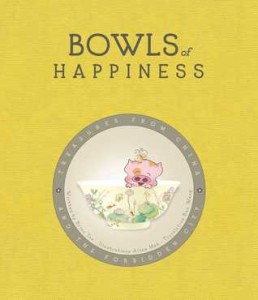
Bowls of Happiness: Treasures from China and the Forbidden City by Brian Tse

Share

Bowls of Happiness

Bowls of Happiness
Author: Brian Tse, Illustrator: Alice Mak, Translator: Ben Wang, Editor: Nancy S. Steinhardt
Published: November 17, 2015 by China Institute in America

GoodReads Summary: Piggy’s mom loves her so much that she has decided to make a special porcelain bowl just for her. As mom makes the bowl, Piggy enters the world being painted on its outside. There she meets and learns about the animals used on these Chinese artworks and the messages of happiness and good-fortune that they convey.

Created by internationally renowned children’s book artists Brian Tse and Alice Mak, this book teaches children about Chinese artwork and culture and their universal spirit of generosity, love, and respect for nature. The lovable illustrations are coupled with photographs of porcelain art found in the Palace Museum’s collection. Children will learn about how bowls are made and be able to draw their own Bowl of Happiness after they have finished reading the story.

My Review: It was a lot of fun reading this book. It begins with an imaginative story reflecting the designs on a Chinese bowl. Then, in the second part, the book shifts to informational nonfiction. The author shares a variety of different bowls and their meaning. In the last portion, the readers are given instructions on how to create their own bowls. This book taught me a lot about these bowls of happiness, and I wanted to make my own bowl! Readers will enjoy learning about these bowls and will be intrigued to learn and research more.

Teacher’s Tools for Navigation: I would love to teach a book like this one. I’d have students begin by researching even more about these bowls, their symbolic meaning. Then, I might have the students create drafts of their own bowls. The book provides a wealth of information about the symbols and colors of bowls, and students could select their own designs and symbols. While their bowls would not be authentic and teachers would have to be careful to explain appropriation, it would teach the students to enjoy and appreciate another culture and reinforce their knowledge about the bowls.

Discussion Questions: What symbols do you find most interesting? If you could have any of the bowls in the book, which would you pick, and why?; What symbols are used in your culture? How might they compare to the symbols on these bowls?; Why do you think the author divided the book into such different sections?

We Flagged: “These two bowls were not used for eating. Chinese emperors used them for important rituals that paid respect to Heaven and Earth.”

Read This If You Love: Books about culture, history, art, or museums

Recommended For:

  classroomlibrarybuttonsmall

RickiSig

Text Sets for Teachers: Good vs. Evil: Exploring Morality Through the Holocaust

Share

Text Set Button

Good vs. Evil: Exploring Morality Through the Holocaust
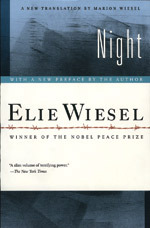
Text Set for Night by Elie Wiesel
created by Kellie-Anne Crane

It is of the utmost importance that teachers prepare their students for their futures, whether that includes continuing their education or entering the work force. No matter what path students choose to take, there are certain concepts that all people need to recognize and consider as human beings, like the concept of morality. Everyone is confronted with moral decisions on a daily basis—whether it is a monumental decision, or even something as small as deciding to give the last cookie to your sister or to keep it for yourself. The events of the Holocaust and World War II are incredibly essential to study, not only because these events are our shared history but because of the unbelievable turmoil faced by millions. Teachers must help students to understand the gravity of this time period and work to teach it to students in a way that is both approachable and comprehensive.

By exploring the concept of morality through the Holocaust, students will be educated on what is perhaps the greatest tragedy of mankind and be forced to contemplate the morality of multiple scenarios throughout the holocaust. As upstanding citizens, we would like to think that we do not need to worry about anything like the Holocaust—but the fact remains that it happened less than a century ago. Teachers must help students examine the decisions and events that occurred during this vile period on a personal and real level so that they can gain a deeper understanding of the moral struggle faced during the era. Our youth must be educated on our past, both good and bad, to ensure that a similar situation such as this never arises.

Anchor Texts (although other texts may be used!):
Night by Elie Wiesel
night

Novel Excerpts
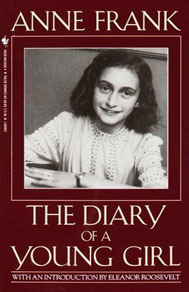
The Diary of a Young Girl by Anne Frank
anne frank
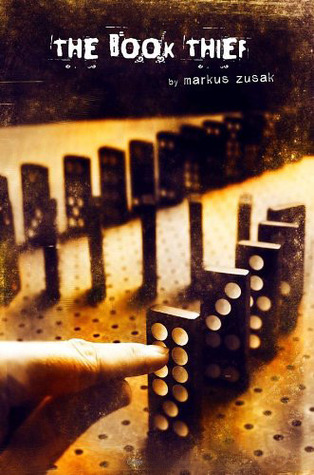
The Book Thief by Marcus Zusak
book thief
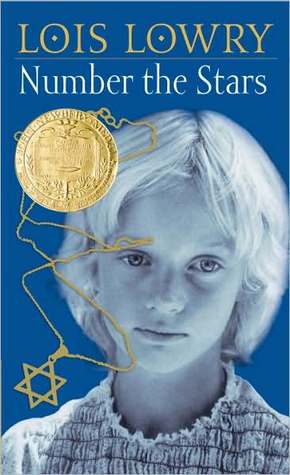
Number the Stars by Lois Lowry
number the stars

Graphic Novel
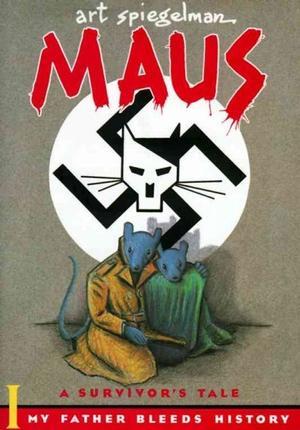
Maus I: A Survivor’s Tale by Art Spiegelman
maus

Picture Books
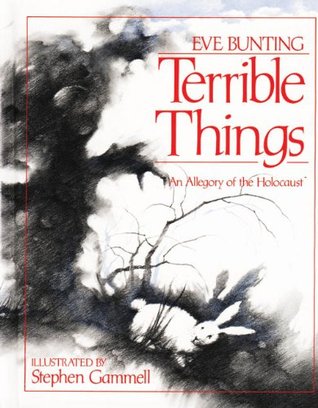
Terrible Things by Eve Bunting
terrible things
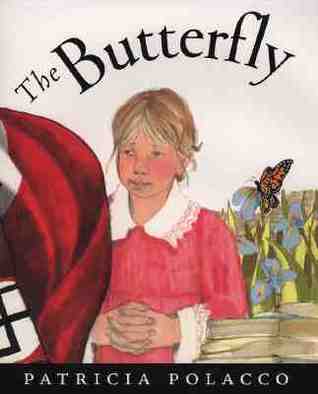
The Butterfly by Patricia Polacco
butterfly
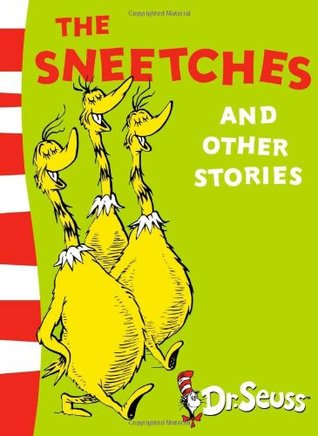
The Sneetches by Dr. Seuss
sneetches

Pledge of Allegiance”

Songs
“Empty Chairs at Empty Tables” from Les Misérables
“Hide and Seek” by Imogen Heap

Speeches
Winston Churchill’s First Speech as Prime Minister on May 13, 1940
President Roosevelt’s Speech to Congress on December 8, 1941
Adolf Hitler’s Speech Declaring War Against the United States on December 11, 1941
Pope John Paul II’s Speech at Israel’s Holocaust Museum March 23, 2000

Poems
“The Creed of a Holocaust Survivor” by Alexander Kimel
“The Action in the Ghetto of Rohatyn, March 1942” by Alexander Kimel

Charts
Lawrence Kohlberg’s Stages of Moral Development

Online Resources
Timeline from 1918-2000
Viktor Frankl: Why Believe in Others TED Talk
“‪Oprah and Elie Weisel at Auschwitz” (1:20- 6:05)
“Man that saved hundreds of children from the Holocaust surprised by them decades later”

Articles
“Ghettos Under Nazis” by Susan D. Glazer
“Baking Saved this Man during the Holocaust, and Is Still His Livelihood” by John M. Glionna
“3 Famous Moral Dilemmas That Will Really Make You Think” by Lenna Son
“German Woman, 91, is Charged with 260,000 Counts of Accessory to murder as Prosecutors Accuse Her of Being a Nazi SS Radio Operator Who Served in Auschwitz”

Guiding Questions

  • Are there tenets of morality that are universal?
  • Can a person’s sense of morality be altered by their situation or surroundings?
  • Did the conditions of the holocaust change people’s morals? How so?
  • Are there good and bad people?
  • What can we learn from the tragedy of the Holocaust?

Writing Prompts

  • Consider one of the famous moral dilemmas we have discussed. What do you believe is the right answer in this context? Why
  • What makes someone a good person? A bad person? Are there clear binaries between the two?
  • Choose a text (novel, story, video, song, etc.) from class that has helped to give you a better understanding of the holocaust. What did you learn from this text? Why is it important?
  • Choose a quote or passage from Night. What does this scene say about morality?
  • Is there any moral(s) that you find to be universal, as in followed and accepted by everyone? What is it and why is it so widely accepted? If not, explain why you think there is no universal set of morals.

A special thanks to Kellie-Anne for this inspiring text set! We think this text set would be useful for many anchor texts! What do you think?

Kellee Signatureand RickiSig

Text Sets for Teachers: The Power of Words: Witnessing the Impact of Words

Share

Text Set Button

The Power of Words: Witnessing the Impact of Words
Text Set for The Book Thief by Markus Zusak
created by Kelly Markle

I chose this theme because I think that it is very important in The Book Thief and also important for confronting large events that based on control, such as the Holocaust. This theme could be used with almost any Holocaust text to highlight the psychological side of such a horrific time. The idea of “the power of words” is also something that would be very beneficial to talk about inside of a middle or high school classroom because it touches on issues that are extremely relevant to the students’ personal lives. This is a time of many insecurities and judgments, so it is a good way to explore this reality through other sources and texts. When designing the text set, I wanted to have a solid combination of historical and new sources that were relevant to what the students already know. I included musical sources, using a well-known song along with less popular songs that they may not know. I also did this by having a speech from Obama along with a speech by Hitler to highlight the fact that they are both very well spoken people and that they both have power in their words, but those words can be used to influence people differently.

When creating the set, I tried to start by thinking of activities that can be done based on this theme inside of the classroom. Then, I found sources to support those ideas, so that they were not thrown into a list that was nonsensical. This is important to my text set because many of the sources are videos and it is important to remember that there will be follow up activities that ask the students to write, respond, or participate in an activity based on what they are seeing so that it does not feel like they are only getting visual experiences. I also plan to print copies of lyrics to songs and speeches so that my students could read along and reference as the unit develops. I think that this theme lends itself to many different situations so that the discussions differ. There are also many levels of the influence words from a personal to a national level, which is something that is important to show students because one leads to another. This theme is relevant to the subject of English in general because if words did not have power, literature would not exist, and that could be used to help students realize the importance of the class and why books, poems, words endure.

Anchor Texts (although other texts may be used!):
The Book Thief by Markus Zusak
book thief

Novels
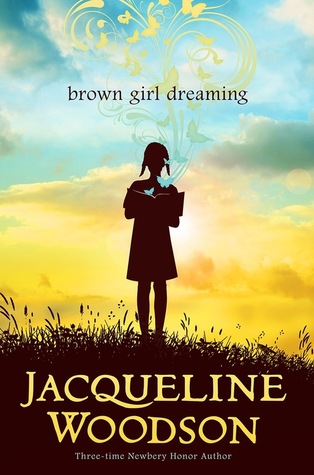
brown girl dreaming (excerpt) by Jaqueline Woodson
brown girl
The Diary of a Young Girl (excerpt) by Anne Frank
anne frank

Videos/Clips
Kid President: 20 Things We Should Say More Often
Blind Man: The Power of Words
Hannah Brencher’s Ted Talk
Fight Song in Spanish
Why Sign

Speeches
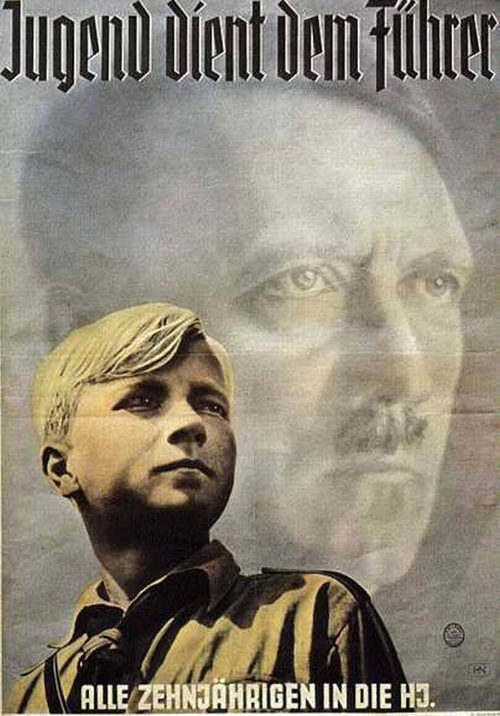
Hitler Youth Speech
Obama Campaign Speech
Obama: “Don’t Tell Me Words Don’t Matter”
Miss Teen USA 2007- South Carolina
“I Have a Dream”

Songs
“Consequence of Sounds” – Regina Spektor
“Same Love” – Macklemore
“A Hard Rain’s Gonna Fall” – Bob Dylan
“It’s Alright Ma” – Bob Dylan
“Misheard Song Lyrics”

Poems
“Jabberwocky” by Lewis Carol
“Every Kid Needs a Champion” by Rita Pierson
“The Power of Words” by Letitia Landon

Timelines
Holocaust timeline to represent how quickly Adolf Hitler gained power over the people

Histories
Churchill: The Power of Words

Images
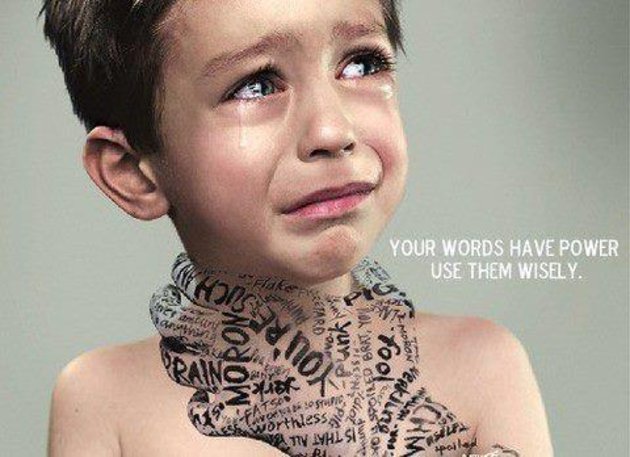
10-Youth-Serves-the-Leader-All-10-Year-Olds-in-the-Hitler-Youth boy words

 Short Stories
“The Children’s Story” by James Clavell
“The Pledge of Allegiance”

Activities (Some Are Teacher Created/Shared)
How words are added to the dictionary
Word poems
Favorite Song Activity
Mein Kampf– 4 Corners Activity
Word Play (laughter/slaughter)
Label Game: Each student is randomly assigned one word to define
Brenna’s lesson with quotes about technology
Andrew’s mismatch word activity

Guiding Questions

  • How many words does it take to make a difference?
  • What is the value in the words that are not said? Is tehre any? When should silence prevail?
  • Why do words hold such power?
  • Is this power a good thing or a bad thing? Does the good outweigh the bad, or vice versa?
  • Do words have the same impact no matter who says them? Does definition of a word matter, or the background and emotion behind them?

Writing Prompts

  • Have you ever experienced a time when you have been influenced by words in some way? Have you ever used words to influence others?
  • Create a poem, song, speech, or advertisement that confronts an issue that you find important and use it to convince the readers to feel the way that you do about it through words. Take a strong stance.
  • After reading The Book Thief and completing this unit, what have you realized about the power of words that you did not think about before?
  • Make a list of single words that you think have the most power and explain why.
  • Do you think that you were influenced by words growing up? Whose words? What affect did they have on you? Does this help or hurt society as a whole?

A special thanks to Kelly for this phenomenal text set! We think this text set would be useful for many anchor texts! What do you think?

Kellee Signatureand RickiSig`1111`

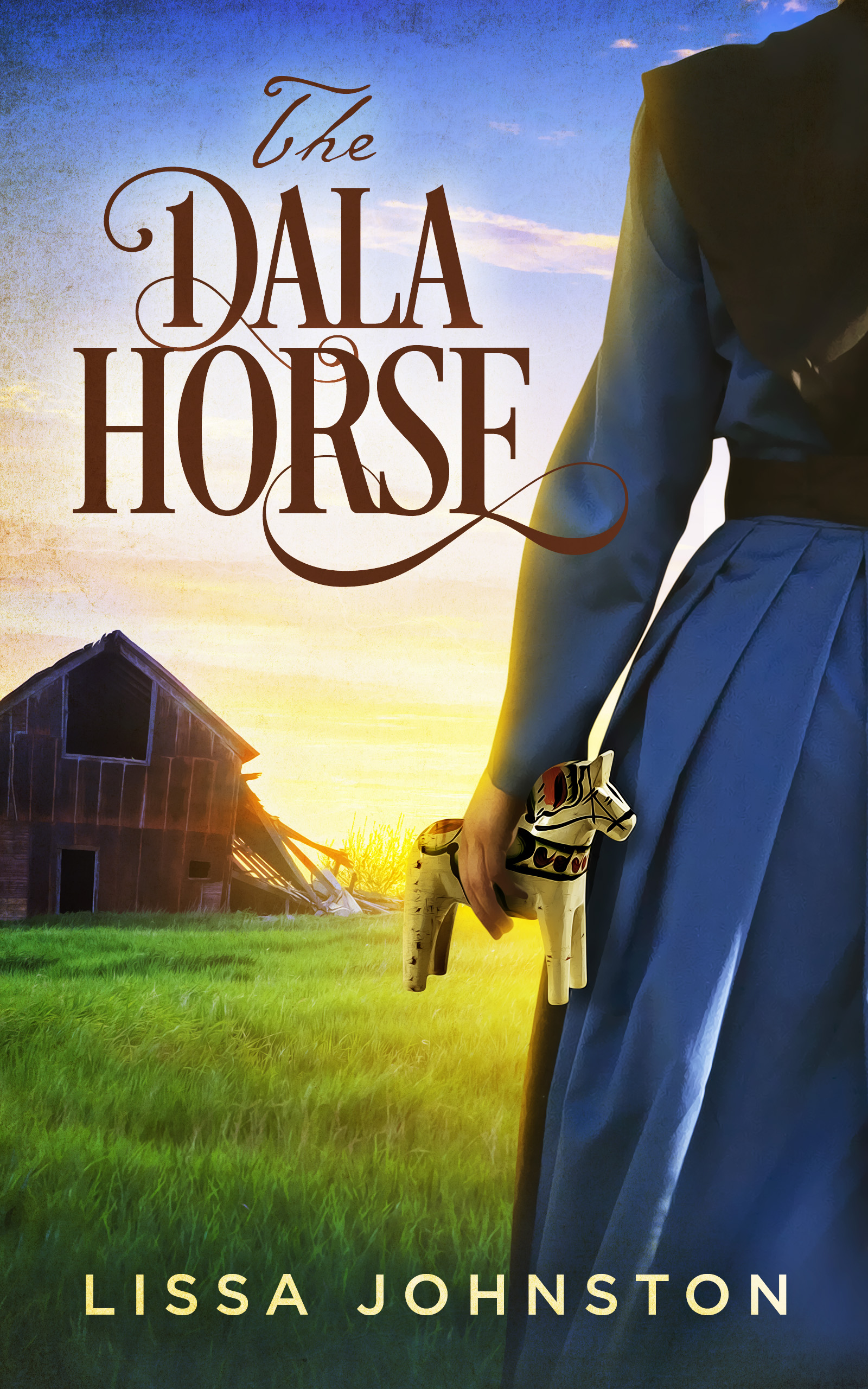
Author Guest Post!: “Where Are You From? Honing Research And Evaluation Skills With A Family Tree Project” by Lissa Johnston, Author of The Dala Horse

Share

“Where Are You From? Honing Research And Evaluation Skills With A Family Tree Project”

by Lissa Johnston

It’s human nature to be curious about each other. In our caveman days, the ability to detect whether someone was similar to you or very different from you (friend or foe?) was an important survival skill. These survival instincts remain with us today, but we go about evaluating ourselves a little differently. We still observe and make judgments about our fellow humans based on previous experience. As mankind has evolved, we have added the wonderful gift of language – now we can also ask questions! Among adults we see this in the tried-and-true conversation starter,‘what do you do’? With kids, that question doesn’t work as well because most of them ‘do’ the same thing – they’re students. More (and better!) questions are required. A similar question that works well in this process of discovery is not, ‘what do you do?’, but rather: ‘where are you from?’

You may think this is a simplistic question, yielding little in the way of learning opportunities. Everyone knows where they are from, you might be thinking. What’s so special about that? I would argue this one simple question can be more enlightening than it seems, for at least two reasons. One: not everyone, especially not children, are aware of where they are ‘from’. Secondly, when I ask ‘where are you from?’, I hope to encourage you to dig into your family tree and tell me where you are really FROM.

The cool thing about this seemingly nosy inquiry is that it works equally well when turned upon one’s self. One of the main sources of inspiration for my latest book, The Dala Horse, was discovering one branch of my family tree was Norwegian. As a Native Texan growing up in a big city, it was something of a surprise to discover I had Scandinavian roots. The closest I had ever come to anything Norwegian was when the Cowboys played the Vikings, and that wasn’t very often.

Occasionally my younger school-age cousins will reach out to me with questions about our family tree for a class project. I am so thrilled that family tree projects are becoming commonplace in the classroom. It’s the perfect learning opportunity. It combines history, math, sociology, geography, and the golden ingredient: it’s all about the student!

The beauty of a family tree project is that it easily incorporated Into your existing reading plan. There’s no need to add or adjust the reading schedule unless you just want to. Once you start looking at your current assigned reading projects through family tree glasses, opportunities for tying into a family tree project abound. The connection is pretty obvious with social studies, history, or historical fiction books. But if you dig a little deeper, it can also be made with more mainstream books. Most have characters with a variety of ethnic backgrounds. If not, they may take place in locales that vary from yours. Either is a great jumping off point with this simple and adaptable question: ‘[character] in [book] is from [location]. Where are you from?’ And if your current assigned reading is somewhat homogenous, ask the students to write their own version of the story, putting it in a different locale or time period that has some connection to their own family tree.

Some additional ideas for incorporating a family tree project into your lesson plans:

  • Have students work up a family tree project going as far back as they can. It’s okay if it’s only two or three generations. Question marks in the family tree are okay. That happens to professional genealogists all the time!
  • Pre-select a 20 year time period (1900-1920; 1960-1980). Have the students create a fictional biography about one of the family members who was born within that time period. Extra credit if the story correlates with the age that person would have been within that era. For example, if teacher has selected the era 1940-1960, and Uncle Kenneth was born in 1941, his bio should focus on what he would have been doing from age 0-19. Hint: best to keep this within the last 100 years to make family tree research a little easier.
  • Create some tickets, each with different eras written on them. Number of tickets should equal or exceed number of students in class. For example if you have 30 students, create 35 or so tickets. Divide total number of tickets into 3-4 different eras. Write the eras on the tickets and have students draw out of a jar for what era they will be writing about, again featuring a member of their family tree who lived within that era. This helps spread the research around so that everyone is not looking for the same handful of books on a narrow slice of shelving in your library. You can have them work together in groups, or as individuals. The groups can be organized so that each group is working on the same era so that you have a horizontal storyline. Or, group composition can be completely random so that you might end up with a more vertical storyline for the project within that group: one from 1920-1940; 1940-1960; 1960-1980; and so forth.
  • Students select a person from their family tree. Match something about this person with a similar topic from your school library and write a review of this book. Be sure to include the connection with your family/why you chose it. For example, perhaps Granny Louise grew up on a dairy farm. Select a book about farms, or cows, or the state or city where she lived.
  • Occasionally some students will have some difficulty tracing their family tree back very far. To avoid this issue, make the entire project about fictional or non-fictional characters that THEY get to choose. Create an imaginary family tree for that person going back three generations (self, parents, grandparents). Although the characters will be fictional, their significant life events (birth, marriage, school, death), geography, occupation, etc. must line up more or less correctly with the fictional character. So for example a fictional family tree based on Abraham Lincoln would have a very different set of facts than, say, a fictional family tree of LeBron James.
  • I did mention math, up there, didn’t I? So I better include a few math suggestions. Compile a list of the various ethnic identities in your class based on what the students have uncovered going back to their grandparents’ generation. Which group is the largest? Smallest? How would you calculate these two numbers into percentages? Extra points for determining how your class’s stats line up with similar statistics locally and/or nationwide. Extra points for discovering what other parts of the country have similar groups. In other words, if the smallest percentage represented in your class is of Italian ancestry, where are the largest concentrations of Italian immigrants in the US?
  • Place all ethnic groups represented by your students in a jar. Draw three. Have students research whether there are any businesses such as shops or restaurants in your area that share a common heritage with these three.
  • Reverse that project. Have the class compile a list of several shops and restaurants in your town. Have them research the ethnic groups they represent.
  • Family tree programs and software are very popular now. If your students are old enough, you may lead them in researching family tree records online. In order to avoid any privacy concerns you can easily keep it very general and just look at for example census records for your town going back however far. A fun activity with census records is looking at people’s professions. If accessing these programs is not possible, allow family interviews instead.
  • One of the activities I suggest in the book is a good example of demonstrating how cultural traditions persist through time. Cultural traditions of Norwegians in Texas might seem an obscure subset, until you start brainstorming how many of our traditions we follow and enjoy share today had their roots in other ethnic groups. Challenge students to list the various ethnicities represented in the classroom. Pair these with traditions familiar to many. For example, St. Patrick’s Day is an Irish tradition. Mardi Gras = French. Kwanzaa = African American. I mentioned the Minnesota Vikings earlier. Sports teams often have ethnic cultural connections and are very familiar with many students.
  • Popular songs, artists, even instruments are a great resource for cultural variety. What are the origins of the guitar? Drums? What type of music is traditional in Poland, or India?
  • I’ve saved my favorite activity for last. After completing their family tree research, each student must find something in their research that connects them with at least one other student. For example, perhaps student 1 had a grandfather who was in the Navy during World War II, and student 2 had an ancestor who emigrated to the United States after World War II. Be lenient with the connections. This is a great activity for class-wide brainstorming. A spider diagram on a white board or any display that could be left up for a few days would be ideal for this. The project is complete when each student’s name is represented and linked to someone else’s in the spider diagram.

My wish for students is that they experience the eye-opening discovery that even though some of us may look very much alike on the outside, we may be very different on the inside. And of course, the opposite is true! Sometimes the people who look the most different from us on the outside are the ones with whom we find we have the most in common. There may not be many of you reading this now who have Norwegian ancestors who settled in Texas, like I do. But I bet there are plenty of you whose ancestors came here from somewhere else – also like me!


About The Dala Horse

10-year-old Kaya Olson lives in a small Norwegian immigrant settlement in
post-Civil War Texas. When her mother is killed in a stage coach robbery,
Kaya feels responsible. Can she uncover the secrets her family is keeping
to solve the mystery surrounding her mother’s death?

Thank you to Lissa for these great research and evaluation skills!

RickiSigandKellee Signature


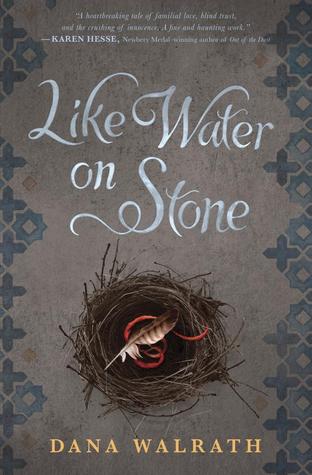
Like Water on Stone by Dana Walrath

Share

like water on stone

Like Water on Stone
Author: Dana Walrath
Published: November 11th, 2014 by Delacorte Press

Summary: Blending magical realism and lyrical free verse, this is an intense survival story of three siblings caught up in the horrific events of the Armenian genocide of 1915.

It is 1914, and the Ottoman Empire is crumbling into violence.

Beyond Anatolia, in the Armenian Highlands, Shahen Donabedian dreams of going to New York. Sosi, his twin sister, never wants to leave her home, especially now that she is in love. At first, only Papa, who counts Turks and Kurds among his closest friends, stands in Shahen’s way. But when the Ottoman pashas set their plans to eliminate all Armenians in motion, neither twin has a choice.

After a horrifying attack leaves them orphaned, Shahen and Sosi flee into the mountains, carrying their little sister, Mariam. Shahen keeps their parents’ fate a secret from his sisters. But the children are not alone. An eagle named Ardziv watches over them as they run at night and hide each day, making their way across mountain ridges and rivers red with blood.

Review: This is a beautiful book in verse that is set in the Ottoman Empire during the 1910s. It blends genres of magical realism and historical fiction. The point of view alternates with each poem, so I came to understand the differing perspectives of the family depicted in the text. The horrific genocide against Armenians is not common in literature, and this text sheds light on a time period that should be depicted more often. The strength of the children in this book will be inspirational to readers.

Teacher’s Tools for Navigation: I would recommend using this book as a literature circle text. Each group could be assigned a text that depicts a different genocide. This would provide rich opportunities to discuss parallels and differences across texts. Then, teachers might consider having students examine both historical and modern genocide. This might involve critical conversations about how we might work to promote social justice. They might even critique conceptions of social justice, such as slacktivism.

Discussion Questions: What does this story teach us about humanity?; How might a feminist read this text? What issues of gender emerge? Is this acceptable due to the historical setting of the text?

We Flagged:

“Hate makes jagged spikes of light,

and blame can crack the sky.

As pierced with wounds

from sharp white teeth,

the Ottoman air had ruptured.

Massacres would come again

as the drum-capped rulers

spread their hate” (p. 17-18).

Read This If You Loved: Tree Girl by Ben Mikaelsen; Audacity by Melanie Crowder; Requiem: Poems of the Terezin Ghetto by Paul B. Janeczko; Between Shades of Gray by Ruta Sepetys; Night by Elie Wiesel; A Long Way Gone by Ishmael Beah

Recommended For:

closereadinganalysisbuttonsmall litcirclesbuttonsmall classroomlibrarybuttonsmall

RickiSig