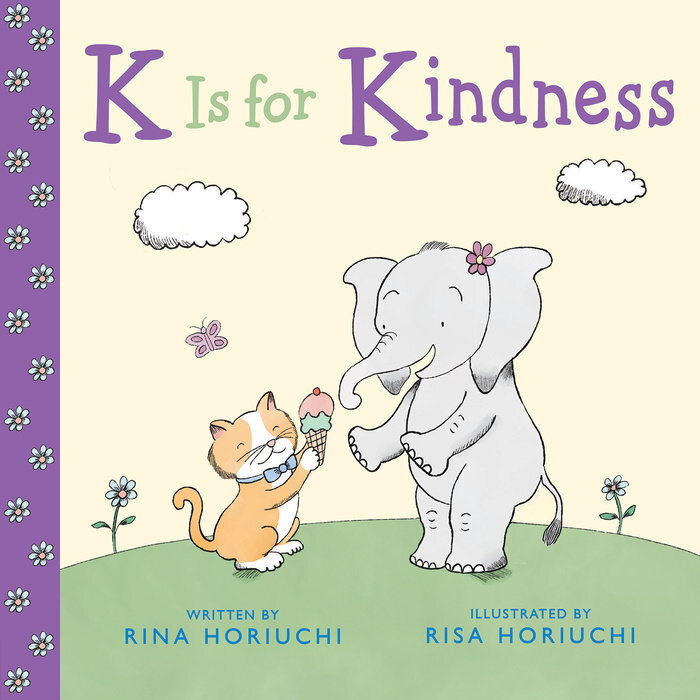
K is for Kindness by Rina Horiuchi, Illustrated by Risa Horiuchi

Share

K is for Kindness
Author: Rina Horiuchi
Illustrator: Risa Horiuchi
Published: April 26, 2022 by Viking Books

Goodreads Summary: Debut author/illustrator and sister duo have crafted a sweet ABC book that expresses how kindness can be found anywhere.

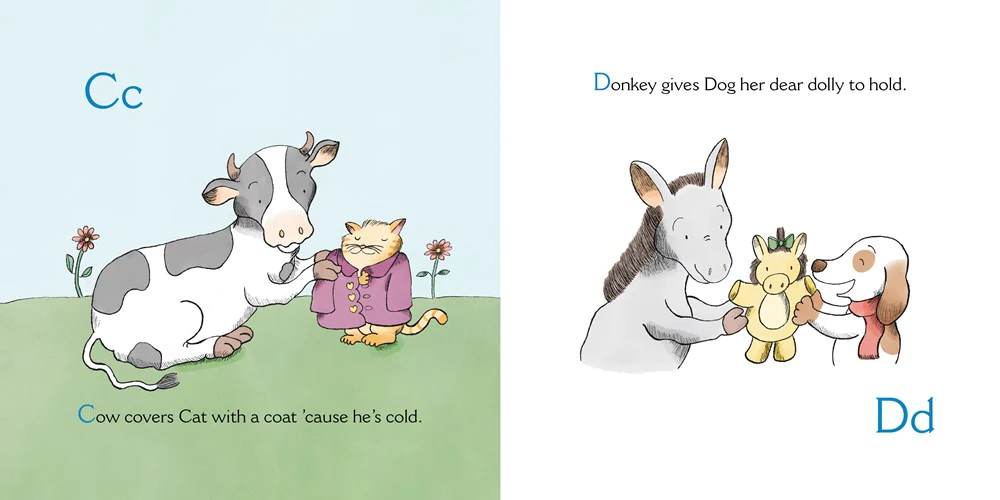
Ape picks an apple for Aardvark below.
Bat puts a bandage on Brown Bear’s big toe.

From aardvark to zebra, this delightful cast of animal characters illustrates the many ways to show kindness to others, while teaching the youngest readers their ABCs.

Debut author/illustrator and sister duo Rina Horiuchi and Risa Horiuchi have crafted a warm and tender gift that affirms kindness can be found anywhere.

Ricki’s Review: This book is just so charming. It is a great way to learn the alphabet along with all of the ways that we can be kind. The book doesn’t feel didactic, and it was enjoyable for me, as an adult reader. There aren’t just simple animal names on each page, but instead, they read like this: ““Narwhal takes Newt, his new neighbor, to lunch.” The repetition is really helpful for young readers. I’ve been having my 6-year-old read it to my 3-year-old, and it makes my heart swell. I love the ending, in which readers are asked how they are kind—this allowed for some great discussions in our house.

Teachers’ Tools for Navigation: This book inspires me to want to choose an emotion or an abstract concept to make my own alphabet book! Kids would have a lot of fun making a shared book together!

Discussion Questions: 

  • Which page was your favorite, and why?
  • How do you demonstrate kindness?
  • How do the pictures and words work together to create a vivid representation of kindness?

Flagged Spread: 

Recommended For: 

readaloudbuttonsmall classroomlibrarybuttonsmall 

RickiSig

**Thank you to Rina and Risa for this phenomenal book! It is a great addition to children’s literature!**

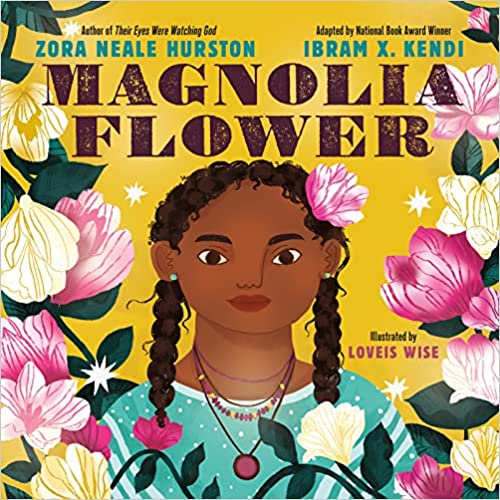
Magnolia Flower by Zora Neale Hurston, Adapted by Ibram X. Kendi, Illustrations by Loveis Wise

Share

Magnolia Flower
Written by Zora Neale Hurston and Adapted by Ibram X. Kendi
Illustrator: Loveis Wise
Published: September 6, 2022 by Amistad Books for Young Readers

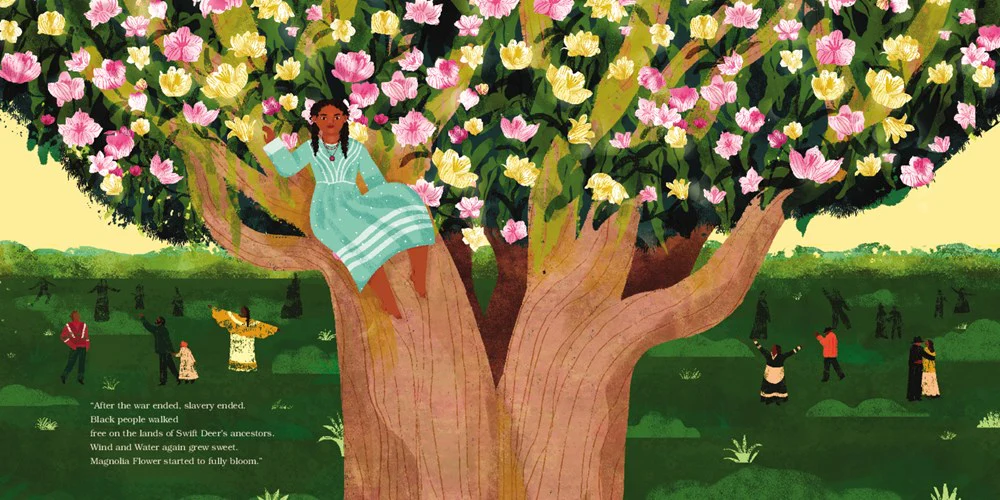
Goodreads Summary: From beloved African American folklorist Zora Neale Hurston comes a moving adaptation by National Book Award winner and #1 New York Times bestselling author of How to Be an Antiracist and Antiracist Baby, Ibram X. Kendi. Magnolia Flower follows a young Afro Indigenous girl who longs for freedom and is gorgeously illustrated by Loveis Wise (The People RememberAblaze with Color).

Born to parents who fled slavery and the Trail of Tears, Magnolia Flower is a girl with a vibrant spirit. Not to be deterred by rigid ways of the world, she longs to connect with others, who too long for freedom. She finds this in a young man of letters who her father disapproves of. In her quest to be free, Magnolia must make a choice and set off on a journey that will prove just how brave one can be when leading with one’s heart.

The acclaimed writer of several American classics, Zora Neale Hurston wrote this stirring folktale brimming with poetic prose, culture, and history. It was first published as a short story in The Spokesman in 1925 and later in her collection Hitting a Straight Lick with a Crooked Stick (2020).

Tenderly retold by #1 New York Times bestselling and National Book Award-winning author Ibram X. Kendi, Magnolia Flower is a story of a transformative and radical devotion between generations of Indigenous and Black people in America. With breathtaking illustrations by Loveis Wise, this picture book reminds us that there is no force strong enough to stop love.

Ricki’s Review: Magnolia Flower is a short story by Zora Neale Hurston, and it has been adapted into this picture book. The illustrations and words will appeal to kids, but as an adult, I felt like this was written for me, too. It has stunning figurative language, and the illustrations are absolutely beautiful. The author’s notes at the end helped me understand more about the book.

Teachers’ Tools for Navigation: Teachers might have students select a longer work (e.g. a short story) and adapt the book into a picture book. 

Discussion Questions: 

  • What does this story tell us about love?
  • What does this story tell you about history?
  • If you haven’t read the longer work, what do you think it might include, beyond this book?

Flagged Spread: 

Recommended For: 

readaloudbuttonsmall classroomlibrarybuttonsmall closereadinganalysisbuttonsmall

RickiSig

**Thank you go Leilani at SparkPoint Studio for providing a copy for review!**

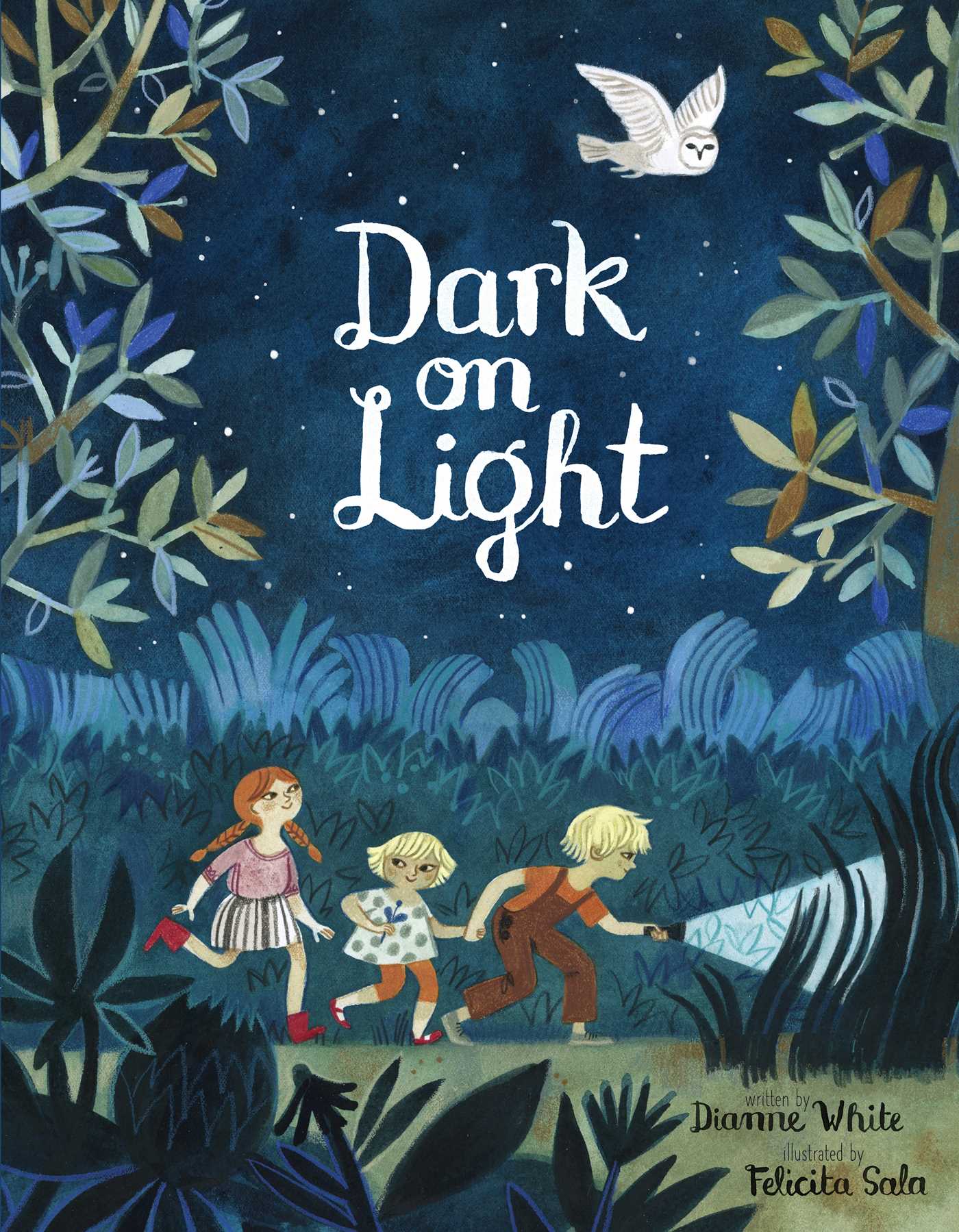
Dark on Light by Dianne White, Illustrated by Felicita Sala

Share

Dark on Light
Author: Dianne White
Illustrator: Felicita Sala
Publishing December 6, 2022 by Beach Lane Books

Summary: As the sun sets, three siblings discover nature’s nighttime beauty in this soothingly rhythmic and gorgeously illustrated bedtime picture book from the acclaimed author-illustrator team behind Green on Green.

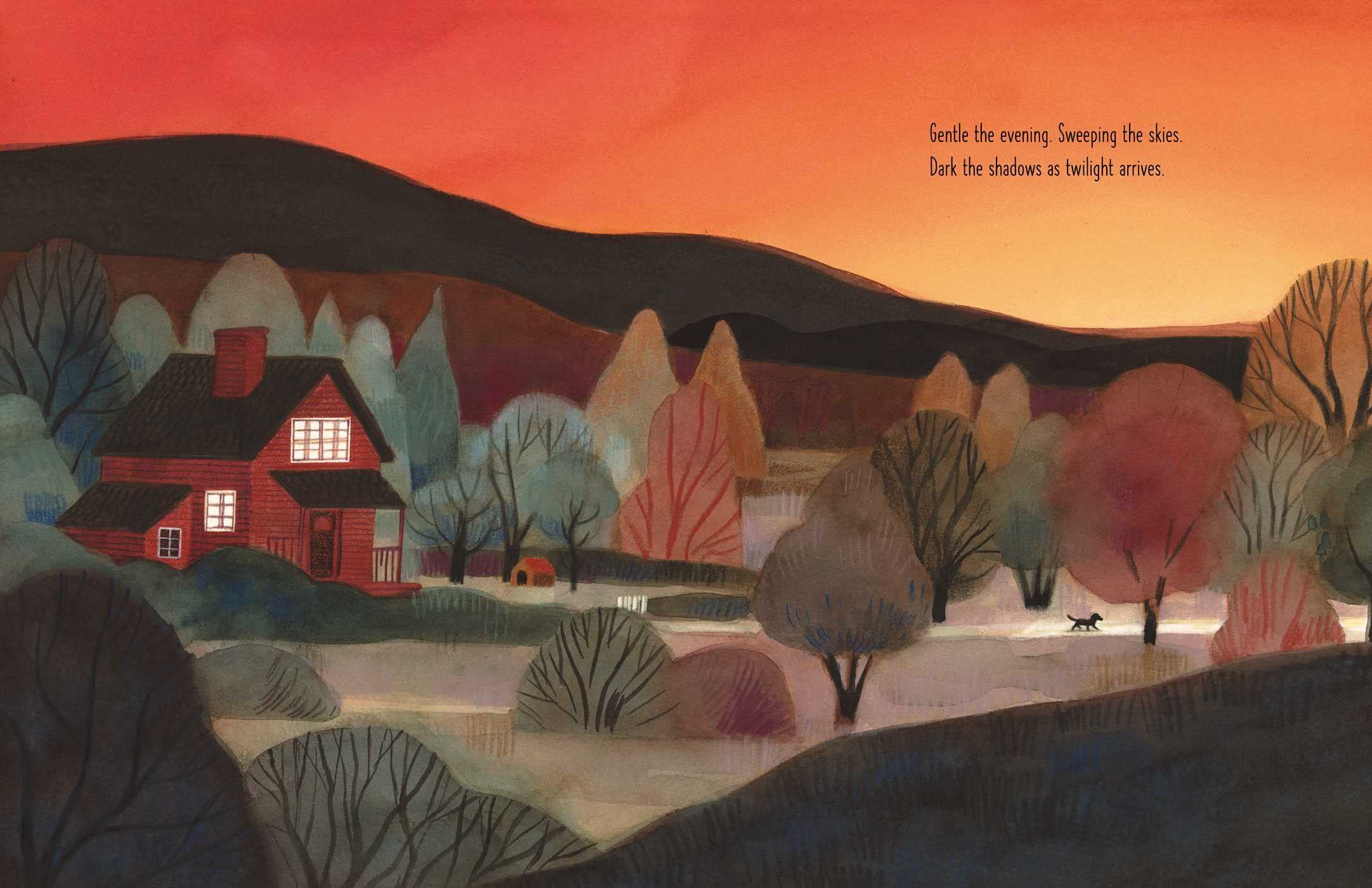
Gentle the evening. Sweeping the skies.
Dark the shadows as twilight arrives.
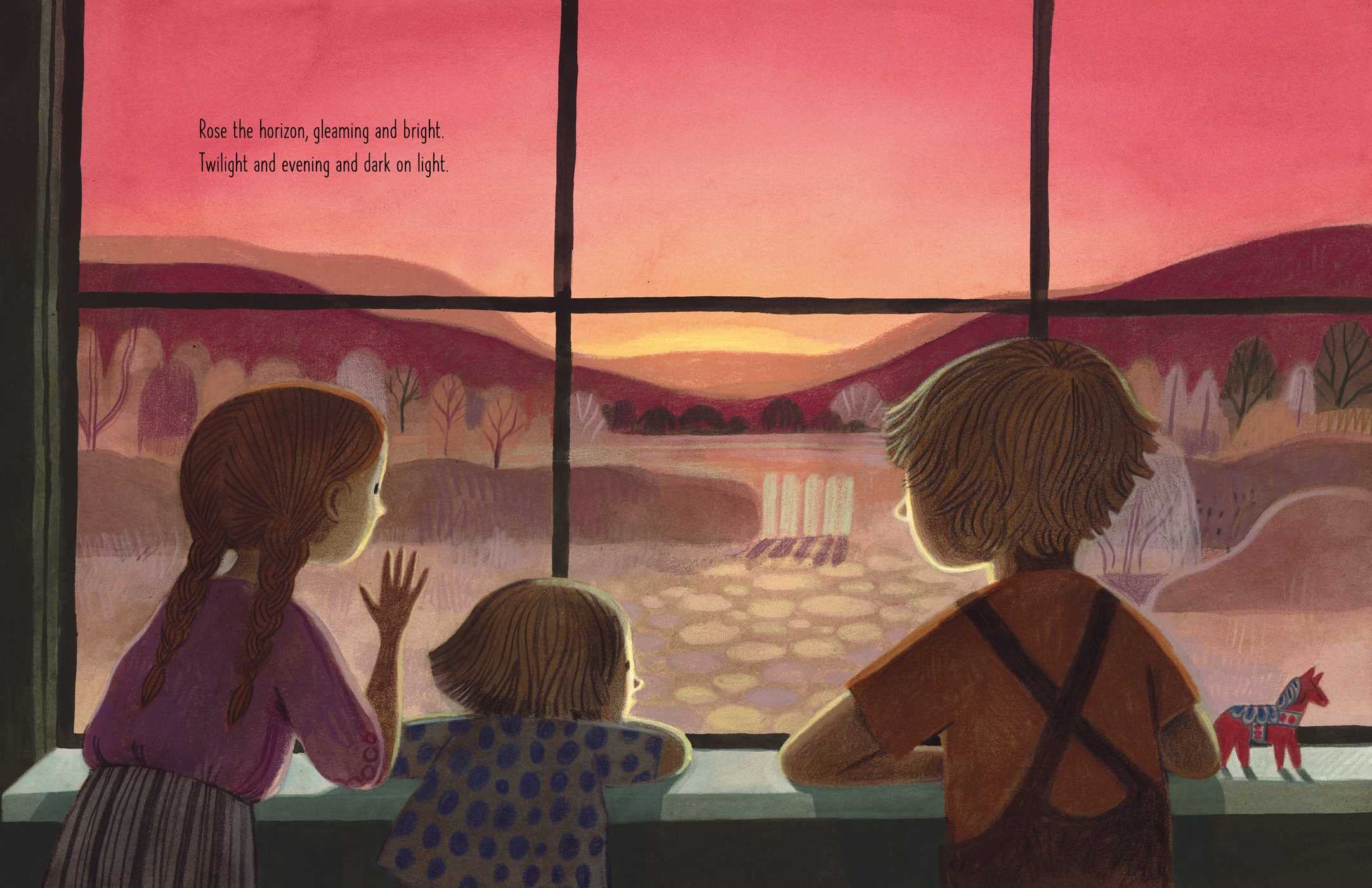
Rose the horizon, gleaming and bright.
Twilight and evening and dark on light.

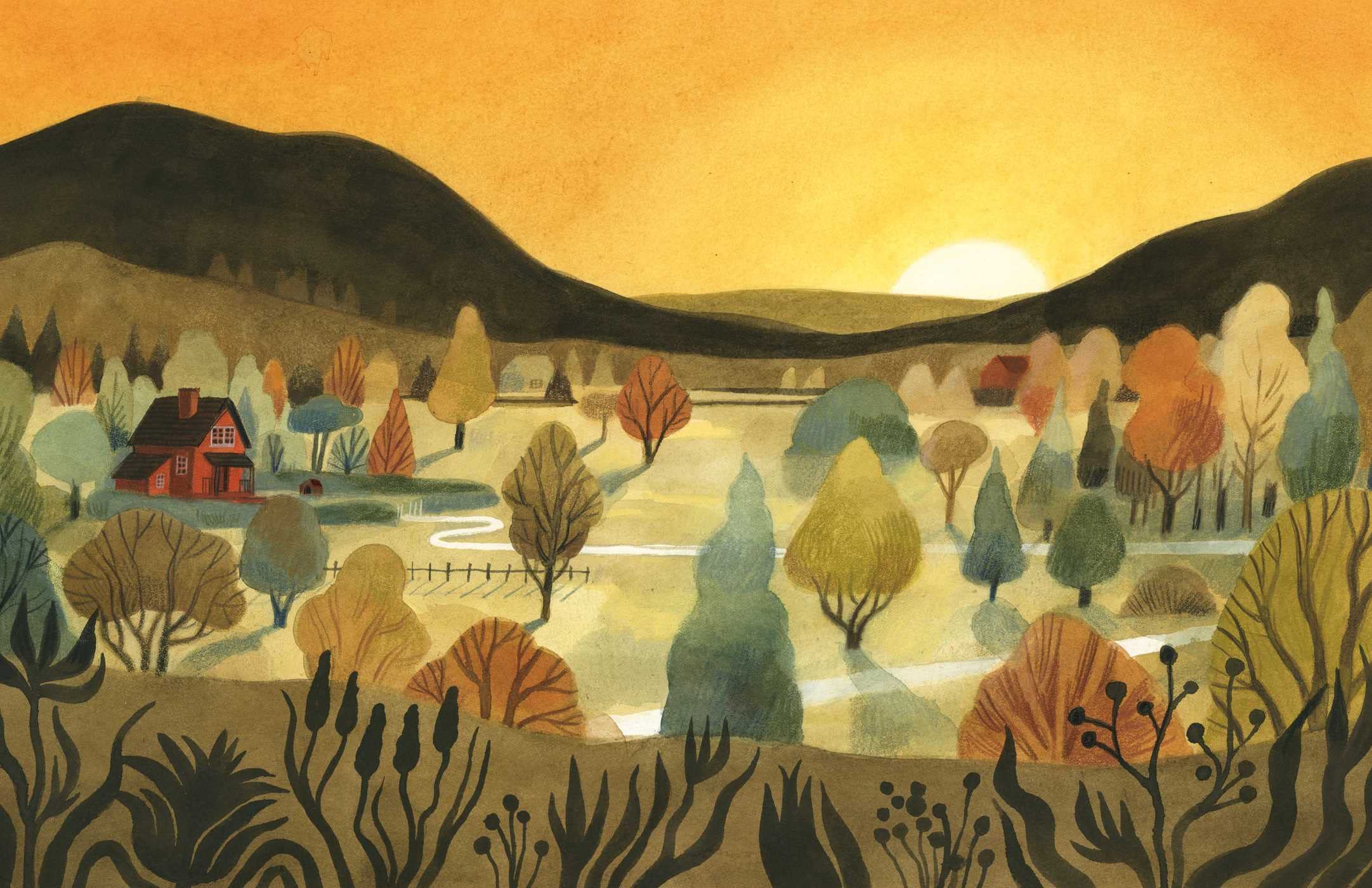
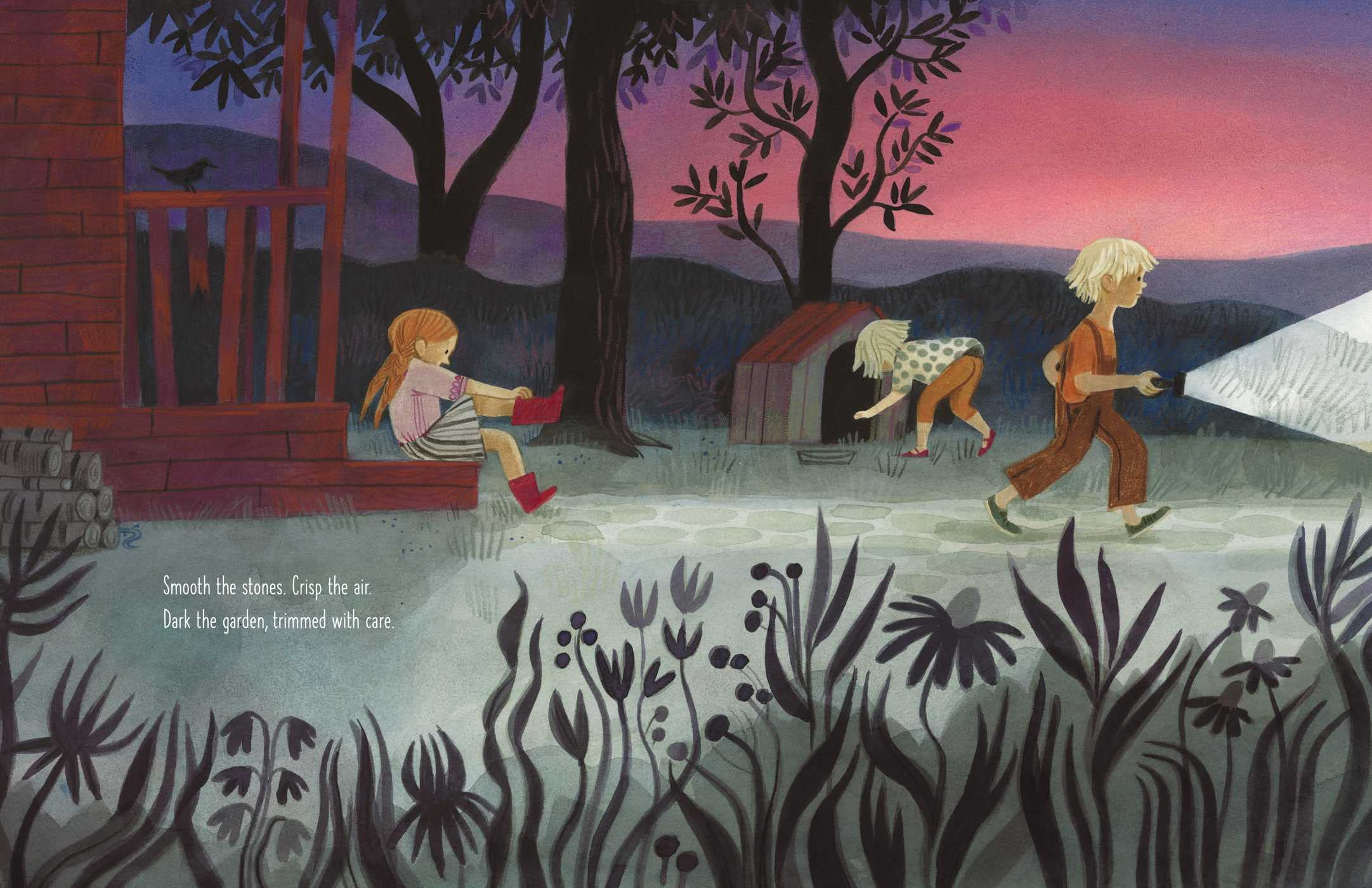
When the family dog trots away from the house at sunset, three siblings tumble out the door to go find him. Soon they find themselves immersed in the luminous colors, shades, and shadows of nature at night—both dark and light. They wander through moonlit lavender meadows, past a timid fawn, beneath a snowy white owl, and much, much more as the night deepens until, at last, they find their sneaky pup.

With beautiful illustrations by Felicita Sala and lyrical text by Dianne White that’s perfect for reading aloud, this book invites young readers to step into the wondrous, colorful nighttime natural world.

Praise: 

“A bedtime chant capable of transforming anyone into a night owl. Sumptuous watercolor, gouache, and colored pencil illustrations show a day shifting from sunshine to twilight to a deepening night sky. Meanwhile, three children are pulling on their boots, grabbing their flashlights, and heading out into a nighttime world as alive as it is welcoming. As the children search and explore, the text repeats the words dark on light through mesmeric rhymes. “Orange the moon, burnished and bright. / Meadow and owl and dark on light.” At last the children peek into a burrow and find their dog, the object of their search. The nighttime is welcoming here, and the children return home to the cozy arms of their parents. Truly the entire enterprise feels similar in tone to Janice May Udry’s Moon Jumpers (1959), illustrated by Maurice Sendak, as when the children ramble through fields of fragrant lavender beneath a brilliant sky. This is a book capable of banishing nighttime fears, showing the night to be a time of wonder, exploration, and even comfort. Sala’s art matches the cadences of the text beat for beat, offering consistently beautiful images of this undiscovered nighttime world…. Lilting, haunting, rhyming, and as unforgettable as a dream the daylight just can’t quite erase.” – Kirkus Reviews, *STARRED REVIEW*, 9/15/2022

“The creators of Green on Green follow that seasonal work with one focused on shadow and light, centering lulling, mesmerizing sensate verse accompanied by artwork in warm, saturated hues…. Closing bedtime scenes in a shared bedroom embody warmth and security… in this quiet celebration of chiaroscuro in the natural world.” – Publishers Weekly, *STARRED REVIEW*, 10/24/2022

About the Creators: 

Dianne White lives in Gilbert, Arizona, with her family. She is the author of Who Eats Orange?Blue on BlueGreen on Green, and Dark on Light.

Felicita Sala is a self-taught illustrator and painter. She has a degree in philosophy from the University of Western Australia. She now lives and works in Rome. She draws inspiration from nature, children, mid-century illustration, folk art, and architecture.

Review: Dianne White’s verse with Felicita Sala’s illustrations makes this book an instant read aloud need! The verse is so rhythmic and rolls off the tongue in a way that will make the book fun to read and listen to. The illustrations add another dimension to the words taking a beautiful poem and turning it into a narrative also. This book will make any reader want to go on a nighttime hike to investigate the beauty of the night.

Teachers’ Tools for Navigation: Here’s an author-provided activity kit!

Discussion Questions: 

  • How did the illustrator use colors to add to the mood of the book?
  • Pick a spread. What words in the stanza stands out to you? Why?
  • The reviews mention that Dark on Light is a book that is meant to read aloud. What about the verse written by White makes it so much fun to read aloud?
  • What fun things do you see in the illustrations as the kids venture outdoors?
  • Why do you think the creators chose to have the book end in daylight instead of nighttime?
  • With an adult, go on a nighttime walk and write a journal about what you saw.

Flagged Passages: 

“Gentle the evening. Sweeping the skies. Dark the shadows as twilight arrives.”

Rose the horizon, gleaming and bright. Twilight and evening and dark on light.

Smooth the stones. Crisp the air. Dark the garden, trimmed with care.

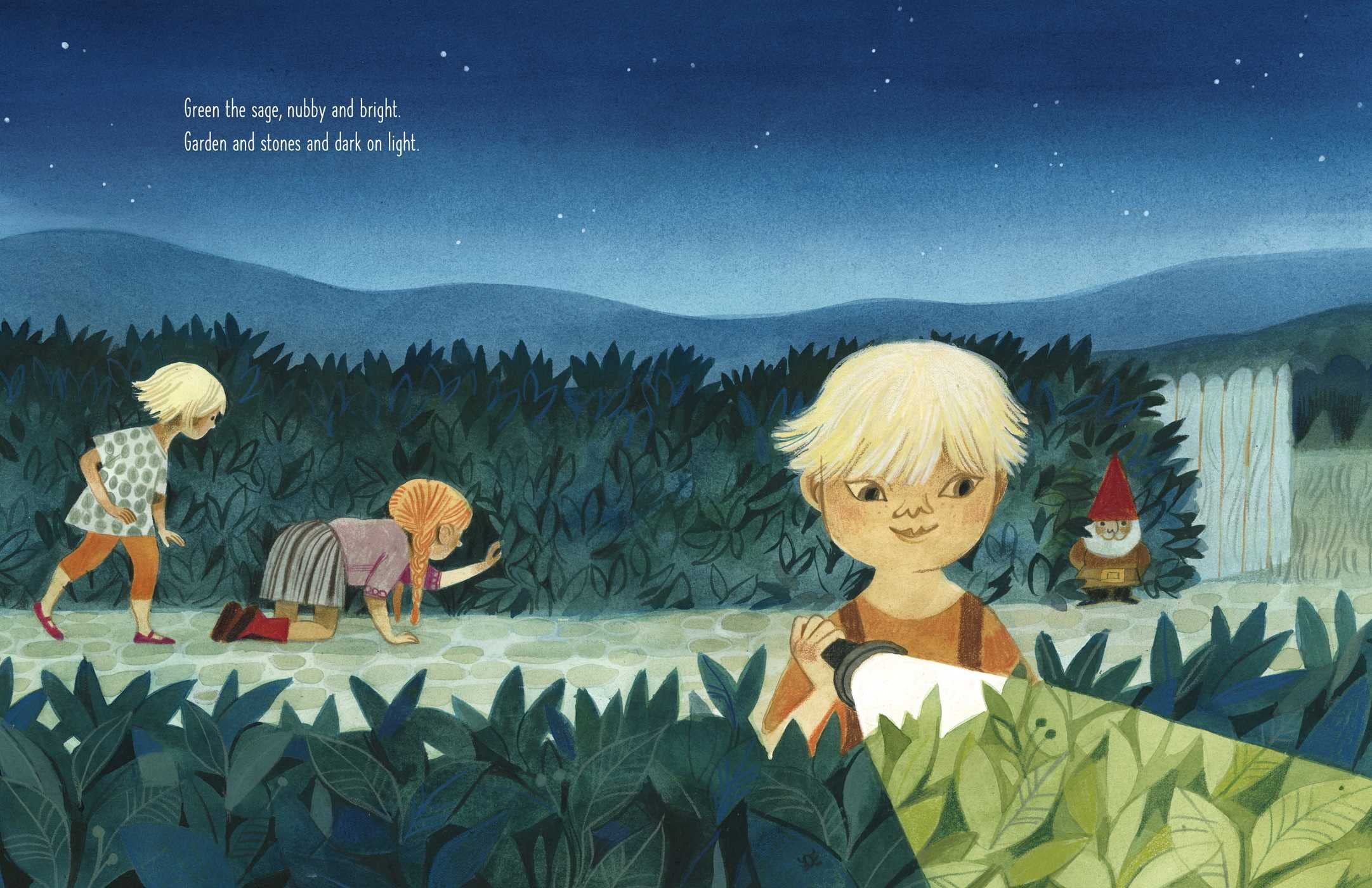
Green the sage, nubby and bright. Garden and stones and dark on light.”

Read This If You Love: Flashlight Night by Matt Forrest Esenwine; Night Animals by Gianna Marino; Noisy Night by Mac Barnett; The Night Gardener by Terry Fan; Goodnight, Butterfly by Ross Burach; Nighttime Symphony by Timbaland, Max at Night by Ed Vere

Recommended For: 

classroomlibrarybuttonsmall

Signature

**Thank you to Blue Slip Media for providing a copy for review!**

Author Guest Post: “Bring the Text to Life: Baking the Cake” by Stephen Savage, Author of Moonlight

Share

“Bring the Text to Life: Baking the Cake”

In 2004, when I began my career in children’s books with a book called Polar Bear Night (published by Scholastic, written by Lauren Thompson), I thought I had it all figured out. I was of the mind that picture books were mainly about the visuals (why else would they call them “picture books”). And as crazy as what I am about to say sounds, I didn’t really understand how the text functioned. I knew it filled blank spaces in the illustrations, but that’s about it. It seemed like “the icing on the cake”. Little did I know.

Then in 2010, I decided I wanted to bake a cake and ice it, too. My daughter had just been born, and I felt inspired to write a story about her. One morning, as I stumbled across the Gowanus canal on my way to my studio in Brooklyn (I hadn’t gotten enough sleep the night before), I spotted a tug boat. “That’s my story”, I thought. I could see the visuals perfectly. 

But what about those blank spaces in the images? They’d need words! By this time, I had illustrated three books, visited a few classrooms, gotten to know the reading habits of kids, and was starting to figure things out a bit. I was learning that picture books were read-alouds, and that the words were very important (duh!).

I was on to the fact that words could be fun to say. Words could engage. More importantly, words could create a beginning, middle, and end in a book. I had so much to learn. I spent months writing my ideas down on index cards, until the cards fell together to form Little Tug (Roaring Brook Press/Macmillan).

This summer, my seventh book as both author and illustrator comes out. It’s called Moonlight. And I’m sure if I showed the book to my 2004 self, he’d scoff at the text. At only 85 words, he’d regard it as a very thin layer of icing on top of an already yummy cake.

But here’s what I’d say to my old, uniformed self: effective picture book text may seem effortless, but that’s not the case. I’d point out all the craft that went into the writing, a discussion of which, could be used to stimulate discussion in the classroom.

I’d point out FOUR examples of writing tools I used to bring the text to life:

  1. PERSONIFICATION: The book opens with the line “Something is on the move”. Personifying the moonlight, turning it into the protagonist in the story, was one way I put a new spin on the traditional lullaby/nighttime theme. 
  2. VIVID VERBS: Words like “slithering”, “drifting” and “tumbling” give the reader a sense of action and adventure. They create excitement and drama.
  3. ALLITERATION: “Sliding down silvery tracks” may just be my favorite line in the book. Why? It’s fun to say. And I have my editor, Neal Porter, to thank for that alliterative line. He replaced my original word, “Icy” with “silvery”. PS: I think it’s nice for young readers to hear how professional artists get help from their teachers (er, I mean editors 😉
  4. SENSORY LANGUAGE makes a story relatable. I used the line “Then it rests for a while, next to you” for a rush of emotion at the critical moment in the story when the moonlight journeys into the child’s bedroom. Certainly, the image of the cat snuggled up against the child reinforces this ‘touch’. 

So now that I’m thinking about it, this “icing on the cake” analogy doesn’t really apply anymore. In picture books, images always work together with text to tell the story. I had to work hard to figure this out, and luckily my editors and mentors have been generous with their advice and suggestions. Like most things in life, writing is about practice and good guidance. And a little piece of cake and a glass of milk while you’re working never hurts!

NOTE: Special thanks goes to teacher/reading specialist Renee Davis of Glastonbury, Connecticut (my sister-in-law) for acting as a consultant on this post.

Published August 23rd, 2022 by Neal Porter Books

About the Book: A lyrical bedtime read about the captivating effects of moonlight and its nightly journey.

Something is on the move.”

When moonlight shines, it’s not like most light. In the quietest hours of the night, it swings through trees and slithers down rivers. It drifts in the wake of steamships and catches on the propeller of a passing plane. It blankets neighborhoods before coming to rest by your side.

In this bedtime picture book, Stephen Savage, author and illustrator of And Then Came HopeBabysitter from Another Planet, and the Geisel Honor book Supertruck, presents a lyrical text and illustration full of dramatic light and shadow to pay homage to the mysterious moon and the unique ways it reveals itself each night.

About the Author: STEPHEN SAVAGE is an award-winning children’s book author and illustrator whose accolades include a New York Times Best Illustrated Book (Polar Bear Night) and a Geisel Honor (Supertruck). Polar Bear Night was a New York Times bestseller. He also wrote and illustrated And Then Came Hope and Babysitter from Another Planet. He teaches at the School of Visual Arts and lives in Brooklyn with his wife, daughter and two dogs. 

https://www.savageillustrator.com/
@savageillustrator on Instagram
@savageartist on Twitter

https://holidayhouse.com/book/moonlight/
@holidayhousebks on all platforms

Thank you, Stephen, for sharing sharing your analogy that can move writing to the next level!

Guest Post: Classroom Uses for Dragons in a Bag by Zetta Elliott, Magnificent Makers: How to Test a Friendship by Theanne Griffith, Polly Diamond and the Magic Book by Alice Kuipers, and Sisters of the Neversea by Cynthia Leitich Smith

Share

One of the assignments during my Spring Children’s Literature course at UCF was creating a mini-teaching guide for the books we read for book clubs. We started with picture books for practice then students created them in their book clubs each week.

Today, I am happy to share the classroom uses and discussion questions found by my UCF Elementary Education students about fantasy novels.

Dragons in a Bag
Author: Zetta Elliott
Published October 23rd, 2018 by Random House

Summary: Jax is left by his mom to an old lady by the name of Ma. Jax later finds out that Ma is a witch who has 3 dragon eggs that hatched. They need to return the eggs because they won’t survive in the regular world due to lack of magic. They go to portals through time that takes them to the time of dinosaurs. Along the way, Jax meets his grandfather who also knows magic, and has him return two of the dragons to the magic council but accidentally left one left behind so he returns to the regular world. He forces his mom and the witch to hash out their problems.

Teachers’ Tools for Navigation: When using fantasy in the classroom it is always a good way to spark your students’ creativity. This source could be used as a creative writing prompt to boost off their creativity of the story: Conduct an activity based upon the book like have them write a short story about what they would do if they were in Jax’s shoes and have them draw pictures of dragons, name them, and design the dragons how they would like them to be pictured.

Discussion Questions: 

  • What was Jax’s first impression of Ma?
  • How do you think Jax will return the last dragon to the magic council?
  • Who do agree with and why? Ma who wants to keep the world of magic separate or L. Roy who wants magic to come back to earth.
  • Why do you think Jax decided to open the window for the squirrel?
  • What were 2 things the dragons were not allowed to have?
  • When you first hear the word apprentice what comes to mind?  Did you have the same thinking as Jax?
  • How does the story tie in with real-life scenarios with the fantasy?
  • Who are the most influential character apart from Jax?
  • When do we see the change of events come in play throughout the story?
  • When reading the book your imagination goes wild,in what other circumstances does your mind go other places when reading this story?

Recommended For: 

classroomlibrarybuttonsmall


The Magnificent Makers: How to Test Friendship
Author: Theanne Griffith
Illustrator: Reggie Brown
Published May 19th, 2020 by Random House Children’s Books

Summary: Pablo, Violet and Deepak are three friends who get sucked into a telescope and must play science games to come back and play again. Deepak is the new kid who makes Pablo jealous with his presence. Throughout the book, the team works together and build their friendship to complete the games.

Teachers’ Tools for Navigation: The book could be used as a classroom read-aloud over the course of a few days or a week.  Due to the science elements, this book would be a good way to start off science discussions in the classroom. For example, the second chapter includes the students learning about food chains. This book is perfect to make connections back to science.

Discussion Questions: 

  •   Why do you think Pablo was jealous of Deepak?
  •   What were some of the challenges they had and what did they have to do?
  •   Why do you think Pablo, Violet, and Deepak were chosen for the Maker’s Maze?
  •    What do you know about producers, consumers, decomposers, and scavengers?
  • What were your favorite aspects of science that you learned from the book?
  • What type of emotion did the characters experience in the book?
  • When Deepak arrived to class, what did Pablo notice about him?
  • How does Pablo overcome is jealous toward Deepak?
  • Toward the end of the book why did they relate their friendship to the ecosystems?

Recommended For: 

classroomlibrarybuttonsmall


Polly Diamond and the Magic Book
Author: Alice Kuipers
Illustrator: Diana Toledano
Published April 22nd, 2018 by Chronicle Books

Summary: Polly Diamond is a little girl who receives a magic book that lets her bring to life the things that she writes and draws. She has a little sister who she doesn’t like very much and a brother on the way. Polly loves to write, she writes lists and stories and anything that she thinks is worth writing. When she starts writing in her magic book she realizes that the book can talk back to her. She writes to her book and comes up with lists and stories to write. She realizes that whatever she writes in the book comes to life when she writes about making a ladder to paint her room and the books on the floor magically move to make a ladder. The book tells her that is what she’s for and Polly quickly learns she can do anything she writes. She makes herself invisible and her sister into a banana. But she realizes that the book is taking everything she says literally. When she writes about eating a club sandwich the book gives her two slices of bread with a bat in between because it took the definition of a club literally. She told the house to fix up the carpet and turn her room into an aquarium. But the carpet was on the ceiling and fish were swimming around her room. She then realizes that everything she wrote was crazy and tries to put the house back to normal because she can’t even recognize it anymore. She fixes it just in time for her parents to come home with her new baby brother. At the end of the story she gives the book a name, Spell. And looks forward to writing and drawing another day with her new book, and friend Spell.

Teachers’ Tools for Navigation: Polly uses and explains words like metaphor, affixes, alliteration, and hyperbole.  This is a great opportunity to talk about these definitions, make lists of words and phrases that relate to these words, and do activities where the students use metaphors, alliteration, homophones, homonyms etc.  It seems like a useful book to have in a first grade classroom and use with a higher level reading small group or a second grade class.    It could also be used as a read aloud, again discussing the key words and their meanings, then practicing using those skills.  There is a lot of use of imagery in this book as well as understanding literal meaning and how words matter.

After reading the text, students can respond to the story by engaging in a free write activity after they finish the reading. As a teacher, we could set a timer for five minutes and ask the students to write continuously about their thoughts on the book, good or bad, and afterwards, go over it as a small group.

Discussion Questions:

  • Polly had many favorite words throughout the book, what are some of your favorite words and why?
  • Make a list of activities you would do to have a Super-Fantastic-Day.
  • In the book, Polly writes down what her dream bedroom would look like. If you could have your dream bedroom, what would it look like?
  • When Polly writes in the magic book, she learns that she needs to write clearly and use as much detail as possible. What are some important rules to follow when writing so people can understand your message clearly?
  • When Polly is playing hide-and-seek, why does she become invisible?
  • Imagine the turquoise notebook has changed your house like Polly’s. Please write a short story explaining what your home looks like in order to get it back to normal.
  • How does Polly feel having to share a room with her little sister when her brother is born?
  • If you had a magic notebook that could bring three things you wrote about to life, what 3 things would you write or draw and why?
  • Polly loves words with double letters like “Dizzy.” List 5 words you can think of that have double letters.
  • Polly loves alliteration.  That’s when  two or more words in a row begin with the same letter.  What alliterations can you think of?

Recommended For: 

classroomlibrarybuttonsmall


Sisters of the Neversea
Author: Cynthia Leitich Smith
Published June 1st, 2021 by Heartdrum

Summary: This book is a tale about three children, Lily, Wendy, and Michael. Their parents, Mr. Darling and Ms. Florene Roberts-Darling are separating, splitting the family between two different locations.  The night before Wendy and Mr. Darling are supposed to leave, the children are visited by a boy named Peter Pan and Belle. Stories of pirates and merfolk persuade the children to follow Peter Pan and Belle off to a mystical land called Neverland.  Upon arriving the children are separated and discover once you arrive you can never leave.  The children meet merfolk, pirates, native children, the lost, and fairies in a desperate attempt to figure out how to get home.

Teachers’ Tools for Navigation: This book will be great for a read aloud, book club, or close reading because it involves a lot of higher level vocabulary than some students may currently be reading at and it has long sentences and dialogue which again, some children could struggle with. These classroom uses would allow for discussions.

Geography could also be tied in because students could illustrate and demonstrate caves and waterways the Merfolk might have dwelled in. They also could show their knowledge of what an island like Neverland might have, and include what trees they think the lost boys were living in.

And, of course, it could be looked at versus Peter Pan as it is a retelling.

Discussion Questions: 

  • If you were a character in this book, who would you be and why?
  • If you were to create a different ending, How would it go?
  • Why do you think Mr. Darling and Ms. Florene wanted to separate?
  • What was your favorite part of the book?
  • What were some challenges that the children had to face or overcome?
  • Why do you think Peter Pan and Belle appeared?
  • Why do you think it was hard for the lost boys to remember who they are?
  • Why do you think Peter Pan never wanted to grow up?
  • Why do you think Belle brought Peter Pan to the island?
  • Why do you think the crocodile made a TikTok sound?
  • Does this book remind you of any other children’s stories?  If so why?

Recommended For: 

classroomlibrarybuttonsmall  


Guest Review: Magyk by Angie Sage

Share

Guest Reviewer: Grace, UCF Elementary Education Student

Magyk (Septimus Heap Book One)
Author: Angie Sage
Published March 2nd, 2005 by Bloomsbury Publishing

Summary: The first part of this enthralling new series leads readers on a fantastic journey filled with quirky characters, clever charms, potions and spells, and a yearning to uncover the mystery at the heart of this story…who is Septimus Heap?

The 7th son of the 7th son, aptly named Septimus Heap, is stolen the night he is born by a midwife who pronounces him dead. That same night, the baby’s father, Silas Heap, comes across a bundle in the snow containing a newborn girl with violet eyes. The Heaps take this helpless newborn into their home, name her Jenna, and raise her as their own. But who is this mysterious baby girl, and what really happened to their beloved son, Septimus?

Angie Sage writes in the tradition of great British storytellers. Her inventive fantasy is filled with humor and heart: Magyk will have readers laughing and begging for more.

About the Author: Angie Sage began her career illustrating books, and then started writing – first toddler books, later chapter books and then the masterful Septimus Heap. She lives in a fifteenth-century house in Somerset. She has two grown-up daughters.

Review: Magyk is an interesting fantasy adventure that provides children an alternative to the increasingly controversial Harry Potter series. It has themes of wizardry/magic and adventure and focuses on a small group of young characters that age throughout the series.

Magyk and the rest of the Septimus Heap series promotes gender equality as it has several strong female characters and shows women in positions of power without questioning from other characters. In addition, this book and its series promote friendships between characters not only of different genders but of different backgrounds and races.

This book also has strong themes of found-family as well as other complicated family relationships that can be comforting to children without a more traditional nuclear family structure. One of the main characters, Jenna, has been adopted and struggles with her relationships with her non-adopted siblings. This is explored further in later books in the series when she meets her biological father and learns the identity of her birth mother.

The series associated with Magyk grows with its reader as Septimus, the main character, ages throughout the series. The books introduce increasingly mature themes over time, introducing readers to new ideas as they are ready for them.

Teachers’ Tools for Navigation: This book touches upon the idea of found family. This theme could be implemented in the classroom to help students better understand the importance of relationships between themselves and those around them. Highlighting the importance of the people we surround ourselves with and the aid they can provide is an important lesson to learn as it gives us strength to go about our day.

This book also teaches students to trust themselves and bare more responsibility as time goes by. Throughout the book, the characters discover that true power comes from themselves. It is only by trusting themselves and working hard that can they achieve their goals. This teaches students the importance of a good work ethic and how you have to work in order to achieve your goals. By adding additional responsibilities to characters throughout the book you can see how their wants and needs change over time however, this does not take away from the goals and aspirations they want to achieve.

Discussion Questions: 

  • Although Jenna is not related to the Heaps by blood she is raised as their daughter. How does Jenna’s relationship with her parents differ from that of her “siblings”?
  • Boy 412 and Jenna both have complicated pasts. How does their relationship change throughout the book as they learn more about themselves and each other?
  • How does Boy 412 relationships with others vary compared to how other children in the book make relationships?
  • How do the circumstances in which Jenna and Boy 412 discover their identities vary? How does this affect how they react to the news?
  • Boy 412 was raised in a militaristic environment, how does this shape the person he has become? If he was raised in a different environment do you think his personality would be different?
  • How do Marcia, Sarah, Zelda, and Silas treat the children differently? Why do you believe they have such different approaches?

Flagged Passages: 

“Oh it’s a pebble… But it’s a really nice pebble Dad thanks.”

Read This If You Love: Books about witches/wizards, Books that age with you

Recommended For: 

classroomlibrarybuttonsmall

Thank you, Grace, for your review!!


Guest Review: Sulwe by Lupita Nyong’o, Illustrated by Vashti Harrison

Share

Guest Reviewer: Brian, UCF Elementary Education Student

Sulwe
Author: Lupita Nyong’o
Illustrator: Vashti Harrison
Published October 15, 2019 by Simon & Schuster Books for Young Readers

Summary: From Academy Award–winning actress Lupita Nyong’o comes a powerful, moving picture book about colorism, self-esteem, and learning that true beauty comes from within.

Sulwe has skin the color of midnight. She is darker than everyone in her family. She is darker than anyone in her school. Sulwe just wants to be beautiful and bright, like her mother and sister. Then a magical journey in the night sky opens her eyes and changes everything.

In this stunning debut picture book, actress Lupita Nyong’o creates a whimsical and heartwarming story to inspire children to see their own unique beauty.

About the Creators: 

Lupita Nyong’o is a Kenyan actress and producer. Her first feature film role was in the film 12 Years a Slave, for which she received the Academy Award for Best Supporting Actress as well as multiple accolades, including the Screen Actors Guild Award, the Critics’ Choice Award, the Independent Spirit Award, and the NAACP Award. She has since starred in Mira Nair’s Queen of Katwe, Star Wars: The Force Awakens, Ryan Coogler’s record-breaking box office hit Black Panther, and most recently in Jordan’s Peele’s critically acclaimed horror film Us. Nyong’o earned a Tony nomination for her Broadway debut in Danai Gurira’s play Eclipsed. She lives in Brooklyn.

Vashti Harrison, author and illustrator of the bestselling Little Leaders: Bold Women in Black History, is an artist, author, and filmmaker with a passion for storytelling. She earned her MFA in film and video from California Institute of the Arts, where she snuck into animation and illustration classes to learn from Disney and DreamWorks legends. There she rekindled a love for drawing and painting. Now she uses her love for both film and illustration to craft beautiful stories for children.

Review: This book was just amazing! The story, the art, the lesson–everything was perfect. The message that is written in this story is not just for kids, even though the intended audience is children. The book talks about colorism and how one should love themselves just the way they are. We are all unique and special, and we should not try to change ourselves for nobody. In the world we live in today, there is so much negativity, but with this book for children, they can learn to be the light in the midst of darkness, no matter what the color of your skin is. Sulwe’s skin is the color of Midnight, but to me she shines the brightest in her family. Without midnight, everyone else’s shine would be pointless. I hope that when children read this book, they will appreciate who they are and be confident in themselves. This is a story I would definitely keep in my classroom. My favorite quote from the story, “When you are darkest is when you are most beautiful. It is when you are most you.” This left me very emotional and I’m a grown adult now. I should not be tearing up like this!

Teachers’ Tools for Navigation: Sulwe has many topics that can be discussed and is a great read aloud to teach social emotional learning; it can also be used to teach a variety of literacy skills. Here are some ideas that can be used to incorporate Sulwe into the lesson plan:

The first thing the students can do would be to practice their compare and contrast skills by discussing how the character changes and feels throughout the story. Another activity the students can do would be to practice descriptive writing by having them describe their own appearance. The last activity that can be done is having the students practice writing book reviews after they have read the story. If none of these activities work for you or aren’t that interesting, asking questions about the story to the students is always an option. Here, the teacher can discuss important topics like bullying, appreciating others, respect, and loving oneself.

Discussion Questions: 

  • What does the name Sulwe mean?
  • How are the pet names for “day” and “night” different?
  • What types of food did Sulwe eat to try and change her color?
  • What appeared through Sulwe’s window?
  • Why did Sulwe want to change the way she looked?
  • Have you ever been teased because of the way you look? How did that make you feel?

Flagged Passages: 

When you are darkest is when you are most beautiful. It is when you are most you.”

Book Trailer: 

Read This If You Love: Hair Love by Matthew A. Cherry or Eyes that Kiss in the Corner by Joanna Ho

Recommended For: 

classroomlibrarybuttonsmall

Thank you, Brian, for your review!