My Rotten Stepbrother Ruined Cinderella by Jerry Mahoney

Share

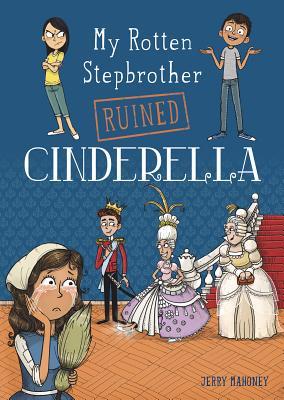
My Rotten Stepbrother Ruined Cinderella
Author: Jerry Mahoney
Illustrator: Aleksei Bitskoff
Published August 1st, 2017 by Stone Arch Books

Summary: Holden, what have you done?! It wasn’t enough to ruin Maddie’s report on Cinderella, but now you’ve somehow broken the ACTUAL fairy tale? The ugly stepsister is marrying the prince and there’s no happy ever after! You need to fix this and the only way seems to be by entering the story. But beware: if you can’t mend it, you can never return…

ReviewEveryone! You listening?!?! If you or any of your students are a fan of the Whatever After series, you need to get this for you/them. It is a perfect companion for them! But don’t think that this is just a duplicate of the series, it is similar yet also so different! First, Holden and Maddie already don’t work well together, so going into the fairy tale is not only about fixing the fairy tale but also about fixing their relationship. Second, the fracturing of fairy tales gets even more ridiculous than you can even imagine. Third, Holden and Maddie are in the fairy tales as characters, not as themselves. I will say that both this book and the Mlynowski series looks at the problems in fairy tales and how the stories could be better told to make everyone happy.

(I will say the only “issue” I had was I really don’t like the negative connotation around step-siblings, so calling a step-brother rotten really doesn’t help that idea; however, I do like how Maddie has to learn that her opinion on her stepbrother may not be correct.)

Teachers’ Tools for Navigation: First and foremost, this book will be a hilarious read aloud and an independent reading books that will fall into so many hands. Additionally, in the backmatter of the book, the author includes a glossary including the harder vocabulary in the book, a think again section with three questions for readers to think about, and finally a section about how to write a ruined version of a favorite tale. All three of these activities help make the book even more useful in a classroom.

Discussion Questions: (From the “Think Again” section by the author)

  • Everyone has someone in their life like Holden, who’s unavoidable and hard to get along with. Who’s someone you’ve struggled to relate to, and what would you do if you had to work with him or her to “fix” a fairy tale?
  • There are details about the wicked stepsisters that weren’t in the original tale, such as Beautianna’s desire to go to art school. Think of a supporting character from one of your favorite books whom you wish you knew more about. Come up with your own ideas for his or her character traits, wants, and needs. You can even try to write the whole story from that character’s perspective.
  • What do you think of the questions Holden raises about Cinderella? Do you think he makes some good points, or would you be as annoyed with him as Maddie was? Pick another story you know well and try to imagine what Holden’s problems with that story might be.

Flagged Passages: “Maddie hadn’t seen her before, but she could tell this woman had plenty to be sad about, starting with her clothes. They were filthy, patched-up work clothes, and her hair was tied back with a rag. She sat in front of a pile of roses, and one by one, she plucked the thorns off each stem and placed them into a vase. Her hands were scratched and bruised from hours of performing this tedious, excruciating task. No wonder she was crying.

‘Do you need a tissue?’ Maddie asked her.

‘Tissue?’ the woman replied. ‘What’s a tissue?’ The woman turned her head and gazed at Maddie, confused.

Of course, Maddie thought. They don’t have tissues in fairy tales. They weren’t invented yet. While she wondered how to explain this, she had another realization. This wasn’t any ordinary, sad woman. She was kind and familiar, the most beautiful woman Maddie had ever seen. She had bright blue eyes and, underneath the rag on her head, hair that seemed to be made from pure gold.

‘Oh my gosh!’ Maddie exclaimed. ‘You’re–you’re Cinderella!’

‘You seem surprised to see me, Glamoremma,’ the young woman replied.” (p. 29-30)

Read This If You Love: Whatever After by Sarah Mlynowski, It’s NOT Jack and the Beanstalk by Josh Funk, Fractured fairy tales

Recommended For: 

Signature

**Thank you so much to the author for providing a copy for review!**

Blog Tour with Review!: Granted by John David Anderson

Share

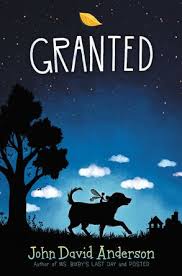
Granted
Author: John David Anderson
Published February 13th, 2018 from Walden Pond Press

Summary: From the author of beloved novels Ms. Bixby’s Last Day and Posted comes a hilarious, heartfelt, and unforgettable novel about a fairy-in-training.

Everyone who wishes upon a star, or a candle, or a penny thrown into a fountain knows that you’re not allowed to tell anyone what you’ve wished for. But even so, there is someone out there who hears it.

In a magical land called the Haven lives a young fairy named Ophelia Delphinium Fidgets. Ophela is no ordinary fairy—she is a Granter: one of the select fairies whose job it is to venture out into the world and grant the wishes of unsuspecting humans every day.

It’s the work of the Granters that generates the magic that allows the fairies to do what they do, and to keep the Haven hidden and safe. But with worldwide magic levels at an all-time low, this is not as easy as it sounds. On a typical day, only a small fraction of the millions of potential wishes gets granted.

Today, however, is anything but typical. Because today, Ophelia is going to get her very first wish-granting assignment.

And she’s about to discover that figuring out how to truly give someone what they want takes much more than a handful of fairy dust.

About the Author: John David Anderson is the author of Ms. Bixby’s Last Day, Posted, Sidekicked, Minion, and The Dungeoneers. A dedicated root beer connoisseur and chocolate fiend, he lives with his wife, two kids, and perpetually whiny cat in Indianapolis, Indiana. You can visit him online at www.johndavidanderson.org.

ReviewJohn David Anderson never ceases to amaze me. I have read all but one of his books, and I am learning that I cannot even guess what he’s going to tackle next; although, I can assume he is going to do it well!

But I will be honest, I would not have guessed that his newest would be about a super sweet, determined, and a bit quirky fairy named Ophelia Fidgets. But yes, Ophelia is our phenomenal fairy protagonist who every reader will immediately love. She is a perfectionist but also does things her own way–she just has very high standards for her own way. She also has a silly sidekick in both Charlie, a fellow granting fairy, and Sam, a homeless dog, and I must say that Anderson does one of the best dog voices I’ve ever read, I could hear it while I read.

Other than the characters, I think there were two other things that this novel did exceptionally well: world building and making the reader think about priorities. Everywhere Ophelia went, Anderson described enough to make sure that we could visualize it, but he also ensured that he didn’t overwhelm the reader with too much information. He also did a truly fantastic job at setting up the fairy world and all the rules within it to where the reader understood Ophelia’s task, her job, etc. Also, through Ophelia’s journey to grant the wish she’s been assigned, Anderson gets the reader to look at wishing and what is truly important in the world.

Lastly, I loved that in the backmatter of the book, Anderson acknowledges the long history of fairies, including Tinkerbell!, and reminds readers to keep reading about them.

Teachers’ Tools for Navigation: Like all of Anderson’s books, I know this one will find readers on my shelves. This book is perfect for fans of fairy, animal, or quirky adventure books. And it will also be a wonderful read aloud! Even if you don’t have enough time to read the entire book, the first chapter and synopsis will truly suck readers in.

Discussion Questions: 

  • What does Sam teach Ophelia?
  • Why does Ophelia make the choice she does make when granting the wish?
  • Do you agree with Ophelia or Squint when it comes to wish granting?
  • Do you believe that Charlie deserved the punishment he received?
  • What character traits does Ophelia possess that led her on not giving up?
  • How does Granted allude to other fairy tales you know? How does it break fairy stereotypes often found in other fairy tales?

Flagged Passages: “The last time you blew out your birthday candles, what did you wish for?

Did you blot them all out on the first breath? It doesn’t count otherwise. Also, do not let your brother or sister help you; at best they will waste your wish. At worst they will steal it for themselves.

Same for dandelions–the one breathe rule–or else the wish won’t fly. It’s harder than you think, getting all those seeds off in one huff. Harder than candles on a cake. If you can’t manage it, though, don’t worry. There are a dozen more ways to make a wish. A quarter flipped into a fountain. A penny dropped down a well. Some might tell you that bigger coins make stronger wishes, but that’s simply not true. A silver dollar or even a gold doubloon doesn’t increase the chances you’ll get what you want. Your dollar is better spent on gumballs or ice cream; use a nickel instead. Wishes aren’t for sale to the highest bidder.” (p. 1-2)

And my favorite passage:

“‘Humans are bad,’ [Sam] agreed.

Ophelia stopped fidgeting with her petal and looked over at Sam. Of course he would think so. And she couldn’t blame him. Not after how he’d been treated. She leaned into him, nestling in his fur.

‘Maybe they’re not all bad,’ she amended. ‘They just lose sight of what’s important sometimes, worrying so much about what they don’t have that they forget what they’ve already got.’

‘Like home,’ Sam said.” (p. 207)

Read This If You Love: Tinker Bell, Folk lore about fairies, Wishapick by M.M. Allen, Spiderwick Chronicles by Holly Black, Seekers by Erin Hunter, Mez’s Magic by Eliot Schrefer

Recommended For: 

Signature

**Thank you to Danielle at Blue Slip Media for setting up the blog tour!**

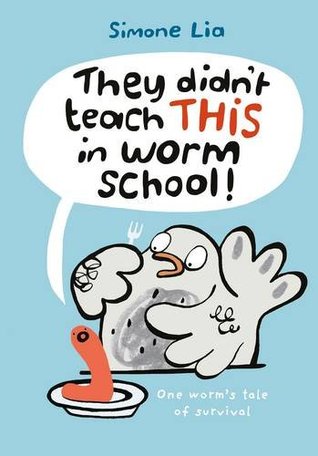
They Didn’t Teach THIS in Worm School by Simone Lia

Share

They Didn’t Teach THIS in Worm School!
Author: Simone Lia
Published February 13th, 2018 by Candlewick Press

Summary: A hungry chicken (who thinks he’s a flamingo) and a quick-thinking worm set off on a madcap adventure — and forge an unlikely friendship.

Marcus is a worm, and a bird named Laurence who looks very much like a chicken is about to eat him for breakfast. So what does Marcus do? He strikes up a conversation, of course! But even after talking his way out of being eaten, Marcus’s troubles are just beginning: soon he is clinging to Laurence’s neck as the designated navigator on an absurd journey to Kenya, where his feathered companion dreams of finding happiness with other flamingos like himself. Except Marcus can’t actually read a map, and this bird is clearly not a flamingo. Will Marcus be able to get them both to Africa — or even manage to survive the day? Filled with kid-friendly illustrations, this is a buddy comedy that will have readers wriggling with laughter.

ReviewOh man! What a voice this book has. Marcus and Laurence are just hilarious and part of what makes them so funny is the very evident voice that both characters have. Marcus is a rule follower and is trying to figure everything out. Laurence is confused and so full of goals and ambition that are just not realistic. And the two of them on an adventure are just ridiculous and really did make me laugh out loud.

Also, at a deeper level, Laurence is also teaching us about identity. He may not look like a flamingo, but he knows he is. That is all that matters.

Teachers’ Tools for Navigation: As I was reading, the very first thing I thought of was how perfect this book will be for our late elementary readers who love Bird and Squirrel or Narwhal and Jelly and want to try a non-graphic novel. It is still hilarious and illustrated yet may be a ladder up for these students. Also, with really short chapters and hilarity, it would be a wonderful read aloud as well.

Discussion Questions: 

  • How did Marcus’s decision to start a conversation with Laurence change the course of the plot? What could have happened?
  • There are other animal characters throughout the book. Why do you think the character includes them? What is their purpose? How do they advance the story?
  • How did Laurence and Marcus finally make it to Africa?
  • How was Laurence different than what Marcus originally assumed?

Flagged Passages: 

Then, I dreamed I fell out of a can into a cereal bowl. Staring at me was a scruffy, fat bird who looked a lot like a chicken. It was a really good dream until it got tothe bird part. The bird had intense and menacing eyes.

The worst things was that the last part of the dream wasn’t a dream at all. I really had been in a can, and there really was a big fat bird staring at me!

What would you do if you were a worm and there was a bird two inches away from your face, looking at you with hsi beak open so wide that you could see his tonsils.

Maybe you would do what I did. I smiled a big smile and said in my most cheerful voice,


Read This If You Love: Bird and Squirrel by James Burks, Narwhal by Ben Clanton

Recommended For: 

Signature

**Thank you Candlewick for providing a copy for review!**

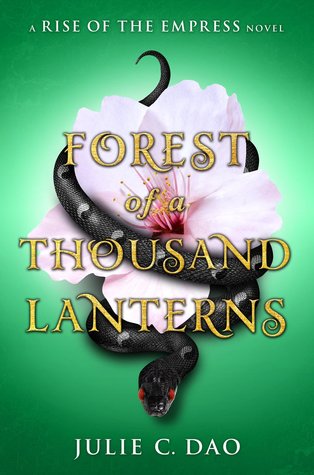
Forest of a Thousand Lanterns by Julie C. Dao

Share

Forest of a Thousand Lanterns
Author: Julie C. Dao
Published: October 10, 2017 by Philomel

Guest Review by Kaari von Bernuth

Goodreads Summary: An East Asian fantasy reimagining of The Evil Queen legend about one peasant girl’s quest to become Empress–and the darkness she must unleash to achieve her destiny.

Eighteen-year-old Xifeng is beautiful. The stars say she is destined for greatness, that she is meant to be Empress of Feng Lu. But only if she embraces the darkness within her. Growing up as a peasant in a forgotten village on the edge of the map, Xifeng longs to fulfill the destiny promised to her by her cruel aunt, the witch Guma, who has read the cards and seen glimmers of Xifeng’s majestic future. But is the price of the throne too high?

Because in order to achieve greatness, she must spurn the young man who loves her and exploit the callous magic that runs through her veins–sorcery fueled by eating the hearts of the recently killed. For the god who has sent her on this journey will not be satisfied until his power is absolute.

Kaari’s Review: The entire time, I wasn’t entirely sure if the  protagonist was the hero or the villain. And, that isn’t necessarily a bad thing! I appreciated this book because it made me think. I’d be cheering for Xifeng and wanting her to win, and then she’d do an awful thing to help her win, and I’d be repulsed by her. This book highlights the struggle of ambition, and how difficult it is for a woman to achieve the dreams she has. And, while I am off put by Xifeng’s methods and don’t necessarily think they were the right decisions, her actions and the way she achieves power could spark great discussions.

The setting and the plot of this book was thrilling, and I Ioved the way that fantasy was woven into a world so seamlessly. The creatures and ideas introduced were thought provoking and had amazing descriptions that made me feel like I was living in the enchanted world with the characters. I do wish that there had been some more resolution regarding some of the magical beings and the warnings they gave, but I think that Dao intends for this to be the first in a series, and I’m sure that more resolution will come in later novels.

Teachers’ Tools for Navigation: I would definitely include this book in a classroom library for kids to check out if they want to read it. However, while this book is interesting, and explores an interesting take on female empowerment, I don’t think I would teach this book in a classroom setting, or use it in literature circles. I am a huge advocate for female empowerment, and discussing the paths for women to claim their power. However, I think that because Xifeng’s methods were so morally questionable, and readers aren’t sure if Xifeng is a hero or a villain, that Forest of a Thousand Lanterns is not the best novel to discuss for this topic. There are many other books that discuss female empowerment in a much more productive light. So, I’d include it in a classroom library, but not necessarily teach it in any way.

Discussion Questions: Do you think Xifeng’s methods were justifiable?; What does the social hierarchy look like in this novel?; Is Xifeng a hero or a villain in this story?; What is the effect of portraying a strong female protagonist in this way?; How is the fantasy world characterized?

We Flagged: “‘I’m a good man, Xifeng. I let you have your own way and speak your mind…’

‘You think I don’t know that? That I’m so blind and stupid?’

‘Yes, I do!’ he shouted, his face bright red. ‘I offer you the world…’

‘Yes, the world as you see it!’

‘I saved you from that evil woman!’

‘Only to trap me yourself.’ She watched him turn away and run a trembling hand over his head. ‘I was Guma’s, and now you want me to be yours. I have my own soul and my own destiny, and I’m tired of belonging to someone else’” (Advanced Reader Copy p. 125).

Read This If You Loved: Monstress by Marjorie M. Liu; Gunpowder Alchemy by Jeannie Lin; Girls Made of Snow and Glass by Melissa Bashardoust

Recommended For:

classroomlibrarybuttonsmall

  RickiSig

**Thank you to Kaari for reviewing this book!**

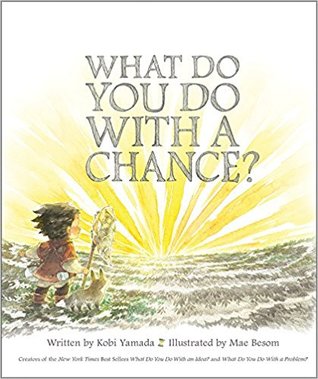
What Do You Do with a Chance? by Kobi Yamada

Share

What Do You Do with a Chance?
Author: Kobi Yamada
Illustrator: Mae Besom
Published: July 1, 2016 by Compendium Inc.

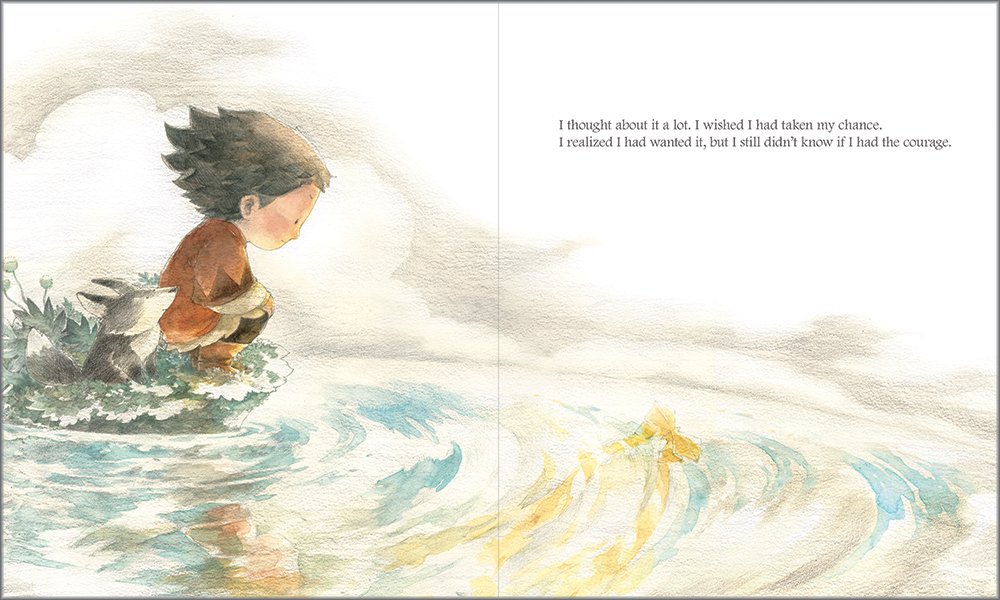
Summary: The award–winning creators of The New York Times best sellers What Do You Do With an Idea?and What Do You Do With a Problem? return with a captivating story about a child who isn’t sure what to make of a chance encounter and then discovers that when you have courage, take chances, and say yes to new experiences, amazing things can happen.

In this story, a child is visited by his first chance and unsure what to do with it, he lets it go. Later on, when a new chance arrives he reaches for it, but this time he misses and falls. Embarrassed and afraid, he begins ignoring each new chance that comes by, even though he still wants to take them. Then one day he realizes that he doesn’t need to be brave all the time, just at the right time, to find out what amazing things can happen when he takes a chance.

The final addition to the award-winning What Do You Do With…? picture book series created by New York Times best selling author Kobi Yamada and illustrator by Mae Besom, What Do You Do With a Chance? inspires kids of all ages and parents alike to find the courage to go for the opportunities that come their way. Because you never know when a chance, once taken, might be the one to change everything.

Ricki’s Review: There is something absolutely magical about these books. This author/illustrator team is simply remarkable in their ability to make the abstract come alive. Each semester, I read one of the books from this series aloud to my preservice teachers. They will be teaching in secondary schools, but this book series makes it obvious about how they can powerfully use picture books in their classrooms. After I read the book aloud, I don’t need to go through a long justification of why picture books work well in middle and high schools. What I like about this series is that each book is different from the other two. They overlap in their conceptualization and they all are remarkable choices for the instruction of symbolism and creating writing–but they all teach very different, big ideas. I can see each book pairing well with a different canonical or YA text. 

Kellee’s Review: I hope each and every one my students leave my class with is that life is about trying and working hard and being creative and kindness and so much more than just passing tests, and Yamada’s series teaches all of these things in such a beautiful, fun, and inspiring way! The newest book in the series looks at the fear that comes with new things, and I think this is something that is so important to talk to kids about, doing anything different or new can be scary for a bunch of different reasons. And this ranges from toddlers (Trent is afraid of fast rides) to teenagers (who may be afraid of doing something that may look uncool or are too busy to grab a chance when it comes by). I am so sad that this is the final installation of the series, but I am so glad that we have the three we do. 

Teacher’s Tools for Navigation: In previous posts for this series, we have discussed how teachers might use this book to teach word choice, symbolism, and creative writing. Teachers might also consider reading all three books aloud to students and talking about the ways they are conceptually similar and different. Students might discuss the paratext of the novels and the marketing of the books. They might also compare and contrast how the books offer completely different, powerful illustrations of abstract ideas.

Discussion Questions: What do you do with a chance?; How do the author and illustrator work together to make the abstract concept of a “chance” more concrete?; What does the book teach about courage?; When have you taken a chance? Did it work out? What did it teach you? What famous people in history have taken chances? What do you think they learned?

Flagged Passage: 

Read This If You Loved: What Do You Do with an Idea? by Kobi Yamada; What Do You Do With a Problem? by Kobi Yamada; The Most Magnificent Thing by Ashley Spires; The Dot by Peter H. Reynolds, The Noisy Paint Box by Barb Rosenstock, Lost and Found by Oliver Jeffers, Journey by Aaron Becker

Recommended For:

  readaloudbuttonsmall closereadinganalysisbuttonsmall classroomlibrarybuttonsmall

 and

Review and Giveaway!: Don’t Forget Dexter by Lindsay Ward

Share

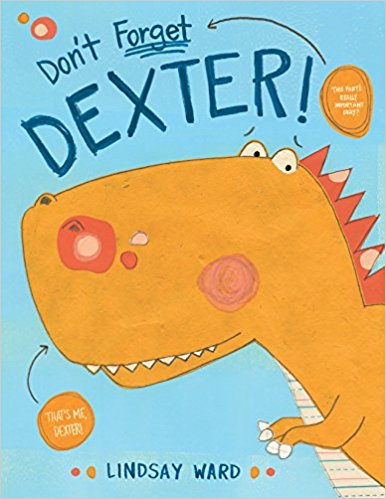
Don’t Forget Dexter
Author and Illustrator: Lindsay Ward
Published January 1, 2018 by Two Lions

Summary: Introducing Dexter T. Rexter, the toughest, coolest dinosaur ever. At least he likes to think so.

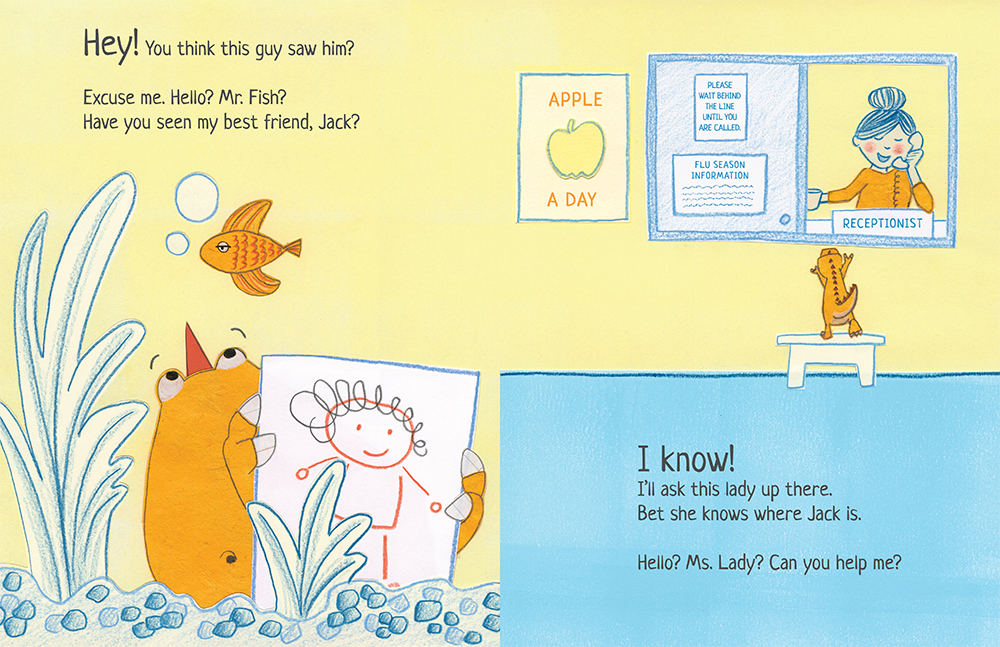
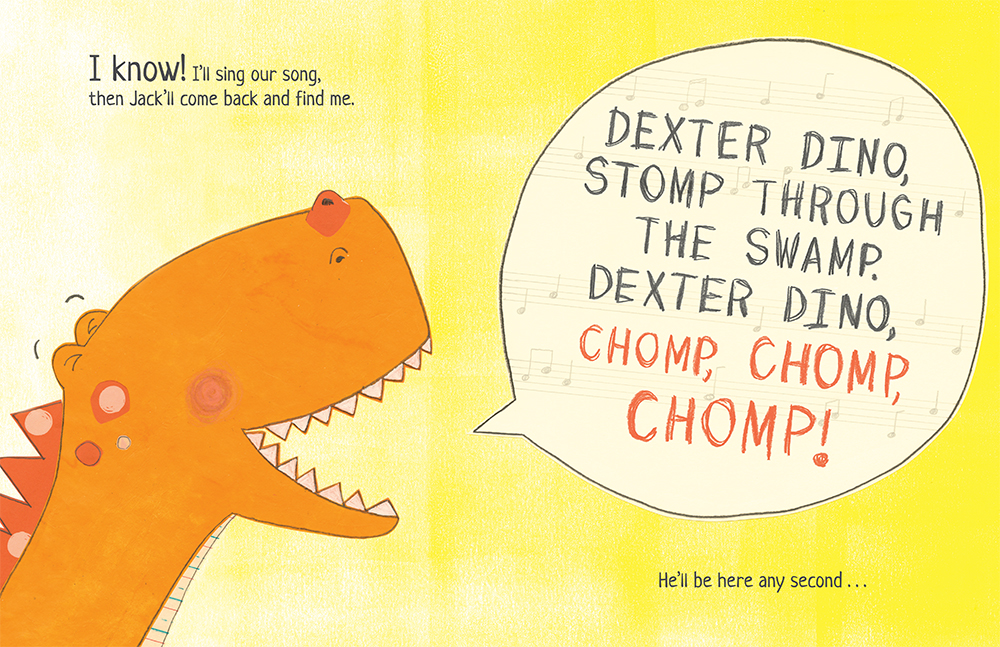
When his best friend, Jack, leaves him behind at the doctor’s office, Dexter T. Rexter panics. First he tries to find Jack. Then he sings their special song. Then he sings their special song even louder. But when Jack still doesn’t appear, Dexter starts to wonder. What if he’s being replaced by another toy? It can’t be—after all, he can STOMP, RAWR, and CHOMP! Right? Right?!

This hilariously neurotic dinosaur will do whatever it takes to get his friend back—even asking the reader’s advice—in this first book of a brand-new series.

Praise for  DON’T FORGET DEXTER!:

★ “Ward’s ink, colored-pencil, and cut-paper illustrations give readers a toy’s view of the world and allow children to stomp in Dexter’s feet for a while, his facial expressions giving them lots of clues to his feelings. Lost and found was never so riotously funny or emotionally draining.” —Kirkus Reviews (starred review)

“Ward (Brobarians) is as funny as ever as she chronicles her orange hero’s nervous, no-filter state of mind, and her cut-paper, pencil, and ink drawings—with their visual asides, annotations, and shifts in scale—are irrepressible. It’s high anxiety made highly adorable.” —Publishers Weekly

Ricki’s Review: I simply adored this charming story about a toy that is mistakenly left behind by his best friend, Jack. It reminded me a bit of The Velveteen Rabbit and Toy Story (but different!), and it is very accessible for kids. This book  teaches some great lessons, and my son and I had a long conversation about how being separated from his things doesn’t always have to be forever. We recently moved across the country, and he doesn’t have all of his favorite toys around, so this book was really helpful to me as a parent, and I imagine that other parents will find it to be a great resource. We received this book a few weeks ago and have read it several times. My son calls it his “dinosaur book.” We have several dinosaur books, so it is a big compliment that this book is the dinosaur book.

Kellee’s Review: I love the voice of Dexter in this book! And the breaking of the fourth wall really adds such humor to the story line. And although the story sounds a bit like Toy Story and other toy books, it is so different than what you’d expect because Dexter is all alone, doesn’t know why he’s still at the doctor’s office, and is having a bit of an identity crisis. However, the way that Dexter feels will be easily a feeling that readers will relate to because anyone who has ever felt left out from something will feel like Dexter does. 

Teachers’ Tools for Navigation: Teachers might ask kids to write about a time that they were separated from something that they value. They might consider how this separation may or may not have been permanent. Alternatively, teachers might ask kids to write a story in which one of of their toys comes to life.

Check out some fun activities here!

Discussion Questions: How do you learn about the feelings of the characters? What do the author and illustrator do to make these come to life?; When is a time that you were separated from something that you love? Was it permanent?; How do the author and illustrator make the text interactive? How do they engage readers?

Flagged Passage: 

Read This If You Love: Nibbles: The Book Monster by Emma Yarlett, Caring for Your Lion by Tammi Sauer, The Velveteen Rabbit by Margery Williams

About the Author: Lindsay Ward was inspired to write this book after her husband texted her a photo of a toy dinosaur abandoned at a doctor’s office. The caption read: “Well, they left me here.” Lindsay thought it was so funny that she sat down to write Dexter’s story immediately. She is also the author and illustrator of Brobarians, Henry Finds His Word, and When Blue Met Egg. Her book Please Bring Balloons was also made into a play.

Most days you can find Lindsay writing and sketching at her home in Peninsula, Ohio, where she lives with her family. Learn more about her online at www.LindsayMWard.com  or on Twitter: @lindsaymward.

Recommended For:

  classroomlibrarybuttonsmall 

Giveaway!

a Rafflecopter giveaway

 and

**Thank you to Barbara at Blue Slip Media for providing copies for review!!**

Inky’s Great Escape by Casey Lyall

Share

Inky’s Great Escape: The Incredible (and Mostly True) Story of an Octopus Escape
Author: Casey Lyall
Illustrator: Sebastia Serra
Published: November 7, 2017 by Sterling Children’s Books

Goodreads Summary: Inky’s Incredible Idea for an Ingenious Escape .
Based on a true story, this tale follows a daring, Houdini-esque octopus as he performs his greatest escape act yet.

In April 2016, The New York Times published an article about an octopus named Inky who escaped from the National Aquarium of New Zealand through a drainpipe and into the sea. In this charming fictionalized account, Inky, worn out from his exciting life in the ocean, has retired to the aquarium. There he quietly plays cards, makes faces at the visitors, and regales his tankmate Blotchy with tales of his past adventures. Then Blotchy dares Inky to make one more great escape: out of their tank. Will Inky succeed?

Ricki’s Review: Inky! This is a fun, thrilling text that will surely entertain a classroom of kids. I can imagine all of the questions that would accompany a read-aloud of this book. When my son and I read it, the first thing we did was research Inky’s story on the internet (see Kellee’s review for more info about this). We talked about all of the exciting ways that an octopus might escape from an aquarium. I love how the author creatively interpreted Inky’s story and made it a sort of challenge from Inky’s friend Blotchy. This made me chuckle. This text is versatile and could be used in many ways in the classroom, and it has high appeal. Kids will love it.

Kellee’s Review: Although Inky’s Great Escape is a fictionalized version of the events that happened at the National Aquarium of New Zealand in 2016, if you go and research about the escape, you’ll learn that the Inky truly is one incredible octopus! Although Lyall used creative freedom to build up Inky’s backstory (he’d retired to the aquarium after many daring escapes, and only escaped from the aquarium because Blotchy challenged him), much of the escape sequence was what truly transpired when Inky made his escape. Kids will fall in love with Inky’s bravery, personality, and with his contrasting friend, Blotchy, who stayed behind. With colorful full page illustrations and two octopuses with character traits and personalities that will start conversations, Inky’s Great Escape is going to be a favorite read aloud and classroom library book in elementary classrooms (and would be a great companion to a cephalapoda discussion!).

Teachers’ Tools for Navigation: Teachers might take some time to point out New Zealand on a map and to research the habitat in New Zealand. They might specifically look into Inky’s story and how the author took a bit of creative license to interpret the truth a bit. Teachers might also ask students to create their own escape stories with another animal. They could illustrate these and bind them into books!

Discussion Questions: Why does Inky decide to escape? What does he do?; What is Blotchy’s role in the story? How might we compare this to situations in our lives?; What is the true story? How did the author creatively interpret that story?

Flagged Spread: 

Read This If You Loved: Prince and Pirate by Charlotte Gunnufson; Lady Pancake & Sir French Toast by Josh Funk; Whose Story is This, Anyway? by Mike Flaherty; Dragons Love Tacos by Adam Rubin

Recommended For: 

readaloudbuttonsmall classroomlibrarybuttonsmall

RickiSigandSignature