Musnet Series by Kickliy

Share

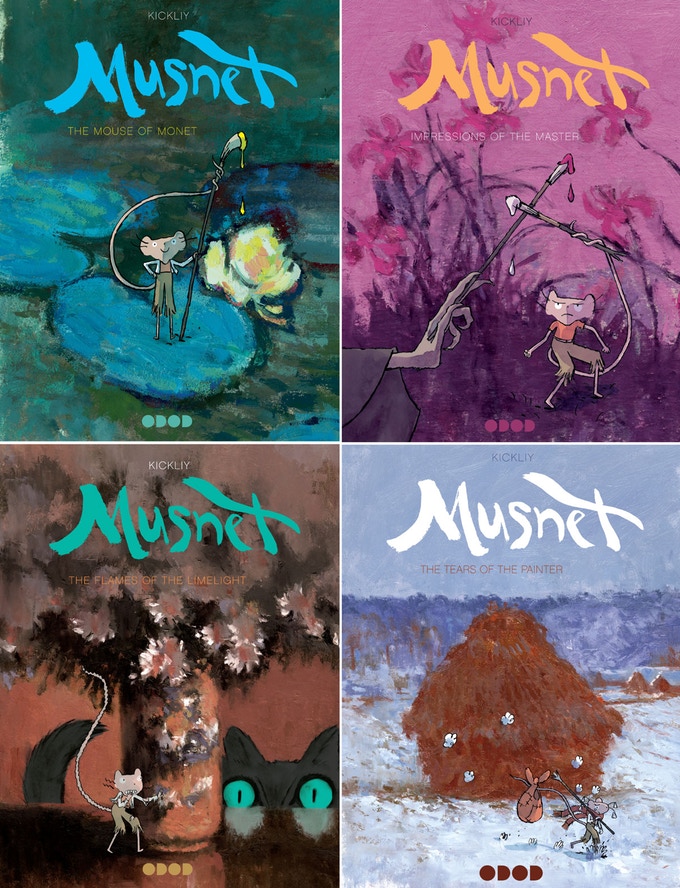
Musnet series
1. The Mouse of Monet
2. Impressions of the Master
3. The Flames of Limelight
4. The Tears of the Painter

Author: Kickliy
Published August 2nd, 2016; November 1st, 2016; April 11th, 2017; October 10th, 2017 by odod books

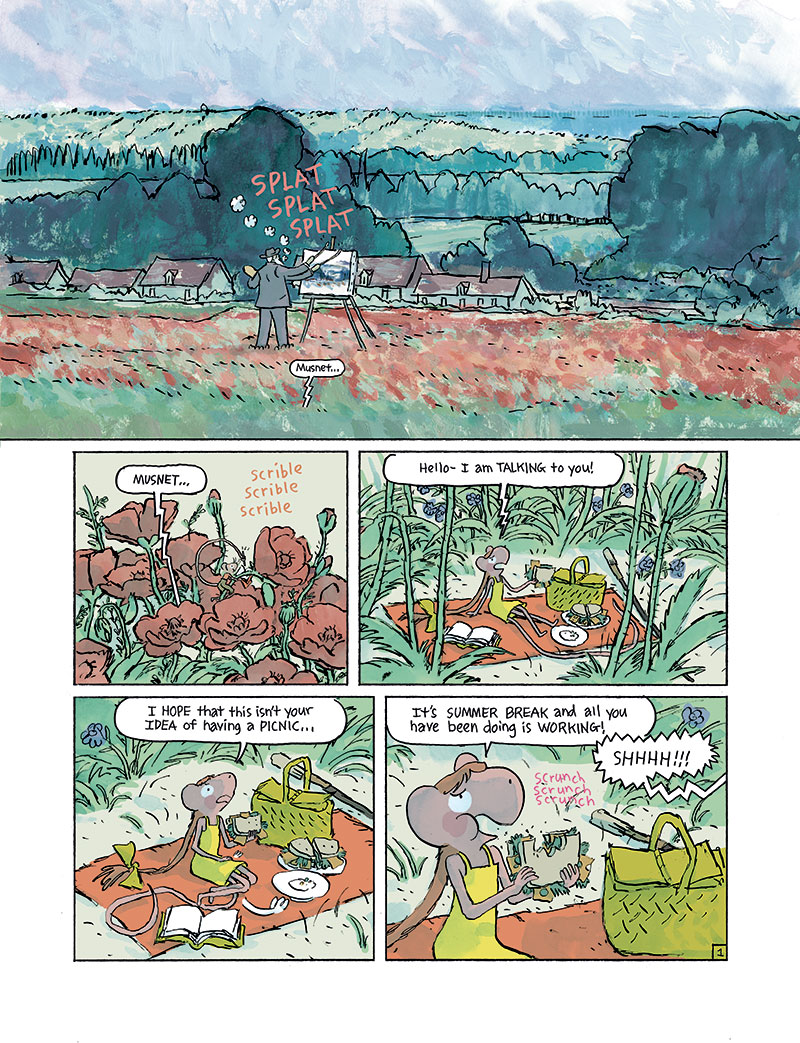
Summary: A young boy mouse travels the country side looking for work and happens upon the Monet’s garden. He takes on a job and becomes inspired to learn to paint. Will he paint in the classical ways, or in the new style of the impressionist? Which way will his brush sway?

Musnet wants to be the best mouse painter that ever was. But, he’s caught between two worlds. On one paw, Musnet loves the classical style of his old teacher, the squirrel Remi. On the other paw, Musnet can’t help to be drawn to the fresh and new art of the human master, Monet. Which path will the Mus choose?

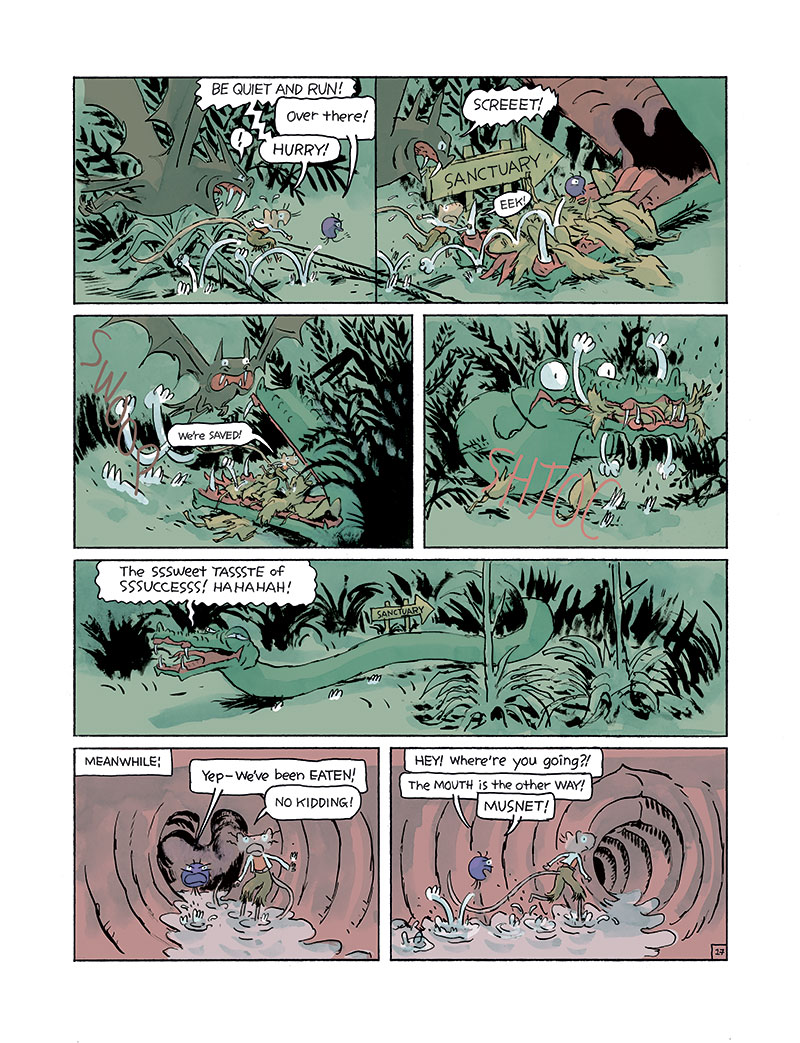
It’s dark season in Musnet’s world. His adoptive family faces eviction, his Master Remi is deathly ill, he’s chased by snakes, cats, and vampire bats, and—on top of all that—Musnet faces the most challenging painting commission of his life! Can he rise to challenges and brush them all away?

As snow and ice chill Monet’s garden, even colder things await Musnet this winter season. Mya, Musnet’s best friend, gets her own adventure. Chiby, the Japanese spider, gets in a tangle with a certain muscular rat. Is there even any room left for our vagabond mouse? Drama, action, adventure, abound in the final volume of the award nominated series.

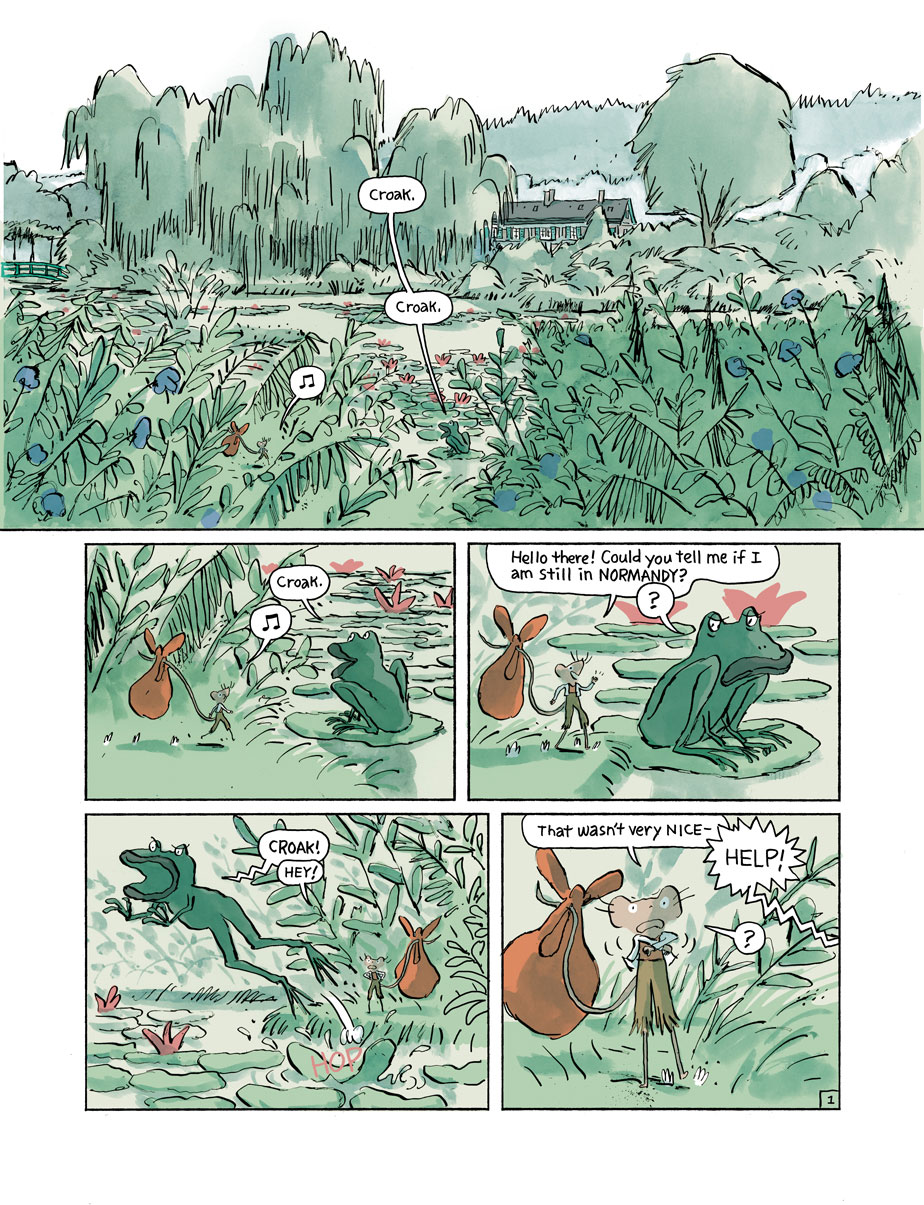
Musnet is drawn and painted in a beautiful, lush and inky style popularized by Paul Pope and French comics masters such Blutch and Christophe Blain.

“It’s a really enjoyable story that brings Monet’s paintings to life through some incredibly sweet and memorable characters. It’s challenging and imaginative, and I’m sure it will spark an obsession with painting (and maybe also mice).”—Girls Like Comics

“This new series revolves around a painting mouse found in Monet’s famous gardens in Giverny: the nameless, orphan mouse is befriended by Mya and her mouse family, who live inside the artist’s house. Introduced to painting after he begins working for Remy, an old squirrel painter, he is enchanted by Monet’s work. Beautifully painted […] charming tale of humour, art, and adventure, as the little mouse grows to find his meaning and place in the world.”—The Guardian

Musnet: The Mouse of Monet is a gorgeous and friendly story about a mouse discovering his calling in life and also what he wants to be called. Take a friendly and likable orphaned mouse, place him in a beautifully rendered watercolor and ink medium with miniature Monet masterpieces and you get a stunning and engaging story of a mouse learning to become an artist. He makes friends, finds a mentor, and even gets to sneak a peek inside Monet’s studio. It’s incredibly well executed, entertaining, informative, and absolutely absorbing. It is one of the best books I’ve read this year.” —The Picture Book Review

Review: After I read book one of this series, I could not wait to share it with everyone I talked to: “I love when books include art history in them because it makes me feel at home since I grew up in art museums as a museum director’s daughter. Musnet is no different. As soon as I realized that Musnet had ended up in Monet’s famous garden, I was fascinated with Musnet’s story and his journey to becoming an artist. Kickliy’s artwork pays perfect homage to Monet’s work and is a beautiful backdrop to Musnet’s story.” And I was really excited to read the rest of the books in the series.

Luckily they did not disappoint! Book one was just an introduction to the characters who continued to mature throughout the arc of the story. Musnet’s situation fluctuates causing the reader to quickly move from relief to panic which ensures the reader wants to keep going through the series. Although the series begins with Musnet just looking for a home, it ends with Musnet looking for what life has in store for him as an artist.

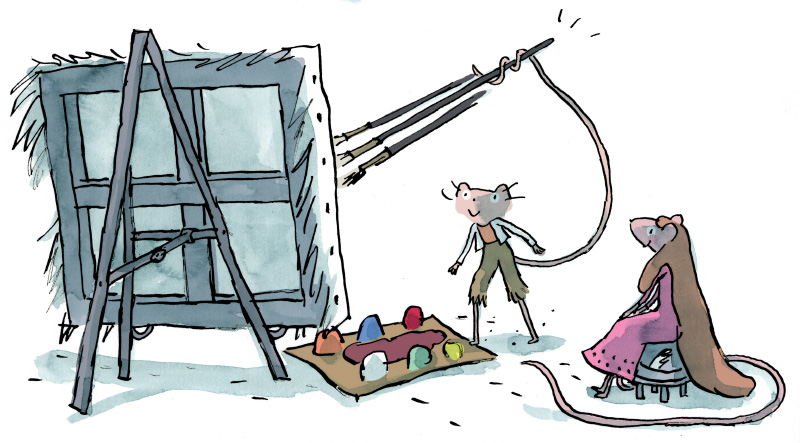
But what makes this series even more unique is the level of graphics. Kickliy’s ink, watercolor, and oil illustrations are reminiscent of the period in which Monet lived–it is like reading art. Kickliy even paints little oil paintings for the book for whenever a Musnet or Monet work is shown.

Teachers’ Tools for Navigation: “Musnet lives in Monet’s garden. Was there a roach under Van Gogh’s bed? Or a fish behind Munch’s Scream? If so, what would their story be like?” Have students create stories of animals that ‘live’ in the background of famous paintings. They’d need to research the art styles for illustrations and the time period/place of the painting for their setting, so this activity would be a perfect cross-curricular for writing, reading, art, and history.

Parts of the book would also be really great assets for engagement and information in art classrooms. Remi, Monet, and Musnet are talented artists who share insight throughout the series.

Discussion Questions: 

  • After book one, did you think Musnet was going to become a successful artist?
  • How does Kickliy’s illustrations fit the period of the book’s setting?
  • Which conflict in Musnet’s story affected Musnet’s conclusion the most?
  • Why do you think Kickliy chose Monet as the artist inspiration for his book?
  • What artist would you want to meet?
  • How did meeting Mya change Musnet’s life? Remi? Chiby?

Flagged Passages: 

Read This If You Love: Art, Graphic Novels, Monet, Mira’s Diary by Marissa Moss, The Museum by Susan Verde, Babymouse series by Jennifer and Matthew Holm, The Tale of Despereaux by Kate DiCamillo, Redwall by Brian Jacques, The Museum by Susan Verde

Recommended For: 

Signature

Emily and the Spellstone by Michael Rubens

Share

Emily and the Spellstone
Author: Michael Rubens
Published June 13th, 2017 by Clarion Books

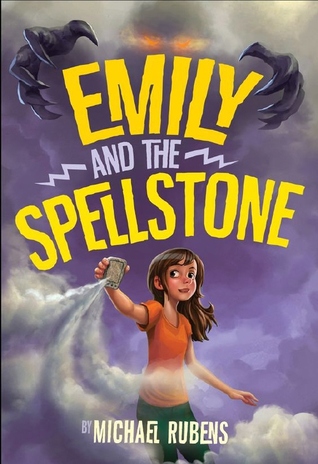
Summary: This summer, comedy writer and YA author Michael Rubens makes his middle grade debut with Emily and the Spellstone, a hilarious and accessible fantasy about growing up and coming into your own.

Emily is fed up with her frustrating family and the clique-filled hallways of elementary school. All she wants for her twelfth birthday is a cell phone, but of course her tech-obsessed older sister had to go and get carpal tunnel, so now Emily isn’t allowed to have one. Worst birthday ever. As she stomps off down the beach to get away from it all, she stumbles across a strange stone that seems to speak to her, and looks oddly like the cell phone she desperately wants. What Emily doesn’t know is that this weird rock is actually an ancient Spellstone, and only she can unlock its powers. What could go wrong?

Rubens’ whimsical wordplay and delightful prose bring this unpredictable adventure to life. Monsters and magic will inspire readers’ imaginations, while Emily’s more terrestrial troubles like mean girls and annoying little brothers will resonate with anyone who has ever been new or felt out of place in their own family. According to Booklist, the quick pacing, playful narration, and high stakes are plenty to keep reluctant readers and young fantasy fans engaged.” With a diverse cast of supporting characters and a spunky heroine, this wacky romp is a perfect summer read.

About the Author: Michael Rubens is the author of two YA novels, Sons of the 613 and The Bad Decisions Playlist, and one novel for grownups, The Sheriff of Yrnameer. A correspondent and producer for Full Frontal with Samantha Bee, he has also been a producer for Last Week Tonight with John Oliver and The Daily Show with Jon Stewart. His writing has appeared in places like The New Yorker’s Daily ShoutsSalon and McSweeney’s. He lives with his family in Brooklyn. Visit his website at www.michaelrubens.com.

Review: It is obvious that Rubens writes comedy for a living. Emily’s story is a perfect mix of laugh out loud moments, puns, and crazy adventures with monsters and evil. And unlike other books this reminded me of, Rubens has created his own monsters and villains instead of using an established mythology which means it made it really hard for me to make predictions, so I was on the edge of my seat (LAUGHING along the way) the entire novel. As soon as I finished, I went on Twitter to make sure all of my middle grade teacher friends knew about this one because I think that fans of Riordan’s books are going to really enjoy this one.

Teachers’ Tools for Navigation: Primarily, I picture this book in classrooms/libraries for independent reading or being used in classes during lit circles/book clubs. However, there are some really funny read aloud parts that could definitely be used to discuss humor, word choice, puns, and voice. It would also be lots of fun to make up apps that could be on Emily’s Spellstone.

Discussion Questions: 

  • How did Emily change from the beginning to the end of the novel? What plot points were key in her character development?
  • Find examples in the book that show Emily’s and Gorgo’s sense of humor.
  • How do you think Emily feels by the end of the book about being a Stonemaster?
  • Were there any signs throughout the book to indicate that Gorgo was going to make the decision he did?
  • If all of the humorous passages were eliminated from the book, how would that change the tone of the book? How does the word choice the author chose help make the tone what it is?
  • Why were the Venomüch family included in the story?

Flagged Passages: “Emily lay as still as she could, not daring to move, barely daring to breathe.

There was something lurking in the darkness.

She couldn’t hear it or see it, but she could feel it, the sheer foulness of its presence.

It wasn’t Gorgo. She knew that. This was something else. Something far worse. . . . . .

‘There was. . . something in my room last night.’

‘Ah, right. I thought I felt somehthing. Some sort of shade or spirit, probably sniffing around after the Stone.’

‘Why?’

He shrugged. ‘Dunno. Maybe someone sent it. Or maybe it just showed up, drawn by the Stone,’ he said. ‘You’re about to say ‘why’ again, aren’t you?’

‘Yes. Why. Why would that thing be drawn to this stone?’

‘Because it’s a Stone. They’re incredibly powerful, Stones are. Powerful and rare. A Stonemaster can use them to work great magics. That’s a very ancient relic you have there. Well, sort of modern ancient. The first Stones were massive. You’ve heard of Stonehenge, right? Well, thos are really old-fashioned. You couldn’t move them anywhere. The one you have, though, it’s portable, or, uh. . .’

‘Mobile?’ said Emily.

‘Right!’

‘A mobile. . . Stone?’

‘Precisely!’

‘A mobile Stone for casting spells.’

‘Right again.’

‘It’s a Mobile. Spell. Stone.’

‘You seem fixated on that.’

‘It’s like a mobile cell phone.’

‘Not sure what you’re talkinga bout, but if you say so.’ (p. 55, 69-70)

Read This If You Love: The Lightning Thief by Rick Riordan, Guardians of the Gryphon’s Claw by Todd Calgi Gallicano, Harry Potter, Lemony Snicket

Recommended For: 

Signature

**Thank you to Tracy at Media Masters Publicity for providing a copy for review!**

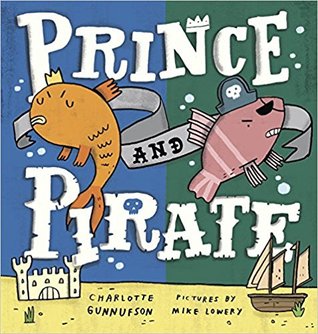
Prince and Pirate by Charlotte Gunnufson

Share

Prince and Pirate
Author: Charlotte Gunnufson
Illustrator: Mike Lowery
Anticipated Publication: May 9, 2017 by Putnam

Goodreads Summary: When two little fish with big personalities have to share the same tank, there are rough seas ahead!

Prince and Pirate are proud masters of their very own fishbowls, and life goes along swimmingly–until they’re scooped up and plopped into shared waters.
Prince is horrified to find this cheeky cod trespassing in his kingdom.
Pirate is sure this scurvy sea slug has come to plunder his treasure.
Thus, a battle of regal sneers, seaworthy stink-eyes, and off-the-hook insults begins.
Prince and Pirate’s hilarious duel for territory will elicit gales of giggles, hearty guffaws, and heartfelt smiles. Just when it seems their struggle might end in a silly stalemate, a little surprise convinces them to find a way to get along–swimmingly.

Ricki’s Review: My son has Charlotte Gunnufson’s Halloween Hustle, and we read it quite often. He loves the kooky characters and fun within the text. Prince and Pirate is no different. I loved reading this book aloud, and my son was giggling as turned each page. The book is cleverly crafted, and the words and illustrations pop off of the pages. I can’t help but think about how the author conceptualized the novel. I imagine her looking at a fishbowl and thinking about the characters amongst her fish. This book would make a wonderful text to spur creative writing amongst students. I think their imaginations would soar after reading it. 

Kellee’s Review: I think Mike Lowery’s illustrations are so much fun and add such a special personality to any story, and with this book, his illustrations met a story that definitely lived up to his standards. (I also want to compliment the book’s designer who also made the font as fun as the illustrations.) Prince and Pirate were loners who all of a sudden are forced to live together and do. not. like. it. However, when they both have the same goal to try to reach, they are able to cooperate and learn to work (and live) together. Through humor and ridiculous name calling, Gunnufson tells a story that shows how differences don’t have to be the end of a possible friendship.

Teachers’ Tools for Navigation: Teachers might ask students to create their own fish characters. They could use the prince and pirate as a model and design a similar text. This book serves as a wonderful mentor text for learning about how to build character and/or teaching dialogue. Don’t forget to check out the Educator’s Guide along with other fun, free activities on the author’s website, https://www.booksbycharlotte.com/activities.

Discussion Questions: How do you think the author conceptualized this book?; How do the words and illustrations work together to form an effective story?; How does the author build character? What other fish characters might emerge in the story? How would the story be different if the author introduce a ____ type of fish?

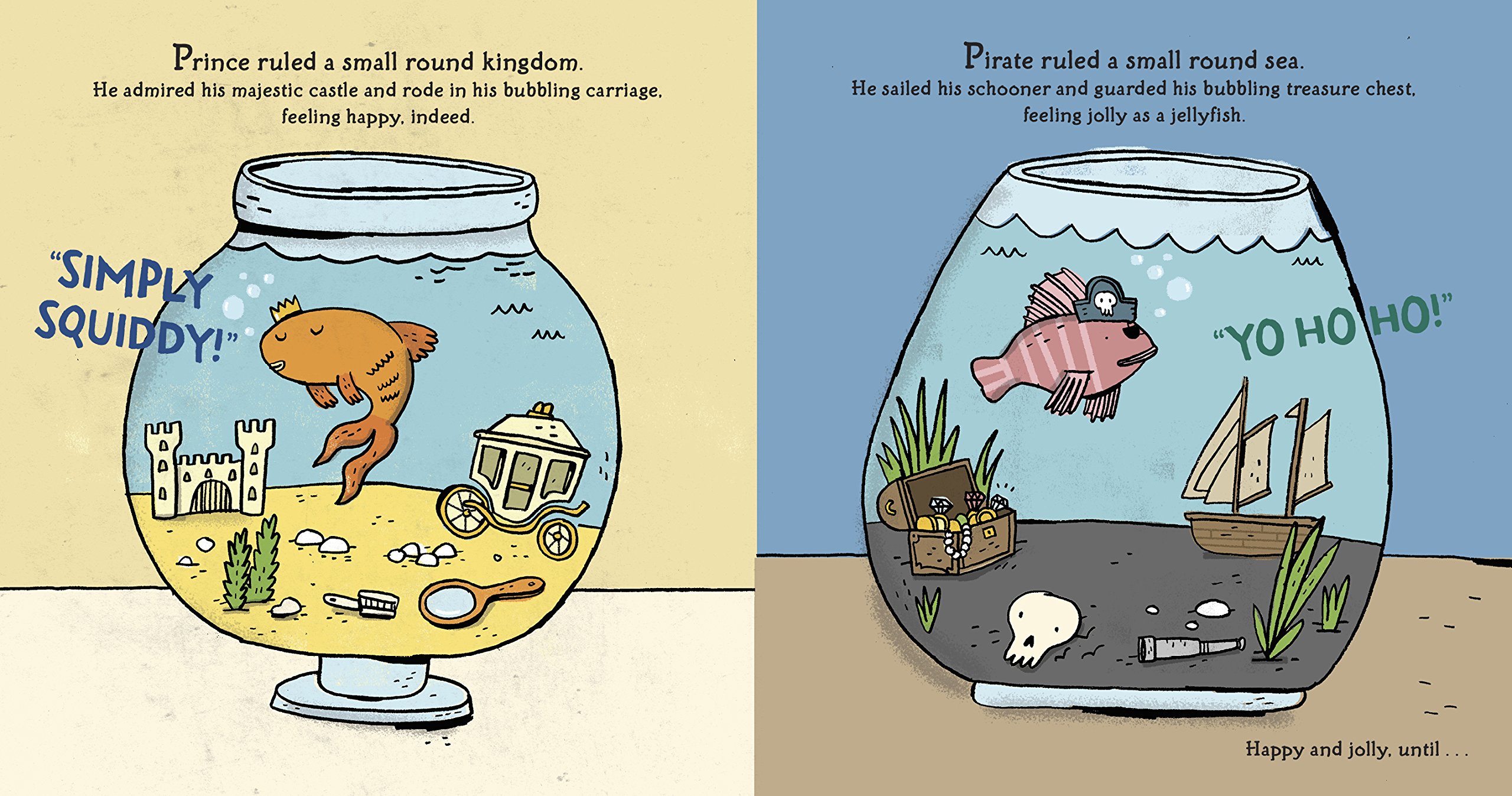
Flagged Spread: 

Read This If You Loved: Halloween Hustle by Charlotte Gunnufson; Lady Pancake & Sir French Toast by Josh Funk; Whose Story is This, Anyway? by Mike Flaherty; Dragons Love Tacos by Adam Rubin, Doodle Adventures by Mike Lowery

Recommended For: 

readaloudbuttonsmall classroomlibrarybuttonsmall

RickiSigandSignature

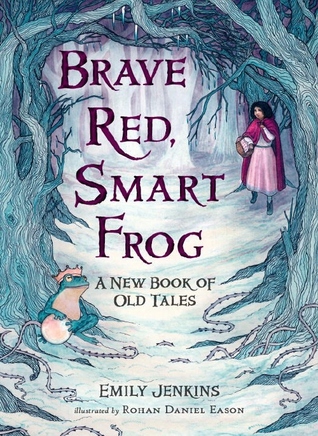
Discussion Guide for Brave Red, Smart Frog: A New Book of Old Tales by Emily Jenkins

Share

Brave Red, Smart Frog: A New Book of Old Tales
Author: Emily Jenkins
Illustrator: Rohan Daniel Eason
Published September 5th, 2017

Summary: Step into a wintry forest where seven iconic fairy tales unfold, retold with keen insight and touches of humor.

There once was a frozen forest so cold, you could feel it through the soles of your boots. It was a strange place where some kisses broke enchantments and others began them. Many said witches lived there — some with cold hearts, others with hot ovens and ugly appetites — and also dwarves in tiny houses made of stones. In this icy wood, a stepmother might eat a girl’s heart to restore her own beauty, while a woodcutter might become stupid with grief at the death of his donkey. Here a princess with too many dresses grows spiteful out of loneliness, while a mistreated girl who is kind to a crone finds pearls dropping from her mouth whenever she speaks. With empathy and an ear for emotion, Emily Jenkins retells seven fairy tales in contemporary language that reveals both the pathos and humor of some of our most beloved stories. Charming illustrations by Rohan Daniel Eason add whimsical details that enhance every new reading.

Discussion Questions include: 

  • “Snow White”
    • At the beginning of the story, dwarves are included with witches and sprites, making them feel villainous. How is this
      different from the seven dwarves we meet later in the story? Do they fit the negative connotation or are they different
      from what the villagers assume?
  • “The Frog Prince”
    • After the frog leaves, Crystal is looking for him. Why does she miss his company? How is his company different from those of her ladies-in-waiting and family?
  • “Red Riding Hood”
    • What information that Red shared does the wolf use to his advantage? Do you think he would have successfully been
      able to get into Grandmother’s house without this information?
  • Author’s Note
    • Emily Jenkins explains her intention behind rewriting these stories in the simple way that she did. How did she adhere
      to the traditional stories while also putting her own spin on them?
  • Entire book
    • Consider the names of the characters throughout the book. How does each name give a clue to the character’s
      personality or looks?

Discussion Guide Created by Me (Kellee): 

You can also access the teaching guide through Candlewick’s website here.

Recommended For: 

readaloudbuttonsmall classroomlibrarybuttonsmall litcirclesbuttonsmall closereadinganalysisbuttonsmall

Kellee Signature

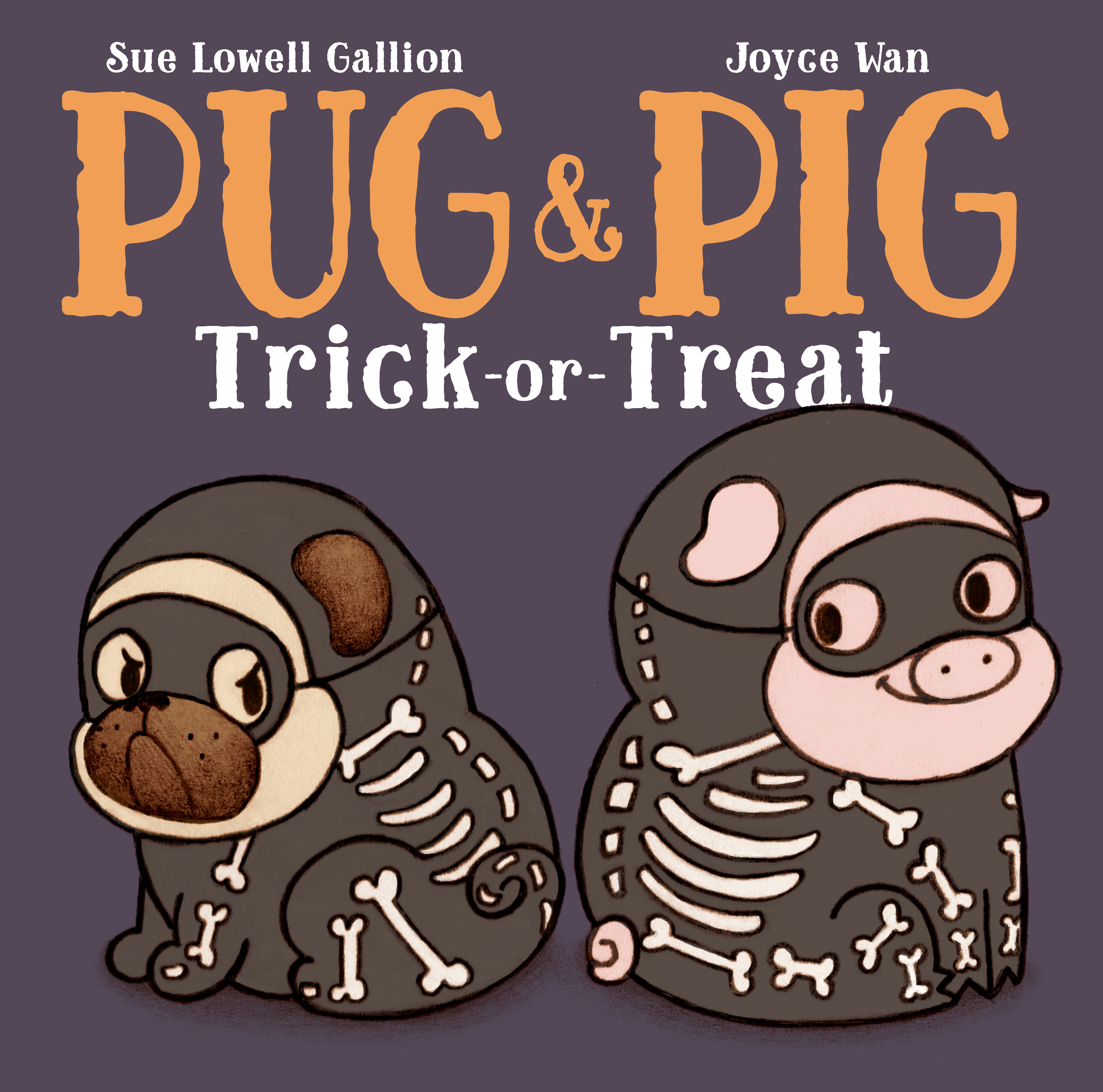
Pug & Pig: Trick-or-Treat by Sue Lowell Gallion

Share

Pug & Pig: Trick-or-Treat
Author: Sue Lowell Gallion; Illustrator: Joyce Wan
Published: July 25, 2017 by Beach Lane Books

Summary: Pug and Pig are back for a heartwarming Halloween adventure in this adorable picture book that’s perfect for pet lovers of all ages.

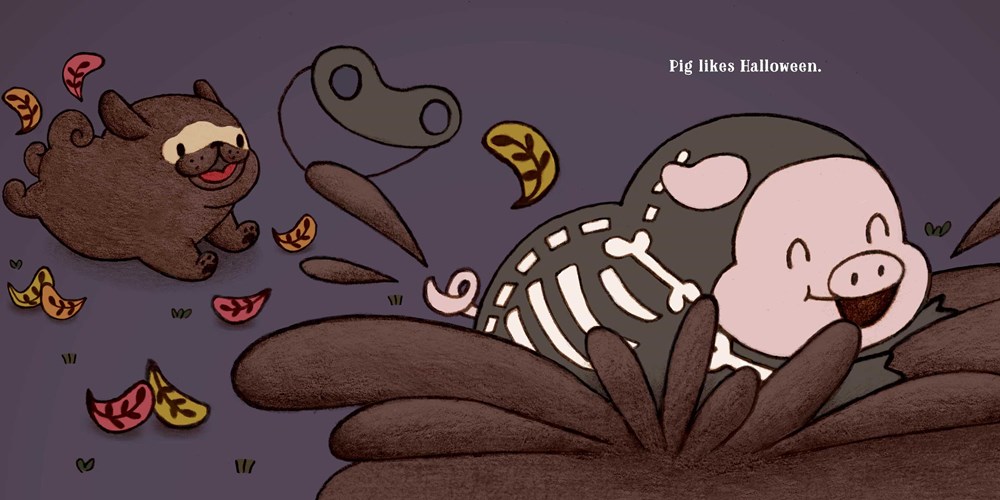
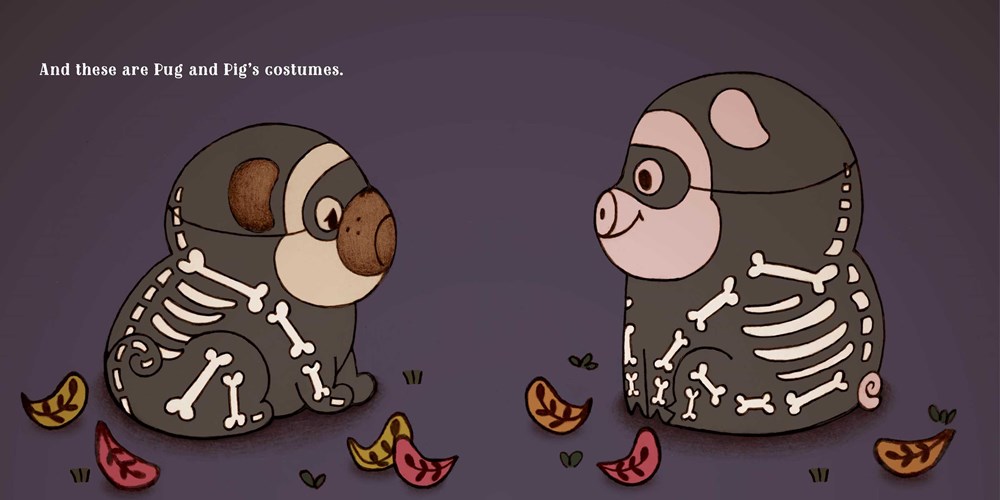
Halloween night has come to Pug and Pig’s house, and the darling duo is sporting matching costumes. The costumes are cozy. They glow in the dark. And they have masks! There’s only one problem—Pug hates wearing his. So he decides to rip it up and stay home. But Halloween just isn’t any fun for Pig without Pug! Can Pug find a way to be a good friend and get back into the Halloween spirit?

Ricki’s Review: This is a phenomenal second installment in the Pug & Pig series! I really enjoy the personalities of these two characters, and I can’t help but smile as I read the stories. In this book, Pug decides that he doesn’t enjoy wearing his Halloween costume. Pig isn’t too pleased with this. Together, they devise a clever solution! Early readers will absolutely adore this charming story. It would make for a great Halloween read aloud! We’ll be bringing our copy to my son’s preschool to use as a read aloud this week!

Teachers’ Tools for Navigation: Teachers might ask students to make connections with the book. They could discuss whether or not they’ve had a time where they haven’t wanted to participate in an activity. Or perhaps, they didn’t care about something that their friends cared deeply about. Students might talk through these conflicts and problem solve by suggesting different ways they might approach the situations.

Be sure to download the fun activity kit, complete with masks, cupcake toppers, a coloring sheet, and more! (The link also takes you to a Common Core-aligned discussion guide.)

Discussion Questions: Why does Pug want to stay home? How does this make Pig feel?; Have you ever wanted to stay home when your friends or family wanted to do something? What did you do? What are some other ways you could have acted?; What are some other costumes that Pug and Pig could have been for Halloween?

Flagged Passage: 

Read This If You Loved: Pug Meets Pig by Sue Lowell Gallion; Pig the Pug by Aaron Blabey; Dog vs. Cat by Chris Gall; Mr. Fuzzbuster Knows He’s the Favorite by Stacy McAnulty

Giveaway!:

a Rafflecopter giveaway

About the Author: Sue Lowell Gallion is the author of Pug Meets Pig and Pug & Pig Trick-or-Treat (Simon & Schuster/Beach Lane Books). She has two grown-up kids, one grandson, and a black lab mix named Tucker, who all provide writing inspiration. As a printer’s daughter, she has a life-long love of type, paper, and the aroma of ink. She lives in Kansas City, KS. Visit Sue at suegallion.com, follow @SueLGallion on Twitter, and check out her kids’ book recommendations at Goodreads.

Recommended For:
 classroomlibrarybuttonsmall

Thank you, Barbara from Blue Slip Media, for sending a copy for review!

RickiSig

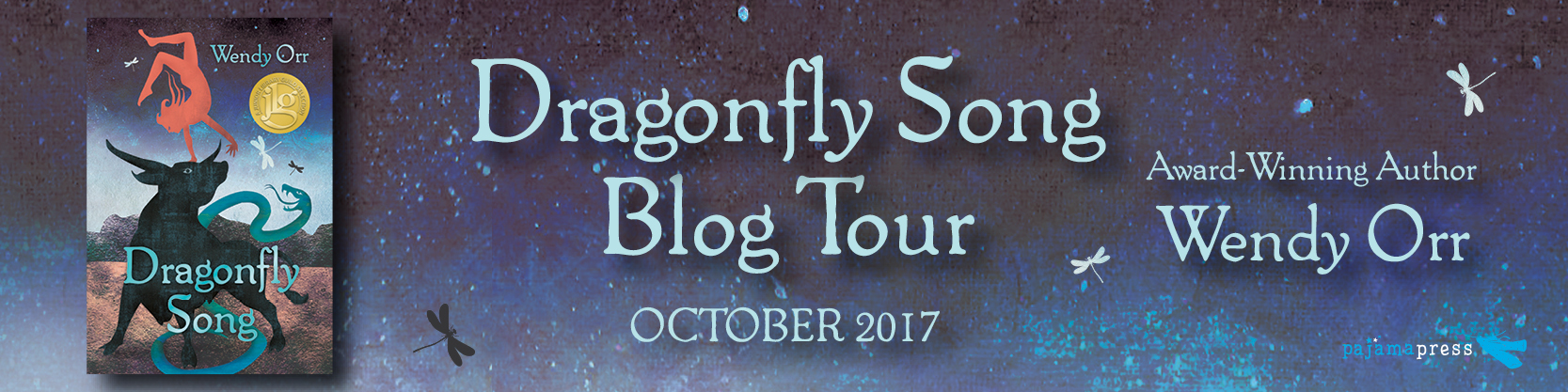
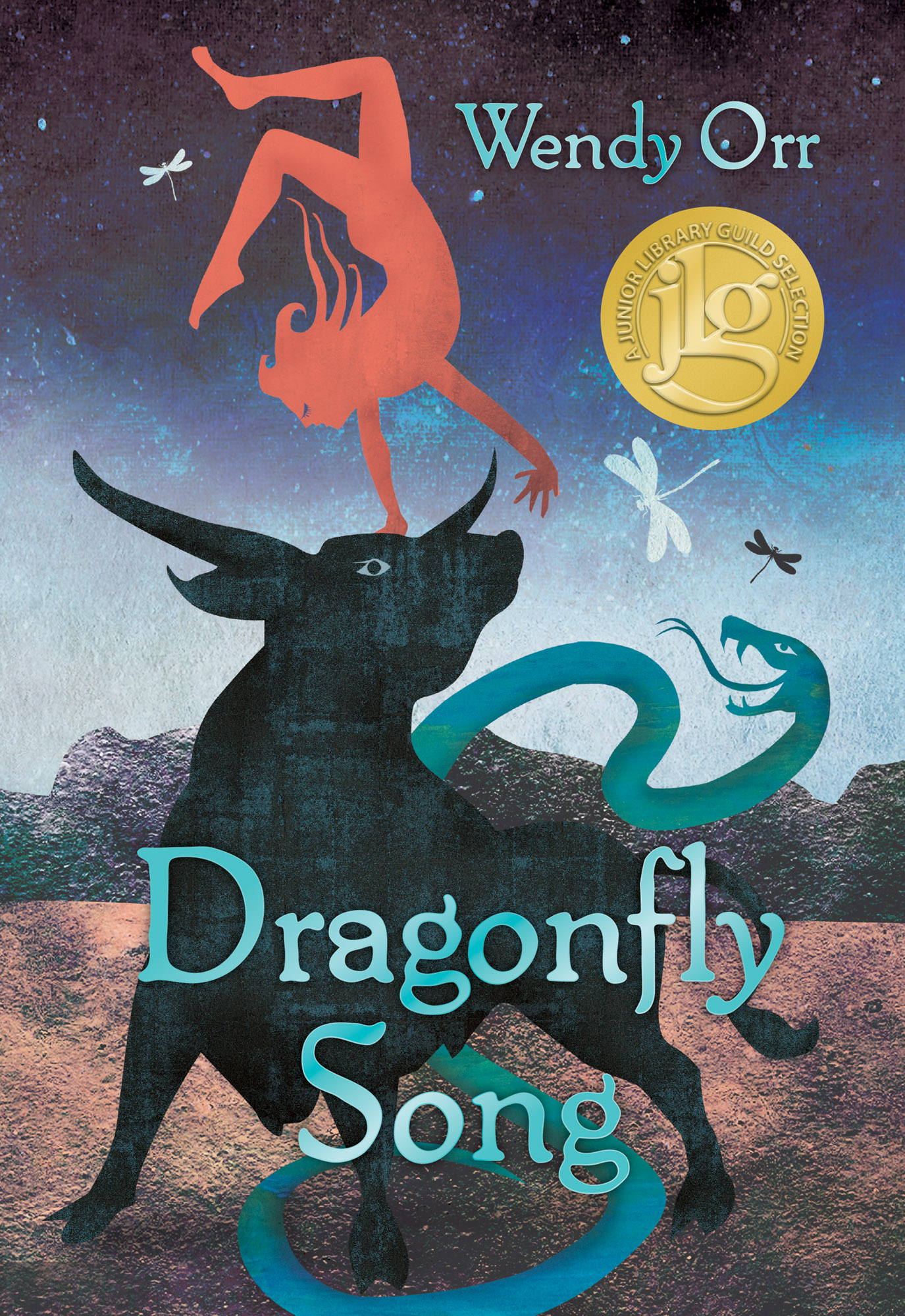
Blog Tour with Author Guest Post with Activities and Discussion Questions!: Dragonfly Song by Wendy Orr

Share

Dragonfly Song
Author: Wendy Orr
Published October 27th, 2017 by Pajama Press

Summary: The whispers say it’s not true that the Lady’s firstborn died at birth. They say it’s worse—the baby was born with an extra thumb dangling from each wrist. If she’s not perfect, she can never follow in her mother’s footsteps.

Nobody but the old wise-woman knows what truly happened to Aissa, the firstborn daughter of the priestess. If they saw the half-moon scars on the servant girl’s wrists they would find it out, but who would look twice at lowly, mute No-Name? Then the soldiers of Crete come to the island, demanding children as tribute for their god-king’s bull dances as they do every year. Aissa is determined to seize this chance to fight for her own worth and change her destiny once and for all.

Lyrically written and refreshingly unpredictable, Dragonfly Song is a compelling Bronze Age fantasy that suggests a fascinating origin for the legend of the Minotaur and his dark tribute.

“As mesmerizing as a mermaid’s kiss, the story dances with emotion, fire, and promise.” -Kirkus Reviews, starred review

More information about Dragonfly Song: http://pajamapress.ca/book/dragonfly_song/

About the Author: Wendy Orr was born in Edmonton, Canada, but grew up in various places across Canada, France, and the USA. She studied occupational therapy in the UK, married an Australian farmer, and moved to Australia. She’s the author of many award-winning books, including Nim’s Island, Nim at Sea, Rescue on Nim’s Island, Raven’s Mountain, and Peeling the Onion.

More information about Wendy Orr: http://www.wendyorr.com/

Author-Created Activity Guide:

  • Art: In Chapter 2, Aissa and the potter’s daughter make ‘circles of flowers
    in a ring of stones.’ Later, Aissa makes patterns of flowers and shells for the fishers’ goddess (the first in Chapter 9) and patterns of rocks and her small treasures for the goddess in her sanctuary cave. Patterns are used in some religions and meditative practices; Indian or Tibetan mandalas and Navajo sandpaintings are probably the best known now.
    To draw a mandala: http://www.art-is-fun.com/how-to-draw-a-mandala/
    Ideas for mandala-type patterns using fresh flowers: http://twistedsifter.com/2014/07/flower-mandalas-by-kathy-klein/
    Make your own patterns with sea shells, flowers, pebbles, leaves, seeds, or other natural materials. Glue them into place on card, or photograph them.
  • Writing: In Chapter 24, Aissa learns to write on the clay tablets used for taxation records. The writing she used was called Linear B, and was a combination of a ‘syllabary’ – each symbol representing a syllable of a word – and ‘logograms,’ which are symbols of whole words. These tablets were supposed to be temporary, but were baked into pottery when the palaces burned down. Have students make their own clay tablets using real clay or as in these instructions: http://www.ehow.com/how_12110304_make-egyptian-hieroglyphics-tablet.html
    For some of the Linear B logograms: http://www.omniglot.com/writing/linearb.htm
  • Time Capsule: Without written historical records, interpreting archaeological finds can be very difficult. Put together ‘time capsules’ of small items – e.g. a birthday card, Barbie doll, shopping list, old iPod, CD… Break the class into small groups and have them use the items to ‘interpret’ questions such as this society’s religion, dress code, and social structure.

Author-Created Discussion Questions: 

  • Like The Hunger Games, Dragonfly Song draws on the Greek myth of Theseus, in which seven youths and seven maidens are sent as tribute from Athens to Crete, to be eaten by the monstrous half-man, half-bull Minotaur. However, Dragonfly Song looks back to the possible origins of the myth in Bronze Age Greece, and the palace of Knossos in Crete. The bull was obviously a very important symbol, probably even a god – even though the real animals would be sacrificed to their god – and there were many scenes, on paintings, vases, and gold jewellery, showing young acrobats somersaulting over the backs of bulls. What if these acrobats were part of a payment to Crete in return for protection by – or from – their powerful navy? If so, the tribute would have come from as far as the Minoan navy reached. Discuss the power of myth – why have some stories lasted for thousands of years?
  • Discuss how the physical setting of Aissa’s home is a metaphor for the grimness of her life there. (e.g. The island is rocky, poor and isolated; buildings are dark, built of rock or burrowed into the side of the mountain.) What about the springtime when she develops new strengths after being cast out of the servants’ kitchen?
  • In the Bull King’s palace, the buildings are awe-inspiring, filled with light and extraordinary art. The culture appears to be obsessed with beauty – but is there a darkness underpinning it?
  • Dragonfly Song is set in the Bronze Age, but the ordinary people of Aissa’s island still use stone tools as well. Why do you think that would be?
  • In the prologue, The Firstborn Daughter, what are the clues to tell us that this is a matriarchal society? How does it differ from a patriarchal society? The Mosuo of China are an example of a matriarchal society in the present day. https://www.youtube.com/watch?v=eoTrARDa8BU
  • Chapter 8 mentions that the chief killed the last lion for his cloak when he married the Lady. Why might he have wanted a lionskin cloak rather than a deerskin? Why do you think the islanders didn’t worry about conservation and keeping all their native species alive?
  • In Chapter 9, the servants are ‘screaming with joy at their game of hate.’ Why do you think the author described bullying Aissa as a game? How does bullying Aissa make the servants feel?
  • Aissa is an ‘elective mute’ because there is nothing physical or intellectual preventing her from speaking. However, that doesn’t mean that she could speak if she wanted to: Mama’s command, ‘Stay quiet, still as stone till I come back,’ is buried so deep in her subconscious, and is so mixed with the trauma of the family’s death and disappearance, that Aissa can’t simply decide to start talking, even when she’s safe. Would she have been more accepted by the other servants if she could talk? How might it have changed the story if she had regained her speech after singing the snake away from Luki? Do you think she could have regained her speech if she had been treated kindly after being rescued? Do you think that meeting Mama again was the only reason she regained her speech, or might it have been partly because she’d faced death in the bull ring, and was safe now? A real-life example of a child choosing to become mute after trauma is Maya Angelou’s story (summarized in Goodnight Stories for Rebel Girls).
  • Discuss the book’s structure with the students. What was their reaction to the combination of free verse and prose?
  • Wendy Orr says that using free verse made it easier for her to access and portray Aissa’s emotions. Have the students choose an emotion, e.g. rage, grief, or joy – and write about it in free verse. Next, have them write a short story using the ideas and images that arose from the verse.
  • Why do you think the author chose to write in free verse rather than rhyming, like the children’s rhyme in Chapter 10?
    Here comes rabbit, hippity hop
    See his ears flap and flop;
    Here comes hedgehog, curled up small
    Roll him over like a ball.
  • Wendy Orr says that she normally writes in silence, on the computer, but found that the verse sections for this story had to be written by hand, playing the album Agaetis Byrjun by the Icelandic band Sigur Ros. Experiment with playing different types of music as the students write verse.
  • For useful images and links, see the Pinterest board: https://www.pinterest.com/wendyorr1/dragonfly-song-bits-of-background-and-teaching-ideas/

Don’t Miss Out On the Rest of the Tour!

October 22: Unleashing Readers, Activity Guide and Discussion Questions https://www.unleashingreaders.com/
October 23: YA and Kids Book Central, Book Playlist http://www.yabookscentral.com/blog/
October 24: Log Cabin Library, Guest Post http://logcabinlibrary.blogspot.com/
October 25: The Children’s Book Review, Character Interview https://www.thechildrensbookreview.com/
October 26: Bluestocking Thinking, Review http://bluestockingthinking.blogspot.com/
October 27: Charlotte’s Library, Interview http://charlotteslibrary.blogspot.com/
October 28: A Foodie Bibliophile in Wanderlust, Interview http://www.foodiebibliophile.com/
October 29: Writers’ Rumpus, Guest Post https://writersrumpus.com/

Recommended For: 

Thank you to Wendy Orr for her fantastic activities and questions!

Nerdy Birdy by Aaron Reynolds

Share

Nerdy Birdy
Author: Aaron Reynolds; Illustrator: Matt Davies
Published September 22, 2015 by Roaring Brook Press

GoodReads Summary: Nerdy Birdy likes reading, video games, and reading about video games, which immediately disqualifies him for membership in the cool crowd.

One thing is clear: being a nerdy birdy is a lonely lifestyle.

When he’s at his lowest point, Nerdy Birdy meets a flock just like him. He has friends and discovers that there are far more nerdy birdies than cool birdies in the sky.

Ricki’s Review: I absolutely adored this book. I don’t usually review books that are more than a year old, but my love for this book, compelled me to write a review. The book is about a nerdy bird whose physical appearance makes him feel lonely. He meets other birds who share his physical appearance, and he finds comfort in this. But then a very, very different bird comes along (a vulture), and Nerdy Birdy is forced to consider his values and whether or not the nerdy bird club might be just as exclusive themselves. This book provided an avenue for an excellent discussion with my son. We talked about his class and about how some of his peers might feel left out. I’d love to use this book in an elementary school classroom.

Teachers’ Tools for Navigation: This is a great book to read on the first day of school or at a time when students are leaving one or some students left out. It provides a great opportunity for critical discussions of cliques.

Discussion Questions: Why does Nerdy Birdy feel left out? How does he find solace in other birds that look like him?; How does the vulture differ from him? What does this teach him about friendship, groups, and personal appearances?

We Flagged: 

Image from: https://us.macmillan.com/nerdybirdy/aaronreynolds/9781626721272/

Read This If You Loved: Counting Crows by Kathi Appelt; Giraffes Can’t Dance by Giles Andreae, Unicorn Thinks He’s Pretty Great by Bob SheaThe Magic of Maxwell and His Tail by Maureen Stolar Kanefield

Recommended For: 

readaloudbuttonsmall classroomlibrarybuttonsmall

RickiSig