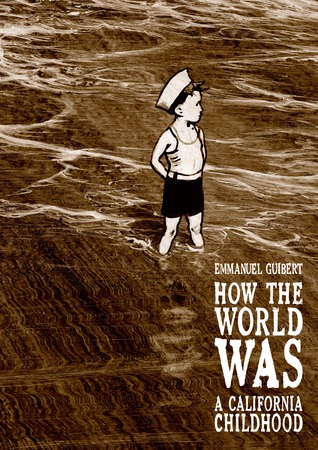
How the World Was: A California Childhood by Emmanuel Guibert

Share

NFPB2016

Nonfiction Wednesday

Nonfiction Picture Book Wednesday is hosted by Kid Lit Frenzy and was started to help promote the reading of nonfiction texts. Most Wednesdays, we will be participating and will review a nonfiction text (though it may not always be a picture book).
Be sure to visit Kid Lit Frenzy and see what other nonfiction books are shared this week!
How the World Was

How the World Was: A California Childhood 
Author: Emmanuel Guibert; Translation: Kathryn Pulver
Published: July 15, 2014 by First Second

Summary: In 1994, French cartoonist Emmanuel Guibert befriended an American veteran named Alan Cope and began creating his new friend’s graphic biography. Alan’s War was the surprising and moving result: the story of Cope’s experiences as an American GI in France during World War II.

How the World Was is Emmanuel Guibert’s moving return to documenting the life of his friend. Cope died several years ago, as Guibert was just beginning work on this book, but Guibert has kept working to commit his friend’s story to paper. Cope grew up in California during the great depression, and this remarkable graphic novel details the little moments that make a young man’s life…while capturing the scope of America during the great depression.

A lyrical, touching portrait, How the World Was is a gift for a dear friend in the last moments of his life… and also a meditation on the birth of modern America.

Review: Many of you know Emmanuel Guibert’s graphic novel Alan’s War. Guibert is a French cartoonist who tells the true story of Alan Cope, an American GI in France in WWII. How the World Was: A California Childhood depicts Alan’s earlier childhood experiences, growing up during the Great Depression in California. The graphic novel is unlike others that I’ve read, and I really enjoy Guibert’s style. The chapters read like vignettes of Cope’s childhood; some of the scenes are graphic, and many are quite moving. This text would be excellent for close reading, and I don’t think readers even need to read it in its entirety to appreciate and understand each chapter.

Teacher’s Tools for Navigation: I’d love to use this text in the classroom, and I would probably use a single chapter. (This would inspire readers to take the entire book out on their own, which is a style I love to use when I am teaching.) I was particularly moved by the end of the book, where Alan’s mother goes in for surgery. I’d love to do a close reading of this section to discuss author’s purpose and Alan’s identity development.

Discussion Questions: How does this graphic novel differ from others that you’ve read?; How is the author’s writing style similar to short vignettes? Why might he have chosen to write the book in this why? Is it effective for you, the reader?; What scenes stand out to you? Why might this be?

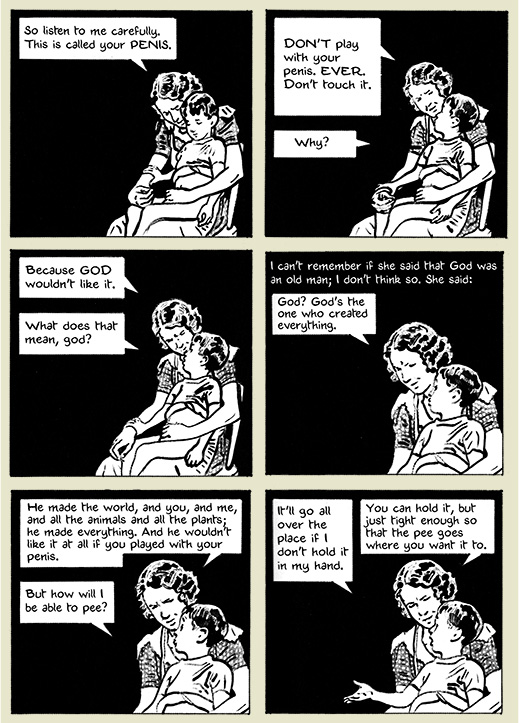
Flagged Passage: I’ve included a section that stands out to me. It is a bit peculiar to include in a graphic novel, but there is a lesson in the pages that follow. I imagine that censors would be horrified to see this page alone, but within the context of the chapter, it is a very important scene.

how the world was

Special thanks to http://goodokbad.com/index.php/reviews/how_the_world_was_review for sharing this scene in his reviews. It’s a good one.

Read This If You Love: The Photographer by Emmanuel Guibert; Alan’s War by Emmanuel Guibert; The Stranger by Albert Camus; The House on Mango Street by Sandra Cisneros

Recommended For:

closereadinganalysisbuttonsmall classroomlibrarybuttonsmall

RickiSig

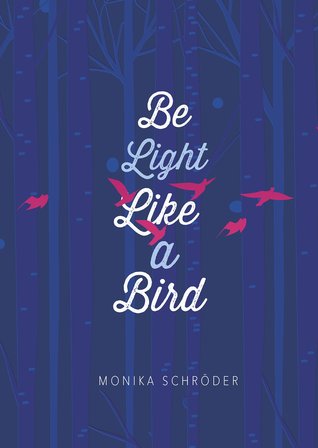
Be Light Like a Bird by Monika Schröder

Share

Be Light like a Bird

Be Light Like a Bird
Author: Monika Schröder
Published September 1st, 2016 by Capstone Young Readers

Summary: After the death of her father, twelve-year-old Wren finds her life thrown into upheaval. And when her mother decides to pack up the car and forces Wren to leave the only home she’s ever known, the family grows even more fractured. As she and her mother struggle to build a new life, Wren must confront issues with the environment, peer pressure, bullying, and most of all, the difficulty of forgiving those who don’t deserve it. A quirky, emotional middle grade novel set in Michigan’s Upper Peninsula, Be Light Like a Bird features well-drawn, unconventional characters and explores what it means to be a family and the secrets and lies that can tear one apart.

Review: When I originally started this book over the summer, I had just finished Truth or Dare by Barbara Dee which was about a young girl’s grief after the loss of her mother, so when I picked up Be Light Like a Bird and Wren’s father passed away in the first few pages, it just emotionally wrecked me. I tried continuing, but the grief that Wren and her mother feel just lept off the page and into my heart–I had to put it down for a bit. When I picked it back up, after Augusta Scattergood recommended it, I jumped right in, prepared this time, and loved every second of my journey with Wren and her mother. 

Be Light Like a Bird was so tough for me to read the first time because the emotions that Monika Schröder evokes through her writing are just so real. Wren’s mother is in the anger stage of grief and just cannot seem to leave it while Wren wants to accept and learn to live without her father, but when your only remaining parent is in such denial and anger, it really affects the young person’s life that they are raising.

I also really love Jana’s review of Be Light Like a Bird. Visit her post to see more about the book.

Teachers’ Tools for Navigation: Wren’s journey is going to be perfect for students dealing with grief, moving to a new school, bullying, or someone who wants to start a petition or stand up for something they don’t think it write. Wren and Theo work very hard in the book to save a local pond from being built over. On their political journey, they go to a town council meeting and start a petition. They are an inspiration to what young people can do to make a difference, and teachers could definitely use part of their story to discuss advocacy, environmental, or political issues their students could fight.

Discussion Questions: What are different ways to deal with grief?; What are the six stages of grief? What are some examples from the book that show that Wren and her mom went through some of the stages?; What did Theo teach Wren about herself?; Why do you think Wren chose to try to talk her mom into staying in Pyramid? Who in the town of Pyramid helped Wren feel at home?

Flagged Passages: “…I realized she wasn’t crying because she was sad–it was because she was so mad.

Then she told me to put everything I wanted to keep into a suitcase.

How do you decide what to keep when your Dad has died and your mother has turned into a raging woman you hardly recognize? If it were up to me, I would have kept everything the way it was before. But that is obviously not an option…I sad in my room and looked around, trying to decide what to pack, but the cloud was making me numb. None of the stuff really mattered anymore.” p. 13-14

Read This If You Loved: Snicker of Magic by Natalie Lloyd, Some Kind of Happiness by Claire Legrand, Far from Fair by Elana K. Arnold

Recommended For:

  classroomlibrarybuttonsmall closereadinganalysisbuttonsmall

Kellee Signature

**Thank you to M0nika for providing a copy for review!**

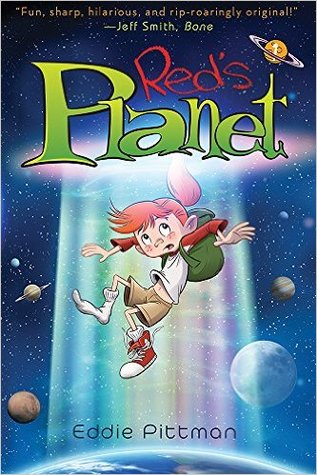
Teaching Guide for Red’s Planet: A World Away From Home by Eddie Pittman

Share

reds-planet

Red’s Planet: A World Away From Home
Author and Illustrator: Eddie Pittman
Published April 19th, 2016 by Amulet Books

Summary: Red, a quirky, headstrong 10-year-old, longs to live in her own perfect paradise far away from her annoying foster family. But when a UFO mistakenly kidnaps her, Red finds herself farther away than she could have possibly imagined—across the galaxy and aboard an enormous spaceship owned by the Aquilari, an ancient creature with a taste for rare and unusual treasures. Before Red can be discovered as a stowaway, the great ship crashes on a small deserted planet, leaving her marooned with a menagerie of misfit aliens. With her newfound friend, a small gray alien named Tawee, Red must find a way to survive the hostile castaways, evade the ravenous wildlife, and contend with Goose, the planet’s grumpy, felinoid custodian. Surely this can’t be the paradise she’s looking for.

Teaching Guide: 

Pittman’s new graphic novel series will be a big hit with adventure and sci-fi lovers!

The teaching guide can also be viewed here.

Recommended For: 

classroomlibrarybuttonsmall readaloudbuttonsmall closereadinganalysisbuttonsmall litcirclesbuttonsmall

Signature

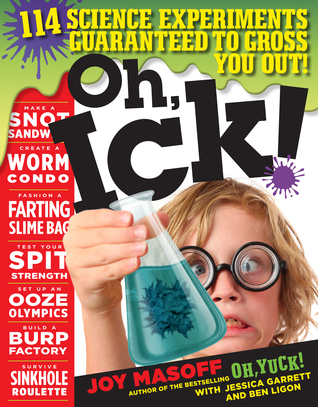
Oh, Ick!: 114 Science Experiments Guaranteed to Gross You Out! by Joy Masoff

Share

NFPB2016

Nonfiction Wednesday

Nonfiction Picture Book Wednesday is hosted by Kid Lit Frenzy and was started to help promote the reading of nonfiction texts. Most Wednesdays, we will be participating and will review a nonfiction text (though it may not always be a picture book).
Be sure to visit Kid Lit Frenzy and see what other nonfiction books are shared this week!

oh-ick

Oh, Ick!: 114 Science Experiments Guaranteed to Gross You Out
Author: Joy Masoff with Jessica Garrett and Ben Ligon
Published November 1st, 2016 by Workman Publishing Company

Summary: From the bestselling author of Oh, Yuck! and Oh, Yikes! here is an A-Z compendium of hands-on grossness.

Featuring 114 interactive experiments and ick-tivities, Oh, Ick!delves into the science behind everything disgusting.

Stage an Ooze Olympics to demonstrate viscosity and the nature of slime. Observe how fungi grow by making a Mold Zoo. Embark on an Insect Safari to get to know the creepy crawlies around your home. And learn what causes that embarrassing acne on your face by baking a Pimple Cake to pop—and eat. Eww!

Review: I always struggled with science, but I think if I had done more science experiments, putting the facts and information that I couldn’t memorize into practice, I would have been able to understand the concepts and information better. Books like Oh, Ick! and its companions Oh, Yuck! and Oh, Yikes! make science interesting thus helping kids put science into action and moving the information from short term to long term!

Teachers’ Tools for Navigation: I would love to see some of these icky experiments used in the classroom! Although the experiments are alphabetical by topic, the index gives teachers the ability to search for what they need. Want to teach about B cells and scabs, why not do “Spaghetti Scab Dinner?” Sound waves? Why not try “Sick Sounds?”

Flagged Passages: 

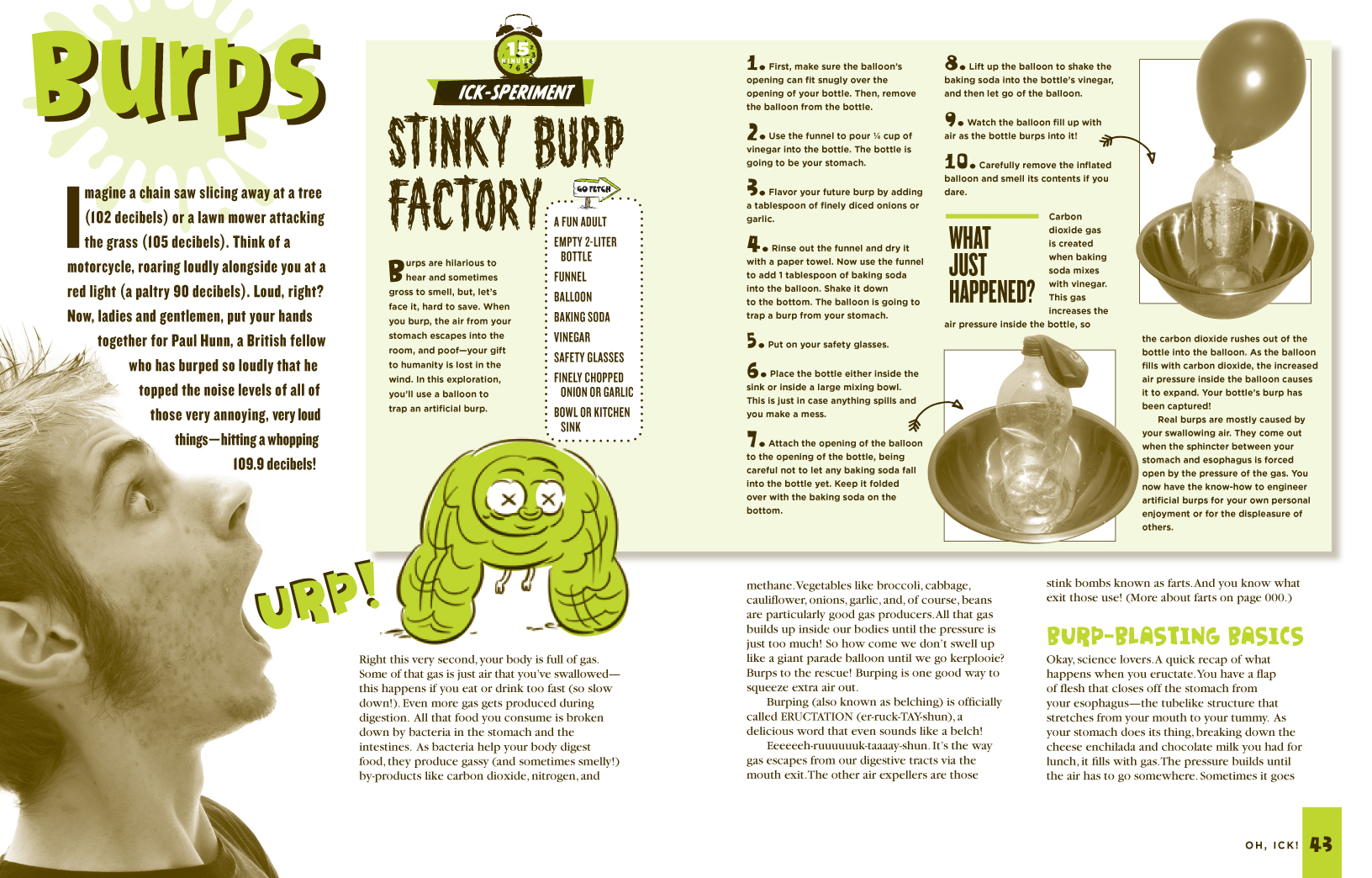
oh-ick-spread

Read This If You Loved: Gross and interesting science experiments

Recommended For: 

closereadinganalysisbuttonsmall

Signature

**Thank you to Estelle from Workman Publishing for providing a copy for review!**

Strange, Unusual, Gross, and Cool Animals by Charles Ghigna

Share

NFPB2016

Nonfiction Wednesday

Nonfiction Picture Book Wednesday is hosted by Kid Lit Frenzy and was started to help promote the reading of nonfiction texts. Most Wednesdays, we will be participating and will review a nonfiction text (though it may not always be a picture book).
Be sure to visit Kid Lit Frenzy and see what other nonfiction books are shared this week!

strange-unusual-gross-cool-animals

Strange, Unusual, Gross, and Cool Animals
Author: Charles Ghigna
Published October 11th, 2016 by Animal Planet

Summary: Animal Planet presents the ickiest, stickiest, blobbiest, and oddest animals in the world!

Did you know that an archerfish can spit water up to 16 feet? Or that the giant weta is the world’s largest and heaviest insect? Animal Planet’s fascinating exploration of animal oddities introduces young animal lovers to some of the most astonishing, gorgeous, and obscure animals in the world-including some brand new discoveries! Packed with more than 200 vibrant photographs and fun facts about animals with unusual behaviors, strange appearances, and remarkable stats, this deluxe gift book is perfect for reluctant readers or anyone who loves totally gross and amazing animals.

A portion of the proceeds from the sale of books in the Animal Bites series benefits the principal partners of R.O.A.R. (Reach Out. Act. Respond.), Animal Planet’s initiative dedicated to improving the lives of animals in our communities and in the wild.

strange-unusual-gross-cool-animals-ad

Review: I love learning about weird animals because it is so amazing to see what mother nature has made out there! This book shares with the reader some of the weirdest! Trent and I love to sit and look through the pages and look at the cool animals! 

What I really like about Animal Planet texts is that they have a variety of spreads throughout the text and include really interesting information but also beautiful photographs. This text has four types of spreads: Gallery, a spread that explores a theme; Featured Creature, a spread that focuses on one animal; Creature Collection, a spread that compares and contrasts a group of animals; and Macroview, a spread that shows tiny details of small animals.

Teachers’ Tools for Navigation: In addition to being an amazing text to have in classroom and school libraries, this text is a wonderful way to begin inquiry projects. When I teach my central idea unit, for my final assessment I ask my students to write their own nonfiction text with a clear central idea and supporting details. Many students choose animals for their nonfiction text, but it is usually the same offenders: dolphins, cheetahs, and dogs, so it would be really nice to have this text to jump start the brainstorming process.

Discussion Questions: What type of features do some animals have the help them protect themselves from predators?; Which animal did you think was the oddest looking?; Which animal do you think is not that odd looking?; Which animal would you like to learn more about?

Flagged Passages: 

010-011_SUGC_Profiles.indd

Read This If You Loved: Pink is for Blobfish by Jess Keating and other nonfiction picture books about animals, Animal Planet & National Geographic nonfiction such as Real or Fake?, Ocean Animals, Awesome 8, Animal Atlas, or the Animal Bites series    

Recommended For:

  classroomlibrarybuttonsmall closereadinganalysisbuttonsmall

Kellee Signature

**Thank you Charles Ghigna and Animal Planet for providing a copy for review!**

Around America To Win the Vote: Two Suffragists, a Kitten, and 10,000 Miles by Mara Rockliff

Share

NFPB2016

Nonfiction Wednesday

Nonfiction Picture Book Wednesday is hosted by Kid Lit Frenzy and was started to help promote the reading of nonfiction texts. Most Wednesdays, we will be participating and will review a nonfiction text (though it may not always be a picture book).
Be sure to visit Kid Lit Frenzy and see what other nonfiction books are shared this week!

around-america-to-win-the-vote

Around America to Win the Vote: Two Suffragists, a Kitten, and 10,000 Miles
Author: Mara Rockliff
Illustrator: Hadley Hooper
Published August 2nd, 2016

Summary: The author of Mesmerized delivers another fascinating glimpse into history, this time the story of two brave suffragists on a trek across America to spread the word: Votes for Women!

In April 1916, Nell Richardson and Alice Burke set out from New York City in a little yellow car, embarking on a bumpy, muddy, unmapped journey ten thousand miles long. They took with them a teeny typewriter, a tiny sewing machine, a wee black kitten, and a message for Americans all across the country: Votes for Women! The women’s suffrage movement was in full swing, and Nell and Alice would not let anything keep them from spreading the word about equal voting rights for women. Braving blizzards, deserts, and naysayers—not to mention a whole lot of tires stuck in the mud—the two courageous friends made their way through the cities and towns of America to further their cause. One hundred years after Nell and Alice set off on their trip, Mara Rockliff revives their spirit in a lively and whimsical picture book, with exuberant illustrations by Hadley Hooper bringing their inspiring historical trek to life.

Review: I am posting this review specifically today because it is amazing to hear for these women’s journey when today a woman is running for president under a major political power. It is amazing that in 2016 we have made it this far, which is amazing, but we also have to remember how hard woman fought for women’s rights and that women’s equality isn’t here yet.

Another reason why I posted this today is to remind people to vote. All election days are our opportunity to choose our futures. We are not powerless; voting gives us power and a voice. Please vote and remind all those close and dear to you to vote as well.

Now to the book. I loved reading Nell and Alice’s adventure. These are woman that are truly role models because they did something so unexpected and unacceptable at the time to fight for something they believe in a peaceful and intelligent manner. Mara Rockliff, along with Hooper’s busy yet muted and beautiful illustrations, tell us their story in an engaging way that will definitely make the reader think about so much.

Teachers’ Tools for Navigation: In addition to reading Nell and Alice’s story in conjunction to history lessons about suffragists and this time in history or as a lit circle text with other books about strong woman or people making a difference, Michele Knott had an idea that I thought would be fascinating: compare and contrast the way that politics has changed in 100 years. How has tactics changed? How has technology changed the delivery and reception of politics?

Discussion Questions: What obstacles did Nell and Alice face that they would not have faced if they were traveling 10,000 miles in 2016? How would their journey have been different if it was 2016? Do you think face-to-face works better than some of the use of technology that we see nowadays?; Do you think Nell and Alice made a difference?

Flagged Passages: 

around-america-spread

Read This If You Loved: The First Step by Susan E. Goodman, Fearless Flyer by Heather Lang, Hillary Rodham Clinton by Michelle Markel, Brave Girl by Michelle Markel or any book about a strong female of history; Sit-In by Andrea Davis Pinkney or any book about how people made a difference for what they knew was right

Recommended For: 

closereadinganalysisbuttonsmalllitcirclesbuttonsmallreadaloudbuttonsmallclassroomlibrarybuttonsmall

Signature

Who Wins?: 100 Historical Figures Go Head-to-Head and You Decide the Winner! by Clay Swartz

Share

NFPB2016

Nonfiction Wednesday

Nonfiction Picture Book Wednesday is hosted by Kid Lit Frenzy and was started to help promote the reading of nonfiction texts. Most Wednesdays, we will be participating and will review a nonfiction text (though it may not always be a picture book).
Be sure to visit Kid Lit Frenzy and see what other nonfiction books are shared this week!

who-wins

Who Wins? 100 Historical Figures Go Head-to-Head and You Decide the Winner!
Created by Clay Swartz
Illustrated by Tom Booth
Published July 12th, 2016 by Workman Publishing Company

Summary: Who would rock the mic at karaoke night? Abraham “The Great Emancipator” Lincoln or Jane “Lady Persuasion” Austen? How about a hot dog eating contest between Harry “Mr. Magic” Houdini and Mary “Mother of Frankenstein” Shelley? What about a pie contest? A staring contest? And who has a better chance of sneaking into Area 51, Isaac “Gravity Guy” Newton or Sacagawea aka “The Pathfinder”?

In Who Wins?: History, you decide the winner in over 50 head-to-head challenges between 100 of history’s most illustrious characters. But choosing the victor isn’t arbitrary. Readers must justify their answers using each of the historical figures’ six 0-10 category rankings in bravery, leadership, artistry, wealth, wisdom, and fitness; as well as facts from short biographies.

As funny as it is informative, the book is uniquely formatted so readers can match up each and every character in any of the head-to-head battles. History has never been so much fun!

Kellee’s Review: Who Wins? is informative, funny, and so cleverly formatted that it is going to be a star in homes and classrooms. I love how the book gives each historical figure a nickname (either one they already were given, like Satchmo, or made up, like Gravity Guru for Isaac Newton) to add a bit of humor to the book; however, still makes sure to include a plethora of information about each figure including a bio then 3 little-known facts. Each head-to-head situation also helps guide your decision by giving some example questions to think about. Let’s look at a head-to-head, so you can really see how clever it is!

William Wallace “Braveheart” vs. Isaac Newton “Gravity Guru”
Who Wins Living in the Wild, Wild West?

20161008_221140-1

Ricki’s Review: What a clever concept! This spiral-bound book will be a staple for car rides. I could also see it being a great book for fast finishers in the classroom. The book consists of three columns that are split. So, for example, I randomly flipped to three pages (one of each column). At the far right, there is a short summary of Louis Armstrong’s biography and picture. Then, in the middle, the column I flipped to is the “talent show” and asks “Who is the most well-rounded? Who has the most experience entertaining?” Then on the far right, I flipped to Abraham Lincoln. While this one seems like a clear winner for Louis Armstrong, I think we could conceivably argue for either person for the two questions. I’ll be hanging on to this book. It will be a great book to give to my kids in the backseat. Fun family debates are the best!

Teachers’ Tools for Navigation: Are you an elementary school teacher or a social studies teacher or a language arts teacher? Then buy this. It is a perfect bell work or paper prompts or discussion starter or debate topic creator or whatever else you can think of!

Discussion Questions: Who wins?

Read This If You Love: History, Historical Figures, Debates 

Recommended For: 

closereadinganalysisbuttonsmall classroomlibrarybuttonsmall

Signatureand RickiSig

**Thank you to Estelle at Workman’s for providing copies for review!**