Bedtime for Sweet Creatures by Nikki Grimes

Share

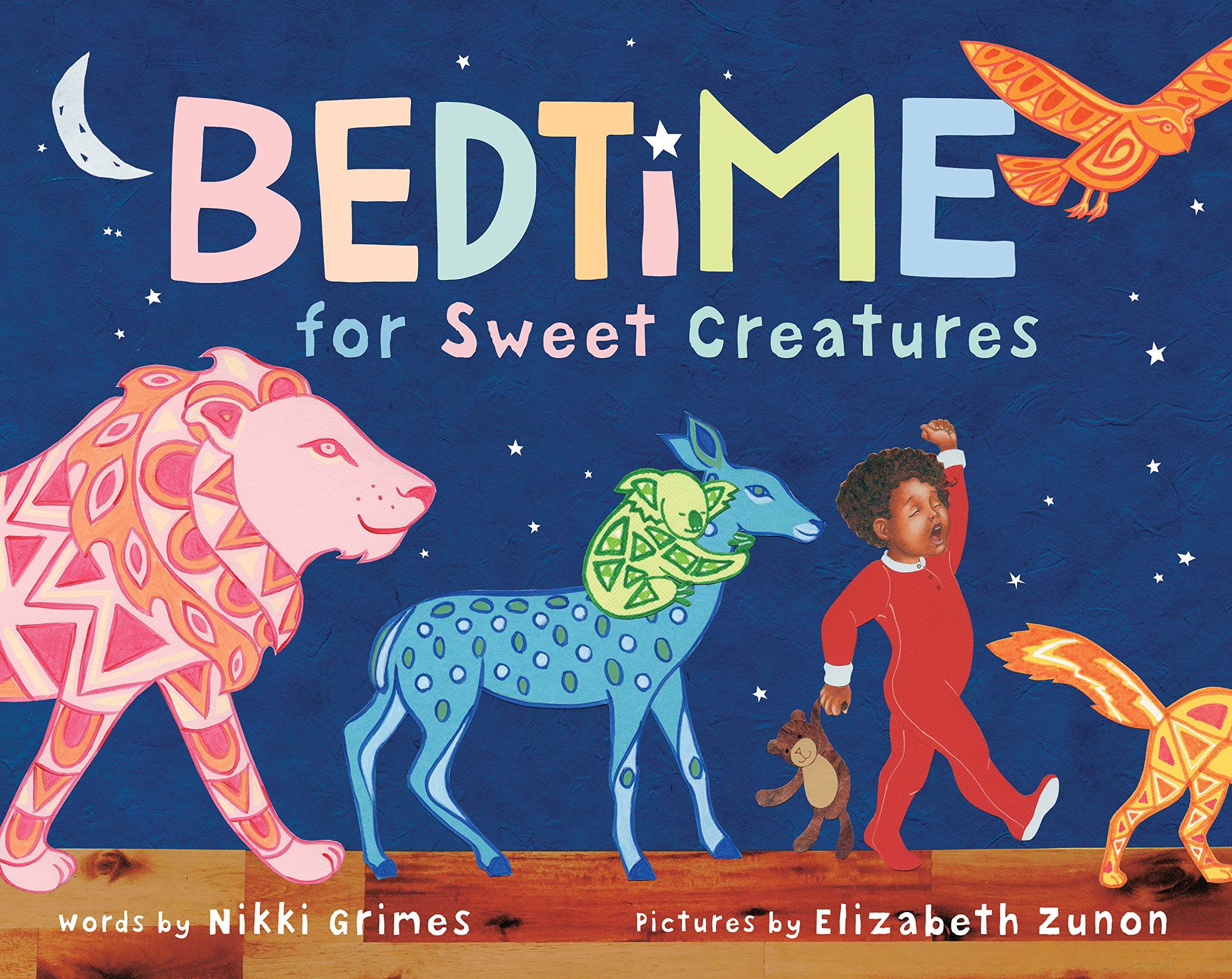
Bedtime for Sweet Creatures
Author: Nikki Grimes; Illustrator: Elizabeth Zunon
Published January 1, 2020 by Sourcebooks Jabberwocky

Goodreads Summary: It’s bedtime. But Mommy’s little one is not sleepy.

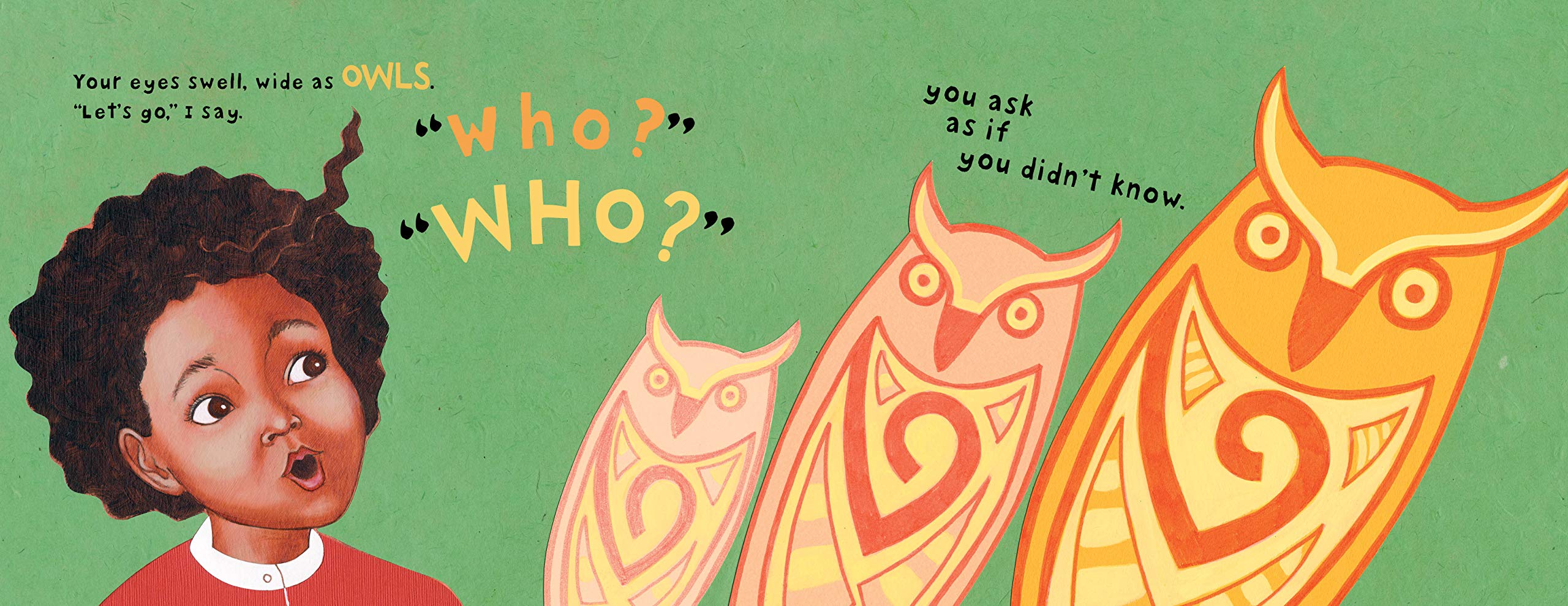
He growls like a bear, he questions like an owl, he tosses his mane like a lion. He hunts for water like a sly wolf, and hides like a snake.

Mommy needs to wrangle her sweet creature in bed so that the whole family can sleep. From tigers to squirrels to snakes, the little boy dodges around his bedtime, until he is tired enough to finally sleep. His imaginative animal friends weave their way through the illustrations, eventually joining him in curling up for the night.

My Review: The rhythm of this book is palpable. As a mother of three children six and under, I identified whole-heartedly with the mother of this book. She just wants her child to go to bed. As the child attempts sleep, he morphs into different animals (a lion, a tiger, an owl!). The book displays bedtime in ways that parents will identify with. Teachers will love using this book to teach metaphor and sound in story. 

My three-year-old’s review: “I like the squirrel and the koala a lot! I liked all of the aminals. [sic]”

My six-year-old’s review: “I like how his mom and his dad are trying to get him to sleep at night. I like how it is night-time in the book and the colors of the book make it feel like it is night-time.”

Teachers’ Tools for Navigation: The ways in which Grimes uses sound and metaphor is very intriguing and quite teachable. I spent a significant amount of time thinking about the almost-anthropomorphism of the text. The animals are given human characteristics of the child. But the child is actually given animal characteristics. This is zoomorphism, right? I would love to have this kind of study and debate with students. So cool!

Discussion Questions: What animals does the child act like? How does the author choose qualities of the child to connect them with animals?; Choose another animal not within the book. How might the child act like this animal at bedtime, too?

We Flagged: 
Read This If You Loved: Penguin and Tiny Shrimp Don’t Do Bedtime by Cate Berry; Twenty Yawns by Jane Smiley; Goodnight Moon by Margaret Wise BrownGoodnight Songs by Margaret Wise Brown

Recommended For: 

readaloudbuttonsmall classroomlibrarybuttonsmall

RickiSigand Kellee Signature

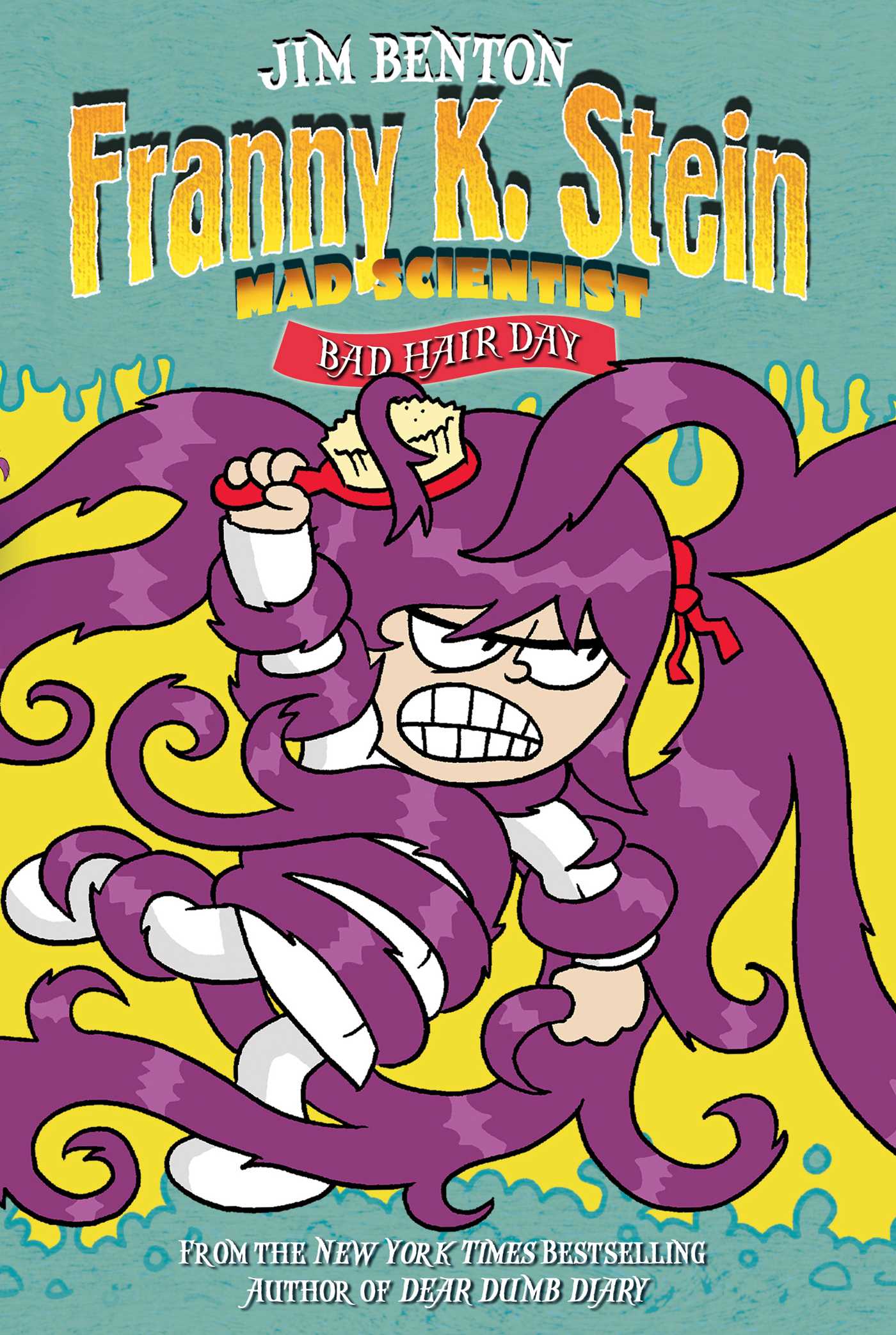
Franny K. Stein, Mad Scientist: Bad Hair Day by Jim Benton

Share

Bad Hair Day
Author and Illustrator: Jim Benton
Published July 23rd, 2019 by Simon Schuster Books for Young Readers

Summary: Franny K. Stein isn’t a fan of glamour. She doesn’t style her hair, the thought of wearing makeup makes her want to gag, and she couldn’t care less about wearing dressy dresses when she’d much prefer her lab coat.

But sometimes Franny wonders if her mom wishes she were different. Which gives Franny an idea…for an experiment! What if she can turn the beauty products her mom loves into something more exciting?

Every experiment has its experimental error, and when Franny’s hair takes on a life of its own, Franny must save the day (and her hair).

About the Author: Jim Benton is the New York Times bestselling writer of the Dear Dumb Diary series and a cartoonist whose unique brand of humor has been seen on toys, television, T-shirts, greeting cards, and even underwear. Franny K. Stein is the first character he’s created especially for young children. A husband and father of two, he lives in Michigan, where he works in a studio that really and truly does have creepy stuff in it.

Review: Franny K. Stein is not worried about all those other things other people worry about–she just wants to do experiments and other mad scientists things. And you know what, I love that!!! And I definitely saw what Benton was trying to do with this book when it comes to glamour and such, but I, as a parent, just didn’t like to see Franny’s mom put a bit of passive aggressive pressure on Franny to be anything other than her amazing self. I mean, she makes creatures and fights them–what does a little messy hair matter?! But in the end, Franny’s mom and the reader are reminded of this, so once again Franny can go on being herself.

Teachers’ Tools for Navigation: Simon and Schuster have a wonderful curriculum guide to use with this series: CLICK HERE.

Discussion Questions: 

  • Franny’s mom is supportive of Franny, but she also questions her. How did you feel about how Franny’s mom in this book?
  • I like to describe Franny as awesome, as in I am awe-struck by her. What traits does Franny have that would lead me to describe her this way?
  • Why did Franny’s pig tails act differently than her ponytails?
  • How was Franny’s mom wrong about Igor?
  • Would Franny be successful in her monster fighting without Igor? Why or why not?

Flagged Passages: CHAPTER ONE: FRANNY’S HOUSE

The Stein family lived in the pretty pink house with the lovely purple shutters down at the end of Daffodil Street. Everything about the house was bright and cheery.

But, of course, the outside of a house is never as interesting as what’s going on inside it.

And inside this house, behind the little round upstairs window, something interesting was always going on, because this was the bedroom and laboratory of Franny K. Stein, Mad Scientist.

Last week, for example, Franny developed a giant sea horse, and the day before that she worked on a way to fly based on how bats flap their wings.

Those projects became pretty expensive, so Franny needed to get a piggy bank to save her money in.

Of course, being a mad scientist, she created her piggy bank from a real live pig, which meant that she had to learn all she could about pigs.

This got pretty messy, but she didn’t mind getting messy, because that’s just what happens when you’re doing mad science.

Read This If You Love: Dear Dumb Diary series, Frank Einstein series, Zita the Spacegirl series

Recommended For: 

classroomlibrarybuttonsmall

Signature

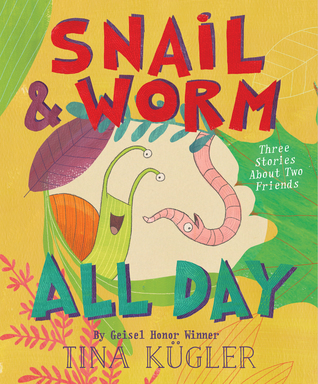
Review and Giveaway!: Snail & Worm All Day: Three Stories About Two Friends by Tina Kügler

Share

Snail & Worm All Day
Author and Illustrator: Tina Kügler
Published September 24th, 2019 by HMH Books for Young Readers

Summary: Snail and Worm go on three silly adventures in this early reader chock full of heartfelt humor and irresistible illustrations. By Geisel Honor winner Tina Kügler.

Snail and Worm are back at it and sure to have readers giggling from dawn ’til dusk (wait—do snails and worms sleep?) in Snail and Worm All Day, complete with heartfelt humor and Tina Kügler’s irresistible illustrations.

Brimming with laugh-out-loud jokes, these three new stories are sweet celebrations of cooperation and discovery.

About the Author: Author-illustrator Tina Kügler lives in the Los Angeles area with her artist husband and three sons. When she is not making picture books, she can be found trying to befriend snails and worms in her backyard.www.tinakugler.squarespace.com Twitter: @tinatheatre Instagram: @kuglertina

Praise: ★ “All day, every day, is a good time for reading about Snail and Worm….Run (faster than Snail ever could) to get a copy of this winning early reader.”—Kirkus, STARRED review

“[N]ew readers should feel supported in their efforts while being continually entertained.”—The Horn Book

Kügler’s clever, off-kilter stories are enhanced by colorful, expressive cartoon illustrations that give strong textual support….This latest Snail and Worm book is a strong addition to all early reader collections and a surefire hit with children and their adults.”—Booklist

“The friendly and cheerful cartoon illustrations effectively enhance the story’s sweet humor.”—School Library Journal

Review: As Trent has entered this world of early chapter and transitional books, I have been so lucky to learn about some amazing books out there, and I was so happy to get introduced to Snail and Worm with this book, and we cannot wait to read the rest of the series.

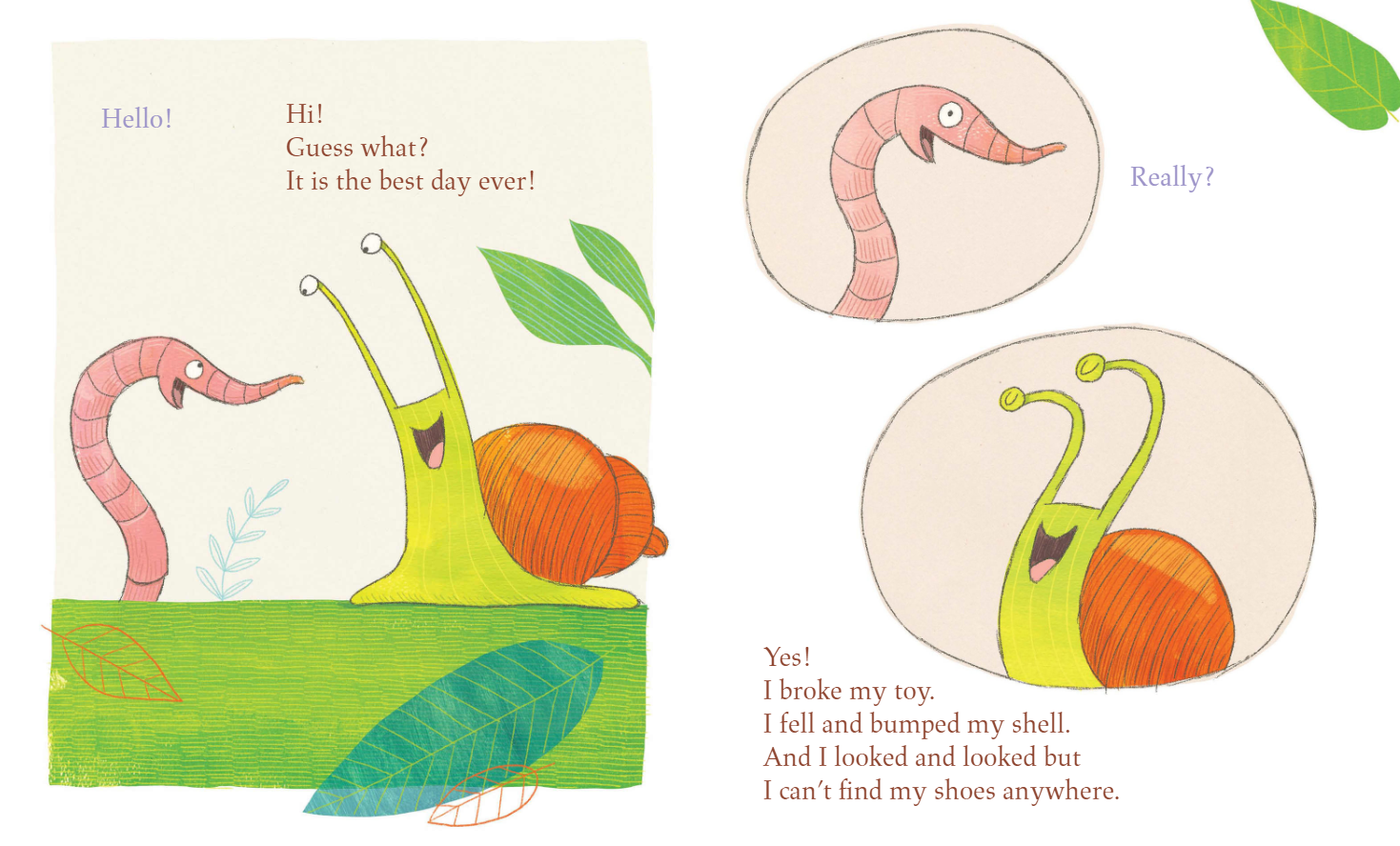
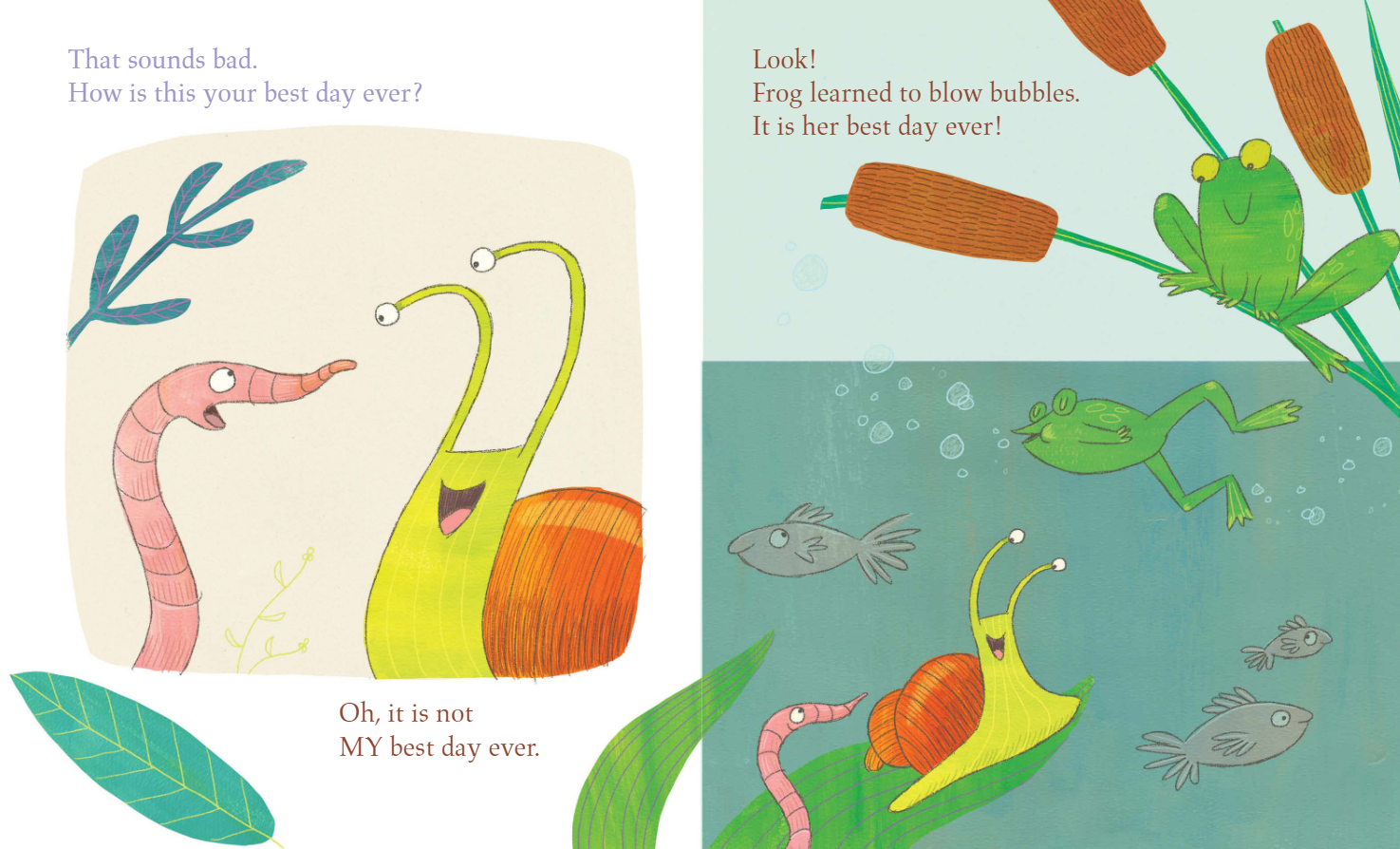
Teachers’ Tools for Navigation: Each of the three stories has a different chance to dig deep during a read aloud. The first story looks at how one bad thing doesn’t need to affect the entire day, the second story looks at habitats and contradictions, and the final story looks at creating a narrative.

Discussion Questions: 

  • When you are having a bad day, what can you think about to make you feel better?
  • What is a time that you thought something was different than what it was?
  • What are the similarities and differences between Snail and Worm? Why do you think they are friends?
  • How was snail a contradiction in the second story?
  • Who is your best friend?
  • Which of the three stories was your favorite? Why?
  • What is a lesson that you learned from the book?
  • How would the stories change if they were only from Snail’s point of view? Worm’s?

Flagged Passages: 

Read This If You Love: Elephant & Piggie, Frog & Toad, Fox & Chick, and other fun duos

Recommended For: 

classroomlibrarybuttonsmall

Giveaway: 

a Rafflecopter giveaway

Signature

**Thank you to Jessica at HMH for providing a copy for review and giveaway!**

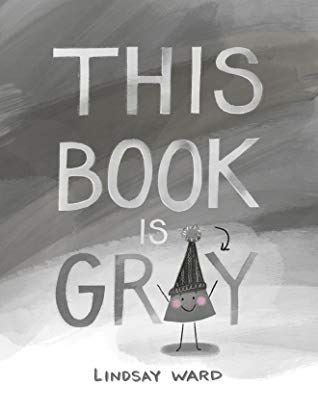
This Book is Gray by Lindsay Ward

Share

The Day the Crayons Quit
Author and Illustrator: Lindsay Ward
Published: December 1, 2019 by Two Lions

Goodreads Summary:Gray just wants to be included. But the other colors are always leaving him out. So he decides to create his own project: an all-gray book. Once upon a time, there lived a wolf, a kitten, and a hippo…

Gray just knows it’s going to be perfect. But as he adds page after page, the Primary and Secondary colors show up…and they aren’t quite so complimentary.

A book within a book, this colorful tale explores the ideas of fitting in, appreciating others, and looking at things from another perspective and also uses personality and wit to introduce basic color concepts.

Ricki’s Review: I adored this book. I love stories about the underdog, and gray is definitely an underdog color! Fans who love The Day the Crayons Quit will absolutely love this story. It is very funny and a fantastic read aloud. There are many themes for discussion within the book. Kids might consider whose stories are missing as they think about gray’s emotions. They might also think about the other colors and how they are rude to gray and what this might feel like. The characterization of all of the colors offers much for discussion, too. Teachers and parents will love to read this aloud to children.

Kellee’s Review: As a daughter of an art teacher and art museum director, art education has always been important to me. I think the lack of art classes in elementary and secondary school as well as the push away from imagination in schools is a detriment to our children, so books like this give me so much hope! This book celebrates color education, creative writing, word play, and mood. It even pulls in social emotional learning with a focus on friendship and cooperation. Lindsay Ward did such a fantastic job with all of the elements of the story, and I cannot wait to share this book far and wide. It will be a fantastic read aloud in classrooms when discussing primary/secondary colors, story telling and mood, or even just to talk about how to work together. I cannot tell you enough how much you, your teacher friends, your parent friends, and all the kids you know need this book 🙂

Teacher’s Tools for Navigation: The possibilities of this text are very exciting. Teachers might have students choose a story of a lesser known or lesser considered character and have students develop their own fiction! They can share these stories and have a discussion about the people and things we don’t often consider.

Discussion Questions: How does gray feel? How do the other crayons make him feel?; How might you apply gray’s experiences to your own life?; How does the author make the book funny? How does this add to your experience as a reader?

We Flagged: “They never let me color! Just one tiny bit of GRAY? Is that so much to ask?”

You can also look inside the book HERE.

Read This If You Loved: The Day the Crayons Quit by Drew Daywalt, Red: A Crayon’s Story by Michael Hall, Who Stole Mona Lisa? by Ruthie Knapp, The Dot and Sky Color by Peter H. Reynolds, Chalk by Bill Thomson, Art & Max by David Weisner, Not a… series by Antoinette Portis, Art by Patrick McDonnell, Perfect Square by Michael Hall, Cloudette by Tom Lichtenheld

Recommended For: 

readaloudbuttonsmall classroomlibrarybuttonsmall 

andSignature

**Thank you to Blue Slip Media for providing copies for review!!**

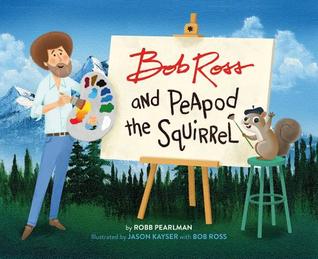
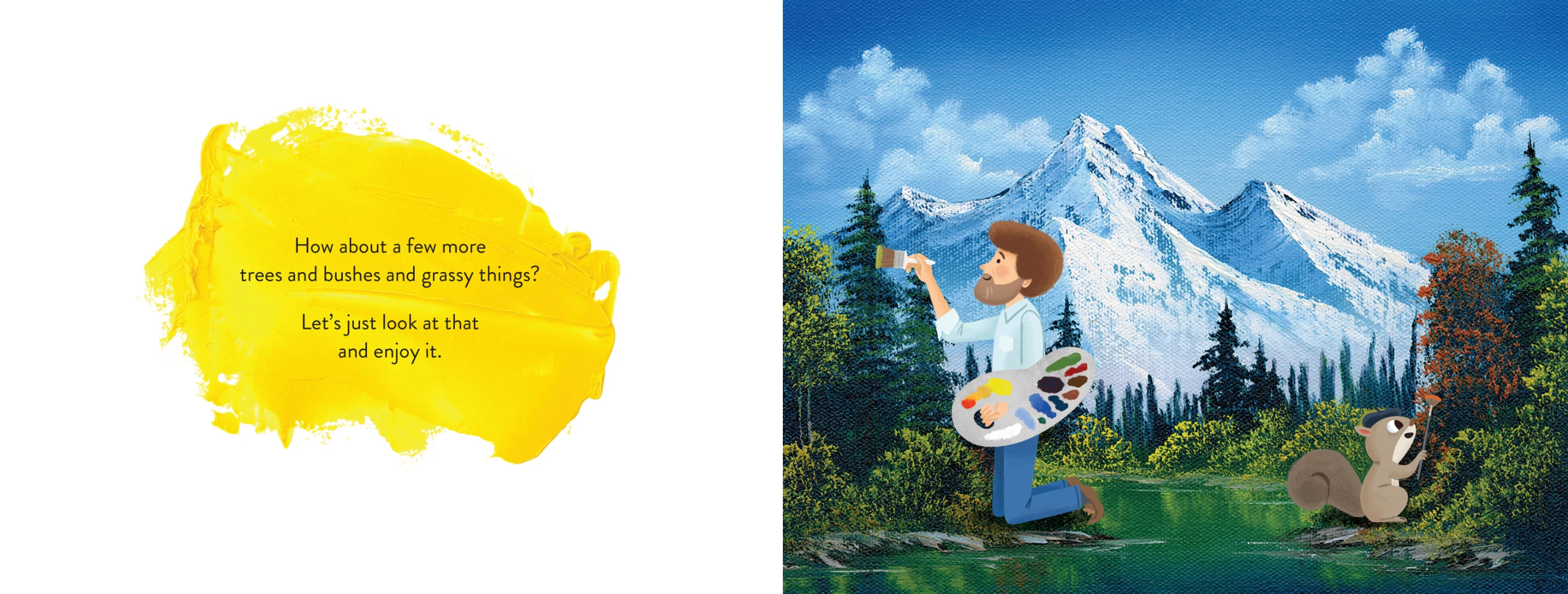
Bob Ross and Peapod the Squirrel by Robb Pearlman

Share

Bob Ross and Peapod the Squirrel
Author: Robb Pearlman
Illustrator: Bob Ross with Jason Kayser
Published October 8th, 2019 by Running Press Kids

Summary: Bob Ross paints a stunning home for his squirrel friend, Peapod, in this delightful nod to a painter icon.

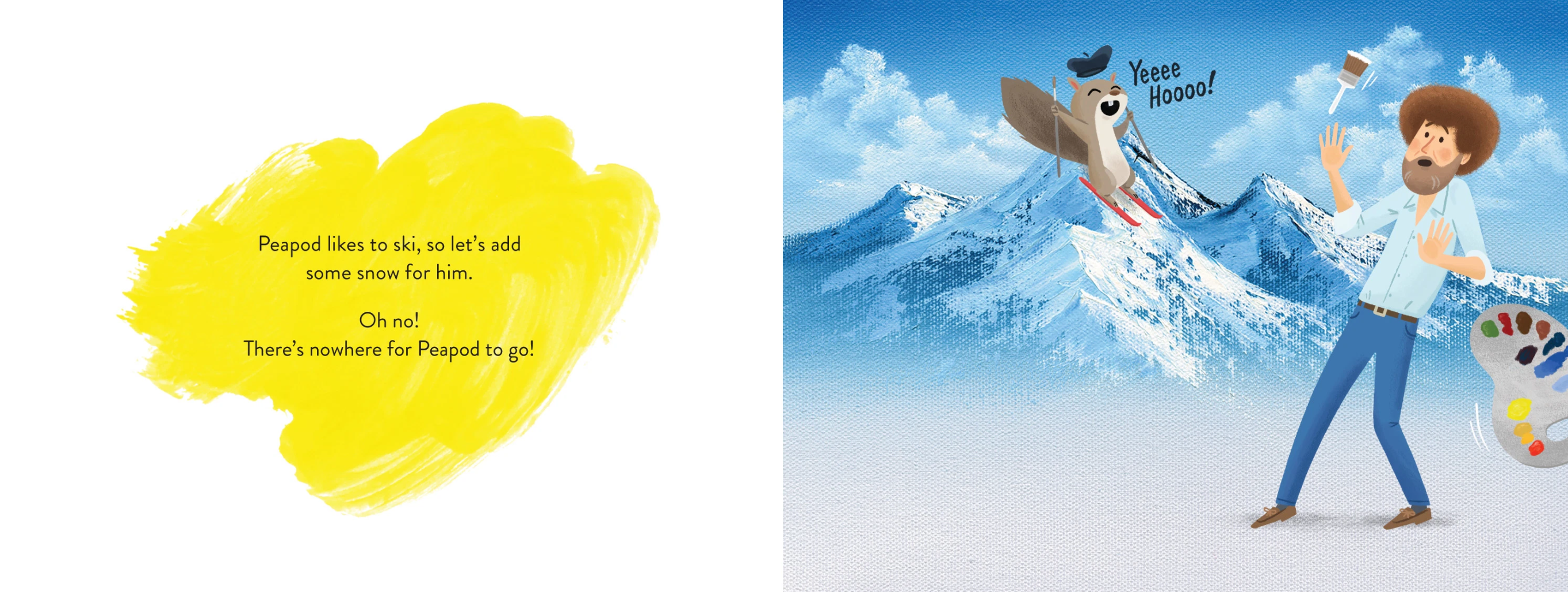
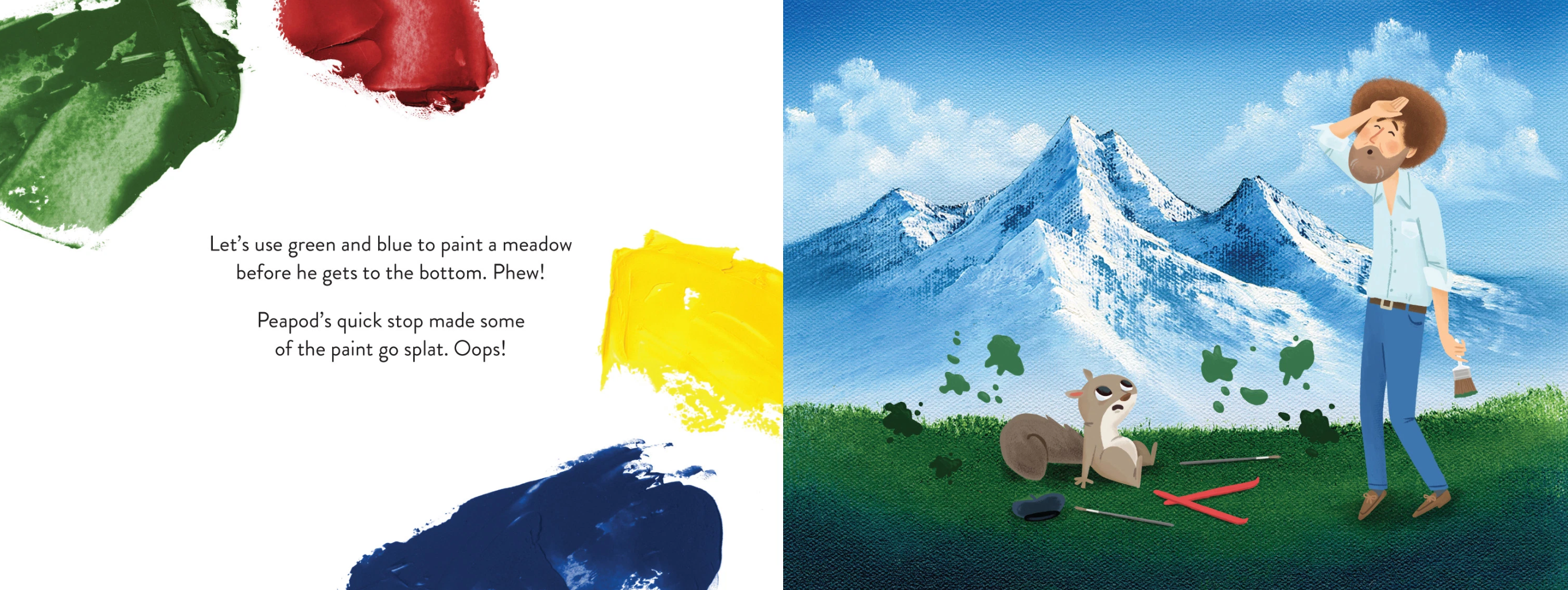
This is the sweet story of a painter (Bob Ross) who helps his squirrel friend, Peapod, find the perfect home to live in. Bob paints an actual Ross painting, “Meadow Lake,” in this charming tale about helping friends and embracing the serenity of life. Bob, along with Peapod, go through the various steps and processes to painting, including praising those “happy little accidents” that happen along the way.

About the Creators: Robb Pearlman is the author of many books, including Groundhog’s Day Off, Raggedy Ann and Andy: Leaf Dance, and Passover is Here! Today, his favorite color is blue, but it may be purple tomorrow! He grew up in New York City and now lives in a white and green house in New Jersey with his husband and Oscar, the butterscotch-colored best puppy in the world.

Bob Ross — artist, painting instructor, and television personality — has for decades charmed and inspired the world with his matchless look, signature style, and words of wisdom and encouragement.

Review: This picture book definitely captures the whimsy and gentleness of Bob Ross. Anyone who has ever watched his show knows that Bob just loves creating things and making something beautiful. He always continues even through (happy little) mistakes and other obstacles, and his work is always something that takes the viewers’ breath away. I think it was very smart of the publishers to use an actual Bob Ross painting in the text because it is like the cherry on top. That, with the addition of his fun pet Peapod, really brings Bob’s personality to the book.

Teachers’ Tools for Navigation: This text would be a wonderful book to use to compare a written work with a televised work. Students could look at what ways the book captures Bob Ross’s personality, style, speech, etc.

Additionally, the book ends with instructions on paint and supplies for readers to recreate the painting made in the book.

Discussion Questions: 

  • What Bob Ross phrases did the author include?
  • How did the inclusion of Peapod change what the story would have been without him?
  • What type of person do you think Bob Ross is based on how he instructs?
  • What do you think Bob Ross would tell you about accidents or mistakes?
  • How did Bob Ross create the image with only white, brown, green, blue, yellow, and crimson?
  • What words would you use to describe Peapod’s personality? Bob Ross’s?

Flagged Passages: 

But don’t worry–Bob Ross always embraces happy little accidents! And it turns out beautifully:

Read This If You Love: Bob Ross, Art, The Masterpiece by Jay Miletsky, Henri’s Scissors by Jeanette Winter, Paint Me a Picture by Emily Bannister

Recommended For: 

classroomlibrarybuttonsmall 

Signature

**Thank you to the publisher for providing a copy for review**

Teacher Guide for AstroNuts Mission One: The Plant Planet by Jon Scieszka

Share

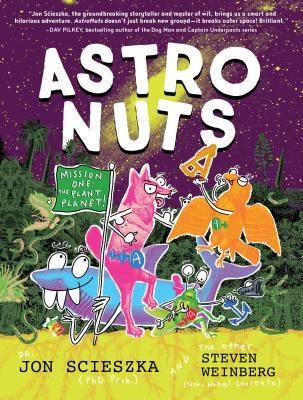
AstroNuts Mission One: The Plant Planet
Author: Jon Scieszka
Illustrator: Steven Weinberg
Published: September 10th, 2019 by Chronicle Books

Summary: AstroWolf, LaserShark, SmartHawk, and StinkBug are animals that have been hybridized to find other planets for humans to live on once we’ve ruined Earth. So off they rocket to the Plant Planet! Will that planet support human life? Or do Plant Planet’s inhabitants have a more sinister plan?

Teachers’ Tools for Navigation and Discussion Questions: 

Please view and enjoy the teachers’ guide I created for AstroNuts Mission One:

You can also access the teaching guide here.

You can learn more about AstroNuts on its webpage.

Recommended For: 

readaloudbuttonsmall classroomlibrarybuttonsmall litcirclesbuttonsmall closereadinganalysisbuttonsmall

Kellee Signature

Educators’ Guide for The Trouble with Shooting Stars by Meg Cannistra

Share

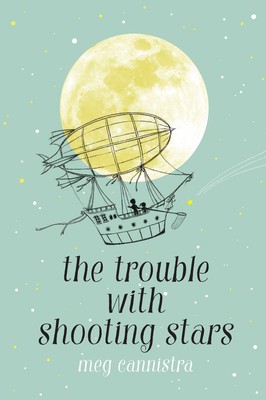
The Trouble with Shooting Stars
Author: Meg Cannistra
Published: August 20th, 2019 by Simon & Schuster for Young Readers

Summary: Twelve-year-old Luna loves the nighttime more than anything else. It’s when no one gives her “that look” about the half mask she has to wear while healing from a disfiguring car accident. It’s also the perfect time to sit outside and draw what she sees. Like the boy and girl from the new family next door…zipping out of the window in a zeppelin and up to the stars.

At first she thinks she’s dreaming. But one night the siblings catch her watching. Now Luna spends her nights on adventures with them, as they clean full moons, arrange constellations, and catch jars of stardust. She even gets to make a wish on a shooting star they catch.

But Luna learns that no wish is strong enough to erase the past — as much as she may hope to.

Teachers’ Tools for Navigation and Discussion Questions: 

Please view and enjoy the teachers’ guide I created for The Trouble with Shooting Stars:

You can also access the teaching guide here.

You can learn more about The Trouble with Shooting Stars on Meg Cannistra’s Cake Literary page.

Recommended For: 

readaloudbuttonsmall classroomlibrarybuttonsmall litcirclesbuttonsmall closereadinganalysisbuttonsmall

Kellee Signature