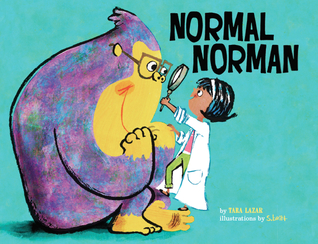
Normal Norman Written by Tara Lazar, Illustrated by S.britt

Share

normal norman

Normal Norman
Author: Tara Lazar; Illustrator: S. britt
Published March 1, 2016 by Sterling Children’s Books

GoodReads Summary: What is “normal?” That’s the question an eager young scientist, narrating her very first book, hopes to answer. Unfortunately, her exceedingly “normal” subject—an orangutan named Norman—turns out to be exceptionally strange. He speaks English, sleeps in a bed, loves his stuffed toy, goes bananas over pizza, and even deep-sea dives! Oh, no: what’s a “normal” scientist to do?

Ricki’s Review: Norman is one of those great literary characters that will stick with readers for a long time. The book is quite humorous, and my son was giggling as we read it together. Norman is anything but normal, yet the young scientist makes strong efforts to prove that he is normal. She becomes very frustrated, and then Norman teaches her an important lesson. I enjoyed this book because it was a fresh take on the idea of: What does it mean to be normal? I also enjoyed the layout of each page. The quote bubbles from the characters added another layer to the text that would be great to discuss in the classroom with a close reading. This will be a favorite in classrooms, and I recommend it highly.

Kellee’s Review: I love everything that this book stands for. It shows that normal is whatever you make it, that everyone should be accepted for what they are, and normal isn’t always what it seems. Norman helps mold the young scientist’s mind which will hopefully lead readers to also rethink what they think normal is. I am definitely going to use this book as one of our “precepts” in the future because I really think it’ll make students think. 

Teachers’ Tools for Navigation: Teachers might consider using this text to teach broad conceptions of normalcy. Often, young students conceive of normalcy as anything similar to them. A teacher might introduce different groups, customs, and cultures to allow students to understand that normal is a socially constructed concept, and people can be different yet still normal. Or perhaps, students might determine that there is no such thing as being “normal.”

Discussion Questions: What does it mean to be normal? Is anyone normal? How might we conceive of normalcy more broadly?; What lessons does the scientist learn? How does she learn them?

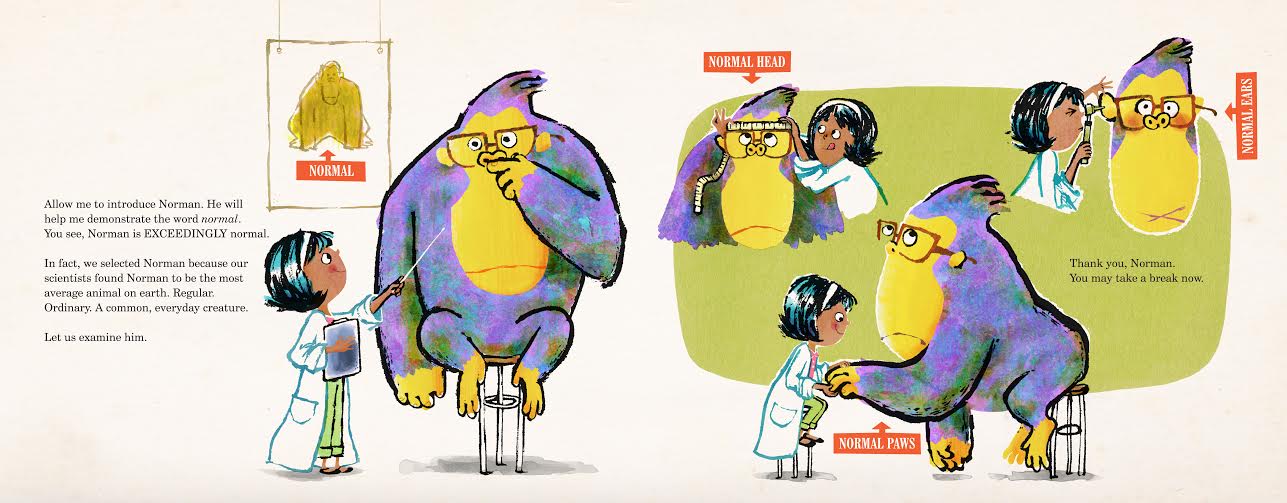
We Flagged: “Allow me to introduce Norman. He will help me demonstrate the word normal. You see, Norman is EXCEEDINGLY normal.” 

normal norman spread

Reprinted with permission from Normal Norman © 2016 by Tara Lazar, Sterling Children’s Books, an imprint of Sterling Publishing Co., Inc. Illustrations © 2016 by Stephan Britt.

Read This If You Loved: You Are (Not) Small by Anna KangGiraffes Can’t Dance by Giles Andreae, Unicorn Thinks He’s Pretty Great by Bob SheaThe Magic of Maxwell and His Tail by Maureen Stolar Kanefield

Recommended For: 

closereadinganalysisbuttonsmall readaloudbuttonsmall classroomlibrarybuttonsmall

Check Out Normal Norman at the other stops on the tour!:

NN Tour Schedule - Sized for Twitter (1)

RickiSigandKellee Signature

**Thank you to Josh from Sterling books for providing copies for review!!**

National Geographic Kids Early Reader Biographies: George Washington Carver & Sonia Sotomayor

Share

NFPB2016

Nonfiction Wednesday

Nonfiction Picture Book Wednesday is hosted by Kid Lit Frenzy and was started to help promote the reading of nonfiction texts. Most Wednesdays, we will be participating and will review a nonfiction text (though it may not always be a picture book).
Be sure to visit Kid Lit Frenzy and see what other nonfiction books are shared this week!
gwc

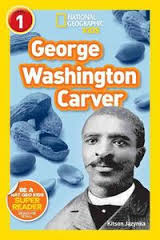
George Washington Carver
Author: Kitson Jazynka
Published January 12th, 2016 by National Geographic Children’s Books

Summary: Take a bite into the fascinating history of peanut butter and the man who invented it. Through leveled text and engaging photos, kids meet George Washington Carver and learn about his important work with peanuts and other plants. This Level 1 reader is carefully leveled for an early independent reading or read aloud experience, perfect to encourage the scientists and explorers of tomorrow!

Discussion Questions: Why did Carver have to move when he was 13?; What events in Carver’s life helped him become the first black student at Iowa State and eventually a professor?; What inventions did Carver discover?

We Flagged: “In Carver’s time, life was hard for many black people in the United States. They did not have the same rights as white people.

Carver felt that this was wrong. He used his ideas about farming to help change people’s lives.” (p. 7)

NG - Sonia Sotomayor

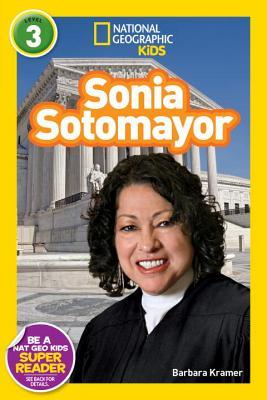
Sonia Sotomayor
Author: Barbara Kramer
Published January 12th, 2016 by National Geographic Children’s Books

Summary: Explore one of the most recognized names in modern America with this biography of Supreme Court Justice Sonya Sotomayor. Kids will learn about her rise to be the first Hispanic Supreme Court Justice and the trials she faced along the way. The level 3 text provides accessible, yet wide-ranging, information for independent readers.

Discussion Questions: What traits does Sotomayor have that helped her succeed in education to eventually become a Supreme Court justice?; Sotomayor has not forgotten where she comes from. In what ways does she give to her childhood community?; What did Sotomayor do that was so extraordinary?

We Flagged: “In August 2009, Sonia Sotomayor became a Super Court justice. It is a special job. Sotomayor is the 111th person ever to receive that honor. She is the third woman and the first Hispanic justice to serve on that court.” (p. 4)


My Review: These texts are such a wonderful way to introduce readers to some very important people in history. The books don’t back down from hard subjects like racism and poverty, but instead teach the reader about it in an easy to understand way. And to help the reader even more, throughout the books, any tough words are defined, sidebars are filled with additional information, and text features such as illustrations, graphs, and timelines elaborate on the story.

Teachers’ Tools for Navigation: These books could be used in many different ways including guided reading during a teacher-led small group or as biography lit circles.

Read These If You Love: Biographies

Recommended For: 

classroomlibrarybuttonsmall litcirclesbuttonsmall

Kellee Signature

**Thank you to Karen from Media Masters for providing copies for review!**

Blog Tour, Author Guest Post, and Review!: Reproductive Rights: Who Decides? by Vicki Oransky Wittenstein

Share

NFPB2016

Nonfiction Wednesday

Nonfiction Picture Book Wednesday is hosted by Kid Lit Frenzy and was started to help promote the reading of nonfiction texts. Most Wednesdays, we will be participating and will review a nonfiction text (though it may not always be a picture book).
Be sure to visit Kid Lit Frenzy and see what other nonfiction books are shared this week!

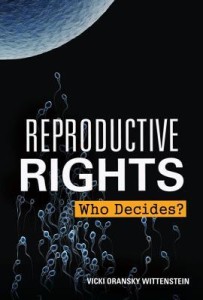
Reproductive Rights

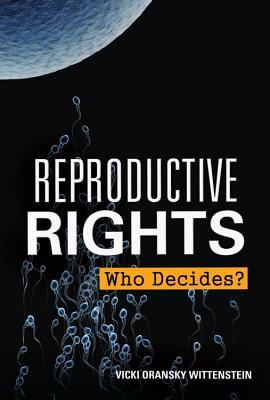
Reproductive Rights: Who Decides?
Author: Vicki Oransky Wittenstein
Published January 1st, 2016 by Twenty-First Century Books

Summary: Throughout history, men and women have always found ways to control reproduction. In some ancient societies, people turned to herbs or traditional rituals. Others turned to methods that are still used in the twenty-first century, such as abstinence, condoms, and abortions.

Legislating access to birth control, sex education, and abortion is also not new. In 1873 the US Congress made it illegal to mail “obscene, lewd, or lascivious materials”—including any object designed for contraception or to induce abortion. In some states in the 1900s, it was illegal for Americans to possess, sell, advertise, or even speak about methods of controlling pregnancy.

At the beginning of the twentieth century, Margaret Sanger, Mary Ware Dennett, and others began to defy these laws and advocate for the legalization of birth control and for better women’s reproductive healthcare. By 1960 doctors had developed the Pill, but it wasn’t until 1972 that all US citizens had legal access to birth control. And in the landmark decision Roe v Wade (1973), the US Supreme Court ruled that women had a constitutional right to terminate a pregnancy.

Disputes over contraception, sex education, and abortion continue to roil the nation, leading to controversial legal and political rulings and occasionally violence. As society changes—and as new reproductive technologies expand the possibilities for controlling and initiating pregnancy—Americans will continue to debate reproductive rights for all.

About the Author: Before becoming an author, VICKI ORANKSY WITTENSTEIN prosecuted criminal cases as an assistant district attorney with the Manhattan District Attorney’s office. She earned an MFA in writing for children and young adults from Vermont College of Fine Arts. Vicki has written a number of science articles and books for the juvenile market, including Planet Hunter: Geoff Marcy and the Search for Other Earths, which won the 2011 Science Communication Award from the American Institute of Physics. Her book For the Good of Mankind? The Shameful History of Human Medical Experimentation was a Junior Literary Guild selection. Vicki and her husband live in Brooklyn, New York. Visit her website at vickiwittenstein.com.

Kellee’s Review: Wittenstein obviously did her research. Her text is filled to the brim with facts and unbiased information of all sides of the reproductive rights debate. I loved learning about the history of reproductive rights as well as the more details than I knew about the present situation and even information about possibilities in the future. I think Wittenstein did a good job with including primary sources, text features, and some narratives to help move the text along as well. 

Ricki’s Review: This is a very comprehensive book that was interesting to read from the beginning to the end! I enjoyed how Wittenstein presented factual information in ways that will engage readers. For instance, she describes the various ways that people of different cultures and time periods believe(d) they can (or could) avoid pregnancy. For instance, you might walk three times around a tree where a pregnant wolf has urinated. This sounds like it would be very difficult to do! This is a great book that students will enjoy. It is a controversial, so I’d probably check with students that they feel comfortable with the content before they sign it out. I don’t believe in censorship, and instead, I believe in allowing students to self-censor when they aren’t comfortable with content. This book is very important for classrooms because it ensures that kids are not in the dark about reproductive issues.

Teachers’ Tools for Navigation: This text is such an amazing resource. It will definitely be an asset either as a textbook or resource in a college or high school class that is touching on or researching reproductive rights, women’s rights, or legal proceedings. It is such a wonderful starting point for learning about the history and progression of reproductive rights.

Discussion Questions: What legal case was the biggest turning point for reproductive rights?; How has women’s rights progressed overtime?

Author Guest Post answering “What inspired you to write Reproductive Rights?” and “What was your research process for the book?”

There were so many inspirations for this book, so I will try to limit myself to a few! First, for as long as I can remember, I have been passionate about women’s rights. When I was in college, I co-organized one of the first domestic violence conferences in Philadelphia. Later, as an Assistant District Attorney in Manhattan, I spoke to many women who had been assaulted by their partners. That first-hand experience led me to chair the board of an organization that sheltered women victims. In addition, I grew up in the 60’s and 70’s during a time when women were just beginning to enter traditionally all-male professions, such as law and medicine. A good part of this new freedom was due to the availability of the Pill and the legality of contraception and abortion. These reproductive rights helped countless women believe they could achieve advanced degrees and build careers.

More recently, worries about setting the historical record straight sparked my interest in writing about this topic. Over the last decade or so, people have learned much of their worldwide news from short media sound bites flashed across the Internet. For many teens, these bits and pieces about new reproductive rights legislation or video clips of rallies against or for abortion are heard without an historical context. Without history, how can we expect young people to navigate through the minefield of these complex and controversial issues, understand what’s at stake with the hundreds of new laws that limit access to contraception and abortion, and form their own opinions?

For thousands of years—from ancient civilizations, through Colonial America, the development of the Pill, the legalization of contraception and abortion, and the brave new world of reproductive technologies—men and women have always found ways to control reproduction. By viewing reproductive rights through an historical lens, teens can learn that controlling procreation is a human need that is not new. This rich history can inform debate and analysis of availability of, access to, and funding for contraception, sex education, and abortion. Today’s teens are the ones who will be most affected by the laws enacted by our federal and state legislators and argued before our courts. And as new reproductive technologies expand the possibilities for controlling and initiating pregnancy, teens are the future adults who will define what it means to be a parent and under what circumstances. So, in many ways this book was inspired by my desire to lay a roadmap for the next generation of parents.

Most of my research was accomplished inside the New York City Public Library, a building filled with astounding resources and fabulous librarians. I also accessed many scholarly and legal articles online through university research collections, as well as letters, diaries, etc. Often just one article or the mention of an event or name led to the next kernel of information, as I worked to fit all the pieces into the puzzle. In many instances, my research uncovered names and events I had never heard of before. For example, I was astounded to learn about two largely unsung heroines: Mary Ware Dennett, who wrote one of the first pamphlets for young people about sex and paved the way for gutting the laws banning the discussion and use of contraception; and Katharine McCormick, the wealthy suffragist and biologist who funded and oversaw the initial development of the Pill. Another big help was the continual flow of media attention that reproductive rights issues provoke. Newspaper articles about state laws and court cases restricting access to women’s clinics led me to explore and understand the lay of the land today. I read lots of articles about the ways in which laws were restricting access to clinics by persuading women not to have abortions and forcing the closure of clinics.

Unfortunately, the media attention surrounding abortion has overshadowed what it means to be in favor of reproductive rights, as most reproductive health care involves cancer screenings, pregnancy prevention and care, and family planning—services mostly unrelated to abortion. I hope the current presidential debates and the appointment of a new Supreme Court justice shine a spotlight on reproductive rights, and that educators will continue to spur critical discussion of these important issues.

Thank you, Kellee and Ricki, for hosting me today!

We Flagged: “In the United States of the twenty-first century, reproductive health is hotly debated. For example, assisted reproductive technologies (ART) for infertile couples raise new ethical and moral issues…”

Read This If You Loved: Nonfiction texts about women’s rights

Follow the tour:
Mon, Feb 15
Proseandkahn
Tues, Feb 16
The Book Monsters
Wed, Feb 17
Library Fanatic
Thurs, Feb 18
Kid Lit Frenzy
Fri, Feb 19
The Nonfiction Detectives
Sat, Feb 20
Ms. Yingling Reads
Mon, Feb 22
The Launch Pad
Tues, Feb 23
Through the Tollbooth
Wed, Feb 24
Unleashing Readers
Thurs, Feb 25
The Pirate Tree
Fri, Feb 26
Teach Mentor Texts

Recommended For: 

classroomlibrarybuttonsmall

Signatureand RickiSig

**Thank you to Barbara at Blue Slip Media for providing copies for review!**

Review and Teaching Guide!: Trashed by Derf Backderf

Share

NFPB2016

Nonfiction Wednesday

Nonfiction Picture Book Wednesday is hosted by Kid Lit Frenzy and was started to help promote the reading of nonfiction texts. Most Wednesdays, we will be participating and will review a nonfiction text (though it may not always be a picture book).
Be sure to visit Kid Lit Frenzy and see what other nonfiction books are shared this week!

trashed

Trashed
Author: Derf Backderf
Published November 3rd, 2015 by Harry N. Abrams

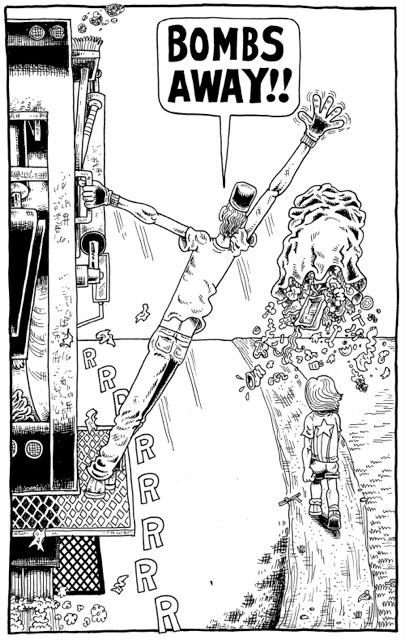
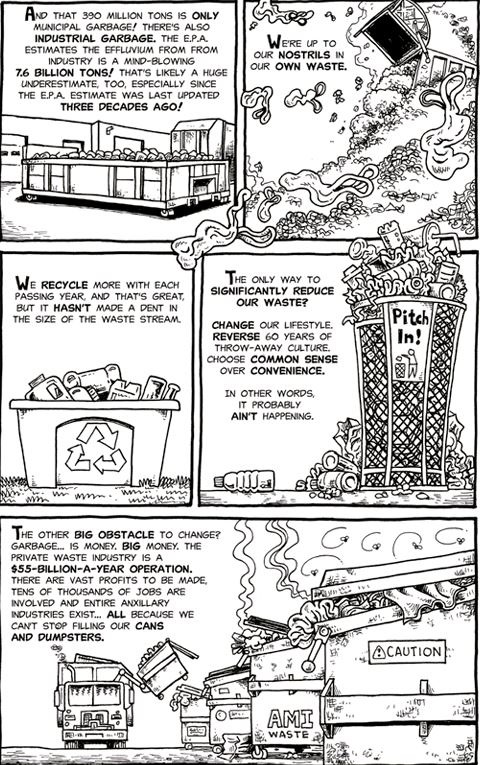
Goodreads Summary: Every week we pile our garbage on the curb and it disappears–like magic! The reality is anything but, of course. Trashed, Derf Backderf’s follow-up to the critically acclaimed, award-winning international bestseller My Friend Dahmer, is an ode to the crap job of all crap jobs–garbage collector. Anyone who has ever been trapped in a soul-sucking gig will relate to this tale. Trashed follows the raucous escapades of three 20-something friends as they clean the streets of pile after pile of stinking garbage, while battling annoying small-town bureaucrats, bizarre townfolk, sweltering summer heat, and frigid winter storms. Trashed is fiction, but is inspired by Derf’s own experiences as a garbage­man. Interspersed are nonfiction pages that detail what our garbage is and where it goes. The answers will stun you. Hop on the garbage truck named Betty and ride along with JB on a journey into the vast, secret world of garbage. Trashed is a hilarious, stomach-churning tale that will leave you laughing and wincing in disbelief.

My Review:  I must first start by saying that this book is not completely nonfiction. The story is based roughly on Backderf’s life, but the story is overall fiction. However, the nonfiction aspect of the book lies in multi-genre aspect of this graphic novel. While Backderf tells you the story of JB’s life as a garbageman, he includes information about the state of garbage in the United States. The mix of JB’s story with information from Columbia University and an EPA report really makes this text so unique. Backderf does a great job balancing the fiction component (filled with dark humor and stark reality) with the information that puts everything in perspective.

Teachers’ Tools for Navigation: I have created a teaching guide for Trashed which can be found at:  https://www.scribd.com/doc/296747329/Trashed-Teaching-Guide 

Within the guide, I include discussion questions, but also a project-based assessment combining Trashed, the Columbia University report about municipal solid wast, an EPA report on advancing sustainable materials management, The Inconvenient Truth, and the six-step creative problem solving process.

Discussion Questions: Trashed’s structure is unique in its mix of fiction and fact. Why do you think the author chose to mix the two instead of sticking with only one genre? Also, why do you think he chose to not make this a memoir based on his own experiences and instead make a fictional narrative?; JB’s tone throughout the text is primarily negative seeming annoyed, bitter, or hopeless. Some examples of this can be found on pages 10-11, 37, and 202. How would you describe JB’s tone? What words were specifically used throughout the text to set the tone? Why do you think the author chose to write JB’s character this way?; What claim do you think Backderf is making by including all of the factual evidence about municipal waste? How is his claim developed over time? How did he use rhetoric throughout the text to advance his point of view?; Looking at the information Backderf shared from the Columbia University and EPA reports, how did the author choose the order in which he revealed information?; Was there any factual information shared in Trashed that surprised you? Why did it surprise you, and what does it make you reflect on?

We Flagged: 

Trashed 2trashed 1

Read This If You Loved: My Friend Dahmer by Derf Backderf, Nonfiction texts about the environment, Nonfiction graphic novels, Adult graphic novels

Recommended For: 

classroomlibrarybuttonsmall closereadinganalysisbuttonsmall

Signature

In The Middle School Classroom: Talking About Last Stop on Market Street by Matt de la Pena

Share

last stop on market street

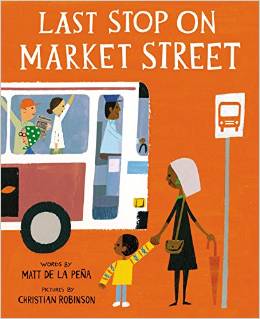
So many of us were so happy to hear that Matt de la Peña won the Newbery Medal with Last Stop on Market Street though so many of us were quite surprised as well. Not surprised because the book didn’t deserve it, it did; surprised because it is a picture book winning the award for most distinguished piece of children’s literature. This means that the illustrations, which are phenomenal and also won a Caldecott Honors, could not be taken into consideration during the Newbery process. This left many people wondering how a picture book could beat out novels such as Echo by Pam Muñoz Ryan and The War That Saved My Life by Kimberly Brubaker Bradley, two of the three honors books.

I was fascinated by all the conversations, and then I read a post on Facebook by my friend, Beth Shaum, sharing an activity she did in her classroom. She decided to let her student be the judge of the book and read Last Stop on Market Street aloud to her students without showing them the illustrations. She then asked them how it met the criteria of the Newbery. I loved it and decided to do it in mine as well. I didn’t plan on blogging about it, but the conversations that came with the activity and reading of Last Stop on Market Street with my middle school students was something that needed to be shared.

In my class, I read the whole picture book twice. The first time straight through. Then the second time I allowed for questions and we discussed it a bit. It was so wonderful to see how much inference needed to be done when the illustrations were excluded from the reading. When CJ says he wanted something a pair of teens had, students couldn’t see the photos to determine what it was. They also noticed the diversity of the book without seeing the photos because they pointed out that there was a blind man on the bus.

Finally, I asked my students to answer two questions. First, I asked them to tell me what made Last Stop on Market Street distinguished, and why do you think it won the Newbery. Then, after reading the book for a third time and showing the illustrations as well they had to tell me what the theme of the book was. (We are actually in a theme unit, so the text fit in perfectly.) Here are some answers I received:

What made Last Stop on Market Street distinguished? Why do you think it won the Newbery?

“This book won the Newbery award because it had so many positive things to teach kids. It shows many different things to think about.”

“Because of the author’s ability to use imagery, teach a valuable life lesson in a way where a child can understand, and it’s way of including racially diverse characters like the world we live in today. This book creates a story for children that let’s them think.”

“I think it won because the book teach you many lessons about homeless people and the different types of diversity that is in the world, also the book teach you that some people don’t have a lot of things and it is important to be thankful, the kid in the book was complaining about doesn’t have a car but some people don’t even have food.”

“This book is different from all the other winners for this award, but it still won maybe because the amount of detail in the story even without looking at the illustration.”

“I think this book won the Newbery prize because this shows us that deep down inside that little town it shines bright like the sun,so i think that this book won because it teaches life lessons for kids.”

“I think this won because the story was very well written. The setting and people in the setting were described very well. Even without the pictures I could imagine what the scene looked like. The one scene that really stood out was when CJ, his grandma, and the blind man, all closed their eyes and enjoyed the sound of the music the man with the guitar was playing. The author described this scene very well.”

“It won the Newberry medal because there was so much description in the characters and how the character talked about the setting how there was a arch of a rainbow, about the streetlamps, the graffiti, and even about the description of the characters were so much in detail, like this person was blind, and that the dog guided him around.”

“I think the Last Stop On Market Street won the Newbery Medal because of the way of the wording showed freedom, power, and beauty. It showed clever wording and hints that implied little things that made the world better and beautiful. It talked about how the world was ruined to some and looked wrong, but when you understood it, the world was beautiful. What made the book distinguished was how so little words meant so much and made you think about how the world was breathtaking, and what made it so special.”

“This book is distinguished because the characters are described well because it showed what they were doing and saying. The book also described freedom well and it showed the theme better because it said that his Nana found beautiful everywhere and he looks around after wondering that and it seems that he is appreciating the beauty of all the things around him. I think that this book won the Newbery because it (1) shows diversity, (2) it has an amazing message, and (3) the book doesn’t take place in a fancy school or luxurious house but on an old bus yet it still makes CJ’s time there seem great because he is enjoying the world around him and the people around him.”

“I think that the book won the Newberry because the characters are diverse, for example, the blind man with his dog on the bus. C.J and his Nana are also interesting characters, because Nana sees the beauty in a lot of things that C.J doesn’t see yet.”

“This book won the Newbery prize because it is very true and it gives people hope.”

What is the theme of Last Stop on Market Street?

“The theme is that whenever you are sad you have to keep positive and look at the good side.”

” Broken things still have their uses.”

“Don’t be jealous and want everything be happy that you are living the life you have. You don’t have to be like all the other people and be jealous. Who cares where you live and what you do or what you have. Like when the boy said he wanted a car instead of riding the bus. He wanted to go straight home instead of going to the homeless shelter. All those things he wanted but he should have been happy for what he has.”

“I think the theme of the Last Stop On Market Street was to appreciate the little things in the world that make it special, rather than looking on the outside and wanting what you think makes the world better for you, not including others who may have less, but respect more than what you think the world is made of.”

“I think that the theme of the story is that people should appreciate what they have in life because beauty is everywhere no matter where you are or what you are doing.”

“I think that the theme of this book is that there is beauty in everything. I say this because C.J’s Nana said that the bus breathes fire, that a tree’s trunk is a straw, she also said that some people see the world with their ears.”

Thank you to my students for their beautiful and thoughtful responses.

Kellee Signature

Not if I See You First by Eric Lindstrom

Share

not if i see you first

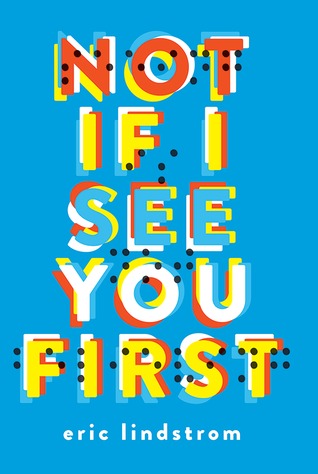
Not If I See You First
Authors: Eric Lindstrom
Published: December 1, 2015 by Poppy

GoodReads Summary: The Rules:

Don’t deceive me. Ever. Especially using my blindness. Especially in public.

Don’t help me unless I ask. Otherwise you’re just getting in my way or bothering me.

Don’t be weird. Seriously, other than having my eyes closed all the time, I’m just like you only smarter.

Parker Grant doesn’t need 20/20 vision to see right through you. That’s why she created the Rules: Don’t treat her any differently just because she’s blind, and never take advantage. There will be no second chances. Just ask Scott Kilpatrick, the boy who broke her heart.

When Scott suddenly reappears in her life after being gone for years, Parker knows there’s only one way to react—shun him so hard it hurts. She has enough on her mind already, like trying out for the track team (that’s right, her eyes don’t work but her legs still do), doling out tough-love advice to her painfully naive classmates, and giving herself gold stars for every day she hasn’t cried since her dad’s death three months ago. But avoiding her past quickly proves impossible, and the more Parker learns about what really happened—both with Scott, and her dad—the more she starts to question if things are always as they seem. Maybe, just maybe, some Rules are meant to be broken.

Combining a fiercely engaging voice with true heart, debut author Erid Lindstrom’s Not If I See You First illuminates those blind spots that we all have in life, whether visually impaired or not.

Review: The story is about a girl who is blind and a runner. I feel like I learned so much for this book from the physical and mental strength of this young girl. Frankly, I can’t quite find the words to express how much it taught me about life. The narrator is feisty, and I appreciated her candor about her disability. I came to realize how incredibly frustrating it would be to deal with the same reactions from strangers every day, particularly when she feels perfectly capable. This is a great book to teach empathy.

Teachers’ Tools for Navigation: We don’t talk about disability in literature enough. I would love to put students in literature circles, with all of the texts focusing on disability. It would be interesting to have whole-class discussions about the way disability is present in each text. It might be particularly interesting to include texts that feature mental and physical disability. This might lead to good discussions, like: What is disability? Is a disability always visible to others? What is normal?

Discussion Questions: The narrator of the text is unlikable. How does this add to the story? Why might the author have written the text in this way?; Do you think Parker’s rules are fair? Why do you think she has this list of rule?

We Flagged: I flagged this section because it shows Parker’s dry humor:

“‘So you’re blind, huh?’

I cock my head toward the unfamiliar male voice coming from the seat directly in front of me. Low-pitched a bit thick around the vowels. The voice of a jock, but I just keep that as a working hypothesis awaiting more evidence.”

Read This If You Loved: The Running Dream by Wendelin Van Draanen, Girl, Stolen by April Henry, Blind by Rachel DeWoskin, Wonder by R.J. Palacio, Out of My Mind by Sharon Draper

Recommended For:

litcirclesbuttonsmall classroomlibrarybuttonsmall

RickiSig

More Happy Than Not by Adam Silvera

Share

more happy than not

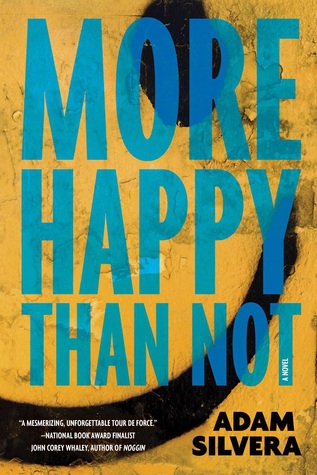
More Happy Than Not
Authors: Adam Silvera
Published: June 2, 2015 by Soho Teen

GoodReads Summary: In his twisty, gritty, profoundly moving debut—called “mandatory reading” by the New York Times—Adam Silvera brings to life a charged, dangerous near-future summer in the Bronx.

In the months after his father’s suicide, it’s been tough for 16-year-old Aaron Soto to find happiness again–but he’s still gunning for it. With the support of his girlfriend Genevieve and his overworked mom, he’s slowly remembering what that might feel like. But grief and the smile-shaped scar on his wrist prevent him from forgetting completely.

When Genevieve leaves for a couple of weeks, Aaron spends all his time hanging out with this new guy, Thomas. Aaron’s crew notices, and they’re not exactly thrilled. But Aaron can’t deny the happiness Thomas brings or how Thomas makes him feel safe from himself, despite the tensions their friendship is stirring with his girlfriend and friends. Since Aaron can’t stay away from Thomas or turn off his newfound feelings for him, he considers turning to the Leteo Institute’s revolutionary memory-alteration procedure to straighten himself out, even if it means forgetting who he truly is.

Why does happiness have to be so hard?

Review: After Aaron’s father commits suicide, he finds it difficult to find his place in the world, and the smile-shaped scar on his wrist is just one reminder of this struggle. Aaron considers turning to an institute that has the capability to alter his memory—because he wants to forget that he is gay. The text is heart-wrenching, emotionally profound, and deeply moving. Weeks after I read it, I found that I was still referencing it in daily conversations with teacher friends. I also designed a conference proposal based on a concept from this book. This is an important book that belongs in classrooms.

Teachers’ Tools for Navigation: Students will enjoy debating the ethics of the Leteo Institute’s procedure. My book club had a heated debate, and at the end, I still didn’t know where I stood! Teachers might bring in other examples from the media of people who have experienced trauma and ask students—would it be okay for this person to have the procedure done? When is it ethically okay (if ever)?

Discussion Questions: How does the author unfold the plot for the reader? How does this impact the telling of the story?; Which of Aaron’s friends are loyal? Why?; What does this procedure say about humanity? Do you think people would undergo the procedure? Who might be most likely to undergo the procedure?; How does the author end the novel? What does this teach us?

We Flagged: “Memories: some can be sucker punching, others carry you forward; some stay with you forever, others you forget on your own. You can’t really know which ones you’ll survive if you don’t stay on the battlefield, bad times shooting at you like bullets. But if you’re lucky, you’ll have plenty of good times to shield you.”

Read This If You Loved: Simon vs. the Homo Sapiens Agenda by Becky Albertalli, None of the Above by I. W. Gregorio, Aristotle and Dante Discover the Secrets of the Universe by Benjamin Alire Sáenz

Recommended For:

litcirclesbuttonsmall classroomlibrarybuttonsmall

RickiSig