Grimm’s Fairy Tales by the Brothers Grimm, Audio Book Collection by Listening Library

Share

Grimm's Fairy Tales

Grimm’s Fairy Tales
Author: The Brothers Grimm;
Narrators: Award Winning Cast (Various)
Published: May 10, 2016 by Listening Library

Goodreads Summary: Read by a cast of award-winning narrators, this collection contains some of the most timeless and enchanting folk and fairy tales collected by the Brothers Grimm.

The Brothers Grimm collected the original fairy tales that Americans are most familiar with today. Lyrically translated and beautifully narrated by an all-star cast, these 21 tales are selected from The Complete Grimm’s Fairy Tales and presented just as Jacob and Wilhelm Grimm originally set them down: bold, primal, just frightening enough, and endlessly engaging.

Stories include:
Rapunzel, read by Katherine Kellgren
Cinderella, read by January LaVoy
Little Red-Cap, read by Simon Vance
Little Briar-Rose, read by Grover Gardner
Little Snow-White, read by Kate Rudd
Rumpelstiltskin, read by Jim Dale
The Shoes That Were Danced to Pieces, read by Alfred Molina
A Riddling Tale, read by Janis Ian
The Twelve Brothers, read by Graeme Malcolm
The White Snake, read by Scott Brick
The Elves, read by Bahni Turpin
The Six Swans, read by Davina Porter
The Twelve Huntsmen, read by Dion Graham
The Goose-Girl, read by Edoardo Ballerini
Sweet Porridge, read by Jayne Entwistle
The Golden Goose, read by Luke Daniels
Eve’s Various Children, read by Roy Dotrice
Snow-White and Rose-Red, read by Julia Whelan
The Frog-King, or Iron Henry, read by Kirby Heyborne
The Sea-Hare, read by Mark Bramhall
Hansel and Gretel, read by Robin Miles

Ricki’s Review: I particularly loved the variety in this collection. The narrators provide their own personal touches to each fairy tale, and I found every story to be captivating. The audio format enhances the ways the stories are told. The collection contains the more popular fairy tales along with the more lesser known, and I loved listening to the stories that I had never read before. Grimm’s Fairy Tales are a staple of my childhood, and I feel lucky to share these stories with my son. I think he will really enjoy the audio form, and I hope to play them in long car rides. It will be great to stop after each fairy tale to discuss the characters and themes. I will wait until he is a bit older because the fairy tales are a bit more gruesome than the popular renditions. I appreciate the fact that Listening Library didn’t go with the typical, clean, popularized versions of the stories. It gives readers a stronger sense of the true, original works.

Kellee’s Review: I really enjoy fairy tales of all kinds and have read Grimms collections of various types over the years, but this collection is the first time that I found myself completely enthralled in the stories even though I already knew them like they were new to me. The narrators that Listening Library chose are the best in the business. I can’t even pick a favorite because they all make each story shine.  

While listening, I found so many opportunities to have discussions. From theme to similarities/differences to changes in popular versions to repetition within and through tales. I think these stories will make wonderful read alouds within my house or in my classroom.

Teachers’ Tools for Navigation: This collection provides excellent opportunities for teachers to ask students to compare and contrast elements across the fairy tales. The could listen to a different story each day (they are brief enough that this would be a great listen-aloud). Alternatively, it might be neat to have students work in groups, select stories of their choice, and share out what they learned. Then the entire class could discuss what they are hearing across stories. It would also be fun to discuss the lesser known fairy tales and why these tales may not have become as popular as the others. Lastly, students might discuss the cleansing of the works of The Brothers Grimm. Robin Kirk’s article “Painted on the Surface: The Marbury Lens and Gore in Young Adult Fiction” in the Fall 2015 issue of The ALAN Review is a great resources for teachers to consider gore in fiction, and it discusses the cleansing of The Brothers Grimm’s Fairy Tales.

Discussion Questions: Which fairy tales did you find most captivating? Why?; Which common themes across any of the fairy tales? Which themes seem to be unique to specific fairy tales?; Some of these fairy tales are more popular than others. Why do you think that is? Do you wish any of the lesser known fairy tales were more popular?

Book Trailer:

Read This If You Loved: Grimm’s Fairy Tales by The Brothers Grimm, Fairy Tale Comics by Chris Duffy, Any Fairy Tales

Recommended For: 

readaloudbuttonsmall classroomlibrarybuttonsmall litcirclesbuttonsmall

RickiSigand Kellee Signature

**Thank you to Katie at Penguin Random House for providing copies for review!**
National Geographic’s 100 Things to Know Before You Grow Up

Share

NFPB2016

Nonfiction Wednesday

Nonfiction Picture Book Wednesday is hosted by Kid Lit Frenzy and was started to help promote the reading of nonfiction texts. Most Wednesdays, we will be participating and will review a nonfiction text (though it may not always be a picture book).
Be sure to visit Kid Lit Frenzy and see what other nonfiction books are shared this week!

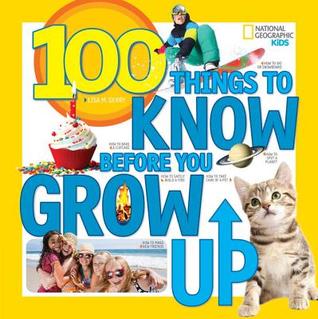
100 things

100 Things to Know Before You Grow Up
Author: Lisa M. Gerry
Published March 8th 2016 by National Geographic Children’s Books

Goodreads Summary: It’s fun to be a kid, but are you ready for what comes next? Challenge yourself with these 100 things and you will be! Jam-packed with tips, tricks, and skills that every kid should master before turning 18, this is the ultimate guide to becoming a fun-loving, well-rounded, totally competent and confident young person. Complete with expert advice from real life explorers, adventurers, and masters of their craft, it’s perfect for jump-starting an amazing life!

Kellee’s Review: I love books that push students to be more than what they already are. This book is one of those. It has such a crazy variety of things that kids can learn to do and overcome and try throughout their childhood: from making a bed to learning to say no to trying yoga. There were things in the book that I am not even good at, but I wish someone had helped me learn how to do as a kid like how to remember names or how to deal with change. I am always impressed with National Geographic books because they are all so unique and well done, and this one is no different!

Ricki’s Review: Typically, I review books and then donate them. I am hanging on to this book because I think it is a great one to share with my children. I loved that some of the “things to know” were abstract like being brave and some were much more concrete like trying another country’s cuisine. I think it would be really neat to use this book as a bucket list. All of the things in this book are experiences and ideas that I want my children to have.

Teachers’ Tools for Navigation: 100 Things to Know Before You Grow Up is a great inquiry project jumping off point. Students could definitely take these 100 things and choose a favorite to research then share with the family. The book would also be a good read aloud for the beginning of each day to have a class discussion. It would be interesting to see what students already know how to do, if they think that everything listed is important, and work on learning new things.

Discussion Questions: Which of the things listed do you already know how to do?; Is there anything you would add to the list that you think you need to know before you grow up?; Which of the things do you want to learn how to do first?; Do you think all of the items listed are important to learn?

We Flagged: “#31. How to Be Brave

Everyone feels afraid from time to time, but it’s how you respond to that fear that shows who you are. Being scared is an uncomfortable feeling, so it makes sense that you’d want to avoid it. But the only way to conquer a fear is to do the thing that scares you. As Mark Twain said, ‘Courage is resistance to fear, mastery of fear, not absence of fear.’

People Profile: Malala Yousafzai

Malala is the youngest person to have ever won a Nobel Peace Prize. She won it in 2014, when she was just 17 years old. Malala was born in Pakistan in 1997. She attended a school founded by her father and quickly became an advocate for a girl’s right to get an education. However, the Taliban, a violent political group in her country, believed that girls should not go to school…” (p. 80-82)

*Disclosure: This quote cannot share the entire feeling of the book without the photos. See the published book to see the amazing photographs.

Read This If You Loved: 31 Ways to Change the World by Candlewick Press, Mastermind by National Geographic, Weird but True series by National Geographic, Be Changemaker by Laurie Ann Thompson, Almanacs, World Record books

Recommended For: 

classroomlibrarybuttonsmall readaloudbuttonsmall

Signatureand RickiSig

**Thank you to Karen at Media Masters Publicity for providing copies for review!**
Teacher Appreciation Blog Tour with Review, Excerpt, Video, and Giveaway!: Ms. Bixby’s Last Day by John David Anderson

Share

160331_blogtour_bixby

ms bixby

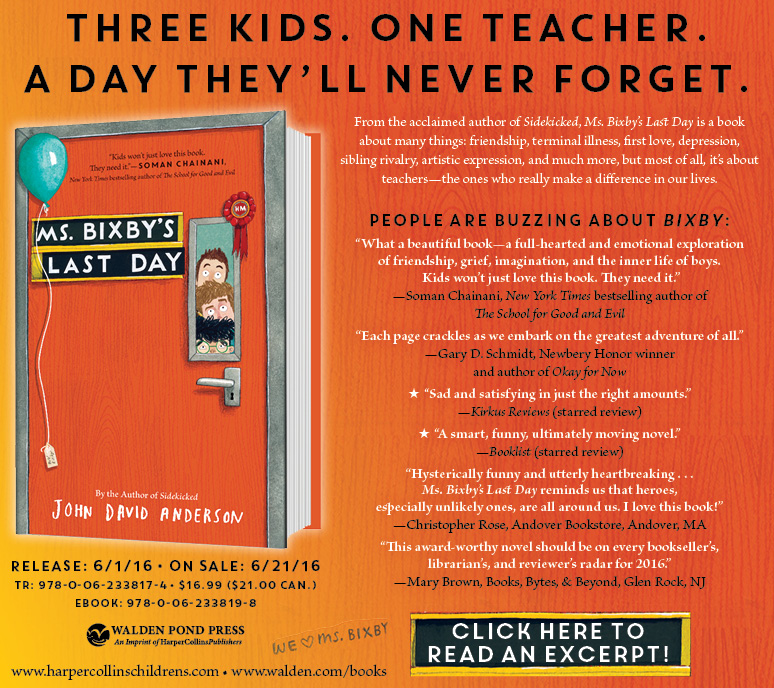
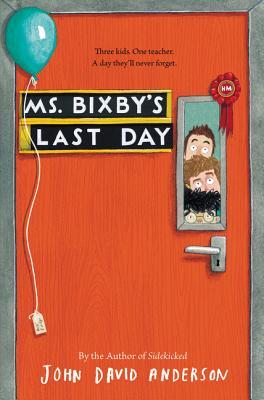
Ms. Bixby’s Last Day
Author: John David Anderson
Published June 21st by Walden Pond Press

Summary: Everyone knows there are different kinds of teachers. The good ones. The not-so-good ones. The boring ones, the mean ones, the ones who try too hard. The ones you’ll never remember, and the ones you want to forget. But Ms. Bixby is none of these. She’s the sort of teacher who makes you feel like the indignity of school is worthwhile. Who makes the idea of growing up less terrifying. Who you never want to disappoint. What Ms. Bixby is, is one of a kind.

Topher, Brand, and Steve know this better than anyone. And so when Ms. Bixby unexpectedly announces that she is very sick and won’t be able to finish the school year, they come up with a plan. Through the three very different stories they tell, we begin to understand just what Ms. Bixby means to Topher, Brand, and Steve—and what they are willing to go to such great lengths to tell her.

About the Author: John David Anderson, the author of many books for young readers including SidekickedMinion, and The Dungeoneersreturns with a story of three kids, a very special teacher, and one day that none of them will ever forget. A dedicated root beer connoisseur and chocolate fiend, he lives with his wife, two kids, and perpetually whiny cat in Indianapolis, Indiana. You can visit him online at www.johndavidanderson.org.

John David Anderson

MsBixbysLastDay_Ecard_5

Click to read a 48 page excerpt!

Giveaway!

a Rafflecopter giveaway

My Review: Ms. Bixby is one of those teachers that you read about and you want to be (if you are a teacher) or you want to have (if you are a student). As you can see from all the praise it has been receiving, John David Anderson wrote a home run book with this one. Our three main characters are diverse, funny, sweet, and stubborn, and Anderson’s voices for each are unique and alternate beautifully throughout the book. Though I must warn: This is a roller coaster book. You will laugh, smile, cry, get angry, and cringe. It is all there.

But this tour is about more than just the book, it is about focusing on our Ms. Bixby. Ms. Bixby is described as a “Good One” in the book. A “Good One” is a teacher who “make[s] the torture otherwise known as school somewhat bearable. You know when you have one of the Good Ones because you find yourself actually paying attention in class, even if it’s not art class. They’re the teachers you actually want to go back and say hi to next year. The ones you don’t want to disappoint.” 

My Ms. Bixby: We all have a wide variety of teachers; however, there are those that change your life. When I was in 12th grade, I was a high school fish just floating my way through school. I was a high achiever who was okay with only doing okay in classes. I didn’t know what I was good at. I didn’t know what I wanted to be when I grew up. I just thought I was another face in the crowd; nothing special. Then I entered Miss Hazel Haley’s classroom. When I had Miss Haley in 1999-2000, he had been teaching for 63 years, 61 of them at Lakeland High where I took my academic classes and 54 in the same classroom (in a building named after herself). She was a spit fire: She showed the Romeo and Juliet film from the 60s even though it showed a breast, she would speak her mind no matter what, and she cared and remembered every single person she’d ever taught. We were her kids. She never married or had children of her own, and she would tell you it was because she didn’t have to–we were her kids.

But it wasn’t all of this that made Miss Haley my Ms. Bixby. Actually, at first I really didn’t like her. She didn’t put up with my talking or note passing. She didn’t tolerate my Cs and Bs when she knew I could do better. She saw something in me. Finally, on one of the assignments I’d halfheartedly completed, she made me stay after school to work on with her. She told me I couldn’t get away with working the way I had been with the brain I had. She told me, “You are a good writer.” And she told me, “You are smart.” And for some reason her telling me stuck. And everything changed. I now knew that I was good at something. That I could accomplish something. And I have.

Lakeland Ledger article on Miss Haley’s legacy

NPR soundbite and transcript on Miss Haley’s retirement

When I decided to become a middle school teacher, I thought right away of Miss Haley. I know she would be proud of me. I wish I could tell her. And mostly, I hope that I can be someone’s Miss Haley, or Ms. Bixby. I hope my students know I care for them as if they are my own children. I know first hand that one teacher can definitely make a difference.

Walden TV Episode 17 — “LIST IT: Ms. Bixby’s Last Day:”
Have you ever had a favorite teacher? Maybe someone as AWESOME as Ms. Bixby? Mike & Julian certainly have! Follow along their list of favorite teachers–real and fictional!

Teachers’ Tools for Navigation: In addition to a wonderful classroom library addition and a read aloud, Ms. Bixby is just one of many teachers I’ve read about that show how a teacher can change a life. Ms. Bixby’s Last Day would be a perfect addition to a “Teacher Appreciation Text Set” along with WonderFish in a Tree, Bluefish (YA), Love that Dog, Jumped In (YA), and The Summer of May. 

Publisher’s Educators Guide:

Discussion Questions: Why did the author choose to use three different points of view?; How did Ms. Bixby affect each of the boys’ lives?; What made Ms. Bixby a “Good One?”

Flagged Passages: “You can pick your friends, and you can pick your nose, but you can’t pick your friend’s nose. That’s something my dad told me. Turns out…not entirely true. I mean, the middle part is obviously true. But the last part isn’t true at all.” (p. 25)

Funny story you’ll have to read the book to read (p. 25-27)

“You can pick your friend’s nose. But there’s a difference between can and should.” (p. 27)

Read This If You Loved: Wonder by RJ Palacio, Fish in a Tree by Lynda Mullaly Hunt,  Bluefish by Pat Schmatz, Love that Dog by Sharon Creech, Jumped In by Patrick Flores-Scott, The Summer of May by Cecelia Galante, The Honest Truth by Dan Gemeinhart, Remembering Mrs. Rossi by Amy Hest

Recommended For:

  classroomlibrarybuttonsmall readaloudbuttonsmall litcirclesbuttonsmall

Kellee Signature

Don’t miss out on the other stops on the Blog Tour!

6/2/2016 Nerdy Book Club
6/3/2016 Next Best Book
6/6/2016 Walden Media Tumblr
6/7/2016 Teach Mentor Texts
6/8/2016 This Kid Reviews Books
6/9/2016 Read, Write, Reflect
6/10/2016 Flashlight Reader
6/13/2016 Julie Falatko
6/14/2016 A Foodie Bibliophile in Wanderlust
6/15/2016 About to Mock
6/16/2016 Kid Lit Frenzy
6/16/2016 The Hiding Spot
6/17/2016 Unleashing Readers
6/20/2016 Ms. Yingling Reads
Novel Novice
6/21/2016 Maria’s Melange
Novel Novice
All the Wonders
6/22/2016 Lit Coach Lou
Novel Novice
6/23/2016 Novel Novice
6/24/2016 Satisfaction for Insatiable Readers
Novel Novice
6/27/2016 Librarian’s Quest
6/28/2016 Educate.Empower.Inspire…Teach
6/29/2016 Bluestocking Thinking
6/30/2016 Mindjacked
7/1/2016 All the Wonders

Nibbles: The Book Monster by Emma Yarlett

Share

nibbles

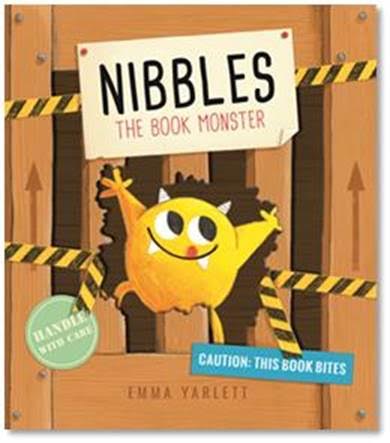
Nibbles: The Book Monster
Author and Illustrator: Emma Yarlett
Published: March 1, 2016 by Kane Miller Books

Goodreads Summary: Nibbles is a very naughty book monster—he’s chomping, munching and nibbling his way through fairytales that don’t belong to him! Can you help catch him and put him back in his own story? Children will love to lift the flaps, peek through the peep holes, and chase Nibbles through a fantastical world of books, in this quirky story, exquisitely illustrated by Emma Yarlett (My Daddy’s Going Away and Bear’s Big Bottom). Jam-packed full of your kids’ favorite fairy tales including Little Red Riding Hood, Jack and the Beanstalk and Goldilocks and the Three Bears.

Ricki’s Review: This is a very clever book! Nibbles loves to nibble on things, but most of all, he loves to nibble on books. He eats his way into stories and changes their outcomes! My son had so much fun reading this book. He loved the cutouts, lift the flaps, and books within books! I can imagine this is a huge hit with any kids who read it. It is very funny and creatively crafted—from the story to the illustrations to the way the book is presented. Two thumbs up to Emma Yarlett and Kane Miller books for thinking outside of the box with this one. It shows readers that books don’t have to be traditional!

Kellee’s Review: Trent is a big fan of monsters. He loves Monsters, Inc. and Don’t Push the Button!, so it is no surprise that he loves Nibbles. He fascinated with following Nibbles’ trail throughout all of the books and it became like a game of hide and seek for him. Not only is Trent a fan of Nibbles, I am as well. I loved the creativity of this book. The interactive and 3D aspects of it really bring the book to life, and I love that the author incorporates actual fairy tales in the books that Nibbles enjoys. Such a clever book that will keep readers come back over and over.

Teachers’ Tools for Navigation: This book could be used to start any fairy tale retelling unit! Readers of all ages will fall in love with Nibbles and want to participate in this adventure. I’d love to have my class create their own fairy tale retelling with Nibbles’ influence! I imagine there would be a lot of laughs and a lot of joy in this assignment. It teaches kids that reading can be very fun!

Discussion Questions: How do the author/publisher allow us to rethink our conceptions of traditional books? Which text features were your favorites, and why?; What other stories could Nibbles nibble his way through? How would he change the plot/outcome?

Book Trailer: 

Read This If You Loved: Battle Bunny by Jon Scieszka and Mac Barnett; Little Red Writing by Joan Holub, Fairy Tale Comics by Chris Duffy, Crankee Doodle by Tom Angleberger

Recommended For: 

readaloudbuttonsmall classroomlibrarybuttonsmall

RickiSigand Kellee Signature

**Thank you to Lynn at Kane Miller Books for providing copies for review!**

The First Step: How One Girl Put Segregation on Trial by Susan E. Goodman

Share

NFPB2016

Nonfiction Wednesday

Nonfiction Picture Book Wednesday is hosted by Kid Lit Frenzy and was started to help promote the reading of nonfiction texts. Most Wednesdays, we will be participating and will review a nonfiction text (though it may not always be a picture book).
Be sure to visit Kid Lit Frenzy and see what other nonfiction books are shared this week!

first step

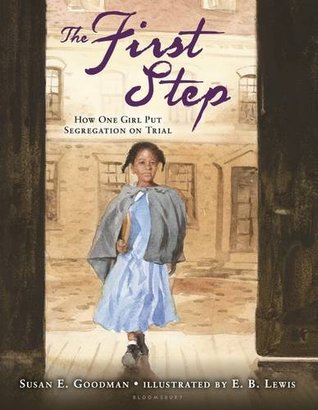
The First Step: How One Girl Put Segregation on Trial
Author: Susan E. Goodman
Illustrator: E.B. Lewis
Published January 5th, 2016 by Bloomsbury Children’s Books

Goodreads Summary: In 1847, a young African American girl named Sarah Roberts was attending a school in Boston. Then one day she was told she could never come back. She didn’t belong. The Otis School was for white children only.

Sarah deserved an equal education, and the Roberts family fought for change. They made history. Roberts v. City of Boston was the first case challenging our legal system to outlaw segregated schools. It was the first time an African American lawyer argued in a supreme court.

These first steps set in motion changes that ultimately led to equality under the law in the United States. Sarah’s cause was won when people–black and white–stood together and said, No more. Now, right now, it is time for change!

With gorgeous art from award-winning illustrator E. B. Lewis,The First Step is an inspiring look at the first lawsuit to demand desegregation–long before the American Civil Rights movement, even before the Civil War.

Backmatter includes: integration timeline, bios on key people in the book, list of resources, and author’s note.

My Review: I really appreciate the abundance of quality nonfiction books about the early civil rights in our country because I fear that so much of the prejudice still remains, so it is important to learn about history so hopefully it will not repeat itself. The First Step is a story that shows how even if you do not win your fight, that doesn’t mean that the effort you put forth was for naught. Sarah Roberts and her family were so brave in standing up for her education and rights, and their fight helped pave the way for the bumpy road of integration in schools. Goodman does a wonderful job starting with Sarah’s story but tying it to the Brown v. Board of Education trial while not taking away any credit from the Roberts’ part of history.  

Teachers’ Tools for Navigation: My first thought is to do a jigsaw type activity with The First Step and other civil rights nonfiction picture books (such as the ones listed below in recommended reading). Students can learn about different parts of the history of civil rights by reading the picture books and maybe even researching extra. They would then either present as a group to the class or you can jigsaw the kids back together (pull one person from picture book and put them together as a group), and they can each teach each other about what they learned. This is one of my favorite activities to do with picture books because it allows students to learn in depth about one subject then teach the rest of their class thus everyone learns about all subjects.

Discussion Questions: How did Sarah Roberts’s family’s fight lead to the integration of schools even though she did not win her case?; How did the author structure the book to go through the history of segregation?; How do the illustrations by Lewis help bring Goodman’s story to life?

We Flagged: 

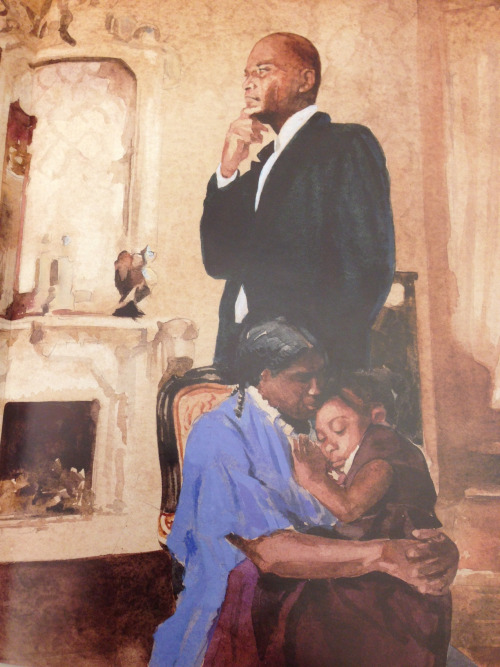
first step spread

“Adeline and Benjamin Roberts tried to imagine Sarah’s walk to the Smith School, which was for African American children. She would have to zigzag through many streets, crossing one neighborhood after another.

Sarah would have to go all that way for a school that never taught subjects like history or drawing. All that way for Boston’s only school without a play yard. A school that owned only one book.”

Read This If You Loved: Separate is Never Equal by Duncan TonatiuhFreedom Summer (Kellee’s Review, Ricki’s Review) by Deborah Wiles, Seeds of Freedom by Hester Bass

Recommended For: 

classroomlibrarybuttonsmall readaloudbuttonsmall litcirclesbuttonsmall

Signature

What Do You Do with a Problem? by Kobi Yamada

Share

what do you do with a problem

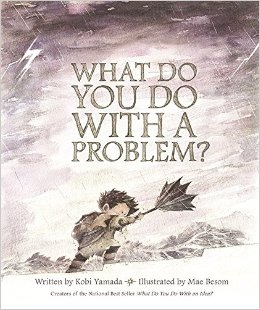
What Do You Do with a Problem?
Author: Kobi Yamada; Illustrator: Mae Besom
Published: July 1, 2016 by Compendium Inc.

GoodReads Summary: From the same author and illustrator as our #1 nationally best-selling What Do You Do With an Idea? comes a new book to encourage you to look closely at problems and discover the possibilities they can hold.

What do you do with a problem? Especially one that follows you around and doesn’t seem to be going away? Do you worry about it? Ignore it? Do you run and hide from it?

This is the story of a persistent problem and the child who isn’t so sure what to make of it. The longer the problem is avoided, the bigger it seems to get. But when the child finally musters up the courage to face it, the problem turns out to be something quite different than it appeared.

This is a story for anyone, at any age, who has ever had a problem that they wished would go away. It’s a story to inspire you to look closely at that problem and to find out why it’s here. Because you might discover something amazing about your problem… and yourself.

What are problems for? They challenge us, shape us, push us, and help us to discover just how strong and brave and capable we really are. Even though we don’t always want them, problems have a way of bringing unexpected gifts.

So, what will you do with your problem? Now that’s up to you.

Review: There is something so magical about the combination of writer Kobi Yamada and illustrator Mae Besom. When I saw that these creators of What Do You Do with an Idea? had another book, I jumped at the chance to read it. It’s no secret that I am in love with this first book. I have gifted it to many friends and children, and I include it on many of my favorites and Top Ten Tuesday lists. I was pleased that What Do You Do with a Problem? is just as stunning. These two books are a teacher’s dream. They utilize many literary elements and are perfect for close analysis. I would use them at all grade levels. What Do You Do with a Problem? is a great text to teach readers how to reconsider a problem (or problems) that they might have. They can compare the problem with illustrations and consider how that problem may, for example, be all-encompassing. I like how the book balances both the weight of the problem and the proverbial light at the end of the tunnel. By looking at this problem in a new light, readers will be able to take more of an outside perspective of the conflict—and hopefully/potentially work toward a resolution.

Teacher’s Tools for Navigation: To start, teachers might ask students to consider the symbolism within the text. They might even grapple with the definition of an allegory and discuss ways the definition might be connected with the text and illustrations. Then, students could think of an abstract idea and try to associate an object with that idea. They might even consider writing their own picture book that connects the object and abstract idea. I also think it would be great for teachers to read both this text and What Do You Do with an Idea? to students. Then, they might compare and contrast the stories and their messages.

Discussion Questions: What do you do with a problem? How do we deal with problems in different ways? How do others in our lives deal with problems in ways that differ from us?; How do the author and illustrator work together to create a compelling story? What symbols do they use to convey their message?

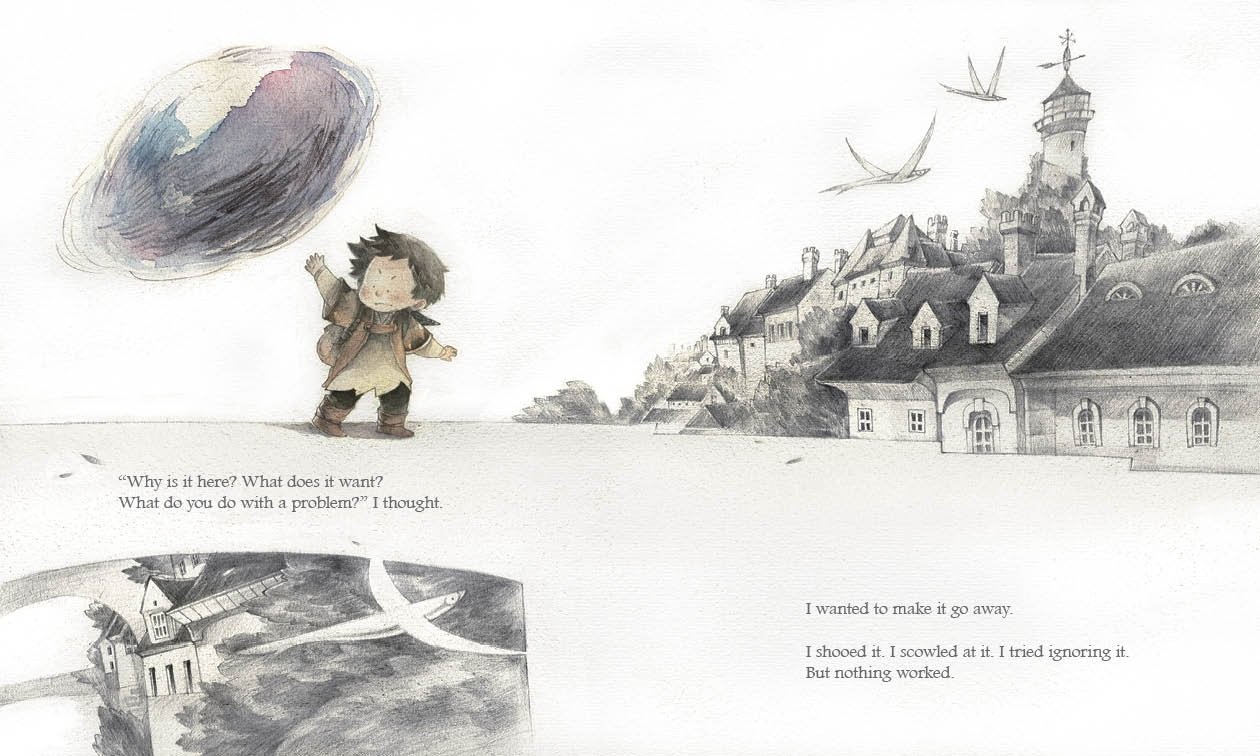
Flagged Passage: 

what do you do with a problem spread

Image from: www.amazon.com

Read This If You Loved: What Do You Do with an Idea? by Kobi Yamada; The Most Magnificent Thing by Ashley Spires; The Dot by Peter H. Reynolds, The Noisy Paint Box by Barb Rosenstock, Lost and Found by Oliver Jeffers, Journey by Aaron Becker

Recommended For:

  readaloudbuttonsmall closereadinganalysisbuttonsmall classroomlibrarybuttonsmall

RickiSig

Candlewick Nonfiction Picture Books: Who’s Like Me? by Nicola Davies; Can We Help? by George Ancona; Belle, the Last Mule at Gee’s Bend by Calvin Alexander Ramsey & Bettye Stroud; and The Boy Who Fell Off the Mayflower by P.J. Lynch

Share

NFPB2016

Nonfiction Wednesday

Nonfiction Picture Book Wednesday is hosted by Kid Lit Frenzy and was started to help promote the reading of nonfiction texts. Most Wednesdays, we will be participating and will review a nonfiction text (though it may not always be a picture book).
Be sure to visit Kid Lit Frenzy and see what other nonfiction books are shared this week!

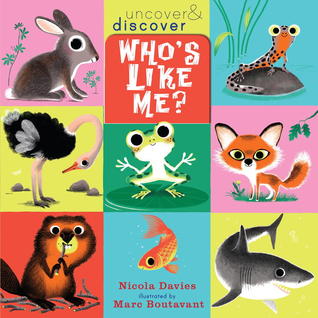
who's like me

Who’s Like Me?
Author: Nicola Davis
Illustrator: Marc Boutavant
Published February 28th, 2012 by Candlewick Press

Goodreads Summary: Lift the flaps and learn about animal life in this fresh, fun-filled book for curious preschoolers.

A bunny is furry and breathes air. Who else is like that — a pigeon, a fish, a chameleon, or a fox? Some animals have fins to swim with, some have feathers and a beak, some have skin that is scaly, or smooth and wet. But whatever features a creature has, someone else has them, too. Can you guess who? Big flaps and a matching spread at the end make animal classification fun.

My Thoughts: This flap book is going to be a big hit in my house both because it is entertaining and because it is informative. First, the author does a great job making the identification of animal types a game including flaps and comparisons/contrasts then she ensures that factual information follows the matching to explain the type of animal and the characteristics of the type.

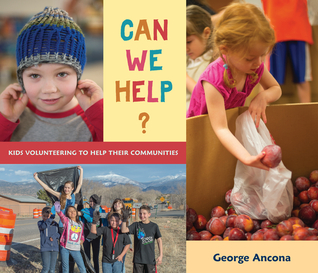
can we help

Can We Help? Kids Volunteering to Help their Communities
Author: George Ancona
Published August 25th, 2015 by Candlewick Press

Goodreads Summary: Real kids make a real difference in their communities in this vibrantly photographed chronicle by George Ancona.

George Ancona celebrates the joy of kids giving back. In one after-school program, middle-school students mentor and tutor younger children. Via a special partnership, schoolchildren help professionals train assistance dogs for people with disabilities. At a community farm, families plant, grow, and harvest produce for soup kitchens and charities. In these and other examples of volunteering, kids of all ages work together knitting hats and scarves for those who could use warm clothes, packing hot meals to deliver to housebound people, and keeping roadways clean. Young humanitarians reading these accounts may well be inspired to find ways that they can help, too.

My Thoughts: I think this picture book would be a wonderful one to read in conjunction with the 31 Ways to Change the World because that book includes suggestions while this one gives us narratives about those actually making a difference. I love the variety of ways the author highlights: from knitting to a community farm to training dogs and mentoring. These stories are inspiring and will make the reader (adult or child) want to do something to make a difference!

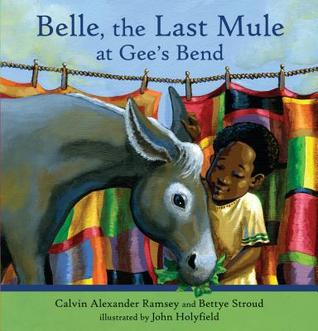
belle last mule

Belle, the Last Mule at Gee’s Bend
Authors: Calving Alexander Ramsey and Bettye Stroud
Illustrator: John Holyfield
Published September 13th, 2011 by Candlewick Press

Goodreads Summary: A true story inspires the moving tale of a mule that played a key role in the civil rights movement– and a young boy who sees history anew.

Sitting on a bench waiting for his mother, Alex spies a mule chomping on greens in someone’s garden, and he can’t help but ask about it.””Ol Belle?” says Miz Pettway next to him. “She can have all the collards she wants. She’s earned it.” And so begins the tale of a simple mule in Gee’s Bend, Alabama, who played a singular part in the civil rights movement of the 1960s. When African-Americans in a poor community– inspired by a visit from Dr. Martin Luther King, Jr.– defied local authorities who were trying to stop them from registering to vote, many got around a long detour on mule-drawn wagons. Later, after Dr. King’s assassination, two mules from Gee’s Bend pulled the farm wagon bearing his casket through the streets of Atlanta. As Alex looks into the eyes of gentle Belle, he begins to understand a powerful time in history in a very personal way.

My Thoughts: This story adds an extra truth to the story of Martin Luther King that many of us know. MLK was an advocate and leader and activist for all African and Black Americans and this meant a lot to so many communities of people around America including Gee’s Bend. To learn about Belle and King’s reason for having Belle pull his coffin really just shows how true his intentions of being a man of the people while fighting for the rights of all. And I loved how this story was told as a story from a Bender to a young boy visiting the town. Gee’s Bend is such a historical place, and I love this new part of their history that I didn’t know. (I love the quilts produced in Gee’s Bend! If you haven’t viewed them, Google it now!)

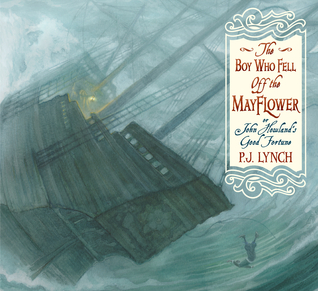
boy who fell

The Boy Who Fell Off the Mayflower or John Howland’s Good Fortune
Author and Illustrator: P.J. Lynch
Published September 22nd, 2015 by Candlewick Press

Goodreads Summary: In the first book he has both written and illustrated, master artist P.J. Lynch brings a Mayflower voyager’s story to vivid life.

At a young age, John Howland learned what it meant to take advantage of an opportunity. Leaving the docks of London on the Mayflower as an indentured servant to Pilgrim John Carver, John Howland little knew that he was embarking on the adventure of a lifetime. By his great good fortune, John survived falling overboard on the crossing of the Atlantic Ocean, and he earned his keep ashore by helping to scout a safe harbor and landing site for his bedraggled and ill shipmates. Would his luck continue to hold amid the dangers and adversity of the Pilgrims’ lives in New England? John Howland’s tale is masterfully told in his own voice, bringing an immediacy and young perspective to the oft-told Pilgrims’ story. P.J. Lynch captures this pivotal moment in American history in precise and exquisite detail, from the light on the froth of a breaking wave to the questioning voice of a teen in a new world.

My Thoughts: I have to start my review with discussing the art work. Describing P.J. Lynch as a master artist is a perfect statement. His watercolor and gouache full page plus illustrations are so lifelike and beautiful that the reader will spend time on each page viewing the art in addition to reading the text. And what makes the book even better is that the text is interesting. Told in first person from John Howland’s point of view, we travel from London to America through storms, a fall off the Mayflower, death, disease, famine, and shows how friendship and kindness pay. In the classroom, this text would be an informational and interesting introduction to the Mayflower voyage and Plymouth.


All Recommended For: 

classroomlibrarybuttonsmall readaloudbuttonsmall litcirclesbuttonsmall

Kellee Signature