Nina: Jazz Legend and Civil-Rights Activist Nina Simone by Alice Brière-Haquet

Share

nfpb2017

Nonfiction Wednesday

Nonfiction Picture Book Wednesday is hosted by Kid Lit Frenzy and was started to help promote the reading of nonfiction texts. Most Wednesdays, we will be participating and will review a nonfiction text (though it may not always be a picture book).
Be sure to visit Kid Lit Frenzy and see what other nonfiction books are shared this week!
Nina: Jazz Legend and Civil-Rights Activist Nina Simone
Author: Alice Brière-Haquet
Illustrator: Bruno Liance
Published December 5th, 2017 by Charlesbridge Publishing

Summary: “To be young, gifted, and black.”

A stunning picture-book biography of the High Priestess of Soul and one of the greatest voices of the 20th century.

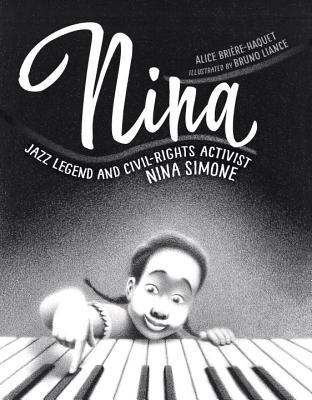
With evocative black-and-white illustrations and moving prose, readers are introduced to Nina Simone, jazz-music legend and civil-rights activist. Shared as a lullaby to her daughter, a soulful song recounts Simone’s career, the trials she faced as an African American woman, and the stand she took during the Civil Rights Movement. This poignant picture book offers a melodic tale that is both a historic account of an iconic figure and an extraordinary look at how far we’ve come and how far we still need to go for social justice and equality. A timeless and timely message aptly appropriate for today’s social and political climates.

Review: Although Nina is just a taste into who Nina Simone was as it only introduces her talent as a pianist and shares her beliefs in regards to civil rights. Set up as a lullaby that Nina is singing to her child, the story recounts her love of music and learning about the racism within our nation as well as a story where she stood up to inequality at one of her piano concerts. The lyrics and illustrations are dreamy and perfectly fit the purpose of the story: to introduce and intrigue the reader when it comes to Nina Simone.

Teachers’ Tools for Navigation: I do wish that there had been back matter that went more in depth into Simone’s contribution to jazz and civil rights; however, without them existing, this nonfiction picture book allows for a perfect change for inquiry. Now that students have been introduced to Nina, have stations/centers focusing on different parts of her life, jazz, or the Civil Rights Movement.

Discussion Questions: 

  • How does the illustration on the bus use the idea of the piano to symbolize the relationship between White and Black citizens in the early 1900s?
  • What techniques do the author and illustrator use to make the book seem lullaby-eque?
  • How did the imagery of the single black chair symbolize the racism that occurred at Simone’s concert?
  • How does the author tie in Martin Luther King, Jr. and the Civil Rights Movement?

Flagged Passages: 
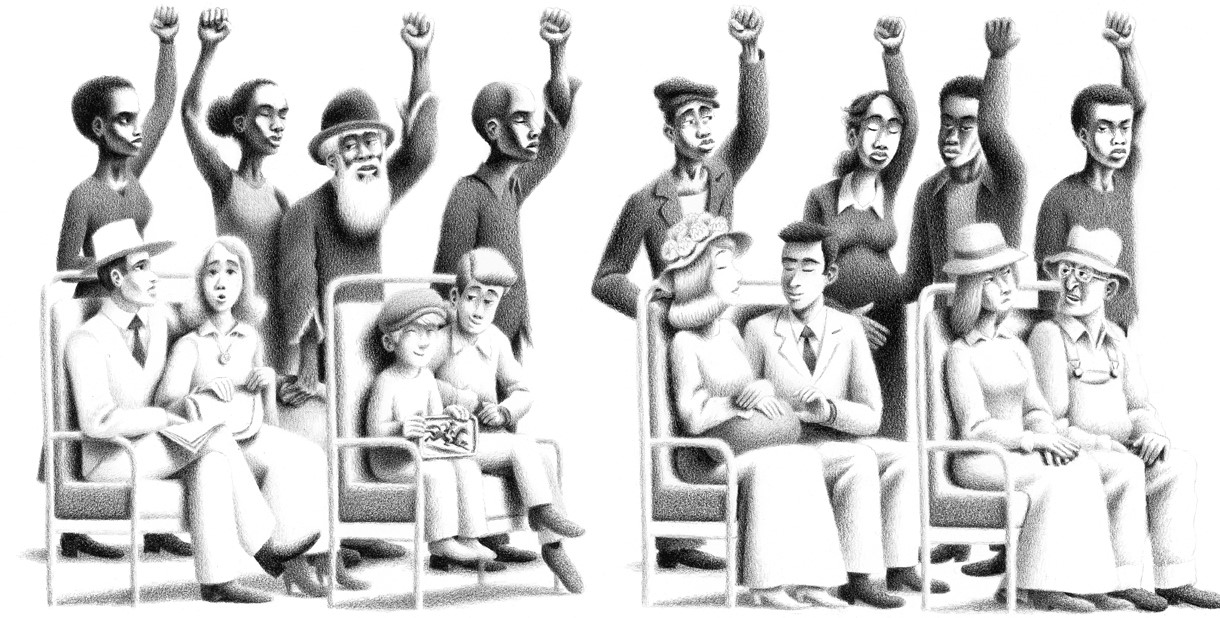
“‘The white keys are whole notes and the black keys are flats, or half notes,’ my teacher explained.

I asked why.

‘Because that’s just the way it is.’

Yes, that’s the way it was. White was whole. Black was half. It was that way everywhere and for everyone.

I could have held it against people. Or worse, I couldn’t believed I was worth less than other people.

Black people were nothing but half notes on a huge ivory keyboard.

But no. I did not agree with this.

The notes had to mingle and dance together in the air so these lies would disappear.”

Read This If You Love: Andrea Davis Pinkney picture book biographies, Jazz, Learning about the Civil Rights Movement

Recommended For: 
classroomlibrarybuttonsmall closereadinganalysisbuttonsmall  

Signature

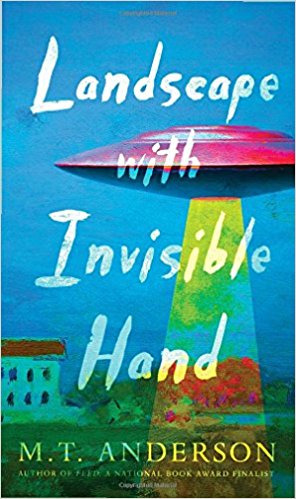
Landscape with Invisible Hand by M. T. Anderson

Share

Landscape with Invisible Hand
Author: M. T. Anderson
Published: September 12, 2017 by Candlewick

Summary: National Book Award winner M. T. Anderson returns to future Earth in a sharply wrought satire of art and truth in the midst of colonization.

When the vuvv first landed, it came as a surprise to aspiring artist Adam and the rest of planet Earth – but not necessarily an unwelcome one. Can it really be called an invasion when the vuvv generously offered free advanced technology and cures for every illness imaginable? As it turns out, yes. With his parents’ jobs replaced by alien tech and no money for food, clean water, or the vuvv’s miraculous medicine, Adam and his girlfriend, Chloe, have to get creative to survive. And since the vuvv crave anything they deem “classic” Earth culture (doo-wop music, still-life paintings of fruit, true love), recording 1950s-style dates for the vuvv to watch in a pay-per-minute format seems like a brilliant idea. But it’s hard for Adam and Chloe to sell true love when they hate each other more with every passing episode. Soon enough, Adam must decide how far he’s willing to go – and what he’s willing to sacrifice – to give the vuvv what they want.

Review: 

  • Futuristic, dark satire that is an unusual, intelligent social commentary
  • Forces readers to think deeply about their personal, social, and political lives
  • Somewhat non-linear story with an interesting layout: each chapter has a title that corresponds with the artwork created by the main character
  • Stylistically, Anderson chooses every word with intention. The text is a 149-page novella that features chapters that can be taught instructionally as vignettes.

Teachers’ Tools for Navigation:  Teachers might ask students to begin by looking closely at the text for short passages that they find particularly interesting or inspiring. Students might write a one-pager that a) unpacks the passage they chose, and b) examines the passage through the lens of a topic that they find particularly interesting and relevant. For example, they might connect a passage to the following topics which are relevant in the text:

Art

Automation

Capitalism

Classism

Economy

Entrepreneurship

Existentialism

Extraterrestrial Life

Health Care

Immigration

Love

Politics

Poverty

Sickness

Nostalgia

Unemployment

After the students have written several one-pagers and explored a variety of topics, they might select one topic that interests them most. They can research scholarship about the topic and look across the entire text for relevant passages.

Sample research paper topics:

Examining economic disparities and classism within Landscape with Invisible Hand

Finding the soul: M.T. Anderson’s treatment of love and art in Landscape with Invisible Hand

Discussion Questions: Do you think M. T. Anderson had a purpose for writing this text?; What kind of social commentary does this text offer?; What does it tell us about love? Society? Humanity?; How does Anderson use art to enhance the story?; How is the text structured? How does this enhance your reading?

Flagged Passage: “We are tiny figures, faceless, pointing at wonders, provided for scale, no lives of our own, surveying the landscape that has engulfed us all.”

Read This If You Loved: Feed by M. T. Anderson; Books by Scott Westerfeld; The House of the Scorpion by Nancy Farmer

Recommended For:
 classroomlibrarybuttonsmall

Thank you, Candlewick!

RickiSig

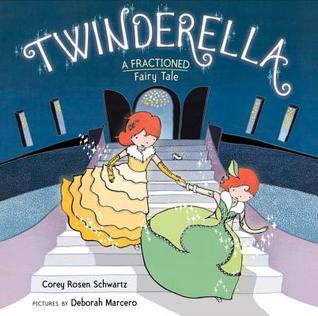
Twinderella: A Fractioned Fairy Tale by Corey Rosen Schwartz

Share

Twinderella: A Fractioned Fairy Tale
Author: Corey Rosen Schwartz
Illustrator: Deborah Marcero
Published September 5th, 2017 by G.P. Putnam’s Sons Books for Young Readers

Summary: Have you heard the story of Cinderella? Well, you don’t know the half of it.

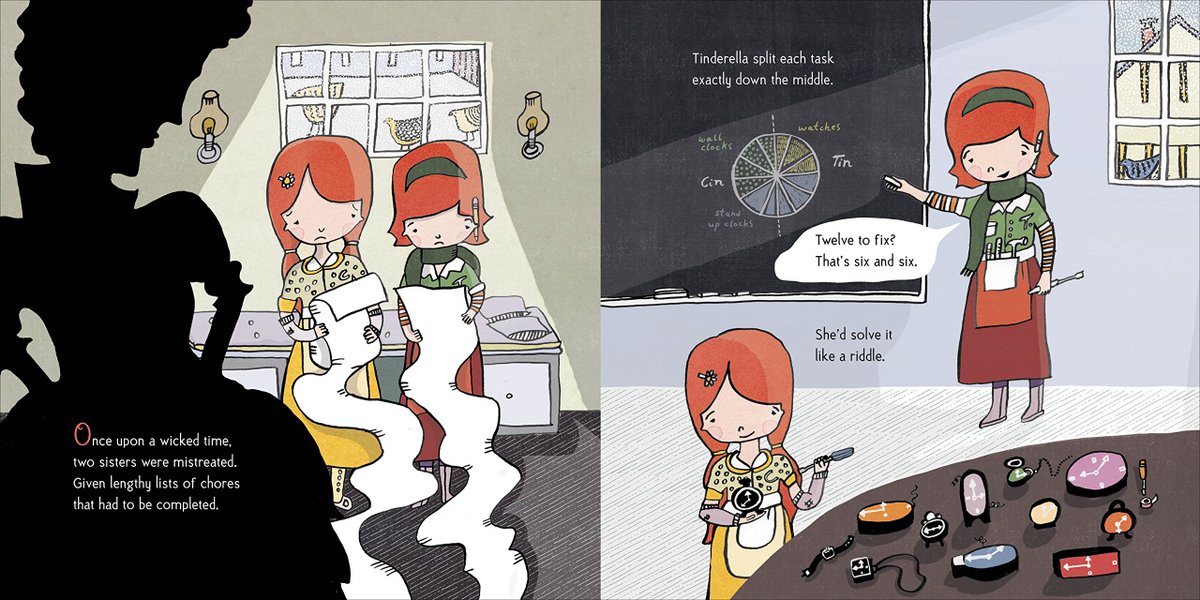
Cinderella and her lesser-known twin, Tinderella, split everything right down the middle. They each do half the housework, half the mending, and half the mean step-sister tending. When the Prince throws a ball, their fairy godmother sends them both, and they dance the night away with the prince. But he simply can’t choose between Cin and Tin, and they are in need of some clever thinking and just a pinch of magic. The Prince agrees to share his kingdom half and half, and the fairy-godmother makes him a twin too, so they can all live happily ever after. Cin and the Prince rule the kingdom, while Tin and the Twin win all the kingdom’s math competitions. It truly is a happily ever half-ter.

Review: I am a huge fan of fairy tale retellings. I think they are a perfect way to bring attention to something, tell a unique story, or teach students because it is set in a basis of prior knowledge that most students already have thus allowing for a comfortable base to scaffold up from. With Twinderella, the story of Cinderella is used to teach about fractions and division while also telling a story of two sisters that find a way to make sure they can live happily ever half-ter.

Schwartz and Marcero are a perfect team to tell these twins’ story in a way that not only teaches but entertains. The balance was done so well between the math concepts and narrative. You learn how the twins make it all work, and you root for them to be happy.

Teachers’ Tools for Navigation: When I finished this book, I immediately texted my friend who teaches 2nd grade because I know that it is perfect for the classroom! It meets standards for second grade because of the focus on fairy tales and retellings and is a perfect introduction to easy fractions that they will begin looking at in 3rd grade.

Discussion Questions: 

  • How is Twinderella different from the traditional Cinderella stories?
  • How did Tinderella make sure that everything was split equally between the two sisters?
  • What math concepts were taught in the story?
  • With the quadruplets, how would chores and such needed to be divided?

Flagged Passages: 

Read This If You Love: Math, Fairy Tale Retellings

Recommended For: 
classroomlibrarybuttonsmall 

Signature

**Thank you to Penguin Young Readers for providing a copy for review!**

The Peculiar Incident on Shady Street by Lindsay Currie

Share

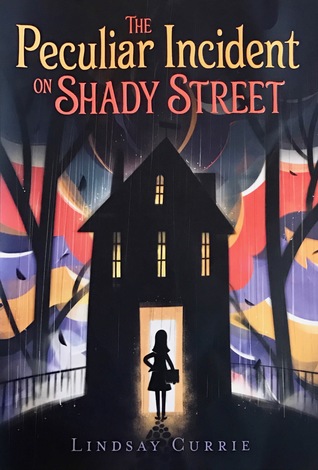
The Peculiar Incident on Shady Street
Author: Lindsay Currie
Published October 10th, 2017 by Aladdin

Summary: A girl unravels a centuries-old mystery after moving into a haunted house in this deliciously suspenseful mystery.

Tessa Woodward isn’t exactly thrilled to move to rainy, cold Chicago from her home in sunny Florida. But homesickness turns to icy fear when unexplainable things start happening in her new house. Things like flickering lights, mysterious drawings appearing out of nowhere, and a crackling noise she can feel in her bones.

When her little brother’s doll starts crying real tears, Tessa realizes that someone—or something—is trying to communicate with her. A secret that’s been shrouded in mystery for more than one hundred years.

With the help of three new friends, Tessa begins unraveling the mystery of what happened in the house on Shady Street—and more importantly, what it has to do with her!

Review: I always go in tentatively to spooky books because I am so jumpy and also really don’t enjoy when the only point of a book is to scare the reader. But I could tell right away that Shady Street was going to completely exceed other just-scary books because it was about so much more. Sure, there was definitely a shady mystery and some really scary moments, but it was all entwined with a story about friendship, family, identity, and moving. Lindsay Currie did a perfect job balancing the two goals of the book: to scare the reader and to make the reader care so much about her characters.

In addition to the plot development being on point, Shady Street‘s characters were each were fully-developed to give every reader someone to connect with. I also liked how Currie included actual Chicago folklore and landmarks to enhance the story (and as a girl who lives in Florida and loves Chicago, I loved the Florida truths throughout also). Check out Currie’s website for behind the scenes info, and here’s a video of Lindsay Currie on a walking tour through Graceland cemetery, one of the settings of the book:

Teachers’ Tools for Navigation: Students are going to love this story because it is a perfect mix of ghost story and coming-of-age story, so classroom, school, and public libraries all definitely need to have a copy–once one students reads it, the word is going to get out, and it’ll never be on the shelf!

In the classroom, using Lindsay Currie’s website and video, Shady Street is a good example of author’s decision-making, how the setting of a story can impact the plot, and how an author uses the setting to affect the mood.

Book Trailer: 

Discussion Questions: 

  • How would the story have been different if Tessa had not gone to the pond the first time?
  • Why do you think Inez chose Tessa?
  • Did the story end how you thought it was going to?
  • How did the author use the setting to affect the mood of the story? The plot?
  • Which character do you connect with the most? Explain.
  • What caused Inez to act the way she did?
  • Similar to what Tessa did at the end for Inez, create a name plate for yourself with illustrations that identify you.
  • Explain the act of condensation.

Flagged Passages: “The door clicks shut behind her, and I grab a pair of jeans off the chair I slung them over last night. My sketchpad is open just slightly and I stop in my tracks, confused at the small blur I can see in the upper left-hand corner of the sheet. It’s grayish black, like I started something then just barely ran the bad of my thumb over it.

‘What in the–‘ I start, bending closer to the page.

I didn’t draw anything last night. I was so tired from carrying boxes all over this ginormous place that I crawled into bed without even brushing my teeth.

I stare at the mark. It’s small and shaped like an upside-down L. Lifting the book and giving the paper a tap, I watch asn the unwelcome spot becomes dust again and drifts into the air. There will still be a darkened area there, but I’ll camouflage it with shading later. Still. There’s something about the mark that bothers me. Something off.”

Read This If You Love: Mary Downing Hahn novels, The Key to Extraordinary by Natalie Lloyd, Ghostlight by Sonia Gensler, Doll Bones by Holly Black, The Seer of Shadows by Avi

Recommended For: 
classroomlibrarybuttonsmall 

Signature

**Thank you to Lindsay Currie for providing a copy of the book for review!**

Blog Tour with Book Trailer, 30 Day #ProtectOurWorld Challenge, and Review!: Zoo Scientists to the Rescue by Patricia Newman, Photographs by Annie Crawley

Share

nfpb2017

Nonfiction Wednesday

Nonfiction Picture Book Wednesday is hosted by Kid Lit Frenzy and was started to help promote the reading of nonfiction texts. Most Wednesdays, we will be participating and will review a nonfiction text (though it may not always be a picture book).
Be sure to visit Kid Lit Frenzy and see what other nonfiction books are shared this week!

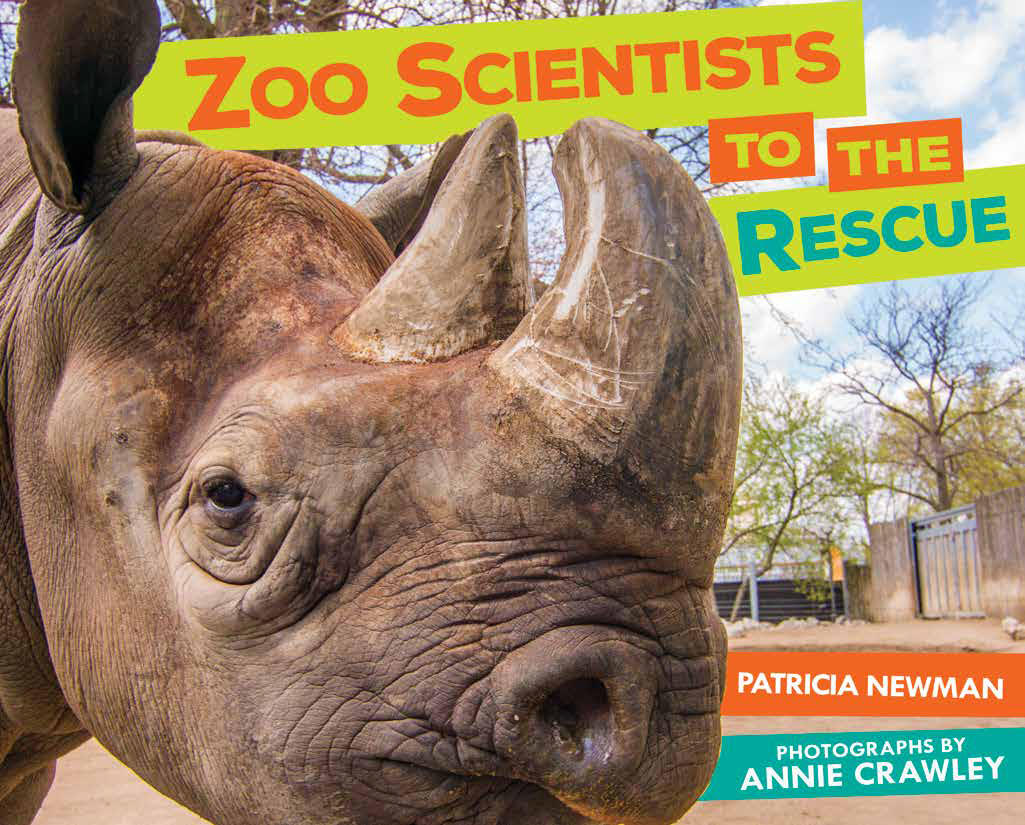
Zoo Scientists to the Rescue
Author: Patricia Newman
Photographer: Annie Crawley
Published October 1st, 2017 by Millbrook Press

Summary: Zoos take care of animals and welcome visitors of all ages, but that’s not all zoos do. Author Patricia Newman and photographer Annie Crawley bring readers behind the scenes at three zoos to meet scientists working to save endangered animals.

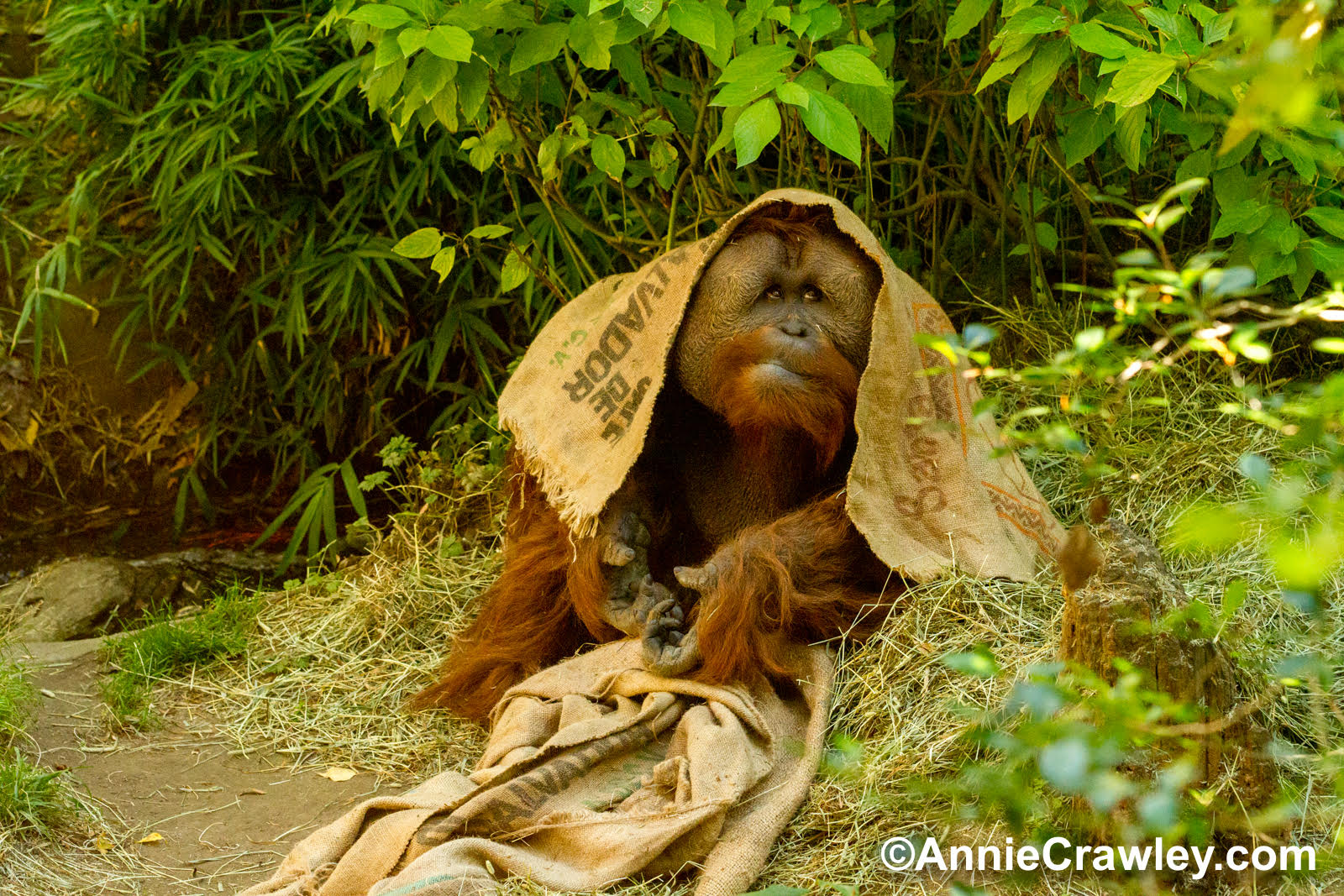
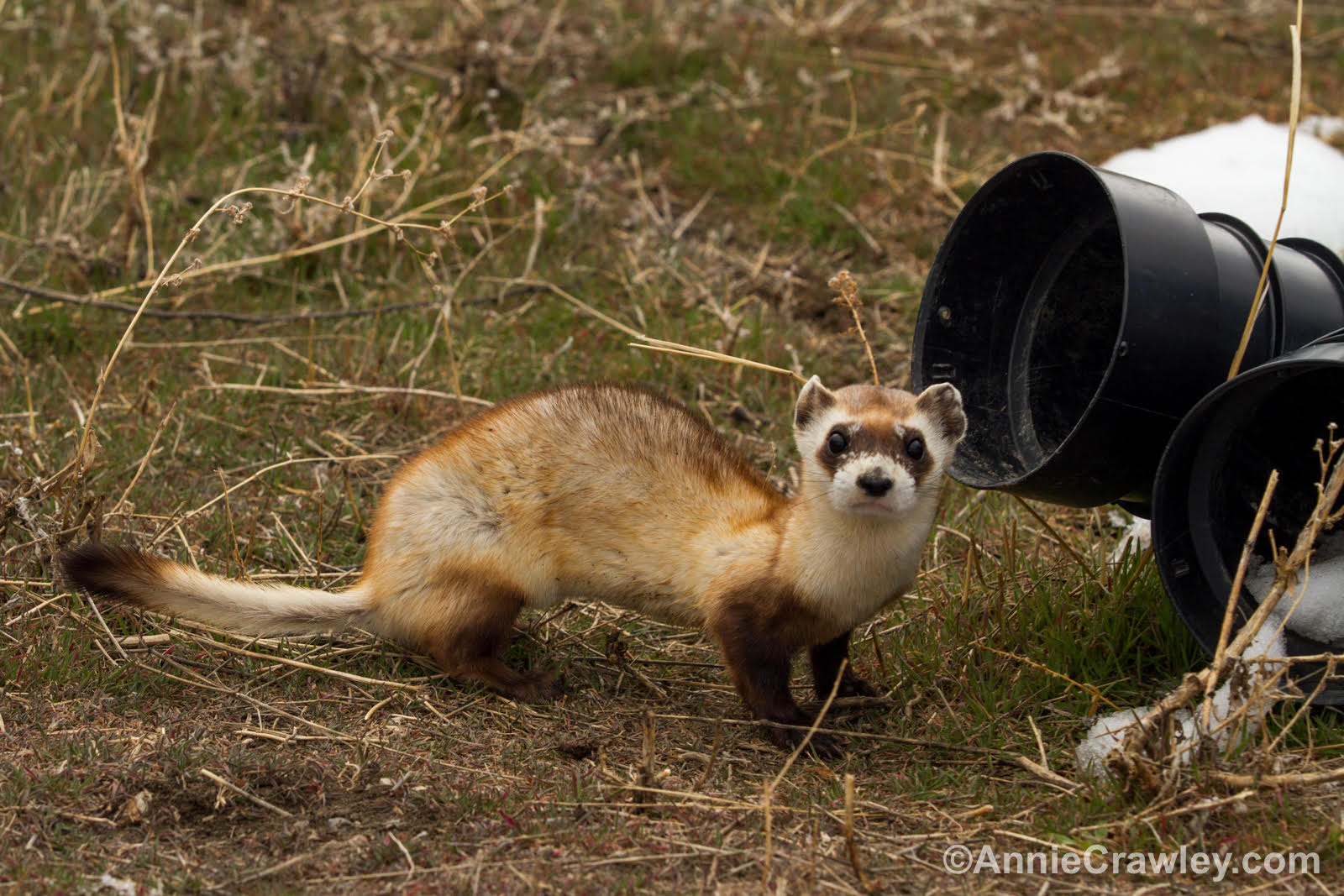
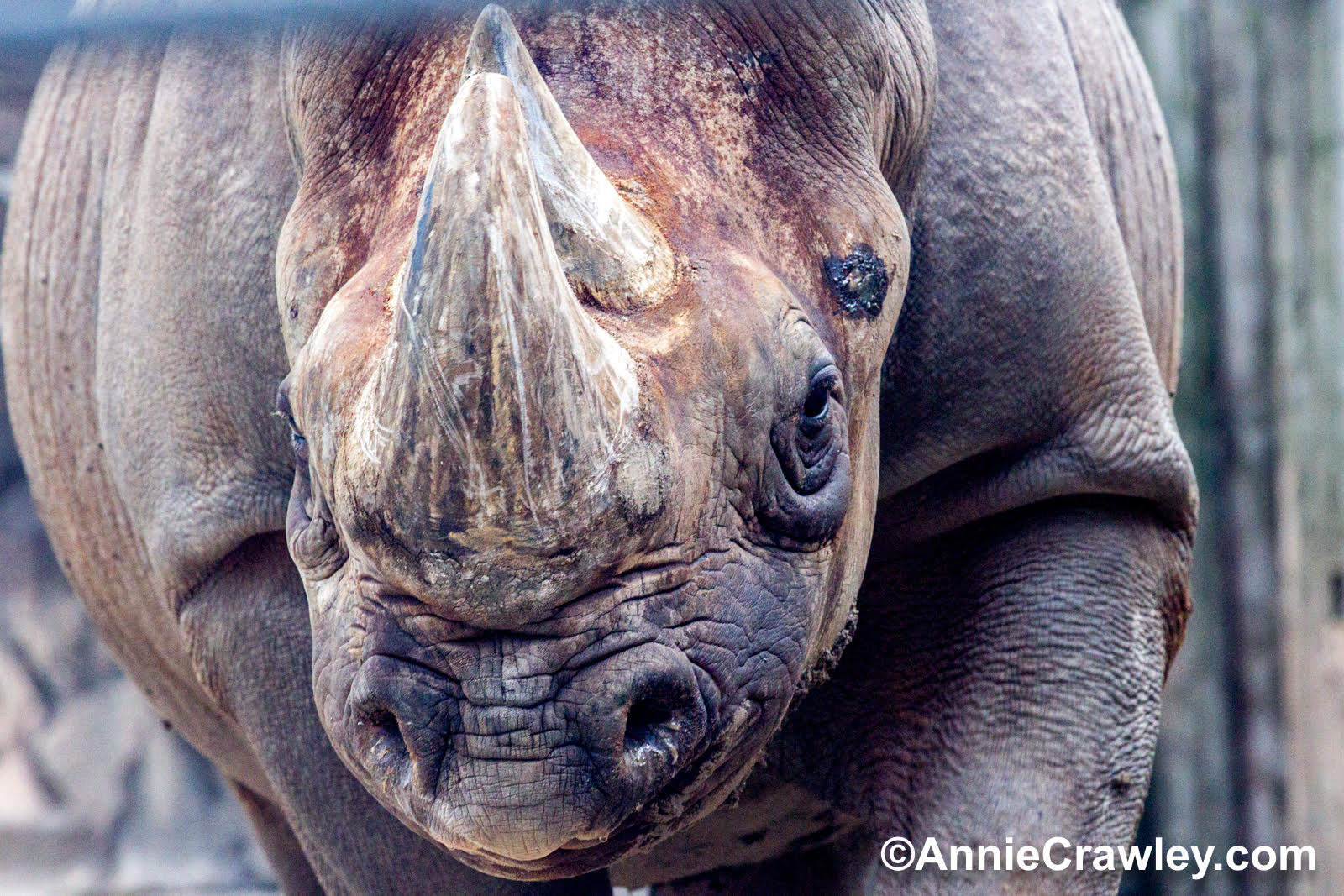
Meredith Bastian’s experiences studying wild orangutans help educate both zoo visitors and the zoo workers who care for captive orangutans. Jeff Baughman breeds black-footed ferrets and reintroduces them into the wild. And Rachel Santymire examines poop from black rhinoceroses at the zoo and in their natural habitat to benefit all black rhinos. Find out how zoo scientists are helping us learn more about these remarkable, at-risk species before it’s too late!

Visit the authors at http://www.patriciamnewman.com and https://www.anniecrawley.com/

Review: Patricia Newman’s work always blows me away and Annie Crawley’s photos in Plastics, Ahoy! were breathtaking, so I was so happy to see that they had a new book coming out. In Zoo Scientists, a text is just as brilliantly done as Newman’s other works, she once again focuses on a topic that needs a spotlight. This time, we see how zoos are working towards saving endangered animals. Zoos are such important places when they are done correctly, so I loved this focus on three specific stories about how zoos are helping rhinos, orangutans, and black-footed ferrets. Each section tells us about a scientist at a different zoo, how they came to be where they are today, and how they help the species they work with. I loved the inclusion of each scientist’s story paying special attention to how they each became an expert. This makes Zoo Scientists perfect for looking at not only looking at endangered animals and zoos but how to reach your potential in a career making this book a must-get for classrooms that study any of these things.

Teachers’ Tools for Navigation: Teaching guides for all of Patricia’s books including the Zoo Scientist one coming soon can be found at http://www.patriciamnewman.com/teacher-guides/.

Rhino bookmarks!: http://www.patriciamnewman.com/wp-content/uploads/2017/07/Bookmark.pdf

Pinterest board with activities and articles to supplement the reading of Zoo Scientists to the Rescue: https://www.pinterest.com/newmanbooks/zoo-scientists-to-the-rescue/

Consider an Author for Earth Day visit! Consider an Authors for Earth Day visit in conjunction with Zoo Scientists to the Rescue. Students research a list of five conservation nominees selected by Patricia Newman and then vote for their favorite. Newman writes a check to the winning organization. The mission? To empower young readers to shape the world around them!

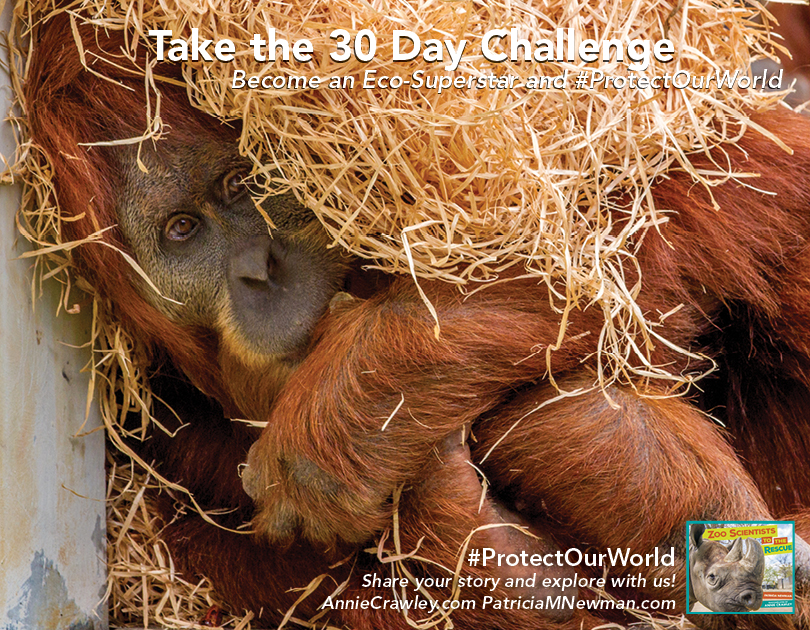
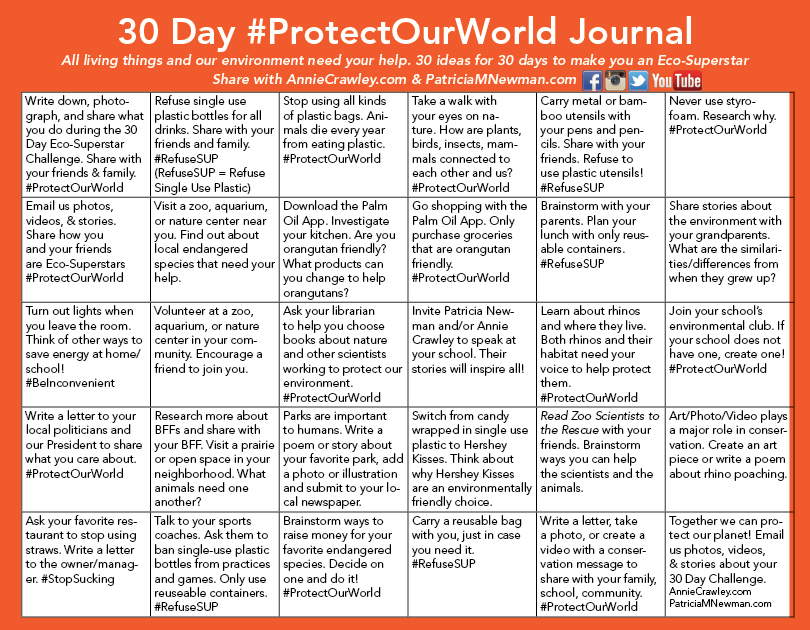
Participate in the 30 Day #ProtectOurWorld Challenge! Here is the Orangutan example. Visit http://www.patriciamnewman.com/books/zoo-scientists-rescue/ to see the rhino and black-footed ferret posters.

Discussion Questions: Use any or all of these discussion questions to extend the learning with Zoo Scientists to the Rescue:

  • What steps did each scientist take to become an expert in their field?
  • Why are orangutans’ habitat being destroyed?
  • Why is the poaching of rhinos for their horns such a devastating action?
  • How did the expansion of our nation effect the black-footed ferret?
  • How did humans play a role in each of these animals’ endangered status?
  • What can you do to help these animals?
  • Visit some of the resources about other conservation stories in the end of the book and share what you learn.
  • What words did you learn from the book? (Check out the glossary!)

Flagged Passages: 

“A sign outside the orangutan enclosure at the National Zoo explains that the apes red coloring mimics shadows in the forest’s canopy. As little as 30 feet above the forest floor, orangutans essentially disappear, which is surprising given their bulk. Fully grown wild wild male orangutans can weigh up to 220 pounds and wild females can weight up to 120 pounds. Zoo orangutans tend to be between 50 to 100 pounds heavier because of their nutritious diet.”

“About 15 years ago, black-footed ferrets roamed the Great Plains from Canada to Mexico. The Lakota call them pispiza itopta sapa (black-faced prairie dog) and believe they are sacred. But in the late 1800s, settlers moving westward and travelers from across the Pacific Ocean unknowingly put the ferrets in danger.”

“Unfortunately, rhinos are no match for armed poachers, hunters who kill wild animals illegally for profit. Approximately 5,050 black rhinos remain in the world due to poaching and habitat loss. They are labeled critically endangered–one step from extinct in the wild, and only two steps from fully extinct. Lincoln Park Zoo hopes to play a role in saving them.”

Book Trailer: 

Read This If You Love: Zoos, Animals, Learning about scientists, Science, Conservation efforts, Earth Day

Recommended For: 
classroomlibrarybuttonsmall closereadinganalysisbuttonsmall 

Make sure to visit the other stops on the Blog Tour!

Signature

**Thank you to Patricia Newman for asking me to be part of the blog tour!**

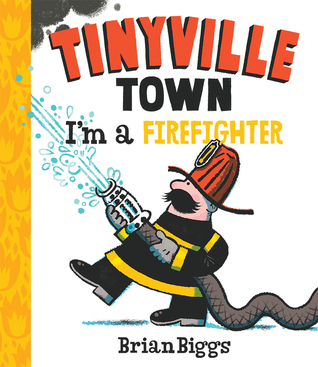
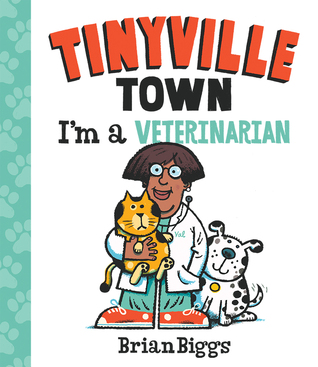
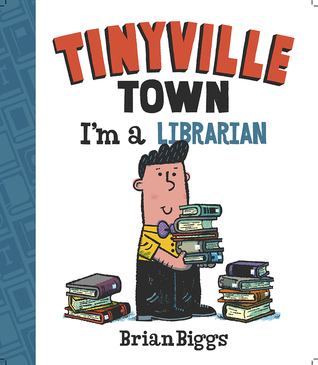
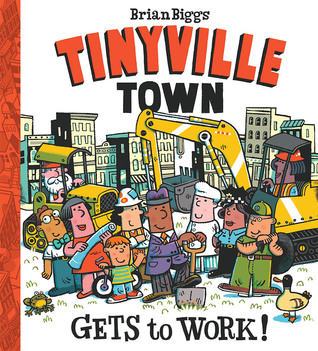
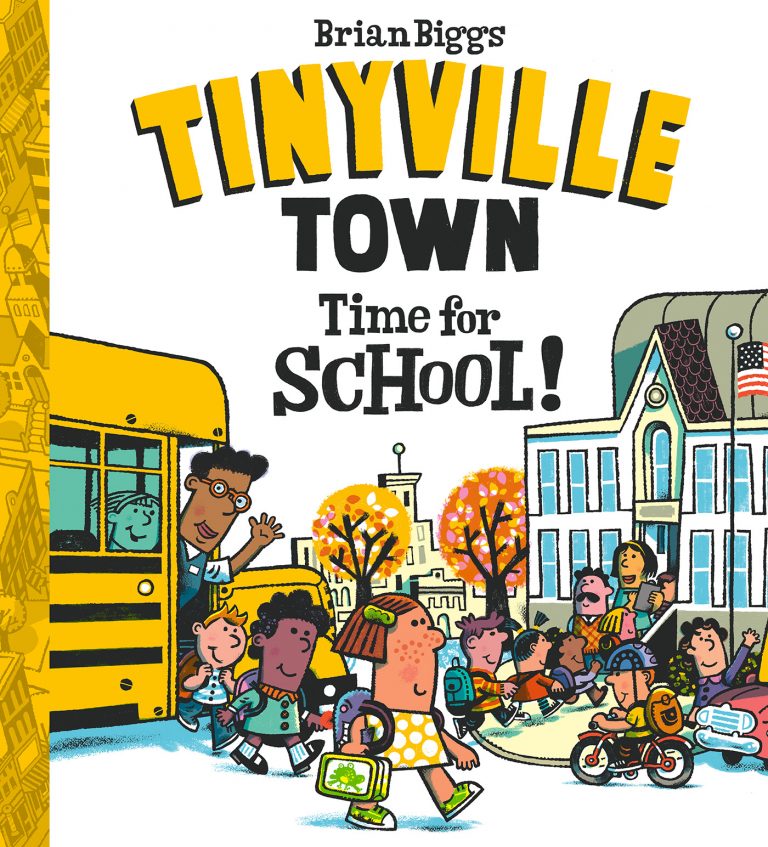
Tinyville Town by Brian Biggs

Share

Tinyville Town Series
Author & Illustrator: Brian Biggs
Published by Appleseed, an Abrams Imprint starting in 2016

Brian Biggs describes the series as Sesame Street meets Fisher Price. 

I say it is Richard Scarry meets Mr. Rogers and Thomas the Train (but there are no talking trains).

There will be at least 8 books. 

Though hopefully more because I want one about every member of the town!

There are two kinds of books in the series: 

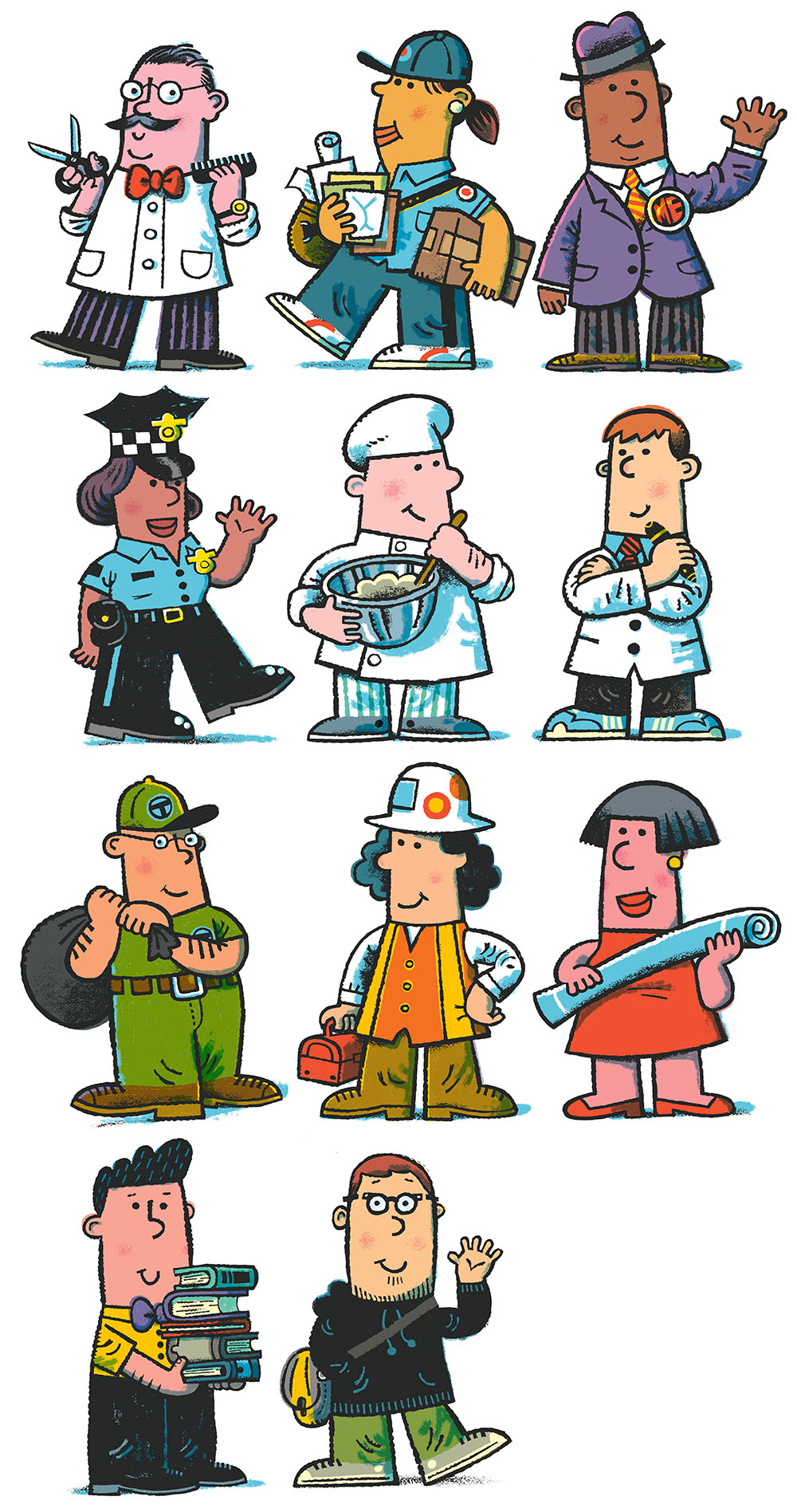
Board books about individual members of the society

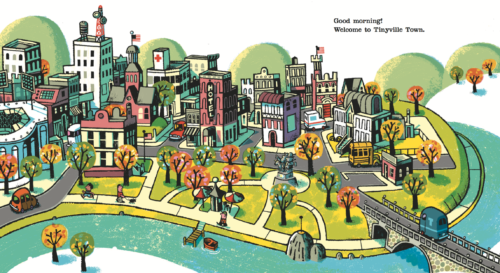
Large-format picture books about how the whole town comes together. 

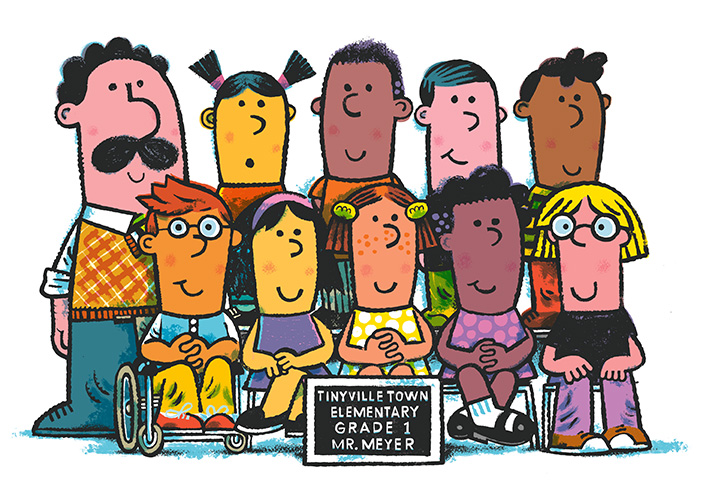
This set up is perfect because when you read the picture book, you can find all of the members of the board books in the picture book. They become friends that you recognize like a search-and-find within the story.

In the classroom, Tinyville Town would fit perfectly with Junior Achievement and early-ed social studies as students learn about jobs and communities.

Parents, your kids will love these books! It is a perfect combination of everything kids and adults want in picture books.

For more information:
Here’s an interview with Brian Biggs about Tinyville Town
Here’s Brian Biggs’s Blog Post about Tinyville Town

Recommended For: 

classroomlibrarybuttonsmall 

Signature

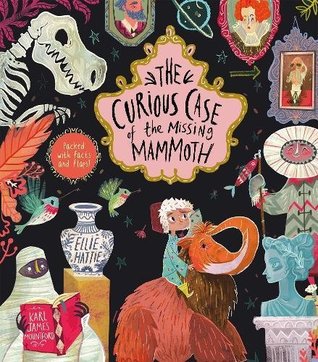
The Curious Case of the Missing Mammoth by Ellie Hattie

Share

The Curious Case of the Missing Mammoth
Author: Ellie Hattie
Illustrator: Karl James Mountford
Published 2017 by Kane Miller EDC Publishing

Summary: Look out! There’s a mammoth on the loose, and Oscar has to get him home before the clock strikes one! This riotous adventure is packed with facts and lift-the-flap fun.

Review: I don’t think the summary of this book does it justice.  It is such a fun book that kids of so many different ages are going to love reading. It is about a boy who wakes up to find a mammoth wandering around his town looking for his baby brother. They follow the clues to The Curious Museum which has come to life like The Night at the Museum, and they chase Teddy, the baby mammoth, through different rooms in the museum: Underwater World, the Library, The Flight Floor, The Time of the Dinosaurs, and The Extinct and Endangered Creatures rooms. Trent and I loved the detailed and silly illustrations and trying to find Teddy on each page!

Teachers’ Tools for Navigation: In each room, there is the narrative of Oscar and Timothy, the big mammoth, but there are also flaps that include nonfiction information about the room that the story is currently taking place in. For example, in the ocean scene there are flaps that include flaps about octopus, blue whales, corral, and more! In the library there’s information about books & art, pilots in The Flight Floor, dinos in The Time of the Dinosaurs, and creatures in the Extinct and Endangered room.

This mix of adventure and facts makes this a perfect cross-curricular text to use or as an intro before a trip to a natural history museum.

Discussion Questions: What did you learn in each room?; Why does Oscar have to get Teddy back before 1:00?; What type of museum do you think The Curious Museum is?; What else did you see in the exhibits that you would like to learn about?; Why do you think the author included the flaps with nonfiction information?

Book Trailer: 

Read This If You Love: Nibbles: The Dinosaur Guide by Emma Yarlett, Natural History Museums, Night at the Museum movies

Recommended For: 

classroomlibrarybuttonsmall 

Signature

**Thank you to Lynn at Kane Miller for providing a copy for review!**