Blog Tour with Review, Educators’ Guide, and Giveaway!: The Lost Girl by Anne Ursu

Share

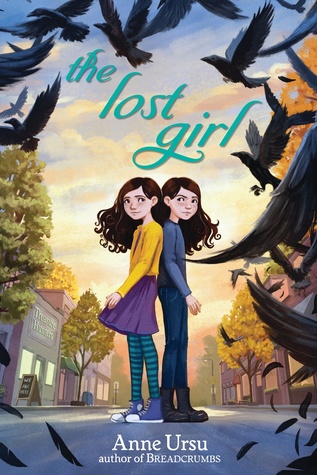
The Lost Girl
Author: Anne Ursu
Published February 12th, 2019 by Walden Pond Press
Summary: When you’re an identical twin, your story always starts with someone else. For Iris, that means her story starts with Lark. Iris has always been the grounded, capable, and rational one; Lark has been inventive, dreamy, and brilliant—and from their first moments in the world together, they’ve never left each other’s side. Everyone around them realized early on what the two sisters already knew: they had better outcomes when they were together.

When fifth grade arrives, however, it is decided that Iris and Lark should be split into different classrooms, and something breaks in them both. Iris is no longer so confident; Lark retreats into herself as she deals with challenges at school. And at the same time, something strange is happening in the city around them, things both great and small going missing without a trace. As Iris begins to understand that anything can be lost in the blink of an eye, she decides it’s up to her to find a way to keep her sister safe.

About the Author: Anne Ursu is the author of Breadcrumbs, named one of the best books of 2011 by Publishers Weekly and the Chicago Public Library, and The Real Boy, which was longlisted for the National Book Award. She is also a member of the faculty at Hamline University’s MFA in Writing for Children and Young Adults. Anne lives in Minneapolis with her family and an ever-growing number of cats. You can visit her online at www.anneursu.com.

Praise: 

The Lost Girl is a jewel of a book—hard, bright, sharp, and precious. It reminds us of the boundless and subversive power of sisterhood and the inherent magic of girls.”—Kelly Barnhill, Newbery-Medal winning author of The Girl Who Drank the Moon

“I raced through The Lost Girl, breathless. And when I was finished, I found myself full of hope. It’s a beautiful, riveting, important book.”—Laurel Snyder, award-winning author of Orphan Island

“When the world makes no sense, I read books by Anne Ursu. When the world makes all the wrong kinds of sense, I read books by Anne Ursu. If you crave a story with the wit, wisdom, and magic to unriddle the world, then you need to read The Lost Girl by Anne Ursu.”—William Alexander, award-winning author of A Festival of Ghosts

“A beautiful, timeless tale of love conquering darkness in the midst of mystery and the angst of change. A must-have for any middle grade collection.” School Library Journal (starred review)

“This suspenseful mystery offers a story of empowerment, showing how one girl with the help of others can triumph.” Publishers Weekly (starred review)

“National Book Award nominee Ursu laces her story with fairy-tale elements and real-life monsters, while taking great care to cast girls in an empowering light and as authors (and heroes) of their own stories.” Booklist (starred review)

Review: Anne Ursu has a way of telling what seems like an ordinary tale and adding twists and turns that the reader does not expect but once you are on the narrative ride she has created, you never want to get off! And although I am always skeptical of magical realism, she does it in a way that just makes her books seem like realistic fiction that just happens to be bit magical, so it is hard not to buy in. In The Lost Girl, the story also is fascinating in the way that the author plays with the narrator/point of view as well as how she shapes both girls equally as the story moves between their narratives and shows the strengths and weaknesses in both. It is impossible to tell who the lost girl is and who is the ones saving because both sisters feel like they play a part in saving the other. I’m still thinking about responsibilities, love, and protection long after the book ended. You are going to love Lark and Iris and will root for both of them until you turn that final page.

Teachers’ Tools for Navigation: There are readers who need this book. There are kids that don’t feel like they belong in this world or kids who feel like they don’t mesh with others their own age or kids dealing with a huge change in their life. These are the kid who will need this book. They need the lost girl to guide them.

Discussion Questions: 

  • Which of the twins is the lost girl?
  • How did the crows play a part in the story?
  • Without the magic in the story, how would everything have been different?
  • What mistakes does Iris make in her decision making once the girls enter 5th grade?
  • What lesson are the adults trying to teach the girls?
  • How did the Club Awesome girls turn out differently than Iris assumed? What does this tell you about them? Iris?
  • How are the sisters alike? Different?

Flagged Passages: “Once upon a time, there were two sisters, alike in every way, except for all the ways that they were different. Iris and Lark Maguire were identical twins, and people who only looked at the surface of things could not tell them apart. Same long busy black hair, same pale skin, same smattering of freckles around the cheeks, same bright hazel eyes and open face.

But Iris and Lark had no patience with people who only looked at the surface of things, when what lay beneath was the stuff that truly mattered.

Because the girls were identical, but not the same.

Iris was the one who always knew where she’d left her shoes. Iris was the one who could tell what the collective nouns were for different animals and that Minnesota was home to the world’s largest ball of twine. Iris always knew when her library books were due.

Lark always knew when their parents had been arguing. Lark could tell you what the consequences for stealing were in different fairy tales, and that the best bad guys had interesting back stories. Lark always knew which books she wanted to check out from the library next.

No they were not the same.” (p. 1-2)

Read This If You Love: The Real Boy by Anne Ursu, Watch Hollow by Greg Funaro, The Explorers by Adrienne KressWishtree by Katherine Applegate, The Seventh Wish by Kate Messner

Recommended For: 

classroomlibrarybuttonsmall 

Giveaway!

a Rafflecopter giveaway

Don’t miss out on the other stops in the blog tour!

FRIDAY, FEBRUARY 1: Teach Mentor Texts
SATURDAY, FEBRUARY 2: About to Mock
SUNDAY, FEBRUARY 3: Novel Novice
MONDAY, FEBRUARY 4: Maria’s Melange
TUESDAY, FEBRUARY 5: A Foodie Bibliophile in Wanderlust
WEDNESDAY, FEBRUARY 6: Bluestocking Thinking
THURSDAY, FEBRUARY 7: Kirsticall.com
FRIDAY, FEBRUARY 8: Unleashing Readers
SATURDAY, FEBRUARY 9: Book Monsters
SUNDAY, FEBRUARY 10: Fat Girl Reading
MONDAY, FEBRUARY 11: Word Spelunker
TUESDAY, FEBRUARY 12: Nerdy Book Club

Signature

**Thank you to Walden Pond Press for providing a copy for review!**

If da Vinci Painted a Dinosaur by Amy & Greg Newbold

Share

If da Vinci Painted a Dinosaur
Author: Amy Newbold
Illustrator: Greg Newbold
Published October 2 2018 by Tilbury House Publishers

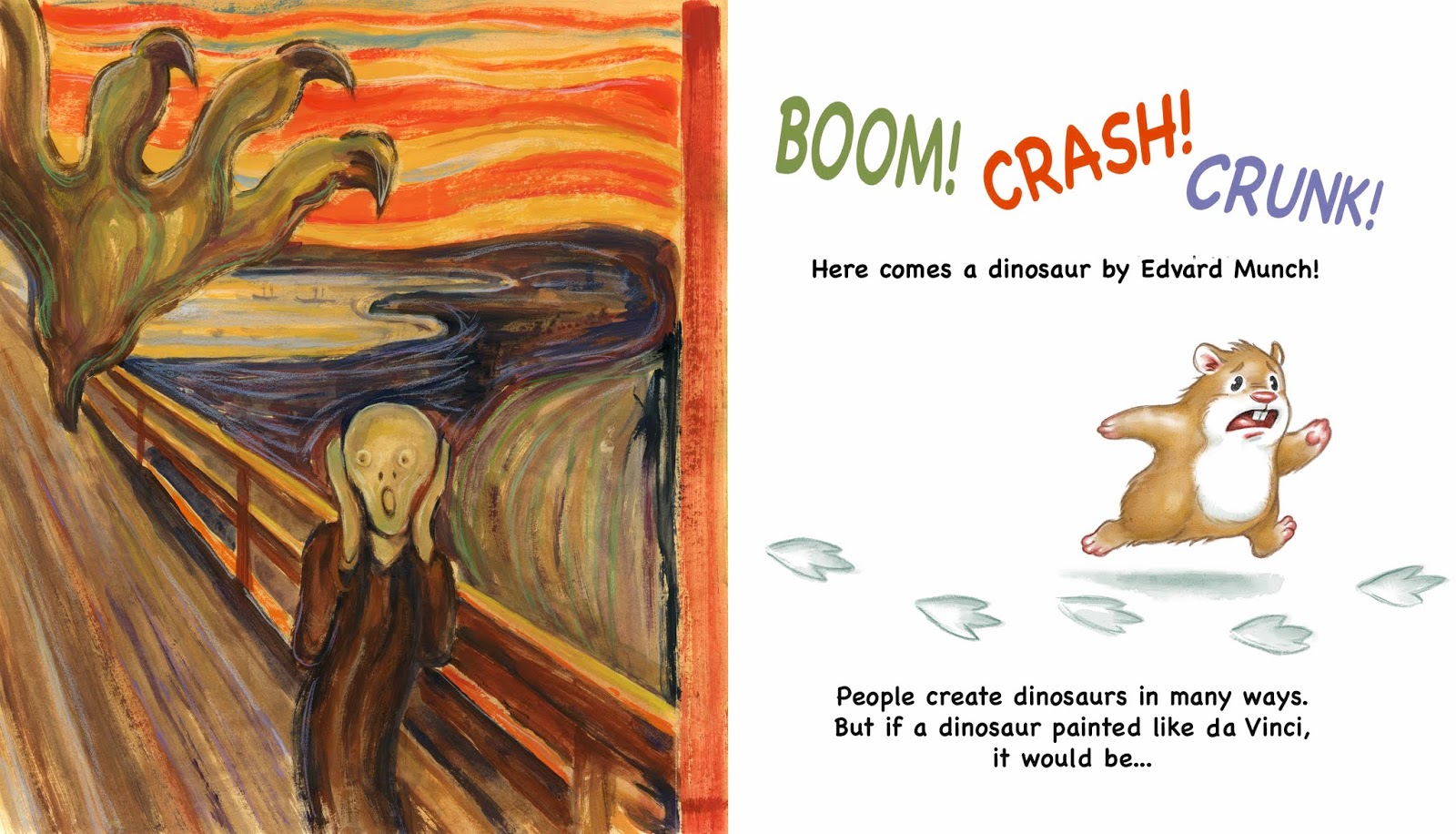
GoodReads Summary: In this sequel to the tour de force children’s art-history picture book If Picasso Painted a Snowman, Amy Newbold conveys nineteen artists’ styles in a few deft words, while Greg Newbold’s chameleon-like artistry shows us Edgar Degas’ dinosaur ballerinas, Cassius Coolidge’s dinosaurs playing Go Fish, Hokusai’s dinosaurs surfing a giant wave, and dinosaurs smelling flowers in Mary Cassatt’s garden; grazing in Grandma Moses’ green valley; peeking around Diego Rivera’s orchids in Frida Kahlo’s portrait; tiptoeing through Baishi’s inky bamboo; and cavorting, stampeding, or hiding in canvases by Henri Matisse, Andy Warhol, Frida Kahlo, Franz Marc, Harrison Begay, Alma Thomas, Aaron Douglas, Mark Rothko, Lois Mailou Jones, Marguerite Zorach, and Edvard Munch. And, of course, striking a Mona Lisa pose for Leonardo da Vinci.

As in If Picasso Painted a Snowman, our guide for this tour is an engaging beret-topped hamster who is joined in the final pages by a tiny dino artist. Thumbnail biographies of the artists identify their iconic works, completing this tour of the creative imagination.

Ricki’s ReviewAfter I read this book, I texted Kellee, “I LOVE THIS BOOK!” We received this a couple of weeks ago, and my son and I have read it several times. I missed If Picasso Painted a Snowman, but I plan to get it for my son for the holidays. I love how much learning is packed in this book. After we turned the pages, my son and I looked up the artists to learn more about the artists, their style, and their famous paintings. For me, this picture book will always rank among my favorites because it offers so much educational potential. This is one that I’d use with high schoolers and college students, as well. If you don’t own this book, I recommend it highly. It’s phenomenal.

Kellee’s Review: If I thought the Newbolds hit the height of fun art picture books with If Picasso Painted a Snowman, but they continued the brilliance with their newest If da Vinci Painted a Dinosaur. What I love about the Newbolds’ books are that they are so beautifully done in both art and informational narrative, and it is done in a way that is entertaining and also teaches about some amazing artists. What surprised me about this newest is that there are even more truly abstract and modern art pieces, more than the first book, and the diversity of the artists represented were expanded to show the talent around the world and in different cultures. I can’t wait to see what they are going to do next!

Teachers’ Tools for Navigation: This would be a great book to use in interdisciplinary ways with an art classroom. Students might research an artist, pick a theme, and create their own “If ______ painted a _______” book. It could be bound and kept in the classroom.

Discussion Questions: 

  • How do the dinosaurs differ across the pages? What do you notice about the different artists’ styles?
  • Which dinosaur was your favorite? Why?
  • After reading the back matter, which artist would you like to learn more about?
  • Compare and contrast “regular” dinosaurs which each dinosaur in the book. What do you notice that is the same and/or different?

Flagged Spread: 

Read This If You Love: Art!; If Picasso Painted a Snowman by Amy & Greg Newbold; Biographies of artists such as The Noisy Paintbox by Barb RosenstockViva Frida by Yuyi Morales, Sandy’s Circus by Tanya Lee Stone, A Splash of Red by Jennifer Fisher Bryant; The Dot by Peter H. ReynoldsLinnea in Monet’s Garden by Christina Björk; Seen Art? by Jon Sciezska; The Day the Crayons Quit by Drew DaywaltPerfect Square by Michael Hall; My Pen by Christopher Myers, Paint Me a Picture by Emily Bannister, Mini Museum Series

Recommended For: 

andSignature

**Thank you to Casey at Media Masters for providing copies for review!**

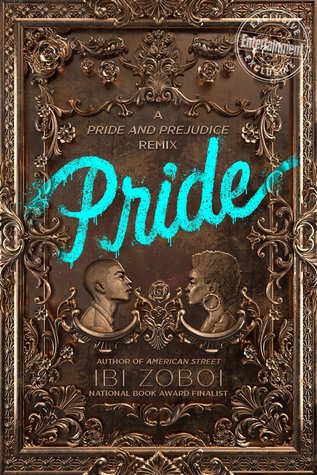
Pride by Ibi Zoboi

Share

Pride
Author: Ibi Zoboi
Published: September 18, 2018 by Balzer + Bray

Summary: Pride and Prejudice gets remixed in this smart, funny, gorgeous retelling of the classic, starring all characters of color, from Ibi Zoboi, National Book Award finalist and author of American Street.

Zuri Benitez has pride. Brooklyn pride, family pride, and pride in her Afro-Latino roots. But pride might not be enough to save her rapidly gentrifying neighborhood from becoming unrecognizable.

When the wealthy Darcy family moves in across the street, Zuri wants nothing to do with their two teenage sons, even as her older sister, Janae, starts to fall for the charming Ainsley. She especially can’t stand the judgmental and arrogant Darius. Yet as Zuri and Darius are forced to find common ground, their initial dislike shifts into an unexpected understanding.

But with four wild sisters pulling her in different directions, cute boy Warren vying for her attention, and college applications hovering on the horizon, Zuri fights to find her place in Bushwick’s changing landscape, or lose it all.

In a timely update of Jane Austen’s Pride and Prejudice, critically acclaimed author Ibi Zoboi skillfully balances cultural identity, class, and gentrification against the heady magic of first love in her vibrant reimagining of this beloved classic.

Teaching Pride

I love retellings of classics, and I would argue that this retelling is far superior to the original. Ibi presented at the NCTE convention, and she is absolutely brilliant. She talked about how she values the inclusion of the pantheon in literature and how she does so in her own texts. She also shared how different poems within Pride are retellings of classic poems. I love her work and will read anything she writes.

Love stories are tricky. They can get sappy quickly. This book is so much more than a love story. It interrogates themes related to economics, race, education, and gender.

Gentrification

“It’s a truth universally acknowledged that when rich people move into the hood, where it’s a little bit broken and a little bit forgotten, the first thing they want to do is clean it up. But it’s not just the junky stuff they’ll get rid of. People can be thrown away too, like last night’s trash left out on sidewalks or pushed to the edge of wherever all broken things go. What those rich people don’t always know is that broken and forgotten neighborhoods were first built out of love” (p. 1).

Teaching Idea: As a class, explore the impacts of gentrification and displacement. Using this knowledge develop your own form of political art (https://youtu.be/JMVd5k2a2IM) to make a statement.

Culture

If Madrina’s basement is where the tamboras, los espíritus, and old ancestral memories live, the roof is where the wind chimes, dreams, and possibilities float with the stars, where Janae and I share our secrets and plan to travel all over the world, Haiti and the Dominican Republic being our first stop” (p. 23).

Teaching Idea: Pick a place in your life, and Use Zoboi’s writing as a mentor text to share that place with others (e.g. “If [place] is where_________, [another place] is where__________, where________.”

Equity

“Sometimes love is not enough to keep a community together. There needs to be something more tangible, like fair housing, opportunities, and access to resources” (p. 33).

Teaching Idea: As a class, discuss whether love is enough and whether tangible aspects must exist in order to keep a community together. Generate a concept or brain map that depicts tangible aspects that can impact communities.

Male/Female Gender Roles

I don’t need no knights in shining armor

Ain’t no horses in the hood

I killed chivalry myself with a pocketknife…” (p. 243).

Teaching idea: The teachers finds materials/advertisements that are gender-specific, and students rewrite the materials to remove gender from the text. Students evaluate how the meaning or the impact has changed.

Education

“There is more to learn

about my old, old self, and black and brown girls like me

from hoods all over this country want to

take over the world,

but there’s something missing

in our history books the public schools give us” (p. 147).

Teaching idea: Consider the school curricula. Whose voices are honored? Whose are missing? Rewrite a course to be more inclusive.

Home

“I have always thought of Bushwick as home, but in that moment, I realize that home is where the people I love are, wherever that is” (p. 270).

Teaching idea: Where is home? Create a visual depiction of your own home, and below it, write, “Home is…” How do our interpretations of home differ? What do they have in common?

Read This If You Loved: American Street by Ibi Zoboi, Pride and Prejudice by Jane Austen, Piecing Me Together by Renée Watson

Recommended For: 

classroomlibrarybuttonsmall 

RickiSig

Blog Tour with Review, Book Trailer, and Giveaway!: Eduardo Guadardo, Elite Sheep by Anthony Pearson

Share

Eduardo Guadardo, Elite Sheet
Author: Anthony Pearson
Illustrator: Jennifer E. Morris
Published October 1st, 2018 by Two Lions

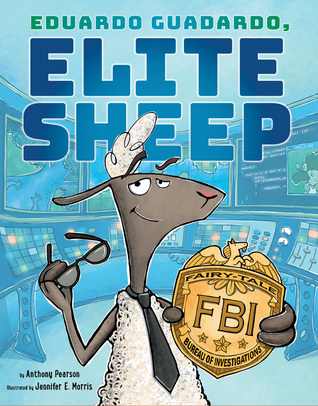
Summary: Eduardo Guadardo may look fluffy. He may look cute. But he’s no little lamb. He’s about to graduate from the FBI—that’s the Fairytale Bureau of Investigations—as an Elite Sheep. He knows five forms of kung fu, and he can outfox the foxiest of foxes. In fact, he’s so good they put him on his own case: to keep the farmer’s daughter, Mary, safe from Wolf, Troll, and Witch. It’s a job for somebody baaaaaaad—someone like a soon-to-be Elite Sheep. The thing is, protecting Mary isn’t quite as easy as Eduardo expected…

This imaginary backstory for “Mary Had a Little Lamb” is hilarious, action-packed, and filled with subterfuge (that means pulling the wool over your eyes, for you civilians).

About the Author: Anthony Pearson is not a spy. He’s not. We promise. He’s actually a school counselor, a child therapist, and the author of Baby Bear Eats the Night, illustrated by Bonnie Leick. But that didn’t stop him from digging for clues about “Mary Had a Little Lamb.” What he found made him imagine what could have inspired the rhyme: a sheep that is totally, absolutely, 100 percent in control of things … or maybe just 95 percent. And squirrels in sunglasses. Oh, and a witch flying a helicopter. But you didn’t hear about the Fairytale Bureau of Investigations from him. Anthony and his family live in deep cover in Georgia. Get more intel about him at www.AnthonyPearson.info. Twitter: @APearson_Writer

About the Illustrator: Jennifer E. Morris has written and illustrated award-winning picture books and has also illustrated children’s magazines, greeting cards, partyware, and educational materials. She has not illustrated classified documents nor is she a super secret agent. She is, however, the creator of May I Please Have a Cookie? which has infiltrated more than a million homes. If you say “The dove flies at noon,” she may tell you what the ducks recorded on their cameras. Maybe. But most likely not. Jennifer lives with her family in Massachusetts, just a few miles from the little red schoolhouse where “Mary Had a Little Lamb” originated. Read more of her dossier (that’s DAH-see-ay) at www.jenmorris.com. Twitter: @jemorrisbooks

Review: What a fun and quite smart idea! I didn’t know that I ever wondered how Mary got her lamb, but this backstory is one epic way for that nursery rhyme to come about! And Eduardo Guadardo is quite the character, and it really does give another outlook on why Mary’s lamb went to school with her. I also liked the additional layer that the author added to the story to show how arrogance does not lead to success and that even if you are good at something, if you can’t learn and work with others, you will not do well.

Teachers’ Tools for Navigation: Allusions, allusions, allusions! Eduardo Guadardo may be a backstory for Mary Has a Little Lamb, but so many other fairy tale and nursery rhyme characters are scattered throughout the book! Trent and I played a scavenger hunt for characters in the book and with older students who could do more discussions and analysis with these cameos.

Discussion Questions: 

  • What other fairy tale and nursery rhyme characters did you see in the book?
  • Why were the witch, troll, and wolf the bad guys in the story? What other stories are they the antagonists?
    • How did the author use your preconceived notions to trick you about these three in the end?
  • Why did Mary’s lamb follow her to school one day?
  • How did Mary trick Eduardo? What did the trick teach Eduardo?
  • Based on the final spread, what fairy tale are Eduardo and Mary going to take on next?
    • What do you think is going to happen?

Book Trailer: 

Read This If You Love: Fractured Fairy Tales!

Recommended For: 

classroomlibrarybuttonsmall 

Giveaway!

a Rafflecopter giveaway

Signature

*Thank you to Blue Slip Media and Two Lions for providing copies for review and giveaway!**

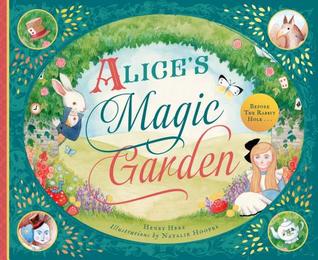
Alice’s Magic Garden: Before the Rabbit Hole… by Henry Herz

Share

Alice’s Magic Garden: Before the Rabbit Hole…
Author: Henry Herz
Illustrator: Natalie Hoopes
Published September 1st, 2018 by Familius

Summary: Curiouser and curiouser!

In this imaginative prequel to Alice’s Adventures in Wonderland, Alice finds herself at a gray, dreary boarding school that is decidedly up the rabbit hole. From the relentless clocks to the beastly students, Alice’s world is void of color and cheer–until Alice finds a secret garden and begins tending its wilting inhabitants. When Alice’s love touches an ordinary caterpillar, a lorry bird, and a white rabbit, magical things will happen–and that, as you know, is just the beginning of the story. Filled with literary allusions and clever nods to its classic roots, Alice’s Magic Garden is a delightful prequel that begs an escape to the whimsy of Wonderland.

Review: I love when I find a twist on a classic story that is new and fresh! Herz’s story about how Alice’s garden came to be is so unique and definitely different than I’d ever heard or read before. While it holds true to the magic and silliness of Carroll’s original, it also adds a nice lesson in the vein of kindness and happiness which will lead to some great discussions as well.

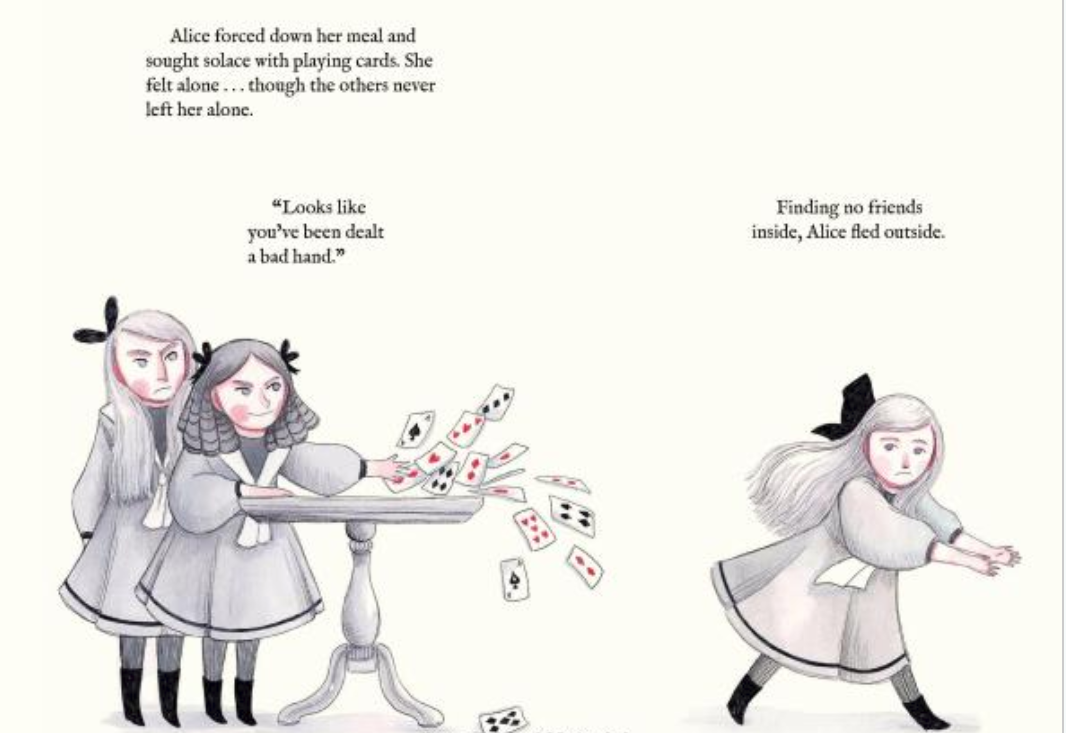
I’m also a huge fan of the illustrations. I loved how color was used to show the shift in Alice’s surroundings and the way the illustrator separated the real from the strange. Additionally, I truly loved the style of the artwork which, in my opinion, was a perfect style for the story: classic with a bit of whimsy.

Teachers’ Tools for Navigation: Use Alice’s Magic Garden as a mentor text for an imaginative prequel and ask students to create their own picture book as a prequel for a book they’ve read, a class novel, or a book club selection.

Also the story has some wonderful word choice that students can look at and discuss why the specific words were chosen.

Lastly, Alice’s could be used with secondary classes if the classic text is being read to look at allusions.

Discussion Questions: 

  • Why does the illustrator go from grayscale to color drawings?
  • What allusions to the original story do you see in the picture book?
  • How did kindness save the day?
  • How is Alice different than the other girls in her boarding school?

Flagged Passages: 

Read This If You Love: Alice’s Adventures in Wonderland by Lewis Carroll, Fractured fairy tales or other retellings, “Jabberwocky” and other poems by Lewis Carroll

Recommended For: 

classroomlibrarybuttonsmall 

Signature

**Thank you to Familius for providing a copy for review!**

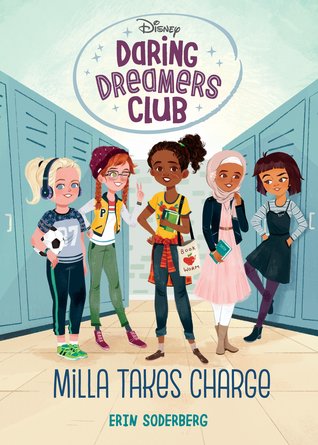
Daring Dreamers Club: Milla Takes Charge by Erin Soderberg

Share

Daring Dreamers Club #1: Milla Takes Charge
Author: Erin Soderberg
Illustrator: Anoosha Syed
Published June 5th, 2018 by Random House

Summary: When you follow your dreams, the possibilities are endless!

Milla loves nothing more than imagining grand adventures in the great wide somewhere, just like Belle. She dreams of traveling the world and writing about her incredible discoveries. Unfortunately, there is nothing pretend about the fifth-grade overnight and Milla’s fear that her moms won’t let her go.

Enter Piper, Mariana, Zahra, and Ruby. Together with Milla, they form the Daring Dreamers Club and become best friends. But can they help Milla believe she’s ready for this real grand adventure?

Diverse, talented, and smart–these five girls found each other because they all had one thing in common: big dreams. Touching on everyday dramas and the ups and downs of friendship, this series will enchant all readers who are princesses at heart.

About the Creators: 

ERIN SODERBERG lives in Minneapolis, MN, with her husband, three adventure-loving kids, and a mischievous Goldendoodle named Wally. Before becoming an author, she was a children’s book editor and a cookie inventor and worked for Nickelodeon. She has written many books for young readers, including the Quirks and Puppy Pirates series. Visit her online at erinsoderberg.com.

ANOOSHA SYED is a Pakistani illustrator & character designer for animation. She received her BFA in illustration at Ceruleum: Ecole d’arts Visuels in Switzerland, and now lives in Canada. Visit her online at anooshasyed.com.

Praise: 

“Though core issues of identity, independence, and teamwork ground the novel, Disney Princess devotees will likely be the most charmed. —Publishers Weekly

“I cannot wait to “hear” the stories of all the other girls! Brava Erin SD for kicking off a new series for the younger MG set! Positive messages for kids! —Goodreads Praise

“Young readers will be able to relate to the story, there is a positive message, and the characters provide a model of friendship, showing how friends work together and support on another. Loved meeting these girls!” —Goodreads Praise

ReviewI know that at first this book may seem like a book that only Disney or Princess lovers would like, but it is so much more than that! So please do not judge this book by that idea! Instead you will find a story about girls who find a deep friendship within each other after being placed in a group at school together. With the guidance of an amazing educator, they look deep within themselves and join as a group while still celebrating their individuality.

Now, as someone who DOES love Disney and Disney princesses, I loved the angle that this book took! After the first assignment by their group teacher, the girls are asked to write about a princess who they connect with. Milla and her friends are using the strengths of the princesses as inspiration to build their own strengths. For example, Milla feels like her life is very sheltered, and she loves to write, so she finds inspiration in Belle. Ruby, who is athletic and prides herself in her strength, first struggles to connect with a princess but then she realizes that Mulan is a person that is very much who she would like to be. And each girl does her own reflection (written in her own words in a journal format).

This first book focuses on Milla, but we get to know all the girls through the inclusion of the journals and from Milla’s point of view. I assume that future books will also be in different points of view to allow readers to get to know more in depth each of the characters. I look forward to future books to see where Piper, Milla, Mariana, Ruby, Zahra and Ms. Bancroft go next!

Teachers’ Tools for Navigation: I love Ms. Bancroft! And I think that how she had the girls introduce themselves and her first assignment that she gave the Daring Dreamers Club would be wonderful activities in a classroom:

  • “I’d love for each of you to introduce yourself and share one of your big dreams.”
  • “I want each of you to think of a princess you connect with or feel inspired by and explain why. Dig deep and really think about your answer.”

Since each of the girls’ answers are shared in the book, they would be a great thing to share as well.

In addition, this book is going to be LOVED by realistic fiction fans! I cannot wait to share it with my students.

Discussion Questions: 

  • Which of the five main characters do you connect with the most?
  • If you had to choose a princess you connect with, who would you choose?
  • Do you think Milla went about getting her moms to trust her correctly?
  • How does Ms. Bancroft inspire the girls? How is she different than the last music teacher?
  • What is one of your big dreams?

Flagged Passages: “Milla loved reading and writing just about anything, but there was nothing she enjoyed more than creating adventures for herself. In Milla’s stories, she was always a brave hero without fears or worries of any kind. One of the things Milla most loved about writing was that she was totally in charge and got to make all the decisions about what would happen on her adventures. The only limitation was her imagination, and her imagination was vast.” (p. 6)

Read This If You Love: Baby-Sitters Club by Ann M. Martin, Harbor Me by Jacqueline Woodson, Be Prepared by Vera Brosgol, Whatever After by Sarah Mlynowski

Recommended For: 

classroomlibrarybuttonsmall 

Disney’s Dream Big, Princess–Be a Champion Campaign: 

Signature

**Thank you to Sydney at Penguin Random House for providing a copy for review!**

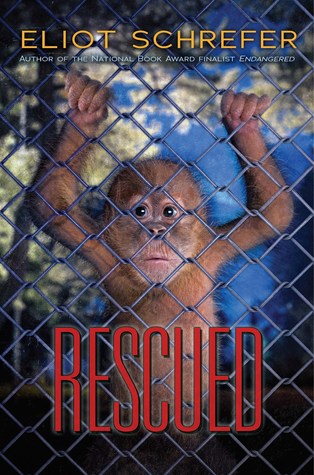
Teaching Rescued by Eliot Schrefer in a Middle School Reading Classroom

Share

Rescued
Ape Quartet #3
Author: Eliot Schrefer
Published April 26th, 2016 by Scholastic Press

Summary: They grew up together. Now they have to escape together.

Raja has been raised in captivity. Not behind the bars of a zoo, but within the confines of an American home. He was stolen when he was young to be someone’s pet. Now he’s grown up and is about to be sent away again, to a place from which there will be no return.

John grew up with Raja. The orangutan was his friend, his brother. But when John’s parents split up and he moved across the country, he left Raja behind. Now Raja is in danger.

There’s one last chance to save Raja—a chance that will force John to confront his fractured family and the captivity he’s imposed on himself all of these years.

About the Author: Eliot Schrefer is a New York Times-bestselling author, and has twice been a finalist for the National Book Award. In naming him an Editor’s Choice, the New York Times has called his work “dazzling… big-hearted.” He is also the author of two novels for adults and four other novels for children and young adults. His books have been named to the NPR “best of the year” list, the ALA best fiction list for young adults, and the Chicago Public Library’s “Best of the Best.” His work has also been selected to the Amelia Bloomer List, recognizing best feminist books for young readers, and he has been a finalist for the Walden Award and won the Green Earth Book Award and Sigurd Olson Nature Writing Award. He lives in New York City, where he reviews books for USAToday.

ReviewI think out of the three Ape Quartet books published so far, this is the one that is going to hit closest to home for many. It will make many readers uncomfortable and want to make a change. First, it takes place in the United States unlike Africa like the first two. Second, it really digs into an issue that is still very much prominent here–animal injustice.

I find Schrefer’s writing to be so beautiful yet so easy to read. He can pull you into his stories and makes you feel for not only his human characters but also his animal characters. He does such a tremendous amount of research for all of his books and with this one it brings the injustice of Raja alive.

I am a sucker for ape books. I find apes to be the most fascinating animals, and orangutans may be my favorite because they have these amazing eyes that just show me that they are so intelligent and deep thinkers. They are also introverts; I think I just relate to them in that way. This book brings orangutans to life through Raja.

As evident from Schrefer’s status as a two-time National Book Award finalist, his books can be used as a mentor text for just about any aspect of writing that you are looking for: characterization, imagery, voice, conflict, etc. Read any of his books, and you can pull out so much to discuss and use within the classroom. Additionally, there are some amazing ape books, including Schrefer’s other Ape Quartet books, that would make for an amazing lit circle opportunity or text set.

Review originally posted here on May 13, 2016.

Teachers’ Tools for Navigation: Last year, our whole-class novel unit was done using Hurt Go Happy and included a trip to Center for Great Apes. This year, I had a completely different type of novel planned, but my students begged to read more about apes (and visit CFGA again). After looking at all of the available ape books, I decided that Rescued was perfect for the standards I wanted to teach and also included orangutans instead of chimps, and orangutans are the other great ape at CFGA. After setting up a Donors Choose and getting funded (THANK YOU ALL DONORS!), Eliot Schrefer also so kindly contacted me and offered to send even more copies of Rescued to my students–wow! So much kindness! Now that we had a plethora of copies, I wanted to share the love, so I contacted my South Carolina middle school teacher friend, Jennie Smith, to see if she wanted to read Rescued with us and collaborate some how. I was so happy that she said yes!

The Unit

Because I do love whole-class novels, but I also don’t like how a whole-class novel can also ruin a book with too much time spent on one book with way too many assignments during the unit. To try to fight this, I planned the unit quite simply:

  • Each week the students were given a focus question on Monday that they could think about all week then answer on Friday.
    • These focus questions are how we collaborated with Mrs. Smith’s class as well. My 1st and 2nd period posted their answers on Padlet and Mrs. Smith’s students would also post. The kids would then respond to each other.
    • Focus questions:
      • 1. What’s a big idea that’s emerging that’s worth talking about?
      • 2. Is there a passage that struck you as important in developing a character or a conflict in the reading so far? Share the passage and explain.
      • 3. What incident up to this point has had the most impact on the plot? How so? What did the characters’ response to this incident teach you about them?
      • 4. There are many who argue that Great Apes are human-like, including the lawyer who will take apes as plaintiffs to demand rights. What are some examples in this section of Raja showing how close to humans he truly is?
      • 5. How did the characters (specifically John’s mom, John’s dad, John, and Raja) change throughout the book? What other narrative elements helped shape their final persona? Find a piece of dialogue and a specific incident in the book that is evidence for your analysis of the character.
    • The idea of focus questions was something I got from a talk by Kelly Gallagher and Penny Kittle at NCTE 2017.
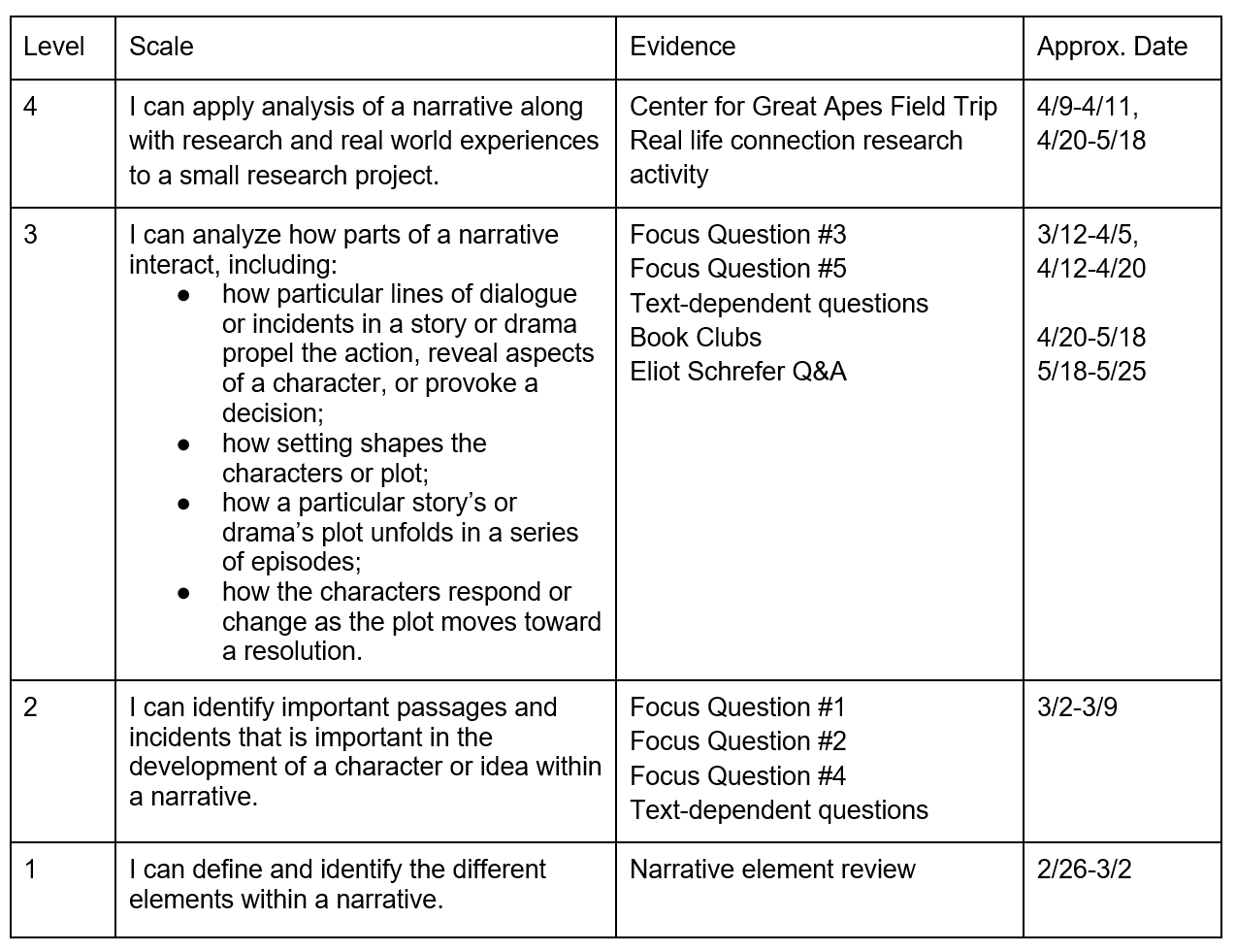
  • Because of one of the standards the unit was focusing on, we also looked at narrative elements, specifically dialogue, setting, and conflicts. Here is my scale for the unit:
  • Throughout the unit, I would also stop to have students think about certain text-dependent questions. I tried not to do this too often to not slow down the narrative; however, I loved seeing my students’ thinking. We would then discuss these questions, but I like allowing my students to write answers first before discussing because it allows them to get their thinking organized. (I shared some of these text-dependent questions and an example of a student’s answers below.)

The Field Trip

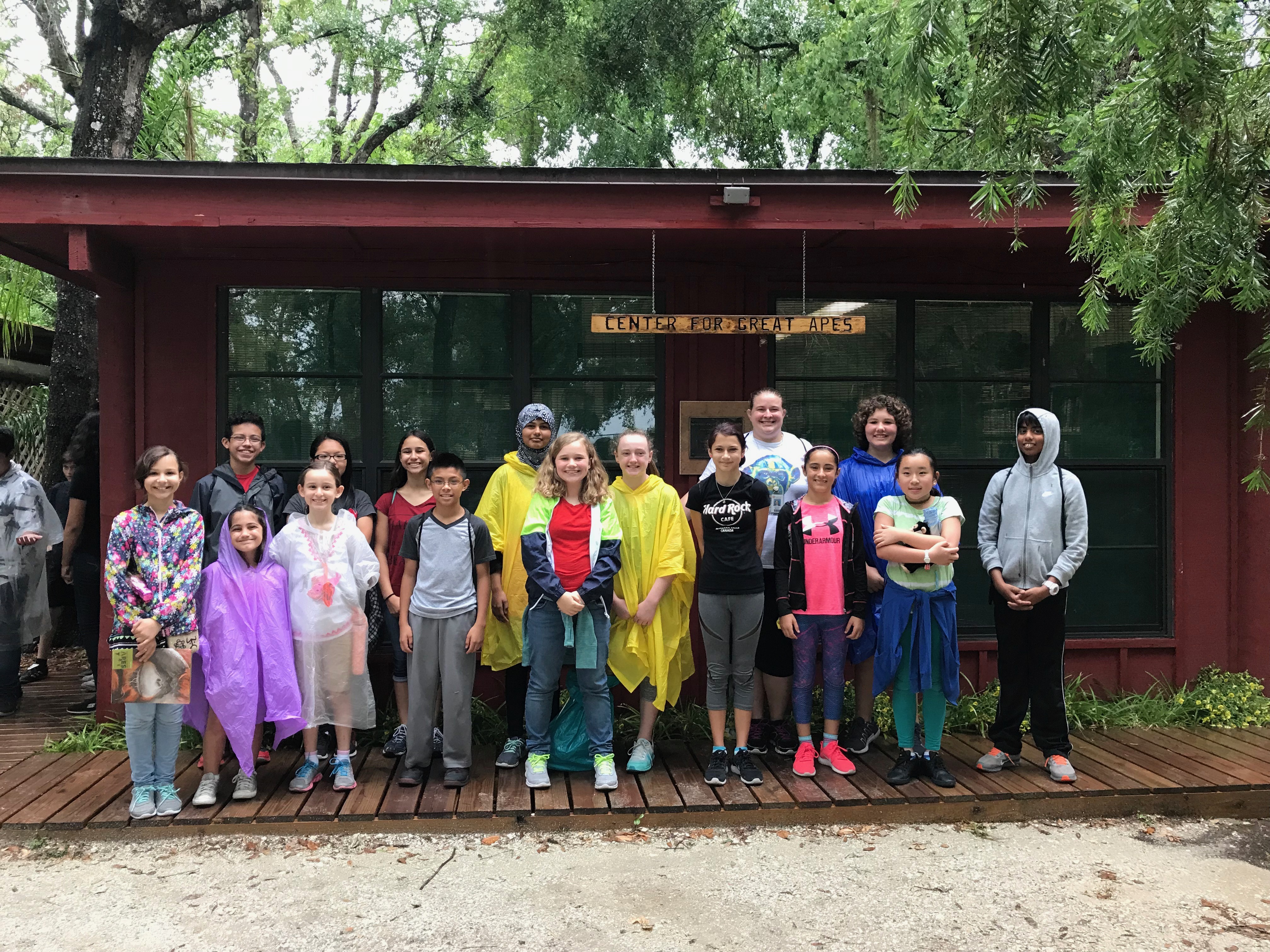
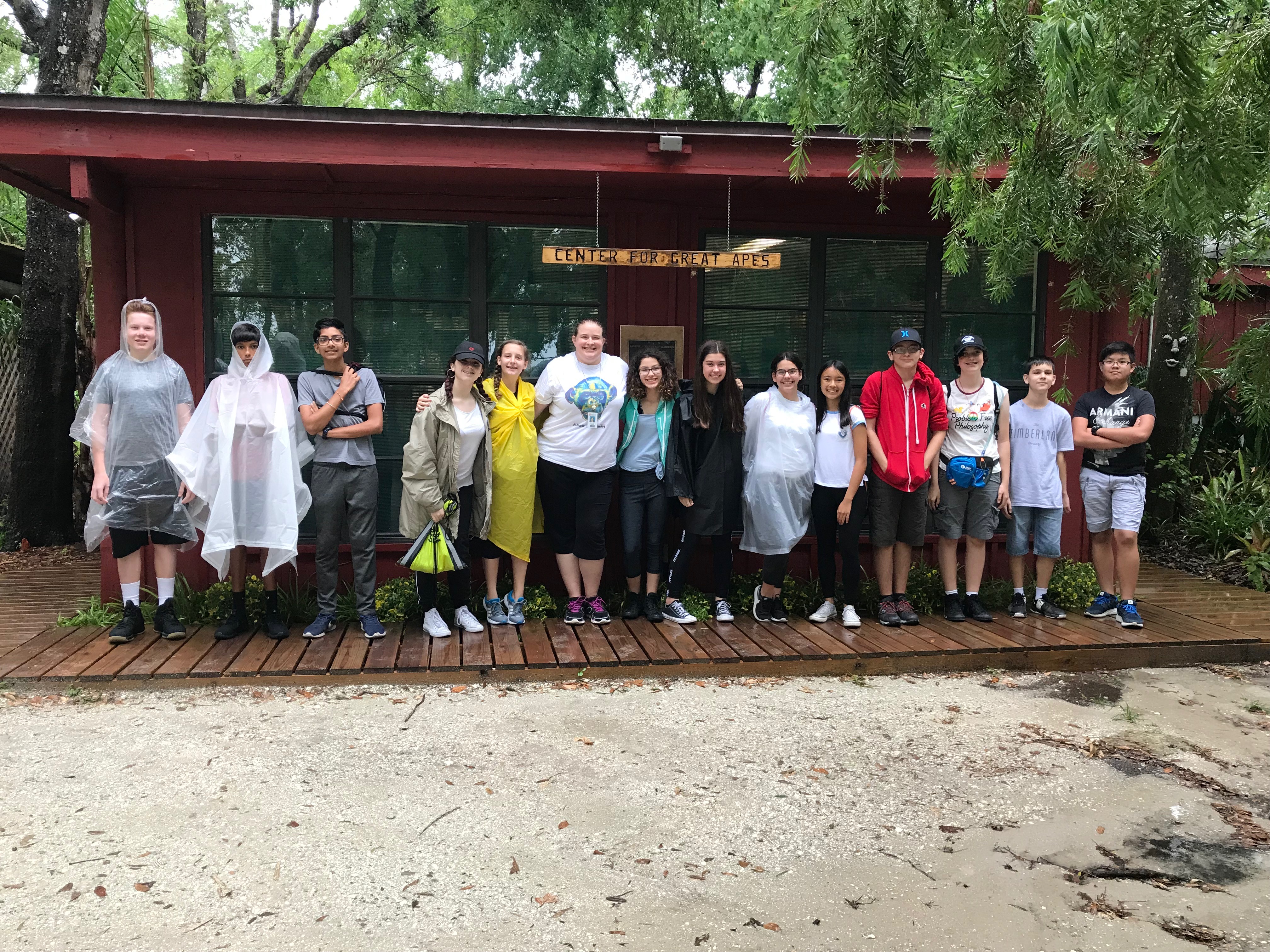
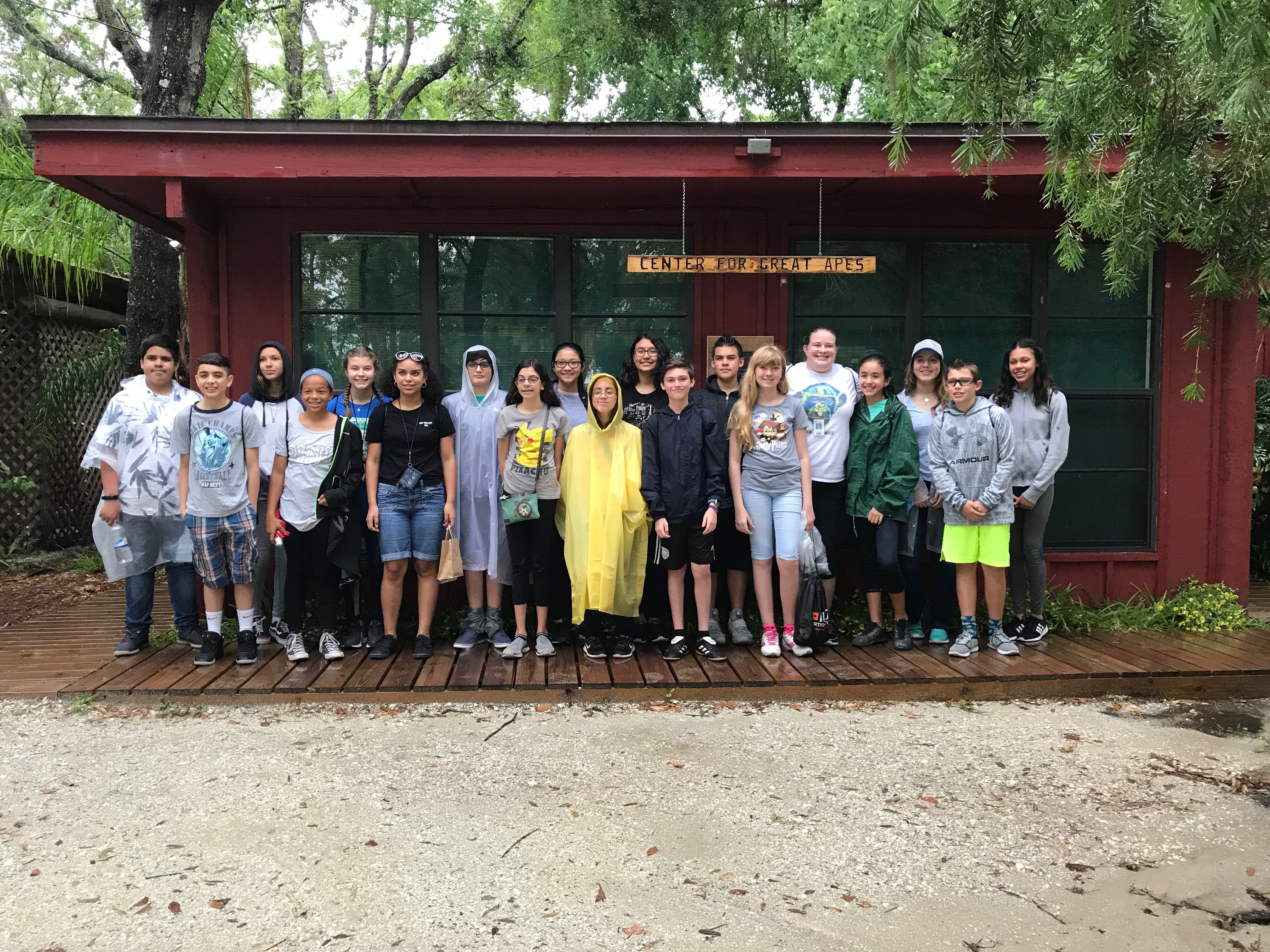
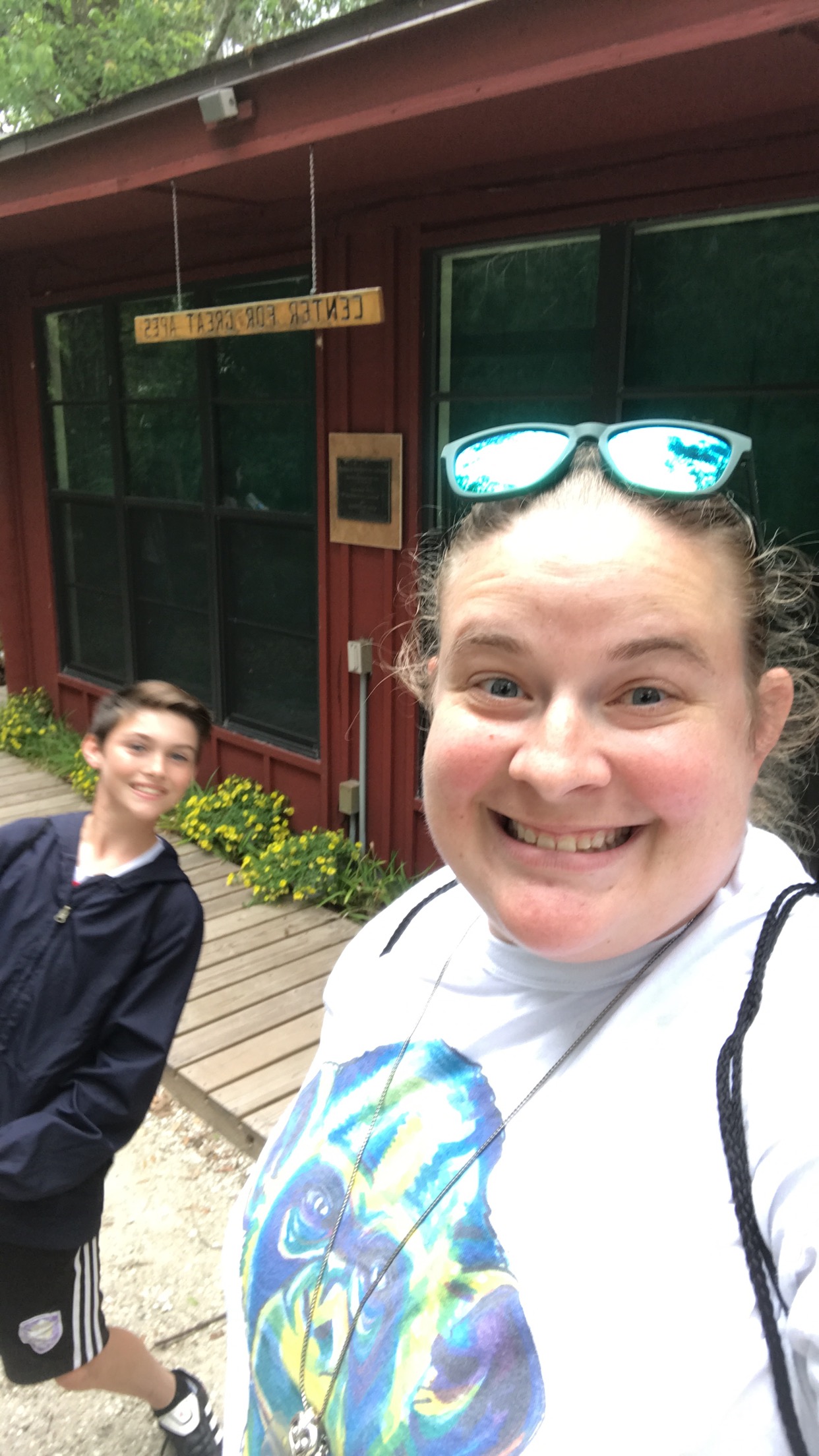
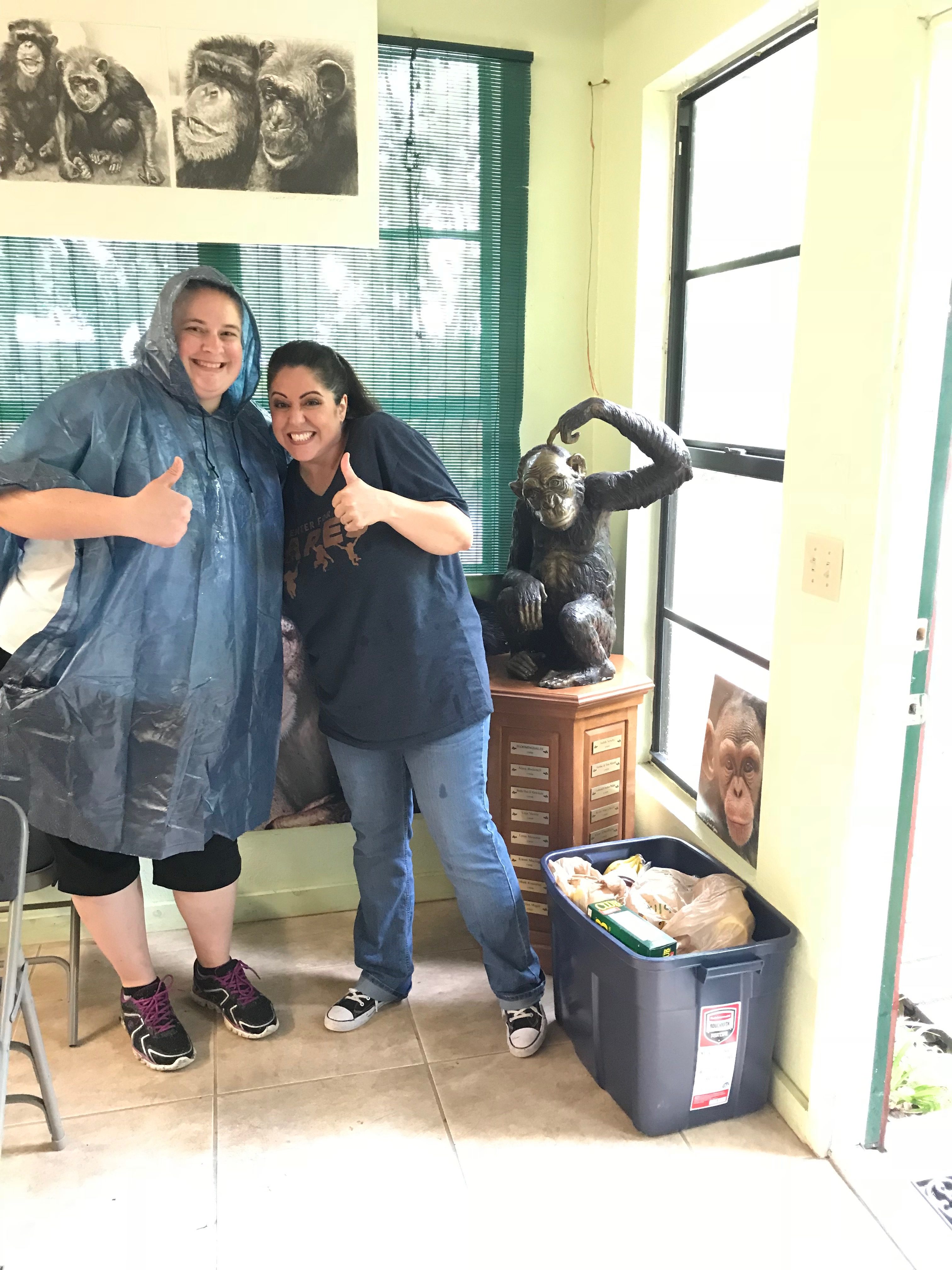
Once again I was lucky enough to bring my students to the CFGAs. All students were able to attend this year, and they were so kind to donate to the Center goodies for the Apes–it always fills my heart to see the empathy in their hearts!

I have gone to the Center for Great Apes for years, and sadly this is the first year it rained. Luckily, we were able to get in a 90-minute tour to see the amazing animals who inspired Schrefer’s novel. To see more about the Center, the apes they’ve saved, and the amazing work they do, please visit http://www.centerforgreatapes.org/.

Author Virtual Visit

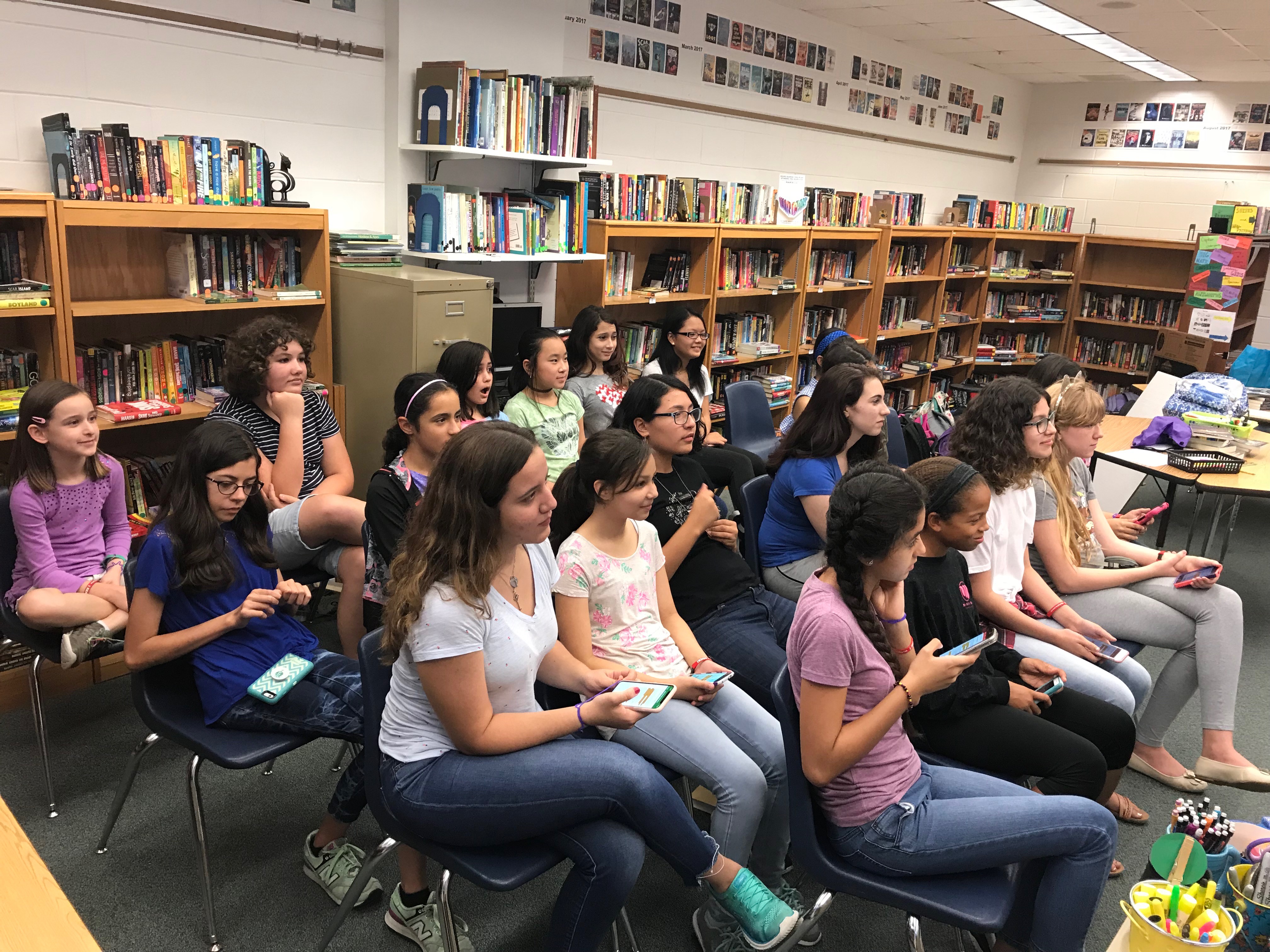
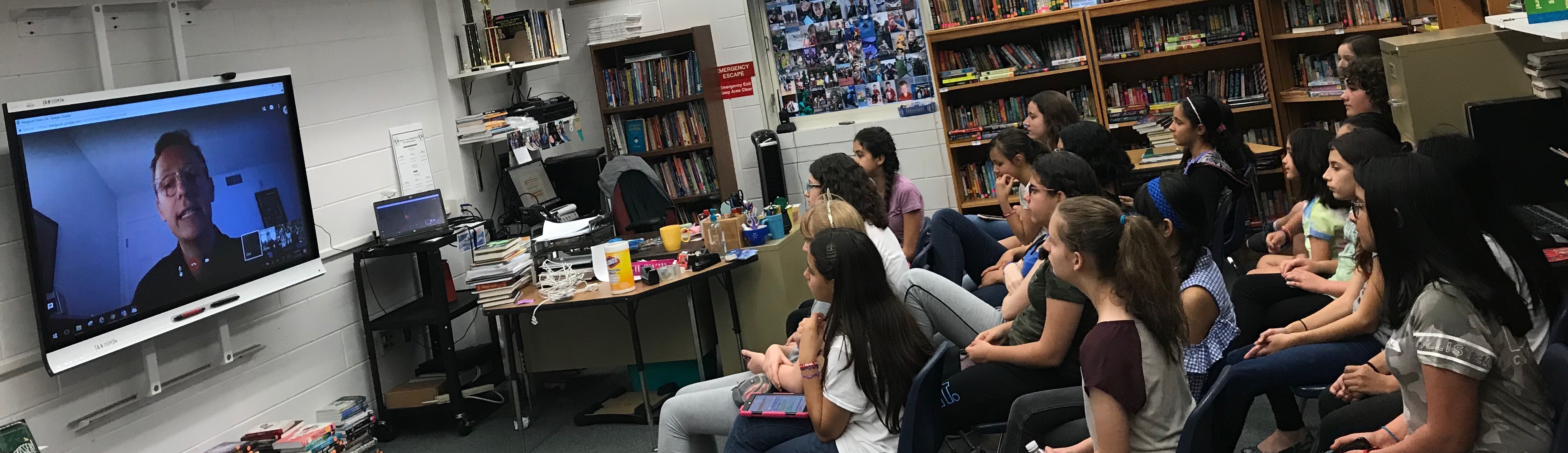
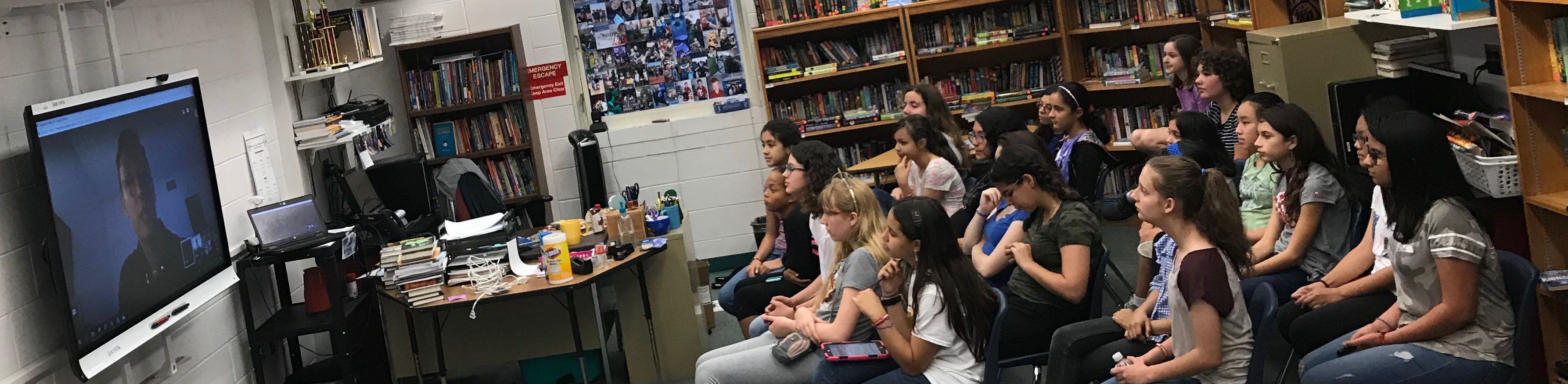
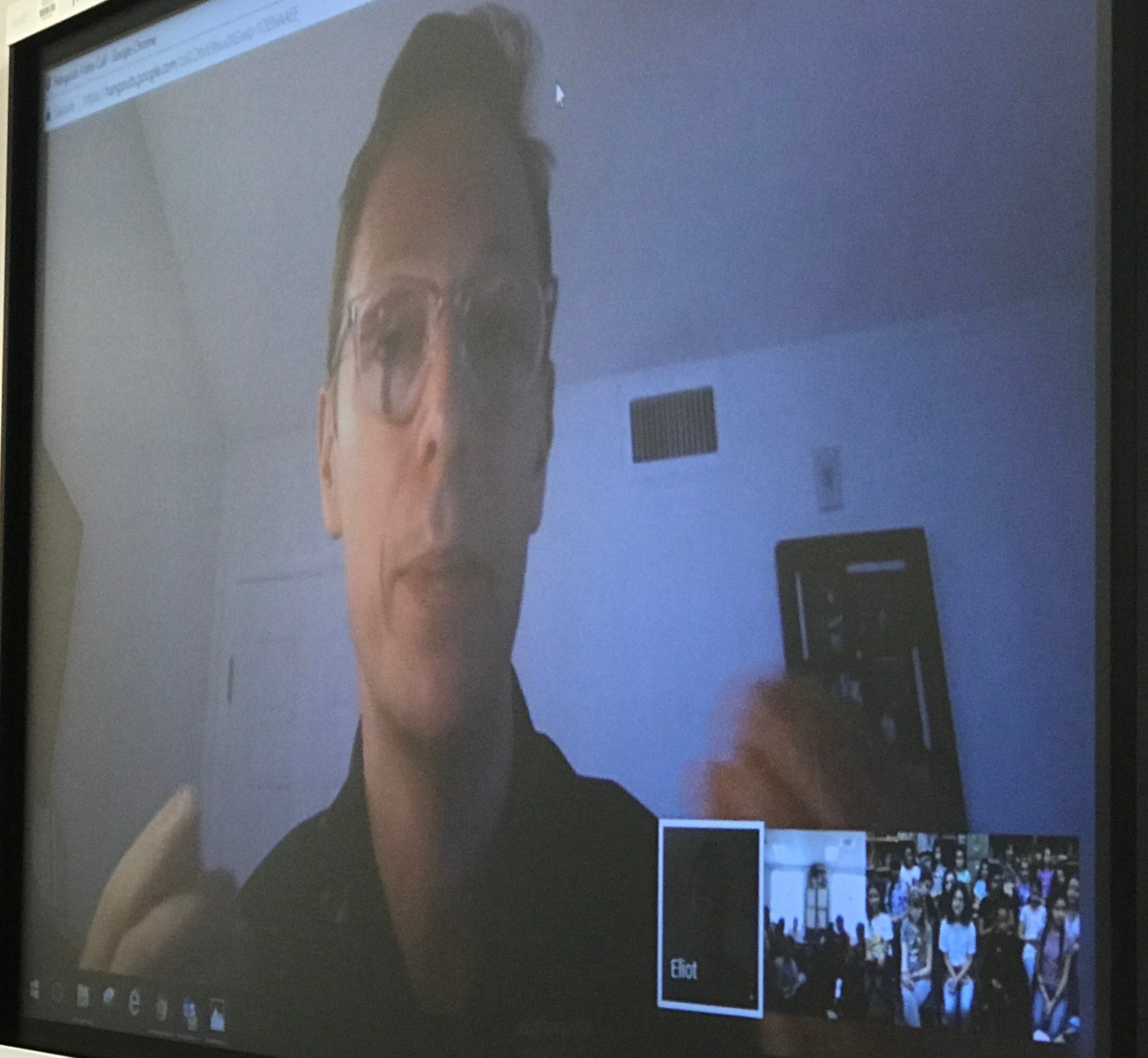
After reading Rescued, I was so happy to be able to give my (and Jennie’s) students an opportunity to interview Eliot Schrefer about the book. Each student wrote down at least one question they had for Eliot then in groups, the students chose their favorites, then based on these choices, we broke it down to 5 per class equaling fifteen interview questions altogether:

  • Why did you start writing about apes in the first place? And how did you decide on the order of publication for the Ape Quartet? 
  • Do you like writing realistic fiction like Rescued or fantasy like Mez’s Magic better?
  • Will you continue to write about apes now that you are done with the Ape Quartet? 
  • While the titles of your other books, Endangered, Threatened, and Captured, inspire a feeling of fear, the title Rescued inspires hope. Did this change in connotation of your title mark your different opinion about orangutans?
  • Were you ever stuck in between two decisions while writing the book? When? 
  • Who do you think the antagonist of the book is?
  • How did you come up with the whole “Raja bites off John’s finger” scenario? 
  • How did you come up with the concept of Friendlyland? 
  • How did you come up with the character traits for each character (Ex. Gary being a bad father)? Did you base them off people you know or knew? 
  • Can you tell us more about the corruption happening in Indonesia which allows palm oil companies to be able to keep burning down forests even though it is illegal? 
  • Do you feel that apes should be treated like human beings and given the same rights such as due process, land, etc. like the lawyer in the book? 
  • Was it hard for you to decide what would happen to Raja at the end of the book or did you know that you wanted Raja to be released into the wild instead of being kept at the sanctuary?
  • Do you have a favorite sanctuary or zoo you’ve visited? Have you visited the CFGA?
  • You used the word “merantau” which means “hitting a dead end and leaving one life to live another elsewhere” which pretty much sums up the theme of the book. Where did you come across this word? 
  • What writing tips can you give to students who want to be a writer?

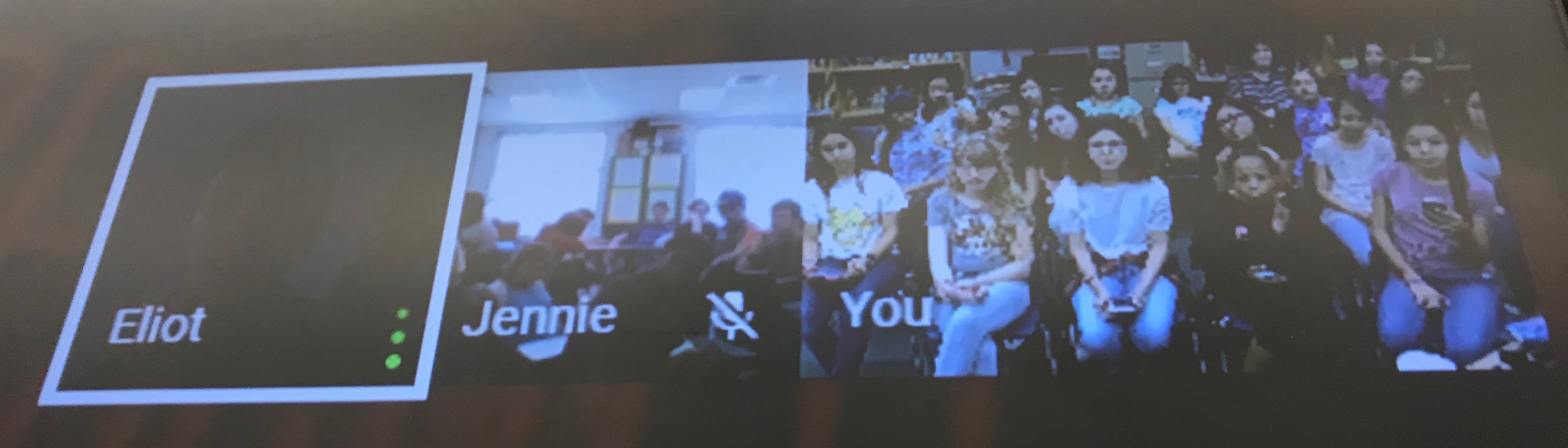
We then did a Google Hangout with Mrs. Smith’s class and Eliot Schrefer on May 25th after school:

Some of my favorite answers/quotes from the visit were:

  • Realistic fiction allows for a shifting antagonist.
  • Wanted to help people realize that orangutans aren’t stuffed animals come to life.
  • I don’t have characters first. I have stories first then make the best characters for that story.
  • Apes should not be kept against their will.
  • I used the idea of merantau to develop the plot.
  • Advice: For any artistic pursuit, I encourage you to think of the long range range view. It is risky to put all expectations of self in one basket. Focus on the joy you feel when doing the art. Remember what brings you joy! And do research, take advice, and read.

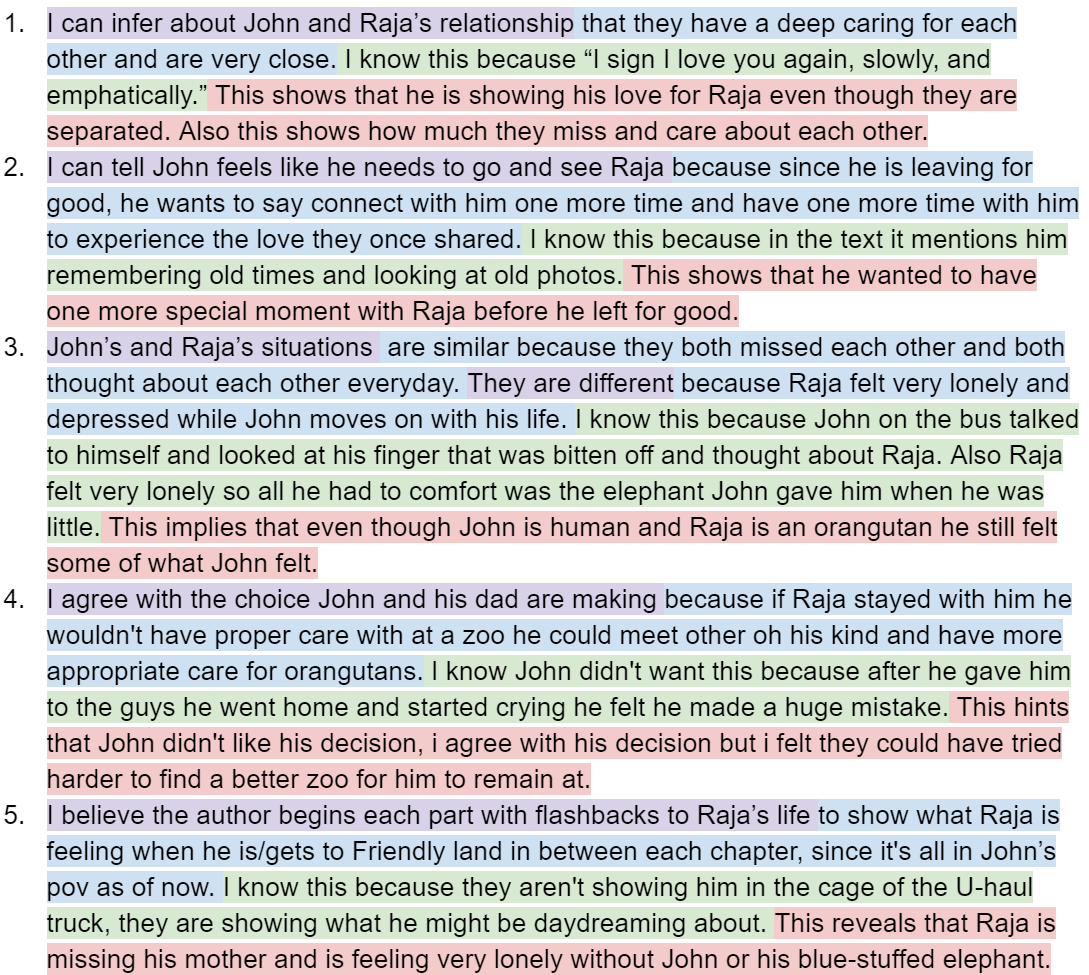
Discussion Questions: These were the first five of the text-dependent questions I asked during our reading of Rescued as well as an example of a student response (color coded for RATE. R=restate, A=answer, T=text evidence, E=elaborate/explain).

  • What can you infer about John and Raja’s relationship based on the first section?
  • Why does John feel like he needs to go see Raja before he leaves?
  • In the Q&A, the author says he “realized that a captive ape’s situation was similar to the plight of a kid during a divorce, getting swept along by the needs of powerful parents, at risk for being seen for what he represents instead of as a child with his own needs” (p. 251). How are John’s and Raja’s situations similar after the divorce? How are they different?
  • Do you agree with the choice John and his dad are making? Why or why not?
  • Why do you believe the author is beginning each part with a memory of Raja’s?
  • How did the author foreshadow this scene (on pg. 99) earlier in the book?

Flagged Passages: “My telltale heart, the one I’d left behind.” (p. 38)

Read This If You Love: Eliot Schrefer novels: Endangered and ThreatenedHurt Go Happy by Ginny RorbyHalf Brother by Kenneth Oppel, The One and Only Ivan by Katherine Applegate, Ivan: The Remarkable True Story of the Shopping Mall Gorilla by Katherine ApplegatePrimates by Jim Ottaviani

Recommended For: 

classroomlibrarybuttonsmall  

Signature