5 Little Ducks by Denise Fleming

Share

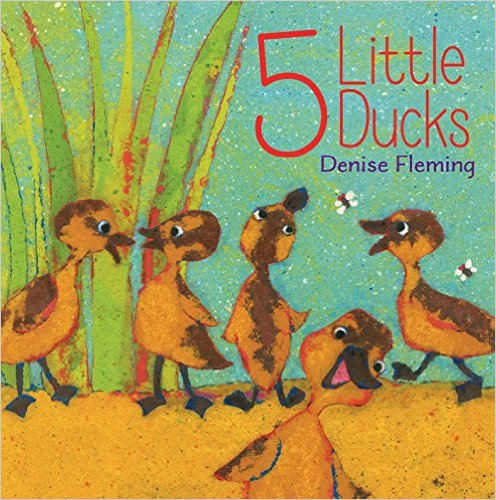
5 Little Ducks
Author: Denise Fleming
Published November 8, 2016 by Beach Lane Books

A Guest Review by Kathryn O’Connor

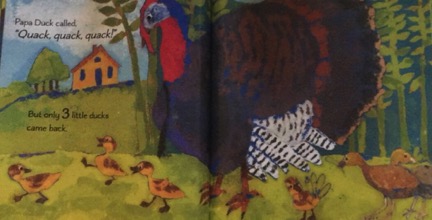
Summary: Papa Duck and his ducklings go on adventures through the woods and over the hills everyday. Each time Papa Duck yells out “Quack quack quack” to gather his ducklings, but not all of them come back. In fact, with each adventure, one fewer duck returns. Finally on Saturday, Papa Duck went out alone and yelled “Quack, quack, quack”. It was then that all of his ducks came back! When the family woke up together on Sunday, Mama Duck decided it would be best for the family to stay in and rest.

Review: Denise Fleming takes a modern spin on a classic nursery rhyme. It is fun to find out what new adventure the ducklings are taking on throughout the week. Because the ducks meet new people and explore new places each day, the reader is kept engaged. The repetition of the story makes it easy for young readers to follow along with and make predictions. In combination with this, the large text format and bolded numbers allow for easy comprehension.

The lively illustrations bring life to the text, and I love how perspective is used in all of them. Some of the pictures you’ll find to be zoomed out, while some are zoomed in. My favorite part of this picture book is at the end where Fleming has two non-fiction pages based on the animals of the story. This encourages the readers thinking and allows them to explore further.

Although this book is a helpful, entertaining tool for teaching days of the week and numbers 1-5, my only concern is that readers might become worried or anxious thinking about the well-being of the ducks. At some points while reading, I was concentrated on where the ducks were, if they were still alive, and when they were going to return to their family, rather than enjoying the text.

Teachers’ Tools for Navigation: This story can be used at first as a whole class read aloud, and perhaps even in a singing voice. Students will quickly pick up on the pattern of the story due to the repetition. By keeping the book in a classroom library, readers will then be willing to pick up the text and read independently or to a friend for they have already familiarized themselves with it. For beginning readers, this will spark motivation and love of reading. This story is also a helpful aid in teaching and counting numbers 1-5, days of the week, and sequencing text.

Discussion Questions: How many ducks do you think will come back?; What day comes next?; Why does Papa Duck yell “quack, quack, quack” everyday?; Where do you think the ducks are going?; Why do you think the ducks want to explore?; Why is Papa Duck feeling sad?; How do you think Papa Duck felt when his ducks returned?; Why does Mama Duck want all of the ducks to rest on Sunday?

Flagged Page:
 

Read This If You Loved: 10 Little Rubber Ducks by Eric Carle, Make Way for Ducklings by Robert McCloskey, or The Very Hungry Caterpillar by Eric Carle


Recommended For:
 classroomlibrarybuttonsmall

Thank you, Kathryn!

RickiSig

Blog Tour with Review, Teaching Guide, and Giveaway!: A Boy Called Bat by Elana K. Arnold

Share

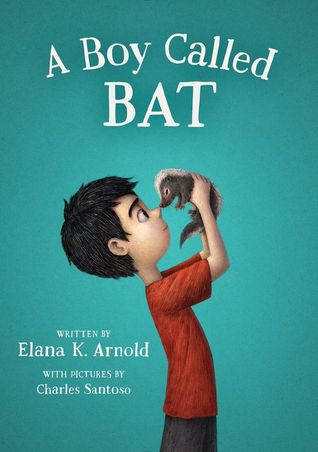
A Boy Called Bat
Author: Elana K. Arnold
Illustrator: Charles Santoso
Published March 14th, 2017 by Walden Pond Press

Summary: For Bixby Alexander Tam (nicknamed Bat), life tends to be full of surprises—some of them good, some not so good. Today, though, is a good-surprise day. Bat’s mom, a veterinarian, has brought home a baby skunk, which she needs to take care of until she can hand him over to a wild-animal shelter.

But the minute Bat meets the kit, he knows they belong together. And he’s got one month to show his mom that a baby skunk might just make a pretty terrific pet.

Critical Praise: 

“Delightful, endearing, and utterly relatable, Bat Tam is destined to be a dear and necessary friend for young readers. I adore him and his story.” — Anne Ursu, author of The Real Boy

“Written in third person, this engaging and insightful story makes readers intimately aware of what Bat is thinking and how he perceives the events and people in his life. With empathy and humor, Arnold delves into Bat’s relationships with his divorced parents, older sister, teachers, and classmates.” — Publishers Weekly (starred review)

“Comfortably familiar and quietly groundbreaking, this introduction to Bat should charm readers, who will likely look forward to more opportunities to explore life from Bat’s particular point of view.” — Kirkus Reviews

“Brimming with quietly tender moments, subtle humor, and authentically rendered family dynamics, Arnold’s story, the first in a new series, offers a nonprescriptive and deeply heartfelt glimpse into the life of a boy on the autism spectrum.” — Booklist

About the Author: Elana K. Arnold grew up in Southern California, where she was lucky enough to have her own perfect pet—a gorgeous mare named Rainbow—and a family who let her read as many books as she wanted. She is the author of picture books, middle grade novels, and books for teens. She lives in Huntington Beach, California, with her husband, two children, and a menagerie of animals. You can find her online at www.elanakarnold.com.

Review: A Boy Called Bat is one of those quiet yet impactful books that will find a special place in many hearts. The story is about Bat’s Asperger’s and his parent’s divorce without it being about that at all. The main character, Bat, is one of those special characters that as I was reading about him I knew that readers getting to know him will make them grow as people and that their empathy to fellow kids who may seem different will grow as well.

Bat’s story will not only appeal to our readers that love stories that promote empathy and understanding of others, Bat and his skunk, Thor, will definitely appeal to our readers who love animals. Bat’s mother is a veterinarian and Bat is 99.9% sure he is going to be as well. There are many animal references throughout the book, so these will all draw in readers who love animals. 

Teachers’ Tools for Navigation: In addition to an amazing read aloud opportunity, I can definitely see the text being part of lit circles. Bat himself is unique, but he and his story remind me of so many other characters who I love and I wish all students would read about: Auggie from Wonder; Melody from Out of my Mind; David from Rules; Candice from The Categorical Universe of Candice Phee; Rose from Rain, Reign; and Adam from How to Speak Dolphin. All of these texts are must reads! I picture all of these texts with their extraordinary characters being part of lit circles with a focus on disabilities/disorders and empathy.

Discussion Questions: How did Thor help Bat grow emotionally? What changes did you see within him and his actions since getting Thor?; What persuasive techniques did Bat use throughout the book to work to try to get his mom to agree to let him keep Thor?; What makes Mr. Grayson a good teacher in general? A good teacher for Bat?

Teaching Guide: 

Flagged Passages: “‘Bat’ was what almost everyone called Bixby Alxander Tam, for a couple of reasons: first, because the initials of his name — B, A, and T– spelled Bat.

But there were maybe other reasons. Bat’s sensitive hearing, for one. He didn’t like loud sounds. What was so unusual about that? And if Janei’s old earmuffs happened to make an outstanding muffling device, was it that funny if he liked to wear them?

There was also the way he sometimes flapped his hands, when he was nervous or excited or thinking about something interesting. Some of the kids at school seemed to think that was hilarious. And, of course, bats have wings, which they flap.

So between the initials and the earmuffs and the hand flapping, the nickname had stuck.

And truthfully, Bat didn’t mind. Animals were his very favorite thing.” (p. 2-3)

Read This If You Loved: Any of the lit circle books I listed above

Recommended For:

  litcirclesbuttonsmall classroomlibrarybuttonsmall 

Giveaway: 

a Rafflecopter giveaway

Don’t miss out on the other stops on the blog tour!

March 1 Read, Write, Reflect
March 2 A Foodie Bibliophile in Wanderlust
March 3 Bluestocking Thinking
March 6 The Official Tumblr of Walden Media
March 7 For Those About to Mock
March 8 Maria’s Melange
March 9 Novel Novice
March 10 Unleashing Readers
March 13 The Haunting of Orchid Forsythia
March 13 Mundie Kids
March 14 All the Wonders
March 15 Teach Mentor Texts
March 19 Nerdy Book Club
March 20 LibLaura5
March 22 Book Monsters
March 27 Librarian’s Quest
March 29 Satisfaction for Insatiable Readers
March 30 Lit Coach Lou

**Thank you to Walden Pond Press for providing a copy for review!**

Honey Girl: The Hawaiian Monk Seal by Jeanne Walker Harvey

Share

nfpb2017

Nonfiction Wednesday

Nonfiction Picture Book Wednesday is hosted by Kid Lit Frenzy and was started to help promote the reading of nonfiction texts. Most Wednesdays, we will be participating and will review a nonfiction text (though it may not always be a picture book).
Be sure to visit Kid Lit Frenzy and see what other nonfiction books are shared this week!

Honey Girl: The Hawaiian Monk Seal
Author: Jeanne Walker Harvey
Illustrator: Shennen Bersani
Published February 1st, 2017 by Arbordale Publishing

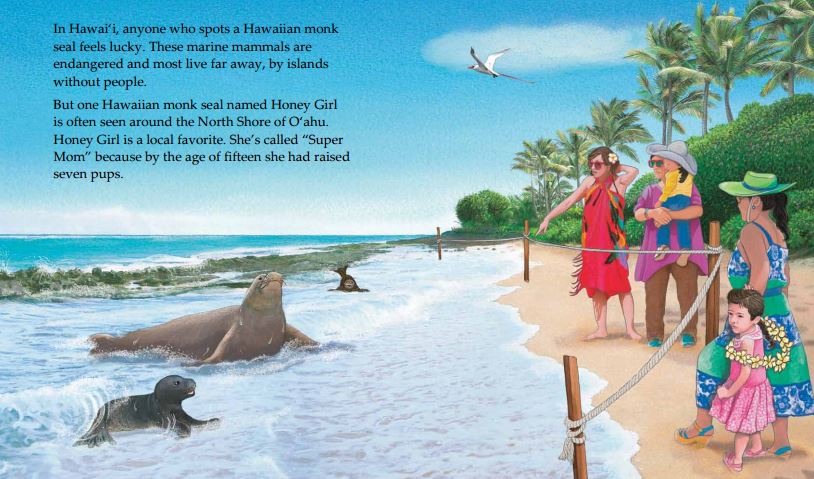
Summary: Hawaiian locals and visitors always enjoy spotting endangered Hawaiian monk seals, but Honey Girl is an extra special case. She has raised seven pups, and scientists call her “Super Mom.” After Honey Girl is injured by a fishhook, she gets very sick. Scientists and veterinarians work to save Honey Girl until she can be released back to her beach. This true story will have readers captivated to learn more about this endangered species.

Website: https://arbordalepublishing.com/bookpage.php?id=HoneyGirl

Review: I loved Honey Girl’s story. Honey Girl is a mother, a survivor, a symbol of hope, and a miracle of science. Jeanne Walker Harvey did a fabulous job not only developing Honey Girl’s character and developing her story but intertwining all of that with scientific undertones. She brings to the forefront issues of endangered species, humans effects on animals, and the importance of conservation scientists. All of this mixed with the colorful illustrations and amazing setting gives us such a beautiful picture picture.

Teachers’ Tools for Navigation: Honey Girl’s back matter gives such a wealth of information. Anything that wasn’t taught during Honey Girl’s story is revealed. The “For Creative Minds” section includes information on the Hawaiian Monk Seal life cycle, fun facts, conservation information, and rescue & rehabilitation.

In addition to all of the science and geography components of Honey Girl’s story that can be discussed and learned from, there are definitely reading and vocabulary opportunities within the book also. Check out:
Teaching Activity Guide
Reading Quiz
Related Websites
For Creative Minds Quiz

Discussion Questions: How did humans effect Honey Girl’s life?; What are some ways that we could help endangered species?; How does Honey Girl give us hope about the Hawaiian Monk Seal?

Flagged Passages: 

Read This If You Love: Who Lives in the Sea?: Ocean Animals of Hawaii by Monika Mira, Ocean Animals by Johnna Rizzo

Recommended For: 

classroomlibrarybuttonsmall closereadinganalysisbuttonsmall 

Signature

**Thank you to Barbara at Blue Slip Media for providing a copy for review!**

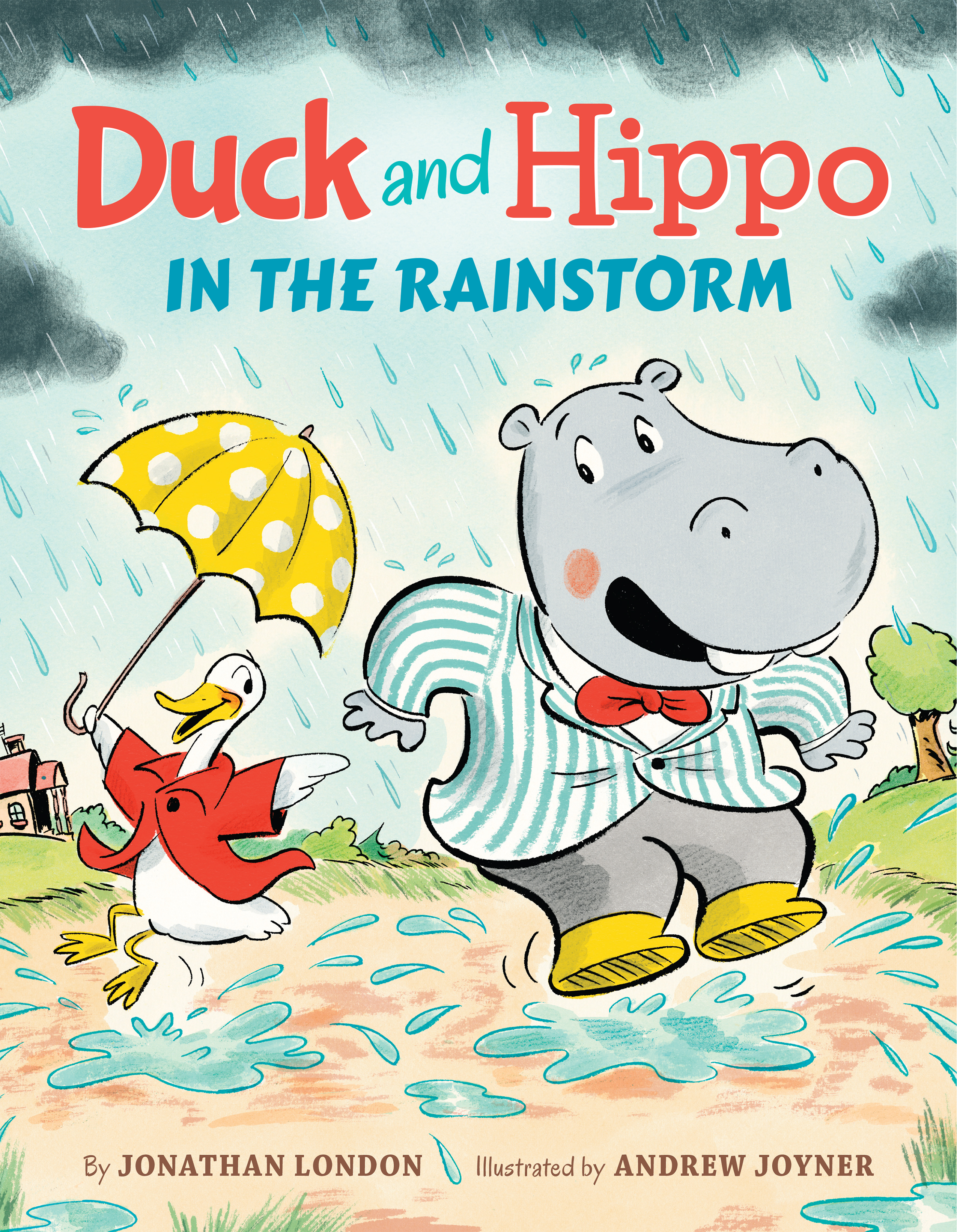
Duck and Hippo in the Rainstorm by Jonathan London (Author) and Andrew Joyner (Illustrator)

Share

Duck and Hippo in the Rainstorm
Author: Jonathan London; Illustrator: Andrew Joyner
Published: March 1, 2017 by Two Lions

GoodReads Summary: Get ready for a rainy-day adventure with Duck and Hippo!

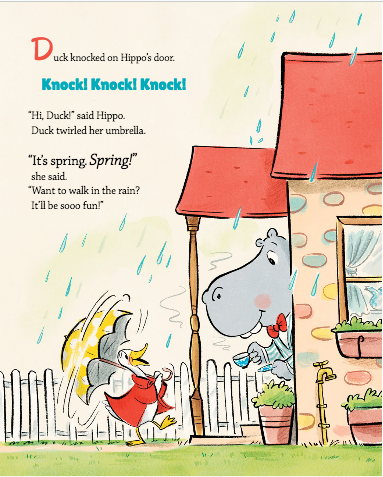
Duck and Hippo may be completely different, but they are best friends. When playful Duck invites careful Hippo to go for a walk in the rain, they have trouble sharing Duck’s umbrella. But Duck and Hippo won’t let that stop them. Soon they are puddle-jumping and sailing down the river! Until…WHOOOSH! A terrible wind sends the umbrella flying up, up, up into the air, with one friend holding on. What will Duck and Hippo do now? Jonathan London’s charming text and Andrew Joyner’s delightful art bring to life two lovable friends in this fun new series.

Our Review: We are huge fans of the Elephant and Piggie series and Frog and Toad series. They are staples in our households, so when we read these books, we were truly delighted! Duck and Hippo show readers that opposites attract—and they make for a wonderfully fun adventure. Ricki read this book with her three-year-old, and he was giggling hysterically at the drawings. It’s a winner.

The charming story will capture readers from beginning to end, and the language is written in a way that will be very helpful for beginning readers. It takes a lot of skill for an author to write text that is humorous and engaging yet also helpful for beginning readers to master language. London does this perfectly.We will be hanging on to these books tightly as we wait for our sons to be a bit older to learn to read. We recommend you get your hands on this book because it will surely be a popular series in classrooms.

Teachers’ Tools for Navigation: We love the concept of opposites attracting. Students might begin by considering other examples of characters in literature who have been paired together. They might form small groups and design their own story of two very opposite characters who might attract. We’d love to be in a classroom on a day that students were sharing these stories!

There’s more fun with Duck and Hippo in the free downloadable activity sheets: https://www.andrewjoyner.com.au/activities/

Discussion Questions: How are Duck and Hippo different? How are they similar? How does that make for a great adventure?; Why do you think the author chose to have Duck and Hippo in a rainstorm? Why does this make for a fun read?

Flagged Passage: 

Read This If You Loved: Elephant and Piggie series by Mo Willems; The Frog and Toad series by Arnold Lobel; Pug Meets Pig by Sue Lowell Gallion

Recommended For:

classroomlibrarybuttonsmall 

Giveaway!
Two Lions is offering a copy of Duck and Hippo to one lucky winner (U.S. addresses).
About the Author and Illustrator:
Jonathan London is the author of more than one hundred children’s books, including the bestselling Froggy series, illustrated by Frank Remkiewicz. Many of his books explore nature, among them Flamingo Sunset, illustrated by Kristina Rodanas, and Little Penguin: The Emperor of Antarctica, illustrated by Julie Olson. He is currently writing a middle-grade series, which started with Desolation Canyon, illustrated by his son Sean London. Jonathan lives in Graton, California. Learn more online at www.jonathan-london.net.
 
Andrew Joyner is an illustrator, author, and cartoonist based in South Australia. He has illustrated a number of picture books, and he wrote and illustrated a chapter book series about a warthog named Boris. He has also illustrated for newspapers and magazines, including the Wall Street Journal, Reader’s Digest, and Rolling Stone magazine, among others. Learn more online at www.andrewjoyner.com.au.

RickiSig andKellee Signature

**Thank you to Barbara at Blue Slip for providing copies for review!**

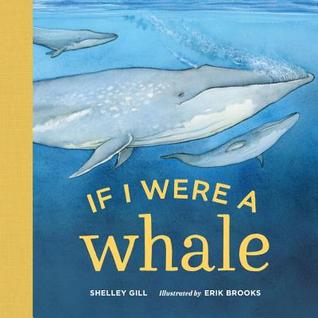
If I Were a Whale by Shelley Gill

Share

nfpb2017

Nonfiction Wednesday

Nonfiction Picture Book Wednesday is hosted by Kid Lit Frenzy and was started to help promote the reading of nonfiction texts. Most Wednesdays, we will be participating and will review a nonfiction text (though it may not always be a picture book).
Be sure to visit Kid Lit Frenzy and see what other nonfiction books are shared this week!

If I Were a Whale
Author: Shelley Gill
Illustrator: Erik Brooks
Published February 21st, 2017 by Little Bigfoot

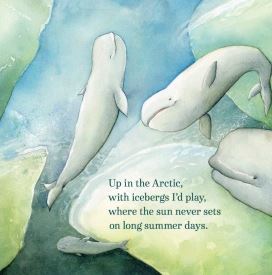
Summary: From best-selling children’s author Shelley Gill comes this colorful, rhyming board book playfully featuring whales found in the Pacific, Atlantic, and Arctic Oceans. Toddlers will love to learn about whales swimming in the deep blue sea in this beautifully illustrated board book that shares simple whale facts in an imaginative way.

If I could be anything, do you know what I’d be? I’d be a whale in the deep blue sea.
Scooping up fishes and flipping my tail, I’d be a minke or beluga whale.

About the Author: Shelley Gill was the fifth woman to complete the Iditarod race. When she’s not writing, Shelley travels to schools around the country where she covers a variety of topics–from whale watching to how she thinks up her writing ideas.

About the Illustrator: Erik Brooks spent much of his childhood in Anchorage, AK, where he explored the outdoors and had Alaskan experiences such as seeing the occasional moose wandering through the yard and getting run over by a dog sled. He still loves getting out into nature with his family and his handsome mutt of a dog, Max.

Review: If I Were a Whale is the perfect mix of rhyming poetry and scientific facts. Gill guides us through different oceans visiting different types of whales glimpsing at how each lives their life. This book maybe just a tiny introduction to whales, but the illustrations and text will make the reader want to read it again and then go learn more. Trent, as soon as we were done reading it, asked for it again, but the second time through included a lot more questions about the different whales. I see this book being read often in our future because Trent is a big fan of animals and science as well as good rhythmic picture books. I also want to commend the artist as each page is a beautiful scene with the highlighted whale and its habitat.

Teachers’ Tools for Navigation: In early education, it is so important to introduce young children to as much as possible to help their knowledge grow of our tremendously complicated and full world. If I Were a Whale is a perfect read aloud book that kids will love but will also introduce them to different whales, other animals, and geography.

Discussion Questions: Which whale would you want to be? Why?; Why do whales live in different oceans?; What other animals did you see in the book? Why were they in the illustrations or text?; How are the whales alike? Different?

Flagged Passages: 

Read This If You Loved: Baby Beluga by Raffi, If I Were a Penguin by Anne Wilkinson, Giant Squid by Candace Fleming, O is for Orca by Andrea Helman, Books about whales or other ocean animals

Recommended For:


**Thank you to Nicole at Little Bigfoot for providing a copy for review!**

Review and Giveaway: Mr. Fuzzbuster Knows He’s the Favorite by Stacy McAnulty

Share

Mr. Fuzzbuster Knows He’s the Favorite
Author: Stacy McAnulty; Illustrator: Edward Hemingway
Published: February 7, 2017 by Two Lions

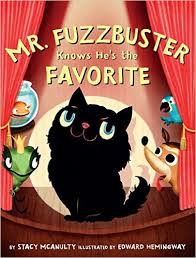
GoodReads Summary: Mr. Fuzzbuster knew he was Lily’s favorite. They did everything together. Naps. Story time. Walks. And more naps. But now four more animals lived in the house.…

To prove he’s still Lily’s favorite, Mr. Fuzzbuster will have to ask her, but will her answer surprise him? This funny, heartwarming story is for every child who has ever wondered if there’s a favorite in the house.

Ricki’s Review: This was a very fun book to read aloud to my son. It reminded me of my childhood—my siblings and I often fought over who was the favorite child. The dramatic hooks at the end of each page make for a silly, giggly read aloud. Mr. Fuzzbuster has a hysterical personality that kids will surely adore. I have a feeling that this book will get funnier and funnier after each read aloud! The illustrations and humor will have readers begging for more Mr. Fuzzbuster.

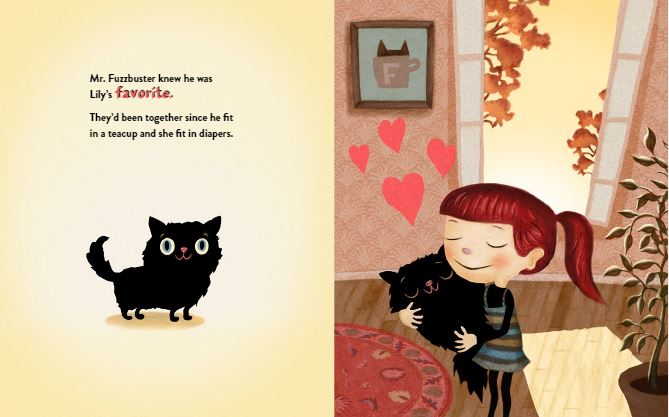
Kellee’s Review: Unlike Ricki, my siblings and I didn’t have to fight about who was the favorite–I knew I was! 😉 [We’ll see if they read this review!] So I may be a bit like Mr. Fuzzbuster who is just loves his owner, Lily, so much that he cannot imagine his life without her. Kids will definitely relate to Mr. Fuzzbuster, and the book will also be a great chance to talk about how sometimes there are no favorites–a lesson that is taught in such a fun way that the reader won’t even realize they are being taught something! And the cartoonish, humorous illustrations just add to the fun of this book. Hemingway has such a distinct style of illustrations that are just so eye-catching and exciting to read. 

Teachers’ Tools for Navigation: Teachers might ask students to make predictions at the end of each page. Because of the dramatic hooks, it would make predictions very enjoyable. I tried doing this with my three-year-old and while he is a bit young, we think we might be able to use this book for predictions in the near future! He slowly caught on!

Did you know Mr. Fuzzbuster loves writing notes? He wants to send cards to young readers across the country.  Maybe he will be your favorite. More information can be found at http://www.stacymcanulty.com/fuzzbuster-email.

Discussion Questions: Who is Lily’s favorite?; Why does the book end the way that it does?; Why do we feel a strong desire to be the favorite? How may this be harmful?

Flagged Passage: “Mr. Fuzzbuster knew he was Lily’s favorite. They’d been together since he fit in a teacup and she fit in diapers.”

Read This If You Loved: Dog vs. Cat by Chris Gall, Barkus by Patricia MacLachlanMemoirs of a Goldfish by Devin Scillian,  One Cool Friend by Toni Buzzeo, They All Saw a Cat by Brendan Wenzel, Ballet Cat by Bob Shea, Cat the Cat by Mo Willems

Recommended For:

classroomlibrarybuttonsmall 

Giveaway!
Two Lions is offering a copy of MR. FUZZBUSTER KNOWS HE’S THE FAVORITE to one lucky winner (U.S. addresses).
About the Author and Illustrator:
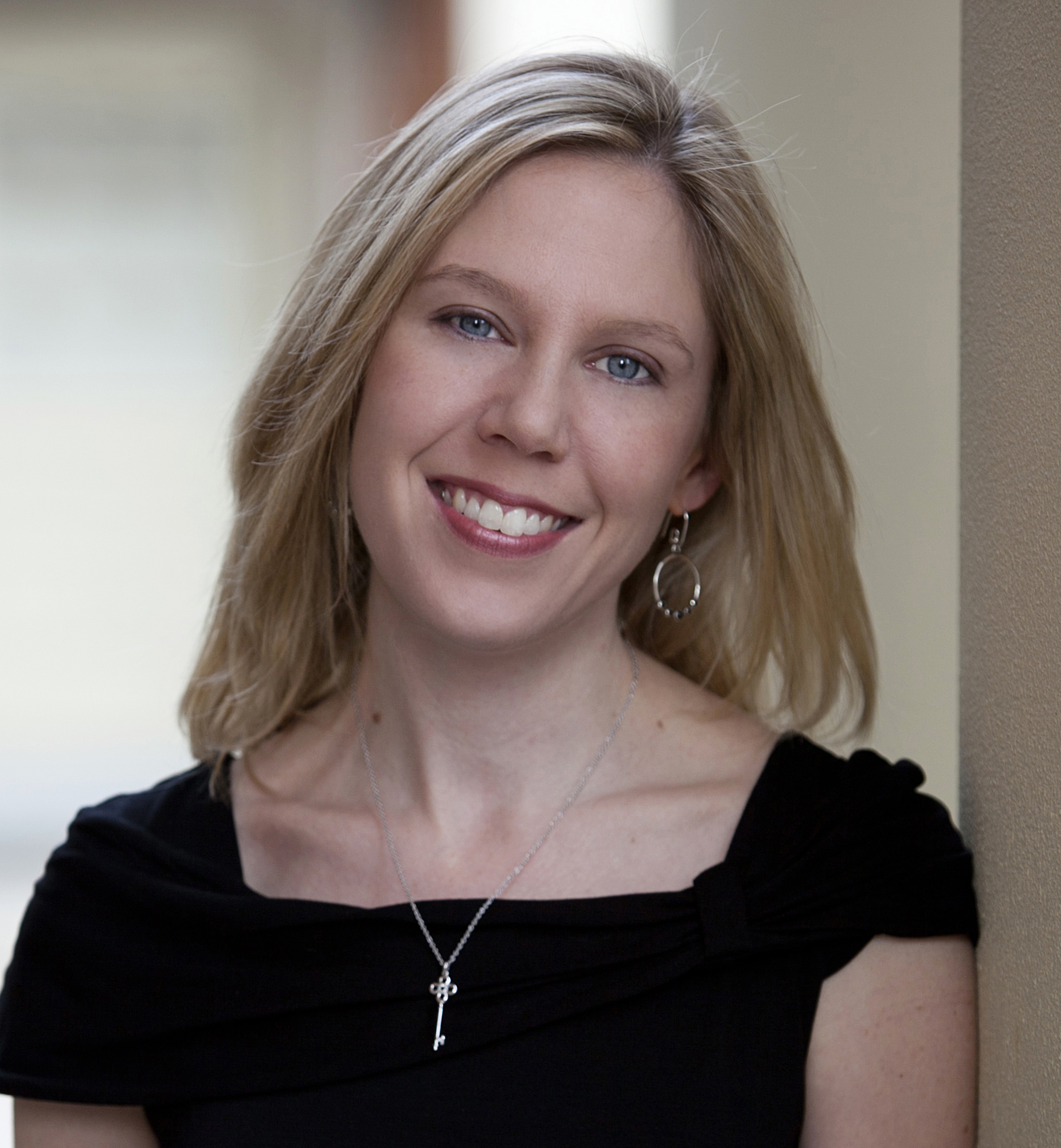
STACY MCANULTY is certain she’s her mom’s favorite. Her younger brother disagrees. She’s the author of Beautiful, illustrated by Joanne Lew-Vriethoff; Excellent Ed, illustrated by Julia Sarcone-Roach; and 101 Reasons Why I’m Not Taking a Bath, illustrated by Joy Ang. Originally from upstate New York, she now lives in Kernersville, North Carolina, with her three children, two dogs, and one husband. She doesn’t have a favorite. You can find her online at www.stacymcanulty.com.
 
EDWARD HEMINGWAY is certain he’s Stacy McAnulty’s favorite illustrator, although the illustrators of Stacy’s other books may disagree. Edward himself is the author and illustrator of the children’s books Bump in the Night, Bad Apple: A Tale of Friendship, Bad Apple’s Perfect Day, and Field Guide to the Grumpasaurus. Originally from Bozeman, Montana, he now lives in Brooklyn where he teaches creative writing at the master’s level at SVA in Manhattan. If he has any favorite students, he’ll never tell. Learn more about him online at www.edwardhemingway.com.

RickiSig andKellee Signature

**Thank you to Barbara at Blue Slip for providing a copy for review!**

Sea Otter Heroes: The Predators That Saved an Ecosystem by Patricia Newman

Share

nfpb2017

Nonfiction Wednesday

Nonfiction Picture Book Wednesday is hosted by Kid Lit Frenzy and was started to help promote the reading of nonfiction texts. Most Wednesdays, we will be participating and will review a nonfiction text (though it may not always be a picture book).
Be sure to visit Kid Lit Frenzy and see what other nonfiction books are shared this week!

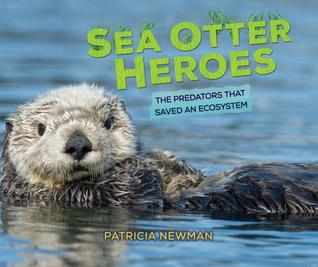
Sea Otter Heroes: The Predators That Saved an Ecosystem
Author: Patricia Newman
Published by January 1st, 2017 by Millbrook Press

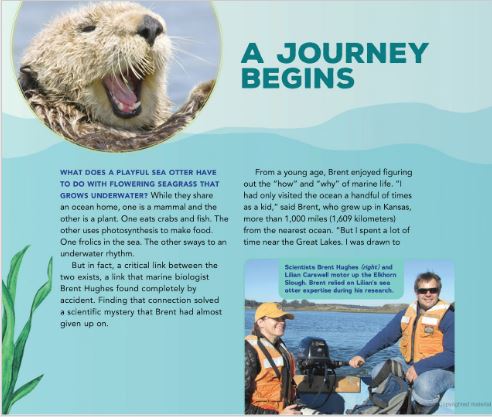
Summary: Marine biologist Brent Hughes didn’t think sea otters and sea grass had much in common. But his research at Elkhorn Slough, an estuary on Monterey Bay in northern California, revealed a new and surprising connection between the two. The scientist expected this estuary to be overrun with algae due to the fertilizer runoff from surrounding fields. But it wasn’t. Why?

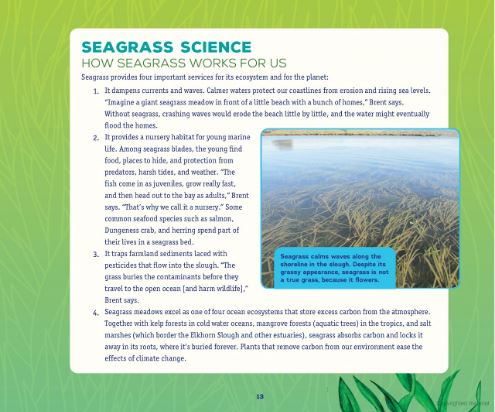
Review: As someone who struggled with biology when in school, I love narrative nonfiction about nature because it helps me fill in education gaps. Sea Otter Heroes looks at trophic cascade (cause and effect relationships within a food chain) and how it affects an ecosystem–so interesting! This information along with the beautiful photographs make this book a scientific journey.

Teachers’ Tools for Navigation: Patricia Newman’s books (Plastics, Ahoy! and Ebola included) are made for classrooms. This text includes not only the cause-effect relationship between otters and sea grass, but also has experiments, information about careers, a glossary, and an afterword about rethinking our relationship with nature giving the reader real ways they can make a difference. This book would be perfect to use in a life science unit or class.

Discussion Questions: What is the “critical link between” sea otters and flowering sea grass?; Finding the link was an accident, what was Brent Hughes studying when he found the connection? What was the proof that the connection existed?; How does the Elkhorn Slough exist?; What are Hughes’s 7 steps to think like a scientist? Observe nature and go through the 7 steps yourself.; What part did sea hares play in Brett Hughes’s experiment?; What is a trophic cascade?; How are what was discovered about the otters similar to the situations with wolves and sperm whales Newman shared?

Flagged Passages: 

Read This If You Love: Scientists in the Field books, National Geographic and Animal Planet books about animals 

Recommended For:

  readaloudbuttonsmall classroomlibrarybuttonsmall 

Kellee Signature

**Thank you to Lerner and Patricia for providing a copy for review!**