Author Guest Post: “Bring the Text to Life: Baking the Cake” by Stephen Savage, Author of Moonlight

Share

“Bring the Text to Life: Baking the Cake”

In 2004, when I began my career in children’s books with a book called Polar Bear Night (published by Scholastic, written by Lauren Thompson), I thought I had it all figured out. I was of the mind that picture books were mainly about the visuals (why else would they call them “picture books”). And as crazy as what I am about to say sounds, I didn’t really understand how the text functioned. I knew it filled blank spaces in the illustrations, but that’s about it. It seemed like “the icing on the cake”. Little did I know.

Then in 2010, I decided I wanted to bake a cake and ice it, too. My daughter had just been born, and I felt inspired to write a story about her. One morning, as I stumbled across the Gowanus canal on my way to my studio in Brooklyn (I hadn’t gotten enough sleep the night before), I spotted a tug boat. “That’s my story”, I thought. I could see the visuals perfectly. 

But what about those blank spaces in the images? They’d need words! By this time, I had illustrated three books, visited a few classrooms, gotten to know the reading habits of kids, and was starting to figure things out a bit. I was learning that picture books were read-alouds, and that the words were very important (duh!).

I was on to the fact that words could be fun to say. Words could engage. More importantly, words could create a beginning, middle, and end in a book. I had so much to learn. I spent months writing my ideas down on index cards, until the cards fell together to form Little Tug (Roaring Brook Press/Macmillan).

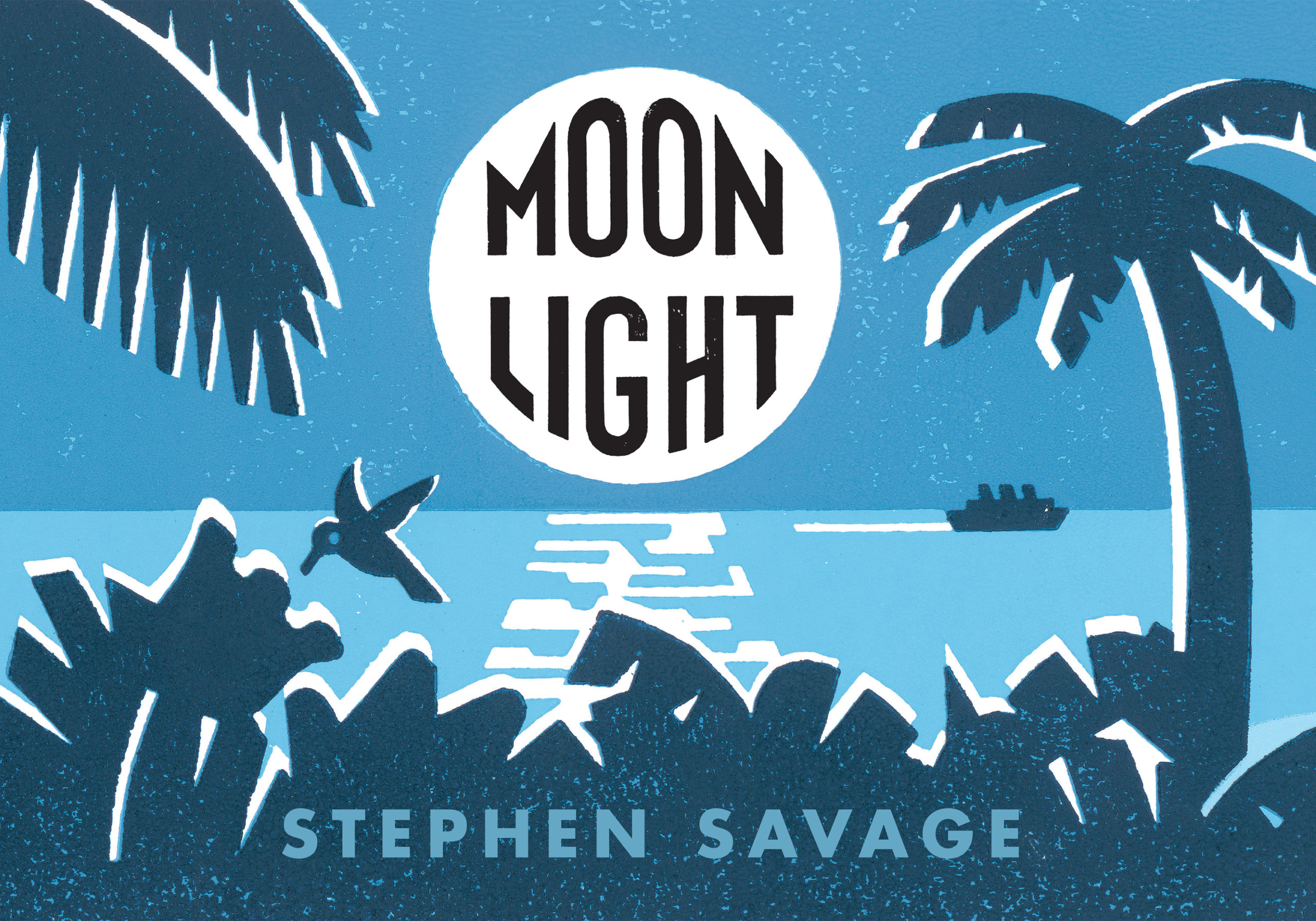
This summer, my seventh book as both author and illustrator comes out. It’s called Moonlight. And I’m sure if I showed the book to my 2004 self, he’d scoff at the text. At only 85 words, he’d regard it as a very thin layer of icing on top of an already yummy cake.

But here’s what I’d say to my old, uniformed self: effective picture book text may seem effortless, but that’s not the case. I’d point out all the craft that went into the writing, a discussion of which, could be used to stimulate discussion in the classroom.

I’d point out FOUR examples of writing tools I used to bring the text to life:

  1. PERSONIFICATION: The book opens with the line “Something is on the move”. Personifying the moonlight, turning it into the protagonist in the story, was one way I put a new spin on the traditional lullaby/nighttime theme. 
  2. VIVID VERBS: Words like “slithering”, “drifting” and “tumbling” give the reader a sense of action and adventure. They create excitement and drama.
  3. ALLITERATION: “Sliding down silvery tracks” may just be my favorite line in the book. Why? It’s fun to say. And I have my editor, Neal Porter, to thank for that alliterative line. He replaced my original word, “Icy” with “silvery”. PS: I think it’s nice for young readers to hear how professional artists get help from their teachers (er, I mean editors 😉
  4. SENSORY LANGUAGE makes a story relatable. I used the line “Then it rests for a while, next to you” for a rush of emotion at the critical moment in the story when the moonlight journeys into the child’s bedroom. Certainly, the image of the cat snuggled up against the child reinforces this ‘touch’. 

So now that I’m thinking about it, this “icing on the cake” analogy doesn’t really apply anymore. In picture books, images always work together with text to tell the story. I had to work hard to figure this out, and luckily my editors and mentors have been generous with their advice and suggestions. Like most things in life, writing is about practice and good guidance. And a little piece of cake and a glass of milk while you’re working never hurts!

NOTE: Special thanks goes to teacher/reading specialist Renee Davis of Glastonbury, Connecticut (my sister-in-law) for acting as a consultant on this post.
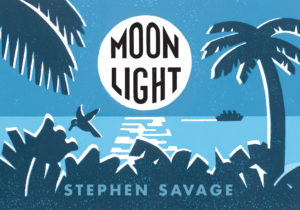
Published August 23rd, 2022 by Neal Porter Books

About the Book: A lyrical bedtime read about the captivating effects of moonlight and its nightly journey.

Something is on the move.”

When moonlight shines, it’s not like most light. In the quietest hours of the night, it swings through trees and slithers down rivers. It drifts in the wake of steamships and catches on the propeller of a passing plane. It blankets neighborhoods before coming to rest by your side.

In this bedtime picture book, Stephen Savage, author and illustrator of And Then Came HopeBabysitter from Another Planet, and the Geisel Honor book Supertruck, presents a lyrical text and illustration full of dramatic light and shadow to pay homage to the mysterious moon and the unique ways it reveals itself each night.

About the Author: STEPHEN SAVAGE is an award-winning children’s book author and illustrator whose accolades include a New York Times Best Illustrated Book (Polar Bear Night) and a Geisel Honor (Supertruck). Polar Bear Night was a New York Times bestseller. He also wrote and illustrated And Then Came Hope and Babysitter from Another Planet. He teaches at the School of Visual Arts and lives in Brooklyn with his wife, daughter and two dogs. 

https://www.savageillustrator.com/
@savageillustrator on Instagram
@savageartist on Twitter

https://holidayhouse.com/book/moonlight/
@holidayhousebks on all platforms

Thank you, Stephen, for sharing sharing your analogy that can move writing to the next level!

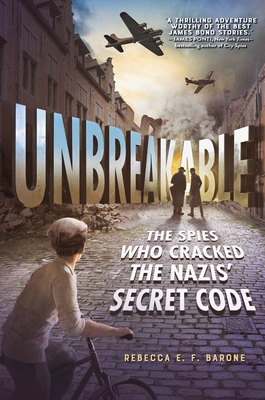
Unbreakable: The Spies Who Cracked the Nazis’ Secret Code by Rebecca E.F. Barone

Share

Unbreakable: The Spies Who Cracked the Nazis’ Secret Code
Author: Rebecca E.F. Barone
Publishing October 25th, 2022 by Henry Holt and Co.

Summary: Unbreakable is the true story of the codebreakers, spies, and navy men who cracked the Nazis’ infamous Enigma encryption machine and turned the tide of World War II.

As the Germans waged a brutal war across Europe, details of every Nazi plan, every attack, every troop movement were sent over radio. But to the Allied troops listening in—and they were always listening—the crucial messages sounded like gibberish. The communications were encoded with a powerful cipher, making all information utterly inaccessible . . . unless you could unlock the key to the secret code behind the German’s powerful Enigma machine.

Complete with more than sixty historical photos, Unbreakable tells the true story of one of the most dangerous war-time codebreaking efforts ever. While Hitler marched his troops across newly conquered lands and deadly “wolfpacks” of German U-Boats prowled the open seas, a team of codebreakers, spies, and navy men raced against the clock to uncover the secrets that hid German messages in plain sight. Victory—or defeat—in World War II would hinge on their desperate attempts to crack the code.

Praise: 

*”A riveting tribute to epic tests of men against the elements.” —Kirkus, starred review

*”A compelling narrative focused on science and technology, embedded in a cluster of thrilling adventure stories . . . Highly ­recommended.” —School Library Journal, starred review

*”Readers will be caught up in the real-time action sequences.” —Booklist, starred review

*”Exemplary.” —BCCB, starred review

About the Author: Rebecca E. F. Barone holds a Bachelor of Arts in English and a Bachelor of Science in Mechanical Engineering from Bucknell University along with multiple graduate degrees in mechanical engineering. Her technical projects include injury analysis for the National Football League, and her short-form STEM writing has been published in the award-winning Muse magazine. She is passionate about serving and mentoring underrepresented populations in STEM. She is also the author of Race to the Bottom of the Earth: Surviving Antarctica (which received four starred reviews).

Review: This book read like a page-turning, action-packed thriller and adventure story. But it is all real! Which makes it even better because it is truly unbelievable. Barone writes the different scenes, shared in vignette-type short stories that come together to show a whole picture, in a way that just grabs the reader’s attention and keeps you reading to figure out how everyone comes together to crack the secret code.
Teachers’ Tools for Navigation: This book will find its most success as an independent reading book and will definitely be a book to share with middle school readers who think they do not like nonfiction.

Also, check out the cover reveal on MGBookVillage for some background information from the author.

Discussion Questions: 

  • How did all of the countries work together (or not work together) to crack the code?
  • Who do you think was the greatest asset in the journey?
  • Why do you think the author chose to write the book in vignette-type short stories?
  • How does the inclusion of photographs add to the book?
  • The author states that the mathematicians were the hero of the story–do you agree? Why or why not?

Flagged Passages: 

ONE: TRAITOR
1929—Warsaw, Poland

THE BOX ARRIVED on the last Saturday in January.

Business in the Polish customs office went on as usual, the rhythm of sorting and inspecting undisturbed by the heavy package with a German postmark. In fact, the officer in charge had nearly finished when the urgent request came in.

Return it immediately, the German embassy demanded. There had been a mistake. It was a German package, intended for a German recipient. It should never have been sent to Poland. Cease operations and give it back.

Now, that made the customs officer pause.

He did not return the box. He opened it.

A polished surface gleamed in the light. Along a hinge in the back, a wood cover opened to reveal something almost like a typewriter. Elevated keys were arranged in three rows along the bottom, each labeled with a letter of the German alphabet.

But that was where the similarity to a typewriter ended.

There was no inked ribbon, no carriage in which to hold paper to type a letter. Instead, the top of the box was filled with small circular windows arranged in three rows identical to the keyboard below; each window contained a single letter printed on translucent material.

If the customs officer pressed a key, instantly, in the top rows, one letter began to glow. As soon as he released the key, the light went out. If he pressed the same letter key again, an entirely different light and letter shone back.

Quickly, the Polish customs officer made a call. Across town, two men secretly working for the Polish cipher agency understood immediately and rushed to the customs office.

Over the next two days and through the next two nights, the men disassembled, examined, and reassembled the machine.

By Monday morning, they had meticulously put every part back into place. They repackaged the machine in the same box and wrapped it in the same brown paper in which it had arrived.

Poland would return German property to Germany, as requested. The delay, inevitable, due simply to the weekend.

No one in Germany suspected a thing.

Enigma in use.

[Bundesarchiv, Bild 183–2007–0705–502 / Walther / CC-BY-SA 3.0]

Two years later, Sunday, November 1, 1931—the German-Belgian border

Hans-Thilo Schmidt rushed through the doors of the Grand Hotel in Verviers, Belgium, two hours late. He never saw the man sitting in the lobby waiting for him.

To this man, Schmidt was an ordinary German of average build, wearing a dark hat and dark coat. Schmidt was red in the face and puffy around the eyes, both traits the man watching him had been expecting. He knew that Schmidt’s train was late, and Schmidt sweated and grew flushed as he hurried to make up lost time. Schmidt’s puffy eyes had been expected as well. The people this man watched often suffered from sleepless nights. Treason was never an easy decision.

Not that Schmidt would have noticed the man even if he’d been relaxed and alert. Hans-Thilo Schmidt was far from experienced in spy craft. Last June, when he had first decided to trade secrets for money, he simply walked into the French embassy in Berlin. Incredibly, he plainly announced his intent to sell information to the French government. Without cover and without any personal security, he asked whom he should contact in Paris to do so. Somehow, he had neither been arrested by the Germans nor ignored by the French.

Now, five months later, the German Schmidt was about to meet face-to-face with a French intelligence officer. Hans-Thilo was nervous, and he was late.

At the front desk, the receptionist checked Schmidt into a room already reserved for him and handed him an envelope along with his key. He entered the elevator, and as the doors closed in front of him, the man watching him from the lobby saw him rip into the letter, which read “You are expected in suite 31, first floor, at 12 noon.”

At precisely noon, as the letter instructed, Schmidt knocked at suite 31.

The door opened into another world where time seemed to slow as an older woman with elegantly styled white hair greeted him and asked him to wait in the comfortable, richly furnished room. Soft music played gently over the radio. An inviting arrangement of liquor and crystal glasses was set out next to a display of fine cigars. Gratefully, Schmidt eased himself into a plush chair.

“Guten Morgen, Herr Schmidt! Hatten sie eine gute Reise?”

Schmidt jumped as an unfamiliar voice boomed at him in German. An immense man with a shaved head came through a doorway, entering the living area through another room in the suite. Round, dark spectacles framed icy blue eyes that pierced Schmidt with an unwavering stare.

“Sit down, please,” the man continued. “How are Madame Schmidt and your two children?”

Schmidt, already on edge, tensed more. He was currently living alone, and his wife, son, and daughter were living with his wife’s parents.

“I know,” the man said, cutting Schmidt off before he had a chance to answer. “You will want to bring your family back together soon and resume a pleasant life. That, of course, depends on you. We will assist you if your cooperation proves fruitful to us.”

Taking an offered glass of whiskey, Schmidt sat back down.

The man confronting him became even more serious. “Your resourcefulness last June in Berlin was quite exceptional and effective, Mr. Schmidt. Quite fortunately you happened upon an official of the French embassy who … was inconspicuous. What would you have done if he had thought you were an agent provocateur and called the police?”

This pushed Hans-Thilo Schmidt to his limit. “I thought you would understand!” he snapped, defiant. “If you feel this way, my only option is to withdraw. Others will know how to interpret my motivations and the rationale of my propositions.”

“Easy now, Mr. Schmidt,” the man responded. “We appreciate your initiative and the benefit we can gain from it.

“Let me be frank,” the man continued, “my name is Lemoine, and I represent the French Intelligence Bureau.”

Read This If You Love: World War II (and other war) nonfiction books

Recommended For: 

classroomlibrarybuttonsmall 

Signature

**Thank you, Kelsey from Macmillan Publishing, for providing a copy for review!**

It’s Monday! What Are You Reading? #IMWAYR 10/10/22

Share

It’s Monday! What Are You Reading?
Sharing Picture Books, Early Readers, Middle Grade Books, and Young Adult Books for All Ages!

It’s Monday! What Are You Reading? is a weekly blog hop co-hosted by Unleashing Readers and Teach Mentor Texts which focuses on sharing books marketed for children and young adults. It offers opportunities to share and recommend books with each other.

The original IMWAYR, with an adult literature focus, was started by Sheila at Book Journeys and is now hosted by Kathryn at The Book Date.

We encourage you to write your own post sharing what you’re reading, link up below, leave a comment, and support other IMWAYR bloggers by visiting and commenting on at least three of the other linked blogs.

Happy reading!

Bold_line

Tuesday: Dressing Up the Stars: The Story of Movie Costume Designer Edith Head by Jeanne Walker Harvey, Illustrated by Diana Toledano

Thursday: What a Blast! Fart Games, Fart Puzzles, Fart Pranks, and More Farts! by Julie Winterbottom, Illustrated by Clau Seuza

Sunday:  Author Guest Post: “Little Red and the Big Bad Educator’s Guide” by Rebecca Kraft Rector, Author of Little Red and the Big Bad Editor

**Click on any picture/link to view the post**

Bold_line

Kellee

During Hurricane Ian (yes, we’re doing okay! Our city and surrounding areas had a ton of flooding, but most have receded by now. There is one elementary school that was completely flooded, and they have to meet in a high school until it is safe to go back to their school, so that is devastating, but we overall were so much luckier than southwest Florida.), I read to keep myself busy. Thank you for all of the kind words of safety during it!

Daughter of the Pirate King by Tricia Levenseller Shirley & Jamila Save Their Summer by Gillian Goerz American Royals by Katharine McGee The Inheritance Games by Jennifer Lynn Barnes

  • Daughter of the Pirate King by Tricia Levenseller: On the surface, I really wanted to dig this book: swashbuckling adventure with a kick butt female lead! But there were some things that I just couldn’t ignore that made me just not be able to sing its praises: 1) the one LGBTQIAP+ character’s part in the story—he was just a plot point bait!; 2) potential rape/rape threats; 3) captive romance—blech! If there has to be kidnapping, it shouldn’t turn into a romance; 3) fantastical elements out of the blue! Why can’t she just be kick butt without these secret powers?!?! These inclusions took away the joy of this book for me… 🙁
  • Shirley and Jamila Save the Summer by Gillian Goerz: This graphic novel is on Trent’s grade 3-5 state reading list, and he shared with me, when he finished, how much he thought I would like it, and I did! I loved the mystery as well as the dynamic between the two characters.
  • American Royals by Katharine McGee: I am so glad I picked up this book! I know some reviews said they wanted more, but I loved the story–it is like reading the tabloids (though of a fake royal family). Moved directly onto the second one!
  • Inheritance Game by Jennifer Lynn Barnes: I can see why this book is so popular! I mean, billionaire will mystery and four handsome brothers?! Win-win! The reveal at the end was surprising, too, which is always lovely for a good mystery. Moved directly onto the second one of this series, too!

To learn more about any of these books, check out my 2022 Goodreads Challenge page or my read bookshelf on Goodreads.

Ricki

I am off this week–I’ll be back another week!

Bold_line

Kellee

Majesty (American Royals, #2) The Hawthorne Legacy (The Inheritance Games, #2)

Bold_line


Tuesday: Unbreakable: The Spies Who Cracked the Nazis’ Secret Code by Rebecca E.F. Barone

Sunday: Author Guest Post by Stephen Savage, Author of Moonlight

Bold_line

Link up below and go check out what everyone else is reading. Please support other bloggers by viewing and commenting on at least 3 other blogs. If you tweet about your Monday post, tag the tweet with #IMWAYR!

 Signature andRickiSig

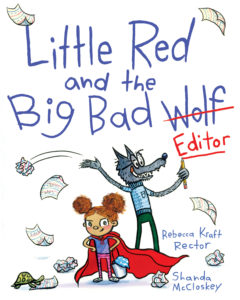
Author Guest Post: “Little Red and the Big Bad Educator’s Guide” by Rebecca Kraft Rector, Author of Little Red and the Big Bad Editor

Share

“Little Red and the Big Bad Educator’s Guide”

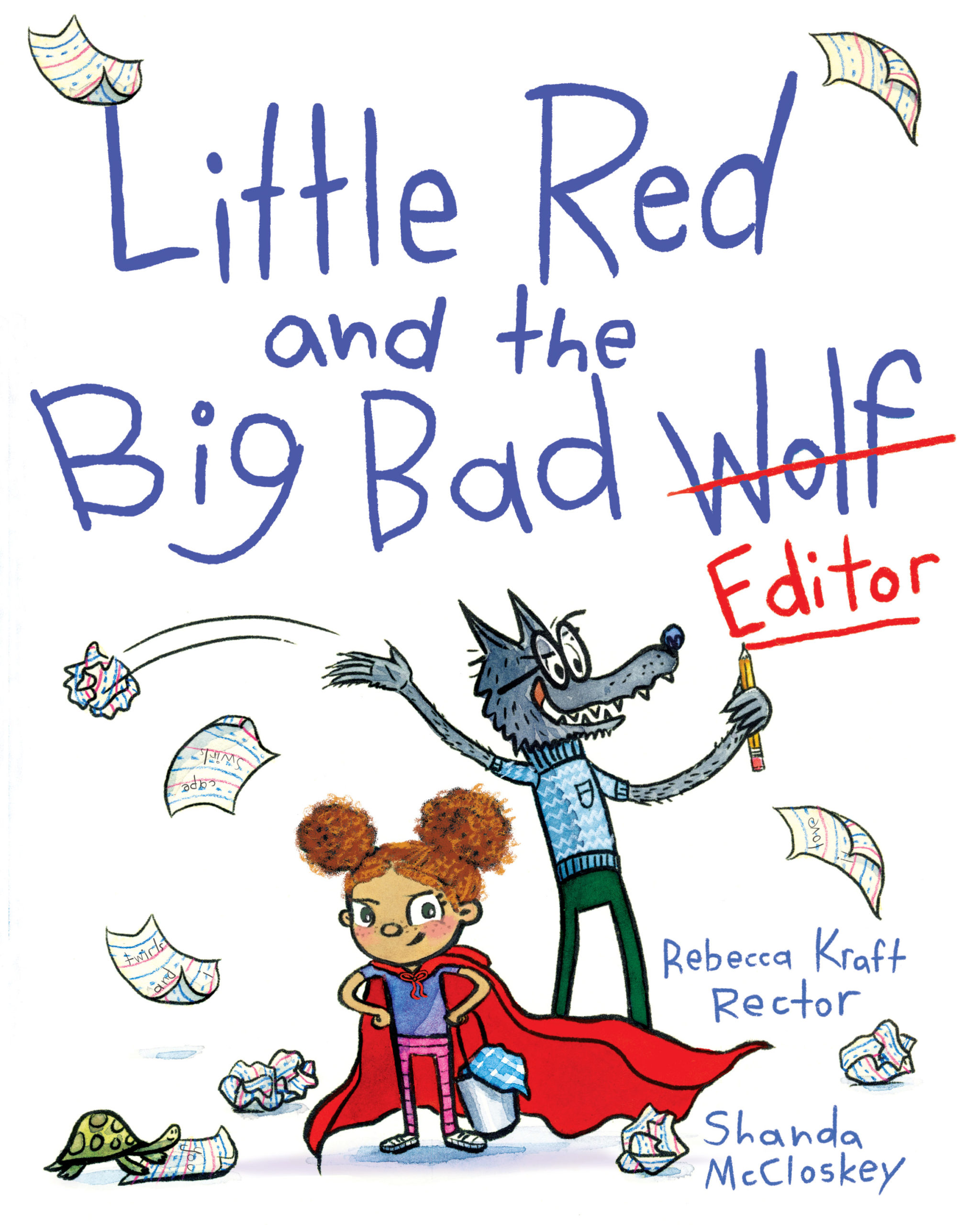
When I learned Shanda McCloskey would be illustrating my story LITTLE RED AND THE BIG BAD EDITOR, I was ecstatic. I knew her art would bring to life my story of the Big Bad Wolf correcting Little Red’s thank you letter to Granny. And I was right. The vibrant colors! The actions! The humor! I was so lucky to be paired with Shanda.

Then I learned Shanda, like me, had an educational background and she wanted to collaborate on an educator’s guide for LITTLE RED AND THE BIG BAD EDITOR. What a great idea! Many publishers and editors provide educator’s guides for their picture books.

There are so many ways to use picture books in classrooms from kindergarten on up. They’re rich in vocabulary and can have a higher reading level than many novels. They’re short and appealing to lower-level readers, ESL, and special needs students. For a generation that enjoys graphic novels and sharing pictures and stories on social media, picture books can be a familiar format. In fact, picture books often introduce new concepts and facts in an accessible way. They are an excellent entry point for all ages about topics that are difficult to understand or discuss.

But what about LITTLE RED AND THE BIG BAD EDITOR? Could we put together a useful educator’s guide for a fun story about correcting a heartfelt but poorly written letter? No problem! I’d done a basic guide for my first picture book SQUISH SQUASH SQUISHED and even produced a short video for a school librarian presentation. My brain was stuffed with methods for meeting curriculum standards after writing lesson plans, test passages, questions and answers for educational publishers.

I told Shanda “Yes!” and got to work.

Like Little Red, I whipped out my crayons (computer) and started writing. And like the Big Bad Wolf, I crumpled up those pages and threw them away. The Big Bad Wolf couldn’t fault me on my capitalization and finger spacing, but there were just too many elements that I wanted to include.

For instance, I could ask students to look for examples of characterization, plot, setting, theme, and story structure. They could practice story prediction by guessing what would happen in the story based on the cover and title.

So many possibilities for discussions and story prompts, too! Students could write their own stories by thinking about what happens before or after the story, or within the pictures. What was Little Red doing before the present arrived? What happened after the last page of the story? What about that little turtle, what’s his story?

Maybe I should focus on figurative language—the assonance, alliteration, similes, idioms, onomatopoeia, etc. in LITTLE RED. Find the simile: “Little Red was pleased as punch. Granny had sent her a present! Red ripped off the wrappings and removed a cape as scarlet as a ripe tomato.”

What about sequencing and cause and effect? Oh, we could use Shanda’s art for that! Which picture shows what comes first, middle, and last? Which picture shows what caused Little Red to write a thank you note?

And I couldn’t forget about compare/contrast! Both SQUISH SQUASH SQUISHED and LITTLE RED are “fractured” versions of folktales. SQUISH SQUASH SQUISHED is considered a modern version of both TOO MUCH NOISE and IT COULD ALWAYS BE WORSE. After reading an original version and the new version, students could compare/contrast the stories for all of the elements listed above, plus author’s voice and even author’s purpose. Younger students could compare/contrast the illustrations for the stories.

Shanda created awesome activities within a week. She even included practice sheets for writing letters and cursive writing. But after a month I still struggled with narrowing down all the possibilities.

Finally, I realized (why did it take me so long?!) that I couldn’t include everything. Some things would have to be left out. But we’re both really happy with the final product and would be thrilled if you’d take a look. It’s on my website https://rebeccakraftrector.wordpress.com and Shanda’s https://www.shandamc.com and here’s a direct link http://ow.ly/IHPC50KffBh.

Published September 6th, 2022 by Aladdin/Simon & Schuster

About the Book: In this clever and playful fractured fairy tale picture book, the Big Bad Wolf is so distracted by Little Red’s poorly written thank you note to her grandmother that he keeps missing the chance to eat her!

Once upon a time, Little Red received a bold new cape from her Granny. She wrote her a thank you note, packed a basket of goodies, and walked through the meadow to Granny’s house. But swish swash SWOOP, the big bad wolf stops her in her tracks, opens his mouth wide, leans in close and…​

Sees the note.

Mr. Wolf can’t believe how sloppy the letter is—Red can’t give this to Granny! He corrects her grammar but misses out on his dinner while he’s distracted each time he encounters Red on the path. Can she keep outsmarting the Big Bad Editor and make it all the way to Granny’s house?

About the Author: Rebecca Kraft Rector is a retired librarian and the author of more than thirty fiction and nonfiction books for children. Her cats Ollie and Opal keep her company while she writes. When she isn’t writing and eating chocolate, she’s trying to keep deer out of her garden.

LITTLE RED AND THE BIG BAD EDITOR is Rebecca’s second picture book, coming from Aladdin/Simon & Schuster on September 6, 2022.

Visit Rebecca online at https://rebeccakraftrector.wordpress.com

Thank you, Rebecca, for introducing us to your book and how useful it will be in classrooms and libraries!

What a Blast! Fart Games, Fart Puzzles, Fart Pranks, and More Farts! by Julie Winterbottom, Illustrated by Clau Souza

Share

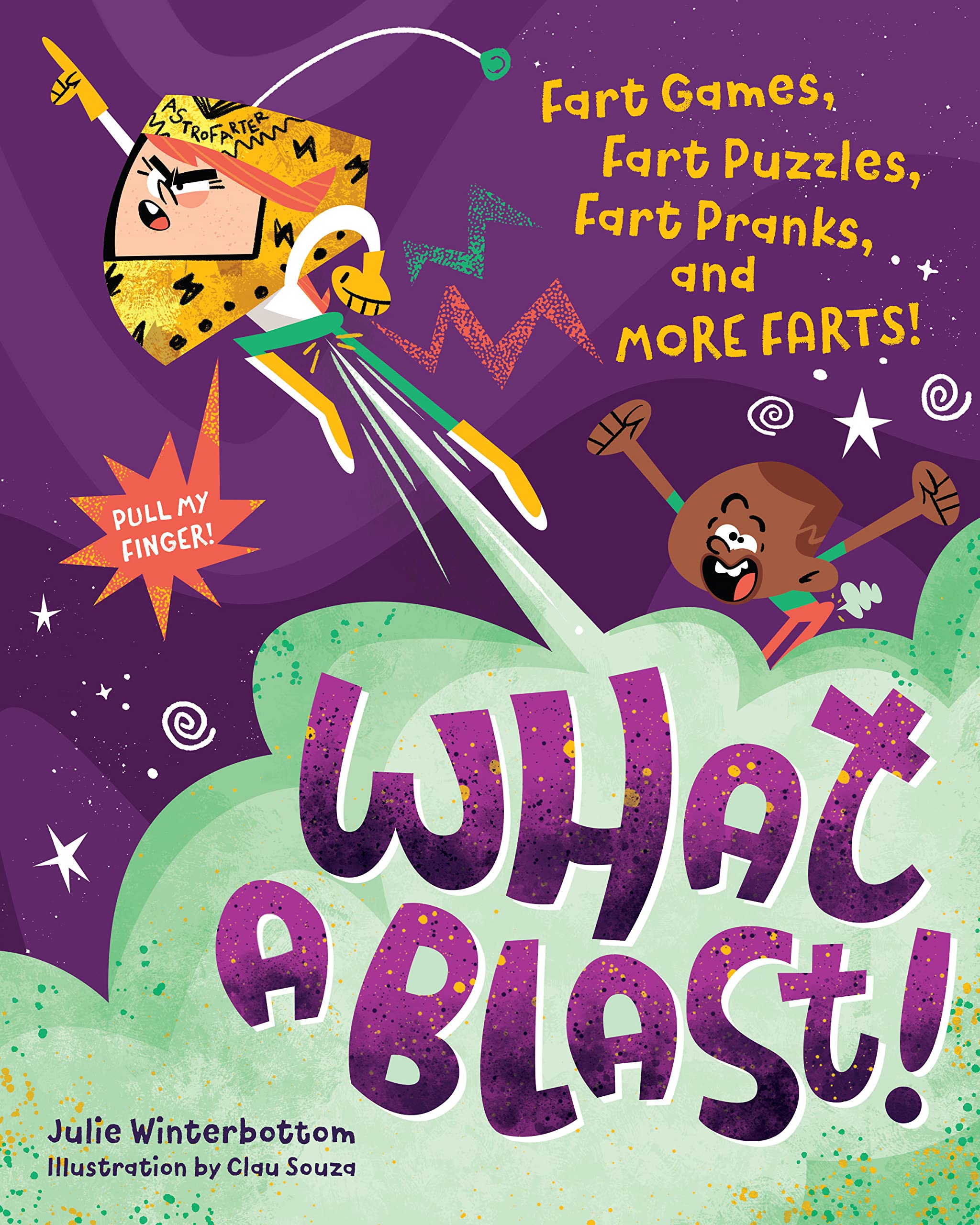
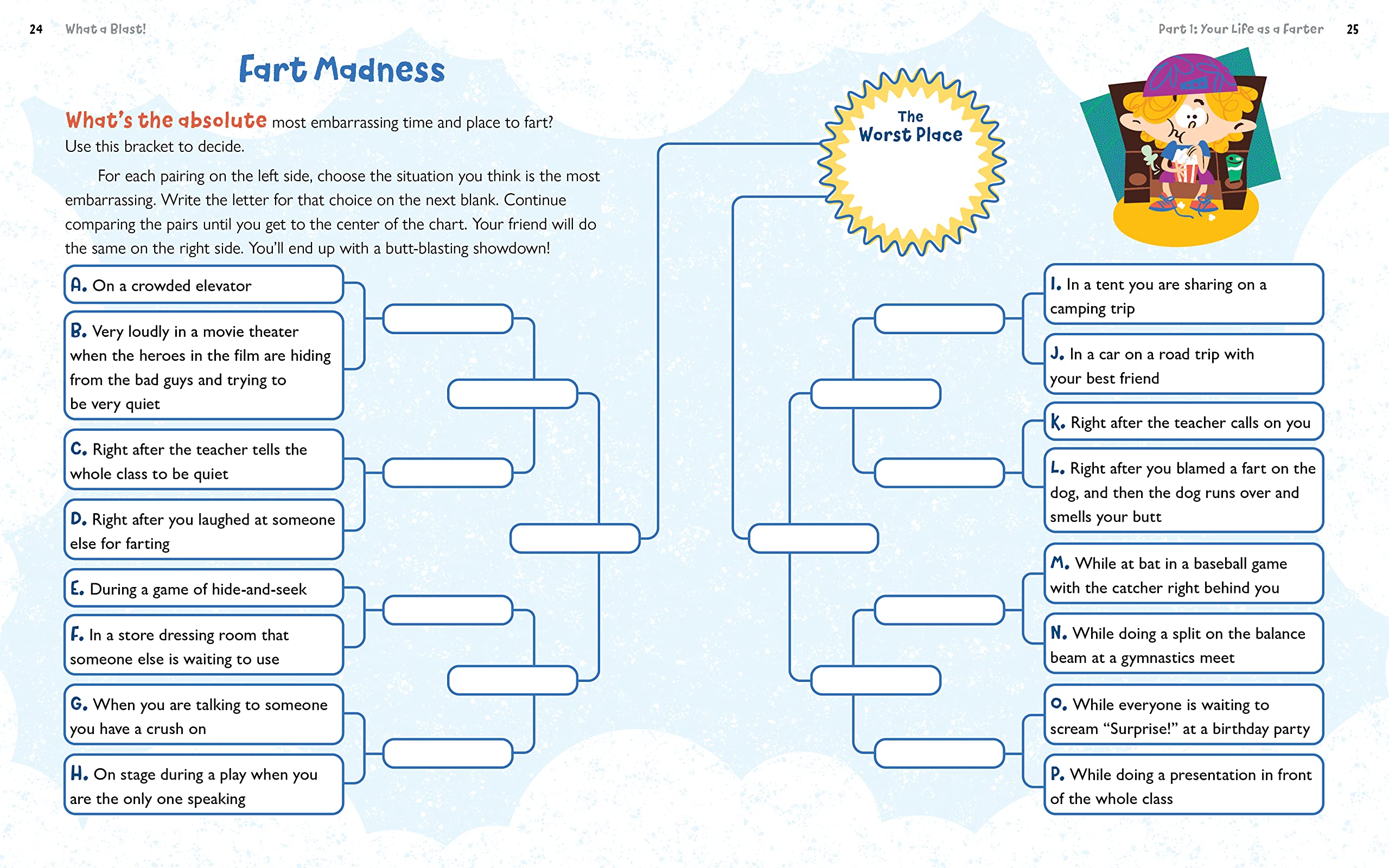
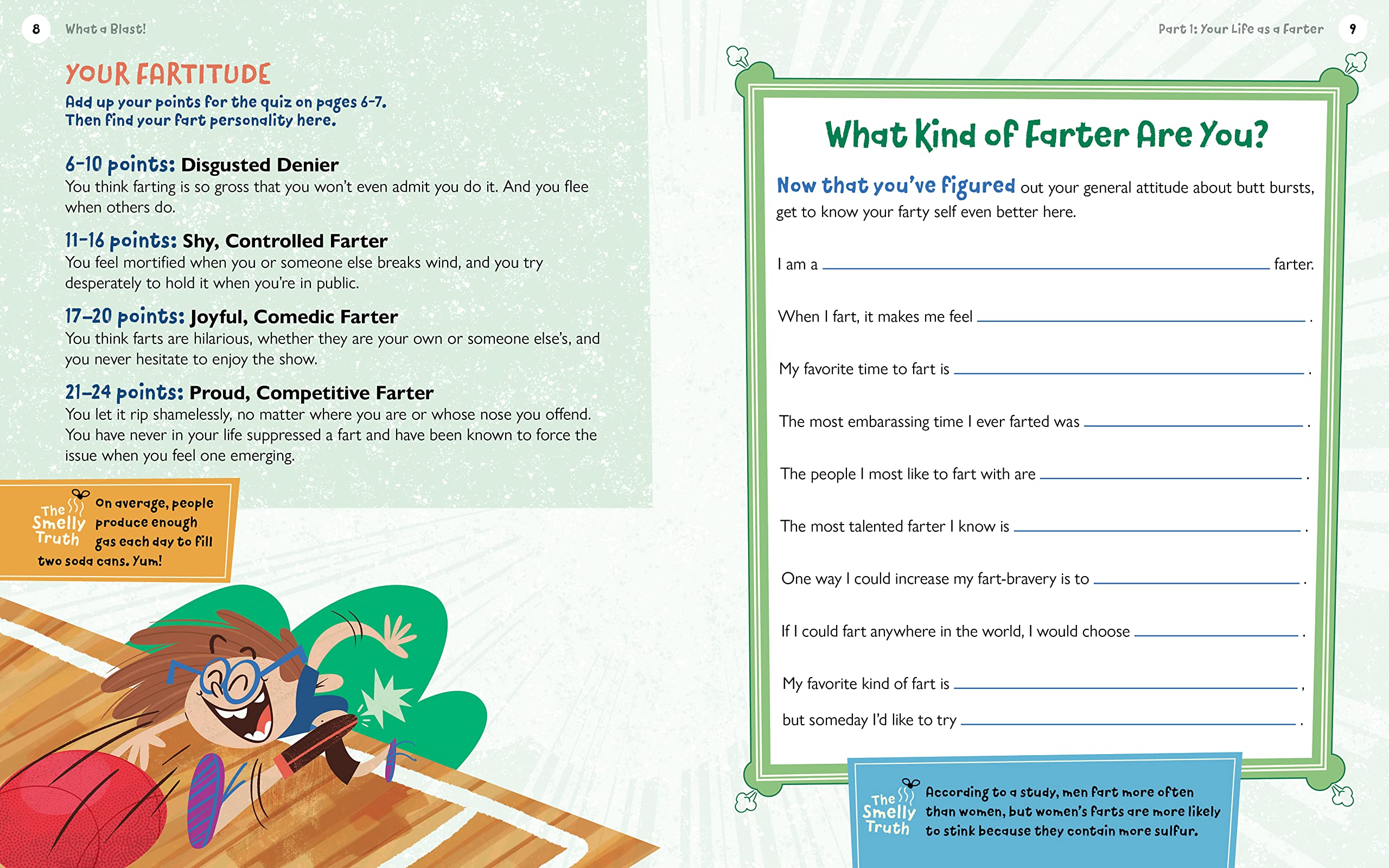
Summary: Squeakers, butt puffs, trumpets and “the destroyer”. Celebrate farts in all their hilarious, honking glory!

Con-fart-ulations! You’ve found the book that confirms your fine appreciation for the fact that nothings funnier than a little pfffftt from someone’s butt. Cheerfully over-the-top, packed with activities, and grounded in the science of flatulence, What a Blast! Is a trip through the body’s digestive system to explore the whys, hows, and wherefores of farting. You’ll discover the fartiest food in the world, meet infamous farters from history, learn just what to say if you fart in public—“Yeah, you heard me!—and so much more!
Have fun with farts!

  • Solve the question of who farted?
  • Discover your gastrological sign.
  • Play free the fart through an intestinal maze.
  • Learn how to make elbow farts, hand farts, and armpit farts.
  • Throw a farty party.
  • And get creative with funny fill-in stories, like a fart to remember

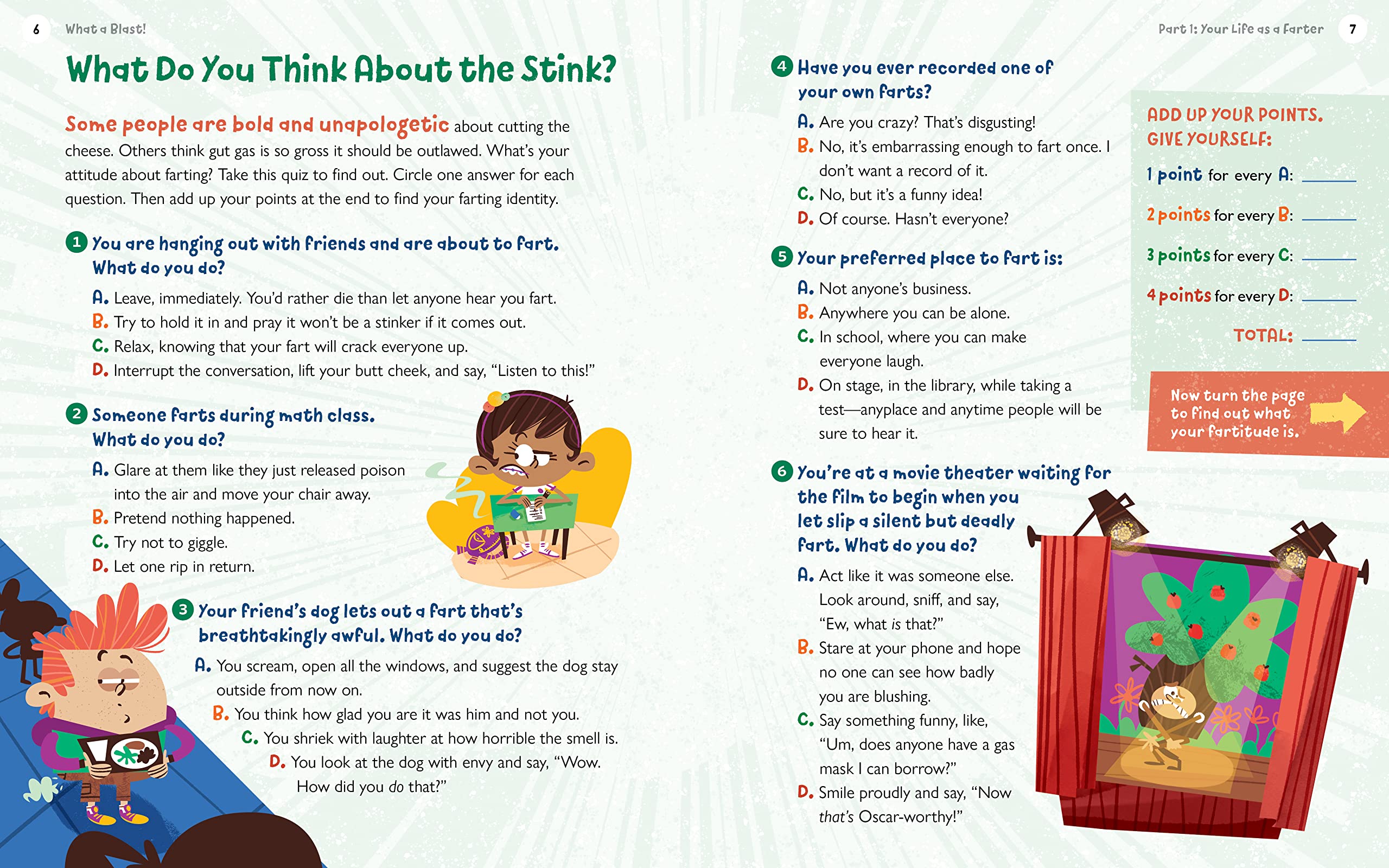
Ricki’s Review: I should really get my three sons to review this book. They have had such a blast (pun intended) doing the workbook. Parents and teachers, if you want to get kids excited about reading and writing, this book will do it. I can’t tell you how many giggles this book has brought our family. I have to admit that I even giggled behind my hand. I can’t recommend this workbook highly enough—it is cleverly crafted and full of amazing reading and writing opportunities for kids. It has open-ended questions, quizzes, brackets, puzzles, games, etc.

We Flagged:

**Thank you to Claire and Ivanka from Workman for providing a copy for review**

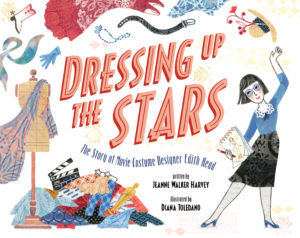
Dressing Up the Stars: The Story of Movie Costume Designer Edith Head by Jeanne Walker Harvey, Illustrated by Diana Toledano

Share

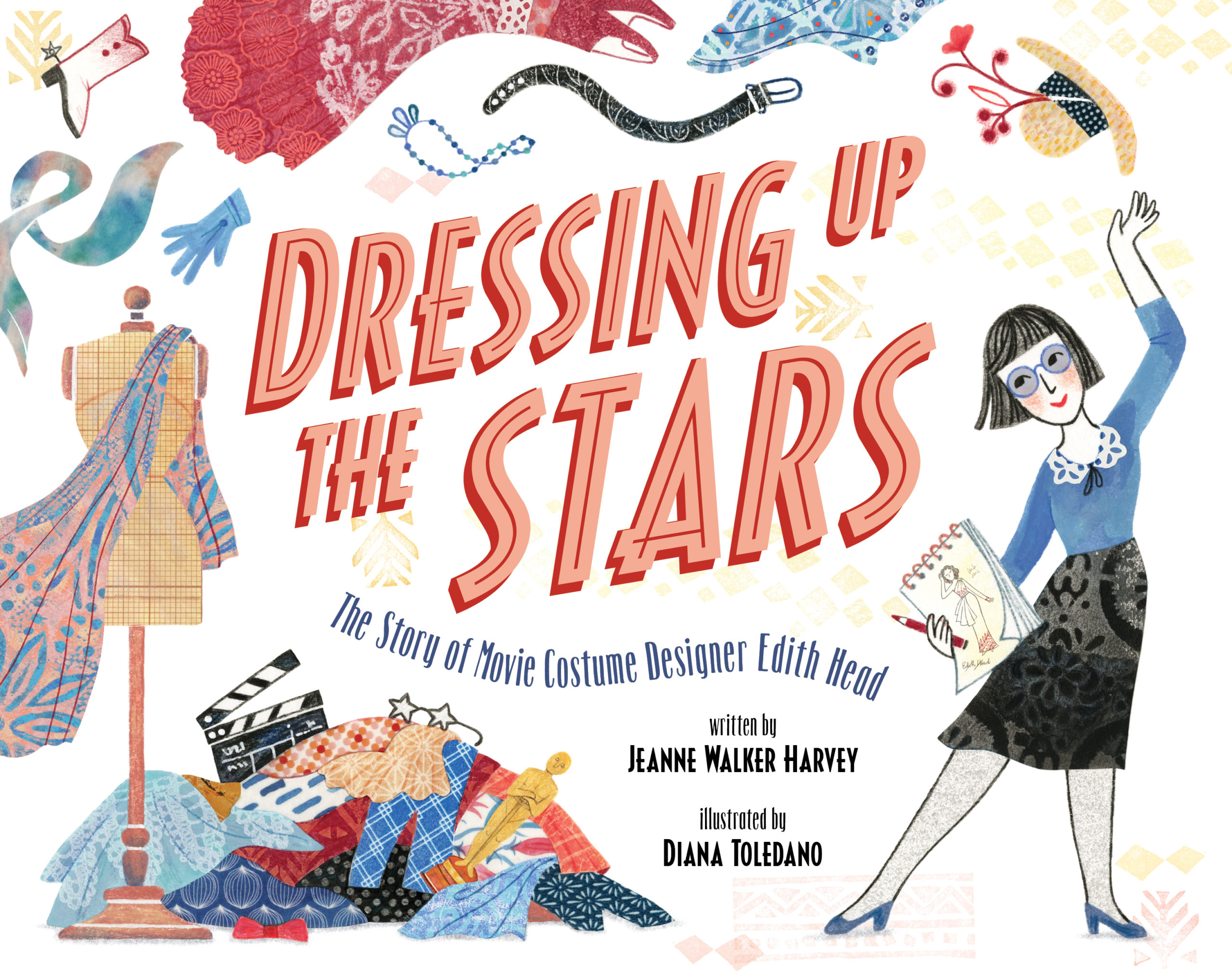
Dressing Up the Stars: The Story of Movie Costume Designer Edith Head
Author: Jeanne Walker Harvey
Illustrator: Diana Toledano
Published September 20th, 2022 by Beach Lane Books

Summary: Discover the true story of how a shy miner’s daughter became one of the most legendary costume designers in Hollywood in this inspiring nonfiction picture book biography.

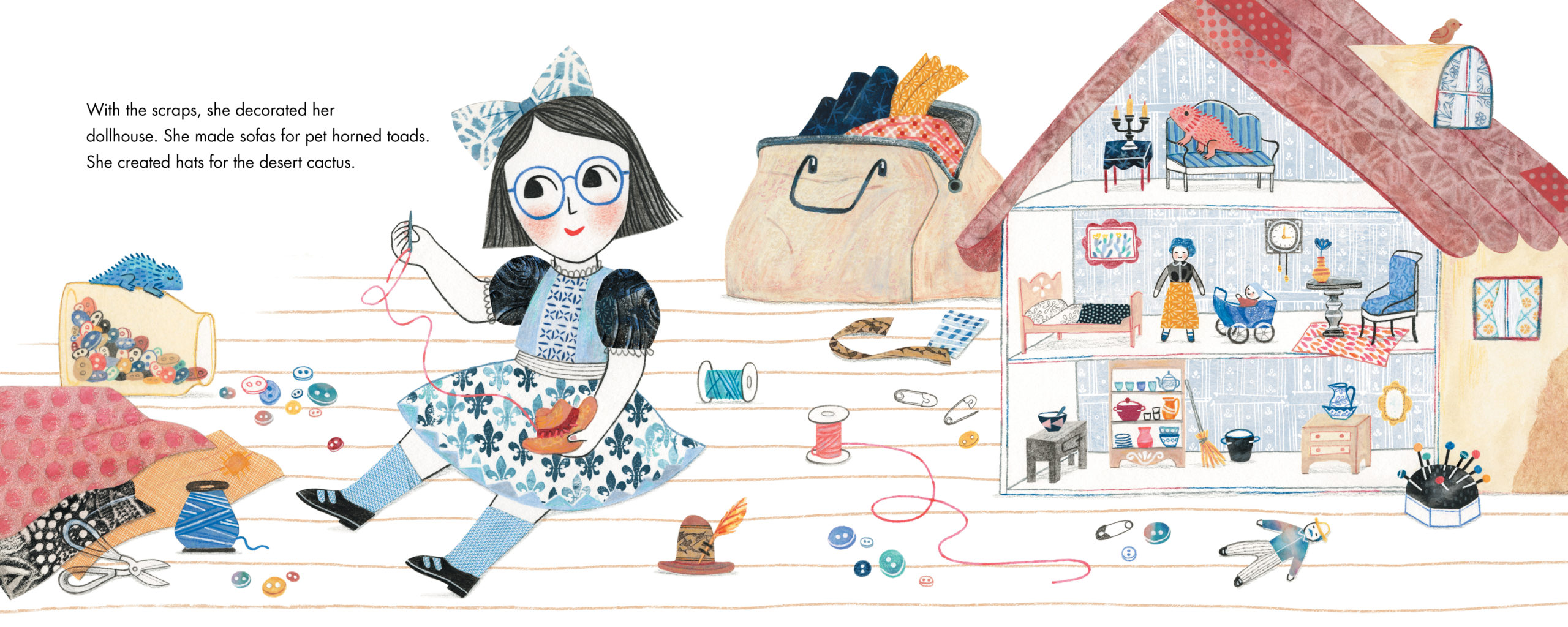
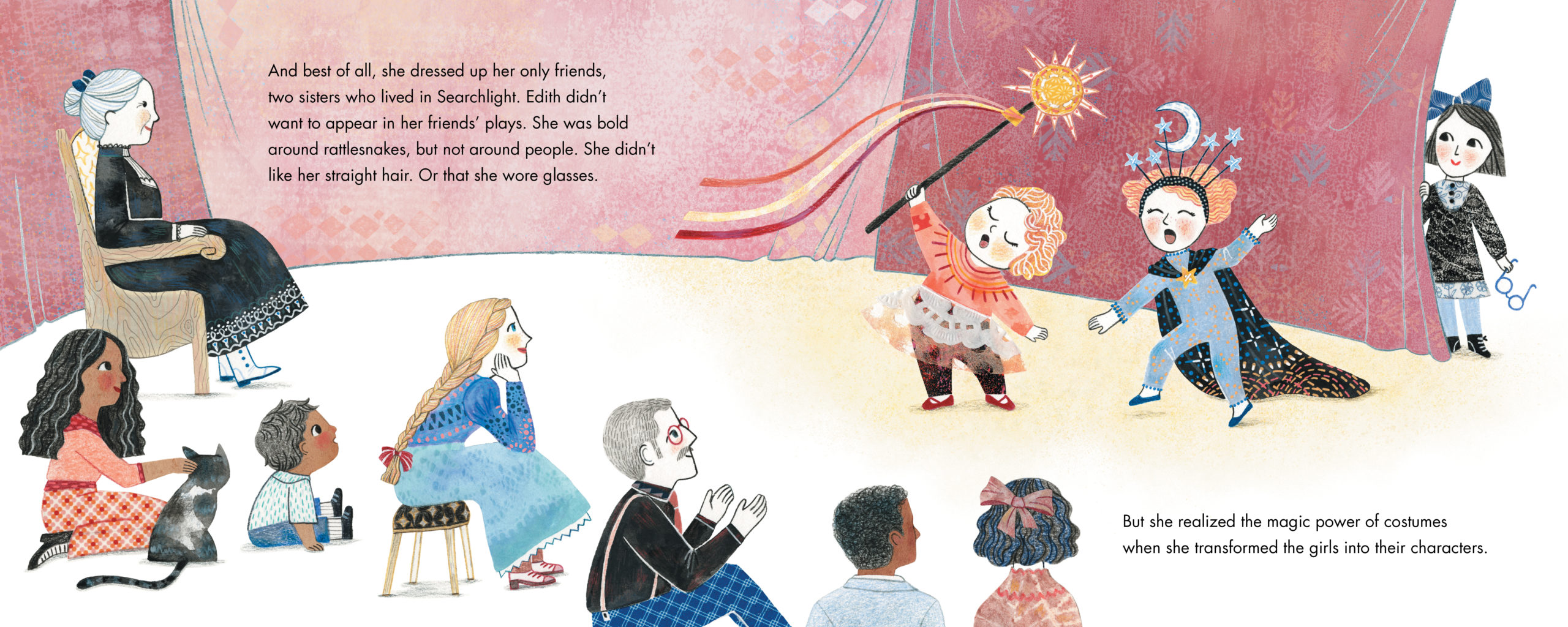
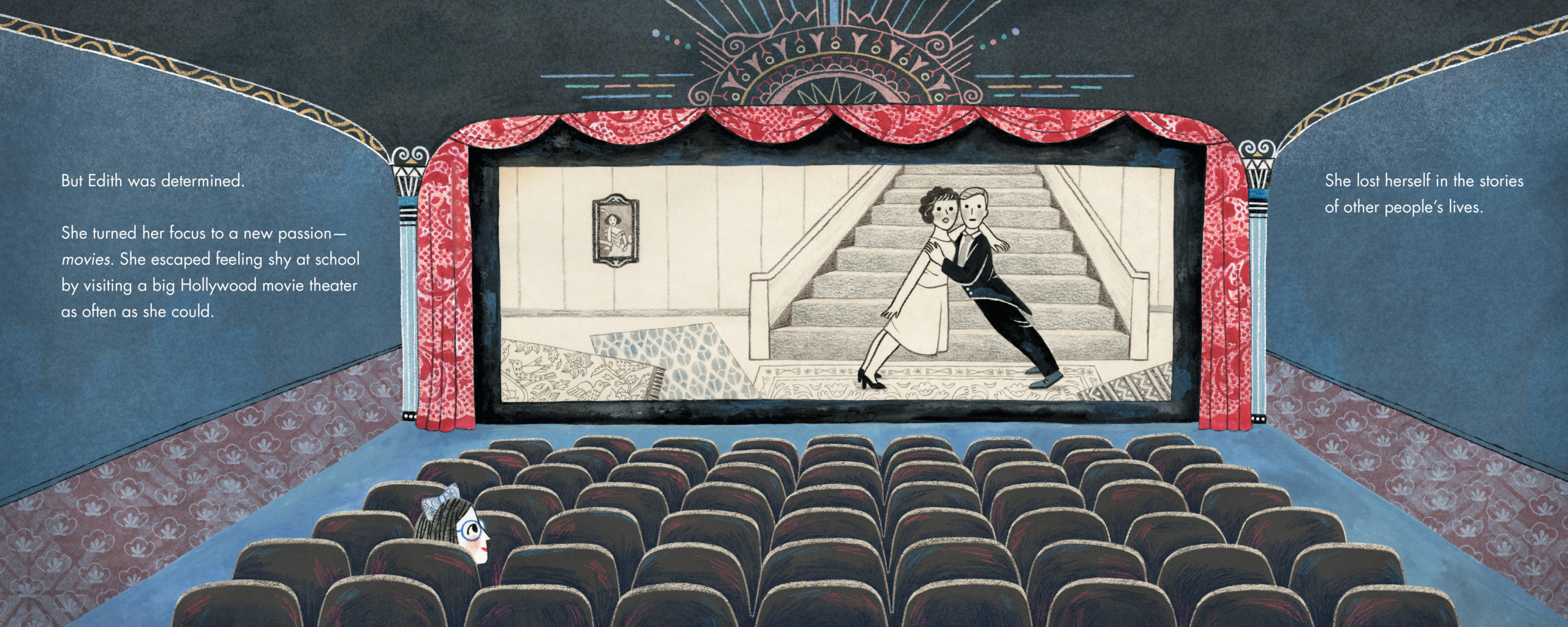
As a child in the small mining town of Searchlight, Nevada, Edith Head (1897 – 1981) had few friends and spent most of her time dressing up her toys and pets and even wild animals using fabric scraps. She always knew she wanted to move somewhere full of people and excitement. She set her sights on Hollywood and talked her way into a job sketching costumes for a movie studio.

Did she have formal training? Did she know how to draw or sew costumes? No. But that didn’t stop her!

Strong and determined, Edith taught herself how to sew and tirelessly worked her way up until she was dressing some of the biggest stars of the day. These included Audrey Hepburn, Grace Kelly, Ginger Rogers, and Elizabeth Taylor. She made costumes for films like Sabrina and Rear Window and TV shows like Bewitched. She also designed costumes for many of Alfred Hitchcock’s movies, including To Catch a ThiefNotorious, and The Trouble With Harry. She became the first woman to head a major Hollywood movie studio costume department and went on to win eight Academy Awards for best costume design—and she defined the style of an era.

By ultimately becoming one of Hollywood’s most sought-after designers, Edith Head proved that with tenacity, anything is possible. This insightful behind-the-scenes look at the iconic figure is a must-have for cinephiles, history buffs, and fashionistas alike.

FUN FACT! Edith served as the inspiration for the iconic character Edna Mode in the Pixar film The Incredibles! With her classic hairstyle and glasses, Edith will be recognizable as the inspiration for Edna to the observant reader.

Praise:

* “Together, the art and storytelling capture Head’s belief in the transformative magic of costumes, which will certainly strike a chord with dress-up enthusiasts.” — ALA Booklist (STARRED review)

“Toledano’s mixed-media artwork… combined with starry-eyed prose, the result is a glamorous life story with a Hollywood ending.” — Publishers Weekly

About the Creators: 

Jeanne Walker Harvey studied literature and psychology at Stanford University and has worn many job hats, ranging from being a roller coaster ride operator to an attorney, a middle school language arts teacher, and a long-time docent for school groups at the San Francisco Museum of Modern Art. She is the author of several books for young readers, including the picture book biographies Dressing up the Stars: The Story of Movie Costume Designer Edith HeadAblaze with Color: A Story of Painter Alma Thomas, and Maya Lin: Artist-Architect of Light and Lines. Jeanne lives in Northern California. Visit her online at JeanneHarvey.com.

Twitter: @JeanneWHarvey
Pinterest: @JeanneWalkerHarvey
Check out the many resources here at Jeanne Walker Harvey’s website!

Diana Toledano is an illustrator, writer, and educator. She is also a Pisces who loves children’s books, patterns, and dancing her heart out. Originally from Spain, Diana (pronounced the Spanish way: dee-ah-na) grew up in Madrid where she studied art history and illustration. Now she lives in San Francisco with her husband and two fluffy cats. Her mixed media art seeks to capture the magic of the ordinary. Diana’s product designs, picture books, board books, and chapter books have been published and sold all over the world. Diana also teaches workshops for kids and adults. She enjoys doing school visits and speaking at conferences. Learn more at Diana-Toledano.com.

Instagram: @dianatoledano
Facebook: Diana Toledano
Pinterest: Diana Toledano

Review: As a fan of old Hollywood, I recognized Edith Head’s costumes right away. I mean–Grace Kelly in Rear Window, Audrey Hepburn in Breakfast at Tiffany’s, Tippi Hedren in The Birds, Fred Astaire in Holiday Inn, Elvis Presley in Blue Hawaii–anyone?!? And this is just the tip of the iceberg of Head’s designing. She was nominated for an Academy Award THIRTY FIVE times and won EIGHT making her the most awarded woman in the Academy’s history. But yet, she was behind the scenes and not as well known as the actors in front of the camera, so I am so happy to have this picture book biography to bring to light her genius. A self-taught young woman with no experience fighting her way up to being an Oscar winner–yes, please! Harvey does a fantastic job of sharing Edith’s magic from her childhood dreams to her adult reality and Toledano’s illustrations work perfectly for Edith’s style and costumes.

Teachers’ Tools for Navigation: 

Check out the publisher-provided activity kit for some fun activities to do with the book:

Discussion Questions: 

  • What does Edith’s journey to her dream job teach you about growth mindset?
  • How did Edith’s hobbies as a child help her reach her dreams?
  • Why do you think Edith chose to wear black or other dark, neutral colors when dressing stars?
  • How does a costume designer impact a movie or show?
  • Why do you think Edith was given a second chance after she failed to create costumes for dancers dressed as candy?
  • How do you think Edith grew her confidence overtime so much that she was able to not allow nay-sayers to make her question herself?
  • What are some words in the book that you did not know? What do you think they mean based on context? Check your guess by looking ups its definition.
  • How does the Author’s Note at the end of the book add to the book experience?

Book Trailer: 

The trailer can also be viewed on the author’s website:
https://www.jeanneharvey.com/dressingupthe-stars

Flagged Passages: 

Read This If You Love: Nonfiction biography picture books, specifically about groundbreaking women, including Harvey’s books on Maya Lin and Alma Thomas

Recommended For: 

classroomlibrarybuttonsmall 

Signature

**Thank you to Alex at Simon & Schuster and Barbara at Blue Slip Media for providing a copy for review!**

It’s Monday! What Are You Reading? #IMWAYR 10/3/22

Share

It’s Monday! What Are You Reading?
Sharing Picture Books, Early Readers, Middle Grade Books, and Young Adult Books for All Ages!

It’s Monday! What Are You Reading? is a weekly blog hop co-hosted by Unleashing Readers and Teach Mentor Texts which focuses on sharing books marketed for children and young adults. It offers opportunities to share and recommend books with each other.

The original IMWAYR, with an adult literature focus, was started by Sheila at Book Journeys and is now hosted by Kathryn at The Book Date.

We encourage you to write your own post sharing what you’re reading, link up below, leave a comment, and support other IMWAYR bloggers by visiting and commenting on at least three of the other linked blogs.

Happy reading!

Bold_line

Tuesday: Haven Jacobs Saves the Planet by Barbara Dee

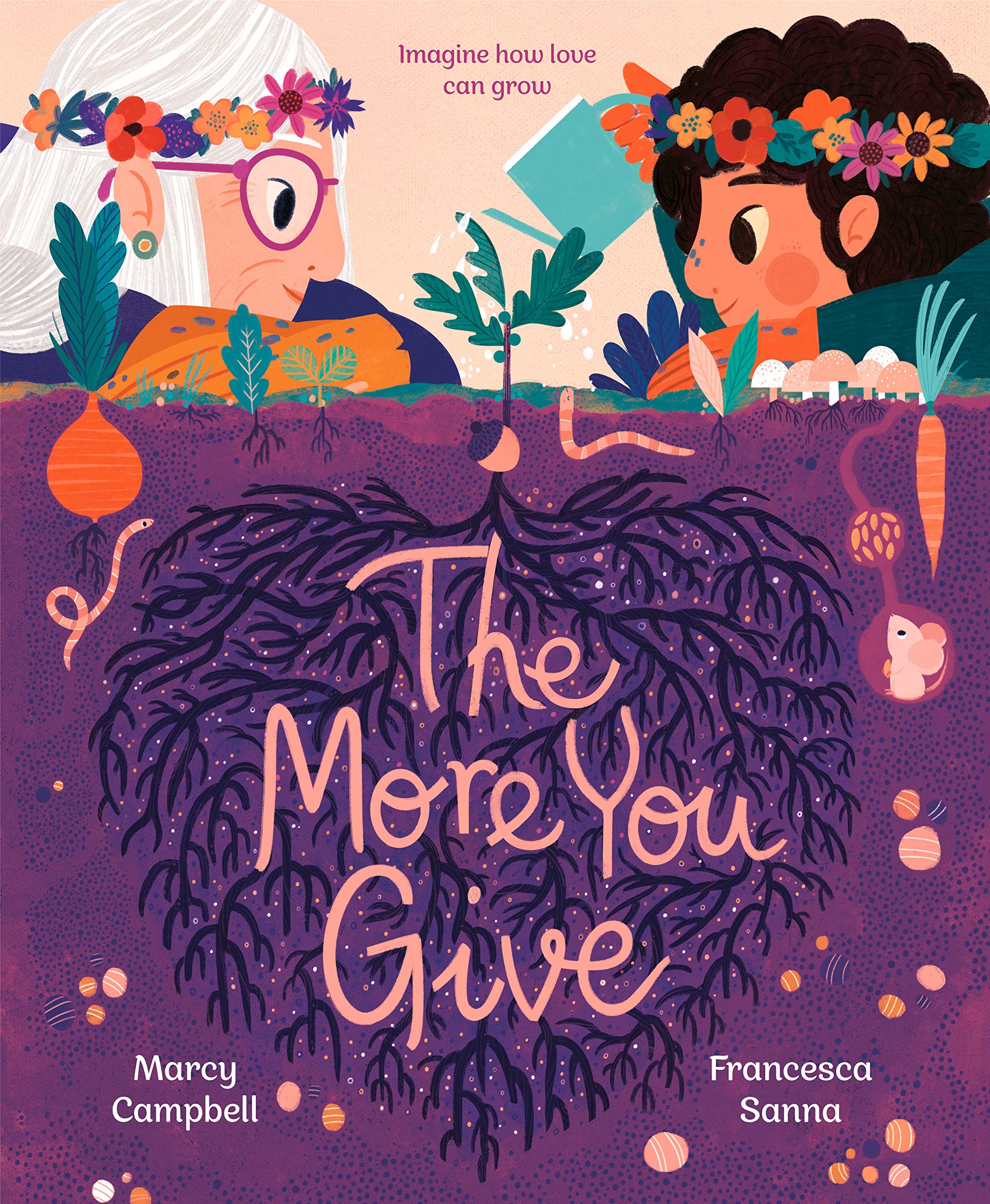
Thursday: The More You Give by Marcy Campbell, Illustrated by Francesca Sanna

Saturday: Guest Review: Last Stop on Market Street by Matt de la Peña, illustrated by Christian Robinson

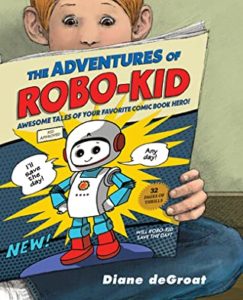
Sunday: Author Guest Post by Diane deGroat, Author of The Adventures of Robo-Kid

**Click on any picture/link to view the post**

Bold_line

Kellee

I am off this week. I’ll see you next week!

Ricki

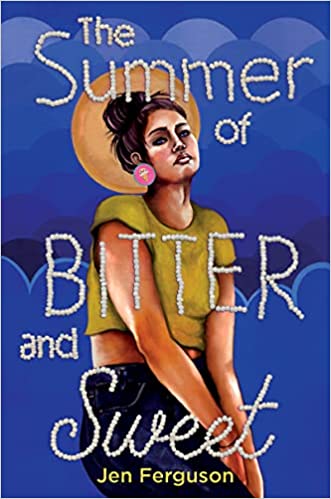
The Summer of Bitter and Sweet by Jen Ferguson is an incredibly powerful book. I had such a strong visceral reaction to a scene that I had to run to the bathroom to throw up. The writing hit me really hard. I won’t ever forget this story.

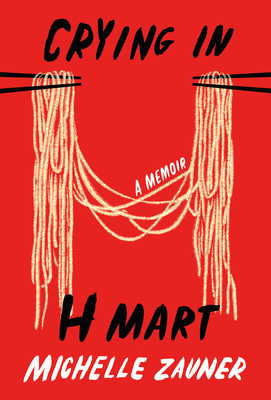
I read this book for my book club, and I cried (a lot). Michelle Zauner’s Crying in H Mart is a beautifully written memoir about the relationship between Zauner and her mother—and the devastation she experiences when her mother passes on.

Bold_line

Ricki

My book club is deciding between the two above books. I am rooting for the YA book, of course. 🙂 I’ll read something else next week, but I wanted the space to be able to jump to whatever book strikes me tonight!

Bold_line

Tuesday: Dressing Up the Stars: The Story of Movie Costume Designer Edith Head by Jeanne Walker Harvey, Illustrated by Diana Toledano

Thursday: What a Blast! Fart Games, Fart Puzzles, Fart Pranks, and More Farts!

Sunday:  Author Guest Post: “Little Red and the Big Bad Educator’s Guide” by Rebecca Kraft Rector, Author of Little Red and the Big Bad Editor

Bold_line

Link up below and go check out what everyone else is reading. Please support other bloggers by viewing and commenting on at least 3 other blogs. If you tweet about your Monday post, tag the tweet with #IMWAYR!

 Signature andRickiSig