Author Guest Post: “The Whole Book Approach” by Diane deGroat, Author of The Adventures of Robo-Kid

Share

The Whole Book Approach to The Adventures of Robo-Kid

The Whole Book Approach to story time reading was developed by Megan Dowd Lambert in association with the Eric Carle Museum of Picture Book Art to “bring children’s ideas and questions to the center of shared reading while celebrating the picture book as a visual form.” Yes, it’s a mouthful, but when witnessed in action, it becomes an exciting way to share picture books with children by drawing inspiration from Visual Thinking Strategies (www.vtshome.org). As Megan says in the preface to her book, Reading Picture Books with Children: How to Shake Up Storytime and Get Kids Talking About What They See (Charlesbridge 2015), we should invite children to react to “the whole book­”—its text, art, design, production, and materiality.

How have the designers tested the limits of its “bookness?” Not only does it have shape and weight and visual appeal, but it is mobile. It can be opened and closed. It is an object, not just a story to be listened to. In this day of eBooks and streaming, a printed book is an art form which has staying power. Children can engage with great picture book art and critical thinking skills when the discussion starts before reading the book, continues after reading it, and, importantly, includes a large amount of discussion during the reading of the book. Studies have found that this dialogic reading enhances comprehension, engagement, vocabulary, and literacy skills. More information about the Whole Book Approach can be found on Megan’s website: www.megandowdlambert.com.

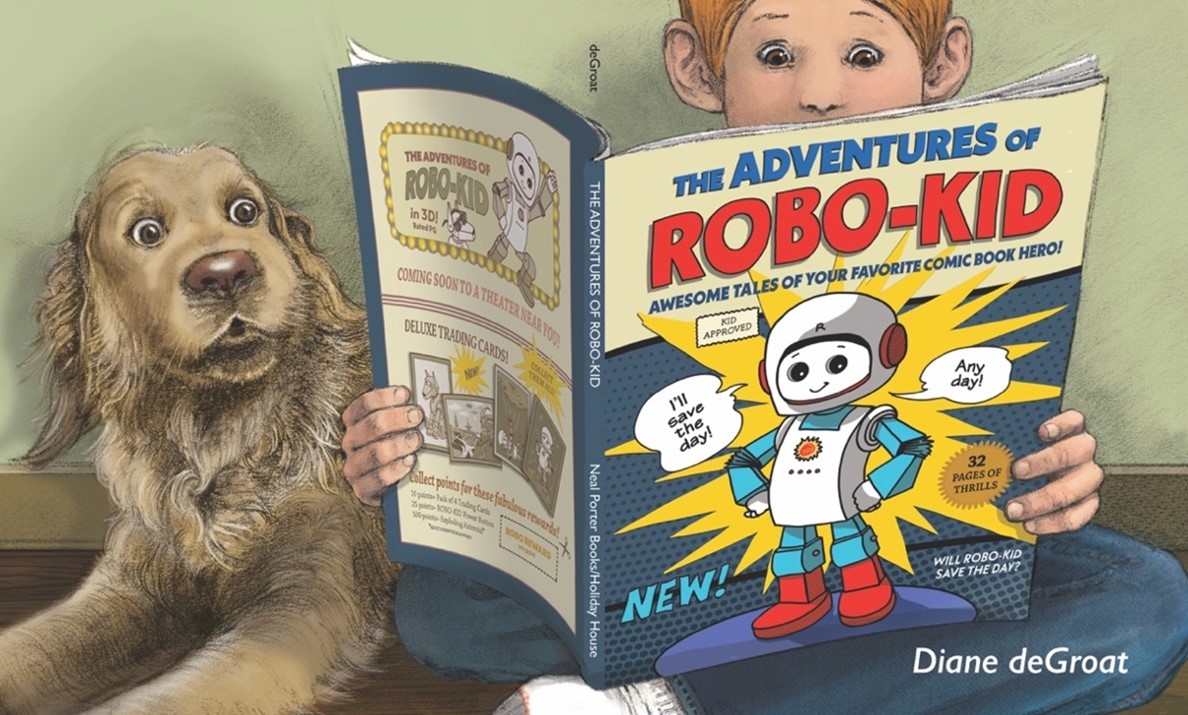
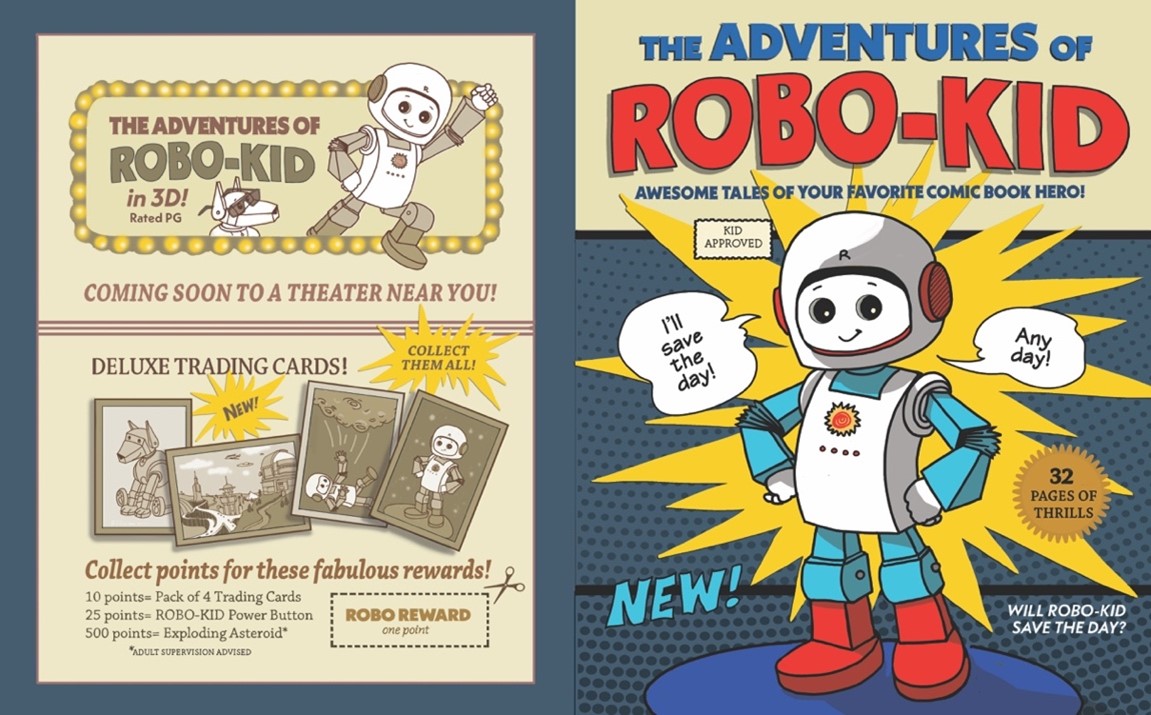
Now for an example. I designed my new book, The Adventures of Robo-Kid with all of the above in mind. Take a look at the dustjacket and start with questions inspired by Visual Thinking Strategies: What do you see happening in this picture? What do you see that makes you say that? What else can you find? Then consider, what do you think the book will be about? Notice the two styles of art I used. One is realistic and the other is cartoony. Why do you think I did It that way?

Turn the book over and look at the back of the book. Notice that I made one continuous illustration wrap around from the front to the back. Why do you think I did that? What do you think will be more important in the book—the realistic part or the comic part? Or will they be equally important?
Take the paper dustjacket off. Look at the art pasted onto the hardcover underneath it and compare it to the dustjacket. See the difference? Do you feel like you are reading a comic book now, and not a picture book? That was my goal! Why do you think I did that?
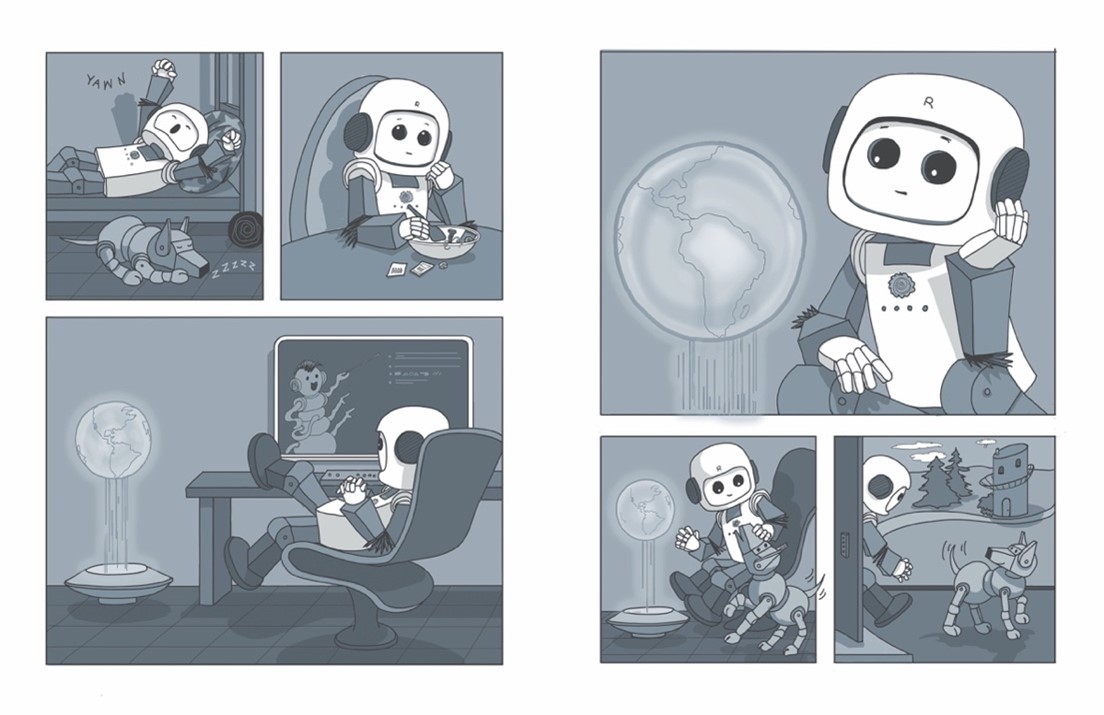
Now open to the front endpapers. Megan says in her book, “Endpapers give us clues.” My endpapers introduce us to Robo-Kid and his dog even before the story has begun. Go back to using those VTS-inspired questions, or ask yourself: How does Robo-Kid get schooled? Why do you think he’s looking at the Earth globe with so much interest? What do you think his dog wants? If you miss seeing all this, the story inside the book still makes sense, but adding endpapers like this offers more material for the person/child who finds it to enjoy as the enter the story.
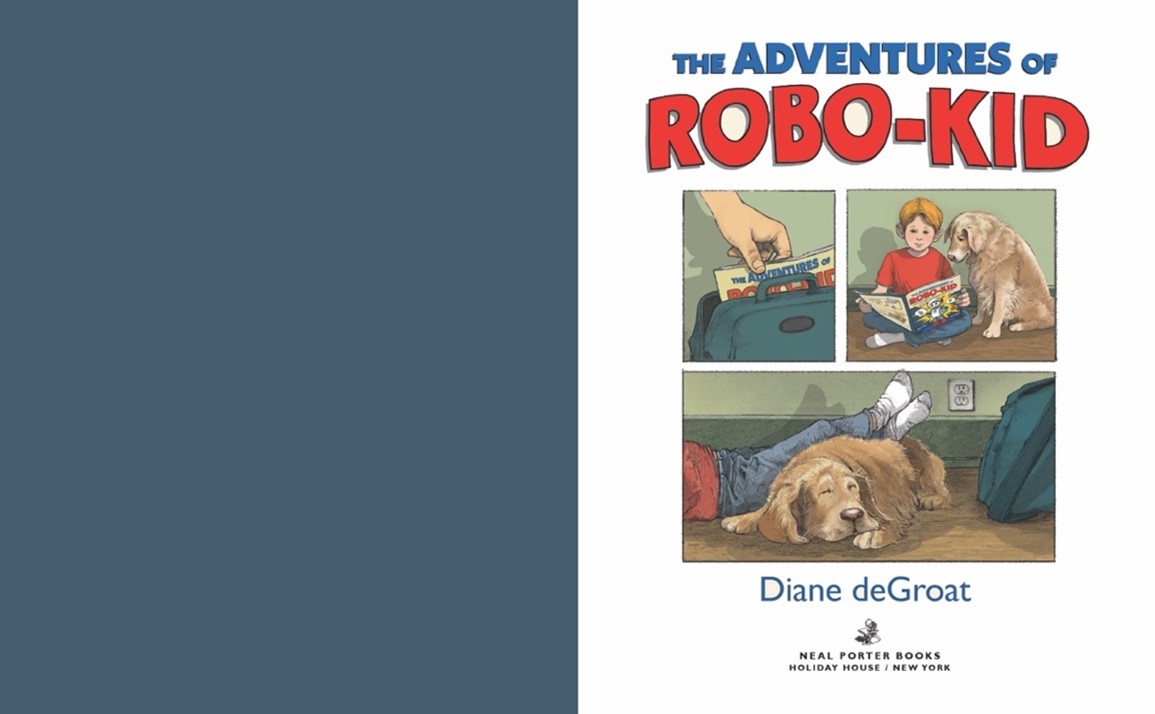
On the next spread, the title page will introduce us to Henry and his dog in my realistic style of art. So now you see why I used two styles—one for the comic book story and one for the “real” world story. But can you still find what is the same about the two characters and their worlds?
When you start to read the story you can see how I melded the two worlds into one book. Henry is engaged in reading his Robo-Kid comic. The comic art shows what he is reading.
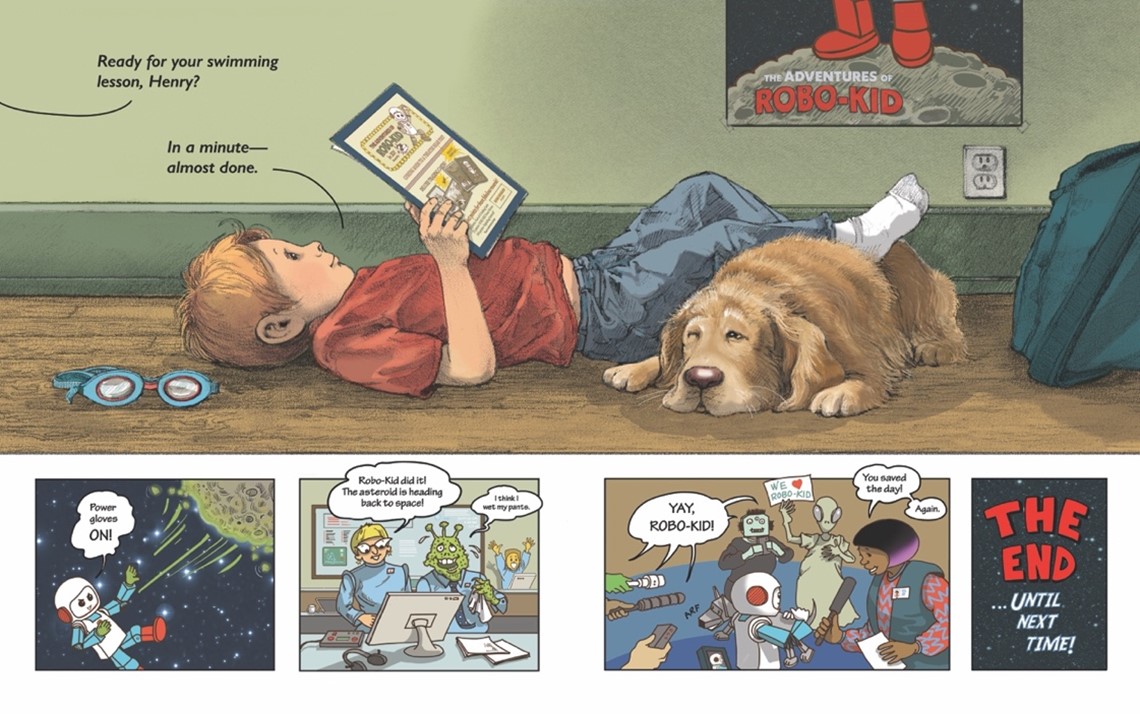
The two stories will continue on spreads, with Henry’s at the top, and Robo-Kid’s below it—until they come together!

After the book was printed, and I read it to kids, I learned an important lesson. When reading a comic-type book to non-readers, it’s important to point to the panel and the text you are reading. Otherwise, showing the whole spread with so many different actions going on could be confusing.

I hope you can share this book with your students using the Whole Book Approach. Remember to look carefully at the art. Especially the very last page with Henry’s dog. What does he see that the others don’t? And don’t miss the back endpapers, which continue the story!
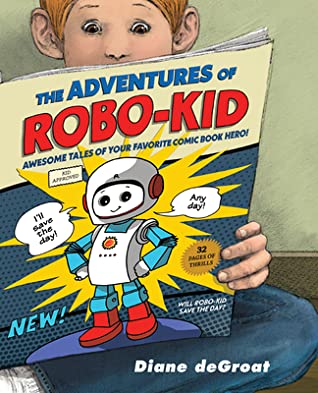
Published June 28, 2022 by Neal Porter Books

About the Book: A comic-book superhero climbs off the page and into the real world. When they get into trouble, his biggest fan is there to save the day.

Imagine you could meet your favorite comic-book hero in the real world. What kinds of questions would you ask? Would you go on new and exciting adventures? While heroes might seem larger than life, everyone can use some help from a friend.

Follow two intersecting stories set in the real world and inside a comic book as a real-life kid finds the courage to cope with his anxiety with the help of Robo-Kid, a comic superhero with his own vulnerabilities. With two distinctive art styles blending comic book and traditional picture book formats, Diane deGroat’s The Adventures of Robo-Kid is an inspiring tale about what it takes to be a hero.

Diane deGroat has been writing and illustrating picture books for more than thirty years. For the last ten years she has been illustrating the highly popular Charlie the Ranch Dog series with blogger, author, food-writer, and television personality Ree Drummond, also known as the Pioneer Woman.

About the Author: 

Diane deGroat
www.dianedegroat.com
www.thestorybehindthestories.com

Thank you, Diane, for this in depth look at using your book with readers!

Guest Review: Last Stop on Market Street by Matt de la Peña, Illustrated by Christian Robinson

Share

Guest Reviewer: Amanda & Sendy, UCF Elementary Education Student

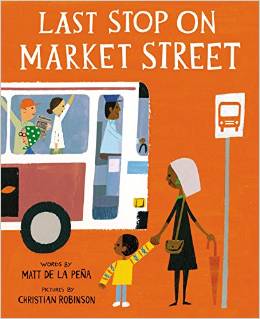
Last Stop on Market Street
Author: Matt de la Peña
Illustrator: Christian Robinson
Published January 8, 2015 by Penguin Books

Summary: “Sometimes when you’re surrounded by dirt, CJ, you’re a better witness for what’s beautiful.”

CJ begins his weekly bus journey around the city with disappointment and dissatisfaction, wondering why he and his family can’t drive a car like his friends. Through energy and encouragement, CJ’s nana helps him see the beauty and fun in their routine.

This beautifully illustrated, emotive picture book explores urban life with honesty, interest, and gratitude.

Last Stop on Market Street is a story about appreciating differences, happiness, and inequity. CJ and his Nana take the bus to its last stop on Market Street every Sunday after Church. On the Sunday this book is set on, CJ begins to wonder why they must wait in the rain for the bus instead of buying a car. Nana enlightens him by giving him different ways of appreciating what they have, what they do in their everyday lives, and all the types of people they meet. The theme of the novel is Nana showing CJ the value in how they live their lives and helping those who need it.

Last Stop on Market Street has won multiple awards and spent time at the number one spot in the New York Times Bestseller List.

About the Author: Matt de la Peña is the #1 New York Times-bestselling. Newbery Medal-winning author of five picture books and six critically acclaimed young adult novels.  He was also awarded the NCTE Intellectual Freedom Award and received his MFA in creative writing from San Diego State University. He is currently living in Brooklyn, NY with his family.

About the Illustrator: Christian Robinson has received a Coretta Scott King Illustrator Honor for his art in Last Stop on Market Street. He was born in Hollywood, California. He was awarded a Caldecott Honor and the Newbery Medal

Review: Last Stop on Market Street is a stunning contribution to art in children’s literature and the future of book of storytelling. This novel reveals the creative potential of a powerful cross-cultural author-illustrator partnership. The art combined with the theme of the novel embraces the diversity in ourselves and everyday routine but others.

This book is such an amazing book! It is easy to see the bad that goes on in our lives, and things that we do not like, but this book is a great reminder to see the good in those situations that it is difficult to. I would recommend “The last stop on Market Street” to every teacher and parent to read to their children and/or have them read it themselves.

Throughout this book, a little boy named CJ had many questions. He did not like riding the bus or going to the soup kitchen after church and always questioned why he didn’t have certain things. Nana always had a clever response and see’s the brighter side to every situation. CJ learns this from her and begins to see it too allowing him to feel more confident and happier about his situations.

Just as adults need these reminders that your life is just as good as your mindset, it is good to instill it into our children as well. If they grow up feeling like they don’t have enough, it will transfer into adulthood. This is an amazing book that brings an amazing lesson to all ages. There’s beautiful in even the ugliest things

Teachers’ Tools for Navigation: This book is perfect to teach students about acceptance and the importance of helping others in need. As CJ ends his bus ride with his Nana, he goes to work at a soup kitchen which enables him to understand how he gives back to his community.

Also, it would be a great opportunity to use this book in the classroom during group reading, or even partner reading. This book would bring a great opportunity in a group setting because it will allow the students to have discussions. They will be able to discuss what they think about the book, how they feel about the main characters and have the opportunity to express the times that they have felt unhappy. This can now turn into a conversation of how they can see these situations in a better light next time. this will allow the students to sharpen up their critical thinking skills, learn how to have discussions and understand what is like to be open minded.

Since last stop on market Street is the street where the soup kitchen is, this book can also be read during history time to focus on the soup kitchen, how soup kitchens came about, the reasons for them and why people go to them

Discussion Questions: 

  • Who is telling the story? How do you know?
  • How and why does CJ’s mood change throughout the book?
  • How do CJ and Nana look at life differently?
  • Why do you think Nana volunteers? What does she gain?
  • How can you show more gratitude and optimism, like Nana?
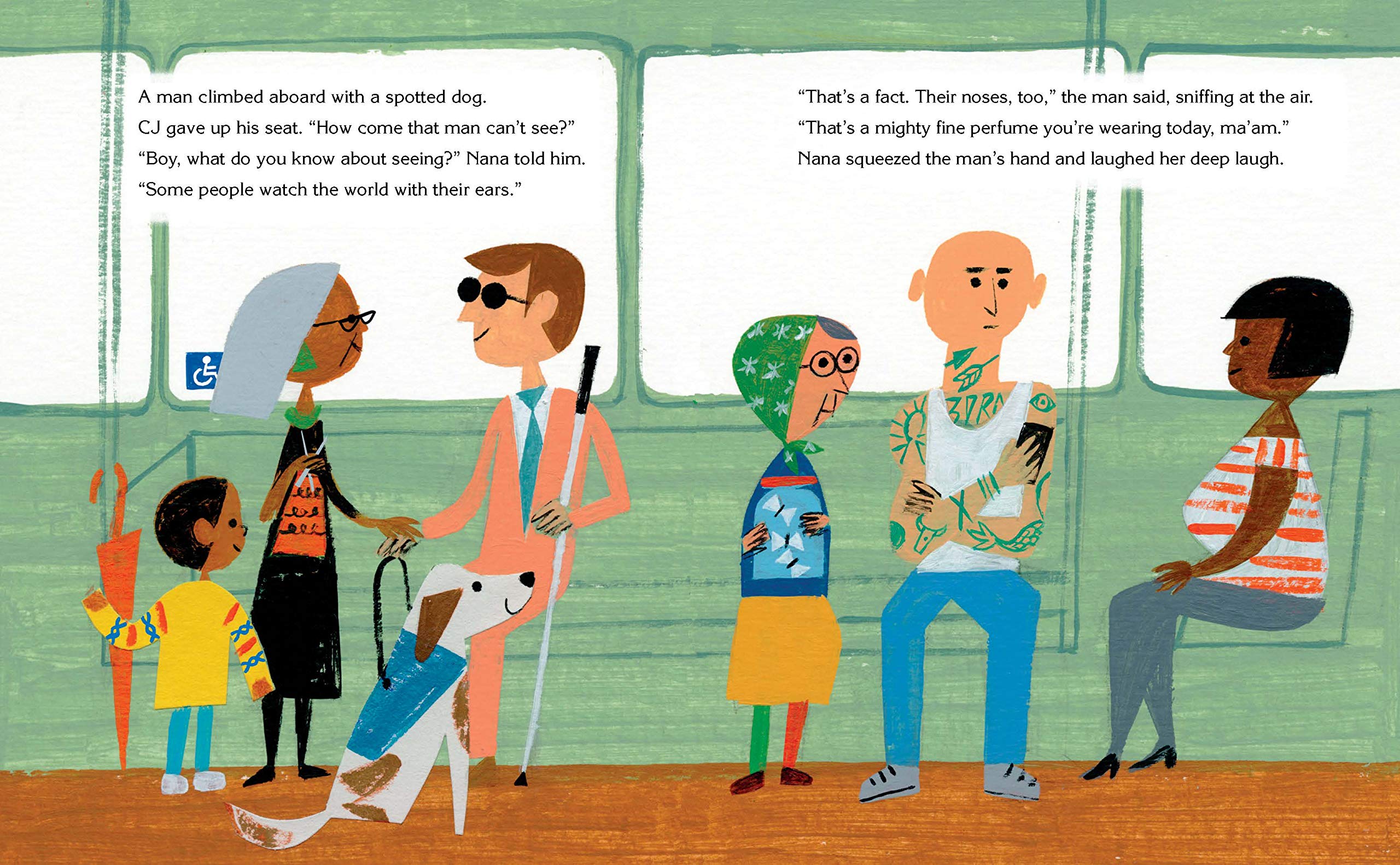
  • What do we learn about the different settings from the illustrations?
  • where was CJ and his Nana coming from in the beginning of the story?
  • What animal their Nana used to describe the bus?
  • Who were the people that CJ was talking about on the bus?
  • What was the name of the bus driver?
  • What is on the last stop of Market Street that CJ and his Nana went to?
  • Why didn’t CJ like the last stop?
  • What did CJ see over the building at the end of the book?

Flagged Passages: 

Book Trailer: 

Recommended For: 

classroomlibrarybuttonsmall

Thank you, Amanda & Sendy, for your reviews!