Review and Giveaway!: Henry and the Chalk Dragon by Jennifer Trafton

Share

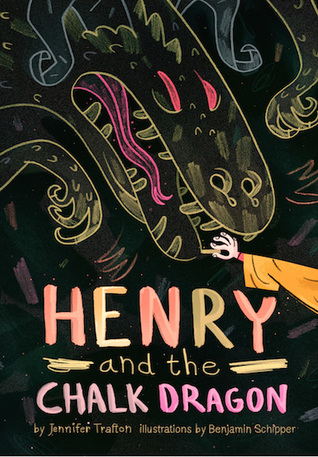
Henry and the Chalk Dragon
Author: Jennifer Trafton
Illustrator: Benjamin Schipper
Published April 4th, 2017 by Rabbit Room Press

Summary: In the town of Squashbuckle, just about anything can happen, and when Henry Penwhistle draws a mighty Chalk Dragon on his door, the dragon does what Henry least expects–it runs away. Now Henry’s art is out in the world for everyone to see, and it’s causing trouble for him and his schoolmates, Oscar and Jade. If they don’t stop it, the entire town could be doomed! To vanquish the threat of a rampaging Chalk Dragon, Sir Henry Penwhistle, Knight of La Muncha Elementary School, is going to have to do more than just catch his art–he’s going to have to let his imagination run wild. And THAT takes bravery.

About the Author: Jennifer Trafton is the author of The Rise and Fall of Mount Majestic (Dial, 2010) which received starred reviews in Publishers Weekly and School Library Journal and was a nominee for Tennessee’s Volunteer State Book Award and the National Homeschool Book Award. Henry and the Chalk Dragon arose from her lifelong love of drawing and her personal quest for the courage to be an artist. She lives in Nashville, Tennessee, where, in addition to pursuing her love of art and illustration, she teaches writing classes, workshops, and summer camps in a variety of schools, libraries, and homeschool groups in the Nashville area, as well as online classes to kids around the world. To learn more, and to download free materials, visit jennifertrafton.com.

Critical Praise: 

★“A delicious face-off between forces of conformity and creativity run amok, spiced with offbeat names as well as insights expressed with eloquent simplicity.” —Booklist (starred review)
★“A perfect title to hand to young readers looking for laughs along with a wild and crazy adventure.”
                                                                                —School Library Journal (starred review)

Review: I love any book that promotes imagination, and it isn’t too often that you find a novel that is all about keeping your imagination. Henry’s story is a Pleasantville one–he lives in a boring town and takes boring classes, but when he closes his door, his imagination goes wild. It is when his imaginative Chalk Dragon escapes and wrecks havoc on his school does the power of an imagination really start to show. 

On a side note, and only some of you will understand this, but the cover of Henry and the Chalk Dragon is matte and SO SOFT!

Teachers’ Tools for Navigation: Along with a read aloud, the text gives lots of opportunities to discuss imagination, art, and creative writing. Also, chunking the text to fit the most opportune times will lead to some great writing and art prompts.

Discussion Questions: How did the principal end up the way he is? How do we know that he was not that way when he was younger?; Was Henry’s class/school doing the best thing to promote Vegetable Week?; Which adults understand Henry and his imagination? Which hinder him?; How does the power of Henry’s imagination cause havoc on the school? How does it save the school?; What does Henry’s chalk dragon coming to life symbolize in the grand scheme of things?; What is the lesson that the author is trying to teach us about imagination and growing up?

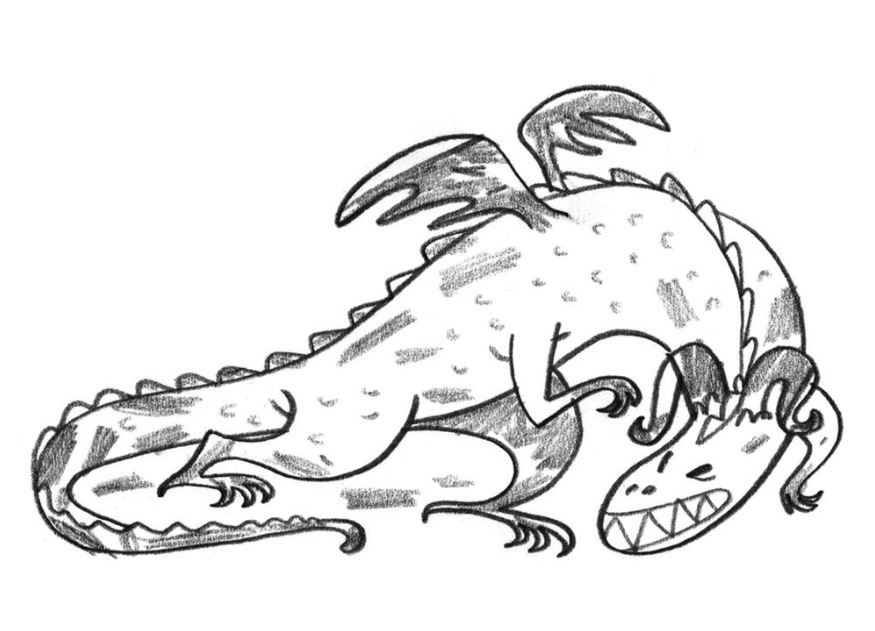
Flagged Passages: “Henry recognized the curve of those horns and the arrow-tipped tail. He recognized every sharp green flick of scaly skin, every zigzag of the bony spines running down the creature’s back. It was his dragon. Just as he had imagined it. Just as he had drawn it. Here it was, standing in front of him! There was something brand new in the world, and he had put it there!

There is a kind of fear that squeezes your heart with an icy hand and freezes you into a popsicle. But there is another kind of fear that is thrilling and hot, that makes your fingers tingle and your toes tickle each other inside your shoes until you want to leap over the Empire State Building. Henry was afraid with this kind of fear, and it felt good.

The dragon stared back at him–up and down, from his sneakers to his shiny helmet. It did not look afraid of Henry. It spread its wings proudly. It stretched its scaly neck as high as it would go. Its mouth widened slowly into a dragonish grin.

How long had Henry been waiting for this moment? Here he was, in his shiny suit of armor, with a sword in his hand. And here was a real live dragon–a dragon who could knock the house down with a few flicks of its tail, who could eat his mother for breakfast, who could send a ball of fire bouncing down the street. He knew exactly what he had to do.” (p. 32-33)
Read This If You Loved: The Journey Trilogy by Aaron BeckerHarold and the Purple Crayon by Crockett Johnson, Other picture books that spark imagination

Recommended For:

classroomlibrarybuttonsmall 

Giveaway!

a Rafflecopter giveaway

**Thank you to Barbara at Blue Slip Media for providing a copy for review!**

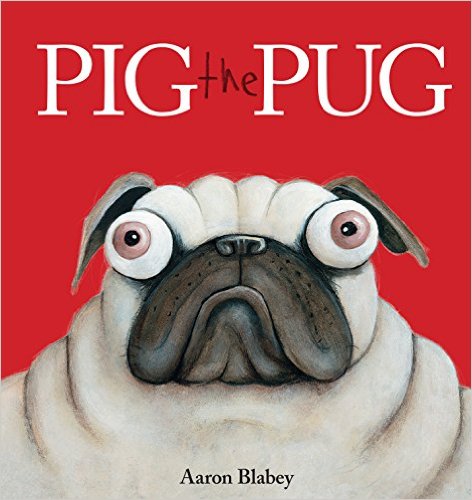
Pig the Pug by Aaron Blabey

Share

Pig the Pug
Author: Aaron Blabey
Published: July 1, 2014 by Scholastic

A Guest Review by Rebecca Welch

Summary: Pig is a greedy dog and does not want to share his toys with his housemate, Trevor. Trevor thinks it would be a great idea if him and Pig shared toys because then they would be able to play together. Pig does not give in and gathers all of his toys so Trevor can’t get to them. A mishap occurs that makes pig realize the importance of sharing and friendship.

Review: This book is great for any elementary school classroom! I absolutely loved it and thought that the message at the end was applicable to any group of young children. The rhyming makes the book great for a fun read aloud and the illustrations are fantastic. There was also a bit of humor. I highly recommend this picture book.

Teachers’ Tools for Navigation: This book would be great to teach rhyming because each page rhymes. You could talk about the moral of a story and use it as a segway to students’ writing about a time where they learned an important lesson (moral). You could have students determine the meaning of the idiom “flip a wig” by the using context clues and then study other common idioms afterwards. In addition, you could introduce character traits and determine the traits of Pig and Trevor. You can also practice making predictions by predicting what will happen to Pig. It would also be a great classroom discussion facilitator on sharing and the importance of friendship.

Discussion Questions: How do you think Trevor may be feeling when Pig won’t share his toys?; What does it mean to be greedy or selfish?; What do you predict will happen to Pig?; Can we think of any times that we have been greedy or selfish?; What does “flip a wig mean”?; What is the moral of this story?

Flagged Passage: “I know what your game is, you want me to SHARE! But I’ll never do that! I won’t and I swear!” (p. 7).

Read This If You Loved: Dog vs. Cat by Chris Gall; Mr. Fuzzbuster Knows He’s the Favorite by Stacy McAnulty

Recommended For:
 classroomlibrarybuttonsmall

Thank you, Rebecca!

RickiSig

Teaching Guide for Ada’s Ideas: The Story of Ada Lovelace, the World’s First Computer Programmer by Fiona Robinson

Share

nfpb2017

Nonfiction Wednesday

Nonfiction Picture Book Wednesday is hosted by Kid Lit Frenzy and was started to help promote the reading of nonfiction texts. Most Wednesdays, we will be participating and will review a nonfiction text (though it may not always be a picture book).
Be sure to visit Kid Lit Frenzy and see what other nonfiction books are shared this week!

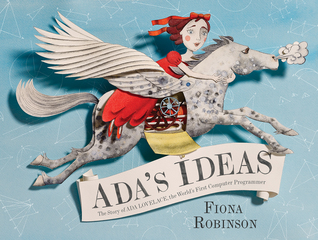
Ada’s Ideas: The Story of Ada Lovelace, the World’s First Computer Programmer
Author and Illustrator: Fiona Robinson
Published August 2nd, 2016 by Abrams Books

Summary: Ada Lovelace (1815–1852) was the daughter of Lord Byron, a poet, and Anna Isabella Milbanke, a mathematician. Her parents separated when she was young, and her mother insisted on a logic-focused education, rejecting Byron’s “mad” love of poetry. But Ada remained fascinated with her father and considered mathematics “poetical science.” Via her friendship with inventor Charles Babbage, she became involved in “programming” his Analytical Engine, a precursor to the computer, thus becoming the world’s first computer programmer. This picture book biography of Ada Lovelace is a portrait of a woman who saw the potential for numbers to make art.

Teaching Guide with Discussion Questions and Activities: 

Ada’s Ideas: The Story of ADA LOVELACE, the World’s First Computer Programmer

Ada Lovelace (1815–1852) was the daughter of Lord Byron, a poet, and Anna Isabella Milbanke, a mathematician. Her parents separated when she was young, and her mother insisted on a logic-focused education, rejecting Byron’s “mad” love of poetry. But Ada remained fascinated with her father and considered mathematics “poetical science.” Via her friendship with inventor Charles Babbage, she became involved in “programming” his Analytical Engine, a precursor to the computer, thus becoming the world’s first computer programmer. This picture book biography of Ada Lovelace is a portrait of a woman who saw the potential for numbers to make art.

Note about this guide and Ada’s Ideas

Ada Lovelace was a mathematician far ahead of her time. Because of this, much of the math included in Ada’s Ideas are quite complex. Because of this, Ada’s Ideas could be used for a wide range of students from early-elementary, focusing on Ada’s impact on math, to college, focusing on her use of complex math to write the first computer programs. Within this guide, you will find activities and discussion questions that primarily focus on its use in elementary and middle classrooms, but this does not limit it to these grade levels.

Vocabulary

These vocabulary words can be found throughout the book (in the order they are listed). Use these words as a starting point for a vocabulary study with Ada’s Ideas. Research shows that reading and discussing vocabulary within the context of reading is one of the most effective ways to learn vocabulary.

Despaired     |     Era     |    Defy     |    Reckless     |    Parallelogram     |    Influence     |    Steady     |    Whirred     |    Clanked     |    Newly Harnessed     |    Mechanical     |    Affectionate     |    Carrier Pigeon     |    Confined     |    Poetical expression     |    Aside     |    Eligible     |    Thrust     |     Regimented     |    Re-ignited     |    Potential     |    Orient     |    Corresponding     |    Loom     |    Thereby     |    Algorithm     |    Compute     |    Potential     |    Foresaw     |    Impact     |    Stunned     |    Envision

Activities: Use these activities to extend student learning with Ada’s Ideas.

Ana’s Parents

  • Ana’s parents are both well-renowned and intelligent; however, they are both very different.
  • Get to know George Byron
    • Have your students read the first stanza of “She Walks in Beauty” by Lord Byron. Analyze the stanza with them and discuss: How is Lord Byron describing the subject of his poem? Does it fit your idea of “Romantic” as Lord Byron was considered a leading figure in the Romantic Movement of poetry.
      • She walks in beauty, like the night
        Of cloudless climes and starry skies;
        And all that’s best of dark and bright
        Meet in her aspect and her eyes;
        Thus mellowed to that tender light
        Which heaven to gaudy day denies.
  • Get to know Anne Isabella Byron
    • Lady Byron was wealthy and educated. She was tutored by a Cambridge University professor as a child and found she excelled at mathematics. Discuss with your students: How did Lady Byron’s fascination of mathematics influence Ana’s life? Do you think her life would have been the same if her mother had not been a mathematician herself?

Nature vs. Nurture

  • Discuss with your students the idea of nature vs. nurture.
  • Lord and Lady Byron worked hard to separate Lord Byron from Ada to try and limit her poetical and imaginative behavior; however, Ada still ended up with quite the imagination. What does this show us about nature vs. nurture? Was Ada’s mother able to change how she was going to grow up by separating her from her father, or did it not matter since she is biologically his daughter?
  • Have your students break into two sides and research the ideas of nature vs. nurture then debate whether a person’s DNA decides their development or if experiences and environment can change the development.
    • Extension: Move the debate to Ada’s situation instead of a generic debate about the idea.

Industrial Revolution

  • The Industrial Revolution was possible because of the engineers, scientists, and mathematicians who put theory into practice. These new exciting feats of engineering and science included the first reliable steam engine, the cotton gin, telegraph, dynamite, vaccines, telephone, light bulb, airplane, and automobile.
  • Individually, in partners, or in groups, assign a different Industrial Revolution invention and look at how it was created, how it changed the world, and how it changed science/math/engineering then present their findings to the class.
  • After learning more about the Industrial Revolution, tie it back to Ada Lovelace’s life by discussing if the class believes that Ada’s accomplishments could have happened during a different time in history.

Influence

  • Ada Lovelace’s findings are largely said to be the first computer program. Her programs, in conjunction with Babbage’s hardware, were a theory over a century before the first computers were invented in the United States and England. Even though she was not part of the actual invention and start of computer science, she influenced much of modern computer science. Use the information below as the starting point for a research paper/project or discussion.
  • Some of the ways Ada has influenced computer science are:
    • Mill made by Babbage’s son
      • Charles Babbage’s son made the part of the analytical engine called the mill which carried out numerical operations.
    • Alan Turing
      • Babbage and Lovelace’s analytical engine was the original “drum” computer though Turing is often portrayed as the inventor of the idea.
    • John Graham-Cumming
      • Graham-Cumming is a British programmer who is working to bring the analytical engine, known as Plan 28, to realization.
    • Some ways Ada has been commemorated:
      • ADA: a standardized computer language used by the US Department of Defense
        • A computer language that appeared for the first time in 1980 and is still used today.
      • Ada Lovelace Day
        • Ada Lovelace Day was founded in 2011 and aims to share female pioneers in STEM fields. Ada Lovelace Day is the second Tuesday of October.

Discussion Questions: Use these questions as whole class discussions, reading check-ins, or as writing prompts with Ada’s Ideas. The discussion questions are written as if they are being asked to a student.

  • Ada’s schedule as an 8-year-old was very intense. Compare and contrast your current schooling schedule to what Ada was expected to do daily.
    • How many hours did she spend on each subject? How long do you spend?
    • Do you feel like what was expected of her was too high of expectations or fair?
  • How did Ada’s contraction of measles change her life?
  • Why did the author choose to cover Ada’s comforter in geometric shapes on the page when she is suffering with measles?
  • Ada surrounded herself with some very intelligent and influential people including Mary Fairfax Somerville, nominated to be jointly the first female member of the Royal Astronomical Society; Charles Dickens, one of the greatest novelist of the Victorian era; Florence Nightingale, the founder of modern nursing; and Charles Babbage. How do you think having these historical figures as her friends helped influence her focus and trajectory in life?
  • The mentorship of Charles Babbage changed Ada’s life as well as the trajectory of computer science. How did Ada influence Charles’s work and vice versa? Do you think either could have accomplished what they did without each other?
    • Compare their work to modern technologies: Ada’s work ended up influencing the creations of ____, and Mr. Babbage’s work ended up influencing the creations of ____.
  • How did Joseph-Marie Jacquard’s loom influence Ada’s idea of the program for the Analytical Engine?
  • The author’s note about Bernoulli Numbers states that Ada chose them as “beautiful examples” of the complexity of the Analytical Engine. Elaborate on this statement: Why would Ada choose something so complicated as the first program she wrote for the Analytical Engine?
  • The illustrations of Ada’s Ideas are Japanese watercolor pieces cut out and rearranged at different depths to achieve 3-D artwork then photographed. How does this artwork fit Ada’s story? Would another type of illustrations have been able to capture Ada’s ideas and personality as well?

Common Core Standards: English Language Arts

Examples of English Language Arts Common Core Anchor Standards that can be met by extending Ada’s Ideas with the above discussion questions/activities.

  • ELA-LITERACY.CCRA.R.1
    Read closely to determine what the text says explicitly and to make logical inferences from it; cite specific textual evidence when writing or speaking to support conclusions drawn from the text.
  • ELA-LITERACY.CCRA.R.2
    Determine central ideas or themes of a text and analyze their development; summarize the key supporting details and ideas.
  • ELA-LITERACY.CCRA.R.3
    Analyze how and why individuals, events, or ideas develop and interact over the course of a text.
  • ELA-LITERACY.CCRA.R.4
    Interpret words and phrases as they are used in a text, including determining technical, connotative, and figurative meanings, and analyze how specific word choices shape meaning or tone.
  • ELA-LITERACY.CCRA.R.5
    Analyze the structure of texts, including how specific sentences, paragraphs, and larger portions of the text (e.g., a section, chapter, scene, or stanza) relate to each other and the whole.
  • ELA-LITERACY.CCRA.W.7
    Conduct short as well as more sustained research projects based on focused questions, demonstrating understanding of the subject under investigation.
  • ELA-LITERACY.CCRA.W.9
    Draw evidence from literary or informational texts to support analysis, reflection, and research.

Computer Science Teachers Association Standards

  • Computational Thinking: Grades K-3, #4: The student will be able to recognize that software is created to control computer operations.
  • Computational Thinking: Grades K-6, #6: The student will be able to understand the connections between computer science and other fields.
  • Computational Thinking: Grades 6-9, #3: The student will be able to define an algorithm as a sequence of instructions that can be processed by a computer.
  • Computing Practice and Programming: Grades K-3, #5: The student will be able to identify jobs that use computing and technology.
  • Computing Practice and Programming: Grades 6-9, #7: The student will be able to identify interdisciplinary careers that are enhanced by computer science.
  • Computers and Communication Devices: Grades 6-9, #3: The student will be able to demonstrate an understanding of the relationship between hardware and software.
  • Computers and Communication Devices: Grade 6-9, #4: The student will be able to use developmentally appropriate, accurate terminology when communicating about technology.
  • Community, Global, and Ethical Impacts: Grade 6-9, #2: The student will be able to demonstrate the knowledge of changes in information technologies over time and the effects those changes have had on education, the workplace, and society.

Author/Illustrator

Fiona Robinson is originally from the north of England she now lives in Brooklyn, New York. She is an author and illustrator of books for children including Whale Shines, What Animals Really Look Like, and Ada’s Ideas. What Animals Really Like received the 2012 Irma Black Award, and Bank Street named it one of the 2012 Best Children’s Books. She has been praised by Publishers Weekly for her “humor tinged with heart,” and her work has been honored by the Royal Academy of Arts in London. Her favorite things include drawing, reading, drinking tea and telling her stories to children. She doesn’t like loud noises or clapping and often reads newspapers and magazines back to front. When she was in elementary school her teachers called her Little Leonardo, and she’s forever thankful for their support and that of her fabulous family in England too.

Resources

https://en.wikipedia.org/wiki/Ada_Lovelace

http://www.telegraph.co.uk/technology/11285007/Ada-Lovelace-paved-the-way-for-Alan-Turings-more-celebrated-codebreaking-a-century-before-he-was-born.html

http://findingada.com/

https://plus.maths.org/content/ada-lovelace-visions-today

The teaching guide can also be viewed at: https://www.scribd.com/document/341092371/Ada-s-Ideas-Teaching-Guide# or http://www.abramsbooks.com/academic-resources/teaching-guides/

Recommended For: 

classroomlibrarybuttonsmall closereadinganalysisbuttonsmall 

Signature

Top Ten Tuesday: Authors We Would Love to Meet

Share

top ten tuesday

Top Ten Tuesday is an original feature/weekly meme created at The Broke and the Bookish. The feature was created because The Broke and Bookish are particularly fond of lists (as are we!). Each week a new Top Ten list topic is given and bloggers can participate.

 Today’s Topic: Ten Authors We Would Love to Meet

See our 2015 list of the same topic! Some have changed; some have stayed! 🙂

Ricki

I’ve been incredibly fortunate to have met some of my favorite authors. I highly recommend the NCTE conference and ALAN Workshop to people who want to meet their author rockstars. If you want to enjoy a glass of wine with them, definitely attend the ALAN Workshop! Here are the authors I haven’t met and would love to meet someday.

1. Kevin Brooks

I absolutely love Kevin Brooks’ books. I would love to have him at NCTE, but I think England is a bit far for him to travel.

2. R. J. Palacio

I simply adore her books and would love to meet her! Wonder had a powerful impact on my life.

3. Sandra Cisneros

It would be so lovely to meet this woman. The House on Mango Street is one of my favorite books of all time.

4. Josh Funk

Josh is an incredible (online) friend. Someday, we will meet in person. Josh, I just read your book to Henry tonight! We had a nice talk about some of the foods he doesn’t know very well.

5. John Steinbeck

Ah, I know it is cheating to put him on this list. But if I could go back in time, I would absolutely love to meet this man. He’s my idol.

Kellee

I didn’t know we were time traveling! 🙂 That would make this list even longer!

1. J.K. Rowling

Because she is J.K. Freaking Rowling!

2. Mo Willems

I saw Mo Willems once from afar at NCTE, but I missed his signing. I think his picture books are brilliant and so does Trent.

3. Gene Luen Yang

I loved Yang’s work before I knew as much about him as I do now. With him becoming the National Ambassador for Young People’s Literature, I’ve been able to see what is near and dear to his heart, and I think things like the “Reading Without Borders” challenge is brilliant, admirable, and important.

4. Kristin Levine

I am just in love with Lions of Little Rock, and I would love to tell Kristin that.

5. Deborah Wiles

Like Kristin, Deborah Wiles’s historical fiction just touches my heart in a way that is hard to explain. The one ALAN I missed, Deborah attended, so I need to remedy missing her!

Which authors would you love to meet?

RickiSig and Signature

It’s Monday! What Are You Reading? #IMWAYR 3/27/17

Share

IMWAYR 2015 logo

It’s Monday! What Are You Reading? From Picture Books to YA!

It’s Monday! What are you Reading? is a meme started by Sheila at Book Journeys and now hosted by Kathryn at The Book Date. It is a great way to recap what you read and/or reviewed the previous week and to plan out your reading and reviews for the upcoming week. It’s also a great chance to see what others are reading right now…you just might discover the next “must-read” book!

Kellee and Jen, of Teach Mentor Texts, decided to give It’s Monday! What Are You Reading? a kidlit focus. If you read and review books in children’s literature – picture books, chapter books, middle grade novels, young adult novels, anything in the world of kidlit – join us! We love this meme and think you will, too.

We encourage everyone who participates to support the blogging community by visiting at least three of the other book bloggers that link up and leave comments for them.

Bold_line

Last Week’s Posts

**Click on any picture/link to view the post**

top ten tuesday   

Tuesday: Ten Short Novels that Pack a Punch

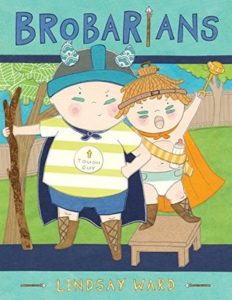
Wednesday: Review and Giveaway!: Brobarians by Lindsay Ward

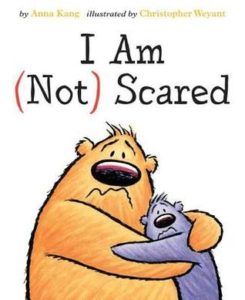
Thursday: Review and Giveaway!: I Am (Not) Scared by Anna Kang

Friday: Paint Me a Picture & Tell Me a Story by Emily Bannister

Sunday: Author Guest Post: “Journey” by Michael Cottman, Author of Shackles from the Deep

**Don’t miss out on the two giveaways from last week!**

Bold_line

 Last Week’s Journeys

Kellee

I love Spring Break! Even with our mini-vacation and being a bit busy, I was able to get a lot of reading done. I am not going to list all of the picture books I read (17!) because I plan on reviewing them all soon, so I will share them with you then 🙂

First Second has some amazing upcoming graphic novels coming out!
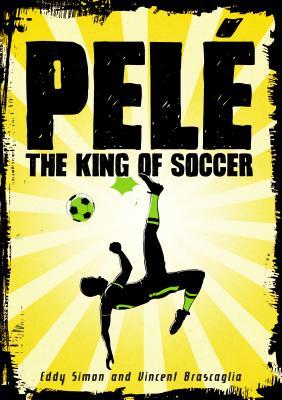
Pelé: The King of Soccer by Eddy Simon and Vincent Brascaglia is the name I have heard for years because soccer is by far the most popular sport at my school, but I hadn’t know much about him until this graphic novel, and I loved learning about the man that many of my students call a hero.
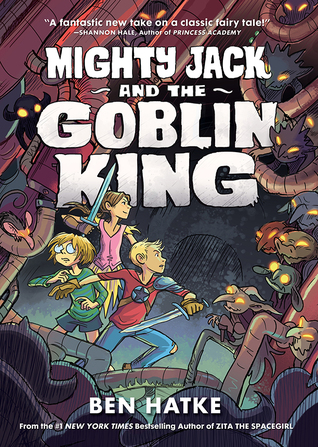
Mighty Jack and the Goblin King by Ben Hatke is just as good as the first one, and I love the world that Hatke has created for Jack, Maddy, and Lilly. The creatures are so creative and interesting, the adventures are heart stopping, and the characters are so well developed. And GUYS! There is an epic cliffhanger ending! I cannot wait!
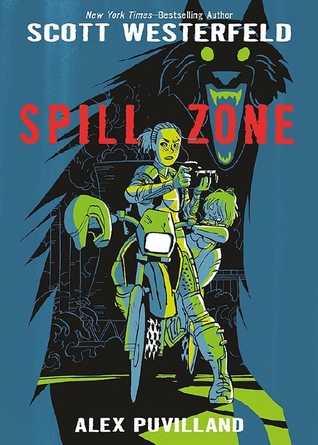
Spill Zone by Scott Westerfeld is everything you would expect from Scott Westerfeld: unique, mind-blowing, and fantastical. I cannot believe this books is not getting more hype because it is going to be a series that readers will not be able to put down and readers will be so anxious to read the next one. I loved the premise that is so mysterious and only little clues sprinkled throughout the book to help you figure things out, but there is SO MUCH more to know–I cannot wait for the next book!


I almost met my Spring Break reading goal!
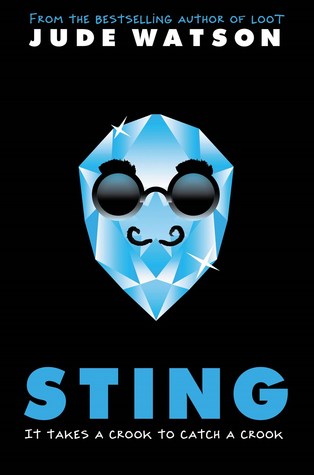
-Sting is a really awesome continuation of Loot–it was just unique enough to not seem like it was Loot continued but it also really helps you get to know all the characters.
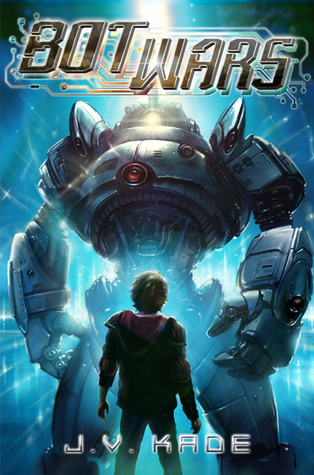
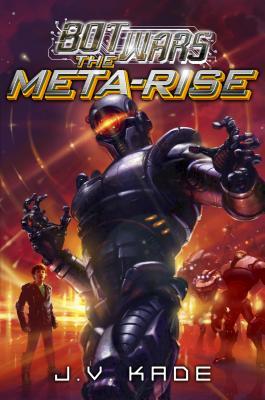
Bot Wars and Bot Wars: Meta-Rise by J.V. Kade are so good! I love the political aspects of this story while it also has such an interesting plot and characters. If you haven’t read them and like sci-fi, I really recommend it.
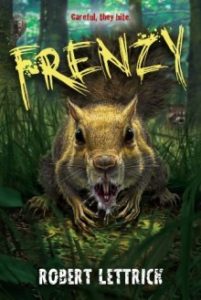
-Frenzy is TERRIFYING! It is probably the creepiest middle grade book that I have ever read. And there were so many deaths. If you or your students like horror and suspense, they should pick this one up! (Oh, and it was my final book from my state list! I read all 15 of them! Woot!)
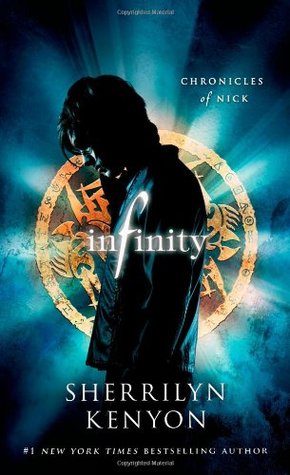
-The Chronicles of Nick is a series that one of my students is obsessed with, and he makes comments all the time like, “Why won’t anyone read it?!” So, I promised him I would read it over break, and I can see why he likes it–it is a pretty epic paranormal adventure. I probably won’t continue the series, but I am glad that I can now chat with the student about the world of this series.

 Ricki

Hi! I am off the grid this week because my dissertation is due to my advisor this Wednesday. Hugs to you all, and I apologize for being so elusive this month!

Bold_line

This Week’s Expeditions
Kellee

This is one of those series that everyone freaks out about me not reading, so I am going to jump in. Hopefully it is as good as everyone says!

After, I plan on reading a few more novels for review that I’ll share later 🙂

I want to apologize for the lack of commenting recently: two weeks ago it was my yearbook deadline, last week was my mini-vacation for my anniversary, and today is the state competition for my Future Problem Solvers. Hopefully next week things will be more back to normal.
HAPPY READING THIS WEEK!

Bold_line

Upcoming Week’s Posts

top ten tuesday 

Tuesday: Top Ten Authors We Would Love to Meet

Wednesday: Teaching Guide for Ada’s Ideas by Fiona Robinson

Thursday: Guest Review: Pig the Pug by Aaron Blabey

Friday: Review and Giveaway!: Henry and the Chalk Dragon by Jennifer Trafton

Sunday: Author Guest Post

 So, what are you reading?

Link up below and go check out what everyone else is reading. Please support other bloggers by viewing and commenting on at least 3 other blogs. If you tweet about your Monday post, tag the tweet with #IMWAYR!

 Signature andRickiSig

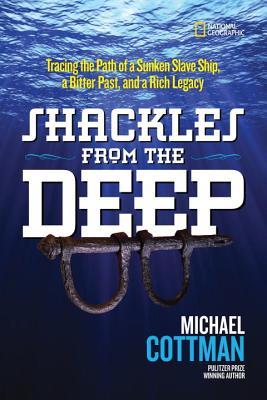
Author Guest Post: “Journey” by Michael Cottman, Author of Shackles from the Deep

Share

“Journey” by Michael Cottman

My journey to write Shackles From The Deep started when I was a boy growing up in Detroit and watching a popular television show called Sea Hunt, a 1960s adventure program about an underwater detective.

From the time I was a kid, I wanted to scuba dive and explore the ocean’s depths. And because National Geographic embraces adventure tales like no other company, this was a perfect publishing partnership.

I wrote Shackles From The Deep in a conversational way for young readers to share the story of the Henrietta Marie, a sunken 17th century slave ship. This is more than just the story of one ship – it’s the untold story about millions of African people taken as captives to the New World.

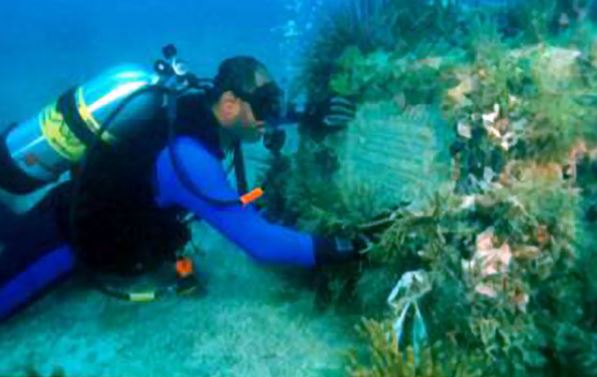
I traveled to three continents to piece together a trans-Atlantic puzzle. I reviewed shipping records and slave-ship captain’s logs in London. I retraced the route of the Henrietta Marie slave ship and scuba-dived the ship’s ports of call in Jamaica, Barbados, and West Africa.

During my research, I learned amazing things:  Today, the Henrietta Marie is believed to be the world’s largest source of tangible objects from the early years of the slave trade.

The Henrietta Marie is the only slave ship in America that has been scientifically documented and where more than 20,000 artifacts were recovered, including the largest collection of slave-ship shackles ever found on one site.

I also learned the shackles were discovered in 1973 by Moe Molinar, a black underwater treasure hunter who was searching for the Atocha, a Spanish galleon that had sunk nearly 400 years ago filled with gold, silver and $400 million worth of jewels.

Treasure hunters didn’t know what to make of these relics. Then in 1983, maritime archaeologists, intrigued by the mystery, revisited the site and came upon a ship’s bell. As they chipped away at the limestone encrustation a name and a date emerged: Henrietta Marie, 1699.

Beneath the sea, on the wreck of the Henrietta Marie, I ran my hands through the sand and held the tiny glass trade beads that were used by the Henrietta Marie’s crew to trade for African people.

The story of Shackles From The Deep also introduces young readers to the unprecedented partnership between members of The National Association of Black Scuba Divers (I’m a lifetime member) and white maritime archaeologists who explored the Henrietta Marie together for a common purpose and forged lifelong friendships along the way.

After all, the global institution of slavery is our collective history.

But because of slavery, it is nearly impossible for African Americans to pinpoint the origins of our ancestors.

We cannot always identify a country in Africa where they were born, let alone a city or village. We can only know they came from somewhere on the west coast of the enormous continent.

Are my people Ibo from Nigeria, or Fulani from Mali, or Wolof from Senegal, or Ashanti from Ghana? I may never know.

What’s important, however, is my appreciation for the African culture — my culture, too — and my need to draw strength from the African people who came before me and survived.

And we continue to honor them.

In 1993, I joined members of The National Association of Black Scuba Divers to place a one-ton concrete memorial on the site of the Henrietta Marie shipwreck.

The bronze inscription on the memorial is a powerful testament to the human spirit: “In memory and recognition of the courage, pain and suffering of enslaved African people. Speak her name and gently touch the souls of our ancestors.”

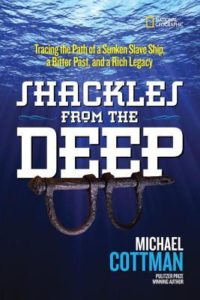
Shackles from the Deep: Tracing the Path of a Sunken Slave Ship, a Bitter Past, and a Rich Legacy
Author: Michael Cottman
Published January 3rd, 2017 by The National Geographic Society

Summary: A pile of lime-encrusted shackles discovered on the seafloor in the remains of a ship called the Henrietta Marie, lands Michael Cottman, a Washington, D.C.-based journalist and avid scuba diver, in the middle of an amazing journey that stretches across three continents, from foundries and tombs in England, to slave ports on the shores of West Africa, to present-day Caribbean plantations. This is more than just the story of one ship it’s the untold story of millions of people taken as captives to the New World. Told from the author’s perspective, this book introduces young readers to the wonders of diving, detective work, and discovery, while shedding light on the history of slavery.

Critical Praise: 

“The idea of identity is at the center of this fascinating narrative nonfiction book…This truly multidisciplinary volume….engagingly explores a wide scope of topics, including the history of slavery, marine archaeology, and contemporary racial discrimination, culminating in a dive down to the wreck itself. Every bit of this concise, detailed book feels personal, and Cottman’s exploration and investigation of the wreck is rich with intrigue and poignant, thought-provoking questions.” -Booklist (STARRED REVIEW)

“Cottman weaves his personal story of discovery with history of the slave trade, helping readers understand why a sunken slave ship from the 1700s still matters. His emotional attachment to the artifacts, including child-sized shackles, deepens the storytelling in this highly readable narrative.” –Kirkus

“Accessible and very personal account….(a) chilling exploration of the slave trade.” -Publishers Weekly

“Cottman’s personal journey, fraught with reminders of the trials and injustice his own enslaved ancestors must have endured, is compelling” -BCCB

About the Author: Michael H. Cottman, Pulitzer Prize-winning journalist and author, is a former political reporter for the Washington Post. Cottman has appeared on National Public Radio’s (NPR) “Tell Me More” with Michel Martin and also the Oprah Winfrey Show in 2000 to discuss his (adult) book The Wreck of the Henrietta Marie. Cottman also serves as a special consultant to the National Oceanic Atmospheric Administration (NOAA) for a national multimedia project, “Voyage to Discovery,” an education initiative that focuses on the African-American contribution to the maritime industry spanning 300 years and efforts to teach students of color about careers in marine biology and oceanography. Visit his website at http://www.michaelhcottman.com/.

Thank you to Michael for his post and to Barbara from Blue Slip Media for providing the resources!

 and

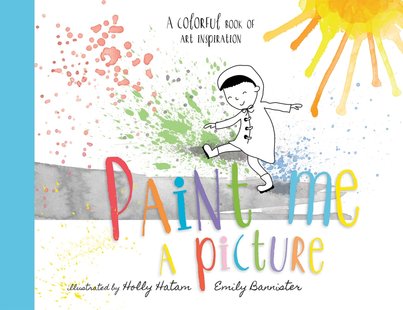
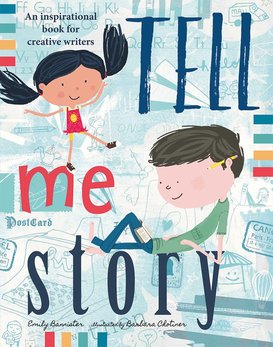
Paint Me a Picture & Tell Me a Story by Emily Bannister

Share

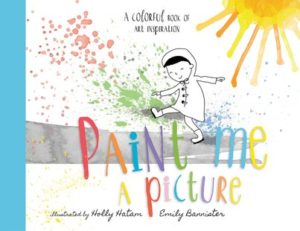
Paint Me a Picture: A Colorful Book of Art Inspiration
Author: Emily Bannister
Illustrator: Holly Hatam
Published by Kane Miller EDC Publishing

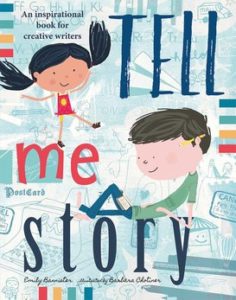
Tell Me a Story: An Inspirational Book for Creative Writers
Author: Emily Bannister
Illustrator: Barbara Chotiner
Published by Kane Miller EDC Publishing

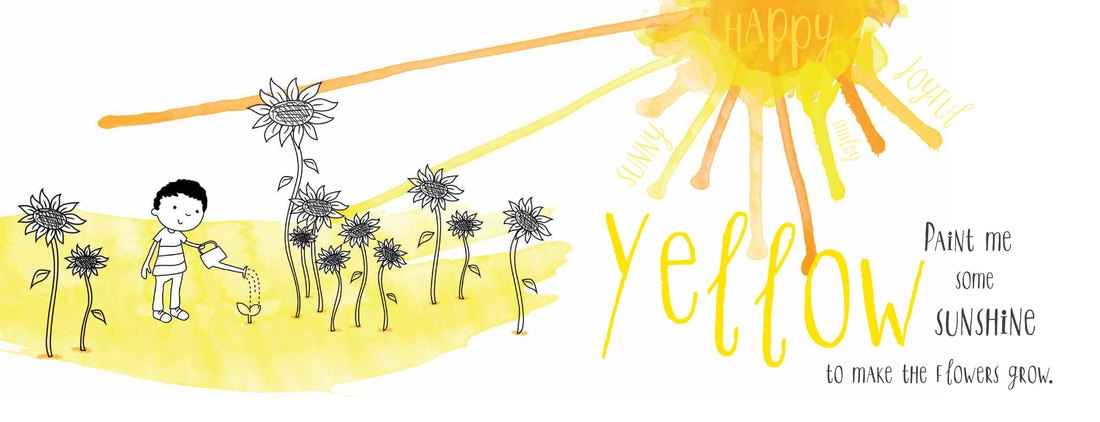
Summary: Paint Me a Picture equates color to mood, getting children thinking about the way they see and feel our colorful world.

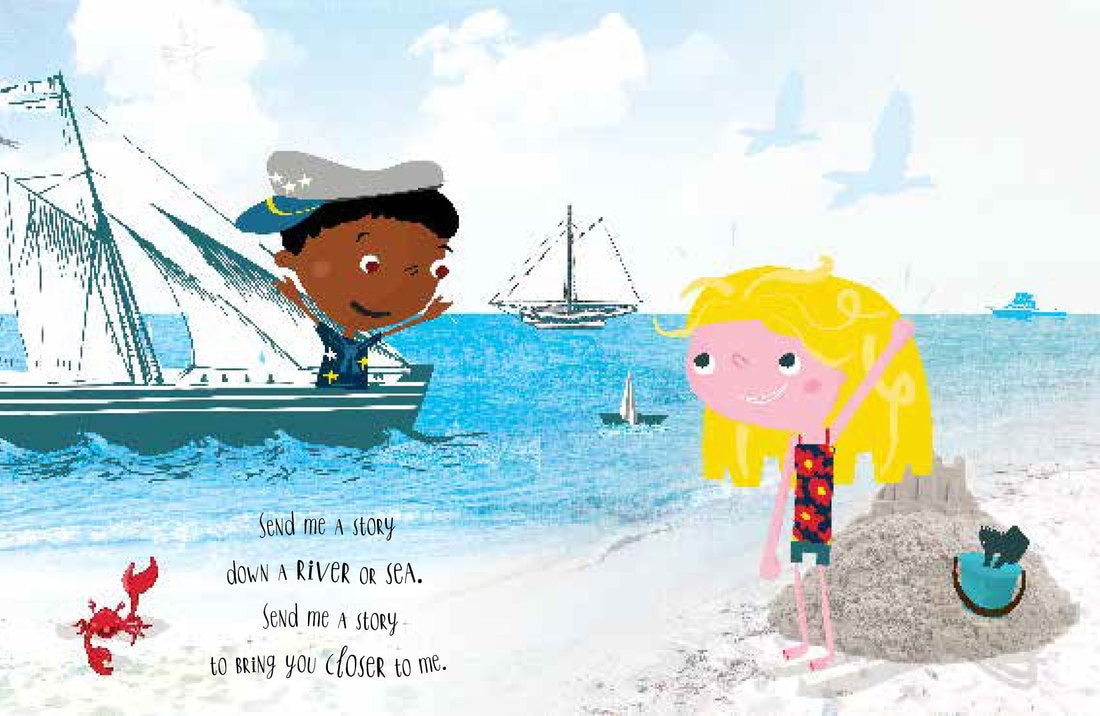
Tell Me a Story lets children know that their words are important, that no matter the form, their stories are meaningful.

With simple rhyming text and accessible art, this book is a springboard for drawing and sharing stories, giving color to emotions, and kids permission to do, create, show and tell.

It delightfully, poetically, celebrates the joy and imagination in art in all its forms and inspires the storyteller in everyone.

Review: I love books that help students feel like they are artists, writers, or thinkers. I think creativity is such an important part of childhood and too often we are pushing kids to grow up too quickly and not learn how to be creative or we’re pushing kids to fit into a certain box instead of letting them think outside of the box. These books help kids see the joy in writing and creating. They celebrate creative thinking and writing and the colors of our world. They show how you can combine color and words to create something that others will want to read and see. 

Teachers’ Tools for Navigation: Sometimes all a student needs is inspiration to create a story or piece of art work. These texts are those inspiration. They help students know that their story means something. That their words are something someone wants to read. That color can mean something. That their color choices when making artwork make a difference but that all colors are beautiful.

Discussion Questions: If you wanted to draw a picture that symbolizes sadness/happiness/laughter/anger, etc., what color would you use? What would you draw?; What is your favorite color? What does it symbolize to you?; To write a story, you first need to start with an idea, a place, or a thing. What would you write a story about?

Flagged Passages: 

Read This If You Loved: What Do You See? by Kyla Ryman, The Amazing Crafty Cat by Charise Mericle Harper, A Child of Books by Oliver JeffersThe Museum by Susan Verde, My Life in Pictures by Deborah ZemkeDoodle Adventures by Mike LoweryMy Pen by Christopher Myers, Mix it Up! by Hervé Tullet, Sky Color by Peter H. Reynolds, Art by Patrick McDonnell, Not a Box by Antoinette Portis, Seen Art? by Jon Scieszka, The Cat and the Bird by Geraldine Elschner

Recommended For:

classroomlibrarybuttonsmall 

**Thank you to Lynn at Kane Miller for providing copies for review!!**