Animal Ark by Joel Sartore and Kwame Alexander

Share

nfpb2017

Nonfiction Wednesday

Nonfiction Picture Book Wednesday is hosted by Kid Lit Frenzy and was started to help promote the reading of nonfiction texts. Most Wednesdays, we will be participating and will review a nonfiction text (though it may not always be a picture book).
Be sure to visit Kid Lit Frenzy and see what other nonfiction books are shared this week!

HAPPY NATIONAL POETRY MONTH!

And don’t forget to celebrate EARTH DAY on the 22nd!

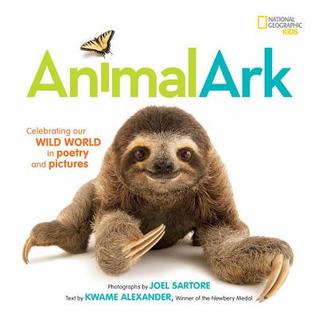
Animal Ark
Created by and Photographer: Joel Sartore
Poet: Kwame Alexander
Published February 14th, 2017 by National Geographic Society

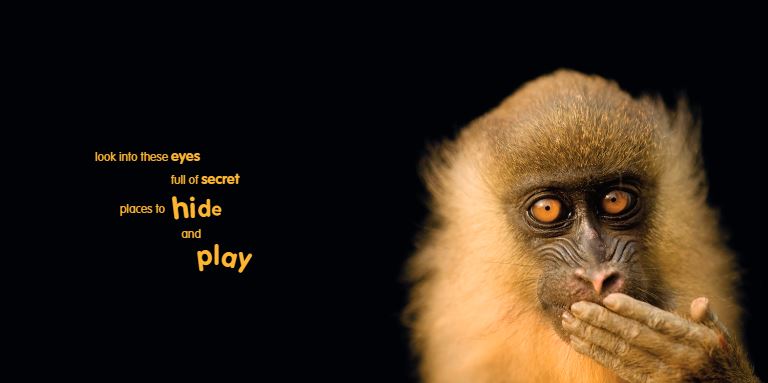
About the Book: National Geographic Kids proudly announces the release of Animal Ark: Celebrating Our Wild World in Poetry and Pictures, a picture book for children ages 4-8 written by Newbery Medal-winning author Kwame Alexander and featuring photographs by acclaimed National Geographic Fellow and photographer Joel Sartore. Animal Ark pairs Alexander’s uplifting poetry and prose with more than 100 of Sartore’s most compelling images of the world’s species to create a book for children that highlights the importance of conservation and the beauty of the animal kingdom.

Animal Ark is inspired by the National Geographic Photo Ark, a multiyear effort with Sartore and the National Geographic Society to document every species in captivity—inspiring people not just to care, but also to help protect these animals for future generations. To date, Sartore has completed portraits of more than 6,000 species, photographed on either a plain black or white background. No matter its size, each animal is treated with the same amount of affection and respect. The results are portraits that are not just stunningly beautiful, but also intimate and moving.

The companion adult book, National Geographic The Photo Ark: One Man’s Quest to Document the World’s Animals (National Geographic Books)—with a foreword by Harrison Ford—also showcases Sartore’s animal portraits: from tiny to mammoth, from the Florida grasshopper sparrow to the greater one-horned rhinoceros. In 2017, National Geographic Photo Ark exhibitions are opening at Omaha’s Henry Doorly Zoo and Aquarium, the Dallas Zoo, and the Cincinnati Zoo. Learn more at NatGeoPhotoArk.org and join the conversation on social media with #SaveTogether.

About Joel Sartore: Joel Sartore is a photographer, speaker, author, teacher, conservationist, National Geographic fellow, regular contributor to National Geographic magazine and founder of the National Geographic Photo Ark.  In addition to the work he has done for National Geographic, Sartore has contributed to Audubon magazine, Time, Life, Sports Illustrated, The New York Times, the Smithsonian magazine and numerous book projects.  His next book for adults, National Geographic The Photo Ark: One Man’s Quest to Document the World’s Animals  will be released in March 2017.

About Kwame Alexander: Kwame Alexander is a poet, educator, and New York Times bestselling author of 21 books, including The Crossover, which received the 2015 John Newbery Medal for the Most Distinguished Contribution to American Literature for Children. His other recent works include Booked, Surf’s Up, and He Said, She Said. He is the founder of Book-in-a-Day, a student-run publishing program that has created more than 3,000 student authors in 75 schools; and LEAP for Ghana, an international literacy project that builds libraries, trains teachers, and empowers children through literature. In 2015, Kwame served as Bank Street College of Education’s first writer-in-residence.

Book Trailer: 

My Review: I am in love with all of these animals! Do you see how cute they are?!?! And I love the message that Joel Sartore, National Geographic Kids, and Kwame Alexander are spreading with this text: “At its heart, the Photo Ark was born out of necessity… I  started to see that people weren’t paying much attention to the fate of all the others species we share this planet with. Without action, and soon, I worried that many animals could go extinct. The Photo Ark is my answer to this. By introducing the entire world to thoughts of photographs of [animals], I hope we can get everyone following, liking, tweeting, and even talking about this wondrous world of ours.” -Joel Sartore. I care deeply for all living things, and I have the same fear that Sartore has–that too many people are so caught up in their own little worlds that they aren’t focusing on the big world around us. The continual denial of climate change, the recent possible elimination of many of the EPA’s environmental protections, and so many other things makes the possibilities of us ruining our Earth even closer to reality 🙁

Teachers’ Tools for Navigation: Animal Ark has writing and science opportunities for the classroom. First, the theme of the book works beautifully within a science unit about endangered animals. Mix the text with the website What is Missing? by Maya Lin, and there are so many opportunities to discuss conservation and sustainability. Kwame Alexander’s poetry also gives an opportunity for poetry writing. In the Author’s Note, National Geographic shares information about haiku. Although all of Kwame’s poetry does not fit the traditional haiku format and we wouldn’t recommend it for a haiku mentor text, it shows how poets can take a traditional format and embrace yet manipulate it for their purpose.

Discussion Questions: Which animal would you like to learn more about?; What can humans do to help save these animals?; What is the theme of Animal Ark? What is the author/photographer trying to teach us?

Flagged Passages: 

Photography Outtakes!

Read This If You Love: National Geographic texts about animals, Poetry anthologies about nature including Water is Water by Miranda Paul, Books about making a difference like Dare to Dream…Change the World by Jill Corcoran & Be a Changemaker by Laurie Ann Thomson

Recommended For: 

classroomlibrarybuttonsmall closereadinganalysisbuttonsmall 

Signature

**Thank you to Karen at Media Masters Publicity for providing copes for review!**

Here We Go: A Poetry Friday Power Book by Sylvia Vardell and Janet Wong

Share

nfpb2017

Nonfiction Wednesday

Nonfiction Picture Book Wednesday is hosted by Kid Lit Frenzy and was started to help promote the reading of nonfiction texts. Most Wednesdays, we will be participating and will review a nonfiction text (though it may not always be a picture book).
Be sure to visit Kid Lit Frenzy and see what other nonfiction books are shared this week!

HAPPY NATIONAL POETRY MONTH!

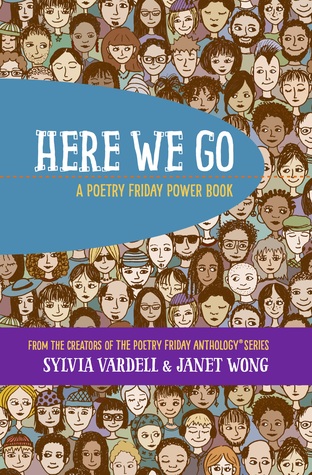
Here We Go: A Poetry Friday Power Book
Authors: Sylvia Vardell & Janet Wong
Illustrator: Franzi Paetzold
Published January 11th, 2017 by Pomelo Books

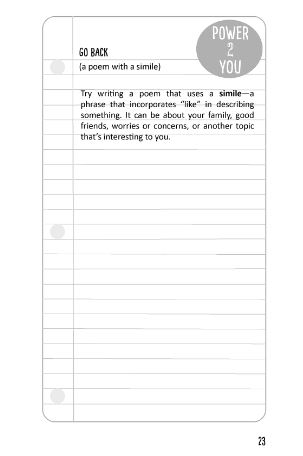
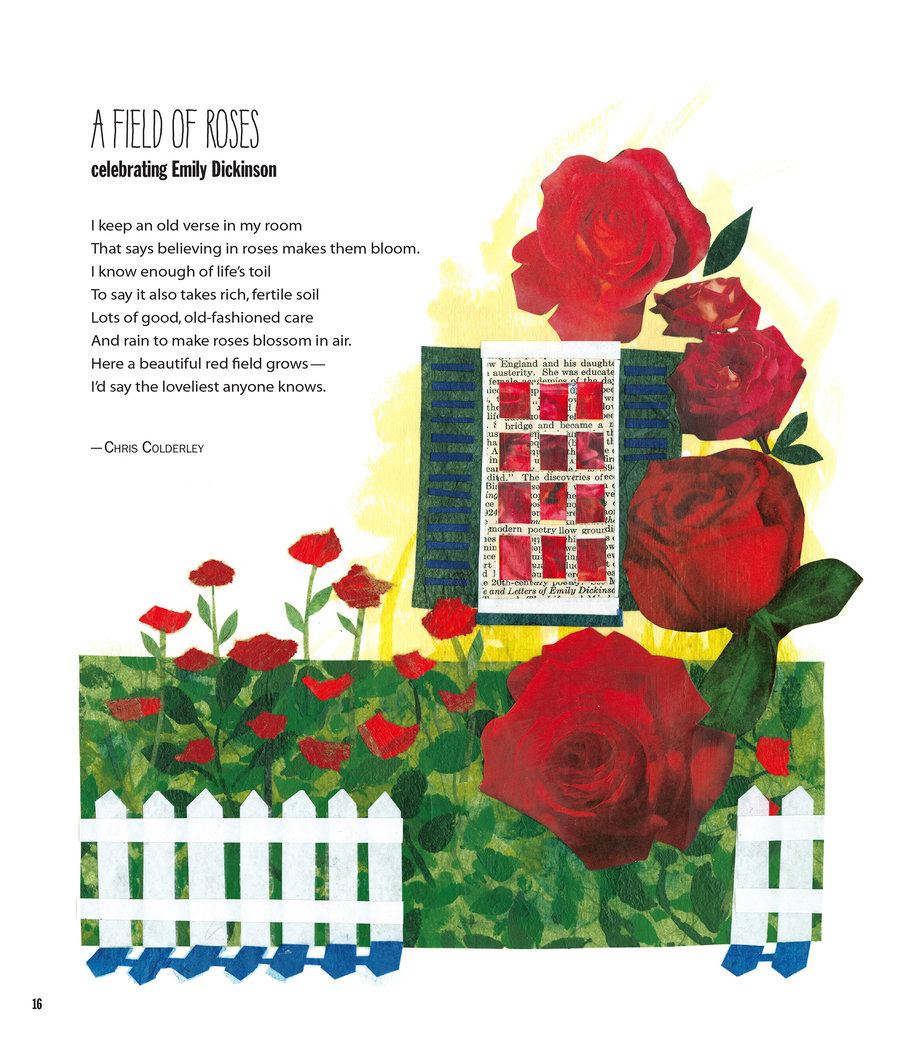
Summary: Here We Go: A Poetry Friday Power Book is a story in poems and a writing journal designed to help kids think about social change. It contains 12 PowerPack sets featuring Ameera, David, Jack, and Jenna, a diverse group of kids working together to make an impact in their community. Sylvia Vardell’s inventive PowerPlay activities make it easy for writers to get inspired, while her Power2You writing prompts extend learning. Vardell also created extensive back matter resources for young readers, writers, and activists.

Praise: “This interactive book and the abundance of resources provided will motivate students to take action through words and ideas to make their world a better place—a must have for today’s classrooms.” —Lynne Dorfman and Rose Cappelli, Authors of Mentor Texts

“I absolutely love this book! The invitations are inspiring and offer opportunities to think about the world and respond both personally and critically.” —Mary Napoli, Associate Professor of Reading, Penn State Harrisburg

“This book will allow all sorts of emotions and thoughts to bubble forth, including difficult and painful ones . . . and that will be a source of healing.” —Ed Spicer, Educator and literacy expert

“Really glad and excited that this book will be in the hands of young people.” —Jeana Hrepich, Core Faculty, Antioch University Seattle

This book is a Children’s Book Council “Hot Off the Press” selection for January 2017 and the second Poetry Friday Power Book. The first book in that series, You Just Wait: A Poetry Friday Power Book, is a 2017 NCTE Poetry Notable.

About the Authors: Here We Go: A Poetry Friday Power Book features the work of the dynamic team of Sylvia Vardell and Janet Wong, plus 12 poets: Ibtisam Barakat, Michelle Heidenrich Barnes, Robyn Hood Black, David Bowles, Joseph Bruchac, Kate Coombs, David L. Harrison, Renée M. LaTulippe, Naomi Shihab Nye, Margaret Simon, Eileen Spinelli, and Carole Boston Weatherford. Illustrations by Franzi Paetzold.

Sylvia M. Vardell is Professor at Texas Woman’s University and teaches courses in children’s and young adult literature. She has published five books on literature, as well as over 25 book chapters and 100 journal articles. Her current work focuses on poetry for young people, including a regular blog, PoetryforChildren.blogspot.com, since 2006.

Janet Wong is a graduate of Yale Law School and a former lawyer who became a children’s poet. Her work has been featured on The Oprah Winfrey Show and other shows. She is the author of 30 books for children and teens on chess, creative recycling, yoga, superstitions, driving, and more.

Together, Vardell and Wong are the creative forces behind The Poetry Friday Anthology series.

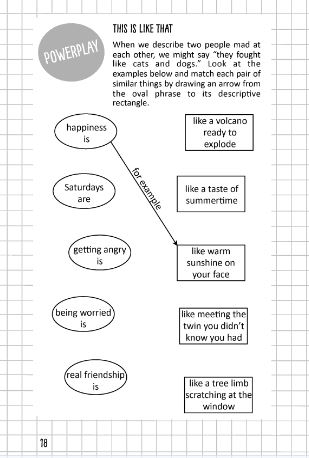
About the Book (from the authors): Why is this a “Poetry Friday Power Book”? Because we believe in the power of poetry to express our deepest feelings, and our most powerful experiences, and to inspire us to use our words to create change in teh world. Plus, we want you to discover the power of poetry in your own thinking and writing with the PowerPlay prewriting and Power2You writing prompts that pull you into poetry and inspire you to get your own ideas on paper–creatively, whimsically, powerfully, and immediately–right now in this book…

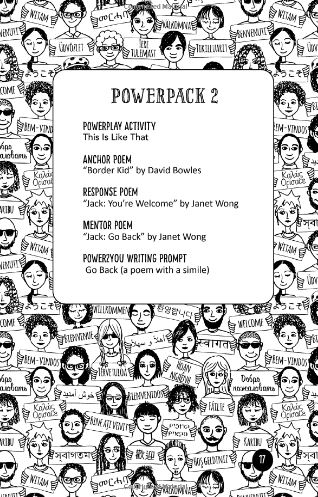
This book offers you several choices for reading, thinking, writing, and responding. Overall, it’s a story in poems, but all of this is also organized in PowerPack groups that help you get a “behind the scenes” look at how poems work and how poets write and think. In each of these PowerPack groups, you’ll find five things:

-PowerPlay activity
-Anchor poem (from an outside source)
-Response poem
-Mentor poem
-Power2You writing prompt

Have fun reading and thinking about poetry and learning about how poetry uses just a few words but says so much and can inspire us to take action. Ready? Let’s “power up” and get started!

Review: I have an interesting relationship with poetry. I overall love it. I love writing it, and I love reading it, but I really have trouble with the analyzing aspect. It is in this very serious analyzing step that kids get afraid of poetry, but I think books like Here We Go help students learn to love poetry instead of being afraid of it while still teaching about the beauty and importance of poetry.

Teachers’ Tools for Navigation: Here We Go is a book that is made for classroom use! There are 12 PowerPacks, each with a different anchor poem and focus. Some PowerPacks work on rhyming, some work on format, and others focus on inspiration. There are so many different ways these PowerPacks could be organized to be used in the classroom! They can be daily during a poetry unit or weekly for half of the school year–whatever works best in your classroom, but this book is begging to be in children’s hands as an inspiration for our future poets.

Discussion Questions: What inspires you to write?; What is your favorite season? Why?; What are your favorite rhyming words?; How can you use your daily life to inspire you as a poet?

Flagged Passages: 

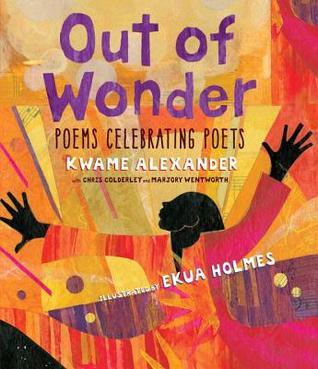
Read This If You Love: Writing poetry; Any poetry anthology including Out of Wonders by Kwame Alexander, Chris Colderley, and Marjory Wentworth and When Green Becomes Tomatoes by Julie Fogliano

Recommended For: 

classroomlibrarybuttonsmall closereadinganalysisbuttonsmall

Signature

Author Guest Post: “How Do We Know What Someone Else Is Feeling?: Body Language, the Big Horse Book, and Imaginative Leaps in Bramble and Maggie” by Jessie Haas

Share

How Do We Know What Someone Else Is Feeling?: Body Language, the Big Horse Book, and Imaginative Leaps in Bramble and Maggie

“Use your words,” kids are often told, when they’re melting down in tears or possibly hitting. Words are crucial so other people can understand what we’re feeling.

But what if the “person” you are trying to communicate with is from a species that doesn’t use words? Not space aliens—I’m talking about animals.

Most of us are familiar with how cats and dogs express themselves. Kisses and wiggles translate well, and I still remember my shock as a toddler when I was pestering the extremely gentle family dog, and he barked at me. I knew just what he meant!

Horses have feelings too, and figuring them out has been a big part of my life, as a horse-lover and an author. Usually my horse books are written from a human point of view, but the Bramble and Maggie books also incorporate the horse’s perspective. From Horse Meets Girl onward, the Bramble and Maggie books have been praised for incorporating both points of view without being anthropomorphic.

How does Maggie know what Bramble is feeling? She relies her ‘big horse book,’ which she carries everywhere. It is a source of such advice as “Don’t fall for the first horse you see.” Sometimes this is conveyed in the art, to keep the printed text clean and clear. At other times, when carrying the book isn’t practical, Maggie remembers what it says. From the beginning of the series, the ‘big horse book’ has allowed me to convey sophisticated information in bite-sized nuggets, and forms a counterpoint to Bramble’s more direct communication style (beautifully captured by illustrator Alison Friend).

InHorse Meets Girl, when left alone on her first night at Maggie’s house, Bramble kicks her stall repeatedly. Maggie consults the book. Learning that “. . . horses are herd animals. They like to be with other horses,” she tells Bramble a story, sings her a song, and when informed in no uncertain terms that that’s not good enough, she curls up in a sleeping bag outside Bramble’s stall. I have a horse, Maggie thought. And she has me.

In Give and Take Maggie saddles up for her first ride. ‘Bramble knew about rides. The rider sat in the saddle. The horse did all the work.’ Bramble does want to explore and meet the neighbors, but she has some stipulations. ‘Neither of them should be boss all the time. There should be some give and take.’ She holds her head high, refusing to be bridled. Maggie pulls out the big horse book, and gets an idea. ‘“If you put your head down, Bramble, I’ll give you a carrot.”

Bramble sniffed the air. Did Maggie really have a carrot?

Yes.

Bramble lowered her head. Maggie gave her a carrot, and Bramble took it. She let Maggie put on the bridle. This was better. Give and take.’

In Spooky Season, Bramble indulges in dramatic leaps of pretend fear to express the exuberance of an autumn day, causing Maggie to fall off (why do they call it Fall?).

‘Maggie knew what her big horse book said. If you fall off a horse, get right back on, before you have time to get scared.’

It’s too late for that. Maggie’s already scared. But Bramble communicates her concern, standing patiently, making her eyes soft and gentle. “I have to, don’t I?” Maggie said. “I hope you’re saying you’ll be good.” That’s exactly what Bramble is saying, and she makes good on that promise again on Halloween, when not even the spookiest ghost can scare her.

In the newest Bramble and Maggie book, Snow Day, a big storm is coming. “Does that horse need a blanket?” the neighbor asks. ‘“No,” Maggie said. “Her long hair will keep her warm.” That was what her big horse book said.’

But after dark, as the storm moves in, Maggie worries. Mom and the big horse book reassure her that horses lived through the Ice Age, and are adapted to cold. “Bramble is as safe and warm as we are,” Mom says.

But Bramble finds the storm exciting. She can’t stay still—and thanks to a not-quite-shut stall door, she’s soon outside. After taking a walk, she decides against going back indoors. ‘ . . . she liked it out here. The snow settled on her back, as thick as a blanket. It kept her warm. Bramble turned her tail to the wind. She put her head down.’

I’m now the author of my own ‘big horse book,’ (The Horse-Lover’s Encyclopedia, Storey, 2017). I know all about how horses are heated by the fires of their own digestion, insulated by layers of hair that create air pockets, kept dry by oils on their coats. They are northern animals. They were shaped by the Ice Age.

Still–I spend a lot of time and energy providing shelter for horses, only to see them horses standing out in the storms, backs to the wind, looking miserable. They can’t be miserable. They have the option of shelter. So why do they do that? Body language doesn’t tell me, and neither does my ‘big horse book’. All I’m left with is an imaginative leap.

‘She was stronger than the storm. It was just air and snowflakes.

She was a horse.

About the Book: Bramble the horse and her devoted girl, Maggie, face a major snowstorm in their fourth adventure.

The sky is white, the air is cold, and snowflakes are falling, tickling Bramble’s back. By bedtime, Maggie and her family are ready for the storm: they’ve shopped for supplies, covered Bramble’s hay with a tarp, and filled the bathtub with extra water. But Bramble is too excited to sleep; she wants to be out in the white, wild world. Luckily for Bramble, she has a shaggy coat to keep her warm. And luckily for Maggie and her family and friends, when morning comes, Bramble can help dig through the deep snow that has most of the neighbors stuck in their homes. Soon the snow day becomes a block party complete with marshmallows, cocoa, and lots of friends. Chapter-book readers of the horse-loving variety will relish the camaraderie and enjoy the equine exploits in this cozy wintertime tale.

Review and Author Q&A here on Unleashing Readers about the first three Bramble and Maggie books!

Kellee’s Review: There is a very specific time in a kid’s life where they are ready to begin reading longer books, but not ready to tackle chapter books yet. This is where Bramble and Maggie fits. These early chapter books will are perfect texts to help lead kids to longer chapter books. The work well for their targeted age level in that they never speak down to readers and have excellently paced stories that hold readers’ attention and will help them feel successful.  On top of all this, the Bramble and Maggie stories are just so sweet! I love all the different adventures they go on and the lessons they learn like overcoming fear, conquering loneliness, and gaining responsibility. Readers will adore these books.

Ricki’s Review: Kellee hit the nail on the head. As I was reading, I thought to myself, “Why didn’t I have these books available to me when I was transitioning to chapter books?” I remember being devastated that my books no longer had pictures in them, and I resisted the longer texts for this reason. This series is engaging, educative, and fun! The words repeat in ways that will help students learn the vocabulary, particularly the more difficult words that relate to horses. Each book delivers a strong message, and the bond between Bramble and Maggie is one which will connect with readers. When I think about these books, I will always remember Maggie dragging her sleeping bag to the stable to sleep beside Bramble. I can’t wait to share these books with my pre-service elementary school teachers. They will have a special place in classrooms.

Curriculum Guide

Interview with the Illustrator

Thank you, Jesse for this post!

RickiSigandKellee Signature

Review and Giveaway!: Henry and the Chalk Dragon by Jennifer Trafton

Share

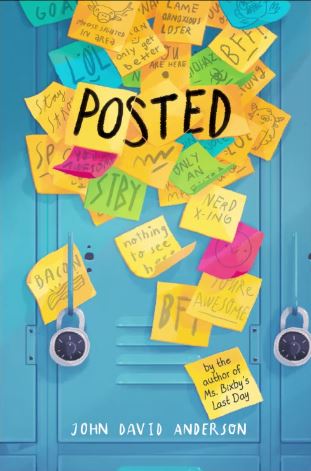
Henry and the Chalk Dragon
Author: Jennifer Trafton
Illustrator: Benjamin Schipper
Published April 4th, 2017 by Rabbit Room Press

Summary: In the town of Squashbuckle, just about anything can happen, and when Henry Penwhistle draws a mighty Chalk Dragon on his door, the dragon does what Henry least expects–it runs away. Now Henry’s art is out in the world for everyone to see, and it’s causing trouble for him and his schoolmates, Oscar and Jade. If they don’t stop it, the entire town could be doomed! To vanquish the threat of a rampaging Chalk Dragon, Sir Henry Penwhistle, Knight of La Muncha Elementary School, is going to have to do more than just catch his art–he’s going to have to let his imagination run wild. And THAT takes bravery.

About the Author: Jennifer Trafton is the author of The Rise and Fall of Mount Majestic (Dial, 2010) which received starred reviews in Publishers Weekly and School Library Journal and was a nominee for Tennessee’s Volunteer State Book Award and the National Homeschool Book Award. Henry and the Chalk Dragon arose from her lifelong love of drawing and her personal quest for the courage to be an artist. She lives in Nashville, Tennessee, where, in addition to pursuing her love of art and illustration, she teaches writing classes, workshops, and summer camps in a variety of schools, libraries, and homeschool groups in the Nashville area, as well as online classes to kids around the world. To learn more, and to download free materials, visit jennifertrafton.com.

Critical Praise: 

★“A delicious face-off between forces of conformity and creativity run amok, spiced with offbeat names as well as insights expressed with eloquent simplicity.” —Booklist (starred review)
★“A perfect title to hand to young readers looking for laughs along with a wild and crazy adventure.”
                                                                                —School Library Journal (starred review)

Review: I love any book that promotes imagination, and it isn’t too often that you find a novel that is all about keeping your imagination. Henry’s story is a Pleasantville one–he lives in a boring town and takes boring classes, but when he closes his door, his imagination goes wild. It is when his imaginative Chalk Dragon escapes and wrecks havoc on his school does the power of an imagination really start to show. 

On a side note, and only some of you will understand this, but the cover of Henry and the Chalk Dragon is matte and SO SOFT!

Teachers’ Tools for Navigation: Along with a read aloud, the text gives lots of opportunities to discuss imagination, art, and creative writing. Also, chunking the text to fit the most opportune times will lead to some great writing and art prompts.

Discussion Questions: How did the principal end up the way he is? How do we know that he was not that way when he was younger?; Was Henry’s class/school doing the best thing to promote Vegetable Week?; Which adults understand Henry and his imagination? Which hinder him?; How does the power of Henry’s imagination cause havoc on the school? How does it save the school?; What does Henry’s chalk dragon coming to life symbolize in the grand scheme of things?; What is the lesson that the author is trying to teach us about imagination and growing up?

Flagged Passages: “Henry recognized the curve of those horns and the arrow-tipped tail. He recognized every sharp green flick of scaly skin, every zigzag of the bony spines running down the creature’s back. It was his dragon. Just as he had imagined it. Just as he had drawn it. Here it was, standing in front of him! There was something brand new in the world, and he had put it there!

There is a kind of fear that squeezes your heart with an icy hand and freezes you into a popsicle. But there is another kind of fear that is thrilling and hot, that makes your fingers tingle and your toes tickle each other inside your shoes until you want to leap over the Empire State Building. Henry was afraid with this kind of fear, and it felt good.
The dragon stared back at him–up and down, from his sneakers to his shiny helmet. It did not look afraid of Henry. It spread its wings proudly. It stretched its scaly neck as high as it would go. Its mouth widened slowly into a dragonish grin.

How long had Henry been waiting for this moment? Here he was, in his shiny suit of armor, with a sword in his hand. And here was a real live dragon–a dragon who could knock the house down with a few flicks of its tail, who could eat his mother for breakfast, who could send a ball of fire bouncing down the street. He knew exactly what he had to do.” (p. 32-33)

Read This If You Loved: The Journey Trilogy by Aaron BeckerHarold and the Purple Crayon by Crockett Johnson, Other picture books that spark imagination
Recommended For:

classroomlibrarybuttonsmall 

Giveaway!

a Rafflecopter giveaway

**Thank you to Barbara at Blue Slip Media for providing a copy for review!**

Paint Me a Picture & Tell Me a Story by Emily Bannister

Share

Paint Me a Picture: A Colorful Book of Art Inspiration
Author: Emily Bannister
Illustrator: Holly Hatam
Published by Kane Miller EDC Publishing

Tell Me a Story: An Inspirational Book for Creative Writers
Author: Emily Bannister
Illustrator: Barbara Chotiner
Published by Kane Miller EDC Publishing

Summary: Paint Me a Picture equates color to mood, getting children thinking about the way they see and feel our colorful world.
Tell Me a Story lets children know that their words are important, that no matter the form, their stories are meaningful.

With simple rhyming text and accessible art, this book is a springboard for drawing and sharing stories, giving color to emotions, and kids permission to do, create, show and tell.
It delightfully, poetically, celebrates the joy and imagination in art in all its forms and inspires the storyteller in everyone.

Review: I love books that help students feel like they are artists, writers, or thinkers. I think creativity is such an important part of childhood and too often we are pushing kids to grow up too quickly and not learn how to be creative or we’re pushing kids to fit into a certain box instead of letting them think outside of the box. These books help kids see the joy in writing and creating. They celebrate creative thinking and writing and the colors of our world. They show how you can combine color and words to create something that others will want to read and see. 

Teachers’ Tools for Navigation: Sometimes all a student needs is inspiration to create a story or piece of art work. These texts are those inspiration. They help students know that their story means something. That their words are something someone wants to read. That color can mean something. That their color choices when making artwork make a difference but that all colors are beautiful.

Discussion Questions: If you wanted to draw a picture that symbolizes sadness/happiness/laughter/anger, etc., what color would you use? What would you draw?; What is your favorite color? What does it symbolize to you?; To write a story, you first need to start with an idea, a place, or a thing. What would you write a story about?

Flagged Passages: 

Read This If You Loved: What Do You See? by Kyla Ryman, The Amazing Crafty Cat by Charise Mericle Harper, A Child of Books by Oliver JeffersThe Museum by Susan Verde, My Life in Pictures by Deborah ZemkeDoodle Adventures by Mike LoweryMy Pen by Christopher Myers, Mix it Up! by Hervé Tullet, Sky Color by Peter H. Reynolds, Art by Patrick McDonnell, Not a Box by Antoinette Portis, Seen Art? by Jon Scieszka, The Cat and the Bird by Geraldine Elschner

Recommended For:

classroomlibrarybuttonsmall 

**Thank you to Lynn at Kane Miller for providing copies for review!!**

Author Guest Post and Giveaway: “A Recipe for Storytelling: Take One Real Life, Add a Spoonful of Fantasy, and Stir” by Carter Roy, Author of The Blazing Bridge, the third book in the The Blood Guard series

Share

“A Recipe for Storytelling: Take One Real Life, Add a Spoonful of Fantasy, and Stir”


Late last summer, after I’d turned in the manuscript for the third Blood Guard book, The Blazing Bridge, I mentioned to a longtime friend that I’d finished the trilogy. “That’s great!” she chirped; “now you can write a real book.”

Excuse me?” I replied and made a face like this

She explained. To her mind, fantasy adventure for middle-grade graders is mere “escapist literature,” and it doesn’t count as real—not like stories about normal people. “You had a rough childhood,” she said. “Why not write about that?”

But as far as I was concerned, I was already writing about my childhood. Only in disguise. Because even though fantasy literature on its surface is about another world, at root it is always about this one—the world we live in. Otherwise the stories would have no hold on us at all.

Not to get maudlin, but when I was growing up, my family—like many families—fell apart. There was never enough money; my older brothers were always getting into trouble; my dad turned out to be a not-so-good guy; and my parents divorced—which forced my mom to move us kids around from one home to another to another as she tried to find us an affordable and safe place in the world.

In a very different form, that material made its way into the Blood Guard books. A feud between two parents. A discovery that a father is someone other than who his children thought him to be. A constant need to uproot one’s life and relocate. All of these things were drawn from actual life, but transformed into backstory for an action adventure tale. Why? Because these novels were for the twelve-year-old me as much as anyone, and that kid liked his stories to move. The magic, the action, the jokes—those are the spoonfuls of sugar that make the medicine go down. (The “medicine” in this case being the ugly truth that my dad was, in fact, a very bad guy.)

Twelve-year-old me wouldn’t face the truth about my dad for years. But I might have done so a lot sooner … if only I’d been able to if I’d been able to read about it in a fantasy novel.


About the Book: Ronan Truelove’s best friend, scrappy smart aleck Greta Sustermann, has no idea that she is one of the thirty-six Pure souls crucial to the safety of the world. But Ronan’s evil father has figured it out—and he’s leading the Bend Sinister straight to Greta. If they capture her, she’ll suffer a fate far worse than mere death. But to get to Greta, they’re going to have to go through Ronan first.

Standing with Ronan are plucky hacker Sammy; witty, unkillable Jack Dawkins; and a sharp-tongued woman named Diz, who drives a dangerously souped-up taxi. One breathless close call after another leads to an ugly showdown: Ronan alone against his father, with the fate of Greta, his friends, and the entire world hanging in the balance. Will Ronan be able to rise up and prove once and for all that he has what it takes to join the Blood Guard?

By turns heart-stopping and hilarious, The Blazing Bridge brings the Blood Guard trilogy to a surprising, clever, and altogether thrilling conclusion.


About the Author: Carter Roy has painted houses and worked on construction sites, waited tables and driven delivery trucks, been a stagehand for rock bands and a videographer on a cruise ship, and worked as a line cook in a kitchen, a projectionist in a movie theater, and a rhetoric teacher at a university. He has been a reference librarian and a bookseller, edited hundreds of books for major publishers, and written award-winning short stories that have appeared in a half-dozen journals and anthologies. His first two books were The Blood Guard and The Glass Gauntlet. He lives with his wife and daughter in New York City and can be found at www.carterroybooks.com or on Twitter @CarterRoyBooks.


Giveaway!

Thank you, Carter for this inspirational post! And thank you, Barbara from Blue Slip Media, for connecting us with Carter!

RickiSigandKellee Signature

Author Guest Post: “An Adaptation: Better Than The Original?” by John Powers, Author of Queen of Sky Island

Share

An Adaptation: Better Than The Original? by John Powers

I am not an MG writer. My work is with the stage and movies. My usual arena for subject matter is recent American history and horror. In addition to creating original stories, I have adapted existing texts: speeches; books; transcripts. I had chosen these works because something within them resonated with me, and I felt it would resonate with others.

I am pretty ruthless as an adapter. My first task is to cut away what I consider the unnecessary narrative and to focus on the dramatic and emotional story. I then take a second pass at the text, which at this point is more like surgery. I am focused on creating and sustaining dramatic momentum, the effect of quickly “turning the page.” Once that is done, the challenge begins: focusing relentlessly on what resonates with today’s readers and viewers.

Who should care about the rabble-rousing speeches of Mary Jones (a.k.a. Mother Jones) during a West Virginia coal strike? What do we care about the efforts of poet Amy Lowell to promote the works of then little known writers Carl Sandberg and Robert Frost? Are the doubts and obstacles facing the novice Zane Grey of any importance to us in the age of Instagram and Snapchat?

These are questions that I have asked and answered in adapting existing texts for contemporary audiences. We cannot bring back great people who have passed, but by working closely with their texts we can breathe life into their creations. We can do it in a way that enables contemporary readers and viewers, particularly young ones, to emotionally connect with the values and ideas that these people fought to express.

For example, the Pentagon Papers is a frequently referenced document. But who knows anything about it? In working with the 7000-page text for a stage production, I grew to think that it is the most important work in the American language. I saw how it revealed the American character in depth, as it traced 23 years of a 30-year war. It was our Iliad. Yet who today would read a 7000-page document about a lost war?

In adapting the Pentagon Papers for readers, I sought to tell the story in the most concise and comprehensive manner. I drew excerpts from the four-volume Gravel edition of the Papers, and I grouped them into brief, distinct chapters. The result became a quick page-turning experience that a reader could consume in one or two sittings. In addition, I included links to on-line resources, such as articles and historical videos, to broaden their knowledge.

The key to finding success with the work, however, was in making it resonate with people, particularly young people. I did that by relating this previous “endless war” with the current one. In particular, I directed the adaptation toward millennials, whom I felt would be continually trying to make sense out of the situation we currently are in and would be asking could there ever be an end to it.

In another example, I discovered a little known work by L. Frank Baum when I was creating a solo performance for the stage about his life in early Hollywood. I was struck by the vivid imagery of the world and characters that he created in Sky Island, and I was surprised that it had not been exploited further.

Baum, an early feminist, considered it one of his best stories, and yet it had migrated into the land of forgotten treasures. I had my ideas of why: it was unnecessarily long; the main “earth” characters were no longer relatable; and there was no dramatic momentum.

In my adaptation, I titled the work Queen of Sky Island to give it a central focus and to assert Baum’s feminism; I wanted the reader to know from the outset whose journey this was and what was the desired goal. I also cut the length of the original text in half, eliminating tangential episodes that pulled focus away from the hero. Also, I also drew the hero as an assertive, impulsive girl striving to bring her broken family back together, and I surrounded her with new companions: an almost angel-like boy and a disabled veteran.

I left in place the vivid characters and the key actions that Baum envisioned on his island in the sky. Now, all the elements of the story are working to focus our attention on this young hero’s choices that put her and her companions at risk in this bizarre, unearthly world; and we witness her dig deep within herself to both save their situation and to bring lasting justice to this morally compromised world.

Without question, much of Queen of Sky Island is about visual imagery, but in my adaptation I have found something that will resonate with young readers; they will relate to this contemporary hero who at times is stubborn and violent, but who is also caring and heroic. She grows immensely during a brief course of time, from a selfish child to a selfless queen.

Creations age quickly in our new world, but there are invaluable elements within these creations that should be sought out like precious gems and placed in new jewelry settings. Adaptations are not better than the originals; they are different; they aim to preserve the best and carry it forward to resonate in the hearts and minds of new generations.


About the Author: John Powers (a.k.a. J-Powers) is the author of Queen of Sky Island (Amazon, Smashwords 2014, Audible 2016) and Pentagon Papers: Recently Abridged Edition for the Millennial Generation (Amazon, Smashwords 2012). He lives in the harbor area of Los Angeles with his wife and three millennial stepchildren. Find him at powerplayz.com


About the Book: Queen of Sky Island is a coming of age story charged with fantasy, heroic adventure, and vividly imagined new worlds. It is a 21st century adaptation of a story by L. Frank Baum, the creator of The Wonderful Wizard of Oz.

As reconceived and adapted by John Powers (a.k.a. J-Powers), Queen of Sky Island reveals a young girl, Tara, who in her determined search for her military father becomes trapped on an actual island in the sky where she leads one other worldly army against another. Tara’s faithful companions on this perilous adventure are Bobo, a brave young boy who possesses a flying umbrella, and Sgt. Rik, a resourceful disabled veteran who looks after Tara and her mother at their sea cliff cottage on the Earth. Through miscommunication, Tara and her companions arrive at Sky Island, a bizarre land divided between wildly different pink and blue territories. They are unfairly taken prisoner by the Boolooroo, the selfish and mean-spirited leader of the Blue people. Facing a horrible punishment known as “patching,” Tara and her companions escape and run for a thick fog bank that separates the two territories. With help from an unusual creature, they cross through the dense fog, and they are taken to the queen of the Pinkies. After surviving a near fatal test in this new realm, Tara shows what she is made of and rises to lead the Pinkies against the Blues in an attempt to defeat the Boolooroo.

Thank you, John, for this thought-provoking post!

and