Three Bears of the Pacific Northwest by Richard Vaughan & Marcia Crews

Share

three-bears-of-the-pacific

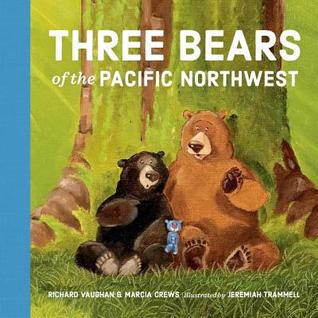
Three Bears of the Pacific Northwest
Authors: Richard Vaughan & Marcia Crews
Illustrator: Jeremiah Trammell
Published August 6th, 2016 by Little Bigfoot

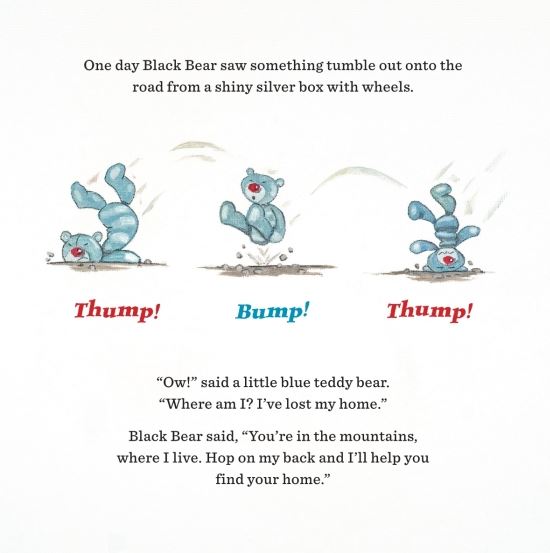
Goodreads Summary: When a small blue teddy bear falls out of a moving recreational vehicle in the mountains of the Pacific Northwest, two native bears-Black Bear and Brown Bear-agree to help reunite Blue Bear with his family. The bears only know that Blue Bear’s boy lives in a “shiny silver box with wheels.” Down the mountains, through the forests, and across the saltwater, the three bears encounter eagles, seals, skunks, and many other Pacific Northwest animals along their way. This is a charming story with a happy ending and no Goldilocks.

The book features Jeremiah Trammel’s beautiful oil-painted illustrations, which are sure to engage children and parents alike. Marcia and Richard Vaughan write children’s books separately and collaboratively. Marcia has written more than sixty children’s books in Australia and the United States. Richard is the author of more than twenty children’s books. Marcia and Richard live in Vashon Island, WA.

Review: Three bears, the Pacific Northwestern Brown Bear and Black Bear along with a stuffed Blue Bear, go on a journey through nature to help Blue Bear get back home to his family. On the journey, the reader is taken from the mountains to the shore and get introduced to different aspects of the Pacific Northwest and the animals that live there. Accompanied by Trammell’s expressionistic illustrations, the bears’ story is a very fun and educational adventure.

Teachers’ Tools for Navigation: The bears’ journey would be a perfect cross curricular text for language arts, social studies, and science. This text is a fun narrative mixed with a geographical journey with a cast of animals.

Discussion Questions: Have you ever lost a stuffed animal or blanket that you loved? Did you get it back?; What animals live in your state that you would meet if you went on a journey?

Flagged Passages: 

three-bears-of-the-pacific-spread

Read This If You Loved: O is for Orca or 1-2-3 Moose by Andrea HelmanThe Bear Ate Your Sandwich by Julia Sarcone-Roach, A Story for Bear by Dennis Haseley

Recommended For: 

classroomlibrarybuttonsmall readaloudbuttonsmall

Signature

**Thank you to Sasquatch Books for providing a copy for review!**

Teaching Guide for The Hat Trilogy by Jon Klassen

Share

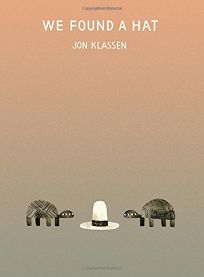
Happy book birthday to We Found a Hat by Jon Klassen!

we found a hat

We Found a Hat
Published October 11, 2016 by Candlewick Press

i-want-my-hat-back  this is not my hat

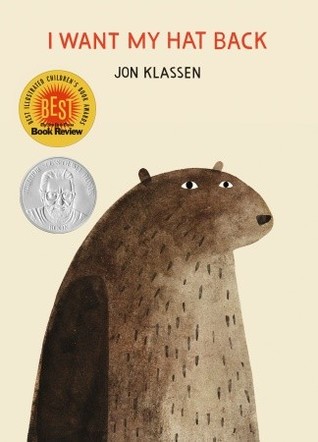
I Want My Hat Back
Published September 27th, 2011 by Candlewick Press

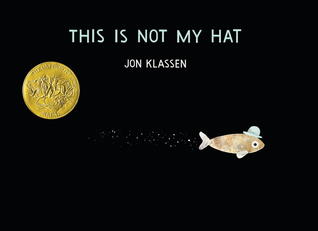
This Is Not My Hat
Published October 9th, 2012 by Candlewick Press

The first two books of The Hat Trilogy have enthralled readers for years. They have been read in many classrooms and in many bedrooms delighting millions of children (and adults!). Today we get to celebrate the final installment of the trilogy.

Summary of We Found a HatTwo turtles find one hat – and it happens to look great on both of them.

Q&A With Jon Klassen: 

Teachers’ Tools for Navigation and Discussion Questions: 

I am happy to share the teaching guide for the books that I had the honor of writing!

The guide can also be found here.

Happy reading!

Kellee Signature

Blog Tour, Giveaway, Author Guest Post, and Reviews!: Antsy Ansel: Ansel Adams, A Life in Nature by Cindy Jenson-Elliott

Share

NFPB2016

Nonfiction Wednesday

Nonfiction Picture Book Wednesday is hosted by Kid Lit Frenzy and was started to help promote the reading of nonfiction texts. Most Wednesdays, we will be participating and will review a nonfiction text (though it may not always be a picture book).
Be sure to visit Kid Lit Frenzy and see what other nonfiction books are shared this week!

antsy-adams

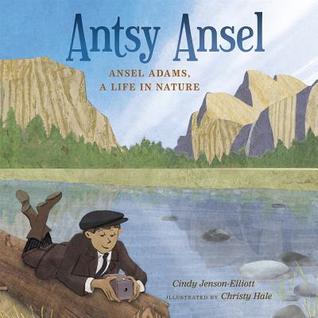
Antsy Adams: Ansel Adams, A Life in Nature
Author: Cindy Jenson-Elliott
Illustrator: Christy Hale
Published September 6th, 2016 by Henry Holt and Co.

Goodreads Summary: You may be familiar with Adams’s iconic black-and-white nature photographs. But do you know about the artist who created these images?

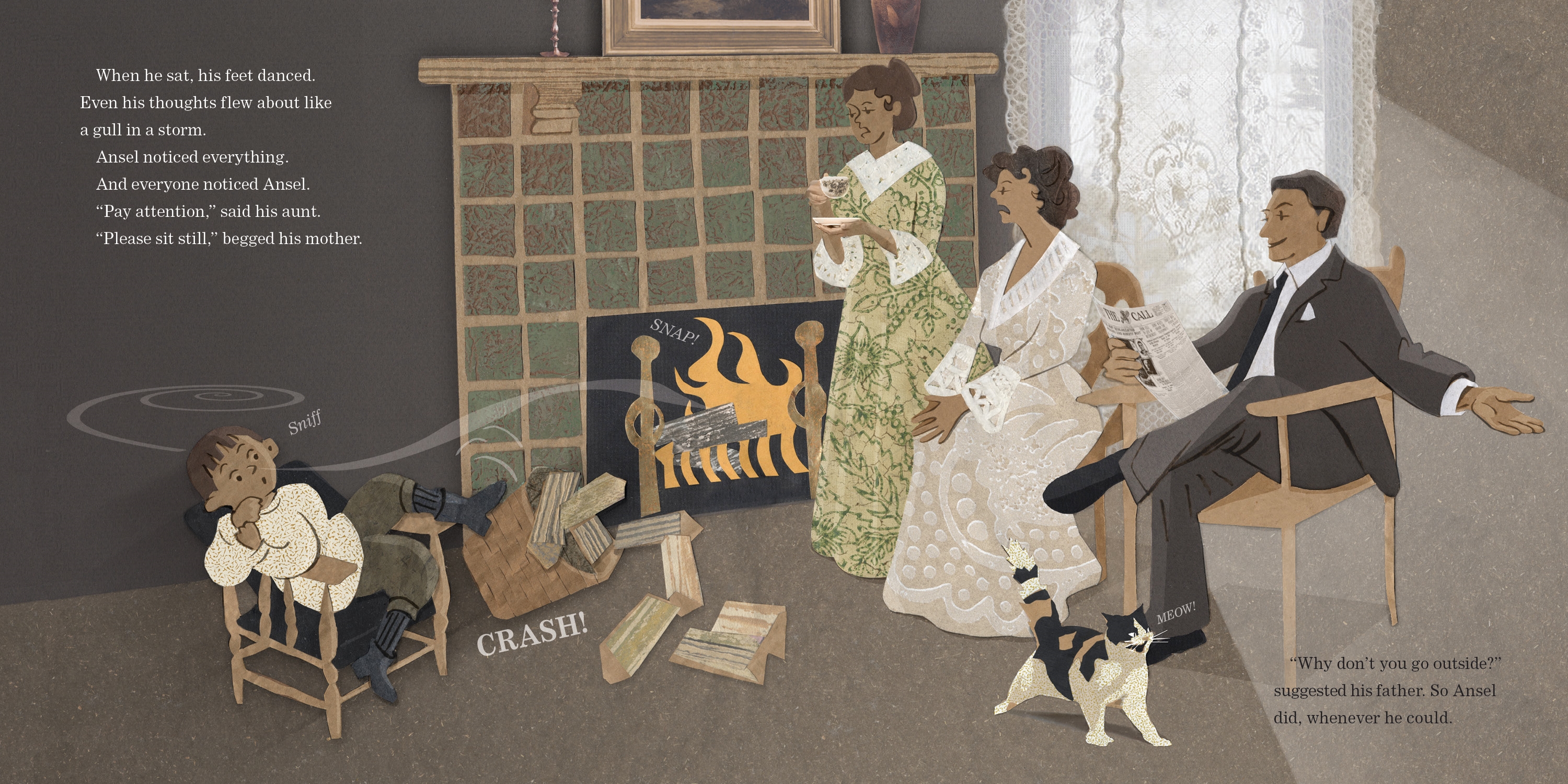
As a child, Ansel Adams just couldn’t sit still. He felt trapped indoors and never walked anywhere–he ran. Even when he sat, his feet danced. But in nature, Ansel felt right at home. He fell in love with the gusting gales of the Golden Gate, the quiet whisper of Lobos Creek, the icy white of Yosemite Valley, and countless other remarkable natural sights.

From his early days in San Francisco to the height of his glory nationwide, this book chronicles a restless boy’s path to becoming an iconic nature photographer.

Cindy Jenson-Elliott photo

About the Author: Cindy Jenson-Elliott is the author of 17 books, a teacher and environmental educator. She teaches writing workshops through her small business Words to Go (www.wordstogosd.com) You can see her work on her website at www.cindyjensonelliott.com.

Kellee’s Review: As a child of a museum director and a photographer, Ansel Adams has been a name that I’ve known since I was quite young. He was one of the first artists whose work I could identify on my own. I was fascinated by his photographs–almost spooky in their lights and shadows but beautiful to where you cannot take your eyes off of them.

I loved learning about Ansel as a child. His story rang true as a teacher especially because there are so many kids like Ansel who are not made for the traditional setting of school yet are brilliant and should be educated a bit differently than the norm. Cindy Jenson-Elliott and Christy Hale do a very good job at showing and telling how Ansel viewed the world. With detailed illustrations, onomatopoeias, and a rhythmic texts, Ansel’s story is told in such an authentic way that really takes the reader into his brilliant mind.

Ricki’s Review: I’ve heard the name Ansel Adams, but I never connected it to the beautiful photography. I am so glad to have read this book because it made me aware of an important man that I didn’t know much about! As a mom of a son that is always itching to go outdoors, this was a great book to read to him. He felt very connected to Ansel! It also taught him all of the lessons he learns while he is outside! It is great to learn about who this man was as a child and what his life was like when he was growing up. 

Teachers’ Tools for Navigation: Ansel’s story fits into art, history, and language arts. Ansel Adams is a very significant artist of the 20th century and his story could be told within the context of art history or American history. The historical aspect in addition to the imagery, figurative language, and rhythm makes this text perfect for the classroom.

Discussion Questions: How did Ansel’s life change after his dad pulled him out of school? How did this choice affect the rest of his life?; How did Ansel’s personality differ from what the school expected of him?; Who do you think had the biggest influence on Ansel’s life?; Ansel was able to do what he loved for a living. What do you love to do? How could you make a living doing it?

Author Guest Post: I really enjoyed working on this book, partly because I loved the character, but also because I spend a lot of time in the places Ansel Adams haunted. I went to Yosemite for the first time at the same age as Ansel Adams went. And each year, my family treks up to the High Sierra to camp and explore.

I also loved deeply immersing myself in his life and discovering so many things I had not realized: that he explored nearby nature — not far away and exotic locales — as a child, and that forged his connection with the natural world;  that he did commercial work to make a living for his family (so affirming for artists and writers who have to do the same thing!); that he was a concert pianist.

Sometimes when you deeply research a life in order to write a biography, you fall a little bit in love with your subject. Though this was my first biography, from what I understand from other biographers, that’s a common experience. I also understand that many biographers, after spending a few years with someone, fall out of love as they discover all the dimensions of a personality. That didn’t happen for me with Ansel Adams. Reading about the person, seeing where he lived and what he valued throughout his life, and particularly through reading autobiography, I felt such admiration and respect. In a well-written autobiography, you get into a state where you feel like you are experiencing a person’s essence. Reading Ansel Adams’s autobiography was like that for me — his poetic word choices, the way he described the world he lived in and his experience in that world, I had the feeling of standing beside him and seeing his world through his eyes. I wanted to carry that essence into my picture book about Ansel Adams. I wanted young readers to feel what Ansel Adams must have felt making a connection with nature in quiet Lobos Creek behind his house, or meeting his beloved Yosemite for the first time. I wanted the experience of reading Antsy Ansel: Ansel Adams, a Life in Nature, to be visceral. I hope that through my words and Christy Hale’s collage art, that people experience the world through a beautiful set of eyes.

Flagged Passages: 

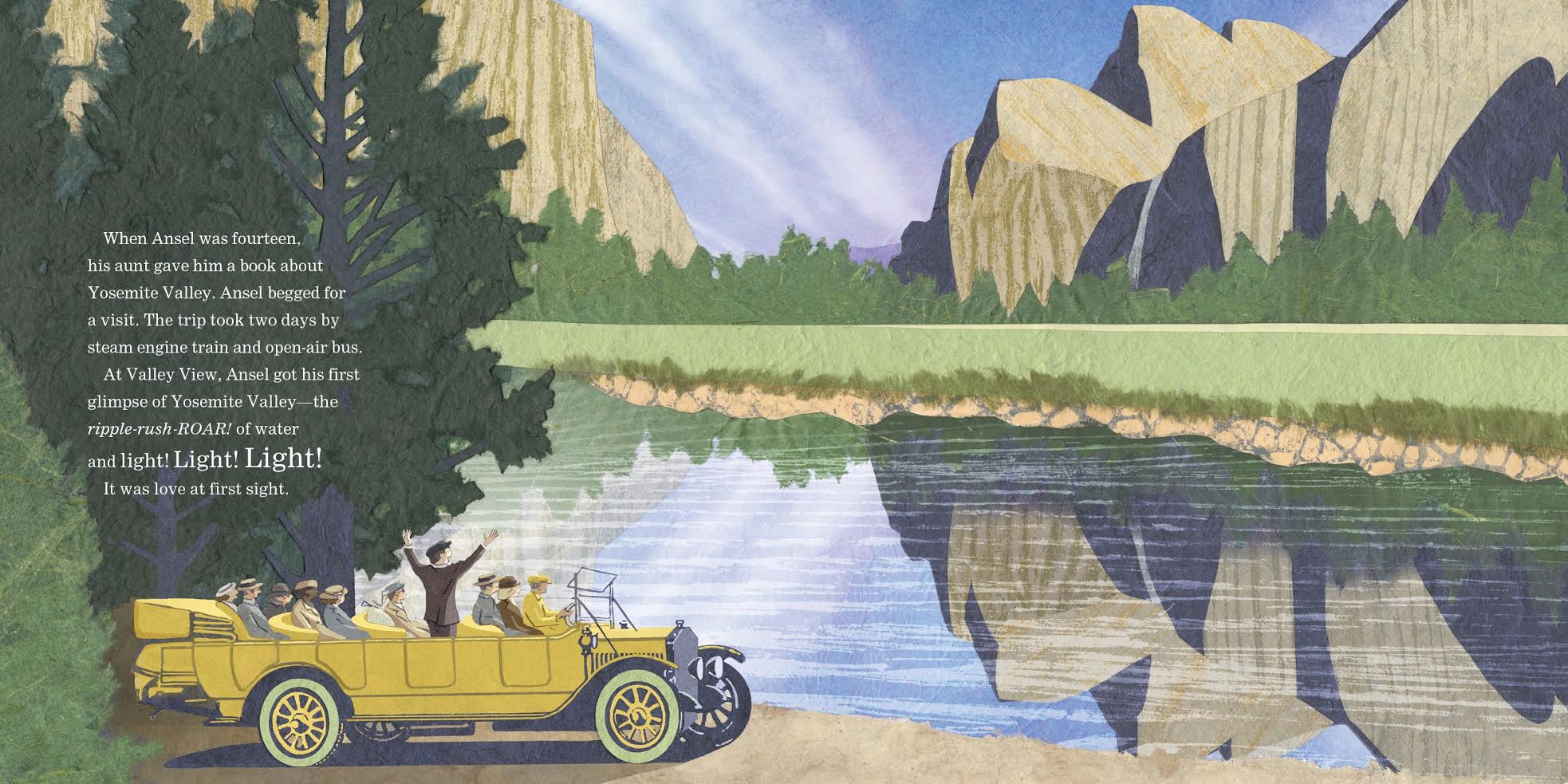
ansel-yosemite ansel-adams-spread-2

(Yosemite photographs to see the beauty and precision of Christy Hale’s artwork)

ansel-adams-spread

Read This If You Love: Art/photography, The Noisy Paintbox by Barb Rosenstock, The Museum by Susan Verde, Dorothea’s Eyes by Barb Rosenstock, Photos Framed by Ruth ThomsonThe Sky Painter by Margarita Engle, On a Beam of Light by Jennifer Berne

Recommended For: 

classroomlibrarybuttonsmall readaloudbuttonsmall closereadinganalysisbuttonsmall litcirclesbuttonsmall

Giveaway!

a Rafflecopter giveaway

Signatureand RickiSig

**Thank you to Cindy and Morgan at Macmillan for providing copies for review!**

A Child of Books by Oliver Jeffers and Sam Winston

Share

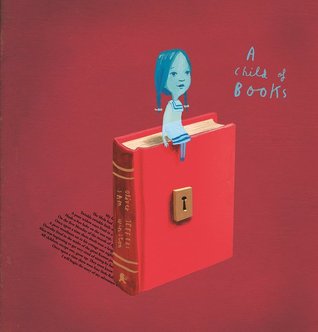
A Child of Books

A Child of Books
Authors: Oliver Jeffers and Sam Winston
Published by September 6th, 2016

Summary: New York Times best-selling author-illustrator Oliver Jeffers and fine artist Sam Winston deliver a lyrical picture book inspiring readers of all ages to create, to question, to explore, and to imagine.

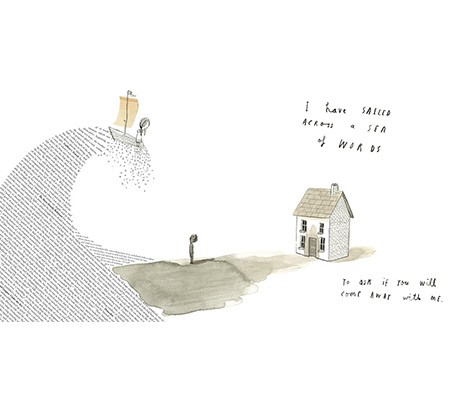
A little girl sails her raft across a sea of words, arriving at the house of a small boy and calling him away on an adventure. Through forests of fairy tales and across mountains of make-believe, the two travel together on a fantastical journey that unlocks the boy’s imagination. Now a lifetime of magic and adventure lies ahead of him . . . but who will be next?

Combining elegant images by Oliver Jeffers and Sam Winston’s typographical landscapes shaped from excerpts of children’s classics and lullabies, A Child of Books is a stunning prose poem on the rewards of reading and sharing stories—an immersive and unforgettable reading experience that readers will want to pass on to others.

Review: Oliver Jeffers has a way of writing such thought-provoking books with beautiful artwork  that are just a bit weird yet so brilliant that you can’t help but reading it over and over. I know that sounds like such a fan girl review, but if you’ve read any of his books, you know exactly what I am talking about. Jeffers’s newest book is no exception. This book is about how stories can carry you wherever your imagination can imagine. The brilliance of actually using words from classic books to carry the main character on her journey shows how all of these books have carried so many readers on adventures that only an author’s imagination mixed with the reader’s imagination could take them on. 

Teachers’ Tools for Navigation: Allusion and theme are where my mind automatically goes to when reading this book. First, you can look at the words that are used as the setting to look at why the authors chose these specific allusions. For example, during the sea scenes, they use Gulliver’s Travels, The Adventure of Pinocchio, The Swiss Family Robinson, 20,000 Leagues Under the Sea, Robinson Crusoe, The Voyages of Dr. Dolittle, and more. Why would these books specifically be chosen for those scenes? What other pieces of literature are used throughout the book and why? I also think the theme is very clear, but it will spark a really great conversation.

Discussion Questions: What is theme of the book?; Why did the author chose specific texts for different settings?

Flagged Passages: 

child of books spread

“I have sailed across a sea of words to ask if you will come away with me.”

Read This If You Loved: Anything by Oliver Jeffers, The Marvels by Brian SelznickNibbles: The Book Monster by Emma Yarlett, Sophie Quire and the Last Storyguard by Jonathan Auxier, The Whisper by Pamela Zagarenski

Recommended For:

  classroomlibrarybuttonsmall readaloudbuttonsmall closereadinganalysisbuttonsmall

Kellee Signature

Shy by Deborah Freedman

Share

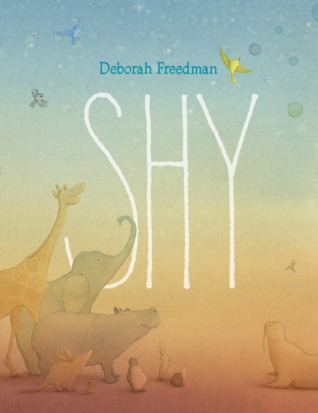
shy

Shy
Author and Illustrator: Deborah Freedman
Published: September 27, 2016 by Viking

Summary: Shy loves birds. He’d love to watch them fly and hear them sing, but he’s only ever read about them in books. . .until a real bird comes along. He’s dying to meet her, but there’s just one problem: Shy is, well, shy–so shy, in fact, that he’s afraid to leave the gutter of the book. Can Shy overcome his fears and venture out onto the page?

This sweetly relatable picture book from the acclaimed Deborah Freedman speaks to every child who’s ever felt like hiding instead of facing the daunting world.

Ricki’s Review: I have read this book dozens and dozens of times with my son. He absolutely loves the story. When my husband walked him upstairs to bed the night after we got the book, he didn’t even make it to the top of the stairs before he requested his reading choices for the night, “Race car books and Shy, please.” The book features a character who is Shy and who is unable to say hello to a yellow bird. I won’t give anything away, but this is a book that will teach many lessons to readers (and not just the shy ones!). It’s a daunting, scary world out there, and all kids will be fearful in situations. This book teaches lessons of courage and friendship. This stunningly beautiful book captured my attention from the start, and I immediately shared it with colleagues.

Kellee’s Review: Deborah Freedman can do no wrong. Her ability to illustrate differently depending on the story and her ability to tell such a wide variety of stories just moves her to an all-star level. In Shy, Freedman tells us a story of Shy who could represent any kid who fears doing something. His story helps kids who may feel like him go through his journey of facing his fears. I also love that books are such a large part of Shy’s life and really help him with the real world.

Teachers’ Tools for Navigation: Teachers might have students analyze the way shyness is portrayed in this book. They can examine the wording, mood, etc. Then, as a class or in small groups, they might pick a different emotion to portray. They could create and publish their own creations. Then, they might compare and contrast the way the emotion shapes the text as a whole.

Discussion Questions: When is a time that you felt shy? Did you gain the courage to be brave? What happened to the bird when Shy wasn’t brave?; It isn’t until later in the book that we know what kind of animal Shy is. Why do you think the author structured the story this way? What does it add to your reading?

Flagged Passage: “But Shy didn’t know how to talk to a bird. What if he stuttered? What if he blushed? What if–“

Read This If You Loved: Blue Chicken by Deborah Freedman, Little Tree by Loren Long, Giraffes Can’t Dance by Giles Andreae, Say Hello by Jack Foreman, The Cloud by Hannah Cumming, Each Kindness by Jacqueline Woodson, By Mouse & Frog by Deborah Freedman

Recommended For:

  readaloudbuttonsmall classroomlibrarybuttonsmall

RickiSig andKellee Signature

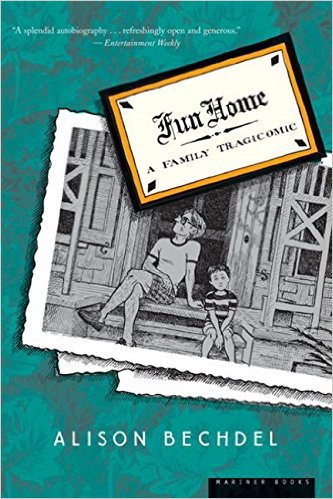
Fun Home: A Family Tragicomic by Alison Bechdel

Share

NFPB2016

Nonfiction Wednesday

Nonfiction Picture Book Wednesday is hosted by Kid Lit Frenzy and was started to help promote the reading of nonfiction texts. Most Wednesdays, we will be participating and will review a nonfiction text (though it may not always be a picture book).
Be sure to visit Kid Lit Frenzy and see what other nonfiction books are shared this week!

Fun Home

Fun Home: A Family Tragicomic
Author: Alison Bechdel
Published: June 5, 2007 by Mariner Books

Summary: In this graphic memoir, Alison Bechdel charts her fraught relationship with her late father.

Distant and exacting, Bruce Bechdel was an English teacher and director of the town funeral home, which Alison and her family referred to as the Fun Home. It was not until college that Alison, who had recently come out as a lesbian, discovered that her father was also gay. A few weeks after this revelation, he was dead, leaving a legacy of mystery for his daughter to resolve.

Review: I don’t tend to read many adult books each year, but I kept seeing this book referenced. I noticed it was a 2007 publication, and when books are still being discussed frequently almost ten years later, you know they have to be good! I finally requested it from my library, and boy did I love it. I usually try to review only new books, but this book was too good not to share. I felt deeply connected with Alison and her life—despite the fact that it is nothing like mine. I was really drawn to the psychological themes she embedded and the phenomenal writing. She is incredibly smart, and this shines in her writing. The drawings are equally captivating. I am not surprised that young adults tend to read this book. It’s quite edgy and many sections made me blush, but I know this doesn’t stop teens. I will be thinking about this book for a long time.

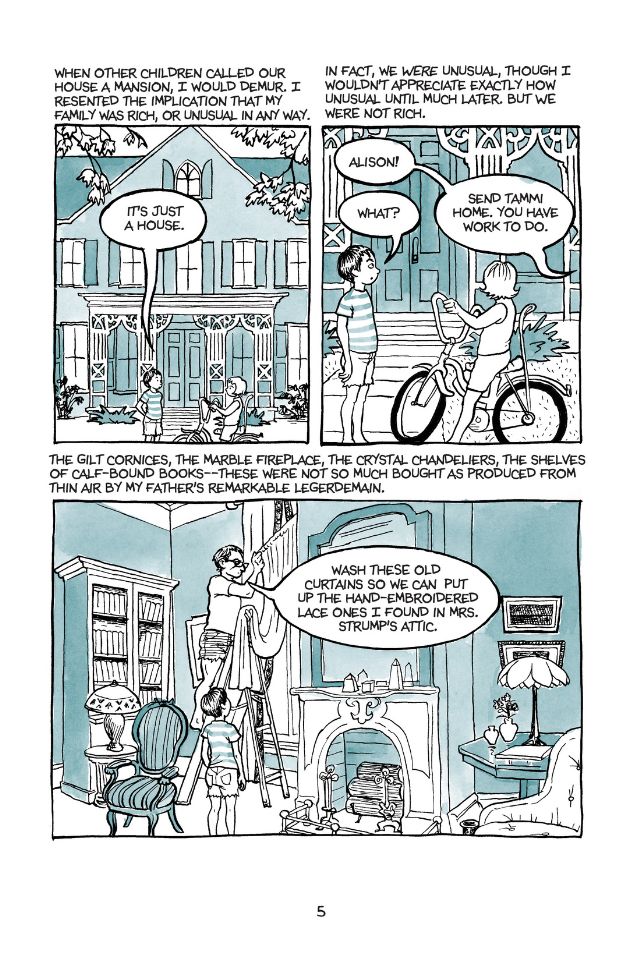
Teacher’s Tools for Navigation: I am not a stranger to controversy, but I’d probably use this book for close reading because the images might be a bit uncomfortable for some (but not most!) of my students. There is a lot of nudity, and there are sexually explicit drawings. That said, I most certainly would have it in my classroom (nothing stops me, controversy-wise, if a book is really good and a great learning tool). A close reading of many of the beginning chapters would lead to fantastic conversations about family dynamics and psychology. There is so much to teach from this book: Tone, Author’s Perspective, Vocabulary, etc. 

Discussion Questions: How does Alison navigate her childhood?; What is her response to her father’s death? Why might this be?; What role does the Fun Home play in her life? How does this graphic novel differ from others that you’ve read?; How is the author’s writing style similar to short vignettes? What scenes stand out to you? Why might this be?

Flagged Passage: 

Fun Home ImageSource of Image

Read This If You Love: How the World Was: A California Childhood by Emmanuel Guibert; The Photographer by Emmanuel Guibert; Alan’s War by Emmanuel Guibert; The Stranger by Albert Camus; The House on Mango Street by Sandra Cisneros

Recommended For:

closereadinganalysisbuttonsmall classroomlibrarybuttonsmall

RickiSig

The Uncorker of Ocean Bottles by Michelle Cuevas

Share

uncorker of bottles

The Uncorker of Ocean Bottles
Author: Michelle Cuevas
Illustrator: Erin E. Stead
Published August 23rd, 2016 by Dial Books

Summary: The Uncorker of Ocean Bottles, who lives alone atop a hill, has a job of the utmost importance. It is his task to open any bottles found at sea and make sure that the messages are delivered. He loves his job, though he has always wished that, someday, one of the letters would be addressed to him. One day he opens a party invitation—but there’s no name attached. As he devotes himself to the mystery of the intended recipient, he ends up finding something even more special: the possibility of new friends.

Kellee’s Review: I love the premise of an Uncorker of Ocean Bottles even existing! There are so many notes (notes in a bottle, notes to Santa, etc.) that are out there floating around, so it is so much fun to imagine what happens to them. But the story is really about the Uncorker himself. What is it like to have a very important job yet be alone all the time? No matter how much you love what you do, is being alone ever going to be easy?  

Erin Stead’s art always makes me want to pick up a book! Her use of woodblock prints, oil pastels, and pencil give a perfect feel for this story of a man who didn’t even know he was lonely. The illustrations give a wistful feel that fits Cuevas’s hopeful story. 

Ricki’s Review: This is a book that readers will never forget. Years from now, I will sit in the sand on a beach and think of the Uncorker and all of his gentleness as a human being. His loneliness emanated from the pages, and I longed to go to him, to stay with him, and to become his friend. This would be a great book to discuss relationships and friendships with kids, and it also would be an excellent way to talk about loneliness. All people—kids included—feel loneliness, so a book like this will open up wonderful conversations about this emotion that is not discussed often. 

The illustrations make this book stand out. I felt as if they were freshly drawn for my eyes only. I have a print hanging up in my son’s nursery, and I love looking at it every morning.

Teachers’ Tools for Navigation: As a read aloud in a classroom, The Uncorker of Ocean Bottles would be a perfect discussion starter on many levels. At the beginning of the book, students can guess what they think some of the bottle say when all they are told is that they are “dipped in sadness” or “very old” or “made people quite happy.” The conversation can continue about how they would feel living alone, even if they were doing something important and something they loved. Then they can make predictions about the message that is revealed then analyze how it changes the Uncorkers life.

Discussion Questions: What do you think the messages say?; What would you write as a message in a bottle if you were going to write one?; What do you think the Uncorker is going to do with the unaddressed message?; Would you like living alone?

Flagged Passages: “While the Uncorker of Ocean Bottles loved his job, he couldn’t help but wonder if he would ever receive a letter. Truth be told, each time he opened a bottle, a part of him hoped to see his own name winking from the top of the page.

But then he remembered that this was about as likely as finding a mermaid’s toenail on the beach. For he had no name. He had no friends. He stank of seaweed and salt and fishermen’s feet. No one would ever write him a letter.”

Read This If You Loved: Little Tree by Loren LongLenny & Lucy by Philip C. Stead, The Giving Tree by Shel Silverstein

Recommended For:

  classroomlibrarybuttonsmall readaloudbuttonsmall

Kellee Signatureand RickiSig