Teaching Guide with Activities and Discussion Questions for Charlie and Mouse and Grumpy by Laurel Snyder

Share

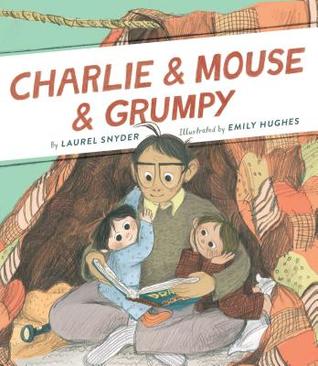
Charlie & Mouse & Grumpy
Author: Laurel Snyder
Illustrator: Emily Hughes
Published October 3rd, 2017 by Chronicle

Summary: In this heartwarming sequel to Laurel Snyder’s beginning chapter book Charlie & Mouse, the two brothers enjoy a special visit from their grandpa, Grumpy. Follow along as they discuss being medium, pounce each other, sing the wrong songs, build blanket forts, and more. Paired with effervescent illustrations by Emily Hughes, this touching, funny celebration of imagination and bonding will enchant readers young and old.

View our post about Charlie and Grumpy book one (with teaching guide) here!

Activities include: 

Bedtime Songs

Grumpy doesn’t know the right bedtime song to sing for Charlie and Mouse, so he tries to guess. Using the clues he gave, we can assume he was talking about “Circle Game” by Joni Mitchell, “Hush, Little Baby,” and possibly “Jump in the River” by Sinead O’Connor. Play these three songs for your students.

  • Which do you like the most? Why?
  • Which do you think would be the best bedtime song? Why?

After Grumpy guesses, Charlie sings the right bedtime song to Grumpy.

  • We don’t know what song Charlie sang, but what song would you have sung to Grumpy?

After gathering all of the bedtime songs discussed as a group, have students analyze the different songs (theirs and the three Grumpy mentioned) by having them (in groups or independently):

  • Identify rhyming words within the songs.
  • Does the author repeat any words? Why did the author choose to repeat these words?
  • How does the author supply rhythm in the song?

Infer

There are a few times in the book that the text doesn’t tell you what happened, but you can infer from the illustrations what occurred such as p. 17, p. 27, and p.37. Have students use the illustrations to see how each of these chapters concluded and have them write out what they see in the illustrations.

Rain

In the final chapter, it is raining while Charlie and Mouse say good-bye to Grumpy. Even though the rain seems to be happening because of the mood of the chapter, rain actually occurs because of the water cycle. After discussing the mood of the chapter (see discussion question), share the scientific reason for rain by sharing the water cycle. One activity that could be done to help students understand the water cycle is the “Simple Water Cycle in a Bag” experiment: http://www.rookieparenting.com/what-is-water-cycle/.

Discussion Questions include: 

  • The text never says that Grumpy is Charlie and Mouse’s grandfather, but you can infer he is. What clues from the text and illustration help you know that he is their grandfather?
  • In the final chapter, the author chose to have it be raining. Why does this type of weather make the most sense for this final chapter? What mood does it set for the chapter?
  • Using the clues throughout the book, how many days and nights did Grumpy stay with Charlie and Mouse? How did you know?

Teaching Guide Created by Me (Kellee): 

You can also access the teaching guide through Chronicle’s website here.

Recommended For: 

readaloudbuttonsmall classroomlibrarybuttonsmall closereadinganalysisbuttonsmall

Kellee Signature

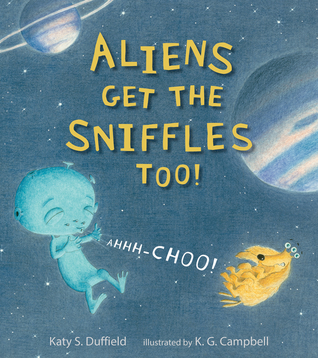
Aliens Get the Sniffles Too! Ahhh-Choo! by Katy S. Duffield

Share

Aliens Get the Sniffles Too
Author: Katy S. Duffield
Illustrator: K. G. Campbell
Published November 7, 2017 by Candlewick

Summary: Ahhh-flying-saucer-shooting-star-CHOO! Laughter is the best medicine when you’re a little alien feeling under the weather.

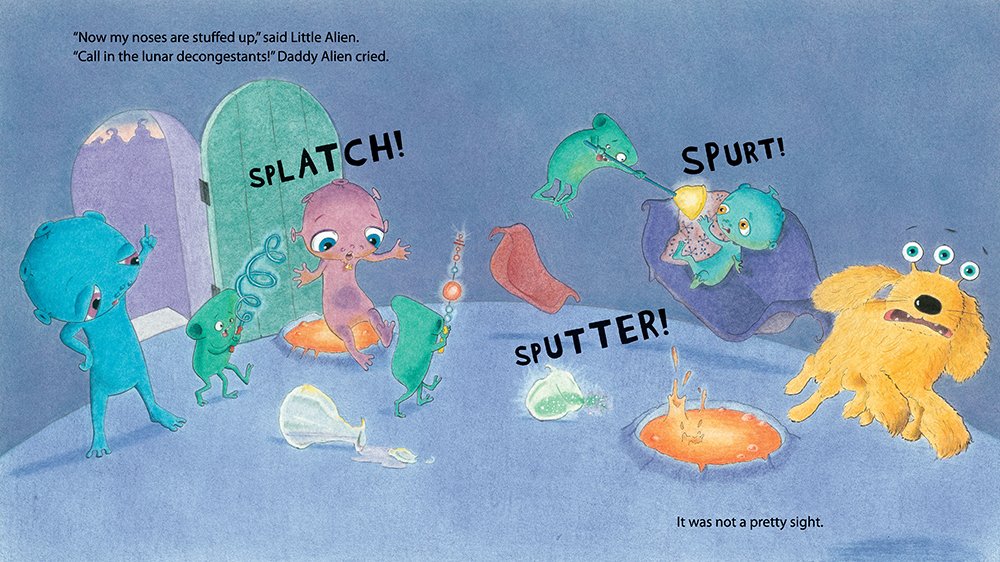
Little Alien is sick. And sick is extra-terrestrial bad when you have two scratchy throats, five ears that hurt, and three runny noses. Splatch! Sputter! Spurt! Luckily Mama and Daddy Alien have an arsenal of lunar decongestants and meteor showers on hand to make him feel a little better (not to mention a Milky Way milkshake to help the medicine go down). Even so, the family’s alien pooch, Mars Rover, can’t stand to see his little buddy feeling out of sorts. Can a loyal pup’s funny tricks finally coax a smile?

About the Author and Illustrator: Katy Duffield is the award-winning author of more than twenty-five books for children. She lives in Florida with her husband. To learn more, and to download classroom resources, visit katyduffield.com. Twitter: @KatyDuffield

Check out Katy on Pinterest!
 
K. G. Campbell is the illustrator of Flora & Ulysses by Kate DiCamillo and the author-illustrator of Lester’s Dreadful Sweaters. He was born in Kenya, raised in Scotland, and now lives in southern California.

Ricki’s Review: This book has been a blessing in my house. Both of my kids have had colds for the past several weeks. It seems they catch cold after cold! We’ve been reading this book quite often and making connections with Little Alien. As a parent, I particularly appreciate that the end of the book allows me space to talk about how Little Alien got Mars Rover sick. Every time we read the book, we point to the part where Little Alien spreads his germs to Mars Rover. Then, we make the cause-effect relationship about what happens when we spread our germs. I know that teachers in elementary school will love this connect. We spend a lot of time talking with kids of all ages about spreading germs!

On a literary note, the author has some great plays on words. I chuckle every time that I read the book. Kids who are obsessed with space will adore this book and all of its space references.

Kellee’s Review: Whenever Trent is sick, he is so miserable, so Little Alien’s story of trying everything to feel better is going to be the perfect companion to my sweet boy when he is feeling under the weather. Just like Mars Rover will do anything to help make Little Alien feel better, I will as well, and Aliens Get the Sniffles, Too! will be a perfect part of our feel better routine.

I loved the use of onomatopeoias in the book and mixed with the detailed, colorful, full page illustrations really brings Little Alien’s story to life.

Teachers’ Tools for Navigation: Teacher might group students in pairs and assign them a spread. Students might hunt for the references to space on the pages and look up to learn more about those aspects of space. For example, for the spread below, students might look up the word “lunar” and share it with the whole group. Then, the teacher might reread the entire text again and pause to allow students to share the word play of their assigned spread as they read the book aloud together.

Discussion Questions: How does Mars Rover feel when Little Alien gets sick? Have you ever felt that way when a friend or family member got sick?; How does Mars Rover get sick? Can you point to the specific page?; Which new words did you learn while reading this book? How are they connected to the story? How does the author create a theme around the concept of space?

Flagged Passages: 

Read This If You Loved: Your Alien by Tammi Sauer,  Faraway Friends by Russ CoxBoy + Bot by Ame DyckmanLife on Mars by Jon Agee

Giveaway:  TWO giveaway opportunities!!

  1. One grand-prize winner will receive a out-of-this-world alien backpack with a signed copy of Aliens Get the Sniffles Too! along with tissue packs, toy mini aliens, and space pencils.
  2. Ten lucky runners-up will receive a copy of Aliens Get the Sniffles Too!
To enter, click here.

Recommended For:

  readaloudbuttonsmall classroomlibrarybuttonsmall

andKellee Signature

**Thank you to Barbara from Blue Slip Media for providing copies for review!**

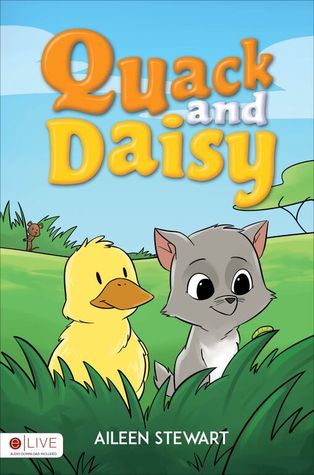
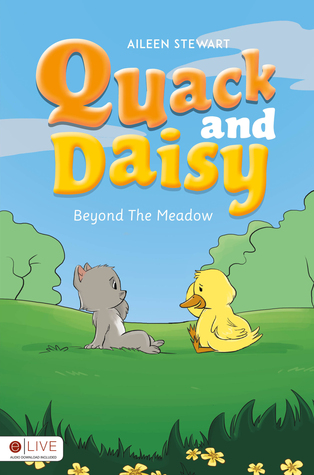
Quack and Daisy & Quack and Daisy: Beyond the Meadow by Aileen Stewart

Share


Quack and Daisy Quack and Daisy: Beyond the Meadow
Author and Illustrator: Aileen Stewart
Published September, 2015 & April, 2016 by Tate Publishing, Children’s Division

Quack and Daisy Summary: Quack the Duckling and Daisy the Kitten meet for the first time in the meadow and instantly become the best of friends.

Can two such unlikely friends stay friends when everyone else tells them it’s impossible? Will Daisy’s failure to swim and Quack’s inability to catch a mouse cause them to give up on each other? Or will their friendship survive? Find out in this fun new adventure!

Quack and Daisy: Beyond the Meadow Summary: Quack the duckling and Daisy the kitten are best friends who spend most days playing in the meadow. One day, Quack decides to tell Daisy a secret. She tells her of Mama Duck’s ominous warnings to not go beyond the meadow. Will the two friends heed Mama’s words about the dangers beyond the meadow, or will their curiosity get the better of them?

Review: Quack and Daisy’s story looks at friendship as something that completes you and makes you happy instead of something that others mandate and define. I think this is such an important lesson for young readers because too often they have to be friends with who their parents or siblings or other friends say they should be friends with. But Quack and Daisy ignore all that and find happiness with each other. Their story isn’t just one big lesson though–it is a story of a friendship and an adventure that two friends have. I also really love Aileen Stewart’s illustrations. They are so colorful and friendly and really brings the story to life.

Teachers’ Tools for Navigation: Quack and Daisy are a great opportunity to discuss comparing and contrasting. Daisy and Quck are so different on the surface, but if you look deep down, they are both adventurous, curious, and kind. If you check out the activity guide on the author’s website (http://aileenw4bobbyg.tripod.com/webonmediacontents/Workbook.pdf) it contains and similarities/differences activity. The guide also includes an activity about the meadow and a maze.

Something I think is really special is that each of these books comes with a complimentary audiobook. This is a wonderful resource for teachers to use with students in a reading station or as a whole class read.

Discussion Questions: 

  • How are Quack and Daisy similar? Different?
  • Everyone said the two friends shouldn’t be friends–do you agree or disagree? Explain.
  • Why did Quack’s and Daisy’s parents not want them to go beyond the meadow?
  • Quack and Daisy feel like they can only be their true selves and friends in the meadow–is this how is should be? Explain.
  • How did Daisy use problem solving to save Quack?

Flagged Passages: 

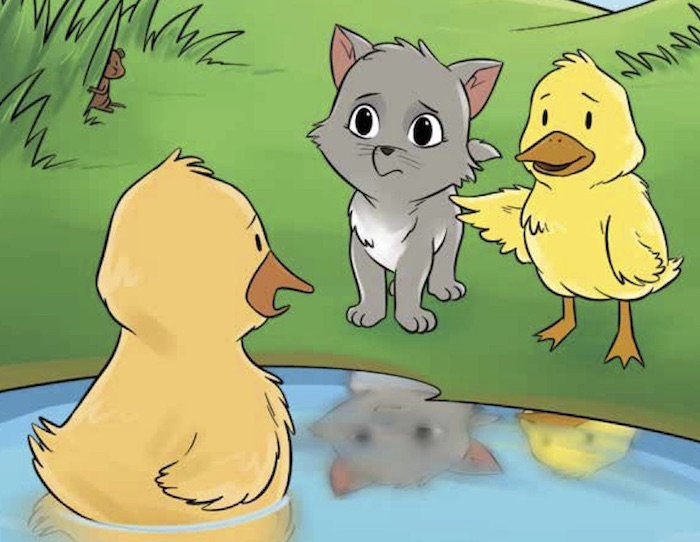
“The two friends headed through the meadow. As they reached the edge of the pond, Quack’s bother, Puddles, swam up. He looked at Daisy and frowned. ‘Who’s that?’

‘This is my friend Daisy. She lives in the red barn on the hill.’

Puddles continued to frown. ‘You can’t be friends with her. She’s not a duck. I bet she can’t even swim.'”

Read This If You Love: Little Elliott by Mike Curato, Hattie and Hudson by Chris Van Dusen, The Monster Next Door by David Soman, and other stories with unlikely friends

Recommended For: 

Signature

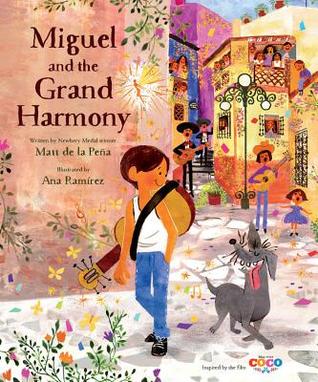
Miguel and the Grand Harmony by Matt de la Peña

Share

Miguel and the Grand Harmony
Author: Matt de la Peña
Illustrator: Ana Ramírez
Published: October 10, 2017 by Disney

Summary: This jacketed picture book pairs Newbery Winner Matt de la Peña and Pixar artist Ana Ramírez with the highly anticipated Pixar Studios film, Coco. Featuring a beautiful original story based on the characters of the film, as well as vibrant stylized artwork, this title is sure to appeal to readers of all ages.

Disney*Pixar’s Coco is the celebration of a lifetime, where the discovery of a generations-old mystery leads to a most extraordinary and surprising family reunion. Directed by Lee Unkrich (Toy Story 3) and produced by Darla K. Anderson (Toy Story 3), Disney*Pixar’s Coco opens in U.S. theaters November 22, 2017.

Review: Matt de la Peña. Let me count the ways I love this man. He writes stories that come alive and dance off of the pages. This story is no different. This story beautifully depicts the power of music. It reminds readers to pause and listen to the music around them. This would be a beautiful book to pair with Last Stop on Market Street. Both books remind children to slow down and look at their surroundings. We can find beauty all around us.

Teacher’s Tool For Navigation: This text reads like an extended poem. I would use this book at any age level to teach students about poetry. High schoolers would find beauty in its complexity, and younger readers might use the book as a mentor text to form their own poetry.

Discussion Questions: How does the author use words with intention?; What do you notice about the ways in which the phrases work together on each page?; How does Miguel grow?; Where do you see music in your everyday life?

We Flagged:

Read This If You Loved:  Last Stop on Market Street by Matt de la Peña, Each Kindness by Jacqueline Woodson, A Bus Called Heaven by Bob Graham

Recommended For: 

readaloudbuttonsmall classroomlibrarybuttonsmall 

RickiSig

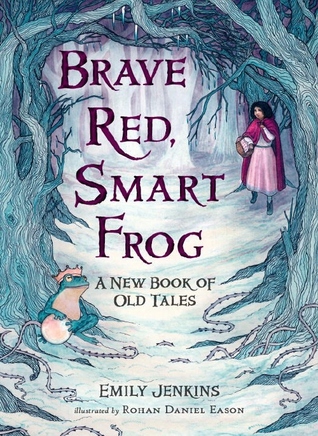
Discussion Guide for Brave Red, Smart Frog: A New Book of Old Tales by Emily Jenkins

Share

Brave Red, Smart Frog: A New Book of Old Tales
Author: Emily Jenkins
Illustrator: Rohan Daniel Eason
Published September 5th, 2017

Summary: Step into a wintry forest where seven iconic fairy tales unfold, retold with keen insight and touches of humor.

There once was a frozen forest so cold, you could feel it through the soles of your boots. It was a strange place where some kisses broke enchantments and others began them. Many said witches lived there — some with cold hearts, others with hot ovens and ugly appetites — and also dwarves in tiny houses made of stones. In this icy wood, a stepmother might eat a girl’s heart to restore her own beauty, while a woodcutter might become stupid with grief at the death of his donkey. Here a princess with too many dresses grows spiteful out of loneliness, while a mistreated girl who is kind to a crone finds pearls dropping from her mouth whenever she speaks. With empathy and an ear for emotion, Emily Jenkins retells seven fairy tales in contemporary language that reveals both the pathos and humor of some of our most beloved stories. Charming illustrations by Rohan Daniel Eason add whimsical details that enhance every new reading.

Discussion Questions include: 

  • “Snow White”
    • At the beginning of the story, dwarves are included with witches and sprites, making them feel villainous. How is this
      different from the seven dwarves we meet later in the story? Do they fit the negative connotation or are they different
      from what the villagers assume?
  • “The Frog Prince”
    • After the frog leaves, Crystal is looking for him. Why does she miss his company? How is his company different from those of her ladies-in-waiting and family?
  • “Red Riding Hood”
    • What information that Red shared does the wolf use to his advantage? Do you think he would have successfully been
      able to get into Grandmother’s house without this information?
  • Author’s Note
    • Emily Jenkins explains her intention behind rewriting these stories in the simple way that she did. How did she adhere
      to the traditional stories while also putting her own spin on them?
  • Entire book
    • Consider the names of the characters throughout the book. How does each name give a clue to the character’s
      personality or looks?

Discussion Guide Created by Me (Kellee): 

You can also access the teaching guide through Candlewick’s website here.

Recommended For: 

readaloudbuttonsmall classroomlibrarybuttonsmall litcirclesbuttonsmall closereadinganalysisbuttonsmall

Kellee Signature

Blog Tour with Author Guest Post with Activities and Discussion Questions!: Dragonfly Song by Wendy Orr

Share

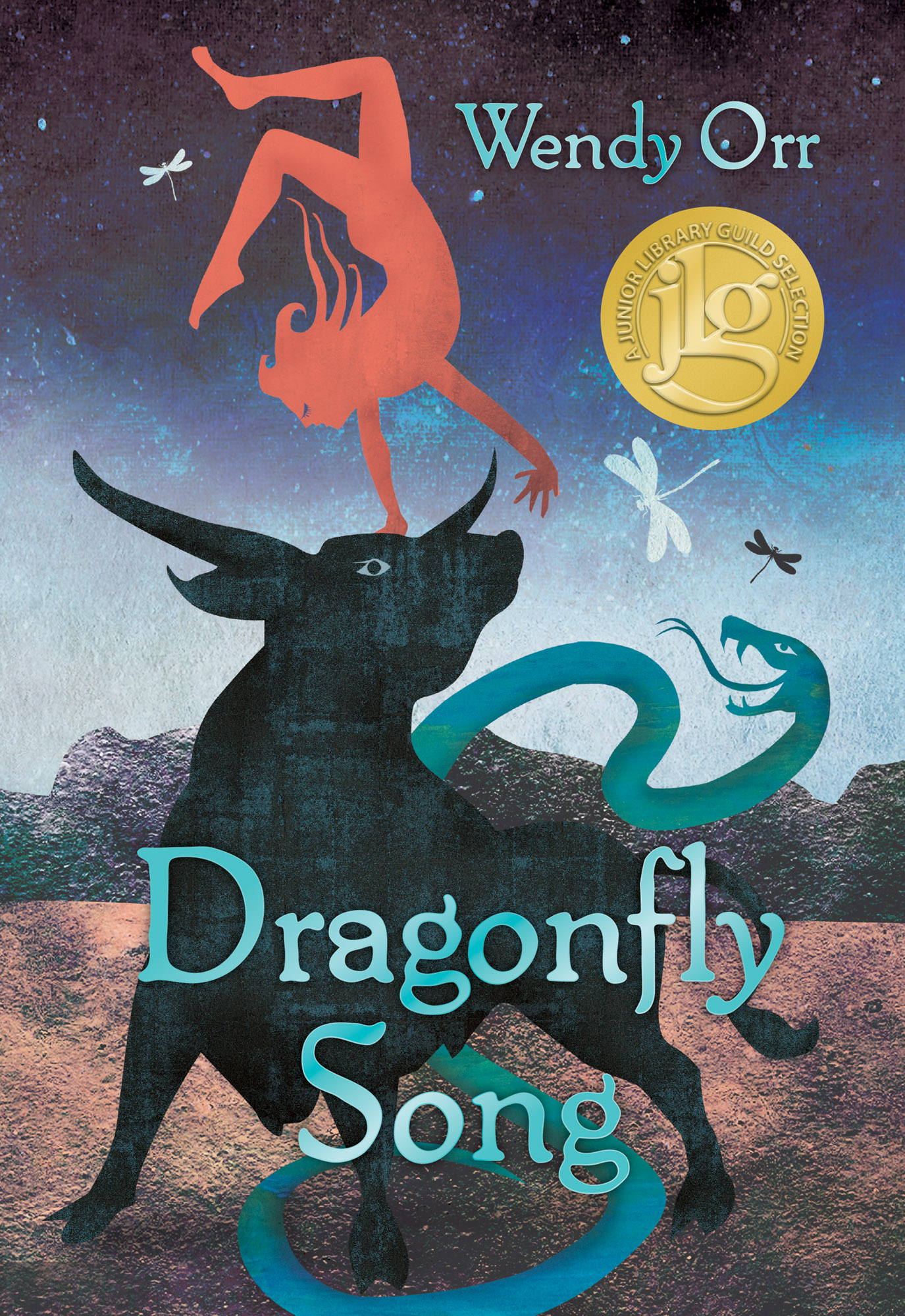
Dragonfly Song
Author: Wendy Orr
Published October 27th, 2017 by Pajama Press

Summary: The whispers say it’s not true that the Lady’s firstborn died at birth. They say it’s worse—the baby was born with an extra thumb dangling from each wrist. If she’s not perfect, she can never follow in her mother’s footsteps.

Nobody but the old wise-woman knows what truly happened to Aissa, the firstborn daughter of the priestess. If they saw the half-moon scars on the servant girl’s wrists they would find it out, but who would look twice at lowly, mute No-Name? Then the soldiers of Crete come to the island, demanding children as tribute for their god-king’s bull dances as they do every year. Aissa is determined to seize this chance to fight for her own worth and change her destiny once and for all.

Lyrically written and refreshingly unpredictable, Dragonfly Song is a compelling Bronze Age fantasy that suggests a fascinating origin for the legend of the Minotaur and his dark tribute.

“As mesmerizing as a mermaid’s kiss, the story dances with emotion, fire, and promise.” -Kirkus Reviews, starred review

More information about Dragonfly Song: http://pajamapress.ca/book/dragonfly_song/

About the Author: Wendy Orr was born in Edmonton, Canada, but grew up in various places across Canada, France, and the USA. She studied occupational therapy in the UK, married an Australian farmer, and moved to Australia. She’s the author of many award-winning books, including Nim’s Island, Nim at Sea, Rescue on Nim’s Island, Raven’s Mountain, and Peeling the Onion.

More information about Wendy Orr: http://www.wendyorr.com/

Author-Created Activity Guide:

  • Art: In Chapter 2, Aissa and the potter’s daughter make ‘circles of flowers
    in a ring of stones.’ Later, Aissa makes patterns of flowers and shells for the fishers’ goddess (the first in Chapter 9) and patterns of rocks and her small treasures for the goddess in her sanctuary cave. Patterns are used in some religions and meditative practices; Indian or Tibetan mandalas and Navajo sandpaintings are probably the best known now.
    To draw a mandala: http://www.art-is-fun.com/how-to-draw-a-mandala/
    Ideas for mandala-type patterns using fresh flowers: http://twistedsifter.com/2014/07/flower-mandalas-by-kathy-klein/
    Make your own patterns with sea shells, flowers, pebbles, leaves, seeds, or other natural materials. Glue them into place on card, or photograph them.
  • Writing: In Chapter 24, Aissa learns to write on the clay tablets used for taxation records. The writing she used was called Linear B, and was a combination of a ‘syllabary’ – each symbol representing a syllable of a word – and ‘logograms,’ which are symbols of whole words. These tablets were supposed to be temporary, but were baked into pottery when the palaces burned down. Have students make their own clay tablets using real clay or as in these instructions: http://www.ehow.com/how_12110304_make-egyptian-hieroglyphics-tablet.html
    For some of the Linear B logograms: http://www.omniglot.com/writing/linearb.htm
  • Time Capsule: Without written historical records, interpreting archaeological finds can be very difficult. Put together ‘time capsules’ of small items – e.g. a birthday card, Barbie doll, shopping list, old iPod, CD… Break the class into small groups and have them use the items to ‘interpret’ questions such as this society’s religion, dress code, and social structure.

Author-Created Discussion Questions: 

  • Like The Hunger Games, Dragonfly Song draws on the Greek myth of Theseus, in which seven youths and seven maidens are sent as tribute from Athens to Crete, to be eaten by the monstrous half-man, half-bull Minotaur. However, Dragonfly Song looks back to the possible origins of the myth in Bronze Age Greece, and the palace of Knossos in Crete. The bull was obviously a very important symbol, probably even a god – even though the real animals would be sacrificed to their god – and there were many scenes, on paintings, vases, and gold jewellery, showing young acrobats somersaulting over the backs of bulls. What if these acrobats were part of a payment to Crete in return for protection by – or from – their powerful navy? If so, the tribute would have come from as far as the Minoan navy reached. Discuss the power of myth – why have some stories lasted for thousands of years?
  • Discuss how the physical setting of Aissa’s home is a metaphor for the grimness of her life there. (e.g. The island is rocky, poor and isolated; buildings are dark, built of rock or burrowed into the side of the mountain.) What about the springtime when she develops new strengths after being cast out of the servants’ kitchen?
  • In the Bull King’s palace, the buildings are awe-inspiring, filled with light and extraordinary art. The culture appears to be obsessed with beauty – but is there a darkness underpinning it?
  • Dragonfly Song is set in the Bronze Age, but the ordinary people of Aissa’s island still use stone tools as well. Why do you think that would be?
  • In the prologue, The Firstborn Daughter, what are the clues to tell us that this is a matriarchal society? How does it differ from a patriarchal society? The Mosuo of China are an example of a matriarchal society in the present day. https://www.youtube.com/watch?v=eoTrARDa8BU
  • Chapter 8 mentions that the chief killed the last lion for his cloak when he married the Lady. Why might he have wanted a lionskin cloak rather than a deerskin? Why do you think the islanders didn’t worry about conservation and keeping all their native species alive?
  • In Chapter 9, the servants are ‘screaming with joy at their game of hate.’ Why do you think the author described bullying Aissa as a game? How does bullying Aissa make the servants feel?
  • Aissa is an ‘elective mute’ because there is nothing physical or intellectual preventing her from speaking. However, that doesn’t mean that she could speak if she wanted to: Mama’s command, ‘Stay quiet, still as stone till I come back,’ is buried so deep in her subconscious, and is so mixed with the trauma of the family’s death and disappearance, that Aissa can’t simply decide to start talking, even when she’s safe. Would she have been more accepted by the other servants if she could talk? How might it have changed the story if she had regained her speech after singing the snake away from Luki? Do you think she could have regained her speech if she had been treated kindly after being rescued? Do you think that meeting Mama again was the only reason she regained her speech, or might it have been partly because she’d faced death in the bull ring, and was safe now? A real-life example of a child choosing to become mute after trauma is Maya Angelou’s story (summarized in Goodnight Stories for Rebel Girls).
  • Discuss the book’s structure with the students. What was their reaction to the combination of free verse and prose?
  • Wendy Orr says that using free verse made it easier for her to access and portray Aissa’s emotions. Have the students choose an emotion, e.g. rage, grief, or joy – and write about it in free verse. Next, have them write a short story using the ideas and images that arose from the verse.
  • Why do you think the author chose to write in free verse rather than rhyming, like the children’s rhyme in Chapter 10?
    Here comes rabbit, hippity hop
    See his ears flap and flop;
    Here comes hedgehog, curled up small
    Roll him over like a ball.
  • Wendy Orr says that she normally writes in silence, on the computer, but found that the verse sections for this story had to be written by hand, playing the album Agaetis Byrjun by the Icelandic band Sigur Ros. Experiment with playing different types of music as the students write verse.
  • For useful images and links, see the Pinterest board: https://www.pinterest.com/wendyorr1/dragonfly-song-bits-of-background-and-teaching-ideas/

Don’t Miss Out On the Rest of the Tour!

October 22: Unleashing Readers, Activity Guide and Discussion Questions https://www.unleashingreaders.com/
October 23: YA and Kids Book Central, Book Playlist http://www.yabookscentral.com/blog/
October 24: Log Cabin Library, Guest Post http://logcabinlibrary.blogspot.com/
October 25: The Children’s Book Review, Character Interview https://www.thechildrensbookreview.com/
October 26: Bluestocking Thinking, Review http://bluestockingthinking.blogspot.com/
October 27: Charlotte’s Library, Interview http://charlotteslibrary.blogspot.com/
October 28: A Foodie Bibliophile in Wanderlust, Interview http://www.foodiebibliophile.com/
October 29: Writers’ Rumpus, Guest Post https://writersrumpus.com/

Recommended For: 

Thank you to Wendy Orr for her fantastic activities and questions!

The Peculiar Incident on Shady Street by Lindsay Currie

Share

The Peculiar Incident on Shady Street
Author: Lindsay Currie
Published October 10th, 2017 by Aladdin

Summary: A girl unravels a centuries-old mystery after moving into a haunted house in this deliciously suspenseful mystery.

Tessa Woodward isn’t exactly thrilled to move to rainy, cold Chicago from her home in sunny Florida. But homesickness turns to icy fear when unexplainable things start happening in her new house. Things like flickering lights, mysterious drawings appearing out of nowhere, and a crackling noise she can feel in her bones.

When her little brother’s doll starts crying real tears, Tessa realizes that someone—or something—is trying to communicate with her. A secret that’s been shrouded in mystery for more than one hundred years.

With the help of three new friends, Tessa begins unraveling the mystery of what happened in the house on Shady Street—and more importantly, what it has to do with her!

Review: I always go in tentatively to spooky books because I am so jumpy and also really don’t enjoy when the only point of a book is to scare the reader. But I could tell right away that Shady Street was going to completely exceed other just-scary books because it was about so much more. Sure, there was definitely a shady mystery and some really scary moments, but it was all entwined with a story about friendship, family, identity, and moving. Lindsay Currie did a perfect job balancing the two goals of the book: to scare the reader and to make the reader care so much about her characters.

In addition to the plot development being on point, Shady Street‘s characters were each were fully-developed to give every reader someone to connect with. I also liked how Currie included actual Chicago folklore and landmarks to enhance the story (and as a girl who lives in Florida and loves Chicago, I loved the Florida truths throughout also). Check out Currie’s website for behind the scenes info, and here’s a video of Lindsay Currie on a walking tour through Graceland cemetery, one of the settings of the book:

Teachers’ Tools for Navigation: Students are going to love this story because it is a perfect mix of ghost story and coming-of-age story, so classroom, school, and public libraries all definitely need to have a copy–once one students reads it, the word is going to get out, and it’ll never be on the shelf!

In the classroom, using Lindsay Currie’s website and video, Shady Street is a good example of author’s decision-making, how the setting of a story can impact the plot, and how an author uses the setting to affect the mood.

Book Trailer: 

Discussion Questions: 

  • How would the story have been different if Tessa had not gone to the pond the first time?
  • Why do you think Inez chose Tessa?
  • Did the story end how you thought it was going to?
  • How did the author use the setting to affect the mood of the story? The plot?
  • Which character do you connect with the most? Explain.
  • What caused Inez to act the way she did?
  • Similar to what Tessa did at the end for Inez, create a name plate for yourself with illustrations that identify you.
  • Explain the act of condensation.

Flagged Passages: “The door clicks shut behind her, and I grab a pair of jeans off the chair I slung them over last night. My sketchpad is open just slightly and I stop in my tracks, confused at the small blur I can see in the upper left-hand corner of the sheet. It’s grayish black, like I started something then just barely ran the bad of my thumb over it.

‘What in the–‘ I start, bending closer to the page.

I didn’t draw anything last night. I was so tired from carrying boxes all over this ginormous place that I crawled into bed without even brushing my teeth.

I stare at the mark. It’s small and shaped like an upside-down L. Lifting the book and giving the paper a tap, I watch asn the unwelcome spot becomes dust again and drifts into the air. There will still be a darkened area there, but I’ll camouflage it with shading later. Still. There’s something about the mark that bothers me. Something off.”

Read This If You Love: Mary Downing Hahn novels, The Key to Extraordinary by Natalie Lloyd, Ghostlight by Sonia GenslerDoll Bones by Holly Black, The Seer of Shadows by Avi

Recommended For: 

classroomlibrarybuttonsmall 

Signature

**Thank you to Lindsay Currie for providing a copy of the book for review!**