Marti’s Song for Freedom | Martí y sus versos por la libertad by Emma Otheguy

Share

ínfpb2017

Nonfiction Wednesday

Nonfiction Picture Book Wednesday is hosted by Kid Lit Frenzy and was started to help promote the reading of nonfiction texts. Most Wednesdays, we will be participating and will review a nonfiction text (though it may not always be a picture book).
Be sure to visit Kid Lit Frenzy and see what other nonfiction books are shared this week!

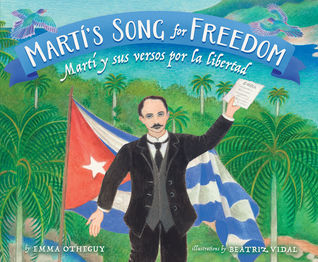
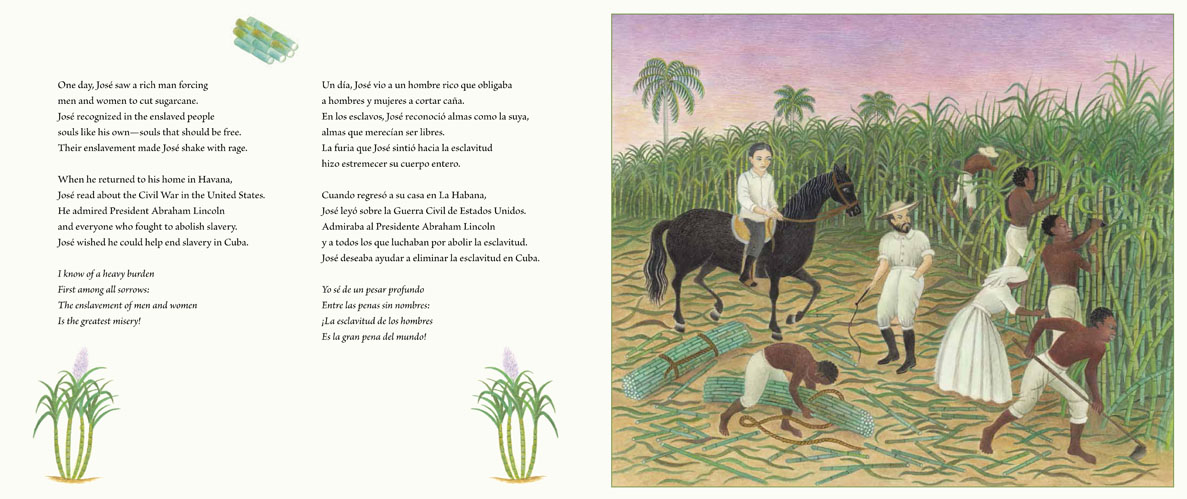
Marti’s Song for Freedom | Martí y sus versos por la libertad
Author: Emma Otheguy
Illustrator: Beatriz Vidal
Published July 17, 2017 by Lee & Low Books

Summary:

Yo soy un hombre sincero
De donde crece la palma,
Y antes de morirme quiero
Echar mis versos del alma
.

As a boy, José Martí was inspired by the natural world. He found freedom in the river that rushed to the sea and peace in the palmas reales that swayed in the wind. Freedom, he believed, was the inherent right of all men and women. But his home island of Cuba was colonized by Spain, and some of the people were enslaved by rich landowners. Enraged, Martí took up his pen and fought against this oppression through his writings. By age seventeen, he was declared an enemy of Spain and forced to leave his beloved island.

Martí traveled the world, speaking out for Cuba’s independence. But throughout his exile, he suffered from illness and homesickness. He found solace in New York’s Catskill Mountains, where nature inspired him once again to fight for independence.

Written in verse, with excerpts from Martí’s seminal Versos sencillos, this book is a beautiful tribute to a brilliant political writer and courageous fighter of freedom for all men and women.

Praise: 

“A sensitive and poignant tribute to one of Latin America’s most important historical figures.” – School Library Journal, starred review

“A moving account of [Marti’s] crusade for justice.” -Publishers Weekly, starred review

“A timely story that will inspire many to fight for equality and sing songs for freedom.” -Booklist, starred review

“Spotlights a steadfast hero and brilliant writer still worth admiring today.” -Kirkus reviews, starred review

“A direct and approachable introduction to the life and works of Cuban poet and freedom fighter José Martí.” -Shelf Awareness, starred review

About the Creators: 

Emma Otheguy is a children’s book author and a historian of Spain and colonial Latin America. She is a member of the Bank Street Writers Lab, and her short story “Fairies in Town” was awarded a Magazine Merit Honor by the Society of Children’s Book Writers and Illustrators (SCBWI). Otheguy lives with her husband in New York City. This is her picture book debut. You can find her online at emmaotheguy.com.

Beatriz Vidal is an award-winning painter, illustrator, and teacher. Her work has appeared in well-known publications such as The New York Times Magazine, Woman’s Day, and the New Yorker. Her artwork has also been featured on PBS programs and in numerous exhibitions around the world, including the International Exhibition of Illustrations for Children in Italy and the Society of Illustrators in New York. Vidal divides her time between New York City and Buenos Aires, Argentina. You can visit her online at beatrizvidal.com.

ReviewThis beautiful bilingual biography deserves all the praise it is receiving. The beautiful pieces of art that accompany the poetic verses turns this picture book biography into a piece of art! I also loved that not only is Martí’s biography in Spanish and English, but so is the author’s back matter.

I also am so glad that I learned about José Martí! I didn’t know anything about the Cuban war for independence and emancipation from slavery. Cuba has such an extensive history that is not taught here, so this story definitely fills a gap in history education. While the story teaches primarily of Martí’s life, the back matter goes deeper into Cuban independence and reading both is definitely going to pique interests to learn more. I think this book would pair nicely with books about our Civil War to compare the United States to other countries’ fights for freedom.

Teachers’ Tools for Navigation: Emma Otheguy was kind enough to share an activity guide for the text. All of the activities come in Spanish and English and can be downloaded at http://emmaotheguy.com/my-new-book/.

Activity 1: “José Martí wrote many letters throughout his life. He wrote about things he found beautiful or interesting, and also about injustices, and how he though they might get better. Write a letter to a friend, a relative, or an elected official about something you’re passionate about. It can be anything you care about, whether it’s helping your neighbors, caring for animals, or respecting the planet–just share how you feel. Then cut out your letter an mail it.” Followed by a outlined letter for kids to feel out.

Activity 2: “Did you know that José Martí was a poet, and that is poetry book Versos Sencillos was written and published right here in the United States? If you ever hear the song Guantanamera you’ll notice words from Marti’s poetry in the song! Read the first stanza of Martí’s poem, then fill in the blanks to create your own poem.”

Activity 3: “Read the book and solve this crossword puzzle”

Activity 4: “As teenagers, José Martí and his friends wrote and published their own newspaper, La Patria Libre (the free homeland), supporting Cuban independence. Can you create a newspaper? Fill out the boxes with the latest news.” Includes a place for Read All About It, Letter to the Editor, and an illustration.

Discussion Questions: How did José Martí play a part in Cuba’s fight for independence?; Did his age when sent to America surprise you?; Why is Cuba such a mix of culture?; How did the author use José Martí’s own words within her biography of him?; If you were to write to your government about an injustice you see in your country, what would you write about?

Flagged Passages: 

Read This If You Love: Margarita Engle’s books, Henry’s Freedom Box  by Henry Levine and other biographies about the fight for emancipation in the United States, Nonfiction picture book biographies

Recommended For: 

classroomlibrarybuttonsmallclosereadinganalysisbuttonsmall

Signature

**Thank you to Emma Otheguy for providing a copy for review!**

Author Guest Post!: “Cap’n Rex’s Steps to Writing a Fictional Picture Book” by Henry Herz, Author of Cap’n Rex & His Clever Crew

Share

“Cap’n Rex’s Steps to Writing a Fictional Picture Book”

Today, author Henry Herz joins us. His picture books include: MONSTER GOOSE NURSERY RHYMES, WHEN YOU GIVE AN IMP A PENNY, MABEL & THE QUEEN OF DREAMS, AND LITTLE RED CUTTLEFISH.  His latest, just out from Sterling, is CAP’N REX & HIS CLEVER CREW. The protagonist, Cap’n Rex, has agreed to offer advice about how to get classrooms excited about a writing assignment, and some of the other things they will learn along the way. Please welcome, Cap’n Rex.

Arrr! It’s a pleasure to be aboard, me lasses. I may be a long-in-the-tooth dinosaur pirate, but I’ve a mess o’ experience teaching wee sailors how to write fictional picture books. It keeps ’em from getting bored on our long sea voyages. There be seven steps on my map to the buried treasure of children’s literacy. Read on, if ye dare!

  1. Form crews – Arrr, there be nothin’ like a little friendly competition to inspire performance. Arrange yer students into teams o’ four. Have each team pick a name. Some o’ me favorites arrr Mystery Marauders, Biography Buccaneers, and Paranormal Pirates. But, I may be biased toward piratey appellations. Each team’ll be writing their own picture book. Savvy?
  2. Define the details – Have each team parley among themselves to figger out the story elements listed below. This here be a bonus learning opportunity to teach them some writing concepts.
    • Main character – What is the main character’s name, race/species, gender, title/role, and personality traits?
    • Other characters – Do the same for yer other characters. Limit yerself to no more than four characters in all.
    • Theme – If yer story will offer a lesson for the reader, what is it? Fer example, do unto others as you’d have others do unto you, or think outside the box.
    • Goal/obstacles – Stories are more fun if there’s tension. What goal is the main character trying to reach (in my case, it’s usually booty). And what obstacle(s) must he or she overcome to reach that goal? One tried and true formula is: try-fail, try-fail, try-succeed. That makes victory all the sweeter, me buccos.
    • Time frame – Will yer story take place in the past, present, or future? How far back in the past or into the future?
    • Setting – Where will your tale unfold? On the high seas? In yer backyard? On Mars? In an ant hill?
    • Genre – Will yer tale be fantasy, science fiction, mystery, historical, comedy, romance, horror, tragedy, or somethin’ else?
    • Point of view – Does it work better if the tale be told by the main character or by a narrator?
    • Tense – Should the tale be told in the present tense, as if it’s happening right now? Or, would it be better described in the past tense as something that’s already happened?
  3. Tell yer tale – Fictional picture books can have anywhere from zero (it’s true!) to 1,000 words. Aim fer about 500 words. Since there are often fourteen two-page “spreads”, that works out to an average of 36 words (three to four sentences) per spread. Picture books are usually written fer three to seven year-olds. So, make sure yer word choices are suitable for younger readers. Not too many syllables per word or words per sentence, or ye’ll walk the plank! Now yer teams can write their first draft of the manuscript.
  4. Time fer inspection – Just as dinosaur pirates have their work inspected by their handsome T-rex captain, yer young writers will need some guidance. Pair up yer teams. Have each member of one team read the other team’s story. Then, they offer feedback, alternating between things they liked about the story and things in the story that didn’t make sense or didn’t seem to help the story. Team members should not defend their writing. Just listen politely and take notes.
  5. Swab the deck – Just as a ship’s deck needs cleaning, so too does yer writin’. Now it be time for the teams to use the feedback they received to revise their story and make it seaworthy.
  6. Draw yer pictures – Now it be time to paint a pretty picture. A spread can be completely filled with a single illustration. Or, it can contain two to four smaller spot images. The latter is often used when the story pace has quickened. Give each team fourteen 11”x17” pieces o’ paper. Each team will divide their revised manuscript text up across the fourteen spreads. Then they’ll draw or paint pictures that help describe what is happening.
  7. Celebrate – Treats and grog (non-alcoholic) fer all when the stories be done! Each team takes turn reading their yarn to the class. Stories can be posted on the mainmast fer later parental enjoyment. What fine little writers ye arrr!

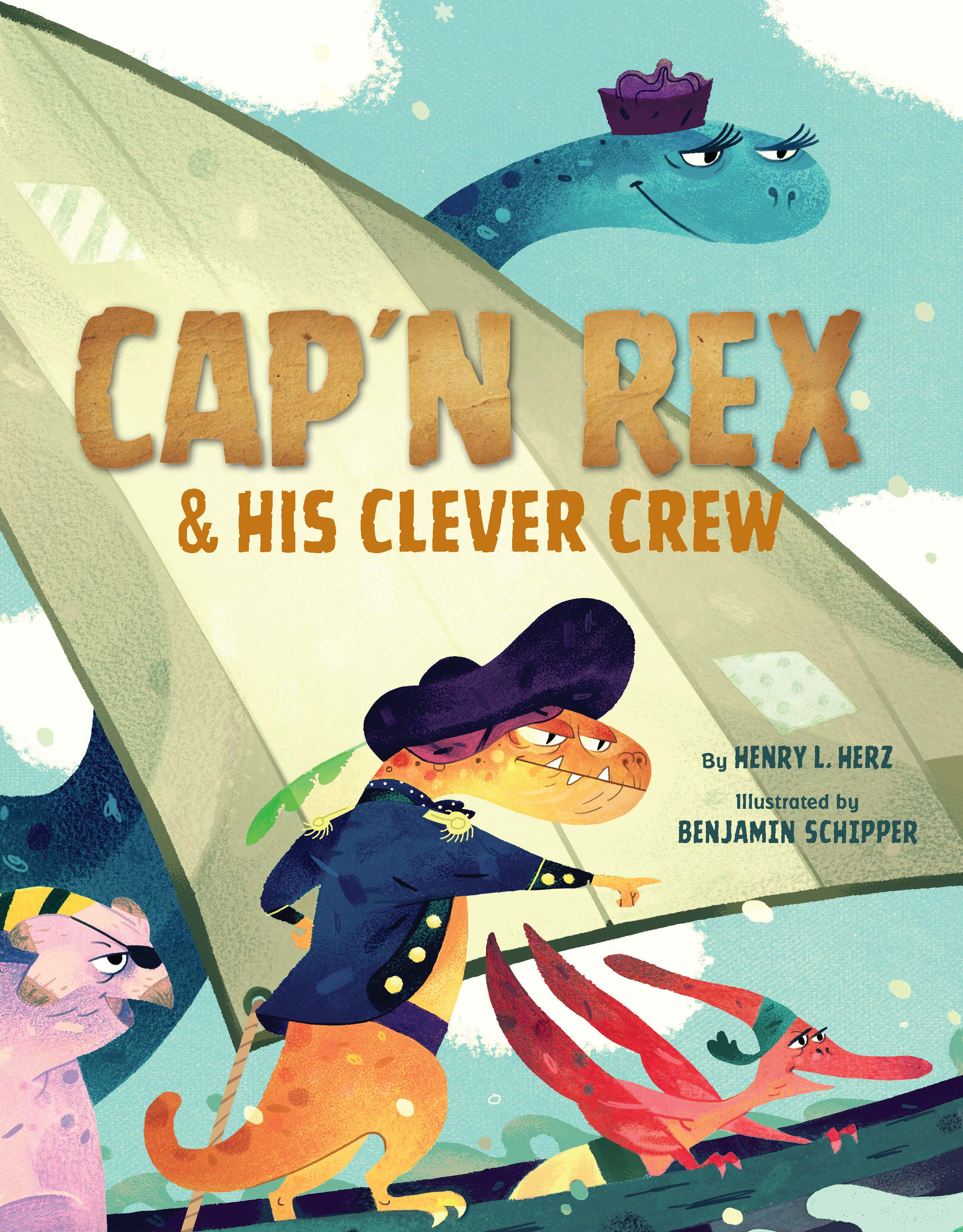
Cap’n Rex & His Clever Crew
Author: Henry L. Herz
Illustrator: Benjamin Schipper
Published August 1st, 2017 by Sterling Children’s Books

Shiver me timbers! It’s the DINOSAUR PIRATES!

Meet Captain Rex and his band of buccaneers. These dinosaur pirates sail the seven seas in search of buried treasure, but whenever they hit an obstacle—like a giant shark or pea-soup fog—the crew members are quick to say they can’t overcome. To this, Captain Rex just glares with teeth bared and says, “CAN’T YE?” And, somehow, the crew always comes up with a clever solution.

A delightful story about using one’s creativity and individual strengths to solve problems. It will encourage kids everywhere to think and say, “I can!”

Learn more about CAP’N REX & HIS CLEVER CREW and author Henry Herz at www.henryherz.com.

We Thank Ye fer Today’s Post, Cap’n Rex & Henry!

 and

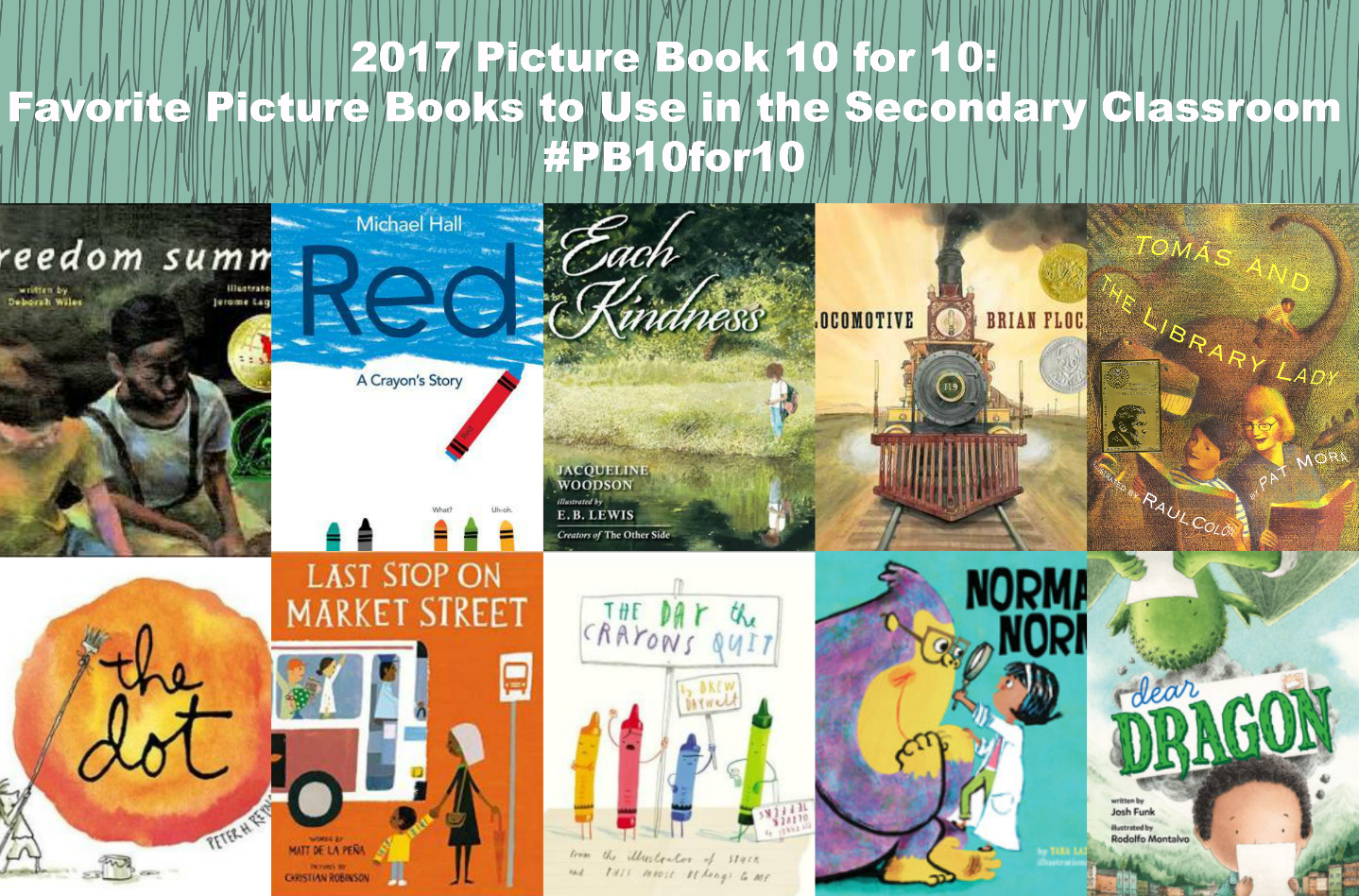
2017 Picture Book 10 for 10: Favorite Picture Books to Use in the Secondary Classroom #PB10for10

Share

Thank you to Cathy Mere and Mandy Robek for hosting the Picture Book 10 for 10 (#PB10for10).

The rules are simple:

What:  10 picture books you can’t live without
Hashtag:  #PB10for10
Who:  Anyone who is interested—educators, authors, media specialists, librarians, parents, and book lovers.
When:  Thursday, August 10, 2017
Where:  All posts will be linked on the Picture Book 10 for 10 Google Community Site.


Our 2017 Topic: Favorite Picture Books to Use in the Secondary Classroom
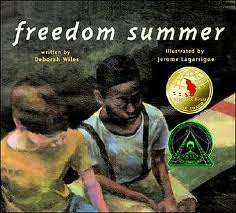
Freedom Summer by Deborah Wiles (Aladdin, 2005).
(Ricki’s Review  |  Kellee’s Review)

Ricki: This book is beautifully written and the characterization is wonderfully done. I enjoy reading this book to discuss the intricacy of picture books and their application within units. This books reminds older students that picture books aren’t just for young kids.

Kellee: I feel that this picture book portrays a part of the Civil Rights Movement that most kids don’t know about unless they’ve been explicitly talked to about it. Freedom Summer gives me a way to start the conversation.
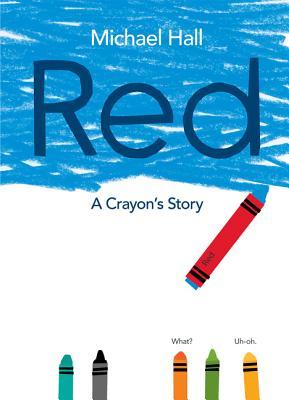
Red: A Crayon’s Story by Michael Hall (Greenwillow, 2015).

Ricki: We use this book when we talk about identity. I love reading this text aloud and then asking students about the author’s purpose. Many think that he is discussing disability and others argue that he is discussing gender identity. The interpretations remind us how texts give different interpretations, and this is a very good thing.

Kellee: Identity is something that everyone is struggling with in middle school, and I loved reading this book with my students and listening to their conversation about the crayons. When they begin to connect it to human identity, some really fascinating discussions break out.
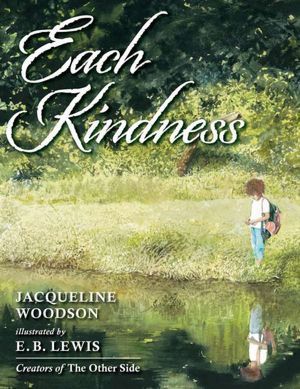
Each Kindness by Jacqueline Woodson (Nancy Paulsen, 2012).
(Ricki’s Review  |  Kellee’s Review)

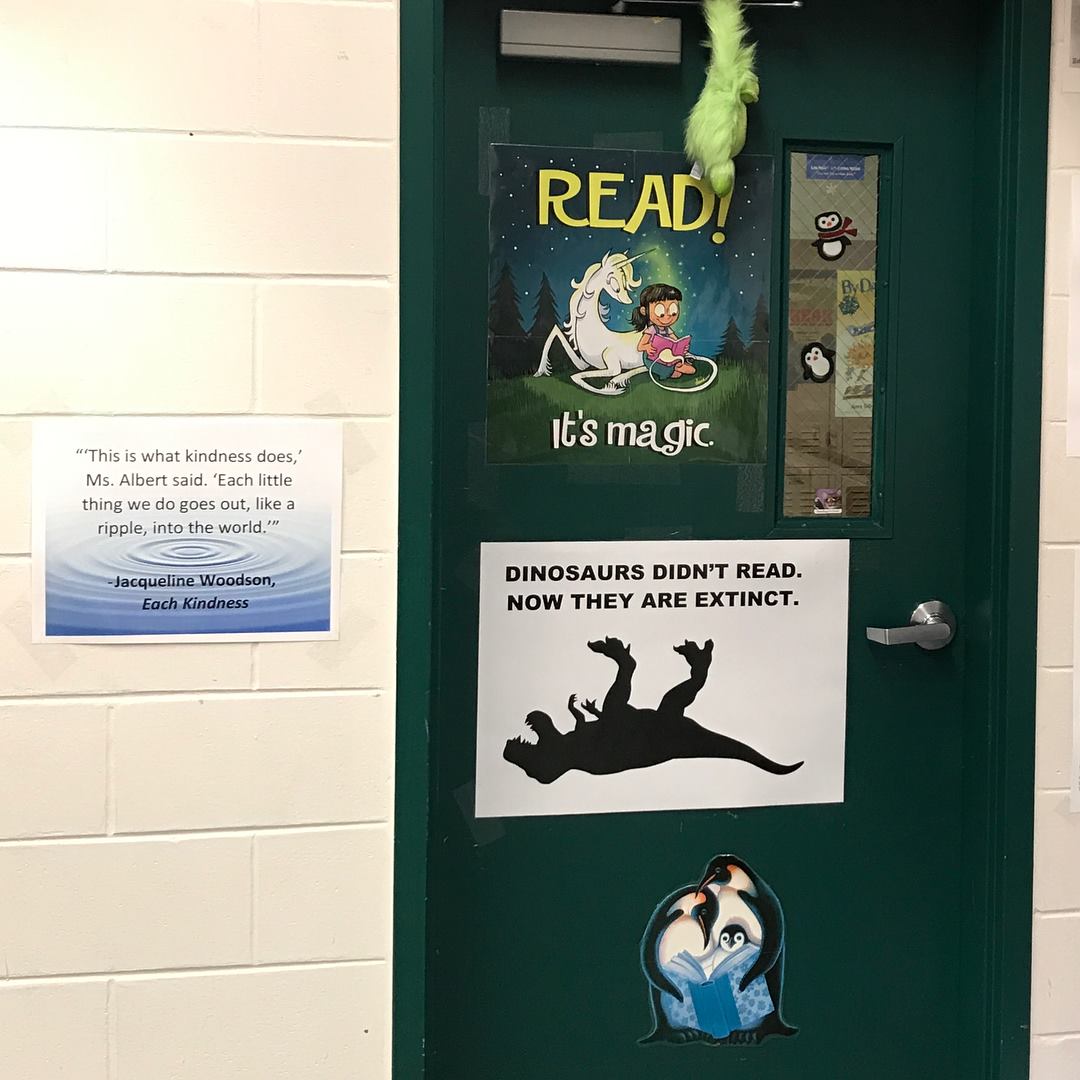
Ricki: I love to read this book on the first day or on any day that I am noticing classroom tensions. What I love about this book is that it teaches kindness without being didactic. The story goes beyond the theme of kindness and reminds readers about regret. This is a beautiful book that earns its place in classrooms of all levels.

Kellee: I begin every year with this book, and my students make kindness goals for the year to help ripple kindness throughout the school.
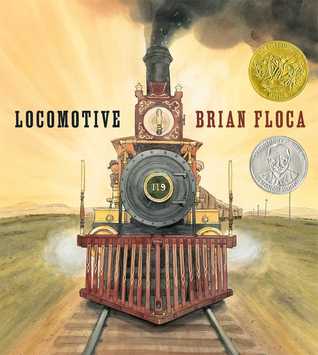
Locomotive by Brian Floca (Atheneum, 2013). 

Ricki: I love to show this book right before a research project/paper. It shows an example of high quality research and reminds readers that a lot of research is required in order to present a high quality product.
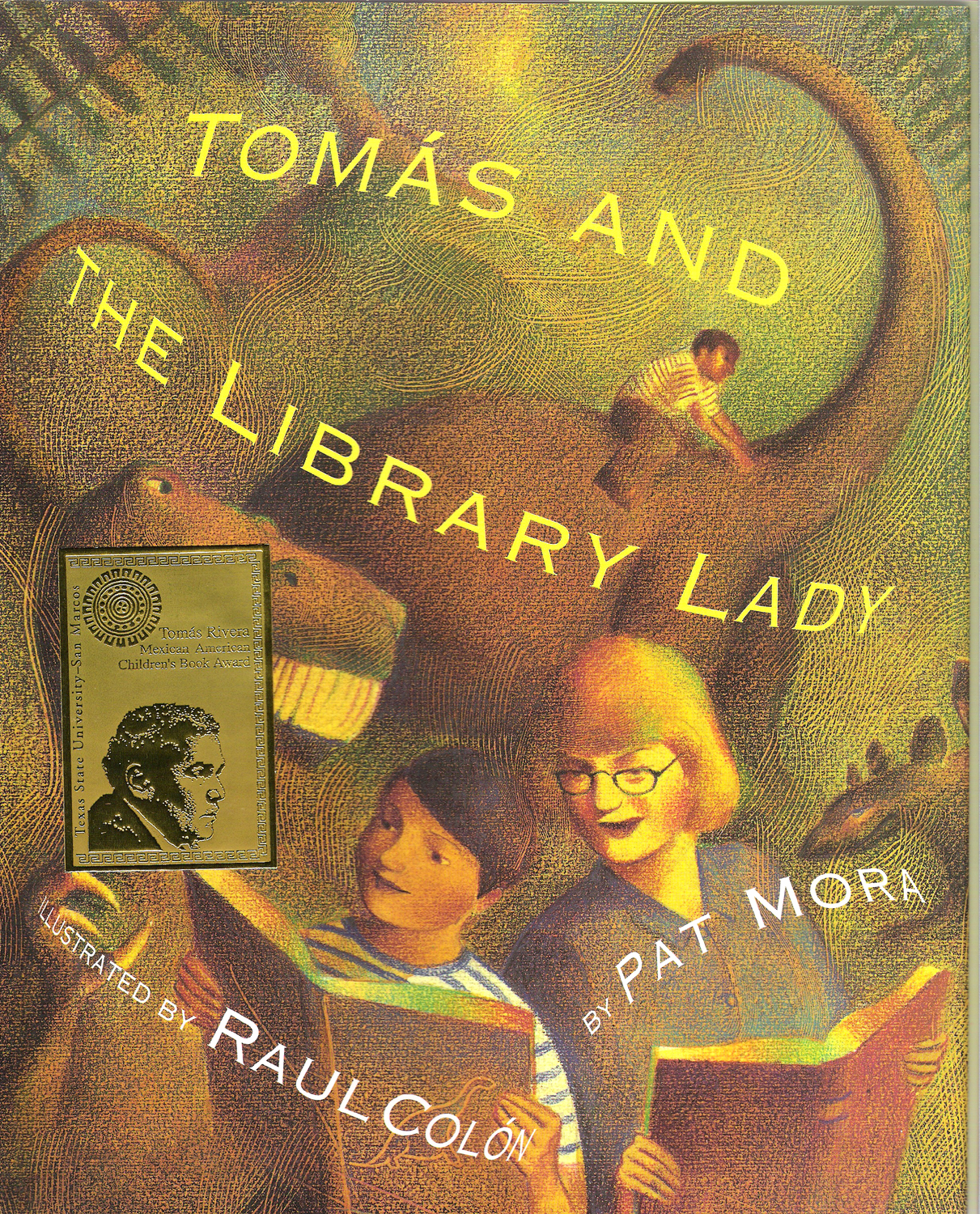
Tomás and the Library Lady by Pat Mora (Knopf, 1997). 

Ricki: This is a great book to start a conversation about being culturally responsive to other people. The library lady is very sensitive to Tomás, and the book makes readers want to be better people. My bilingual education teacher read this to my class, and I think of it often. I always enjoy reading it aloud.
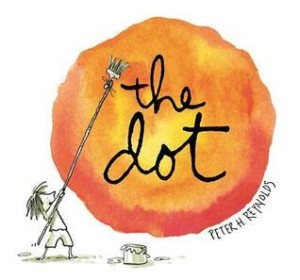
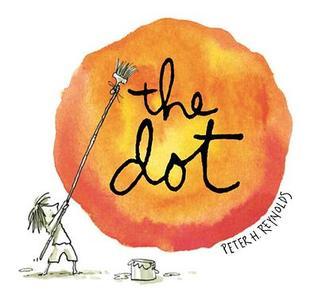
The Dot by Peter H. Reynolds (Candlewick, 2003).

Kellee: I love to participate in Dot Day because it truly shows kids the range of what art is and the importance of creativity. I use The Dot to introduce this discussion then every student makes their own dot that symbolizes them.

Ricki: This is a fantastic book to discuss imagination. I show this book when I am trying to kickstart ideas about projects. Because I make strong attempts to allow a lot of flexibility in projects, this book is great to simply inspire students to examine ideas differently.
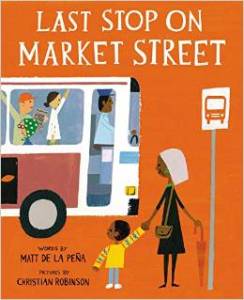
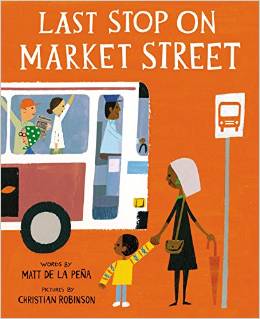
Last Stop on Market Street by Matt de la Peña (Putnam, 2015).
(Kellee & Ricki’s Review)

Kellee: I wrote a whole post just on using this book with my middle school students because students really found the depth and beauty in this amazing picture book.

Ricki: This book reminds us that picture books are anything but simple. I love to use this book to talk about themes and hidden messages in writing. Then, we apply this idea to our own writing. Reading this book reminds us to look at writing more deeply.
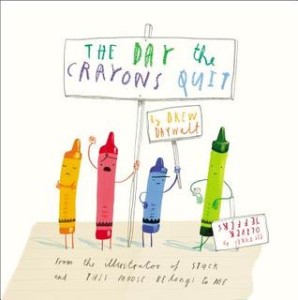
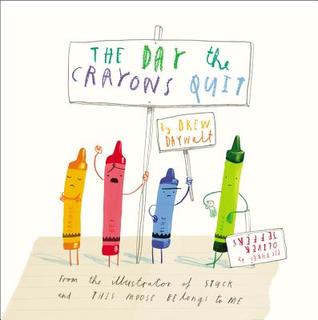
The Day the Crayons Quit by Drew Daywelt (Philomel, 2013).

Kellee: This is another superb crayon text that uses the idea of crayons being expected to act or do one thing really stunting the creativity and identity of the crayons. Also, the book is written in

Ricki: This book is funny, creative, and cleverly written. I’ve had students use this book for readers’ theater, and their performance was hysterical. Each student took the time to memorize their speech, and we talked about all of the qualities of a good speech.
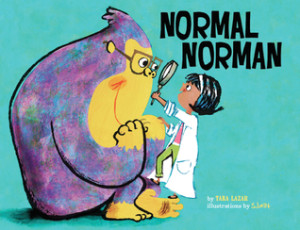
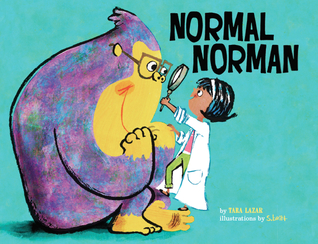
Normal Norman by Tara Lazar (Sterling, 2016).
(Kellee & Ricki’s Review)

Kellee: I love the discussions of normal that this book brings up. You’ll notice, a lot of the picture books I read with my students discuss identity and kindness because picture books are such a perfect way to get conversations about tough subjects started. Norman shows us that what you think is normal may not be what another person thinks is normal, and being abnormal doesn’t mean anything is wrong.

Ricki: This is a great book to talk about what it means to be “normal.” I love to use this book to kick off discussions that queer the concept of normalcy.
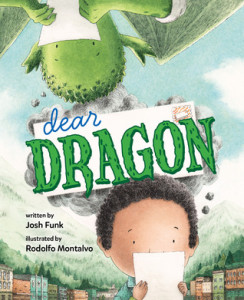
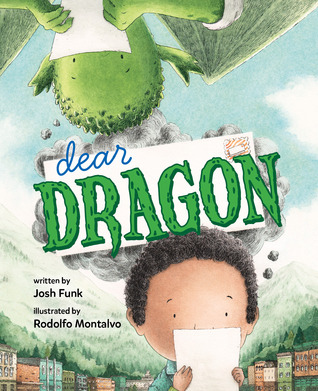
Dear Dragon by Josh Funk (Viking, 2016).
(Kellee & Ricki’s Review)

Kellee: I am going to use Dear Dragon in my classroom for the first time this year! I want to get my student pen pals, and I am going to use Dear Dragon as an introduction to the idea. I’m not sure how I’m going to execute the pen pals yet, but there is also the theme of first impressions and judging based on looks that is perfect for our discussion on themes!

Ricki: Yes, Kellee! I have yet to use this book, but it would be a phenomenal text to start a student pen pal program! You might also use this book to talk about expectations and judgment.


What are your favorite books to use in the secondary classroom? 

Don’t forget to check out all of the other #PB10for10 posts by visiting the Google community site or searching on Twitter!

 and

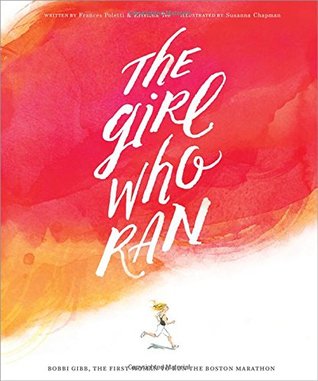
The Girl Who Ran: Bobbi Gibb, The First Woman to Run the Boston Marathon by Frances Poletti & Kristina Yee

Share

nfpb2017

Nonfiction Wednesday

Nonfiction Picture Book Wednesday is hosted by Kid Lit Frenzy and was started to help promote the reading of nonfiction texts. Most Wednesdays, we will be participating and will review a nonfiction text (though it may not always be a picture book).
Be sure to visit Kid Lit Frenzy and see what other nonfiction books are shared this week!

The Girl Who Ran: Bobbi Gibb, The First Woman to Run the Boston Marathon
Authors: Frances Poletti & Kristina Yee
Illustrator: Susanna Chapman
Published June 15th, 2017 by Compendium Inc.

Summary: “She said she would do it, she wasn’t a liar; she’d show them by running like the wind in the fire.” When Bobbi Gibb saw the Boston Marathon her mind was set—she had to be a part of it. She trained hard, journeying across America to run on all kinds of terrain. But when the time came to apply for the marathon, she was refused entry. They told her girls don’t run, girls can’t run. That didn’t stop Bobbi.

In 1966, the world believed it was impossible for a woman to run the Boston Marathon. Bobbi Gibb was determined to prove them wrong. She said she would do it, she wasn’t a liar; she’d show them by running like the wind in the fire.

This picture book tells the true story of how she broke the rules in 1966 and how, one step at a time, her grit and determination changed the world. Created in collaboration with Bobbi Gibb and the perfect gift for would-be runners, kids of all ages, and everyone out there with a love of sport.

ReviewRecently I was introduced to what happened to Kathrine Switzer in the 1967 Boston Marathon as it was the 50th anniversary. I thought she was the first woman to run the marathon (and officials attempted to stop her as she ran the race), but this story of Bobbi Gibb showed that the first woman stepped up the year before. Bobbi Gibb is such an inspiration. She trained and trained for the marathon, went against her parents’ wishes, and did something no one had ever done before. Gibb’s story combined with the beautiful lyricism of the text and freeness of the painted illustrations makes Gibb’s story run right into your heart.
Teachers’ Tools for Navigation: Yet another HERstory that needs to be shared with students as it is a part of history that is left out. Gibb’s story can be added to other women’s rights texts to build a lit circle or jigsaw activity where students learn and share about the struggles and victories of women throughout time.
Additionally, the back matter of The Girl Who Ran has a beautiful timeline that can be used to teach this text feature.

Discussion Questions: What is the theme of Bobbi Gibb’s story?; What is the purpose of the timeline in the back matter?; How did the repetition of “She said she would do it, she wasn’t a liar; she’d show them by running like the wind in the fire.” add to the story of the first woman who ran the Boston Marathon?; What does the act of Bobbi’s mom taking her to the marathon show about her?

Flagged Passages: 

Read This If You Love: The Book of Heroines by Stephanie Warren Drimmer and other books about amazing woman in history

Recommended For: 

classroomlibrarybuttonsmall  

Signature

**Thank you to Angeline at Compendium for providing a copy for review!**

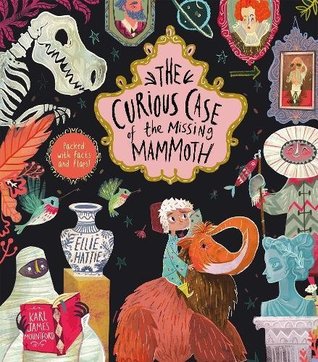
The Curious Case of the Missing Mammoth by Ellie Hattie

Share

The Curious Case of the Missing Mammoth
Author: Ellie Hattie
Illustrator: Karl James Mountford
Published 2017 by Kane Miller EDC Publishing

Summary: Look out! There’s a mammoth on the loose, and Oscar has to get him home before the clock strikes one! This riotous adventure is packed with facts and lift-the-flap fun.

Review: I don’t think the summary of this book does it justice.  It is such a fun book that kids of so many different ages are going to love reading. It is about a boy who wakes up to find a mammoth wandering around his town looking for his baby brother. They follow the clues to The Curious Museum which has come to life like The Night at the Museum, and they chase Teddy, the baby mammoth, through different rooms in the museum: Underwater World, the Library, The Flight Floor, The Time of the Dinosaurs, and The Extinct and Endangered Creatures rooms. Trent and I loved the detailed and silly illustrations and trying to find Teddy on each page!

Teachers’ Tools for Navigation: In each room, there is the narrative of Oscar and Timothy, the big mammoth, but there are also flaps that include nonfiction information about the room that the story is currently taking place in. For example, in the ocean scene there are flaps that include flaps about octopus, blue whales, corral, and more! In the library there’s information about books & art, pilots in The Flight Floor, dinos in The Time of the Dinosaurs, and creatures in the Extinct and Endangered room.

This mix of adventure and facts makes this a perfect cross-curricular text to use or as an intro before a trip to a natural history museum.

Discussion Questions: What did you learn in each room?; Why does Oscar have to get Teddy back before 1:00?; What type of museum do you think The Curious Museum is?; What else did you see in the exhibits that you would like to learn about?; Why do you think the author included the flaps with nonfiction information?

Book Trailer: 

Read This If You Love: Nibbles: The Dinosaur Guide by Emma Yarlett, Natural History Museums, Night at the Museum movies

Recommended For: 

classroomlibrarybuttonsmall 

Signature

**Thank you to Lynn at Kane Miller for providing a copy for review!**

Nibbles: The Dinosaur Guide by Emma Yarlett

Share

Nibbles: The Dinosaur Guide
Author and Illustrator: Emma Yarlett
Published 2017 by Kane Miller Publishing

Summary: NIBBLES, the book-eating MONSTER, has chomped his way into this book of DINOSAURS! Has he bitten off more than he can chew?!

What was a very serious book about very serious dinosaurs is suddenly interrupted by a hole – a nibbled hole – in the book. Who would do something like that?

Little ones will love trying to find the culprit – Nibbles – hiding among their favorite, easily recognizable dinosaurs. Is he an herbivore? A carnivore? Or … a bookivore?

Emma Yarlett’s Nibbles: The Dinosaur Guide is packed with flaps, folds, facts and die cuts, plus one very naughty monster and an ending to make Houdini proud. But has Nibbles bitten off more than he can chew?

Themes include humor and science.

Review: We love Nibbles. We have a stuffed Nibbles and have read the first one so many times (and it is one of my husband’s favorite picture books–he says it is so unique.) I am probably majorly biased when it comes to this review because OF COURSE we loved this one also. I mean, listen to this: 

What is so interesting about this new book is that it takes the concept of Nibbles (a book eating monster) and takes him on a time-traveling adventure to the age of the dinosaurs using his eating/transporting powers. It is funny and educational. Just as the first one combined Nibbles’s antics with fairy tales, this one combined Nibbles with dinosaurs education!

Teachers’ Tools for Navigation: What I love more about this one than the first one is that it has a cross-curricular component to it with the inclusion of dinosaurs and specific information about the dinosaurs. This allows the book to be used in reading, writing, and science lessons. I also think it’d be so much fun to have students write their own Nibbles story with him eating into a different topic than dinosaurs.

Discussion Questions: Which dinosaur was the scariest that Nibbles faced? The least scary?; What new information did you learn about dinosaurs?; What were the similarities and differences between the different dinosaurs Nibbles encountered?; What were the consequences of Nibbles jumping back in time?; If you were Nibbles, what book would you Nibble into? Where in time would you jump to?

Flagged Passages: 

Book Trailer: 

Message from the Author about Creativity: 

Read This If You Love: Dinosaurs, Humor, Battle Bunny by Jon Scieszka and Mac Barnett, Nibbles: The Book Monster by Emma Yarlett

Recommended For:

  classroomlibrarybuttonsmall 

**Thank you to Lynn at Kane Miller for providing a copy for review!!**

Star Stuff: Carl Sagan and the Mysteries of the Cosmos by Stephanie Roth Sisson

Share

Star Stuff: Carl Sagan and the Mysteries of the Cosmos
Author: Stephanie Roth Sisson
Published: October 14, 2014 by Roaring Brook Press

A Guest Review by Brittany Brown

Summary: A curious boy living in a small city apartment finds the world astonishing. He wants to know about light bulbs, inch worms, and rocket ships. Carl sets out on a journey to find answers, but finds bigger, even more powerful questions. Through his research and studies, Carl eventually earns the title of Dr. Carl Sagan and spends his life seeking knowledge and understanding about the universe. This young

boy’s contributions to science and education have inspired many children everywhere to question the world around them. His story will resonate every child who has ever wondered “how” or “why” or spent an evening looking up at the night sky.

Review: I am constantly looking for books which will inspire my students and get them excited about learning. This book, which is brought to life with beautiful illustrations and the great mysteries of the universe, did that for myself as an adult, too. After reading it, everyday life is once again imbued with the magic and novelty it had in childhood. In Sagan’s eyes, there is no phenomenon too mundane to investigate. The curiosity which most adults leave behind drove Sagan to be the lifelong learner that all teachers hope to foster in their students. Reading this book shows that science is all around us, that we all belong here in the universe, and that in everyone there is a scientist. I absolutely loved reading this book, and as a new teacher building my classroom library, this is the first one which I will be purchasing multiple copies of to share with my students.

Teachers’ Tools for Navigation: This story would pair well with any science or biography unit. It would also serve as a great example of narrative nonfiction.

The most obvious use for this story is in a science unit. I would love to use this book to open up a discussion at the beginning of a unit on the solar system. Not only would it generate excitement, it would also begin to build some vocabulary and background knowledge. It would make the information in the unit more personal and relevant to kids, and would be a great launching point to encourage students to come up with their own questions about how the world works.

This book is also a wonderful book to use for mini lessons in writing. Using this book as an example, a teacher could lead a discussion on how to choose which life events to include in a biography, how to sequence and organize it, and how to incorporate quotes from a historical figure into a writing piece. It also shows how to include facts and achievements in an engaging way, and how to demonstrate a person’s impact on history.

Finally, this book would also be a superb example of narrative nonfiction. Despite containing lots of scientific facts, it reads like a storybook and the illustrations do much of the talking. Students will be captivated with the descriptive narration, and discussions could explore their experiences as readers or how they may be able to attempt this style in their writing.

Discussion Questions: What are your big mystery questions? Where would you go to try to find answers to them? What character traits helped Carl on his journey? What impact did he have on the world? Who does he remind you of?

Book Trailer: 

Read This If You Loved: What Do You Do with an Idea? By Kobi Yamada, I Wonder by Annaka Harris, You Are Stardust by Elin Kelsey, On a Beam of Light: A Story of Albert Einstein by Jennifer Berne, The Boy Who Loved Math: The Improbable Life of Paul Edros by Deborah Heiligman, Look Up!: Henrietta Leavitt, a Pioneering Woman Astronomer by Robert Burleigh

Recommended For:
 classroomlibrarybuttonsmall

Thank you, Brittany!

RickiSig