Stormy Night by Salina Yoon

Share

stormy

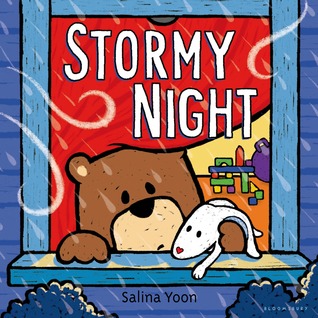
Stormy Night
Author and Illustrator: Salina Yoon
Published January 6th, 2015 by Bloomsbury USA Childrens

Goodreads Summary: When thunder shakes his house and rain pounds the windows, Bear is frightened. But comforting his Mama, Papa, and Floppy helps make the storm seem not so scary. Before Bear knows it, the storm has passed, because even storms need their sleep . . . and so do bears.

My Review and Teachers’ Tools for Navigation: Living in Florida means that we have pretty bad storms about 4-6 months of the year, so I really would see how this book could be used by parents and teachers to discuss ways to overcome storm anxiety. I could see a class that is  being held (sometimes for hours) in class after dismissal because of a storm sitting around reading this book and discussing how a storm can be scary but that the end would come soon.  I, being from tornado alley, had storm nightmares for years and storms still scare me, and I really think that a book like this would be a great read for kids that have the anxiety I have. I also love how Yoon had the little bear become the “strong one” during the storm to help him forget about what he is afraid of. This is a great strategy for helping kids forget about something that is scary.

Like always, Yoon’s illustrations are just so wonderful–I love how they completely cover the page and are so colorful. Also, Yoon also always captures her characters’ emotions so well!  Her books are always a pleasure to read, and I look forward to getting them.

Discussion Questions: How does Bear overcome his fear? How did his mom help? Hid dad?; Have you ever been scared during a storm? What did you do to make it through the storm?

We Flagged: 

From salinayoon.com

Read This If You Loved: Found by Salina Yoon, On my way to Bed by Sarah Maizes, A Book of Sleep by Il Sung Na, The Kissing Hand by Audrey Penn, Nightime Ninja by Barbara DaCosta

Recommended For: 

classroomlibrarybuttonsmall readaloudbuttonsmall

Signature

**Thank you to Linette at Bloomsbury for providing a copy for review!**

Blog Tour, Review, Giveaway, and Author & Illustrator Interview!: My Dog is the Best by Laurie Ann Thompson, Illustrated by Paul Schmid

Share

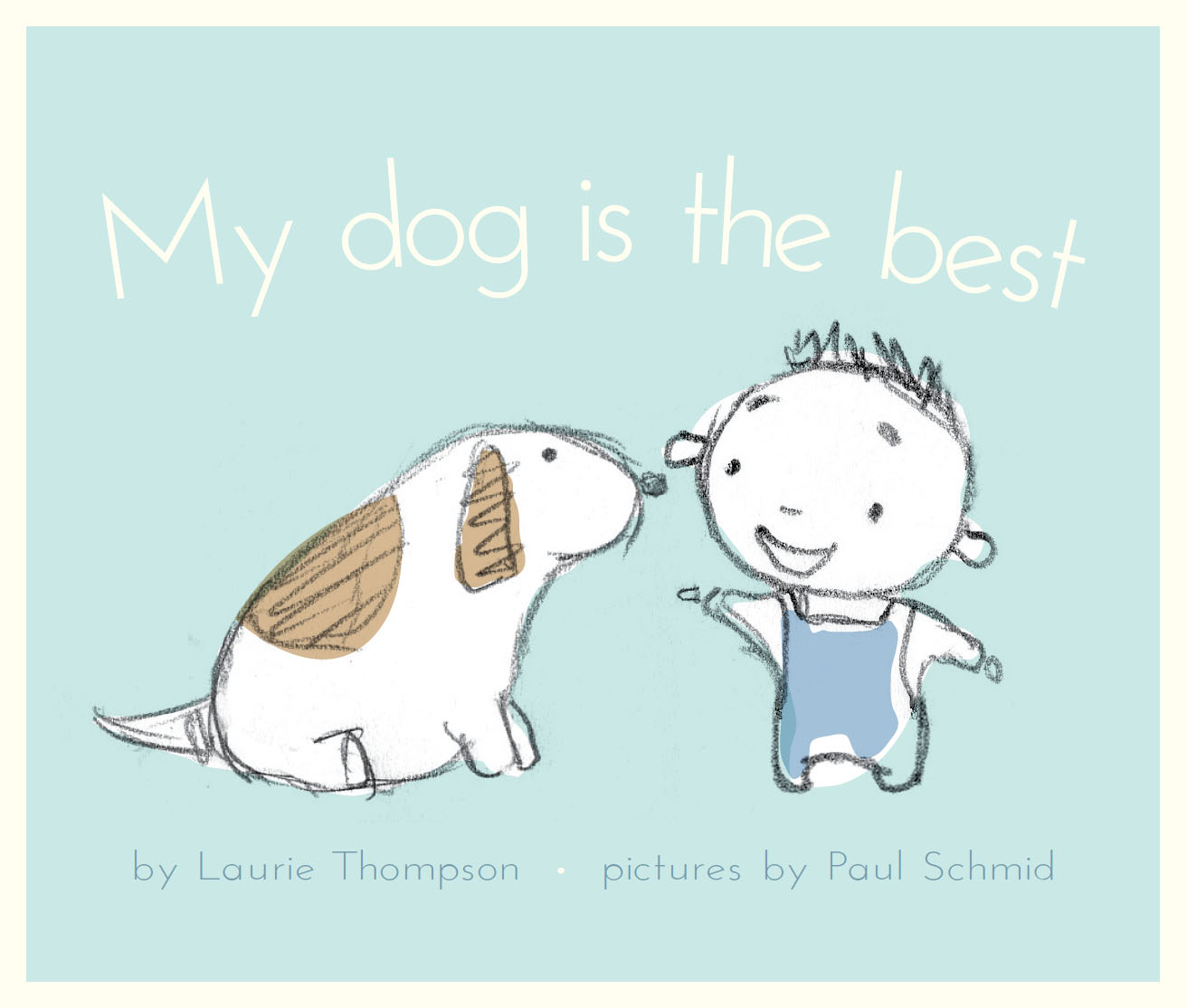
MY DOG IS THE BEST-cover

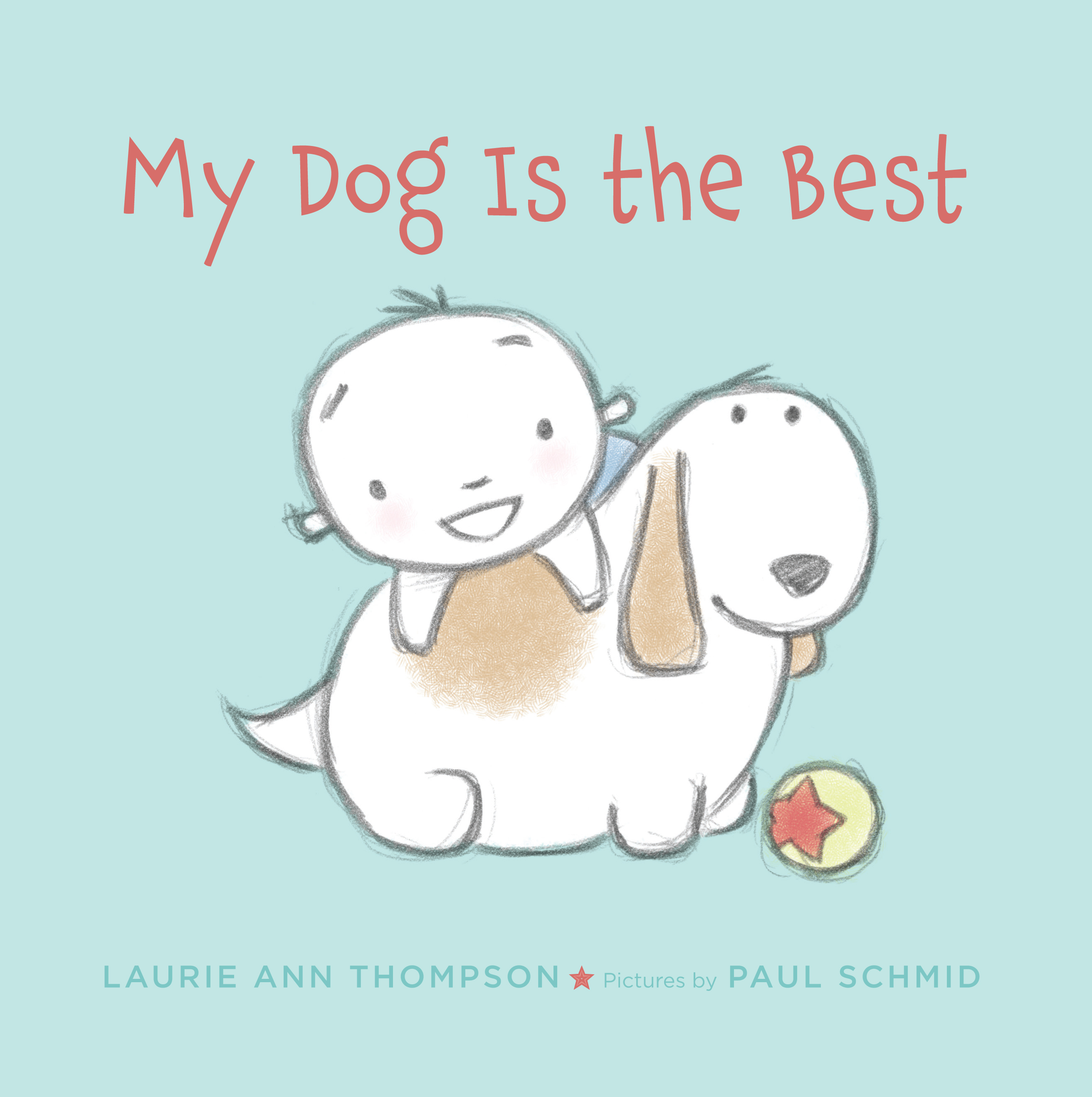
My Dog is the Best
Author: Laurie Ann Thompson
Illustrator: Paul Schmid
Published: June 9, 2015 by Farrar, Straus, and Giroux

Goodreads Summary: What do you get when you combine one energetic, enthusiastic little boy with his sleepy but tolerant dog? Unconditional love. Using simple words and spare illustrations, My Dog Is the Best celebrates the special bond that exists between a young child and a beloved family pet. It’s the heartwarming story of two best friends. . . told by a boy with a very active imagination.

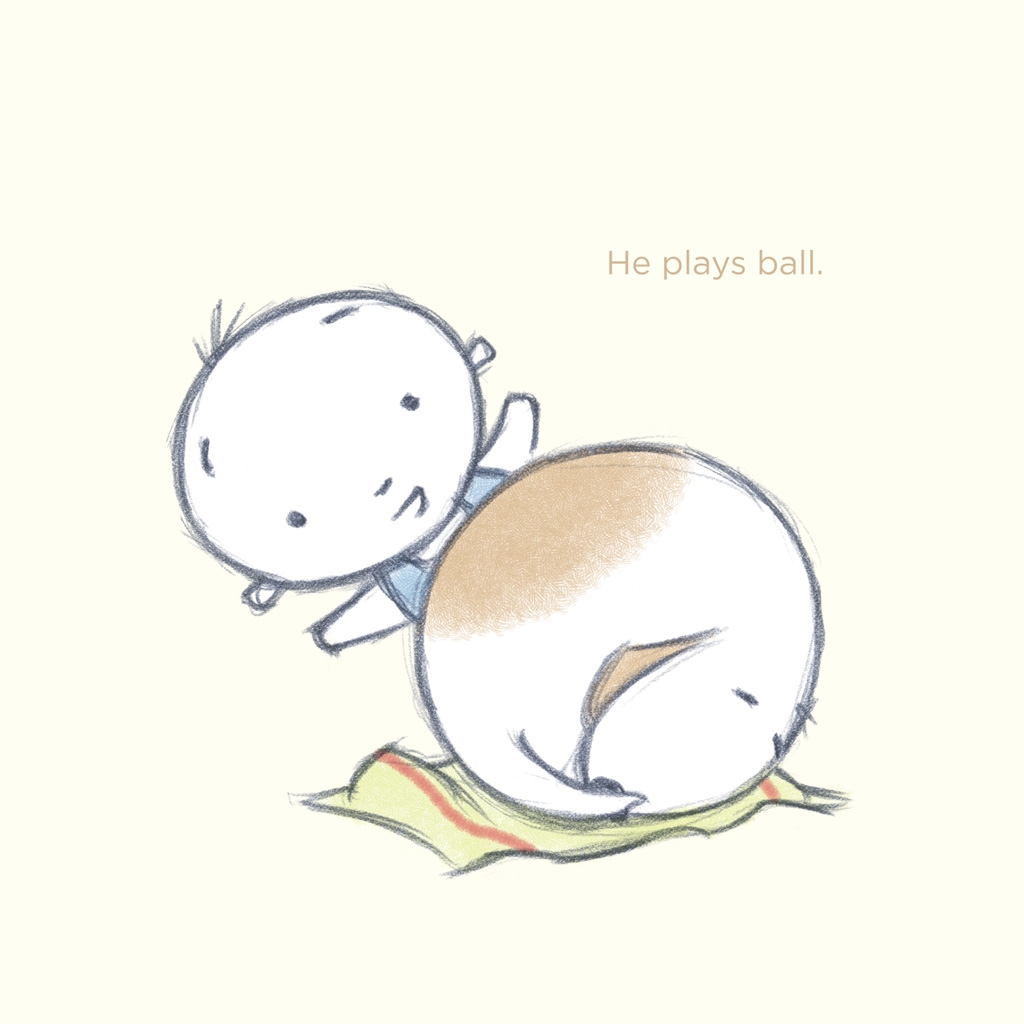
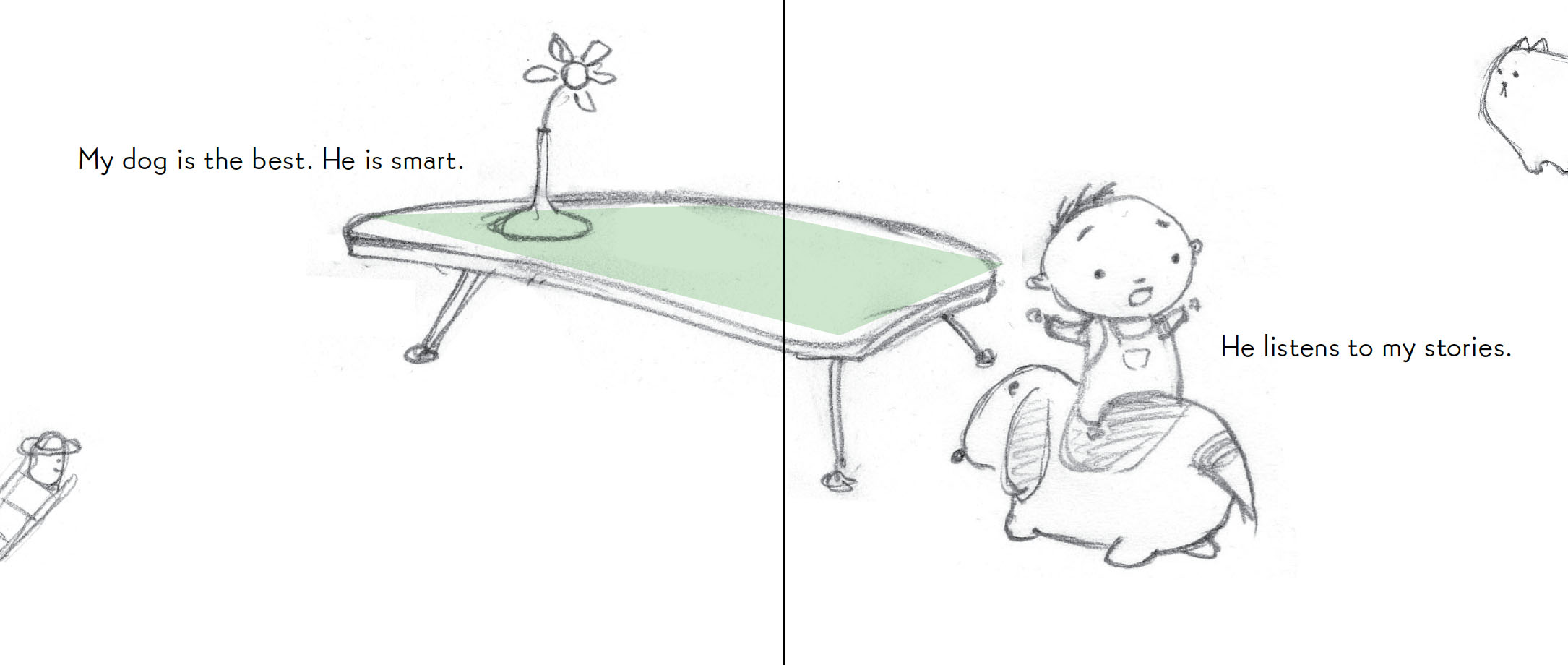
Ricki’s Review and Teachers’ Tools for Navigation: This charming tale will surely win the hearts of many children. It made me feel a bit guilty that I don’t have a dog for my son! I can imagine teachers reading this story aloud to captivated audiences. Teachers might ask students to compare this story with others in their classrooms. The way the illustrator and text focuses on the two subjects makes their friendship shine. You can find an example of the text’s playfulness in the flagged page below. It made me smile! After reading this story, I would encourage my students to write their own stories about friendships that they have.

Kellee’s Review and Teachers’ Tools for Navigation: This book makes me want a dog (and like Ricki said, I feel a bit guilty for not having a dog for Trent!). I loved this sweet story of a sleepy dog and a rambunctious child who is going to have fun with his dog no matter what the dog thinks about it. The play between the words and illustrations is what really made this book special and made the quiet humor really ring through. I also think that kids are really going to like the end of the book. Like Ricki, I think that this text could be a great mentor text for writing about times of imagination and friendship. What other ways could the boy have played with the dog? How do you play with your pet/toy? I also think that it is a great story to use to talk about humor and irony. Why was the ending funny?

Discussion Questions: What kinds of games do you play with your best friend/pet/toy?; Do you have a pet? How is your relationship with your pet similar or dissimilar with this story?; In what ways is it obvious that the author and illustrator worked together to create this book? How do the drawings enhance the story?; Why is the ending ironic?

We Flagged:

My Dog is the Best spread
Image from: http://us.macmillan.com/books/9780374300517

Read This if You Loved: Look! by Jeff Mack; The Poky Little Puppy by Janette Sebring Lowrey; May the Best Dog Win by Kelly Hashway; Bark, George by Jules Feiffer; Emmanuel’s Dream by Laurie Ann Thompson

Recommended For: 

readaloudbuttonsmall classroomlibrarybuttonsmall

Interview with the Laurie Ann Thompson and Paul Schmid!

Questions to Laurie:

05_lauriethompson_PhotoByMaryBalmaceda-500x750

  1. What inspired you to write this book?

I first wrote the text as an assignment for a course I was taking, Anastasia Suen’s Easy Reader/Chapter Book Workshop. I’ve always loved dogs, and it’s a great word for beginning readers, so I started there. I noticed that most of the time when I said, “Good dog!” to my poor old dog, Sara, she was either curling up and getting ready to go to sleep or already sleeping. She would give me this confused look that said, “What? I’m not doing anything!” She’d been a hyperactive, crazy dog in her younger years, so it was a huge relief when she finally started slowing down a little. I appreciated the humor in those interactions. At the same time, I had an awfully busy little boy at home, so both the tension between their very different energy levels and their special “best friends” relationship were natural ingredients for the story.


  1. Did you have a specific dog when you were growing up that you were thinking of as you wrote this book? 

It’s really a collection of all of them. My dogs were my best friends, and they put up with so much of my probably unwanted attention. I had one special dog named Sammy that I used to dress up in doll clothes, push in a baby swing, and take for rides in my bicycle basket. (He loved those last two activities, but I’m pretty sure he merely tolerated the first!) He was the best. When I was bit older, my dog Ripper used to wait at the end of our driveway—every single day—for the school bus to bring me home. He listened to all of my tales of teenage angst and always let me dry my tears on his fur. He was devoted and dependable. He was the best. Then, as an adult, there was Sara. She was the best, too. I think whatever dog we make room for in our lives becomes “the best,” just by virtue of us loving them.


dressing up Sammy1999-03 36_34 Laurie and Ripper2011-07-02 083038 Connor and Sara

  1. You write both YA and children’s books. How is your writing process different for each?

It’s very different! For my YA books, I’m a rather obsessive planner. I research and outline, then research some more and revise the outline and so on, for a long time, before I’m finally ready to start writing. For my picture books, I like to just play. I just start writing and see what happens. As a result, I typically spend less time revising the YA books than the picture books, even though the picture books are much, much shorter! It usually takes a lot of revision to make a picture book work just right.


  1. What was it like to work with an illustrator? 

With my YA books, like Be a Changemaker, there is no illustrator, so the final product is the result of the collaboration between my editors and me—and we’re all primarily word people. As a picture book author, though, it’s always exciting to see what another person with a very different way of working and of seeing the world will bring to my original vision. Authors don’t usually get much say in the illustrations (and rightly so, as I surely am no art expert!). With my second book (and first picture book), Emmanuel’s Dream, I had never met the illustrator, Sean Qualls, and I didn’t see any of his stunning artwork until it was almost all finished. I was on pins and needles, but what a pleasant surprise! For My Dog Is the Best the experience was a bit unusual but every bit as special. It just happened that Paul Schmid and I live not far apart and had known each other for years. When he took on the manuscript, I was ecstatic! We kept in touch throughout the process, and I even got to spend a day collaborating with him in his studio—one of my all-time favorite writing days ever! We both ended up influencing both the art and the text, and we ended up with something we’re both really proud of.


Questions to Paul:

  1. How did you decide what the characters would look like?

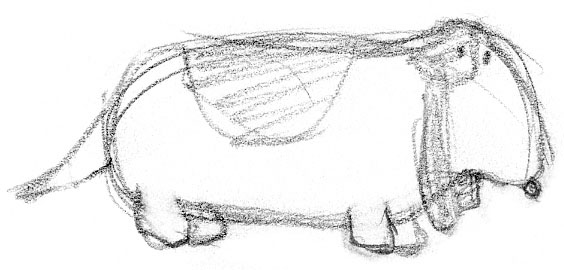
Initially, I form a clear picture of the characters personalities. Are they active? Sedentary? Outgoing or shy? The design of a character should provide solid clues to who they are. Our dog in the book just wants to nap, and I imagined an old, tolerant, comfortable Basset Hound of established habits. The boy is much more active, but young and naive. He is also sweet and loving, as the book is itself. So I felt the boy needed a kind, gullible, gentle look that was at the same time visually sympathetic to his dog, in order to form an emotional connection between the two for the reader. As a result, they both ended up round and gentle looking.


  1. What does the artistic process look like?

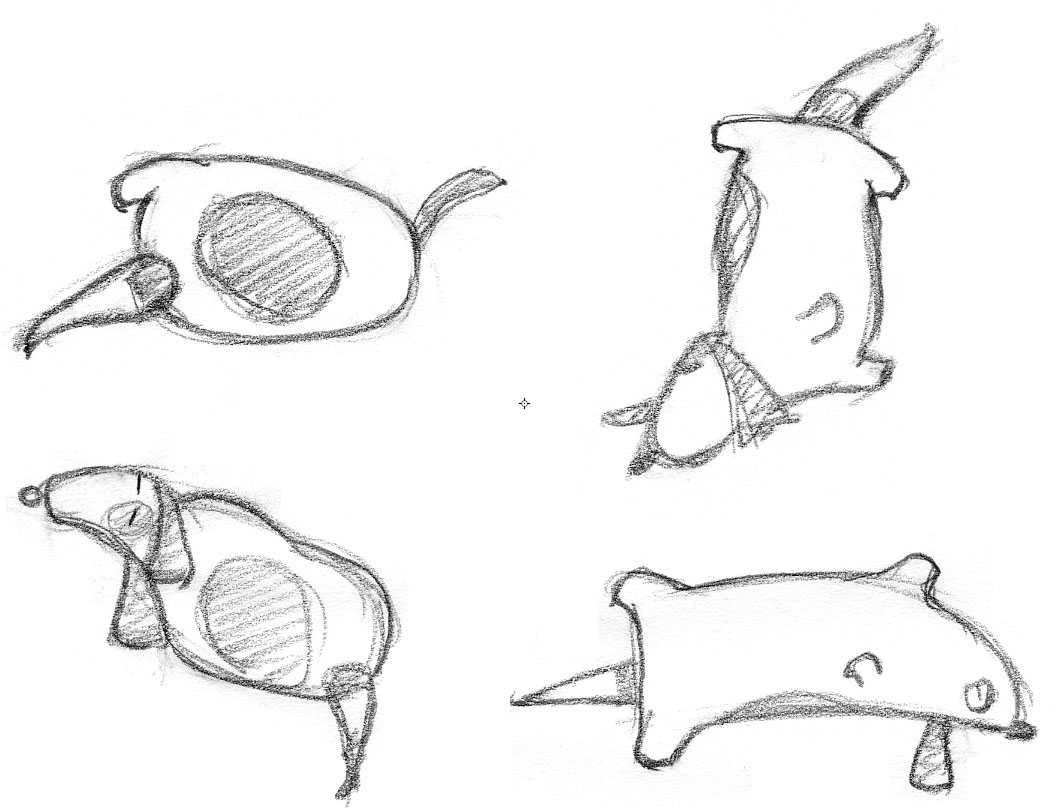
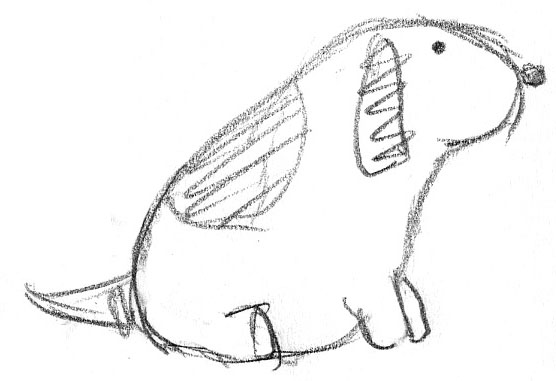
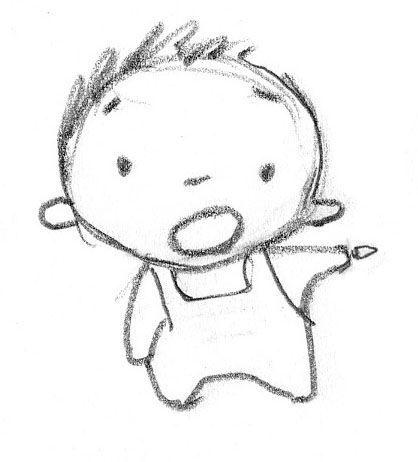
Many many sketches. Then many more. Then a few more. Eventually I have to start the final art. I don’t think I ever really feel like I’m done improving things, but a deadline shows up and helps me stop.

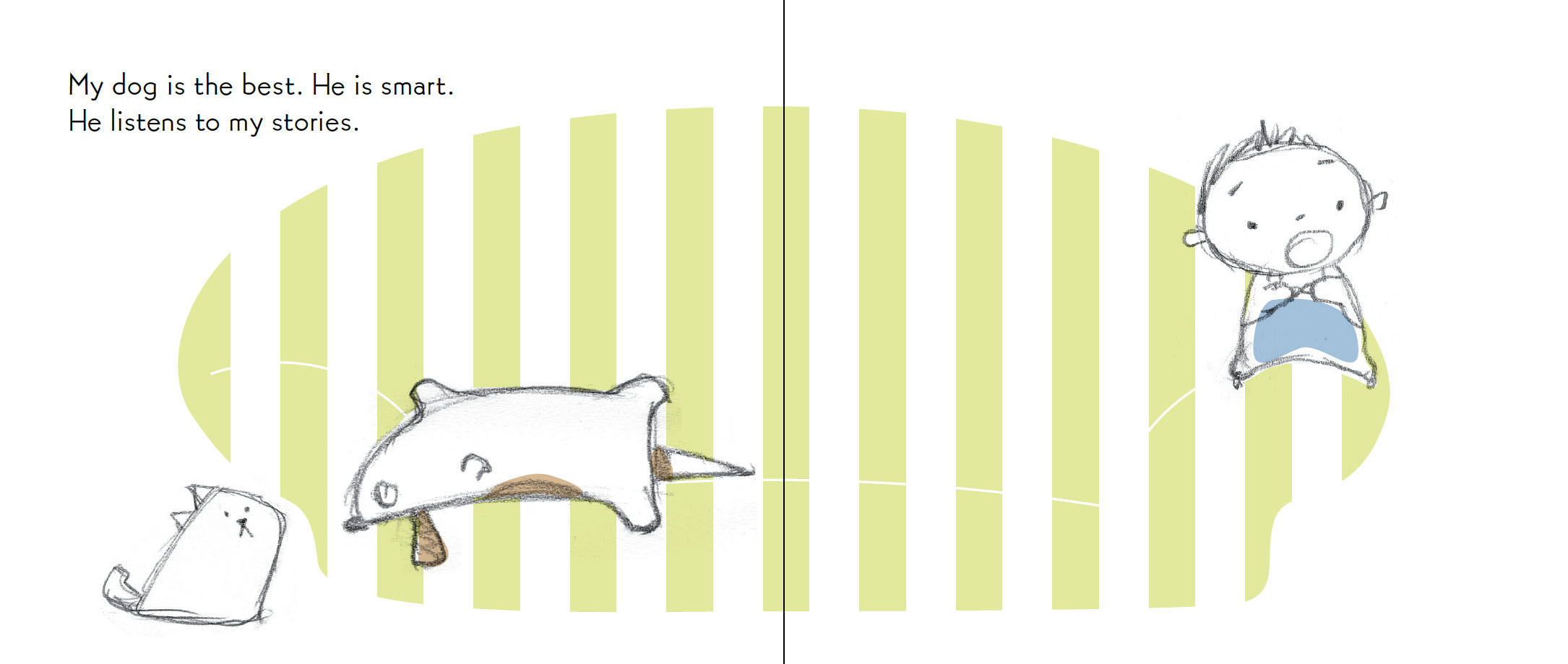
Early sketch of the dog

early dog

Dog Poses

dog poses

Dog sketch and boy sketch

dog sketch boy sketch

Early design

early design

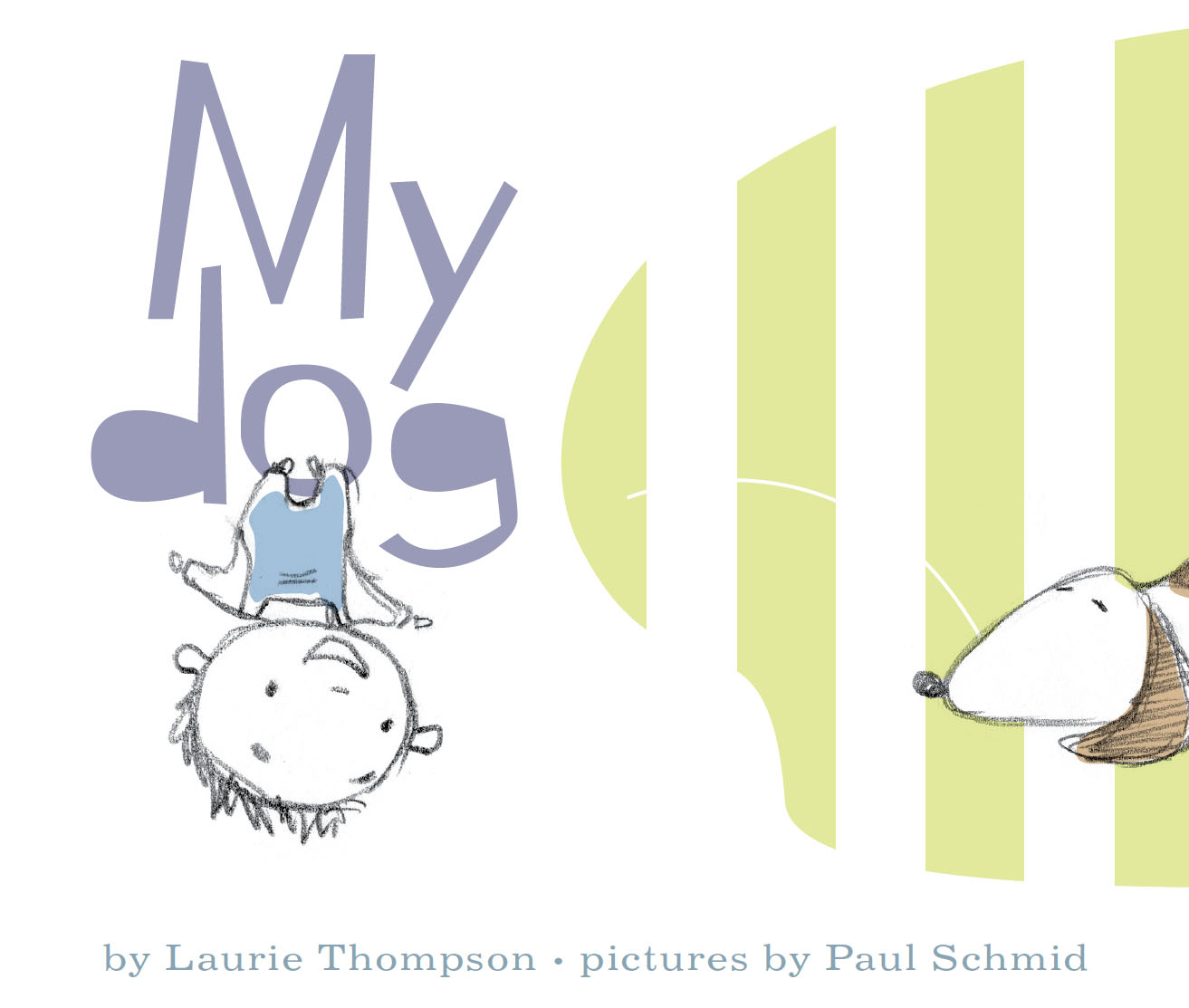
Early cover design

early cover

Another early cover design

cover

Second stage spread

2nd stage spread

GIVEAWAY!

a Rafflecopter giveaway

Follow My Dog is the Best on Tour!:

6/6/2015     Booking Mama     http://www.bookingmama.net

6/8/2015     Jean Reidy     http://jeanreidy.com

6/9/2015     Watch. Connect. Read.     http://mrschureads.blogspot.com

6/10/2015    5 Minutes for Books     http://books.5minutesformom.com

6/11/2015     KidLit Frenzy     http://www.kidlitfrenzy.com

6/12/2015     Unleashing Readers     https://www.unleashingreaders.com

6/16/2015     Anastasia Suen: Booktalk     http://www.anastasiasuen.com

6/19/2015     Kirby’s Lane     http://kirbyslane.com

7/1/2015        Library Lions     http://LibraryLionsRoar.blogspot.com

Thank you to Laurie and Paul for taking part in the interview and for having us as part of the blog tour!

RickiSigandSignature

Review and Teaching Guide!: Harzadous Tales: The Underground Abductor by Nathan Hale

Share

NFPB2015

Nonfiction Picture Book Wednesday

Nonfiction Picture Book Wednesday is hosted by Kid Lit Frenzy and was started to help promote the reading of nonfiction texts. Most Wednesdays, we will be participating and will review a nonfiction text (though it may not always be a picture book).
Be sure to visit Kid Lit Frenzy and see what other nonfiction books are shared this week!

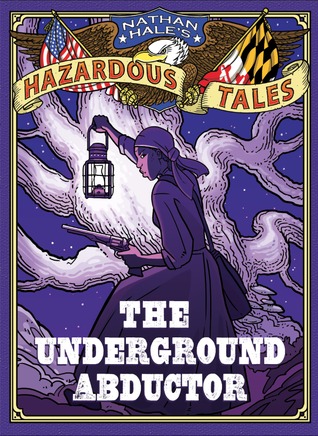
undergroundabductor

The Underground Abductor
Author and Illustrator: Nathan Hale
Published April 21st, 2015 by Amulet Books

Goodreads Summary: Araminta Ross was born a slave in Delaware in the early 19th century. Slavery meant that her family could be ripped apart at any time, and that she could be put to work in dangerous places and for abusive people. But north of the Mason-Dixon line, slavery was illegal. If she could run away and make it north without being caught or killed, she’d be free. Facing enormous danger, Araminta made it, and once free, she changed her name to Harriet Tubman. Tubman spent the rest of her life helping slaves run away like she did, every time taking her life in her hands. Nathan Hale tells her incredible true-life story with the humor and sensitivity he’s shown in every one of the Hazardous Tales—perfect for reluctant readers and classroom discussions.

My Review: I love this entire series! Nathan Hale has taken history and made it accessible (with a dash of humor!). If you don’t the concept of the series, it revolves around Nathan Hale the Revolutionary War spy who, in the first book, was eaten by a history book so now knows all that has happened in history and is sharing it with the hangman and British officer who are guarding him before he is executed. The first book is Hale’s own story and then each of the following are his telling of different times in history.

This installment of Hale’s graphic novel series may be my favorite so far. I found it to be the most intense of his stories even though it is up against stories of wars, but Harriet Tubman’s story is one of one person’s resilience in the face of pure doom. Although it is evident through any story you hear of Harriet how truly brave she was, Nathan Hale’s story immerses you into Harriet’s life and shows you how much she truly did and faced.

Teachers’ Tools for Navigation: This book is written to start discussions (in reading/language arts OR social studies)! I was lucky enough to write the teaching guide for The Underground Abductor (as well as the rest of the series!), and I have included some of my discussion questions below.

I could also see Hale’s Hazardous Tales being used in lit circles with each group reading a different one of the tales. This could lead to wonderful discussions about each time in history. Students could then present their history to the rest of the class.

Discussion Questions: 

  • When Araminta heard the story of Moses and the pharaoh, she envisioned Moses as a slave and the pharaoh as an owner (page 15). How does Moses’s story compare to a traditional story of a slave? Harriet is later called “Moses” or “Black Moses.” How does Harriet’s story compare to Moses’s?
  • How did Nat Turner’s rebellion affect slave laws (page 21)? He meant to make a positive change, but it actually turned negative. How? Why?
  • On page 44, Nathan Hale personifies debt as the ghosts and men Minty had been dreaming about. Why is debt shown as a terrifying thing? How did Mr. Brodess’s debt affect Mindy and her family?
  • Complete a character web with adjectives describing Harriet Tubman. What type of person was she that allowed her to overcome a debilitating injury and slavery?

Book Trailer: 

Read This If You Loved: Hazardous Tales series by Nathan Hale, March by John Robert Lewis, Stolen Into Slavery by Judith Bloom Fradin, Elijah Buxton by Christopher Paul Curtis

Recommended For: 

classroomlibrarybuttonsmall litcirclesbuttonsmall closereadinganalysisbuttonsmall

Signature

**Thank you to Morgan at Abrams Books for providing a copy of the book!**

Photos Framed: A Fresh Look at the World’s Most Memorable Photographs by Ruth Thomson

Share

NFPB2015

Nonfiction Picture Book Wednesday

Nonfiction Picture Book Wednesday is hosted by Kid Lit Frenzy and was started to help promote the reading of nonfiction texts. Most Wednesdays, we will be participating and will review a nonfiction text (though it may not always be a picture book).
Be sure to visit Kid Lit Frenzy and see what other nonfiction books are shared this week!

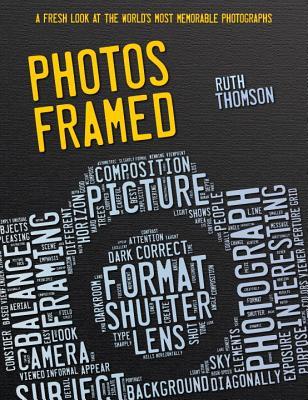
photosframed

Photos Framed: A Fresh Look at the World’s Most Memorable Photographs
Author: Ruth Thomson
Photographers: Various
Published August 5th, 2014 by Candlewick Press

Goodreads Summary: Portrait. Nature. Art. Documentary. A look at some of the world’s most iconic photographs invites viewers to focus on the medium’s place in art and history.

Photographs can be beautiful or harrowing, honest or manipulative, dramatic or comforting. Photos Framed explores twenty-seven of the most important and vivid photos taken over the medium’s history, from a formal portrait of Louis Daguerre taken in 1844 to a candid shot of a Cuban girl and her doll in 2011. Readers are invited to use their powers of observation to zoom in on photographic elements, blow up details of the subject matter, think about the big picture, and pan out on the photographer. Photos Framed will open viewers’ eyes to the art of photography and its power to tell a story.

Kellee’s Review and Teachers’ Tools for Navigation: This book is phenomenal. It takes art and history and combines them into an epic look at the history of photography and the world. I am definitely going to use this book in my classroom next year. Each photograph includes information about the photo, information about the photographer, three photo thoughts questions, a “blow up” section that looks at a certain part of the photograph, a “zoom in” which looks at elements of the photograph, and a quote from the photographer. This information is fascinating, but it is just an introduction to the time period of the photo, what makes the photo a true piece of art and who the photographer is. I would love to see students delve deeper into each of these photos using this book as an amazing jumping off point. The book also gives a nice lesson at the beginning about the different types of photographs. I can definitely see myself using that in my journalism class when we look at photography. 

Ricki’s Review and Teachers’ Tools for Navigation: Kellee’s review is spot-on. This book forces readers to zoom in on elements of photography and then zoom out on each photograph to provide context and history. I spent a long time on each page and appreciated the way the author took in the beauty and complexity of each photograph. Teachers often do a lot of close reading in the classroom. I’d love to use this text used as a parallel for close reading. The teacher and students would spend time zooming in and zooming out on the photograph. Then, we could look at a class text and do the same with the words on the page. It teaches students how important it is to look carefully at the minutia of the world but also consider the bigger picture. This book inspired me to want to pair up with the school’s photography teacher to analyze the text in an interdisciplinary way. Perhaps, photography students would be inspired by the book and students could select a photograph for a creative writing assignment. 

Discussion Questions: Each photograph has discussion questions that help the reader analyze the photograph.

We Flagged: 

New York Construction Workers Lunching on a Crossbeam

The photograph: …Ebbets’s breathtaking photograph celebrates these tough men, taking their lunch break on a crossbeam on the unfinished sixty-ninth floor of the RCA Building, part of Rockefeller Center…

The photographer: Ebbets was a fearless photographer who even risked taking aerial shots lying on the tail of a plane…

Photo thoughts: Where do you think the photographer was positioned to take this shot?…” (p. 38-39)

Read This If You Loved: Humans of New York by Brandon Stanton, Miss Peregrine’s Home for Peculiar Children by Ransom Riggs, Books about Photography

Recommended For: 

classroomlibrarybuttonsmall closereadinganalysisbuttonsmall

Signature and RickiSig

Seeds of Freedom: The Peaceful Integration of Huntsville, Alabama by Hester Bass

Share

NFPB2015

Nonfiction Picture Book Wednesday

Nonfiction Picture Book Wednesday is hosted by Kid Lit Frenzy and was started to help promote the reading of nonfiction texts. Most Wednesdays, we will be participating and will review a nonfiction text (though it may not always be a picture book).
Be sure to visit Kid Lit Frenzy and see what other nonfiction books are shared this week!

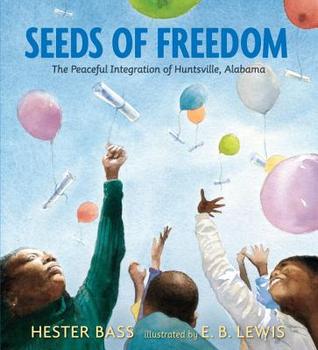
seeds of freedom

Seeds of Freedom: The Peaceful Integration of Huntsville, Alabama
Author: Hester Bass
Illustrator: E.B. Lewis
Published January 27th, 2015 by Candlewick Press

Goodreads Summary: Explore a little-known story of the Civil Rights movement, in which black and white citizens in one Alabama city worked together nonviolently to end segregation.

Mention the Civil Rights era in Alabama, and most people recall images of terrible violence. But something different was happening in Huntsville. For the citizens of that city, creativity, courage, and cooperation were the keys to working together to integrate their city and schools in peace. In an engaging celebration of this lesser-known chapter in American and African-American history, author Hester Bass and illustrator E. B. Lewis show children how racial discrimination, bullying, and unfairness can be faced successfully with perseverance and ingenuity.

Kellee’s Review:  I loved learning about Huntsville! It is amazing that in the middle of the violence and ignorance that ran rampant during the Civil Rights Movement, there was a Southern town that was peaceful and worked together to integrate. The story is so inspiring and gives me faith in humanity! I love how Bass ties together history and the movement throughout the nation to what was going on in Huntsville. It really shows the comparison between the rest of the nation and Huntsville. The illustrations are also extremely beautiful. I fell in love with his art in Each Kindness, and I am so happy to experience it again. 

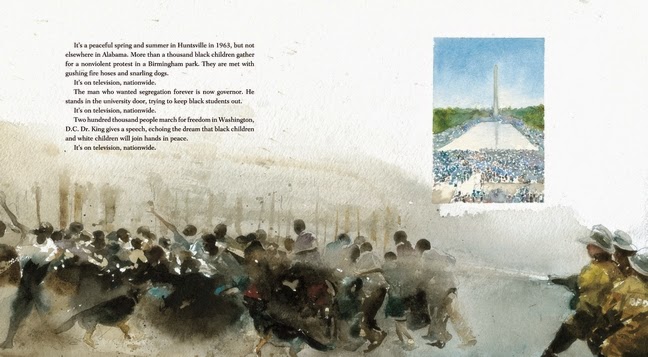
Ricki’s Review: The metaphor of the seeds of freedom dances across the pages of this book. E. B. Lewis’ illustrations are masterful. I spent a long time on each spread, soaking in the way the artwork connected with the words. This is a book about civil rights, and it is also a book about the goodness of people and the quiet persistence of the people of Huntsville, Alabama as they saw injustice, and they pressed on to fight against it. Students will learn a bit about history, but they will learn a lot about themselves. I plan to use this book in my methods classes to show how history can come alive in picture books. This book shines brightly. 

Teachers’ Tools for Navigation: This book is a wonderful introduction to the civil rights movement. It gives a peaceful account and also shares information about the dark times. We think it would be fascinating to take the events mentioned in Seeds of Freedom and put them on a timeline, so students can visually see when each event was happening. It was also be interesting to compare and contrast Birmingham and Huntsville during this time period. Additionally, Seeds would be a perfect companion to Lions of Little Rock. Teachers might consider using this book in a text set to give students a rich understanding of the civil rights movement, or they might create a text set around themes such as persistence or protest in history. 

Discussion Questions: How was Huntsville’s civil rights movement different than other cities around the nation?; How did the author use a seed as a metaphor for the civil rights movement?; What is reverse integration?; Who are some of the main people who helped integration within the United States?

We Flagged: 

seedsspread

Read This If You Loved: Lions of Little Rock by Kristin Levine, Separate is Never Equal by Duncan TonatiuhSit In by Andrea Davis Pinkney; The Other Side by Jacqueline Woodson, Freedom Summer by Deborah Wiles

Recommended For: 

classroomlibrarybuttonsmall readaloudbuttonsmall

Signatureand RickiSig

Reviews and Educators’ Guide: Matt Tavares’s Baseball Biographies

Share

henry aaronted williams

 babe ruthpedro

Henry Aaron’s Dream
Author: Matt Tavares
Published January 12th, 2010 by Candlewick Press

Goodreads Summary: Matt Tavares hits one out of the park with this powerful tale of a kid from the segregated south who would become baseball’s home-run king.

Before he was Hammerin’ Hank, Henry Aaron was a young boy grow ing up in Mobile, Alabama, with what seemed like a foolhardy dream: to be a big-league baseball player. He didn’t have a bat. He didn’t have a ball. And there wasn’t a single black ball player in the major leagues. B ut none of this could stop Henry Aaron. In a captivating biography of Henr y Aaron’s young life – from his sandlot days through his time in the Negro Leagues to the day he played his first spring training game for the Braves – Matt Tavares offers an inspiring homage to one of baseball’s all-time greats.

There Goes Ted Williams: The Greatest Hitter Who Ever Lived
Author: Matt Tavares
Published February 14th, 2012 by Candlewick Press

Goodreads Summary: A lively picture book biography of Ted Williams from a master of the genre — just in time for Fenway Park’s centennial.

Ted Williams lived a life of dedication and passion. He was an ordinary kid who wanted one thing: to hit a baseball better than anyone else. So he practiced his swing every chance he got. He did fingertip push-ups. He ate a lot of food. He practiced his swing again. And then practiced it some more. From his days playing ball in North Park as a kid to his unmatched .406 season in 1941 to his heroic tours of duty as a fighter pilot in World War II and Korea, the story of Teddy Ballgame is the story of an American hero. In this engrossing biography, a companion to Henry Aaron’s Dream, Matt Tavares makes Ted Williams’s life story accessible to a whole new generation of fans who are sure to admire the hard work, sacrifice, and triumph of the greatest hitter who ever lived.


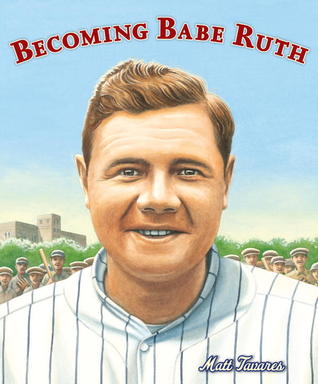
Becoming Babe Ruth
Author: Matt Tavares
Published February 12th, 2013 by Candlewick Press

Goodreads Summary: Matt Tavares’s striking homage to one of baseball’s legends offers a rare view into Babe Ruth’s formative years in “the House that built Ruth.”

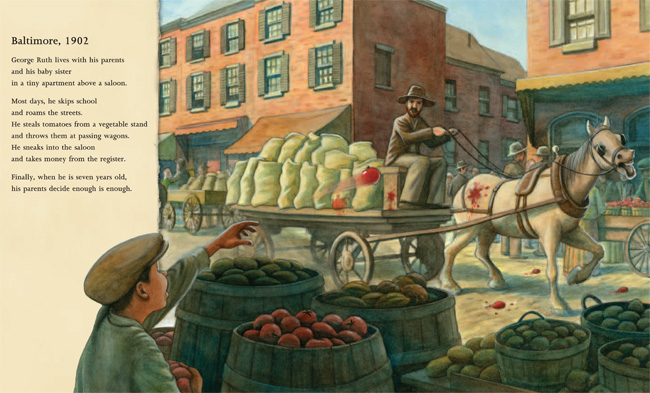
Before he is known as the Babe, George Herman Ruth is just a boy who lives in Baltimore and gets into a lot of trouble. But when he turns seven, his father brings him to the gates of Saint Mary’s Industrial School for Boys, and his life is changed forever. At Saint Mary’s, he’s expected to study hard and follow a lot of rules. But there is one good thing about Saint Mary’s: almost every day, George gets to play baseball. Here, under the watchful eye of Brother Matthias, George evolves as a player and as a man, and when he sets off into the wild world of big-league baseball, the school, the boys, and Brother Matthias are never far from his heart. With vivid illustrations and clear affection for his subject, Matt Tavares sheds light on an icon who learned early that life is what you make of it — and sends home a message about honoring the place from which you came.

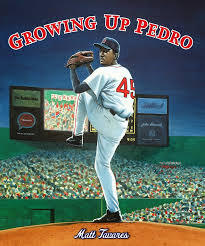
Growing Up Pedro: How the Martinez Brothers Made it From the Dominican Republic All Way to the Major Leagues
Author: Matt Tavares
Published February 10th, 2015

Goodreads Summary: The love between brothers is key to Matt Tavares’s tale of Dominican pitcher Pedro Martinez, from his days of throwing rocks at mangoes to his years as a major-league star.

Before Pedro Martinez pitched the Red Sox to a World Series championship, before he was named to the All-Star team eight times, before he won the Cy Young three times, he was a kid from a place called Manoguayabo in the Dominican Republic. Pedro loved baseball more than anything, and his older brother Ramon was the best pitcher he’d ever seen. He’d dream of the day he and his brother could play together in the major leagues—and here, Matt Tavares tells the story of how that dream came true. In a fitting homage to a modern day baseball star, the acclaimed author-illustrator examines both Pedro Martinez’s improbable rise to the top of his game and the power that comes from the deep bond between brothers.

My Review: These four superbly crafted biographies take a look at the life of each man, but as more than a baseball player. We learn about their childhoods, where they came from, and their dreams and hopes. Each book includes aspects of the history surrounding them including the Depression, wars, and racism. Additionally, these books are crafted beautiful with lyrically written prose. These books are must reads for lovers of baseball, history, and biographies in general.

Teachers’ Tools for Navigation: I was lucky enough to be asked to write a teachers’ guide for each of these books. For each book, I created discussion questions and activities (including cross-curricular activities). I plan on using this guide in my own classroom with the books in a lit circle type of setting. Each group will be given one of the biographies, will complete the discussion questions and activities, and then become experts on their player before presenting. These biographies are asking to be in classrooms, and I hope the guide helps show how they can fit into a language arts/reading class.

Please check out the complete guide at http://www.candlewick.com/book_files/0763668249.btg.1.pdf 

Examples from the guide: 

Becoming Babe Ruth
News spread differently in the early twentieth century. Discuss with your students the way news about Babe Ruth was spread during his lifetime and have students find examples in the text. Then have them discuss the way news is spread digitally nowadays. Invite the class to debate the pros and cons of digital news.; How did Babe Ruth’s life change when he left Saint Mary’s to play for the Orioles?

There Goes Ted Williams
Have students write down Ted Williams’s batting average and home run stats as well as those of two other Hall of Famers. After comparing the players’ stats, have students write a paragraph discussing whether or not they believe that Ted Williams is the best hitter ever.; How did Ted Williams’s childhood perseverance help him become a professional baseball player?

Henry Aaron’s Dream
Baseball began integrating before all cities in the United States had ended segregation. As a class, discuss how this reality affected black players on major-league baseball teams and how black players’ trips to segregated cities differed from those of their white teammates. Then, with your students, complete a graphic organizer comparing and contrasting the life of white and black baseball players during Hank Aaron’s lifetime. Invite students to write an essay about how life has changed for players of color over time.; How did Jackie Robinson influence Henry Aaron? What did Jackie Robinson’s accomplishments mean for other black baseball players? 

Growing Up Pedro
Pull up a map of North America. Have students mark all the different places that Pedro played: the Dominican Republic, Montana, Montreal, and so on. Ask students to determine the miles between each location. Which place was the farthest from Pedro’s home? Which place was the closest?; Have students write a journal entry as Pedro Martínez. Invite them to write, from Pedro’s point of view, what it feels like to move so far away from home when he is so young. Does he miss his family? Is he sad, happy, or excited to be in Montana.

Discussion Questions: Examples of discussion questions and activities for each of the biographies can be found in my teachers’ guide; however, after reading all four of the books, two discussion questions could be: Most of the baseball players had a mentor or idol that he looked up to and learned from. How did these mentors or idols help guide the players into becoming the greats they are?; Each of the baseball players helped a charity that was close to his heart. Who did each player help? Why did players choose the charity they did?

We Flagged: 

Becoming Babe Ruth, byMatt Tavares
http://www.matttavares.com/becomingbaberuth.html from Becoming Babe Ruth

Check out Matt Tavares’s You Tube channel to see sneak peeks into Growing Up Pedro and  There Goes Ted Williams.

Recommended For: 

readaloudbuttonsmall closereadinganalysisbuttonsmall

classroomlibrarybuttonsmall litcirclesbuttonsmall

Signature

Review and Author’s Guest Post!: “Josh, Harrison & Dad’s Excellent Adventure” by Henry L. Herz, Author of Monster Goose Nursery Rhymes

Share

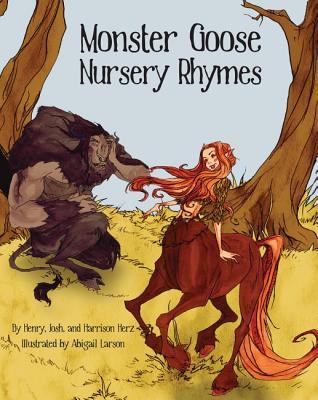
monster goose

Monster Goose Nursery Rhymes
Authors: Henry, Josh, and Harrison Herz
Illustrator: Abigail Larson
Published February 7th, 2015 by Pelican Publishing Company

Goodreads Summary: Enter an enchanted land of mythical creatures where manticores reign and ogres roar-a land of mystery and fright. A unique twist on traditional rhymes of everyone’s youth, “Monster Goose Nursery Rhymes” presents a more sinister approach to these childhood classics, and yet the sing-song nature of the poems renders them playful and jovial at the same time. Little Witch Muffet is not frightened by a silly, little spider; she simply adds him to her stew!

Rotten zombies, giants, dwarves, and goblins mingle with werewolves, centaurs, and fauns. Follow along the skeleton stepping stones, scale up a palisade, claw at the window of a tasty child and bake him into a pumpkin shell. Monsters cook up delicious elvish pie, too! Every kid who has an eensy weensy bit of sense wants a pet with feathers white as snow, who flies like an eagle and bleats like a goat-a hippogriff, of course!

Six forest sprites with four times as many pixies escape from a loaf of bread atop the elaborate table of the fey queen; her feast has flown away! If you enjoy mischief and have a penchant for the morbidly hilarious, the Herzs’ rhymes will satisfy your mythological curiosities.

Larson’s illustrations give new life to these ancient figures, and her artistic style employs the bold lines and colorful movement of an action-packed comic book. The author also includes a “bestiary” with information about the book’s legendary creatures, which hail from Scotland, Germany, Italy, Persia, Haiti, and Scandinavia.

Kellee’s Review and Teachers’ Tools for Navigation: Really like the creativity of mashing monster/mythology and nursery rhymes. A great intro to all things traditional lit and fantasy in a rhyming, fun way. I especially liked that the creatures hail from a variety of places and that the author included an appendix that includes information about each of them. I think this book would be a great way to introduce mythology as well as give students an opportunity to make their own parody of a nursery rhyme using a creature.

One thing that makes this book special is that Henry Herz wrote this book with his two sons. I am happy to share with you a post about their collaboration:

Josh, Harrison, and Dad’s Excellent Adventure

Henry, Josh & Harrison Herz

The astute observer will notice that there are three author credits for Monster Goose Nursery Rhymes. That’s because my young sons were involved in its creation. This is the tale of how two boys became traditionally published authors.

A few years ago (in a galaxy far away), I wanted to share my love of fantasy with my young sons.  They were too little for watching most of the fantasy and sci-fi movie classics, and there are only so many good fantasy books available for that age range.  Struck by inspiration one day, I came up with a way to share the joy of entering the magical realms of fantasy. I would write a fantasy book for them.

What I did not anticipate was that my boys would give me feedback on the story.  They devised some of the character (Nimpentoad) and creature (Neebel) names and made plot line suggestions.  And who better to help make the story appealing to kids than other kids?  So, the goal of interesting my sons in fantasy transformed into also encouraging them to write.

Originally, I only shared the story of Nimpentoad with family, for their own enjoyment.  I had no thoughts of having the book published.  But one day, my sister-in-law suggested that I consider publication because she felt the story was much better than many of the books she was seeing for her similarly-aged kids.  I thought about it for a while, and decided to give it a try.

The first step was to find the right artist. Once again, my sons were involved, this time in providing art direction.  We would explain in words what each illustration should contain.  Collaborating remotely via email and DropBox, our artist would give us a rough sketch, and we would provide feedback on details and color palette.  Nimpentoad came to life, while my boys added another dimension to their experience.

Given the amount of time that had passed, as well as the anticipated challenges with finding an agent or publisher willing to take a chance on an unproven writer, we decided to indie-publish.  The response to Nimpentoad was encouraging, and we subsequently indie-published Twignibble (an easy reader about a mechanically-inclined sloth, who travels the world helping his endangered animal friends), and How the Rhino Got His Skin (an updated picture book version of Rudyard Kipling’s classic).

We’ve done book readings and signings at schools, libraries, museums, farmer’s markets, book fairs, and bookstores. My boys are now experienced sales professionals! They know how to handle themselves with new people, and easily sell more books than I do.

Like any good author, I am committed to honing my craft. I belong to critique groups, participate in Tara Lazar’s annual Picture Book Idea Month (PiBoIdMo) event, and took a picture book writing class at UCSD. Part of the class curriculum was to draft some picture book manuscripts. Kids love monsters and I love monsters (being a big kid myself), and so the idea for Monster Goose Nursery Rhymes was born.

As with our other collaborations, I drafted the book, and then had my sons review it. Then it went through my critique group and more revisions. I subsequently attended the Orange County Editor’s Day event hosted by the Society of Children’s Book Writers and Illustrators (SCBWI). Monster Goose Nursery Rhymes won best picture book. After that, it was time to query agents and editors. Happily, several editors expressed interest. We chose Pelican Publishing, and the rest is history.

Writing rhyming picture books is very challenging (see why at http://wp.me/p31Xf4-K0). I jokingly encourage newbie writers to visit www.DontDoRhyme.com (not a real website). The irony is not lost on me that my debut traditionally published picture book is in rhyme. My only excuse is that I didn’t have to invent the meter, I just had to twist the words to fit the existing meter.

If you want to interest your kids in mythological creatures, or fantasy literature in general, give Monster Goose Nursery Rhymes a look. Just take care – Monster Goose Nursery Rhymes is a gateway book to The Lightning Thief and, eventually, to The Lord of the Rings.

Learn more about Monster Goose Nursery Rhymes at http://www.birchtreepub.com/mgnr.htm.

Recommended For: 

readaloudbuttonsmall closereadinganalysisbuttonsmall classroomlibrarybuttonsmall

Signature

**Thank you to Henry L. Herz for providing a copy for review and for the guest post!**