Snow Angel, Sand Angel by Lois-Ann Yamanaka; Illustrated by Ashley Lukashevsky

Share

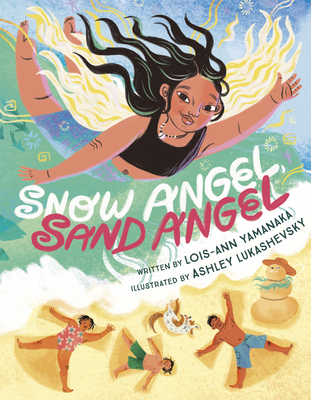
Snow Angel, Sand Angel
Author: Lois-Ann Yamanaka
Illustrator: Ashley Lukashevsky
Published: January 4, 2022 by Make Me a World

Summary: A celebration of home, family, and finding beauty in your heritage, beautifully illustrated by the artist behind Anti-Racist Baby.

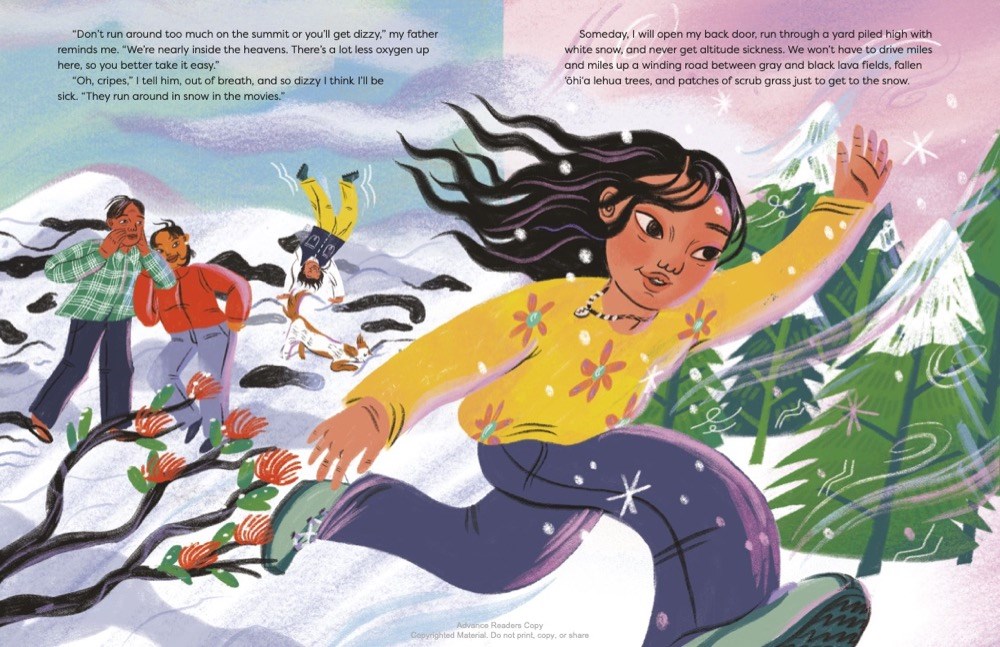
Claire has been surrounded by the deep blue waves of Hapuna Beach and the magnificent mountains of Hawai’i all her life, but has never, ever seen snow. When her father drives her and her family to the top of the Mauna Kea, she can’t help but to be disappointed…it’s not the winter wonderland she’s always dreamed of. And that’s what she wants, more than anything.

But as Claire edges ever closer to the new year, she wonders if maybe– just maybe–she can delight in the special joys of winter in her own way–right there, on her Big Island of Hawaii.

Includes backmatter that captures the environmental culture of Hawaii, and will teach children not only about the local flora and fauna, but also the value of being environmentally friendly.

Ricki’s Review: I feel very qualified to write this review because my kids have made me read this book about 100 times in the last month. I think I have it memorized. I am so drawn to the way that Claire, the narrator, connects with the islands. When the story begins, she wants more, more, more. And by the end of the story, she realizes that Hawai’i offers her all that she needs—and more. The story offers a deep connection with family and with home. The author and illustrator are from Hawai’i, and the story feels authentic to the experiences of people who know the islands well. I loved this book, and I am so happy that it exists.

Teachers’ Tools for Navigation: Teachers might use this book to ask students to share positive portrayals of their homes and the land in which they live. I’ve seen a lot of activities of “I am From” poems, bu this book offers another dimension and great opportunities for children to think about the ways in which they are connected to land.

Discussion Questions: 

  • How does Claire’s opinion about Hawai’i change throughout the story?
  • How does her family help her see the value of her home?
  • Where is home for you? What does your home offer?

Flagged Spread:


Read This If You Love: Fry Bread: A Native American Family Story by Kevin Noble Maillard; A Big Mooncake for Little Star by Grace Lin; Crow Not Crow by Jane Yolen; Eyes that Kiss in the Corners by Joanna Ho

  classroomlibrarybuttonsmall

**Thank you to Barbara from Blue Slip Media for sending a copy for review!**

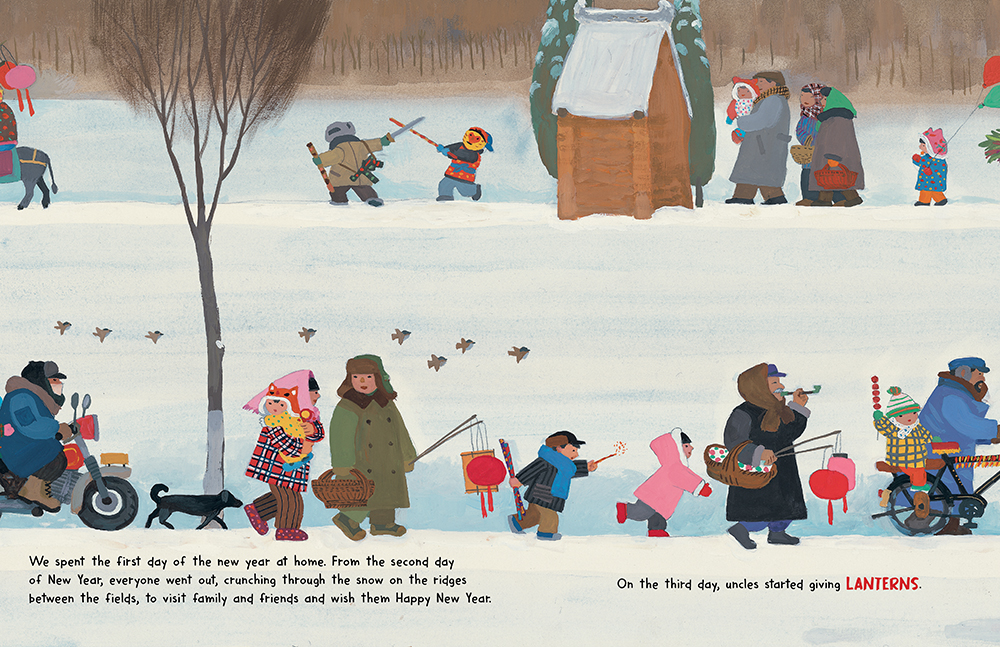
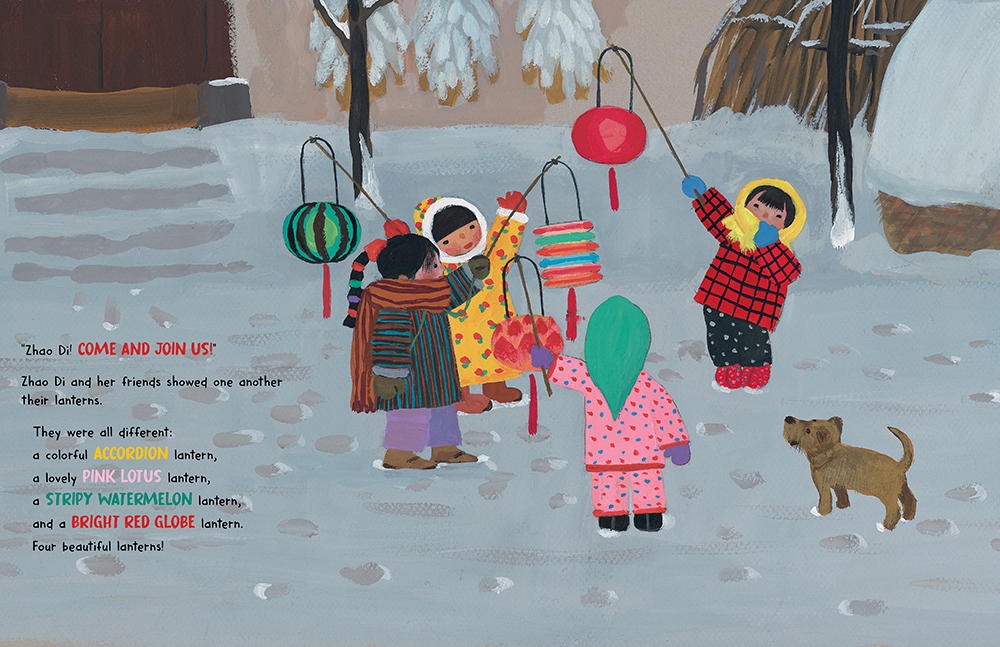
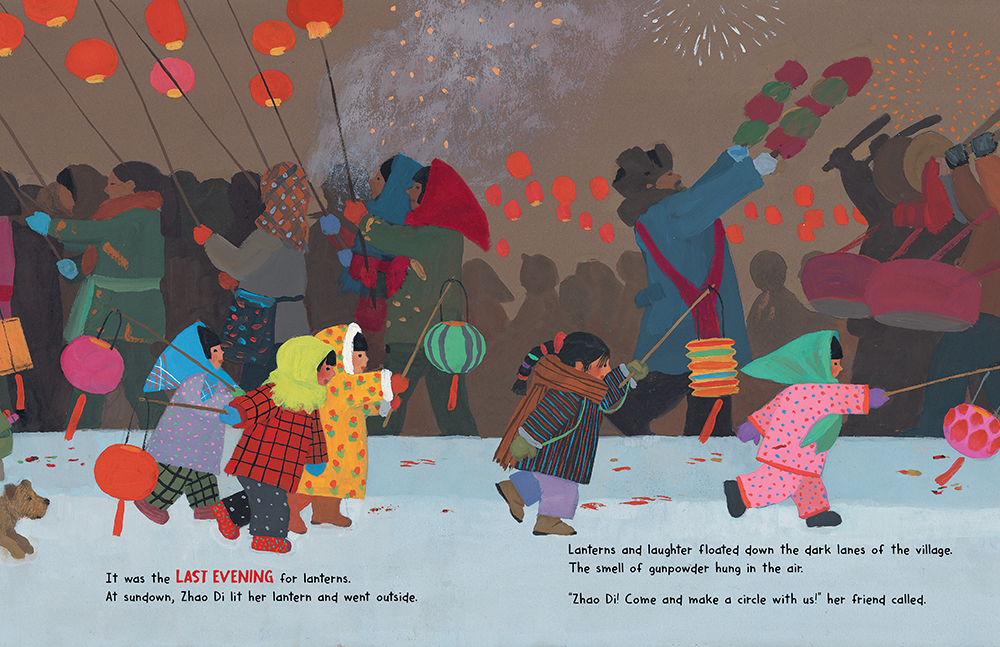
Review & Giveaway: Playing with Lanterns by Wang Yage, Illustrated by Zhu Chengliang, Translated by Helen Wang

Share

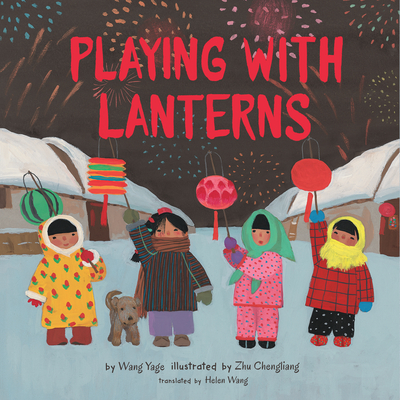
Playing Lanterns
Author: Wang Yage
Illustrator: Zhu Chengliang
Published January 11, 2022 by Amazon Crossing Kids

Summary: Zhao Di wishes the New Year would never end!

Zhao Di and her friends are excited to go out at night with their paper lanterns and celebrate Chinese New Year. Each holding a unique colorful lantern with a lit candle inside, they admire the breathtaking colors while doing their best to avoid the wind and the sneaky boys in the village. Every night, until the fifteenth day of New Year, Zhao Di and her friends take part in this fun tradition, experiencing the thrill of nighttime in their village. And then—it’s time to smash the lanterns!

In this cheerful book first published in China, readers are invited along with Zhao Di and her friends as they experience all the joy and excitement of this folk Chinese custom. Details about the paper lantern tradition are also included in an author’s note at the end of the book.

Praise:

“A colorful wintry tale ushers in Chinese New Year over two weeks…A charming illustration of childhood memories during the holiday season.” ―Kirkus Reviews

“Quiet, elegant passages stud the text…Tenderly detailed gouache paintings by Zhu render the children as small, patterned bundles frolicking against expanses of snow…A quiet celebration of a Northwestern Chinese tradition.” ―Publishers Weekly

About the Creators: 

Wang Yage was born in Shaanxi, a central and historical province of China, where the custom of playing with lanterns was once a popular Chinese New Year tradition. A doctor of classical Chinese literature, she teaches at the University of Tibet. Playing with Lanterns is her first picture book. First published in China, the book made the prestigious White Ravens international book list.

Zhu Chengliang is an award-winning Chinese illustrator. Born in Shanghai and raised in Suzhou, he studied at the Department of Fine Art, Nanjing University, and has worked as an author, illustrator, editor, and designer. He was nominated for the Hans Christian Andersen Award in 2016, which is the highest international distinction given to authors and illustrators of children’s books. His books have been named one of the Ten Best Illustrated Books by the New York Times and to the IBBY Honor List.

Helen Wang is a writer and translator from the UK. In 2017 she was given a Special Contributor of the Year honor as part of the Chen Bochui International Children’s Literature Awards for her work in bringing Chinese children’s literature to English-speaking audiences. Wang has translated novels, picture books, and graphic novels, including Cao Wenxuan’s Bronze and Sunflower, which won the Marsh Christian Award for Children’s Literature in Translation.

Review: What a beautiful celebration of the Chinese New Year and the sharing of a folk tradition! The author takes us through all of the celebrations with imagery that makes the reader feel they are celebrating too as the cracking and popping of fireworks explode, the colorful lanterns swing, and the lantern fire glow in word and in illustration.

I also loved learning about a new tradition that I did not know about! Learning about others’ celebrations and lives is one of my favorite things, and I think it is so important for kids to build a world and empathetic view–Playing with Lanterns will do that as well!

Teachers’ Tools for Navigation: What a brilliant mentor text for imagery as well as how illustrations & words work together as one to create mood and tell the full story. All of this will make it a wonderful read aloud and an addition that all elementary school & class libraries need!

Discussion Questions: 

  • How did the author use color in the text? How does it affect the reading?
  • How did the author’s use of imagery add to the story?
  • How did the imagery and the illustrations work together to create the celebratory mood in the book?
  • How was the author’s note at the end of the book important for the readers?

Flagged Passages: 

Read This If You Love: The Snowy Day by Ezra Jack Keats, Picture books about celebrations or winter holidays

Recommended For: 

classroomlibrarybuttonsmall 

Giveaway: 

One lucky winner will receive a copy of Playing with Lanterns, courtesy of Amazon Crossing Kids (U.S. and Canada addresses).

a Rafflecopter giveaway

Signature

**Thank you to Blue Slip Media for providing a copy for review & Amazon Crossing Kids for providing a copy for giveaway!!**

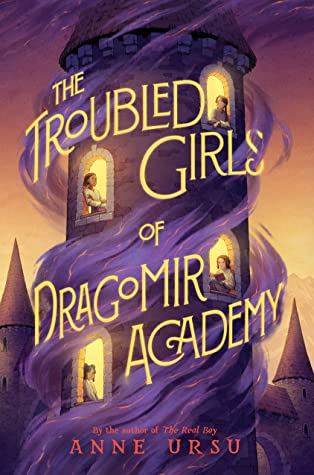
Blog Tour!: The Troubled Girls of Dragomir Academy by Anne Ursu

Share

The Troubled Girls of Dragomire Academy
Author: Anne Ursu
Published October 12, 2021 by Walden Pond Press
Happy book birthday!! 🎉

Summary: If no one notices Marya Lupu, it’s likely because of her brother, Luka. And that’s because of what everyone knows: Luka is destined to become a sorcerer.

The Lupus might be from a small village far from the capital city, but that doesn’t matter. Every young boy born in Illyria may possess the rare ability to wield magic, to protect the country from the terrifying force known only as the Dread. For all the hopes the family has for Luka, no one has any for Marya, who can never seem to do anything right. But even so, no one is prepared for the day that the sorcerers finally arrive to test Luka for magical ability, and Marya makes a terrible mistake. Nor the day after, when the Lupus receive a letter from a place called Dragomir Academy — a mysterious school for wayward young girls. Girls like Marya.

Soon she is a hundred miles from home, in a strange and unfamiliar place, surrounded by girls she’s never met. Dragomir Academy promises Marya and her classmates a chance to make something of themselves in service to one of the country’s powerful sorcerers. But as they learn how to fit into a world with no place for them, they begin to discover things about the magic the men of their country wield, as well as the Dread itself — things that threaten the precarious balance upon which their country is built.

Praise:

A wonderful and inspiring feminist fantasy.” – Kirkus, starred review

“An accessible, timely school story with a rather Transylvanian flavor to its fantasy setting. Ursu explores girls’ conditioning in timidity and shame in a male-dominated world and, ultimately, envisions a hopeful, female-determined future of magical ability.” – Horn Book Magazine

“A suspenseful tale woven with secrets and magic, with a gasp-worthy twist at the end, The Troubled Girls of Dragomir Academy is everything I love about fantasy. Spell-binding.” – Christina Soontornvat, Newbery Honor-winning author of A Wish in the Dark

“Anne Ursu practices her own brand of sorcery—the ability to craft wondrous, magical stories that are unlike anything you’ve ever read. Another extraordinary tale from a remarkably talented author.” – Erin Entrada Kelly, Newbery Medal-winning author of Hello, Universe

“A thoughtful and incisive story of lies told to control people and the complicated girls who ask questions, push back, and keep fighting.” – Tui Sutherland, New York Times-bestselling author of the Wings of Fire series

“It’s no secret that Anne Ursu is a gifted storyteller. The Troubled Girls of Dragomir Academy is intricately plotted and compulsively readable, with characters who will stay with you long after you stop reading. I could not put it down.” – Aisha Saeed, New York Times bestselling author of Amal Unbound

The Troubled Girls of Dragomir Academy manages the particular magic of being both a true fantasy novel and a clear-eyed reflection of the here-and-now. Bighearted, generous, and outstandingly original, this is a story only Anne Ursu could write.”- Elana K. Arnold, award-winning author of The House That Wasn’t There

About the Author: Anne Ursu is the author of the acclaimed novels The Lost Girl, Breadcrumbs, and The Real Boy, which was longlisted for the National Book Award. The recipient of a McKnight Fellowship Award in Children’s Literature, Anne is also a member of the faculty at Hamline University’s MFA in Writing for Children and Young Adults. She lives in Minneapolis with her family and an ever-growing number of cats. You can visit her online at www.anneursu.com.

Review: “Well-behaved women seldom make history.” -Laurel Thatcher Ulrich

This book is a loud cry for all the times females have been told they were trouble or too loud or had too many opinions or talked too much or asks too many questions or is too bossy or… or… or… Because of the patriarichal nature of our society, many girls will hear these thrown at them over and over again because in society’s eyes, it is our job to comply. Marya lives in a society that her job is to not only comply but to also fade into the background, so many of those who read will automatically connect with Marya’s plight and her personality trait of wanting to push back. Marya doesn’t want to just be in the background.

I do not want to share much more about the book than what the summary includes because it was such a pleasure to read–I am envious of all of you who get to read it for the first time! Anne Ursu’s ability to craft a fantastical world that is easy to imagine, write lyrically yet precisely, and create this narrative filled with twists, turns, and a protagonist you will be rooting for lends itself to just a fantastic read. This will definitely be one of my favorite reads of the year!

Teachers’ Tools for Navigation: Walden Pond Press has shared a teacher-created educator guide with discussion questions, classroom activities, and extensions!

Flagged Passages: Chapter 1: The Girl in the Coop

There were few women pictured in the great tapestries of Illyria–besides the witches, of course. The tapestries depicted moments of heoism, epic battles of good and evil, of powerful sorcerers and brave noblemen protecting the kingdom from the monsters that had threatened it through its history.

That is not to say that girls and women did not matter to Illyria: behind every great tapestry was a woman who wove it, just as behind every great sorcerer was a wife to tend to his domestic affairs, a governess to teach his children, a cook to warm his gullet, a maid to keep his fires lit.

And behind every boy who dreamed of being a sorcerer was a mother who raised him to be brave, noble, and kind. And perhaps that boy even had a sister, who right before the Council for the Magical Protection of Illyria finally visited his humble home to test him for magical gift, made sure the chicken coop was clean.

Read This If You Love: Kingdom of Secrets by Christyne MorrellRaybearers by Jordan Ifueko, A Tale of Magic by Chris Colfer, The Spinner of Dreams by K.A. Reynolds, The Trouble with Shooting Stars by Meg Cannistra

Recommended For: 

classroomlibrarybuttonsmall 

Other Blog Tour Stops:

October 12 A Nerdy Bibliophile in Wanderlust
October 13 Read Wonder
October 14 Nerdy Book Club
October 15 A Library Mama
October 16 Maria’s Mélange
October 17 By Singing Light
October 18 Bluestocking Thinking
October 20 Insatiable Readers

Signature

**Thank you to Walden Pond Press for providing a copy for review!**

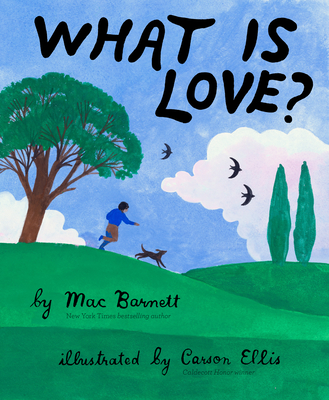
What is Love? by Mac Barnett, Illustrated by Carson Ellis

Share

What is Love?
Author: Mac Barnett
Illustrator: Carson Ellis
Publishing December 28, 2021 by Chronicle

Summary: A beautiful fable about the nature of love, from beloved, award-winning picture book creators Mac Barnett and Carson Ellis.

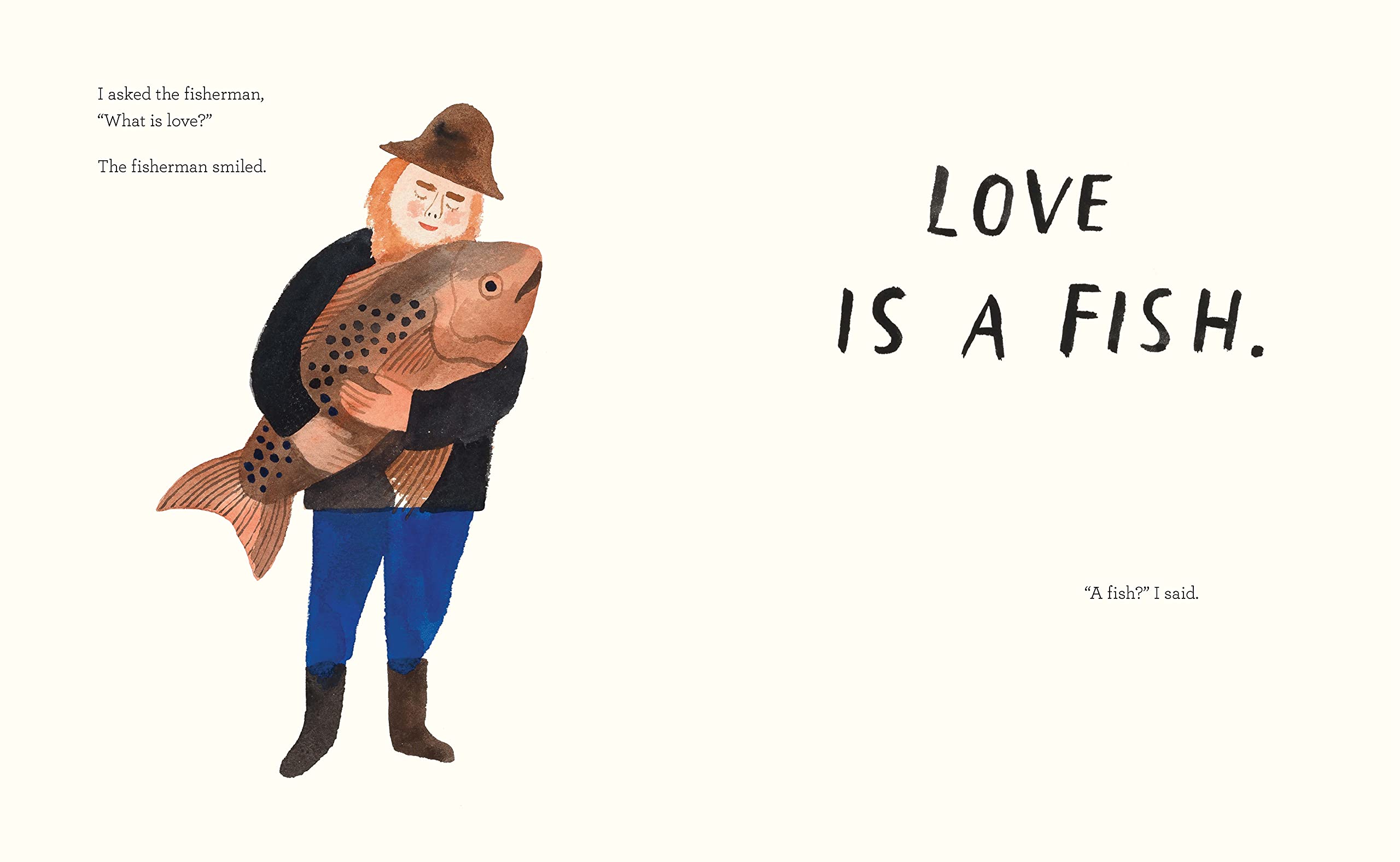
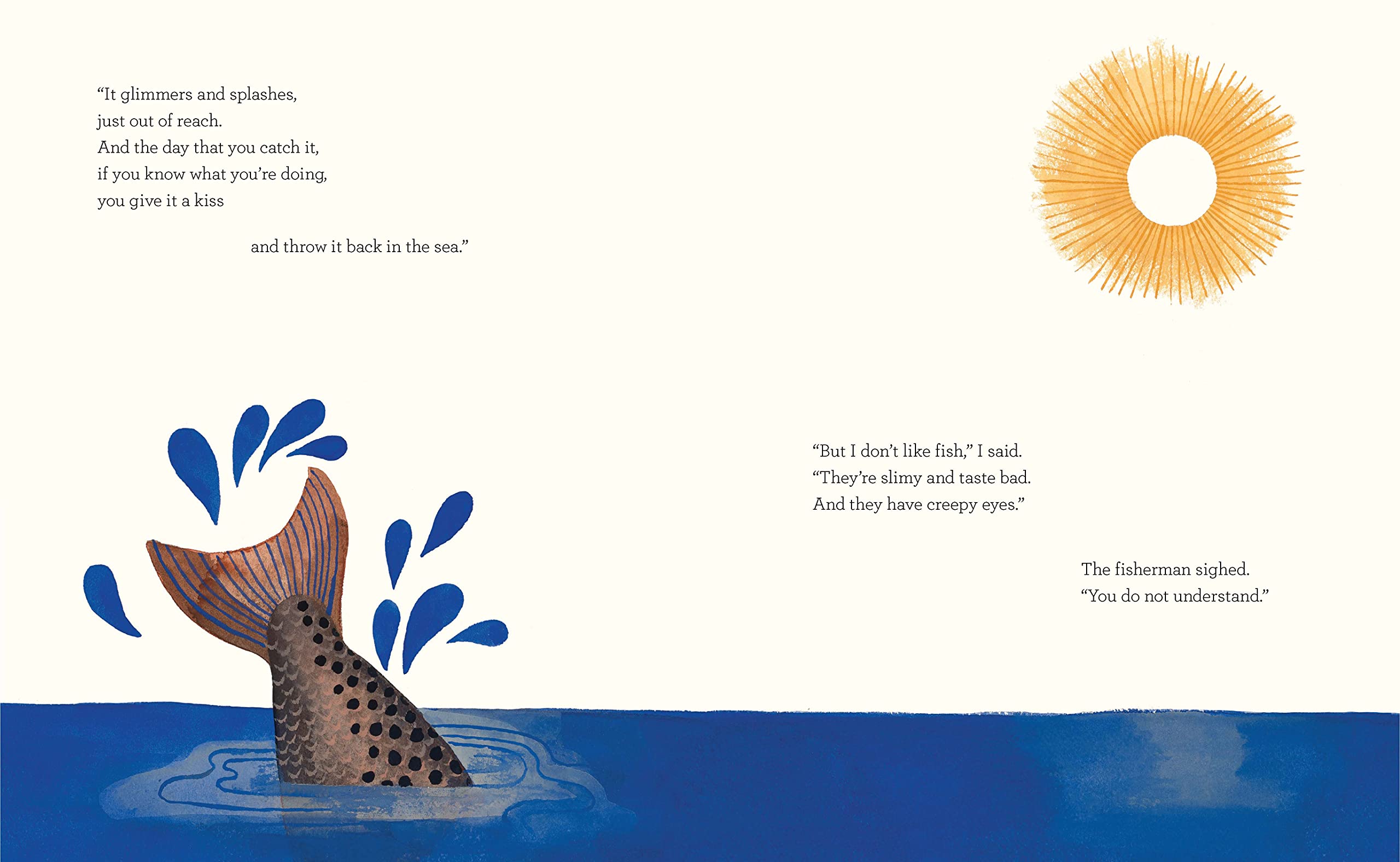
“What is love?” a young boy asks. “I can’t answer that,” his grandmother says, and so the boy goes out into the world to find out. But while each person he meets—the fisherman, the actor, and others—has an answer to his question, not one seems quite right. Could love really be a fish, or applause, or the night? Or could it actually be something much closer to home? This tender, funny tale is an original take on the “I love you” story, a picture book treasure for all ages to read and cherish.

A CLASSIC LOVE STORY: A wonderful narrative voice and spectacular pictures give this book the feel of a modern classic. Fans of The Runaway Bunny, Guess How Much I Love You, and Love You Forever will adore this book.

A BOOK THAT KIDS AS WELL AS PARENTS WILL ENJOY: Many books about the love between parents and children are told from an adult’s point of view. This book begins from the child’s perspective, and it’s funny and unexpected in ways that children can relate to, while being thoughtful in ways that adults will appreciate. Like all great children’s books, this book can be understood on many levels.

A BOOK ABOUT FINDING YOURSELF: The boy’s journey takes him to many different people, whose descriptions of what love means to them is very much about how they see themselves and their lives.

A GREAT READ-ALOUD: The engaging text is full of surprises and the distinctive voice of the narrator invites audiences to respond.

STAR TALENT: Mac Barnett is a New York Times bestselling author and a beloved figure on the school speaking circuit. Carson Ellis is a Caldecott Honor-winner and illustrator of some of the most interesting and beautiful children’s books published today. They’re an incredible creative duo and long-time friends, working together for the first time on this book.

Review: What is love? Adults and children will have a hard time defining it. It’s an abstract concept that is difficult to describe. A boy sets out to try to find the answer to this question. What I loved most about this book was that it wasn’t entirely serious—instead, this charming story has dabs of humor in it. Mac Barnett is just incredibly talented, and I’ve always loved the ways in which Carson Ellis’s illustrations capture the hearts of kids. I adored this book and think it will be one that readers of all ages will appreciate. It will leave them pondering—what is love to them?

Teachers’ Tools for Navigation: This book offers words and images which attempt to describe an abstract concept. Readers might write their own versions of this book with a different concept. For instance, “What is joy?” or “What is hope?”

Discussion Questions: 

  • What is love?
  • What answers does the boy find?
  • How do the author and illustrator add humor to the story?
  • Which spread was your favorite, and why?
  • Why is love defined differently by each person he asks?
  • Although the boy said he didn’t find an answer, he tells his grandmother he did–what is his answer?

Flagged Passages: 

“She picked me up in her arms and said,

‘I can’t answer that.’

‘Who can?’ I asked.

‘If you go out into the world,

you might find an answer.'”

Read This If You Love: Books about Love

Recommended For: 

**Thank you to Chronicle Books for providing a copy for review!**

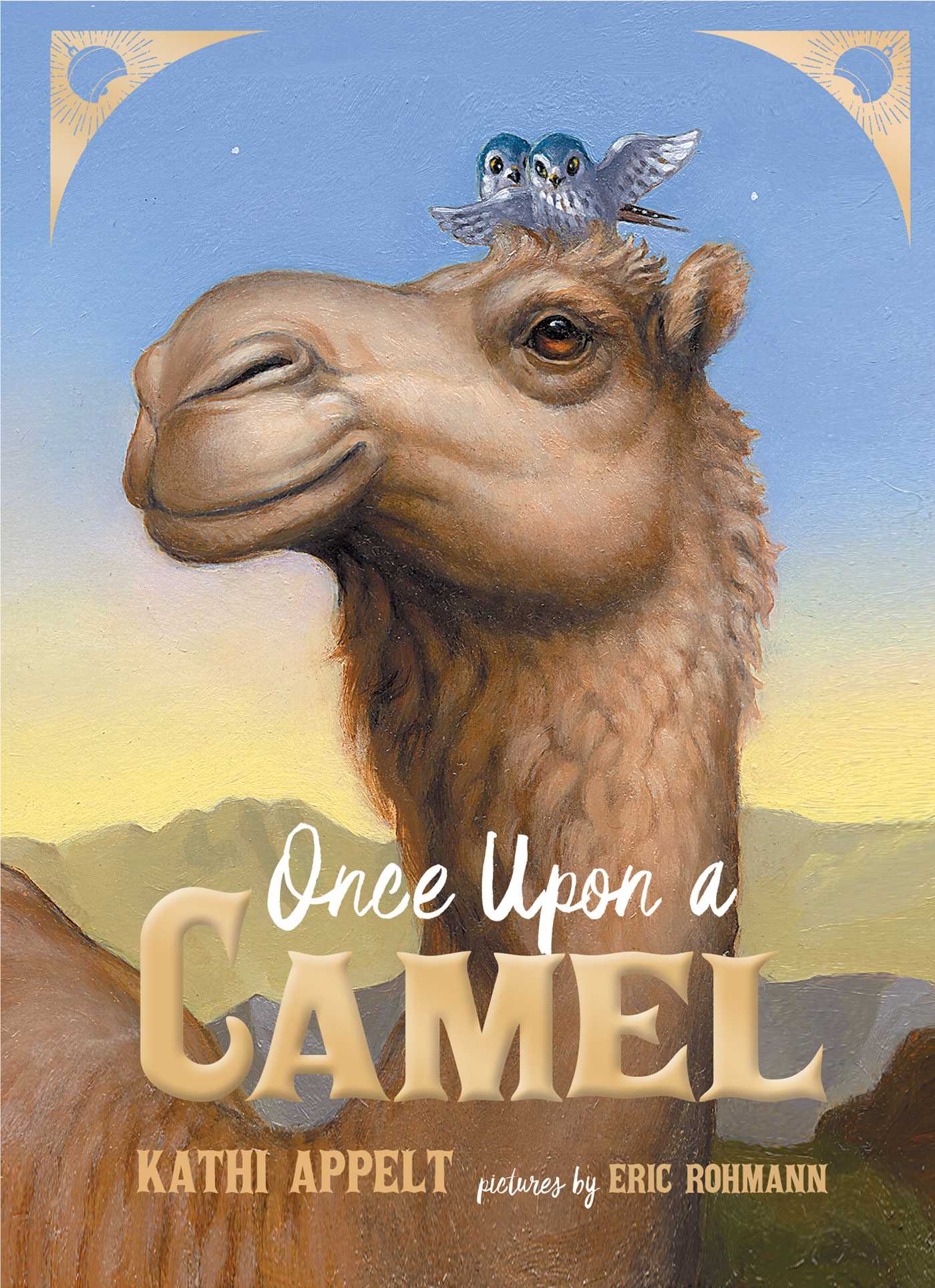
Review and Giveaway!: Once Upon a Camel by Kathi Appelt

Share

Once Upon a Camel
Author: Kathi Appelt
Illustrator: Eric Rohmann
Published September 7th, 2021 by Atheneum/Caitlyn Dlouhy Books

Summary: An old camel is out to save two baby kestrel chicks during a massive storm in the Texas desert.

Zada is a camel with a treasure trove of stories to tell. She’s won camel races for the royal Pasha of Smyrna, crossed treacherous oceans to new land, led army missions with her best camel friend by her side, and outsmarted a far too pompous mountain lion.

But those stories were from before. Now, Zada wanders the desert as the last camel in Texas. But she’s not alone. Two tiny kestrel chicks are nestled in the fluff of fur between her ears—kee-killy-keeing for their missing parents—and a dust storm the size of a mountain is taking Zada on one more grand adventure. And it could lead to this achy old camel’s most brilliant story yet.

About the Author: Kathi Appelt is the author of the Newbery Honoree, National Book Award Finalist, and bestselling The Underneath as well as the National Book Award Finalist for The True Blue Scouts of Sugar Man Swamp. Some of her award-winning books include Maybe a Fox (with Alison McGhee), Keeper, and Max Attacks to name just a few. She lives in College Station, Texas. To learn more, visit her website at kathiappelt.com.

Find Kathi Appelt on Facebook and Pinterest!

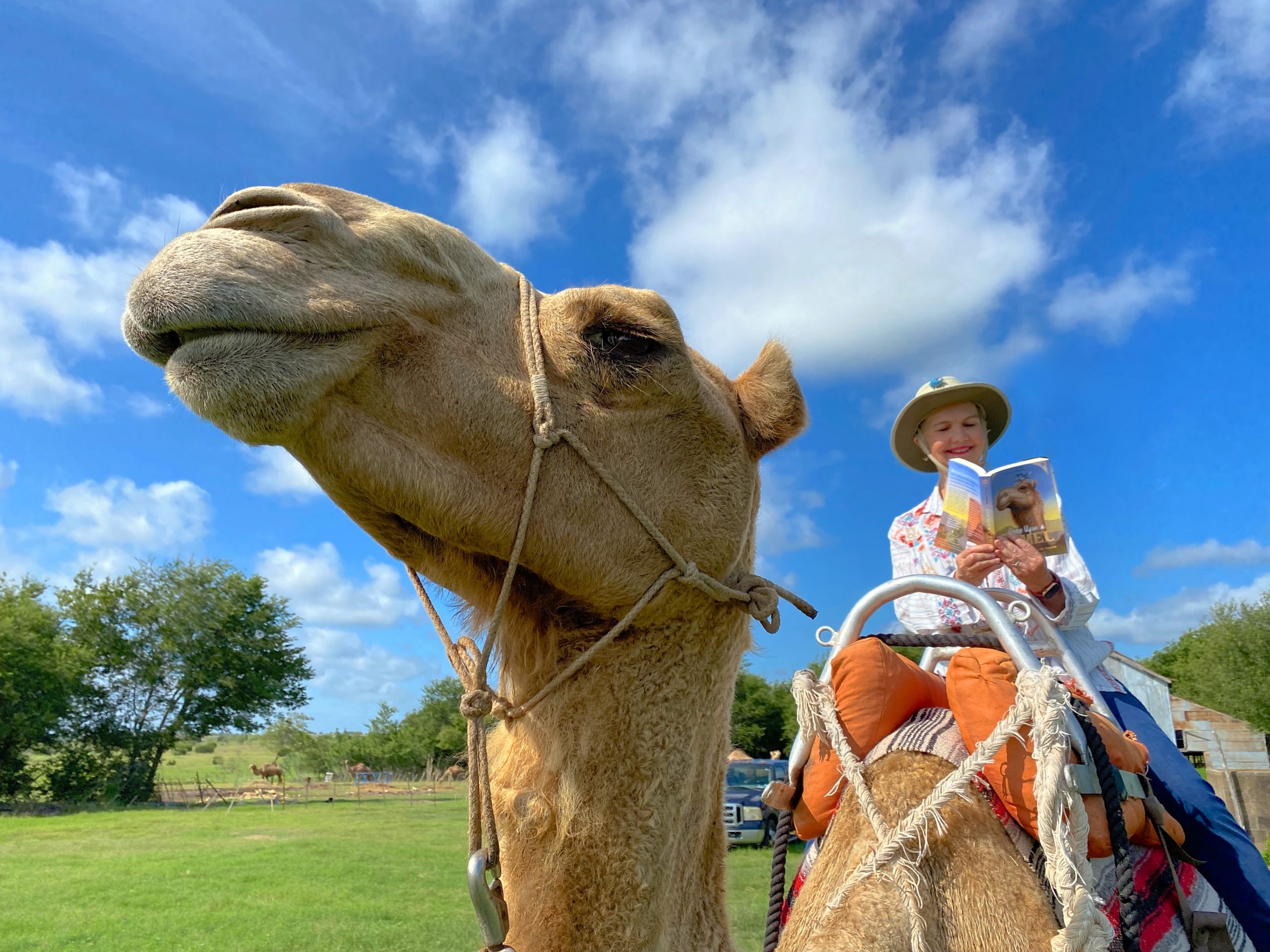
Richard, the camel, and Kathi Appelt taken at Texas Camel Corps. Photo credit: Doug Baum.

Review: Happy book birthday, Kathi & Once Upon a Camel! So honored to review this special book on your special day!

In all of Kathi Appelt’s books, what I have found that I adore the most is her ability to craft voice. She is brilliant. In this book, Zada the camel’s voice rings throughout with patience and determination. I was calmed by her stories of her upbringing as she works to keep the baby kestrels’ minds off of their parents. I think part of Appelt’s magic to craft voice is through her very specific word choice in all instances. Her descriptive words are so precise, and she is never deterred to use a word that may be challenging if it is the correct word. This leads to such lyrical prose–it is a pleasure to read!

There is also so much to learn throughout this story about stories: weather events (haboobs), animals of West Texas (kesterels, mountain lions, hawks, and more), and the history of camels. I found myself going on research tangents as I was introduced to different animals or different adventures that Zada goes on. It is no wonder that the Reading Group Guide is so extensive–there is so much to delve into!

Teachers’ Tools for Navigation (Excerpt from the publisher provided Reading Group Guide): 

  • Explain to students that alliteration is a literary device in which initial consonant sounds of successive or closely related words are repeated. This book contains tons of alliteration. Some examples include “arches and arroyos,” “moving mountain,” “posh Pasha palace,” “Pasha’s princess turns a little pale,” and “best beloved babies.” Using game tiles with letters or small pieces of paper with letters written on them, allow each student to draw a letter and write five alliterative sentences using that letter. Each sentence must contain a subject, verb, and describing words. Once everyone has written their sentences, each person should share their best alliterative sentence with the class.
  • Zada has had a long life filled with experiences and relationships. Her story in the book moves in time as she shares memories while continuing present experiences. Ask students to create a time line for Zada. There are online resources such as Adobe (https://www.adobe.com/express/create/timeline) and TimeGraphics (https://time.graphics) to help with organization. They may also do this in a slideshow format. Have them include dates, locations, and important experiences.
  • Beulah licks Wims, and he is upset. He is described as being “incensed. Put out. Piqued.” Discuss with students how this alliterative and repetitive approach to communicating his feelings is an effective way to convey the strength of those feelings as well as a lyrical way to engage the reader. Ask students to choose one emotion and make a list of synonyms or short expressions that express that emotion. Next, ask them to express the emotion in as many ways as possible in short sentences. Finally, ask them to use their list and sentences to write a paragraph that first explains why their character is feeling that emotion and that then elaborates on how they are feeling in as many ways and with as much creative imagery as possible.
  • Like humans and all other members of the animal kingdom, camels and kestrels have been classified based on shared characteristics. Looking at the list below, you can see that camels, kestrels, and humans are classified together in their kingdom and phylum, but begin to diverge at class groups and fully diverge in orders. Ask students to review the table and have a class discussion about classification. Give students the opportunity to consult some sources, if necessary, to answer their questions.
    • Camels: Animalia (Kingdom) / Chordata (Phylum) / Mammalia (Class) / Artiodactyla
      (Order) / Camelidae (Family) / Camelus (Genus) / Dromedarius or Bactrianus (Species)
    • American Kestrels: Animalia (Kingdom) / Chordata (Phylum) / Aves (Class) / Falconiformes
      (Order) / Falconidae (Family) / Falco (Genus) / F. tinnunculus (Species)
    • Humans: Animalia (Kingdom) / Chordata (Phylum) / Mammalia (Class) / Primates (Order) / Hominidae (Family) / Homo (Genus) / Homo Sapiens (Species)
    • After review and discussion, ask students to write short answers to the following questions:
      • Why do we classify animals and other living things in this manner?
      • What characteristics do all living things have in common?
      • Do camels, kestrels, and humans have the same basic needs?
      • Do humans understand more about animals than animals know about humans?
      • Even though humans and camels are both mammals, do humans or camels have more in common with kestrels than they do with one another?

Discussion Questions (Excerpt from the publisher provided Reading Group Guide): 

  • The story’s action begins with Pard and Perlita telling Zada that a mountain is eating everything and is soon going to eat them. Zada cannot comprehend this. Why do you think that is? How do you handle things you don’t understand? In truth, the mountain is a great sand-and-dust storm coming their way. How does knowing this change your perspective of the situation? How does Zada react?
  • The author explains how a camel has adapted to the desert, and how American kestrels are built for flight. All animals have adaptations: evolved physical and behavioral traits that help their species survive and thrive. Can you think of any other examples of this? What about cultural adaptations? Are there ways in which groups or individuals adapt for their own safety, comfort, or survival?
  • As Zada tries to outrun the storm, she wishes she could fly. This is not the first time in her life she has wished this. Why do you think she has continued to yearn for this ability? Thinking about your life and the environment in which you live, what other animal adaptations would come in handy for you? Explain your answers.
  • As Zada worries about Pecos de Leon, she reflects on the fact that she and the mountain lion have “both traveled a lot of miles and traversed a lot of country. That was worth something.” How can having many experiences help you? Do you think it’s important to experience situations similar to and different from your own life? What might you learn from someone who has lived a long time and done many things? Explain your answers.
  • As Zada moves through the storm carrying the chicks, an enormous old tree comes down behind them. “The wind had yanked it up by its roots. A hundred years, that old tree had stood there, watching over the creek, keeping generations of bird families safe. Now it lay in a heap on its side.” How does the falling tree make Zada feel? How did it make you feel? Do you think generations of bird families will be able to find a new home?
  • As the storm spins Perlita and Pard around, they call out, “‘Keep them safe!’” This is described as the “universal prayer” of parents. What does it mean for something to be universal? Do you have knowledge, ideas, or habits that are universal?
  • Zada’s and Asiye’s motto is “En parlak yildiz ol.” This means “Become the brightest star.” What do they mean by this? How do you see them striving to do this throughout the story?

Flagged Passages: “Chapter 1: Foothills, Chisos Mountains West Texas, 1910

“Incoming!”

Even in her sleep, Zada recognized that voice.

The old camel raised one eyelid. It was still dark. There was at least an hour left before dawn. She did not recall setting an early alarm bird.”

Book Trailer: 

Read This If You Love: Maybe a Fox by Kathi Appelt & Alison Mcghee, The Beatryce Prophecy by Kate DiCamillo, Journey of the Pale Bear by Susan Fletcher, Orphaned by Eliot Schrefer, Good Dog by Dan Gemeinhart, Granted by John David Anderson

Recommended For: 

classroomlibrarybuttonsmall 

Giveaway!

a Rafflecopter giveaway

Signature

**Thank you to Barbara at Blue Slip Media for providing a copy for review and giveaway!**

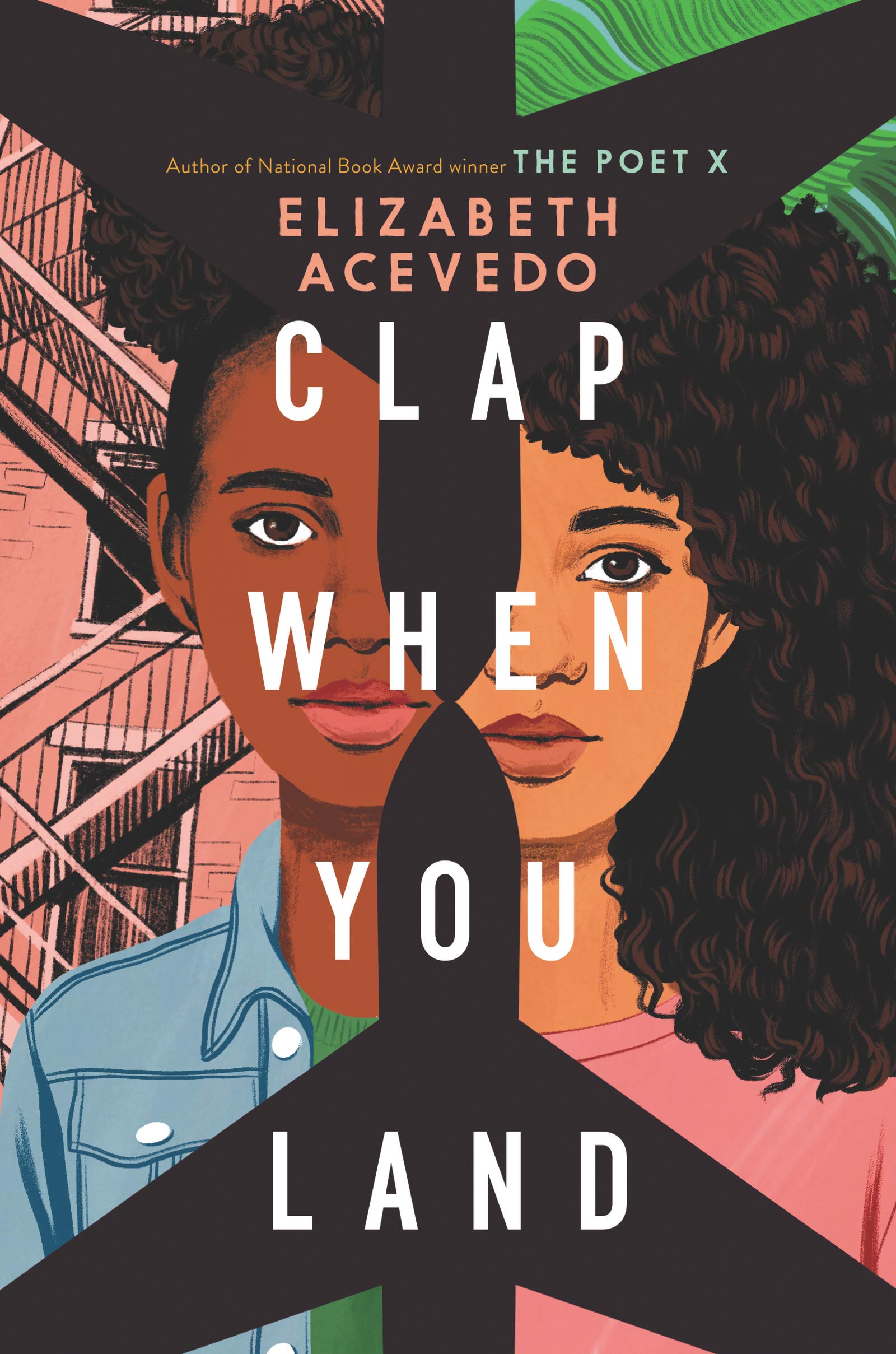
Clap When You Land by Elizabeth Acevedo

Share

Clap When You Land
Author: Elizabeth Acevedo
Published March 5, 2020 by HarperTeen

Summary: In a novel-in-verse that brims with grief and love, National Book Award-winning and New York Times bestselling author Elizabeth Acevedo writes about the devastation of loss, the difficulty of forgiveness, and the bittersweet bonds that shape our lives.

Camino Rios lives for the summers when her father visits her in the Dominican Republic. But this time, on the day when his plane is supposed to land, Camino arrives at the airport to see crowds of crying people…

In New York City, Yahaira Rios is called to the principal’s office, where her mother is waiting to tell her that her father, her hero, has died in a plane crash.

Separated by distance—and Papi’s secrets—the two girls are forced to face a new reality in which their father is dead and their lives are forever altered.

And then, when it seems like they’ve lost everything of their father, they learn of each other.

Ricki’s Review: I was so happy to see that this book won the Amelia Elizabeth Walden Award. It is one of the most beautifully written books that I have ever read. It made me laugh, it made me weep, and it filled me with so many emotions and so many wonderings. The book is beautifully lyrical, and the voices are so strong. There’s a scene in the book that simply took my breath away. If you haven’t read this book yet, I recommend you head out and purchase it now. It’s absolutely magnificent.

Discussion Questions: 

  • How do the two perspectives of the story work together? How did it enhance your reading of the story?
  • How does place function in the story?
  • Where is home for the characters?
  • How do the characters in the story grieve? What understandings did it offer about grief and loss?
  • How do the characters in this book show strength in many different ways?

Flagged Passage: 

“Can you be from a place
you have never been?

You can find the island stamped all over me,
but what would the island find if I was there?

Can you claim a home that does not know you,
much less claim you as its own?”

Read This If You Love: Books. Seriously, it would be very difficult not to see the beauty of this book. Elizabeth Acevedo is one of the greatest writers of our time.

Recommended For: 

classroomlibrarybuttonsmall   

Watercress by Andrea Wang, Illustrated by Jason Chin

Share

Watercress
Author: Andrea Wang
Illustrator: Jason Chin
Published: March 30, 2021 by Neal Porter Books

Summary: Gathering watercress by the side of the road brings a girl closer to her family’s Chinese Heritage.

Driving through Ohio in an old Pontiac, a young girl’s parents stop suddenly when they spot watercress growing wild in a ditch by the side of the road. Grabbing an old paper bag and some rusty scissors, the whole family wades into the muck to collect as much of the muddy, snail covered watercress as they can.

At first, she’s embarrassed. Why can’t her family get food from the grocery store? But when her mother shares a story of her family’s time in China, the girl learns to appreciate the fresh food they foraged. Together, they make a new memory of watercress.

Andrea Wang tells a moving autobiographical story of a child of immigrants discovering and connecting with her heritage, illustrated by award winning author and artist Jason Chin, working in an entirely new style, inspired by Chinese painting techniques. An author’s note in the back shares Andrea’s childhood experience with her parents.

A Junior Library Guild Gold Standard Selection!

Ricki’s Review: This book took my breath away. A girl’s family stops by the side of the road, and she is embarrassed as they fill paper bags with muddy watercress and eat it for dinner. Her mother shares a story of her childhood and talks about a brother who has passed on. I will be recommending this book over and over again. The story is stunningly written and captures painful memories that are passed intergenerationally. The author writes that it is “both an apology and a love letter” to her parents. I imagine the story would make her parents very proud. There is a bond between the family that reaches off the pages and pulls readers into the story. I highly recommend this book.

Teachers’ Tools for Navigation: Teachers might use this book to ask students to share moments that they were embarrassed about a family or friend situation. They might then add layers to that story–what do these stories tell? How do these stories reveal layers of their lives?

Discussion Questions: 

  • How does the author write about emotion? What feelings does the narrator have, and how do these feelings change?
  • How are stories passed intergenerationally?
  • What does the narrator learn, and how does this knowledge change her?

Flagged Spread:


Read This If You Love: Fry Bread: A Native American Family Story by Kevin Noble Maillard; A Big Mooncake for Little Star by Grace Lin; Eyes that Kiss in the Corners by Joanna Ho

  classroomlibrarybuttonsmall

**Thank you, Sara, from Holiday House and Pixel+Ink for sending a copy for review!**