Juana & Lucas by Juana Medina

Share

juana

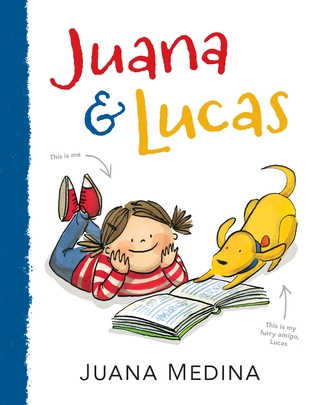
Juana & Lucas
Author and Illustrator: Juana Medina
Expected Publication September 27th, 2016 by Candlewick Press

Summary: Juana loves many things — drawing, eating Brussels sprouts, living in Bogotá, Colombia, and especially her dog, Lucas, the best amigo ever. She does not love wearing her itchy school uniform, solving math problems, or going to dance class. And she especially does not love learning the English. Why is it so important to learn a language that makes so little sense? But when Juana’s abuelos tell her about a special trip they are planning—one that Juana will need to speak English to go on—Juana begins to wonder whether learning the English might be a good use of her time after all. Hilarious, energetic, and utterly relatable, Juana will win over los corazones — the hearts — of readers everywhere in her first adventure, presented by namesake Juana Medina.

Review: Early chapter books are one of my book gaps, and I have been trying, over the last few years, to read as many of them as I can, so I was very happy to have the chance to read Medina’s Juana & Lucas. One thing I have noticed as I read these beloved early chapter books are that although the characters may be diverse in some aspects of their culture/identity, most of the characters are not diverse in their ethnicity. However, now here comes Juana (and Bea Garcia!). She is a character that everyone reading will relate to in some way, and now Latina/Latino students or students learning English will have a character to relate to in early chapter books. 

In addition to the new diversity in this group of books, Juana & Lucas is also just a funny and sweet book about a young girl who has to learn that working hard to learn or be able to do something new is worth the work. This theme will definitely resonate with so many students!

I also want to add that I didn’t know much about Columbia when I started, but when Juana starts talking about Bogotá, you can hear her love of the city come through the pages, so I went to Wikipedia right away to learn more about the city, and I am in love! I told Jim I want to retire there. It is beautiful, and their temperature varies from 43 to 66 degrees! That is the perfect weather! Now, I have to go through the same thing as Juana and learn Spanish, so I am ready to go in 25 or so years 🙂

 Teachers’ Tools for Navigation: Juana’s story will be an asset for writing, reading, Spanish, and ELL classes. Medina’s writing can be used as a mentor text for voice and descriptive language, the story is perfect for reading strategies such as context clues and character analysis, the book includes Spanish words throughout the story that aren’t always defined, and Juana is struggling with learning English. All of these things make Juana’s story one that is a perfect addition to all classrooms.

Discussion Questions: How did the character pages help you learn about the different characters in the book vs. if they had not been included? (Class activity: have students complete a character page like Juana’s about members of their family, characters in different books, or a character before they write a narrative.); How does Juana overcome the struggles she has with English at the beginning of the book?; How does each character throughout help Juana grow as a students and person?; Why do you think the author chose to have some words in different size and bold font?; How did the author help you “hear” Juana’s voice while you were reading?; How were you able to determine the meaning of the Spanish words throughout the book?

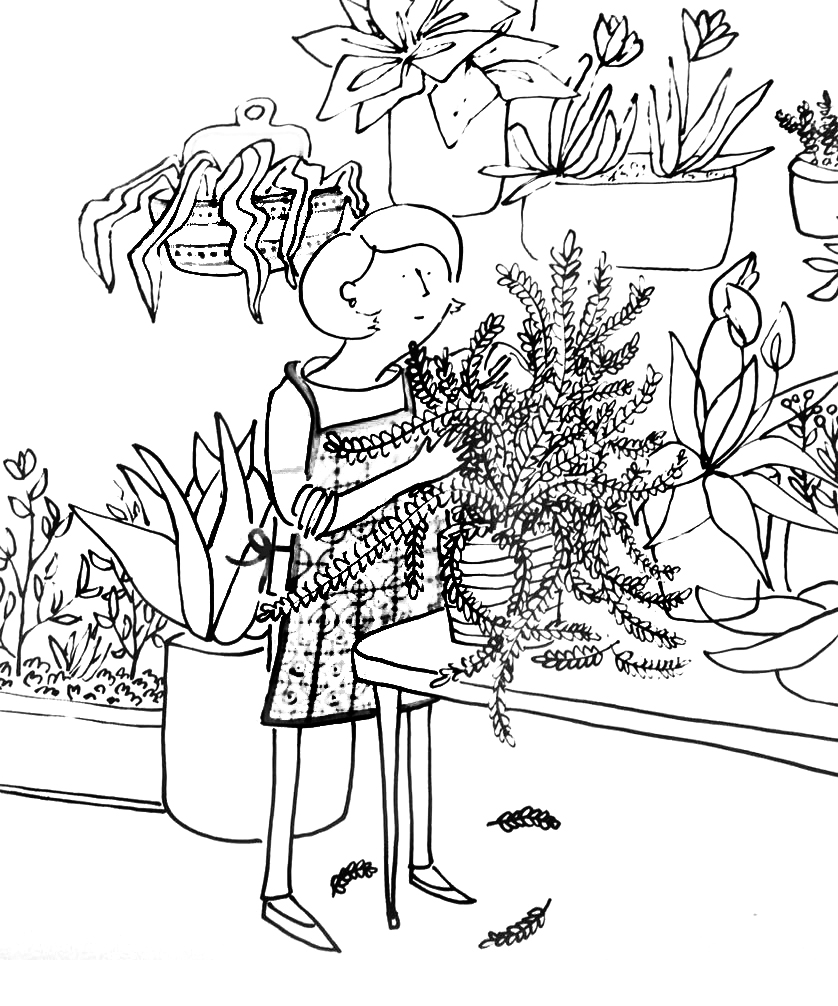
Flagged Passages: “Mami is the most important person in my life. Most. Important. And here’s why: Besides being the best of moms, Mami is really good at taking care of plants. She loves all plants, even the ones with the complicated names I can’t pronounce…” (p. 31)

Early Sketch for Juana & Lucas (http://juanamedina.tumblr.com/post/139399423961/early-sketch-for-juana-lucas)

Read This If You Loved: Bea Garcia: My Life in Pictures by Deborah Zemke, Amelia’s Notebook series by Marissa Moss, Judy Moody series by Megan McDonald

Recommended For:

  classroomlibrarybuttonsmall readaloudbuttonsmall closereadinganalysisbuttonsmall

Kellee Signature

Blog Tour with Review and Author Guest Post!: The Curse of the Were-Hyena by Bruce Hale

Share

werehyena banner

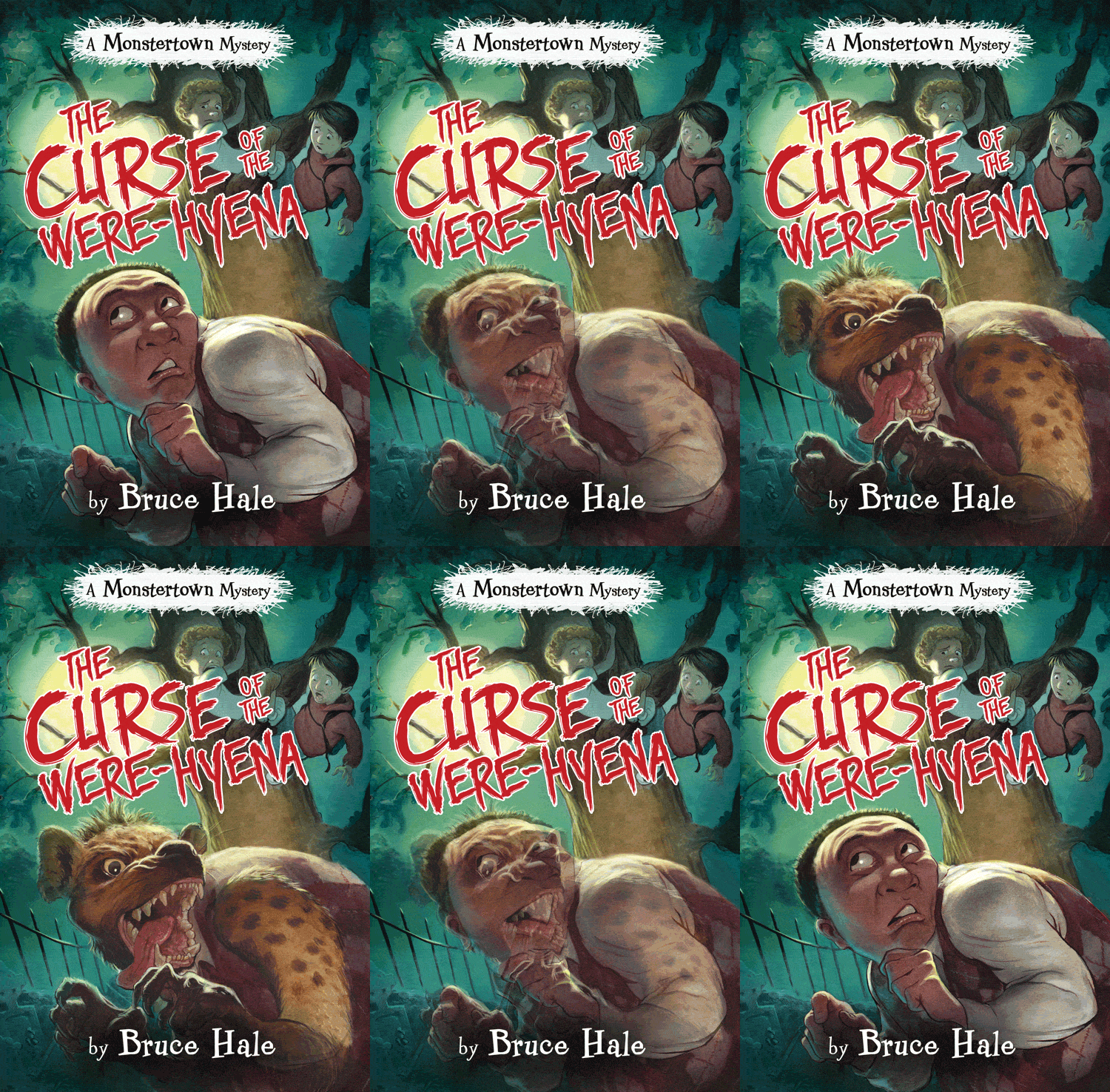
Were-Hyena_MORPH

The Curse of the Were-Hyena
Author: Bruce Hale
Published July 5th, 2016 by Disney-Hyperion

Summary: What do you do when your favorite teacher starts turning into a were-hyena?

a) Flee in terror?
b) Try to cure him?
c) Bring him carrion snacks?

Mr. Chu, the coolest teacher ever, has developed some very unusual habits, like laughing hysterically for no reason, sniffing people’s homework, and chasing chickens. When best friends Carlos and Benny decide to find out what’s happening to him, they get caught up in some moonlight madness. And it looks like just the beginning of the weirdness that has arrived in the town of Monterrosa. . . . This first entry in a silly, sassy, and suspenseful new series will leave readers howling with laughter.

About the Author: Edgar-nominated author Bruce Hale is passionate about inspiring reluctant readers to read. He has written or illustrated more than 35 seriously funny books for children, including the popular School for S.P.I.E.S. and Chet Gecko Mysteries series; as well as picture books such as Clark the Shark, Snoring Beauty, and Big Bad Baby. An actor and a Fulbright Scholar in Storytelling, Bruce is in demand as a speaker, having presented at conferences, universities, and schools around the world. Bruce’s book The Malted Falcon was an Edgar Award Finalist and Murder, My Tweet won the Little D Award for Humor Writing. He lives in Santa Barbara, California with his wife and dog.

Connect with him on Twitter and Facebook

bruce hale

Review: There are so many kids who are going to love this new series!  It immediately reminded me a bit of the Bailey School Kids series because it does such a good job being funny and scary (but not TOO scary; just enough), so this series is going to be a wonderful ladder between Bailey School and Goosebumps. I also really liked the easy inclusion of a diverse cast of characters. This will help a wide variety of readers to see themselves in one of the characters. 

Teachers’ Tools for Navigation: In addition to a good Halloween or full moon read aloud and definitely a classroom library addition, The Curse of the Were-Hyena would be a good cross-curricular read because of the projects Mr. Chu has his students do as well as the interesting look into African art. First, Mr. Chu assigns an oral report on “Something that Makes me Crazy.” This would be a fun tie in to the book, and it would be a good public speaking opportunity. There is also mention of a social studies project which seems to be about traditions of cultures from around the world. These two things in addition to the African art (and even the moon cycle and comics) help the book tie into different subjects. Lasly, Hale’s use of imagery throughout the book makes for a perfect reading or writing mentor text.

Discussion Questions: What clues were there that Mr. Chu was a were-hyena and not a werewolf?; Predict as you read about who you think the alpha were-hyena is. Were you right? What clues did you miss?; Benny and Carlos went about solving the mystery in a quite dangerous way. How would you have done it?

Free discussion guide and activities can also be found on Bruce’s website!

Flagged Passages: “As I reached for my final item, the mauled tennis show, Mr. Chu surprised me. He peeled back his lips and growled–a serious growl, like a Doberman giving one last warning before taking off your arm. His eyes rolled upward, showing only the whites, which totally creeped me out.

All the little hairs on my body stood straight up. It felt like someone had dumped a six-gallon Slushie down my back.” (p. 6)

Author’s Guest Post!: I asked Bruce his formula for writing creepy books for kids, and he shared these secrets with us!

“Scaring kids for fun and profit”

When my wife and I were sharing the movies from childhood that really creeped us out, I couldn’t wait to show her The Omega Man, a movie that gave me nightmares when I was young. “This’ll knock your socks off,” I told her. When we watched it, however, we both burst out laughing at the cheesy special effects and stilted dialog. (To be honest, her movie, Monkey Shines, was no 28 Days Later either.)

That got me thinking. Tastes change. What scares kids can be quite different from what scares adults. And when it comes to writing creepy tales for the younger set, it’s good to bear three things in mind.

It’s the antici…pation

Master of suspense Alfred Hitchcock famously said, “There’s no terror in the bang, only in the anticipation of it.” Writing scary stuff for kids isn’t just about piling on the startling scares; it’s largely about setting up expectations. That’s where true suspense lies. For example, if a kid is walking down a dark street and suddenly a monster pops out, that’s a surprise. Suspenseful? Not so much.

However, if everyone tells your young hero that something has been making neighborhood pets disappear, and that they’ve heard strange growls outside at night, that sets up an expectation. Then, when she’s forced to take a nighttime walk, it will be fraught with the terrors of her imagination. Every twig that snaps, every shadow that looms becomes a threat. And after all that anticipation, when the monster finally shows, the suspense goes off the charts.

Hold the murder

A dash of violence is fine, if it stays on the cartoony side. But when writing for middle-graders, it’s best to stay away from explicit murder and bloodshed. Kids that age can’t handle it. Or if you must get gory, see if you can keep most of the bloodletting offstage. Even the Goosebumps books, which were spooky to the max, didn’t feature any onstage murder.

Of course, just because nobody’s getting killed doesn’t mean you can’t make things scary. Close calls, chases, betrayals and so forth will keep the fear factor going just fine. And your readers won’t miss the murder.

Find the safety in scariness

When I was a kid, I reveled in scary movies—heck, I even had a shelf-full of hand painted classic monsters like Wolf-Man and The Mummy. But I liked the movies best when they weren’t too scary. It’s the same thing for young readers today. There’s a limit to how much actual, pulse-pounding terror is appropriate for 8-12 year-olds.

That’s why, when I wrote The Curse of the Were-Hyena, I deliberately sought a balance between humor and chills. By leavening the scariness with jokes, I made it less threatening. Of course, the trick is to find that happy balance. Make it too jokey, and the creepiness is lost. Make it too scary, and your readers hide under the covers.

If you manage to pull off all three of these things, you just might have crafted a scary tale that keeps young readers glued to your pages. Whether they roll their eyes when they re-read it as adults is another matter entirely.

Read This If You Loved: Goosebumps (series) by RL Stine, Bailey School Kids (series) by Marcia T. Jones and Debbie Dadey

Recommended For:

  classroomlibrarybuttonsmall readaloudbuttonsmall

The Full Moon of the Were-Hyena Howling Good Giveaway!

Ten winners will receive a copy of Bruce Hale’s The Curse of the Were-Hyena. Four Grand Prize winners will receive The Curse of the Were-Hyena plus an advance reading copy of the second book in the series, Mutant Mantis Lunch Ladies! And as a bonus, Grand Prize winners will also get a signed photo of Bruce Hale disguised as a were-wolf! Click here to enter.

Kellee Signature

**Thank you to Barbara at Blue Slip Media for hosting the tour and providing a copy for review!!**

Author Guest Post!: An interview by Anna Olswanger, the author of Greenhorn, with Tom Whitus, the director who adapted her book to film

Share

An interview by the author of Greenhorn with the director who adapted her book to film

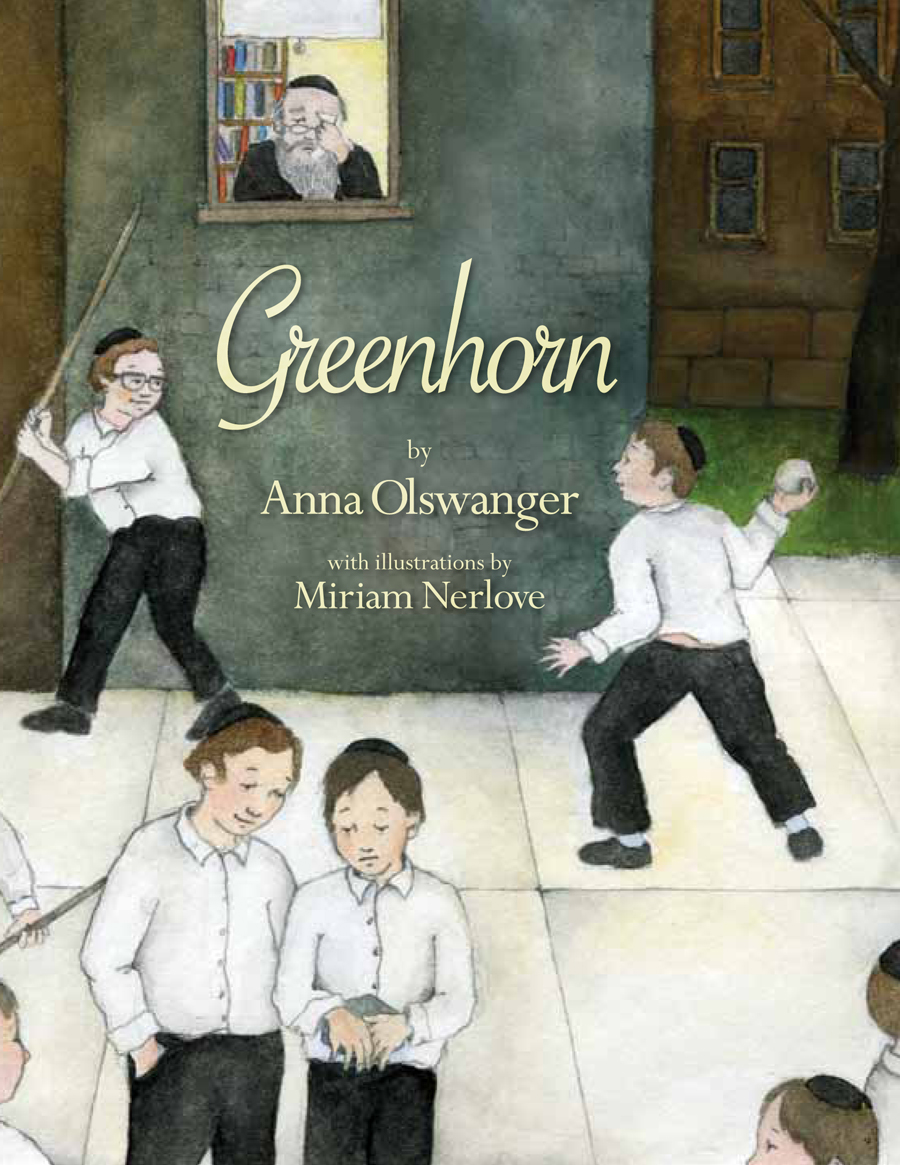
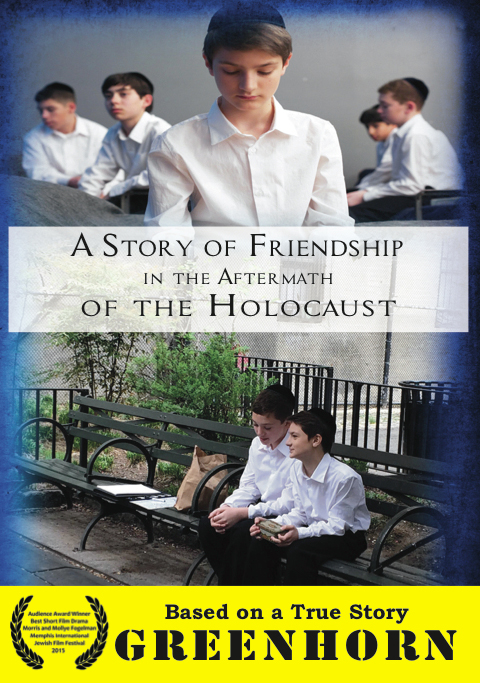
In 2014 I co-produced an independent film adaptation of my middle grade novel Greenhorn, the story of a young Holocaust survivor who arrives at a Brooklyn yeshiva in the 1940s with only a small box that he won’t let out of his sight. The film, like the book, concerns bullying and disabilities and is based on a true story.

The film version of the book premiered in late 2014 at the Landmark NuArt Theatre in L.A. and at The Museum of Tolerance in New York. It was named the 2015 Audience Award Winner for Best Short Film Drama at the Morris and Mollye Fogelman International Jewish Film Festival in Memphis and subsequently aired on public television in Tennessee and Kentucky.

I’ve always wondered what caught the eye of the film’s director Tom Whitus, who wrote the screenplay. Tom is not Jewish and none of his family perished in the Holocaust, so what about the novel made him want to adapt it to film? The following is my short interview with Tom about Greenhorn:

Anna: What first struck you about the book?

Tom: The story is about friendship and loyalty—and standing up to bullies. These are all themes that are as important today as they were in 1946.

Anna: Why did you want to adapt the book to film?

Tom: As much as I respect the power of reading, I knew that the film would give us an opportunity to tell the story on a larger scale. And, since I felt it was important story to tell, I hoped the film would give us a chance to tell the story to a broader audience.

Anna: What did you see as the challenges to filming it?

Tom: The biggest challenge was going to 21st Century New York City to make a film set in 1946. Fortunately, much of New York has architecture of that period, so it was just a matter of framing out all the signs of a modern city. Casting was a challenge as well, finding the boys brought up in a modern world who could look and act like the yeshiva students of 1946. We found some very talented actors to bring those roles to life.

Anna: Are you satisfied with the end result?

Tom: Yes—with this caveat. Whenever I watch the film, I always come across a scene where I say, “I could have done that better.” Still, given our constraints, I think we made a very nice film.

Anna: What do you think the film achieves that the book couldn’t?

Tom: As I said before, I think it reaches a broader audience. There are people out there who will watch the film but might not ever take the time to read the book (though I honestly think you can read the book in less time than it takes to watch the film). That said, the film brings the characters to life.

Anna: Do you think the film is important?

Tom: This is a very important film for many reasons: It is imperative that we remember the Holocaust and the toll it took; we need to remember and mourn the victims of the Holocaust and celebrate those who survived to tell the story; friendship and loyalty can overcome small minded people; and finally, those who are different—those who stutter, those who suffer from tragedy—need to be accepted and loved, not shunned and made fun of.

Anna: Why do you think young people should see the film?

Tom: I think it will help them understand what others have gone through, and how friendship, loyalty and bravery can change the world.

Greenhorn cover-full

Anna Olswanger is the author of Greenhorn and Shlemiel Crooks, a Sydney Taylor Honor Book and PJ Library Book. She has been a literary agent since 2005 and lives in the metro NYC area. Visit her online at www.olswanger.comGreenhorn was published in 2012 by NewSouth Books in hardcover and ebook.

Karen Cushman, Newbery Medalist, called the novel “a tender, touching celebration of friendship, family, and faith.” David Adler, winner of the Boston Globe-Horn Book Honor Book for Nonfiction, called it “a heartwarming and heartrending story of friendship and tragedy.”

As an aid to teachers and librarians, the publisher NewSouth posted a Classroom Guide for the book on its website: http://www.newsouthbooks.com/greenhorn/greenhorn-classroom-guide.pdf

The guide has curriculum tie-ins to the Holocaust, Judaism, World War II, Heroes and Heroines, U.S. and New York History, World History, Historical Fiction, Friendship, Community, and Family.

Greenhornfilmcover

TMW Media distributes the film version of Greenhorn and has posted a discussion guide for the film online at www.tmwmedia.com/newtmw/teachers_guides/L4812DVD.pdf.

You can view the film’s trailer at www.youtube.com/watch?v=pNo5tx3q_3c.

Greenhorn is an important film and book, so thank you to Anna and Tom for sharing it with us! Also, what a fascinating process to learn about!

Kellee Signature andRickiSig

Bea Garcia: My Life in Pictures by Deborah Zemke

Share

bea garcia

Bea Garcia: My Life in Pictures
Author and Illustrator: Deborah Zemke
Published March 8th, 2016 by Dial Books

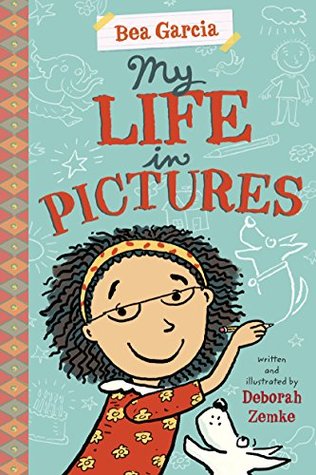
Summary: Bea Garcia is an artist. She draws anywhere and everywhere—but mostly in her own notebook.  When Bea’s first and only best friend Yvonne moves to Australia, not even drawing makes Bea feel better. And things only get worse when a loud, rambunctious boy moves in next door. He’s nothing at all like Yvonne! But with a little imagination and a whole lot of doodles, Bea Garcia might just make a new friend.

This first book in a brand-new chapter book series is a must-read for doodlers everywhere.

Review: I am loving learning more about early middle grade books, and Bea Garcia is going to be a protagonist that will be welcomed in this group of books. Bea will join forces with so many strong girls that 4th through 6th graders can read about. What I love about Bea’s story is that it is one that so many readers will relate to. She deals with losing a best friend and a bully moving into her classroom and neighborhood. She also has a supportive and real family that will reflect many families out there. Also, I loved Deborah Zemke’s illustrations throughout. They really brought Bea’s personality, dreams, and thoughts. 

Teachers’ Tools for Navigation: Bea’s story will be one that can be used to start so many discussions while being read aloud. It is a perfect story to discuss different types of people, bullying, friendship, school, etc.  Also, I think it would be interesting to discuss the addition of illustrations and even voice with students. One idea would be to read aloud part of the story without showing the illustrations and discuss how the illustrations help the story and how Bea’s voice is crafted.

Discussion Questions: Bea uses drawing to think through her emotions. What do you use to help think through your emotions?; What would have been a different way that Bea could have dealt with Bert?; Is there a time that you lost a best friend? How did you deal with it?; How would Bea’s story have been different without illustrations?

Flagged Passages: “We played together at recess and after school, on weekends and vacations, running back and forth in the backyards from my house to her house.

One winter day, we rolled a snowball from her yard to mine and back a hundred times until it was the biggest snowball in the world. Then we turned the snowball into a giant Snow Kitty.

I don’t think Sophie liked Snow Kitty.

When it was warm, we played in the crabapple tree that was just the right size for us to climb.

It was a magic tree.” (p. 20-21)

Bea Garcia Illustration

Read This If You Loved: Amelia’s Notebook series by Marissa Moss, Popularity Papers series by Amy Ignatow, Mackenzie Blue series by Tina Wells, Middle School series by Jenni L. Holm

Recommended For:

  classroomlibrarybuttonsmall readaloudbuttonsmall

Kellee Signature

**Thank you to Deborah for providing the book for review!**

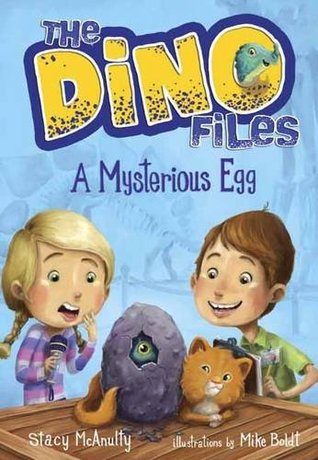
The Dino Files: A Mysterious Egg by Stacy McAnulty

Share

Dino Files 1

The Dino Files #1: A Mysterious Egg
Author: Stacy McAnulty
Illustrator: Mike Boldt
Published: January 19, 2016 by Random House Kids

Summary: What if a fossil in your backyard . . . came to life?!

Frank’s grandma is a famous paleontologist (that’s a dinosaur scientist). But she’s also an adult who makes up rules. Rules like: no digging for dinosaur bones when you have a sunburn. That means Frank is stuck playing inside with his annoying cousin, Samantha. But then Grandma finds a fossil of an egg! And when Frank and Sam sneak into the dino lab late at night, they find something even more amazing. . . .

The hilarious Dino Files chapter book series follows a nine-year-old dinosaur expert, his paleontologist grandparents, a cat named Saurus, and fossils that might not be so extinct!

About the Author: Stacy McAnulty is the author of several children’s books including Excellent Ed, illustrated by Julia Sarcone-Roach; The Dino Files series, illustrated by Mike Boldt;  and 101 Reasons Why I’m Not Taking a Bath, illustrated by Joy Ang. Stacy grew up outside of Albany, New York and received my B.S. in Mechanical Engineering from the University at Buffalo. A career opportunity brought her to central North Carolina in 1998. She currently lives in Kernersville, NC with her husband, their three children and two dogs.

Also, Stacy offers FREE Skype interviews and signed bookmarks to any class reading The Dino Files!

Ricki’s Review: This is a hilariously fun series that is sure to be a hit in classrooms. I see it working best in grades 1-4. As a child, I was disappointed when my chapter books no longer had pictures, and this book is a great transitional book because it has the best of both worlds—a great story and pictures to go along with it! Frank reminds me of many kids. He is frustrated by all of the rules set out for him, and he just wants to have fun. He manages to sneak around a bit and something awesome happens with that dinosaur egg (I’ll let you guess)! I also want to put in a plug for the fact that Frank is a cat lover. My son loves cats, and I hate how books/shows always feature males as dog lovers and females as cat lovers. I loved Saurus the cat!

Kellee’s Review: I plowed through this and the sequel because I loved the premise and the characters so much! I love that Frank and Sam represent such different types of kids within each of them and between each of them; I think so many readers will relate to their personalities. I also really liked how dinosaurs are introduced throughout the book without making the book didactical in any way. Instead it is educational and funny! This series is a wonderful introduction to early chapter books also because it is very engaging and will appeal to all kinds of readers. 

Teacher’s Tools for Navigation: This book is a great jump start to researching about dinosaurs! I know a lot of early elementary schools have a big dinosaur unit, and I think this book would appeal to readers of all ages. The book might also work well for a fossil unit, too! It would be interesting to investigate whether it would be possible to hatch a fossilized dino egg. Then, the class could have a discussion about whether this book might be considered realistic fiction or fantasy. Further activities and information is available at: www.thedinofiles.com.

Discussion Questions: What good choices does Frank make? What bad choices does he make? What are the outcomes of his choices?; What words would you use to describe Frank? How is he different or similar to you?; What rules is Frank forced to follow? Do you think these rules are fair?; How do the illustrations enhance your reading experience?

Flagged Passage: “I need to be at that dig site! Instead, I’m stuck inside the museum with PopPop. The good thing is I got my own name tag. Finally.”

Read This If You Loved: Dinosaur Cove by Rex Stone; Dinosaur Trouble by Dick King Smith; Dinosaur Pox by Jeremy Strong

Recommended For:

litcirclesbuttonsmall classroomlibrarybuttonsmall readaloudbuttonsmall

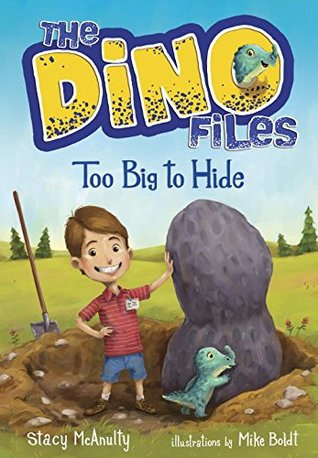
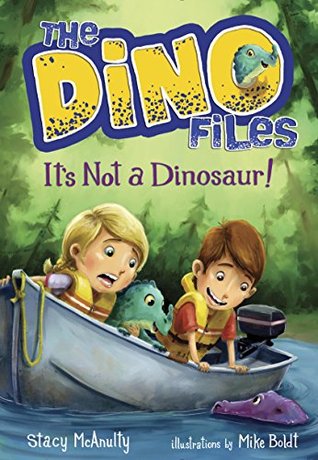
Check Out the Other Books in the Series!:
dino files 2 dino files 3

RickiSigand Kellee Signature

**Thank you to Stacy for providing copies for review!!**

Doodle Adventures: The Search for the Slimy Space Slubs by Mike Lowery

Share

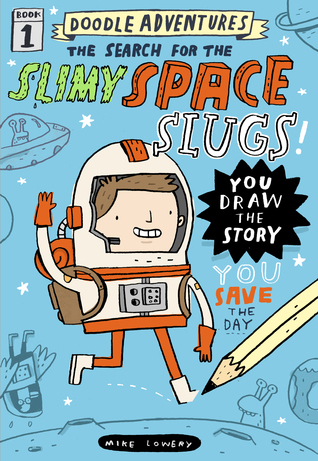
Doodle Adventures

Doodle Adventures: The Search for the Slimy Space Slugs
Author: Mike Lowery
Illustrator: Mike Lowery and YOU!
Published May 17th, 2016 by Workman Publishing Company

Summary: Draw your way through the story!

Doodle Adventures: The Search for the Slimy Space Slugs! is a lighthearted fantasy where the reader first draws him- or herself into the story, and then continues by following prompts and adding more illustrations and doodles. Set in space, the book invites the reader to join Carl, a duck and member of a super-secret international group of explorers, on a journey in search of a very important grail-like object. The book is sturdy paper over board with beautiful cream paper—perfect for defacing! And by the end, the reader will have co-written a tale to return to again and again, and show off to family and friends.

Kellee’s Review: I cannot wait to see this book completed by students. I think so many kids of all sorts of ages will enjoy this book. It is silly enough for young elementary students, and its plot is interesting enough for middle school students. I love the narrator, Carl, who is a puny and out spoken duck who takes the reader on a journey to the Slug Planet (in 2nd person point of view!). The  illustrations are also so well done for what the book is trying to do. They are comic-esque and funny. I truly enjoyed my journey with Carl, but I am really looking forward to watching a kid complete this book in the interactive way that it is made for. 

Ricki’s Review: After I review books, I almost always give them away to schools. I couldn’t help but think it would be such a great book for the boys who live next door. They are always adventuring in their backyard, and they will surely be captivated by this book. The narrator Carl (a duck) is highly entertaining, and I couldn’t help but laugh as I read the book. He talks to the reader, and the second-person narrative makes the book particularly funny. The reader will be catapulted into the story because of its interactive nature. Even kids who don’t enjoy drawing will want to put their pens to the pages.

Teachers’ Tools for Navigation: This book promotes creativity, plot development, and humor. There are so many different ways that a teacher could utilize this book, one for each of our recommendations below. First, it could be a class read aloud where the teacher does the drawing based on the class’s votes or students can take turn drawing. It could also be a lit circle/book club book where students complete the book in groups then they can jigsaw into new groups to share their newly created book. Lastly, the book could definitely be an independent read or class read where students draw in their own books and each student will have their own unique book.

Discussion Questions: How does drawing help you interact with the story? Which drawings were particularly fun to draw?; How does the second person narration make this story engaging? What other stories are written in this point of view?; Why might the book be narrated by a duck? What does this do for you, the reader?

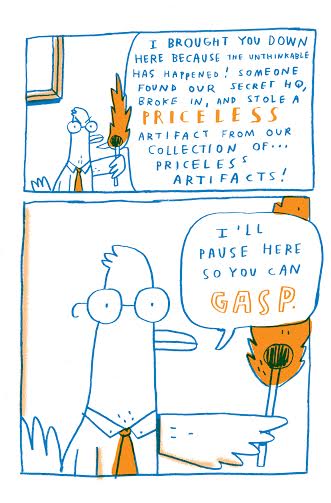
Flagged Passages: “I brought you down here because the unthinkable has happened! Someone found our secret HQ, broke in, and stole a PRICELESS artifact from our collection of…priceless artifacts!

I’ll pause here so you can GASP!” (p. 26)

Doodle Adventures spread

See more at www.mikelowery.com or the author’s Instagram @mikelowerystudio

Read This If You Loved: Captain Underpants series by Dav Pilkey, Diaper Baby series by Dav Pilkey, Choose Your Own Adventure books, Drawing/Illustrating books

Recommended For:

  readaloudbuttonsmall litcirclesbuttonsmall

Kellee Signatureand RickiSig

**Thank you to Estelle at Workman Publishing for providing copies for review!**

Cody and the Mysteries of the Universe by Tricia Springstubb

Share

cody and the mysteries of the

Cody and the Mysteries of the Universe
Author: Tricia Springstubb
Illustrator: Eliza Wheeler
Published April 12th, 2016 by Candlewick Press

 Goodreads Summary: Not everything turns out to be as it first appears when Cody and her best friend, Spencer, navigate a neighborhood mystery and the start of a new school year.

Cody’s best friend, Spencer, and his parents are moving in with his grandmother right around the corner, and Cody can’t wait. For one thing, Cody needs Spencer to help solve the mystery of the never-seen Mr. Meen, who lives on the other side of the porch with a skull-and-crossbones sign in the window and an extermination truck out front. How’s Cody to know that a yellow jacket would sting her, making her scream “Ow! Ow!” just as they start spying? Or that the ominous window sign would change overnight to “Welcome home,” only deepening the mystery? In this second adventure, Spencer’s new-school jitters, an unexpected bonding with a teacher over Mozart, and turf-claiming kids next door with a reason for acting out are all part of Cody’s experiences as summer shifts into a new year at school.

My Review: I loved this one as much as the first one. (P.S. You don’t have to read the first one to enjoy this one, but they are both so good you should read both.) What I love most about the books is that Cody and Spencer and their families and the secondary characters are just so flawed and familiar and real. What I love second most about the book is how Tricia Springstubb writes. It is lyrical yet to the point. Beautiful yet not fluffy. See my example below. What I love third most about the book is the humor. Cody is one funny young lady!

Cody’s story this time revolves around two things: Spencer moving nearby and things not going as expected and the mystery behind the Meens, the bullying girls who live next to Spencer. Springstubb navigates both of these topics (bullying and friendship) with ease along with other minor topics like family and identity which makes Cody’s story perfect for all young readers because they will either relate or be able to use the story to help them in the future.

Teachers’ Tools for Navigation: Cody’s story represents so many different types of people: different races, different families, different situations, different popularity, different talents, etc., so her stories are perfect for reading aloud to a class/child.

It could also be used as a mentor text for language during a writing workshop’s narrative unit.

Discussion Questions: What does Cody mean by the baton of love?; Is it ever okay to fight?; Why does Payton’s behavior affect Wyatt so much?; How did Cody expect Spencer being at her school to be? How did it end up?

Flagged Passages: “He [Spencer] was getting ready to practice his violin. Mom and Cody sat down to listen. The song he played was called ‘Go Tell Aunt Rhody.’ The music was complicated. Was it sad? Was it happy? Could it be both at the same time? Cody decided it was perfect night-before-school music. All the while he played, her hand un-itched.” (p. 32)

Read This If You Loved: Cody and the Fountain of Happiness by Tricia Springstubb, The Trouble with Ants by Claudia Mills, Marty McGuire series by Kate Messner, Eleanor series by Julie Sternberg, Lola series by Christine Pakkala, The Top-Secret Diary of Cecile Valentine by Julie Sternberg

Recommended For: 

readaloudbuttonsmall classroomlibrarybuttonsmall

Kellee Signature
**Thank you to Candlewick for providing a copy for review!!**