Warrior Princess: The Story of Khutulun by Sally Deng

Share


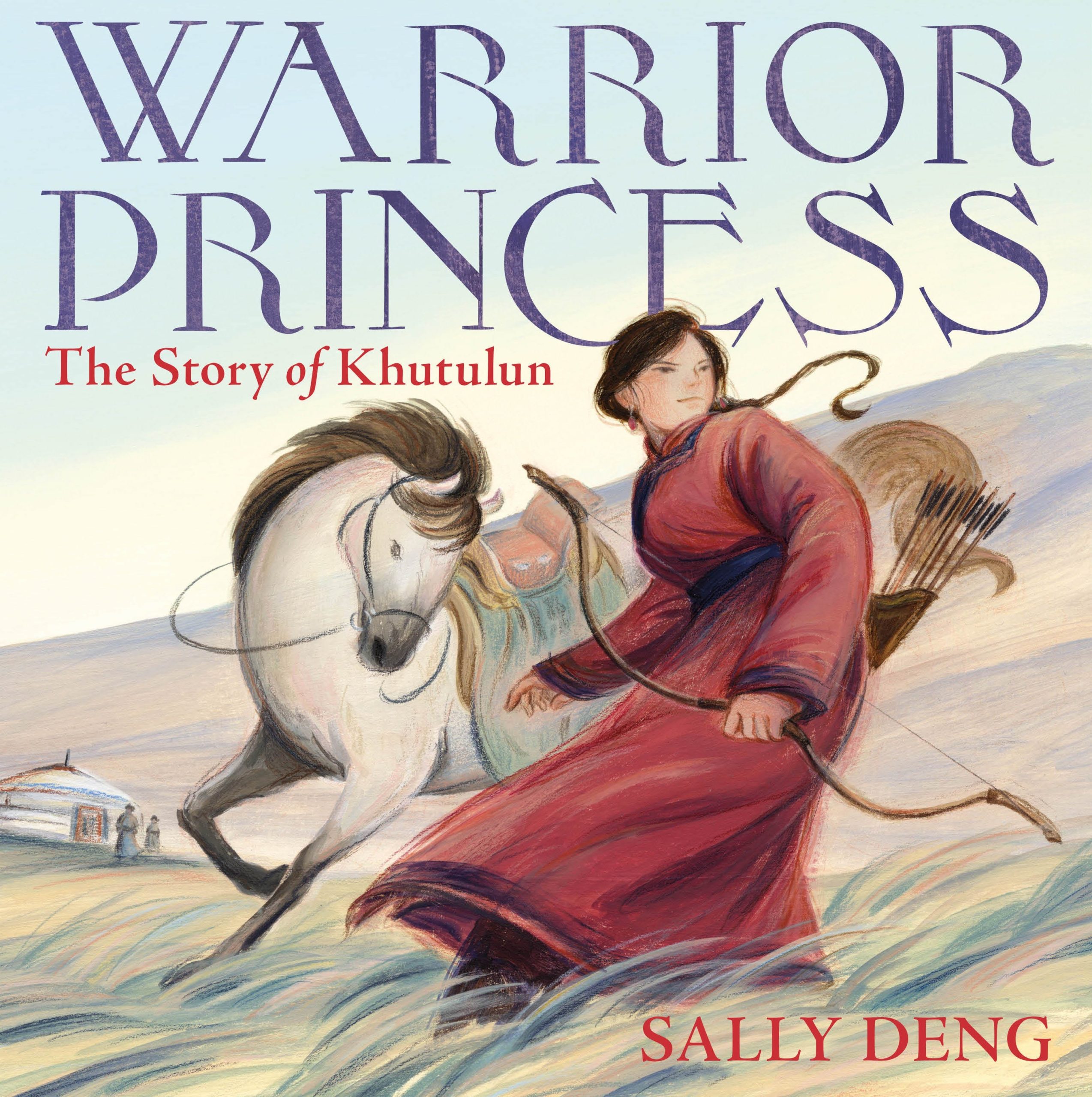
Warrior Princess: The Story of Khutulun
Author and Illustrator: Sally Deng
Published: August 23, 2022 by Farrar, Straus, and Giroux

Summary: This picture book follows the life of the great-great granddaughter of Genghis Khan, a princess who could rule on the battlefield as well as—or better—than any soldier, and when faced with a potential marriage, learns that sometimes the best way to serve one’s community is to stay true to oneself.

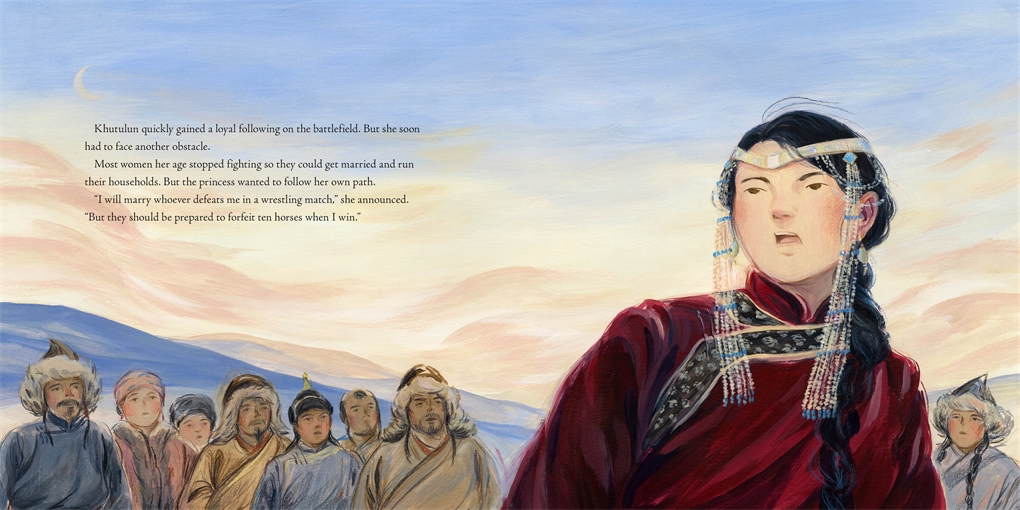
Ricki’s Review: This creative nonfiction text shares what we know about the life of Khutulun, great-great granddaughter of Genghis Khan. She was a princess who had never been defeated in a wrestling match and was a force on the battlefield. When she is forced to marry, she agrees that she will only do so if a man can defeat her in a wrestling match. If they lose, they owe her family ten horses. I really, really enjoyed reading this story. I started reading it to two of my sons, and my third son creeped on over because he was listening and was hooked. It is captivating! The characters are well drawn and the pacing is perfect. 

Teachers’ Tools for Navigation: This book would inspire students to research and learn more about Khutulun and Genghis Khan. Teachers might include other books that creatively imagine people of the past to talk about writers craft and agency in reimagining people of our past.

Discussion Questions: 

  • In what ways does Khutulun show strength?
  • What important decisions does she make in the text? Why does she make it?
  • What themes does this text teach you?

Flagged Spread:

Read This If You Love: Creative nonfiction, historical fiction, autobiographies, reading about historical figures


**Thank you, Macmillan for sending an advanced reading copy for an honest review!**

Guest Post: Classroom Uses for Dragons in a Bag by Zetta Elliott, Magnificent Makers: How to Test a Friendship by Theanne Griffith, Polly Diamond and the Magic Book by Alice Kuipers, and Sisters of the Neversea by Cynthia Leitich Smith

Share

One of the assignments during my Spring Children’s Literature course at UCF was creating a mini-teaching guide for the books we read for book clubs. We started with picture books for practice then students created them in their book clubs each week.

Today, I am happy to share the classroom uses and discussion questions found by my UCF Elementary Education students about fantasy novels.

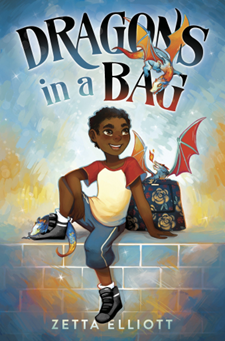
Dragons in a Bag
Author: Zetta Elliott
Published October 23rd, 2018 by Random House

Summary: Jax is left by his mom to an old lady by the name of Ma. Jax later finds out that Ma is a witch who has 3 dragon eggs that hatched. They need to return the eggs because they won’t survive in the regular world due to lack of magic. They go to portals through time that takes them to the time of dinosaurs. Along the way, Jax meets his grandfather who also knows magic, and has him return two of the dragons to the magic council but accidentally left one left behind so he returns to the regular world. He forces his mom and the witch to hash out their problems.

Teachers’ Tools for Navigation: When using fantasy in the classroom it is always a good way to spark your students’ creativity. This source could be used as a creative writing prompt to boost off their creativity of the story: Conduct an activity based upon the book like have them write a short story about what they would do if they were in Jax’s shoes and have them draw pictures of dragons, name them, and design the dragons how they would like them to be pictured.

Discussion Questions: 

  • What was Jax’s first impression of Ma?
  • How do you think Jax will return the last dragon to the magic council?
  • Who do agree with and why? Ma who wants to keep the world of magic separate or L. Roy who wants magic to come back to earth.
  • Why do you think Jax decided to open the window for the squirrel?
  • What were 2 things the dragons were not allowed to have?
  • When you first hear the word apprentice what comes to mind?  Did you have the same thinking as Jax?
  • How does the story tie in with real-life scenarios with the fantasy?
  • Who are the most influential character apart from Jax?
  • When do we see the change of events come in play throughout the story?
  • When reading the book your imagination goes wild,in what other circumstances does your mind go other places when reading this story?

Recommended For: 

classroomlibrarybuttonsmall


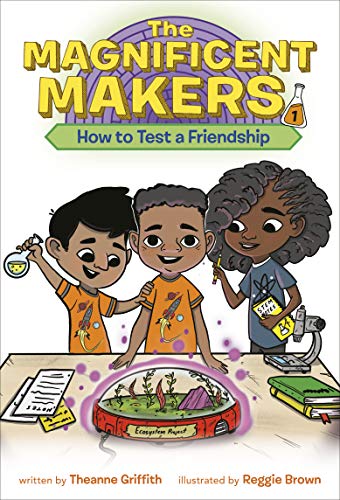
The Magnificent Makers: How to Test Friendship
Author: Theanne Griffith
Illustrator: Reggie Brown
Published May 19th, 2020 by Random House Children’s Books

Summary: Pablo, Violet and Deepak are three friends who get sucked into a telescope and must play science games to come back and play again. Deepak is the new kid who makes Pablo jealous with his presence. Throughout the book, the team works together and build their friendship to complete the games.

Teachers’ Tools for Navigation: The book could be used as a classroom read-aloud over the course of a few days or a week.  Due to the science elements, this book would be a good way to start off science discussions in the classroom. For example, the second chapter includes the students learning about food chains. This book is perfect to make connections back to science.

Discussion Questions: 

  •   Why do you think Pablo was jealous of Deepak?
  •   What were some of the challenges they had and what did they have to do?
  •   Why do you think Pablo, Violet, and Deepak were chosen for the Maker’s Maze?
  •    What do you know about producers, consumers, decomposers, and scavengers?
  • What were your favorite aspects of science that you learned from the book?
  • What type of emotion did the characters experience in the book?
  • When Deepak arrived to class, what did Pablo notice about him?
  • How does Pablo overcome is jealous toward Deepak?
  • Toward the end of the book why did they relate their friendship to the ecosystems?

Recommended For: 

classroomlibrarybuttonsmall


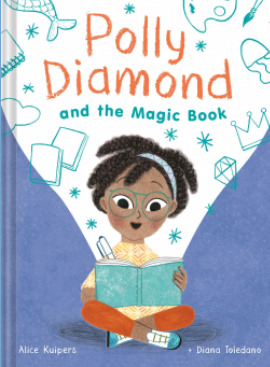
Polly Diamond and the Magic Book
Author: Alice Kuipers
Illustrator: Diana Toledano
Published April 22nd, 2018 by Chronicle Books

Summary: Polly Diamond is a little girl who receives a magic book that lets her bring to life the things that she writes and draws. She has a little sister who she doesn’t like very much and a brother on the way. Polly loves to write, she writes lists and stories and anything that she thinks is worth writing. When she starts writing in her magic book she realizes that the book can talk back to her. She writes to her book and comes up with lists and stories to write. She realizes that whatever she writes in the book comes to life when she writes about making a ladder to paint her room and the books on the floor magically move to make a ladder. The book tells her that is what she’s for and Polly quickly learns she can do anything she writes. She makes herself invisible and her sister into a banana. But she realizes that the book is taking everything she says literally. When she writes about eating a club sandwich the book gives her two slices of bread with a bat in between because it took the definition of a club literally. She told the house to fix up the carpet and turn her room into an aquarium. But the carpet was on the ceiling and fish were swimming around her room. She then realizes that everything she wrote was crazy and tries to put the house back to normal because she can’t even recognize it anymore. She fixes it just in time for her parents to come home with her new baby brother. At the end of the story she gives the book a name, Spell. And looks forward to writing and drawing another day with her new book, and friend Spell.

Teachers’ Tools for Navigation: Polly uses and explains words like metaphor, affixes, alliteration, and hyperbole.  This is a great opportunity to talk about these definitions, make lists of words and phrases that relate to these words, and do activities where the students use metaphors, alliteration, homophones, homonyms etc.  It seems like a useful book to have in a first grade classroom and use with a higher level reading small group or a second grade class.    It could also be used as a read aloud, again discussing the key words and their meanings, then practicing using those skills.  There is a lot of use of imagery in this book as well as understanding literal meaning and how words matter.

After reading the text, students can respond to the story by engaging in a free write activity after they finish the reading. As a teacher, we could set a timer for five minutes and ask the students to write continuously about their thoughts on the book, good or bad, and afterwards, go over it as a small group.

Discussion Questions:

  • Polly had many favorite words throughout the book, what are some of your favorite words and why?
  • Make a list of activities you would do to have a Super-Fantastic-Day.
  • In the book, Polly writes down what her dream bedroom would look like. If you could have your dream bedroom, what would it look like?
  • When Polly writes in the magic book, she learns that she needs to write clearly and use as much detail as possible. What are some important rules to follow when writing so people can understand your message clearly?
  • When Polly is playing hide-and-seek, why does she become invisible?
  • Imagine the turquoise notebook has changed your house like Polly’s. Please write a short story explaining what your home looks like in order to get it back to normal.
  • How does Polly feel having to share a room with her little sister when her brother is born?
  • If you had a magic notebook that could bring three things you wrote about to life, what 3 things would you write or draw and why?
  • Polly loves words with double letters like “Dizzy.” List 5 words you can think of that have double letters.
  • Polly loves alliteration.  That’s when  two or more words in a row begin with the same letter.  What alliterations can you think of?

Recommended For: 

classroomlibrarybuttonsmall


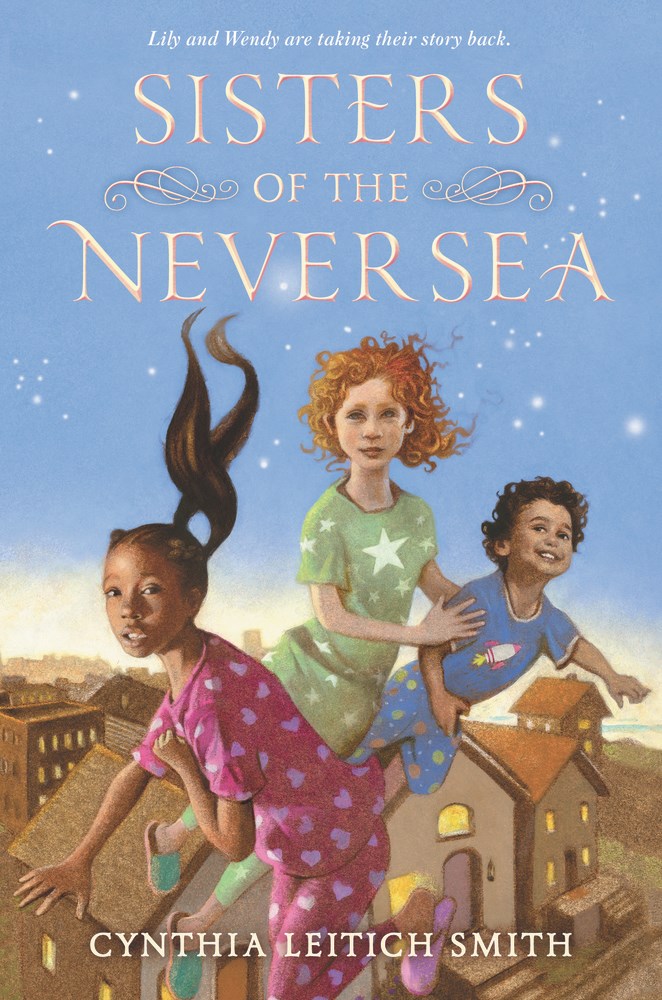
Sisters of the Neversea
Author: Cynthia Leitich Smith
Published June 1st, 2021 by Heartdrum

Summary: This book is a tale about three children, Lily, Wendy, and Michael. Their parents, Mr. Darling and Ms. Florene Roberts-Darling are separating, splitting the family between two different locations.  The night before Wendy and Mr. Darling are supposed to leave, the children are visited by a boy named Peter Pan and Belle. Stories of pirates and merfolk persuade the children to follow Peter Pan and Belle off to a mystical land called Neverland.  Upon arriving the children are separated and discover once you arrive you can never leave.  The children meet merfolk, pirates, native children, the lost, and fairies in a desperate attempt to figure out how to get home.

Teachers’ Tools for Navigation: This book will be great for a read aloud, book club, or close reading because it involves a lot of higher level vocabulary than some students may currently be reading at and it has long sentences and dialogue which again, some children could struggle with. These classroom uses would allow for discussions.

Geography could also be tied in because students could illustrate and demonstrate caves and waterways the Merfolk might have dwelled in. They also could show their knowledge of what an island like Neverland might have, and include what trees they think the lost boys were living in.

And, of course, it could be looked at versus Peter Pan as it is a retelling.

Discussion Questions: 

  • If you were a character in this book, who would you be and why?
  • If you were to create a different ending, How would it go?
  • Why do you think Mr. Darling and Ms. Florene wanted to separate?
  • What was your favorite part of the book?
  • What were some challenges that the children had to face or overcome?
  • Why do you think Peter Pan and Belle appeared?
  • Why do you think it was hard for the lost boys to remember who they are?
  • Why do you think Peter Pan never wanted to grow up?
  • Why do you think Belle brought Peter Pan to the island?
  • Why do you think the crocodile made a TikTok sound?
  • Does this book remind you of any other children’s stories?  If so why?

Recommended For: 

classroomlibrarybuttonsmall  


Guest Post: Classroom Uses for Concealed by Christina Diaz Gonzalez, Last Gate of the Emperor by Kwame Mbalia and Prince Joel David Makonnen, Maya and the Robot by Eve Ewing, and The Last Last-Day-of-Summer by Lamar Giles

Share

One of the assignments during my Spring Children’s Literature course at UCF was creating a mini-teaching guide for the books we read for book clubs. We started with picture books for practice then students created them in their book clubs each week.

Today, I am happy to share the classroom uses and discussion questions found by my UCF Elementary Education students about science fiction novels.

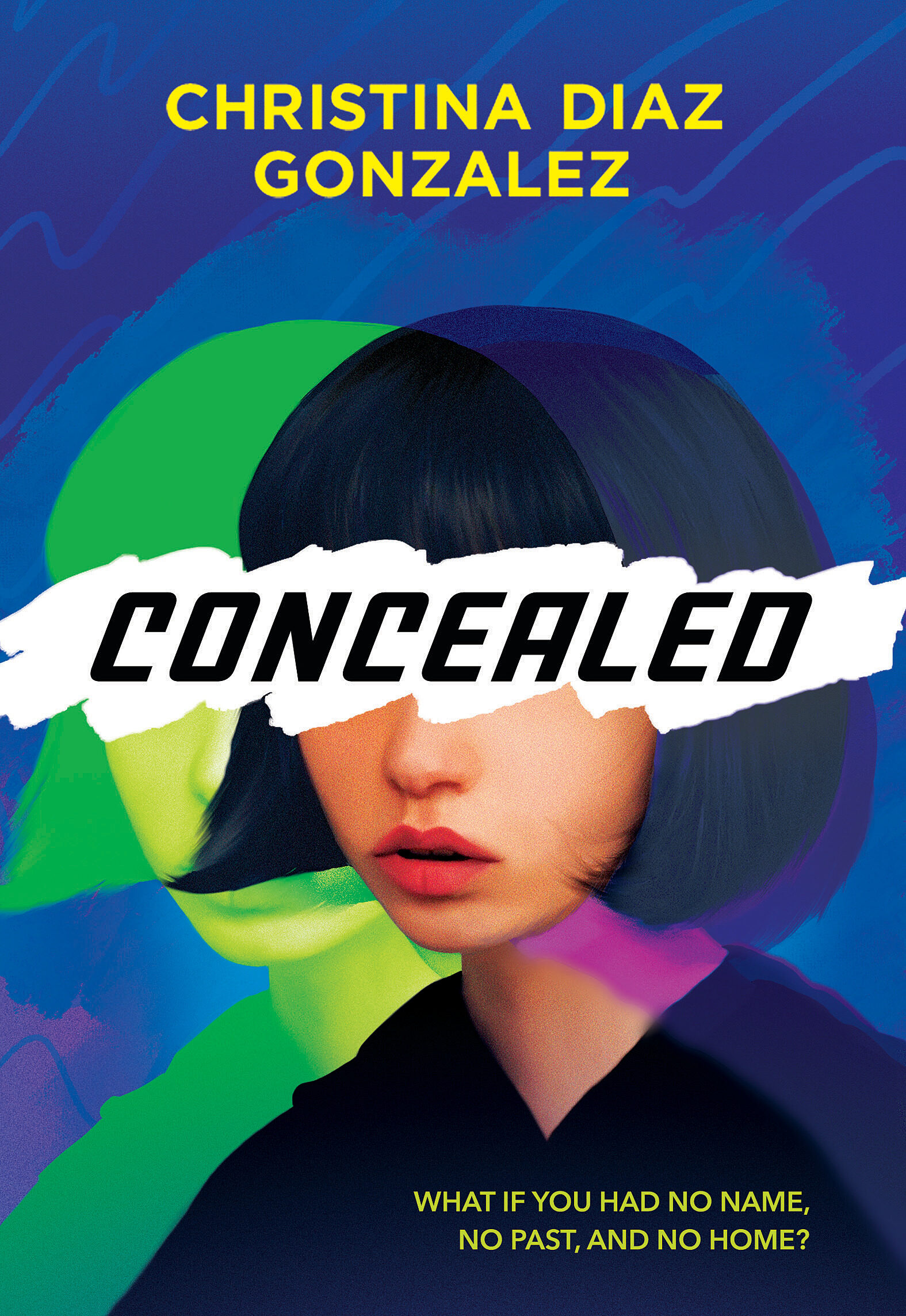
Concealed
Author: Christina Diaz Gonzalez
Published October 19th, 2021 by Scholastic

Summary: Ivette, Joanna, and now: Katrina

Whatever her name is, it won’t last long. Katrina doesn’t know any of the details about her past, but she does know that she and her parents are part of the Witness Protection Program. Whenever her parents say they have to move on and start over, she takes on a new identity. A new name, new hair color, new story.

Until their location leaks and her parents disappear. Katrina embarks on a dangerous rescue mission to save them-and find out the truth of her past at last.

Yet every new discovery shows that the Katrina’s entire life has been nothing but lies. Katrina has always kept her parents’ secrets. But it turns out, they were the ones keeping secrets from her this whole time. Could she be the reason they’ve been hiding all these years? The truth will throw everything Katrina has ever believed about herself into question.

Concealed is an action-packed adventure story by award-winning author Christina Diaz Gonzalez.

Teachers’ Tools for Navigation: This is a great relatable book for young adults! Throughout the story, Katrina, the main character, fights for more information about herself and her family and why they are on the run, but she often gets overlooked and ignored when she’s asks questions. A lot of teens experience this and I think it would be a great book for a book club or even an assigned read for the class to explore sci-fi and have good discussions.

This books interdisciplinary elements include science and family and friendship values. It touches on the development of science in the DNA and gene makeup, which students may be unaware of at the time of reading which may lead them to explore more on their own. The family and friendship values show that no matter what a family goes through there is still love there. Along with this it shows the importance of friendship and everything that goes along with having a good friend by your side, even when at first you don’t think it is important.

Discussion Questions: 

  • What would you do if you were Katrina and no one would answer your questions?
  • Would you have wanted to go with Katrina on this adventure? Why or why not?
  • Katrina’s skill is drawing and Parker’s skill is computers, describe what your skill is.
  • Describe how you would feel if you found out that you had a lost twin sister/brother.
  • What did you think of X in the story? Did you think he was a good character or a bad character? Why?
  • What would be your name if you had to choose another one?
  • Describe the relationship between Katrina and Parker.
  • Describe one event in the book that stood out to you the most and give your reasoning.
  • Why do you think Katrina didn’t like moving so much? How would you have felt if you were in her shoes?
  • Why do you think the main character’s family has to run and change their identity so many times?
  • Do you think it would be safer for Katrina to leave Parker out of her life? Why or why not?
  • Describe the relationship Katrina has with her parents as the book goes along. What about Parker? X?
  • Why do you think Katrina was so open with Parker, even at the beginning of their friendship?
  • Do you believe X is trustworthy? Why or why not?
  • Why do you believe B and L refuse to tell Katrina the truth about what happened before she lost her memory?
  • Do you think Ellla will side with her family or Mr. Sterling?
  • Describe what part of the book surprised you the most.
  • Do you think it is a good idea for Ellla and Katrina to share their life story on social media? Why or why not?

Recommended For: 

classroomlibrarybuttonsmall


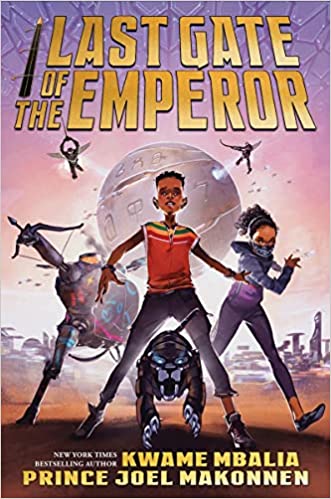
The Last Gate of the Emperor
Authors: Kwame Mbalia & Prince Joel Makonnen
Published May 4th, 2021 by Scholastic Press

Summary: An Afrofuturist adventure about a mythical Ethiopian empire. Sci-fi and fantasy combine in this journey to the stars.

Yared Heywat lives an isolated life in Addis Prime — a hardscrabble city with rundown tech, lots of rules, and not much to do. His worrywart Uncle Moti and bionic lioness Besa are his only family… and his only friends.

Often in trouble for his thrill-seeking antics and smart mouth, those same qualities make Yared a star player of the underground augmented reality game, The Hunt for Kaleb’s Obelisk. But when a change in the game rules prompts Yared to log in with his real name, it triggers an attack that rocks the city. In the chaos, Uncle Moti disappears.

Suddenly, all the stories Yared’s uncle told him as a young boy are coming to life, of kingdoms in the sky and city-razing monsters. And somehow Yared is at the center of them.

Together with Besa and the Ibis — a game rival turned reluctant ally — Yared must search for his uncle… and answers to his place in a forgotten, galaxy-spanning war.

Teachers’ Tools for Navigation: In a way, students can learn about culture in this book. From there, diversity can be introduced into the lesson. Also, it would be great for discussing using your own personal interests and culture in your writing. The story also intertwines Ethiopian history and culture with space adventure and science fiction. This will be entertaining for the students while also educational. Another thing that can be taught while reading this book is that you will have to face the consequences of your own actions. If you are going to do something that you know is wrong, something bad will happen afterwards.

Students could also make timeline of events which would be interesting to see Yared’s adventure and battles laid out.

This novel would be considered interdisciplinary because it intertwines history with science fiction. It also introduces the idea of secret underground games, space & robots, as well as intergalactic war. These topics are mostly seen in movies but the main plot line is finding the uncle who would have the answers. It shows the students that even in stressful situations, never giving up and determination in hard times shows better outcomes.

Discussion Questions: 

  • Think about what makes up you. What aspects of yourself would you reflect in your stories?
  • Compare a time when Yared was brave to one where he was scared? How did he overcome his fear?
  • Describe a time Yared had to ask for help?
  • What futuristic items in the book do you wish we had now? Why?
  • Describe the relationship between Yared and his uncle.
  • Predict what you think Yared will do in the next book.
  • How would you characterize Besa? How does the author convey her feelings without talking?
  • Why do you think the story starts with an audio transcript? Did it grab your attention or confuse you?
  • How do you feel about the rules on Addis Prime? Would you want to follow them?
  • Does this novel remind you of any movies or maybe other literature you have read?
  • How would you feel if you were in the same situation as Yared?
  • Do you think Yared has good qualities or does he often find himself in trouble because of them?
  • What other Ethiopian stories have we read in class before? Do you find similarities in the novels?
  • Do you think the illustrations on the cover with Yared and the robots in space gave you a good summary of what the book might be about?
  • What inferences can you make by looking at the cover of the book?
  • How and why did the setting change?
  • What key words from the novel stood out to you the most and why?
  • If the authors were to write another novel using Yared and Besa, what do you think it would be about?

Recommended For: 

classroomlibrarybuttonsmall


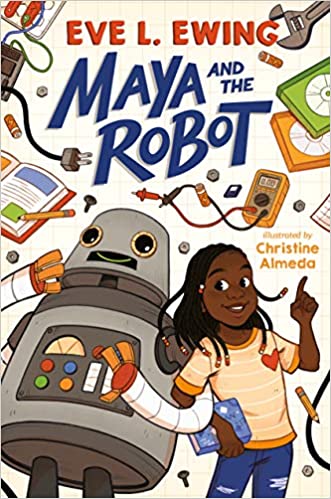
Maya and the Robot
Author: Eve Ewing
Illustrator: Christine Almeda
Published July 13th, 2021 by Kokila

Summary: An illustrated middle grade novel about a forgotten homemade robot who comes to life just when aspiring fifth-grade scientist Maya needs a friend—and a science fair project.

Maya’s nervous about fifth grade. She tries to keep calm by reminding herself she knows what to expect. But then she learns that this year won’t be anything like the last. For the first time since kindergarten, her best friends Jada and MJ are placed in a different class without her, and introverted Maya has trouble making new friends.

She tries to put on a brave face since they are in fifth grade now, but Maya is nervous! Just when too much seems to be changing, she finds a robot named Ralph in the back of Mr. Mac’s convenience store closet. Once she uses her science skills to get him up and running, a whole new world of connection opens up as Ralph becomes a member of her family and Maya begins to step into her power.

Teachers’ Tools for Navigation: This book would be useful in the classroom in order to get children interested in STEM:

Students could learn more about robotics and electrical elements. Following along with Maya as they learn students are introduced to new ideas and definitions that will bridge their understanding of STEM.

Students will be able to create their own science fair projects. Students can present their own ideas and also learn about how projects in the book worked

Discussion Questions: 

  • Do you think that her finding the robot impacted her in a good or bad way? Why?
  • What piece of modern technology does Ralph remind us of?
  • What modern upgrade would you give Ralph?
  • What is something in your life that you would consider your Ralph?
  • Who can relate to Maya? Explain why?
  • Throughout Maya and the Robot there are many different lessons you can take away. What lessons can you take away from the book and why?
  • How did Ralph allow Mr. Mac to heal after Christopher’s death?
  • Throughout the book Maya often feels alone in the classroom. What is one way to make your classmates feel included?
  • Could Maya have fixed her relationship with MJ and Jada earlier in the book? Why or why not?
  • Throughout the book Maya’s teacher calls her by the incorrect name. Why is it important to stand up for yourself when you feel uncomfortable?

Recommended For: 

classroomlibrarybuttonsmall


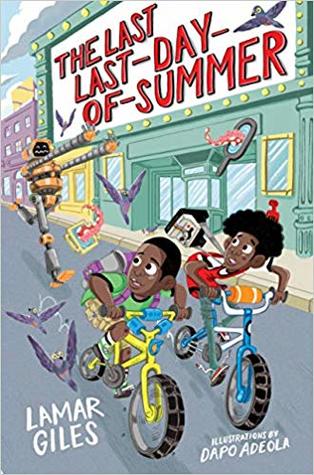
The Last Last-Day-of-Summer
Author: Lamar Giles
Illustrator: Dapo Adeola
Published April 2nd, 2019 by Versify

Summary: When two adventurous cousins accidentally extend the last day of summer by freezing time, they find the secrets hidden between the unmoving seconds, minutes, and hours are not the endless fun they expected.

Otto and Sheed are the local sleuths in their zany Virginia town, masters of unraveling mischief using their unmatched powers of deduction. And as the summer winds down and the first day of school looms, the boys are craving just a little bit more time for fun, even as they bicker over what kind of fun they want to have. That is, until a mysterious man appears with a camera that literally freezes time. Now, with the help of some very strange people and even stranger creatures, Otto and Sheed will have to put aside their differences to save their town—and each other—before time stops for good.

Teachers’ Tools for Navigation: Using this book in the classroom could help students become more brave or confident. Majority of the students should be able to relate to this story because it is almost like a dream come true. This book could open up a lot of “What if” questions for students and I love it. Students will be able to use their imaginations, better their reading skills, and have fun at the same time.

This story would also be a fun story to read together as a class and it is a fun novel to get students eager to read!

Once students are done reading this book, there could be a class reflection on how we can all be brave heroes in real life in our homes and at school. To make this even more exciting students can create their own super hero crest and name. Students will practice helping others and I will make sure their parents know about this assignment to help the students with understanding that we help each other all of the time not just at school, but to practice it everywhere if applicable and not dangerous.

Students can also respond by writing their own fictional story about their own adventures on the last day of summer.

Discussion Questions: 

  • In the novel the acronym BTSFOASTF is written by Grandma. What does it mean?
  • With a partner, come up with an answer together and write it on the white board. Grandma is diabetic, What medicine did she take and what is it for?
  • When Otto and Sheed took the picture, what happened?
  • Why did Sheed decide not to tear up the picture?
  • What was the one thing Otto discovered had been consistent since time had been frozen, and in which chapter was this discovered? Would you have noticed the same thing? Why?
  • For how long did Otto and Sheed’s adventure last, and why do you think so?
  • How do you unfreeze a person in the story?
  • Why did TimeStar lie?
  • Who is TimeStar and why do you think so?
  • What role did the clock watchers play in this story?
  • How are Otto and Sheed alike? Different?
  • How do Otto and Sheed work together and overcome their differences?
  • What were some clues that you noticed when reading, that something was not right after the boys took the photo?
  • Describe the boys relationship with their grandmother
  • If you could time travel, would you rather go forward in time or backward in time?
  • What was your favorite part about Sheed and Otto’s day?
  • Are you surprised by who Mr. Flux is?
  • Is this how you would want to spend your last day of summer?

Recommended For: 

classroomlibrarybuttonsmall


Guest Post: Classroom Uses for Stand Tall, Molly Lou Melon by Patty Lovell; Sulwe by Lupita Nyong’o; The Crown by Derrick Barnes; The Day You Begin by Jacqueline Woodson; Word Collector by Peter H. Reynolds; and You Matter by Christian Robinson

Share

One of the assignments during my Spring Children’s Literature course at UCF was creating a mini-teaching guide for the books we read for book clubs. We started with picture books for practice then students created them in their book clubs each week.

Today, I am happy to share the classroom uses and discussion questions found by my UCF Elementary Education students for these six picture books.

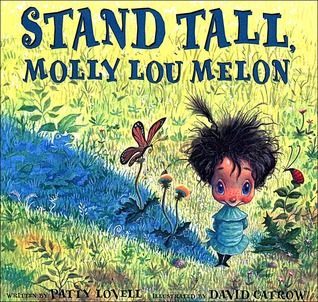
Stand Tall, Molly Lou Melon
Author: Patty Lovell
Illustrator: David Catrow
Published August 27th, 2001 by G.P. Putnam’s Sons

Summary: Molly Lou Melon is short, clumsy, has buck teeth, and a voice that sounds like a bull-frog being squeezed by a boa constrictor… But she doesn’t mind.

Her grandmother has always told her to walk proud, smile big, and sing loud, and she takes that to heart.

But then Molly Lou has to start in a new school. A horrible bully picks on her on the very first day, but Molly Lou Melon knows just what to do about that…

Teachers’ Tools for Navigation:

  • This book can be used to set a president within the classroom to advise at the beginning of the year that bullying is not okay.
  • Teach about how having a positive attitude can affect the world around you
    • Our attitude towards life determines life’s attitude towards us. – John Mitchell
  • Have the students go into a small group to talk about what happens when another student is being bullied.
    • Writing-in-role: Each student can discuss what they would do in Molly’s shoes with each encounter with the bully.

Discussion Questions: 

  • How would you feel if you were in Molly’s situation?
  • What advice has a family member given you that has gotten you through a tough time?
  • What are some things that you like about yourself?
  • How do you think Molly was able to keep a positive attitude?
  • How did the illustrations make you feel?
  • What did you like about the story?
  • What are some things you would have done if you heard Ronald making fun of Molly?
  • If Molly had a negative attitude toward Ronald, how would have had the story turned out differently?
  • How can you use this story in our classroom?
  • If Molly had not received advice from her grandmother do you think she would have had such a positive attitude?

Recommended For: 

classroomlibrarybuttonsmall


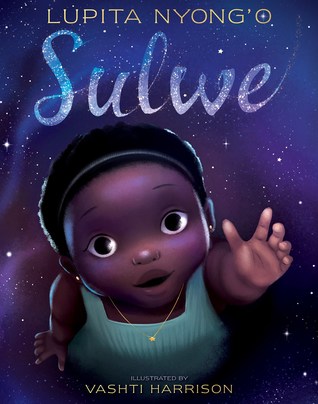
Sulwe
Author: Lupita Nyong’o
Illustrator: Vashti Harrison
Published October 15th, 2019 by Simon & Schuster Books for Young Readers

Summary: Sulwe has skin the color of midnight. She is darker than everyone in her family. She is darker than anyone in her school. Sulwe just wants to be beautiful and bright, like her mother and sister. Then a magical journey in the night sky opens her eyes and changes everything.

In this stunning debut picture book, actress Lupita Nyong’o creates a whimsical and heartwarming story to inspire children to see their own unique beauty.

Teachers’ Tools for Navigation: T

  • Good as a read-aloud and book club book.
  • A good book to introduce a discussion about skin color.
  • Beginning BLM topic.
  • Encourages children to be comfortable in their own skin.
  • Encourages children to love themselves.
  • Modern-day text.
  • May be used during social studies instruction. Prompts discussion about skin color and different cultures. Introduces self and encourages students to reflect on their own family and community.
  • After reading activity: Students may respond to the text by drawing a self-portrait of themselves. After drawing a self-portrait of themselves, they can share it with their peers and reflect on their own similarities and differences. The activity encourages students to recognize the importance of each member of their community.

Discussion Questions: 

  • What ideas do you think will be present in this text?
  • How did the author use the title of this book in the text?
  • How do you think the story will end?
  • How do you think Sulwe feels regarding how her classmates are treating her? How do you feel about this treatment?
  • What use of imagery sparked your imagination?
  • What could happen to make this character feel a different way?
  • What type of emotions do you feel during the daytime versus the nighttime? Explain why?
  • How does the word choice contribute to the tension throughout the story and ultimately the theme at the end?
  • What do you think the author wanted you to feel after reading this book?
  • How do Sulwe’s feelings change from the beginning to the middle, to the end of the story?
  • What evidence of organization do you see throughout the story?

Recommended For: 

classroomlibrarybuttonsmall


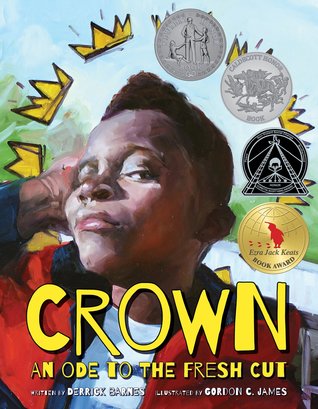
The Crown
Author: Derrick Barnes
Illustrator: Gordon C. James
Published October 10th, 2017 by Agate Bolden

Summary: The barbershop is where the magic happens. Boys go in as lumps of clay and, with princely robes draped around their shoulders, a dab of cool shaving cream on their foreheads, and a slow, steady cut, they become royalty. That crisp yet subtle line makes boys sharper, more visible, more aware of every great thing that could happen to them when they look good: lesser grades turn into As; girls take notice; even a mother’s hug gets a little tighter. Everyone notices.

A fresh cut makes boys fly.

This rhythmic, read-aloud title is a celebration of the way boys feel when they leave the barber’s chair.

Teachers’ Tools for Navigation: Notes about when the book would be useful in the classroom:

  • To show feelings towards a certain moment in life.
  • This can be used for language arts practice (events, plot, meaning).
  • Asking students about a time where they felt a personal experience with something that they do often.
  • Reflect on how they feel after receiving a haircut.
  • Reflect on something that excites you, like the haircut in the story.

This book is best done as a read aloud and a book club book. The reason for this, is that Crown integrates great opportunities because it helps students to understand a character’s feelings written into text.

Discussion Questions: 

  • The boy in the story talks about his passion of having a haircut. When has there been a time where you felt passionate about something?
  • How does the author in the story convey emotion through colors?
  • What did you think the story might have been about?
  • What do you think that the boy in the story is feeling when he enters the barber shop?
  • If you could write a sequel to this book, what would it be about and why?
  • What have you might have changed in this story?
  • Has there been a time where you think you have gotten a nice haircut? Why or why not?
  • Describe the boy’s feelings about getting a haircut? Why do you think this?
  • The boy in the story felt confident and positive after getting a haircut. When was there a time where you felt confident and positive about something?

Recommended For: 
classroomlibrarybuttonsmall


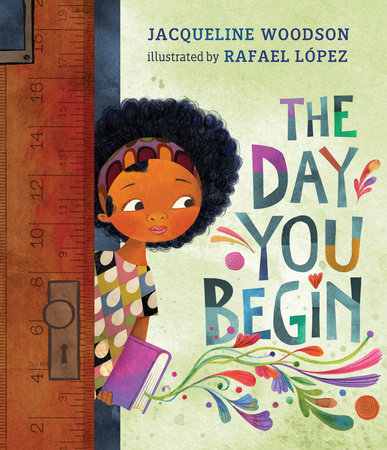
The Day You Begin
Author: Jacqueline Woodson
Illustrator: Rafael López
Published August 28th, 2018 by Nancy Paulsen Books

Summary: National Book Award winner Jacqueline Woodson and two-time Pura Belpre Illustrator Award winner Rafael Lopez have teamed up to create a poignant, yet heartening book about finding courage to connect, even when you feel scared and alone.

There will be times when you walk into a room
and no one there is quite like you.

There are many reasons to feel different. Maybe it’s how you look or talk, or where you’re from; maybe it’s what you eat, or something just as random. It’s not easy to take those first steps into a place where nobody really knows you yet, but somehow you do it.

Jacqueline Woodson’s lyrical text and Rafael Lopez’s dazzling art reminds us that we all feel like outsiders sometimes-and how brave it is that we go forth anyway. And that sometimes, when we reach out and begin to share our stories, others will be happy to meet us halfway.

Teachers’ Tools for Navigation: After reading this book it would be best if students use this as a community building opportunity to celebrate their differences and learn about their peers. This book opens up a discussion about the lives that others live and how although they have a different background we should treat everyone with respect and encourage others to be true to themselves. After reading this book the classroom can do a reading analysis of the book to help establish classroom norms and expectations. This book would be best as a read aloud preferably towards the beginning of the school year. Afterwards this book may go to the classroom library. This book is interdisciplinary as it can be used in social studies to help explore different cultural backgrounds. The students can be given the opportunity to explore the different customs and regions brought up in the book to gain a deeper understanding of the world around them.

Discussion Questions: 

  • What is the symbolism behind rulers being present in the illustrations of the book?
  • What differences did you notice in each of the characters?
  • Why do you think it is important for us to celebrate our differences?
  • What differences do you notice within your classmates or others around you?
  • How did the students’ perceptions of each other change over time?
  • Describe something that makes you unique compared to your classmates
  • What is one way to support a classmate that feels isolated because of their differences?
  • Why do you think Angelina felt less nervous towards the end of the book?
  • What is the overall message of the story?
  • Why do we notice the differences of our peers?
  • Why are we different from those around us?
  • Pick two different interactions in the story and write about you would change the characters behavior to be more respectful of their peers

Recommended For: 
classroomlibrarybuttonsmall


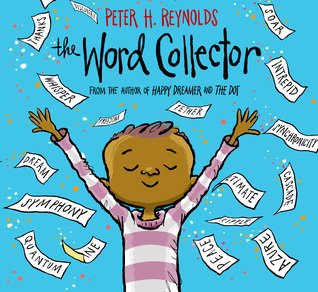
Word Collector
Author & Illustrator: Peter H. Reynolds
Published January 30th, 2018 by Orchard Books

Summary: Some people collect stamps.
Some people collect coins.
Some people collect art.
And Jerome?
Jerome collected words . . .

In this extraordinary new tale from Peter H. Reynolds, Jerome discovers the magic of the words all around him—short and sweet words, two-syllable treats, and multisyllable words that sound like little songs. Words that connect, transform, and empower.

From the creator of The Dot and Happy Dreamer comes a celebration of finding your own words—and the impact you can have when you share them with the world.

Teachers’ Tools for Navigation:

  • This book would be useful during a read aloud when teaching about vocabulary. You can use the book as a good jump start into vocabulary. Seeing another child interested in learning words will catch the students attention and make them more interactive while learning vocab.

Discussion Questions: 

  • What are some words that you would like to share?
  • Is there anything you wished for your class to learn like the main character did?
  • Did you learn any new words?
  • Why does Jerome like to collect words?
  • Where do you find new words not counting in a book?
  • Which types of words were the most powerful for Jerome?
  • What do you like to collect for yourself and why?
  • Why do you think Jerome threw his words across town?
  • What do you do to make yourself happy?
  • What was your favorite part about the book?

Recommended For: 
classroomlibrarybuttonsmall


You Matter
Author & Illustrator: Christian Robinson
Published June 2nd, 2020 by Atheneum Books for Young Readers

Summary: They All Saw a Cat meets The Important Book in this sensitive and impactful picture book about seeing the world from different points of view by Caldecott and Coretta Scott King Honoree Christian Robinson.

In this full, bright, and beautiful picture book, many different perspectives around the world are deftly and empathetically explored—from a pair of bird-watchers to the pigeons they’re feeding. Young readers will be drawn into the luminous illustrations inviting them to engage with the world in a new way and see how everyone is connected, and that everyone matters.

Teachers’ Tools for Navigation: The response best for after reading this text would be a group discussion of their thoughts on the book, a compare and contrast of everyone’s differences that “matter,” reflect on things that students think matters to them, and think they want to not matter. And the the book is interdisciplinary due to its multiple subject related ideas, because it addresses science related topics like planets and plants, and even geography.

Discussion Questions: 

  • Is there something that one of your siblings does that you don’t like? Why? Does that mean that they don’t matter?
  • What is something that you think matters?
  • What is something that you think makes you different?
  • Why does that make you special?
  • Why are differences important?
  • Why do you think the last picture was of the whole city?
  • Who is the astronaut thinking about when she is looking down on earth?
  • On the cover, what do you notice about all the children playing, what happens if there is only one kid playing with the parachute?
  • Why do you think the author wrote this book?
  • Why do you matter?

Recommended For: 
classroomlibrarybuttonsmall


Guest Review: The Worrysaurus by Rachel Bright, Illustrated by Chris Chatterton

Share

Guest Reviewer: Darlene, UCF Elementary Education Student

The Worrysaurus
Author: Rachel Bright
Illustrator: Chris Chatterton
Published October 6th, 2020 by Orchard Books

Summary: A modern Wemberly Worried-featuring dinosaurs!-for today’s young readers, with reassuring, lighthearted text and charming illustrations sure to calm the anxious butterflies in any child’s tummy.

It’s a beautiful day and Worrysaurus has planned a special picnic. But it isn’t long before a small butterfly of worry starts fluttering in his tummy…

What if he hasn’t brought enough to eat?

What if he gets lost in the jungle?

What if it rains?!

With a little help from his mom, Worrysaurus finds a way to soothe the anxious butterflies, chase his fears away, and find peace and happiness in the moment at hand.

Discover the perfect book to help every little anxious Worrysaurus let go of their fears, and feel happy in the moment at hand! The Worrysaurus strikes just the right balance of positive, lighthearted, and kid-friendly, with reassuring, rhyming text from Rachel Bright, the bestselling author of The Lion Inside and Love Monster, and charming illustrations from Chris Chatterton. Perfect for any reader who might feel the flutter of an anxious butterfly in their tummy, The Worrysaurus is sure to become a storytime favorite.

About the Creators: 

Rachel Bright is rained in Graphics at Kingston University, followed by a Masters Degree in Printmaking at UWE. Her striking illustrative and typographic style, coupled with her witty storytelling have resulted in an award winning and ever-growing collection of acclaimed picture books.

Here is her website: The Brightside » Welcome to the Wonderful World of The Brightside (lookonthebrightside.co.uk)

Chris Chatterton began his career in graphic design and animation, working on a variety of projects including Dr Who and CBBC’s The Dumping Ground. Chris’ passion for illustration then led him to pursue a career as a freelance artist working on a number of children’s books.

Now writing the stories as well, Chris considers his debut author/illustrator Gus picture book story to be semi-autobiographical as he claims his loveable grumpy dog character is based on his own grumpy moods!

Originally from County Durham in the UK, Chris now lives and works in Barcelona, Spain.

Chris Chatterton – Illustrator & Author

Review: This book has received nothing but positive reviews from me. Anxiety and worry is real. We have all experienced it at some point in our lives and so have children. It is a struggle that if not targeted quickly can affect everyone negatively. I love how this book targets anxiety and worry in a delicate yet powerful way to teach young readers to manage worries and anxiety and to know that they are stronger than their worries and smarter than their doubts.

Teachers’ Tools for Navigation: In addition to reading this picture book, I would create a short writing prompt activity for students to write about their anxiety, fear and worries. After this, I  would place students in small groups to engage in conversations in which they can talk it over instead of being silent about it.

Discussion Questions: 

  • Why was Worrysaurus worried during his picnic?
  • Do you think Worrysaurus worried unnecessarily?
  • What do you think Worrysaurus’s mom meant when she said the phrase; “ Oh, my little Worrysaurus, Chase that butterfly away?”
  • Based on  this sentence from the book, “This Worrysaurus often was a one to overthink.” What do you think the author meant by “overthink” and in what ways have you overthought?
  • What did Worrysaurus do to chase away his worries?
  • List 2 things not listed in the story that can help Worrysaurus chase those worries away.

Flagged Passages: 

“Oh, my little Worrysaurus, Chase that butterfly away.”

Book Trailer: 

Read This If You Love: Encouragement and Hope

Recommended For: 

classroomlibrarybuttonsmall

Thank you, Darlene, for your review!

Guest Review: Thank You, Omu! by Oge Mora

Share

Guest Reviewer: Briana, UCF Elementary Education Student

Thank You, Omu!
Author & Illustrator: Oge Mora
Published October 2, 2018 by Little, Brown Books for Young Readers

Summary: A generous woman is rewarded by her community in this remarkable author-illustrator debut that’s perfect for the Thanksgiving season, perfect for fans of Last Stop on Market Street.

Everyone in the neighborhood dreams of a taste of Omu’s delicious stew! One by one, they follow their noses toward the scrumptious scent. And one by one, Omu offers a portion of her meal. Soon the pot is empty. Has she been so generous that she has nothing left for herself?

About the Author: Oge Mora is a collage artist and storyteller. Her picture book, Thank You, Omu!, was a Caldecott Honor, Coretta Scott King/John Steptoe New Talent Award winner, and Ezra Jack Keats Book Award recipient.  Her second book, Saturday, won the 2020 Boston Globe—Horn Book Picture Book Award. Oge’s artwork has been applauded by The Washington Post, The New York Times, The Wall Street Journal, and The Boston Globe. She also recently made the Forbes 30 Under 30 2021 list in Arts & Style.

Oge grew up in Columbus, Ohio but resides in Providence, RI. She is a fan of all things colorful, patterned, or collaged, and enjoys creating warm stories that celebrate people coming together.

Review: This is a beautiful and joyous book celebrating community, generosity, and reciprocity. What I like about this book is that everything is freely given: Omu shares her stew out of the kindness of her heart and all of the neighbors return that kindness without being asked or cajoled. I also like this book because it demonstrates how we can and should rely on each other in times of need. Everyone in the book receives and gives help at different points. And this shows how connected, strong communities make everyone’s life better. I think this book is important because there isn’t really any conflict or character growth in the story, instead everyone acts as they should, and this serves as a model for students about how to act and how the world should be.

The cut-paper illustrations, also done by Oge Mora, are colorful and vibrant. This makes the book and the town it depicts feel warm, inviting, and idyllic which draws the reader in and supports the text’s message about the value of community. This book is set within an urban setting, which is a refreshing change of place from the suburbs, and idealized rural and wilderness settings of so many children’s books. And it is important for children to see urban communities as beautiful and valuable.

Teachers’ Tools for Navigation: I think this book is a valuable addition to your classroom library and it is an excellent book for whole class read aloud. This book can be used with the guided questions to prompt discussions about sharing and about the students’ own communities. It is also useful to build a healthy classroom community. Students are going to be asked to share and work together throughout the year. Students can also explore the illustration style while exploring the central theme. For example, students could be tasked to depict a scene of a time when they shared or someone shared with them using cut construction paper. After reading the story students should be able to understand and reflect on their own communities, the members that make it up  and how everyone works towards a happy community. You can also discuss the elements of Nigerian American culture that are prevalent in this book, such as the one pot stew and Omu’s name herself.

Discussion Questions: 

  • What does Omu make that has everyone starving?
  • Why do you think Omu shares with everyone?
  • How do you think all the characters know each other?
  • How did the community thank Omu for sharing?
  • Omu helped her community by sharing! What are things you could share that would help your community? Remember that you can share things that are not physical.
  •  What makes a good neighbor?
  • Why is sharing important? Can sharing be hard? Why or why not?

Flagged Passages: 

Book Trailer: 

Read This If You Love: Last Stop on Market Street by Matt de la Peña, Bear Came Along by Richard T. Morris, Wolf in the Snow by Matthew Cordell

Recommended For: 

classroomlibrarybuttonsmall

Thank you, Briana, for your review!

Guest Review: Sulwe by Lupita Nyong’o, Illustrated by Vashti Harrison

Share

Guest Reviewer: Brian, UCF Elementary Education Student

Sulwe
Author: Lupita Nyong’o
Illustrator: Vashti Harrison
Published October 15, 2019 by Simon & Schuster Books for Young Readers

Summary: From Academy Award–winning actress Lupita Nyong’o comes a powerful, moving picture book about colorism, self-esteem, and learning that true beauty comes from within.

Sulwe has skin the color of midnight. She is darker than everyone in her family. She is darker than anyone in her school. Sulwe just wants to be beautiful and bright, like her mother and sister. Then a magical journey in the night sky opens her eyes and changes everything.

In this stunning debut picture book, actress Lupita Nyong’o creates a whimsical and heartwarming story to inspire children to see their own unique beauty.

About the Creators: 

Lupita Nyong’o is a Kenyan actress and producer. Her first feature film role was in the film 12 Years a Slave, for which she received the Academy Award for Best Supporting Actress as well as multiple accolades, including the Screen Actors Guild Award, the Critics’ Choice Award, the Independent Spirit Award, and the NAACP Award. She has since starred in Mira Nair’s Queen of Katwe, Star Wars: The Force Awakens, Ryan Coogler’s record-breaking box office hit Black Panther, and most recently in Jordan’s Peele’s critically acclaimed horror film Us. Nyong’o earned a Tony nomination for her Broadway debut in Danai Gurira’s play Eclipsed. She lives in Brooklyn.

Vashti Harrison, author and illustrator of the bestselling Little Leaders: Bold Women in Black History, is an artist, author, and filmmaker with a passion for storytelling. She earned her MFA in film and video from California Institute of the Arts, where she snuck into animation and illustration classes to learn from Disney and DreamWorks legends. There she rekindled a love for drawing and painting. Now she uses her love for both film and illustration to craft beautiful stories for children.

Review: This book was just amazing! The story, the art, the lesson–everything was perfect. The message that is written in this story is not just for kids, even though the intended audience is children. The book talks about colorism and how one should love themselves just the way they are. We are all unique and special, and we should not try to change ourselves for nobody. In the world we live in today, there is so much negativity, but with this book for children, they can learn to be the light in the midst of darkness, no matter what the color of your skin is. Sulwe’s skin is the color of Midnight, but to me she shines the brightest in her family. Without midnight, everyone else’s shine would be pointless. I hope that when children read this book, they will appreciate who they are and be confident in themselves. This is a story I would definitely keep in my classroom. My favorite quote from the story, “When you are darkest is when you are most beautiful. It is when you are most you.” This left me very emotional and I’m a grown adult now. I should not be tearing up like this!

Teachers’ Tools for Navigation: Sulwe has many topics that can be discussed and is a great read aloud to teach social emotional learning; it can also be used to teach a variety of literacy skills. Here are some ideas that can be used to incorporate Sulwe into the lesson plan:

The first thing the students can do would be to practice their compare and contrast skills by discussing how the character changes and feels throughout the story. Another activity the students can do would be to practice descriptive writing by having them describe their own appearance. The last activity that can be done is having the students practice writing book reviews after they have read the story. If none of these activities work for you or aren’t that interesting, asking questions about the story to the students is always an option. Here, the teacher can discuss important topics like bullying, appreciating others, respect, and loving oneself.

Discussion Questions: 

  • What does the name Sulwe mean?
  • How are the pet names for “day” and “night” different?
  • What types of food did Sulwe eat to try and change her color?
  • What appeared through Sulwe’s window?
  • Why did Sulwe want to change the way she looked?
  • Have you ever been teased because of the way you look? How did that make you feel?

Flagged Passages: 

When you are darkest is when you are most beautiful. It is when you are most you.”

Book Trailer: 

Read This If You Love: Hair Love by Matthew A. Cherry or Eyes that Kiss in the Corner by Joanna Ho

Recommended For: 

classroomlibrarybuttonsmall

Thank you, Brian, for your review!