Blog Tour, Giveaway, and Review: Bubonic Panic: When Plague Invaded America by Gail Jarrow

Share

NFPB2016

Nonfiction Wednesday

Nonfiction Picture Book Wednesday is hosted by Kid Lit Frenzy and was started to help promote the reading of nonfiction texts. Most Wednesdays, we will be participating and will review a nonfiction text (though it may not always be a picture book).
Be sure to visit Kid Lit Frenzy and see what other nonfiction books are shared this week!

bubonic panic

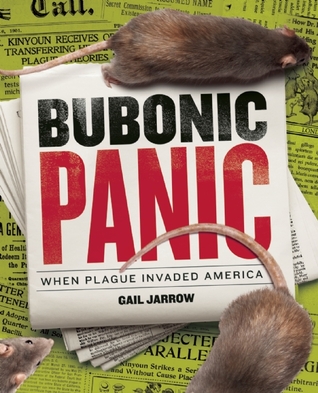
Bubonic Panic: When Plague Invaded America
Author: Gail Jarrow
Published: May 10, 2016 by Calkins Creek

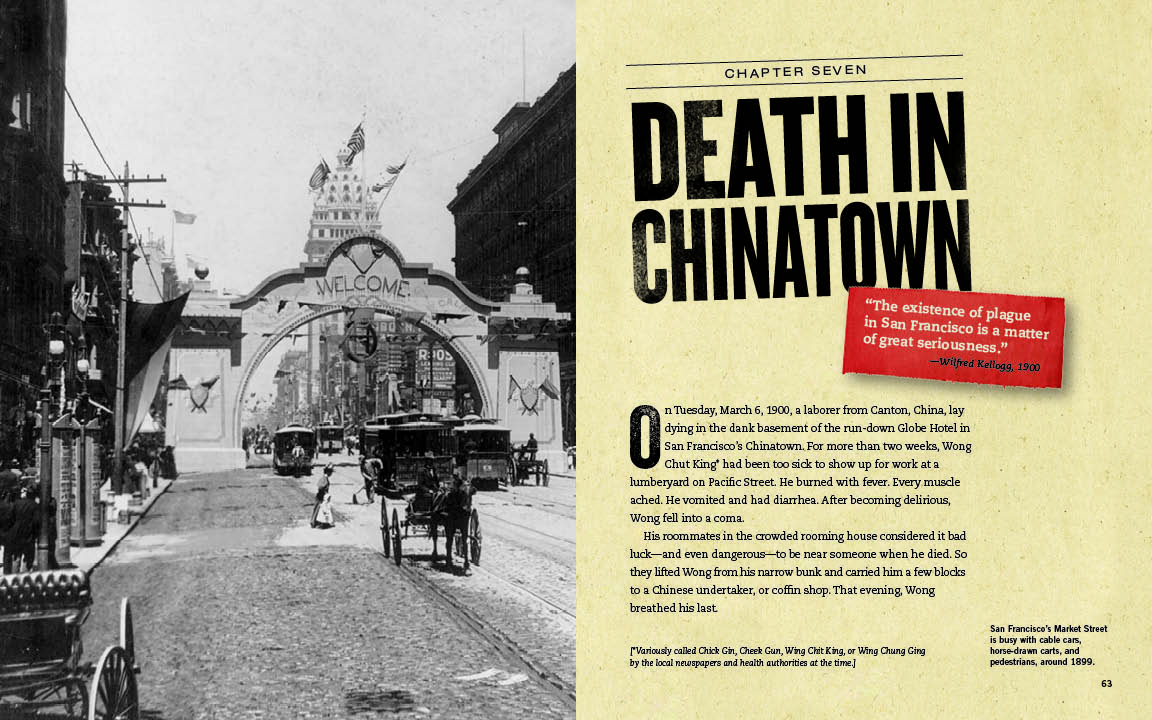
GoodReads Summary: In March 1900, San Francisco’s health department investigated a strange and horrible death in Chinatown. A man had died of bubonic plague, one of the world’s deadliest diseases. But how could that be possible? Bubonic Panic tells the true story of America’s first plague epidemic—the public health doctors who desperately fought to end it, the political leaders who tried to keep it hidden, and the brave scientists who uncovered the plague’s secrets. Once again, acclaimed author and scientific expert Gail Jarrow brings the history of a medical mystery to life in vivid and exciting detail for young readers. This title includes photographs and drawings, a glossary, a timeline, further resources, an author’s note, and source notes.

Review: I have read about the medieval plague, but I haven’t read much about the plague epidemic of the twentieth century. It was fascinating (and sad) to learn about this time period. Gail Jarrow has an incredible ability to make nonfiction material very accessible to readers. This book is a page-turner, and I had difficulty putting it down! The information is very easy to follow, yet it is complex and made me think! I will read any book by Jarrow because she really makes me think. Her texts go beyond medical information. There are themes, for example, about racism and prejudice that made me want to use this book in the classroom!

Teachers’ Tools for Navigation: As with Gail Jarrow’s Fatal Fever, I think it would be wise for teachers to explore other diseases and epidemics while teaching this book. It would be particularly interesting to make connections between this book and Jarrow’s Red Madness and Fatal Fever. Students could participate in literature circles and discuss their learning. I also found the prejudice and scapegoating included in the text to be very interesting and think this would make for very worthy classroom discussions.

Discussion Questions: What role does fear play in the text? How does fear evolve? Is it often validated or invalidated? What negative consequences come with fear?; Are there any heroes in this book? Why or why not?; How can we connect the text to the modern anti-vaccination movement?

Flagged Passage:

bubonic plague spread 

Read This If You Loved: Fatal Fever: Tracking Down Typhoid Mary by Gail Jarrow; Red Madness: How a Medical Mystery Changed What We Eat by Gail Jarrow; Invincible Microbe: Tuberculosis and the Never-Ending Search for a Cure by Jim Murphy and Alison Blank

Giveaway:

a Rafflecopter giveaway

Recommended For:

 classroomlibrarybuttonsmall litcirclesbuttonsmall

RickiSig

Check out the other stops on the blog tour!:

Monday, May 16

The Nonfiction Detectives

www.nonfictiondetectives.com

Tuesday, May 17

KidLit Frenzy

www.kidlitfrenzy.com

Wednesday, May 18

Unleashing Readers

www.unleashingreaders.com

Thursday, May 19

Teach Mentor Texts

www.teachmentortexts.com

Friday, May 20

Sally’s Bookshelf

www.sallysbookshelf.blogspot.com

*Thank you to Kerry at Boyds Mills Press for sending this book for review!*

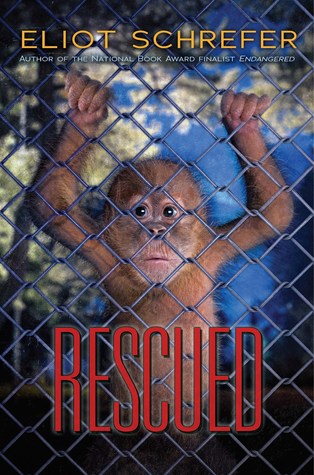
Rescued by Eliot Schrefer

Share

rescued

Rescued
Author: Eliot Schrefer
Published April 26th, 2016 by Scholastic

Goodreads Summary: The third entry in the taut, heart-wrenching quartet that made Eliot Schrefer a two-time National Book Award finalist introduces us to an orangutan held captive in suburban America.

John grows up with everything he could possibly want. His father is a businessman who travels far and wide. One day, he comes home with a rare gift for his son, a baby orangutan, and the two become inseparable friends. But as the orangutan gets older, stronger, less cute, the family relegates the animal to a locked trailer in the backyard. Until John’s father finally decides to sell the ape to a roadside zoo. Coming to the defense of his childhood friend, John resolves to smuggle the orangutan back to Indonesia, and the two set out on a journey far more dangerous than John bargained for.

My Review: I think out of the three Ape Quartet books published so far, this is the one that is going to hit closest to home for many. It will make many readers uncomfortable and want to make a change. First, it takes place in the United States unlike Africa like the first two. Second, it really digs into an issue that is still very much prominent here–animal injustice.

I find Schrefer’s writing to be so beautiful yet so easy to read. He can pull you into his stories and makes you feel for not only his human characters but also his animal characters. He does such a tremendous amount of research for all of his books and with this one it brings the injustice of Raja alive.

I am a sucker for ape books. I find apes to be the most fascinating animals, and orangutans may be my favorite because they have these amazing eyes that just show me that they are so intelligent and deep thinkers. They are also introverts; I think I just relate to them in that way. This book brings orangutans to life through Raja.

Teachers’ Tools for Navigation: As evident from Schrefer’s status as a two-time National Book Award finalist, his books can be used as a mentor text for just about any aspect of writing that you are looking for: characterization, imagery, voice, conflict, etc. Read any of his books, and you can pull out so much to discuss and use within the classroom. Additionally, there are some amazing ape books, including Schrefer’s other Ape Quartet books, that would make for an amazing lit circle opportunity or text set.

Discussion Questions: Why does John feel obligated to help Raja?; What would you have done if you were John or John’s mom when the divorce happened? Or when John’s father showed up with Raja?; Why is it better for wild animals to be in the wild?

Flagged Passages: “Every family’s got something weird about it, and mine was no different. We just had to try harder than most to hide it. All it took was someone to walk in the door to see that we had an orangutan. A real-live, orange-brown, TV-obsessed, drinking-grapefruit-juice-from-the-carton orangutan.” (p. 11)

“The truck’s engine rumbled, and the trailer pulled away. I watched it go, stunned.

You did this, I scolded myself. You let this happen.

Sweat had soaked my shirt, ran from the pits down my arms. The heat radiating up from the pavement made me dizzy, even though the perspiration on my brow was chill. I bent over, hands on my knees. I could feel the cords of my neck stand out, straining. Getting ready to start my stomach, at least, back at zero.

I heaved in air, and it sounded like a sob. Then it was a sob. Something huge and dark and terrible came out of me, something that had tamped down for so long that it had become even more huge and dark and terrible.

One last sob came out of me, then all was quiet.

There, slumped in the dirt, was Raja’s old blue elephant. (p. 69-70)

Read This If You Loved: Endangered and Threatened by Eliot Schrefer (Ape Quartet #1 and #2 yet are all stand alone novels), Hurt Go Happy by Ginny Rorby, One and Only Ivan by Kathering Applegate, Ivan: The Remarkable True Story of the Shopping Mall Gorilla by Katherine Applegate, Top Ten Ape Book list from Nerdy Book Club (I’ll be updating here on Unleashing Readers soon)

Recommended For: 

classroomlibrarybuttonsmall closereadinganalysisbuttonsmall litcirclesbuttonsmall

Signature

Review and Giveaway!: Bucky and Stu vs. the Mikanikal Man by Cornelius Van Wright

Share

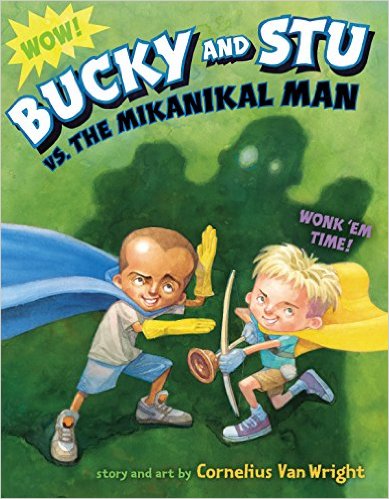
Bucky and Stu cover

Bucky and Stu vs. the Mikanikal Man
Author and Illustrator: Cornelius Van Wright
Published: July 28, 2015 by Nancy Paulsen Books

Goodreads Summary: It’s the adventure of a lifetime when best friends—and self-proclaimed superheroes—defeat bad guys of their own invention.

It’s wonk ’em time when Bucky and Stu have to stand up to Phat Tyre, TrashMan and Hose-Nose. No matter that the bad guys are all made out of household items that Bucky and Stu have assembled themselves—these bad guys don’t stand a chance against the boys’ power moves. Still, it’s quite a surprise when their latest villain, the giant Mikanikal Man, gets zapped during a lightning storm and comes to life! The battle—and thrill—of a lifetime ensue. Full of surprises and laughs, this upbeat, action-packed story celebrates imagination, creativity, and friendship in even the most unexpected forms. Cornelius Van Wright’s hilarious illustrations are full of surprises and are perfect for portraying the high-speed antics of two enthusiastic boys.

About the Author:

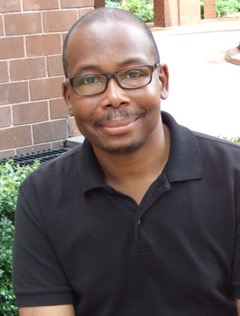
Cornelius Van Wright

Cornelius Van Wright (www.corneliusvanwright.com) wrote and illustrated When an Alien Meets a Swamp Monster, and has also illustrated several other picture books, including Princess Grace (by Mary Hoffman) and Jingle Dancer (by Cynthia Leitich Smith). His work has appeared on Reading Rainbow and Storytime and has been exhibited with the Society of Illustrators. He lives in New York City.

Ricki’s Review: For me, this book celebrates the imagination. These two boys build their own villains out of household items, and the end results are hilarious. My son enjoys reading this book, and after our first reading we created our own villain out of couch cushions, a colander, and other cooking tools. While many readers will automatically attribute this book to boys, I think girls would love it, too! Who doesn’t love creating a monster out of every day items? Next winter, I plan to read this book with my son and take him outside to create an imaginative snowman. It will be the hit of the block!

Kellee’s Review: What a perfect book to review to coincide with the release of Captain America: Civil War! It highlights how anyone can be a superhero if they use their imagination and whatever they can find! I know that this is going to be a favorite of parents who like comic books and will be a reading ladder to super hero comic books because the next step after fighting Phat Tyre is Green Goblin! I also think that the story will really get kids’ minds reeling and get them playing! Too often I hear that kids aren’t playing enough anymore, but I believe that is because video games and TV are so stimulating. Bucky and Stu is imaginative enough that it will stimulate the minds of its readers and get them playing. 

Teachers’ Tools for Navigation: This book would be a great choice to kick off a unit on imagination. Some elementary schools do invention fairs, and this would be a great book to initiate excitement in the fair. Further, with the highlight on STEM in education, teachers might consider pairing with a robotics teacher to show students how robots were made. It would be really neat if they could try their own hand at creating their very own robot! Now THAT is authentic learning!

Check out the downloadable CCSS-aligned curriculum guide at: https://www.scribd.com/doc/310658230/Bucky-and-Stu-vs-the-Mikanikal-Man-Curriculum-Guide

Discussion Questions: How does using our imagination help us in life? When have you had to use your imagination creatively? What famous people (current or in history) are known for their imaginations?; How might this book inspire you to make your own invention?

Book Trailer: 

This made us giggle and highlights the good fun of this book!

Read This If You Loved: The Most Magnificent Thing by Ashley Spires, What Do You Do with an Idea? by Kobi Yamada, The Dot by Peter H. Reynolds, The Noisy Paint Box by Barb Rosenstock, Lost and Found by Oliver Jeffers, Journey by Aaron Becker

Giveaway!:

a Rafflecopter giveaway

Recommended For: 

readaloudbuttonsmall classroomlibrarybuttonsmall

RickiSigand Kellee Signature

**Thank you to Barbara at Blue Slip Media for providing copies for review!**

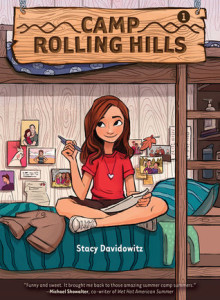
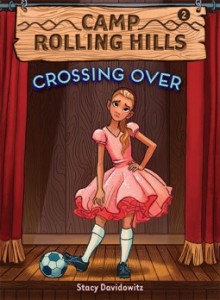
Review and Author Interview: Camp Rolling Hills series by Stacy Davidowitz

Share

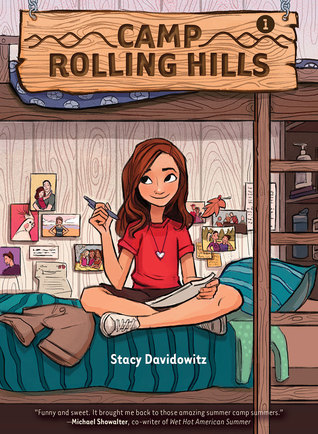
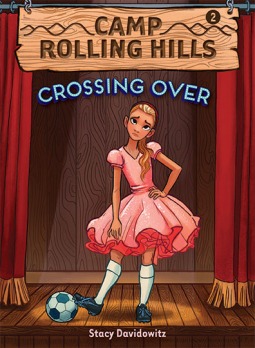
camp rolling hills camp crossing over

Camp Rolling Hills
Camp Rolling Hills: Crossing Over

Author: Stacy Davidowitz
Published May 10th, 2016 by Amulet Paperbacks

Camp Rolling Hills’s Goodreads Summary: A hilarious and heartfelt series about the particular magic of summer camp—a place where reinvention is possible and friends are like family—from a sparkling debut talent.

Finally, it’s summer! Stephanie—aka Slimey—has been counting the days until she can return to her favorite place in the entire world, Camp Rolling Hills. And this year she’s especially happy to be back—she’ll have eight blissful weeks away from home, where life has been decidedly rocky.

New kid Bobby, on the other hand, is pretty sure he’s in for the worst summer of his life. He does not understand his weirdo cabinmates, the group singing, and the unfortunate nicknames (including his: Smelly). But he does understand Slimey, and the two soon fall in crush. This summer might not be so bad after all!

But then a fight sets off an epic, campwide, girls-versus-boys prank war. Bunks are raided! Boxer shorts are stolen! And it’s up to Slimey and Smelly to keep the peace.

Crossing Over’s Goodreads Summary: There’s only one thing Melman loves more than soccer: her summers at Camp Rolling Hills. So she’s pumped to be back—until she realizes her bunkmates have gone totally boy-crazy over the school year and plastered their cabin in pink. Pink posters, pink t-shirts…it seems that the only not-pink thing in the cabin is Melman herself. That is, until she’s given a dare in front of the entire camp: wear a pink princess dress. For Three. Whole. Days.

Steinberg’s summer gets off to a rough start, too, when his robot (usually his area of expertise) blows up during a camp-wide robotics contest. Steinberg might feel like a loser at home, but camp’s supposed to be his place to shine.

Steinberg without robots? Melman in pink? This whole summer feels turned upside down! To set things right, Steinberg and Melman team up and hatch a fail-proof plan. The plan’s secret ingredient? Hamburgers.

About the Author: Stacy Davidowitz is a camp-obsessed writer of books, plays, and screenplays. She also enjoys acting, singing, running long distances, and teaching theater all over New York City. Her alma maters are Tufts University, Columbia University, and Tyler Hill Camp. The Camp Rolling Hills series marks her debut as an author. Visit Stacy at www.stacydavidowitz.com and www.camprollinghills.com.

Author Q&A: Thank you to Stacy Davidowitz for answering some questions I had about the books and her writing!

Kellee: You share in your author’s note that your time at camp inspired these books. Can you tell us more about what inspired you, and how it directly affected the novels?

Stacy: I love camp. Truly, deeply love it. Experiencing it as a camper and then counselor and then head staff, I really got to understand its in and outs, and most importantly, the kind of positive impact it can have on a kid. So of course plots and activities and even the camp‘s layout are derived from my experiences, but also the bigger themes: friendship, being true to who you are, firsts–that’s the heart of the inspiration. I made such fantastic friends and helped nurture friendships among campers when I worked as a counselor; I experienced life-changing firsts I could never experience at home; and I learned to embrace my quirkiness with my bunkmates by my side.

Kellee: The sequel to Camp Rolling Hills is told from different perspectives than the first. Why did you decide to switch point of views? Will the next books go through the other campers’ POVs? 

Stacy: When I wrote the initial draft of the first book, it was actually told from five perspectives: Slimey, Smelly, Play Dough, Jenny, and Steinberg. But when Abrams picked it up to be a series, we talked about what would work best. Ultimately we decided that each book should be told from the perspective of a different boy and girl. So Book One is Slimey and Smelly. Book Two is Melman and Steinberg. Book Three is Jenny and Play Dough. And Book Four is Missi and Wiener. If Abrams extends the series to six books, then we’ll get the perspectives of Sophie, Jamie, Totle, and Dover, too! Camp Rolling Hills is such an ensemble piece that having the series narrated by all the kids just feels right. 

Kellee: You are a teacher of theater in NYC. How has your time teaching kids influenced you to want to write and want to write specifically these books? 

Stacy: I teach a lot of playwriting and creative writing, even in the theater classes I lead. My students inspire me every day. Their ideas are so uninhibited. Exciting. Fresh. Alive. Honest. So of course that makes me want to do the same! It’s really cool to be able to write wacky, sweet, and adventurous characters my students can identify with. Also, writing middle grade is just so fun! Kids are smart and silly and it’s rewarding to be able to shine that light on them.

Kellee: Other than (hopeful) sequels, what’s next?

Stacy: I’m working on a dark young adult novel at the moment called Leper. I’m also co-writing a musical for Big Block Entertainment, the producers of Rock of Ages. Camp Rolling Hills the Musical (yup, it’s a musical, too!) is getting two productions this summer. One in Westport, Connecticut at Center Stage and another in NYC at New York Musical Festival (NYMF). Plus a play of mine called Sacred Water is being workshopped at Symphony Space, NYC in early July through a festival about social change!

My Review: The crazy cast of characters are what really make this book. Oh, and the reminiscing of camp. Camp really is something that is hard to explain unless you go yourself, but Stacy Davidowitz does a great job bringing the reader into Camp Rolling Hills and all of its quirkiness. And to add to the quirkiness, the characters in the books are so much fun! They are quite the mix of personalities. From stereotypical girly-girls to a cat-obsessed, sweet girl to a do gooder to a philosophical jock. Their interactions and characterization are what keep you reading the most! I also love the mix of letters home throughout the books.

Teachers’ Tools for Navigation: The Camp Rolling Hills books would be a fun way to get letter writing into the classroom conversation. First, I’d use the letters as conversation starters into characterization asking the students, “What can you tell about these characters based on their letters?” And discuss what clues the students used to figure it out. I’d then move to a RAFT (Role, Audience, Format, Topic) activity asking each student to write a letter as a made up character they were assigned. The Camp Rolling Hills website even has stationery!

Discussion Questions: Although each cabin is filled with friends, each character is quite unique. How do the characters differ? Compare?; What would your camp nickname be?; What makes camp so special?; How did the campers change between books?

Flagged Passages: “Things to Do No that I’m in Anita Hill Cabin (Upper Camp!)

  1. Be a good role model.
  2. Make a special camp collage of my friends and our inside jokes.
  3. Box-stitch extra lanyard key chains for Mom, since stress makes her lose her keys.
  4. Spend A LOT of time with my camp sister/soul sister/BFF.

Slimey had always wanted a sister, and she treasured the times she and Melman pretended they were fraternal twins separated at birth. Fraternal, because they looked nothing alike. Twins, because their birthdays were only three days apart, and they’d always understood exactly how the other felt.” (Camp Rolling Hills, p. 2)

“‘Well, how do you like camp so far?’
‘It’s fine.’
Fine? No one describes camp as fine. Amazing, incredible, life-changing, maybe. But never fine.”

‘The first time I came here,’ she offered, ‘it took me a couple of days to realize how much I loved it, but once you do, you love it forever. You’ll see.'” (Camp Rolling Hills, p. 41)

Read This If You Loved: Honor Girl by Maggie ThrashHidden by Helen Frost, Brain Camp by Susan Kim, Breakfast Served Anytime by Sarah Combs, Lumberjanes by Noelle Stevenson, Like Bug Juice on a Burger by Julie Sternberg

Recommended For: 

classroomlibrarybuttonsmall

Signature

**Thank you to Caitlin at Abrams for providing copies for review!!**

Blog Tour, Author Guest Post, and Review!: Cici Reno #MiddleSchoolMatchmaker by Kristina Springer

Share

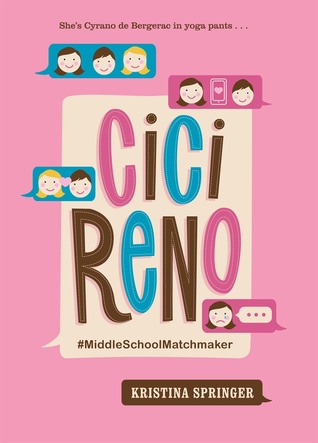
cici reno

Cici Reno #MiddleSchoolMatchmaker
Author: Kristina Springer
Published April 16th, 2016 by Sterling Children’s Books

Goodreads Summary: Middle school is a test, but Cici Reno has all the answers. She’s the go-to girl for advice. She’s cool, she’s funny, and she’s enlightened (thanks to yoga classes at her mom’s studio). So when her pretty BFF, Aggie, is too shy to speak to the boy she’s crushing on, Cici goes online and does the talking for her. The only problem is, Cici starts to fall for the guy herself! For the first time in her life. she doesn’t have a clue.

My Review: Cici Reno is a refreshing addition to middle grade romance. As a middle school teacher, I am always happy when there is a romance novel that actually features middle school kids instead of high schoolers. The thinking and feelings differ so much between 6th and 9th grade that sometimes the YA romance novels are a bit mature for the middle schoolers that want to read about crushes and dating. And Cici Reno is a book that middle schoolers will flock to not only because of the romance but because of the humor, Cici’s true voice, and the story of friendship.

Teachers’ Tools for Navigation (Teachers’ Tools for Navigation):
“Using Classic Retellings in the Middle Grade Classroom” by Kristina Springer

As readers, we love a good classic retelling. Renée Ahdieh reimagined The Arabian Nights in her #1 NYT Bestseller, The Wrath and the Dawn. The Coming of the Dragon by Rebecca Barnhouse was inspired by Beowulf. The Real Boy by Anne Ursu offered a new look at Pinnocchio. My first young adult novel, The Espressologist, was a twist on Jane Austen’s Emma. (In my book, the main character is a coffee shop barista who discovers a talent for matchmaking her customers based on their favorite coffee drinks.) And of course, Romeo and Juliet has been remade again and again and again (my favorite being Gnomeo and Juliet!).

With my newest middle grade book, Cici Reno #MiddleSchoolMatchmaker, I decided to do a modern twist of the Cyrano de Bergerac story, set in middle school and with Twitter instead of balconies and bushes.

Cici Reno, is the 12 ¾-year old enlightened daughter of a Yogi. When she’s not helping out at her mom’s beloved Peony Lane Yoga Studio or taking a class herself, she’s solving all of the 7th grade’s problems, be it boy trouble or BFF drama. When her shy best friend Aggie asks for Cici’s help in getting the attention of the boy she likes, Cici goes online and does the talking for her. Only the more they talk, the more she falls for him herself. What’s a girl to do?

Studying a classic story and some of its retellings could be a fun and creative activity for middle grade classrooms. Here’s a suggestion of how you can approach this:

  • Start with talking about the original classic tale. Let’s say you choose Cyrano de Bergerac as I did. Talk about the original play written by Edmond Rostand in 1897. Show pictures of the real Cyrano de Bergerac for which the play is based on. More info here: https://en.wikipedia.org/wiki/Cyrano_de_Bergerac_(play) And show this really cute 1 minute, 35 second YouTube Last Minute Book Report clip of Cyrano de Bergerac to get an overall sense of the story. https://www.youtube.com/watch?v=-u52OLtAws8
  • Have your class read through a bit of the play together out loud to get a sense of the relationship between Roxane, Christian, and Cyrano. Perhaps the balcony scene in Act 3, Scenes 6 and 7 where we see Christian bumbling for his words and Cyrano stepping in to rescue him. You can find the play this here: http://www.poetryintranslation.com/PITBR/French/Cyranoact3.htm
  • Talk about some of the movie adaptions of Cyrano de Bergerac over the years like Roxanne and The Truth about Cats and Dogs. If time and interest allows, show the 2012 Disney Original Movie, Let it Shine. https://en.wikipedia.org/wiki/Let_It_Shine_(film)
  • Read my book, Cici Reno #MiddleSchoolMatchmaker, and discuss the similarities and differences between the original and this modern retelling. Consider having the students use a Venn Diagram to do this. Have them discuss why they think I, as the author, made certain changes and if those changes improved the story or not.
  • Have the students try writing their own modern short story re-telling of Cyrano de Bergerac. And have fun sharing them with each other!

About the Author: Kristina Springer is the author of Cici Reno #MiddleSchoolMatchmaker (Sterling Children’s/April 19, 2016), My Fake Boyfriend Is Better Than Yours (Macmillan/FSG), a Scholastic Bestseller and 2012 YALSA Quick Pick book; The Espressologist (Macmillan,/FSG), a 2010 Society of School Librarians International Honor Book and 2014 Illinois Reads Book that has been purchased for film by Michael Eisner’s Vuguru; and Just Your Average Princess (Macmillan/FSG). She has a Masters in Writing from DePaul University and resides in a suburb of Chicago with her husband and children. Learn more about Kristina on her website: http://KristinaSpringer.com.

Flagged Passages: “‘Wow, you think of everything,’ Aggie says. ‘It sounds completely perfect. Only one thing.’

‘What’s that?’

‘I can’t talk to him, Cici! You heard me at the bonfire. I go from zero to dork in 2.3 seconds.’

‘But you’ll be online,’ I tell her. ‘You can take your time typing, really form your thoughts.’

‘Yeah. I guess.’ She pauses. ‘Or you could talk to him for me. Please? You’re so much better around guys than I am. Always so relaxed and cool. And funny,’ she adds.” (p. 35)

Read This If You Loved: Cyrano de Bergerac, Camp Rolling Hills by Stacy Davidowitz, Audition & Subtraction by Amy Fellner Dominy, Drama by Raina Telgemeier

Recommended For: 

classroomlibrarybuttonsmall closereadinganalysisbuttonsmall

Kellee Signature

Review, Signed Hard Copy Giveaway, and Author Interview: Invisible Fault Lines by Kristen-Paige Madonia

Share

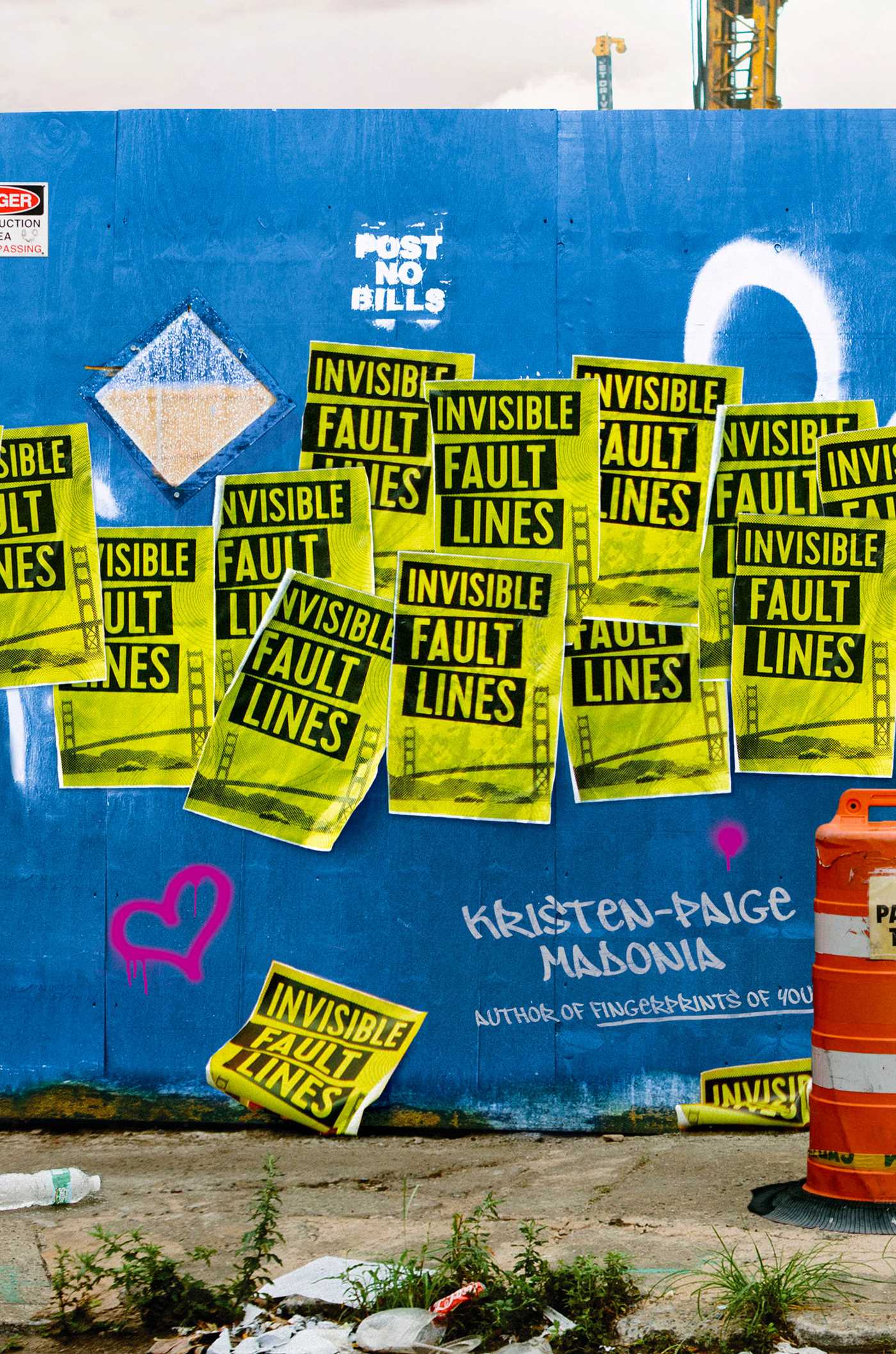
Invisible Fault Lines

Invisible Fault Lines
Authors: Kristin-Paige Madonia
Anticipated Publication: May 3, 2016 by Simon & Schuster Books for Young Readers

Summary: Tired of living in limbo, Callie finally decides to investigate her father’s disappearance for herself. Maybe there was an accident at the construction site that he oversaw? Maybe he doesn’t remember who he is and is lost wandering somewhere? But after seeing a familiar face in a photo from the Great San Francisco Earthquake of 1906, she wonders if the answer is something else entirely.

Hailed by Judy Blume as a “remarkable young novelist,” Kristen-Paige Madonia, author of Fingerprints of You, explores how to rebuild a life after everything seems lost.

My Review: This book kept me guessing! From the very first page, I wondered what happened to the narrator’s father. About halfway through, I realized that it didn’t matter what happened to him because this is a story about character. It is an emotional ride through the trauma of a young girl’s life after her father goes missing. I felt all of her emotions right along with her—guilt, fear, anger. I particularly enjoyed the evolvement of her friendship with her best friend Beckett. I appreciate authors who feature characters who happen to be gay—rather than making this the sole focus of a story. I recommend this book to readers who enjoy strong character development. 

Teachers’ Tools for Navigation: Teachers might consider tying this story into a study of missing persons. This investigation could go beyond children as missing persons and extend into adults who are missing. Students might research local missing persons in their area, and this could lead to advocacy efforts.

Discussion Questions: What do you think happened to Callie’s father? What different potential realities does Callie explore in the story?; How does the author switch the point-of-view effectively to deepen our understanding of the story?; What emotions does Callie experience in the story? How might we tie these into the stages of grief? Should she feel guilty that she doesn’t start looking for her father immediately? Why or why not?

Flagged Passage: “My father disappeared on a Tuesday that should’ve been like any Tuesday, but eventually became the Tuesday my father disappeared.”

Read This Series If You Loved: Fingerprints of You by Kristen-Paige Madonia; If I Stay by Gayle Forman; Vanishing Girls by Lauren Oliver; Where Things Come Back by John Corey Whaley, The Body of Christopher Creed by Carol Plum-Ucci

Recommended For: 

  litcirclesbuttonsmall  classroomlibrarybuttonsmall


Interview with Kristen-Paige Madonia
Kristen-Paige Madonia

Can you tell us a little bit about your writing process/ How has writing this book been different from writing Fingerprints of You

The most important thing I learned from writing Invisible Fault Lines is that my process will inevitably change depending on the project. My first book, Fingerprints of You, was a fairly straightforward novel with a traditional structure and timeline, so I wrote it start to finish and was able to create the first draft in less than two months — of course it took much longer to revise and polish, but in general is was quick and relatively easy to write. My new novel is much more complicated, as it blends a contemporary mystery set in 2006 with bits and pieces set one-hundred years earlier, as the 1906 San Francisco Earthquake plays a large role in the novel. It’s a hybrid novel, and the narrative arc is a bit more intricate, so though I initially tried to use the same process I used when writing Fingerprints of You, it just didn’t work. Eventually I wrote the book out of order and then went back, during revision, and braided the two storylines together. So in terms of process, I suppose it’s ever changing! And of course that’s one of the reasons that I write – there are no rules and there’s no one way to do it. It’s about experimenting, about doing something different each time you sit down to work.

Where/How did you come up with the premise of this book? 

Like most writers, I write from a place of curiosity. With Fingerprints of You, I was curious about the ways we define family, but this novel stemmed from my curiosity about grief and the various modes we use to manage and process loss. I began writing it after hearing David Levithan read from his novel Two Boys Kissing, specifically honing in on the sentence that eventually became the epigraph of Invisible Fault Lines: “How beautiful the ordinary becomes once it disappears.” We were both at Wordstock Book Festival in Portland, and I was in between projects, hoping to find inspiration while traveling to publicize Fingerprints of You. And there it was. That line. I couldn’t get it out of my head. I tend to begin stories with an event after which nothing will be the same for the character, and that idea of ordinary, of how our version of ordinary can shift in an instant, intrigued me. So I wanted to write about that kind of shift and about the possibility of the impossible being possible, which is where the link to the historical event, the earthquake of 1906, originated. I knew I wanted to do something completely different than Fingerprints of You and that I wanted to experiment with form and genre while staying true to my character-driven style of writing.

From the outset, we wonder what happened to Callie’s father, and at one point, Callie and her friends explore potential reasons for his disappearance. We obviously won’t spoil the book for readers, but did you know how the book would end from the very beginning?

I did. I knew that I wanted to invite the reader to participate in the novel in a more active role than my last novel allowed. I believe all books are collaborative projects between the author and the reader, but this novel leans heavily on what the reader brings to the story, on what they want to believe and how they want to interpret the events in the book. When I first imagined the story, I decided that I wanted to write a book that honors the fact that not all questions have clear answers – I think it’s part of our job, as YA authors, to be realistic and honest with our readers while also allowing for and portraying hope, so that was one of my original goals, and it inevitably shaped the ending.

Beck is a wonderfully crafted character. Did you base him on anyone in your life?

Oh, he’s such a scene-stealer, isn’t he?! Every time he showed up in the novel, I fell a little bit more in love with him. No, he’s not based on anyone I know, but I imagine him to be a compilation of my best friends from high school and also my current best friends: honest, hilarious, and one-hundred percent golden-hearted.

You are a professor of YA Lit and creative writing. How has this impacted your position as an author or thoughts as a writer? Do you get feedback from students, or do you keep your work private?

This is such a complicated question, so in attempt to not write a fifteen-page essay here, I’ll simply say that I love what I do. I find great inspiration from working with students who hope to pursue a creative life, who find value in literature and the arts. But the reality is that every moment I spend teaching and planning and grading is one less moment that I spend writing my own work, and that’s the hard part. Teaching reminds me why I write and what my tools are in terms of craft, and actively publishing new work reminds me how important it is to be a positive literary citizen, to serve as a mentor and encourage and inspire young authors. It’s a hard balance, of course, but it’s also a privilege to be both a professor and a published author, so I could never complain about the challenges.

Are you working on anything new?

I am! And I’m in that bizarre and dreamlike phase of being equally terrified and excited by my new project. It’s also a protective phase in terms of not wanting to talk much about it yet, but I will say that it’s a project based on my curiosity about our reliance on technology and the environmental and creative effects of that reliance.

Thanks so much for having me on your blog – it’s been lovely to visit with you!


**Thank you to Kristen-Paige Madonia for providing an copy for review and a signed hard copy for the giveaway!**

 RickiSig

From Kellee’s (Huge) Library Pile Part Eleven: Nonfiction Picture Books | Pink is for Blobfish by Jess Keating, Hillary Rodham Clinton by Michelle Markel, Two Friends by Dean Robbins, Freedom in Congo Square by Carole Boston Weatherford, & The Great Monkey Rescue by Sandra Markle

Share

NFPB2016

Nonfiction Wednesday

Nonfiction Picture Book Wednesday is hosted by Kid Lit Frenzy and was started to help promote the reading of nonfiction texts. Most Wednesdays, we will be participating and will review a nonfiction text (though it may not always be a picture book).
Be sure to visit Kid Lit Frenzy and see what other nonfiction books are shared this week!

From My (Huge) Library Pile

Because of It’s Monday! What Are You Reading? posts, I find myself often with huge piles of picture books from the library that were highly recommended by fellow bloggers. I celebrate many of the nonfiction pictures books on Wednesdays, but I want to share some of the fiction picture books I have enjoyed. So, I decided to start series here on UR where I can pass on the love for these books sporadically as I read them. Here is a list of some great pictures books that I’ve read recently from my huge library pile (part 11!).

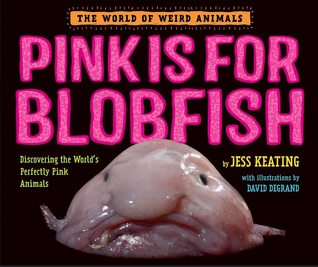
pink is for

Pink is for Blobfish: Discovering the World’s Perfectly Pink Animals
Author: Jess Keating
Illustrator: David Degrand
Published February 2nd, 2016

Goodreads Summary: Pinkalicious meets National Geographic in this nonfiction picture book introducing the weirdest, wildest, pinkest critters in the animal kingdom!

Some people think pink is a pretty color. A fluffy, sparkly, princess-y color. But it’s so much more.
Sure, pink is the color of princesses and bubblegum, but it’s also the color of monster slugs and poisonous insects. Not to mention ultra-intelligent dolphins, naked mole rats and bizarre, bloated blobfish.

Isn’t it about time to rethink pink?

Slip on your rose-colored glasses and take a walk on the wild side with zoologist Jess Keating, author of How to Outrun a Crocodile When Your Shoes Are Untied, and cartoonist David DeGrand.

My Thoughts:  I loved how Keating set up the book. The information that was included was fascinating, there were many text features that added interesting tidbits throughout, and there was some hilarity thrown in. Such a great read! I also was told that it is going to be a series, and that is such great news!

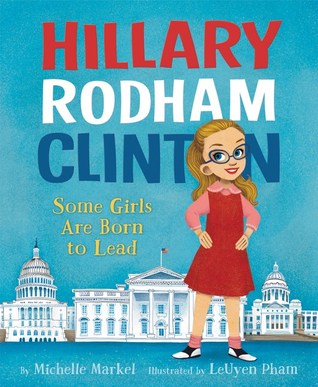
hillary rodham clinton

Hillary Rodham Clinton: Some Girls Are Born to Lead
Author: Michelle Markel
Illustrator: LeUyen Pham
Published January 5th, 2016 by Balzer + Bay

Goodreads Summary: In the spirit of Barack Obama: Son of Promise, Child of Hope andAmelia and Eleanor Go for a Ride comes an inspiring portrait of Hillary Rodham Clinton: a girl who fought to make a difference—and paved the way for women everywhere—from Michelle Markel and LeUyen Pham.

In the 1950s, it was a man’s world. Girls weren’t supposed to act smart, tough, or ambitious. Even though, deep inside, they may have felt that way. And then along came Hillary. Brave, brilliant, and unstoppable, she was out to change the world.

They said a woman couldn’t be a mother and a lawyer. Hillary was both. They said a woman shouldn’t be too strong or too smart. Hillary was fearlessly herself.

It didn’t matter what people said—she was born to lead.

With illustrations packed full of historical figures and details, this gorgeous and informative picture book biography is perfect for every budding leader. Includes a timeline, artist’s note, and bibliography.

My Thoughts:  Alyson Beecher shared with me that Pham did a tremendous amount of research for this book though she had no issues researching because Hillary is so fact-checked. I think the idea of how much research LeUyen did for this book is fascinating and is also evident in the book. I am also a huge fan of Pham’s illustrations (she does Princess in Black also), and it was so much fun to see Hillary being represented so brightly. I loved learning about Hillary’s journey to the current presidential race. Right now so much is focused on negativity, it is nice to see why she is such an inspirational woman.

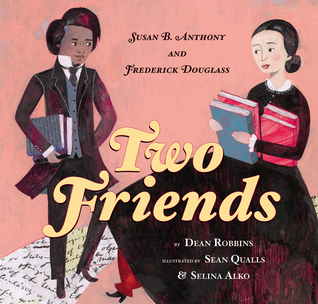
two friends

Two Friends: Susan B. Anthony and Frederick Douglass
Author: Dean Robbins
Illustrator: Sean Qualls and Selina Alko
Published January 5th, 2016 by Orchard Books

Goodreads Summary: Some people had rights, while others had none.
Why shouldn’t they have them, too?

Two friends, Susan B. Anthony and Frederick Douglass, get together for tea and conversation. They recount their similar stories fighting to win rights for women and African Americans. The premise of this particular exchange between the two is based on a statue in their hometown of Rochester, New York, which shows the two friends having tea.

My Thoughts: I loved learning about this friendship! I am a great admirer of both Anthony and Douglass; however, I did not know anything about the relationship they had. I love that they were both visionaries within two a civil rights movement though they also realized how their goals were connected, so they fought the prejudice together. Although I really would have loved this story to be longer to learn more about how they worked together, learning about their histories and imagining their tea party was a perfect way to introduce the friendship. I am also a huge fan of Qualls’s artwork, and I loved how this book incorporated his work with the written words of both reformers.

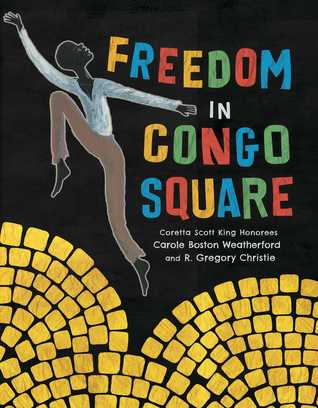
freedom in congo

Freedom in Congo Square
Author: Carole Boston Weatherford
Illustrator: R. Gregory Christie
Published January 5th, 2016 by little bee books

Goodreads Summary: This poetic, nonfiction story about a little-known piece of African American history captures a human’s capacity to find hope and joy in difficult circumstances and demonstrates how New Orleans’ Congo Square was truly freedom’s heart.

Mondays, there were hogs to slop,
mules to train, and logs to chop.
Slavery was no ways fair.
Six more days to Congo Square.

As slaves relentlessly toiled in an unjust system in 19th century Louisiana, they all counted down the days until Sunday, when at least for half a day they were briefly able to congregate in Congo Square in New Orleans. Here they were free to set up an open market, sing, dance, and play music. They were free to forget their cares, their struggles, and their oppression. This story chronicles slaves’ duties each day, from chopping logs on Mondays to baking bread on Wednesdays to plucking hens on Saturday, and builds to the freedom of Sundays and the special experience of an afternoon spent in Congo Square. This book will have a forward from Freddi Williams Evans (freddievans.com), a historian and Congo Square expert, as well as a glossary of terms with pronunciations and definitions.

My Thoughts:  I found this book to be touching and beautiful and sad. Books about slavery always make me so ashamed of our past, so they are hard to read yet so important. I think Weatherford’s story really captures the brutal conditions of slavery in the South but also the freedom that was felt on the one free day in Louisiana.  Also, I personally like rhyming couplets, so I thought it had a great sing-songy quality. And let’s not forget the illustrations. They are pieces of art. They could each be framed and put in a museum.

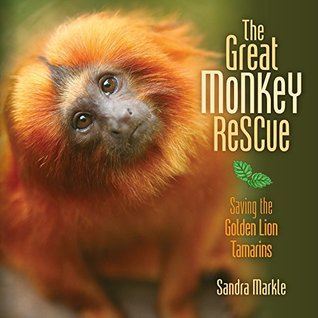
great monkey

The Great Monkey Rescue: Saving the Golden Lion Tamarins
Author: Sandra Markle
Published October 1st, 2015 by Lerner Publishing Group

Goodreads Summary: Golden lion tamarins are found only in Brazilian forests. These small, remarkable monkeys once had plenty of space to roam and claim family territories. But years of deforestation caused their numbers to shrink. They were in serious danger of becoming extinct.

To help, scientists studied the animals in zoo settings. But they faced several mysteries. Why weren’t golden lion tamarins reproducing in zoos? If scientists reintroduced zoo-raised tamarins to the wild, would those monkeys survive? And how could scientists give tamarins enough forest area for the population to grow? Find out how scientists and concerned citizens worked together to give golden lion tamarins a hopeful future.

My Thoughts: It is always sad to learn about an endangered animal I didn’t know about before, this story was inspiring because it showed how a team working together could, and hopefully will continue, reverse the loss of a species. This book is so hopeful in that if we all work together to help save species that are struggling to survive. I really want to read more of Markle’s work now because she really is quite brilliant about turning information into narrative nonfiction.

All Recommended For: 

classroomlibrarybuttonsmall readaloudbuttonsmall closereadinganalysisbuttonsmall

Signature

Want to see Part One? You can view it HERE.
Want to see Part Two? You can view it HERE.
Want to see Part Three? You can view it HERE.
Want to see Part Four? You can view it HERE.
Want to see Part Five: We Need Diverse Books (NF)? You can view it HERE.
Want to see Part Six: We Need Diverse Books (F)? You can view it HERE.
Want to see Part Seven? You can view it HERE.
Want to see Part Eight: 2015 Nonfiction Titles? You can view it HERE.
Want to see Part Nine: 2015 Nonfiction Titles? You can view it HERE.
Want to see Part Ten: 2015 Fiction Titles? You can view it HERE.