Complexity in The Impossible Knife of Memory by Laurie Halse Anderson

Share

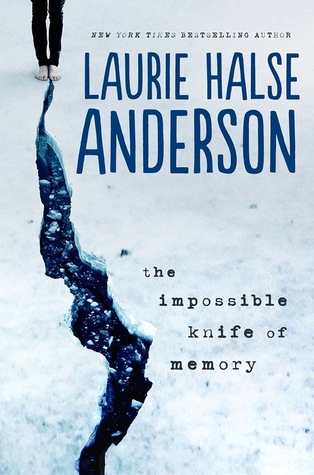
The Impossible Knife of Memory
Author: Laurie Halse Anderson
Published January 7th, 2014

ALAN Walden Award Finalist 2015
National Book Award Longlist 2014
School Library Journal Best Young Adult Book of 2014

Summary: For the past five years, Hayley Kincain and her father, Andy, have been on the road, never staying long in one place as he struggles to escape the demons that have tortured him since his return from Iraq. Now they are back in the town where he grew up so Hayley can attend school. Perhaps, for the first time, Hayley can have a normal life, put aside her own painful memories, even have a relationship with Finn, the hot guy who obviously likes her but is hiding secrets of his own.

Will being back home help Andy’s PTSD, or will his terrible memories drag him to the edge of hell, and drugs push him over? The Impossible Knife of Memory is Laurie Halse Anderson at her finest: compelling, surprising, and impossible to put down.


Complexity in Young Adult Literature

In Teaching Reading with YA Literature: Complex Text, Complex Lives by Jennifer Buehler, Chapter 2 looks at Young Adult Literature and Text Complexity and gives 8 different elements to think about to help analyze the complexity of a text:
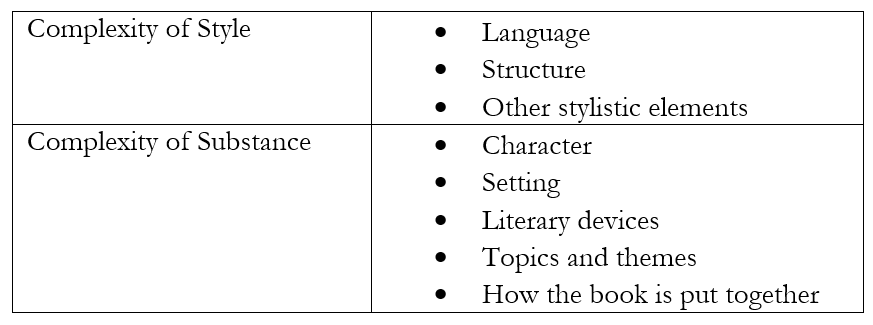

Examples of complexity in The Impossible Knife of Memory by Laurie Halse Anderson
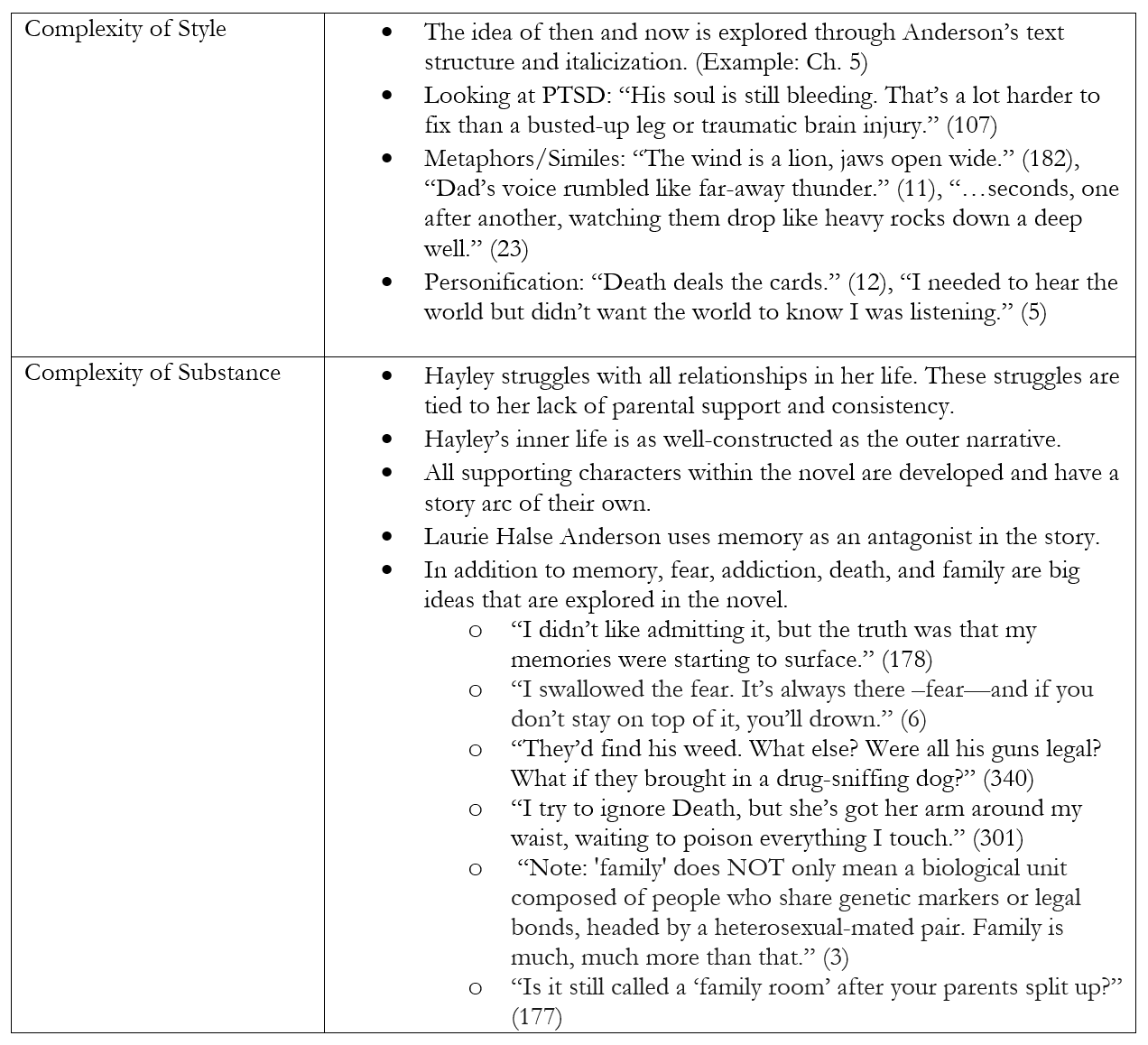
Other questions that could be asked while reading to find complexity in YAL
(Examples from Teacher Reading with YA Literature, Buehler 36-37)

  • Language: Are the sentences artfully constructed? Are the words carefully chosen? Does the author incorporate figurative language or poetic expression? Can we hear voice in the writing?
  • Structure: How is it built in terms of form and structure? How do other elements such as titles and subtitles, vignettes and interludes, shifts between past and present, or multiple points of view work together to service the whole?
  • Other Stylistic Elements: Are there other distinct elements in the text?
  • Character: What is there to explore in terms of the character’s thoughts and feelings; conflicts and contradictions; struggles, growth, and change?
  • Setting: How does the author bring us into the world of the story? What details help us to see, hear, and imagine this place?
  • Literary Devices: How does the author use literary or cultural allusions, intertextual references, dialogue, internal monologue, metaphor and symbolism, magical realism, or repetition to build meaning?
  • Topics and themes: What questions does the book ask? What ideas does it explore? What is at stake for teen readers in this book?
  • How the book is put together: How effective is the interplay between plot layers and thematic layers?

Discussion Questions/Writing Prompts for The Impossible Knife of Memory

Complexity can also be increased by the characteristics of the reader (such as motivation, knowledge, and experiences) and task variables (such as purpose and the complexity generated by the task assigned and the questions posed). Here are some examples of discussion questions or writing prompts that could be used in classrooms or with independent readers who are reading The Impossible Knife of Memory.

  • Hayley classifies all people into two categories: freaks & zombies. What does Hayley’s idea of the world show us about her outlook on life?
  • How does Laurie Halse Anderson use the idea of THEN and NOW throughout the novel to build on the theme that memories are a very complex part of life?
  • Drowning is a motif throughout the novel.
  • How does Laurie Halse Anderson show the reader that Hayley’s father is suffering and found addiction without using those words?
  • How did the inclusion of Hayley’s romantic relationship with Finn help move along the story and Hayley’s transformation? Do you feel that Hayley’s story arc would have been the same without Finn in the story?
  • How was the setting an integral part of the story? How did Hayley returning to her deceased grandmother’s home propel the story?
  • .Trish is one of the most complex characters in the book because there are many different Trishes shared with us throughout the story: Trish then, Trish now in reality, and Trish now in Hayley’s mind. How did Laurie Halse Anderson develop each of these different characters to show the reader a full picture of Trish?

This complexity information and activities can be found as a PDF on Laurie Halse Anderson’s website or my SlideShare.

To learn more about complexity in young adult literature, please read Teaching Reading with YA Literature: Complex Text, Complex Lives by Jennifer Buehler!

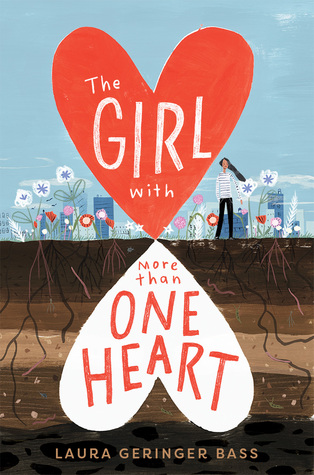
The Girl with More Than One Heart by Laura Geringer Bass

Share

The Girl With More Than One Heart
Author: Laura Geringer Bass
Published April 17th, 2018 by Abrams Books

Summary: There are times we all feel we need more than one heart to get through. When Briana’s father dies, she imagines she has a new heart growing inside her. It speaks to her in her Dad’s voice. Some of its commands are mysterious.

Find Her!  it says. Be Your Own!  

How can Briana “be her own” when her grieving mother needs her to take care of her demanding little brother all the time? When all her grandpa can do is tell stories instead of being the “rock” she needs? When her not-so-normal home life leaves no time to pursue her dream of writing for the school literary magazine? When the first blush of a new romance threatens to be nipped in the bud? Forced by the loss of her favorite parent to see all that was once familiar with new eyes, Briana draws on her own imagination, originality, and tender loving heart to discover a surprising path through the storm.

About the Author: Laura Geringer Bass is the author of over 20 highly acclaimed books for children, tweens, and teens. Her new novel for middle graders about friendship, love, and loss — The Girl with More Than One Heart — is the lyrical story of a courageous girl who imagines she needs an extra heart to navigate her grief after the death of her dad. It will be published by Abrams this Spring. Laura serves on the National Advisory Board of First Book, a non-profit organization that has delivered over 170 million books to children in need and as a mentor for Girls Write Now and Prison Writes, teaching teens at risk.

Review: This book looks at the struggle of grief when life keeps moving on around you. And like another book I love, Courage for Beginners, it shows the struggle a child has if a parent is suffering and they have to step up in a way that is not what their peers have to. Briana doesn’t know how to deal with the grief and with her mother incapacitated with grief also, Briana finds that she needs a second heart to help guide her through this huge bump in her life. Briana’s story also shows the struggle yet love of being a sibling to a child with special needs.

Written beautifully in a way that will pull at your heartstrings, Bass’s story shows how one girl uses art, love, and courage to make her way through a loss that is unimaginable for most of us.

Teachers’ Tools for Navigation: The Girl With More Than One Heart needs to be in classroom, school, and public libraries. There are so many readers that need this book. There are other readers that will want this book. There are definite readers for this book.

Another way in the classroom that it could be used is a mentor text for writing about memories. Briana’s second heart shares memories with her, one of the ways we get to know her dad, and the memories are so full of imagery. There are many sections that could be read for a mentor text when asking students to write a personal narrative.

Discussion Questions: 

  • How did Briana use art to help her through her grief?
  • How did Briana’s life change after the loss of her dad?
  • Aaron is described in the summary as her demanding little brother, but Briana loves him. What are some examples in the story that show this love?
  • How does Grandpa Ben help guide Briana?
  • Briana’s second heart is only figurative. What does it represent?

Flagged Passage: “The day my father’s heart stopped, I discovered an extra heart deep in my belly, below my right rib. It talked to me. I wasn’t crazy. Before that day, I had just one heart that never said a word.” (p. 1)

Read This If You Love: Courage for Beginners by Karen Harrington, Rules by Cynthia Lord, How to Speak Dolphin by Ginny Rorby, Be Light Like a Bird by Monika Schröder, Snicker of Magic by Natalie Lloyd, Some Kind of Happiness by Claire Legrand, Far from Fair by Elana K. Arnold

Recommended For: 

classroomlibrarybuttonsmall

Signature

**Thank you to Casey at Media Masters Publicity for providing a copy for review!**

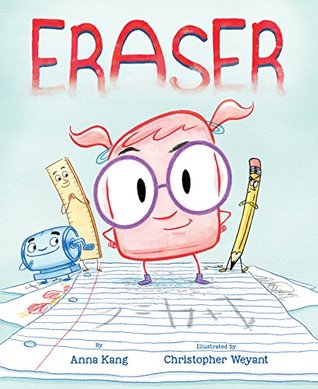
Review and Giveaway!: Eraser by Anna Kang, Illustrated by Christopher Weyant

Share

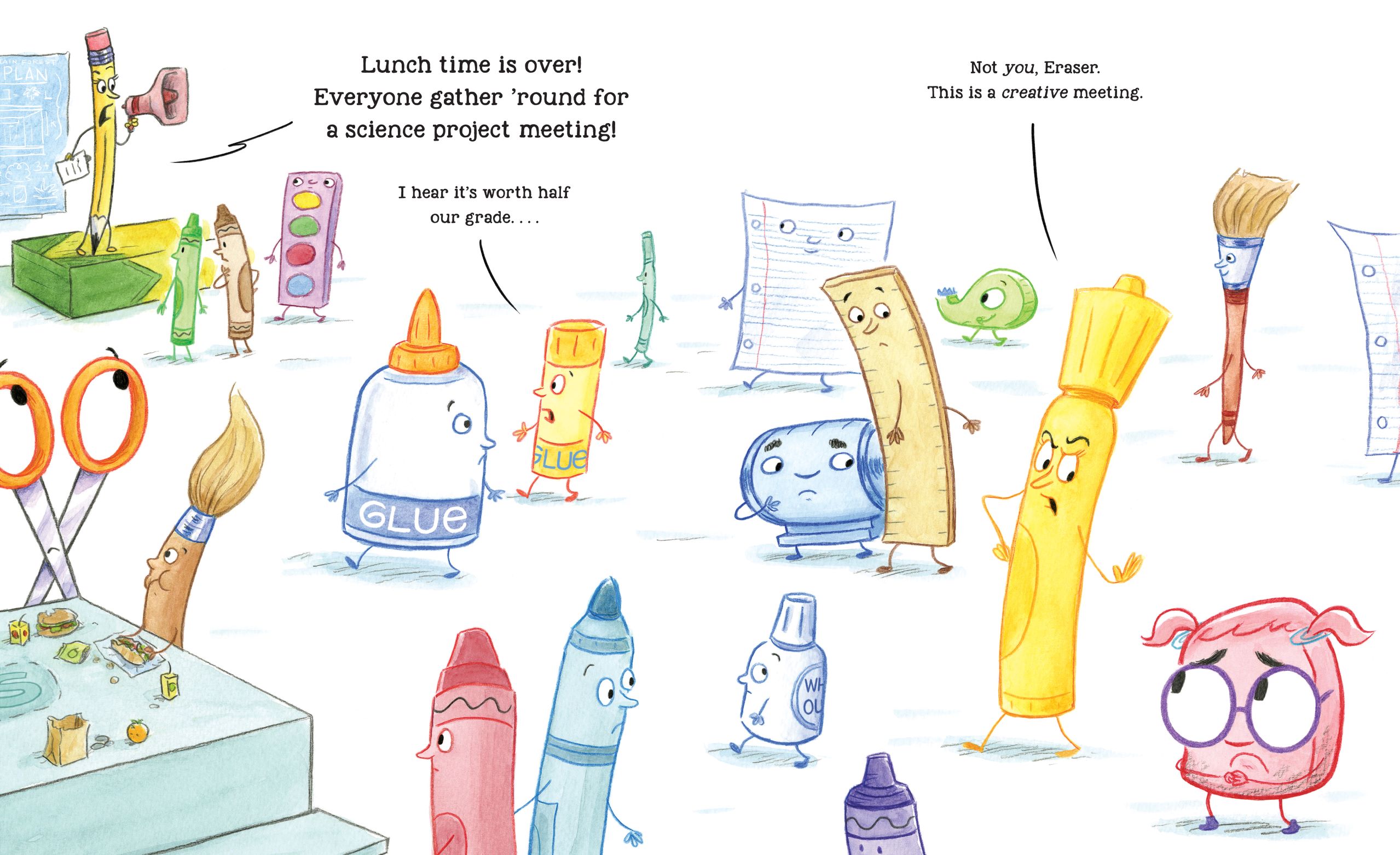
Eraser
Author: Anna Kang
Illustrator: Christopher Weyant
Published August 1, 2018 by Two Lions

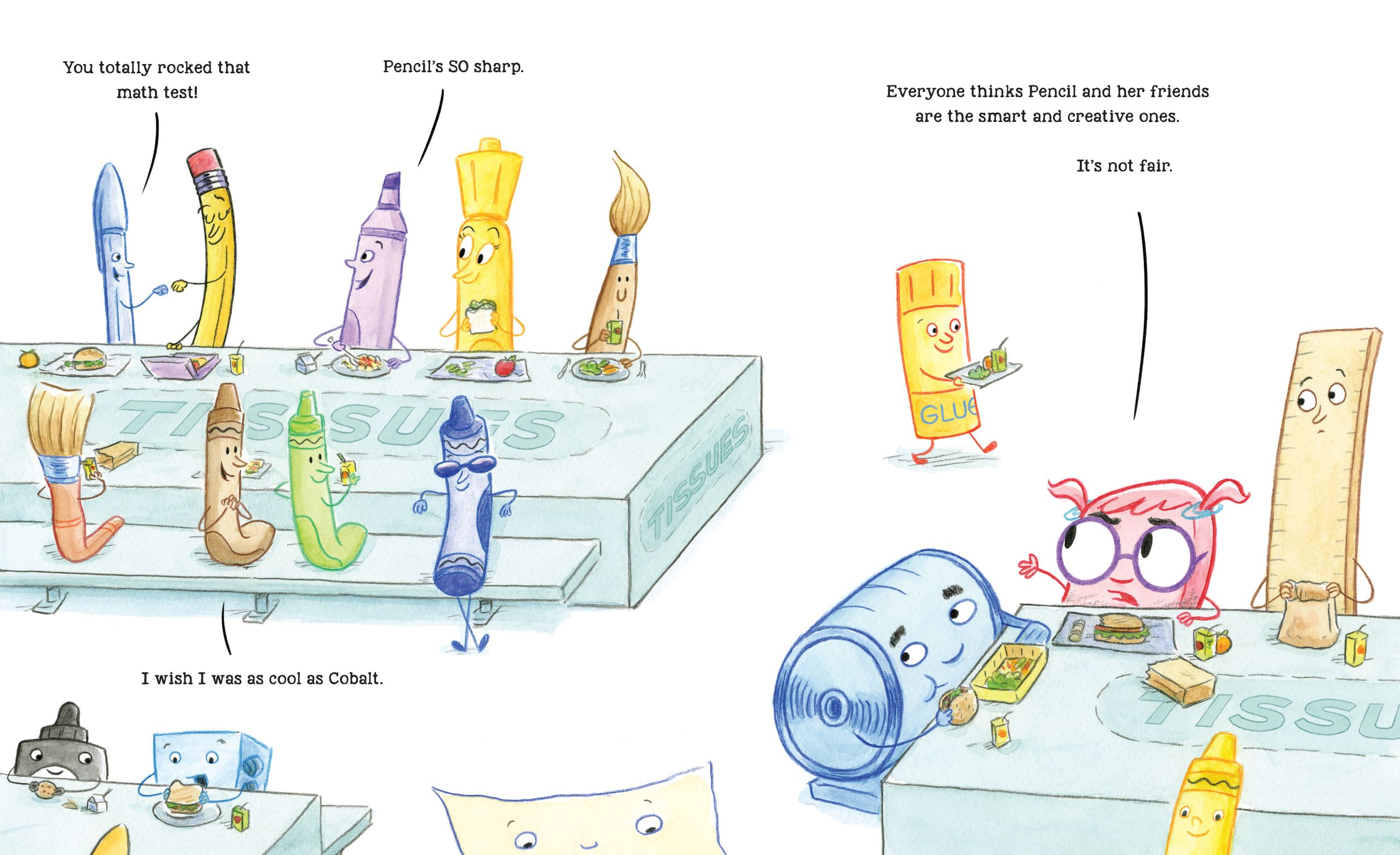
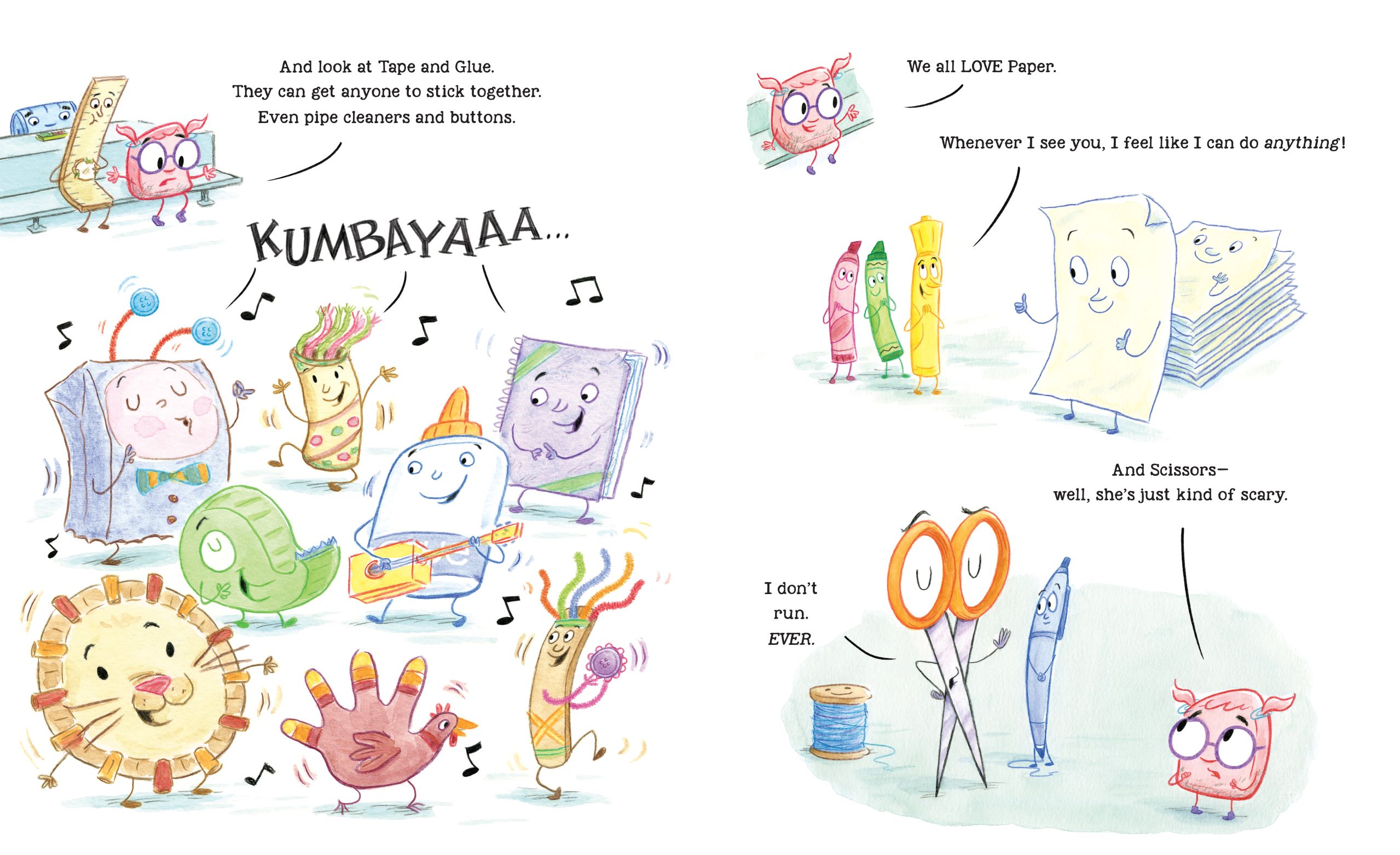
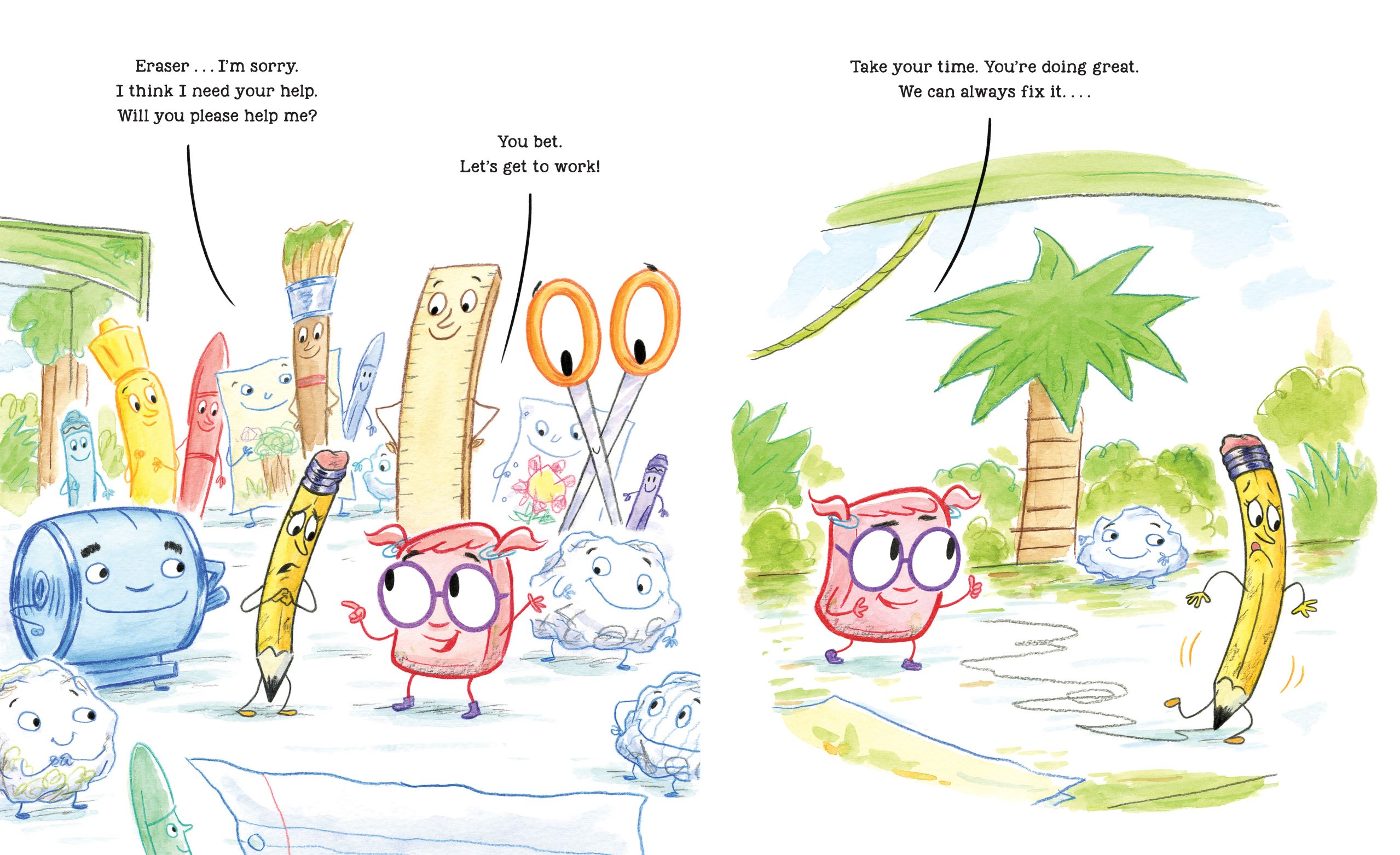
Summary: Eraser is always cleaning up everyone else’s mistakes. Except for Ruler and Pencil Sharpener, none of the other school supplies seem to appreciate her. They all love how sharp Pencil is and how Tape and Glue help everyone stick together. Eraser wants to create so that she can shine like the others. She decides to give it a try, but it’s not until the rubber meets the road that Eraser begins to understand a whole lot about herself.

Inspired by a school essay their daughter Kate wrote in the third grade, the author and illustrator behind Theodor Seuss Geisel Award–winner You Are (Not) Small have created a desktop drama about figuring out who you are, finding happiness, and the importance of second, third, and maybe even fourth chances.

About the Creators: Anna Kang and Christopher Weyant are the creators of Theodor Seuss Geisel Award winner You Are (Not) Small and its follow-ups That’s (Not) Mineand I Am (Not) Scared. Christopher’s work can be seen routinely in The New Yorker magazine and his cartoons are syndicated worldwide. As an author, Anna regularly goes through first, second, and third drafts. Chris wears down many erasers while making his art. This husband-and-wife team lives in New Jersey with their two daughters and their rescue dog. Visit them at www.annakang.com and www.christopherweyant.com.
Twitter: @annakang27 @chrisweyant05
Instagram: annakangbooks; christopherweyant
Facebook: Anna Kang – Author; Christopher Weyant

Ricki’s Review: I love this author-illustrator team. Every book that they’ve written has been brilliant. This book offers readers a glimpse inside the mind of the lesser-known characters in life. It forces us to think about who we are overlooking and who deserves more praise. It’s easy to get caught up in our own lives and the lives of those who are close to us, and we often forget to consider those who feel distant to us. My son and I talked about this together, and he said there are some kids at school that he doesn’t talk with often. I asked him what this book taught him, and he said that it reminded him to talk with more friends in his class and to be kind. With a valuable message and a powerful punch, this book is sure to become a favorite in classrooms.

Kellee’s Review: There are times in all of our lives that we question our purpose. Someone louder, prettier, more aggressive, or different than you may get recognition where you don’t even though you feel you deserve it. But it is all about valuing yourself and showing others that value, but we don’t need others to tell us our worth. That is what Eraser teaches us. When we finished, Trent said that Pencil learned that she needed help and Eraser learned she IS important. If that isn’t a message that I want my son to learn, I don’t know what is. Oh, and it is quite funny sometimes, and like Kang & Weyant’s other books, it is told in dialogue only so the illustrations play a big part in the telling of the story.

Teachers’ Tools for Navigation: Teachers might give students a list of the names of all of the students in their class. The students might look through this list and ask themselves, “Who do I talk to often? Who could I get to know more? Do I show every person on this list that they matter?” This activity connects well with the theme of the book and reminds students to support others in their world.

For more information, and to download a free activity kit, visit annakang.com, or download here.

Discussion Questions: 

  • How does Eraser’s feelings change throughout the book? What causes these changes?
  • How do the other school supplies act toward Eraser? Does this remind you of any instances in your life?
  • What is the message of the book? What does it teach us?

Book Trailer!:

Spreads:

Giveaway!:

a Rafflecopter giveaway

Read This If You Loved: Red: A Crayon’s Story by Michael Hall; The Day the Crayons Quit by Drew DaywaltThat’s (Not) Mine by Anna KangYou Are (Not) Small by Anna Kang

Recommended For:

readaloudbuttonsmall classroomlibrarybuttonsmall

RickiSigand  Signature

**Thank you to Barbara at Blue Slip Media for providing copies for review!**

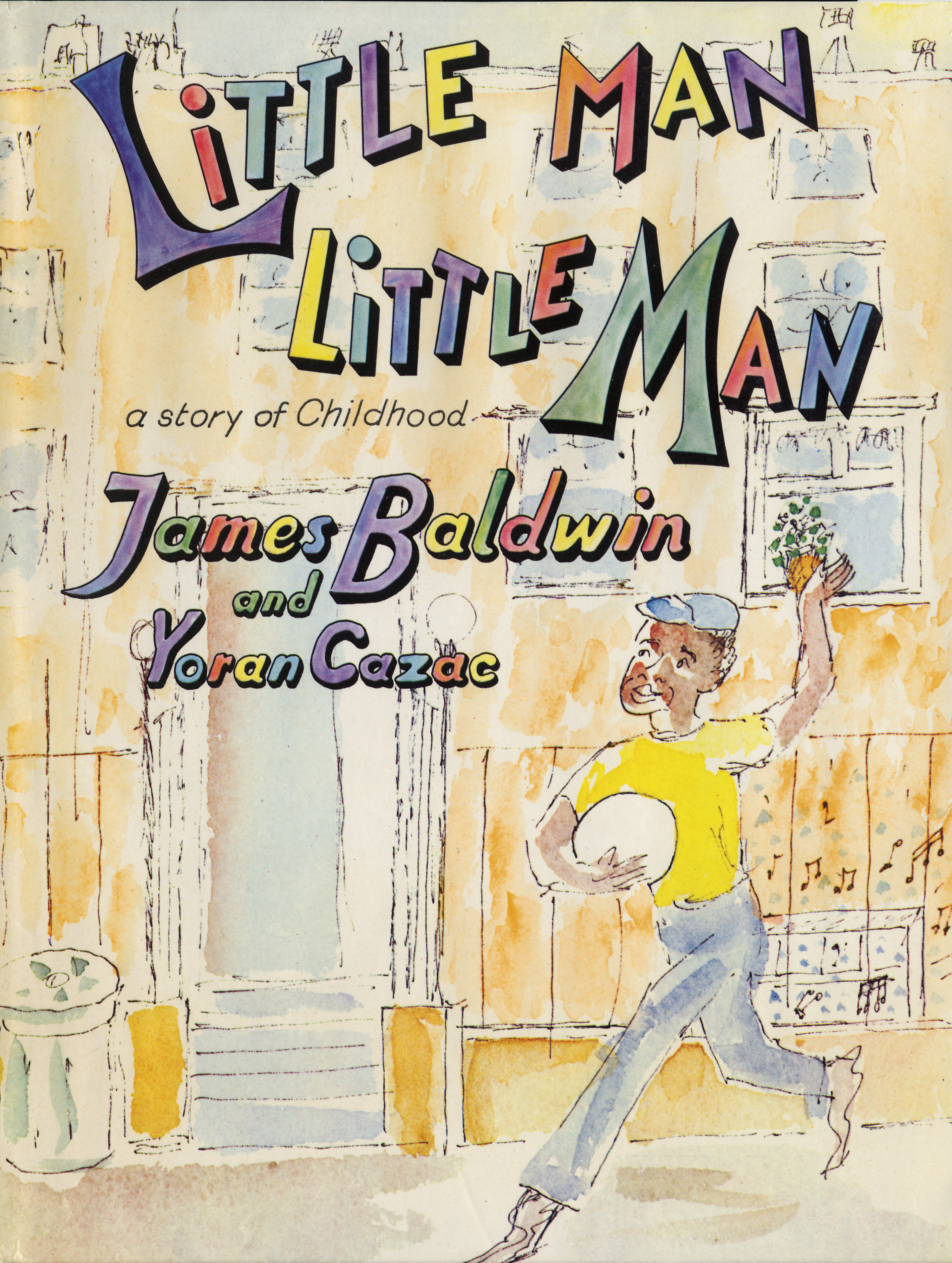
Little Man, Little Man: A Story of Childhood by James Baldwin and Yoran Cazac

Share

Little Man, Little Man: A Story of Childhood
Authors: James Baldwin and Yoran Cazac
Published August 27, 2018 by Duke University Press

Summary: Four-year-old TJ spends his days on his lively Harlem block playing with his best friends WT and Blinky and running errands for neighbors. As he comes of age as a “Little Man” with big dreams, TJ faces a world of grown-up adventures and realities. Baldwin’s only children’s book, Little Man, Little Man celebrates and explores the challenges and joys of black childhood.

Now available for the first time in forty years, this new edition of Little Man, Little Man—which retains the charming original illustrations by French artist Yoran Cazac—includes a foreword by Baldwin’s nephew Tejan “TJ” Karefa-Smart and an afterword by his niece Aisha Karefa-Smart, with an introduction by two Baldwin scholars. In it we not only see life in 1970s Harlem from a black child’s perspective, but we also gain a fuller appreciation of the genius of one of America’s greatest writers.

Ricki’s Review: When I was asked to review this book, I jumped at the opportunity. I am a huge fan of James Baldwin’s work, and I was completely unaware that this book existed! It lived up to my high expectations. The illustrations are beautiful, and the message is powerful. It is harshly realistic and difficult to read, and the book cuts deeply. It will serve as both windows and mirrors for children. This book took me to 1970s Harlem, and I am grateful for the experience. It is a must-read for fans of Baldwin, for those with interest in historical perspectives, and for those seeking a compelling story that will endure.

Kellee’s Review: In the 1970s, Harlem was a different place. TJ is 4 and roams with his friends, and we get to see his community from his point of view. Even the plot felt like his point of view as the story is very focused on events and is almost liked different episodes of his life. Although TJ is quite young, the story is anything but immature. TJ is an active participant in his community: the good and the bad. Mixed with Cazac’s slightly abstract, colorful and emotion-filled art, Baldwin’s story is overall a fascinating historical look at Harlem in the 1970s.

Teachers’ Tools for Navigation: This book is certainly written for younger children, but high schoolers would also find value in a close examination of the text. We’d love to pair this book with some of Baldwin’s texts for adults. High schoolers would have rich conversations if they examined Little Man, Little Man through the lens of some of Baldwin’s other works.

Teacher Resource Guide

Aisha Karefa-Smart, Tejan’s sister, is interviewed today on The Takeaway.

Discussion Questions: 
  • This is a book that has been reprinted from several decades ago. How does the book feel different from other picture books?
  • What did you learn about 1970s Harlem?
  • What did you notice about the phrasing of the book? How does this support your reading?
  • What is the mood of the text?
  • What lessons did you learn?

Flagged Passage: “Music all up and down this street, TJ runs it every day” (p. 2-3).

Book Trailer (Tejan [the character “TJ” is modeled after him] narrates it!):


Read This If You Love: Books by James Baldwin, Matt de la Peña, Coe Booth, Nikki Grimes, or Jacqueline Woodson

Recommended For: 

classroomlibrarybuttonsmall closereadinganalysisbuttonsmall

andSignature

**Thank you to Barbara at Blue Slip Media for providing copies for review!**

Teaching Guide and Review!: Water in May by Ismée Amiel Williams

Share

Water in May
Author: Ismée Amiel Williams
Published September 12th, 2017 by Abrams Books

Summary: Fifteen-year-old Mari Pujols believes that the baby she’s carrying will finally mean she’ll have a family member who will love her deeply and won’t ever leave her—not like her mama, who took off when she was eight; or her papi, who’s in jail; or her abuela, who wants as little to do with her as possible. But when doctors discover a potentially fatal heart defect in the fetus, Mari faces choices she never could have imagined.

Surrounded by her loyal girl crew, her off-and-on boyfriend, and a dedicated doctor, Mari navigates a decision that could emotionally cripple the bravest of women. But both Mari and the broken-hearted baby inside her are fighters; and it doesn’t take long to discover that this sick baby has the strength to heal an entire family.

Inspired by true events, this gorgeous debut has been called “heartfelt, heartbreaking and—yes!—even a little heart-healing, too” by bestselling YA novelist Carolyn Mackler.

About the Author: Ismée Williams is a pediatric cardiologist who practiced at the Columbia University Medical Center in the Washington Heights neighborhood of New York City for fifteen years. She currently sees patients at Montefiore Hospital in the Bronx. As the daughter of a Cuban immigrant, partially raised by her abuelos, her background helped her understand the many Maris she met along the way. Water in May is her first novel.

Praise: 

“Full of spot-on cultural texture and packing an emotional punch, this is an unusual take on the teen-pregnancy problem novel… Williams presents her experience in a way that demands not pity but respect while also reminding readers of Mari’s heartbreaking youth and innocence at unexpected times…Fierce and tender—and absolutely worth reading.” — Kirkus, STARRED REVIEW

“Mari is a deeply credible character, a girl who’s always spoiling for a fight, usually a physical one, but who’s turning that impulse into fighting for her baby. Williams, formerly a pediatric cardiologist at Columbia, brings vivid authenticity to the medical side of things, including the details of life with a baby in the NICU and the varying personalities of health care personnel.” — Bulletin of the Center for Children’s Books

“This novel is realistic and compelling, heartfelt and heartbreaking all at the same time. The author’s experience as a pediatric cardiologist brings authenticity to her writing as much as does her experience of navigating cultural barriers. Young adult readers will connect with Mari’s feisty personality, strength, and vulnerability.” — VOYA Magazine

Review: Mari’s story is one that isn’t often told. Mari is someone most people would see on the streets and would try to ignore because getting to know her would be getting to know how hard life in America can be. But Mari is also someone who is stronger than many of us will ever be. Her story is one that will make readers think about assumptions OR will help readers see a mirror into struggles they may be having in life. Although I hope teens don’t see Mari’s story as an invitation for a teenage pregnancy, I believe the truth of her hardships show the tremendous change a baby brings to life and will show that Mari’s decisions are made out of desperation when there are other paths she could have taken. Some who read the book have said they don’t like Mari as a character, but I found that when Mari was frustrating, it was because she was acting like what she is: a fifteen-year-old girl trying to find her place in this crazy world.

Teachers Guide with Activities and Discussion Questions written by me: 

Guide can also be accessed through Abrams Books’s Resource Page.

Recommended For: 

classroomlibrarybuttonsmall 

Signature

**Thank you to Ismée Williams for finding me and allowing me to complete this guide!**

Drawn Together by Minh Lê

Share

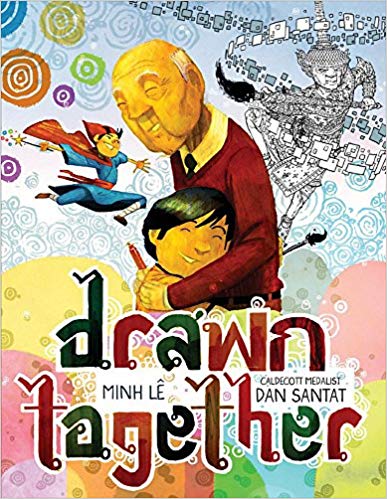
Drawn Together
Author: Minh Lê
Illustrator: Dan Santat
Published: June 5, 2018 by Disney-Hyperion

Summary: When a young boy visits his grandfather, their lack of a common language leads to confusion, frustration, and silence. But as they sit down to draw together, something magical happens-with a shared love of art and storytelling, the two form a bond that goes beyond words.

With spare, direct text by Minh Lê and luminous illustrations by Caldecott Medalist Dan Santat, this stirring picture book about reaching across barriers will be cherished for years to come.

Ricki’s Review: This book is absolutely stunning. It will certainly be making my favorites list this year. It is a solid contender for the Caldecott this year. The story and illustrations are absolutely beautiful. Due to a language barrier, a boy and his grandfather have difficulty communicating with each other. Through drawing, they discover a deep, magical connection with each other. This book pulled at my heart. It is one that I will remember for a long time.

Kellee’s Review: This gorgeous book took my breath away. Actually. I read it at ALA Annual, and when I finished, I looked around to find someone to just feel with because the emotions were overflowing within me! The celebration of art and family and the feeling of being stuck between two worlds and not being to connect with a family member were all things that just touched me. It is a book that I had to own, I now will buy for so many people, and I cannot wait to share with my students and my son.

Teacher’s Tool For Navigation: Teachers might ask students to try to sit with a peer partner that they don’t know very well and try to connect with each other without speaking. Then, they might take a piece of paper and use drawing as a means to try to connect with their partner. This has the potential to spark conversations about language, relationship, and humanity.

Discussion Questions: 
  • How does the story evolve? How do the characters evolve?;
  • What do the characters learn?;
  • What does the story teach us about language? Communication? Relationships? Bravery?

We Flagged:


Read This If You Loved:  Last Stop on Market Street by Matt de la Peña, Nana in the City by Lauren Castillo, Each Kindness by Jacqueline Woodson, A Bus Called Heaven by Bob Graham, Harlem by Walter Dean Myers

Recommended For: 

readaloudbuttonsmall classroomlibrarybuttonsmall 

RickiSig andSignature

Blog Tour with Reviews and Teaching Tools: Adrian Simcox Does NOT Have a Horse by Marcy Campbell & Corinna Luyken

Share

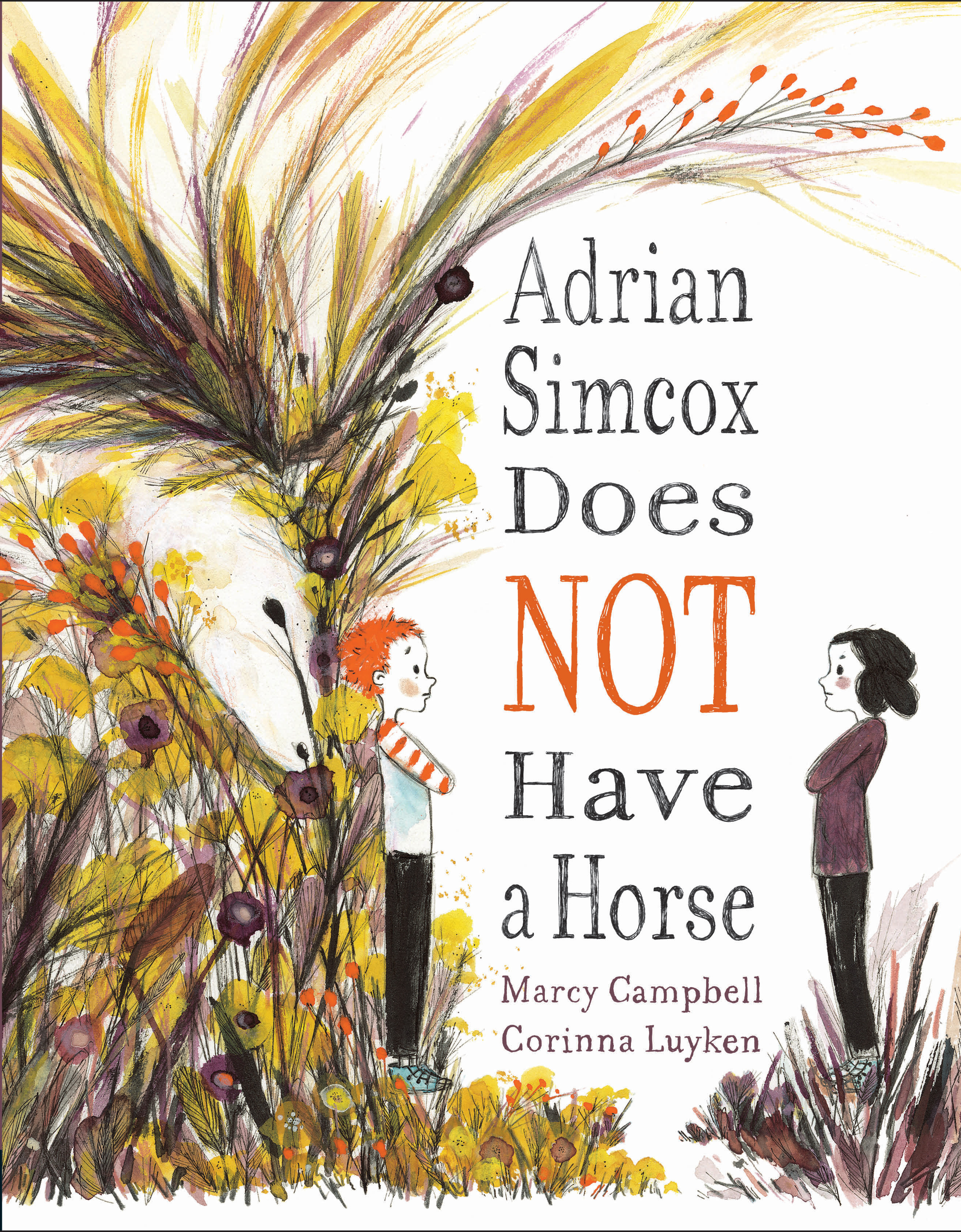
Adrian Simcox Does NOT Have a Horse
Author: Marcy Campbell
Illustrator: Corinna Luyken
Published August 14th, 2018 by Dial Books

Summary: A classic in the making, this heartwarming story about empathy and imagination is one that families will treasure for years to come.

Adrian Simcox tells anyone who will listen that he has a horse–the best and most beautiful horse anywhere.

But Chloe does NOT believe him. Adrian Simcox lives in a tiny house. Where would he keep a horse? He has holes in his shoes. How would he pay for a horse?

The more Adrian talks about his horse, the angrier Chloe gets. But when she calls him out at school and even complains about him to her mom, Chloe doesn’t get the vindication she craves. She gets something far more important.

Written with tenderness and poignancy and gorgeously illustrated, this book will show readers that kindness is always rewarding, understanding is sweeter than judgment, and friendship is the best gift one can give.

About the Creators:


Marcy Campbell lives in Ohio with her family and menagerie of rescued pets. Her writing for adults has been published widely in journals and magazines, including Salon. She grew up on a farm filled with cows, chickens, cats, and dogs, but she never had a horse. Adrian Simcox Does NOT Have a Horse is her debut picture book. You can visit her at www.marcycampbell.com.

Corinna Luyken grew up in different cities along the West Coast, and after studying at Middlebury College, she settled in Washington State, where she draws inspiration from nature, her family, and the human form. Her debut picture book, The Book of Mistakes, received four starred reviews and has been praised by Entertainment WeeklyThe Wall Street Journal, Nerdy Book Club, and more.

Kellee’s Review: 43.1 million Americans (as of 2016) live below the poverty line. Adrian Simcox represents one of those kids while Chloe represents too many peers. But what made this book for me was Chloe’s transformation. It wasn’t Adrian who needed to change! Adrian is a wonderful kid that too many people judge based on his circumstances when really it is all about who he is, and I am so thankful for Chloe finding the truth out in the end. This book will make kids rethink how they judge others and really does emote empathy and kindness. And I couldn’t review this book without giving a shout out to the beautiful illustrations. They are ART.

Ricki’s Review: I loved this book so much that I bought a copy for my son’s preschool teacher. I love that it can be read from a multitude of angles, and it provides so much fodder for classroom conversations. The illustrations are magical, the story is magical—everything about this book is magical. My son’s preschool teacher told me that the kids asked her to read it four times in a row. Although I am not sure if they spent time discussing poverty, I do know that those children (at the very least) received implicit messages about the truth of poverty and the power of imagination. I suspect this book will receive some major awards. It is one of my favorites of the year.

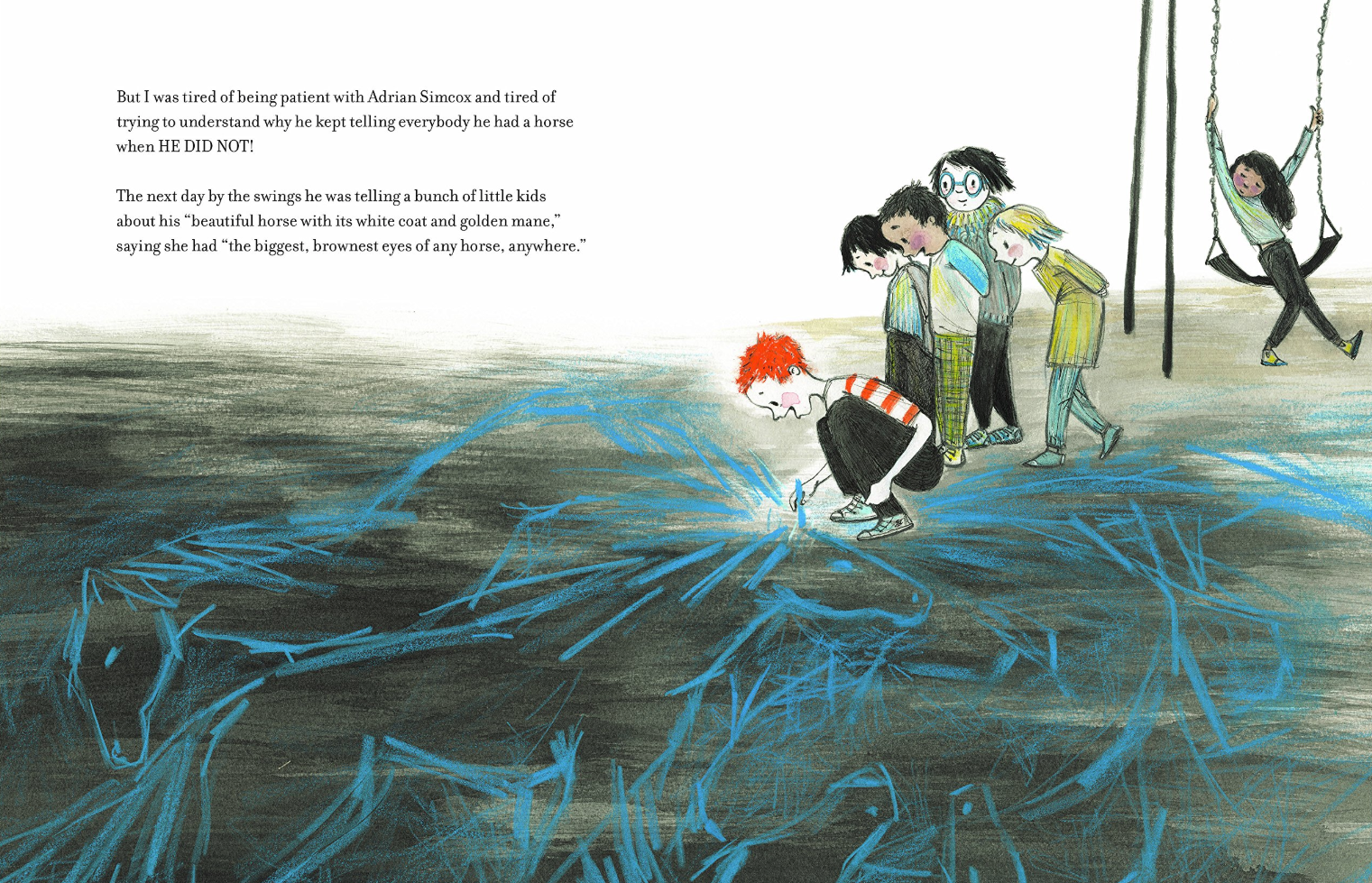
Teachers’ Tools for Navigation: Read this book aloud and talk about it with kids. Period. The illustrations can also definitely be visually analyzed. First, if you didn’t notice, there is a horse hiding in many of the illustrations. Second, so much of the story is told in the illustrations–don’t forget to analyze them!

Discussion Questions: 

  • Why did Chloe judge Adrian without knowing him?
  • Why do you think Chloe cares so much about Adrian’s horse?
  • How did Chloe’s mom help her realize that she is not being compassionate?
  • How did the illustrator tell more of a story in the artwork?
  • Why do you believe the author wrote Adrian’s story?

Flagged Passages: 

Read This If You Love: Each Kindness by Jacqueline Woodson, I Walk with Vanessa by Kerascoët

Recommended For: 

classroomlibrarybuttonsmall 

Don’t miss other stops on the blog tour: 

August 6 – Lost in Storyland
August 7 – The Readathon
August 8 – Happily Ever Elephants
August 9 – Read. Learn. Repeat
August 10 – Kid Lit Frenzy
August 13 – Here Wee Read
August 14 – DoodleMom
August 15 – Eastern Sunset Reads
August 16 – Critter Lit
August 17 – Unleashing Readers

Signatureand 

**Thank you to Friya at Penguin Young Readers for setting up the blog tour!**