Risking Exposure by Jeanne Moran

Share

risking exposure

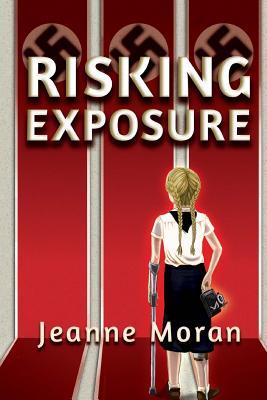
Risking Exposure
Author: Jeanne Moran
Published September 13th, 2013 by CreateSpace Independent Publishing Platform

Summary: Munich, Germany, 1938. The Nazis are in power and war is on the horizon.

Timid Sophie Adler is a member of Hitler Youth and a talented amateur photographer. When she contracts polio, her Youth leader supplies her with film. Photographs she takes of fellow polio patients are turned into propaganda, mocking people with disabilities, people just like her.

Sophie’s new disability has changed her status. She has joined the ranks of the outsiders, targets of Nazi scorn and possible persecution.

Her only weapon is her camera.

Review: Sophie’s story is one that is not often told. World War II stories often focus on the impact of the Holocaust on the Jewish population of Europe; however, what happened to those in Germany who weren’t Jewish yet the Nazis felt were useless? This story looks at one girls’ version of a story, but Sophie still is “useful” to the Nazis because she is a photographer, but she has to make a choice between taking photographs of what she is told or photographs of the truth about what is going on in Germany. 

Much of Sophie’s story is universal: bullying, friendship, family issues, etc., but readers will also learn about the Hitler Youth and the beginning of Hitler’s rise in Germany.

Teachers’ Tools for Navigation: In addition to being a book that should definitely be in classroom libraries, I could also see Risking Exposure being a perfect addition to World War II lit circles/text sets. Since Sophie’s story is so unique, it will make any set of books include more diverse stories about WWII.

Discussion Questions: If you were Sophie, would you go with what she knew was right or would you do what was ordered of you?; How did contracting polio change Sophie’s life?; How did being a photographer potentially save Sophie’s life?; How did Sophie’s kindness cause her to contract polio?; How is Sophie’s story different than other WWII stories you’ve read?; How do you think Sophie’s decision is going to affect her life?

Flagged Passages: “When Werner ordered me to grab my camera and follow him into the woods, I obeyed. He was the Scharfuhrer, the Master Sergeant. What else could I do?

My best friend Ronnie bolted to her feet alongside me. ‘You don’t need to go everywhere Sophie does, Renate,’ Wener said to her in his usual high-pitched whine. But she ignored him and winked at me as we crashed through the underbrush. Rennie got away with a certain level of disobedience. Younger sisters can.

But I wasn’t Werner’s sister. I couldn’t risk it.” (p. 3)

Read This If You Loved: The War that Saved my Life by Kimberly Brubaker Bradley, Hitler Youth by Susan Campbell Bartoletti

Recommended For:

classroomlibrarybuttonsmall litcirclesbuttonsmall

Kellee Signature

The Memory of Things by Gae Polisner

Share

the memory of things

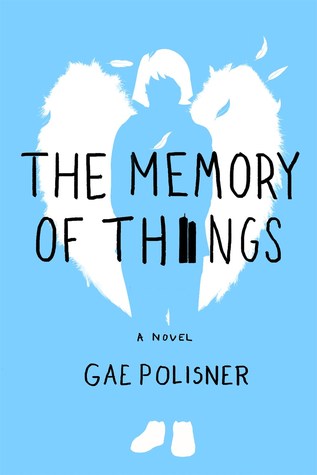
The Memory of Things
Author: Gae Polisner
Published: September 6, 2016 by St. Martin’s Griffin

GoodReads Summary: The powerful story of two teenagers finding friendship, comfort, and first love in the days following 9/11 as their fractured city tries to put itself back together.

On the morning of September 11, 2001, sixteen-year-old Kyle Donohue watches the first twin tower come down from the window of Stuyvesant High School. Moments later, terrified and fleeing home to safety across the Brooklyn Bridge, he stumbles across a girl perched in the shadows. She is covered in ash and wearing a pair of costume wings. With his mother and sister in California and unable to reach his father, a New York City detective likely on his way to the disaster, Kyle makes the split-second decision to bring the girl home. What follows is their story, told in alternating points of view, as Kyle tries to unravel the mystery of the girl so he can return her to her family. But what if the girl has forgotten everything, even her own name? And what if the more Kyle gets to know her, the less he wants her to go home? The Memory of Things tells a stunning story of friendship and first love and of carrying on with our day-to-day living in the midst of world-changing tragedy and unforgettable pain—it tells a story of hope.

Review: I read this book several weeks ago, and I still can’t thinking about it. As a few other bloggers have said, this is a book about 9/11—but it isn’t a book about 9/11. It is more a book about friendship, about growing up, and about being human. There are so many topics in this book that are worthy of discussion, and I think teachers will really appreciate its beauty. The writing is quiet yet powerful, and the book has a sort of shattering impact on readers. I loved the connections that Kyle makes in this book, and I particularly enjoyed the ways each of the individuals he interacts with tells the reader more about him. He grows from everyone in this book, and I’d love to discuss this growth with students.

Teacher’s Tools for Navigation: Teachers might ask students to research the many themes of this book to provide background information. They might look at disability/caregivers, PTSD, suicide, and 9/11—just to name a few. They could also look at the different stages of trauma to learn more about how each of the characters reacts differently to the tragic events that occurred on 9/11.

Discussion Questions: Is Kyle helping the girl, or is she helping him?; What do we learn from Kyle’s uncle? What does he teach us about disability and humanity?; In what ways does Kyle show strength, and in what ways does he show weakness? How does he grow from each experience of the text?

We Flagged: “So now I get it. Now I fully understand. Tuesday, and those planes, they’ve broken something. Permanently. And in the process, they’ve changed everything. And everyone.”

This is a quote from an advanced reader’s copy. Some quotes may change before publication.

Read This If You Loved: Extremely Loud and Incredibly Close by Jonathan Safran Foer; The Impossible Knife of Memory by Laurie Halse Anderson; Personal Effects by E.M. Kokie, The Things a Brother Knows by Dana Reinhardt, If I Lie by Corrine Jackson, Purple Heart by Patricia McCormick

Recommended For:

 litcirclesbuttonsmall classroomlibrarybuttonsmall

RickiSig

What a Beautiful Morning by Arthur A. Levine

Share

what a beautiful morning

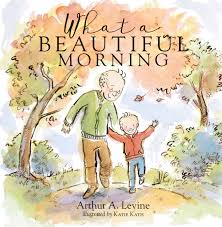
What a Beautiful Morning
Author: Arthur A. Levine;  Illustrator: Katie Kath
Published TODAY!: August 9, 2016 by Running Press Kids

Goodreads Summary: Every morning is beautiful when Noah visits his Grandparents. When Grandpa and Noah wake up, they take off singing and hardly stop: walking the dog, splashing through puddles, and eating French toast with cinnamon. But one summer Grandpa seems to have forgotten how to do the things they love. Does he even know who Noah is? Grandma steps in energetically, filling in as best she can. But it is Noah who finds the way back to something he can share with Grandpa. Something musical. Something that makes the morning beautiful again. This is a story about how love helps us find even what we think is lost.

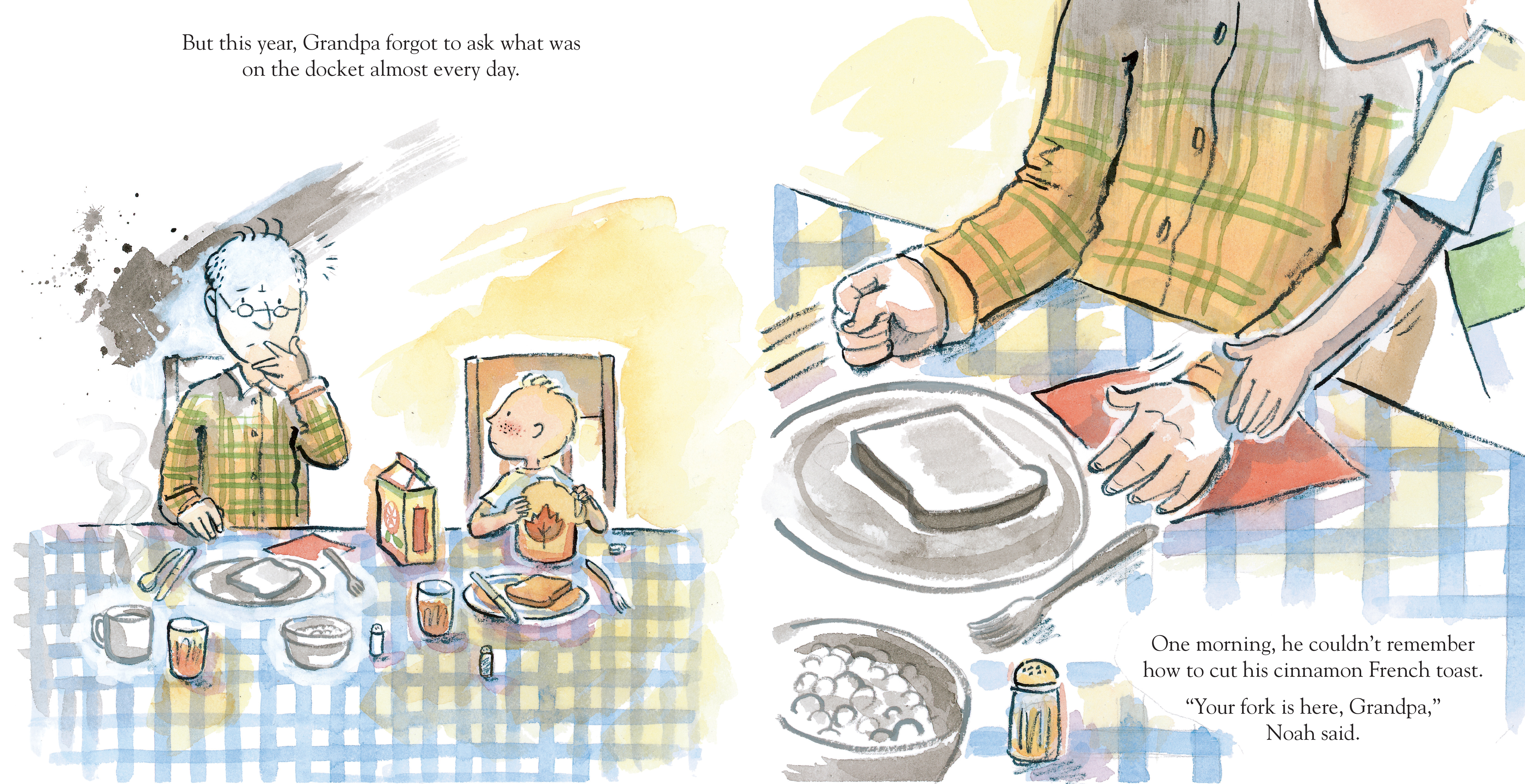
My Review and Teachers’ Tools for NavigationThis is a beautiful story—from cover to cover. I was enveloped by the watercolor images and words that took me inside Noah and Grandpa’s story. My toddler sat beside me and pointed to the images as I read aloud to him. While he may not have understood the story, he most certainly understood the love between Noah and his grandfather. Elementary school children will develop knowledge of the scary truths of Alzheimer’s disease. While it may feel more comfortable to shield children from these truths, the disease is very much a reality for millions of families, and this book will bring them comfort as they discuss the development of this disease in our loved ones.

Teachers might consider teaching a unit about diseases or disabilities. Texts such as these are very important for students to learn from, and this book is no exception. This might lead into a research unit where students explore and learn more about the diseases or disabilities they find within the books the teacher discusses. However, I most appreciated that this isn’t a book about Alzheimer’s Disease. This is a book is truly about the love between a child and his grandfather.

Discussion Questions: When does Noah first notice that Grandpa is having trouble remembering things? How does he react? How does Grandma react?; How does the illustrator use color to help readers better understand the story?; How does the book end? Did you like the ending? How does it connect to the beginning of the story and the overall message?

Flagged Spread: 

WABM_int.indd

Read This If You Loved: Forget Me Not by Nancy Van Laan; The Memory Box by Mary Bahr, Still My Grandma by Veronique Van Den Abeele, Really and Truly by Emilie Rivard, Wilfrid Gordon McDonald Partridge, written by Mem Fox, What’s Happening to Grandpa? by Maria Shriver

Check Out the Other Stops on the Blog Tour:

8/2 Flowering Minds

8/3 MomReadIt

8/4 Unpacking the POWER of Picture Books

8/5 Stacking Books

8/6 #Kidlit Book of the Day

8/8 Enjoy Embrace Learning

8/9 Unleashing Readers

8/10 Two Writing Teachers

8/11 Bildebok

8/12 Geo Librarian

8/13 Randomly Reading

Recommended For: 

readaloudbuttonsmall classroomlibrarybuttonsmall

RickiSig

Animal Planet’s Animal Atlas

Share

NFPB2016

Nonfiction Wednesday

Nonfiction Picture Book Wednesday is hosted by Kid Lit Frenzy and was started to help promote the reading of nonfiction texts. Most Wednesdays, we will be participating and will review a nonfiction text (though it may not always be a picture book).
Be sure to visit Kid Lit Frenzy and see what other nonfiction books are shared this week!
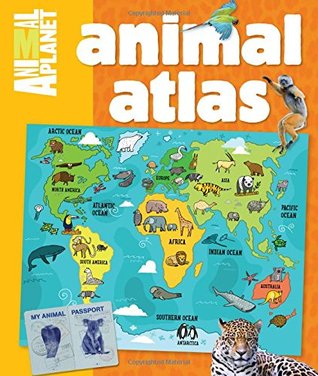
animal atlas

Animal Atlas
Published May 24th, 2016 by Animal Planet

Goodreads Summary: Animal Planet’s definitive atlas of animal life takes readers on a continent-by-continent and habitat-by-habitat passport to adventure!

What is a habitat? How is the North Pole’s animal life different from the South Pole’s? How and why do animals adapt to their environment? Is a food web different from a food chain? Animal Planet Animal Atlas answers all of these questions and many more. Through detailed maps, fun infographics, simple charts, and Find It! Fact boxes readers can track their favorite animals across the globe, learning about how animal habitats are affected by climate, food and water availability, migration, and human environmental impact.

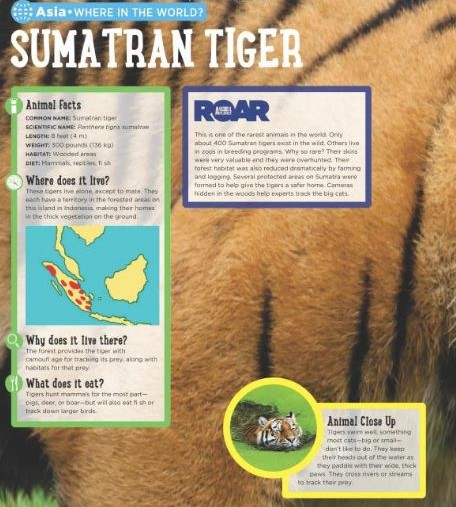
Kellee’s Review: Nonfiction informational texts are really stepping up their game! Over the last few months, we’ve been sharing a lot of Animal Planet and National Geographic texts, but it is because they are worth sharing! This text is filled with such a wealth of information. First and foremost, I see it as a beautiful atlas. It focuses on not only the different continents and oceans, but it teaches about the biomes within the world also. Within each biome in each continent, animals who lie and thrive are shared along with interesting information about the animals. Some of my favorite parts though are the “Animal Close Up” sections which focus on one animal, where it lives, why it lives there, and what it eats and the animal travel guides who pop up within each continent and give out tidbits of information. This plethora of information combined with breathtaking photographs allows this book to take you on a journey all around the world!

Ricki’s Review: I loved this book. My toddler and I probably spent 45 minutes reading it, and we didn’t even read all of the facts! There is so much information in this book, and it is all incredibly fascinating. I think we are going to enjoy this text for a long time yet! My favorite part about it was the way the book was divided up by continent and then further by biomes. My son and I were able to talk about the similarities between the animals and insects within biomes and why that might be. When we reached each new continent, we flipped back to the big atlas to talk about where that continent was in comparison to our home. I also loved the sections that compared the animals to humans. It was neat to talk about our similarities and differences. I’d highly recommend this text for any child of any age. I think it would appeal to all ages and interest levels!

Teachers’ Tools for Navigation: This is such a beautiful text that begs to be used cross curricularly. In Florida, 6th grade learns about life science and one of the unites focuses on habitats and biomes. This book would be an asset either in the science classroom or in an ELA classroom supporting the science standards. Also, in late elementary school this text would be a perfect way to combine science, social studies, reading, and writing.

Discussion Questions: Which biome is the hardest for animals to live in?; Which continent has the least amount of animals?; What are the differences between the different biomes?; Which animal/habitat/continent would you like to learn more about?

We Flagged: 

animal atlas spread
(c) 2016, Animal Planet

Read This If You Loved: National Geographic titles such as Awesome 8 or National Parks USA Guide, Animal Planets Animal Bites series, Seymour Simon’s animal books or Extreme Oceans

Recommended For: 

classroomlibrarybuttonsmall closereadinganalysisbuttonsmall

Signatureand RickiSig

National Geographic’s 100 Things to Know Before You Grow Up

Share

NFPB2016

Nonfiction Wednesday

Nonfiction Picture Book Wednesday is hosted by Kid Lit Frenzy and was started to help promote the reading of nonfiction texts. Most Wednesdays, we will be participating and will review a nonfiction text (though it may not always be a picture book).
Be sure to visit Kid Lit Frenzy and see what other nonfiction books are shared this week!

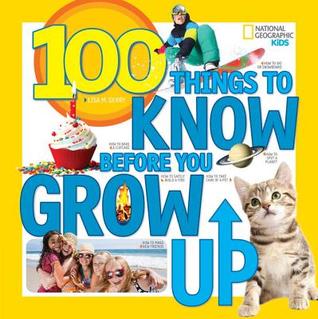
100 things

100 Things to Know Before You Grow Up
Author: Lisa M. Gerry
Published March 8th 2016 by National Geographic Children’s Books

Goodreads Summary: It’s fun to be a kid, but are you ready for what comes next? Challenge yourself with these 100 things and you will be! Jam-packed with tips, tricks, and skills that every kid should master before turning 18, this is the ultimate guide to becoming a fun-loving, well-rounded, totally competent and confident young person. Complete with expert advice from real life explorers, adventurers, and masters of their craft, it’s perfect for jump-starting an amazing life!

Kellee’s Review: I love books that push students to be more than what they already are. This book is one of those. It has such a crazy variety of things that kids can learn to do and overcome and try throughout their childhood: from making a bed to learning to say no to trying yoga. There were things in the book that I am not even good at, but I wish someone had helped me learn how to do as a kid like how to remember names or how to deal with change. I am always impressed with National Geographic books because they are all so unique and well done, and this one is no different!

Ricki’s Review: Typically, I review books and then donate them. I am hanging on to this book because I think it is a great one to share with my children. I loved that some of the “things to know” were abstract like being brave and some were much more concrete like trying another country’s cuisine. I think it would be really neat to use this book as a bucket list. All of the things in this book are experiences and ideas that I want my children to have.

Teachers’ Tools for Navigation: 100 Things to Know Before You Grow Up is a great inquiry project jumping off point. Students could definitely take these 100 things and choose a favorite to research then share with the family. The book would also be a good read aloud for the beginning of each day to have a class discussion. It would be interesting to see what students already know how to do, if they think that everything listed is important, and work on learning new things.

Discussion Questions: Which of the things listed do you already know how to do?; Is there anything you would add to the list that you think you need to know before you grow up?; Which of the things do you want to learn how to do first?; Do you think all of the items listed are important to learn?

We Flagged: “#31. How to Be Brave

Everyone feels afraid from time to time, but it’s how you respond to that fear that shows who you are. Being scared is an uncomfortable feeling, so it makes sense that you’d want to avoid it. But the only way to conquer a fear is to do the thing that scares you. As Mark Twain said, ‘Courage is resistance to fear, mastery of fear, not absence of fear.’

People Profile: Malala Yousafzai

Malala is the youngest person to have ever won a Nobel Peace Prize. She won it in 2014, when she was just 17 years old. Malala was born in Pakistan in 1997. She attended a school founded by her father and quickly became an advocate for a girl’s right to get an education. However, the Taliban, a violent political group in her country, believed that girls should not go to school…” (p. 80-82)

*Disclosure: This quote cannot share the entire feeling of the book without the photos. See the published book to see the amazing photographs.

Read This If You Loved: 31 Ways to Change the World by Candlewick Press, Mastermind by National Geographic, Weird but True series by National Geographic, Be Changemaker by Laurie Ann Thompson, Almanacs, World Record books

Recommended For: 

classroomlibrarybuttonsmall readaloudbuttonsmall

Signatureand RickiSig

**Thank you to Karen at Media Masters Publicity for providing copies for review!**

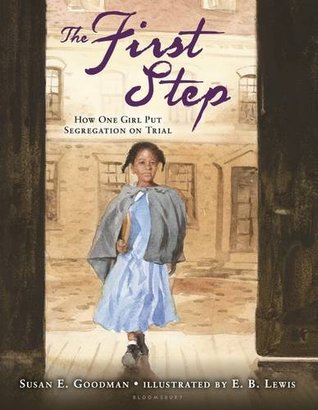
The First Step: How One Girl Put Segregation on Trial by Susan E. Goodman

Share

NFPB2016

Nonfiction Wednesday

Nonfiction Picture Book Wednesday is hosted by Kid Lit Frenzy and was started to help promote the reading of nonfiction texts. Most Wednesdays, we will be participating and will review a nonfiction text (though it may not always be a picture book).
Be sure to visit Kid Lit Frenzy and see what other nonfiction books are shared this week!

first step

The First Step: How One Girl Put Segregation on Trial
Author: Susan E. Goodman
Illustrator: E.B. Lewis
Published January 5th, 2016 by Bloomsbury Children’s Books

Goodreads Summary: In 1847, a young African American girl named Sarah Roberts was attending a school in Boston. Then one day she was told she could never come back. She didn’t belong. The Otis School was for white children only.

Sarah deserved an equal education, and the Roberts family fought for change. They made history. Roberts v. City of Boston was the first case challenging our legal system to outlaw segregated schools. It was the first time an African American lawyer argued in a supreme court.

These first steps set in motion changes that ultimately led to equality under the law in the United States. Sarah’s cause was won when people–black and white–stood together and said, No more. Now, right now, it is time for change!

With gorgeous art from award-winning illustrator E. B. Lewis,The First Step is an inspiring look at the first lawsuit to demand desegregation–long before the American Civil Rights movement, even before the Civil War.

Backmatter includes: integration timeline, bios on key people in the book, list of resources, and author’s note.

My Review: I really appreciate the abundance of quality nonfiction books about the early civil rights in our country because I fear that so much of the prejudice still remains, so it is important to learn about history so hopefully it will not repeat itself. The First Step is a story that shows how even if you do not win your fight, that doesn’t mean that the effort you put forth was for naught. Sarah Roberts and her family were so brave in standing up for her education and rights, and their fight helped pave the way for the bumpy road of integration in schools. Goodman does a wonderful job starting with Sarah’s story but tying it to the Brown v. Board of Education trial while not taking away any credit from the Roberts’ part of history.  

Teachers’ Tools for Navigation: My first thought is to do a jigsaw type activity with The First Step and other civil rights nonfiction picture books (such as the ones listed below in recommended reading). Students can learn about different parts of the history of civil rights by reading the picture books and maybe even researching extra. They would then either present as a group to the class or you can jigsaw the kids back together (pull one person from picture book and put them together as a group), and they can each teach each other about what they learned. This is one of my favorite activities to do with picture books because it allows students to learn in depth about one subject then teach the rest of their class thus everyone learns about all subjects.

Discussion Questions: How did Sarah Roberts’s family’s fight lead to the integration of schools even though she did not win her case?; How did the author structure the book to go through the history of segregation?; How do the illustrations by Lewis help bring Goodman’s story to life?

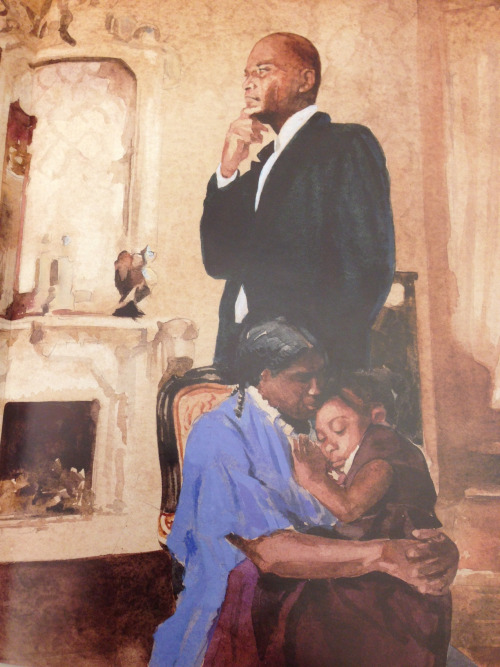
We Flagged: 

first step spread

“Adeline and Benjamin Roberts tried to imagine Sarah’s walk to the Smith School, which was for African American children. She would have to zigzag through many streets, crossing one neighborhood after another.

Sarah would have to go all that way for a school that never taught subjects like history or drawing. All that way for Boston’s only school without a play yard. A school that owned only one book.”

Read This If You Loved: Separate is Never Equal by Duncan TonatiuhFreedom Summer (Kellee’s Review, Ricki’s Review) by Deborah Wiles, Seeds of Freedom by Hester Bass

Recommended For: 

classroomlibrarybuttonsmall readaloudbuttonsmall litcirclesbuttonsmall

Signature

Candlewick Nonfiction Picture Books: Who’s Like Me? by Nicola Davies; Can We Help? by George Ancona; Belle, the Last Mule at Gee’s Bend by Calvin Alexander Ramsey & Bettye Stroud; and The Boy Who Fell Off the Mayflower by P.J. Lynch

Share

NFPB2016

Nonfiction Wednesday

Nonfiction Picture Book Wednesday is hosted by Kid Lit Frenzy and was started to help promote the reading of nonfiction texts. Most Wednesdays, we will be participating and will review a nonfiction text (though it may not always be a picture book).
Be sure to visit Kid Lit Frenzy and see what other nonfiction books are shared this week!

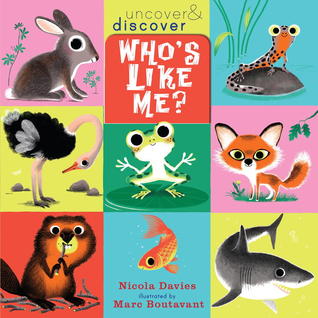
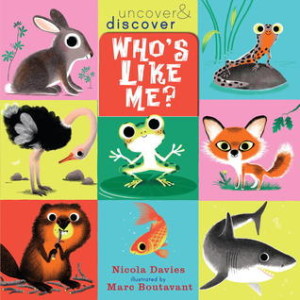
who's like me

Who’s Like Me?
Author: Nicola Davis
Illustrator: Marc Boutavant
Published February 28th, 2012 by Candlewick Press

Goodreads Summary: Lift the flaps and learn about animal life in this fresh, fun-filled book for curious preschoolers.

A bunny is furry and breathes air. Who else is like that — a pigeon, a fish, a chameleon, or a fox? Some animals have fins to swim with, some have feathers and a beak, some have skin that is scaly, or smooth and wet. But whatever features a creature has, someone else has them, too. Can you guess who? Big flaps and a matching spread at the end make animal classification fun.

My Thoughts: This flap book is going to be a big hit in my house both because it is entertaining and because it is informative. First, the author does a great job making the identification of animal types a game including flaps and comparisons/contrasts then she ensures that factual information follows the matching to explain the type of animal and the characteristics of the type.
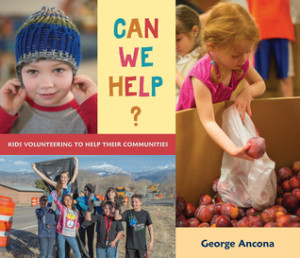
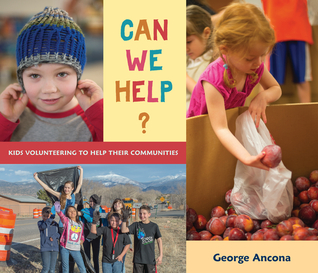
can we help

Can We Help? Kids Volunteering to Help their Communities
Author: George Ancona
Published August 25th, 2015 by Candlewick Press

Goodreads Summary: Real kids make a real difference in their communities in this vibrantly photographed chronicle by George Ancona.

George Ancona celebrates the joy of kids giving back. In one after-school program, middle-school students mentor and tutor younger children. Via a special partnership, schoolchildren help professionals train assistance dogs for people with disabilities. At a community farm, families plant, grow, and harvest produce for soup kitchens and charities. In these and other examples of volunteering, kids of all ages work together knitting hats and scarves for those who could use warm clothes, packing hot meals to deliver to housebound people, and keeping roadways clean. Young humanitarians reading these accounts may well be inspired to find ways that they can help, too.

My Thoughts: I think this picture book would be a wonderful one to read in conjunction with the 31 Ways to Change the World because that book includes suggestions while this one gives us narratives about those actually making a difference. I love the variety of ways the author highlights: from knitting to a community farm to training dogs and mentoring. These stories are inspiring and will make the reader (adult or child) want to do something to make a difference!
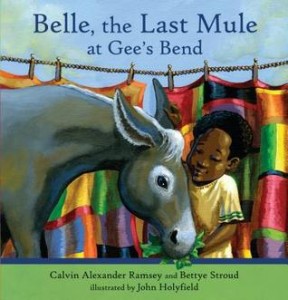
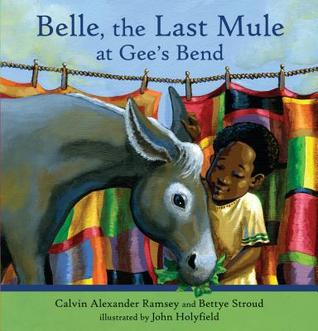
belle last mule

Belle, the Last Mule at Gee’s Bend
Authors: Calving Alexander Ramsey and Bettye Stroud
Illustrator: John Holyfield
Published September 13th, 2011 by Candlewick Press

Goodreads Summary: A true story inspires the moving tale of a mule that played a key role in the civil rights movement– and a young boy who sees history anew.

Sitting on a bench waiting for his mother, Alex spies a mule chomping on greens in someone’s garden, and he can’t help but ask about it.””Ol Belle?” says Miz Pettway next to him. “She can have all the collards she wants. She’s earned it.” And so begins the tale of a simple mule in Gee’s Bend, Alabama, who played a singular part in the civil rights movement of the 1960s. When African-Americans in a poor community– inspired by a visit from Dr. Martin Luther King, Jr.– defied local authorities who were trying to stop them from registering to vote, many got around a long detour on mule-drawn wagons. Later, after Dr. King’s assassination, two mules from Gee’s Bend pulled the farm wagon bearing his casket through the streets of Atlanta. As Alex looks into the eyes of gentle Belle, he begins to understand a powerful time in history in a very personal way.

My Thoughts: This story adds an extra truth to the story of Martin Luther King that many of us know. MLK was an advocate and leader and activist for all African and Black Americans and this meant a lot to so many communities of people around America including Gee’s Bend. To learn about Belle and King’s reason for having Belle pull his coffin really just shows how true his intentions of being a man of the people while fighting for the rights of all. And I loved how this story was told as a story from a Bender to a young boy visiting the town. Gee’s Bend is such a historical place, and I love this new part of their history that I didn’t know. (I love the quilts produced in Gee’s Bend! If you haven’t viewed them, Google it now!)
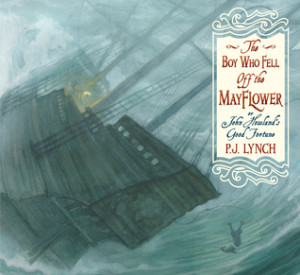
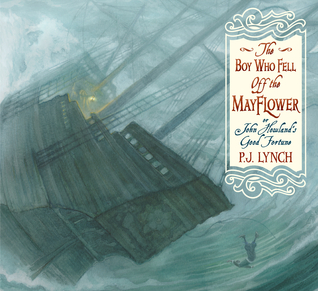
boy who fell

The Boy Who Fell Off the Mayflower or John Howland’s Good Fortune
Author and Illustrator: P.J. Lynch
Published September 22nd, 2015 by Candlewick Press

Goodreads Summary: In the first book he has both written and illustrated, master artist P.J. Lynch brings a Mayflower voyager’s story to vivid life.

At a young age, John Howland learned what it meant to take advantage of an opportunity. Leaving the docks of London on the Mayflower as an indentured servant to Pilgrim John Carver, John Howland little knew that he was embarking on the adventure of a lifetime. By his great good fortune, John survived falling overboard on the crossing of the Atlantic Ocean, and he earned his keep ashore by helping to scout a safe harbor and landing site for his bedraggled and ill shipmates. Would his luck continue to hold amid the dangers and adversity of the Pilgrims’ lives in New England? John Howland’s tale is masterfully told in his own voice, bringing an immediacy and young perspective to the oft-told Pilgrims’ story. P.J. Lynch captures this pivotal moment in American history in precise and exquisite detail, from the light on the froth of a breaking wave to the questioning voice of a teen in a new world.

My Thoughts: I have to start my review with discussing the art work. Describing P.J. Lynch as a master artist is a perfect statement. His watercolor and gouache full page plus illustrations are so lifelike and beautiful that the reader will spend time on each page viewing the art in addition to reading the text. And what makes the book even better is that the text is interesting. Told in first person from John Howland’s point of view, we travel from London to America through storms, a fall off the Mayflower, death, disease, famine, and shows how friendship and kindness pay. In the classroom, this text would be an informational and interesting introduction to the Mayflower voyage and Plymouth.


All Recommended For: 

classroomlibrarybuttonsmall readaloudbuttonsmall litcirclesbuttonsmall

Kellee Signature