Children Growing Up with War by Jenny Matthews

Share

NFPB2015

Nonfiction Picture Book Wednesday

Nonfiction Picture Book Wednesday is hosted by Kid Lit Frenzy and was started to help promote the reading of nonfiction texts. Most Wednesdays, we will be participating and will review a nonfiction text (though it may not always be a picture book).
Be sure to visit Kid Lit Frenzy and see what other nonfiction books are shared this week!

children growing

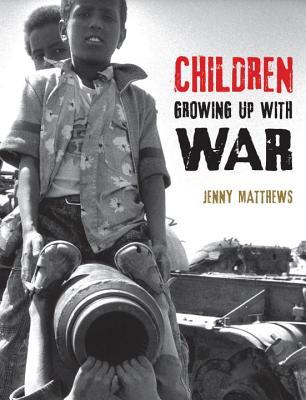
Children Growing Up with War
Author and Photographer: Jenny Matthews
Published October 14th, 2014 by Candlewick Press

Goodreads Summary: Through personal narrative and candid photographs, a photojournalist chronicles young lives upended by violence and strife.

The right to adequate nutrition and medical care.
The right to free education.
The right to a name and nationality.
The right to affection, love, and understanding.

In conflict zones around the world, children are denied these and other basic rights. Follow photographer Jenny Matthews into refugee camps, overcrowded cities, damaged villages, clinics, and support centers where children and their families live, work, play, learn, heal, and try to survive the devastating impact of war. This moving book depicts the resilience and resourcefulness of young people who, though heavily impacted by the ravages of war, search for a better future for themselves, their families, and their cultures.

Kellee’s Review:  This was a very tough book to read. I thought I’d be able to sit and read it all in one sitting, but I couldn’t. As a mother and a teacher, I love children, and it truly saddened me to see the situations that these children are in.

Fortunately, as an American, very few wars touch our lives. Unfortunately, our news doesn’t focus on many of the tumultuous conflicts that are active throughout the world, so we have become detached from reality. Our students are even more detached. That is why this book is important. It puts it all into perspective and really makes me feel and think. We rarely look at the humans that are being affected by the wars, we always focus on getting the bad guy. This book puts faces to the people, specifically the children, being affected every day.  I found it very interesting how the author set up the book. You can tell she is a photojournalist because it is set up to give information in the most impactful way.

Ricki’s Review: When I was teaching high school, one of my main goals was to provide my students with a more global perspective. I wish I had had this incredible text available at the time because it evoked powerful emotions in me. I know it would do the same for my students. The balance of photography and words is very well done, and I will admit that I took many breaks because these images and words hit me to my core. This is an important book that belongs in classrooms. It is a good length that teachers will easily be able to use it as a pairing with other texts about war and genocide. It is important to learn about our past, but it is just as important to understand the wars that persist today—which is foundational to this book. I wish I could meet this author to thank her for writing a text that moved me so deeply.

Teachers’ Tools for Navigation: This book presents many different discussion opportunities (e.g., the affects of war on children throughout the world, different active wars,Rights of the Child, importance of journalism). It would be fascinating to read with students and hear their perspective on the very tough topics and perspectives shared in the book.

Also, the book sets up nicely for a jigsaw discussion. The author set up the book to look at the different ways lives are affected: home & displacement, family, health, work, and school & play. Within each of these sections, she also looks at different places in the world such as Tunisia, Jordan, Afghanistan, Uganda, Rwanda, Gaza, and Kurdistan. She also includes different Rights of the Child throughout the book. The teacher could jigsaw either with the topic, the places, or the Rights and have students dig deeper.

Another way to look at this book is from a journalistic/photography point of view. I [Kellee] teach journalism, and I already plan on using Photos Framed as part of my photography unit, and I think this book will add an even deeper look into the importance of photography/journalism and with a topic (children’s lives) that my students can connect with.

Discussion Questions: How does Jenny Matthews’s photos, books, and stories help children who are growing up with war?; Why would Jenny Matthews choose to go into such dangerous situations?; If you had to choose one single photo to sum up Children Growing Up with War, which of these would you choose? (p. 42); Which of the UN’s Rights of the Child are affected when war is involved?; In what different way does war affect the children growing up in the conflict area?

We Flagged: “How would you feel if you lost your home and had to flee from your own country? Imagine losing some or all of your family, either as a direct result of fighting or indirectly through illness or disease. You might have to work to support your family or fight and kill other people just to survive. And how can you go to school if it’s being used as an army command outpost and all the books have been destroyed?

This is the reality for too many children and their families in the world. Today, children are still growing up with war—the consequences of which they’ll live with for the rest of their lives” (p. 3).

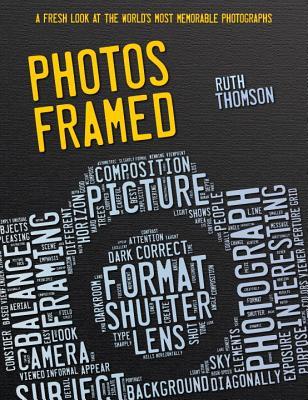
Read This If You Loved: Photos Framed: A Fresh Look at the World’s Most Memorable Photographs by Ruth Thomson
This would be an excellent nonfiction companion to: Never Fall Down by Patricia McCormick, Endangered by Eliot Schrefer, Caminar by Skila Brown, The Other Side of the Wall by Simon Schwartz, The Milk of Birds by Sylvia Whitman, or Son of a Gun by Anne de Graaf.

Recommended For: 

readaloudbuttonsmall closereadinganalysisbuttonsmall

Signatureand RickiSig

Engaging Classroom Discussion Strategies

Share

Engaging Classroom Discussion Techniques-page-001

My favorite part about teaching is that teachers love to share resources. We are a community. The more I teach methods courses at the university level, the more frequently I find myself sharing some ways I’ve hosted classroom discussions. I did not create any of these ideas below, and sadly, I cannot even share the source of the methods. I credit my advisor, Wendy Glenn, for introducing me to many of them. After I graduated and started teaching, I found other great books along the way which taught me others. While some of these ideas may be old news for you, I hope you are able to learn at least one new, useful method below.

1. The good ol’ fashioned circle (with a twist)

I never get tired of the circle, but my students often get tired of it. In my last year of teaching, I vowed that I would never create the discussion questions because I was working toward a student-centered classroom. After each reading, I required students to generate quality conversation starters. They submitted their questions on slips of paper, and whenever the conversation slowed down, we grabbed a new question.

2. Fishbowl

Every time I use the fishbowl in my college courses, the students are blown away at how fun it is. I remember feeling the same way as an undergraduate. This is a bit tricky to explain. There is an inner and an outer circle. Three to five kids are in the inner circle, and they are the only students allowed to speak. We draw questions (usually student-submitted questions), and those students have a conversation as if they are the only people in the room. When someone in the outer circle wants to make a comment, s/he taps the shoulder of a person in the inner circle, and they swap seats. I remind my students that they all must enter the inner circle twice, and they shouldn’t tap someone’s should unless they have made two comments. When the conversation gets dry, we pull a new question. This method takes some getting used to, but the kids find it to be quite fun. If the outer circle isn’t paying attention, I require them to take notes on the discussion.

3. Socratic Seminar

This method is similar to the fishbowl. I always use an inner and outer circle. Instead, the inner circle is closely examining a text and asking a lot of questions about it: Where did the idea come from? What is the purpose of this line?

I have an even number of inner students as outer students. Each inner student is paired with an outer student as his/her coach. At several points, I take a break and give that pair time to talk about how the inner student is doing. They can offer ideas and support to help the inner circle person contribute to the discussion. I find this video to be particularly helpful, and the website offers rubrics and ideas about helping students set goals for this discussion.

4. Jigsaw

For this technique, we ask four groups of students to read four different articles or research four different topics that have a common theme. Usually, they do this for homework. If I have 24 students in my class, six students will be reading Article 1, six students will be reading Article 2, six students will be reading Article 3, and six students will be reading Article 4.  When the students come to class, I group them by their article. This is their “home” group. They spend time discussing the article and outlining how they will present it to their peers. This gives them the confidence to share its content. Within each group, I assign each student a different letter. So for Article 1, if I have six students, I assign them A, B, C, D, E, and F. I go to each group and assign those same letters to each group. (I’ve also seen people line up students based on their articles, but both methods work fine). Then, all of the students regroup based on their letter. So out of the A students, I will now have four students in the group, one from each of the original four articles. The students’ job is to listen to each other and take notes (often in a graphic organizer I’ve created).

For those of you who are unfamiliar with this method, it might sound like a lot of work, but it really is quite easy to organize. The benefit is the students learn about four related articles without having to read them all. I used to do this when we talked about modern genocide as it related to the Holocaust text I was teaching. Instead of asking the students to research many countries, I assigned four countries to four groups. In the end, the students were responsible for sharing about the country they researched, and as a group, connecting that knowledge to the text.

5. Concentric Circles

We have an equal number of students in an inner circle and in an outer circle. The students in the inner circle face the students in the outer circle, and each student is paired with another student. I ask a discussion question (e.g. What did you think about the decision of the trial?) and only the inner circle person can speak. The outer circle person can only listen. Then, I ask the same question to the outer circle person, and his or her job is to listen. This teaches listening skills, and it also teaches the speaker to elaborate. After about thirty seconds, I ask the inner circle to rotate clockwise three people to swap partners (or however many times I feel like). I ask a different question (or sometimes, the same question!). The same process continues (either the inner or outer circle person is in charge of speaking and then it swaps). Then, I have the outer circle rotate counter-clockwise two people to swap partners. The students have fun discussing the questions with different people each time, and they find the turning of the circles to be wildly fun.

6. Give One, Get One

I ask the students to fold a piece of paper lengthwise so they have two columns. Then, I ask them to write everything they learned from the text in the right hand column. I tell them the more they write down, the better. When they are finished, I ask them to write numbers 1 through 10 in the right-hand column. Their job is to go around the room and to collect (from ten different peers) ten ideas that they don’t have on the left-hand side of their papers. This requires them to spend time with each peer, reviewing the information they learned and wrote down, and find something they missed or didn’t consider. They groan when you tell them what they have to do, but while they discuss the text, they are always laughing at the obscure or specific facts their peers come up with.

7. Post-It Walk

I post four to six major discussion questions in different areas of the room. I put small groups of students at each question and give them post-it notes. Their job is to discuss the question in front of them and write one idea/topic they discussed on the post-it note. Then, the entire class rotates clockwise. They read the question, read the post-it(s) from a previous group or groups. Their job is to discuss the question and come up with something different to put on their post-it note. After groups have rotated and put post-it notes on every discussion question, the groups stay at the last question on the wall. They are required to share out to the entire class one or two great ideas from the post-its on the question in front of them.

8. Pass the Butcher Paper

Students sit in groups. In front of each group is a different character (or topic). I ask them a question about that character (e.g. What do we know about him/her based on his/her actions in the book thus far?). They write notes on the butcher paper. Then, they pass the butcher papers clockwise, and they receive a new character. Their job is to read the notes of the previous group. Then I ask a different question (e.g. How do you predict the character will act in the rest of the novel?). They write notes, and we keep passing. This allows the students to see the ideas of many of their peers about different questions, and they feel like they are working as a whole class to create a complex understanding of each character. We post the butcher paper in the room.

9. Four Corners

This works best as a pre-reading activity for a book, but it could be modified for any subject area. I did it in my Methods class as an undergraduate student and loved it. My students enjoyed it, too. I provide a handout with major themes from a novel (e.g. Revenge is justifiable.), and ask students to circle “Strongly Agree,” “Agree,” “Disagree,” or “Strongly Disagree” for each statement. Then I read the questions aloud and ask students to walk to the corner of the room that has the sign (“Strongly Agree,” “Agree,” “Disagree,” “Strongly Disagree”) that matches their opinions. I ask a volunteer from each corner to share his/her opinion. This often leads to heated debates, and it gets the students thinking about the novel.

 10. Facts of Five

Ask students to write down the five main ideas they got from a text. (This can be adjusted in a variety of ways, but it is good to require students to write five ______. For instance, they might write down five ways to connect the text to the real world.) Then, ask students to get into groups of three. Their job is to talk through each of their lists and pair the fifteen ideas down to five ideas. Then, their group of three joins another group of three. The six group members talk through their ideas and reach a consensus of the top five ideas. Then, all of the groups share out, and we have a class discussion to agree on the five, main points. This discussion technique requires groups to talk through ideas and determine essential, important concepts from a text. It also allows students to spend time considering how their ideas fit in with the ideas of their peers.

11. The Pinwheel

I just came across this neat technique by Sarah Brown Wessling. I recommend you watch the 7-minute video to see how it is organized. Students are arranged into a pinwheel shape. Three groups are each assigned to a different author, and a fourth group serves as “provocateurs” who ask probing questions. This would be a great way to synthesize multiple texts that you have read in class.

Please, please post a comment explaining any methods that I’ve missed, and I will incorporate your ideas into the post! Want more ideas? Check out this page more closely related to novels!

RickiSig

Flight of the Honey Bee by Raymond Huber

Share

NFPB2015

Nonfiction Picture Book Wednesday

Nonfiction Picture Book Wednesday is hosted by Kid Lit Frenzy and was started to help promote the reading of nonfiction texts. Most Wednesdays, we will be participating and will review a nonfiction text (though it may not always be a picture book).
Be sure to visit Kid Lit Frenzy and see what other nonfiction books are shared this week!

flight of the honey

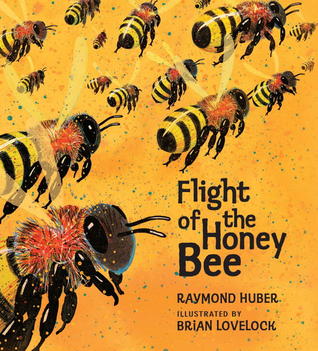
Flight of the Honey Bee
Author: Raymond Huber
Illustrator: Brian Lovelock
Published September 10th, 2013 by Candlewick Press

Goodreads Summary: Follow the flight of a honey bee as she searches for nectar to sustain her hive and, along the way, pollinates flowers to produce seeds and fruits.

A tiny honey bee emerges from the hive for the first time. Using sunlight, landmarks, and scents to remember the path, she goes in search of pollen and nectar to share with the thousands of other bees in her hive. She uses her powerful sense of smell to locate the flowers that sustain her, avoids birds that might eat her, and returns home to share her finds with her many sisters. Nature lovers and scientists-to-be are invited to explore the fascinating life of a honey bee.

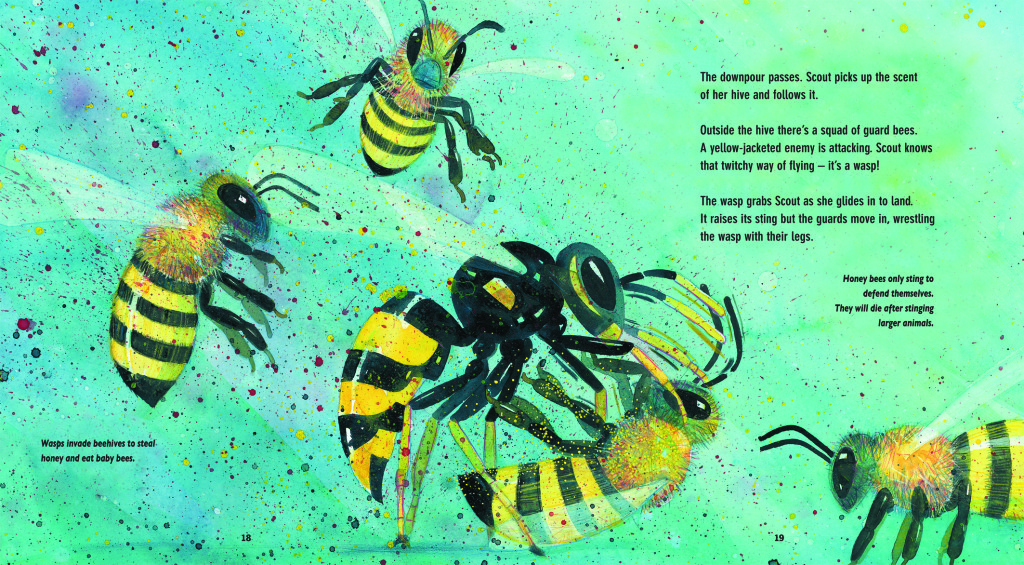
Kellee’s Review and Teachers’ Tools for NavigationI love books that mix narrative and information nonfiction within one book. This text introduces Scout as she exits the hive and goes about her bee-siness (hehe!). This part of the story is told as a story. Then on each page, there is information about bees in general to help the reader understand Scout’s journey. This unique text structure mixed with the realistic yet artistic illustrations really makes Flight compelling to read. In addition to learning about bees and the vocabulary included in the book, this book could be a great addition to a lit circle inquiry group about insects or as a mentor text to create student narrative and informational mixed writing about a animal after researching. 

Ricki’s Review and Teachers’ Tools for Navigation: I read this book aloud to my son while he was eating breakfast, and he was captivated by the illustrations and story. I immediately texted Kellee and told her we had to schedule a day to review it! I had a lot of fun following Scout on her adventure, and I know kids will become so engaged in this story that they will forget they are learning. I thought I knew a lot about bees, but I was surprised by how much information is packed into this text. Readers will cheer for Scout as she encounters obstacles. I try to integrate nonfiction into every unit, and this would be a great book to show students just how accessible nonfiction can be. Then, they could pick a creature or object in nature, conduct research, and write their own narrative nonfiction texts.

Discussion Questions: How do bees help the environment and humans?; How can we help save the bees?; What are the different types of bees? Why are they all important?

Flight of the Honey Bee Teacher Guide from Candlewick

We Flagged: 

flight of the honey page
(c) 2013 Raymond Huber http://www.raymondhuber.co.nz/

Read This If You Loved: Lifetime by Lola M. Schaefer, Winter Bees & Other Poems of the Cold by Joyce SidmanThe Alphabet of Bugs by Valerie Gates

Recommended For: 

classroomlibrarybuttonsmall readaloudbuttonsmall closereadinganalysisbuttonsmall

Signatureand RickiSig

**Thank you to Candlewick for providing copies of the text for review!!**

Review and Teaching Guide!: Harzadous Tales: The Underground Abductor by Nathan Hale

Share

NFPB2015

Nonfiction Picture Book Wednesday

Nonfiction Picture Book Wednesday is hosted by Kid Lit Frenzy and was started to help promote the reading of nonfiction texts. Most Wednesdays, we will be participating and will review a nonfiction text (though it may not always be a picture book).
Be sure to visit Kid Lit Frenzy and see what other nonfiction books are shared this week!

undergroundabductor

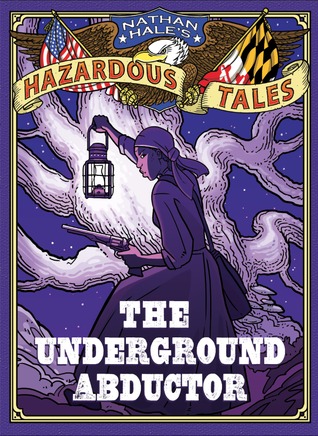
The Underground Abductor
Author and Illustrator: Nathan Hale
Published April 21st, 2015 by Amulet Books

Goodreads Summary: Araminta Ross was born a slave in Delaware in the early 19th century. Slavery meant that her family could be ripped apart at any time, and that she could be put to work in dangerous places and for abusive people. But north of the Mason-Dixon line, slavery was illegal. If she could run away and make it north without being caught or killed, she’d be free. Facing enormous danger, Araminta made it, and once free, she changed her name to Harriet Tubman. Tubman spent the rest of her life helping slaves run away like she did, every time taking her life in her hands. Nathan Hale tells her incredible true-life story with the humor and sensitivity he’s shown in every one of the Hazardous Tales—perfect for reluctant readers and classroom discussions.

My Review: I love this entire series! Nathan Hale has taken history and made it accessible (with a dash of humor!). If you don’t the concept of the series, it revolves around Nathan Hale the Revolutionary War spy who, in the first book, was eaten by a history book so now knows all that has happened in history and is sharing it with the hangman and British officer who are guarding him before he is executed. The first book is Hale’s own story and then each of the following are his telling of different times in history.

This installment of Hale’s graphic novel series may be my favorite so far. I found it to be the most intense of his stories even though it is up against stories of wars, but Harriet Tubman’s story is one of one person’s resilience in the face of pure doom. Although it is evident through any story you hear of Harriet how truly brave she was, Nathan Hale’s story immerses you into Harriet’s life and shows you how much she truly did and faced.

Teachers’ Tools for Navigation: This book is written to start discussions (in reading/language arts OR social studies)! I was lucky enough to write the teaching guide for The Underground Abductor (as well as the rest of the series!), and I have included some of my discussion questions below.

I could also see Hale’s Hazardous Tales being used in lit circles with each group reading a different one of the tales. This could lead to wonderful discussions about each time in history. Students could then present their history to the rest of the class.

Discussion Questions: 

  • When Araminta heard the story of Moses and the pharaoh, she envisioned Moses as a slave and the pharaoh as an owner (page 15). How does Moses’s story compare to a traditional story of a slave? Harriet is later called “Moses” or “Black Moses.” How does Harriet’s story compare to Moses’s?
  • How did Nat Turner’s rebellion affect slave laws (page 21)? He meant to make a positive change, but it actually turned negative. How? Why?
  • On page 44, Nathan Hale personifies debt as the ghosts and men Minty had been dreaming about. Why is debt shown as a terrifying thing? How did Mr. Brodess’s debt affect Mindy and her family?
  • Complete a character web with adjectives describing Harriet Tubman. What type of person was she that allowed her to overcome a debilitating injury and slavery?

Book Trailer: 

Read This If You Loved: Hazardous Tales series by Nathan Hale, March by John Robert Lewis, Stolen Into Slavery by Judith Bloom Fradin, Elijah Buxton by Christopher Paul Curtis

Recommended For: 

classroomlibrarybuttonsmall litcirclesbuttonsmall closereadinganalysisbuttonsmall

Signature

**Thank you to Morgan at Abrams Books for providing a copy of the book!**

Author Interview and Review!: I’ll Hold You Forever: An Adoption Story by Dawn Marie Hooks

Share

i'll hold you forever

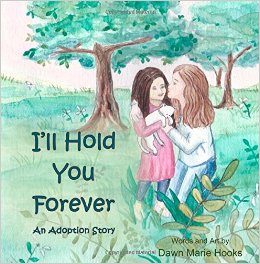
I’ll Hold You Forever: An Adoption Story
Author and Illustrator: Dawn Marie Hooks
Published January 2nd, 2015 by Paper Moon Publications

Goodreads Summary: A young girl walks through the countryside when she begins to wonder: Is Mommy really her real mom? Mommy turns the question into a story of the child’s adoption. Soon the child is reassured that her mom is real and will hold her forever. A touching story about the beauty of adoption and the warmth of a mother’s love is told through charming watercolor illustrations and clear, simple text that even the youngest child can understand. Notes from the author include suggestions on how to talk to children about adoption.

Kellee’s Review: I think this book has two very important purposes. First, I think it would be a wonderful book to read with a child who was adopted. It does a very good job of honoring all parts of adoption. The “Notes from the Author” section gives some great suggestions for talking to children about adoption which is a wonderful jumping off point after reading the book. Second, I think this book could be used to discuss adoption with students who are not adopted. It is so important to talk to kids about all kinds of different types of families. This book beautifully captures the power of love between a mother and her child and would be a great text for classrooms.

Author Interview: We are so happy to have Dawn Marie Hooks here to answer some of our questions about I’ll Hold You Forever:

Unleashing Readers: What was your main purpose in writing I’ll Hold You Forever?

Dawn Marie Hooks: My main purpose in writing I’ll Hold You Forever is to communicate the love surrounding adoption.  I hope adoptive families will use this book to talk to their children about their adoption stories and all readers will be touched and inspired by the beauty of adoption.

UR: What inspired you to write I’ll Hold You Forever?

DMH: This story comes from my heart, the heart of a mom.  It was inspired by the adoptions of my two beautiful daughters.  Actually, I drew and painted some of the illustrations using our personal photographs.  We adopted our girls through a private adoption agency in Redmond, WA called Antioch Adoptions.  Both children were adopted at different times and through different circumstances.  Every step was full of ups and downs, but I wouldn’t trade it for anything.  We were extremely blessed to finally become parents to two precious girls who “fit perfectly in our family.”

UR: What other picture books do you recommend that discuss adoption?

DMH: My favorite picture books about adoption are God Found Us You by Lisa Tawn Bergren and How I Was Adopted by Joanna Cole.  For the very young, there is a cute board book called Tell Me Again About the Night I Was Born by Jamie Lee Curtis.   There are many more but these are the ones that I’ve read over and over.

I also recommend that families who adopt create their own photo books to tell the children their unique story.

UR: What do you hope readers of I’ll Hold You Forever will take away?

DMH: I love when moms they get tears in their eyes and that “ahhhh” feeling. I love when children ask lots of questions.

I hope the readers will feel the love surrounding adoption and I hope they learn a little more about the adoption process.  At the end of the book, I included a few notes for adults about how to talk to children about adoption.  Of course, since it’s a picture book, it’s brief.  So, on my website (www.dawnmariehooks.com), I posted an information sheet about adoption as well as a discussion & activity guide on the topic of FAMILY for I’ll Hold You Forever.  (I’m a former teacher, so I love writing those helpful little tools to go along with children’s books.)

Discussion Questions: The above-mentioned discussion and activity guide as well as more information about adoption can be found at http://dawnmariehooks.com/books/ill-hold-you-forever-an-adoption-story-2/

We Flagged: 

i'll hold you forever2

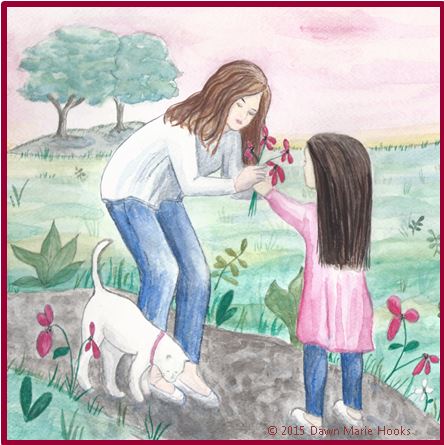
Mommy, are you really my real mom? 

I’m your mom, and I am real.”

Read This If You Loved: And Tango Makes Three by Justin Richardson, When Otis Courted Mama by Kathi Appelt, The Red Thread: An Adoption Fairy Tale by Grace Lin, A Mother for Choco by Keiko Kasza

Recommended For: 

classroomlibrarybuttonsmall readaloudbuttonsmall

Signature

**Thank you to Melanie at Paper Moon Publications for providing copies for review!**

Photos Framed: A Fresh Look at the World’s Most Memorable Photographs by Ruth Thomson

Share

NFPB2015

Nonfiction Picture Book Wednesday

Nonfiction Picture Book Wednesday is hosted by Kid Lit Frenzy and was started to help promote the reading of nonfiction texts. Most Wednesdays, we will be participating and will review a nonfiction text (though it may not always be a picture book).
Be sure to visit Kid Lit Frenzy and see what other nonfiction books are shared this week!

photosframed

Photos Framed: A Fresh Look at the World’s Most Memorable Photographs
Author: Ruth Thomson
Photographers: Various
Published August 5th, 2014 by Candlewick Press

Goodreads Summary: Portrait. Nature. Art. Documentary. A look at some of the world’s most iconic photographs invites viewers to focus on the medium’s place in art and history.

Photographs can be beautiful or harrowing, honest or manipulative, dramatic or comforting. Photos Framed explores twenty-seven of the most important and vivid photos taken over the medium’s history, from a formal portrait of Louis Daguerre taken in 1844 to a candid shot of a Cuban girl and her doll in 2011. Readers are invited to use their powers of observation to zoom in on photographic elements, blow up details of the subject matter, think about the big picture, and pan out on the photographer. Photos Framed will open viewers’ eyes to the art of photography and its power to tell a story.

Kellee’s Review and Teachers’ Tools for Navigation: This book is phenomenal. It takes art and history and combines them into an epic look at the history of photography and the world. I am definitely going to use this book in my classroom next year. Each photograph includes information about the photo, information about the photographer, three photo thoughts questions, a “blow up” section that looks at a certain part of the photograph, a “zoom in” which looks at elements of the photograph, and a quote from the photographer. This information is fascinating, but it is just an introduction to the time period of the photo, what makes the photo a true piece of art and who the photographer is. I would love to see students delve deeper into each of these photos using this book as an amazing jumping off point. The book also gives a nice lesson at the beginning about the different types of photographs. I can definitely see myself using that in my journalism class when we look at photography. 

Ricki’s Review and Teachers’ Tools for Navigation: Kellee’s review is spot-on. This book forces readers to zoom in on elements of photography and then zoom out on each photograph to provide context and history. I spent a long time on each page and appreciated the way the author took in the beauty and complexity of each photograph. Teachers often do a lot of close reading in the classroom. I’d love to use this text used as a parallel for close reading. The teacher and students would spend time zooming in and zooming out on the photograph. Then, we could look at a class text and do the same with the words on the page. It teaches students how important it is to look carefully at the minutia of the world but also consider the bigger picture. This book inspired me to want to pair up with the school’s photography teacher to analyze the text in an interdisciplinary way. Perhaps, photography students would be inspired by the book and students could select a photograph for a creative writing assignment. 

Discussion Questions: Each photograph has discussion questions that help the reader analyze the photograph.

We Flagged: 

New York Construction Workers Lunching on a Crossbeam

The photograph: …Ebbets’s breathtaking photograph celebrates these tough men, taking their lunch break on a crossbeam on the unfinished sixty-ninth floor of the RCA Building, part of Rockefeller Center…

The photographer: Ebbets was a fearless photographer who even risked taking aerial shots lying on the tail of a plane…

Photo thoughts: Where do you think the photographer was positioned to take this shot?…” (p. 38-39)

Read This If You Loved: Humans of New York by Brandon Stanton, Miss Peregrine’s Home for Peculiar Children by Ransom Riggs, Books about Photography

Recommended For: 

classroomlibrarybuttonsmall closereadinganalysisbuttonsmall

Signature and RickiSig

Reviews and Educators’ Guide: Matt Tavares’s Baseball Biographies

Share

henry aaronted williams

 babe ruthpedro

Henry Aaron’s Dream
Author: Matt Tavares
Published January 12th, 2010 by Candlewick Press

Goodreads Summary: Matt Tavares hits one out of the park with this powerful tale of a kid from the segregated south who would become baseball’s home-run king.

Before he was Hammerin’ Hank, Henry Aaron was a young boy grow ing up in Mobile, Alabama, with what seemed like a foolhardy dream: to be a big-league baseball player. He didn’t have a bat. He didn’t have a ball. And there wasn’t a single black ball player in the major leagues. B ut none of this could stop Henry Aaron. In a captivating biography of Henr y Aaron’s young life – from his sandlot days through his time in the Negro Leagues to the day he played his first spring training game for the Braves – Matt Tavares offers an inspiring homage to one of baseball’s all-time greats.

There Goes Ted Williams: The Greatest Hitter Who Ever Lived
Author: Matt Tavares
Published February 14th, 2012 by Candlewick Press

Goodreads Summary: A lively picture book biography of Ted Williams from a master of the genre — just in time for Fenway Park’s centennial.

Ted Williams lived a life of dedication and passion. He was an ordinary kid who wanted one thing: to hit a baseball better than anyone else. So he practiced his swing every chance he got. He did fingertip push-ups. He ate a lot of food. He practiced his swing again. And then practiced it some more. From his days playing ball in North Park as a kid to his unmatched .406 season in 1941 to his heroic tours of duty as a fighter pilot in World War II and Korea, the story of Teddy Ballgame is the story of an American hero. In this engrossing biography, a companion to Henry Aaron’s Dream, Matt Tavares makes Ted Williams’s life story accessible to a whole new generation of fans who are sure to admire the hard work, sacrifice, and triumph of the greatest hitter who ever lived.


Becoming Babe Ruth
Author: Matt Tavares
Published February 12th, 2013 by Candlewick Press

Goodreads Summary: Matt Tavares’s striking homage to one of baseball’s legends offers a rare view into Babe Ruth’s formative years in “the House that built Ruth.”

Before he is known as the Babe, George Herman Ruth is just a boy who lives in Baltimore and gets into a lot of trouble. But when he turns seven, his father brings him to the gates of Saint Mary’s Industrial School for Boys, and his life is changed forever. At Saint Mary’s, he’s expected to study hard and follow a lot of rules. But there is one good thing about Saint Mary’s: almost every day, George gets to play baseball. Here, under the watchful eye of Brother Matthias, George evolves as a player and as a man, and when he sets off into the wild world of big-league baseball, the school, the boys, and Brother Matthias are never far from his heart. With vivid illustrations and clear affection for his subject, Matt Tavares sheds light on an icon who learned early that life is what you make of it — and sends home a message about honoring the place from which you came.

Growing Up Pedro: How the Martinez Brothers Made it From the Dominican Republic All Way to the Major Leagues
Author: Matt Tavares
Published February 10th, 2015

Goodreads Summary: The love between brothers is key to Matt Tavares’s tale of Dominican pitcher Pedro Martinez, from his days of throwing rocks at mangoes to his years as a major-league star.

Before Pedro Martinez pitched the Red Sox to a World Series championship, before he was named to the All-Star team eight times, before he won the Cy Young three times, he was a kid from a place called Manoguayabo in the Dominican Republic. Pedro loved baseball more than anything, and his older brother Ramon was the best pitcher he’d ever seen. He’d dream of the day he and his brother could play together in the major leagues—and here, Matt Tavares tells the story of how that dream came true. In a fitting homage to a modern day baseball star, the acclaimed author-illustrator examines both Pedro Martinez’s improbable rise to the top of his game and the power that comes from the deep bond between brothers.

My Review: These four superbly crafted biographies take a look at the life of each man, but as more than a baseball player. We learn about their childhoods, where they came from, and their dreams and hopes. Each book includes aspects of the history surrounding them including the Depression, wars, and racism. Additionally, these books are crafted beautiful with lyrically written prose. These books are must reads for lovers of baseball, history, and biographies in general.

Teachers’ Tools for Navigation: I was lucky enough to be asked to write a teachers’ guide for each of these books. For each book, I created discussion questions and activities (including cross-curricular activities). I plan on using this guide in my own classroom with the books in a lit circle type of setting. Each group will be given one of the biographies, will complete the discussion questions and activities, and then become experts on their player before presenting. These biographies are asking to be in classrooms, and I hope the guide helps show how they can fit into a language arts/reading class.

Please check out the complete guide at http://www.candlewick.com/book_files/0763668249.btg.1.pdf 

Examples from the guide: 

Becoming Babe Ruth
News spread differently in the early twentieth century. Discuss with your students the way news about Babe Ruth was spread during his lifetime and have students find examples in the text. Then have them discuss the way news is spread digitally nowadays. Invite the class to debate the pros and cons of digital news.; How did Babe Ruth’s life change when he left Saint Mary’s to play for the Orioles?

There Goes Ted Williams
Have students write down Ted Williams’s batting average and home run stats as well as those of two other Hall of Famers. After comparing the players’ stats, have students write a paragraph discussing whether or not they believe that Ted Williams is the best hitter ever.; How did Ted Williams’s childhood perseverance help him become a professional baseball player?

Henry Aaron’s Dream
Baseball began integrating before all cities in the United States had ended segregation. As a class, discuss how this reality affected black players on major-league baseball teams and how black players’ trips to segregated cities differed from those of their white teammates. Then, with your students, complete a graphic organizer comparing and contrasting the life of white and black baseball players during Hank Aaron’s lifetime. Invite students to write an essay about how life has changed for players of color over time.; How did Jackie Robinson influence Henry Aaron? What did Jackie Robinson’s accomplishments mean for other black baseball players? 

Growing Up Pedro
Pull up a map of North America. Have students mark all the different places that Pedro played: the Dominican Republic, Montana, Montreal, and so on. Ask students to determine the miles between each location. Which place was the farthest from Pedro’s home? Which place was the closest?; Have students write a journal entry as Pedro Martínez. Invite them to write, from Pedro’s point of view, what it feels like to move so far away from home when he is so young. Does he miss his family? Is he sad, happy, or excited to be in Montana.

Discussion Questions: Examples of discussion questions and activities for each of the biographies can be found in my teachers’ guide; however, after reading all four of the books, two discussion questions could be: Most of the baseball players had a mentor or idol that he looked up to and learned from. How did these mentors or idols help guide the players into becoming the greats they are?; Each of the baseball players helped a charity that was close to his heart. Who did each player help? Why did players choose the charity they did?

We Flagged: 

Becoming Babe Ruth, byMatt Tavares
http://www.matttavares.com/becomingbaberuth.html from Becoming Babe Ruth

Check out Matt Tavares’s You Tube channel to see sneak peeks into Growing Up Pedro and  There Goes Ted Williams.

Recommended For: 

readaloudbuttonsmall closereadinganalysisbuttonsmall

classroomlibrarybuttonsmall litcirclesbuttonsmall

Signature