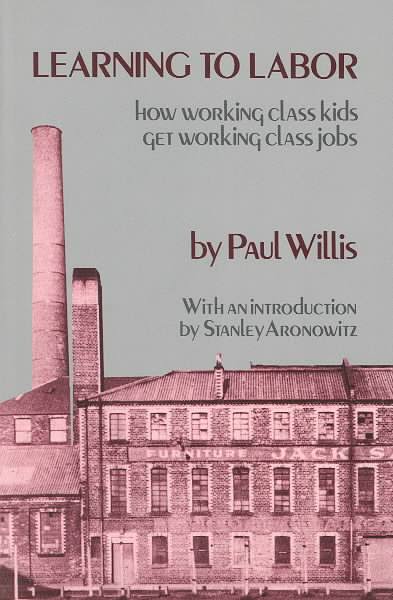
Learning to Labor: How Working Class Kids Get Working Class Jobs by Paul Willis

Share

learning to labor

A Reflection on the Educational Fallacy We Still Promote in Schools Today

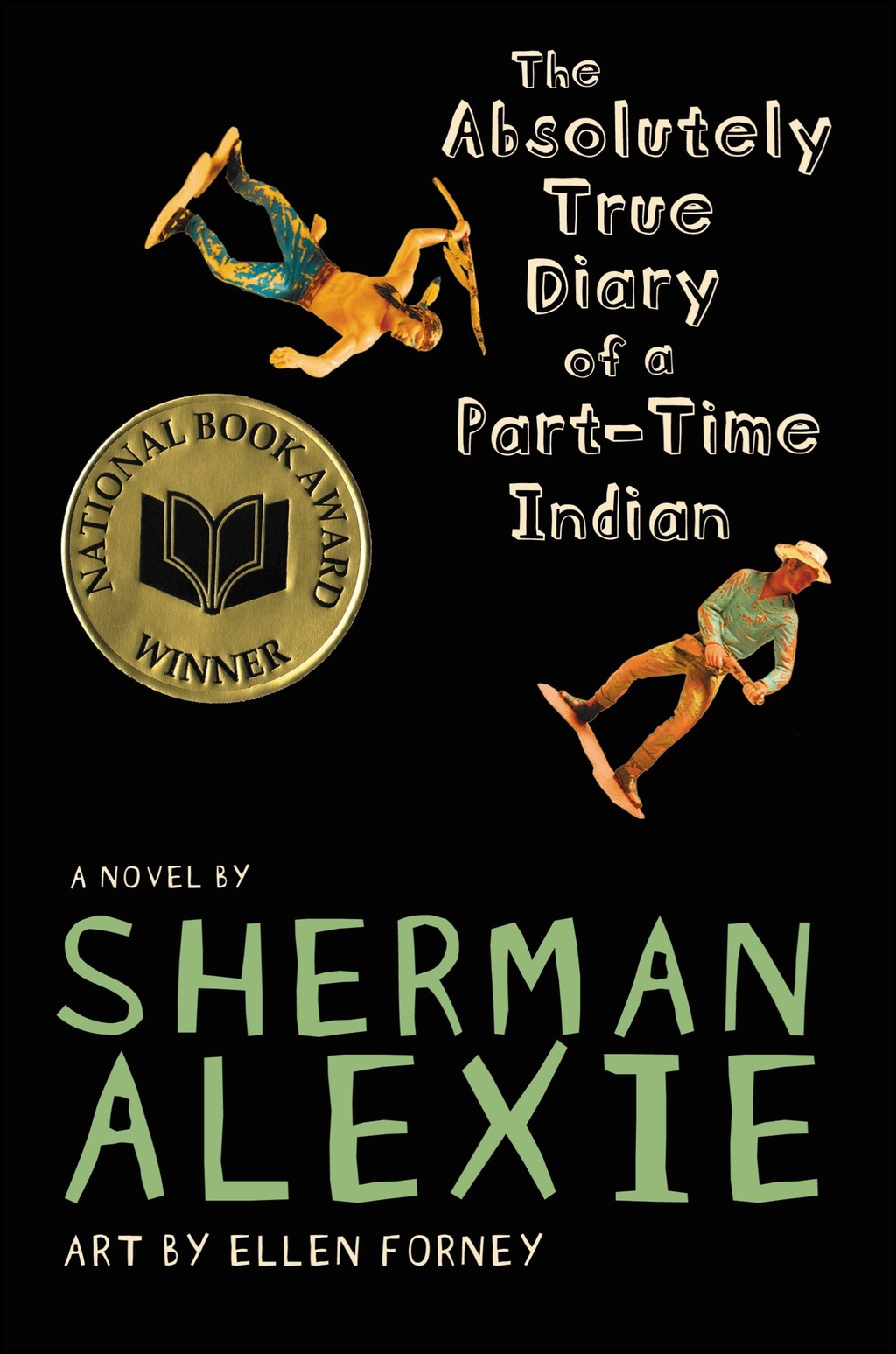
The cover isn’t thrilling. The book is old (originally published in 1977), but goodness, it is still relevant. For those of you who missed this book the first time it came out, I will start with a brief synopsis. Paul Willis interviewed 12 “non-academic,” working class lads in Great Britain. He wanted to learn more about their subscription to a counter-culture and also was curious about their lives after school in the work force. These are the kids who smoked next to the school just to be seen smoking. They drank during lunch just out of defiance of the school. We know “these kids,” and they exist in every high school.

Willis found that regardless of their resistance to join the system, in the end, they ended up right where the system wanted them—in working class jobs in factories. He examines the masculinity perceived in these jobs, and he interviews the lads after they’ve entered the work force, too. He describes the optimism in the lads’ situation. They are very creative in the ways they thwart the school system. They say they’d never want office jobs or “mental labor.” The pessimism of their situation is the fact that the school system does not provide the upward mobility it claims to provide. They end up in “meaningless” jobs that offer them little pay.

When we tell students today to just do their best and work hard and that they will be successful, are we promoting an educational fallacy? We know that higher graduation rates will not produce more quality job opportunities for all. So why do we pretend that each student in our classes has an opportunity to be in a high-paying, “meaningful” job? Willis describes the ways that schools promote classism. Working class kids are prepared for working class jobs. (Obviously, we don’t technically have a working class anymore, but we can still find parallels in our school systems and job opportunities.)

Essentially, Willis describes how only a few individuals from these schools will end up in “meaningful” (according to culture’s standards) jobs, but the whole working class could never have upward mobility. The economy secures this disappointing truth, and without more opportunities, most of these students are destined for jobs in industrial factories. I was disturbed by how relevant this is to schools and jobs today. These lads’ refusal to cooperate in school (as a part of the “counter-school” culture) actually shows their refusal to collude with their own educational suppression. Willis depicts this beautifully. Those students who refuse to participate in lower-class schools may, in fact, have a perspective that is superior to that of the school. They understand, perhaps, that only a few students will make it in meaningful jobs, and they perceive these jobs to be unsatisfying, as well.

While I don’t believe I am as wholly pessimistic as Willis is, I think his points are valid and true. To what extent are we lying to students and promising them jobs that aren’t there? How do we fix this? Can it start in the ways we design schools, or must we rely on the political system? By teaching students about the power of education, I believe we are presenting them with opportunities they can or cannot choose to take. It is my hope that we can devise a system that opportunities truly exist for all who want them, rather than those hardworking, lucky few.

RickiSig

Top Ten Tuesday: Books We Enjoyed Recently that Weren’t Typical Genres/Topics We Read

Share

top ten tuesday

Top Ten Tuesday is an original feature/weekly meme created at The Broke and the Bookish. The feature was created because The Broke and Bookish are particularly fond of lists (as are we!). Each week a new Top Ten list topic is given and bloggers can participate.

 Today’s Topic: Books We Enjoyed Recently that Weren’t Typical Genres/Topics We Read

This was a hard topic for us because we both are open to reading pretty much everything! We tried to think of books that were not the usual genres/topics we go to.

Ricki

1. The Martian by Andy Weir

martian

My husband said, “You won’t like it. It isn’t what you usually read.” I said, “What do I usually read? I read everything!” I suppose he is right. Adult science fiction isn’t usually my thing and the writing wasn’t incredible, but I enjoyed all that I learned from this book.

2. Gena/Finn by Hannah Moskowitz

gena finn

I don’t tend to enjoy books that feature emails, texts, etc. This book is very well done, and the form added a lot to the story. I really enjoyed it.

3. Courage Has No Color: The True Story of the Triple Nickles, America’s First Black Paratroopers by Tanya Lee Stone

courage has no color

I enjoy picture book nonfiction and adult memoirs, but this book appeared more nonfiction-oriented than most books I read. It was a wonderful book and worthy of the praise it has received.

4. The Alphabet Book of Bugs: An ABC Book by Valerie Gates

alphabet of bugs

I do not like bugs. At all. But there is something really awesome about the photography and integration of colors in this book.

5. Fatal Fever: Tracking Down Typhoid Mary by Gail Jarrow

fatal fever

This is another nonfiction book I wouldn’t typically pick up. I was very engaged in the story—from cover to cover—and really enjoyed reading it and talking about it with others.

Kellee

This was a tough topic for me! I have made a promise to myself to not read anything I am not enjoying (unless I have to), but these are books that were a bit out of my comfort zone though I still enjoyed.

1. Alistair Grim’s Odditorium by Gregory Funaro

odditorium

I don’t normally gravitate towards darker odd books like this one, but I am so glad I did because I loved the adventure.

2. Timmy Failure: Mistakes Were Made by Stephan Pastis

timmy failure 1

A boy running detective agency with a bear sidekick–sounds so ridiculous. And it is. But also quite funny.

3. Ebola: Fears and Facts by Patricia Newman

ebola

Middle grade science nonfiction can be hard for me to be engaged, but this one kept me reading.

4. Ghostlight by Sonia Gensler

Ghostlight

I get scared very easily, so I was surprised I stuck with this one, but I had to know the answer to the mystery!

5. Reading Workshop 2.0 by Frank Serafini

reading workshop 2.0

I love learning and becoming the best educator I can be, but I am not good at reading professional books cover to cover. I did with this one though!

Which books have you enjoyed recently that are atypical for you?

RickiSig and Signature

Author Guest Post! by Sue Duff, Author of Sleight of Hand

Share

The Weir Chronicles is based on my love of earth and space sciences. I do extensive research and use what I can relate to modern science for the basis of the Weirs powers. If I take any liberties, it’s minimal, and extends from my belief of what might be, yet remains unproven or unexplained.

  1. What area of science do you believe shyfting — disappearing from one location and reappearing in another — might be explained? Does this phenomenon have scientific basis, or is it merely the author’s belief?
  2. The Weir’s ability to heal themselves comes from what’s found in nature. Calcium to repair broken bones, proteins for torn ligaments, etc. Name examples of homeopathic practices found today. What countries embrace those practices more than others? Choose one type of homeopathic method and research it. How old is it? What is used? Is it regionally based, and if so, why?
  3. Lightning plays a major role in SLEIGHT OF HAND. What elements and reactions are needed to create lightning? How hot does it get? Can the human body withstand a direct strike? What happens to the body when lightning is absorbed? What part of the body can actually melt? What are common ailments reported by those who have been struck and lived?
  4. The Weir believe that unless the energies found within the planet are in harmony with the energy housed across the surface, the planet will be out of balance and slowly self-destruct. Give an example of this occurring in present day earth. Can it be controlled, and if so, how?
  5. As the series unfolds, the plot encompasses Earth’s twin in an alternate dimension. There are countless books, television shows and movies based on similar beliefs to mine. What scientific basis is there to suggest there are parallel dimensions? Discuss your personal theories or beliefs about this. Would they be exact, or mirror images of each other? How many would there be? Would there be significant differences between them? Why or why not?

Whether or not you’ve read The Weir Chronicles, I hope the class discussions gave you a sneak peek into the extensive world building research that I did for the novels. Look out for the final two books in The Weir Chronicles series, Stack the Deck, coming in late 2016 and Dim the Lights, appearing in 2017.

Sleight of Hand


The Weir Chronicles series follows a young man, Ian Black, as he finds purpose in the world and discovers his inner strength. He is the last born to the Weir, a magical race of beings who have kept the energies of earth in harmony. The Weir are dying out, and Ian is their final hope to prevent the planet from self-destructing. But Ian isn’t born with the Prophesized powers and in desperation, the Weir elders torture him, trying to bring his powers to the surface.

In book one, Fade to Black, Ian has abandoned his people and hides among humans as an illusionist. A nosey reporter uncovers his secrets and unwittingly exposes him to those who would kill for his connection to the earth. Ian fights to keep them both safe, and uncovers a Weir traitor bent on bringing about Earth’s destruction. In the second installment, Masks and Mirrors, Ian stumbles upon a band of rebels, fighting alongside the Weir to keep Earth safe, but the rebel leader gives Ian cause to question their motives for safeguarding the planet and he risks everything to discover their true agenda. The third book, Sleight of Hand continues the battle to protect Earth. The rebels poison Ian, and it’s up to his friends to find a cure before Ian succumbs and the planet is left in the hands of those intent on taking control of the resources that Earth has to offer.

Author Sue Duff

Sue Duff has dreamed of dragons and spaceships before she could even read, so it’s only natural that she now combines both fantasy and science fiction as her favorite genre. Having written since high school, Duff never took it seriously until a skiing accident laid her up for an entire summer and she turned on the word processor to combat the boredom. A couple years later, her first urban fantasy novel, Fade to Black, was one of five finalists in the RMFW Colorado Gold Writing Contest and in 2015, Duff’s writing earned her the PEN AwardShe is the second oldest of six girls with an avid reader mom and her dad, the family’ single drop of testosterone in a sea of estrogen. By day, Duff is a dedicated speech-language therapist at an inner city school district, a career she pursued much in part to her aunt who got her hooked on stories of the profession when Duff was younger. She is passionate about the work she does and regularly works to help those students that need it the most.

Sue is a member of the R ocky Mountain Fiction Writers and T he Pikes Peak WritersShe calls Colorado home and when not saving the world one page at a time, she can be found walking her great dane, getting her hands dirty in her garden, or creating something delicious in her kitchen.

Catch up with her through her website. www.sueduff.com

Facebook: https://www.facebook.com/sueduffwriter

Twitter: https://twitter.com/sueduff55

Instagram: sueduffauthor

Email: sueduffauthor@googlemail.com


Thank you for this post, Sue, and thank you to Sami for connecting us with Sue!

RickiSig andKellee Signature

The Happy Dandelion App

Share

Happy Dandelion

The Happy Dandelion App

We were contacted by Joshua and Donna Wilson, a husband-wife team and The Happy Dandelion creators, who asked if we’d review their picture book app. Because apps stray toward the advertising sector, we always review the apps carefully before we feature them on the blog. As you all know, we are not for-profit, and we are truly here for the love of teaching books, but after previewing the app, we decided it was too lovely not to share.

The books featured are picture books for all ages, and we were able to pull our sons (who are toddlers) onto our laps, and they loved pushing parts of the books to see the words spin, bump, and twist. It was fun to navigate the books because there were so many places to push, and we felt like we’d won for each time that we pushed the right places!

The first book we reviewed was The Sometimes Road. This was a calming book that is directed more for adults and is about the twists and turns of life. It was a story that will be appreciated by kids, too! There were many quotable sections that felt very zen to us. The music in the background was peaceful, and the storyline discusses the difficulties and triumphs we experience in life. The artwork is absolutely stunning. Ricki accessed this book after yoga class, and it was the perfect time to look at it. It kept her heart calm and made her feel peaceful.

We also accessed The UnStealer, which was very different from the first book. The watercolors popped, and there were many fun twists to this story. It is about an UnStealer who steals, “uns,” which was a very fun play on words. Our kids loved this one, and we think this would be very fun to use as a read-aloud in class. It would be great to take student volunteers to push different parts of the book during the read-aloud.

Check out The UnStealer in action:

We loved playing around with The Happy Dandelion app and think it would be a great resource in a classroom. This would be a great app to load onto an iPad for kids to use during independent reading or to use in groups at a reading station. A special thanks to Joshua and Donna Wilson for recommending their app to us. We had great fun!

RickiSigand Kellee Signature

Top Ten Tuesday: Songs We Wish Were Books

Share

top ten tuesday

Top Ten Tuesday is an original feature/weekly meme created at The Broke and the Bookish. The feature was created because The Broke and Bookish are particularly fond of lists (as are we!). Each week a new Top Ten list topic is given and bloggers can participate.

 Today’s Topic: Songs We Wish Were Books

We include a verse to give you an idea of how great the book would be!

Ricki

I had way too much fun with this topic. It was hard to limit my list to five!

1. “Hello” by Adele

Hello, can you hear me
I’m in California dreaming about who we used to be
When we were younger and free
I’ve forgotten how it felt before the world fell at our feet

2. “A Boy Named Sue” by Johnny Cash

My daddy left home when I was three
And he didn’t leave much to ma and me
Just this old guitar and an empty bottle of booze.
Now, I don’t blame him cause he run and hid
But the meanest thing that he ever did
Was before he left, he went and named me “Sue.”

3. “The Devil Went Down to Georgia” by The Charlie Daniels Band

Well the Devil went down to Georgia
He was lookin’ for a soul to steal
He was in a bind ’cause he was way behind
And he was willin’ to make a deal

4. “Eleanor Rigby” by The Beatles

Eleanor Rigby picks up the rice in the church where a wedding has been
Lives in a dream
Waits at the window, wearing the face that she keeps in a jar by the door
Who is it for?

5. “The Thunder Rolls” by Garth Brooks

She’s waitin’ by the window
When he pulls into the drive
She rushes out to hold him
Thankful he’s alive
But on the wind and rain
A strange new perfume blows
And the lightnin’ flashes in her eyes
And he knows that she knows
And the thunder rolls

Kellee

1. “Yellow Submarine” by The Beatles

In the town where I was born
Lived a man who sailed to sea
And he told us of his life
In the land of submarines

So we sailed up to the sun
Till we found the sea of green
And we lived beneath the waves
In our yellow submarine

2. “The Hand That Feeds” by Nine Inch Nails

You’re keeping in step
In the line
Got your chin held high and you feel just fine
Cause you do
What you’re told
But inside your heart it is black and it’s hollow and it’s cold

Just how deep do you believe?
Will you bite the hand that feeds?
Will you chew until it bleeds?
Can you get up off your knees?
Are you brave enough to see?
Do you want to change it?

3. “Tangled Up in Blue” by Bob Dylan

Early one mornin’ the sun was shinin’
I was layin’ in bed
Wond’rin’ if she’d changed at all
If her hair was still red
Her folks they said our lives together
Sure was gonna be rough
They never did like Mama’s homemade dress
Papa’s bankbook wasn’t big enough
And I was standin’ on the side of the road
Rain fallin’ on my shoes
Heading out for the East Coast
Lord knows I’ve paid some dues gettin’ through
Tangled up in blue

4. “Locked Up and Lonely” Masked Intruder

In the loneliest place on Earth
I’m locked away
Still holding on for whatever it’s worth
Just waiting for love to save the day

And they say no one gets out alive
Well I pray it isn’t true
And I wait around for somebody
Somebody like you

5. “Yearbook” by Hanson

Oh, dear Amy see you in September
Hope that you remember me next year
Hey Jamie you’ve been a great friend to me
I hope that I’ll still see you around here

‘Cause I’m looking through the yearbook then I find that empty space
No he never wrote me nothing but I can’t forget his face

Which songs do you wish were books?

RickiSig and Signature

Not if I See You First by Eric Lindstrom

Share

not if i see you first

Not If I See You First
Authors: Eric Lindstrom
Published: December 1, 2015 by Poppy

GoodReads Summary: The Rules:

Don’t deceive me. Ever. Especially using my blindness. Especially in public.

Don’t help me unless I ask. Otherwise you’re just getting in my way or bothering me.

Don’t be weird. Seriously, other than having my eyes closed all the time, I’m just like you only smarter.

Parker Grant doesn’t need 20/20 vision to see right through you. That’s why she created the Rules: Don’t treat her any differently just because she’s blind, and never take advantage. There will be no second chances. Just ask Scott Kilpatrick, the boy who broke her heart.

When Scott suddenly reappears in her life after being gone for years, Parker knows there’s only one way to react—shun him so hard it hurts. She has enough on her mind already, like trying out for the track team (that’s right, her eyes don’t work but her legs still do), doling out tough-love advice to her painfully naive classmates, and giving herself gold stars for every day she hasn’t cried since her dad’s death three months ago. But avoiding her past quickly proves impossible, and the more Parker learns about what really happened—both with Scott, and her dad—the more she starts to question if things are always as they seem. Maybe, just maybe, some Rules are meant to be broken.

Combining a fiercely engaging voice with true heart, debut author Erid Lindstrom’s Not If I See You First illuminates those blind spots that we all have in life, whether visually impaired or not.

Review: The story is about a girl who is blind and a runner. I feel like I learned so much for this book from the physical and mental strength of this young girl. Frankly, I can’t quite find the words to express how much it taught me about life. The narrator is feisty, and I appreciated her candor about her disability. I came to realize how incredibly frustrating it would be to deal with the same reactions from strangers every day, particularly when she feels perfectly capable. This is a great book to teach empathy.
Teachers’ Tools for Navigation: We don’t talk about disability in literature enough. I would love to put students in literature circles, with all of the texts focusing on disability. It would be interesting to have whole-class discussions about the way disability is present in each text. It might be particularly interesting to include texts that feature mental and physical disability. This might lead to good discussions, like: What is disability? Is a disability always visible to others? What is normal?

Discussion Questions: The narrator of the text is unlikable. How does this add to the story? Why might the author have written the text in this way?; Do you think Parker’s rules are fair? Why do you think she has this list of rule?

We Flagged: I flagged this section because it shows Parker’s dry humor:

“‘So you’re blind, huh?’

I cock my head toward the unfamiliar male voice coming from the seat directly in front of me. Low-pitched a bit thick around the vowels. The voice of a jock, but I just keep that as a working hypothesis awaiting more evidence.”

Read This If You Loved: The Running Dream by Wendelin Van Draanen, Girl, Stolen by April Henry, Blind by Rachel DeWoskin, Wonder by R.J. Palacio, Out of My Mind by Sharon Draper

Recommended For:

litcirclesbuttonsmall classroomlibrarybuttonsmall

RickiSig

Top Ten Tuesday: Favorite Literary Couples

Share

top ten tuesday

Top Ten Tuesday is an original feature/weekly meme created at The Broke and the Bookish. The feature was created because The Broke and Bookish are particularly fond of lists (as are we!). Each week a new Top Ten list topic is given and bloggers can participate.

 Today’s Topic: Favorite Literary Couples

These couples are so easy to fall in love with!

Ricki

1. Brigan and Fire from Fire by Kristin Cashore

fire

This phenomenal book features one of my favorite couples. I almost named my son Brigan, but it didn’t quite go with my last name.

2. Lou and Will from Me Before You by Jojo Moyes

me before you

Proving that disability most certainly doesn’t get in the way in love.

3. Isabel and Conrad/Jeremiah from The Summer I Turned Pretty by Jenny Han

summer i turned pretty

I devoured these books, and my students and I had heated debates about this romance.

4. Aristotle and Dante from Aristotle and Dante Discover the Secrets of the Universe by Benjamin Alire Sáenz

aristotleand

There is nothing better than the love that emanates from this book.

5. Elizabeth and Mr. Darcy from Pride and Prejudice by Jane Austen

Pride and Prejudice

I couldn’t keep it off the list. That would be negligent of me. 😉

Kellee

1. Katsa and Po from Graceling by Kristin Cashore

graceling

Their love is one of those passionate, forever loves where the reader falls in love with the character too because the protagonist loves the other so much.

2. Eleanor and Park from Eleanor & Park by Rainbow Rowell

eleanor

Imperfect, perfect love.

3. Aristotle and Dante from Aristotle and Dante Discover the Secrets of the Universe by Benjamin Alire Sáenz

aristotleand

There is just something so special about the true love that flows through this book.

4. Sam and Camilla from Life in Outer Space by Melissa Keil

outerspace

These characters are so different and so quirky yet so perfect for each other.

5. Tally and David from Uglies by Scott Westerfeld

uglies

Tally and David are just so kick butt, and together they just are even more so!

Which literary couples were your favorite?

RickiSig and Signature