
Sofia’s YA Book Nook: The Other Side of Tomorrow by Tina Cho

Share

Sofia is a 13-year-old brilliant reader who aspires to be a book reviewer. Since she was 8 years old, on select weeks, Sofia shares her favorite books with other young people her age! She is one of the most well-read youth that we know, so she is highly qualified for this role!


Dear readers,

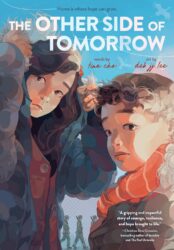
Let me introduce you to The Other Side of Tomorrow by Tina Cho, a heartfelt graphic novel about the dangers of escaping North Korea. The story follows two kids on their journey to leave the country for a better life. You come along with them each step of the way, witnessing the horrible things North Koreans have to go through just to get to freedom. This story is told in beautiful illustrations that capture the emotions of the reader as well. I loved looking through the eyes of someone escaping communism, in a search for a better life, and feel that it is eye opening to read this. The Other Side of Tomorrow was a really grounding book that really makes you grateful for all you have, while also sharing others’ important stories and experiences.

Goodreads Summary

Perfect for fans of Illegal and When Stars Are Scattered, this poignant and moving graphic novel in verse captures the dangers and hope that comes with fleeing North Korea and reaching for a brighter future through the lives of Yunho and Myunghee.

From never knowing where they’ll find their next meal to avoiding soldiers lurking at every corner, many North Koreans have learned that sticking around can be just as deadly as attempting to flee … almost.

Both shy, resourceful Yunho and fierce, vibrant Myunghee know this. So when they each resolve to run away from the bleak futures they face, it’s with the knowledge that they could be facing a fate worse than death. While Yunho hopes to reunite with his omma, who snuck across the border years ago, Myunghee is reaching for dreams that are bigger than anything the regime would allow her to have.

The two are strangers to each other until a chance encounter unwittingly intertwines their fates and Myunghee saves Yunho’s life. Kept together by their dreams for a brighter future, they face a road plagued by poisonous jungle snakes, corrupt soldiers, and the daily fear of discovery and imprisonment. But with every step toward freedom, there is also hope. Will it be enough for both of them to make it to safety without losing each other along the way?

My Thoughts

The Other Side of Tomorrow will certainly pull at your heartstrings, as it did for me. As you come along the journey of Myunghee and Yunho, you get to experience the hardships people fleeing from North Korea face. Before reading this book, I thought that once you escape North Korea, which is hard enough, you are free and can build a new life. What I discovered through this book is that my previous statement could not be further from the truth. Even if you make it to China, they have an extradition treaty with North Korea, meaning that if anybody realizes you are from there, you will immediately get punished and sent back. Additionally, Chinese soldiers receive monetary compensation for every North Korean they report, (incentivizing)meaning they will always be on the lookout for them. Even though this book is sad, I think it is important to know what people on the other side of the world are going through, so we can spread awareness and help them. The beautiful illustrations enhance the reading experience, wonderfully telling this story of pain and hardship. I hope you enjoy this wonderful book!

I would recommend this book for ages 11+ because of the complex topics it discusses which may be hard to understand for younger readers. The simple way in which The Other Side of Tomorrow is written makes it easier to understand for all readers. The only thing I would say is that this is an incredibly sad book, about the many hardships escapees from North Korea have to face.

**Thanks so much, Sofia!**

Sofia’s YA Book Nook: The Lost Year by Katherine Marsh

Share

Sofia is a 13-year-old brilliant reader who aspires to be a book reviewer. Since she was 8 years old, on select weeks, Sofia shares her favorite books with other young people her age! She is one of the most well-read youth that we know, so she is highly qualified for this role!


Dear readers,

Let me introduce you to The Lost Year by Katherine Marsh, an incredibly moving historical tale about the story of three girls during the Ukrainian Holodomor. I picked this book off of the Nutmeg shelf at my local library, which is an award they give to children’s all the way to high school books in Connecticut. There are a few books selected each year in every age category and they tend to be great reads, but this time, I was not ready for the whirlwind of emotions that followed picking this book off the shelf. It is told in three perspectives, Mila, Helen, and Matthew. One day during COVID, Matthew is ordered by his mom to stop playing video games and to help his great grandmother declutter some of the boxes she has in her room. Matthew just wants to play on his Nintendo Switch but after realizing that isn’t an option, he reluctantly agrees to help. His grandmother has never really talked much about her life and all he knows is that she almost starved in some Ukrainian famine but as soon as he opens the first box, he learns much more. The past is told by Mila, who is the daughter of a Ukrainian Oligarch and Helen, who lives in New York as the daughter of Ukrainian immigrants. Both girls are living in the 1930’s while Ukraine was a part of the Soviet Union, which is where Mila lives. It was so exciting and heartbreaking to watch their stories unravel, I hope you read this important historical tale.

Goodreads Summary

A middle-grade survival story that traces a family secret back to the Holodomor, a terrible famine that devastated Soviet Ukraine in the 1930s. Thirteen-year-old Matthew is miserable. His journalist dad is stuck overseas indefinitely, and his mom has moved in his one-hundred-year-old great-grandmother to ride out the pandemic, adding to his stress and isolation. But when Matthew finds a tattered black-and-white photo in his great-grandmother’s belongings, he discovers a clue to a hidden chapter of her past, one that will lead to a life-shattering family secret. Set in alternating timelines that connect the present-day to the 1930s and the US to the USSR, Katherine Marsh’s latest novel sheds fresh light on the Holodomor – the horrific famine that killed millions of Ukrainians, and which the Soviet government covered up for decades. Inspired by Marsh’s own family history.

My Thoughts

Wow, wow, wow, that is all I can say after reading this masterpiece. This is a book about a horrible time but the story is told beautifully. I usually don’t cry when I read a book, even if they are really sad but I shed a few tears at the end of this novel. So many unexpected things happen and you find yourself on the edge of your seat the entire time, hoping that the characters will be okay. Marsh NAILED Mila’s perspective, making us understand how blinded by Soviet propaganda Mila was. Before this book, I had never even heard of the Holodomor, and it is so powerful that The Lost Year brings to light this disgusting period of human history, which everybody should know about.

Also, heads up, you should read the Author’s Note because it just makes the story so much more special and important. All in all, I think The Lost Year is a book everybody should read because of the beautiful writing and gripping story. I hope you enjoy this book!

I would recommend this book for ages 13+ because of the difficult topics including death, genocide, the Soviet Union and grief.

**Thanks so much, Sofia!**

Learning to Labor: How Working Class Kids Get Working Class Jobs by Paul Willis

Share

learning to labor

A Reflection on the Educational Fallacy We Still Promote in Schools Today

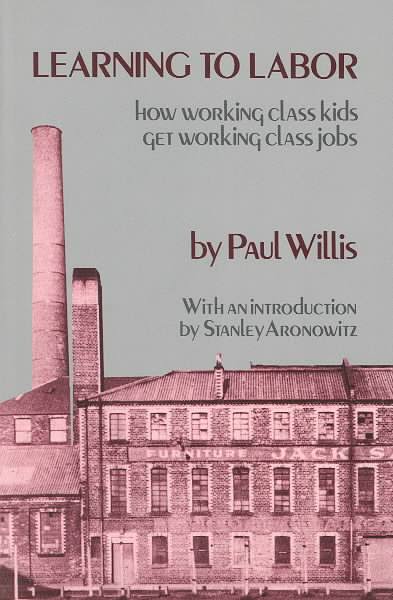
The cover isn’t thrilling. The book is old (originally published in 1977), but goodness, it is still relevant. For those of you who missed this book the first time it came out, I will start with a brief synopsis. Paul Willis interviewed 12 “non-academic,” working class lads in Great Britain. He wanted to learn more about their subscription to a counter-culture and also was curious about their lives after school in the work force. These are the kids who smoked next to the school just to be seen smoking. They drank during lunch just out of defiance of the school. We know “these kids,” and they exist in every high school.

Willis found that regardless of their resistance to join the system, in the end, they ended up right where the system wanted them—in working class jobs in factories. He examines the masculinity perceived in these jobs, and he interviews the lads after they’ve entered the work force, too. He describes the optimism in the lads’ situation. They are very creative in the ways they thwart the school system. They say they’d never want office jobs or “mental labor.” The pessimism of their situation is the fact that the school system does not provide the upward mobility it claims to provide. They end up in “meaningless” jobs that offer them little pay.

When we tell students today to just do their best and work hard and that they will be successful, are we promoting an educational fallacy? We know that higher graduation rates will not produce more quality job opportunities for all. So why do we pretend that each student in our classes has an opportunity to be in a high-paying, “meaningful” job? Willis describes the ways that schools promote classism. Working class kids are prepared for working class jobs. (Obviously, we don’t technically have a working class anymore, but we can still find parallels in our school systems and job opportunities.)

Essentially, Willis describes how only a few individuals from these schools will end up in “meaningful” (according to culture’s standards) jobs, but the whole working class could never have upward mobility. The economy secures this disappointing truth, and without more opportunities, most of these students are destined for jobs in industrial factories. I was disturbed by how relevant this is to schools and jobs today. These lads’ refusal to cooperate in school (as a part of the “counter-school” culture) actually shows their refusal to collude with their own educational suppression. Willis depicts this beautifully. Those students who refuse to participate in lower-class schools may, in fact, have a perspective that is superior to that of the school. They understand, perhaps, that only a few students will make it in meaningful jobs, and they perceive these jobs to be unsatisfying, as well.

While I don’t believe I am as wholly pessimistic as Willis is, I think his points are valid and true. To what extent are we lying to students and promising them jobs that aren’t there? How do we fix this? Can it start in the ways we design schools, or must we rely on the political system? By teaching students about the power of education, I believe we are presenting them with opportunities they can or cannot choose to take. It is my hope that we can devise a system that opportunities truly exist for all who want them, rather than those hardworking, lucky few.

RickiSig
