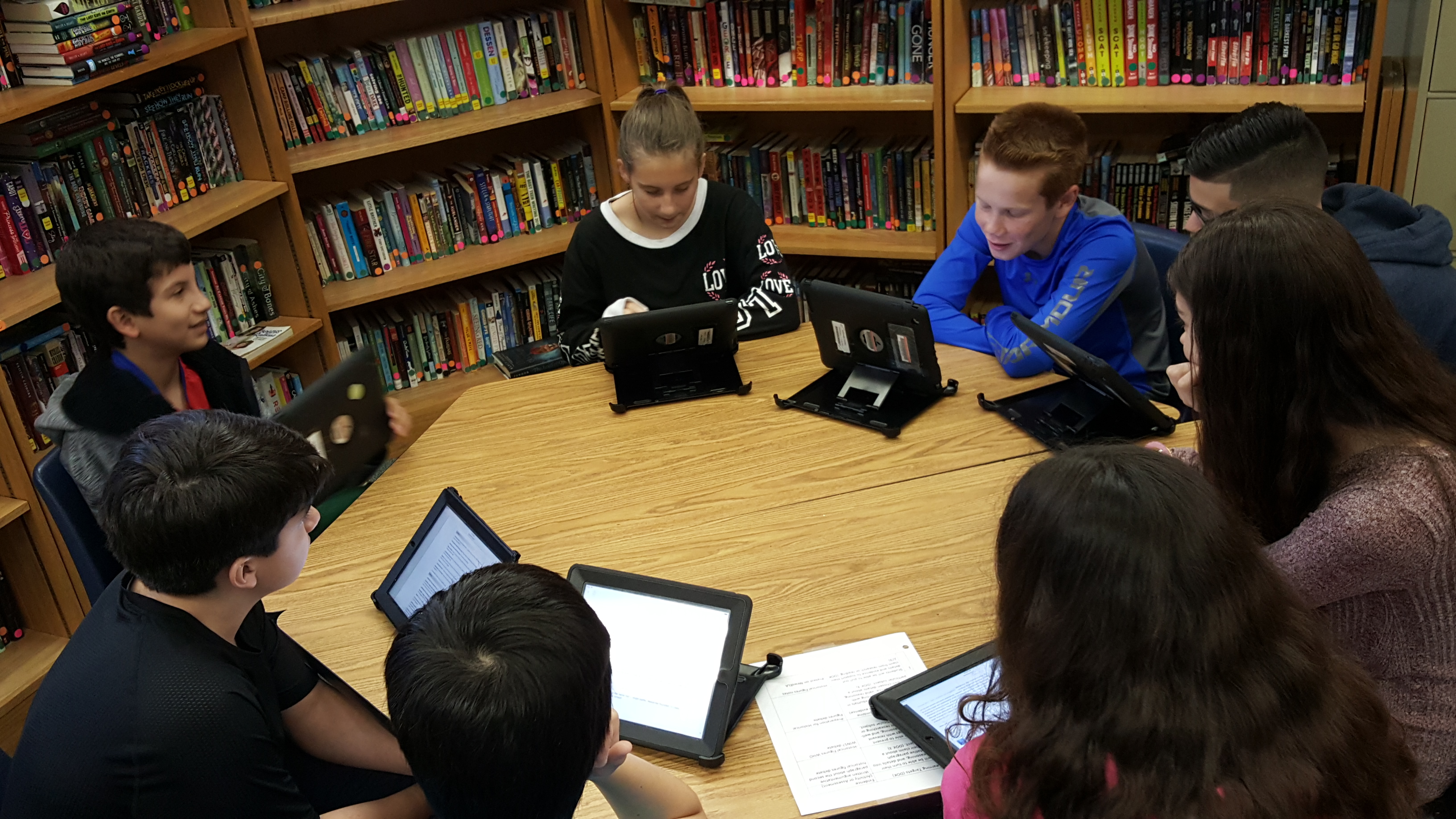
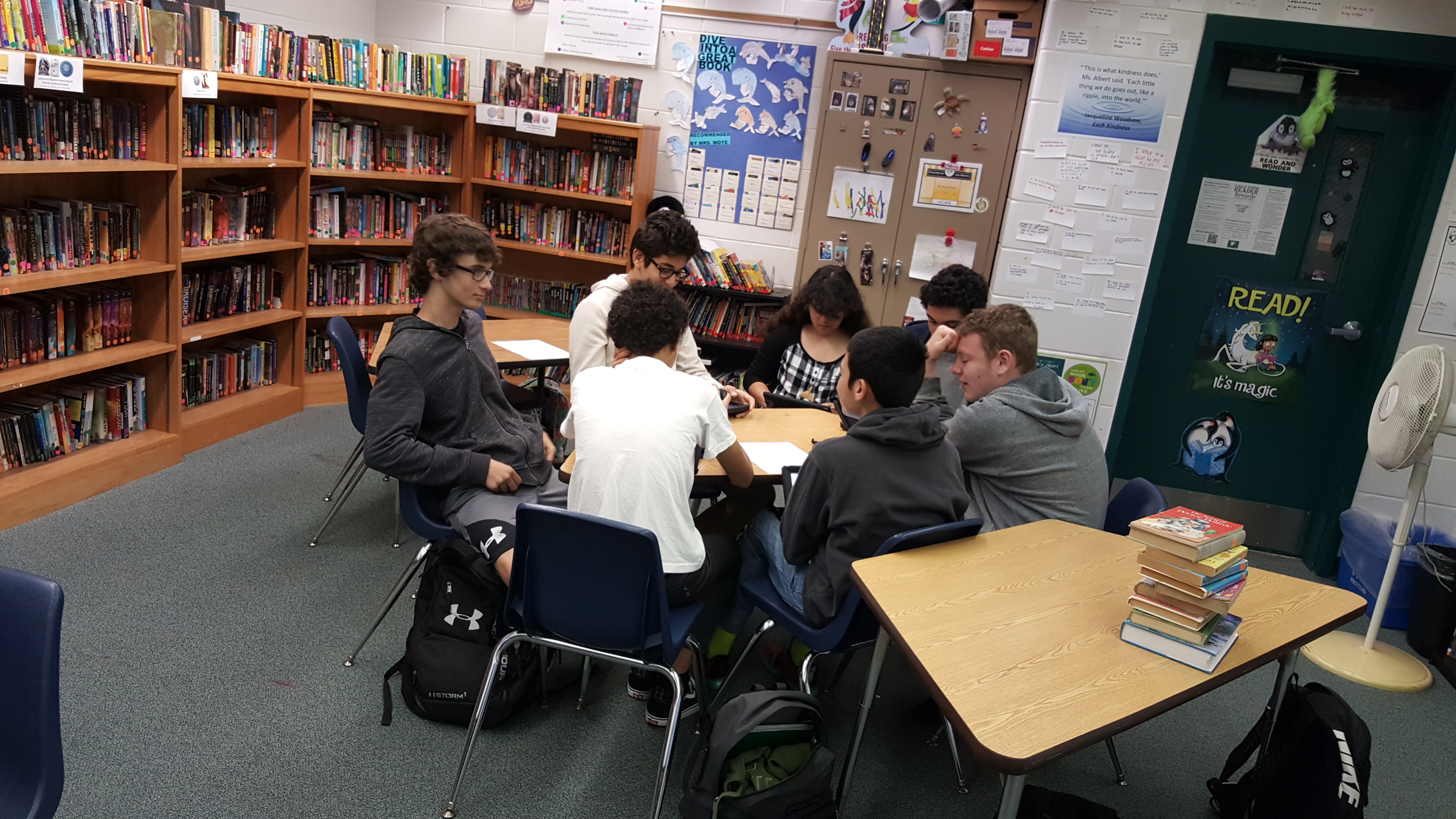
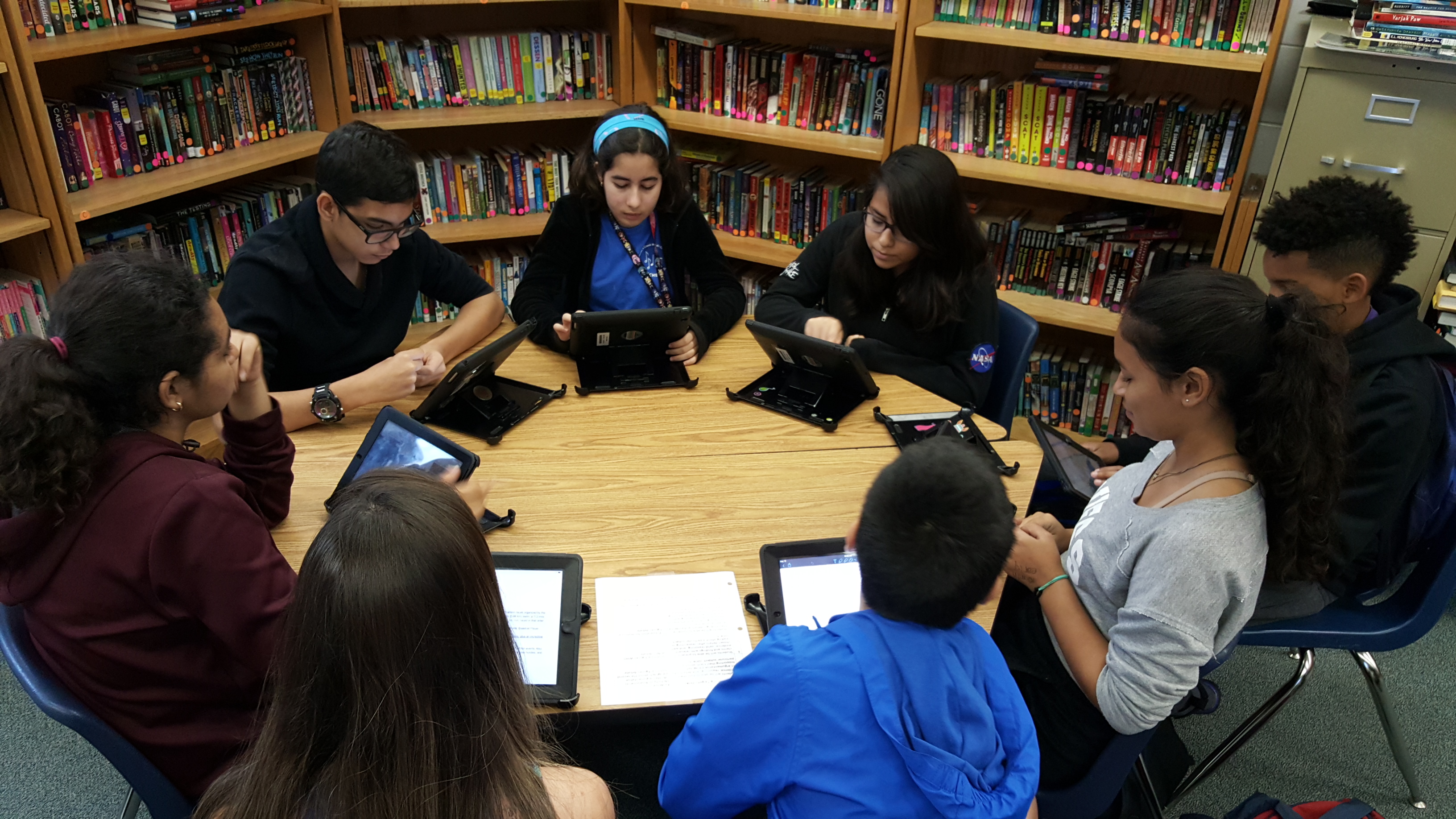
Top Ten Tuesday: Twenty Books We Want to Read from Lily, Freddy, and Joey, 6th grade

Share

top ten tuesday

Top Ten Tuesday is an original feature/weekly meme created at The Broke and the Bookish. The feature was created because The Broke and Bookish are particularly fond of lists (as are we!). Each week a new Top Ten list topic is given and bloggers can participate.

 Today’s Topic: Ten Book I Want to Read

from Lily M., 6th grade

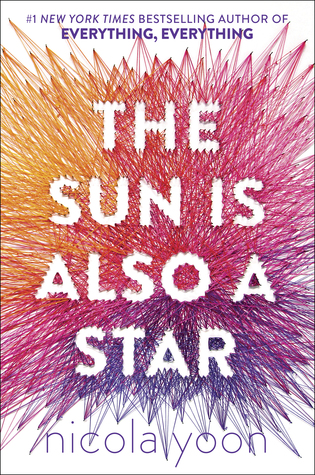
1. The Sun is Also a Star by Nicola Yoon

I like to read romance novels.

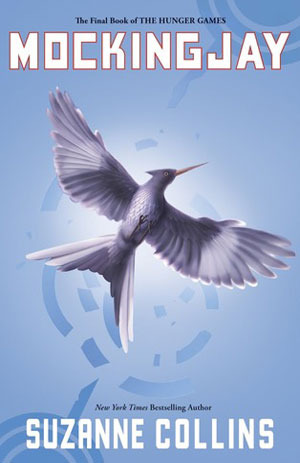
2. Mockingjay by Suzanne Collins

I have finished the first two books of The Hunger Games.

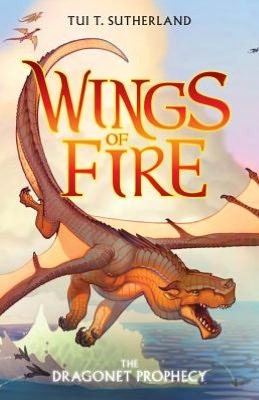
3. Wings of Fire series by Tui T. Sutherland

This series was recommended by a friend.

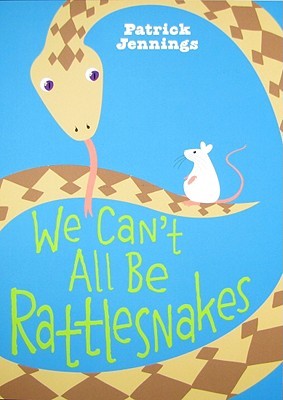
4. We Can’t All Be Rattlesnakes by Patrick Jennings

The book was in a book path, and it sounds so interesting.

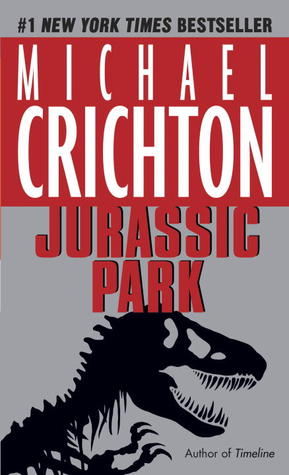
5. Jurassic Park by Michael Crichton

I liked books written by Michael Crichton.

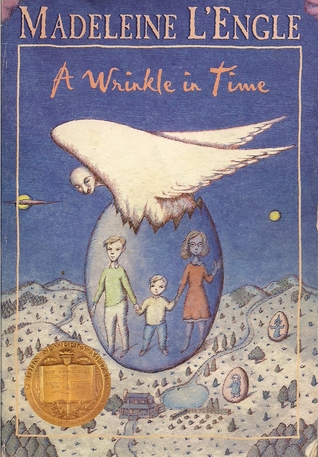
6. A Wrinkle in Time by Madeline L’Engle

It was recommended by my mother.

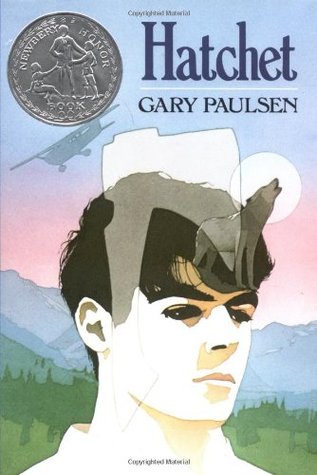
7. Hatchet by Gary Paulsen

It was recommended by my 5th grade teacher.

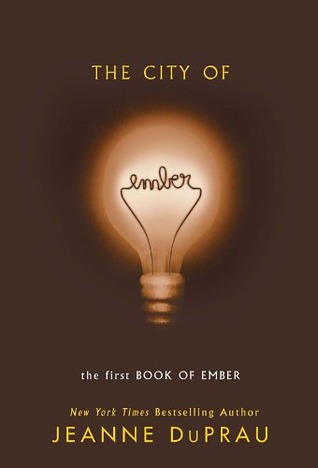
8. The City of Ember series by Jeanne Duprau

I started the first book, and it was very interesting.

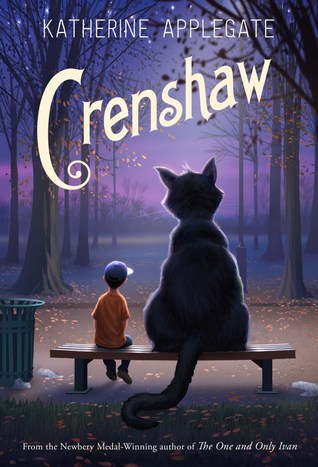
9. Crenshaw by Katherine Applegate

It has an amazing rating on book review sites.

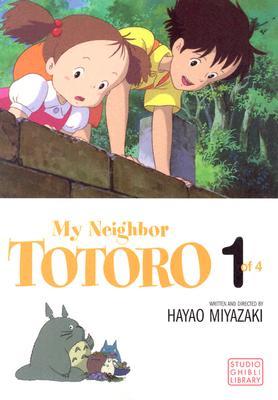
10. My Neighbor Totoro by Hayao Miyazaki

I love the movie! 


 Today’s Topic: Ten Book We Want to Read

from Freddy P. & Joey B., 6th grade

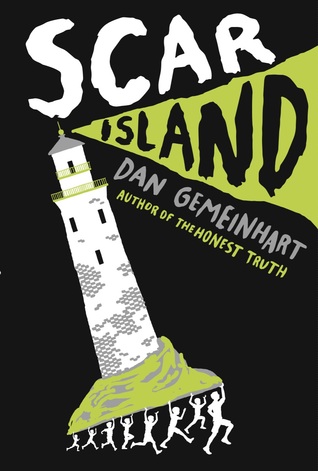
1. Scar Island by Dan Gemeinhart

The book’s summary grabs your attention, and we are very intrigued. -Freddy & Joey

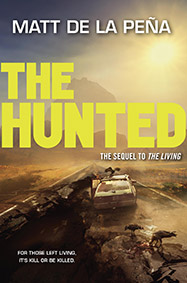
2. The Living and The Hunted by Matt de la Peña

Someone in our class recommended it to us. -Freddy & Joey

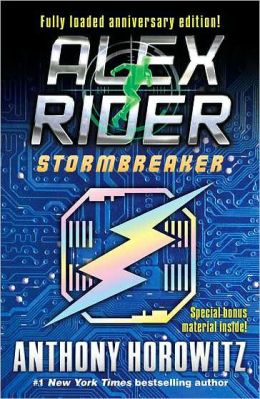
3. Stormbreaker by Anthony Horowitz

Mrs. Moye said it was a good book, and the summary really grabs you. -Freddy

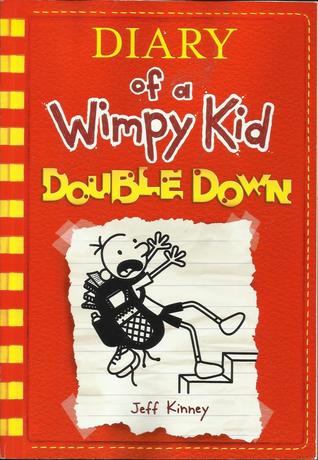
4. Double Down by Jeff Kinney

It’s the newest book in a series I’ve read. -Freddy

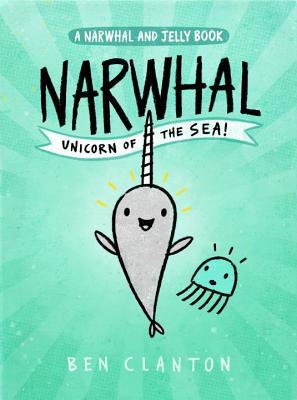
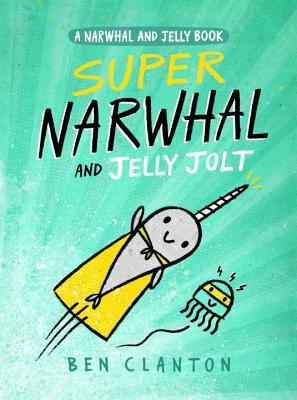
5. Narwhal and Jelly by Ben Clanton


This book sounds so funny! -Joey & Freddy

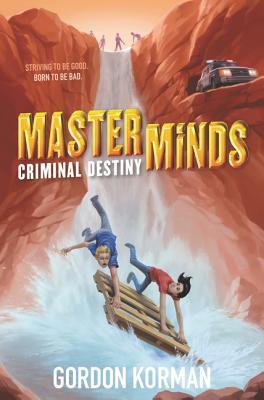
6. Masterminds 2 & 3 by Gordon Korman

I read the first book, and it was so interesting. Now I want to finish the series. -Joey

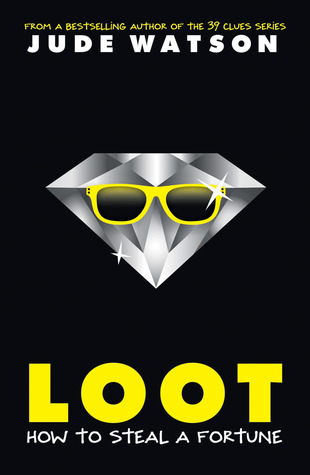
7. Loot by Jude Watson

We Skyped with the author, and from what I know the book seems interesting. -Joey

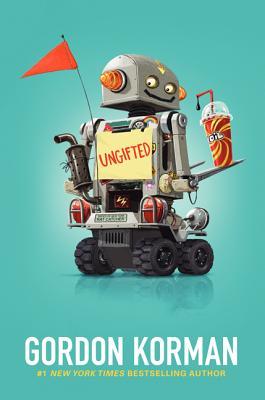
8. Ungifted by Gordon Korman

Someone in our class made a book trailer about the book, and it looks very interesting. -Joey

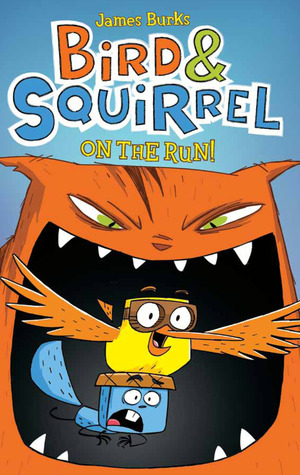
9. Bird & Squirrel series by James Burk

It looks so amusing because it is about an adventure with a bird and a squirrel. -Joey

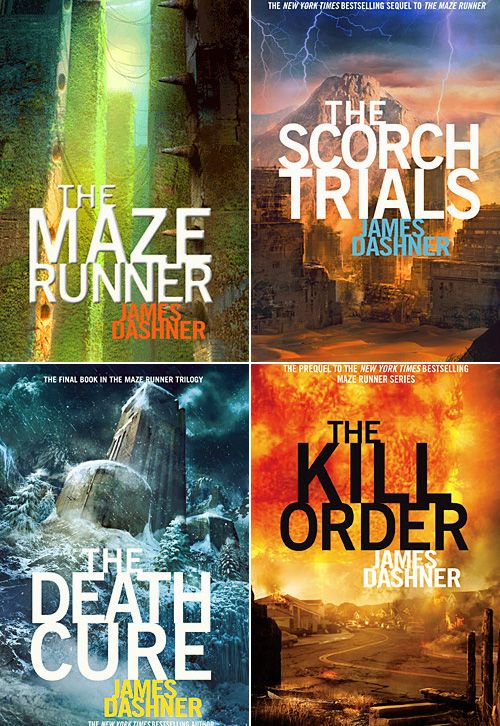
10. Scorch Trials, Death Cure, and The Kill Order by James Dashner

I read the first book, and it was really good. -Freddy

Thank you, Lily, Freddy, and Joey!

Signature

In the Middle School Classroom: Creative and Argumentative Writing with Papertoy Glowbots by Brian Castleforte

Share

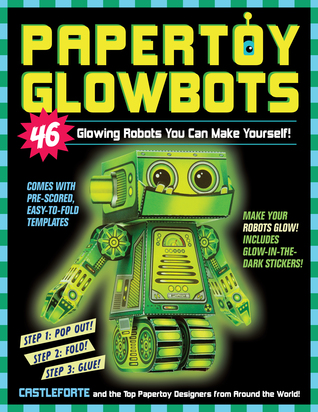
Papertoy Glowbots: 46 Glowing Robots You Can Make Yourself!
Author: Brian Castleforte
Published August 23rd, 2016 by Workman Publishing Company

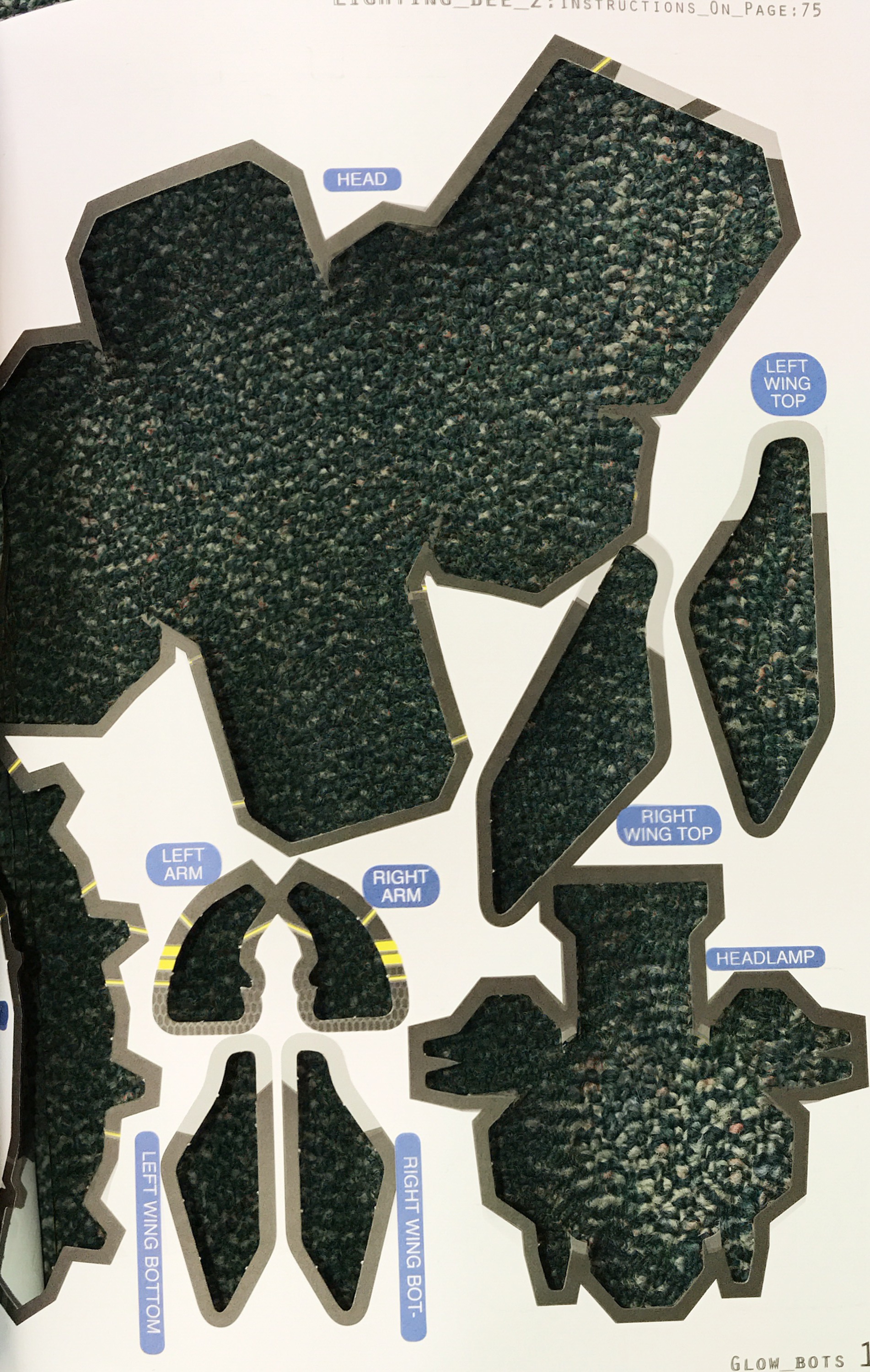
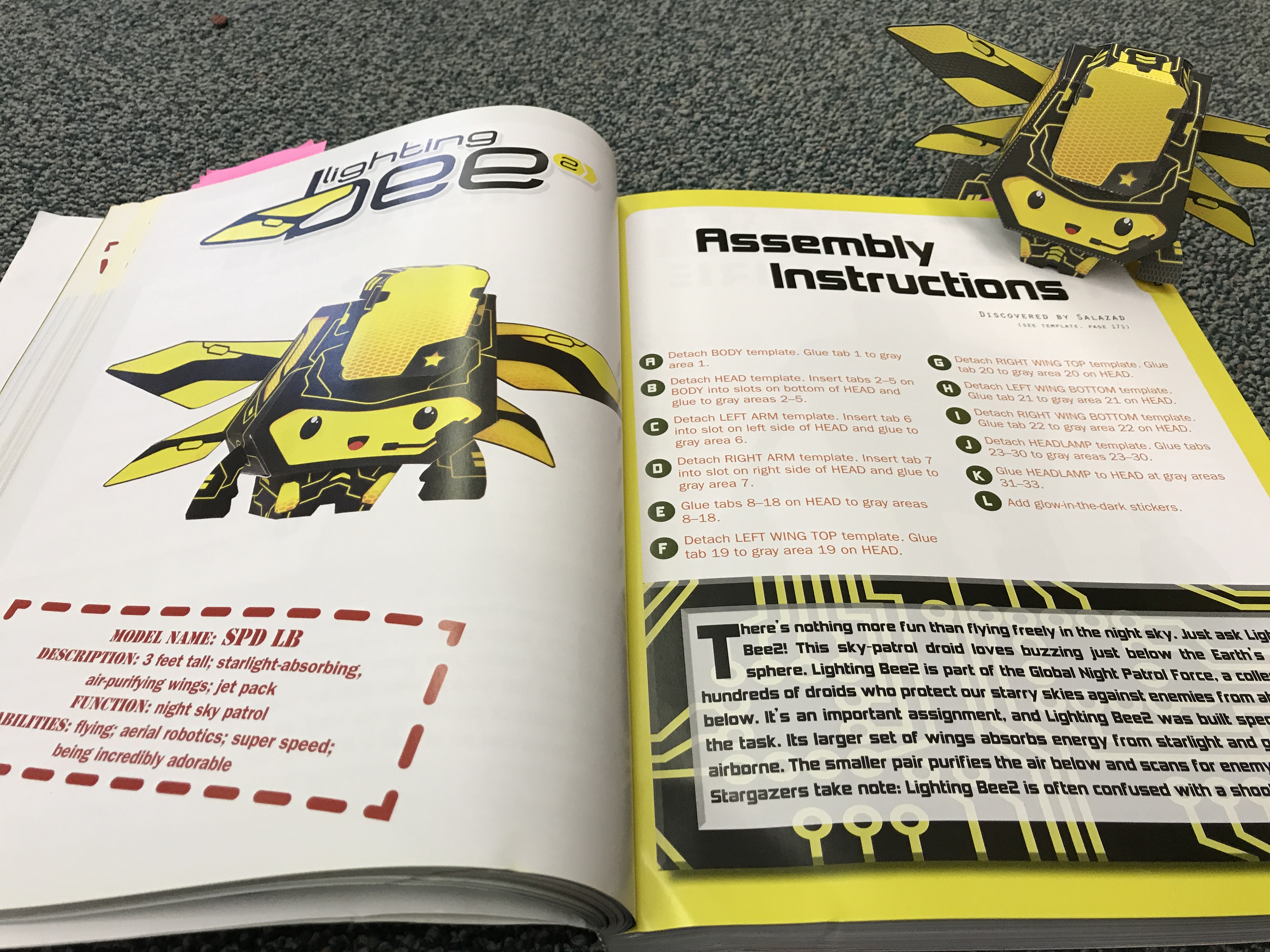
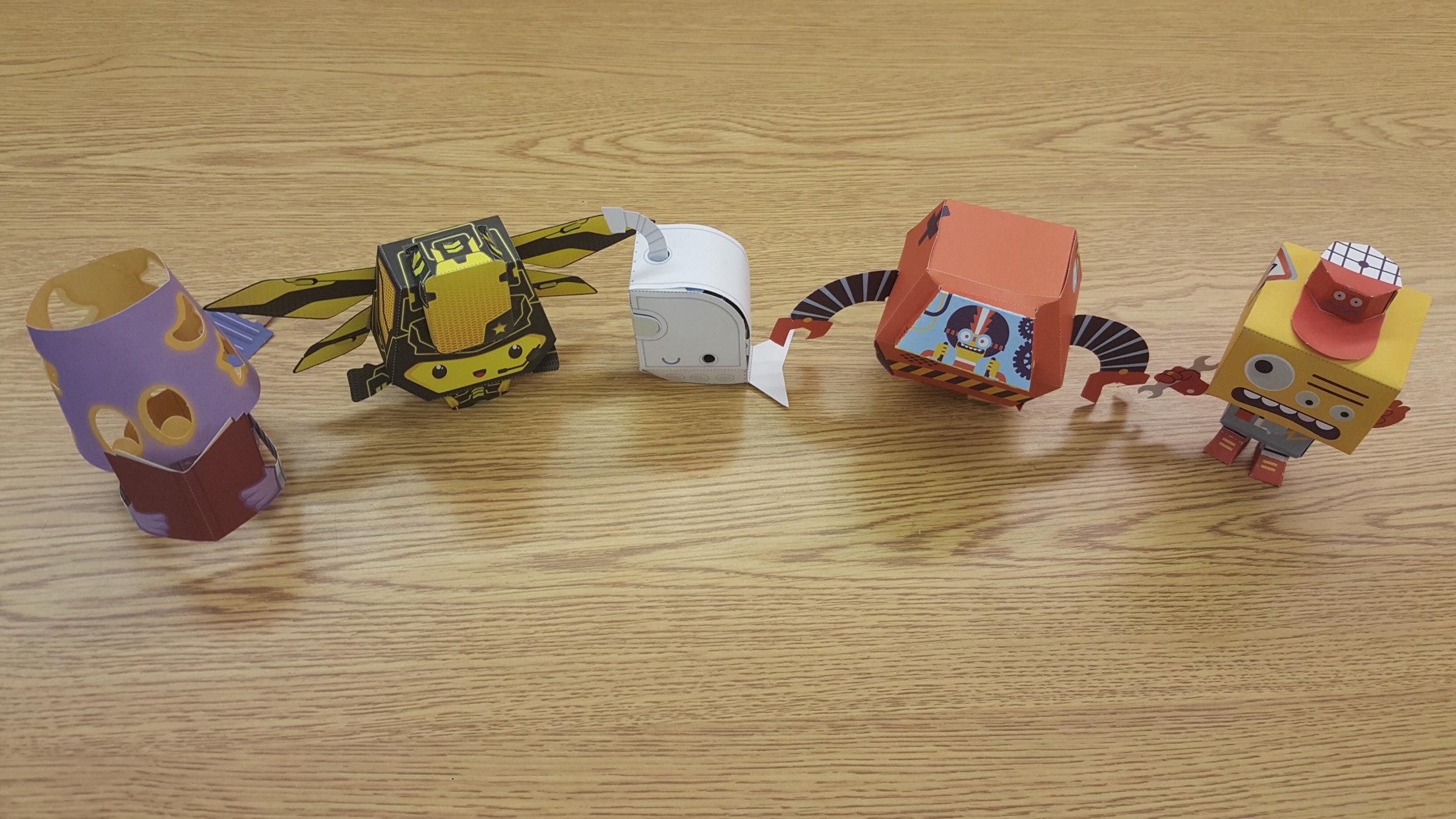
When I first looked through the book Papertoy Glowbots, after Brian Castleforte wrote an author guest post for Unleashing Readers, I knew that I wanted to utilize these fun robots in my classroom some how! First, let me tell you about the book. It has 46 different robots inside. Each robot has a name, a model name, description, ability, assembly instructions, and a narrative about the robot. In the back of the book, there is a template to remove that matches the assembly instructions and then glow-in-the-dark stickers to add on when done with the robot.

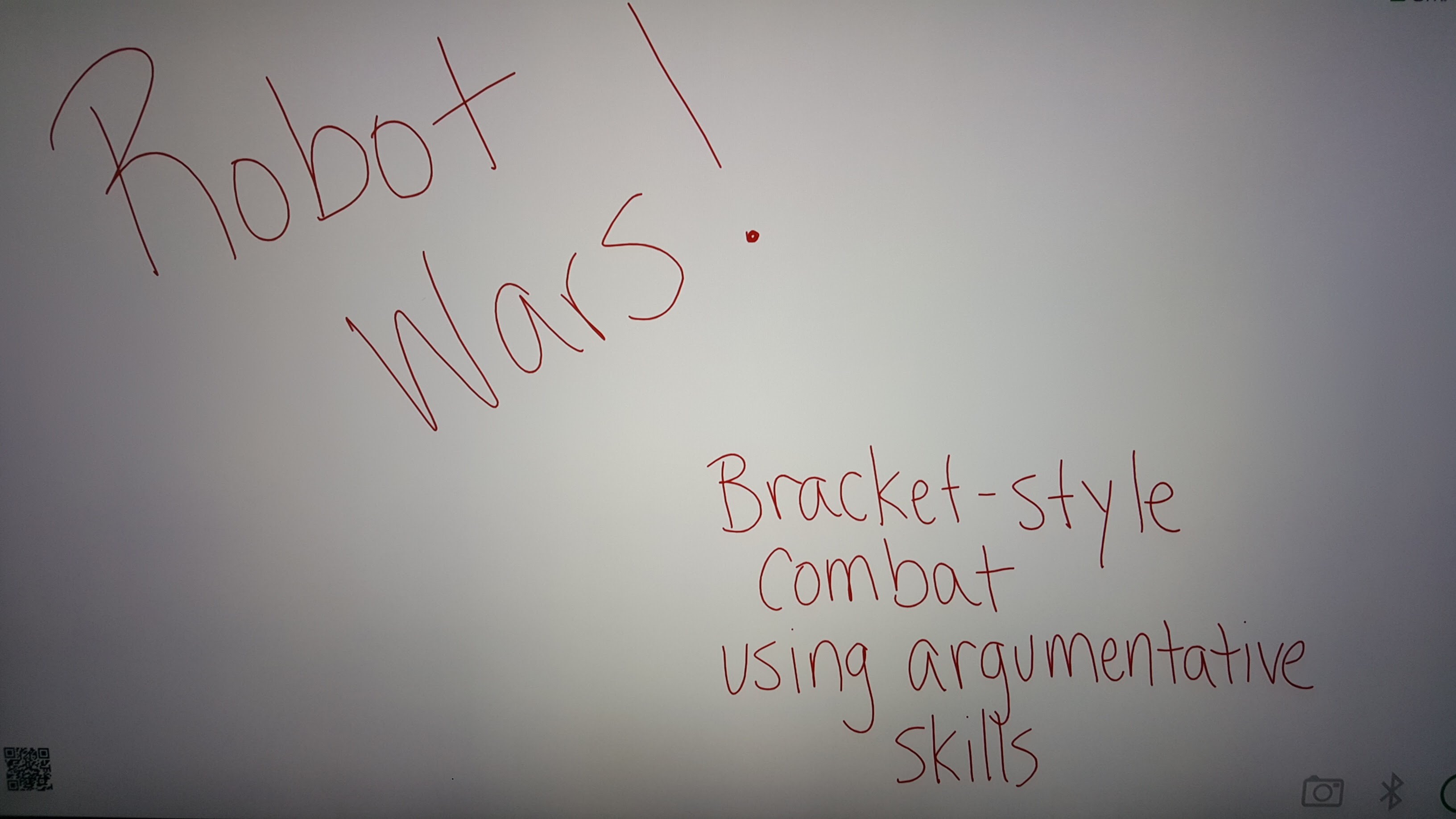
I loved not only the creative aspect of the robots, but the real-life aspect (following directions), and the narrative elements. However, I knew that I had to make sure that the activity I did with the robots was standards-based and fit within one of my units, so when I was building my argumentative writing and debate unit, I felt it fit perfectly (along with the Who Wins? activity I shared also)! My unit learning goal was “Students will be able to present claims and findings with relevant evidence, valid reasoning, and well-chosen details about a particular subject,” and one of my learning targets was “Students will be able to create an argumentative paragraph supporting their claim.” And I got it! Why not have students create an argumentative paragraph stating why their robot is THE BEST robot if the robots were all going to take part in Robot Wars (like Big Hero 6).

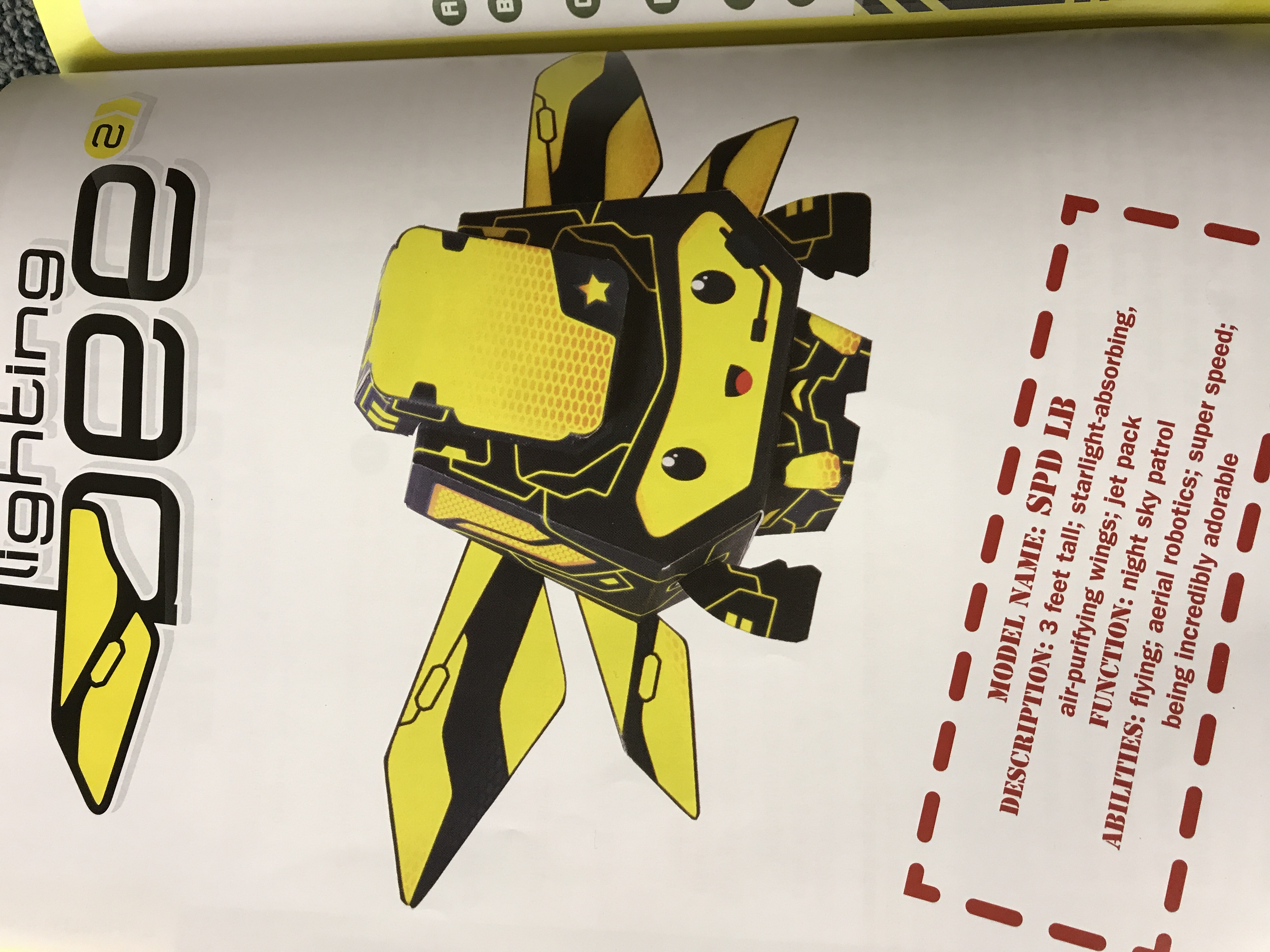
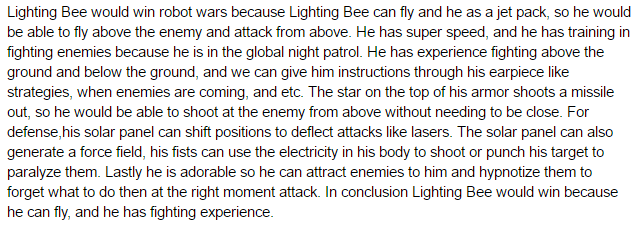
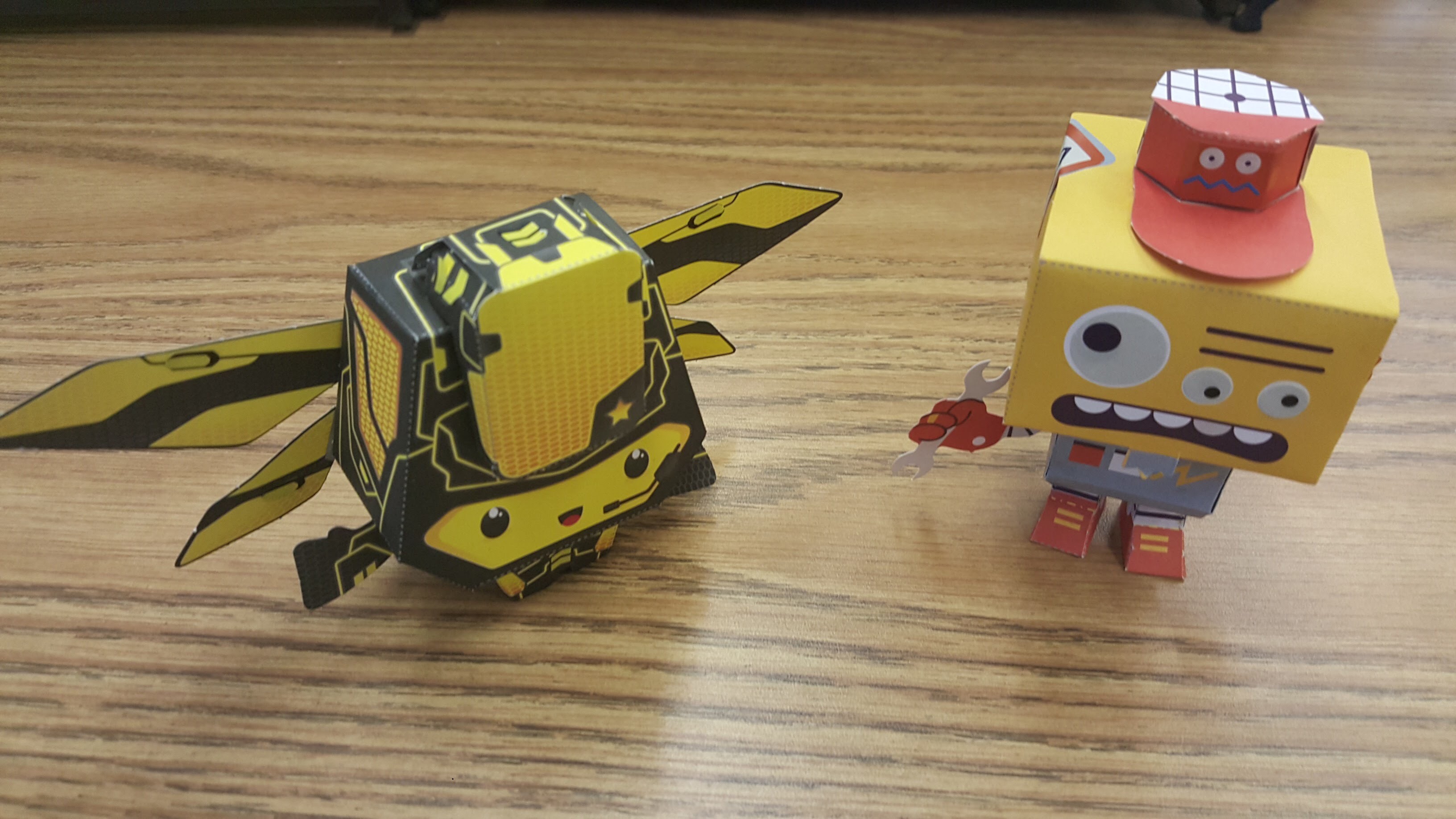
With my target set up, the students got to work! They were allowed to add any abilities to their robot; however, they could not change anything that was already stated in the Glowbots book. For example, if their robot didn’t have legs, they couldn’t add them, but they could make their eyes have lasers. Here is an example of Lightning Bee’s paragraph (you can see his information from the book above). Students first wrote up a profile for their robot then turned it into an argumentative paragraph:

My students had to try to think of any scenario and try to put something in their paragraph that proves that their robot would win in the scenario. For example, one of the robots is a submarine–what happens if the other robot is on land? Or vice versa?

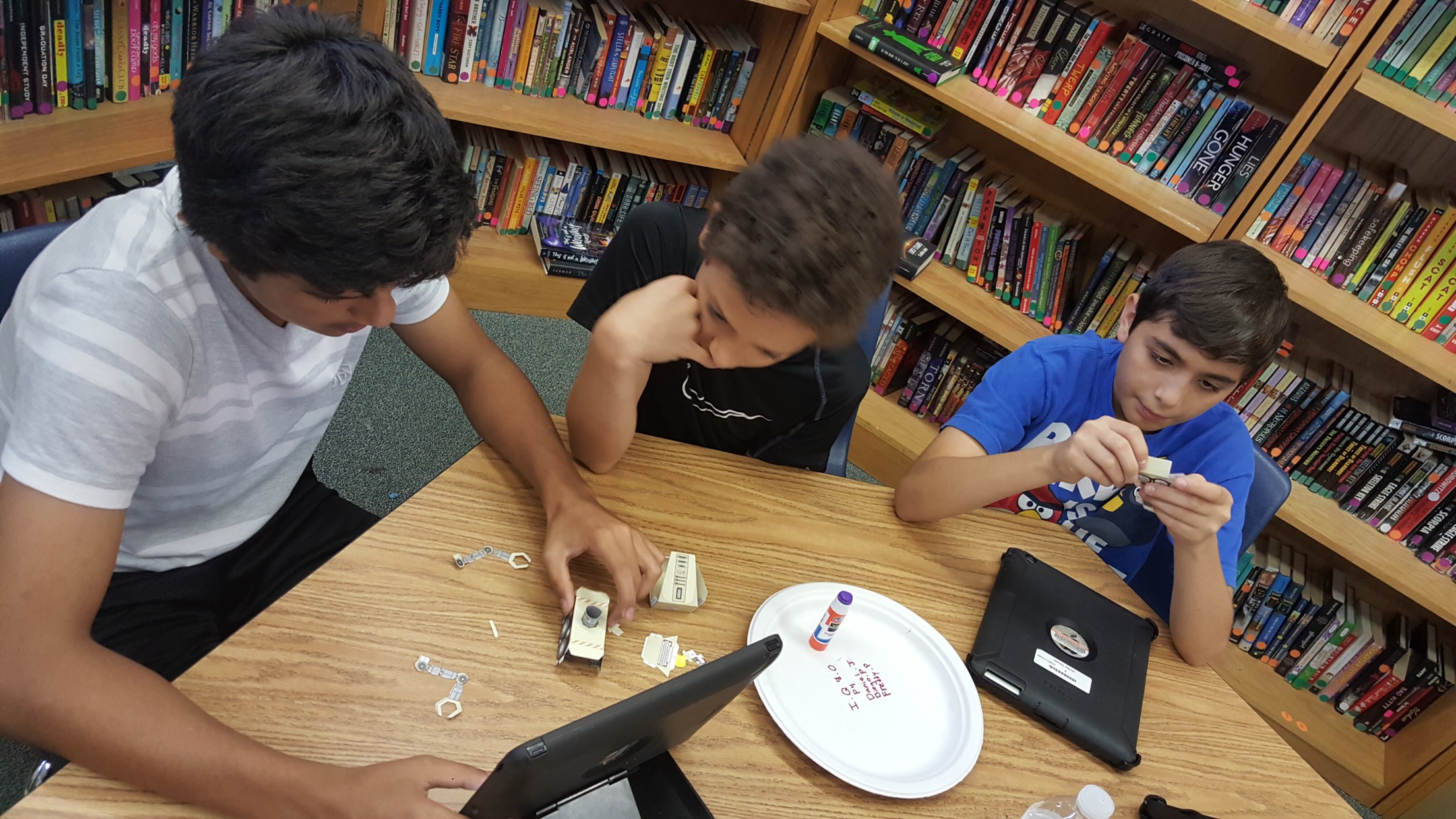
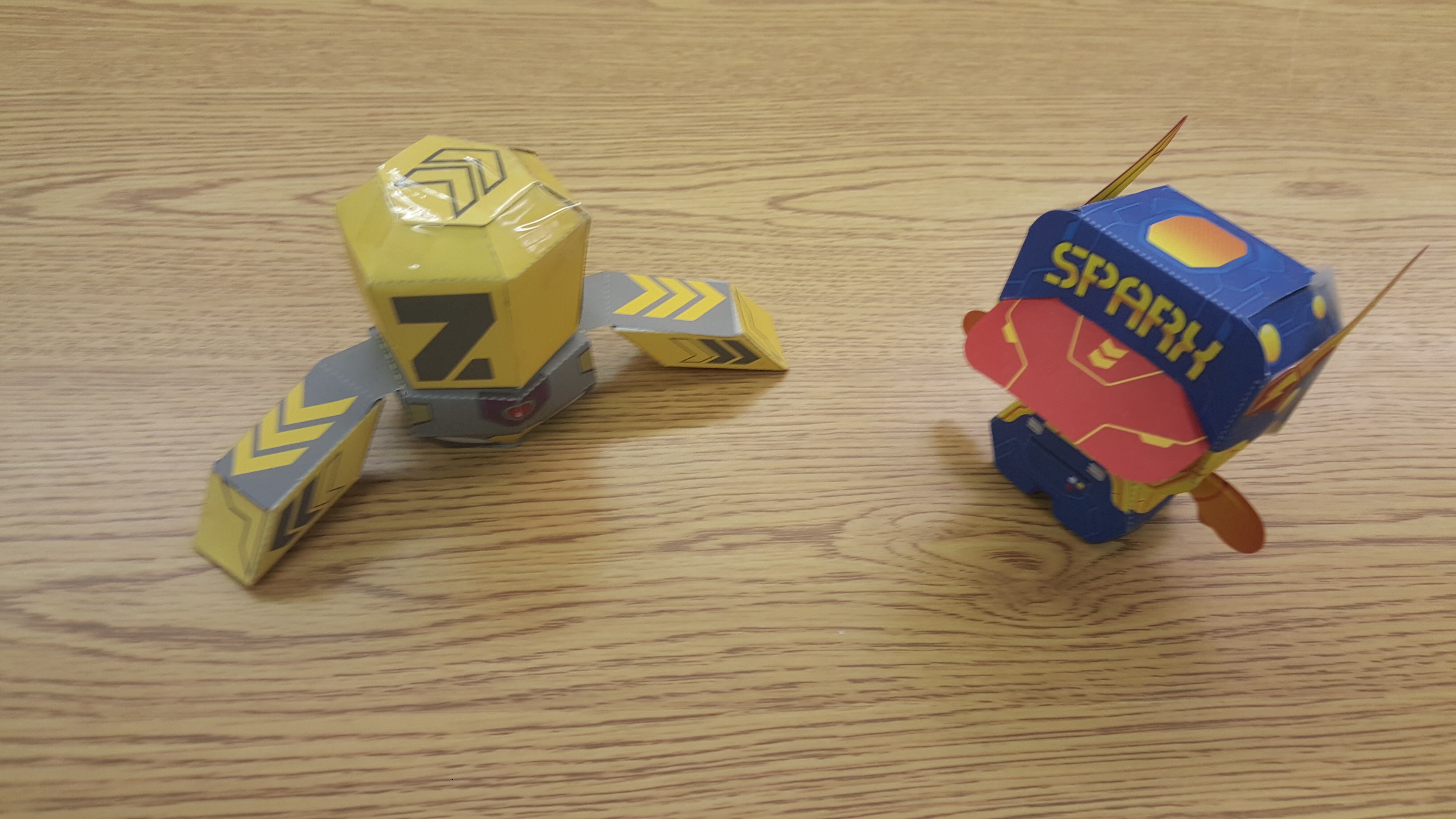
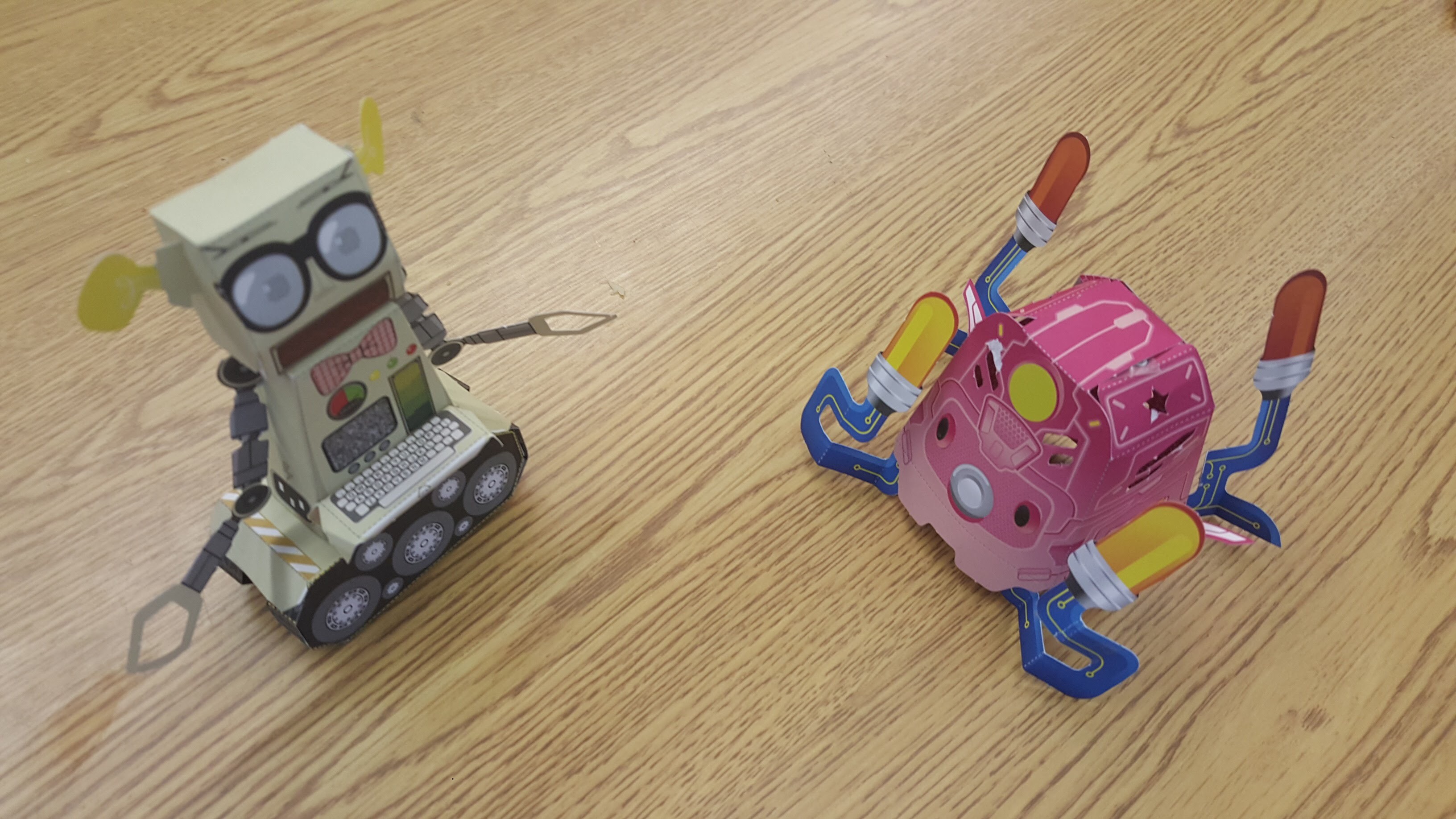
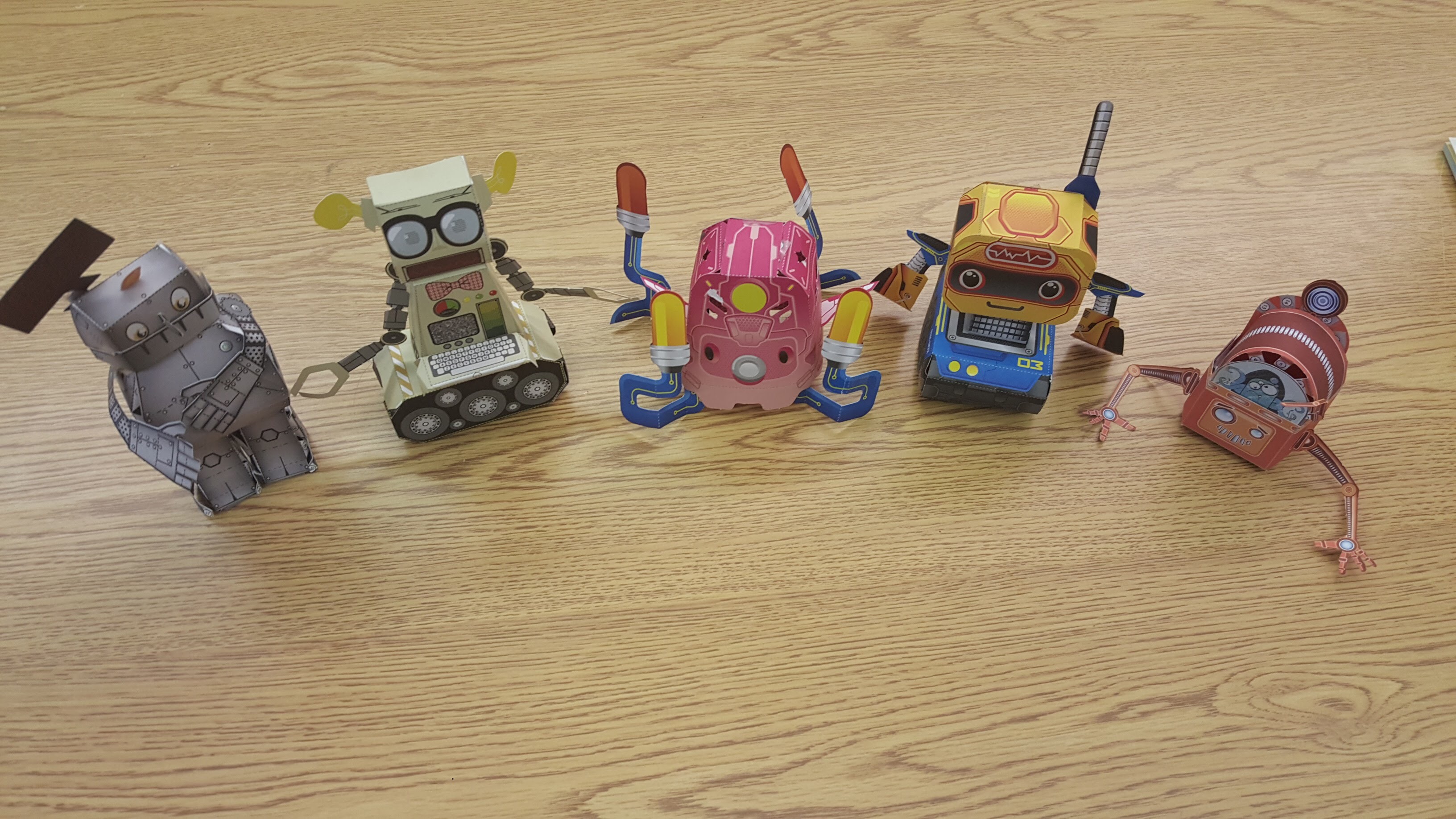
After the students wrote their robot profile and creative argumentative paragraph, they were able to build their robot:


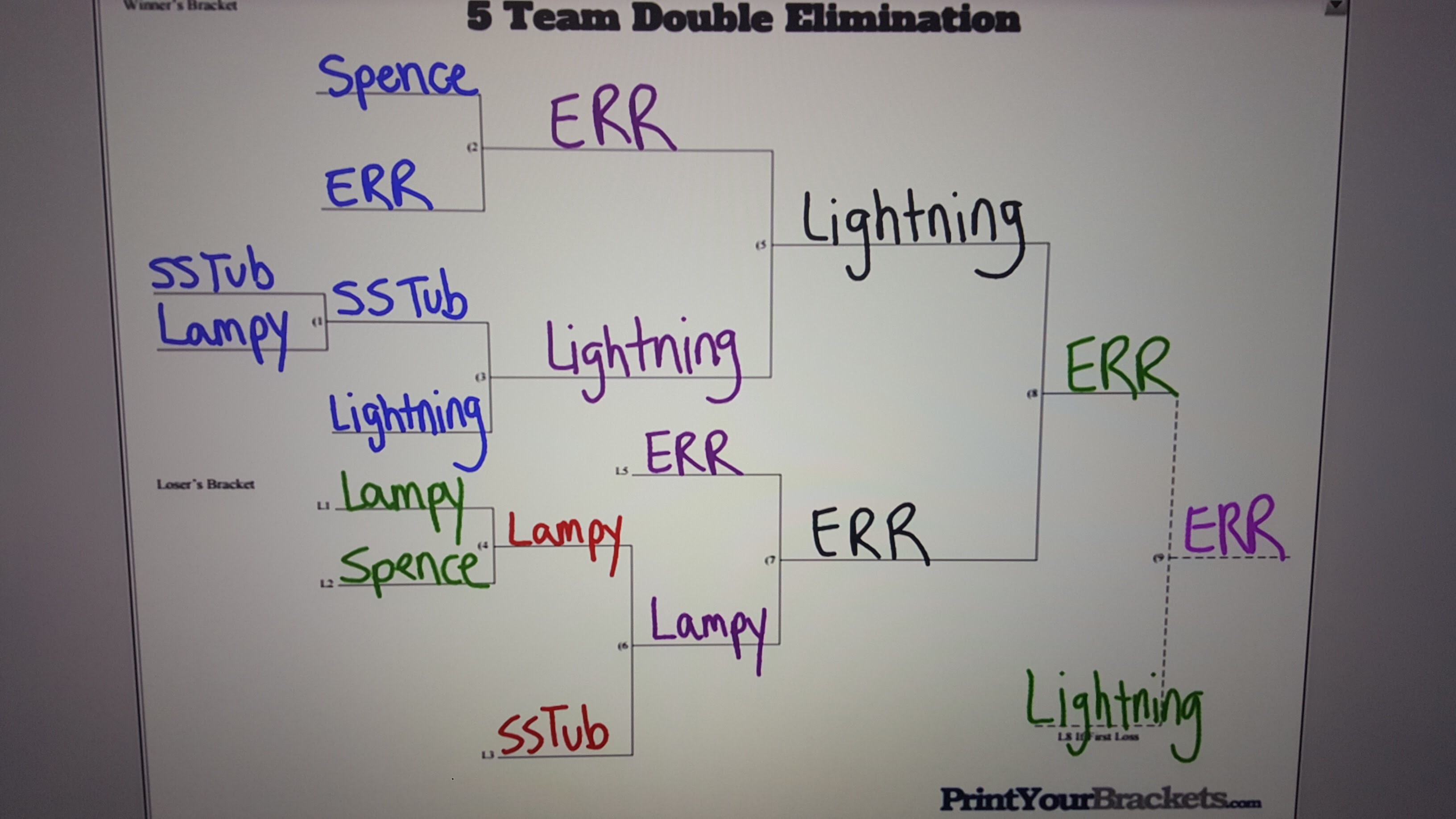
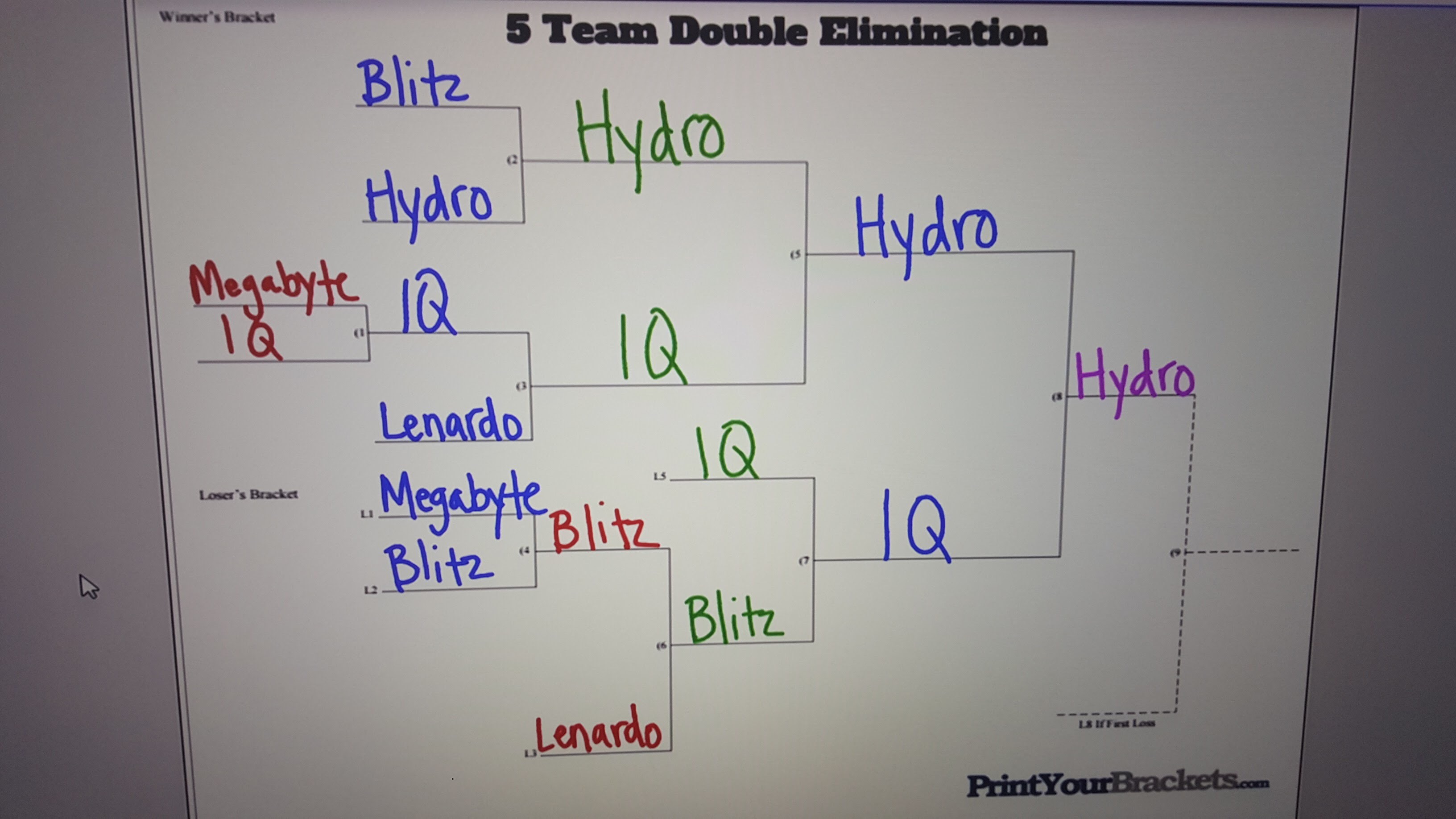
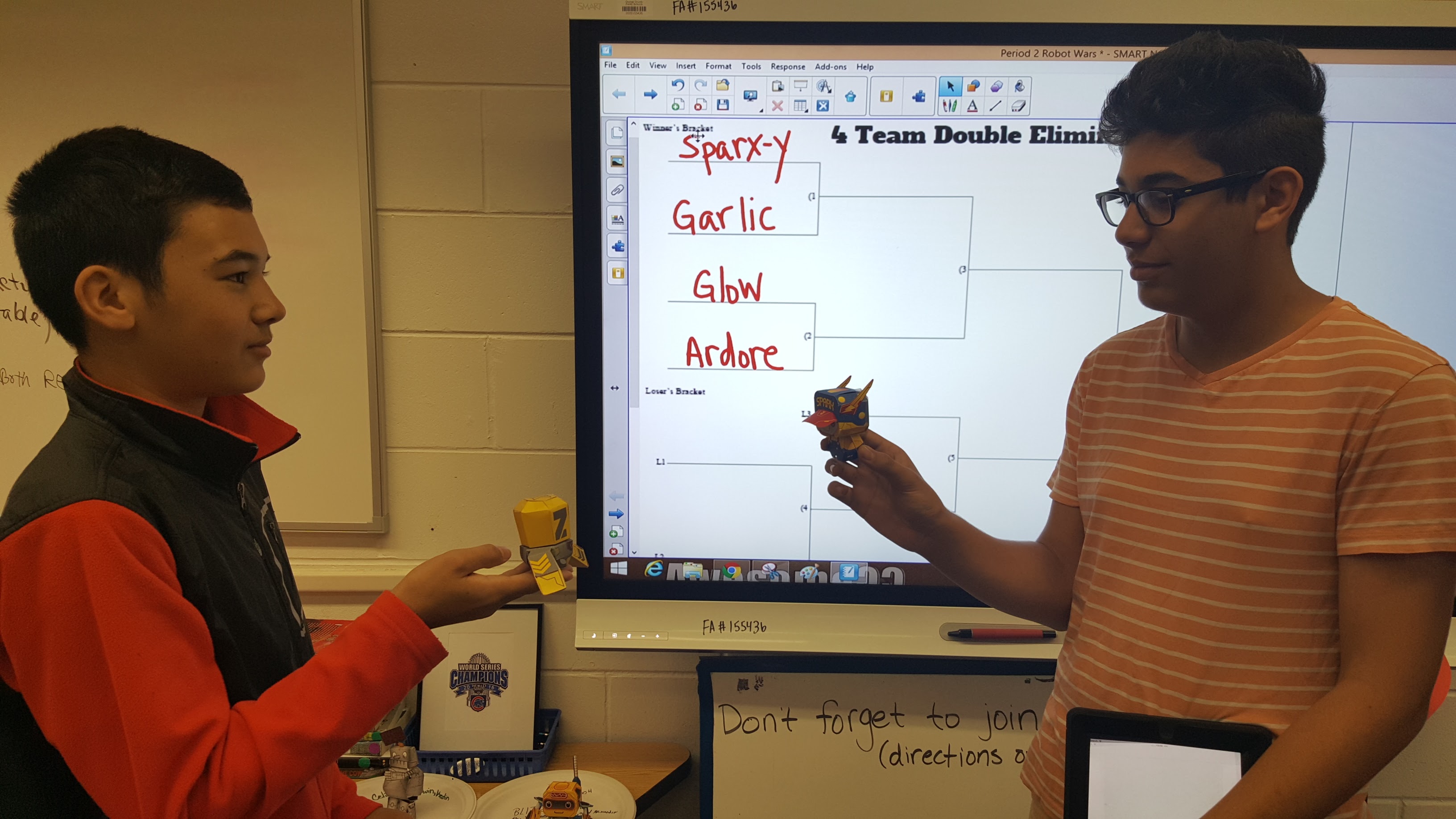
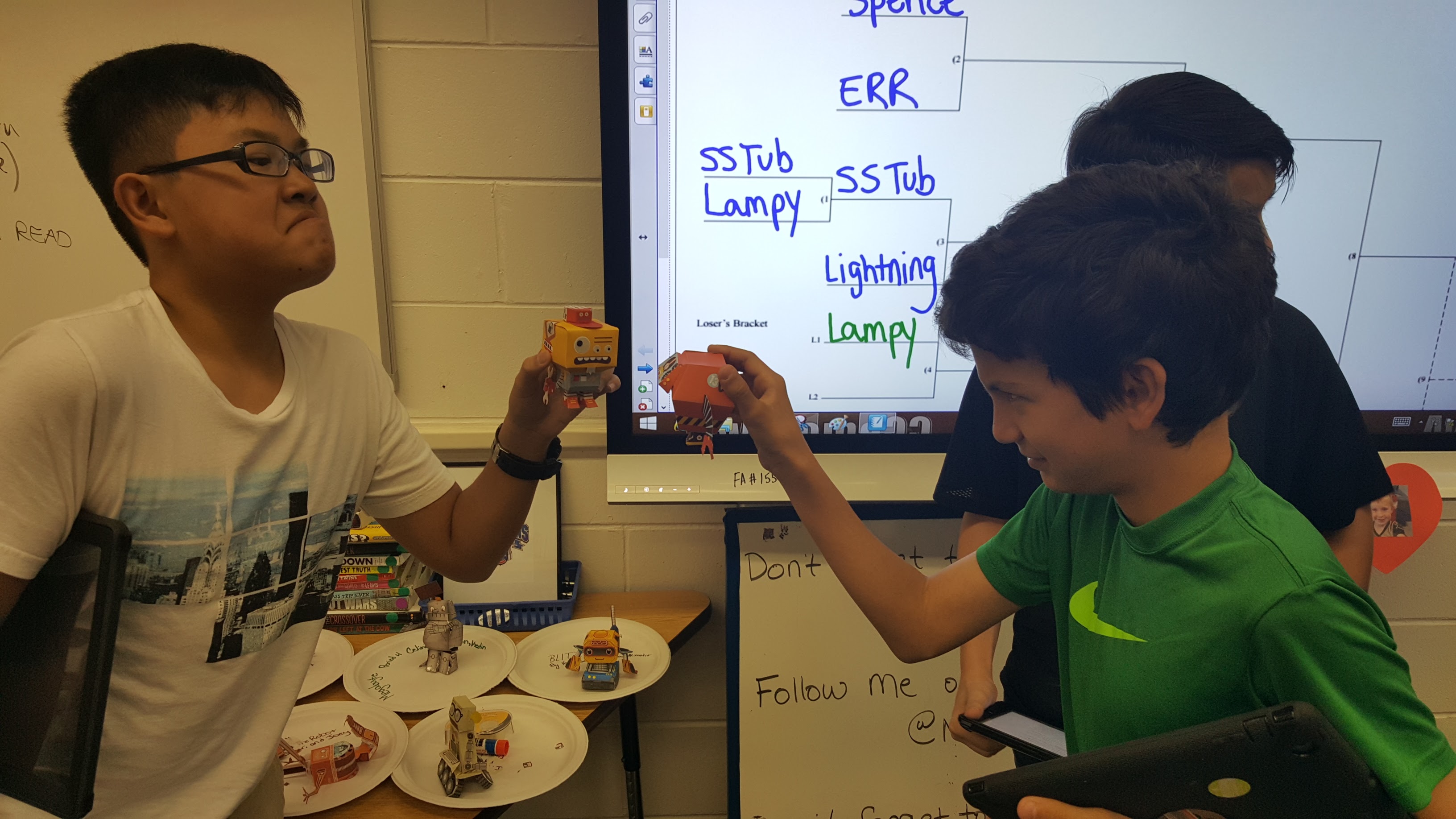
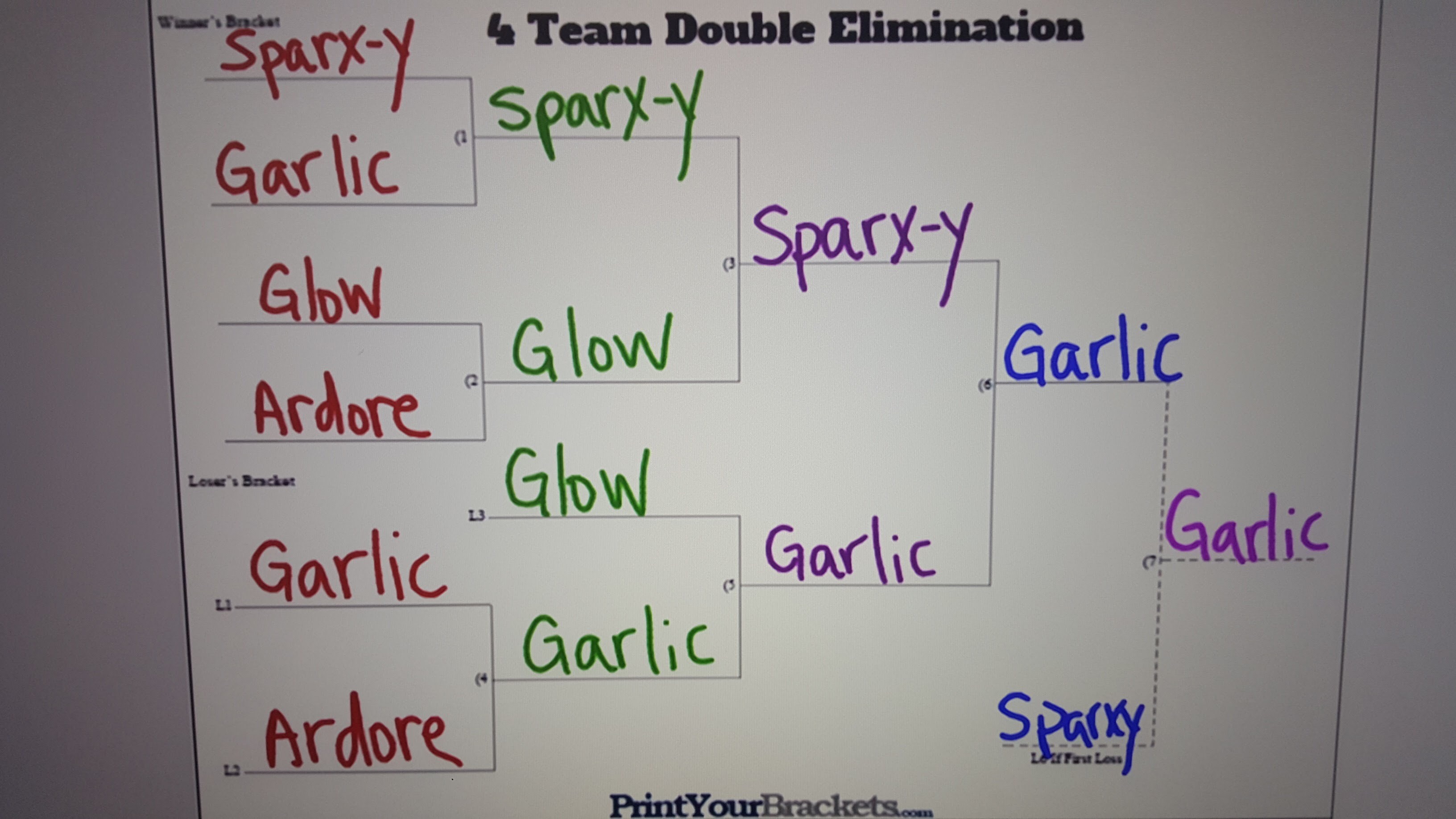
When everyone’s robot was built (which was harder than you’d think! It was a real lesson in following instructions and colloborating!), we started our ROBOT BATTLES leading up to the final ROBOT WAR! I used brackets and random.org to set up our battles, and we got started! These battles were a battle of words though, so students came to the front to present their robots and face off using their argumentative paragraphs. (Some got into it more than others!)

The rest of the class then decided based on the paragraphs which robot would be the champion of the battle. If I do this lesson again, I would allow the groups to debate more to help persuade the audience, but I stuck with them reading the paragraphs. Using a double elimination bracket, we determined which two robots in each class would go to the final ROBOT WAR!

My students loved this activity, and we used each robot battle as an opportunity to discuss argumentative and persuasive techniques and why one robot was a winner over the other. And on top of this, I felt that it was a great activity for learning to follow directions, work together, and think futuristically & creatively.

In the Middle School Classroom: Who Wins?100 Historical Figures Go Head-to-Head and You Decide the Winner! by Clay Swartz

Share

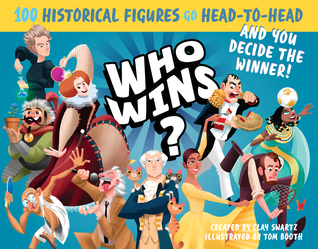
Who Wins? 100 Historical Figures Go Head-to-Head and You Decide the Winner!
Created by Clay Swartz
Illustrated by Tom Booth
Published July 12th, 2016 by Workman Publishing Company

Summary: Who would rock the mic at karaoke night? Abraham “The Great Emancipator” Lincoln or Jane “Lady Persuasion” Austen? How about a hot dog eating contest between Harry “Mr. Magic” Houdini and Mary “Mother of Frankenstein” Shelley? What about a pie contest? A staring contest? And who has a better chance of sneaking into Area 51, Isaac “Gravity Guy” Newton or Sacagawea aka “The Pathfinder”?

In Who Wins?: History, you decide the winner in over 50 head-to-head challenges between 100 of history’s most illustrious characters. But choosing the victor isn’t arbitrary. Readers must justify their answers using each of the historical figures’ six 0-10 category rankings in bravery, leadership, artistry, wealth, wisdom, and fitness; as well as facts from short biographies.

As funny as it is informative, the book is uniquely formatted so readers can match up each and every character in any of the head-to-head battles. History has never been so much fun!

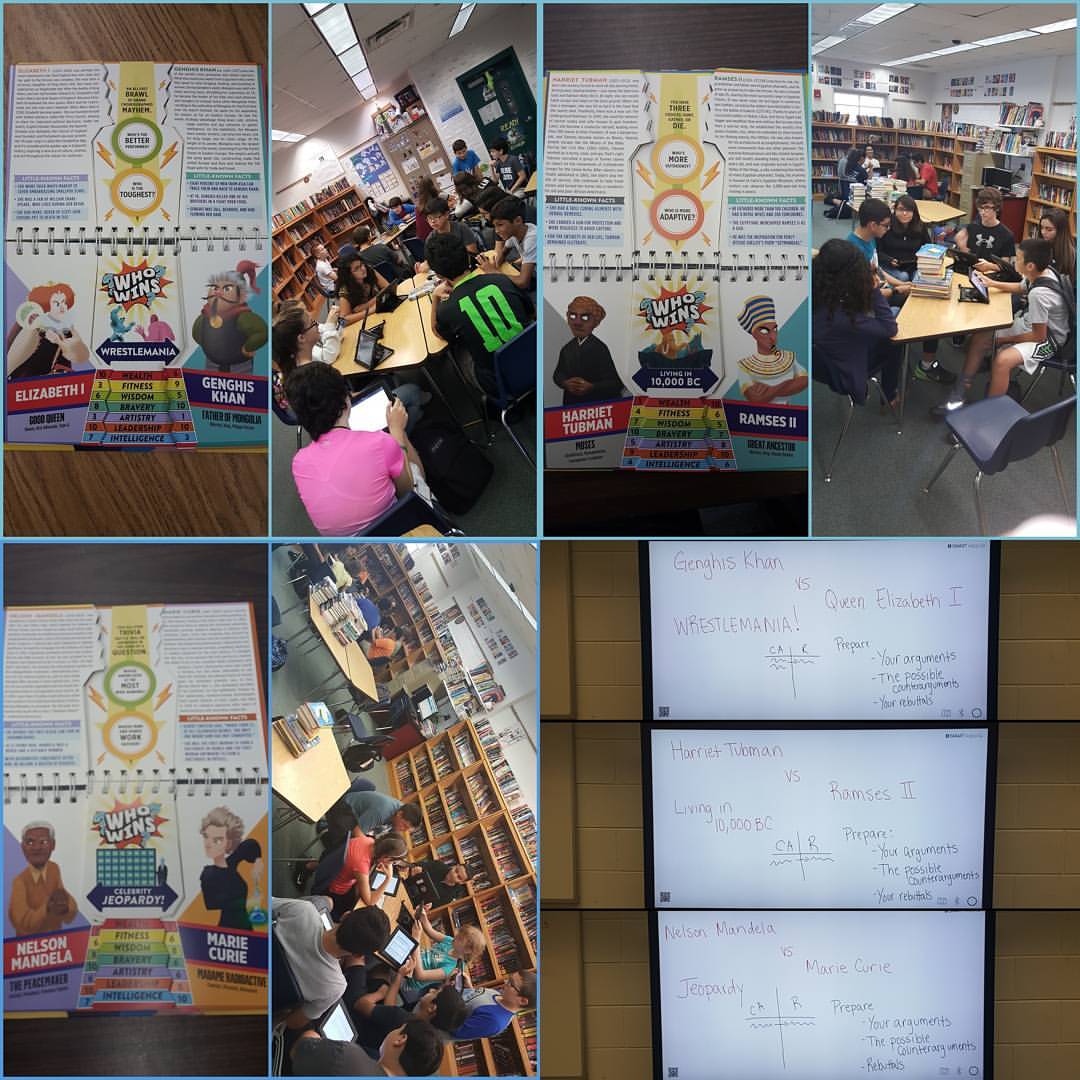
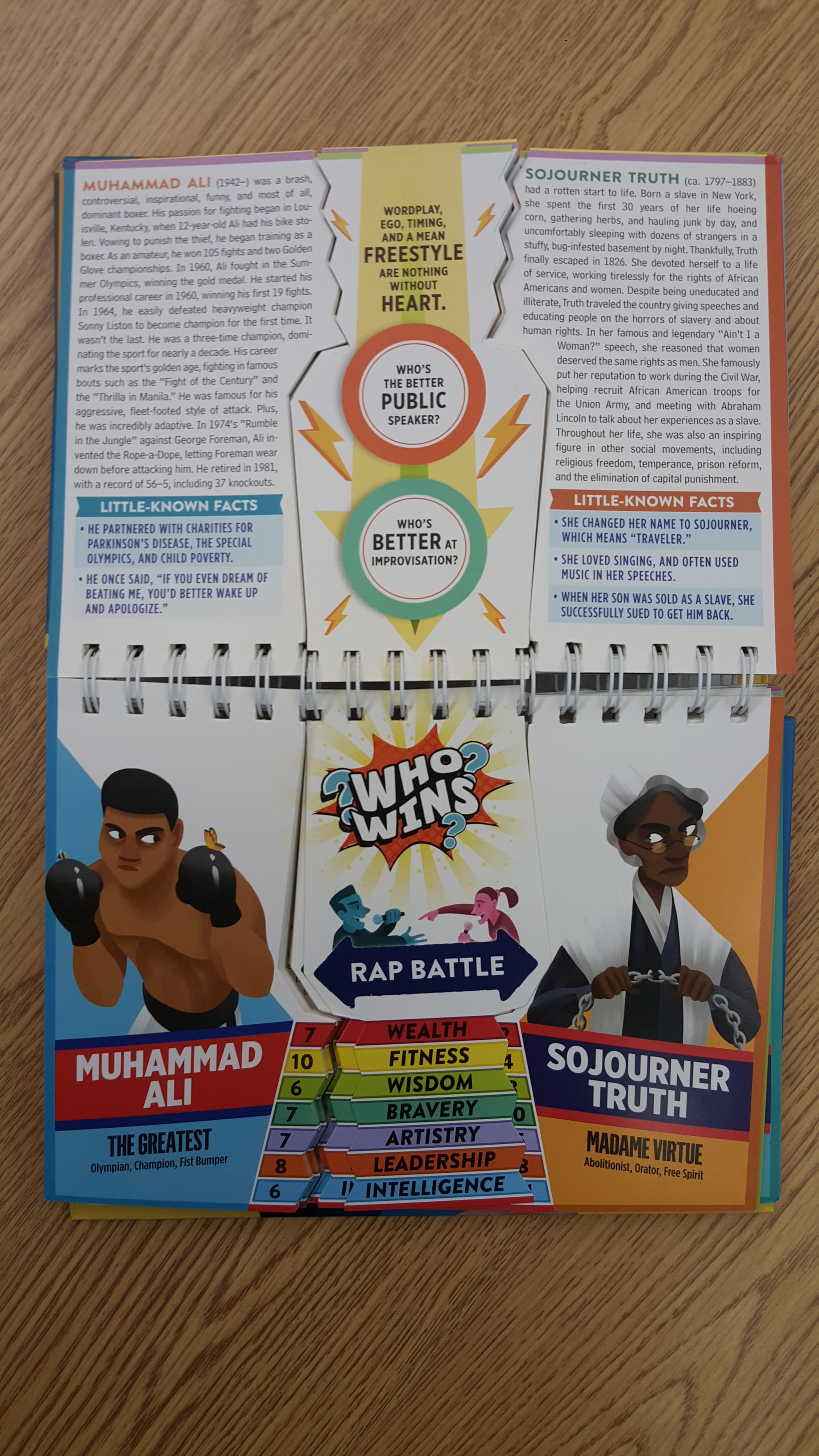
Review (from 10/26/16): Who Wins? is informative, funny, and so cleverly formatted that it is going to be a star in homes and classrooms. I love how the book gives each historical figure a nickname (either one they already were given, like Satchmo, or made up, like Gravity Guru for Isaac Newton) to add a bit of humor to the book; however, still makes sure to include a plethora of information about each figure including a bio then 3 little-known facts. Each head-to-head situation also helps guide your decision by giving some example questions to think about. Let’s look at a head-to-head, so you can really see how clever it is!

In My Classroom: Whenever I begin a debate unit, I always start with a mini-debate, and I wanted this year’s to include Who Wins? because I thought it was such an awesome class resource (and my students were slightly obsessed with the book). To start, I randomly picked a male and a female historical figure from each side of the Who Wins? book for each class. I didn’t choose the middle activity yet because I wanted my students to get to know their historical figures before I gave them the rest of the topic for the debate. For two days, the students researched their figures and tried to learn as much about them as possible. We talked about making sure to not just list dates but to get to know them as a person: their strengths, their weaknesses, their personality, their education, etc. Finally, on day three, I randomly revealed the rest of the debate topic and randomly put each class into two groups. We ended up with:

Who wins WRESTLEMANIA? Queen Elizabeth I or Genghis Khan?
Who wins LIVING IN 10,000 BC? Harriet Tubman or Ramses II?
Who wins CELEBRITY JEOPARDY? Nelson Mandela or Marie Curie?

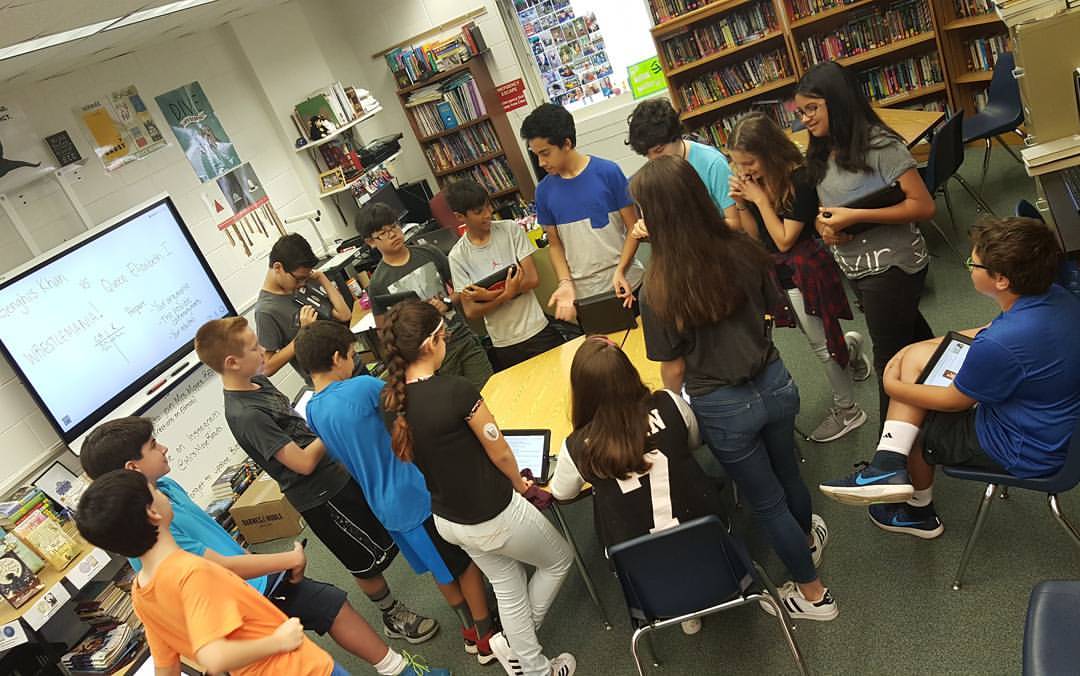
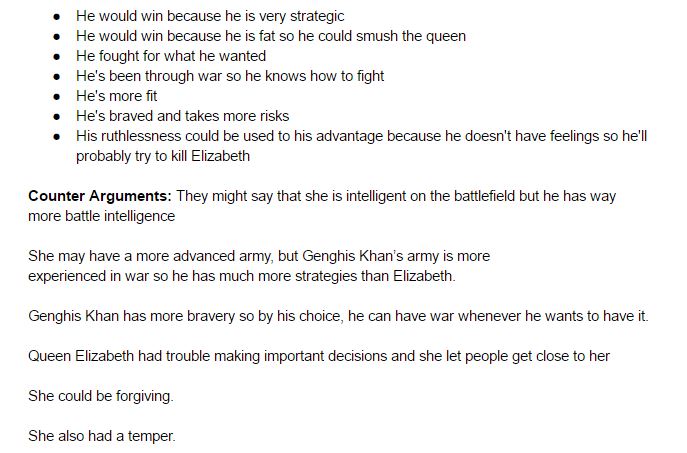
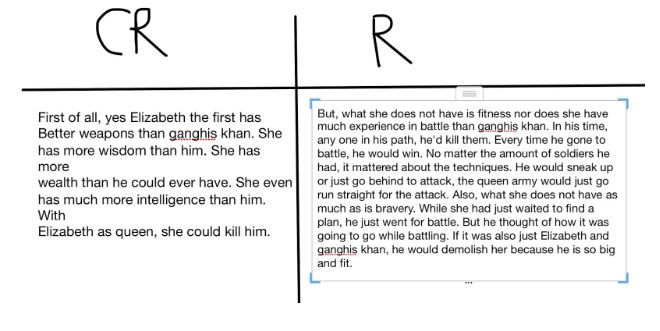
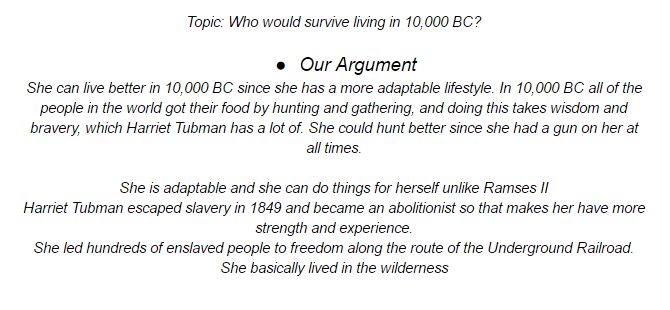
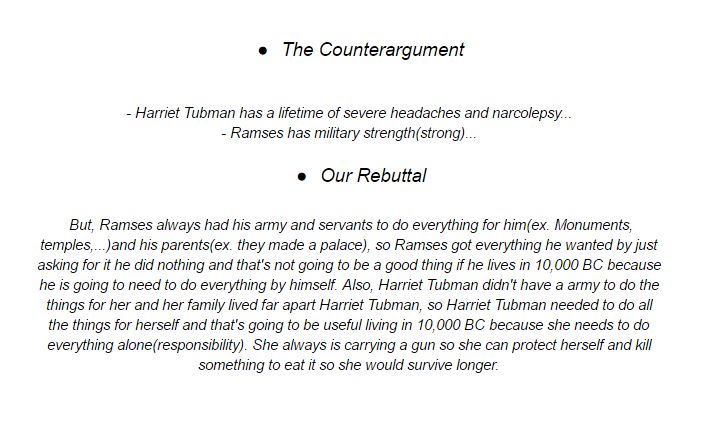
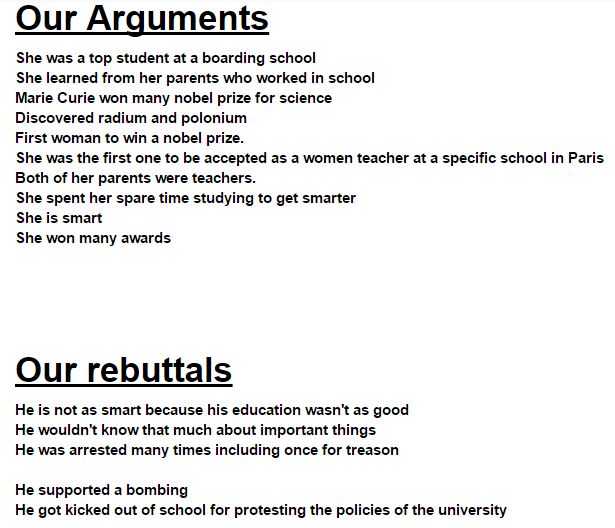
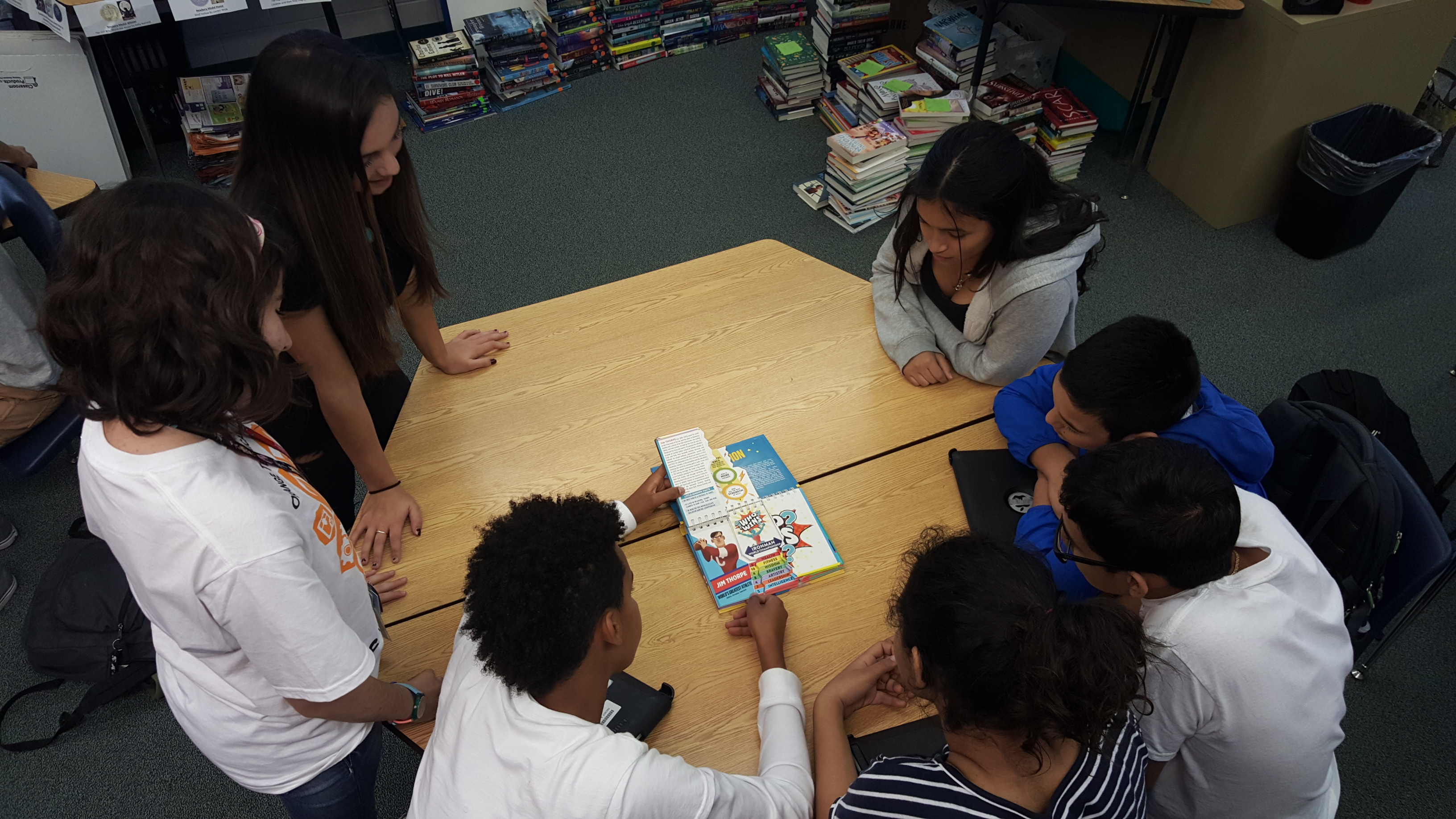
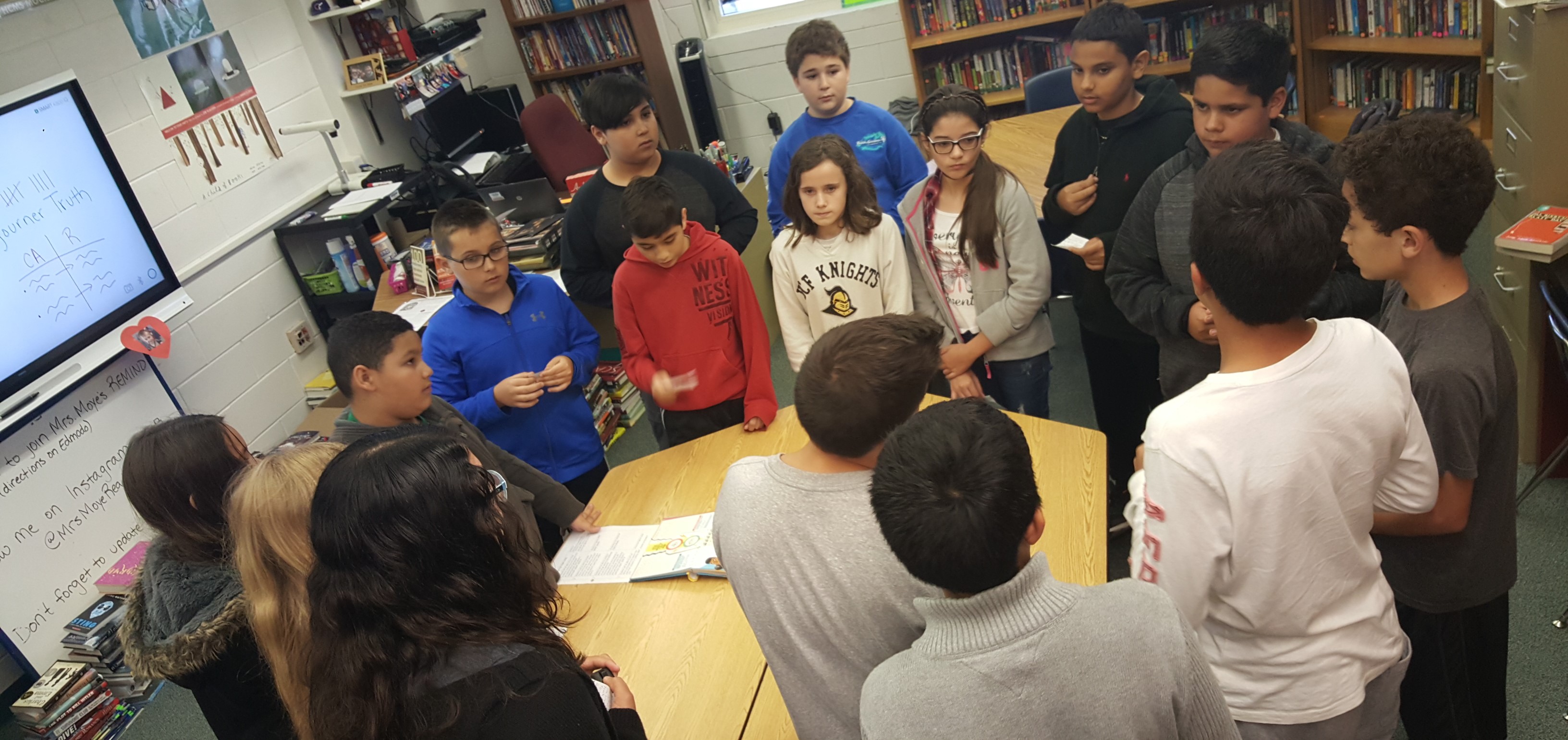
Each group then made a Google Doc that they could collaborate on, and they focuses on preparing their argument, possible counterarguments, and rebuttals to the counter argument. They could research more now that they knew the topic, and I shared Who Wins? information with them as well (see photo above).

Then, after a couple of days of collaboration, we had our mini-debate. The most successful was the Queen Elizabeth I vs. Genghis Khan because they not only researched their historical figure, but they also researched Wrestlemania which allowed the debate go to a whole different level than my other two periods. The Nelson Mandela vs. Marie Curie debate had the opposite problem: they didn’t research Jeopardy at all which made for the debate never really having a clear winner because they were just debating who was smarter. The Ramses II vs. Harriet Tubman went well though the Harriet Tubman side never pulled out their best argument: she primarily lived on the run in the wilderness! In the end, Wrestlemania was a tie; Ramses II would survive better in 10,000 BC; and Marie Curie would win Jeopardy.

Some Students’ Collaborative Notes: Here are some examples of the collaborative notes some groups put together when preparing for the mini-debate. These are not examples of the initial research notes they took on their historical figures.

Genghis Khan

Harriet Tubman: 

Marie Curie:

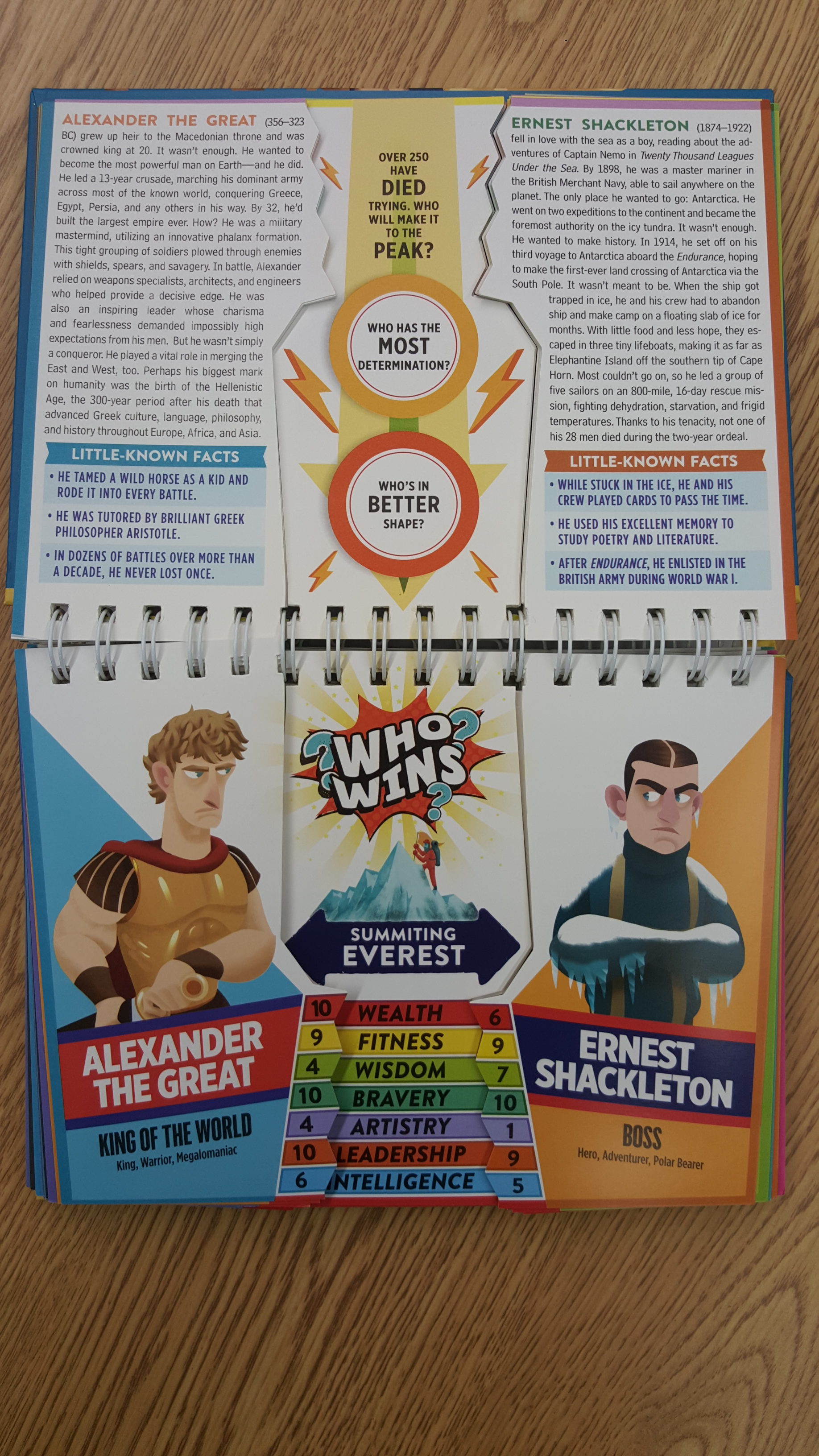
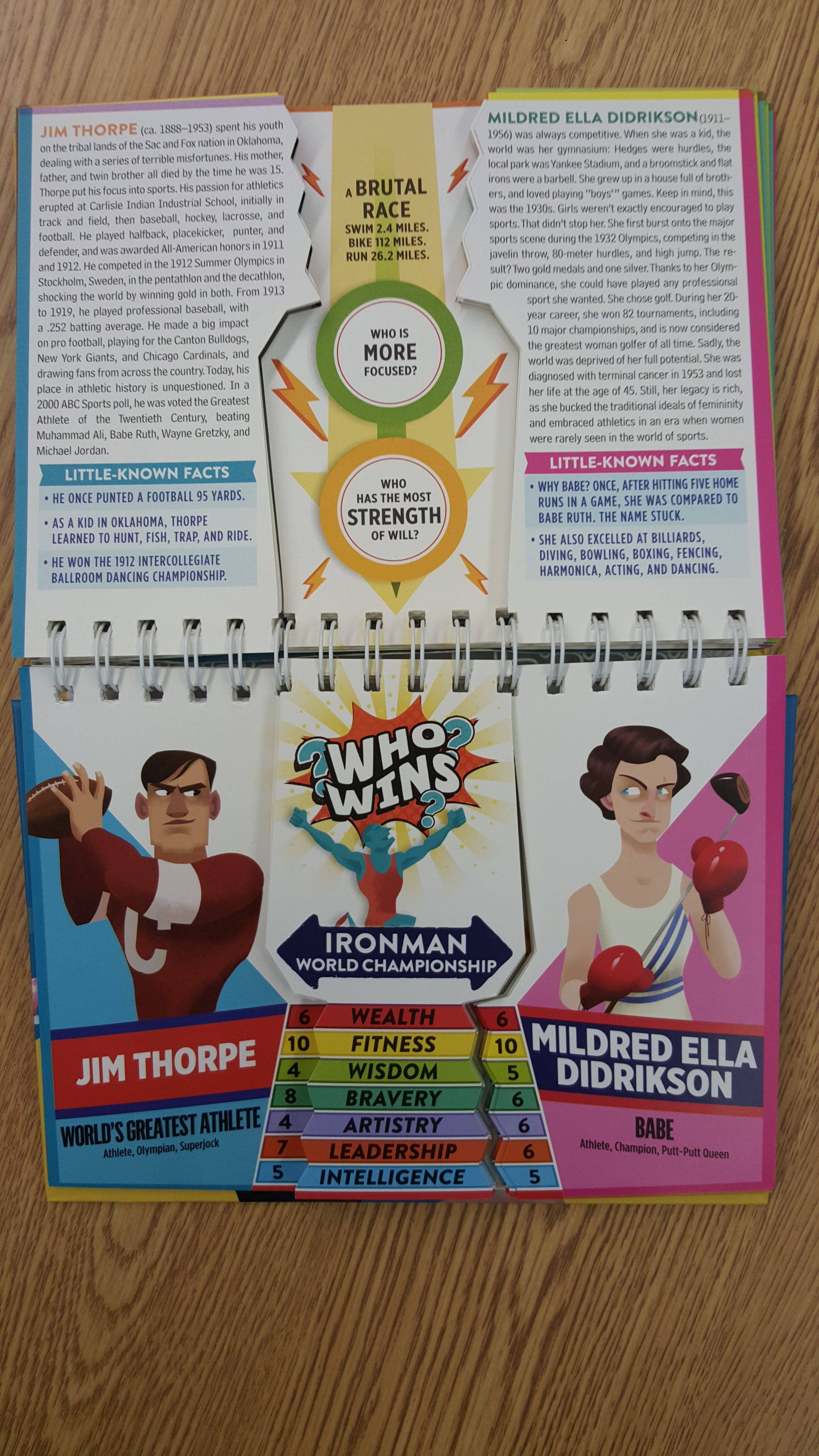
Second Debate Using Who Wins?For our second debate, I did things a little bit differently. Instead of giving them the historical person first, for each class, I randomly chose the center tile (the topic) and we ended up with: Rap Battle, Ironman World Championship, and Summiting Everest. I then let the students, within their groups, go through their side of the book to find the person they wanted for their side of the debate.

They used their prior knowledge, the bios, and the stats for each person to try to pick the best for the debate. Our people ended up being:

Who Wins a Rap Battle: Muhammad Ali vs. Sojourner Truth?
Who Wins the Ironman World Championship: Jim Thorpe vs. Mildred Ella Didrikson?
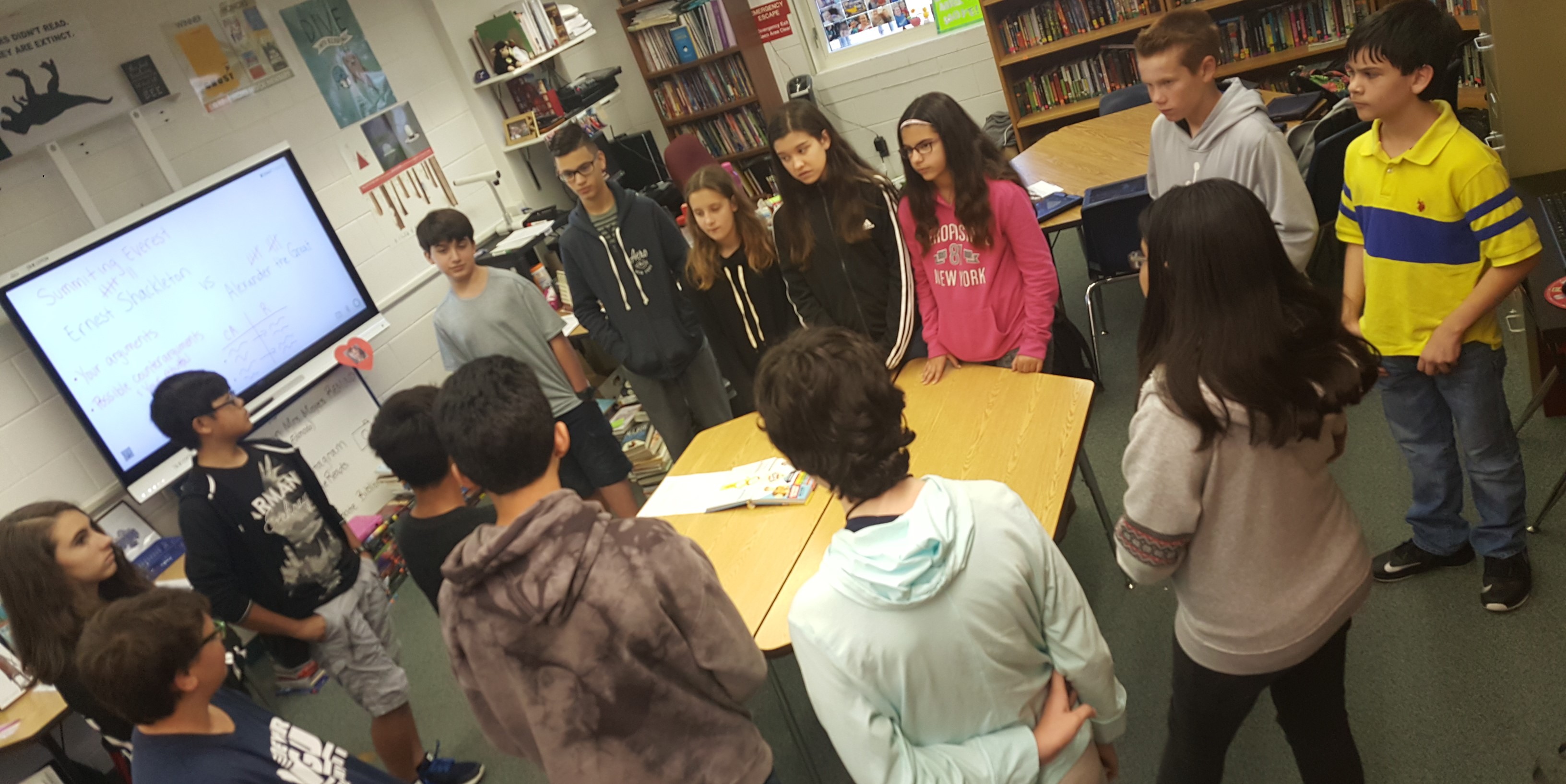
Who Wins at Summiting Everest: Ernest Shackleton vs. Alexander the Great?

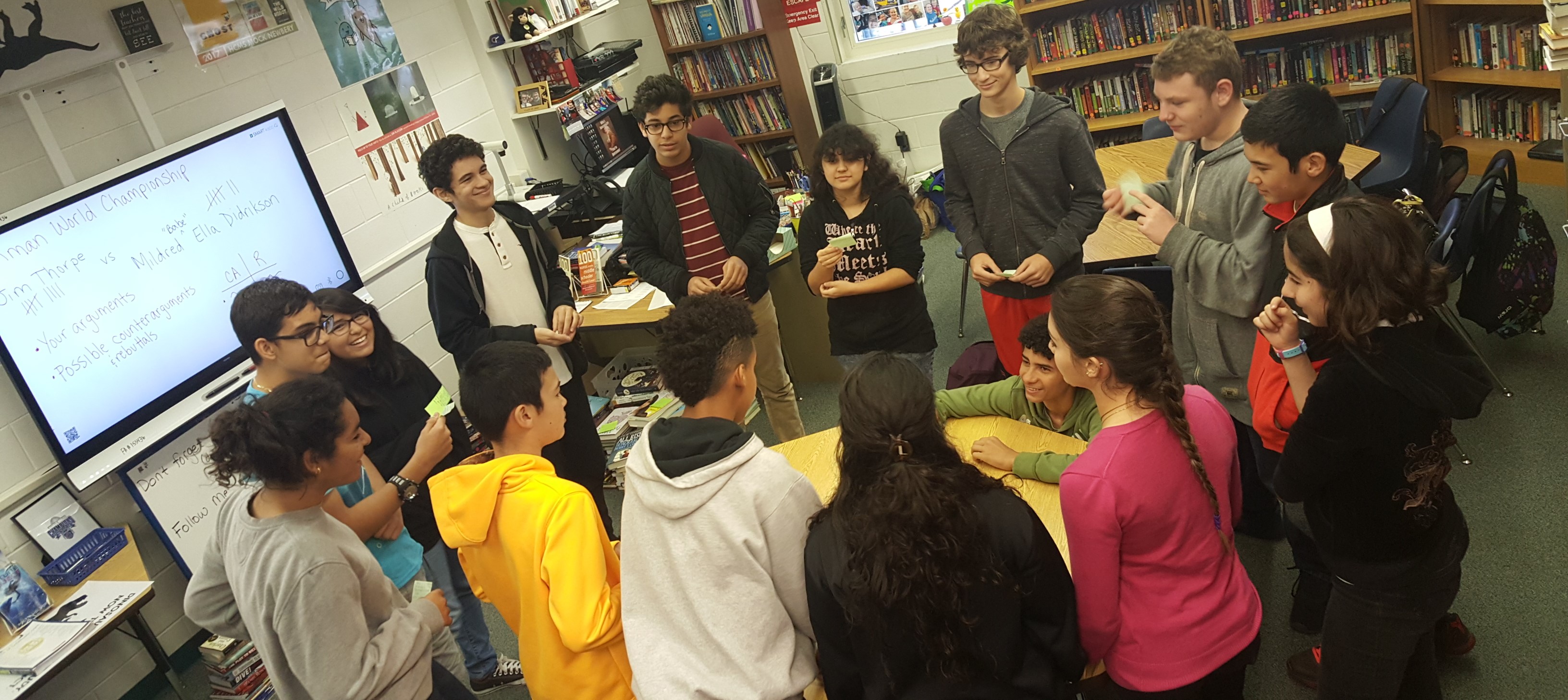
This time around, students were much more invested in their historical figure and with the topic already chosen, they could narrow down their research. Also, they realized how important it was to research the topic. Students also were given 2 extra days to research this time though given the same amount of time (2 days) to collaborate.

Once we got to the debates, I made a decision I was so happy about: Students were not allowed to have their iPads with them. They could have 1 Post-it note (front only) with any specifics that were tough to remember (years, prices, times, etc.), but that was it. And the debates went so much better! Students knew their stuff, and the debates were so intense, detailed, and close!

In the end, we’re still not sure who would be most successful at summiting Everest, Shackelton or Alexander the Great; Jim Thorpe is more likely to win the Ironman World Championship; and Muhammad Ali would win a rap battle vs. Sojourner Truth.

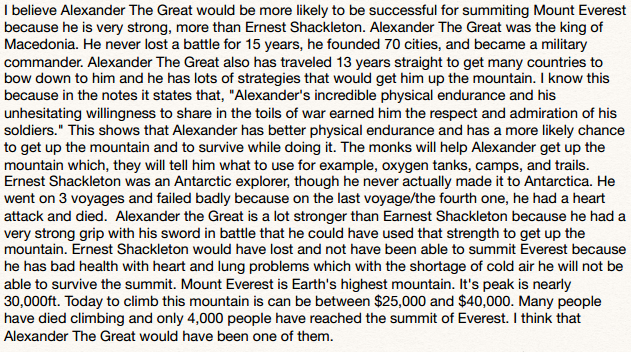
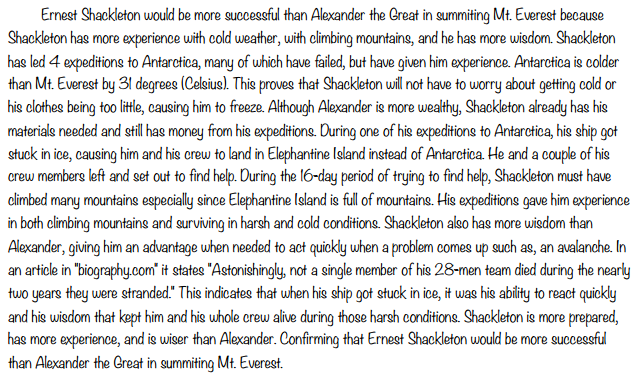
Final Assessment: As a final cumulative assessment, I asked my students to write me an argumentative paragraph stating why they felt their historical figure would be more successful than the other. Students were asked to have multiple reasons why with evidence to support their claim.

Examples from the Shackleton vs. Alexander the Great debate: 

Reflection: Using Who Wins?, I was able to create a standards-based unit that allowed students to not only debate, research, and read informational texts, but work collaboratively, think outside the box, and cite evidence to support their claims. I know the students learned from it as well, and they asked to do another, so I know they enjoyed it. They also now realize that learning just dates or facts about a person isn’t thorough research, it is important to know both sides of an argument so you can have a rebuttal, and that you need to research all aspects of a debate to ensure you are arguing for the right reasons. Overall, I call this a win!

Top Ten Tuesday: Ten Reasons Why Kellee Loves Teaching Middle School

Share

top ten tuesday

Top Ten Tuesday is an original feature/weekly meme created at The Broke and the Bookish. The feature was created because The Broke and Bookish are particularly fond of lists (as are we!). Each week a new Top Ten list topic is given and bloggers can participate.

 Today’s Topic: Ten Reasons Why I Love Teaching Middle School

Kellee

1. They are trying to find their identity and are still moldable, so I feel like I can make a difference.

I love that I am part of these students’ lives during a very influential time. I know that elementary and high school are important as well, but I think it is iso important for kids between the ages of 11 and 14 to have positive influences in their life.

2. Middle grade books!

I love them! And I get a mix of picture books and young adult novels as well! Perfect!

3. Middle school is TOUGH, and I hope I can be a bright light in their days.

Think back to Middle School. Did you enjoy being 12? Most people say no, and most of us cannot think of a teacher who really helped brighten our days in middle school. I hope I can be that bright light that will help them remember this time in a positive way.

4. Teaching only 1 subject.

I love teaching reading. I have the ability to teach more subjects, but I love that I can just teach the one I am most passionate about.

5. The discussions we have over the world, books, or their life.

Middle school kids are so insightful, and I love the conversations we have. And I think sometimes no one listens to them, but they definitely have a voice and opinions and insight.

6. Working with teachers who are passionate about this age also (because only those who are passionate stay in MS).

Other people who are passionate about teaching are amazing to work with, but there is a special little niche in middle school for those of us who love this age. I adore working with these people.

7. Because middle school is a really fundamental time.
I’ve written a post before that showed how middle school really molded who I am today: https://www.unleashingreaders.com/?p=1625. This post and my time as a middle school teacher really show me that so much of who we become is found during the years of middle school

8. The inquisitiveness of elementary age kids + the ability of high school = middle school

I always joke that elementary school kids are too short for me to teach (they are out of my peripheral vision) and high schools are too jaded for me to teach, but all jokes aside, middle schoolers really do embody so much of what makes teaching fun. They are young enough that they are still open to learning and inquiry, but they are old enough that they think for themselves and have vast knowledge.

9. Because middle schoolers are still kids.

But they are still just kids!

10. The hours 😉 We’re 8:30-4. I am not a morning person, so that is really as early as I would like to go.

Self explanatory 🙂

Why do you love teaching/working with the age you do?

Signature

Author Guest Post: “Theater Games to Promote Reading and Writing” by Gary Schwartz, Author of The King of Average

Share

“Theater Games to Promote Reading and Writing”

WHY BRING THEATER GAMES INTO THE CLASSROOM?

Everyone can play! Everyone can learn through playing. The Theater Game format is a charted course for the regular classroom teacher who wishes to bring the excitement, the pleasures, the disciplines and the magic of theater to the classroom.

Theater games, played in the classroom, should be recognized not as diversions from curriculum needs, but rather as supports, which can thread through each day, acting as energizers and/or springboards for everyone. Inherent in theater techniques is verbal, nonverbal, written and unwritten communicating. Communication abilities, developed and heightened in theater game workshops will, in time, spill over into other curriculum need (the 3 Rs) and into everyday life.

Teaching/learning should be a happy, joyful experience, as full of glee as the infant’s breakthrough out of the limitations of crawling into the first step walking!

Beyond immediate curriculum needs, playing theater games will bring moments of spontaneity. The intuitive comes bearing its gifts only in the moment of spontaneity.” Right now is the time of discovery, of creativity, of learning. While playing theater games, teachers and students can meet as fellow players in present time, involved with one another, off the subject, and ready for free connecting, communicating, responding, experiencing, experimenting and breaking through to new horizons.

Reprinted from THEATER GAME FILE HANDBOOK, Viola Spolin, Northwestern University Press


I had the extreme good fortune to study with Viola Spolin author of Improvsiation for the Theater and inventor of modern day Improvisation. I can honestly say she changed my life in many ways. After a long career as an actor and performer and teacher I’ve written extensively on the philosophy of education she imparted to me. (http://spolin.com/?page_id=322) Recently I’ve branched out and written my first full-length children’s adventure novel and incorporated some the lessons I learned from Improvisational Theater Games. The main one being PRESENCE is the state one must be in to tap imagination, and creativity.

To that end, I would like to introduce you to some games I learned from Viola Spolin that foster a love of words, creative writing and story-telling. I urge you to try these games in the classroom or at home for fun.

Warm-up with HANDWRITING LARGE – have the student think of their favorite word or phrase and go to the black or white board and write the word as large as possible to fill the entire board! At desks make sure they cover on page entirely with their favorite word or phrase. Urge them to “FEEL” the word as they write! It is essential the body be involved. You may coach them to feel the word in their feet, their spine, their chest – now write your word!

SINGING SYLLABLES – Have one person go out of the room and the rest of the group or class decide on a 3 or 4 syllable word. (depending on age group). Break the word into its syllables and assign each syllable to a portion of the group. Then decide on a simple song to sing. Row, Row, Row Your Boat, Twinkle Twinkle Little Star, Happy Birthday, etc. A song where all know the melody. Have each group sing their syllable to that tune, simultaneously. Then bring in the person who does not know the word, have them wander through the singing groups and “put the word together”. It’s a lot of fun and you can use this as part of a vocabulary lesson or just for fun.

THE WRITING GAME is a more advanced game is also fun if you are teaching creative writing:

Materials: 4 pieces of paper or one divided into quadrants, pen or pencil

Label each paper 1, 2, 3 and 4. Title #1 My Dream, #2 How To, #3 A Story and #4 A letter (or any 4 disparate subjects or styles of writing. i.e., A memory, A poem, etc.)

Sidecoach calls out a number to the players. Players must begin (without hesitation or forethought) writing on that subject. Writing is to continue non-stop. Points off for hesitating or too much thinking and not writing. After a short interval coach calls another number and players must INSTANTLY SWITCH to that number’s page, writing non-stop on the new subject. Coach will call each number randomly and at intervals under one minute. Players are to switch to each subject called and continue writing where they left off.

Game continues until each player has covered each page with writing.

Focus: To switch instantly between 4 different subjects when coached

Sidecoaching: One!      Three!      Two!, etc. (giving enough time to get a flow going but not too much and vary the times from short to medium short) Keep writing! Don’t plan! No pausing – write continuously!

Points of Observation:

  1. Each subject requires a different mode of thinking and switching instantly between modes allows access to player’s intuitive areas.
  2. This is an exercise and not a test. Have fun and push to make switches instantly. Hesitation is bound up with worry that what you write will be evaluated. Judgement causes hesitation. Judgement is subjective and will cancel flow.
  3. Avoid forethought. Forethought is writing without putting it down.

My experience in improvisation has allowed me to reach into areas of my own creativity that I never imagined and the experience contributed to my life as an actor, teacher and now author.

I hope this work will do the same for you and your students.

About the Author: Gary Schwartz is an award-winning, TV and film actor, director, comedian and a master improvisational acting coach whose 30 years as a performer and improv teacher has helped transform the lives of thousands of people, both on- and off-screen.

It was Gary’s 18-year association with world-renowned theater educator and author, Viola Spolin – famous for training the very first improvisational theater troupe in the US which led to the creation of today’s well-known Second City improv troupe – that has provided the foundation for his work today. In 1988 Gary co-founded the Spolin Players improv troupe (www.spolinplayers.com), and is the only master teacher to have ever earned an endorsement from both Viola Spolin and her son, the legendary original director of Second City, Paul Sills.

Originally from New York State, Gary began his professional career as a mime at age 13, performing up and down the Hudson River with Pete Seegar, Arlo Guthrie and other great folk entertainers of the 60’s. In the 70’s and 80’s he appeared in numerous film and television projects including the Oscar-winning feature film Quest for Fire and 65 episodes of the Emmy-winning TV series Zoobilee Zoo, with Ben Vereen. Since then, as a voice actor, Gary has gone on to work with Robert Redford, Barbra Streisand, Tim Burton, Kenneth Brannagh and many other well-known directors. Details of his extensive acting career are available at IMDB.com. (www.imdb.com/name/nm0777229).

Currently Gary resides in North Bend WA. He is founder of The Valley Center Stage, North Bend’s Community Theater. He teaches theater games locally and around the world. He also teaches acting for animation and writes on Spolin.

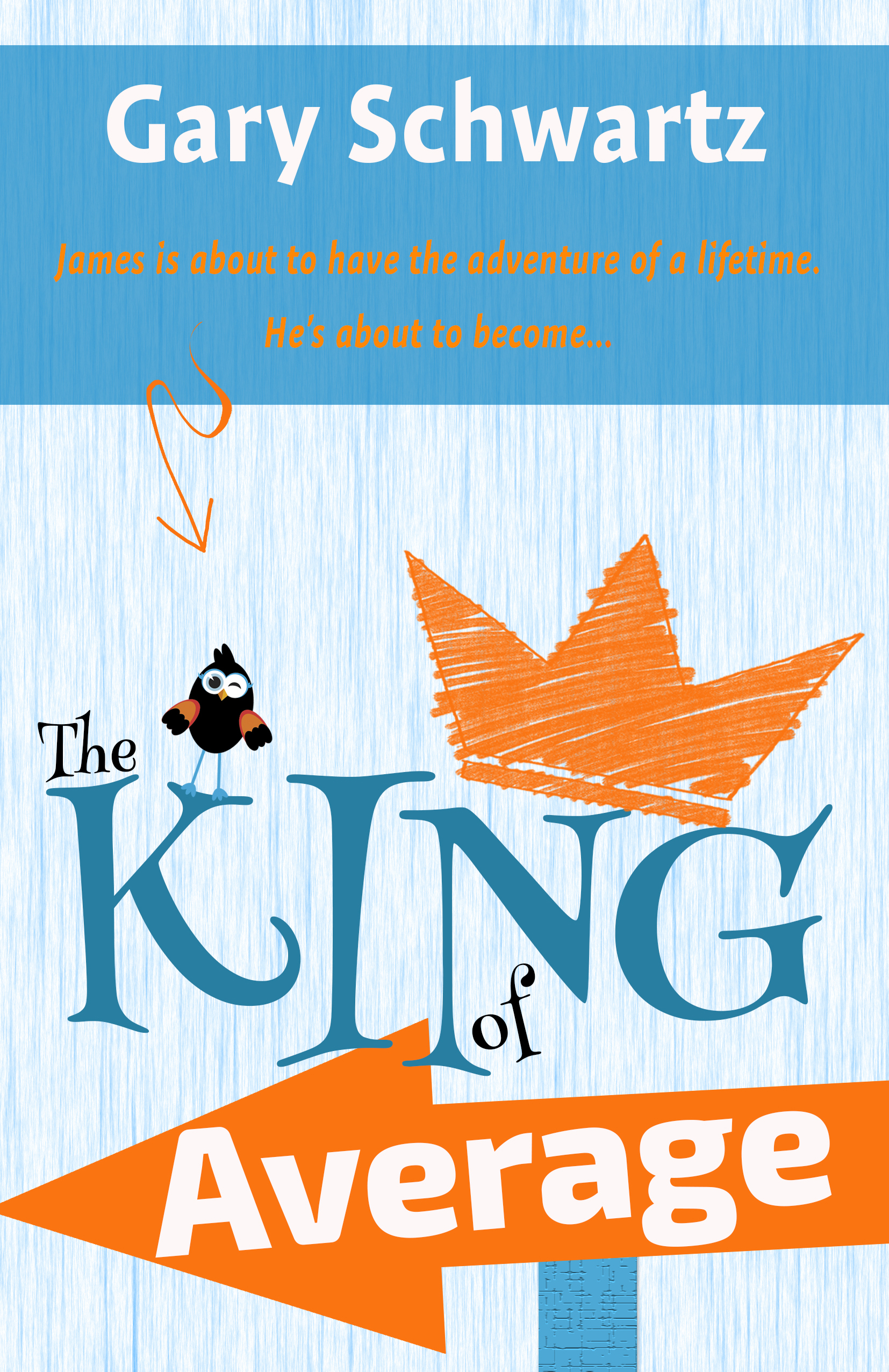
He has recently authored his first children’s novel The King of Average (978-0-9975860-7-7 Paperback ),  published by Bunny Moon Books. It has been named to The Best Books of 2016 lists by Kirkus Reviews and IndieReader.com. More information can be found at his website http://gary-schwartz.com
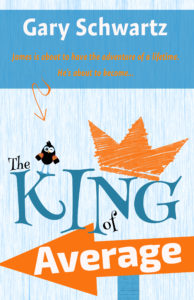
About The King of AverageJames isn’t the world’s greatest kid, but he’s not the worst, either: he’s average! When he decides to become the most average kid who ever lived, James is transported to another world where he meets Mayor Culpa, a well-dressed talking Scapegoat who recruits him to become the new King of Average.

He’s joined on his quest by a professional Optimist and his grouchy companion, an equally professional Pessimist. Together, they set out on a journey of self-discovery that leads them all the way from the Sea of Doubt to Mount Impossible, the highest peak in the Unattainable Mountains. When James stumbles into a Shangri-la called Epiphany, he uncovers the secret of who he really is.

Follow James on his hilarious, adventure-packed journey to find self-worth in this heartfelt middle grade novel The King of Average by debut author Gary Schwartz.


Thank you, Gary, for this fun-filled and kinesthetic-focused post!

 and

Kellee’s 2016-2017 Mock Newbery Experience

Share

newbery medal

On Monday, we found out that The Girl Who Drank the Moon won the 2017 Newbery Medal and The Inquisitor’s Tale by Adam Gidwitz, Wolf Hollow by Lauren Wolk, and Freedom Over Me by Ashley Bryan earned Newbery Honors. Watching the Youth Media Awards live is always one of my favorite days of the year because it they always make me so happy for the books I’ve read and so excited for the ones I haven’t read yet (as well as a bit sad for the wonderful books that weren’t honored). This year, the ALA awards were even more fun to watch because I was able to enjoy it with my Mock Newbery Book Club.  Although none of our Mock Newbery predictions were honored by that committee, we were so excited to see so many books we read this year honored.
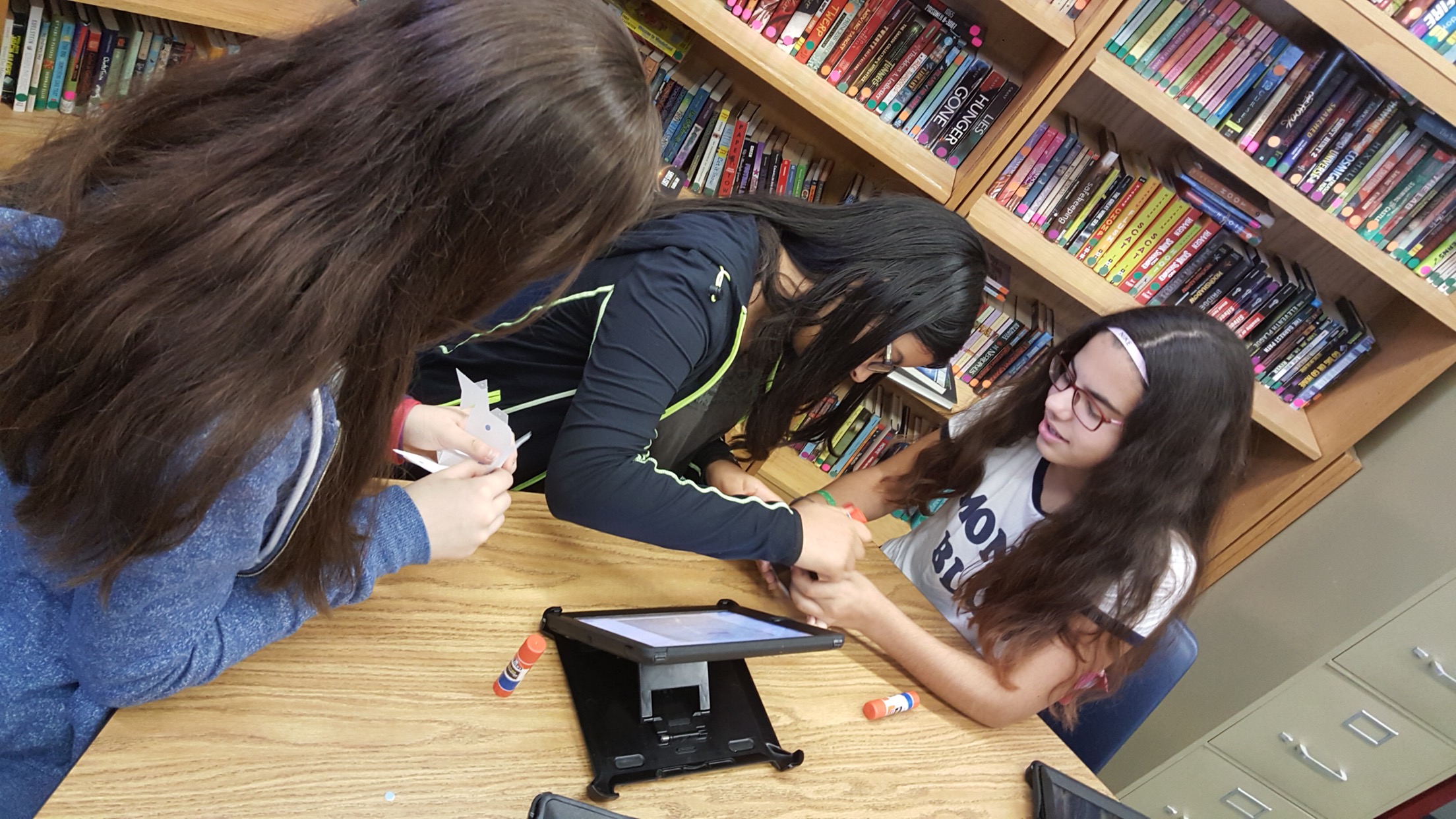
Starting a Mock Newbery Book Club this year came about because of a few reasons. First, I’ve been fascinated by the Newbery Award since I was a kid. I remember having to read Newbery winners/honors when I was in school, and I was always enthralled with the list. Being on the Walden Book Award Committee also helped me understand how book awards worked and made me want to share it with my students. Third, Michele Knott was willing to share what she has learned from her own Mock Newbery experiences to help me get started on the right foot. And finally, I had a group of kids that wanted to do it with me and were passionate. That is what really made all the difference.
To Get Started

Before officially starting the club in September, I scoured Newbery prediction blog posts, the Mock Newbery Goodreads group, the Mock Newbery prediction list, and starred reviews to come up with a list of books that I would share with the club. In the end, I chose 26 titles to split between the 3 months we’d be reading. Each month had a list of 7-9 titles for students to choose from, and they were asked to read 2 a month to equal 6 or more titles read before voting day.

2016-10-04 12.20.15

T0 help my students have access to the novels, I began a Donors Choose project which was fully funded (THANK YOU!). I ended up with 3 copies of each book to share with my club. (I’ve also since received a grant to continue the book club during the spring though we haven’t decided what we’re going to do yet.)

Our Process

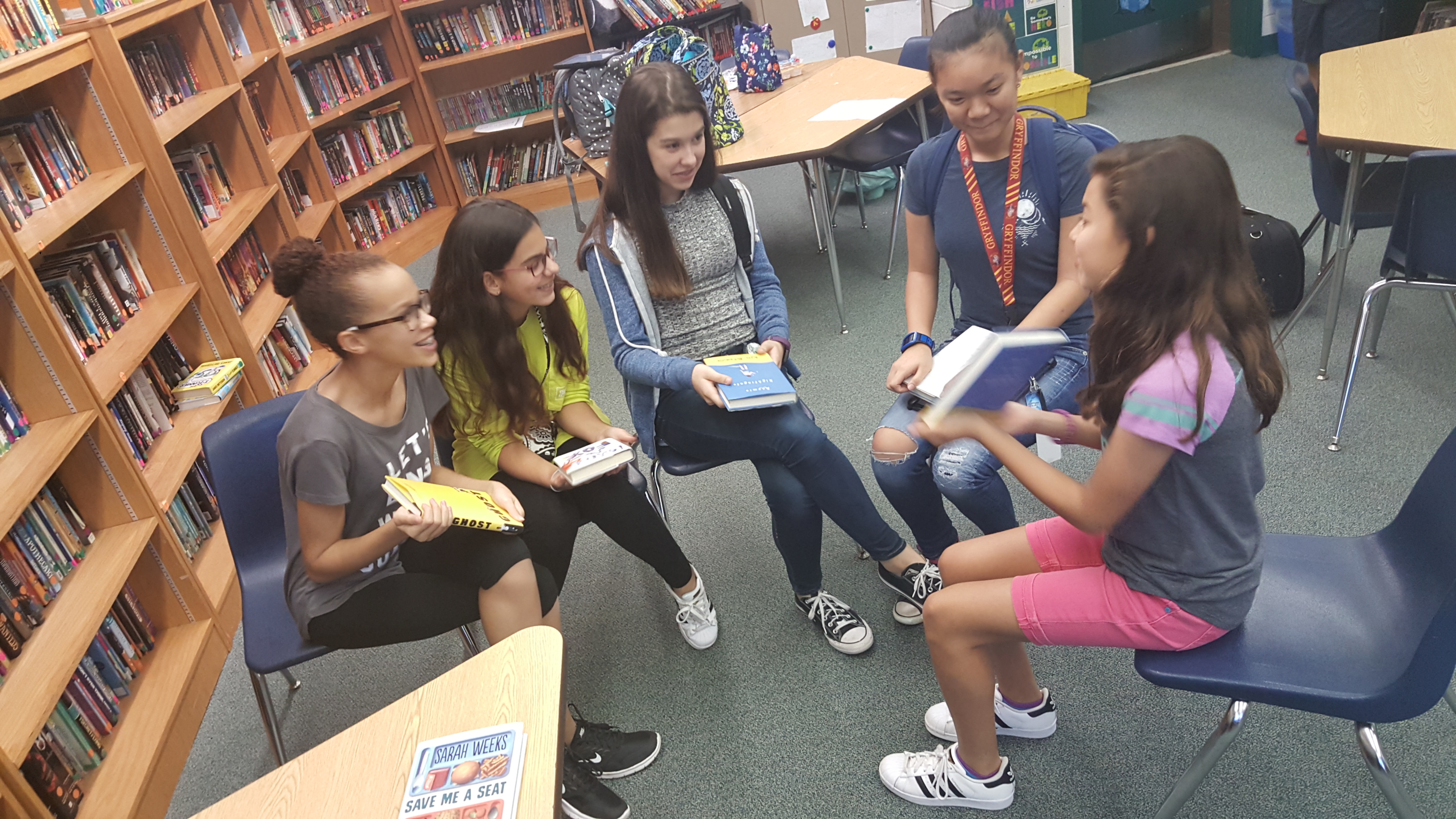
My group of 7th graders (ranging from 10 to 20 students) met twice a week during their lunch time. Some students came every day instead of just twice, others only came once a week which was the minimum to be part of the voting. For the first 3 weeks of the month, we spent book club time reading or recommending books to each other. Book talk was all throughout the room–so much book love! The last week of the month, I set up discussions around each book for the students to look critically at each book while looking at the Newbery criteria. Students also had the opportunity to discuss the books they were reading at any time electronically through small groups that I set up on Edmodo. This was the process throughout October, November, and December/January. Then the last week before we voted, we sat in a circle and shared the book we were going to vote for as the winner and shared why.

20170119_123814 20170119_123542

By the end of our process, 12 7th graders and 2 6th graders who chose to read the books on their own were able to vote. To determine our winner and honors, I used a process similar to the Newbery committee. Students were allowed to vote (through a Google Form) for their top 4 books (the committee does 3). Their top vote received 4 points, second vote 3 points, etc.

Our Vote

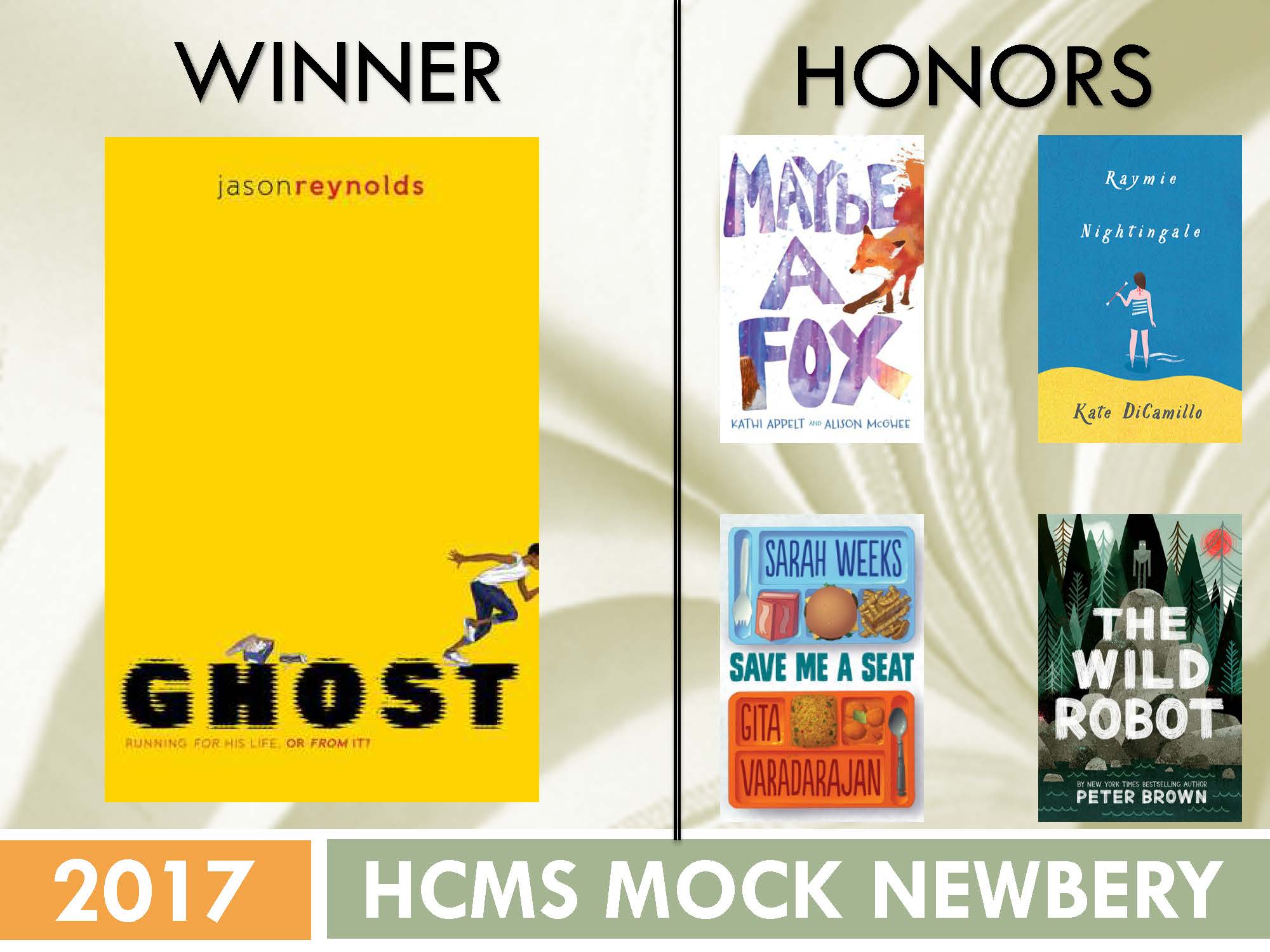
Mock Newbery Winner & Honors

Ghost by Jason Reynolds (16 points) *Odyssey Honor
Maybe a Fox by Kathi Appelt and Alison McGhee (15 points)
Raymie Nightingale by Kate DiCamillo (12 points)
Save Me a Seat by Gina Varadarajan and Sarah Weeks (12 points)
The Wild Robot by Peter Brown (12 points)

Hour of the Bees by Lindsay Eager (10 points)
Booked by Kwame Alexander (8 points)
Pax by Sara Pennypacker (7 points)
Sophie Quire and the Last Storyguard by Jonathan Auxier (7 points)
Wolf Hollow by Lauren Wolk (6 points) *Newbery Honor
Key to Extraordinary by Natalie Lloyd (6 points)
All Rise for the Honorable Perry T. Cook by Leslie Connor (6 points)

Received votes totaling 5 or less points (in alphabetical order):
As Brave As You by Jason Reynolds *Schneider Award, Coretta Scott King Honor
Full of Beans by Jennifer Holm *Scott O’Dell (Announced 1/11)
Girl Who Drank the Moon by Kelly Barnhill *Newbery Medal
Inquisitor’s Tale by Adam Gidwitz *Newbery Honor
Ms. Bixby’s Last Day by John David Anderson
Samurai Rising by Pamela S. Turner *YALSA Honor for Excellence in Nonfiction for Young Adults
Seventh Wish by Kate Messner

Reflections

I cannot wait to go through this process again next year, but I hope to make it even a better experience. Here are some takeaways I have:

  • I need to spend more time looking at the criteria and what it means with the students as well as possibly looking at past winners. It is really hard to get them past “I like it.”
  • I need to decide if I want to give less options next year to allow for more people to read each book. They had A LOT of options each month, so some books only had 1 student read them thus couldn’t win even if that one person gave it their #1 spot. (Perry T. Cook, Girl Who Drank the Moon, and Wolf Hollow suffered from this.)
  • I need to figure out how to ensure that all members come to the discussion days because it is really hard to discuss books if not everyone is there. How can I keep kids coming without making it feel like another class?
  • I need to figure out how to structure the discussions better. With each person reading two, I can’t have all books’ discussions going on at once because a person cannot be in two places at once. That is why I like electronic or written discussion, but I have to work on getting more use out of these mediums.

Our Viewing Party

20170123_081530

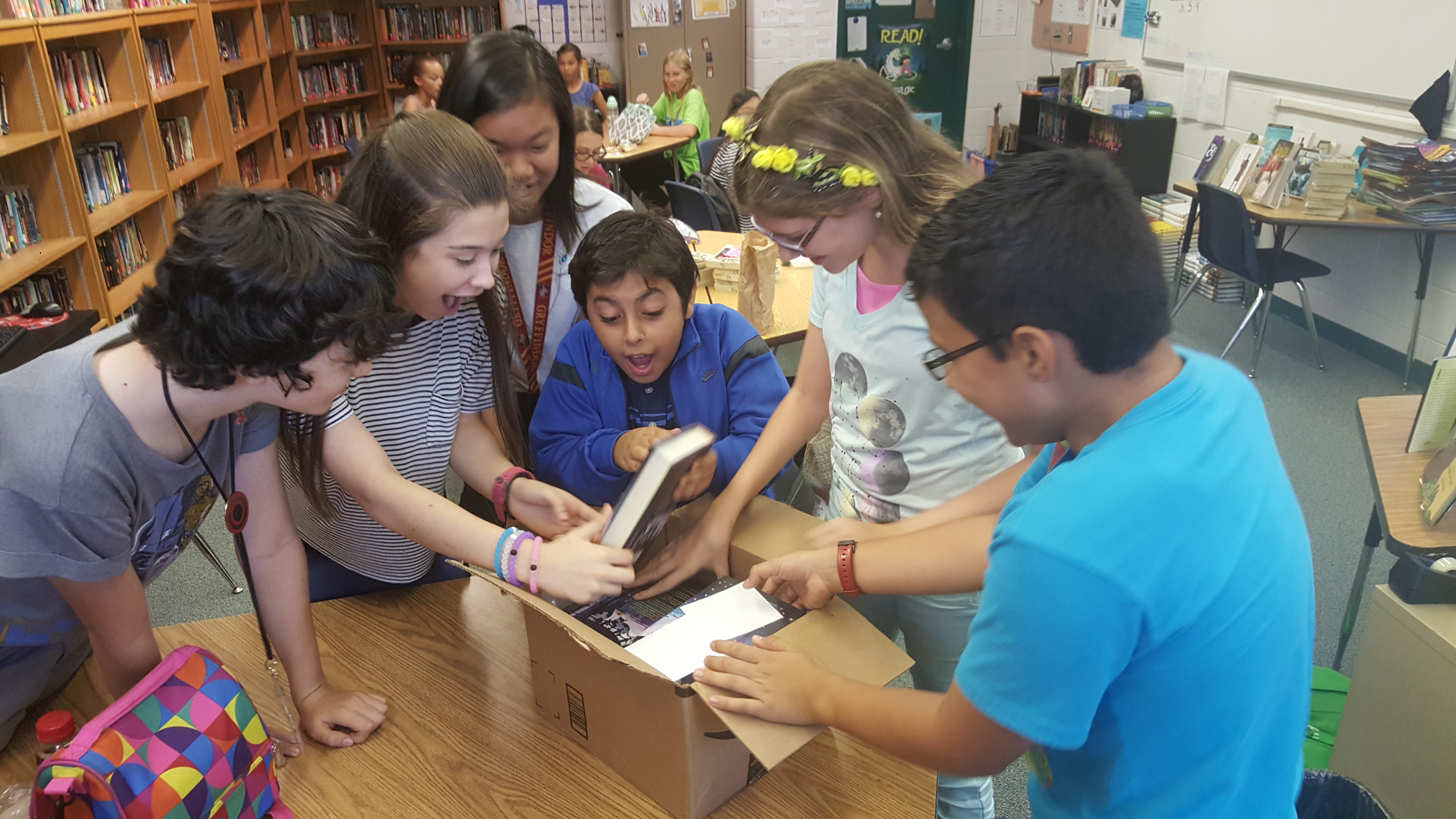
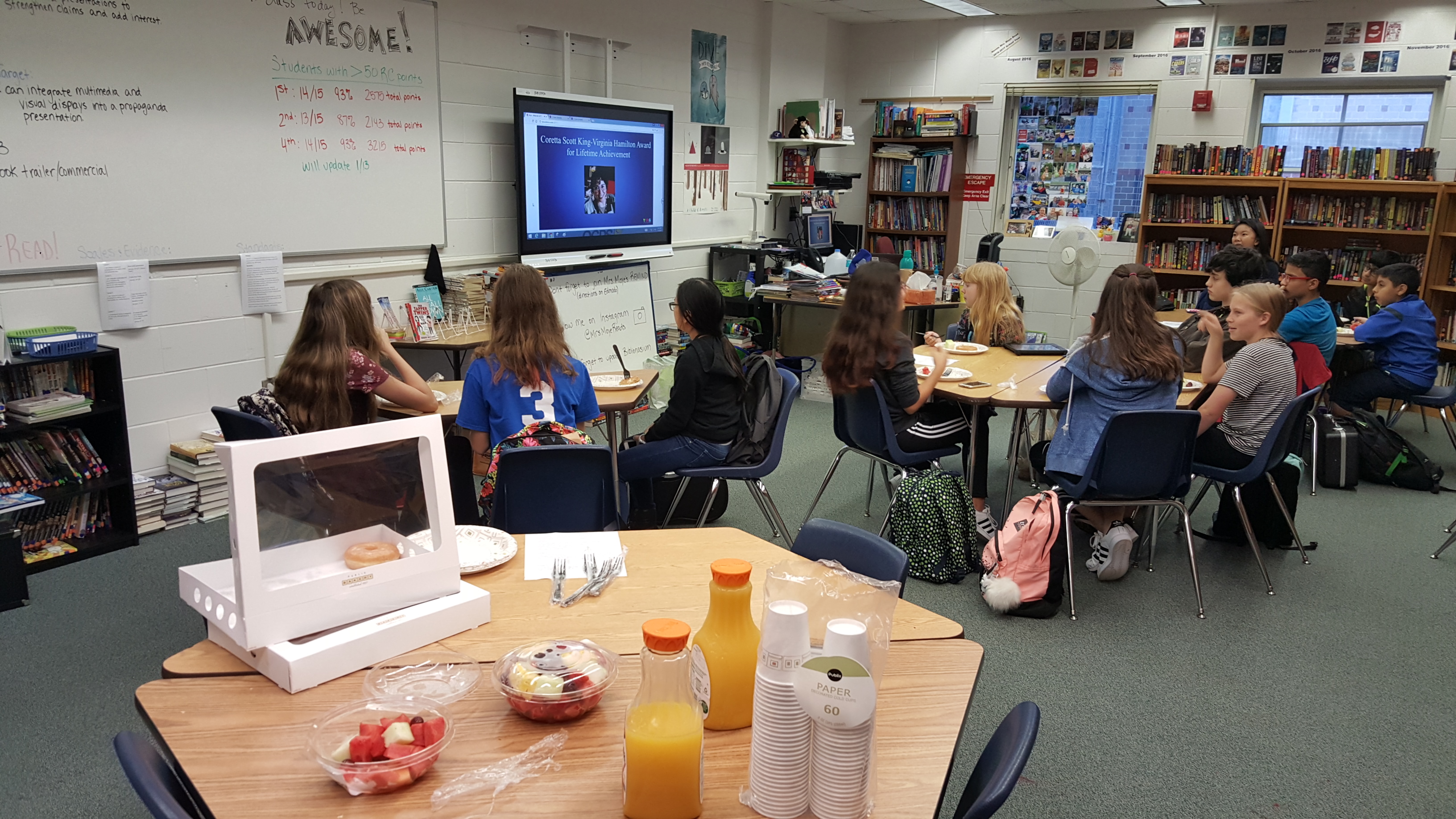
Then, on Monday, January 23rd, at 8am ET, we all gathered in my classroom to view the ALA Youth Media Awards live. This was all of my students’ first time watching the awards, and  I loved going through the experience with them. Although they were so sad that their favorites weren’t honored, they were so ecstatic when a book they did know won something.

I cannot wait to do this again next year!

Kellee Signature

Ricki’s 2016 NCTE and ALAN Experience

Share

2016-ncte

If you haven’t been to the NCTE (National Council of Teachers of English) convention or ALAN (Assembly on Literature for Adolescents of the NCTE) Workshop and you love books, this would be a real treat to yourself. The NCTE convention occurs each November the Thursday through Sunday before Thanksgiving. Then, the ALAN Workshop occurs the Monday and Tuesday following the NCTE convention. Attendees include teachers, librarians, teacher educators, authors, and publishers. I’ve gone every year since 2006, and I absolutely love attending.

I love meeting all of the great, incredible new authors. But this year, I was able to meet two of my childhood icons, Ann M. Martin, author of The Baby-Sitters Club series and S. E. Hinton, author of The Outsiders.

15107368_10103729408876601_8402640874323432055_n

Ann M. Martin

15037313_10103730362984561_1890780387595358292_n

S. E. Hinton

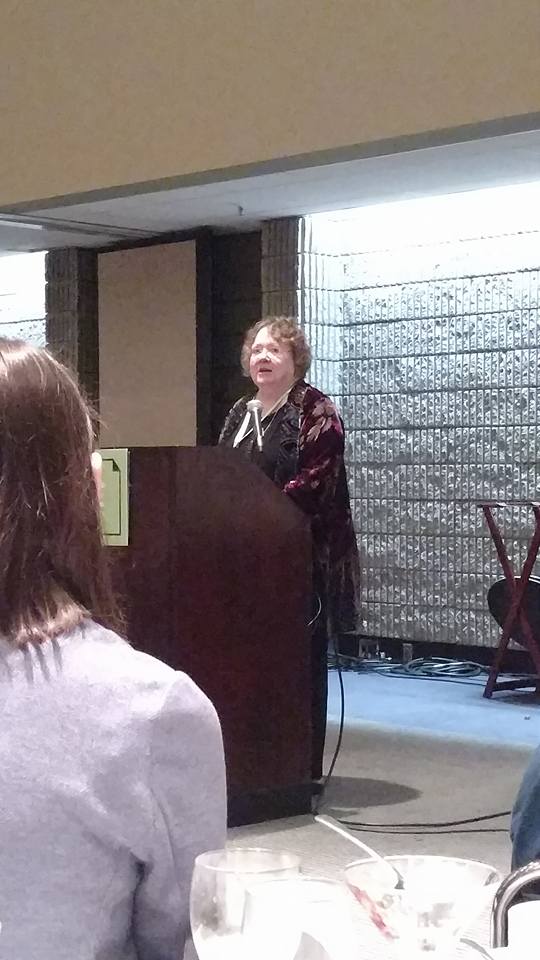
The NCTE convention allows us to fulfill our childhood dreams, but it also helps us fulfill adult dreams. This year, I was honored to chair a panel that featured Laurie Halse Anderson, E. K. Johnston, and Amber Smith at the ALAN Workshop. Laurie led the discussion, which was centered on issues of rape and healing. All three authors have phenomenal books that critically examine this topic.

lha-panel

Me, E. K. Johnston, Laurie Halse Anderson, Amber Smith

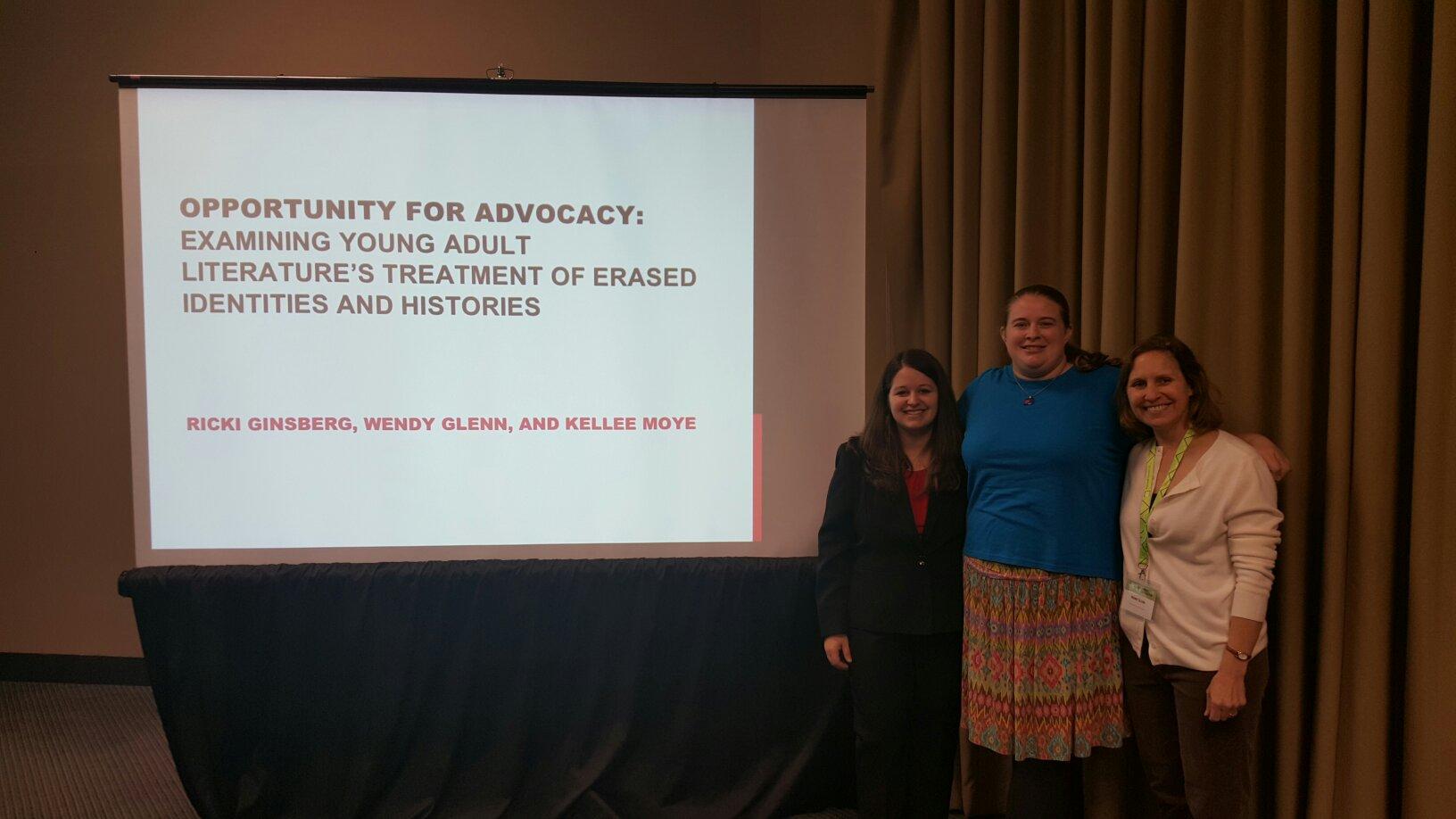
My first presentation was “Opportunity for Advocacy: Examining Young Adult Literature’s Treatment of Erased Identities and Histories.” I was really proud with how this presentation went! Wendy, Kellee, and I presented different ways that young adult texts erase or deny identities and how this can be used to promote advocacy. Two of the handouts that emerged from this session will be available this Wednesday and Thursday

30208

Me, Kellee, Wendy

I also presented at a roundtable session, “Advocating for Hope: The Amelia Elizabeth Walden Award and Its Importance in Promoting and Providing a Positive Outlook.” We used the Amelia Elizabeth Walden Award books to show different creative ways to help students search for messages of hope. We also discussed how to create text sets of hope.

30221

Advocating for Hope Roundtable

I also presented at a roundtable in the “Culturally Diverse Young Adult Literature: Voices of Advocacy & Community” session. Meg Medina and Kekla Magoon started out the presentation and discussed the importance of culturally diverse literature to promote advocacy. My roundtable featured Kekla Magoon’s How it Went Down. We talked about how interdisciplinary ideas, like dog-whistle politics, could be used to help students analyze perspective and work toward advocacy.

My last presentation was in a paper panel called “Examining Responses to Young Adult Literature in English Education and English Language Arts Classrooms.” Wendy Glenn and I talked about our research study about the ways students labeled as struggling negotiated their reading identities in nontraditional and traditional English courses. The full paper is available in the Research in the Teaching of English‘s August 2016 journal. The article is published here.

I also attended some great presentations about identity, equity, and advocacy (my interests). I learned so much and am very excited to keep rethinking my instruction and research.

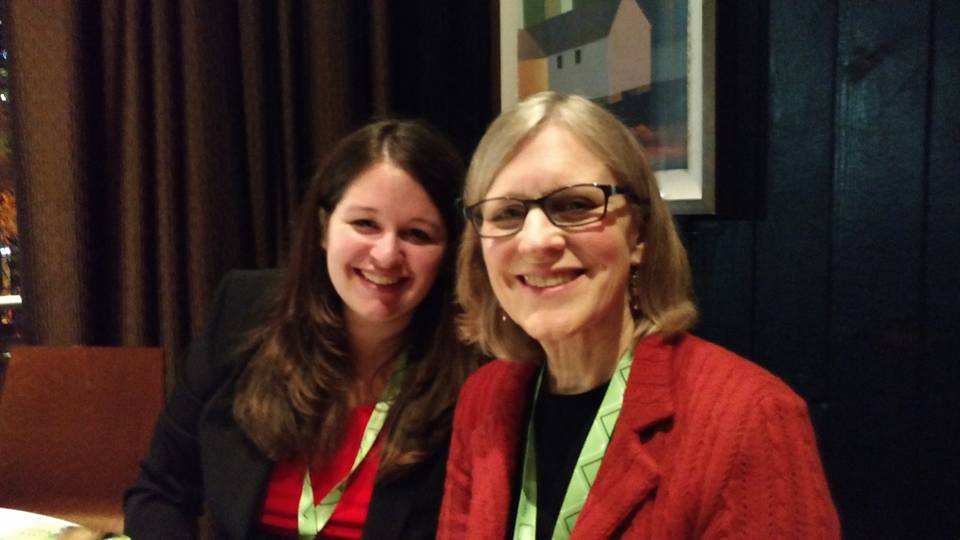
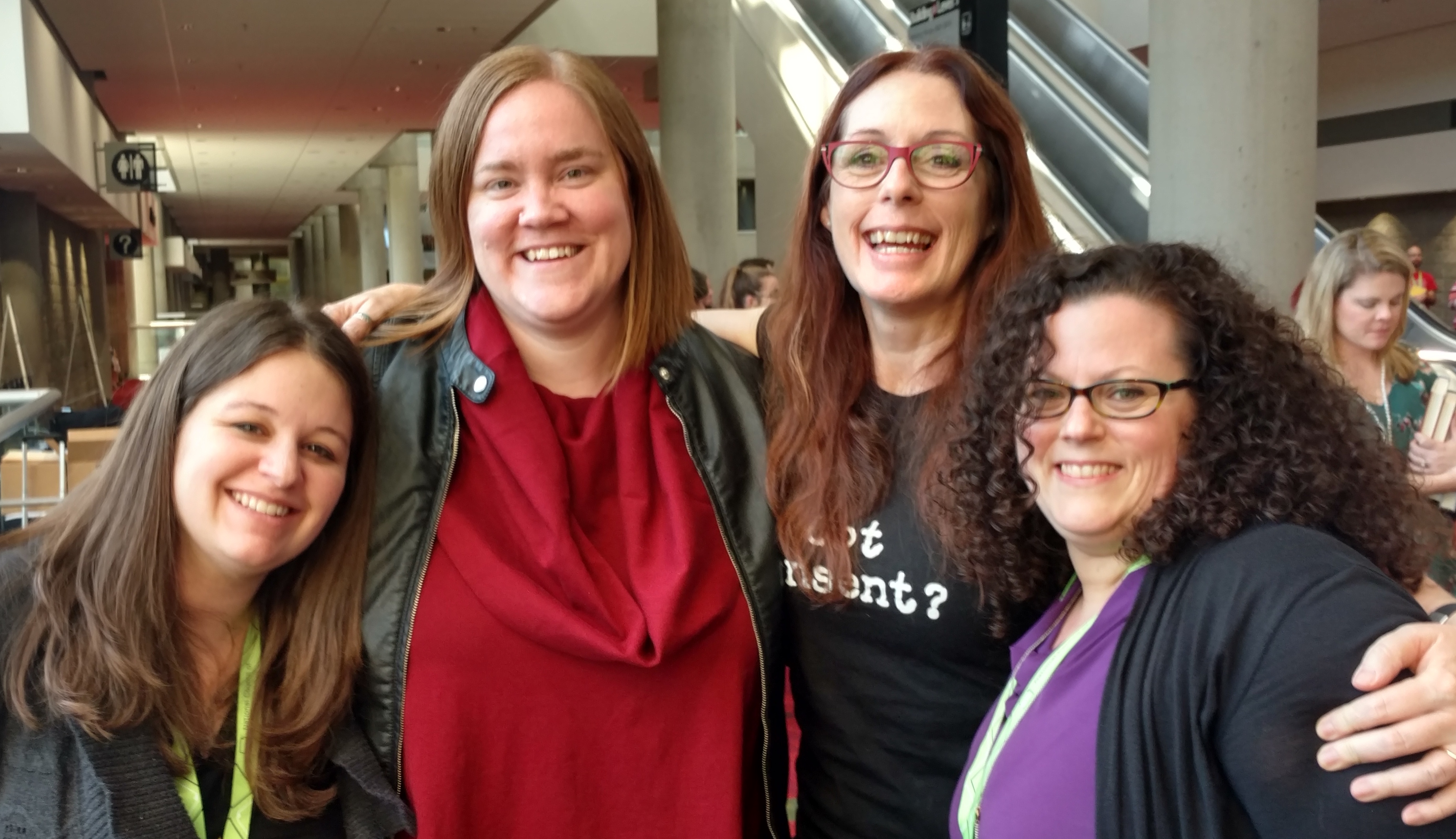
From old friends to new, I am always excited by the incredible connections I make at this conference. I am lifted up by the individuals who share this passion for reading and feel so grateful for my NCTE and ALAN families. Thank you all for another wonderful year that invigorated me and made me feel even more alive and excited to begin this next year—for I genuinely believe that reading saves lives.

Until next year, friends! Will I see you there? 

2017-ncte-web_banner_660x133

RickiSig