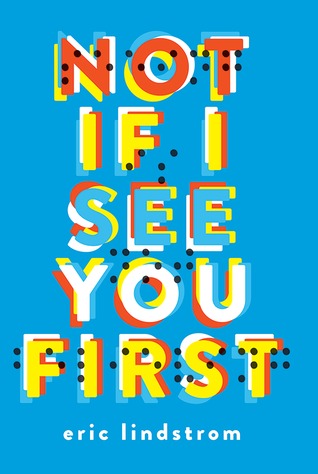
Not if I See You First by Eric Lindstrom

Share

not if i see you first

Not If I See You First
Authors: Eric Lindstrom
Published: December 1, 2015 by Poppy

GoodReads Summary: The Rules:

Don’t deceive me. Ever. Especially using my blindness. Especially in public.

Don’t help me unless I ask. Otherwise you’re just getting in my way or bothering me.

Don’t be weird. Seriously, other than having my eyes closed all the time, I’m just like you only smarter.

Parker Grant doesn’t need 20/20 vision to see right through you. That’s why she created the Rules: Don’t treat her any differently just because she’s blind, and never take advantage. There will be no second chances. Just ask Scott Kilpatrick, the boy who broke her heart.

When Scott suddenly reappears in her life after being gone for years, Parker knows there’s only one way to react—shun him so hard it hurts. She has enough on her mind already, like trying out for the track team (that’s right, her eyes don’t work but her legs still do), doling out tough-love advice to her painfully naive classmates, and giving herself gold stars for every day she hasn’t cried since her dad’s death three months ago. But avoiding her past quickly proves impossible, and the more Parker learns about what really happened—both with Scott, and her dad—the more she starts to question if things are always as they seem. Maybe, just maybe, some Rules are meant to be broken.

Combining a fiercely engaging voice with true heart, debut author Erid Lindstrom’s Not If I See You First illuminates those blind spots that we all have in life, whether visually impaired or not.

Review: The story is about a girl who is blind and a runner. I feel like I learned so much for this book from the physical and mental strength of this young girl. Frankly, I can’t quite find the words to express how much it taught me about life. The narrator is feisty, and I appreciated her candor about her disability. I came to realize how incredibly frustrating it would be to deal with the same reactions from strangers every day, particularly when she feels perfectly capable. This is a great book to teach empathy.

Teachers’ Tools for Navigation: We don’t talk about disability in literature enough. I would love to put students in literature circles, with all of the texts focusing on disability. It would be interesting to have whole-class discussions about the way disability is present in each text. It might be particularly interesting to include texts that feature mental and physical disability. This might lead to good discussions, like: What is disability? Is a disability always visible to others? What is normal?

Discussion Questions: The narrator of the text is unlikable. How does this add to the story? Why might the author have written the text in this way?; Do you think Parker’s rules are fair? Why do you think she has this list of rule?

We Flagged: I flagged this section because it shows Parker’s dry humor:

“‘So you’re blind, huh?’

I cock my head toward the unfamiliar male voice coming from the seat directly in front of me. Low-pitched a bit thick around the vowels. The voice of a jock, but I just keep that as a working hypothesis awaiting more evidence.”

Read This If You Loved: The Running Dream by Wendelin Van Draanen, Girl, Stolen by April Henry, Blind by Rachel DeWoskin, Wonder by R.J. Palacio, Out of My Mind by Sharon Draper

Recommended For:

litcirclesbuttonsmall classroomlibrarybuttonsmall

RickiSig

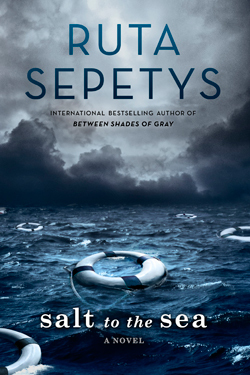
Salt to the Sea by Ruta Sepetys

Share

salt to the sea

Salt to the Sea
Author: Ruta Sepetys
Published: February 2nd, 2016 by Philomel Books

GoodReads Summary: The author of Between Shades of Gray returns to WWII in this epic novel that shines a light on one of the war’s most devastating—yet unknown—tragedies.

In 1945, World War II is drawing to a close in East Prussia, and thousands of refugees are on a desperate trek toward freedom, almost all of them with something to hide. Among them are Joana, Emilia, and Florian, whose paths converge en route to the ship that promises salvation, the Wilhelm Gustloff. Forced by circumstance to unite, the three find their strength, courage, and trust in each other tested with each step closer toward safety.

Just when it seems freedom is within their grasp, tragedy strikes. Not country, nor culture, nor status matter as all ten thousand people aboard must fight for the same thing: survival.

My Review: This is a book about humanity. Each voice serves a unique purpose to foster a complete picture of this great tragedy in history. The characters feel real, and their stories and perspectives are so different that readers are able to fully understand a diversity of experiences toward the war. Wow, wow, wow. I don’t feel that summarizing or reviewing this book will even do it justice. I felt like I couldn’t eat or sleep until I finished it. Salt to the Sea takes readers on an epic adventure and throws them for an emotional tailspin. After I closed the cover, I was reeling.  The language is powerful and the story is captivating.

Ruta Sepetys holds a special place in my heart. She is a powerful force in historical fiction, and this book is no exception. Several years ago, I was fortunate to be sharing a drink with Ruta at the ALAN cocktail party. When I asked her what she was working on, her eyes glinted as she talked about the concept of this book. She felt a connection to this tragedy, and while nothing had been written at the time, I knew it would be a remarkable novel. For the next several years, I thought about the way Ruta described the historical event, and I consistently checked her pages to see if I would see any further information about its progress. Several years later, I would (fortunately) receive this book in the mail. Boy was it worth the wait.

Teachers’ Tools for Navigation: The teaching opportunities for this book are endless. I would love to use this book to teach the theme: What does it mean to be human? or What does it mean to be a good person? Then, I might pair other texts (e.g. Kite Runner by Khaled Hosseini) and create a text set to consider these themes. The perspective and voice of these characters are strong, and I imagine rich classroom discussions about the ways these four characters show us a slice of humanity. (One of the four main characters is debatably evil, and this would offer excellent, critical conversations). Beyond these four characters, readers might consider the minor characters of this text (or tangential war figures, such as Hitler or Stalin). Are humans innately selfish? Are the innately good? Are we all flawed? Are there any universal characteristics amongst these characters, or are they too different?

Discussion Questions: How does the author balance historical information and story? What tools does she use to do this?; Why do you think the author chose to feature four points-of-view rather than one? Does it add or detract from the story? What similarities do you see across these voices? What differences?

We Flagged: “Survival had its price: guilt.”

*Quote taken from an advanced reader copy. It may change after publication.*

Read This If You Loved: Between Shades of Gray by Ruta Sepetys; The Watch that Ends the Night by Allan Wolf; The Book Thief by Markus Zusak; A Night to Remember by Walter Lord; The Guernsey Literary and Potato Peel Pie Society by Mary Ann Shaffer; Schindler’s List by Thomas Keneally; Code Name Verity by Elizabeth Wein

Recommended For:

 closereadinganalysisbuttonsmall litcirclesbuttonsmall classroomlibrarybuttonsmall

RickiSig

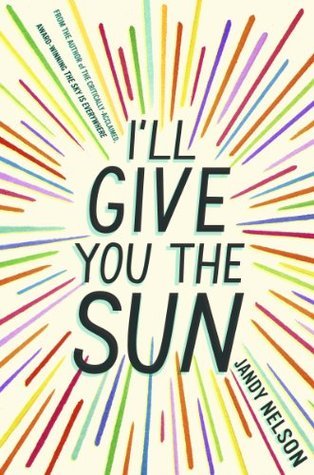
I’ll Give You the Sun by Jandy Nelson

Share

I'll Give You the Sun

I’ll Give You the Sun
Author: Jandy Nelson
Published: September 16, 2014 by Dial

Summary: A brilliant, luminous story of first love, family, loss, and betrayal for fans of John Green, David Levithan, and Rainbow Rowell

Jude and her twin brother, Noah, are incredibly close. At thirteen, isolated Noah draws constantly and is falling in love with the charismatic boy next door, while daredevil Jude cliff-dives and wears red-red lipstick and does the talking for both of them. But three years later, Jude and Noah are barely speaking. Something has happened to wreck the twins in different and dramatic ways . . . until Jude meets a cocky, broken, beautiful boy, as well as someone else—an even more unpredictable new force in her life. The early years are Noah’s story to tell. The later years are Jude’s. What the twins don’t realize is that they each have only half the story, and if they could just find their way back to one another, they’d have a chance to remake their world.

This radiant novel from the acclaimed, award-winning author of The Sky Is Everywhere will leave you breathless and teary and laughing—often all at once.

Review: I haven’t been able to stop talking about this book since I read it. I anxiously awaited its release after reading (and loving) The Sky is Everywhere, and it most certainly didn’t disappoint. Jandy Nelson writes characters that step off of the pages and into readers’ hearts. I cried along with Jude and Noah and felt their grief as if it was my own. The passion of the characters was refreshing, and I felt as if they were my friends by the end of the book. Jandy Nelson is a literary genius. This book is quirky, colorful, and different, which makes it unforgettable for me. I plan to use this in my future Methods courses, and I only reserve those reading spots for the best of the best in YAL. It crosses genres a bit (Jude talks to ghosts), and the alternating perspectives span several years in the siblings’ lives. Students and teachers will find many topics and literary qualities that are worthy of analysis and discussion.

Teacher’s Tools for Navigation: Nelson touches on many life lessons in the text, and she presents them in an implicit way. (We all know that readers hate didactic texts!) I would ask my students to create a billboard: “Lessons I Learned from I’ll Give You the Sun.” Then, they could create a word map of different lessons they learned and cut out quotes or draw illustrations of scenes that taught these life lessons.

Discussion Questions: What does this story teach us about humanity?; How do the different characters cope with tragedy? What outlets (creative, emotional, etc.) do the characters use as coping mechanisms?; How does Jude and Noah’s relationship evolve throughout the text?; How does the nonlinear format impact the story?

We Flagged: “I gave up practically the whole world for you,” I tell him, walking through the front door of my own love story. “The sun, stars, ocean, trees, everything, I gave it all up for you.”

Read This If You Loved: All the Bright Places by Jennifer Niven, Love Letters to the Dead by Ava Dellaira, The Impossible Knife of Memory by Laurie Halse Anderson, The Gargoyle by Andrew Davidson, The Perks of Being a Wallflower by Stephen Chbosky, The Secret Hum of a Daisy by Tracey Holczer, Ask the Passengers by A.S. King

Recommended For:

closereadinganalysisbuttonsmall litcirclesbuttonsmall classroomlibrarybuttonsmall

RickiSig

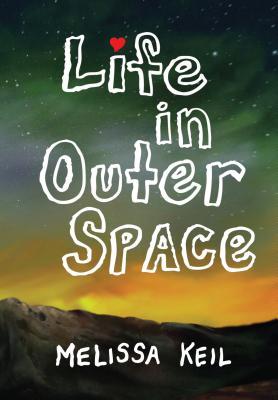
Life in Outer Space by Melissa Keil (Ricki’s Review)

Share

outerspace

Life in Outer Space
Author: Melissa Keil
Published August 1st, 2013 by Peachtree Publishers

Goodreads Summary: Sam is a geek movie-buff with a ragtag group of loser friends who have been taking abuse from the popular kids for years. But when the super-cool Camilla moves to town, she surprises everyone by choosing to spend time with Sam’s group. Suddenly they go from geek to chic, and find that not everything boils down to us and them. With their social lives in flux, Sam and Camilla spend more and more time together. They become the best of friends, and Sam finds that he’s happier and more comfortable in his own skin than ever before. But eventually Sam must admit to himself that he’s fallen in love. If he confesses his true feelings to Camilla, will everything change again?

My Review: Kellee wrote her review almost a year ago, and after reading her review, I laughed because my notes about this book are so similar to her thoughts.

While reading this book, I thought about its connections to Stargirl by Jerry Spinelli and Paper Towns by John Green, and the narrator reminded me of Charlie from The Perks of Being a Wallflower by Stephen Chbosky. But while this book is similar to others, it is very different.

Sam makes being geeky feel cool. I am geeky, so I appreciated this. He experiences tough life issues that many teenagers face, and he doesn’t lie about his lack of knowledge about dealing with these issues or understanding girls. The book contains scenes with World of Warcraft and there is a lot of information about horror movies (both of which aren’t interesting to me), yet I remained very engaged in the story and the characters. Keil writes the male narrator very well, and I think all types of adolescents will identify with the themes of this book. This is one of Kellee’s favorite books, and I see why. Thank you for nagging me to read it, Kel. It is one that will stick with me forever.

Teachers’ Tools for Navigation: Why hasn’t this book received more press? It belongs in classrooms. As a teacher, I would use it as a mentor text for characterization. The scenes with Camilla are written breathtakingly well. If students read these scenes, they would want to read the entire book.

Discussion Questions: Did you find Camilla to be realistic? Could a student walk in and change the entire dynamic at the school in such a powerful way?; Why does Camilla like Sam? Is this realistic?; In what ways are media used by Keil to engage readers?; What does this book teach us about friendship?; How does Sam’s family life add to the complexity of this book?

We Flagged: “I guess some people enter your orbit and get stuck, and there’s nothing either of you can do about it” (p. 70).

And I loved the quote Kellee picked out. It is the scene I remember the most in the book:

“She is wearing a yellow dress that looks like it belongs to a 1950s housewife, and a pair of flat red boots. Her hair is longer than I’d imagine would be practical; it’s parted in the middle and hangs in brown waves almost to her waist. She peers around the room impassively. She doesn’t look terrified. She doesn’t look insanely overconfident, like Adrian that time in year seven when he performed a song as his book report for The Outsiders. Mike and I mark that event as ground zero for the downward social spiral of our group.” (p. 11)

Read This If You Loved: The Perks of Being a Wallflower by Stephen Chbosky, Stargirl by Jerry Spinelli, Paper Towns by John Green, Eleanor and Park by Rainbow Rowell

Recommended For: 

closereadinganalysisbuttonsmall classroomlibrarybuttonsmall litcirclesbuttonsmall

RickiSig

All the Bright Places by Jennifer Niven

Share

all the bright places

All the Bright Places
Author: Jennifer Niven
Published: January 6, 2015 by Knopf

Goodreads Summary: The Fault in Our Stars meets Eleanor and Park in this compelling, exhilarating, and beautiful story about a girl who learns to live from a boy who intends to die.

Theodore Finch is fascinated by death, and he constantly thinks of ways he might kill himself. But each time, something good, no matter how small, stops him.

Violet Markey lives for the future, counting the days until graduation, when she can escape her Indiana town and her aching grief in the wake of her sister’s recent death.

When Finch and Violet meet on the ledge of the bell tower at school, it’s unclear who saves whom. And when they pair up on a project to discover the “natural wonders” of their state, both Finch and Violet make more important discoveries: It’s only with Violet that Finch can be himself—a weird, funny, live-out-loud guy who’s not such a freak after all. And it’s only with Finch that Violet can forget to count away the days and start living them. But as Violet’s world grows, Finch’s begins to shrink.

This is an intense, gripping novel perfect for fans of Jay Asher, Rainbow Rowell, John Green, Gayle Forman, and Jenny Downham from a talented new voice in YA, Jennifer Niven.

Ricki’s Review: A publishing representative who I deem to be a friend pressed this book into my hand. “Read it,” she insisted. She told me I would want to curl up into a ball in my bed and fall into this book. I fell hard. The writing is incredible. I hate to compare books with others because it creates a sense of expectation that often goes unfulfilled for future readers, but I couldn’t help but consider comparisons with my all-time favorite YA texts. The quirky nature of the characters reminded me of Pudge, Alaska, Charlie, Eleanor, and Park. The direction of the plot reminded me of other titles (which will remain unnamed to prevent spoilers). But I cannot compare this book to others because while it allowed to me reminisce about my favorite titles, it was quite different. The deep, honest, hard-hitting depiction of mental illness was enough to take my breath away. I felt rage that made me want to punch my mattress; I felt sadness that made me feel a hopeless sense of emptiness; but above all, I felt the power of love, loyalty, and friendship that made my heart both ache and swell. This is an unforgettable book. I suspect it will be the book that everyone will be talking about this year and for years to come.

Teacher’s Tools for Navigation: Mental illness and bullying are pervasive in our schools. We can’t teach enough books about these themes because they are incredibly relevant for young people. As a former teacher, I was jealous of the teacher who created the assignment for Violet and Finch, and I wanted to do it with my former students. It would be so neat to duplicate this project while students read the book. Additionally, I think students would benefit from creating their own version of the post-it collages that Violet and Finch make. As an alternative, I would consider having students research the warning signs of suicide and finding these instances in the text. There are so many themes for the students to consider, the teaching categories at the top and tags at the bottom of this post show a variety of different directions a teacher might take with the instruction of this text.

Access the book’s website to share your bright place or read Germ MagazineThe educator guide also has CCSS tie-ins.

Discussion Questions: What is the end message of this book? What is the author’s purpose?; What foreshadowing does Niven provide?; How do Violet’s family members show their grief in different ways?; Do you agree with the ending? Would you change it? Why do you think Niven ended the book in the way she did?

We Flagged: “It’s my experience that people are a lot more sympathetic if they can see you hurting, and for the millionth time in my life I wish for measles or smallpox or some other easily understood disease just to make it easier on me and also on them.”

**Please note: The above quotation is from an advanced reader copy. The quotation may change in the final published form of the text.**

Read This If You Loved: Looking for Alaska by John Green, Eleanor and Park by Rainbow Rowell, Dr. Bird’s Advice for Sad Poets by Evan Roskos, The Fault in Our Stars by John Green, Forgive Me, Leonard Peacock by Matthew Quick, It’s Kind of a Funny Story by Ned Vizzini, The Perks of Being a Wallflower by Stephen Chbosky, Twisted by Laurie Halse Anderson, Everybody Sees the Ants by A.S. King, Burn by Suzanne Phillips

Recommended For:

 closereadinganalysisbuttonsmall litcirclesbuttonsmall classroomlibrarybuttonsmall

RickiSig

My Yellow Balloon by Tiffany Papageorge

Share

yellowballoon

My Yellow Balloon
Author: Tiffany Papageorge
Illustrator: Erwin Madrid
Published October 1st, 2014 by Minoan Moon Publishing

Publisher’s Summary:  It all started at the carnival…That’s where Joey makes a new friend: a bright yellow balloon. Joey and his beloved balloon do everything together, until the balloon accidentally slips off Joey’s wrist and flies far, far away. What will Joey do without his special friend?

Tiffany Papageorge has crafted a poignant tale of love, loss, and letting go that will serve as a comforting guide to children who are navigating the complicated emotions of grief. Learn more about Tiffany at her Facebook page or Linkedin.

Kellee’s Review: This book’s illustrations blew my mind. They are beautiful! Before I can talk about anything else, I definitely have to address how impressed I was by them.  Luckily, the story is just as good as the illustrations. My Yellow Balloon is about Joey and his yellow balloon and the loss of the balloon he became attached to. This is the second book I’ve read recently about loss and grief. I think it is so important that there are picture books out there for kids dealing with tough situations. I like the way that this book symbolizes the loss by showing that Joey’s world lost color and using a fold out to show perspective as the balloon is lost. It was very well done.

Ricki’s Review: I agree with Kellee that the text features of this book are remarkable. When the color of the illustrations shift, my stomach felt like they were tied in knots, and I felt Joey’s sorrow. The language used to depict the ways Joey comes to terms with his grief are realistic and will be very helpful for children. This book should be a staple in classrooms. Even if students are not experiencing grief at the time of the story, it will help them cope with, unfortunately, the inevitability of this topic.

Teachers’ Tools for Navigation: This book could be used to talk about the concept of theme. The theme is quite evident and would inspire great discussions. Loss and grief are something that all children can connect to, and My Yellow Balloon would be a great jumping off point for this discussion.

Discussion Questions: Have you lost anything special to you? How did you feel?; Why did the author take away the colors after Joey lost his balloon?; How is the sun symbolic for Joey? Can the balloon be considered a symbol?

We Flagged: 

yellowballoon1

“The balloon man wrapped the string around Joey’s wrist and said, ‘Here, let me tie you two together.’ From that moment on, they were never apart.”

Read This If You Loved: Knock, Knock by Daniel Beaty, I’ll Always Love You by Hans Wilhem, Each Kindness by Jacqueline Woodson

Recommended For: 

classroomlibrarybuttonsmall readaloudbuttonsmall

Signature andRickiSig

**Thank you to Christine at New Shelves Distribution for providing copies for review!**

Just Call My Name by Holly Goldberg Sloan

Share

Just Call My Name

Just Call My Name
Author: Holly Goldberg Sloan
Published: August 5, 2014 by Little, Brown Books for Young Readers

Summary: The happily-ever-after of Holly Goldberg Sloan’s acclaimed debut, I’ll Be There, is turned on its head in this riveting, emotional sequel about friends, enemies, and how those roles can shift in a matter of moments.

Emily Bell has it all. She’s in love with a boy named Sam Border, and his little brother has become part of her family. This summer is destined to be the best time of their lives–until a charismatic new girl in town sets her sights on Sam. Now Emily finds herself questioning the loyalty of the person she thought she could trust most.

But the biggest threat to her happiness is someone she never saw coming. Sam’s criminally insane father, whom everyone thought they’d finally left behind, is planning a jailbreak. And he knows exactly where to find Emily and his sons when he escapes…and takes his revenge.

Review: Holly Goldberg Sloan is an incredible writer. I enjoyed the first book in the series, but I liked this one even more. I appreciate the great depth of her characters. Often, coincidences are categorized as poor writing, but Sloan uses them intentionally and in a clever way—defying literary assumptions about quality writing. The book is quite suspenseful, and readers will have the urge to race through it to learn how the plot unravels. The way Sloan builds the plot details is very thoughtful and meticulous, and I found myself constantly reflecting about how intelligent she is. This sequel is well worth the read. It is a difficult one to put down! It reads like a very literary mystery and would be a great text for teachers to have in their classrooms. One aspect that I love about this series is it turns our concept of family on its head; it will teach readers about the power of a strong family unit—traditional or not.

Teacher’s Tools for Navigation: This would be a fantastic resource for teachers teaching plot, suspense, and foreshadowing. The way Sloan builds the events and details is admirable, and students would learn a lot from her design. While it is a sequel, I think this book could certainly stand alone. The ominous mood made my heart race! Check out more curricular connections here: Curricular Connections.

Discussion Questions: How does Sloan thoughtfully use coincidence to build her story?; What is Destiny’s role in the novel? How does Sam perceive her? Is he right? What does this tell us about Sam? Why does the author name her, “Destiny”?; How do the shifts in point-of-view add to your reading of the text?

We Flagged: “That happens to really happy people. They don’t notice the little things” (p.81).

Read This If You Loved: I’ll Be There by Holly Goldberg Sloan, We Were Liars by e. lockhart, YA Suspense/Mystery

Recommended For:

  litcirclesbuttonsmall classroomlibrarybuttonsmall

RickiSig