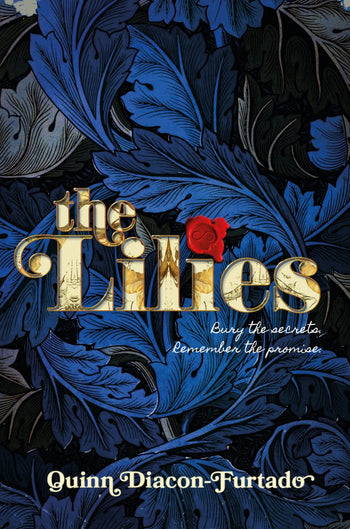
Discussion Guide for The Lilies by Quinn Diacon-Furtado

Share

The Lilies
Author: Quinn Diacon-Furtado
Published: April 30th, 2024 by HarperTeen

Summary: One of Us Is Lying meets A Good Girl’s Guide to Murder in this don’t-dare-to-look-away dark academia thriller that explores how secrets can rot an institution–and the people who uphold it–from the inside out.

Everyone wants to be a Lily.

At Archwell Academy, it’s the ticket to a successful future. But like every secret society, there is something much darker beneath the surface … sometimes girls disappear.

When four Archwell students find themselves trapped in a time loop, they must relive their worst memories, untangling the Lilies’ moldering roots and unraveling the secrets at the core of their school … before they destroy their futures forever.

Teachers’ Tools for Navigation and Discussion Questions: 

Please view and enjoy the discussion guide I created for Cake Creative:

You can also access the educators’ guide here.

Recommended For: 

classroomlibrarybuttonsmall litcirclesbuttonsmall closereadinganalysisbuttonsmall

Kellee Signature

Educators’ Guide for Lila Greer, Teacher of the Year by Andrea Beaty, Illustrated by David Roberts

Share

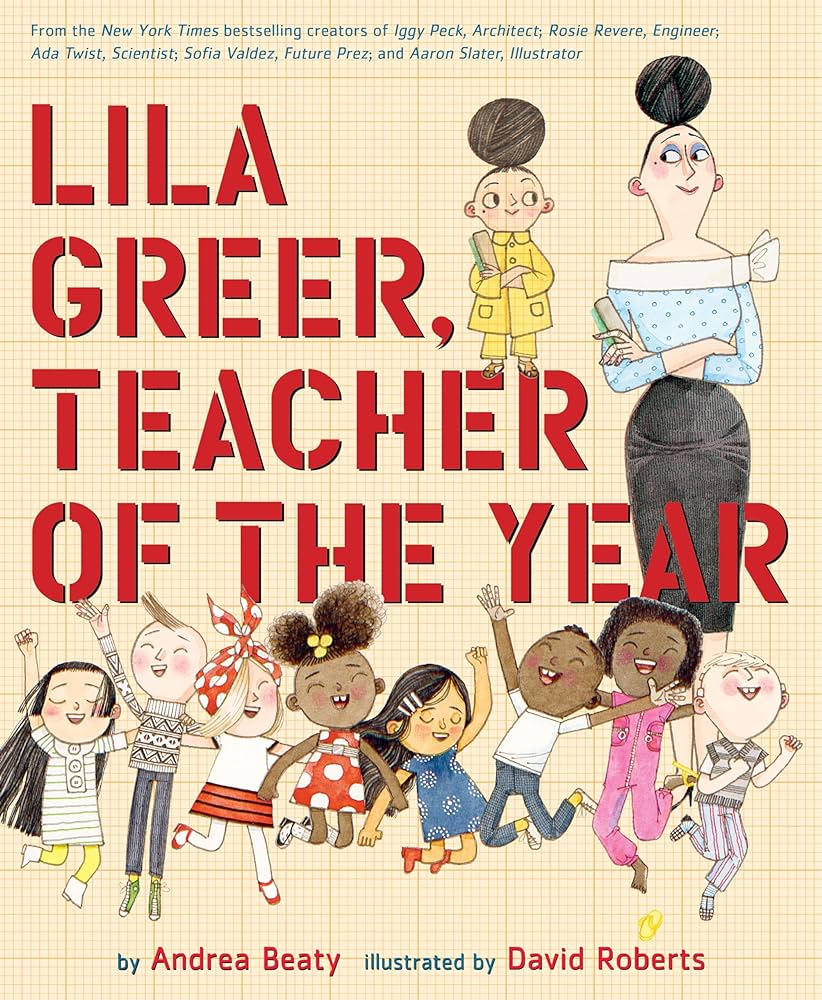
Lila Greer, Teacher of the Year
Author: Andrea Beaty
Illustrator: David Roberts
Published: November 7, 2023 by Abrams

Summary: Lila Greer, Teacher of the Year is a moving story starring the Questioneers’ teacher that’s all about kindness, learning to face your fears, and the profound difference that one brilliant educator can make in a child’s life, from author Andrea Beaty and illustrator David Roberts, the #1 New York Times bestselling creators of Aaron Slater, Illustrator and Ada Twist, Scientist !

Lila Greer is full of worries. Even the smallest things—from cabbages to cardboard—fill her with dread and what-if s. So when her family makes a big change—moving to a new town—the worry and what-if s only grow. What if things go wrong? What if no one likes her?

At first, Lila feels right to be worried. In her new home, everything is strange. The new kids, the new smells. Lila feels alone and invisible. But there’s one person who sees Lila’s teacher, Ms. Kern. Through some creativity, blackboard erasers, and—most of all—kindness, Ms. Kern finds a way to make Lila feel welcome and open to new experiences. A lesson that will resonate with Lila long after second grade.

Teachers’ Tools for Navigation and Discussion Questions: 

Please view and enjoy the educators’ guide I created for Abrams for Lila Greer, Teacher of the Year:

You can also access the educators’ guide here.

You can learn more about Lila Greer, Teacher of the Year on Abrams’s page.

Recommended For: 

readaloudbuttonsmall classroomlibrarybuttonsmall litcirclesbuttonsmall closereadinganalysisbuttonsmall

Kellee Signature

Author Guest Post: “Social Emotional Learning with Picture Books” by Darcy Pattison, Author of BE STRONG: The Rise of Beloved Public Art Sculptor, Nancy Schön

Share

“Social Emotional Learning with Picture Books”

Educators know the importance of addressing the social and emotional learning of kids in their classrooms. The Casel framework has become a popular way to discuss the skills. It begins with a breakdown of the child’s social situation: classroom, schools, with family/caregivers, and communities. Within each level, it looks at a child’s social awareness, relationship skills, responsible decision making, self-awareness, and self- management. Here are recent picture books that address these social and emotional skills.

Social Awareness: The abilities to understand the perspectives of and empathize with others, including those from diverse backgrounds, cultures, and contexts. 


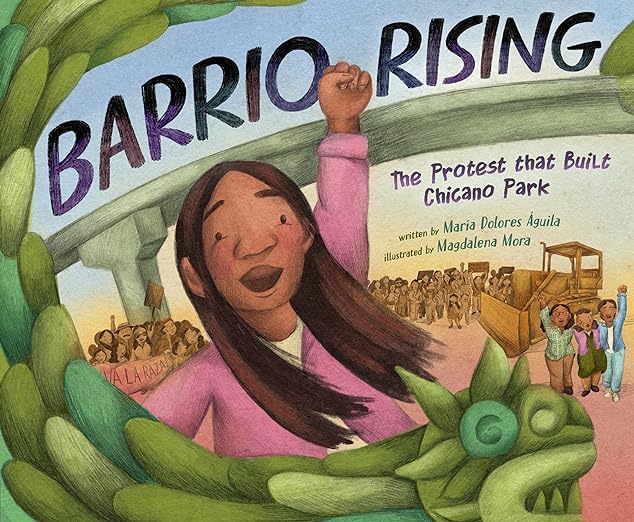
Barrio Rising: The Protest that Built Chicano Park, by María Dolores Águila,  Magdalena Mora  (June, 2024)

Which would you want in your neighborhood, a city park or a police station? When the residents of San Diego’s Chicane neighborhood Barrio Logan discovered a police station is being built they decide to speak out. When you try to make your voices heard, you must reach for understanding between diverse groups and cultures. Follow a young activist who must connect her perspective to the wider perspectives to accomplish her goals for her neighborhood.

Relationship Skills: The abilities to establish and maintain healthy and supportive relationships and to effectively navigate settings with diverse individuals and groups


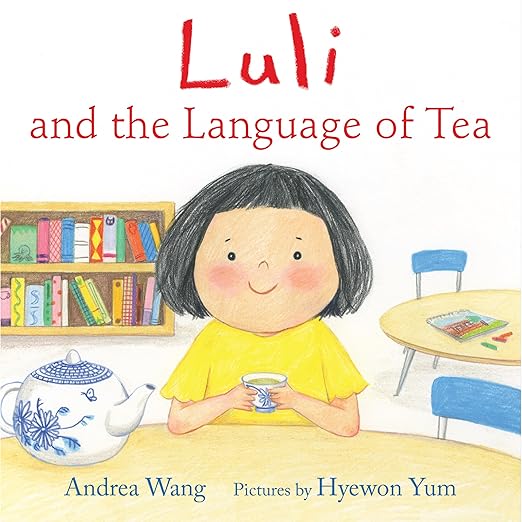
Luli and the Language of Tea written by Andrea Wang and illustrated by Hyewon Yum (2022)

Tea has the power to unite and build relationships. Or at least that’s what a Chinese child Luli discovers. When she is left in a playroom with other multilingual kids, she calls out “Cha!” When the kids realize that she is offering them a drink of tea, they each respond with their own language’s word for tea. Luli’s willingness to share enriches the relationships in the playroom.

Responsible Decision Making: The abilities to make caring and constructive choices about personal behavior and social interactions across diverse situations. 


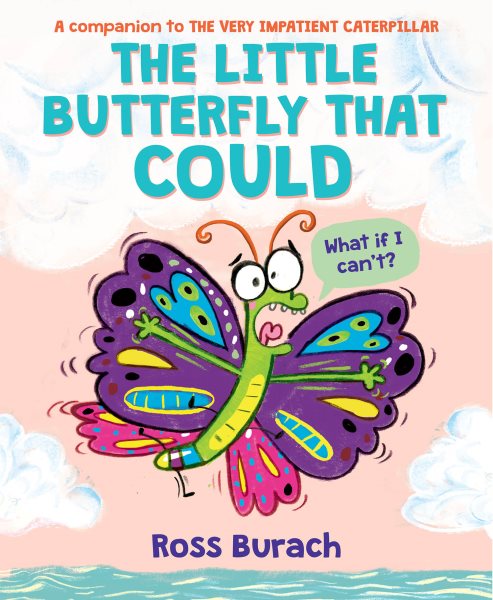
The Little Butterfly That Could by Ross Curach (2021)

After a hard hatching from its chrysalis, the butterfly faces a huge new challenge: migration.

“200 MILES? How am I supposed to travel that far?” the butterfly wails.

Each step along the way involves a decision that will affect his success or failure in traveling to the ancestral home. The butterfly encounters whales, insects, storms, and discouragement. Each decision leads him closer to his destination. Hilarious, this book is sure to make kids think about decisions, and about persistence.

Self-Awareness: The abilities to understand one’s own emotions, thoughts, and values and how they influence behavior across contexts.


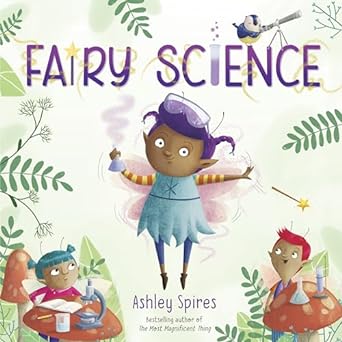
Fairy Science by Ashley Spires (2019)

All the fairies in Pixieville believe in magic–except Esther. She believes in science.

When a forest tree stops growing, all the fairies are stumped–including Esther. But not for long! Esther knows that science can get to the root of the problem–and its solution! Esther is self-aware and understands that she operates by science, not magic.

Self-Management. The abilities to manage one’s emotions, thoughts, and behaviors effectively in different situations and to achieve goals and aspirations. 


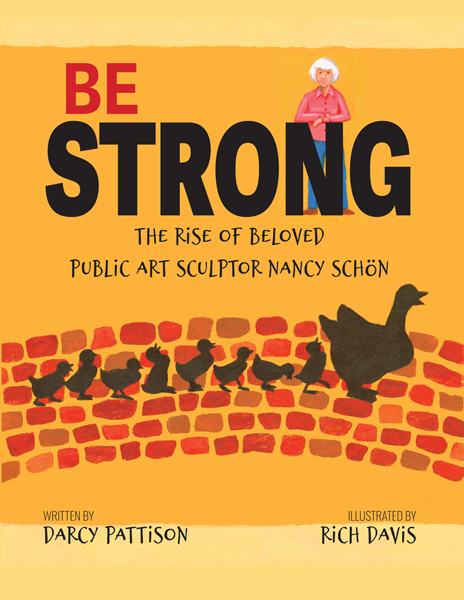
BE STRONG: The Rise of Beloved Public Art Sculptor, Nancy Schön, by Darcy Pattison, illustrated by Rich Davis (2024)

When kids are frustrated by art, building, creating, athletics, or life, and they want to quit, sculptor Nancy Schön’s story will inspire them with two simple words: Be Strong.

On a rainy day in October, 1987—perfect weather for a duck—a bronze sculpture of a duck family was installed in Boston’s Public Garden. Based on Robert McCloskey’s Caldecott award-winning book MAKE WAY FOR DUCKLINGS, sculptor Nancy Schön created a kid-friendly sculpture. She wanted the duck family to be touchable and huggable, a sculpture that kids could climb around on.

The incredible journey from a book to a sculpture adds a new chapter in an inspiring new biography of Jewish-American sculptor Nancy Schön, BE STRONG. Large outdoor sculptures were a new venture for Nancy and the scale made the project incredibly difficult. The mother duck’s head fell off. One duckling was the wrong size. She had to research how it looked inside of a duck’s beak. Through the hard days of trying to create a new type of sculpture, Nancy clung to two words: Be Strong.

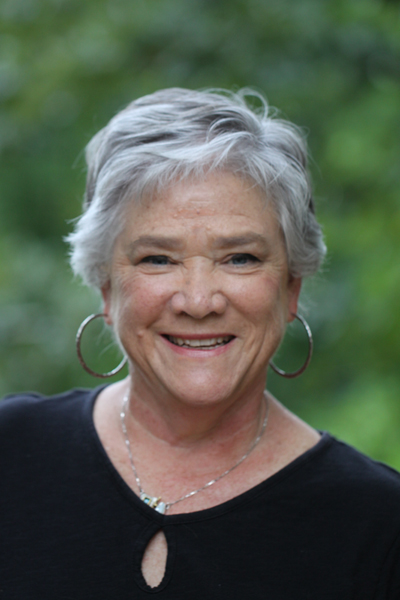
About the Author: Children’s book author and indie publisher DARCY PATTISON has written over seventy award-winning fiction and non-fiction books for children. Five books have received starred PW, Kirkus, or BCCB reviews. Awards include the Irma Black Honor award, five NSTA Outstanding Science Trade Books, four Eureka! Nonfiction Honor book (CA Reading Assn.), two Junior Library Guild selections, two NCTE Notable Children’s Book in Language Arts, a Notable Social Studies Trade Book, a Best STEM Book, an Arkansiana Award, and the Susannah DeBlack Arkansas Children’s History Book award. She’s the 2007 recipient of the Arkansas Governor’s Arts Award for Individual Artist for her work in children’s literature. Her books have been translated into ten languages.

Thank you, Darcy, for putting together this amazing SEL picture book list!

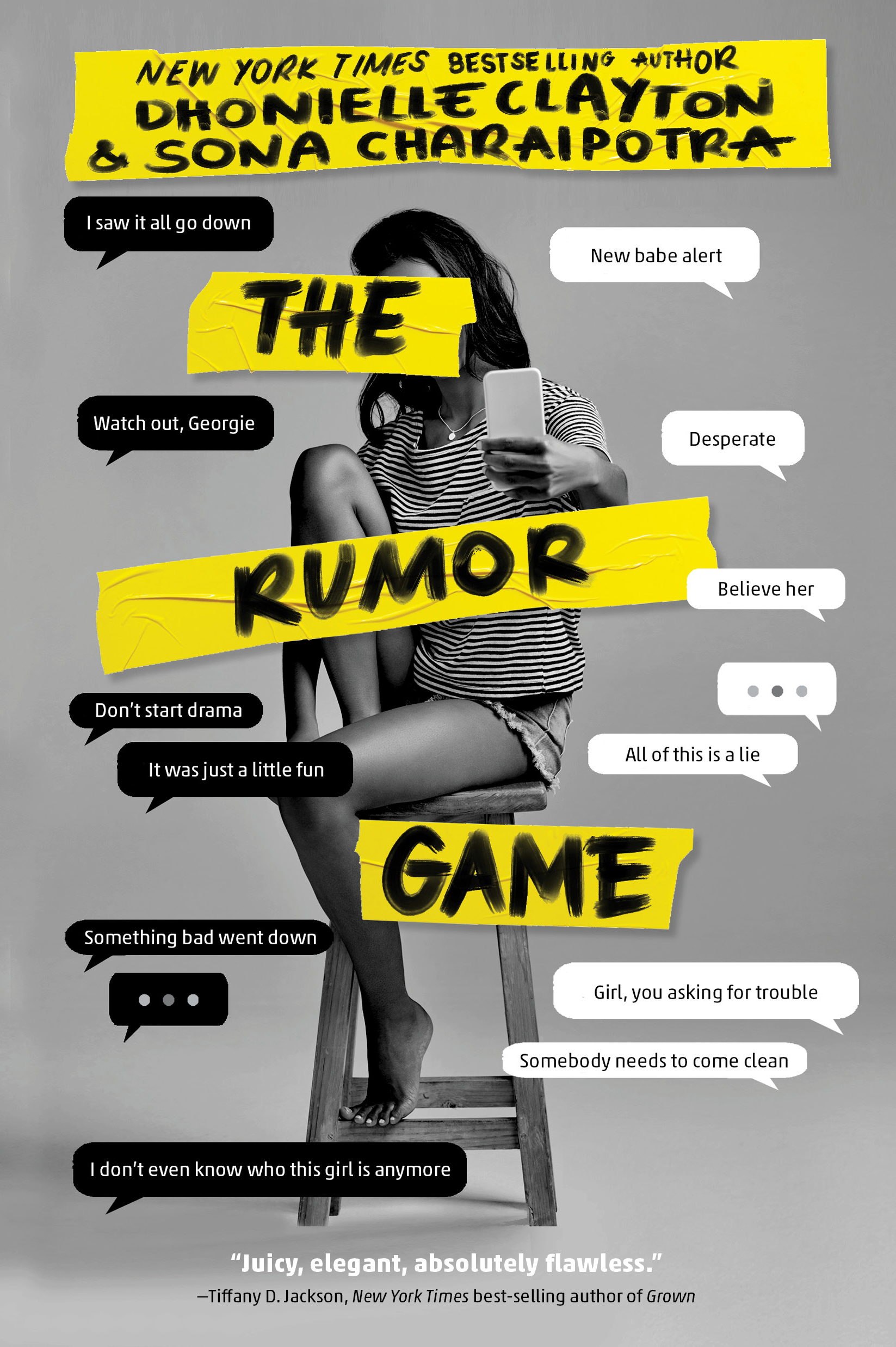
Educators’ Guide for The Rumor Game by Dhonielle Clayton & Sona Charaipotra

Share

The Rumor Game
Author: Dhonielle Clayton & Sona Charaipotra
Published: March 1st, 2022 by Disney

Summary: All it takes is one spark to start a blaze.

At Foxham Prep, a posh private school for the children of DC’s elite, a single rumor has the power to ruin a life.

Nobody knows that better than Bryn. She used to have it all—the perfect boyfriend, a bright future in politics, and even popularity, thanks to her best friend, cheer captain Cora. Then one mistake sparked a scandal that burned it all to the ground.

Now it’s the start of a new school year and the spotlight has shifted: It’s geeky Georgie, newly hot after a summer makeover, whose name is on everyone’s lips. When a rumor ignites, Georgie rockets up the school’s social hierarchy, pitting her and Cora against each other. It grants her Foxham stardom . . . but it also makes her a target.

As the rumors grow and morph, blazing like wildfire through the school’s social media, all three girls’ lives begin to unravel. But one person close to the drama has the power to stop the gossip in its tracks. The question is—do they even want to?

From Dhonielle Clayton and Sona Charaipotra, authors of the Tiny Pretty Things duology (now a Netflix series), comes the edge-of-your-seat social thriller everyone will be talking about.

Teachers’ Tools for Navigation and Discussion Questions: 

Please view and enjoy the educators’ guide I created for Cake Creative Kitchen:

You can also access the educators’ guide here.

You can learn more about The Rumor Game on Cake Creative’s Library page.

Recommended For: 

classroomlibrarybuttonsmall litcirclesbuttonsmall

Kellee Signature

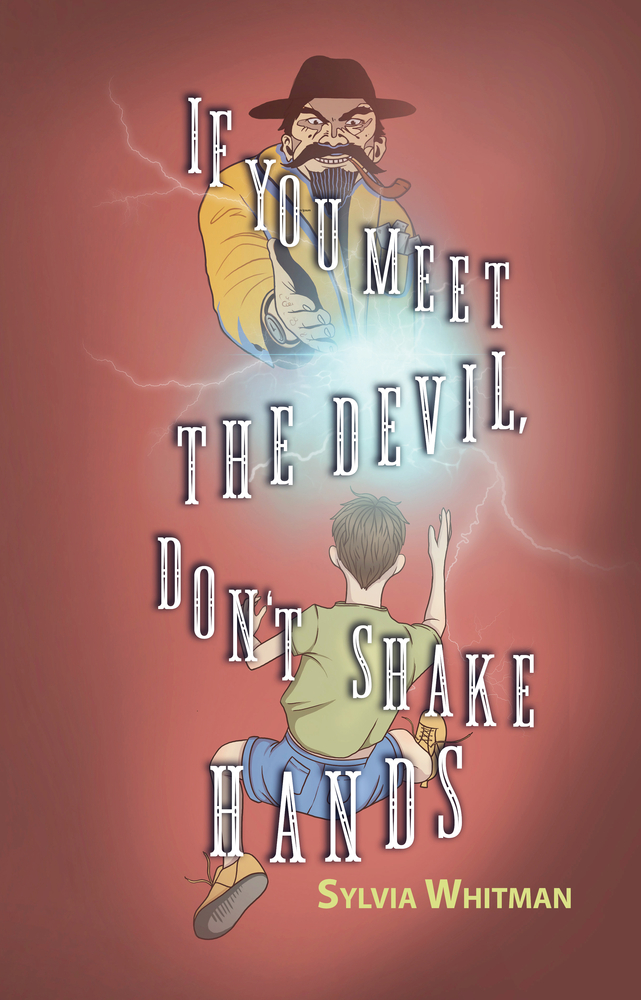
If You Meet the Devil, Don’t Shake Hands by Sylvia Whitman

Share

If You Meet the Devil, Don’t Shake Hands
Author: Sylvia Whitman
Published September 19th, 2023 by Fitzroy Books

Summary: Twelve-year-old Gavin Baker, son of a warrior, is a born worrier. With his father serving overseas, Gavin assumes that he’ s already imagined the worst that can happen— until he shakes hands with his best friend Javi’ s long-lost grandfather and finds himself trapped in the old magician’ s ailing body. Help! As the trickster takes over Gavin’ s life, fooling the girl of his dreams and even his own family, Gavin wonders if the imposter is a better version of Gavin than Gavin himself. He has to convince Javi that the real Gavin now has hairy knuckles and a love of Pablo Neruda’ s poetry. Then the boys can try some tricks of their own. But will the two friends be able to reverse the old devil’ s magic? Or will both of their families get their hearts broken?

About the Author: Sylvia Whitman, a writer and educator, has published articles, a picture book, and nonfiction & fiction children’s books. A folklore and mythology major in college, she has always liked proverbs, particularly this one: “A book is a garden carried in the pocket.” She lives with her husband and two kids in Arlington, Virginia. Visit her at SylviaWhitmanBooks.com.

Review: This twist on Freaky Friday looks at the heart of family trauma and perspective. It was fascinating to see how the switch into an unwelcome visitor led to a conclusion that I would not have guessed. Through the eyes of Javi’s returned abuelo, but with Gavin’s narrative, we learn the truth of the past and the present. Though the story focuses on Gavin and “El Diablo,” there are side stories that add heart to the story and flesh out the supporting character. Whitman does a wonderful job showing the reader both reasons for sympathy and anger while validating all of the emotions of all of the characters.

Tools for Navigation: This book will be perfect for middle school classroom and school libraries. Middle school readers are going to be enthralled by the concept of the book and want to figure out how it all shakes out.

Discussion Questions: 

  • Why do you think El Diablo and Gavin switched places?
  • How did the switch affect both of them?
  • What do you think happens next, after the end of the book?
  • How do you think the story would have been different if Gavin and El Diablo hadn’t switched places?
  • Through the flashes of El Diablo’s memory coming through, what do you believe happened in the past? Do you think Javi’s abuelo is as devil-like as they’ve all assumed?
  • Do you agree with the tactics that Gavin uses to reach the conclusion of the book?
  • What do you believe the theme of the book is?

Flagged Passages: “El Diablo’s hand is still waiting for mine.

Should I tell him my last name? He’s Javi’s granddad, after all. Or should I make one up?

Say nothing. Smile. That’s Mom’s advice.

It’s rude if I don’t shake, though.

When we touch, Javi’s grandfather gives me a shock so strong I can hear the snap. Before I can pull back, he clamps his left hand over the shake, trapping me. His eyes bore right into mine.

“What are you good at”—he gulps a quick breath—“Gavin?”

I don’t know. My whole arm is tingling—no, stinging—like after it goes to sleep and then starts to wake up. I want to shake it out. I pull back slightly, but this guy is not relaxing his grip. He’s acting like a diablo, not an abuelo.

I’m about to yelp for help when El Diablo says, “Good with the girls?”

At that, both Javi and I snort.

“Science,” Javi says. “School.”

So is Javi. He’s good at everything.

“A smart one,” El Diablo says to me. “What else?”

I wait for Javi to speak up, but he doesn’t. Outside of class I’m not much of anything.

My dad is always telling me that I should take some risks—not stupid ones, like stealing a car or smoking dope, but expanding ones, like reading a book you’ve never heard of or tasting food you can’t pronounce. Right after Dad went downrange, I tried some borscht that a lady from the family support center gave us, but when Mom explained beets made it purple, I spit it back into the bowl and just ate rolls for supper.

Now the pins and needles are spreading across my collarbone and down my left arm. My blood is bubbling like soda fresh from the can. Isn’t this a symptom of a heart attack?

I yank my hand, but El Diablo holds tight. “Sports?” he asks.

“Your grandson’s the soccer star,” I say. Now let go of me.

Javi shakes his head.

“You are,” I insist. “You’ll make the team this year. They need another goalie.”

“Not if I don’t practice,” Javi says.

“Get your friend here to shoot on you,” El Diablo says.

“He won’t,” Javi says. That’s not true. I’m just careful. I read somewhere that soccer’s the fifth most dangerous sport, with 22.12 injuries per 100,000 participants.

“Before I came to this country, I played striker for El Brujos,” El Diablo says.

Given that he’s sitting down and practically panting, I find it hard to believe that he once covered a field. Javi’s always telling me that soccer requires incredible conditioning. He even found some story about soccer players living longer to convince me to try out with him for the Crossroads team. But he forgot to factor in sudden cardiac death, concussions, and dementia.

I expect El Diablo to start reminiscing, or making up stories, about his athletic career, which I can tolerate as long as he relaxes his grip on my hand. I need it for scratching since it feels as if approximately 250 ants have crawled under my shirt and are marching down into my pants. At six legs per ant, I have roughly 1500 roaming itchy spots.

“Would you mind…letting go?” I ask in my most polite desperate voice.

“You’re a smart boy, Gavin,” he says. “Smart is good. Wise is better.”

I try to signal SOS with my eyebrows, but Javi thinks I’m just puzzled by the comment.

“What’s the difference?” Javi asks.

“Smart knows facts,” El Diablo says. “Wise understands people.”

“Sir—my hand. I think maybe the circulation’s cut off,” I say. But it’s not just my hand; every nerve cell in my body is cut off and in flames.

Still gripping, El Diablo leans toward my ear and whispers, “You have something I want.” (Chapter 4)

Read This If You Love: Freaky Friday by Mary Rodgers, The Switch by Anthony Horowitz, Estranged by Ethan M. Aldridge

Recommended For: 

classroomlibrarybuttonsmall

Signature

**Thank you to the author for providing a copy for review!**

Saints of the Household by Ari Tison

Share

Saints of the Household
Author: Ari Tison
Published: March 28, 2023 by Farrar, Straus and Giroux (BYR)

Summary: Saints of the Household is a haunting contemporary YA about an act of violence in a small-town–beautifully told by a debut Indigenous Costa Rican-American writer–that will take your breath away.

Max and Jay have always depended on one another for their survival. Growing up with a physically abusive father, the two Bribri American brothers have learned that the only way to protect themselves and their mother is to stick to a schedule and keep their heads down.

But when they hear a classmate in trouble in the woods, instinct takes over and they intervene, breaking up a fight and beating their high school’s star soccer player to a pulp. This act of violence threatens the brothers’ dreams for the future and their beliefs about who they are. As the true details of that fateful afternoon unfold over the course of the novel, Max and Jay grapple with the weight of their actions, their shifting relationship as brothers, and the realization that they may be more like their father than they thought. They’ll have to reach back to their Bribri roots to find their way forward.

Told in alternating points of view using vignettes and poems, debut author Ari Tison crafts an emotional, slow-burning drama about brotherhood, abuse, recovery, and doing the right thing.

Review: This gorgeous novel alternates two brothers’ perspectives, one in prose (similar to short vignettes) and one in verse. I was captivated by this book and felt really connected to the two characters. The story begins immediately following a violent altercation between the brothers and their cousin’s girlfriend. The boys (Jay and Max) also experience domestic abuse at home. Jay and Max are less than a year apart in age and very close, yet they negotiate the altercations in very different ways. I highly recommend this book and am really glad that I read it and got to know Jay’s and Max’s stories.

Tools for Navigation: This book inspires creative writing. Teachers might ask students to try writing alternating perspectives of two people who are negotiating a conflict in different ways. They might also try writing one voice in prose and one in verse.

Discussion Questions: 

  • Did you find yourself feeling more empathetic toward one of the brothers? If yes, why might this be? If no, do you think audiences might be more empathetic to a brother, and why or why not?
  • How does the domestic abuse impact each of the brothers?
  • How did the different forms enhance your reading of the text?

Flagged Passage: “‘Sadness is not uncommon for our people,’ he tells me. ‘We have been hurt by many. People have been murdered. Our lands taken. But, in turn, when you are so hurt, you cannot let them win again by allowing them to take your mind. We’ve got everything against us, dawö’chke, but we’re still here, aren’t we? Each one of us made it. And we will still make it through all we’re facing'” (p. 186).

Read This If You Love: Angeline Boulley, Amber McBride, Ibi Zoboi

Recommended For: 

 classroomlibrarybuttonsmall closereadinganalysisbuttonsmall

RickiSig

How Color Code Behavior Charts Almost Ruined My Son’s Love of School and Much More

Share

I’ve been wanting to write this post for a long time, but it is hard to talk about. I still get very emotional about it. But after 4 years, I am ready to share, and I am purposefully posting it right at the start of the school year.

This story takes place when Trent entered Kindergarten.

Trent has been in daycare then preschool and then public school since he was 5 months old. He had always loved school. It was never a fight to get him there. His love of learning, of socializing, of playing, of books–it was all so wonderful to witness. Throughout his first 5 years in school, there had been incidences here and there, as with any kid, but overall I was told he was a pleasure to have in class, he excelled at his work, and he was truly loved by so many teachers.

Then we entered kindergarten. He was so excited. I still have pictures that pop up yearly of him with his huge backpack, our family photo on day one, and the photo with his teacher. Just so filled with joy.

But over just a few weeks, I watched that wash away.

I had learned at his meet the teacher that his new teacher used a color coding behavior chart. We’d never had one in one of Trent’s classes before, and I knew about some negative opinions about them, but I was optimistic because I had to be. Also, as an educator, I understood to some extent needing to give visuals to students about their behavior and to keep track of warnings.

As the school year began, though, my optimism fell away. At first, it was just yellow or red dots coming home in his planner with small notes from his teacher. I emailed her to get more info, and we emailed back and forth about how to help Trent.

But then Trent’s demeanor changed. He tried to hide his planner from me, he stopped wanting to go to school, and he started to call himself a bad kid. It happened so quickly. My sweet boy who loved school now was wanting to avoid it as much as he could. There were so many tears.

Through communication with the teacher, I learned that students could earn their way back up; however, with the focus on negative behavior, Trent, I believe, was giving up. He told me he was bad so he was red. When I asked him what he thought he could do to move up, he said that he tried but that he was a bad kid.

Through talking with Trent, I learned that the kids very much paid attention to who was where. When he wasn’t red, he’d make sure to tell me who was the bad kid that day. That is always how my little 5-year-old put it: the bad kid. No wonder he viewed himself that way, that is how they all viewed students who were on red.

Eventually, I realized that this system was public shaming. It was not helping the situation at all; it was embarrassing and setting kids up for failure. I mean, would we want our boss to let everyone know how we were doing every day?! No!

I cannot put into words what this transformation of Trent, in just a few weeks, did to our household. The whole climate of the house changed, Trent’s whole demeanor changed, and we were helpless because this emotional beat down was happening at school where we weren’t.

I emailed his teacher a lot. I asked a lot of questions. I advocated for my son. But she wouldn’t budge. I think she, too, after only 3 weeks, only saw my son as a bad kid, all because of silliness, some impulse control issues, and his tendency to question.

Thankfully, without any warning, Trent was moved to another class where the culture was completely different. The teacher never talked to me about the why, which was a whole other problem, but I am so thankful the move happened. After moving, it took another few weeks for the toxicity to wash away, but Trent returned to himself and blew kindergarten out of the water and is still rocking school to this day!

But what about the kids who were in that room all year who found themselves on red? Did they enter 1st grade already knowing they were a “bad kid,” so they knew they needn’t not even try?? How does this affect the mental health and longevity of schooling????

This is one way educators can ruin kids. Can we PLEASE realize this practice is more hurtful than anything and move away from it? Because how many kids out there are being hurt the way Trent was but for an entire year????

So, what can be done instead? Get to know your students, don’t ever publicly shame them, use your team of support at your school (the guidance counselor, school psychologist, etc.), and focus on positivity in the classroom. These little change could change everything.

Signature